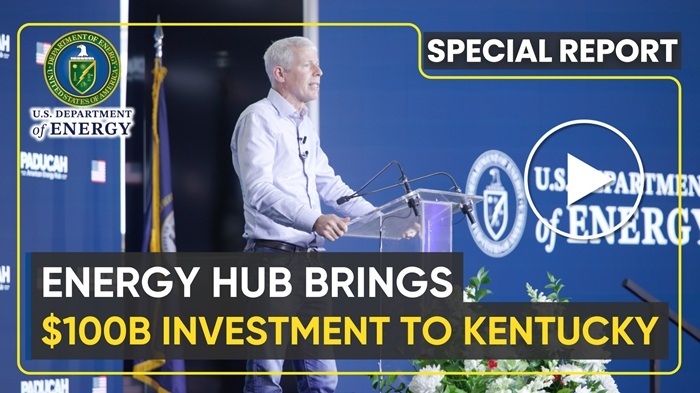
This special-edition episode of Energycast chronicles a landmark partnership in which companies are investing $100 billion to redevelop portions of the U.S. Department of Energy’s Paducah Site into a data center campus accompanied by new energy infrastructure. The project, one of the largest in Kentucky’s history, is expected to create approximately 8,000 construction jobs and 600 permanent jobs. Consistent with President Donald Trump’s Ratepayer Protection Pledge, the project’s generation and storage capacity will exceed the campus’s energy needs, allowing excess electricity to be delivered to the regional grid, helping reduce energy costs for residents and businesses. View the video here.
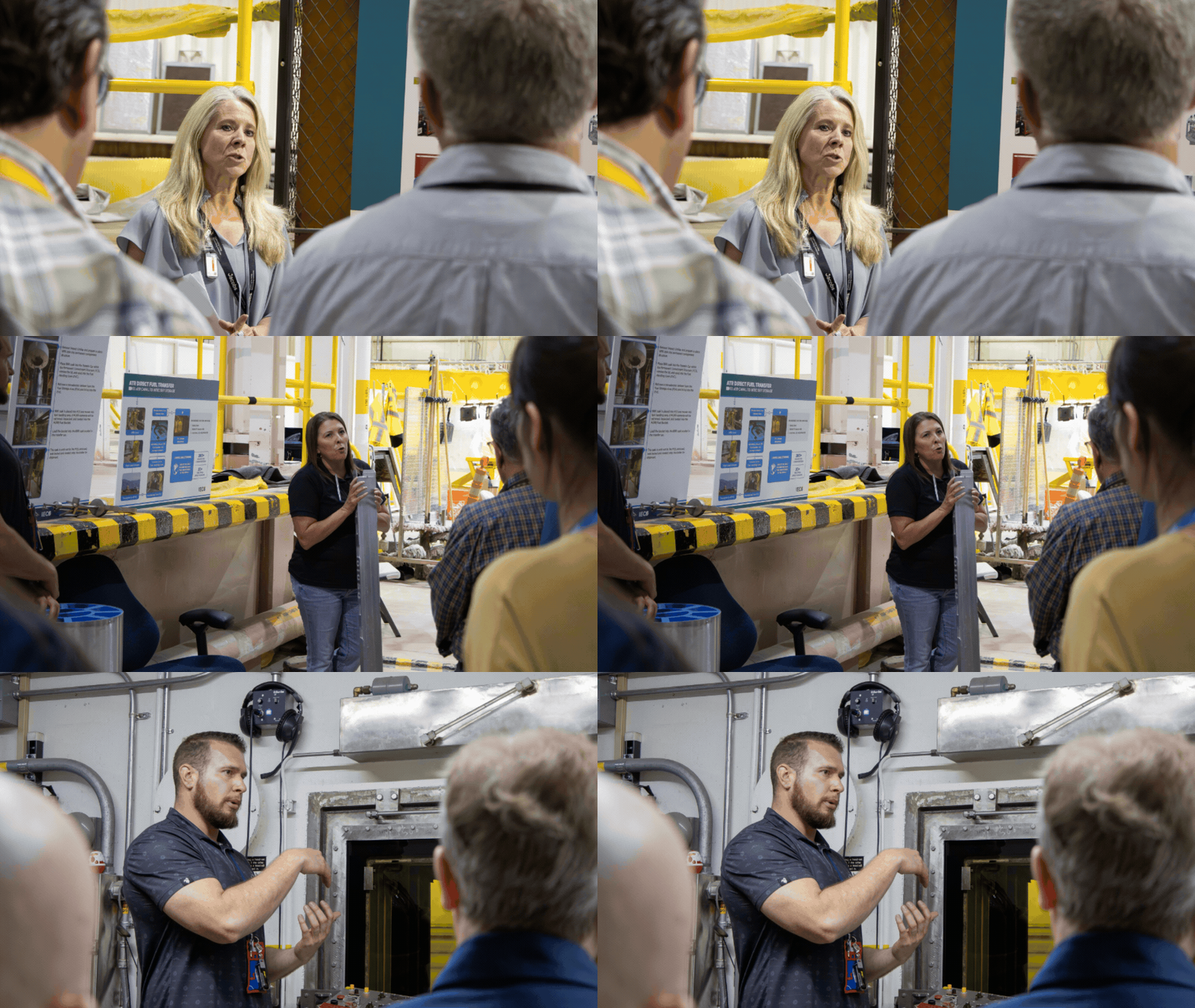 Idaho Cleanup Project staff lead visitors on a tour of used nuclear fuel storage facilities to demonstrate the capabilities of the Idaho Nuclear Technology and Engineering Center.
IDAHO FALLS, Idaho — The Idaho Cleanup Project (ICP) is playing a key role in the future shipment of a “high burnup” used nuclear fuel research cask from Dominion Energy’s North Anna Power Station in Virginia to the Idaho National Laboratory (INL) Site, enabling critical research activities in Idaho.
The INL Site was selected to receive the shipment because of its specialized facilities, equipment and a workforce experienced with safely handling used nuclear fuel, capabilities generally unavailable at commercial nuclear power plants.
Recently, U.S. Department of Energy (DOE) representatives and private industry partners gathered in Idaho to kick off the DOE Office of Nuclear Energy’s (NE) Center for Used Fuel Research, tour important nuclear and cleanup facilities and continue coordination between NE and the DOE Office of Environmental Management (EM) to support this shipment. High burnup fuel remains in reactors longer to maximize energy output.
A key tour took place at the Idaho Nuclear Technology and Engineering Center (INTEC), where personnel have decades of experience receiving, handling, packaging and storing used nuclear fuel in support of the EM cleanup mission.
The visitors toured INTEC’s historic storage basin, which contains approximately 3 million gallons of water. The basin was previously used for long-term underwater storage of used nuclear fuel. In 2023, ICP and its contractor, Idaho Environmental Coalition (IEC), completed the transfer of all used nuclear fuel from the basin to modern dry storage systems at the INL Site.
The group also visited the Irradiated Fuel Storage Facility, where trained personnel continue to receive and safely store used nuclear fuel from the INL Site’s Advanced Test Reactor.
The visitors also discussed current efforts to refurbish INTEC’s rail line. IEC proposed reusing the rail infrastructure at INTEC to support the high burnup research cask efforts because it will provide a more efficient and cost-effective way to transfer the cask. Reusing the rail will also support future used nuclear fuel shipments to and from the INL Site by establishing a necessary transportation pathway.
The shipment is expected to occur in late 2027. IEC crews are set to receive and store the cask at INTEC while EM and NE will continue preparing for the onsite transfer of the fuel for future research.
The high burnup research cask shipment will be the first of its kind to Idaho in more than two decades, made possible through DOE’s continued compliance with the 1995 Idaho Settlement Agreement. By supporting receipt of the cask, NE, EM and IEC will enable critical research that will provide valuable data to support continued long-term safe storage and future transportation of used nuclear fuel.
The shipment is part of NE’s High Burnup Dry Storage Research Project, conducted in collaboration with the Electric Power Research Institute.
ICP will also help transfer used nuclear fuel to the INL Site from the Breazeale Research Reactor at Penn State University. That fuel supports domestic research reactors on university campuses and advances nuclear energy and medical research. To prepare for the shipment, IEC took part in training and is drawing from its university partnerships to ensure the project is completed safely and efficiently.
-Contributor: Carter Harrison
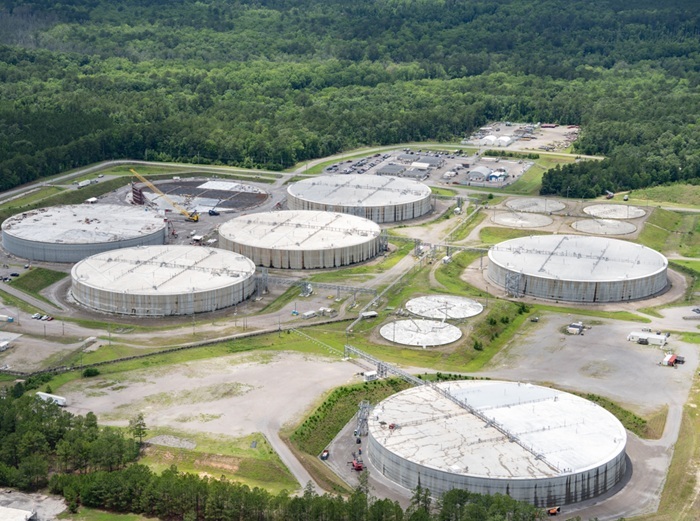 The U.S. Department of Energy’s Office of Environmental Management has authorized the fifth mega-size Saltstone Disposal Unit, foreground, for operations at Savannah River Site.
AIKEN, S.C. — The U.S. Department of Energy’s (DOE) Office of Environmental Management (EM) has authorized the fifth mega-size disposal unit for operations at the Savannah River Site (SRS), marking another milestone in the site’s cleanup program.
The authorization marks the last step before the Saltstone Disposal Unit (SDU) 10 can begin to receive decontaminated material for disposal. Construction of the unit was completed in June 2024, nearly 10 months ahead of schedule and two years after completing construction on SDU 9. A leak tightness test was completed for SDU 10 in December 2025, verifying it is safe to store up to 33 million gallons of solidified, decontaminated salt solution produced at SRS.
From design to construction, the SDU projects are examples of innovation and efficiency, according to Chuck Comeau, DOE-Savannah River federal project director.
“All of the larger SDUs built at SRS have come in under budget and ahead of schedule, without sacrificing safety or effectiveness,” said Comeau. “Having the SDUs ready and available to provide safe, permanent storage for the decontaminated legacy waste supports the accelerated pace of the liquid waste program at SRS.”
The SDUs are the end of the salt waste processing path. The Salt Waste Processing Facility (SWPF) produces the decontaminated salt solution that is sent to the Saltstone Production Facility, where it is mixed with dry materials to make a cement-like grout. The grout is pumped into the SDUs, where it solidifies into a monolithic, nonhazardous form.
The larger SDUs are designed to support the increased material production from SWPF and result in more than $500 million in cost savings over the life of the SRS liquid waste program because they require less infrastructure and materials than the previous 80 smaller SDUs.
EM’s liquid waste contractor at SRS, Savannah River Mission Completion (SRMC), manages construction and operation of the SDUs.
Completion of SDU 10 stands as another example of excellence delivered by the SRMC team, according to SRMC President and Program Manager Thomas Burns Jr.
“Delivering a project of this scale safely and successfully took remarkable dedication, teamwork and expertise from everyone involved,” Burns said. “I am truly proud of what the SRMC team accomplished with SDU 10. This milestone moves us even closer to completing our mission and demonstrates the critical importance of this project.”
SRMC is also in various stages of completing the final two SDUs needed at SRS. With the final roof section placed this spring, all structural concrete placements for SDU 11 are complete. The unit is being wrapped with over 340 miles of steel cable to ensure structural integrity and enhanced durability.
Construction began on SDU 12 in April, marking a historic milestone in the site’s radioactive waste tank cleanup mission as the last unit needed to support the mission.
-Contributor: Colleen Hart
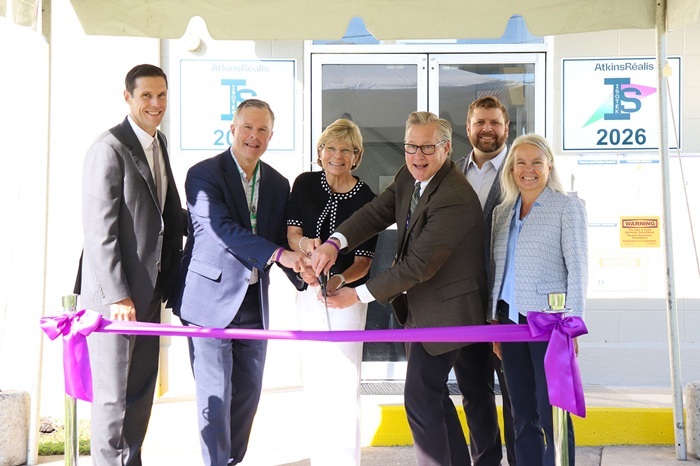 Officials cut the ribbon for a new analytical laboratory supporting the Oak Ridge Office of Environmental Management's (OREM) highest-priority cleanup project at Oak Ridge National Laboratory. From left, Jeff Kendall, AtkinsRéalis U.S. Nuclear president; Scott Claunch, TerraPower Isotopes president; Sarah Schaefer, Isotek Systems president and project manager; Erik Olds, OREM manager; Ben Goodrich, TerraPower Isotopes vice president of strategy; and Teresa Robbins, OREM deputy manager.
OAK RIDGE, Tenn. — The U.S. Department of Energy’s (DOE) Oak Ridge Office of Environmental Management (OREM) and contractor Isotek Systems finished installing a new analytical laboratory supporting the highest-priority cleanup project at Oak Ridge National Laboratory (ORNL) and speeding the delivery of crucial material for cancer treatment research.
Isotek is tasked with eliminating the nation’s inventory of uranium-233 stored at ORNL. Its removal eliminates a major risk, avoids significant taxpayer costs to keep the inventory safe and secure and enables demolition of the storage facility to transform ORNL’s central campus and open space for important research missions.
Uranium-233 was created in the 1950s and 1960s for potential use in nuclear reactors but proved unviable as a fuel source.
Crews disposed of about half of the inventory, but the remainder required processing to convert it into a form safe for transportation and disposal out of state. While Isotek has surpassed the halfway mark of the processing campaign, challenging work remains to complete the project in coming years.
A newly installed lab, located in Building 2026 where processing operations are underway, will assist those efforts by providing in-house capabilities to analyze samples of processed material, leading to accelerated shipments.
“This addition brings an immediate return on investment,” said OREM Manager Erik Olds. “It helps avoid delays by providing employees more data and faster results as they make decisions and process material for disposal. This new, unique capability also provides us opportunities to support other priority projects in the future.”
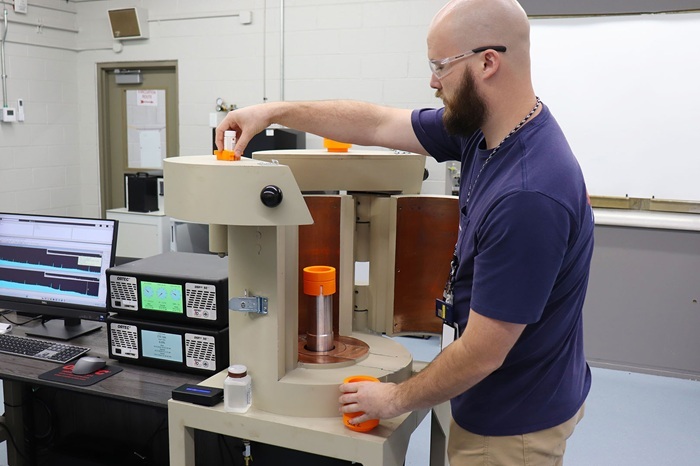 A new laboratory allows a U.S. Department of Energy Office of Environmental Management team to analyze samples of extracted medical isotopes for faster results and delivery to support cancer treatment research, avoiding previous delays caused by sending samples to labs elsewhere. Employees will now receive results in about two weeks instead of four months.
Isotek is extracting a rare medical isotope, thorium-229, from the uranium-233 prior to processing and disposal. Through an innovative public-private partnership with nuclear innovation company TerraPower Isotopes, the isotopes help fuel next-generation cancer treatments.
TerraPower Isotopes provides sustained, commercial-scale access to the isotopes to the global pharmaceutical community, and they are now being used in clinical trials around the world.
At the lab, Isotek can analyze samples of extracted isotopes for faster results and delivery to TerraPower Isotopes, avoiding previous delays caused by sending samples to labs elsewhere for analysis. Employees will receive results in about two weeks instead of four months.
“The Building 2026 analytical lab will allow Isotek to not only transfer thorium-229 to TerraPower Isotopes much more quickly, but it will also allow the processing team to make adjustments to increase the recovery of thorium-229 much more quickly,” said Sarah Schaefer, Isotek president and project manager.
Scott Claunch, president of TerraPower Isotopes, said the future of precision medicine relies on a dependable supply of actinium-225, which the company recovers from Isotek’s thorium-229.
“Isotek’s investment in a state-of-the-art laboratory to speed up the processing of actinium-225’s parent isotope will help continue to expand production capacity, strengthen the global isotope supply chain and ultimately expand access to new cancer therapies to those who need it most.”
The uranium-233 in storage at ORNL is the only major source of thorium-229 in the world. Through this project, Isotek has increased the global supply by over 2,000%. The first treatments using this material commercially are expected in 2028.
-Contributor: Ben Williams
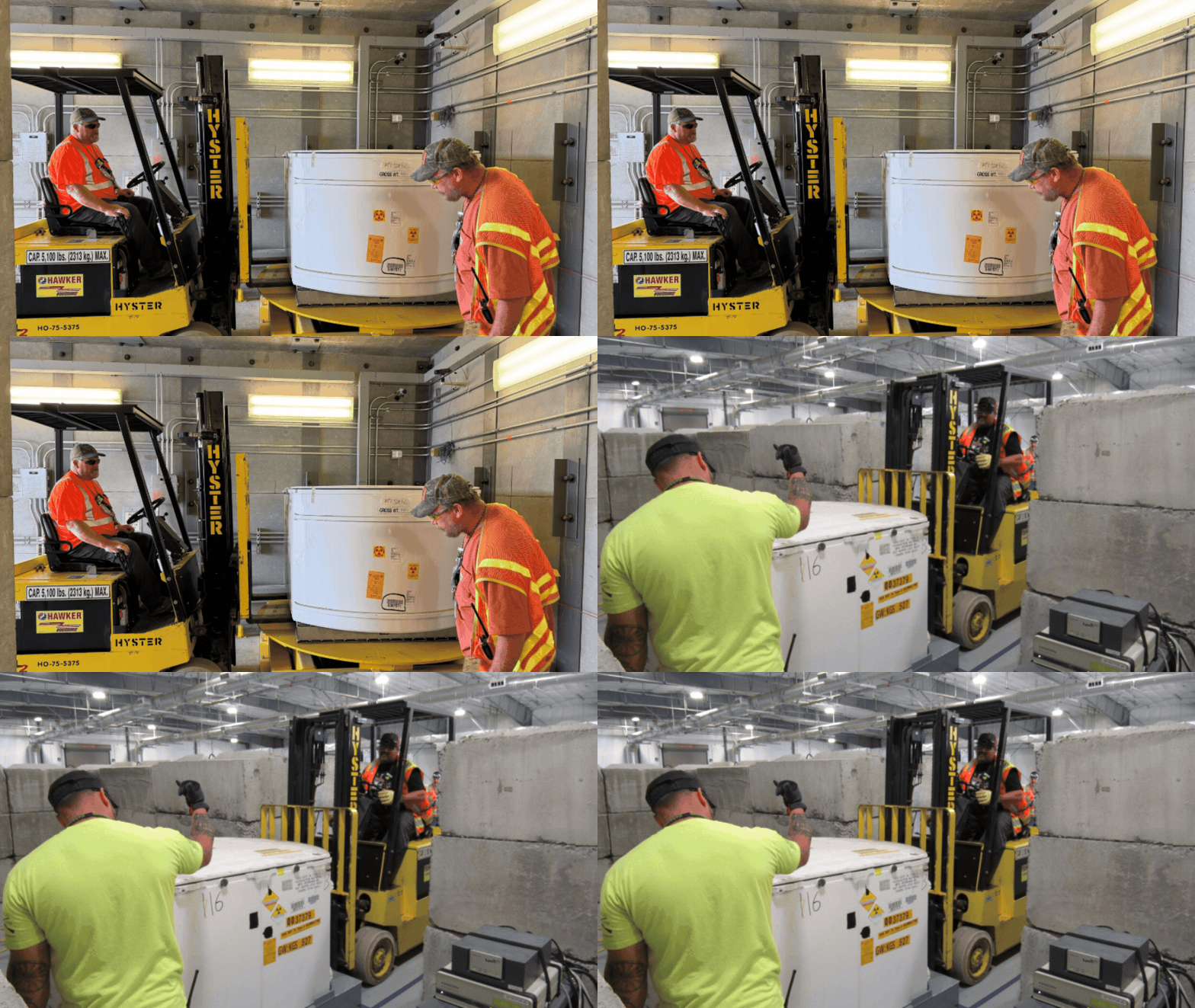 Hanford Site contractor Central Plateau Cleanup Company has resumed characterization of transuranic waste, which will be packaged for shipment to the Waste Isolation Pilot Plant in New Mexico.
RICHLAND, Wash. — The U.S. Department of Energy (DOE) and contractor Central Plateau Cleanup Company (CPCCo) recently completed a significant achievement in the risk-reduction mission at the Hanford Site by restarting the certification of transuranic waste for shipment to the Waste Isolation Pilot Plant (WIPP) near Carlsbad, New Mexico.
After pausing transuranic waste program activities in 2011 due to other cleanup priorities, Hanford restarted the program in 2018 and is scheduled to resume shipping contact-handled transuranic waste to WIPP by Sept. 30, 2028.
“The certification process is critical to safely and compliantly packaging and shipping transuranic waste to WIPP for permanent disposal,” said Scott Green, DOE Office of Environmental Management Hanford Field Office acting assistant manager for River and Plateau. “The process streamlines our effort to reduce Hanford’s transuranic waste inventory, ensures safe operations at Hanford and WIPP and helps us achieve our ultimate goal of protecting our community and the environment.”
Generated during Hanford’s plutonium-production mission, transuranic waste consists of clothing, tools, rags, residues, debris, soil and other items contaminated with small amounts of plutonium and other human-made radioactive elements.
Hanford’s contact- and remote-handled transuranic waste is stored above ground at the onsite Central Waste Complex, which currently houses about 11,000 containers. Most of the waste is packaged in WIPP-compliant standard waste boxes or 55-gallon drums. Click here to read about the difference between the contact- and remote-handled waste.
The WIPP-approved transuranic waste certification program involves a team with the DOE-established Central Characterization Project to perform visual and radiological characterization of each waste container. Workers use sophisticated equipment to ensure the waste containers meet transportation requirements and WIPP’s waste acceptance criteria.
“We’re proud of the progress we’ve made to reestablish a WIPP-certified program at Hanford and are well positioned to resume waste shipments in the near future,” said Ron Reeves, CPCCo Transuranic Waste Program activity manager. “Restarting the certification process is a prime example of the Hanford team’s unified commitment to reducing long-term risk.”
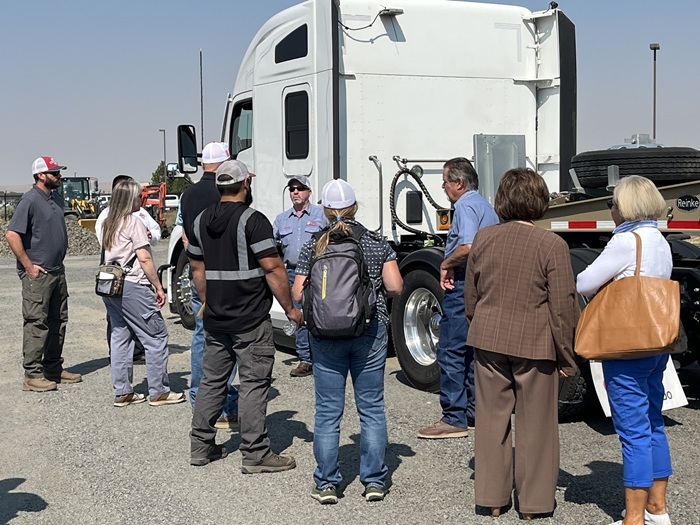
PENDELTON, Ore. — As part of public outreach to communities in its transportation corridors, the Waste Isolation Pilot Plant (WIPP) recently held a road show for upcoming shipments of transuranic radioactive waste from the Hanford Site in Washington state to the WIPP underground repository in New Mexico. WIPP subject-matter experts and drivers hit the road to meet members of the public, show them a shipping package up close and provide information about transportation protocols, shipping procedures and other topics. One stop was the Confederated Tribes of the Umatilla Indian Reservation (CTUIR) in northeastern Oregon. Tribal leaders, community members and state and local officials participated in a public meeting in the CTUIR Governance Center. Here, CTUIR Chairwoman Kat Brigham, second from right, talks with Oregon state Rep. Bobby Levy, far right, about the planned shipments — the first through the reservation since 2012.
-Contributor: Jill Conrad
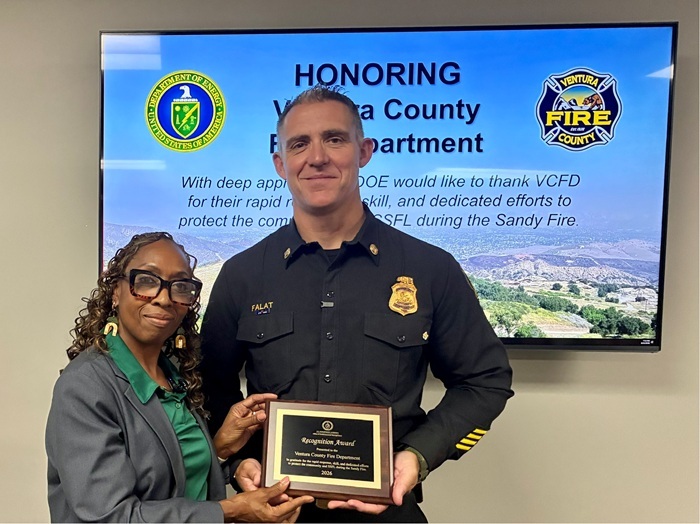 U.S. Department of Energy Environmental Management Consolidated Business Center Acting Director Melody Bell, left, presents a recognition award to Division Chief Matt Falat for the Ventura County Fire Department’s efforts to protect the community and Santa Susana Field Laboratory during the Sandy Fire in May.
SIMI VALLEY, Calif. — About 35 people attended the Energy Technology Engineering Center’s (ETEC) third Community Outreach, Neighbor Notifications, Engagement, Collaboration and Training (CONNECT) Series meeting to learn about wildfires and air monitoring and to ask questions about the recent Sandy Fire that burned near the site but did not cross onto the boundary.
Division Chief Matt Falat with the Ventura County Fire Department discussed county fire response in general and in relation to the Santa Susana Field Laboratory (SSFL), the 2,850-acre former rocket engine testing and nuclear research facility that includes ETEC, where the U.S. Department of Energy (DOE) previously conducted liquid metals and nuclear energy research.
Melody Bell, acting director for DOE’s Environmental Management Consolidated Business Center, presented Falat with an award to recognize the fire department’s efforts to protect the community and SSFL.
“We really appreciate . . . what you and your team did (during the Sandy Fire and) want to present you with a special recognition . . . in gratitude for the rapid response, skill and dedicated efforts to protect the community and SSFL during the Sandy Fire 2026,” Bell said.
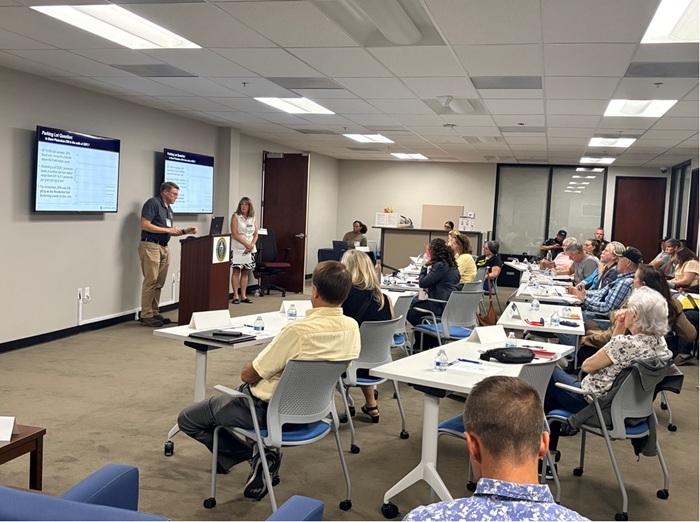 Josh Mengers, the U.S. Department of Energy Office of Environmental Management’s federal project director for the Energy Technology Engineering Center, presents on recent site activities, wildfires and air monitoring during the Community Outreach, Neighbor Notifications, Engagement, Collaboration and Training community meeting. Photo courtesy of Pamela Hartman
Josh Mengers, DOE’s Office of Environmental Management federal project director for ETEC, discussed the site’s response during the Sandy Fire in May, including coordination with site partners and emergency responders.
Mengers shared preliminary data from the site’s air monitoring program established in 2018. Early data is still being analyzed but the results for a type of particulate matter are typical of a normal increase due to wildfire smoke, he noted. Final results will be available in a second-quarter 2026 air monitoring report.
Mengers provided a look at the 2018 Woolsey Fire that burned across 80% of SSFL, including portions of Area IV where ETEC is located.
Because the Woolsey Fire burned across a large portion of SSFL, community members raised concerns that contamination from previous operations was released. Mengers said the Department of Toxic Substances Control, the state regulator overseeing final cleanup plans for the site, led a multiagency response to evaluate this possibility and concluded in its final summary report there was no release of contaminants from SSFL.
The presentation slides and recording are available on ETEC’s CONNECT Series page.
-Contributor: Melissa Simon
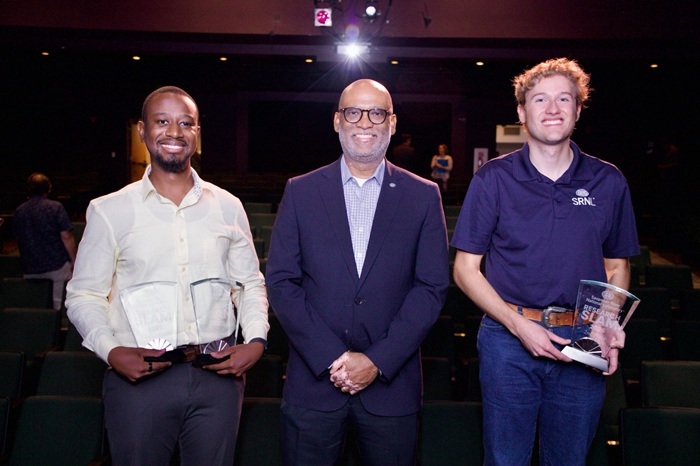 Savannah River National Laboratory Director Johney Green, center, presents awards to Raden Gustinvil, Research SLAM winner, left, and Bronson Lynn, second place winner.
AIKEN, S.C. — Eight early-career scientists recently took to the stage at Aiken Community Theatre to provide three-minute summaries about their research at Savannah River National Laboratory’s (SRNL) 2026 Research SLAM.
In what are called “lightening talks,” the participants displayed fierce competition and expert presentation in front of a panel of judges. Local TV and radio personality Cliff Bennett served as the event master of ceremonies and host for the night.
At the end of the night, Raden Gustinvil, a staff scientist in the Advanced Engineering Division, took first place for his presentation on laser-based additive manufacturing of metals and other nonconventional materials.
Bronson Lynn, a scientist from the Tritium Technology Division, earned second place for his presentation on hydrogen isotope separation for the nuclear fusion fuel cycle and tritium interactions with fusion-relevant materials. SRNL Director Johney Green presented the awards.
Gustinvil also won the People’s Choice Award for the audience’s favorite presentation. He appeared alongside Green on a local TV news show to discuss his win.
As the overall winner, Gustinvil will represent SRNL at next year’s National Lab Research SLAM, which brings together the individual winners of the 17 national laboratories to present their cutting-edge research in effective, easy-to-understand science communication to the public while providing visibility into scientific disciplines and research.
The other SRNL scientists who participated in the SLAM were:
- Arthur Gibson, a postdoctoral research associate in the Advanced Materials and Process Technology Group, specializes in catalyst materials and electrochemistry.
- Ben Foust, a Dwight D. Eisenhower Postdoctoral Fellow in the Nuclear Nonproliferation Division, focuses on fundamental particle physics experimentation and national security through next-generation radiation detection technologies and methods.
- Christopher (CJ) Koch, a scientist in the Weapons Production Technology Directorate, focuses on catalyst development for ammonia decomposition to enable lower temperature conversion to nitrogen and hydrogen.
- Claudia Ann Landrum, a postdoctoral research associate in the Biological and Analytical Sciences Group, focuses on sustainable biomanufacturing using bioinformatics processes.
- Jeanette Pina, a postdoctoral research associate in the Chemical Flowsheet Development Group, researches nuclear waste processing and metal–organic framework development.
- Nathan Wilson, a postdoctoral research associate in the Chemical Flowsheet Development Group, studies legacy radioactive waste simulants, materials testing for 3D printed solutions, and electrochemistry.
-Contributor: Sara Shoemaker
|