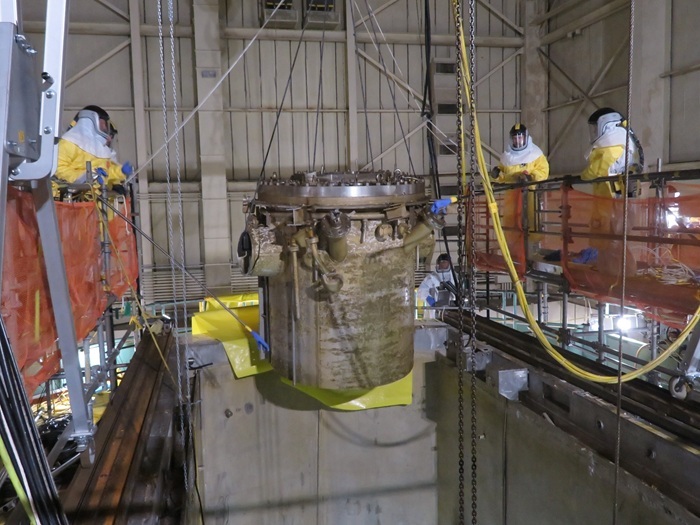
 Teams use a 20-ton overhead crane to lift a portion of a reactor vessel to pull it from the Oak Ridge Research Reactor facility. Its removal opened the door for major deactivation work to begin inside the facility.
OAK RIDGE, Tenn. — The Oak Ridge Office of Environmental Management has made significant headway deactivating the Oak Ridge Research Reactor since crews successfully removed its reactor vessel two years ago.
With the extracted vessel loaded into a 32,000-pound protective shipping cask for offsite disposal, crews shifted focus to address hazards in the basement of the large facility in the central campus of Oak Ridge National Laboratory (ORNL), bringing the structure a step closer to demolition.
“Removing the reactor was a tremendous accomplishment, but it also opened the door to the next phase of cleanup,” said UCOR Project Manager Steven Reed. “Our crews continue making steady progress every day, safely removing contaminated systems and preparing the building for the work that will ultimately lead to demolition. It’s complex work, but every milestone brings us one step closer to completing this mission.”
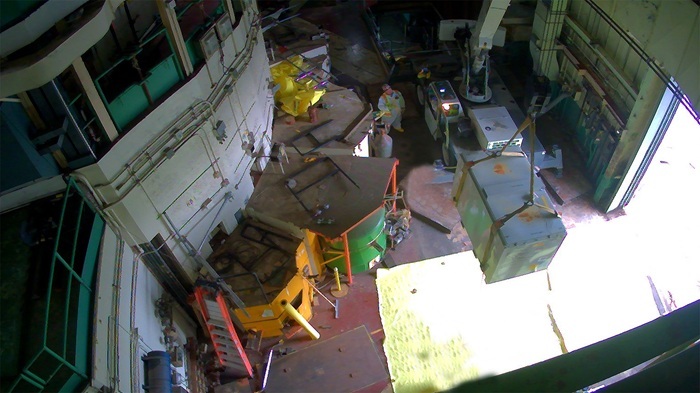 Crews remove the eighth of 13 process tanks from the basement of the Oak Ridge Research Reactor.
Deactivation progress at the reactor takes place alongside multiple cleanup projects reshaping ORNL’s central campus. Together, these projects eliminate hazards, clear aging nuclear infrastructure and open space for modernization to support future scientific discoveries.
Operating from 1958 until its shutdown in 1987, the reactor supported groundbreaking neutron research, isotope production, materials testing and reactor development, helping establish Oak Ridge as a global leader in nuclear science.
Decades of research also left behind highly contaminated systems and infrastructure requiring deactivation before crews can safely take down the building.
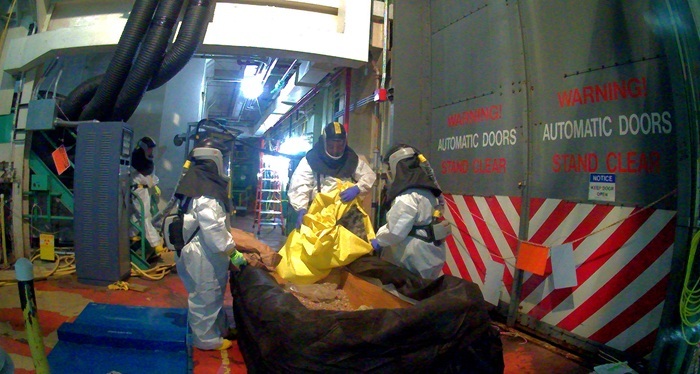 Crews have removed more than 300,000 pounds of lead from multiple floors of the Oak Ridge Research Reactor while venting, purging, draining and inspecting piping filled with contaminants from legacy missions.
Workers have rid the facility of more than 160 waste containers, 16,000 linear feet of contaminated piping, six gloveboxes and approximately 300,000 pounds of lead shielding while continuing extensive characterization activities. They expect to finish clearing remaining radiologically contaminated equipment from the basement this year. Next, crews will move to the upper floors to address additional piping and equipment removal.
Following deactivation, crews will place a concrete-like mixture throughout the lower level to create a stable foundation to support future demolition equipment.
Demolition is expected to begin in 2029.
-Contributor: Ryan Getsi
The sole national laboratory sponsored by the U.S. Department of Energy's (DOE) Office of Environmental Management (EM) won a 2026 R&D 100 Award in a global competition for developing innovative ceramic-metal composite materials for nuclear waste disposal.
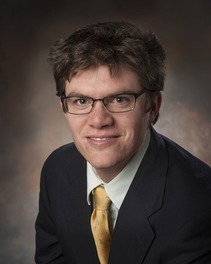
Savannah River National Laboratory (SRNL) Researcher Jake Amoroso leads the laboratory’s role in the award-winning project creating durable solutions to improve nuclear waste management and lessen environmental impact. Collaborators include Pacific Northwest National Laboratory, Rutgers University, Washington State University, Alfred University, Missouri University of Science and Technology and the companies Curio Legacy Ventures Inc. and California Nanotechnologies Inc. The project has been funded by DOE’s Advanced Research Projects Agency-Energy since 2022.
“I’m incredibly proud of Jake, his team and our collaborators from academia and industry who made this achievement possible,” said SRNL Director Johney Green. “Winning an R&D 100 Award is an extraordinary accomplishment and a testament to the talent, dedication and collaboration behind this breakthrough. This recognition highlights the impact of our science and the important role SRNL plays in advancing technologies that strengthen nuclear waste management and support our nation’s energy future.”
 |
|
Savannah River National Laboratory Researcher Jake Amoroso leads the laboratory’s role in a nuclear waste management project that won a 2026 R&D 100 Award. |
Often referred to as the “Oscars of Innovation,” the R&D 100 Awards, presented annually by R&D World magazine, have served as the most prestigious innovation awards program for the past 60 years, honoring R&D pioneers and their revolutionary ideas in science and technology.
The SRNL-led project developed engineered cermets, which are durable ceramic-metal composites that offer advantages for nuclear waste disposal by reducing storage footprint, process complexity and waste volumes compared to current methods. Compatible with waste from both existing and next-generation reactors, they offer a practical path toward more sustainable nuclear power and advanced reactor waste management.
In 2025, SRNL’s Cory Trivelpiece led work with Silica-X Inc. on advanced engineered magmatics technology that garnered an R&D 100 Award.
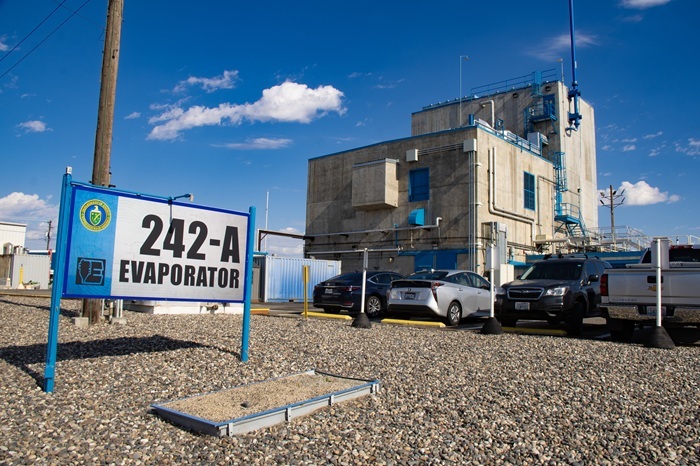 Hanford Tank Waste Operations & Closure successfully completed a recent waste-reduction campaign at the 242-A Evaporator.
RICHLAND, Wash. — Workers at the Hanford Site created another 353,000 gallons of storage space, supporting the ongoing mission to remove, treat and dispose of tank waste.
The U.S. Department of Energy’s Office of Environmental Management (EM) recently completed a waste-reduction campaign at the 242-A Evaporator. Condensing the site’s waste helps contractor Hanford Tank Waste Operations & Closure (H2C) continue safe waste transfers from older underground tanks to newer, double-shell tanks, reducing risk to the community and environment.
“Each campaign enables us to safely handle liquid waste while laying the groundwork for its long-term treatment and disposal,” said Will Ruane, 242-A program manager at Hanford Field Office. “But evaporator campaigns are effective to a point and can only remove so much water from the waste. That’s why a dual-path, glass-plus-grout strategy is necessary to create more double-shell tank space to allow waste retrievals to continue.”
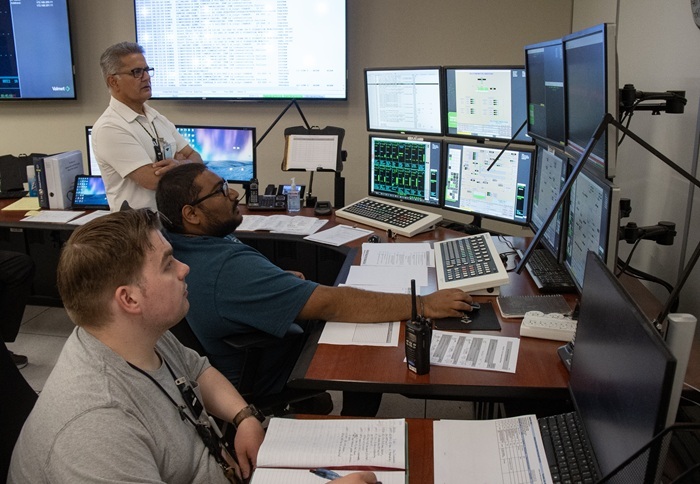 Rakesh Malhan, standing, a shift operations manager, and Erik Bohlman, foreground, and Issac Coronado, nuclear chemical operators, monitor evaporator operations from the control room of the Hanford Site’s 242-A Evaporator.
The evaporator has a critical role in Hanford’s cleanup mission. In its nearly 50 years of operations, the facility has helped remove more than 82 million gallons of liquid from Hanford’s waste tanks.
During a campaign, radioactive and chemical waste is boiled at low pressure using steam heat to remove water. The remaining concentrated waste — known as slurry — is transferred back to a storage tank for future treatment. The evaporator water is filtered and sent to Hanford’s Effluent Treatment Facility for additional processing and disposal.
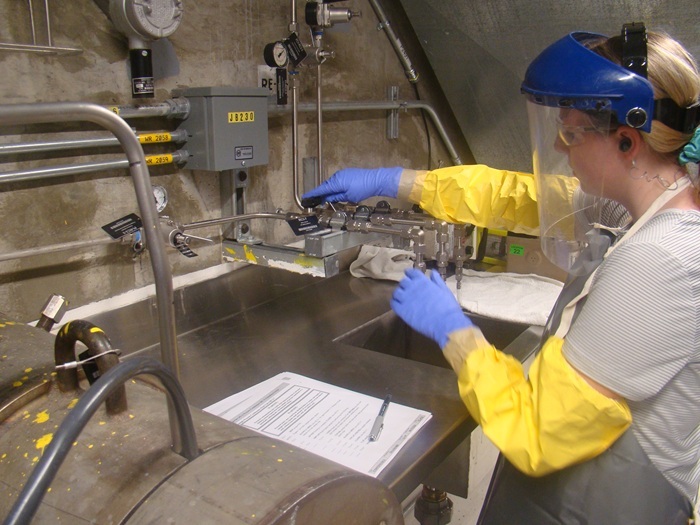 Allie Smith, a nuclear chemical operator, takes process condensate samples during the Hanford Site’s recent 242-A Evaporator campaign.
“Everyone came together with focus and commitment, which allowed us to achieve a successful campaign,” said Brandon McFerran, H2C’s Production Operations manager. “The team’s collaboration and dedication made it all possible.”
The facility restarted in 2025 after being offline for six years to complete a series of upgrades and repairs. The next scheduled campaign is in the first quarter of 2027.
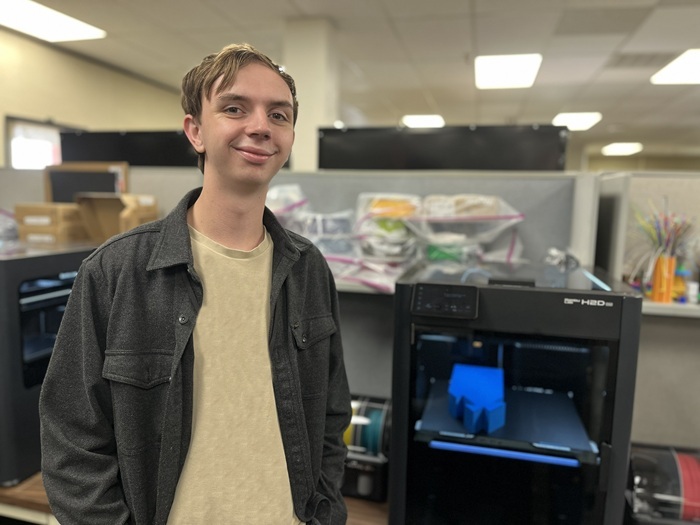 Intern Isaac Ryner watches a 3D print finish as part of his summer project, where he learned and applied new 3D modeling techniques.
IDAHO FALLS, Idaho — A third-year electrical engineering student at Idaho State University returned to the Idaho Cleanup Project (ICP) for a second consecutive summer internship, where he applied coding and taught himself 3D modeling software to design a prototype for a critical effort to retrieve 4,400 cubic meters of legacy waste and prepare it for disposal.
Isaac Ryner, an intern with ICP cleanup contractor Idaho Environmental Coalition, supported the Calcine Disposition Project. He developed and designed robotic systems, advanced engineering tools and other equipment to safely retrieve the calcinated waste stored onsite inside concrete vaults for decades.
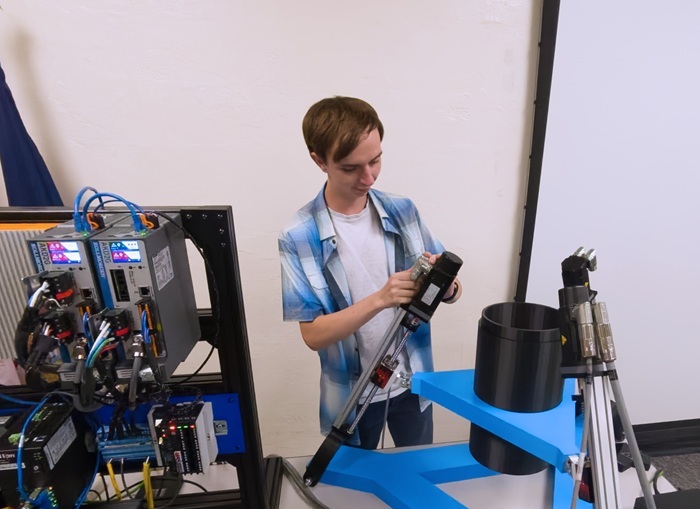 Idaho Environmental Coalition intern Isaac Ryner assembles a mock-up system to support the Idaho Cleanup Project’s calcine waste retrieval and disposal effort.
His return to the ICP reflects how meaningful technical projects build confidence and strengthen interest in U.S. Department of Energy Office of Environmental Management (EM) career paths. Returning students often become strong candidates for the future workforce because they see how their contributions advance cleanup progress.
Project team members support student interns while benefiting from their fresh perspectives.
“Isaac shows a level of curiosity and commitment that strengthens our team. The enthusiasm Isaac brings makes a positive impact, and the work completed this summer demonstrates the value of investing in young professionals who want to support the EM mission,” said Edward Harlow, Ryner’s mentor.
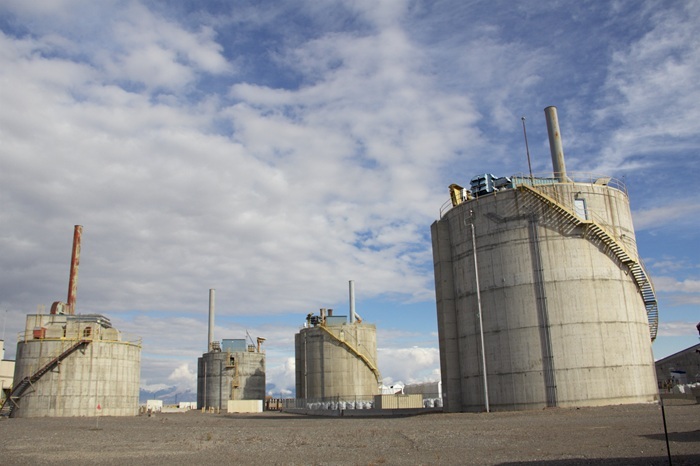 The Idaho Cleanup Project's Calcine Disposition Project team is developing the most effective techniques to retrieve the granular waste from these large, stainless steel bins encased in six concrete vaults called bin sets.
Ryner designed and programmed a mock-up system to evaluate the project’s access riser positioner, which will position a pipe against the calcine bin so a robot designed to travel down that pipe can weld it to the bin for waste retrieval.
Ryner learned the 3D modeling software to design a prototype of the positioner. After modeling the prototype components, including a mounting platform, he spent several days 3D printing and revising the pieces, producing 23 printed parts that assemble into a complete demonstration model. The experience allowed him to apply classroom learning directly to a cleanup challenge.
During his first year supporting the calcine project, Ryner helped engineers integrate a physical control system with a robotic interface used for remote handling. He mapped control inputs, reformatted communication data and refined movement programming to make robotic operation more intuitive, work that is essential to future calcine retrieval activities.
-Contributor: Ryan Christensen
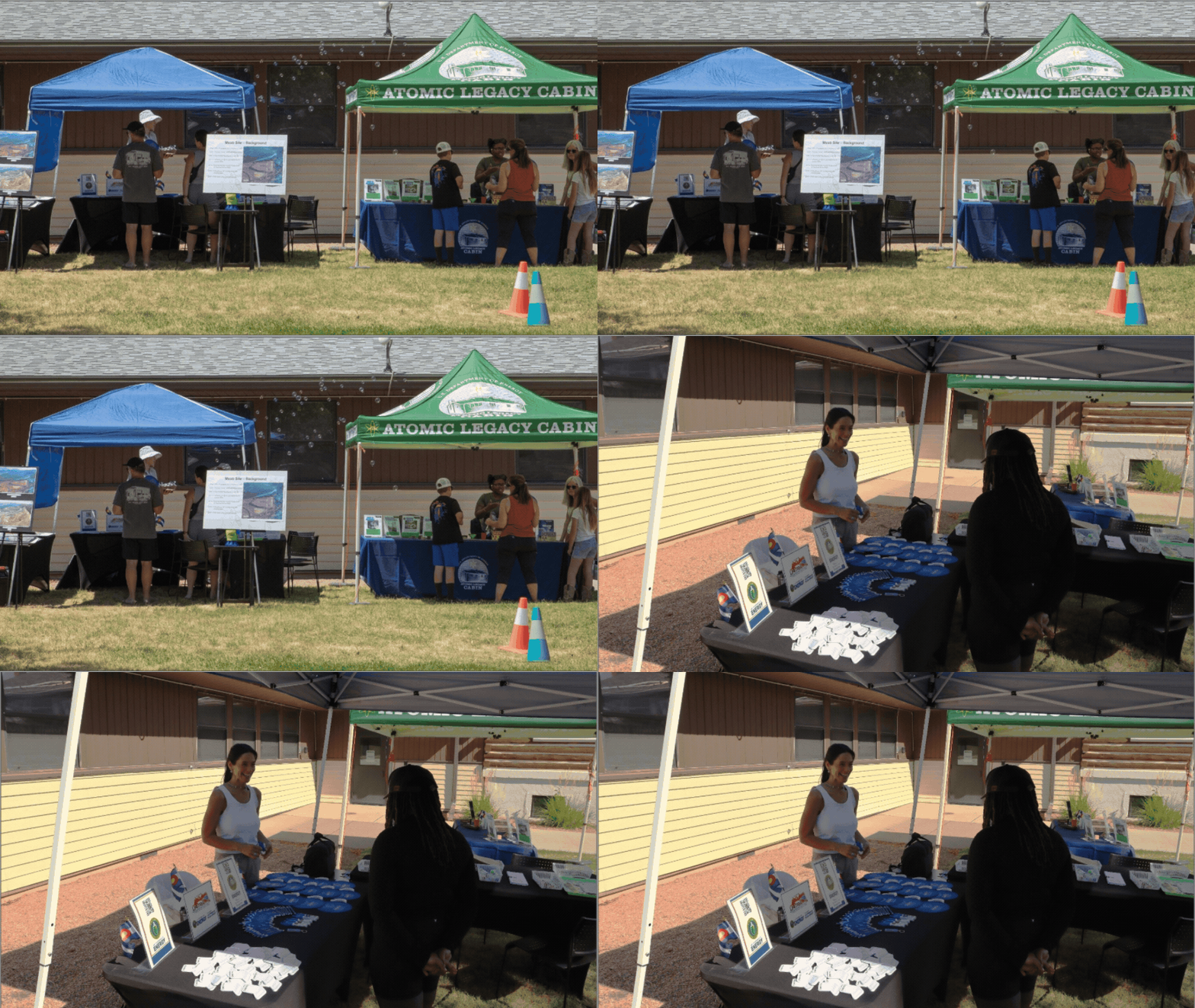 In the first frame, representatives from the U.S. Department of Energy’s (DOE) Office of Environmental Management Moab Uranium Mill Tailings Remedial Action Project, at left, blue tent, and the DOE Office of Legacy Management’s Atomic Legacy Cabin engage with community members at a recent Colorado Day event in Grand Junction, Colorado. In the second photo, a Moab Project representative speaks with an attendee about the project.
GRAND JUNCTION, Colo. — The Moab Uranium Mill Tailings Remedial Action Project recently joined stakeholders here for a celebration marking Colorado's sesquicentennial hosted by the U.S. Department of Energy’s (DOE) Office of Legacy Management (LM).
Featuring history, science and hands-on activities honoring Colorado’s 150 years of statehood, the event took place at LM's Atomic Legacy Cabin. With roots dating back to the Manhattan Project, the cabin tells the story of uranium mining and processing on the Colorado Plateau.
The Moab Project is part of the history of the plateau, which spans portions of Colorado, Utah, Arizona and New Mexico. The project is responsible for relocating uranium mill tailings from the former Atlas Minerals uranium mill, which once processed ore from across the region. The mill left behind the tailings pile that the Moab Project has spent more than a decade moving to an engineered disposal cell near Crescent Junction, Utah.
To help share that connection, the Moab Project staffed a booth at the Colorado Day event featuring the project's history, current operations and progress toward completing the cleanup.
The celebration connected the Moab Project with the Grand Junction community, showing how the region's atomic-era history continues to shape environmental cleanup work across state lines.
Upon completing the DOE Office of Environmental Management’s cleanup mission at the Moab Project, the Moab and Crescent Junction sites will transition to LM for long-term surveillance and maintenance.
-Contributor: Barbara Michel
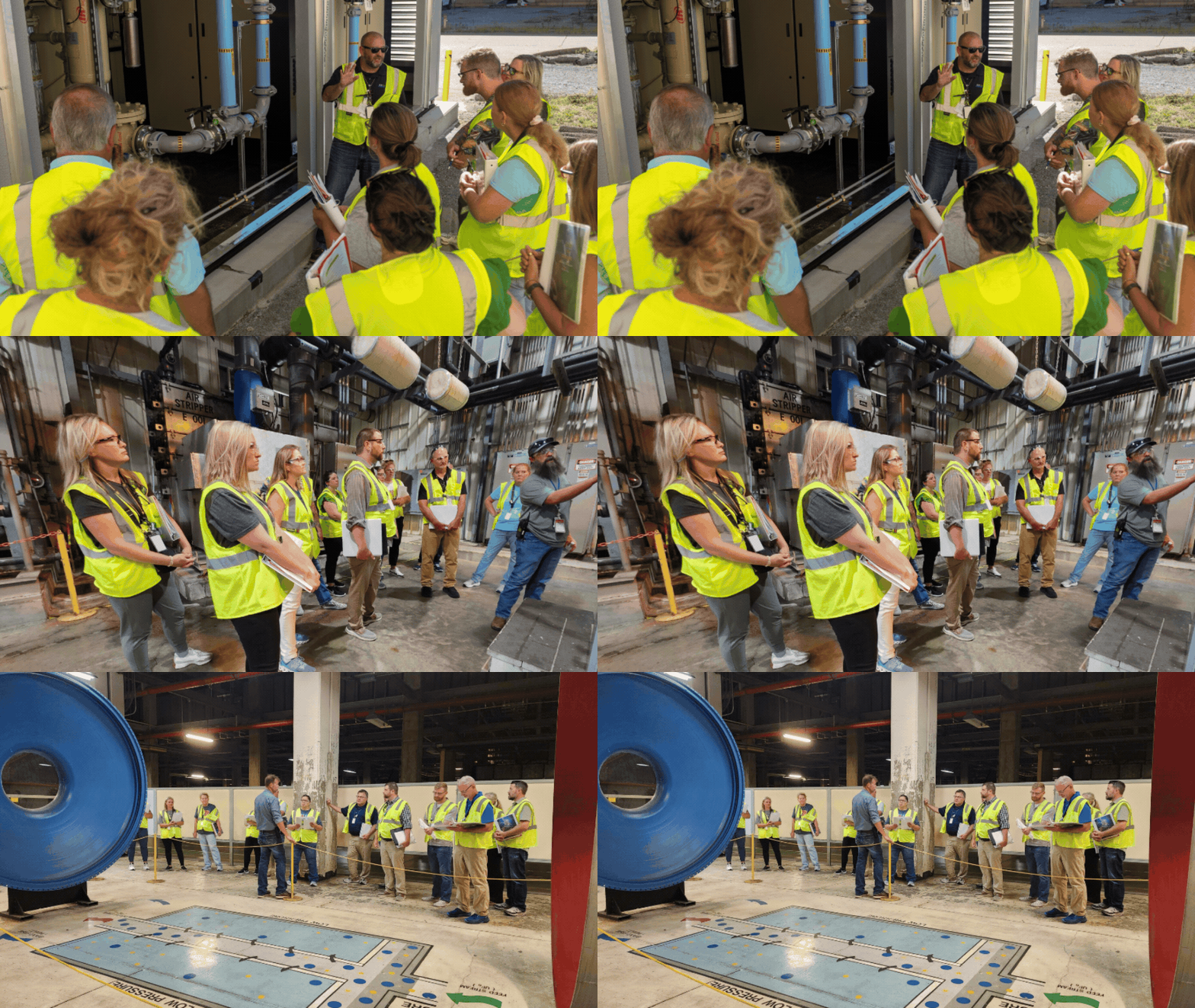
PADUCAH, Ky. — Local math, science and technical skills teachers recently visited the U.S. Department of Energy’s Paducah Site to get a firsthand look at work opportunities and develop lesson plans to prepare students for future nuclear energy and other STEM careers.
The event, called “Teach the Teacher” was made possible by a $1.9-million grant from the Kentucky Nuclear Energy Development Authority to the West Kentucky Educational Cooperative to advance workforce development efforts and support regional growth across 12 school districts and more than 20,000 students near the Paducah Site. Four Rivers Nuclear Partnership, the site’s deactivation and remediation contractor, hosted several educators from regional school districts.
In awarding the grant, the cooperative noted that western Kentucky has long been connected to the nation’s energy sector, and the reindustrialization underway at the Paducah Site presents an opportunity to build on that legacy while preparing the workforce of tomorrow.
-Contributors: Nick Henley, Nathan Lange, Dylan Nichols
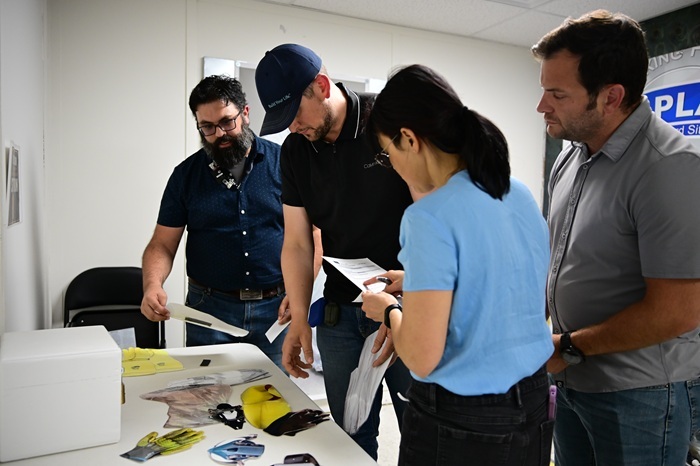 Engineers from the Hanford Waste Treatment and Immobilization Plant participated in a radiological safety-themed escape room.
RICHLAND, Wash. — While safety is a serious topic, using creative and engaging tactics to reinforce safe behaviors and procedures can be more effective in delivering messages that employees will retain.
In that vein, safety professionals at the Hanford Site's Waste Treatment and Immobilization Plant (WTP) created an immersive experience modeled on the popular escape room concept for their workforce to boost employee involvement and enhance knowledge of procedures and requirements.
"The goal is to engage employees in a memorable learning experience that strengthens our safety culture,” said Mat Irwin, Hanford Field Office assistant manager for the WTP. “It’s a fun way to challenge our team and reinforce important safety practices.”
Called “Containment Breach,” the escape room challenges teams of four to solve radiological safety-themed puzzles, find clues and respond to simulated safety scenarios. This provides teams with an opportunity to apply the knowledge and skills they receive during radiological worker training.
“By actively involving employees in hands-on, memorable training, the escape room helps translate safety knowledge into real-world behaviors, potentially lowering workplace accidents and near misses,” said Brian Hartman, WTP project director. “It contributes to safer operations and supports our culture of continuous improvement.”
The room’s puzzles and challenges cover important topics such as reviewing radiological work permits, identifying the correct personal protective equipment for the job, performing radiological surveys and more. Each week’s team with the fastest time is featured in the WTP employee newsletter.
The idea for the escape room came from a member of WTP’s Voluntary Protection Program (VPP) team after hearing about success of a similar escape room during the 2024 VPP Participants’ Association annual Safety & Health Summit.
AIKEN, S.C. — The U.S. Forest Service on the Savannah River Site (SRS) has selected two employees as its inaugural 2026–2027 Forest Fellows, marking the launch of a program to develop emerging leaders.
The yearlong fellowship provides employees with leadership exposure, mentorship and opportunities to help shape future natural resource stewardship across the 310-square-mile site.
“The Forest Fellows program represents our intentional commitment to developing employees who have already distinguished themselves and are ready for broader leadership,” said Forest Supervisor Nicholas Pardi. “Eileen Eck and Kyle Cox bring expertise, curiosity and a deep dedication to public service. We are proud to support them as they take this next step and help guide the Savannah River Site Forest into the future.”
 |
|
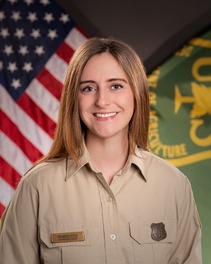
Eileen Eck, silviculturist on the Savannah River Site Forest |
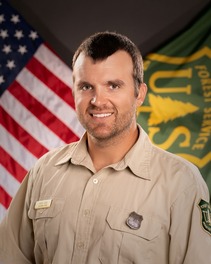
Kyle Cox, supervisory wildlife biologist on the Savannah River Site Forest |
|
 |
Each fellow will receive one-on-one mentorship from Forest Service leaders. Eck will work with senior leadership on the Monongahela National Forest in West Virginia, while Cox will engage with leaders from national forests in North Carolina.
They will also complete a capstone project focused on improving SRS forest operations, providing lessons learned from their mentorships, identifying opportunities for innovation and strengthening the forest’s stewardship practices.
Eck serves as the silviculturist on the SRS forest. In the past she worked as a resource forester with the Missouri Department of Conservation, where she was selected as the 2019 Statewide Employee of the Year. Her experience spans active land management, cross-disciplinary coordination and long-range planning.
“After completing the Forest Service’s National Advanced Silviculture Program in 2025, I am excited for this opportunity to approach leadership from a broader perspective and further develop my skills as a versatile and effective leader across disciplines,” Eck said.
Cox serves as the supervisory wildlife biologist on the SRS forest. In the past he served as the wildlife program manager on the Oconee Ranger District in Georgia, where he strengthened the red cockaded woodpecker program, led outreach efforts and expanded stewardship partnerships. Cox began his Forest Service career as a wildlife technician.
“I want to leave a positive legacy through my achievements in wildlife and forest management and through the relationships I build,” Cox said. “This fellowship represents a significant opportunity to help me reach my full potential and strengthen my ability to serve the forests and communities I care about.”
-Contributor: Joe Orosz
|