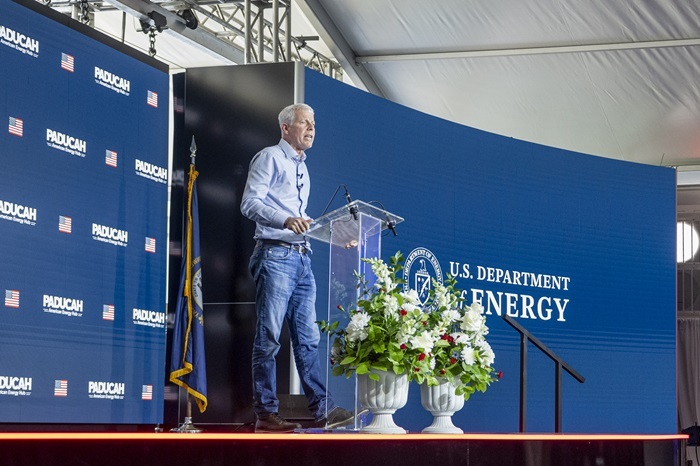
 U.S. Secretary of Energy Chris Wright speaks at an event announcing a $100 billion investment on leased land at the Paducah Site.
PADUCAH, Ky. — U.S. Secretary of Energy Chris Wright and Assistant Secretary of Environmental Management Tim Walsh joined industry leaders and local, state and national representatives last week to announce the development of a new American Energy Hub at the U.S. Department of Energy’s (DOE) Paducah Site.
“What is the next industry that is going to define the next few decades? There’s so much coming to our country, but the most significant of all is artificial intelligence,” Wright said.
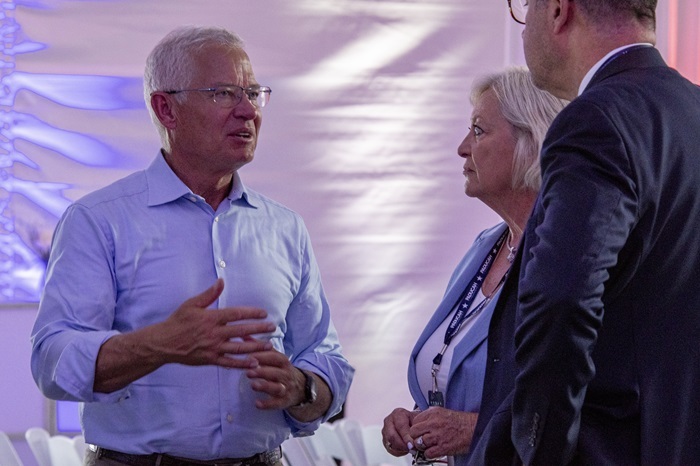 Assistant Secretary of Environmental Management Tim Walsh, left, meets with local community leaders following an announcement of a new data center campus at the Paducah Site.
Officials outlined a landmark partnership to redevelop portions of the Paducah Site into a world-class artificial intelligence (AI) high-performance computing (HPC) innovation campus powered by new affordable energy infrastructure.
“This site will lead America into the future,” Walsh said at the event attended by hundreds of members of the Paducah Site workforce. “We are enabling large projects on federal lands to keep our nation secure, maintain our position as a global leader in innovation, boost affordable energy generation and expand economic opportunities.”
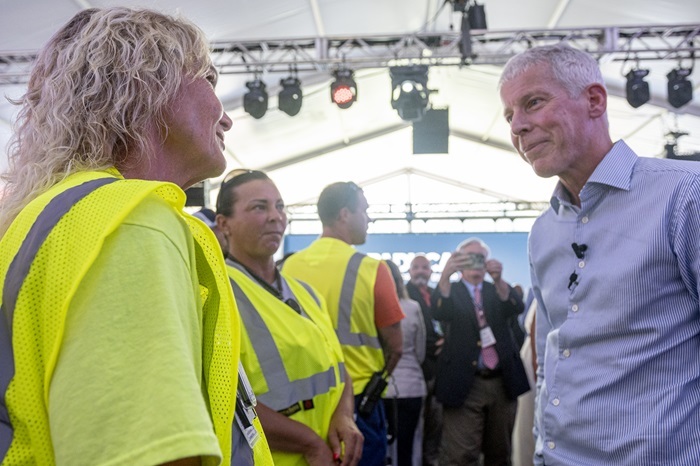 U.S. Secretary of Energy Chris Wright, right, meets with Paducah Site workforce members following the American Energy Hub announcement at the Paducah Site. The project is expected to create approximately 8,000 construction jobs and 600 permanent jobs.
For decades, the site played a pivotal role in the nation’s security. It will now be a hub for American innovation. The $100 billion investment, one of the largest in Kentucky’s history, will help lower electricity costs across the region, create thousands of high-paying American jobs and strengthen national security.
Plans include building 2 gigawatts (GW) of new grid-connected natural gas-fired generation, upgrading existing transmission infrastructure and deploying up to 2.6 GW of battery energy storage systems to support a new 1.8-GW AI and HPC innovation campus.
The Paducah Site, which is undergoing deactivation and remediation from decades of uranium enrichment operations, is uniquely positioned to support the redevelopment. The existing transmission capacity, water infrastructure, fiber connectivity and available land can support large-scale AI infrastructure.
“We are advancing environmental cleanup with urgency and turning these sites into engines of economic growth and affordable energy,” Walsh said.
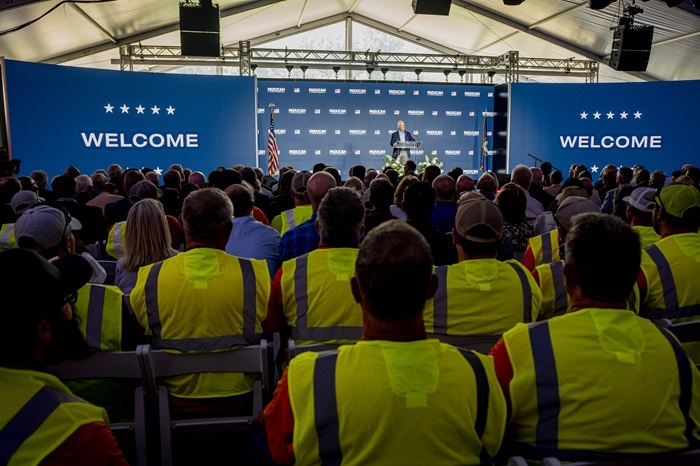 Assistant Secretary of Environmental Management Tim Walsh welcomes attendees to an event announcing a new American Energy Hub at the Paducah Site.
Consistent with President Donald Trump’s Ratepayer Protection Pledge, the project’s generation and storage capacity would exceed the campus’s energy needs, allowing excess electricity to be delivered to the regional grid, helping reduce energy costs for American families and businesses.
Following a request for offers in November 2025, DOE selected Brookfield to develop and operate the Paducah data center campus, and NextEra Energy to build and own the dedicated energy resources that will power the campus.
Big Rivers Electric Power Corp. will provide wholesale electric service, Jackson Purchase Energy Cooperative will provide retail service and Paducah Power System will serve as a community partner. The power service agreement remains subject to approval by the Kentucky Public Service Commission.
The development will sit on approximately 785 acres of leased land on the Paducah Site. Construction is expected to be completed in 2031.
The announcement comes on the heels of another energy hub announced at the Portsmouth Site in March, as DOE continues to find opportunities to turn liabilities into assets.
-Contributor: Sarah Marko
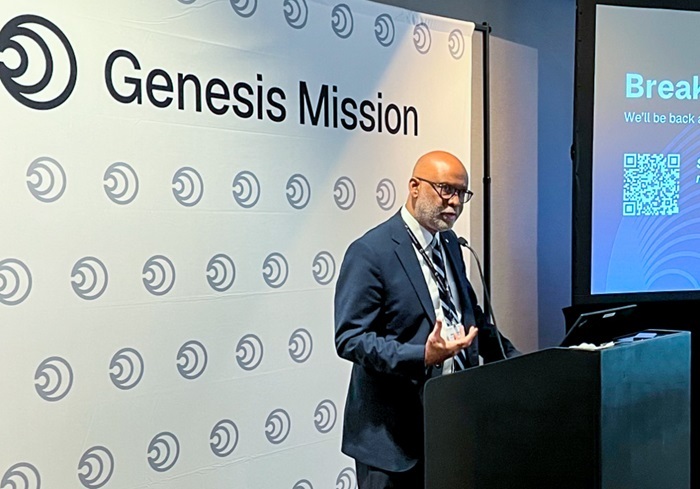 Savannah River National Laboratory Director Johney Green speaks to reporters during a Q&A session at the recent Genesis Mission Annual Summit.
AIKEN, S.C. — Savannah River National Laboratory (SRNL) will lead projects supporting critical national security and environmental stewardship goals for the U.S. Department of Energy’s (DOE) Office of Environmental Management (EM) and National Nuclear Security Administration, as part of the first projects recently announced for the Genesis Mission.
“SRNL has built decades of expertise tackling complex environmental cleanup and nuclear materials challenges,” said SRNL Director Johney Green. “As we embark on the Genesis Mission, we are eager to harness this depth of expertise in collaboration with our partners across national laboratories, industry and academic institutions. By integrating our longstanding scientific knowledge with emerging AI capabilities, we are accelerating discovery in ways that will strengthen our national security, environmental and energy missions.”
Nearly 300 projects selected from a historic request for applications response span all 50 states. The national portfolio of research teams will help develop and demonstrate AI-enabled scientific workflows designed to accelerate breakthroughs in energy, discovery science and national security.
Designed to double America’s scientific productivity, President Donald Trump’s historic Genesis Mission brings together DOE’s world-class scientific capabilities, advanced artificial intelligence, high-performance computing, and the nation’s leading researchers to transform how scientific discovery is conducted and strengthen American leadership in science and technology.
SRNL is developing first-of-a-kind AI models designed to solve complex challenges in environmental remediation, waste management and infrastructure resilience — ultimately safeguarding national security assets while yielding over $150 billion in lifecycle cleanup savings.
 SRNL will lead the following environmental projects:
- The VITA-SCALE project leverages physics-based AI to accurately predict how nuclear waste behaves during vitrification at full scale. Vitrification, the process of converting waste materials into glass, is used by EM for long-term storage. VITA-SCALE overcomes the limitations of small-lab analyses and steady-state models, and accelerates EM cleanup, reduces costs and improves safety with plans to open-source its models for broader innovation.
- The SCOPE project uses AI, chemistry and physics-based modeling to more accurately predict the behavior of radioactive liquid waste during treatment. This improved understanding can help prevent costly process disruptions, such as unexpected solids formation, reducing operational risk while improving process efficiency.
SRNL will also partner on an environmental project led by Pacific Northwest National Laboratory and a fusion project led by Vanderbilt University.
Learn more about the DOE Genesis Mission initiative here and the Genesis Mission at SRNL here.
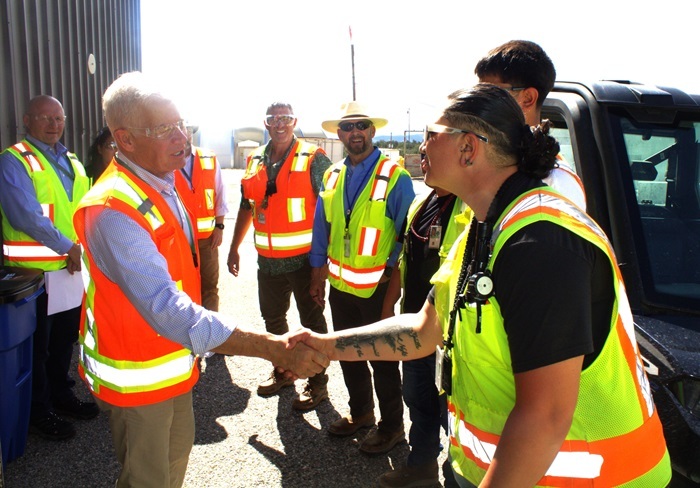 Assistant Secretary of Environmental Management Tim Walsh, left, meets Newport News Nuclear BWXT-Los Alamos LLC waste operations crew members supporting the Los Alamos National Laboratory legacy cleanup mission at Technical Area 54, Area G.
LOS ALAMOS, N.M. — Assistant Secretary of Environmental Management (EM) Tim Walsh and his leadership team recently visited the EM Los Alamos Field Office (EM-LA), seeing firsthand the progress achieved for the Los Alamos National Laboratory (LANL) legacy cleanup.
It was Walsh’s second visit to Los Alamos since taking the helm of the EM program in October 2025, emphasizing the priority for legacy cleanup in northern New Mexico.
“Taking a deeper-dive tour in Los Alamos provided a greater understanding of the significant progress being made to advance the LANL legacy cleanup and support our national security mission,” said Walsh. “The visit underscored EM-LA and N3B’s commitment to safety, efficient and effective cleanup, and opportunities to accelerate the disposition of legacy waste at LANL.”
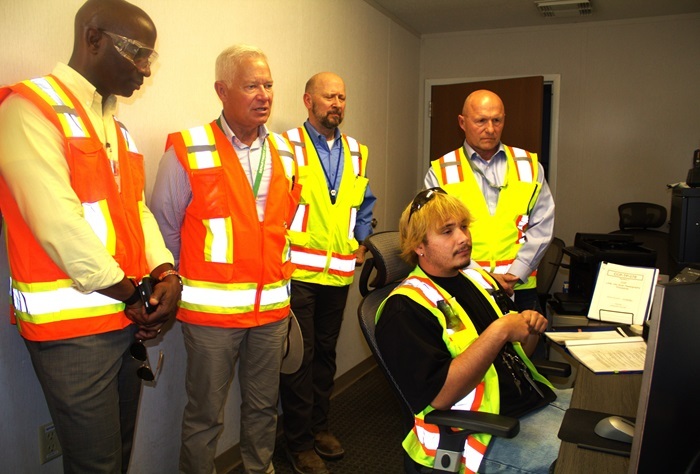 Assistant Secretary of Environmental Management Tim Walsh, second from left, observes high-energy, real-time radiography of legacy waste containers at Technical Area 54, Area G. This process is an important step in the Waste Isolation Pilot Plant (WIPP) Central Characterization Project to certify waste prior to shipment to WIPP.
A stop at Technical Area 54 (TA-54), Area G, highlighted how EM-LA and legacy cleanup contractor Newport News Nuclear BWXT-Los Alamos LLC (N3B) support the LANL legacy cleanup mission. There, the team safely manages, processes and certifies legacy transuranic waste for shipment to the Waste Isolation Pilot Plant (WIPP) near Carlsbad, New Mexico.
Over 90% of the above-ground waste inventory at TA-54, Area G, has been safely shipped to WIPP. To date in the fiscal year (FY) ending Sept. 30, EM-LA and N3B have completed 66 transuranic waste shipments to WIPP — a 53% increase so far over FY 2025. The shipments in the current fiscal year included nearly 300 cubic meters of transuranic waste — comparable in size to about 30 standard-sized dump trucks — a 54% increase over FY 2025.
Additionally, 977 cubic meters of low-level waste from soil and groundwater investigation and remediation across LANL have been shipped to offsite disposal facilities in Texas and Utah to date in FY 2026.
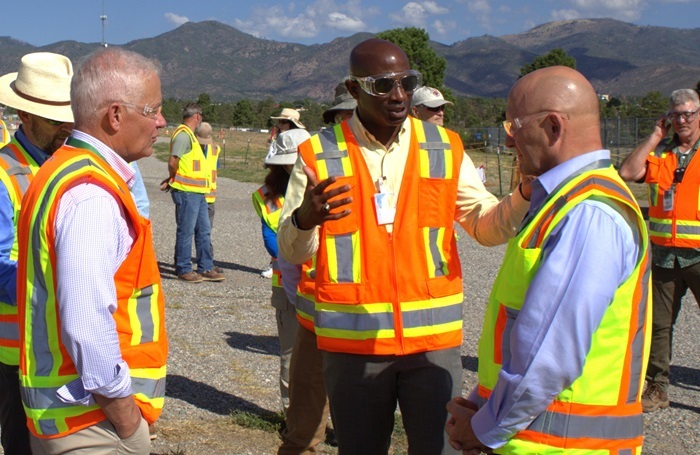 Environmental Management (EM) Los Alamos Field Office Acting Manager Stan Pyram, center, explains the above- and below-ground legacy waste remaining at Technical Area 21 to EM Assistant Secretary Tim Walsh, left, and EM Chief Operating Officer David Brunnert.
During the visit, Walsh toured Technical Area 21, a cleanup site where plutonium processing and groundbreaking research was conducted during the Manhattan Project and Cold War. Walsh met with N3B workers who monitor the site to maintain safety, security, and public and environmental protection.
-Contributors: Stephanie Gallagher, Donavan Mager
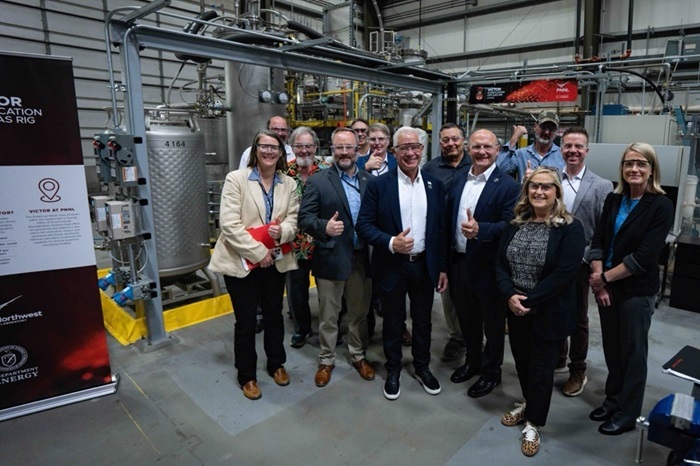 Assistant Secretary of Environmental Management Tim Walsh, front row, third from left, toured the Vitrification Off-gas Rig, aka VICTOR, during a recent Pacific Northwest National Laboratory visit.
RICHLAND, Wash. — Pacific Northwest National Laboratory (PNNL) showcased its science-based solutions to the nation’s most complex nuclear waste cleanup challenges during Assistant Secretary of Environmental Management (EM) Tim Walsh’s first visit to the laboratory.
“What’s really exciting to me is the history of the lab. It’s really evolved in the diversity of the scientific discoveries they’re doing here,” Walsh said of PNNL. “They support EM’s mission in a multitude of areas, everything from groundwater remediation to dealing with one of our largest tasks: safely retrieving and treating tank waste.”
 |
|
EMTV: In this video, Assistant Secretary of Environmental Management Tim Walsh discusses the nuclear science expertise Pacific Northwest National Laboratory brings to the cleanup mission. |
Walsh, EM Chief Operating Officer David Brunnert and EM Deputy Chief of Staff John Howard toured PNNL with U.S. Department of Energy (DOE) Hanford Field Office Manager Ray Geimer and Deputy Site Manager Corey Low, and DOE Pacific Northwest Site Office Acting Manager Ashley Morris.
PNNL grew out of the Manhattan Project and brings 60 years of nuclear science expertise to the DOE cleanup mission at the adjacent Hanford Site, EM sites across the DOE complex and international partners.
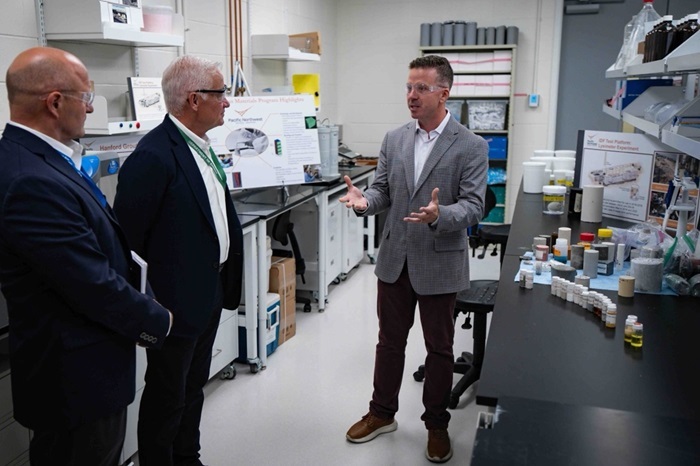 Pacific Northwest National Laboratory (PNNL) chemist Matt Asmussen explains how PNNL has been a leader since the 1970s in testing and evaluating specialized grout waste forms for the solidification of Hanford Site wastes.
“As an Office of Science national laboratory, PNNL advances the scientific discoveries that strengthen today’s cleanup efforts and make tomorrow’s solutions possible,” PNNL Director Deb Gracio said. “During Assistant Secretary Walsh’s visit, we demonstrated how our expertise in chemistry, materials science, computing and AI is helping the Office of Environmental Management tackle its most complex challenges with greater confidence, speed and long-term impact.”
PNNL helps transform radioactive waste into glass as a partner in the startup and ongoing operations of the Hanford Site’s Waste Treatment and Immobilization Plant. In addition to glass science, PNNL’s waste form team analyzes options to immobilize waste in a scientifically formulated cementitious material called grout.
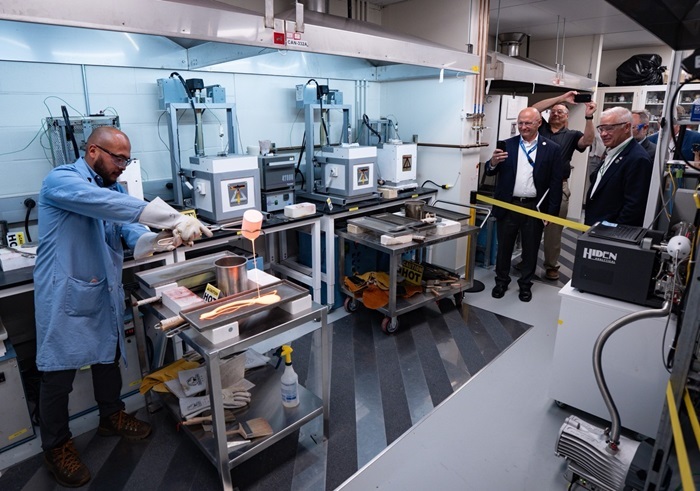 Pacific Northwest National Laboratory materials scientist José Marcial, left, demonstrates a glass pour, one of the research methods used to evaluate which compositions most effectively vitrify various Hanford Site tank wastes. The goal is to reduce the mission’s cost and timeline.
“It’s really fascinating to see the vitrification process, the different glass-forming products that go into it and how we can safely handle the off-gassing that occurs,” Walsh said. “I’m also excited about grouting, so some of the low-activity waste can be safely grouted, and the chemistry involved with that.”
PNNL is leading and partnering on three DOE Genesis Mission projects dedicated to supporting the artificial intelligence (AI) acceleration of EM’s cleanup goals.
“We’re now at the era of AI, and we’re going to apply AI and machine learning to further accelerate how we can safely treat the tank waste mission here,” Walsh said.
-Contributor: Melissa Perdue
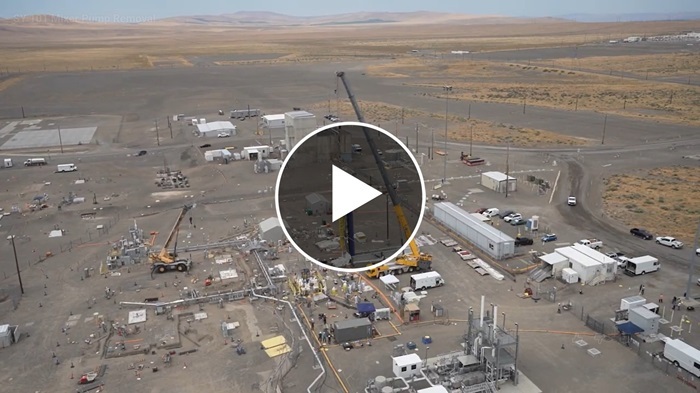 EMTV: Watch the story of how crews successfully finished one of the most technically demanding pump removal projects in Hanford Site history.
RICHLAND, Wash. — Workers at the Hanford Site recently completed one of the most technically demanding pump removal projects in the site’s history, preparing for eventually grouting 200 West Area tank waste.
Installed in Tank SY-101 in 1993 to help reduce hydrogen buildup, the mixer pump is about 50 feet long and weighs roughly 10 tons. Its size and design made the removal a complex but necessary step. Hanford’s only double-shell tank farm in the 200 West Area, SY Farm is expected to play a key role in the next phase of waste cleanup. This pump needed to be removed to install future tank waste retrieval equipment.
“This project was important because it safely removed a large, specialized piece of equipment that had served its purpose and was standing in the way of future work in SY Farm,” said Andy Wiborg, director of the Hanford Field Office Tank Farm Programs Division for the U.S. Department of Energy Office of Environmental Management. “The team carried out this high-hazard work with strong radiological controls, careful planning and disciplined execution.”
 |
|
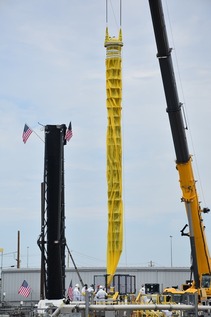
Crews at the Hanford Site removed a legacy mixer pump from Tank SY-101, helping prepare for future waste retrieval and pretreatment work in the 200 West Area. |
As the mixer pump was removed from the tank, jets on a cleaning system, at right, sprayed high-pressure water to help remove the waste. |
|
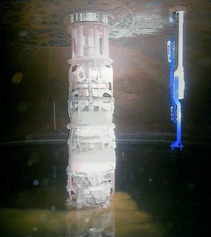 |
The effort required extensive planning, mock-up training and custom engineering. Before work began in the tank farm, crews with contractor Hanford Tank Waste Operations & Closure (H2C) rehearsed the removal at an offsite mock-up to test equipment, refine work steps and improve safety. They also used a specially designed hydraulic lift system, dubbed “Hercules,” to begin freeing the pump in a controlled way. Additional systems were used to clean, handle and package the pump for disposal.
“This project probably touched every department and every organization in the company,” said Jeff Stevens, H2C acting president and program manager. “This truly was a group effort, and everybody should be very proud.”
The crews removed the pump and packaged it for disposal with no contamination issues and no operational upsets, showing how planning, practice and teamwork can support safe progress on Hanford’s cleanup mission.
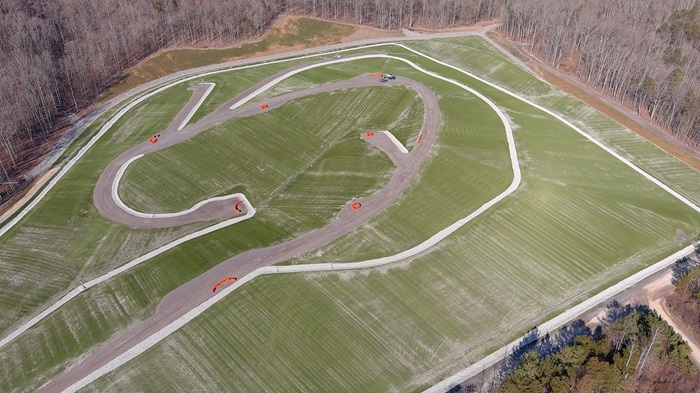 An aerial view of the Environmental Management Disposal Facility’s groundwater field demonstration study. Crews installed devices on the facility’s future footprint to measure groundwater elevation levels over two wet seasons.
OAK RIDGE, Tenn. — The Oak Ridge Office of Environmental Management (OREM) has completed a two-year data collection campaign measuring groundwater elevation levels, a crucial component to inform its Environmental Management Disposal Facility (EMDF) project.
When constructed, EMDF will provide the waste disposal capacity needed to continue OREM’s large scale cleanup projects at the Y-12 National Security Complex and Oak Ridge National Laboratory. OREM’s current onsite disposal facility is at 86% capacity.
Monitoring groundwater levels was part of a groundwater field demonstration study. This work allowed OREM and cleanup contractor United Cleanup Oak Ridge (UCOR) to gather information about how groundwater elevations change, providing valuable information for the landfill’s final design.
Groundwater elevation monitoring is required by the project’s record of decision approved by the U.S. Department of Energy, U.S. Environmental Protection Agency and Tennessee Department of Environment and Conservation. Protective safety measures require at least a 15-foot separation between waste and groundwater.
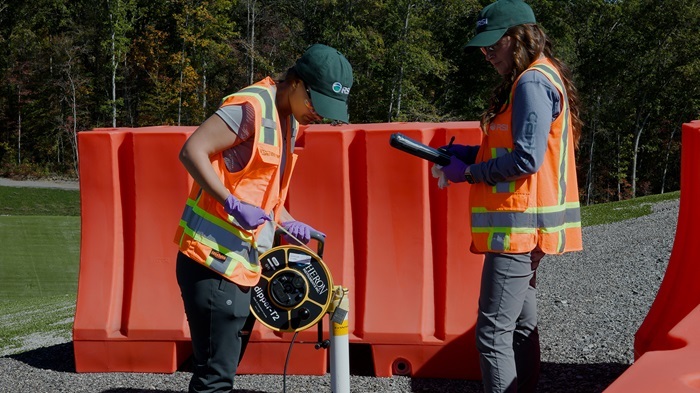 Oak Ridge Office of Environmental Management team members monitored groundwater levels in wells across the footprint of the future Environmental Management Disposal Facility over two years.
Gathering data during the wet seasons is important because that's when groundwater levels are highest. There’s more rain, and plants without foliage absorb less water. In east Tennessee, the wet season typically runs from December through March. Experts have been combing through the numbers since then.
The demonstration relied on a 30-acre impermeable cover system installed over a portion of the EMDF site to simulate the effect of the final landfill liner. It successfully blocked rain from soaking into the ground during the wettest months, which steadily lowered the underlying groundwater table.
While the field demonstration confirmed that groundwater levels dropped, the rate of the groundwater decline was slower than expected. Accounting for this data, engineers altered the design by slightly raising the floor of the first two disposal cells to ensure the EMDF adheres to the protective safety measures. This change prevents schedule delays and keeps the facility on track to begin operations by 2030.
"We had to make a practical engineering decision based on real-world hydrological data," said Mary Magleby, UCOR’s EMDF project manager. "By proactively raising the first two cells of the landfill, we ensure regulatory compliance while preventing what could have been a multi-month delay to our construction timeline."
With the groundwater data finalized, the project moves to the next major construction phase. Crews are scheduled to begin site grading, utility extensions and pouring foundations for support facilities this fall, paving the way for EMDF’s water treatment system.
-Contributor: Lindsay Hammill
IDAHO FALLS, Idaho — For more than 37 years, Robert R. Nii has devoted his career to protecting people and strengthening the safety posture of every site he has served.
As fire marshal for the Idaho Cleanup Project (ICP), Nii plays a key role in supporting the U.S. Department of Energy’s (DOE) environmental cleanup mission by ensuring fire protection remains a cornerstone of safe operations at the Idaho National Laboratory Site.
Nii’s path to fire protection began unexpectedly. After earning a mechanical engineering degree from the University of Idaho in 1988, he began work with a commercial property insurance and risk management company in Seattle, Washington, despite knowing little about the field. There, Nii gained broad experience in industrial facilities and complex fire hazards.
“You learn quickly how essential sound engineering principles are to preventing fires and protecting lives,” he said.
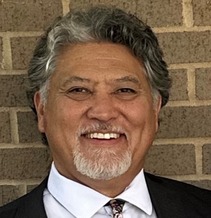 |
|
Robert R. Nii, fire marshal for Idaho Cleanup Project, is dedicated to enhancing fire protection at the Idaho National Laboratory Site. |
Nii eventually returned to Idaho and became the ICP fire marshal in 2009, a role he continues today as an employee of cleanup contractor Idaho Environmental Coalition.
The fire protection mission and the people Nii helps protect continue to motivate him.
“I love keeping people safe from the dangers of fire,” he said. “And I love responding to emergencies and helping people when they need it most.”
At the Idaho Site, Nii often encounters the misconception that fire protection is limited to processing permits or conducting inspections.
“What people don’t see are the decades of research, testing and engineering calculations behind every standard,” he said. “Fire protection is a true engineering discipline.”
During Idaho’s high-risk wildfire seasons, Nii’s team focuses on proven strategies such as defensible space — a cleared buffer zone created around a building by reducing or removing flammable vegetation and materials — and fire-resistive construction to help protect workers, facilities and natural resources.
“We can’t control when a wildfire starts, but we can prepare,” he said.
Nii is especially proud of how ICP has strengthened its fire protection program.
“My goal was always to help build and maintain the best fire protection program in the DOE complex,” he said. ”I believe we’ve achieved that through teamwork and strong support from DOE ICP.”
Nii encourages all DOE workers to stay curious, maintain a questioning attitude and understand the “why” behind safety requirements.
Outside of work, Nii enjoys archery hunting, riding snowmobiles and off-road vehicles, camping, fishing and spending time with family as a grandpa. He also supports others as a high performance life coach.
-Contributor: Ryan Christensen
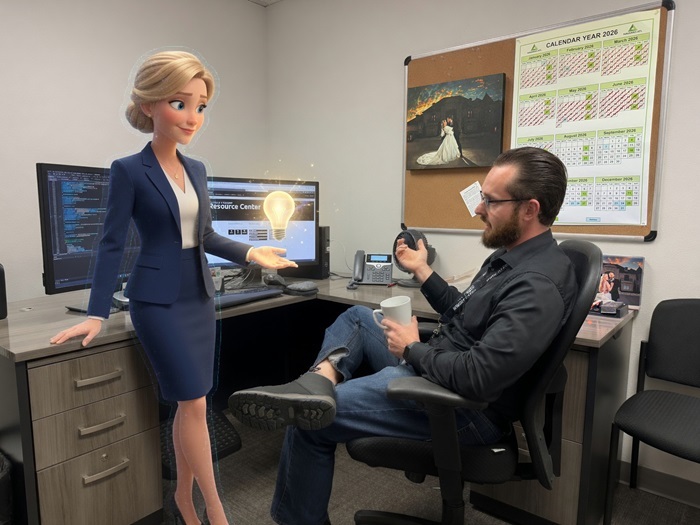 Professor Harper “collaborates” with creator Christopher Hudson as they bring the future of adaptive artificial intelligence learning to life at the 222-S Laboratory at the Hanford Site.
RICHLAND, Wash. — A new online platform at the Hanford Site helps employees build confidence with artificial intelligence (AI) and supports the U.S. Department of Energy’s (DOE) vision for a more modern, efficient and technology-enabled workforce.
What sets this AI learning hub apart isn’t just the content, but its focus on personalized, adaptive learning. Instead of a static curriculum, employees receive guidance tailored to their knowledge and comfort level with the technology.
At the center of the hub is Professor Harper, a digital AI instructor created by software engineer Christopher Hudson with Hanford contractor Navarro-ATL. He designed Harper with a simple idea: AI is often best learned by interacting with AI.
To make that interaction easier, Hudson gave Harper an approachable and mentor-like instruction style, which reduces the intimidation often associated with learning new technologies. The new hub teaches employees responsible, mission-aligned AI skills that can be applied to analytical and technical work supporting the Hanford mission.
 |
|
Professor Harper, Navarro-ATL’s digital AI instructor, provides personalized training that helps employees build artificial intelligence skills through a new AI learning hub. |
Professor Harper and the AI learning hub fill an important training niche, offering adaptive, gap-focused instruction rather than a traditional one-size-fits-all course. Built on the Hanford AI Liaison, or HAL, program, Harper’s training approach ensures all instruction meets sitewide standards for safe and responsible AI use.
As the contractor operating the 222-S Laboratory, Navarro-ATL is committed to transforming 222-S into the “lab of the future” by improving workflows, optimizing processes and ensuring the smart use of taxpayer dollars. The laboratory serves as the analytical backbone of Hanford’s evolving cleanup mission, providing scientific data that informs critical decisions related to tank waste management, treatment and environmental restoration.
“Innovation is not optional — it’s essential if we want to meet the DOE’s vision for a more efficient, modern and mission-driven Hanford Site,” says Mark Hughey, Navarro-ATL general manager. “By giving employees hands-on training and a clear path to build real skills, we’re preparing our workforce to use these innovative tools in ways that directly support the mission and present significant opportunities to accelerate cleanup activities while lowering long-term costs.”
With interest growing, Professor Harper and the AI learning hub may become available beyond the 222-S Laboratory across the site.
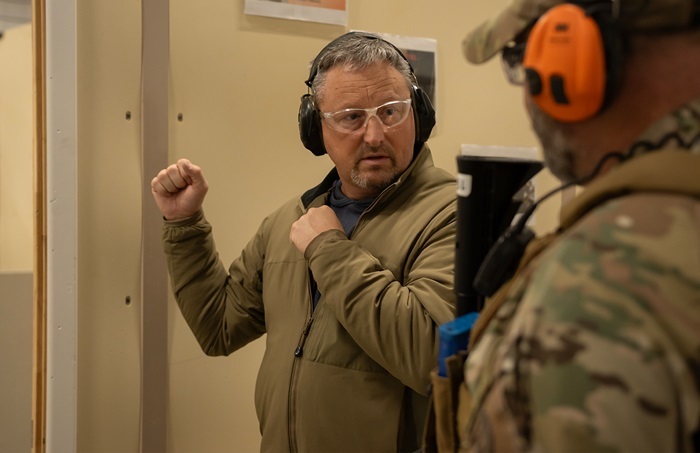 Protective Force Training Instructor Brian Chittenden briefs a security police officer navigating the Paducah Site firing range. A streamlined process between the Portsmouth and Paducah Protective Force programs provides robust protection of personnel, property and information at both sites.
LEXINGTON, Ky. — Security forces at the U.S. Department of Energy’s (DOE) Portsmouth and Paducah sites are streamlining programs and services to strengthen protection of personnel, property and information, enabling more focus on completing cleanup and supporting future use opportunities at the sites.
“Safety and security guide everything we do,” Portsmouth Paducah Project Office (PPPO) Security Team Lead Mark Allen said. “Transitioning to a new contract format and shifting scope helped us see commonalities and differences with the Protective Force program and enabled teams at both sites to work together more effectively.”
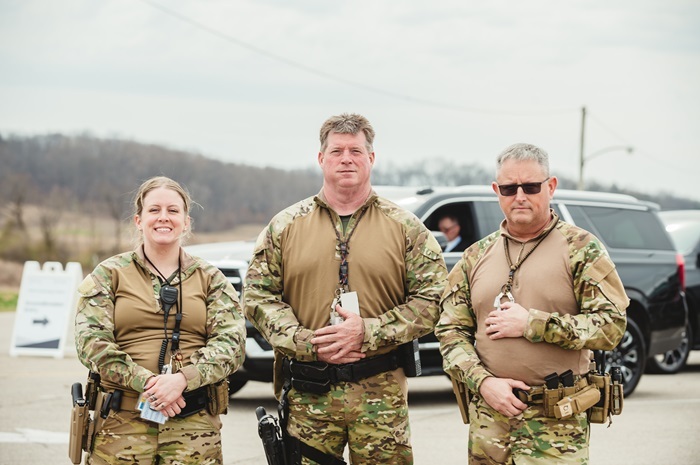 From left, Protective Force Lt. Taylor Wolfe, Portsmouth Site Training Instructor Brad Haynes and Paducah Site Training Instructor Brian Chittenden monitor the PORTS Technology Campus announcement event in March. Personnel from the Paducah Site in Kentucky traveled to the Portsmouth Site in Ohio to support the event.
A new PPPO contract that began last year combined operations and maintenance of the Portsmouth and Paducah depleted uranium hexafluoride facilities with other activities, including the Protective Force programs at both DOE Office of Environmental Management sites.
Prior to the new contract, PPPO had worked to align aspects of the two Protective Force programs for years.
“In 2022, we initiated alignment of all weapons platforms. The two sites worked together with the vendor, saving taxpayers thousands of dollars,” Paducah Site Safeguards and Security Director Eddie Gray said. “We also collaborated in areas where we could evaluate and implement best practices in operations and training.”
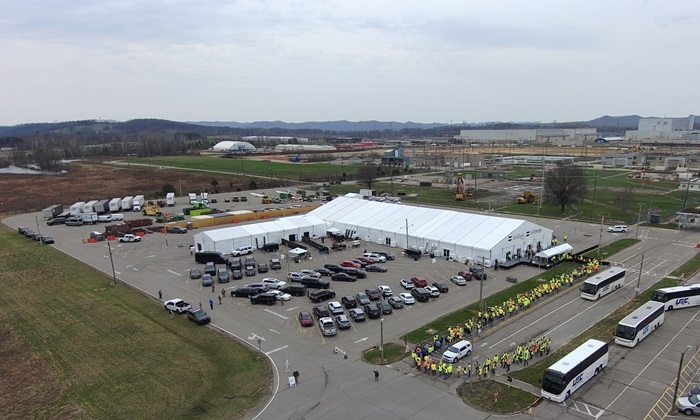 Portsmouth and Paducah protective forces, pictured lower right, worked together on security, crowd control and logistics for the PORTS Technology Campus announcement event at the Portsmouth Site in March.
Building on those successes, the teams expanded their efforts. Shawn Ramage, director of Safeguards and Security with PPPO contractor Mission Conversion Services Alliance, found that the two Protective Force programs shared a similar structure that served as the foundation for the alignment.
“We didn’t have a blueprint to follow,” said Ramage, who also serves as a facility security officer. “We had to work on it line by line, making sure we weren’t backtracking or adding unnecessary steps to the process.”
The combined Protective Force can more easily deploy team members to either site during emergencies or other events. During the event announcing the PORTS Technology Campus earlier this year, the Paducah Site in Kentucky sent security police officers and managers to support the Portsmouth Site in Ohio. The deployment required no additional training because the sites had already established common protocols and practices.
“Each manager of these programs works together, often daily, to ensure we are meeting our goals and objectives,” Ramage said. “I am very proud of the work our teams have accomplished so far to streamline our program.”
-Contributor: Katherine Mueller-White
|