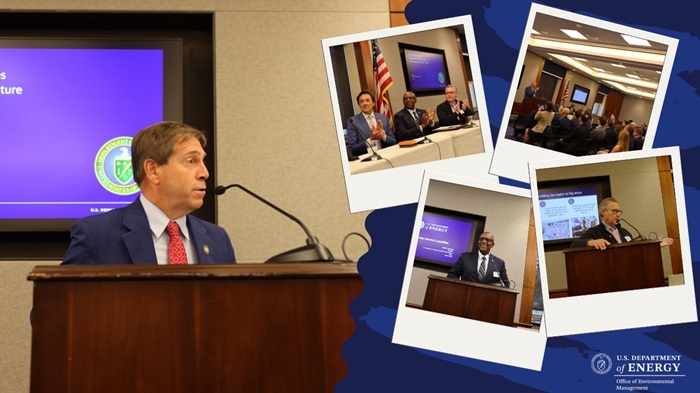
WASHINGTON — Oak Ridge Office of Environmental Management Manager Erik Olds and Savannah River Operations Office Manager Edwin Deshong joined U.S. Department of Energy (DOE) Under Secretary for Science Darío Gil for a recent U.S. House Nuclear Cleanup Caucus event. Titled “DOE's Isotope Mission: Legacy Cleanup Saving Lives and Powering America's Future,” the event emphasized how the nation’s legacy waste cleanup is driving the next generation of medical and energy breakthroughs.
Deshong talked about how Savannah River National Laboratory is advancing cutting-edge isotope research to meet critical national needs. Olds, who also serves as acting director for the Portsmouth Paducah Project Office, spoke about Oak Ridge’s "cleanup to cure" mission to extract an extremely rare medical isotope, thorium-229, from uranium-233 before it’s processed and disposed of. The isotope is a crucial ingredient for a promising form of cancer treatment currently in clinical trials.
During the event, Gil announced a major, multi-laboratory breakthrough in domestic stable isotope enrichment and production capabilities.
Pictured clockwise from left are U.S. Rep. Chuck Fleischmann of Tennessee, caucus chair; Gil; Deshong; and Olds.
The well-attended event was hosted by the Energy Facility Contractors Group, Energy Technology and Environmental Business Association and Nuclear Energy Institute.
-Contributors: Hayley Long, David Sheeley
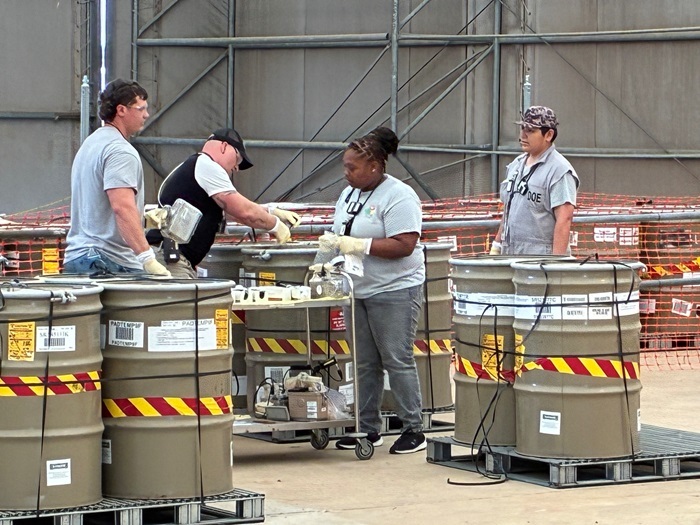 Team members conduct flammable gas sampling on high-activity waste containers at the Savannah River Site in South Carolina, supporting the safe and compliant shipment of remote-handled transuranic waste to the Waste Isolation Pilot Plant in New Mexico.
AIKEN, S.C. — The U.S. Department of Energy Office of Environmental Management (EM) will resume shipping remote-handled transuranic waste drums from the Savannah River Site (SRS) to the Waste Isolation Pilot Plant (WIPP) in New Mexico for permanent disposal after a flammable gas analysis confirmed the containers met safety requirements for transport to the underground waste repository.
Flammable gas sampling is not simply a box to check for regulatory purposes; it is a critical safety measure. By analyzing the gases present in each waste container, particularly hydrogen, methane and volatile organic compounds, the EM team can accurately assess the risk of internal combustion and verify that each drum is safe for transport and disposal.
The analysis is especially important for legacy waste drums, which have been stored for many years and may generate flammable gases due to their age and contents. Some of these containers are also remote handled, presenting additional challenges due to elevated radiation levels.
Transuranic waste consists of manufactured radioactive elements heavier than uranium on the periodic table. The remote-handled waste has higher radioactivity levels than the contact-handled waste and must be handled remotely with machinery designed to shield workers from radiation. Click here to learn more about this waste.
Anthony Carraway, the solid waste and deactivation facility manager with EM contractor Savannah River Nuclear Solutions (SRNS), emphasized the importance of the analysis, a vital step in a complex process that ensures safe, compliant and efficient shipment of transuranic waste to WIPP.
“The characterization of these containers is essential to meet our mission of shipping these transuranic waste containers out of South Carolina and getting them to permanent disposition at the WIPP facility,” he said. “Our team does great here ensuring that we follow all the right procedures and controls to keep everyone safe and to keep the mission moving forward.”
Completion of the analysis is particularly noteworthy given evolving challenges in transuranic waste management. In recent years, SRS has shipped most legacy transuranic waste at the site to WIPP. The more challenging legacy drums remain at SRS for processing, and many of them are more difficult to handle and characterize. Despite these obstacles, the team has consistently exceeded an annual goal of 12 shipments to WIPP, with 18 completed last year and 24 the year before.
Since the beginning of the SRNS contract in 2008, the contractor has successfully completed 929 shipments of transuranic waste to WIPP, reflecting a sustained commitment to safely and efficiently removing legacy waste from SRS.
“This recent flammable gas analysis campaign is a testament to the team’s professionalism, resilience and unwavering commitment to safety,” Carraway added. “As the challenges of transuranic waste management grow, so does the significance of each milestone. The team’s achievements not only protect workers and the public but also advance the broader mission of responsible environmental stewardship and safe, permanent waste disposition.”
-Contributor: Katie Gantt
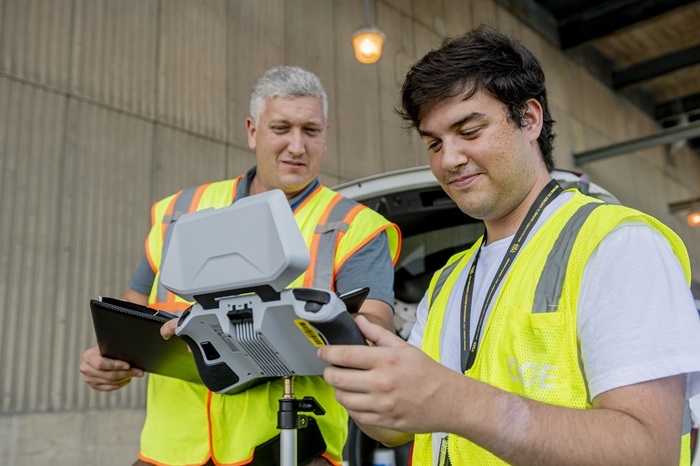 Intern Cale Tonazzi, right, programs a flight path for a drone while Nick Henley, a communication specialist and drone pilot, completes a checklist. Tonazzi spent the summer at the Paducah Site working with a team of experts on a project to improve imagery for site maps.
PADUCAH, Ky. — Murray State University computer science student Cale Tonazzi’s summer internship at the U.S. Department of Energy’s (DOE) Paducah Site provided a lesson that cannot be taught in classrooms.
Tonazzi, a rising senior, spent his summer with deactivation and remediation contractor Four Rivers Nuclear Partnership, and worked with geographic information system (GIS) experts to create a new, high-resolution site map using advanced drone-to-map software.
Internships across the DOE complex give the next-generation workforce opportunities to gain hands-on experience tackling some of the most intricate and technical challenges while serving as a workforce pipeline for the Office of Environmental Management mission. They also support national efforts to turn liabilities into assets at cleanup sites and beyond.
The mapping process Tonazzi helped configure allows the Paducah Site to update its maps quickly and frequently, avoiding high costs typically associated with acquiring new satellite imagery and flyover scans using 3D imaging technology.
Having highly detailed imagery for site maps improves the tools used to evaluate, plan and coordinate projects in the field as well as siting for future reindustrialization.
“Summer internships really are a mutually beneficial opportunity,” acting Paducah Site lead Steve Clemons said. “Interns are ready to embrace new technologies they learn about in school. At the same time, we reap the rewards of their enthusiasm and high-quality work to advance cleanup.”
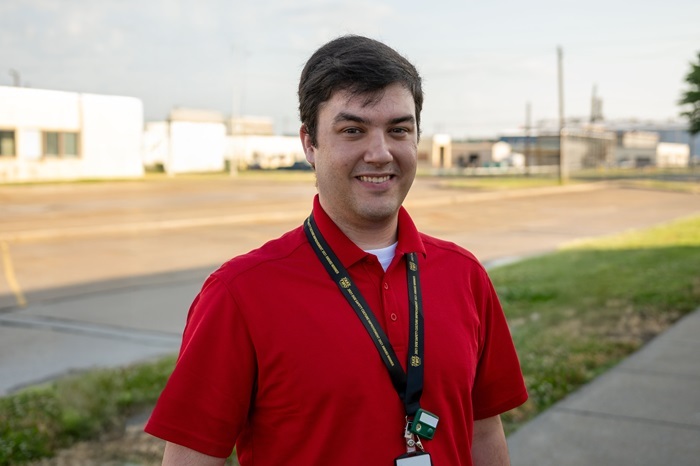 Murray State University computer science student Cale Tonazzi spent 10 weeks interning at the Paducah Site to gain hands-on experience working on projects “they don’t teach you in school,” he said.
Tonazzi worked with the software to reproduce physical features and generate high-quality images of a portion of the footprint of the former Paducah Gaseous Diffusion Plant. The process incorporated high-resolution drone orthophotography, which captures top-down, distortion-free images from all angles.
Compared to traditional satellite imagery, the new drone-based map offers five times more detailed imagery and improves measurement accuracy to the centimeter.
"Learning from the professionals at the Paducah Site has been a great opportunity and something I wouldn't learn in school," said Tonazzi. "It was great working with a team of people who care and are willing to collaborate to deliver high-quality results."
Bringing the high-tech map to life in just a few weeks required numerous coordinated drone flights. Each flight captured approximately 20 gigabytes of photos — equal to roughly 3,000 smartphone photos — to create a single, seamless digital map. The drone used an onboard artificial intelligence processor to enable autonomous, obstacle-free flights and robust data collection for altitude, position and coordinate tracking. This complex operation required a coordinated effort from drone pilots, information technology professionals and GIS specialists.
-Contributor: Dylan Nichols
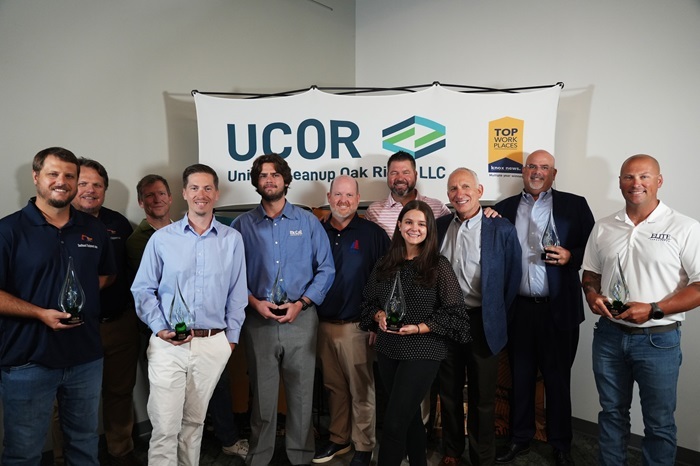 Recipients of United Cleanup Oak Ridge’s small business awards this year include Southeast Equipment Sales, JSH Web Designs, Premier Contracting & Technical Services Inc., AISI-CTI JV LLC and Elite Landscapes Inc., and McCall Industrial Supply Co. LLC. Company representatives are pictured.
OAK RIDGE, Tenn. — Oak Ridge Office of Environmental Management (OREM) contractor United Cleanup Oak Ridge (UCOR) recently honored six small businesses whose work has advanced key cleanup projects this year.
“This event ensures we dedicate time to recognize the exceptional work of small businesses, and it also provides a platform to showcase specific examples of how they are supporting and advancing our mission,” Karen Shears, OREM procurement and contracts director, said of the annual Small Business Awards Breakfast ceremony where the winners received trophies. “They play a pivotal role and share in the ownership of our successes.”
UCOR’s small business subcontracting rate has far exceeded the U.S. Department of Energy’s (DOE) goal of 45%. Since beginning its current contract with OREM in 2022, the company has awarded more than $1 billion in subcontracts, with 84% — or $840 million — going to small businesses.
These partnerships have supported the transformation underway at the Y-12 National Security Complex and Oak Ridge National Laboratory (ORNL), positioning Oak Ridge for modernization and future growth.
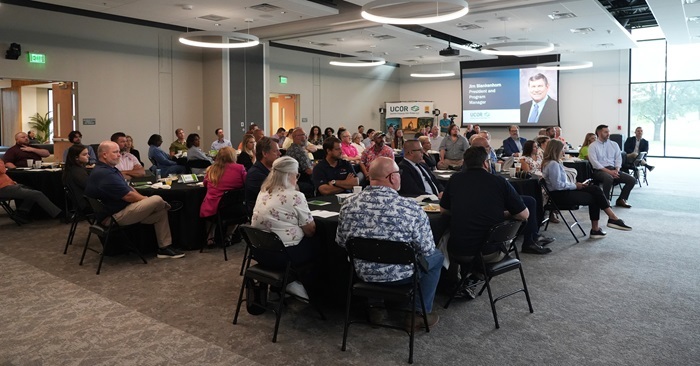 Attendees listen as keynote speaker Jim Blankenhorn, United Cleanup Oak Ridge president and program manager, discusses the role of small business partnerships in executing the Oak Ridge cleanup mission.
UCOR’s awards for top performance and the small businesses that received them this year are:
-
AISI-CTI JV LLC: The joint venture with Oak Ridge-based CTI and Chattanooga, Tennessee-based AIS Infrastructure cleared more than 40 acres of land for the Environmental Management Disposal Facility, which will provide essential capacity for debris generated from large-scale demolition projects at Y-12 and ORNL.
-
Premier Contracting & Technical Services Inc.: Based in Oak Ridge, this company coordinated the delivery and placement of 2,500 truckloads of cement mixture to fill and level the basement of the 210,000-square-foot Beta-1 facility at Y-12. This task will allow heavy equipment to enter the former Manhattan Project uranium enrichment facility safely during demolition.
-
Elite Landscapes Inc.: Based in Oak Ridge, this company provided year-round landscaping and winter weather support at the Transuranic Waste Processing Center (TWPC). By pretreating roads, removing snow and ice and maintaining site conditions, the company enabled uninterrupted operations and ensured the TWPC area met stringent DOE safety and maintenance standards.
-
Southeast Equipment Sales: Based in Oak Ridge, this company supported cleanup at the former White Wing Scrapyard by providing specialized equipment and forestry expertise, enabling UCOR to safely clear 39 acres of trees for future remediation field work.
-
JSH Web Designs: Based in Knoxville, Tennessee, this company designed and implemented a mobile app for UCOR to ensure more than 600 field workers receive communications, announcements and critical information.
-
McCall Industrial Supply Co. LLC: Based in Boise, Idaho, this company identified hard-to-find valves, pipes and other industrial products required for everyday projects in the field.
“Your partnerships are imperative,” Jim Blankenhorn, UCOR president and program manager, told the award recipients. “We need small businesses to continue accelerating cleanup — removing aging facilities, restoring legacy footprints for new missions, and enabling the nation’s nuclear resurgence happening here in East Tennessee.”
-Contributor: Ryan Getsi
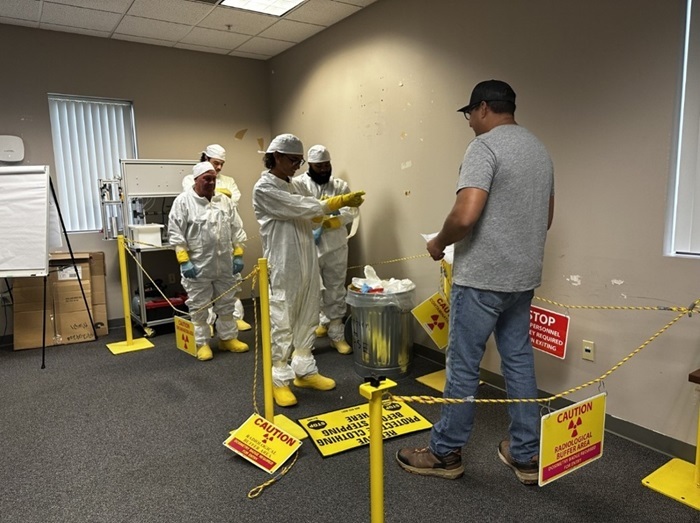 Radiological training instructor JP O’Connell teaches employees how to properly remove protective gear at the West Valley Demonstration Project.
WEST VALLEY, N.Y. — The U.S. Department of Energy Office of Environmental Management (EM) has expanded its radiological worker training program at the West Valley Demonstration Project to align with the site’s evolving cleanup mission.
The program has grown from a two-hour computed-based training to a 10-hour classroom training with an additional practical portion. It focuses on potential radiological hazards employees may be exposed to as they begin excavating all contaminated subsurface infrastructure and contaminated soil from the site of the Main Plant Process Building. Crews completed demolition of the 35,100-square-foot facility last year.
“As the work evolves, our training must evolve with it,” said Steve Kirschenmann, safety and radiological protection manager with EM contractor West Valley Cleanup Alliance (WVCA). “This enhanced radiological training strengthens our workforce by building the knowledge and skills for safe and compliant execution of the changing cleanup mission, as well as reaffirming good radiological work practices.”
The training covers hazard awareness, giving employees the knowledge to recognize hazards and respond appropriately. They will use radiation detection equipment to check themselves for contamination, don and doff protective clothing, and bag out potentially contaminated waste.
“Our employees are the most important part of the work we do,” WVCA President and Program Manager Jason Casper said. “Investing in our employees is important to ensuring they have the knowledge and confidence to complete work safely.”
Employees whose work includes unescorted entry into radiological areas will complete Radiological Worker Level I training, while those whose work includes potentially handling radioactive materials will complete Radiological Worker Level II training.
The program reinforces continuous learning. Employees will complete a two-year requalification, an annual refresher and quarterly computer based training designed to ensure that essential knowledge remains current and readily retained.
“The enhanced training displays West Valley’s continued commitment to ensuring safe work,” said Jennifer Dundas, assistant director of the EM West Valley Office of Technical Services. “As the scope of work continues to change, West Valley will continue to enhance training programs.”
-Contributor: Sarah Morris
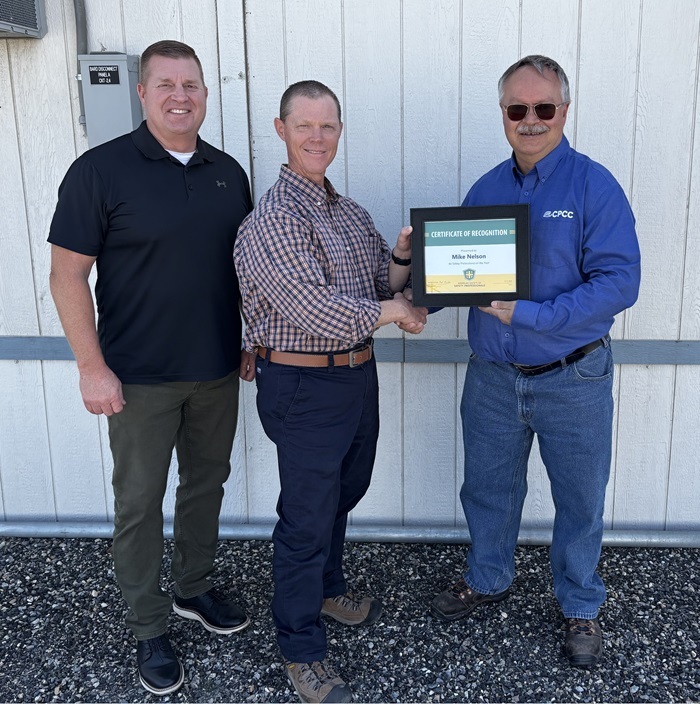 Hanford Mission Integration Solutions (HMIS) Occupational Health and Safety Director Jeff Simundson, HMIS Safety Specialist Mike Nelson and American Society of Safety Professionals Lower Columbia Basin Chapter President Mark Cranston.
RICHLAND, Wash. — A safety specialist with the Hanford Site’s essential services prime contractor was recently honored with the Safety Professional of the Year award from the American Society of Safety Professionals, Lower Columbia Basin chapter.
Mike Nelson, with Hanford Field Office contractor Hanford Mission Integration Solutions (HMIS), was recognized for his commitment to supporting HMIS’ maintenance organization and advancing a culture of continuous improvement across the site’s essential services.
Throughout his career, Nelson has demonstrated a thoughtful, methodical approach to solving complex challenges. His nomination letter emphasized his ability to evaluate issues objectively and work closely with craft personnel to assess controls and guide corrective actions using a balanced, fact-based process. His transparent communication style and ethical leadership have made him a trusted resource for supervisors, managers and co-workers.
Nelson also mentors colleagues, sharing his extensive knowledge to help others navigate safety challenges effectively. He recently expanded his skill set by earning a Mental Health First Aider certification, enhancing his ability to support the workforce and contribute to a holistic culture of safety and well-being.
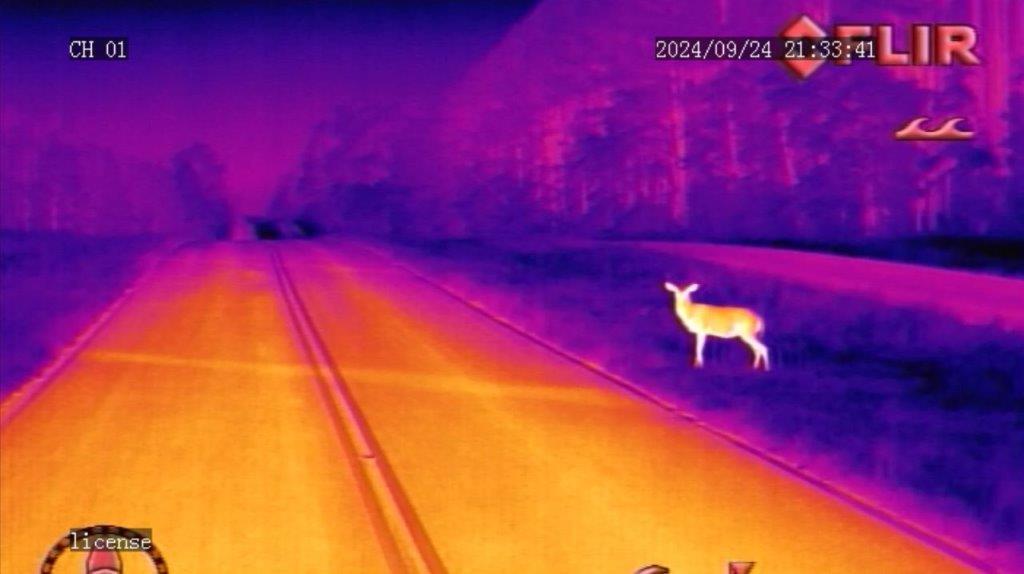 A buck stands roadside after an encounter with the study vehicle. (Photo courtesy of Carson Pakula)
AIKEN, S.C. — A University of Georgia (UGA) Savannah River Ecology Laboratory (SREL) study at the Savannah River Site (SRS) provides new insight into how relatively simple changes to vehicle lighting may improve safety for both people and wildlife on roadways.
Led by Carson Pakula, who conducted the research as a doctoral student, the team studied white-tailed deer and wild pigs at SRS, where an average of 95 deer collisions and 40 wild pig collisions occur each year. The researchers compared traditional halogen headlights with modern LED headlights while also testing a rear-facing lightbar that increased frontal illumination and made more of a vehicle visible to animals at night.
"Vehicle lighting is an interesting area to investigate because most damaging collisions occur at night," Pakula said. "During this time, vehicle lighting is the main source of light on the roadways, which may influence how wildlife respond to approaching vehicles."
As a UGA research unit located on the SRS, SREL operates under a cooperative agreement with DOE to provide independent evaluation of the environmental impacts of nuclear activities to both the agency and the public, supporting DOE Office of Environmental Management cleanup efforts.
The study found that deer and wild pigs responded differently. For white-tailed deer, headlight type had little effect on when animals initiated flight. However, the additional illumination provided by the lightbar reduced the tendency for deer to remain stationary, or "freeze," as vehicle speed increased, preventing an increase in dangerous encounters between deer and vehicles at higher speeds.
|
A group of wild pigs are seen crossing the road during an encounter with the study vehicle. Videos and images were taken using an infrared camera, allowing researchers to observe animals under low-light conditions.
(Photo courtesy of Carson Pakula)
|
|
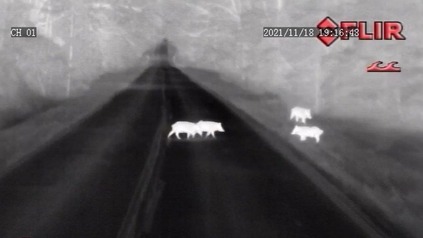 |
However, wild pigs responded differently. Pigs exposed to LED headlights initiated flight substantially earlier than those exposed to halogen headlights, while the lightbar encouraged them to flee at greater distances as vehicle speed increased, potentially providing more time for animals and drivers to avoid a collision.
"These results present exciting opportunities for further research on how exactly lighting affects animal behavior and how vehicle lighting can be tailored to encourage more beneficial wildlife responses," Pakula said.
Over a two-year period, researchers conducted 95 nighttime driving surveys and documented 612 encounters with white-tailed deer and 176 encounters with wild pigs. Using infrared cameras and multiple lighting configurations, the team measured when animals moved, how far away they were when they responded and whether those responses occurred early enough to provide adequate stopping distance.
Wildlife-vehicle collisions remain a persistent challenge for both public safety and wildlife conservation, causing billions of dollars in damage each year while injuring drivers and harming animals. Although wildlife crossings, roadside fencing and warning systems can reduce collisions in some locations, these approaches are often expensive or limited to specific stretches of roadway. As a result, the researchers explored modified vehicle lighting as a practical, widely applicable way to encourage wildlife to respond sooner to approaching vehicles, with the goal of reducing collisions and improving safety for both animals and drivers.
-Contributor: Tyjaha Steele
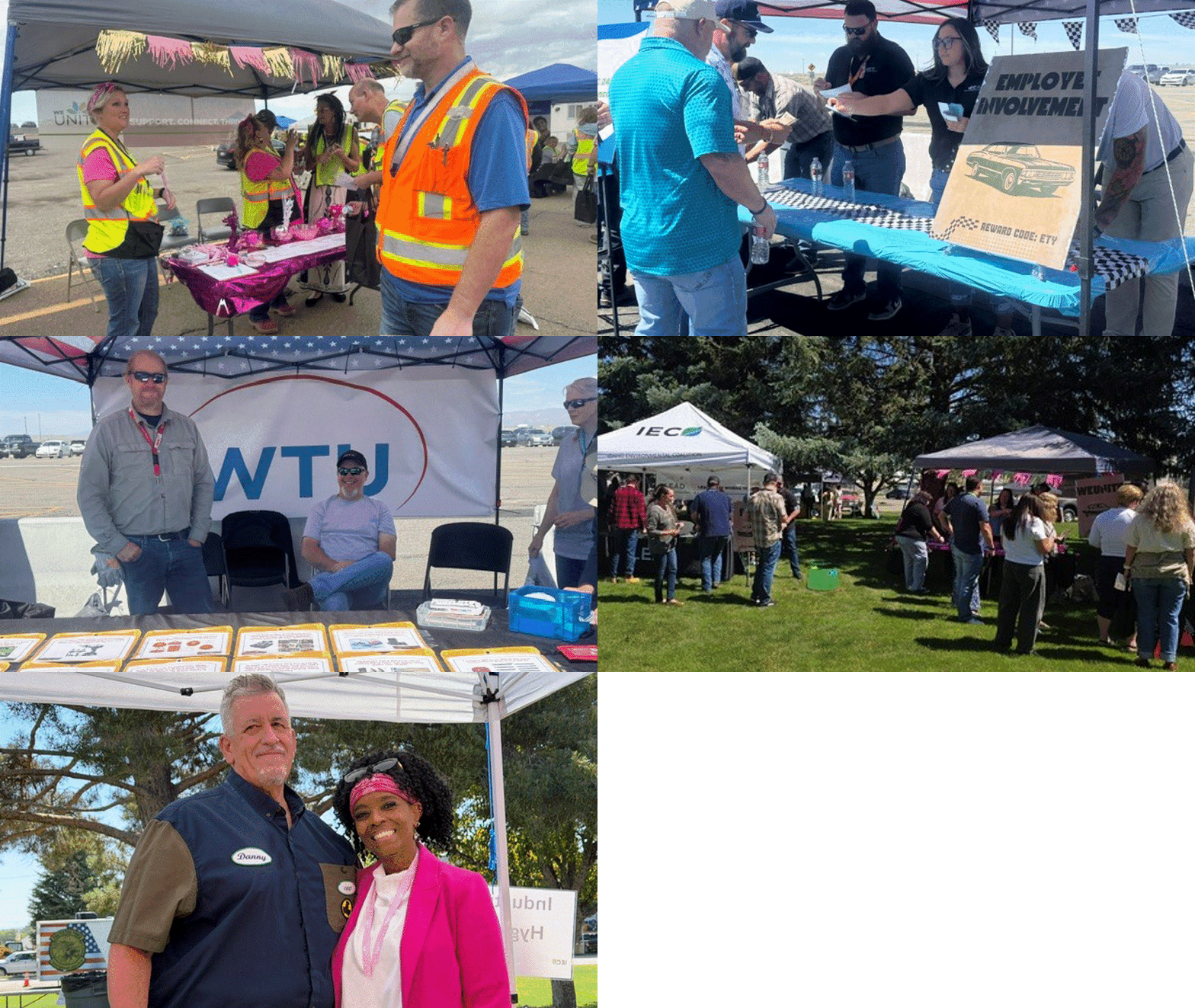 Idaho Environmental Coalition employees take part in Safety Days at the Idaho National Laboratory Site.
IDAHO FALLS, Idaho — Idaho Cleanup Project (ICP) contractor Idaho Environmental Coalition (IEC) hosted its annual Safety Days event this summer, strengthening safe work practices and reinforcing its commitment to maintain a safe workplace.
Safety Days brought employees together for demonstrations, conversations and hands-on activities that encouraged a renewed focus on hazard awareness and the shared responsibility of protecting one another. Activities spotlighted everyday behaviors that support safe operations — identifying risks, speaking up when something doesn't seem right and supporting co-workers in making sound decisions.
“Safety is more than a four-day event; it guides every decision we make. Safety is not just what we do; it is how we do everything we do,” said Saprena L. Lyons, IEC’s health and safety lead, who organized this year’s event.
IEC emphasized that consistent safety performance helps keep environmental cleanup work on schedule, minimizes the risk of costly delays and ensures efficient use of taxpayer funds. Leaders emphasized that the habits reinforced during Safety Days — including attention to detail, clear communication and looking out for one another — are critical to ICP’s cleanup progress.
“Our employees’ dedication and the teamwork it takes to coordinate an event like Safety Days truly reflects our commitment to keeping each other safe and to doing our jobs with safety as our top priority,” IEC President and Program Manager Dan Coyne said.
-Contributor: Ryan Christensen
|