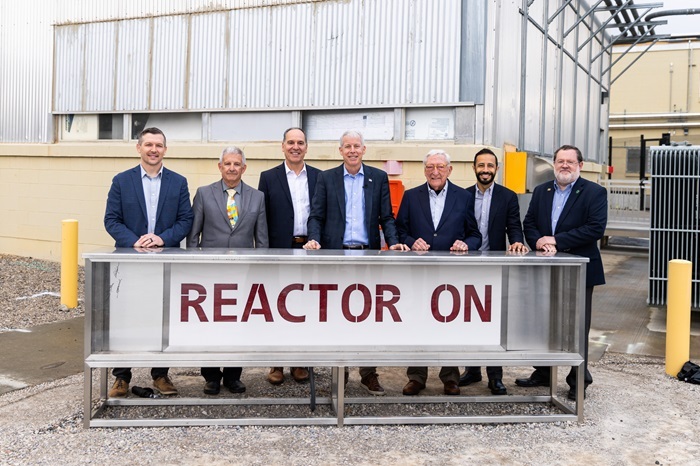
 From left, Under Secretary of Energy Kyle Haustveit; U.S. Department of Energy (DOE) Idaho Operations Office Manager Bob Boston; Idaho National Laboratory (INL) Director John Wagner; Secretary of Energy Chris Wright; Assistant Secretary of Nuclear Energy Ted Garrish; Deputy Assistant Secretary of Nuclear Reactors Rian Bahran; and Principal Deputy Assistant Secretary of Nuclear Energy Mike Goff are pictured at INL on June 25. During their visit, DOE leadership met with Reactor Pilot Program and Nuclear Energy Launch Pad participants and toured advanced reactor demonstration projects located at INL.
Office of Environmental Management (EM) experts were essential to four recent criticality milestones for advanced reactors, helping the U.S. Department of Energy (DOE) surpass a July 4th goal outlined by President Trump in a May 2025 executive order.
As EM’s mission expands from legacy cleanup to laying the foundation for America’s new nuclear energy era, the support from EM team members in the zero-power fueled criticality demonstrations highlights EM’s role beyond cleanup in the nuclear lifecycle.
“I’m very proud and thankful of our EM team members from across our complex," EM Associate Principal Deputy Assistant Secretary Greg Sosson said. "We have a wealth of talent in our program in many areas that were able to directly support this presidential goal. I’m optimistic that this is only the first step in helping America achieve the next big steps in nuclear energy.”
Several EM employees supported DOE Office of Nuclear Energy (NE) reviews of reactors in the DOE’s Reactor Pilot Program. And three EM leaders — two at EM headquarters in the Washington, D.C., area and a third at the Carlsbad Field Office (CBFO), which oversees the Waste Isolation Pilot Plant in New Mexico — oversaw teams with members from across the DOE complex that conducted readiness assessments for multiple reactors. The assessments are necessary for NE to authorize startup for the reactors.
A nuclear reactor is critical when it is perfectly stable. That happens when each uranium atom that splits via fission releases enough neutrons to cause one additional atom to split. A stable chain reaction keeps nuclear power plants generating electricity around the clock.
EM personnel participated in the DOE review process for advanced microreactor designs from preliminary to final design. They included Kevin Witt, director of EM’s Office of Safety Management; Kyle Song with EM’s Office of Nuclear Materials; Tim Noe with the Oak Ridge Office of Environmental Management (OREM) in Tennessee; and Adam Bradley with the Portsmouth Paducah Project Office in Ohio.
Employees taking part in the review process ensured contractor submittals were technically sufficient and provided comments for resolution prior to recommendation to the safety basis approval authority for approval.
A total of 17 EM team members took part in DOE’s readiness review process for facility startup and transition to operations for microreactor designs, including the Aalo Atomics’ test reactor, Aalo-X, Antares Nuclear’s Mark-0 reactor, Valar Atomics’ Ward 250 and Deployable Energy’s demonstration reactor, Unity — the four reactors that achieved criticality under the DOE’s Reactor Pilot Program by the July 4th deadline. The team members came from several EM headquarters offices and the CBFO, OREM, Hanford Field Office in Washington state, and the Idaho Cleanup Project at the Idaho National Laboratory (INL) Site.
Readiness review team members reviewed documents, took part in onsite interviews and performance demonstrations, and prepared the final report with recommendation to the startup authorization authority for approval to proceed with nuclear operations. They also reviewed corrective action plans and closure documentation in response to DOE-identified pre- and post-start findings.
Read more about the reactor criticalities here.
-Contributor: David Sheeley
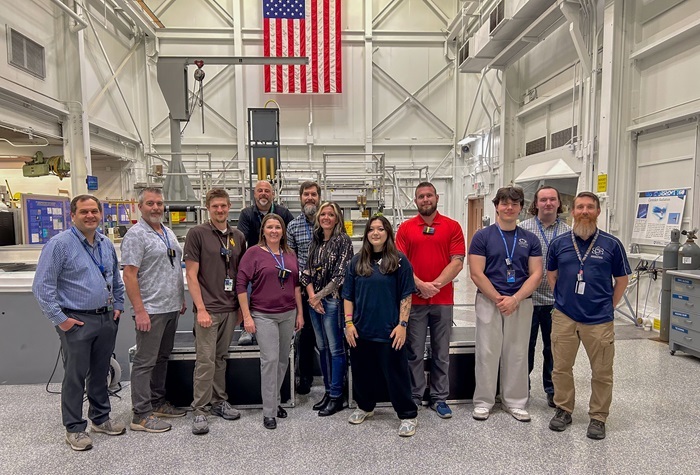 Idaho Environmental Coalition used nuclear fuel examiners performed inspections of Breazeale Research Reactor fuel with staff at Penn State University.
IDAHO FALLS, Idaho — The Idaho Cleanup Project (ICP) will help transfer used nuclear fuel (UNF) to the Idaho National Laboratory (INL) Site from the Breazeale Research Reactor at Penn State University in coming months.
The UNF is Training Research Isotope General Atomics (TRIGA) fuel, which supports domestic research reactors on university campuses and advances nuclear energy and medical research.
To prepare for the shipment, ICP contractor Idaho Environmental Coalition (IEC) took part in training and is drawing from its university partnerships to ensure the project is completed safely and efficiently.
Earlier this year, IEC UNF examiners joined a training exercise at the TRIGA reactor at the University of Utah campus. They performed underwater visual examinations, evaluated fuel conditions, operated new camera systems and practiced team coordination in a reactor environment.
“The value of this opportunity can’t be overstated,” IEC UNF Projects Senior Manager Kerry Oltmanns said. “The training environment allowed our team to practice in a realistic setting that can’t be replicated in Idaho, and I am grateful for this collaborative effort with our partners in Utah.”
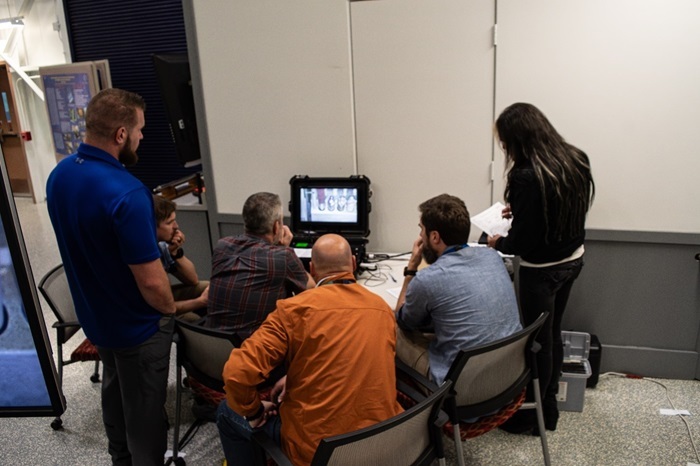 Idaho Environmental Coalition used nuclear fuel examiners watch as cameras inspect fuel from a research reactor during training at the University of Utah.
IEC crews also worked extensively with Penn State counterparts. The IEC examiners completed an inspection of the Breazeale Research Reactor fuel, ensuring the fuel elements meet transportation and storage requirements.
“This inspection is a crucial step to ensure safety throughout the process,” Oltmanns said.
In April 2025, the U.S. Department of Energy (DOE) and the state of Idaho signed a waiver to the 1995 Idaho Settlement Agreement to allow receipt and storage of TRIGA fuel in Idaho. The waiver resulted from ICP meeting milestones laid out in the agreement.
By accepting TRIGA fuel for storage at the INL Site, the DOE Office of Environmental Management supports DOE research to advance American energy and technology while remaining protective of the workforce, public and environment.
-Contributor: Carter Harrison
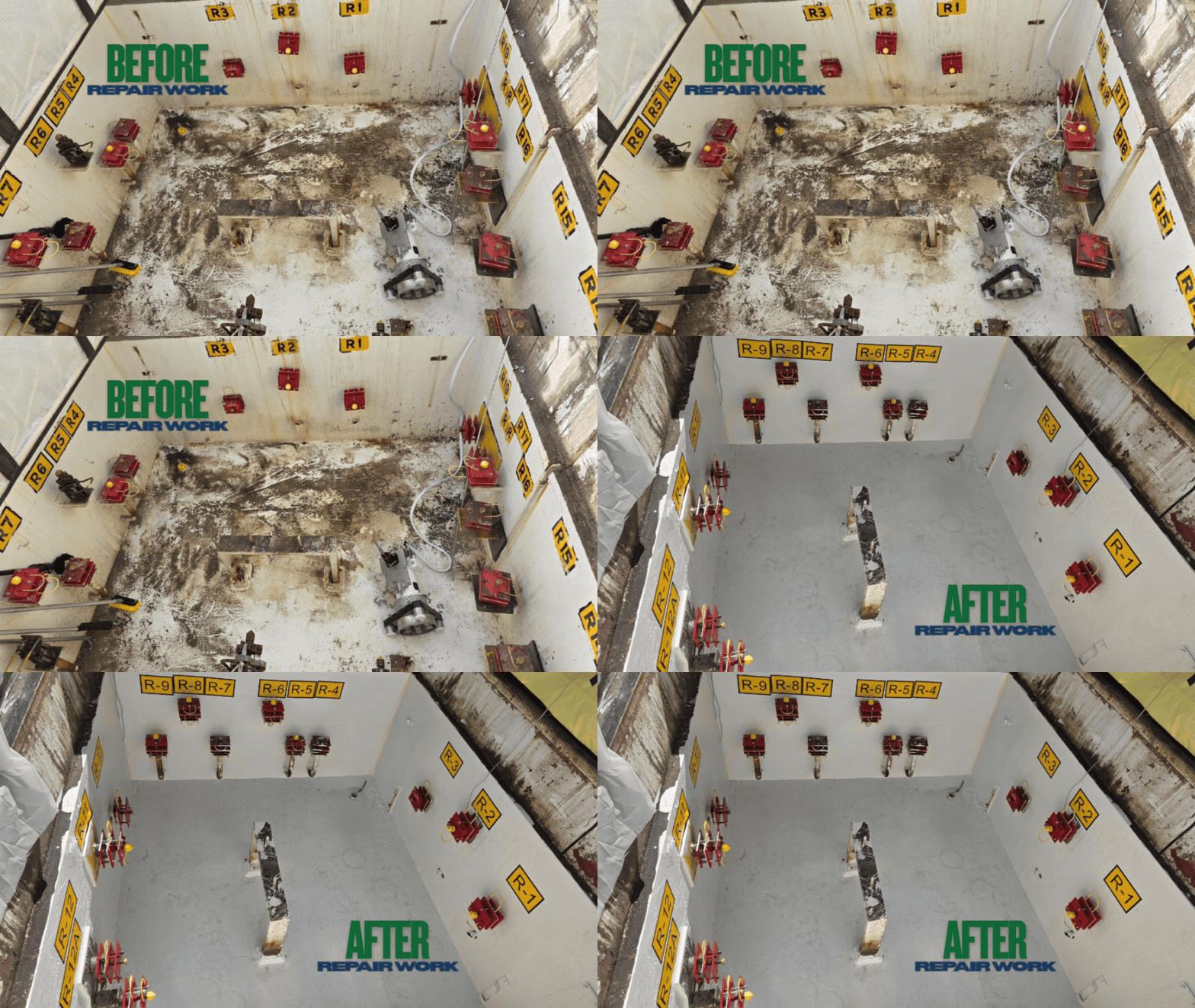 The Hanford Site’s valve pit SY-B before and after repair work.
RICHLAND, Wash. — Hanford Site workers recently tackled one of the most challenging radiation cleanup jobs in recent memory, dramatically reducing hazards for future projects.
The job centered around a valve pit, an underground space containing pipes and control valves that regulate the movement of material between the site’s underground radioactive waste storage tanks. These valve pits are critical for operations, but can sometimes present safety challenges, especially when radioactive material builds up.
Crews with contractor Hanford Tank Waste Operations & Closure (H2C) are working in Hanford’s 200 West Area to prepare tanks for waste retrieval and treatment, after years of dormancy as efforts focused on tank waste retrieval in the 200 East Area of the site.
During work in one pit in the SY Tank Farm, instruments detected radiation levels far above what is typically encountered in double-shelled tank valve pits, making this the highest-exposure project at Hanford’s Tank Farms in years. Tank farms are groups of underground tanks used to store decades-old legacy waste.
Instrument readings were recorded up to 60 millirem per hour at workers’ location and 1,000 millirem per hour on contact with the pit floor, which could have put workers at risk of reaching the annual administrative control level of 500 millirem per year per worker in just hours. H2C deployed new methods to keep workers safe before starting work on the valve pits.
“Safety is always our top priority as we face unexpected challenges inside the pits,” said Dawn MacDonald, the Hanford Field Office’s program manager for West Area. “Every decision was made to protect workers and ensure the job got done safely.”
 |
|
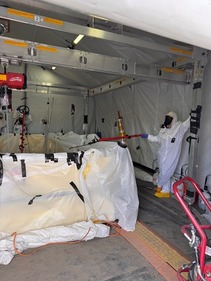
A Hanford Tank Waste Operations & Closure radiological control worker uses remote tools to minimize radiation dose rates during work to clean out a valve pit. |
Usual methods — removing pipes or cleaning the floor — were not effective in this case. Radioactive material had mixed with paint as thick as half an inch throughout the floor and lower walls, making removal difficult.
“The H2C radiological control team adapted to the conditions they were presented,” said Robert Brooks, H2C manager of Field Operations Support Radiological Control. “They completed the pit preparation work without any spread of contamination that couldn’t be easily identified and decontaminated.”
Crews filled disposal buckets only halfway to keep workers safe, rotated workers to limit exposure, and used protective equipment, long-reach tools and real-time monitors to maintain safe operations.
The scope of work expanded the collective dose to 3,393 millirem to complete the refurbishment. Thanks to careful planning, contamination control and diligent execution, workers completed the job with an average individual exposure of about 85 millirem.
With the work complete, the valve pit now has two new coats of paint and clearly marked wall nozzles, sharply reducing contamination risk and making future usage and maintenance safer.
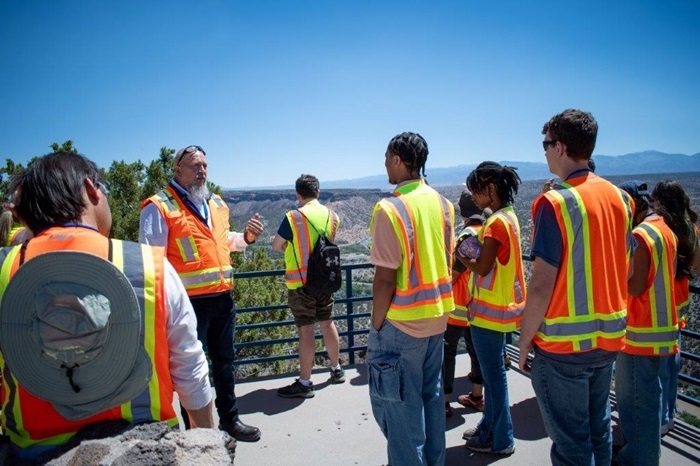 Vince Rodriguez, program manager, environmental remediation with Newport News Nuclear BWXT-Los Alamos LLC, provides New Mexico State University’s 2026 NuChemE Pipeline Summer Program undergraduate students with an overview on groundwater, surface water and stormwater sampling and monitoring.
LOS ALAMOS, N.M. — New Mexico State University’s 2026 NuChemE Pipeline Summer Program recently provided undergraduate students from across the country a rare, firsthand look at cleanup efforts at Los Alamos National Laboratory (LANL).
The U.S. Department of Energy’s (DOE) Environmental Management Los Alamos Field Office and its legacy cleanup contractor, Newport News Nuclear BWXT-Los Alamos LLC (N3B), showed students key sites that address legacy contamination and waste from nuclear weapons production and research from the Manhattan Project and Cold War era at LANL.
“We are excited about the opportunity for our students to see firsthand the environmental remediation work that is being done at Los Alamos National Laboratory,” said Catherine Brewer, chemical and materials professor at New Mexico State University and NuChemE Pipeline program director. “Nuclear is a challenging STEM field to get your foot in the door. Without any experience or knowledge, students are likely to not even try to open the door. That’s why we are so appreciative of the support from the DOE and its contractors.”
 |
|
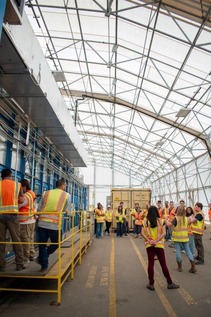
Undergraduate students in New Mexico State University’s 2026 NuChemE Pipeline Summer Program get an up-close look at contact-handled waste operations at Technical Area 54, Area G at Los Alamos National Laboratory. Newport News Nuclear BWXT-Los Alamos LLC explained the process for characterizing legacy transuranic waste and the activities required prior to shipping the waste to the Waste Isolation Pilot Plant in Carlsbad, New Mexico. |
The NuChemE Pipeline, which is supported by DOE’s Office of Environmental Management (EM), was created to address a longstanding gap between what students know about nuclear materials, radioisotopes, and DOE operations, and the level of understanding expected during recruitment.
During the tour, students learned how crews conduct groundwater and soil remediation, manage legacy waste and continue long-term environmental monitoring at LANL.
“I’ve been doing this work for a longtime. Soon, I will be handing over the reins to young adults like those participating in this program,” N3B President and General Manager Brad Smith said. “I look forward to welcoming the next generation of young professionals to a career that is meaningful and rewarding.”
This year’s class includes 12 students from 11 universities across the country majoring in chemical engineering, chemistry, geology, environmental science and business information systems.
The LANL cleanup tour includes visits to LANL’s Chemistry Division; museums on nuclear history in Los Alamos and Albuquerque, New Mexico; the University of New Mexico Nuclear Engineering Department; Urenco USA, the only commercial enrichment facility operating in the U.S.; EM’s Waste Isolation Pilot Plant in New Mexico; the Savannah River Site in South Carolina; and Plant Vogtle, the largest nuclear power plant in the country.
Long-term plans for the NuChemE Pipeline include developing a remote graduate certificate in nuclear chemical engineering at New Mexico State University to expand access to EM careers for students in science, engineering and business fields. By combining hands-on learning with exposure to real-world cleanup work, the program aims to build a diverse, well-prepared pipeline of future scientists, engineers and professionals ready to support EM’s environmental stewardship responsibilities.
–Contributor: Donavan Mager
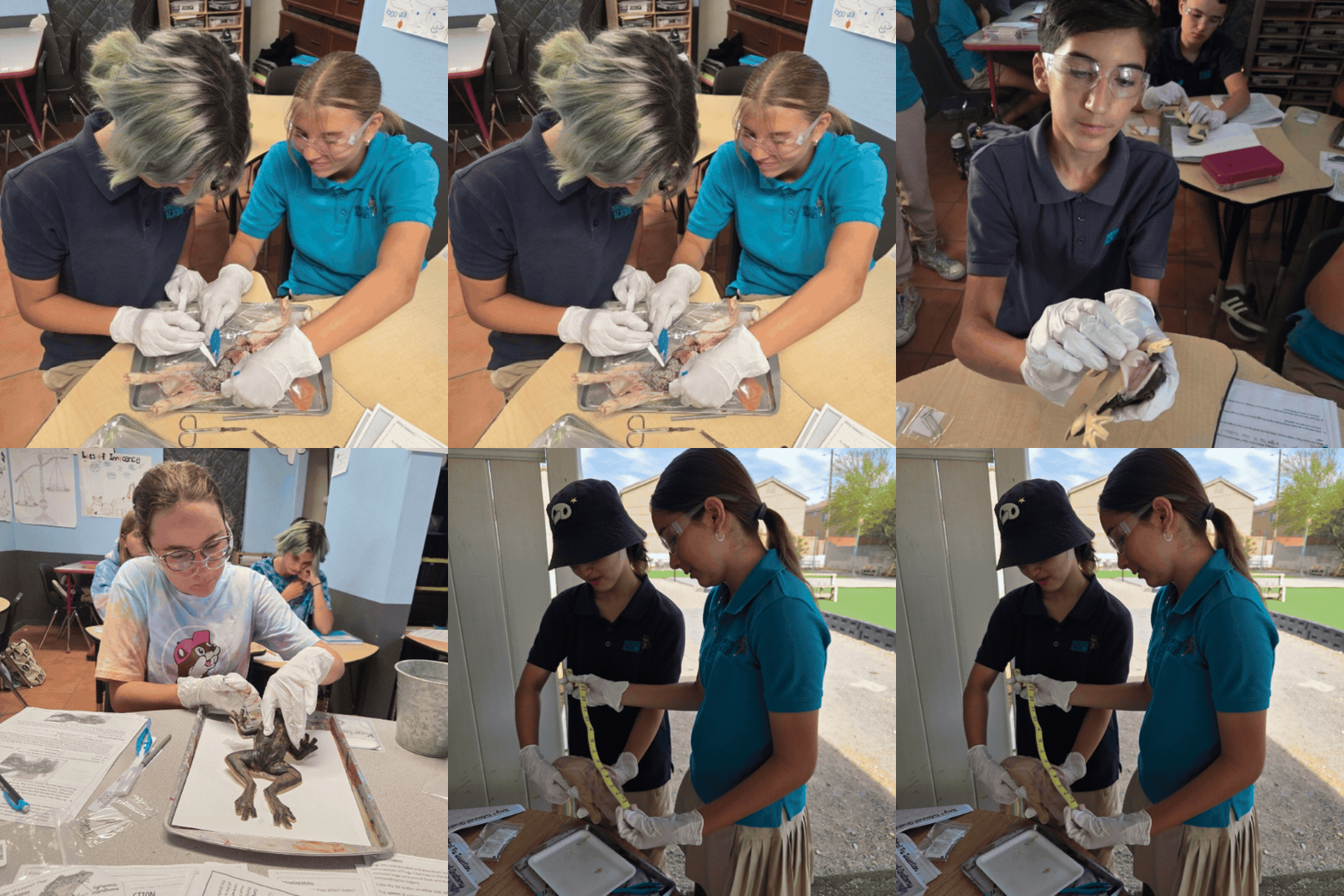 Funding from the Community Commitment Grant Program helped Innovation Academy in Las Vegas, Nevada, supplement its life science laboratory to enhance student understanding of anatomy and physiology. In these photos, students dissect synthetic frogs and pigs designed for classroom use. Photos courtesy of Innovation Academy.
LAS VEGAS – While most students are enjoying their summer breaks, the U.S. Department of Energy Office of Environmental Management (EM) Nevada Program is gearing up for another year of investing in science, technology, engineering and math (STEM) education.
EM Nevada and Environmental Program Services contractor Navarro Research and Engineering Inc. are preparing to launch the sixth year of the Community Commitment Grant Program, which provides STEM resources to communities near the Nevada National Security Site (NNSS).
Since its inception, the grant program has awarded more than $83,000 to public, private and charter schools in six Nevada counties. And for 2026-2027, about $30,000 in grant funding is available to support the prioritization of STEM education, which has been identified as a national security and economic imperative.
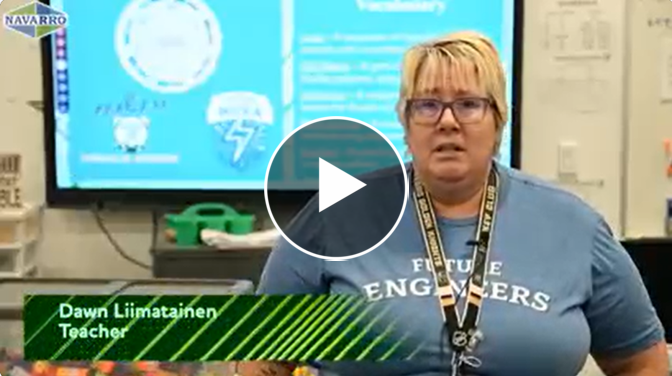 Watch how Navarro Research and Engineering Inc.’s Community Commitment Grant benefits the Carroll M. Johnston STEM Academy in North Las Vegas, Nevada. The grant is made possible through Navarro’s contract with the U.S. Department of Energy Office of Environmental Management Nevada Program.
One grant recipient, Innovation Academy in Las Vegas, recently shared how students are benefiting. Mikaela Batres, an academy teacher who submitted the grant application, stressed the need to supplement the school’s life science lab for enhancing student understanding of anatomy and physiology, leading to higher levels of comprehension and retention.
In a thank-you note, Maggie Bray, the academy’s principal, wrote that the grant allowed the school to create a dissection lab for its STEM program.
“The sixth-grade students participated in an owl pellet dissection to better understand food webs, seventh and eighth grades participated in a frog and fetal pig dissection to better understand body systems, their functions, the interconnection between systems, and to compare the similarities and differences between animal and human body systems,” Bray said. “None of this could have been possible without the community commitment grant to support our advancement of curriculum in STEM!”
Last year, another award recipient, Carroll M. Johnston STEM Academy in North Las Vegas, invited EM Nevada and Navarro staff to see students use robots purchased with the grant. Teacher Dawn Liimatainen noted the difference the robots make in the educational experience.
“A lot of schools, it’s just paper, pencil and that’s it, and our kids seem to be learning a lot just with the hands-on activities,” said Liimatainen. “We wouldn’t be able to do that if it weren’t for grants like this.”
Rob Boehlecke, EM Nevada program manager, and Susana Navarro, Navarro president and CEO, are united in their commitment to STEM education that helps grow the next generation of technical leaders and workers for the NNSS and the nation.
“STEM education strengthens the foundation of our society,” Boehlecke said. “The EM Nevada Program and Navarro are honored to contribute to a brighter future for us all.”
-Contributors: Kevin Knapp, Barbara Ulmer
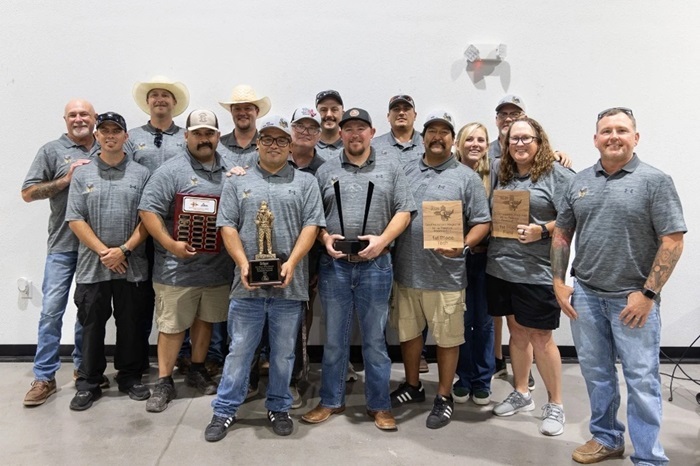 Waste Isolation Pilot Plant team members who competed in the 41st Southeastern Regional Mine Rescue Competition are pictured with their awards.
CARLSBAD, N.M. — Two mine rescue teams with the U.S. Department of Energy’s Waste Isolation Pilot Plant (WIPP) won first and third place in the recent 41st Southeastern Regional Mine Rescue Competition.
One WIPP team member, Mark Long with management and operations contractor Salado Isolation Mining Contractors (SIMCO), also won the award for top trainer.
The teams’ performance in the competition supports the continued commitment by mine rescue individuals to ensure emergency preparedness capabilities at the DOE Office of Environmental Management (EM) WIPP facility, an underground repository for defense-generated transuranic nuclear waste.
Five teams took part in the contest — two from WIPP and three from local mining companies. Judges included Tony Chapman, a mine safety specialist with EM’s Carlsbad Field Office, which oversees WIPP, and personnel from the Mine Safety and Health Administration.
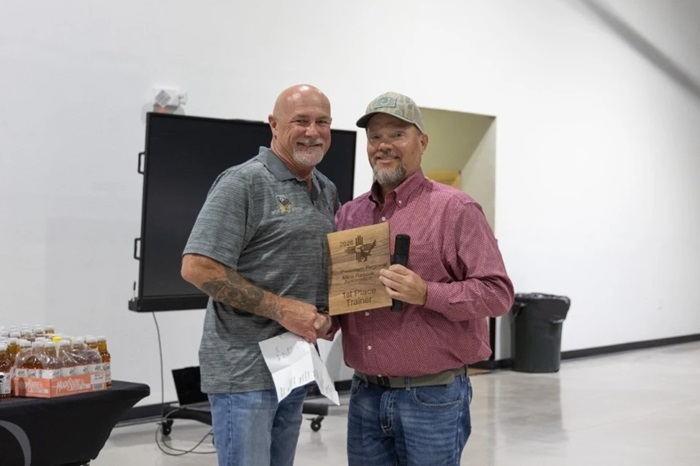 Mark Long, left, with Waste Isolation Pilot Plant management and operations contractor Salado Isolation Mining Contractors, won the award for top trainer at the 41st Southeastern Regional Mine Rescue Competition. He is pictured with Barry Clark with the Mine Safety and Health Administration.
The competition featured five events to evaluate mine rescue skills. They involved troubleshooting electronic gas detectors and breathing apparatuses; administering first aid; repairing breathing units; responding to a simulated underground mine disaster; and completing written examinations.
Employees serve on the teams as volunteers. They are composed of hoisting supervisors, mechanics, waste handlers, mining operators and other occupations. Teams practice and prepare for the day they are called to an emergency. They participate in several competitions each year to sharpen their skills, share lessons learned and continually raise the level of mine safety.
WIPP is set to take part in the 2026 National Mine Rescue Competition in Sevierville, Tennessee, in August.
-Contributor: Valerie Gohlke
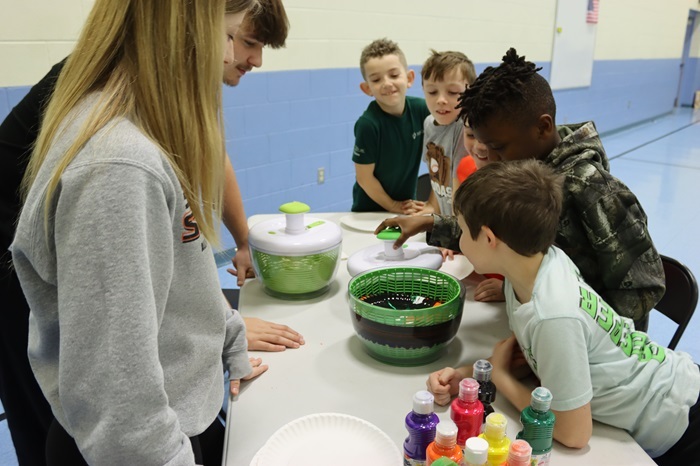 Waverly Intermediate School students work with Waverly High School seniors Jersey Osborne and Landon Swindler, at left, using paint and a salad spinner to learn about centrifugal force.
PIKETON, Ohio — Bringing together third grade students, high school mentors and interactive learning stations proved successful to introduce students to a wide range of career paths at the U.S. Department of Energy’s Portsmouth Site.
The site’s STEAM Ahead program recently finished its sixth year providing area students with unique learning opportunities in science, technology, engineering, art and math. This year’s program included five school districts in two counties, 20 classes and more than 400 students. An estimated 1,500 students have participated in STEAM Ahead since it started in 2021.
“Providing this opportunity to schools in our community has been a great way to help students not only discover possible career paths, but get excited about learning,” Acting Portsmouth Site Lead Jud Lilly said. “Many of the teachers have expressed how much they look forward to this being part of their curriculum now.”
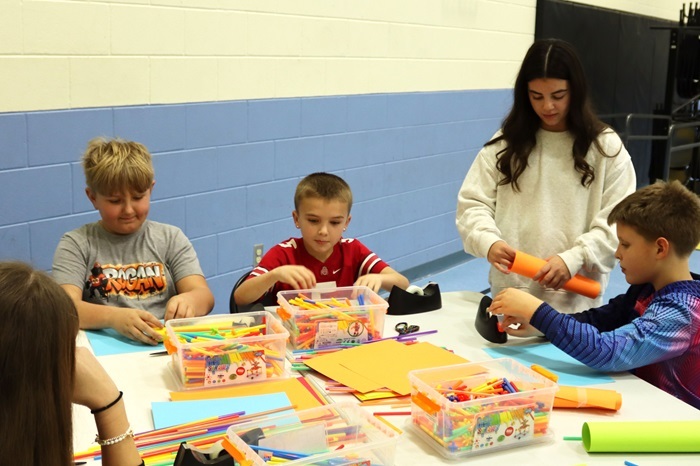 Waverly High School senior Lilly Ramsey helps students put engineering principles to use by building structures with paper and straws. More than 20 high school students participated in the inaugural mentorship program through STEAM Ahead.
This year, STEAM Ahead launched a pilot program at Waverly City Schools to incorporate junior and senior high school science students as mentors with their own hands-on learning stations.
“The program was a success for both the older and younger students,” said Waverly Science Teacher Daniel Sand. “The older students learned responsibility and the importance of setting a good example for the younger students, and the third graders enjoyed interacting with the older students and seeing how the kids they usually see playing sports or in musicals are also interested in science.”
Plans are underway to integrate high school mentors in the other school districts next year.
“Adding more mentors is key to expanding the program to new schools,” Portsmouth Site Strategic Planner Greg Simonton said. “This year, mentors from the Portsmouth Site provided hands-on activities with engineering, critical thinking, problem solving, welding, geography, the importance of clean water, centrifuge technology and electricity.”
State and local partners also took part in STEAM Ahead. The Ohio State University, Ohio University, Ohio Environmental Protection Agency, Pike Soil and Water Conservation District, and Pike County Solid Waste Management District created learning stations for students.
-Contributor: Cindi Remy
AIKEN, S.C. — Senior research fellow Dawn Wellman has been appointed to the U.S. Department of Energy’s (DOE) Critical Materials Innovation (CMI) Hub executive team, strengthening Savannah River National Laboratory (SRNL) expertise and capabilities in critical minerals and materials (CMM).
“Critical materials capabilities have been part of the SRNL story since the lab's founding in the Cold War era,” said SRNL’s Eric Pierce, associate laboratory director for environmental and legacy management. “SRNL's expertise in areas such as separations science, process intensification, materials science, and resource discovery support and expand DOE's critical minerals and energy innovation priorities and CMM-related initiatives.”
 |
|
Dawn Wellman, Savannah River National Laboratory senior research fellow in critical minerals and materials. |
Wellman's extensive industry and national laboratory experience and expertise in this field bolsters SRNL's ability to drive innovation, Pierce said. The new partnership with the CMI Hub will bring additional opportunities to collaborate across industry, academia and the national laboratory complex, he added.
The demand for CMM continues to grow, as they are essential for advanced manufacturing, electronics, energy systems and defense applications. However, with many of these materials sourced primarily from outside the United States, there is an increased urgency to strengthen domestic capabilities for recovery, processing and responsible environmental stewardship.
In her role as the CMI Hub’s science integration lead, Wellman will integrate the capabilities and expertise of all CMI Hub team members to enhance scale-up and commercialization activities, workforce development and education efforts.
The CMI Hub is an Energy Innovation Hub led by the DOE’s Ames National Laboratory with support from the Advanced Materials and Manufacturing Technologies Office, a suboffice of DOE’s Office of Critical Materials and Energy Innovation.
The CMI Hub seeks ways to accelerate the development of critical material technologies and enhance the innovation pipeline for U.S. supply chains by accelerating research, educating the workforce, and creating de-risked, commercial-ready technologies in partnership with American industry.
-Contributor: Catelyn Folkert
|