AIKEN, S.C. — In a significant milestone for global nuclear security, the United States, partnering with international allies, has completed the removal of all remaining highly enriched uranium from Venezuela’s legacy RV-1 research reactor.
The U.S. Department of Energy’s National Nuclear Security Administration (NNSA), Office of Environmental Management and Savannah River Site (SRS) were essential to the success of this complex, multi-agency mission.
NNSA's Office of Defense Nuclear Nonproliferation coordinated the operation through its Office of Nuclear Materials Removal and Minimization, whose mission includes reducing risk of nuclear terrorism by eliminating weapons-usable materials worldwide.
SRS, recognized for its expertise in nuclear material management and its longstanding support of NNSA's nonproliferation initiatives, provided technical leadership support, specialized facilities and operational excellence needed to bring the mission to completion.
The RV-1 reactor, constructed in the 1960s under the Atoms for Peace program, supported decades of scientific research before its shutdown in 1991. While most of its used fuel was removed in 1999, the remaining 20 U.K.-origin assemblies, along with two U.S.-origin fuel plates and six coupons, continued to pose a proliferation risk. RV-1 stands for Reactor Venezolano 1.
A team with SRS management and operations contractor Savannah River Nuclear Solutions (SRNS) led a site assessment in Venezuela in March, evaluating equipment, logistics and regulatory requirements.
“We needed to see what equipment we had, what we would need, and whether everything would fit,” said Kiran Karanth, SRNS Fuel Receipts Programs program manager.
The assessment clarified what needed to be completed, identified the necessary collaborators, and established the timeline to ensure all logistical, physical protection, safety, documentation, and regulatory compliance requirements were met on both the U.S. side and in Venezuela.
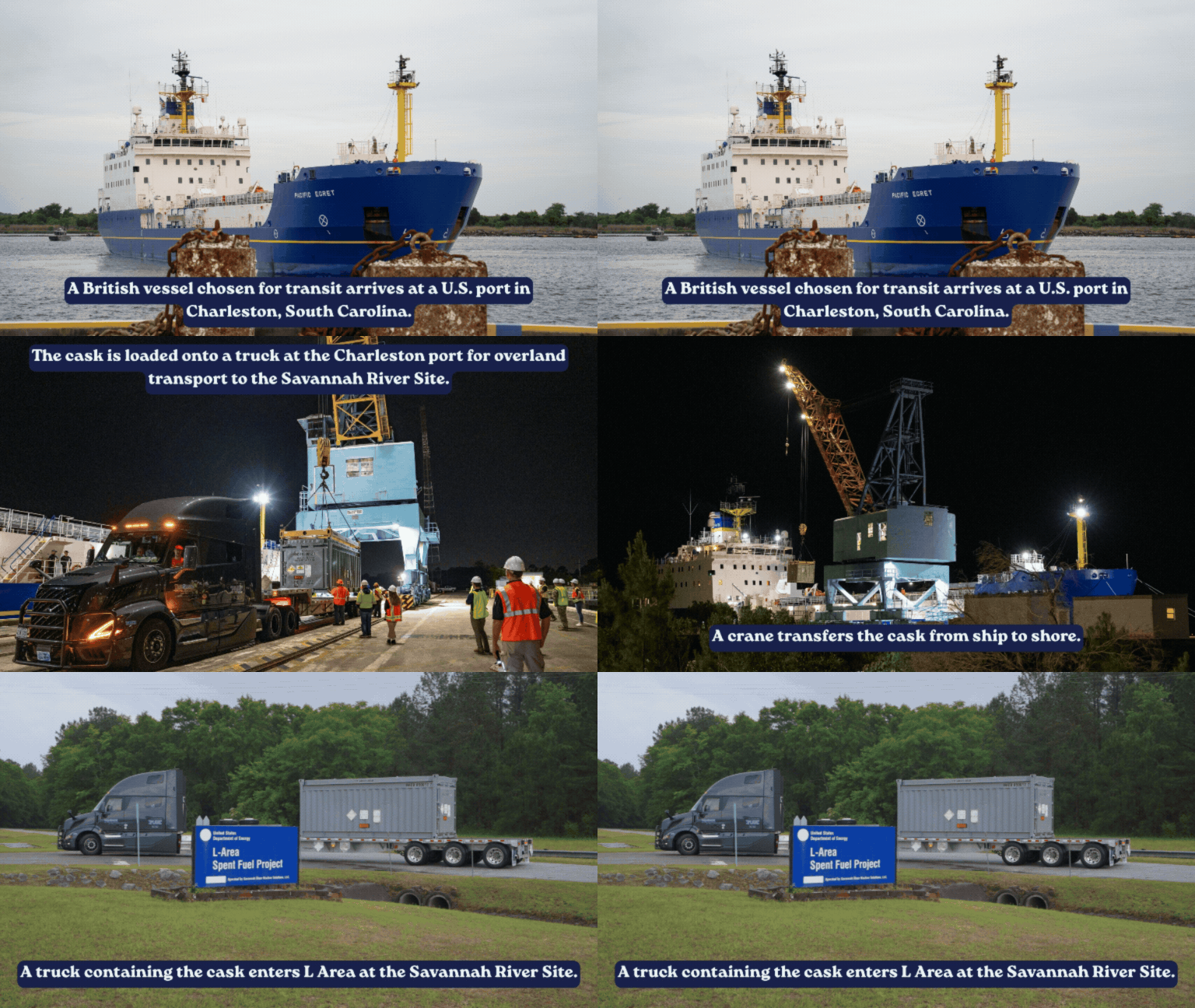
With a British vessel identified for transport, the SRS team rapidly reactivated maintenance activities, retrained operators and prepared specialized equipment to receive the cask upon arrival.
In Venezuela, SRNS personnel supported the cask-loading process, ensured all required radiological surveys were completed, and verified documentation for material acceptance in accordance with site requirements. The cask was then shipped to the U.S., where the SRS Radiological Assistance Program team provided further surveys at the Charleston, South Carolina, port prior to overland transport to SRS.
The cask was received at L Area at SRS and is securely stored. The used fuel will later be sent to the site's H Canyon — the only operating, production-scale, radiologically shielded chemical separations facility in the U.S. — to recover highly enriched uranium from the used nuclear fuel and convert it to high-assay low-enriched uranium to fuel advanced nuclear reactors, supporting America’s energy independence.
“This achievement underscores the dedication and expertise of our team at Savannah River Site,” said SRNS Environmental Management Operations Senior Vice President Janice Lawson. “By working hand in hand with our international partners, we have not only removed a significant nuclear risk but also reaffirmed our commitment to global security and nonproliferation. The safe and secure handling of this material is a testament to the operational excellence and collaborative spirit that define our mission at SRS.”
The successful removal and processing of the highly enriched uranium from Venezuela not only eliminated a significant proliferation risk but also showcased the critical role of SRS in advancing U.S. nuclear security and nonproliferation objectives. SRS continues to serve at the forefront of global efforts to secure nuclear materials and protect future generations.
-Contributor: Katie Gantt
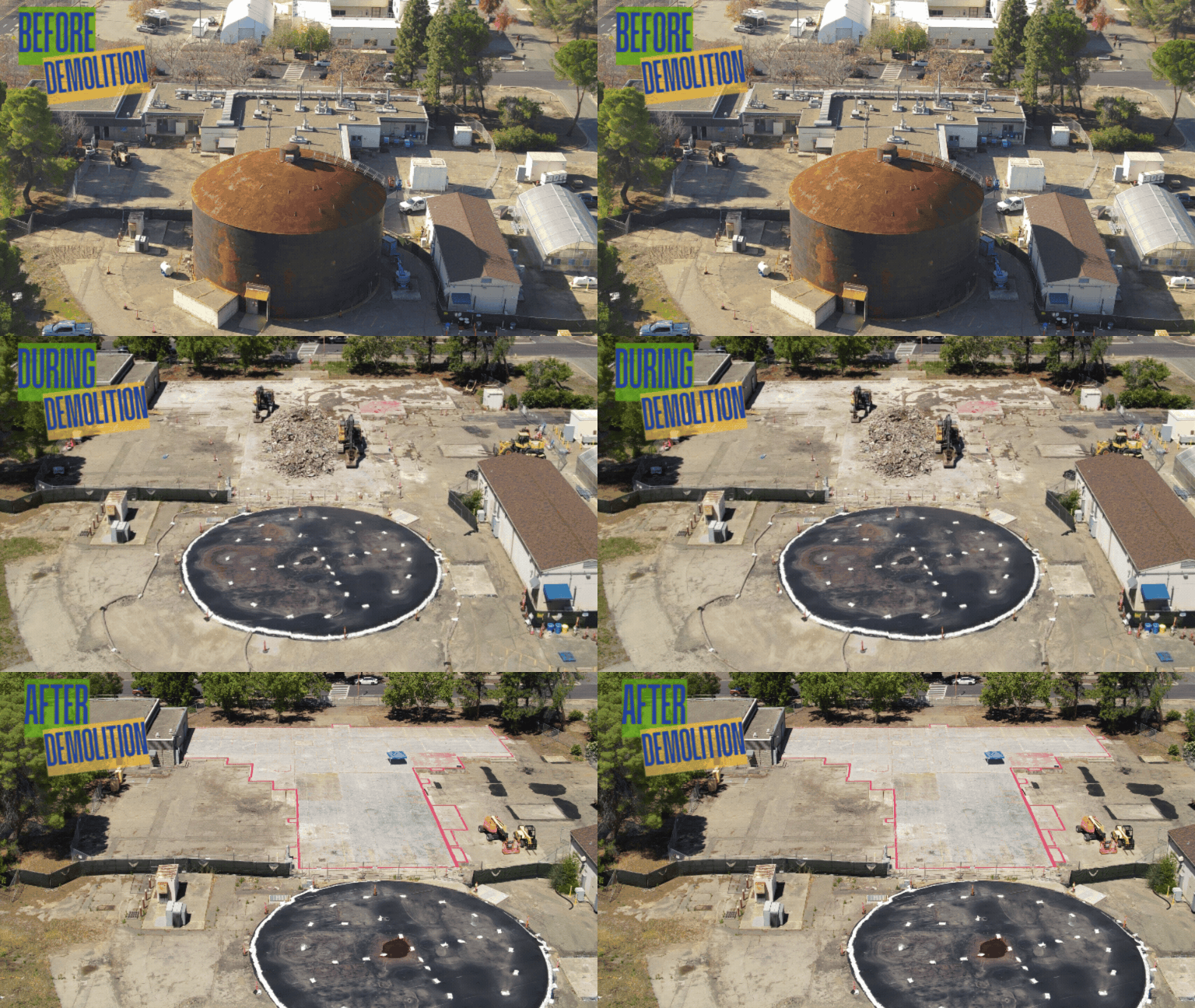 Drone photography shows the progression of demolition of a building that once housed an energy and environment laboratory, pictured in the background. The laboratory was connected to the operations of the Livermore Pool Type Reactor, pictured in the foreground in the first photo. Removal of the reactor and subsequent demolition of its structure, including the laboratory, has been key to the U.S. Department of Energy’s Office of Environmental Management work at Lawrence Livermore National Laboratory.
LIVERMORE, Calif. — A drone photograph recently captured progress worth celebrating at Lawrence Livermore National Laboratory (LLNL): remnants of a freshly demolished building that once housed an energy and environment laboratory sitting beside a concrete slab left by a previously torn-down research reactor dome — two legacy liabilities one step closer to new mission readiness.
The U.S. Department of Energy’s (DOE) Office of Environmental Management (EM) has been on a roll at LLNL, delivering a string of cleanup milestones ahead of schedule and under budget.
"The purpose of EM’s mission feels strong as the pace of building demolition increases in 2026. Every building we bring down is another step toward giving the laboratory back usable space for its critical national security mission," said Kevin Bazzell, federal project director for EM’s cleanup at LLNL and nearby Lawrence Berkeley National Laboratory.
EM crews last month brought down the former energy and environment laboratory building. Final site stabilization is expected by the end of this month. The legacy research reactor dome demolition wrapped up in April — a month early and nearly $5 million under budget. And crews removed the slab for another former legacy facility in March — more than six months ahead of schedule — freeing up land for National Nuclear Security Administration future mission use.
Momentum continues. EM crews are set to begin pre-demolition work on an excess facility and the slab next to it in July. In former lives, the facility was used for everything from a hanger and drill hall during World War II, to a hosting location for astrophysics experiments.
Next, workers are slated to remove a building for a former fuel elements laboratory and a structure that supported the Pluto Project, a program to develop nuclear-powered ramjet engines for use in cruise missiles. Workers are also set to remove the slab and underground structure for the building that contained the research reactor dome.
Initiated by congressional legislation, EM's cleanup work at LLNL reflects the program's broader mission: safely meet DOE's environmental responsibilities while creating space and opportunity for the next generation of American science and innovation.
-Contributor: Stephanie Shewmon
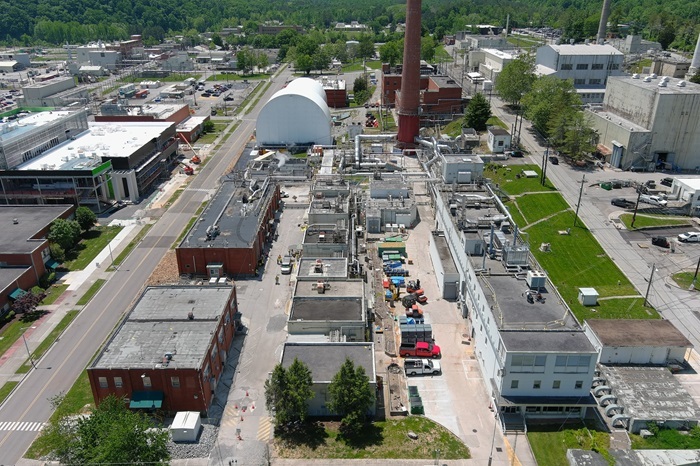 An aerial view of the 10 facilities that comprise Isotope Row located in the heart of Oak Ridge National Laboratory. Removal of these facilities begins next month and opens space for modern research missions.
OAK RIDGE, Tenn. — Oak Ridge Office of Environmental Management (OREM) crews have prepared a cluster of highly contaminated buildings for teardown on one of the most challenging footprints at Oak Ridge National Laboratory (ORNL) after finishing deactivation work there.
Located in the ORNL’s central campus, Isotope Row consists of 10 facilities constructed between the late 1940s and early 1960s that previously supported the laboratory’s isotopes program. For decades, employees at the facilities produced, processed and researched isotopes used in medical, industrial, scientific and national defense applications.
As the U.S. Department of Energy’s largest multiprogram national lab expanded over the decades, the aging isotope facilities remained in place following the discontinuation of their operations in the early 1990s.
What was left behind were contaminated ventilation systems, hot cells, process equipment and legacy radioactive materials requiring specialized cleanup approaches.
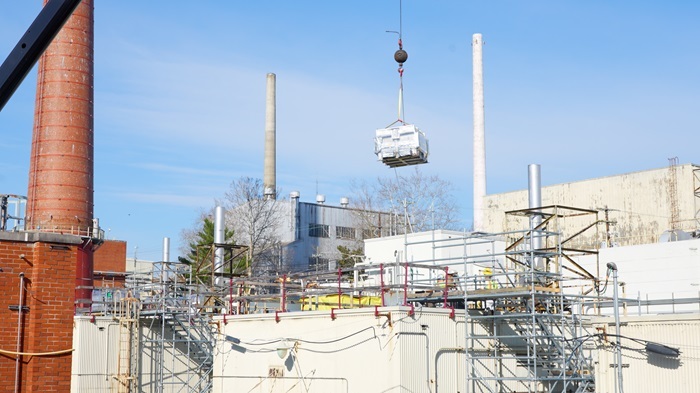 Oak Ridge Office of Environmental Management crews used a large crane to remove filter houses from the roof of Isotope Row facilities.
OREM contractor United Cleanup Oak Ridge (UCOR) began addressing those complex tasks and deactivating the facilities in 2020. Throughout the project, crews executed work under strict radiological and industrial safety controls to advance cleanup across one of ORNL’s highest-risk areas.
Their work enables the removal of the outdated infrastructure, eliminates hazards and provides space for modern-day research missions.
“Preparing Isotope Row for demolition represents years of strategic risk-reduction work across one of ORNL’s most historically significant and contaminated footprints,” said Steve Reed, UCOR project manager for Isotope Row. “Every system removed, every hazard reduced and every facility prepared for teardown helps modernize ORNL’s central campus for future missions.”
Crews removed hazardous systems and materials throughout the footprint. In 2024, teams removed four 2,000-pound krypton tanks from a former storage facility that supported thermal diffusion operations. Krypton is a rare chemical element in the form of an inert gas. Workers also completed complex ventilation isolation and removal activities across multiple facilities.
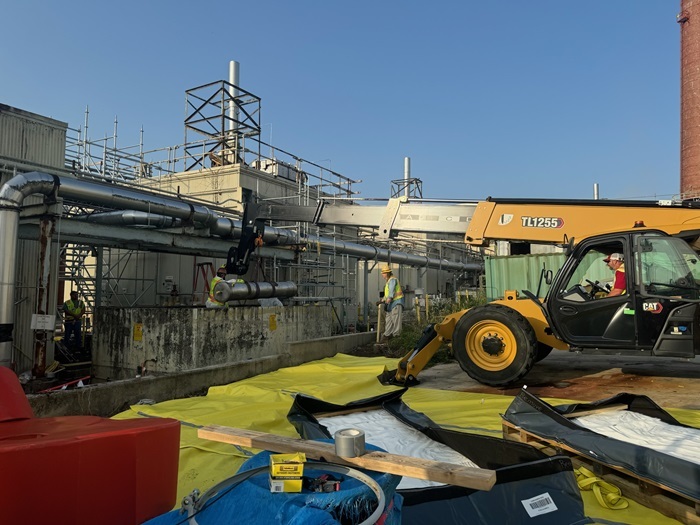 Oak Ridge workers remove 2,000-pound krypton tanks from Building 3093, located on Isotope Row.
Earlier this year, workers removed process off-gas and central ventilation system lines containing high levels of transuranic isotopes. Transuranic elements are human-made with atomic numbers greater than uranium on the periodic table of elements.
Additional large-scale deactivation efforts included using a 110-ton crane to remove pipe bridges and radiological filter houses from the rooftops of several facilities.
Final steps toward demolition readiness included downsizing and packaging remaining hot cells in the facilities and conducting decontamination surveys across the area. Hot cells are heavily shielded, concrete rooms used to safely contain and manipulate highly radioactive materials.
Demolition is scheduled to begin in July, and removal of the 10 facilities is expected to be completed in coming months.
-Contributor: Ryan Getsi
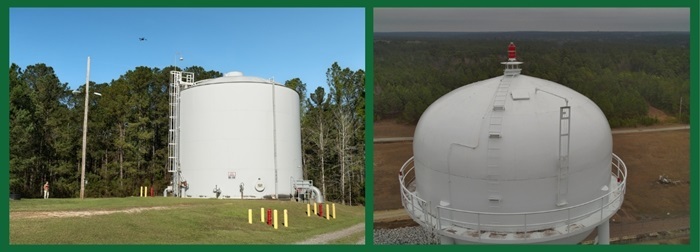 At left, a drone performs a fire water tank inspection at the Savannah River Site, evaluating components such as hatches, aviation warning lighting systems, vent screens and additional hardware. At right, drone footage captures comprehensive visual imagery of a water tower at the site.
AIKEN, S.C. — Teams are expanding use of drones to enhance Savannah River Site (SRS) infrastructure inspections — improving safety, reducing labor needs and delivering measurable cost savings.
U.S. Department of Energy Office of Environmental Management contractor Savannah River Nuclear Solutions (SRNS) and Savannah River National Laboratory (SRNL) agreed to support aerial inspections of key structures and systems, including water storage tanks, river water piping corridors, fire water tanks, roof systems, power distribution, steam pipelines and other critical assets that support ongoing operations. Personnel collaborate to review real‑time imagery from the drone controller interface.
“By integrating drone technology onsite, we are redefining how maintenance inspections are performed, especially for elevated and remote assets,” said Dawson Oglesby with SRNS. “In scenarios where safety is a concern, drones allow us to assess hard-to-reach areas without placing personnel at risk. Not only does this improve safety, but it also streamlines the inspection process, saving both time and costs while delivering accurate, real-time results.”
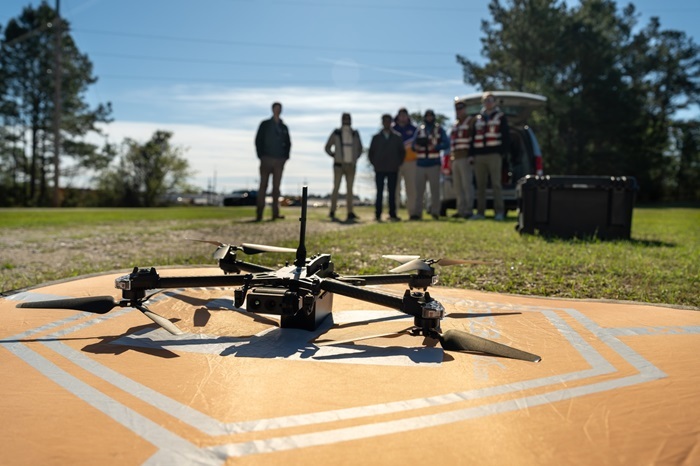 Savannah River Nuclear Solutions and Savannah River National Laboratory have worked together to complete over 50 drone flights since 2023.
Traditional inspections of certain areas require substantial manpower and physical access. For example, inspecting river water piping in wetland terrain previously required two to six workers to cut access paths, haul equipment and navigate challenging ground conditions.
Drone inspections eliminate land disturbances, reduce labor requirements, improve safety and accelerate assessment timelines. In one case, transitioning to drone inspections resulted in more than $43,000 in savings.
“We’re always looking for safer, more efficient ways to verify that our systems meet regulatory standards and are operating as designed,” said Randy Keenan, SRNS director of Site Services. “Using unmanned aircraft systems, our personnel can evaluate conditions in a fraction of the time it takes to walk or climb an inspection route, while quickly identifying erosion concerns, equipment issues or structural wear.”
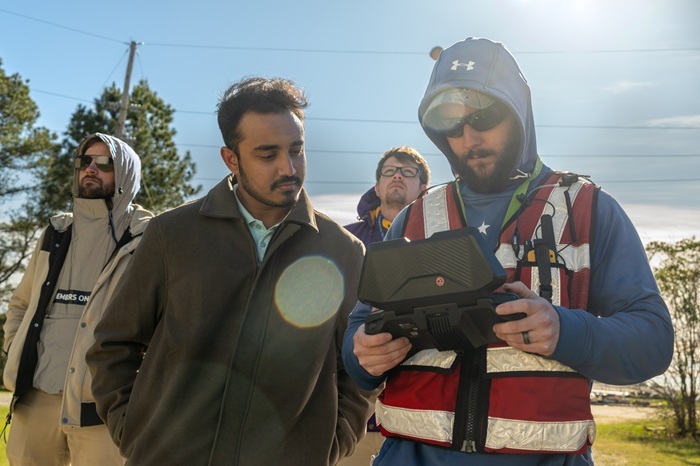 From left, Savannah River Nuclear Solutions Fire Protection engineers Aaron Splitter, Parth Patel and Zachery Wilson, and Savannah River National Laboratory unmanned aircraft system pilot Jeffrey Steedley inspect a fire water tank at the Savannah River Site.
Drone technology has also proven to be safer and more effective for regulatory inspections, once performed by staff climbing elevated structures. Assessments of water storage tanks can verify hatch locks, aviation warning lights, vent screens and other compliance‑related components without requiring personnel to scale the towers.
The site’s drone program began in 2017, supporting SRNL, SRS contractors, and research and development efforts, later expanding to serve U.S. armed forces, federal agencies, law enforcement and the intelligence community. The team has conducted hundreds of flights supporting infrastructure inspections, emergency response exercises, radiation detection, aerial photography, training events and surveys using imaging technology.
DOE honored the SRS team with its Innovative Approach to Sustainability Award for the use of drones to control the growth of vegetation atop two closed reactor buildings, saving more than $170,000 a year.
Drones have also been used at SRS to inspect covered waste sites and radioactive liquid waste tanks.
“Unmanned aircraft system technology has become a powerful asset for SRS,” said Troy Lorier, SRNL unmanned aircraft systems operations manager and aviation safety officer.
-Contributor: Mackenzie McNabb
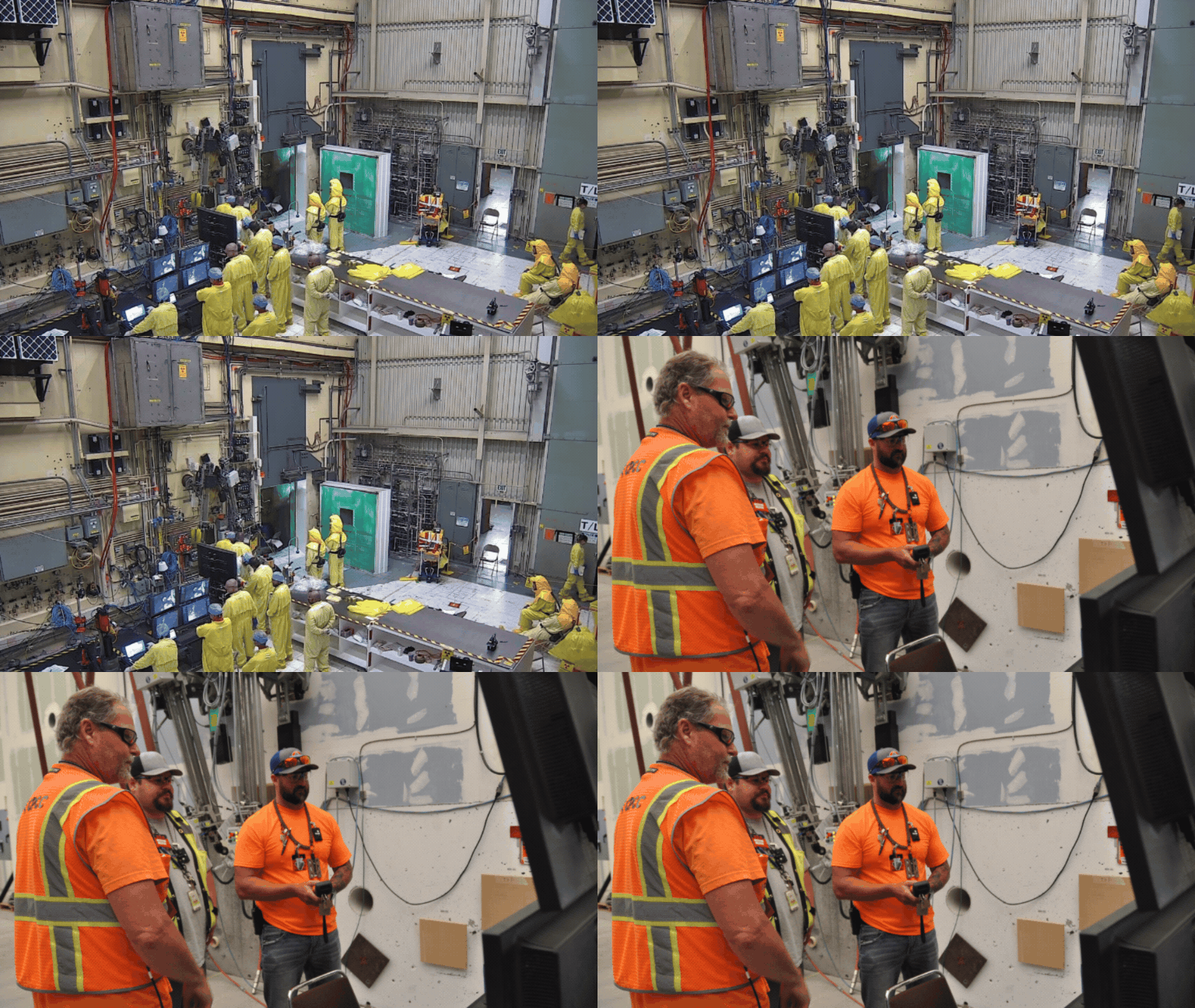 Crews with Hanford Site contractor Central Plateau Cleanup Company recently stabilized four radioactive hot cells in the 324 Building. The work is a significant step in a critical risk-reduction project that will include eventual demolition of the building and remediation of contaminated soil underneath the structure.
RICHLAND, Wash. — Workers with U.S. Department of Energy contractor Central Plateau Cleanup Company (CPCCo) recently checked a critical box, actually four of them, completing stabilization of contaminated hot cells in the 324 Building, reducing a significant risk at the Hanford Site.
The four heavily shielded cells, A, B, C and D, protected workers while they used remotely operated equipment to conduct research on radioactive materials during the facility’s operations from 1966 to 1996.
The stabilization process, which began last year, involved grouting old equipment and debris in the hot cells. Crews also prevented the spread of contamination by applying a fixative agent to the interior walls of the cells, a pipe trench and exhaust ventilation ducting.
“Stabilization of these cells is a significant step in preparing the 324 Building for demolition,” said Kelly Ebert, director of the Hanford Field Office Projects and Facilities Division. “The project also further reduces risk to the environment, including the nearby Columbia River.”
Stabilizing the hot cells required workers to master the use of manipulators and the remote-operated crane system in the 324 Building. To enhance their expertise, operators trained on a similar system at the nearby 324 Mock-up Facility. Mock-ups are used frequently at Hanford to allow employees to safely train and test equipment and procedures before performing work in a radiological environment.
“I’m extremely proud of our team for the safe completion of this key phase of the project,” said Randy Hermann, CPCCo 300 Area End States manager. “This work not only greatly reduces the building’s inventory of radioactive and hazardous material, but it also creates a safer environment for our crews as we tackle additional high-hazard activities at the facility.”
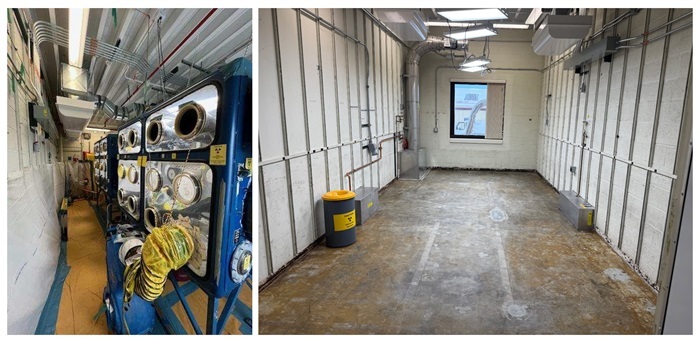 Before and after: Teams from the Idaho Environmental Coalition and Battelle Energy Alliance safely removed a contaminated glovebox, clearing space for future research at the Idaho National Laboratory.
IDAHO FALLS, Idaho — A successful partnership at the Idaho National Laboratory (INL) Site resulted in the safe and efficient deactivation, decommissioning and demolition of a glovebox at the Analytical Research Laboratories in the Materials and Fuels Complex.
INL is managed by Battelle Energy Alliance (BEA), the prime contractor for the U.S. Department of Energy’s (DOE) Office of Nuclear Energy (NE). BEA partnered with the Idaho Environmental Coalition (IEC), contractor for the DOE’s Office of Environmental Management (EM) Idaho Cleanup Project, to complete the challenging project safely and compliantly while staying on schedule and within budget.
“These efforts align with DOE’s mission to repurpose sites for the future, supporting economic growth and enabling advancements in American energy and scientific leadership,” ICP Manager Nick Balsmeier said. “As INL continues to lead in nuclear research and development, ICP will continue to support these efforts through waste management and used nuclear fuel storage. This collaboration between DOE-NE and DOE-EM provides a roadmap to address future cleanup challenges and revitalization efforts across the DOE complex.”
A glovebox is a sealed, stainless steel containment enclosure equipped with glove ports and windows, designed to protect personnel from radiological and chemical hazards when handling radioactive materials.
Due to the complexity of the glovebox and its associated contamination, the teams worked together to identify and mitigate potential hazards and developed a work plan that optimized BEA and IEC’s strengths as they took steps to deactivate and demolish the enclosure.
The success of this initiative demonstrates DOE’s commitment to protecting workers, the public and the environment as employees continue to remediate contaminated sites and reduce the government’s environmental liabilities.
Removal of the glovebox eliminates a long-term hazard and optimizes facility space for advanced research programs that will drive innovation in nuclear technology. This project also maximized value to taxpayers, while addressing significant environmental and operational challenges.
“This project highlights the strength of collaboration between IEC and BEA,” IEC Operations Director Jason Chapple said. “The IEC and BEA teams worked very closely together to ensure that the glovebox removal was completed safely. This successful partnership demonstrates how detailed planning, shared expertise and teamwork can achieve impactful results.”
-Contributors: Ryan Christensen, Jessica Vasseur
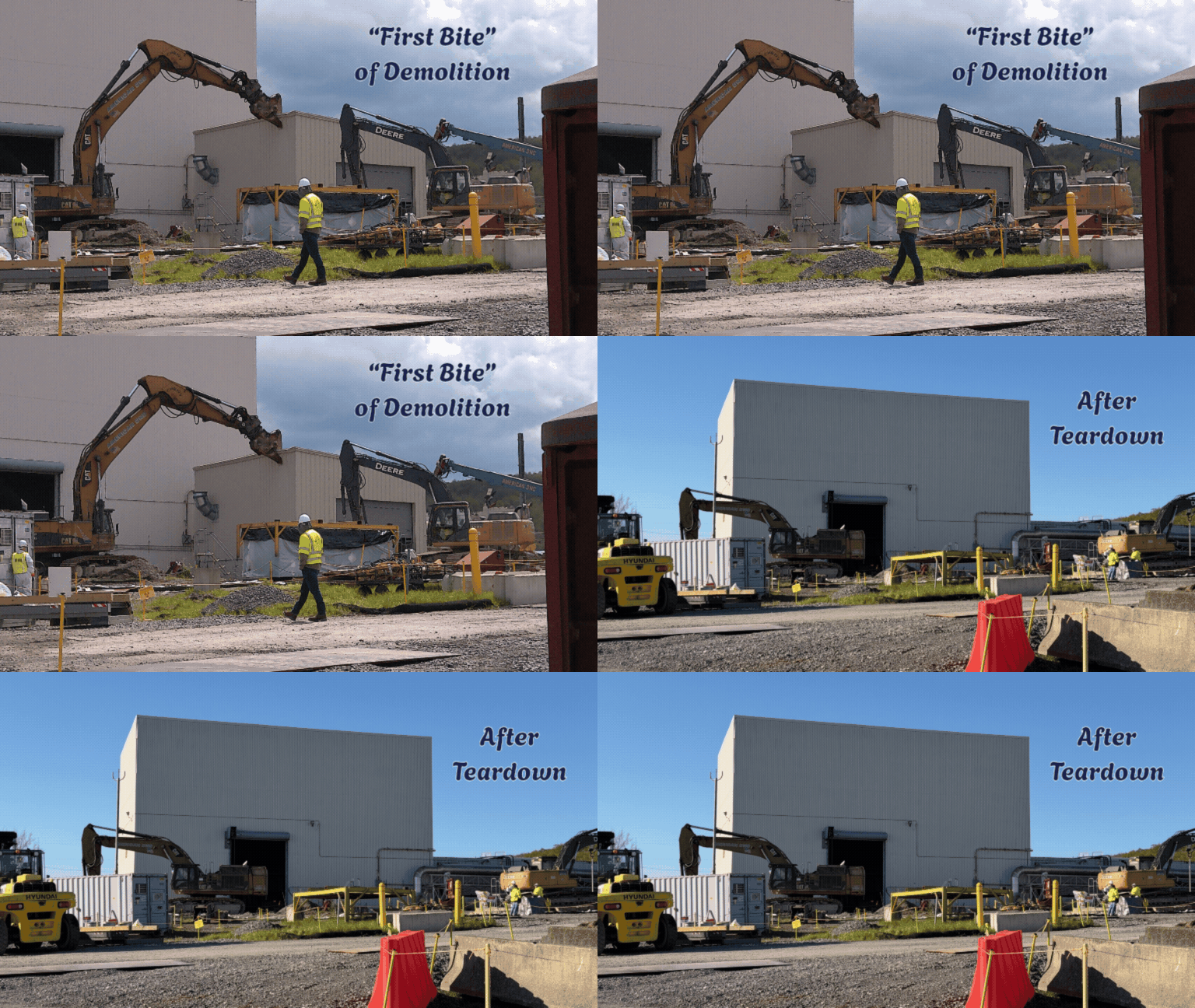 In the first photo, crews take the “first bite” of the Replacement Ventilation Unit building at the West Valley Demonstration Project. The second photo shows the building’s footprint following the safe and successful demolition. The site’s Fuel Receiving and Storage Facility is shown in the background. That facility is slated for demolition in the future.
WEST VALLEY, N.Y. — The U.S. Department of Energy’s Office of Environmental Management (EM) has brought down a building containing a ventilation system that once served the Main Plant Process Building, which crews tore down last year in the largest, most complex demolition of a radioactively contaminated facility at the West Valley Demonstration Project.
Construction of the Replacement Ventilation Unit (RVU) building took place in the mid-2010s after crews took the Main Plant’s ventilation systems out of service during deactivation work due to their filters being highly contaminated. However, ventilation was still necessary for contamination control during deactivation, which led to the creation of the RVU.
The RVU building was a 1,015-square-foot, single-floor metal building containing two HEPA ventilation and filter systems with a single discharge stack.
“Training, planning and understanding are vital to ensuring a safe and efficient worksite,” EM West Valley Office of Project Management Assistant Director Stephen Bousquet said. “Our team works step by step to ensure safety of our entire crew and community.”
Following planning and training, crews recently demolished the RVU building and loaded debris from the teardown into containers to ship offsite for safe disposal.
“The West Valley team is extraordinary. It is rewarding to see everyone come together to create and execute a safe, successful plan,” said Jason Casper, president and program manager for EM contractor West Valley Cleanup Alliance. “This project and progression would not be possible without each department and employee here at West Valley.”
Successful demolitions continue to reduce environmental risks and allow for the progression of cleanup. Next up is the teardown of the Fuel Receiving and Storage Facility following planning and preparations. That building was used from 1965 to 1972 to receive and store used nuclear fuel before it was reprocessed to recover reusable plutonium and uranium.
-Contributor: Sarah Morris
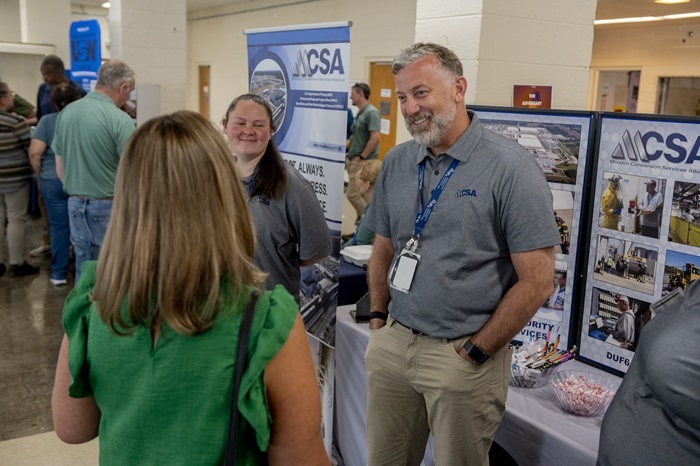 In this photo, Mission Conversion Services Alliance Operations Support Manager Tom Simmons, right, speaks with Heath Middle School Science Teacher Brandy Roberts about job opportunities at the Paducah Site Depleted Uranium Hexafluoride (DUF6) Conversion Plant. Mission Conversion Services Alliance operates the DUF6 conversion plants at the Paducah, Kentucky, and Portsmouth, Ohio, sites. The contractor converts DUF6 into a safer, more stable oxide form. The DUF6 material, a coproduct of decades of uranium enrichment for defense and commercial energy purposes, poses long-term storage and environmental challenges in its original form. Through conversion to uranium oxide, the DUF6 team is helping mitigate those risks.
PADUCAH, Ky. — Members of the U.S. Department of Energy’s Office of Environmental Management (EM) workforce recently discussed job opportunities with area teachers and administrators as they toured the Paducah Site. EM team members presented visual materials and held hands-on demonstrations on topics such as demolition for the educators and administrators.
The discussions and tour were part of the annual Paducah Area Chamber of Commerce Educator Externships, an immersive professional development program that connects local teachers with regional employers. This practical experience helps educators understand the skills and credentials required in modern workplaces to better guide students toward high-demand local careers. This is especially important as the Paducah Site continues to be a part of the nuclear renaissance across America, shifting focus to cleanup for future reindustrialization.
-Contributors: Nick Henley, Dylan Nichols
|