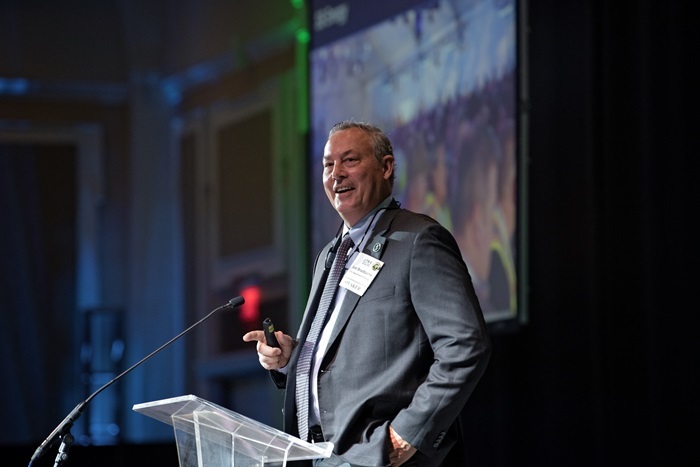
 Joel Bradburne, principal deputy assistant secretary for the U.S. Department of Energy’s Office of Environmental Management, delivers the keynote address at the Appalachian Ohio State of the Region Conference at Ohio University. He spoke about how partnerships are shaping the future of the Portsmouth Site.
ATHENS, Ohio — Past planning efforts and collaboration are leading to future energy and economic development in southern Ohio, particularly at the Portsmouth Site, according to the U.S. Department of Energy’s (DOE) Joel Bradburne, who recently served as the keynote speaker at the Appalachian Ohio State of the Region Conference at Ohio University.
“All this hard work has really paid off,” said Bradburne, principal deputy assistant secretary for the DOE's Office of Environmental Management (EM). “The focus for today is really about enabling the future.”
The Portsmouth Site is decontaminating and demolishing legacy buildings to create space for future industry, such as artificial intelligence (AI) infrastructure and nuclear energy opportunities, helping to create generational jobs and build long-term economic vitality in the local community.
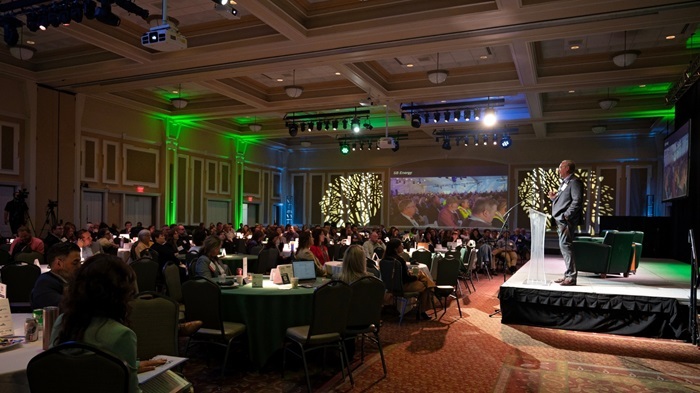 Joel Bradburne, principal deputy assistant secretary for the U.S. Department of Energy’s Office of Environmental Management (EM), speaks to attendees at the 14th annual Appalachian Ohio State of the Region Conference at Ohio University. Bradburne spoke about the success of the PORTSFuture program and how it can serve as a model across the EM complex.
Bradburne’s experience planning efforts that have led to new energy initiatives in Ohio dates back more than 15 years. He previously served as the Portsmouth Site lead, Portsmouth Paducah Project Office (PPPO) deputy manager and then PPPO manager before ultimately taking his current position at EM headquarters in Washington, D.C.
As the Portsmouth Site lead, Bradburne worked with Ohio University and its PORTSFuture program, which began in 2010. Made possible by an EM grant, the program conducted a community-based engagement study through which stakeholders discussed remediation and made recommendations for the cleanup and future use of the site.
“The visions really came from the community members,” said Stephanie Howe, director of Energy Programs at the university’s Voinovich School of Leadership and Public Service. “What the public preferred, number one, was a nuclear facility; number two was green energy production; third was industry or manufacturing; and the fourth was national research and development.”
That community feedback supported a baseline for all future planning and preparations to recruit for future industry and developing the next-generation workforce.
The PORTSFuture team worked with the local community reuse organization, Southern Ohio Diversification Initiative (SODI), and EM to bring the vision to life. Now, as Bradburne said, the hard work is seeing results.
Bradburne was referring to recent announcements from commercial entities intending to expand or locate on the Portsmouth Site. Centrus Energy Corp. plans to expand its uranium enrichment facility at the site. Oklo, a company designing small modular reactors, purchased a portion of available land at the site from SODI. And SB Energy, a SoftBank Group company, plans a public-private partnership to construct the world’s largest AI data center as part of a lease agreement at the site.
As PPPO manager, Bradburne applied his experience from the Portsmouth Site to the Paducah Site in Kentucky, contributing to recent announcements and agreements with General Matter and Global Laser Enrichment and the Paducah Site being chosen as a potential AI data center location.
His goal is to continue momentum, using the successful relationship between EM, Ohio University and SODI as a model to apply across the EM complex.
“The future is just incredibly bright,” Bradburne said. “It’s going to take you in the room to pick it up and drive it where it needs to go.”
-Contributor: Sarah Marko
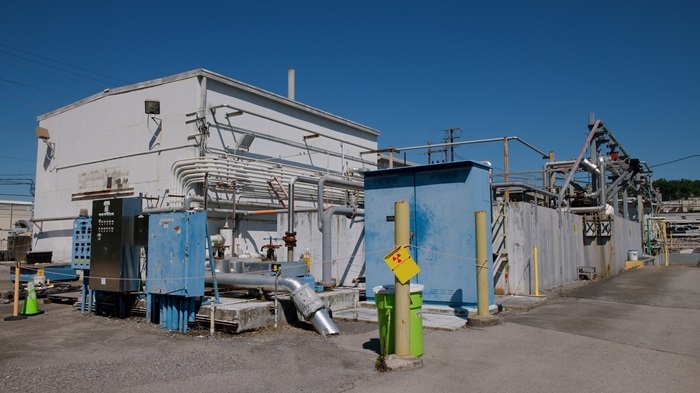 A view of Building 3544 at Oak Ridge National Laboratory. Constructed in 1976, the facility has exceeded its design life, and crews are in the early stages of preparing the structure for demolition.
OAK RIDGE, Tenn. — Cleanup progress continues across Oak Ridge National Laboratory (ORNL), where workers recently began preparing another facility for demolition as they remove hazards and pave the way for the next chapter of scientific discovery and innovation at the site.
The Oak Ridge Office of Environmental Management (OREM) and contractor United Cleanup Oak Ridge (UCOR) are characterizing and deactivating Building 3544, a former waste treatment plant, along with other infrastructure on the building’s footprint, including a wastewater plant.
“Adding Building 3544 into the cleanup sequence while simultaneously advancing demolition readiness across central campus demonstrates the momentum our workforce is achieving at ORNL,” said UCOR ORNL Area Project Manager Chad York. “Every facility we prepare for demolition reduces risk, modernizes the footprint and creates new opportunities for the scientific innovation and research missions.”
Characterization is the systematic data-gathering process of identifying and analyzing the nature and extent of contamination in and around facilities. Deactivation places a facility in a stable condition to minimize risks and protect workers, the public and the environment. This work at Building 3544 involves conducting surveys, removing hazardous and radiological materials, and preparing systems and equipment for demolition, which is expected in 2028.
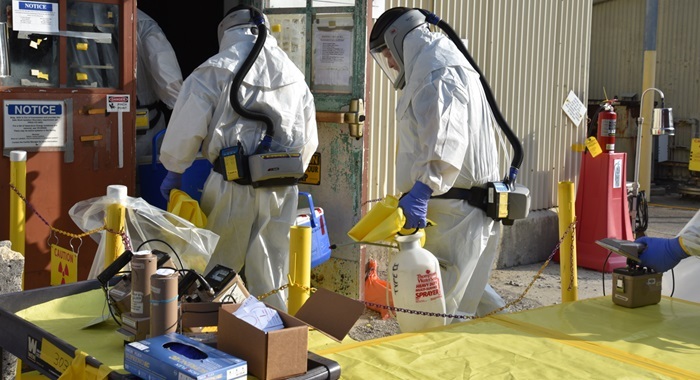 The work ahead at Building 3544 involves conducting surveys and characterization, removing hazardous and radiological materials, and preparing systems and equipment for demolition.
Constructed in 1976, the facility exceeded its design life and posed one of the biggest risks to operations at Liquid and Gaseous Waste Operations (LGWO).
The LGWO system is critical to ORNL’s ongoing missions, and any outage would result in immediate impacts at the site. It contains three waste treatment systems that collect, treat and reduce the volume of liquid and gaseous waste across the laboratory. The system encompasses more than 60 facilities and 27 miles of piping that process waste generated from cleanup operations, research and development laboratories, and active and deactivated nuclear reactors.
LGWO previously had two waste treatment complexes. Building 3608 treated nonradiological wastewater, while Building 3544 treated radiological wastewater. However, installations and upgrades consolidated all treatment at Building 3608. Those investments paved the way for OREM to eliminate Building 3544.
This project is the latest in a line of efforts to remove old, excess and contaminated structures in ORNL’s central campus.
Crews are in the final weeks of readying facilities on Isotope Row for demolition. These 11 buildings were constructed in the 1950s and 1960s to produce, process and research isotopes for medical, industrial and scientific applications.
Other teams are deactivating the final hot cell of the former Radioisotope Development Laboratory, preparing one of the most contaminated structures at ORNL for demolition in coming months.
-Contributor: Ryan Getsi
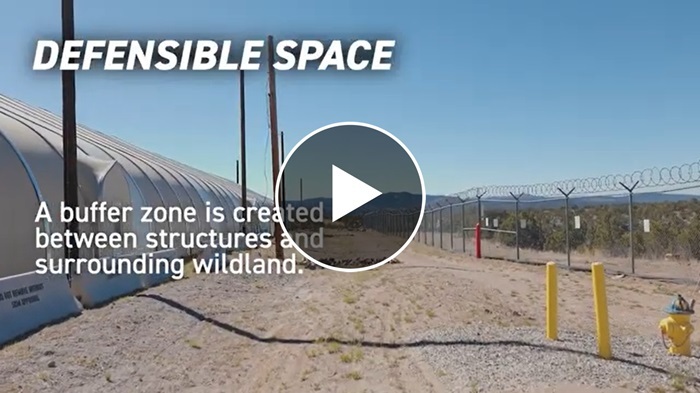 EMTV: Watch this video to learn more about wildfire mitigation efforts at Technical Area 54, Area G, at Los Alamos National Laboratory conducted by the U.S. Department of Energy’s Environmental Management Los Alamos Field Office and its legacy cleanup contractor, Newport News Nuclear BWXT-Los Alamos LLC.
LOS ALAMOS, N.M. — Continual dry weather conditions in northern New Mexico prompt the U.S. Department of Energy’s (DOE) Environmental Management Los Alamos Field Office (EM-LA) to conduct ongoing wildfire mitigation and preparedness measures in an area of Los Alamos National Laboratory (LANL).
EM-LA and legacy cleanup contractor Newport News Nuclear BWXT-Los Alamos LLC (N3B) manage operations at Technical Area (TA) 54, Area G, where legacy radioactive and hazardous waste is safely stored.
“Ongoing wildfire mitigation preparation is paramount to protecting the containers holding radioactive and hazardous waste at Area G,” said Julie Wood, N3B director of fire protection engineering. “N3B works hand in hand with LANL to ensure we are on the same page and that protective safety measures are in place.”
Past large wildfires in the Los Alamos area, such as the Cerro Grande Fire in 2000 and the Los Conchas Fire in 2011, underscore the importance of mitigation.
All wildfire mitigation and preparedness efforts are integrated into LANL’s Emergency Management Program through its Wildland Fire and Forest Program. In accordance with that program’s standards, N3B manages vegetation at TA-54, Area G, collaborates with LANL to keep evacuation routes clear and implements safe shutdown protocols for facilities threatened by wildfire.
During periods of high fire risk, many activities — such as cutting and welding, and off-road vehicle use — are restricted because they could create ignition sources in wildland areas.
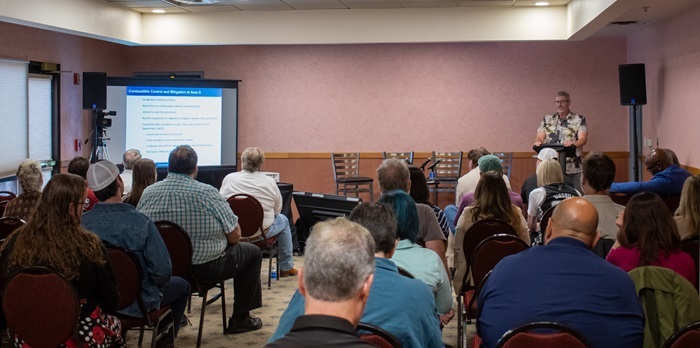 Brian Clayman, contact-handled transuranic waste program manager for Newport News Nuclear BWXT-Los Alamos LLC (N3B), presents on wildfire mitigation and preparedness measures for Technical Area 54, Area G, at Los Alamos National Laboratory, during the recent Environmental Management Cleanup Forum held by the Environmental Management Los Alamos Field Office and N3B.
Minimizing Wildfire Risk at TA-54, Area G
Waste containers are safely secured within structures with steel or aluminum frames, protected by fire-retardant fabric.
Removing legacy radioactive and hazardous waste reduces wildfire risk at TA-54, Area G. Over the past eight years, EM-LA and N3B have made significant progress in moving legacy waste off-site, including:
Wildfire fuel mitigation efforts are continuously underway around TA-54, Area G. Tree thinning is done in the canyons adjacent to Area G. Vegetation on the Area G mesa primarily consists of small trees, shrubs and grasses. A perimeter is maintained around structures containing radioactive waste, where vegetation taller than 6 inches is cut and removed at least once a month during the growing season from April to October.
EM-LA and N3B’s year-round wildfire mitigation efforts are coordinated with several LANL Wildland Fire and Forest Program partners, including with the National Nuclear Security Administration Los Alamos Field Office; Los Alamos County; Four Accord Pueblos comprised of the Pueblo de Cochiti, Pueblo of Jemez, Pueblo de San Ildefonso and Santa Clara Pueblo; U.S. Forest Service; National Park Service; and Bureau of Land Management.
-Contributor: Donavan Mager
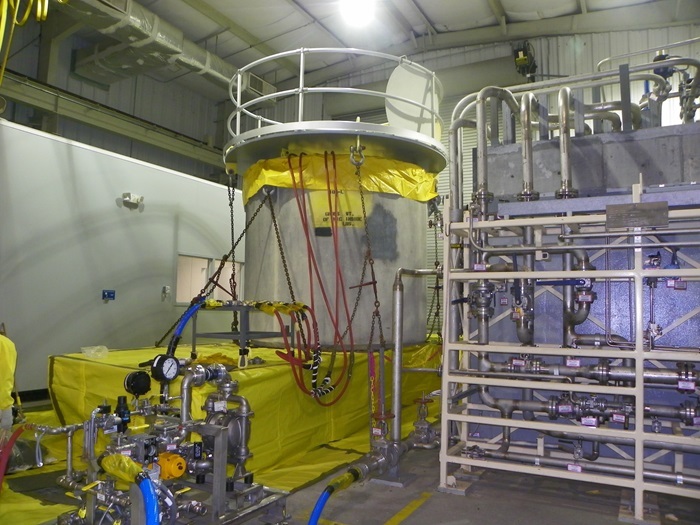 A view of the "slurry-out" process, in which a system of pumps and hoses pushes the spent resin out of tanks and into a container. Water is then removed from the container and returned to the system.
AIKEN, S.C. — Crews have brought innovations and other improvements to a basin that stores used nuclear fuel at the Savannah River Site (SRS).
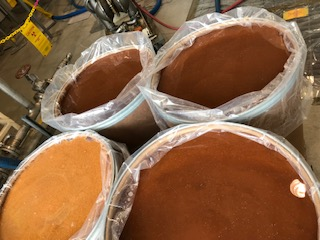
They recently replaced an exhausted resin to maintain the quality and safety of the basin water. Changing the resin ensures purified water chemistry and clarity, both critical for shielding and protecting the fuel stored underwater and the personnel working around it.
The basin stores used nuclear fuel from former production reactors, and from foreign and domestic research reactor programs. It holds about 3.4 million gallons of water, with depths of 17 to 50 feet.
“From preparation through completion, our success was driven by diligence and collaboration. The new equipment and upgrades, combined with our team’s dedication, have significantly enhanced the safety, efficiency and reliability of operations,” said Tristan Downey, L Area deputy facility manager for the site’s managing and operating contractor, Savannah River Nuclear Solutions.
 |
|
Crews recently added fresh resin, pictured, to a support system for the basin storing used nuclear fuel at the Savannah River Site. Replacing spent resin ensures purified water chemistry critical for shielding and protecting the fuel stored underwater and the personnel working around the water. |
Systems in place address the water chemistry by removing harmful impurities, ensuring low conductivity in the water. High conductivity can lead to significant risks such as degraded fuel, corrosion to the fuel’s metal covering, or cladding, and radioactive contamination. The resin captures impurities effectively, but once it reaches its capacity, it is considered spent, requiring replacement.
Workers removed the contaminated, spent resin using a process known as "slurrying" that includes two campaigns: slurry-out and slurry-in.
During the slurry-out process, a system of pumps and hoses pushes the spent resin out of tanks and into a container. Water is then removed from the container and returned to the system.
In the slurry-in process, operators create a mixture of the new resin and water to pump into the system's process vessels.
Crews installed water wall doors, dramatically improving maintenance operations at a basin that stores used nuclear fuel at the Savannah River Site. The new doors allow for easy access, saving time and reducing radiation exposure for personnel. |
|
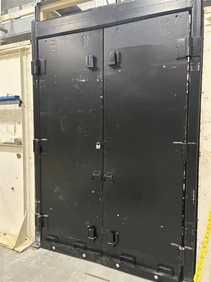 |
Workers also installed water wall doors, which have dramatically improved maintenance operations. Previously, maintenance behind the water wall — a radiation shielding barrier — required draining water and partially disassembling the wall, a time-intensive process involving the use of heavy equipment.
The new hinged doors allow for easy access, requiring just minutes to open, which saves time and reduces radiation exposure for personnel. It was the first time the new doors were used for resin replacement. What once took a week and a half to execute was reduced to mere minutes.
Additionally, the completion of a major recent system upgrade transformed the facility’s control room from a dated analog system to an advanced digital interface. The upgrade now manages over 80 valves with improved efficiency, a significant step forward for operational safety and reliability.
“The integration of the control system upgrade with the execution of this complex task showcased outstanding coordination among all team members,” Downey added.
-Contributor: Katie Gantt
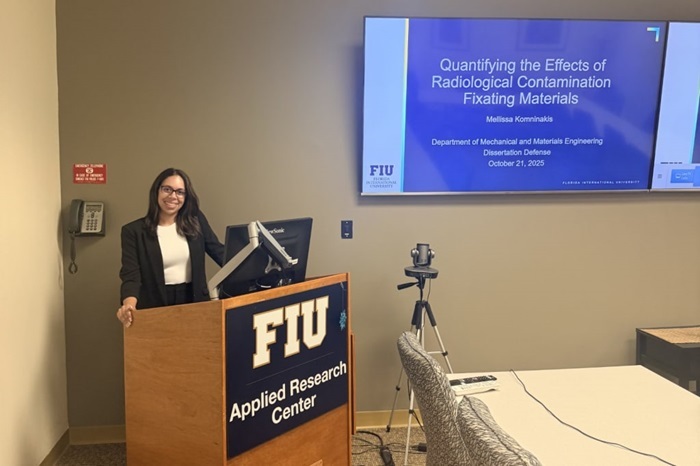 Mellissa Komninakis is a junior engineer at Florida International University's Applied Research Center at the College of Engineering & Computing.
MIAMI — The FIU News site recently highlighted a junior engineer at Florida International University’s Applied Research Center (ARC) and her research supporting the U.S. Department of Energy’s (DOE) Office of Environmental Management (EM) mission to remediate nuclear waste.
After earning her doctorate in materials science engineering at FIU in 2025, Mellissa Komninakis now studies coatings and foams that can be applied to equipment before cleanup begins, helping reduce the release of tiny, but dangerous, radioactive particles.
“As these facilities age and are dismantled or prepared for future use, there is a risk that radioactive contamination can be accidentally released,” Komninakis says in the feature story. “Continued research in this field makes the cleanup efforts safer and more efficient, with lasting impacts. We are working to ensure that workers, surrounding communities and the environment are protected.”
ARC supports EM’s mission to accelerate risk reduction and cleanup. The center’s work includes developing robotic platforms and tools to better detect potential leaks in waste tanks underground at the Hanford Site in Washington state, developing hydrological models to predict the fate and transport of contaminants at Savannah River Site and developing digital elevation maps for the Waste Isolation Pilot Plant.
Under a cooperative agreement, FIU also partners with EM for the DOE Fellows Program, an initiative designed to create a pipeline of minority engineers and scientists specially trained and mentored to enter EM’s workforce.
Read the full story about Komninakis here.
-Contributor: David Sheeley
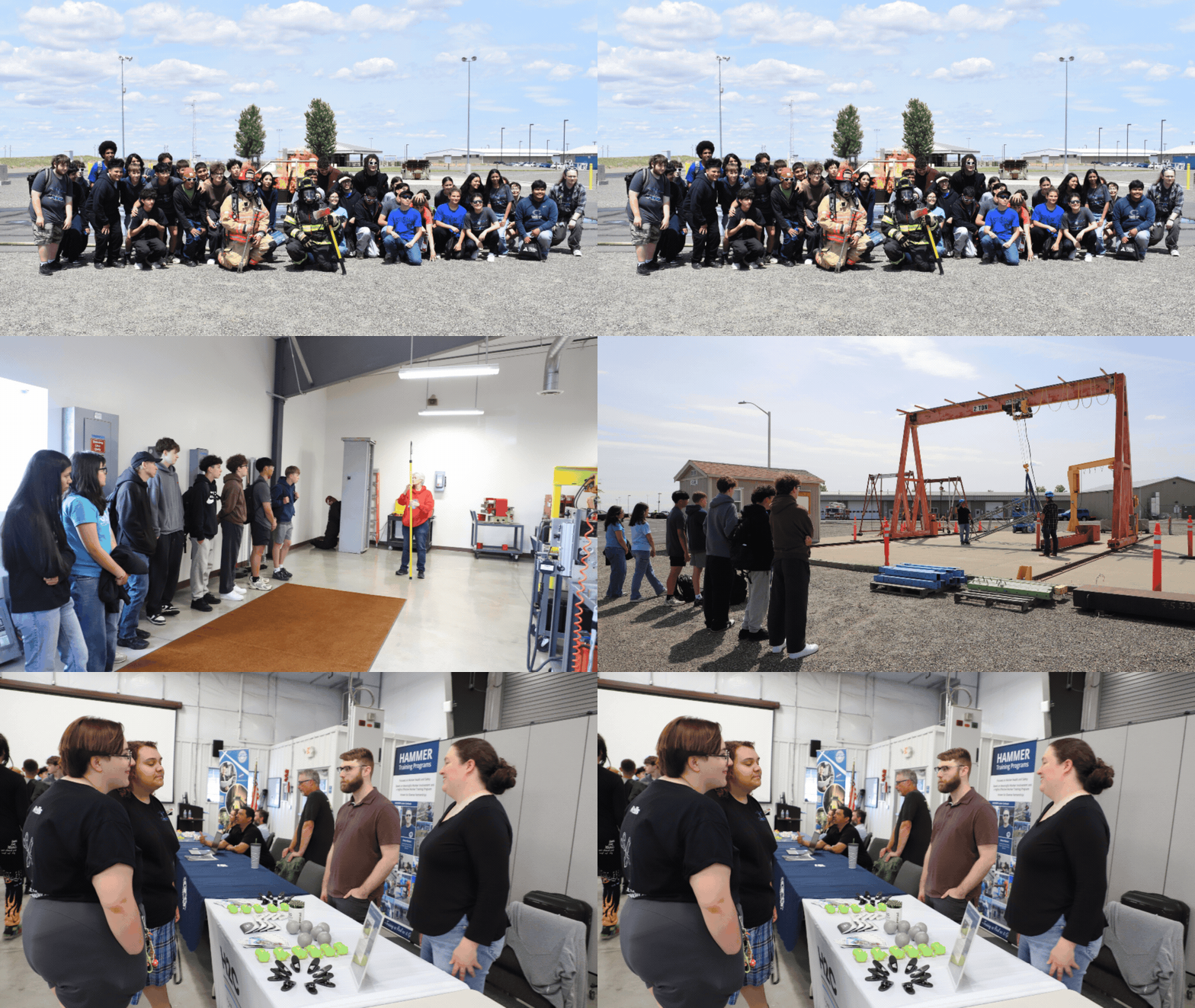
RICHLAND, Wash. — The Hanford Site recently welcomed nearly 40 local high school science, technology, engineering and math (STEM) students for a special event held at Hanford’s Volpentest HAMMER Federal Training Center.
Hanford Day emphasized the importance for students to explore career possibilities early, and build relationships with industry professionals and educational partners. These experiences are critical for preparing the next generation of skilled workers and advancing pathways for emerging STEM talent at Hanford and beyond.
Hanford Field Office contractor Hanford Mission Integration Solutions, which manages the HAMMER facility, hosted the event to give students a firsthand look at potential career opportunities at Hanford. HAMMER stands for Hazardous Materials Management and Emergency Response.
Throughout the day, students met with professionals while observing several activities, including respiratory protection exercises, electrical safety demonstrations, firefighting simulations, and hoisting and rigging operations. As part of the site’s ongoing commitment to workforce development initiatives, the event included a career and resource fair, giving students the opportunity to connect with the Hanford Field Office, One Hanford contractors, colleges and local trade organizations.
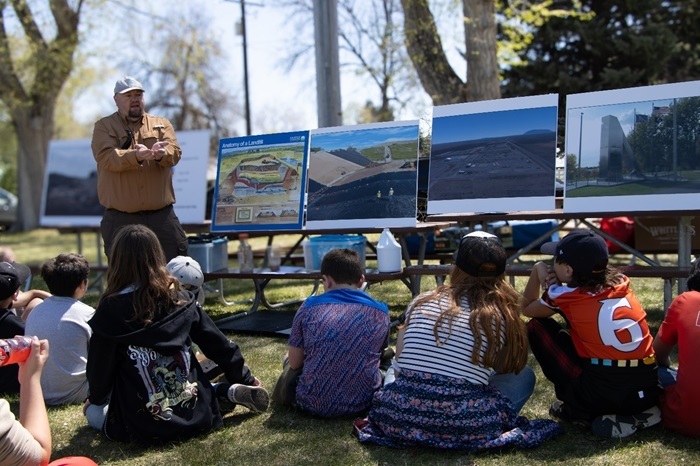 Gary Cox, an Idaho Environmental Coalition employee, teaches local students about landfill liners and other environmental protections at the Idaho Department of Environmental Quality’s 2026 Idaho Falls Water Festival.
IDAHO FALLS, Idaho — Idaho Cleanup Project (ICP) team members recently joined federal, state and local entities to host interactive stations at the 2026 Idaho Falls Water Festival, helping more than 1,800 fifth and sixth grade students from eastern Idaho understand the importance of clean water and how future generations can protect Idaho’s natural resources.
"Events like the Water Festival help students see just how essential clean water is to every part of life in Idaho,” said Destiny Locke, water quality analyst with the regional office of the Idaho Department of Environmental Quality (DEQ), which organizes the annual two-day event. “When young people get hands-on experience with real science, they begin to understand their role in protecting our natural resources for the future."
Employees with ICP contractor Idaho Environmental Coalition (IEC) hosted an educational booth that focused on how the Idaho National Laboratory Site uses landfill liners to protect groundwater. Students participated in hands-on activities demonstrating how engineered barriers safeguard water resources. The ICP team members explained the function and necessity of landfill liners and their connection to ICP’s mission to protect the underlying Snake River Plain Aquifer.
The U.S. Department of Energy’s Office of Environmental Management (EM) participation underscores the significance of partnerships that promote environmental literacy and responsible stewardship across the region. The EM team members helped ensure students learn core scientific concepts and emphasized how the workforce safeguards Idaho’s natural resources. They also sought to inspire the students to become future leaders and stewards of Idaho’s natural resources.
"IEC is proud to support programs that strengthen environmental awareness in our communities," said Dana Kirkham, IEC senior director for Environmental Services and Strategic Affairs. "When students learn directly from the people working to protect Idaho’s environment, they gain a deeper appreciation for why this work matters and how they can contribute."
-Contributor: Ryan Christensen
|