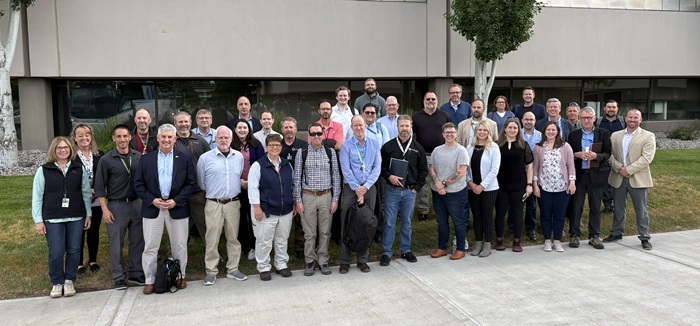
 The U.S. Department of Energy’s Idaho Cleanup Project hosted an industry day for companies responding to a request for applications to build a commercial-scale recycling plant at an Office of Environmental Management facility at the Idaho National Laboratory Site.
The U.S. Department of Energy's (DOE) Office of Environmental Management (EM) mission is expanding from legacy cleanup to laying the foundation for America’s new nuclear energy era.
This enhanced mission reflects Energy Secretary Chris Wright's agenda: ensure nuclear deterrence, position the United States as the global leader in science and innovation, and drive American energy dominance to keep consumer prices low and competitive with industry.
"We aren't just managing the past; we are powering the future," Assistant Secretary of Environmental Management Tim Walsh told attendees of the Waste Management Symposia in March.
He outlined the transformation potential of each EM cleanup site by 2040, accelerating remediation while converting former weapons production facilities into hubs for nuclear energy, advanced manufacturing and artificial intelligence (AI) infrastructure.
Across the EM complex, the transition from environmental remediation to a nuclear renaissance is already taking shape, marked by major operational milestones transforming former weapons facilities into vital energy assets.
A Year of Milestones
At the Idaho Cleanup Project, the team made 40 transfers of used nuclear fuel bundles from aging first-generation storage vaults to new, second-generation vaults — finishing months ahead of schedule. This effort ensures the used fuel is in protective storage and stable condition awaiting opportunities for recycling.
In addition, the Integrated Waste Treatment Unit (IWTU) has converted over 375,000 gallons of liquid sodium-bearing waste into a safer, solid form, reducing risk to the underlying Snake River Plain Aquifer from a liquid by-product. As IWTU crews continue waste treatment, the Idaho National Laboratory (INL) is enabled to receive additional research quantities of commercial used nuclear fuel for advanced energy research under the 1995 Idaho Settlement Agreement.
Last year, the state of Idaho signed a waiver to that agreement, clearing the way for INL to receive a research cask containing used nuclear fuel from the North Anna Power Station in Virginia. EM crews at the site are also preparing for a used nuclear fuel shipment from a research reactor at Penn State University this year for the first time in decades.
At the Savannah River Site (SRS) in South Carolina, a historic pivot is underway to fuel America’s nuclear future. EM announced the decisions to restart uranium recovery operations at H Canyon, the only chemical separations facility of its kind in the U.S., and bring the adjacent HB-Line facility back online. Rather than preparing legacy used nuclear fuel and surplus plutonium for permanent disposal, SRS is restoring its one-of-a-kind capabilities to recycle these materials. EM will transform legacy nuclear materials into valuable assets to fuel next-generation advanced nuclear reactors.
At Oak Ridge, where EM has transferred more than 2,500 acres of federal land for community reuse, the company Kairos Power is constructing a $100 million demonstration reactor. Orano USA has selected the site for a new multibillion-dollar uranium enrichment facility, and Triso-X broke ground on a fuel fabrication plant that will be the first of its kind in the U.S. Together, more than two dozen businesses have announced $10 billion in capital investments at Oak Ridge.
Opening the Door to Private-Sector Used Fuel Recycling
EM and DOE's Offices of Nuclear Energy concurrently issued two requests for applications (RFA) seeking private-sector partners to design, build and operate used nuclear fuel recycling and conditioning facilities in the U.S.
EM's RFA offers a selected private partner a long-term lease of prime federal land at the Idaho Nuclear Technology and Engineering Center (INTEC) at the INL Site. The RFA also offers access to Advanced Test Reactor used nuclear fuel currently stored at the INL Site. This provides a direct, highly valuable feedstock for recycling, allowing private industry to transform this used nuclear fuel to power the next-generation advanced reactors.
"This initiative is a testament to President Trump's bold vision for American energy independence and our commitment to an unmatched national security posture," Walsh said.
EM’s recent, highly successful Industry Day event drew strong commercial interest and fostered collaborative discussions, setting the stage for private-sector ingenuity to officially power America's nuclear renaissance. Final applications are due June 19. Contact Aaron S. Nebeker at nebekeas@id.doe.gov for more information on EM’s RFA.
Building for What Comes Next
EM is investing in infrastructure for the future. In May, DOE approved the conceptual design for a new 15,000-square-foot used nuclear fuel staging facility at INTEC. And across the DOE complex, new reactors, enrichment facilities, recycling capabilities and AI infrastructure are being built on land and using materials that EM has spent 35 years making safe.
-Contributor: Kyle Hendrix
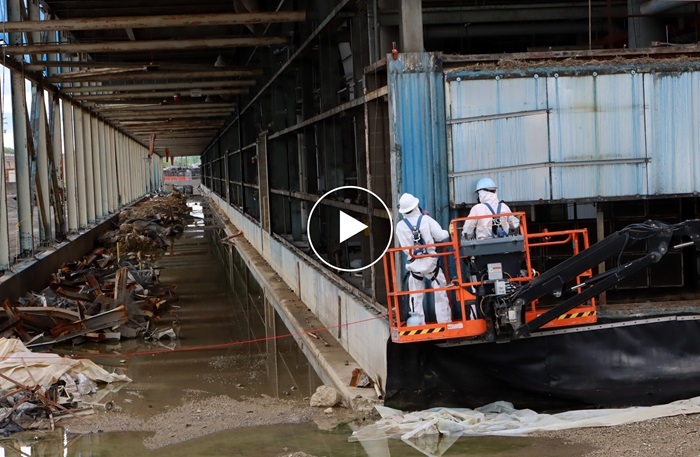 EMTV: This video tells the story of crews removing nearly 15,000 transite panels from the Portsmouth Site's largest former uranium enrichment structure, the X-333 Process Building. They cleared the panels from the aging facility in just over 12 months as part of demolition activities. In this photo, transite removal technicians Blake Stiltner, left, and Brady Lykins use an aerial lift to bring the final X-333 panel to the ground for stacking, wrapping and disposal.
PIKETON, Ohio — Crews taking down the largest former uranium enrichment facility in the heart of the U.S. Department of Energy’s Portsmouth Site recently removed the last of its nearly 15,000 panels containing asbestos, a marker of progress toward the aging structure’s demolition.
Transite, the outer panels armoring the building, is a known asbestos-containing material that must be cautiously removed to meet environmental regulatory requirements. Workers spent just over 12 months clearing the panels from the X-333 Process Building after removing the first one in April last year. They completed the work without a recordable or lost-time accident.
“Transite removal is the first significant milestone during the demolition phase, so it’s important to set the right tone for this multiyear building demolition,” Federal Project Director Christy Brown said. “The meticulous removal of transite panels successfully set a precedent for safety and teamwork, while still meeting project deadlines.”
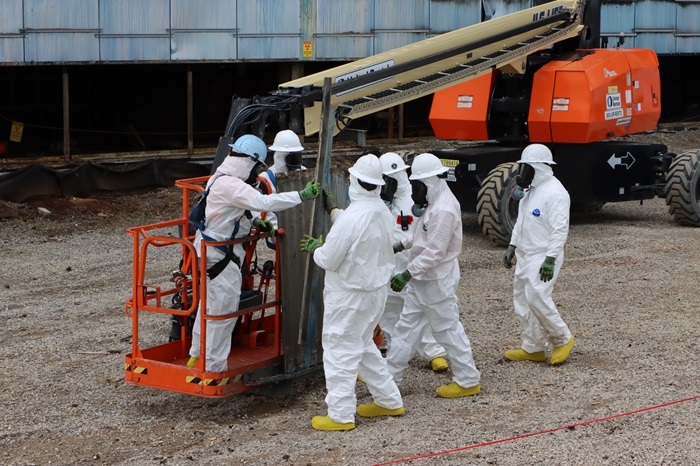 Two transite removal technicians lower the X-333 Process Building’s final panel to the ground with an aerial lift. The panel was then handed off to workers on the ground so that it could be stacked and prepared for transport to the On-Site Waste Disposal Facility.
The accomplishment comes as the Portsmouth Site is decontaminating and demolishing legacy buildings to create space for future industry, such as artificial intelligence infrastructure and nuclear energy opportunities, helping to create generational jobs and build long-term economic vitality in the local community.
Team members sprayed the X-333 panels, each weighing between 75 and 150 pounds, with fixative. Next, they carefully detached the panels from the building before stacking and wrapping them. The process required two workers in an aerial lift, several workers on the ground using tools, clear communication, feedback and thorough planning.
“Removing the panels represents nearly 15,000 repetitions of labor-intensive work, which spanned through all types of weather conditions,” Southern Ohio Cleanup Company (SOCCo) Demolition Project Manager John Collins said. “Without a single lost-time accident, the safety culture and success benchmark of this crew will be the standard for the rest of the project.”
SOCCo is the deactivation and demolition contractor at the Portsmouth Site.
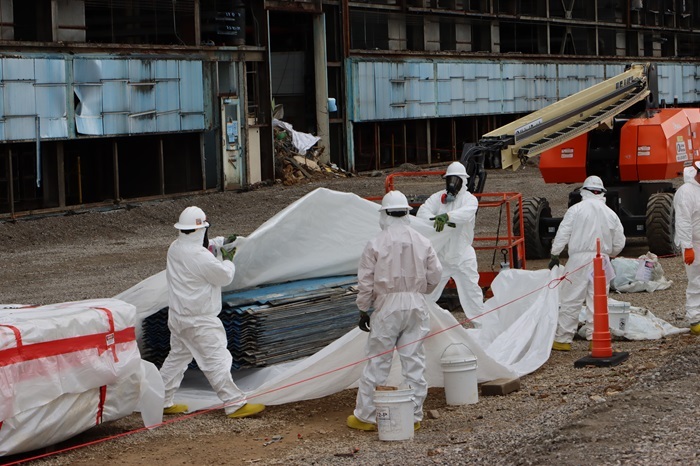 Transite removal technicians wrap a bundle of panels together to prepare it for transport to the On-Site Waste Disposal Facility. The panels ranged in weight from 75 to 150 pounds.
Crews expect to finish transporting the panels to the On-Site Waste Disposal Facility for disposal this summer.
They will continue demolishing X-333, with completion scheduled in 2031. The facility has 66 acres of floor space under roof.
-Contributor: Michelle Teeters
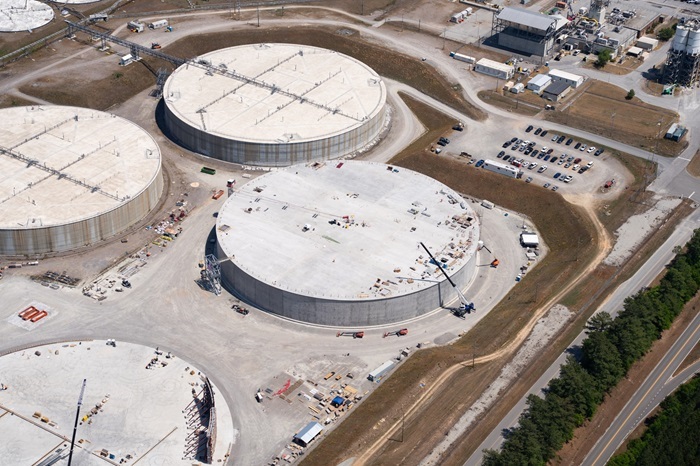 All structural concrete placements are complete for Saltstone Disposal Unit 11, center, at the Savannah River Site.
AIKEN, S.C. — With 25 wall sections, 208 support columns, and seven roof sections, all concrete construction on another mega-size disposal unit has been finished at the U.S. Department of Energy’s (DOE) Savannah River Site (SRS).
Saltstone Disposal Unit (SDU) 11 will hold over 33 million gallons of saltstone — a decontaminated, hardened material safe for long-term disposal onsite. After all the concrete work, the unit is wrapped with seven layers of steel cable, totaling over 340 miles, to ensure structural integrity and enhanced durability.
Chuck Comeau, DOE-Savannah River federal project director, said the SDUs are key components of the SRS liquid waste program and meeting DOE’s Office of Environmental Management (EM) cleanup responsibilities.
“The SDUs provide safe, permanent storage for the decontaminated salt solution from the Salt Waste Processing Facility (SWPF),” said Comeau. “With SWPF processing at an accelerated rate, it is important to have the SDUs ready for operation. Completing construction milestones ahead of schedule ensures that the SDUs will be ready when needed.”
It takes more than 20,000 cubic yards of concrete to build an SDU, which is the end of the salt waste processing path. The SWPF produces the decontaminated material that is sent to the Saltstone Production Facility, where it is mixed with dry materials to make a cement-like grout. The grout is pumped into the SDUs, where it solidifies into a monolithic, nonhazardous form.
The larger SDUs are designed to support the increased material production from SWPF. The new SDUs result in more than $500 million in cost savings over the life of the liquid waste program because they require less infrastructure and materials than the previous 80 smaller SDUs.
EM’s liquid waste contractor at SRS, Savannah River Mission Completion (SRMC), manages the construction and operation of the SDUs. Subcontractors Quality Plus Services, US FUSION & Specialty Construction, and DN Tanks completed the site preparation, interior and exterior liner systems, and unit construction.
Finishing all the concrete placements on SDU 11 is a noteworthy achievement on the journey to mission completion, according to SRMC President and Program Manager Thomas Burns Jr.
“Building all the SDUs onsite has been a tremendous work in progress,” Burns said. “We have reached another satisfying milestone that is positive encouragement for the team to keep up the diligence, the ownership and the excellence as we work to have all the SDUs done and dusted in the near future.”
The SDU project team earned the DOE 2025 Project Controls Excellence Award for demonstrating superior project controls, rigorous data integrity and continuous improvement in practices.
The remaining two SDUs are in various stages of construction. Concrete construction of SDU 10 was completed in 2024 and it was deemed leak-tight in 2025. SDU 12, the final SDU needed for the SRS liquid waste mission, is under construction now.
SRMC is accelerating the radioactive liquid waste cleanup mission at SRS through advanced engineering solutions and innovative approaches, making significant progress toward safely and efficiently closing all waste tanks at SRS.
-Contributor: Colleen Hart
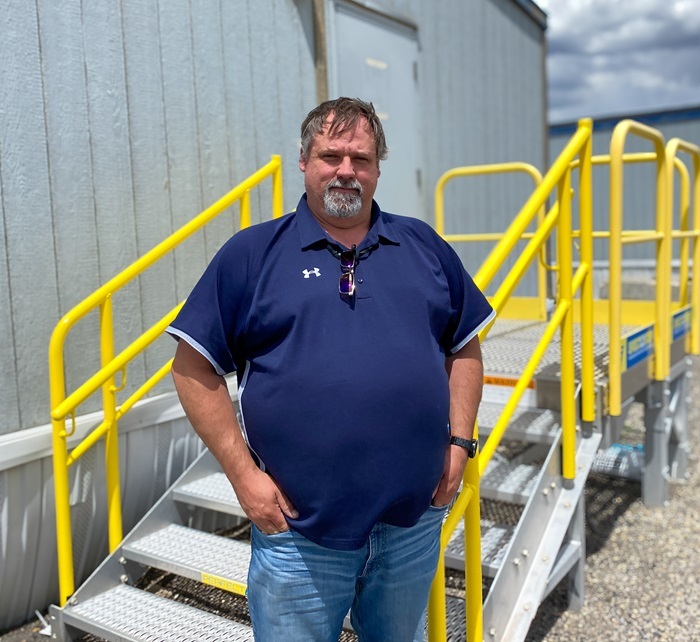 Palmi Byron is a facility representative for the U.S. Department of Energy's Idaho Cleanup Project.
IDAHO FALLS, Idaho — In his Idaho Cleanup Project (ICP) role overseeing decontamination and demolition (D&D) of three Naval Reactors nuclear reactor prototype facilities, Palmi Byron helped finish the teardown of the first of these vessels ahead of schedule and more than $15 million under budget.
Byron also provided critical support to the safe and successful startup of low-activity tank waste treatment through the Direct-Feed Low-Activity Waste approach at the Hanford Site in Washington state — one of the U.S. Department of Energy’s (DOE) highest Office of Environmental Management (EM) priorities.
Such accomplishments have resulted from his superior work performance, leading DOE to recognize Byron with its Facility Representative of the Year Award.
“Mr. Byron demonstrates unwavering commitment to the ICP mission. Through his exemplary conduct, he inspires both federal and contractor employees to prioritize safety, ensure quality, deliver on mission objectives and maintain cost effectiveness,” said Nicholas Balsmeier, acting ICP manager. “His leadership sets a high standard for his team, and the Idaho Cleanup Project.”
Byron joins a long list of EM employees across the cleanup complex — from ICP and the Hanford Site in Washington state to the Savannah River Site in South Carolina — who have received this DOE honor since the 1990s following the creation of the facility representative position.
Byron’s exceptional technical knowledge of conduct of operations, radiation protection, maintenance, technical training, and regulations and requirements, combined with his keen ability to analyze contractor performance and metrics, significantly contributed to his success as a facility representative, according to award nomination documents.
In his trusted position of respect among the Naval Reactors and contractor staff, Byron recognized nascent safety and operational indicators before they became significant issues, saving time and expense. D&D of the second and third prototype facilities at the Idaho National Laboratory Site, originally planned in series, are now being worked in parallel and continue to be ahead of schedule and under budget.
Byron has demonstrated team leadership and dedication to excellence by repeatedly helping other facility representatives with training and qualifications. While observing two fellow facility representatives performing environmental compliance oversight, Byron stepped in to mentor them, drawing from his regulatory experience, patience and innate ability to communicate with people of various experience levels. He has also exemplified teamwork by routinely collaborating with ICP subject matter experts on myriad reviews and issues.
Facility representatives are highly trained professionals who provide day-to-day oversight of contractor operations at the Department’s most hazardous facilities across the complex. They focus on safety oversight and serve as an on-scene federal presence, monitoring mission accomplishments and worker and public safety.
-Contributor: David Sheeley
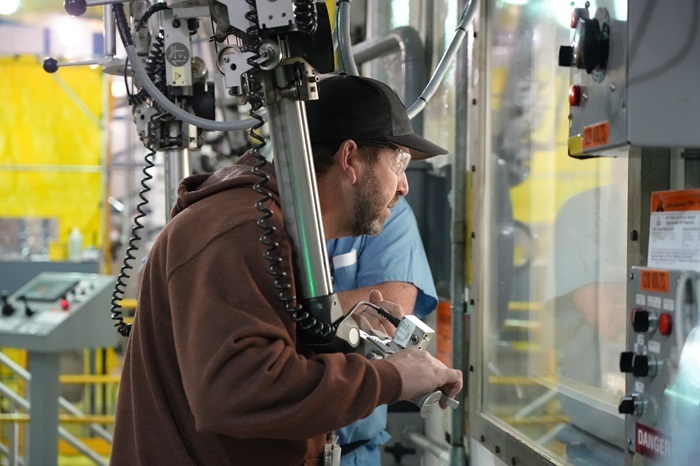 Operators at the Transuranic Waste Processing Center in Oak Ridge maneuver a hot cell manipulator arm to remotely process legacy oxide waste. A hot cell is a heavily shielded concrete room that provides protection from radioactive material.
OAK RIDGE, Tenn. — The Oak Ridge Office of Environmental Management (OREM) and contractor United Cleanup Oak Ridge (UCOR) have achieved the first-year goal for processing oxide waste at the Transuranic Waste Processing Center (TWPC) months ahead of schedule, progressing toward the removal of this legacy material from the Oak Ridge Reservation.
Typical transuranic waste, such as equipment, tools or protective materials, contains low levels of radioactive contamination. However, the oxide waste has bulk quantities of finely divided radioactive particles or powders.
Some of this material is more than 50 years old. It was generated at the Oak Ridge National Laboratory (ORNL) during radiochemical and isotope development operations. Once those activities concluded, the waste was placed in secure storage containers, where it remained until now.
“For decades, this waste has been in storage without a path forward,” said Michael Griswold, TWPC federal project manager. “Through proactive and successful planning, we are successfully advancing work that is facilitating its removal, and we are beating the pace established in our goals.”
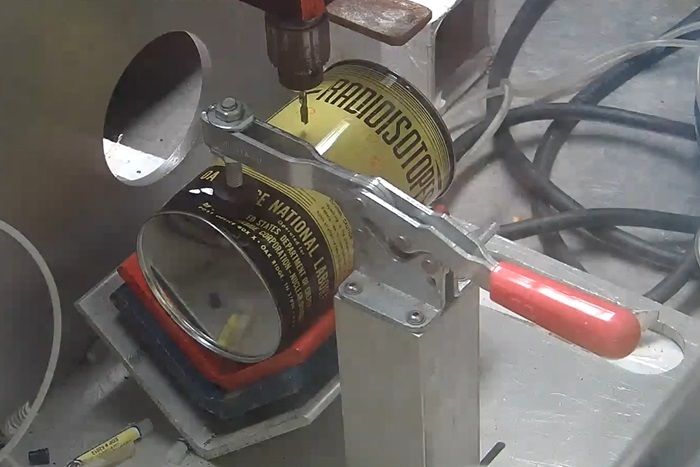 Oak Ridge Office of Environmental Management crews use gloveboxes to vent canisters of legacy oxide waste generated from previous research and development activities at Oak Ridge National Laboratory. A glovebox is a sealed, stainless steel containment enclosure equipped with glove ports and windows, designed to protect personnel from radiological and chemical hazards when handling radioactive materials.
This marks the first time workers have processed this form of waste at TWPC, requiring facility modifications, procedure updates and readiness assessments. Teams began evaluating approaches to eliminate the material from long term storage in 2018.
UCOR received authorization to begin processing oxide waste in August, and OREM set a first-year goal to process 6.4 cubic meters. The waste consists of fine particles, prompting workers to ensure proper ventilation and packaging to prevent airborne dispersal.
Crews are using gloveboxes and a remote-operated hot cell to protect them from the radioactive material and safely vent the containers as they package them for permanent disposal.
“By using these methods and applying continuous improvements, the waste operations team met the first-year milestone four months ahead of schedule,” UCOR TWPC Area Project Manager Pat Rapp said. “With the processing time significantly reduced, we are minimizing the environmental risk at an accelerated rate.”
OREM and UCOR will continue processing approximately 31 cubic meters of this material before shipping it to the Waste Isolation Pilot Plant in New Mexico for final disposal.
-Contributor: Ella Stewart
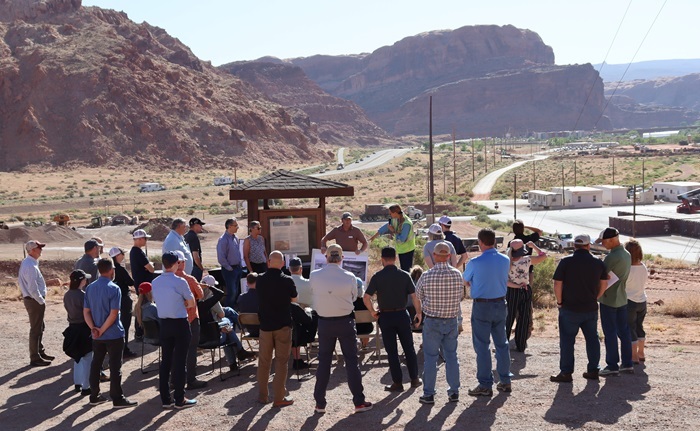 Moab Uranium Mill Tailings Remedial Action Project Environmental Manager Liz Moran discusses groundwater remediation with Utah Natural Resources Coordinating Council members.
MOAB, Utah — The Moab Uranium Mill Tailings Remedial Action Project recently hosted members of the Utah Natural Resources Coordinating Council for a briefing where they observed cleanup operations and the nearby Colorado River corridor.
“The success of our cleanup work depends not only on the technical work, but on the relationships we build with state and local partners,” said Chris Pulskamp, the Moab Project’s deputy federal cleanup director. “Hosting the Utah Natural Resources Coordinating Council reinforces the intergovernmental cooperation that is essential to fulfilling the U.S. Department of Energy’s Office of Environmental Management commitment and mission to protect human health and the environment.”
The Moab Project is responsible for the relocation of uranium mill tailings from the former Atlas uranium mill site near Moab to a permanent disposal cell near Crescent Junction, Utah. Its primary mission is to protect human health and the environment — specifically the Colorado River and surrounding communities — from the risks associated with legacy uranium processing contamination.
Held outdoors at a kiosk adjacent to the Moab site, the briefing provided an overview of the Moab Project, including the recent milestone achievement of removing the 16-million-ton tailings pile.
City of Moab Mayor Joette Langianese offered a community stakeholder perspective at the briefing. Her remarks underscored an ongoing interest local stakeholders have in the Moab Project’s future. The City of Moab and Grand County, where the Moab Project is located, have requested joint ownership of the Moab site property upon completion of cleanup, with aspirations to convert it into an outdoor recreational park.
The council is composed of commissioners and directors from a range of state agencies, including the departments of Environmental Quality; Agriculture and Food; and Natural Resources. The council helps the state review and coordinate technical and policy actions, and facilitates the exchange of information about state physical resources among state agencies, federal entities and local governments.
“The Moab Uranium Mill Tailings Remedial Action Project’s participation in this briefing reflects its commitment to transparency and meaningful engagement with stakeholders at all levels,” Pulskamp added.
-Contributor: Barbara Michel
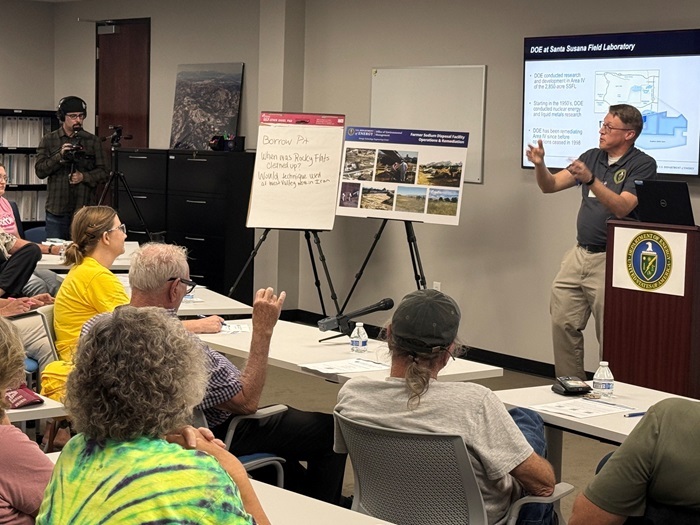 Josh Mengers, the U.S. Department of Energy’s federal project director at the Santa Susana Field Laboratory, answers questions from attendees during the Community Outreach, Neighbor Notifications, Engagement, Collaboration and Training Series community update.
SIMI VALLEY, Calif. — What cleanup has been done in Area IV at the Santa Susana Field Laboratory (SSFL)?
That was one of the main questions the U.S. Department of Energy (DOE) tackled at its recent Community Outreach, Neighbor Notifications, Engagement, Collaboration and Training (CONNECT) Series community update.
Josh Mengers, DOE’s federal project director at SSFL, said much of the remediation has already been done in Area IV, where the department previously conducted liquid metals and nuclear energy research at the former Energy Technology Engineering Center (ETEC).
“We’ve been remediating Area IV for decades, even before . . . 1998 (when) we finished all of our research at the site, (ending all operations) and we’ve been focused just on the remediation ever since,” Mengers said during the meeting.
One example of completed cleanup is the Sodium Reactor Experiment, which operated from 1957 to 1964 and was a pioneering nuclear power plant that is more well known for a July 1959 incident when 13 of its 34 fuel rods partially melted. It was successfully decontaminated and decommissioned from 1974 to 1983.
Another example is the Former Sodium Disposal Facility, or sodium burn pit, that operated from 1956 to 1978 and was used to clean sodium from components before disposal. Interim soil remediation was conducted between 2000 and 2002 that removed all soil down to bedrock. Clean soil was then brought in and the area was revegetated.
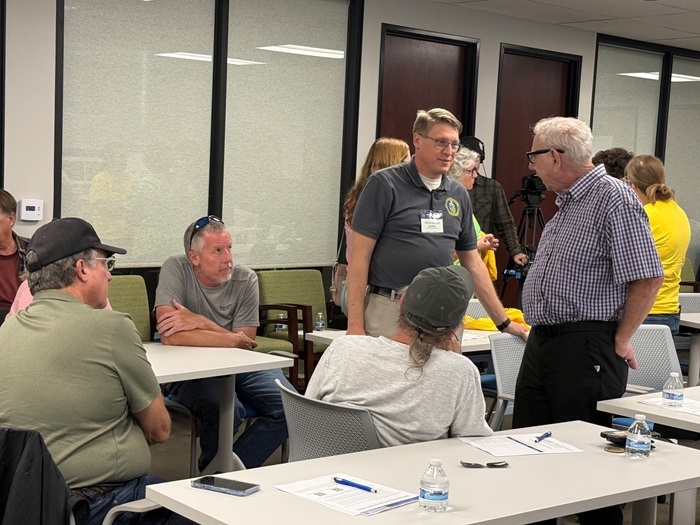 Josh Mengers, the U.S. Department of Energy’s federal project director at the Santa Susana Field Laboratory, interacts with the public during the Community Outreach, Neighbor Notifications, Engagement, Collaboration and Training Series community update.
Numerous comprehensive studies have been conducted over the years.
In 2012, the U.S. Environmental Protection Agency published results from its radiological surveys of Area IV that identified the extent of contaminants remaining in soil, Mengers said. The results from these studies show that the previous remediations were successful.
“We’re continuing our ongoing environmental monitoring (since) much of that (other remediation) work has already been completed and we’re looking to . . . finish the job,” Mengers said.
Ongoing work includes groundwater and air monitoring, a soils study to understand how to best revegetate the area after cleanup is done, and a groundwater treatment pilot study.
A recording of the May 13 presentation and slides are available on the CONNECT Series page.
Join the ETEC team for the next CONNECT tentatively scheduled for Aug. 12 to learn more about the Sandy Fire that recently burned near SSFL. Topics will include air monitoring data collected, response, safety protocols and lessons learned from the Woolsey Fire that burned across a majority of SSFL in 2018.
Check the CONNECT Series page for upcoming sessions or topics. To suggest future topics or provide feedback, fill out the CONNECT feedback form.
-Contributor: Melissa Simon
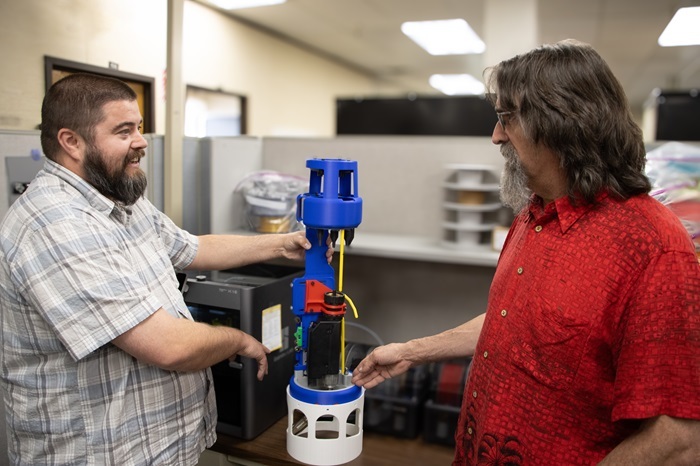 Idaho Environmental Coalition mechanical engineer Jeremiah Voss, left, and print technician Timothy Egan examine a 3D-printed design update for a robotic system to support the Idaho Cleanup Project’s Calcine Disposition Project.
IDAHO FALLS, Idaho — A 3D printing technology is saving time and tax dollars while the Idaho Cleanup Project (ICP) makes strides toward retrieving a by-product of used nuclear fuel recycling for disposal.
Engineers applied the technology to develop the latest iteration of a robotic system critical to the U.S. Department of Energy's Office of Environmental Management mission to safely remove and dispose of 4,400 cubic meters of calcine waste from stainless steel storage bins not designed for material removal.
ICP’s integration of 3D printing and other advanced technologies at the Idaho National Laboratory Site highlights how innovation can drive both operational and cost efficiency in legacy waste cleanup efforts.
All calcine waste must be removed from the state for permanent disposal under an agreement with the State of Idaho. DOE had converted liquid, high-level radioactive waste into calcine until those operations ended in 2000. The waste was created during historic used nuclear fuel reprocessing runs at the Idaho Nuclear Technology and Engineering Center.
 |
|
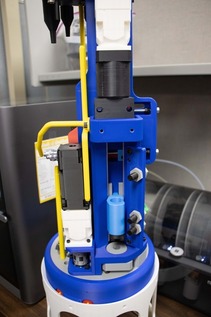
This robotic system will be used to weld access points to calcine bin sets housed inside a facility at the Idaho National Laboratory Site. |
The engineers needed to safely and remotely weld access risers to the bins inside the Calcined Solids Storage Facilities and cut precise openings to extract the granular, solid waste from the bins. The robotic system is their solution.
The 3D printing has been central to the robotic system’s development, allowing engineers to create models and parts that improve precision and accelerate the design process at a fraction of the cost of traditional fabrication methods.
“This process allowed us to detect and address issues early, ensuring the final design was optimized before moving to full-scale production,” said Jeremiah Voss, mechanical engineer with ICP contractor Idaho Environmental Coalition.
The latest robotic system builds upon the success of earlier designs, with key improvements:
- A push-pull wire delivery system for consistent weld quality
- Enhanced adjustability for precise control of welding and cutting in challenging conditions
- Updated motors that simplify controls, improving integration
Use of 3D printing has enabled the team to swiftly address complex challenges, such as the lack of an existing access point for calcine waste retrieval in one of the six concrete vaults called bin sets.
“This technology is critical to enabling the retrieval process while protecting workers and the environment from hazardous materials,” Voss said.
The adaptability of the robotic system suggests potential for broader applications in waste retrieval and environmental initiatives.
-Contributor: Ryan Christensen
|