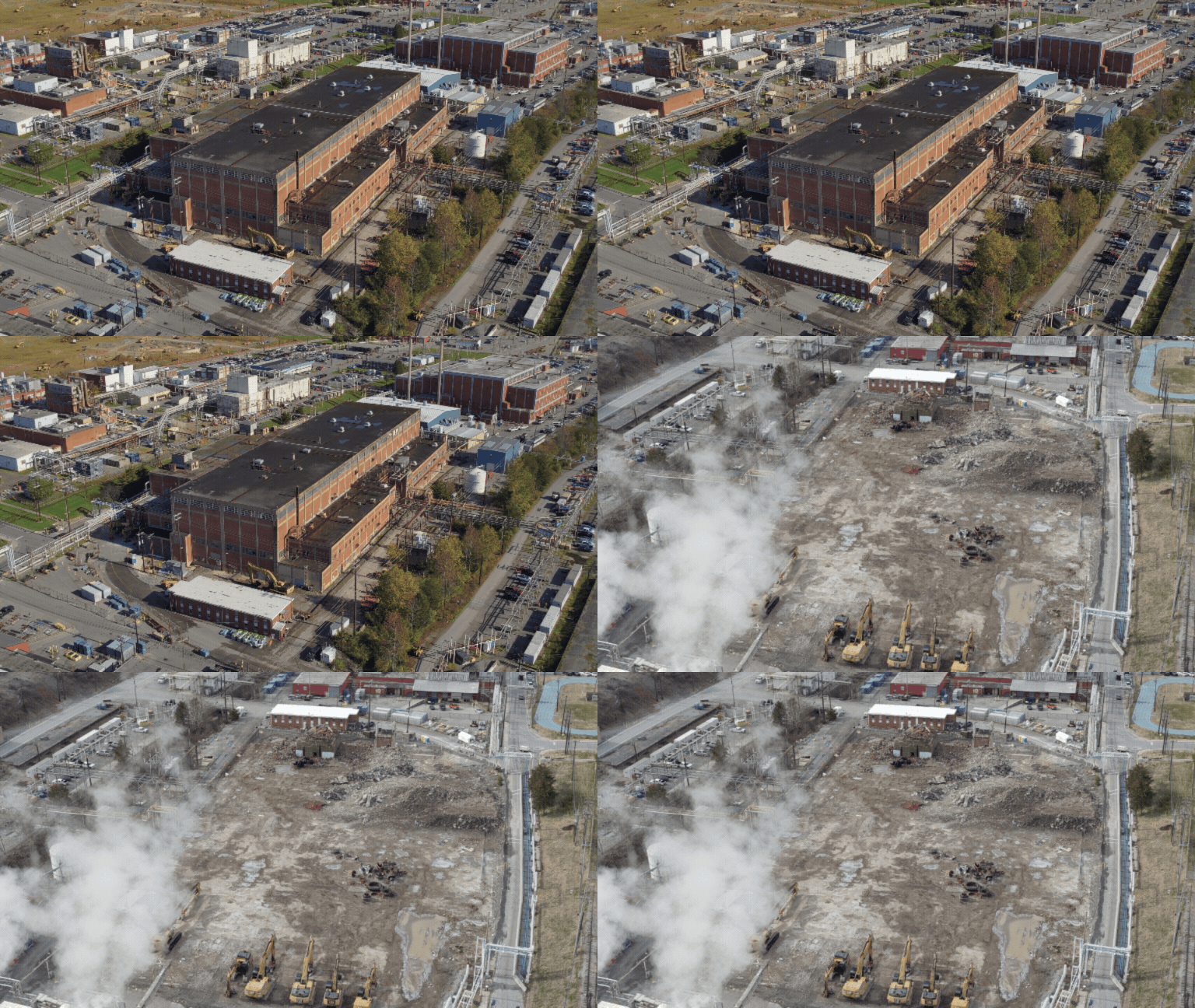
 Before-and-after aerial views of the Alpha-2 building show the facility prior to when demolition began in 2024, and after the teardown was finished earlier this year, a feat that cleared 2.5 acres of land for reuse.
OAK RIDGE, Tenn. — Oak Ridge Office of Environmental Management (OREM) crews have cleared the 2.5-acre footprint of the former Alpha-2 facility at the Y-12 National Security Complex following demolition and removal of 81 million pounds of rubble and debris.
Waste disposal by OREM and cleanup contractor United Cleanup Oak Ridge (UCOR) signifies the final chapter of this Manhattan Project-era building demolition project, moving this area of Y-12 closer to reuse for national security missions.
“Bringing the Alpha-2 building down was a significant achievement, but now the team has accomplished something equally as important by removing all the waste,” said Morgan Carden, Y-12 portfolio federal project director. “It’s rewarding to see how our cleanup progress is modernizing the site and providing the space necessary for new infrastructure.”
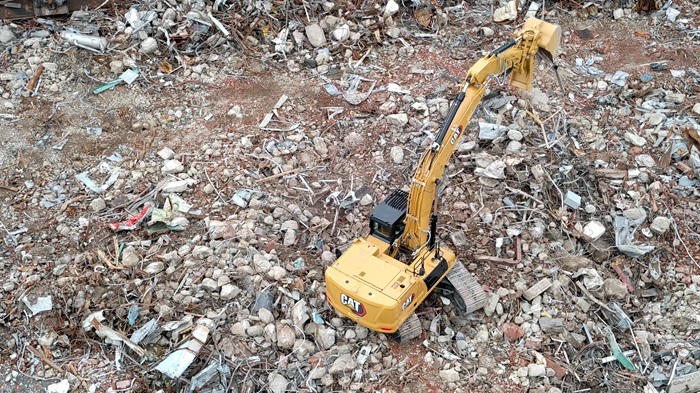 The Alpha-2 demolition project yielded 81 million pounds of debris and rubble.
Clearing the debris generated by razing the 325,000-square-foot former uranium enrichment building required nearly 3,500 truckloads. Crews wrapped up the demolition six months ahead of schedule.
“Disposition truly took a wide array of disciplines,” UCOR Lead Project Manager Joe Barletto said. “Daily coordination was crucial among demolition operators, laborers, teamsters, engineering, radiological technicians, industrial hygiene techs, industrial safety personnel, waste packaging specialists, transportation specialists, and environmental compliance teams. These groups worked together to safely dispose of the last remaining portions of the former Manhattan Project facility.”
The next project phase involves reducing the size of 800,000 pounds of lead removed from the building and packaging it for specialized shipments offsite, scheduled to begin in June.
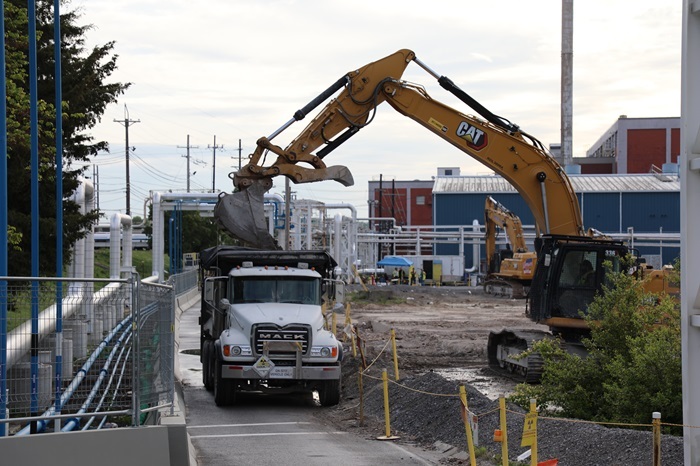 Oak Ridge crews load one of the final truckloads of waste for shipment from the former Alpha-2 building footprint at the Y-12 National Security Complex.
The scale and success of the project are earning accolades.
The Association of Union Constructors recently recognized the Alpha-2 cleanup with its Project of the Year Award. Recipients are normally large-scale construction efforts, but the value of the Oak Ridge project’s environmental restoration and opportunities created by it led to the top honor.
With the Alpha-2 project complete, crews are scheduled to begin tearing down another former Manhattan Project-era uranium enrichment building at Y-12, Beta-1, this summer.
-Contributor: Ryan Getsi
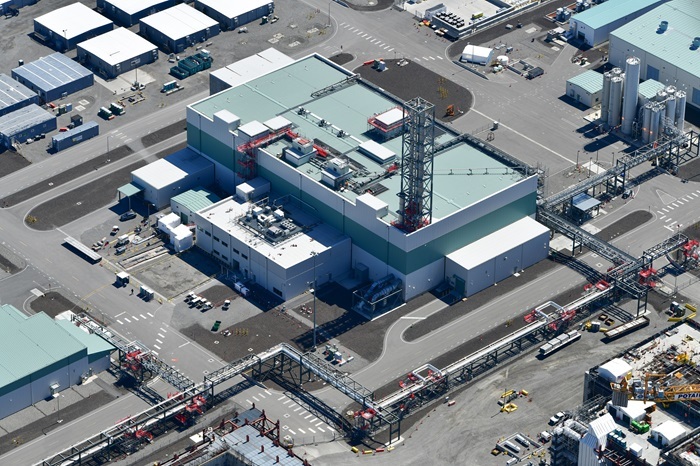 Crews at the Hanford Waste Treatment Plant have immobilized 100,000 gallons of tank waste at the Low-Activity Waste Facility, pictured, since beginning hot commissioning in October 2025.
RICHLAND, Wash. — The Hanford Waste Treatment Plant (WTP) has reached a major commissioning milestone, successfully solidifying more than 100,000 gallons of Hanford tank waste into glass. The achievement reflects strong momentum in the Hanford mission to protect people and the environment while supporting the site’s long-term transition from legacy cleanup to future revitalization.
"This achievement is a testament to the dedication and expertise of our team. Each gallon of immobilized waste brings us closer to a cleaner, safer environment and revitalized community,” said Brian Hartman, WTP project director and senior vice president with contractor Bechtel National Inc., which designed, built and is commissioning the plant.
Treating waste through vitrification supports Hanford’s priorities of safely remediating contaminated sites while delivering measurable progress for taxpayers. It reinforces Hanford’s role in the cleanup mission by addressing complex environmental challenges with sustained performance.
"Treating 100,000 gallons is more than just a number; it represents our commitment to protecting the Columbia River and Tri-Cities community for future generations," added Mat Irwin, Hanford Field Office assistant manager for tank waste operations.
The waste being treated is part of the 56 million gallons of radioactive and chemical waste generated by plutonium production during World War II and the Cold War and stored in aging underground tanks located a few miles from the Columbia River. This progress is part of dual glass-plus-grout solutions that are advancing the Hanford tank waste mission.
The Bechtel-led team has operated the plant in extended hot commissioning since October 2025. The hot commissioning process will continue over the next year, during which the team will build production consistency and establish a steady rhythm for safe and sustained operations.
Inside the Low-Activity Waste Facility’s two 300-ton melters, radiological and chemical waste is combined with glass-forming materials and then heated to 2,100 degrees Fahrenheit.
That process, called vitrification, transforms the waste into a stable glass form and seals it in stainless steel containers, each of which is 4 feet wide and 7.5 feet tall, weighing approximately 7 metric tons when filled. The containers are delivered to Hanford’s Integrated Disposal Facility for long-term disposal.
The plant facilities can be viewed using the self-guided Hanford Virtual Tour available here.
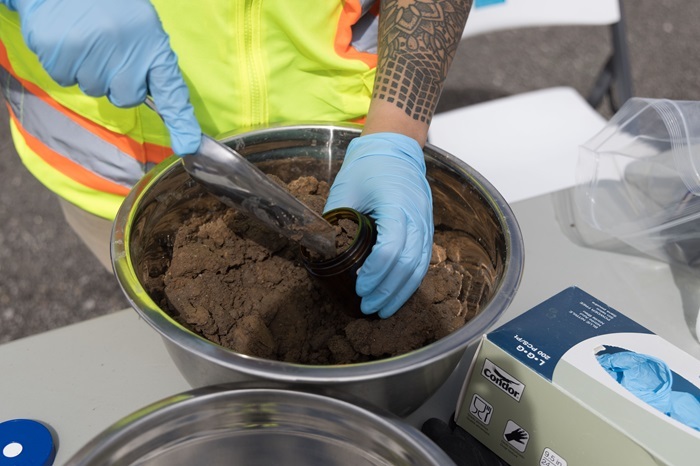 Soil samples at a site associated with legacy operations at Los Alamos National Laboratory are collected to ensure the safety of human and ecological health.
LOS ALAMOS, N.M. — The U.S. Department of Energy’s Environmental Management Los Alamos Field Office (EM-LA) completed a campaign that involved reviewing historical investigation data at six cleanup areas across Los Alamos National Laboratory (LANL) as part of its legacy cleanup mission.
In late April, the New Mexico Environment Department (NMED) concurred that EM-LA and legacy cleanup contractor Newport News Nuclear BWXT-Los Alamos LLC (N3B) completed the Supplemental Investigation Reports (SIR) Campaign under the revised 2016 Compliance Order on Consent.
The SIR Campaign involved a major soil and environmental review to determine whether past environmental assessments met current regulatory standards for protecting human health and the environment. The work also helped identify where additional sampling or future cleanup actions may be needed.
“These reviews are an important part of ensuring cleanup decisions are based on the best available data and current environmental standards,” acting EM-LA Manager Stanley Pyram said. “I am impressed by the work that went into carrying out this campaign and pleased we could work with NMED to complete this campaign. This continues EM-LA’s strong record of meeting its Consent Order commitments.”
The SIR Campaign focused on reassessing legacy contamination sites grouped within individual watersheds and canyons across LANL. Over the course of the effort, EM-LA and N3B re-evaluated existing environmental data to better define the nature and extent of contamination and assess potential risks to people and the environment.
In total, EM-LA and N3B submitted 10 Supplemental Investigation Reports to NMED using existing investigation data, along with requests for certificates of completion, where appropriate.
NMED issued certificates of completion for 162 historical cleanup sites in accordance with the Consent Order. EM-LA and N3B determined an additional 64 sites may require corrective action; these sites have been moved to other Consent Order campaigns to complete such remediation, if necessary.
The SIR Campaign is one of 17 campaigns in the Consent Order. To date, two have been completed and 15 are in progress.
“Cleaning up legacy contamination and protecting the environment remain among our highest priorities,” said Brad Smith, N3B president and general manager. “While this campaign has concluded, important work continues across the Los Alamos cleanup mission, and we remain committed to carrying out that work safely, effectively and with a continued focus on operational excellence.”
-Contributor: Mike Nartker
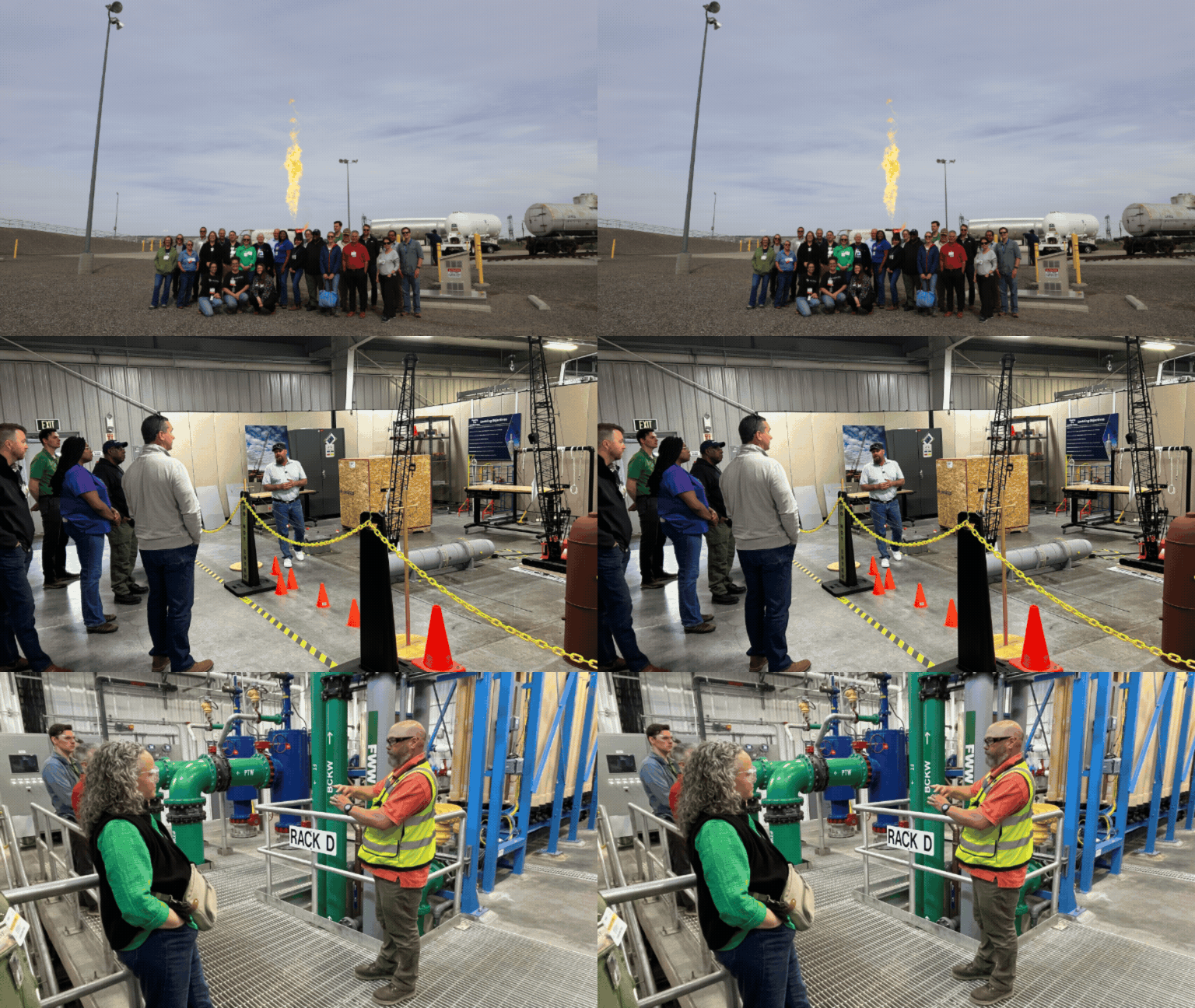 Members of the U.S. Department of Energy’s Office of Environmental Management Site-Specific Advisory Board and their federal and contractor support staff toured the Hanford Site and learned about its history and recent cleanup mission accomplishments. Stops included the Central Plateau Water Treatment Facility and Volpentest HAMMER Federal Training Center. The flame shown in the first photo is from one of Hanford’s training props.
RICHLAND, Wash. — Hanford recently served as the host site for the annual spring meeting of the U.S. Department of Energy’s (DOE) Office of Environmental Management (EM) Site-Specific Advisory Board.
Chairs and vice chairs from citizen advisory boards in Idaho, Nevada, Oak Ridge, Paducah, Portsmouth, Savannah River and Washington state attended. They started with a daylong tour of the 560-square-mile Hanford Site, including the state-of-the-art Volpentest HAMMER Federal Training Center. HAMMER stands for Hazardous Materials Management and Emergency Response.
Board members then held meetings for a day and a half that included a welcome from Hanford Site Manager Ray Geimer and a briefing from EM Principal Deputy Assistant Secretary Joel Bradburne. The group also shared accomplishments and challenges from their respective sites. Other briefings included an overview of the proposed EM cleanup budget and presentations on a complex-wide recycling initiative, the National Environmental Policy Act, and the Defense Nuclear Facilities Safety Board.
The board members also prepared a recommendation to DOE to continue utilizing and enhancing the Reuse and Recycle Community of Practice. The draft letter now goes back to each local chapter for concurrence.
“Bringing together board members from communities across the country strengthens their ability to provide meaningful recommendations to the Department, which help guide DOE’s efforts to restore and revitalize sites for future use.” said Designated Federal Officer Kelly Snyder.
The board will hold its next Chairs' meeting virtually this fall.
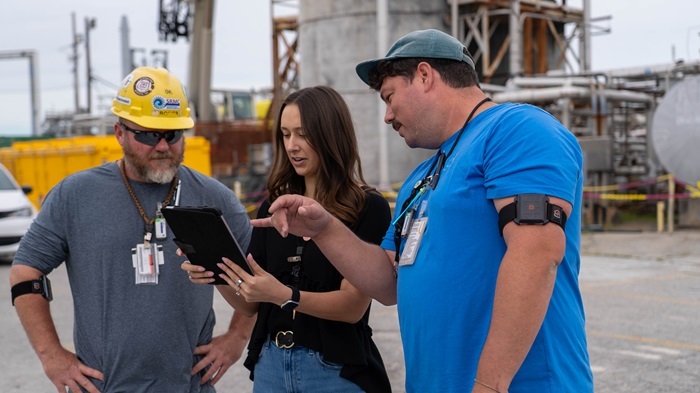 Liquid waste team members at Savannah River Site discuss their armband results, highlighting how the innovative device enhances workplace safety through real-time monitoring.
AIKEN, S.C. — The liquid waste contractor at the Savannah River Site (SRS) is doubling the number of employees using a wearable technology system to further protect against South Carolina’s summer heat and humidity.
Savannah River Mission Completion (SRMC) is providing 500 of the devices to team members supporting the U.S. Department of Energy's (DOE) Office of Environmental Management (EM) liquid waste mission at SRS, up from 250 in 2025.
SRMC is building on lessons learned from its inaugural summer last year implementing the armband designed with physiological monitoring to prevent heat-related illnesses for workers on the job.
Estimated core body temperature will replace heart rate as the primary metric for heat strain alerts, significantly improving the system’s accuracy and reliability. Field trials demonstrated that this metric — integrated from skin temperature and heart rate data — provides a more accurate indicator of heat strain.
In 2025, the devices recorded over 6,000 monitoring events, successfully triggering 2,000 proactive interventions that allowed supervisors to pause or modify activities so workers could cool down, ultimately preventing potential heat-related illnesses.
While the system’s success was evident, the large volume of alerts and feedback from the workforce highlighted the need for optimized metrics.
Tony Robinson, DOE-Savannah River’s acting assistant manager for waste disposition, said SRMC is proactively tackling the risks of extreme summer conditions by implementing and expanding the use of cutting-edge technology to improve worker safety.
“SRMC is demonstrating their commitment to DOE’s strong safety culture and prioritizing the health and safety of those who perform the critical work of the liquid waste mission,” Robinson said.
Alert notifications will expand beyond safety and health staff to include direct field supervision to further enhance the system, said Wes Bryan, SRMC senior vice president of environment, safety, health and quality.
“Proactively safeguarding our workforce is at the core of our mission,” Bryan said. “With updated metrics and expanded oversight capabilities, SRMC continues setting the standard for safety innovation, ensuring our employees continue to remain safe.”
With newly approved GPS functionality, the armbands allow industrial hygiene personnel to swiftly pinpoint the location of workers triggering alerts.
“A dedicated watch station ensures precise real-time tracking, while front-line managers now receive immediate notifications, further enhancing response efficiency and operational oversight,” Bryan said. “This advanced safety technology is now transforming the way we operate, significantly driving the mission forward.”
-Contributor: Dara Glass
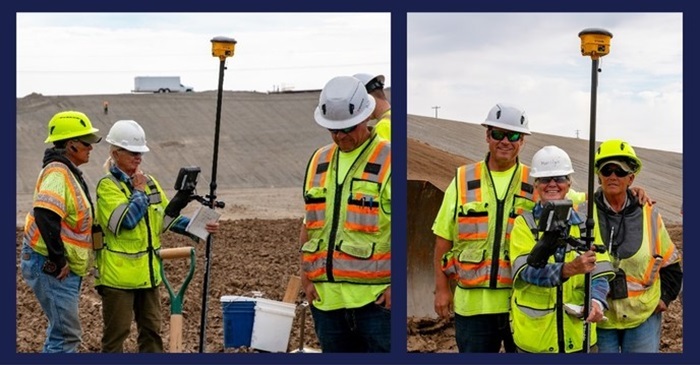 Marilyn Broek, veteran engineer, collaborates with employees of Idaho Cleanup Project contractor Idaho Environmental Coalition to ensure precision in GPS surveying at the Idaho CERCLA Disposal Facility.
IDAHO FALLS, Idaho — For more than 50 years, Marilyn Broek has built a career rooted in hard work, expertise and a deep commitment to protecting the environment.
As a licensed professional engineer, Broek has played a key role in shaping landscapes, advancing safety and supporting sustainability. Her work supporting the U.S. Department of Energy's (DOE) Office of Environmental Management (EM) reflects her dedication to both the technical and environmental aspects of engineering.
From highway design to DOE-funded initiatives, Broek has contributed her knowledge to projects that address infrastructure needs while protecting the environment. Most recently, she supported an expansion of the Idaho CERCLA Disposal Facility, an important part of the Idaho Cleanup Project’s cleanup and stewardship mission.
CERCLA stands for Comprehensive Environmental Response, Compensation, and Liability Act, a law enacted by Congress in 1980 that requires stringent waste acceptance criteria, ensuring protection of the public and the underlying Snake River Plain Aquifer.
A 1976 graduate of the University of Idaho with a bachelor's degree in civil engineering, Broek has spent decades honing her expertise through hands-on fieldwork. In addition to DOE, her portfolio includes projects funded by the Idaho Department of Transportation, Federal Highway Administration, Federal Aviation Administration, municipal and private entities as well as the U.S. Air Force and U.S. Forest Service.
As a fourth-generation steward of her family farm near Twin Falls, Idaho, Broek has drawn strength and inspiration from the natural world. The mountains, forests and rivers of Idaho are her home and the foundation of her passion for preservation. She has two yurts nestled in the Sawtooth National Forest south of Stanley, Idaho, her favorite summer destination when she's not working.
Whether hiking, caring for animals or tending to her yard, Broek embodies a deep respect for the land she has devoted her career to safeguarding.
When asked about advice for young professionals entering the environmental management field, Broek emphasized the importance of perseverance and independence.
“Stick with it. Education is difficult, but it pays off in the long run. Be sure you can always take care of yourself. Pay your own bills, solve your own problems and protect our planet Earth,” she said.
-Contributor: Ryan Christensen
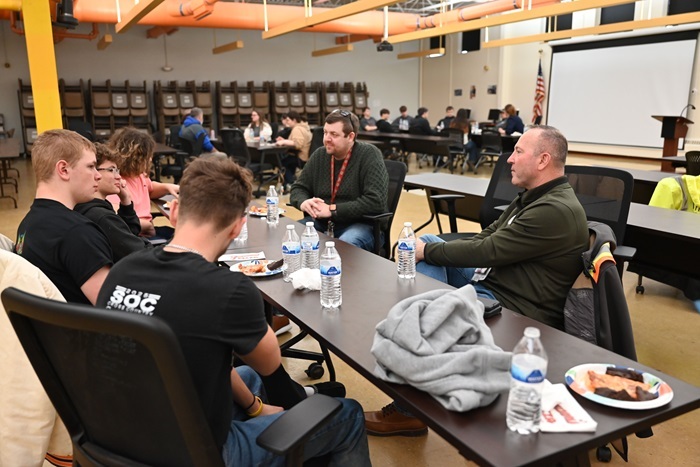 Ryan Callihan, a U.S. Department of Energy contracting officer representative for Ohio University, center, and Shane Williams, Southern Ohio Cleanup Company On-Site Waste Disposal Facility Capital Projects director, right, meet with students participating in the Student Summary of the Annual Site Environmental Report from the Pike County Career Technology Center during their Portsmouth Site visit to discuss site operations and future job opportunities.
LEXINGTON, Ky. — Two universities in Ohio and Kentucky are collaborating to build STEM interest in local high school students and inspire them to pursue careers at the U.S. Department of Energy’s (DOE) Portsmouth and Paducah sites.
Ohio University (OU) and Murray State University (MSU) lead the development and publication of the Portsmouth Paducah Project Office (PPPO) Student Summary of the Annual Site Environmental Report (ASER), commonly referred to as the Student ASER.
“The Student ASER provides an opportunity to involve local students in STEM-based activities and interact with local universities,” acting PPPO Manager Erik Olds said. “It is just one of several PPPO educational outreach programs to boost STEM education and prepare a pipeline of talent to fill the jobs of tomorrow.”
The ASER is an environmental report that details monitoring results on and around PPPO’s cleanup sites. To help students better understand the ASER content, the universities connect them with subject matter experts, field trips and months of learning about the site’s history and deactivation and demolition work. At the program’s end, students develop a visual, condensed, non-technical summary of the ASER that is published and presented at a public expo near their respective sites.
In Ohio, Portsmouth West High School and Pike County Career Technology Center students met biweekly throughout the school year to create the Portsmouth Student ASER with guidance from OU’s Voinovich School of Leadership and Public Affairs personnel.
“The cross-institutional exchange of ideas sparked fantastic creativity for both our programs,” said Stephanie Howe, OU’s director of Energy Programs PORTSfuture, a program supported by the U.S. Department of Energy's (DOE) Office of Environmental Management that advocates for the efficient and economical restoration of the Portsmouth Site.
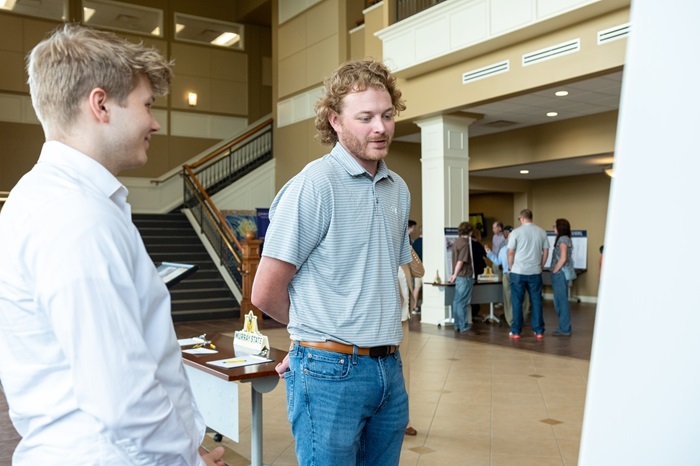 U.S. Department of Energy General Engineer Mitchell Guthrie, right, speaks with McCracken County High School student Torin Townsend about his research during an expo focused on the Paducah Student Summary of the Annual Site Environmental Report, or Student ASER. The curriculum for students participating in the Student ASER includes published poster presentations for the public to view and discuss.
Howe continued, “Our conversations with MSU resulted in a refresh of the Portsmouth Student ASER program that has been ongoing for 15 years. Learning about MSU’s innovative launch strategies, their ongoing incorporation of MSU faculty and the type of content MSU includes in their final student summary document was truly enlightening.”
Similarly in Kentucky, students from McCracken County High School (MCHS) visited the Paducah Site and worked with MSU personnel to produce the Paducah Student ASER.
“This was our second year working with DOE on the Student ASER,” MSU DOE Project Director Alex Sherwood said. “Stephanie Howe and the OU team provided a big boost to establish the Paducah Student ASER by understanding their past successes. Because of this, we added substantial information to our Student ASER playbook and MCHS students were offered new and unique opportunities for educational growth as part of their research.”
The ASER is key to PPPO’s effort to inform the public about environmental conditions at the Portsmouth and Paducah sites through a detailed overview of environmental activities each year. Reports are available on the PPPO website for both Portsmouth and Paducah. Past Student ASER reports can be viewed on the PORTSfuture website and MSU DOE grant website.
-Contributors: Zachary Boyarski, Melissa Green
|