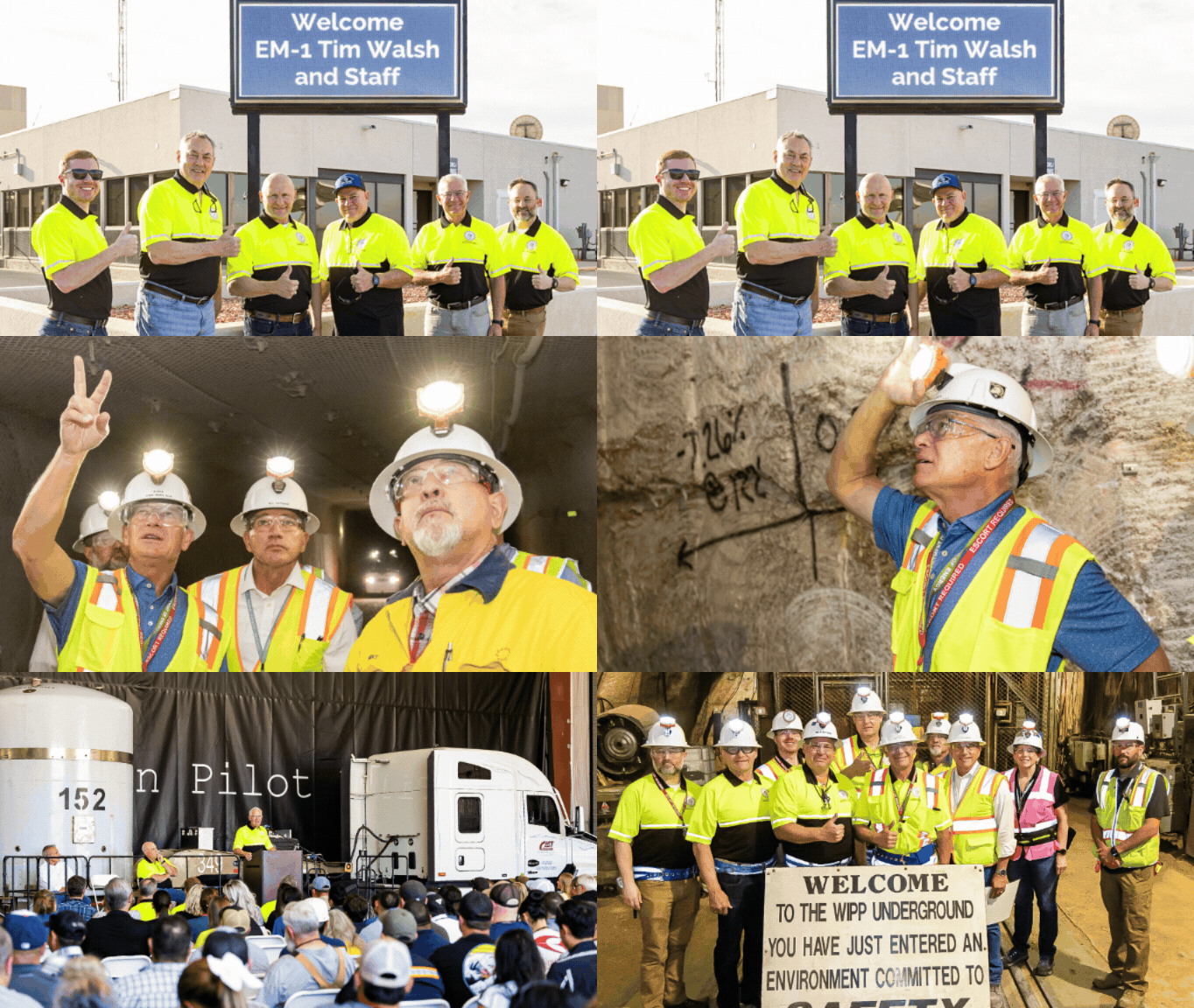
 Assistant Secretary of Environmental Management (EM) Tim Walsh and other members of the EM leadership team recently toured the U.S. Department of Energy’s Waste Isolation Pilot Plant and met with the workforce.
CARLSBAD, N.M. — Assistant Secretary of Environmental Management (EM) Tim Walsh recently viewed cleanup progress and safety improvements at the Waste Isolation Pilot Plant (WIPP), the nation's only deep, geologic repository for defense-generated transuranic nuclear waste, a critical part of the U.S. Department of Energy’s (DOE) remediation of Cold War nuclear production sites.
Walsh and other EM leaders took part in a two-day tour that included a look at operations to safely and permanently dispose of the nation's transuranic waste more than 2,150 feet underground in an ancient salt formation left over from the Permian Sea.
“WIPP is such an important piece to the overall EM mission and broader national security priorities,” Walsh said.
The EM team visited both the surface and underground portions of WIPP and viewed a newly completed system to significantly increase airflow through the WIPP underground. Air exiting the underground passes through a HEPA filtration system made up of 22 filtration units.
“The new Underground Ventilation System, now the most advanced of its kind in our enterprise, significantly enhances airflow, reliability and worker safety,” said Mark Bollinger, manager of EM’s Carlsbad Field Office, who led the tour along with leaders from WIPP management and operations contractor Salado Isolation Mining Contractors.
While touring 2,150 feet below the surface, the EM team witnessed the scale of the operation to emplace transuranic waste and how safety plays a major role in WIPP’s success. They also viewed portions of the waste emplacement process, from when the waste arrives at the site to waste processing.
“What impressed me is this is a unique operation. It's not like a typical commercial mining operation where you're going to extract some sort of mineral, and it's all about production,” Walsh said. “This is really all about safety.”
Walsh also spoke at an employee rally, citing WIPP’s impeccable safety record — a major workforce milestone.
“Achieving 3.2 million worker hours without a lost-time accident is a huge accomplishment and a testament to how you not only look out for yourself, but you look out for each other. This is an amazing facility,” Walsh said.
During the visit, Walsh joined CAST Specialty Transportation management on a tour of the company’s new, state-of-the-art trucking terminal in Carlsbad. CAST safely transports transuranic waste shipments from generator sites across the DOE complex to WIPP. Walsh had a chance to get in the driver’s seat of a CAST truck and honk the airhorn.
-Contributor: Rebecca Valdez
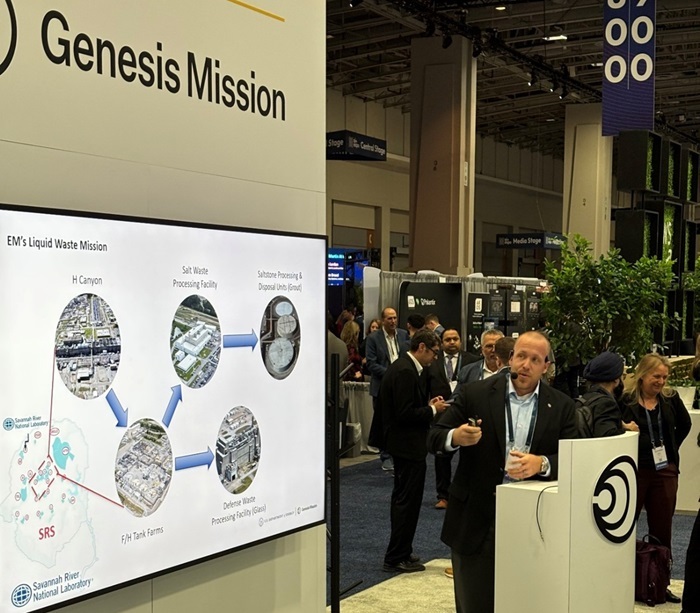 Tom Danielson with Savannah River National Laboratory discusses how artificial intelligence can accelerate nuclear cleanup solutions, turning waste into useable materials such as glass and grout.
WASHINGTON, D.C. — Savannah River National Laboratory (SRNL) showcased how it’s advancing the U.S. Department of Energy’s (DOE) Genesis Mission through applied artificial intelligence (AI) and machine learning research and innovation at the 2026 AI+ Expo in Washington, D.C.
Energy Secretary Chris Wright opened the event with a fireside chat, then dropped by the DOE Pavilion in the exhibition hall, drawing a crowd to the booth who heard SRNL’s Tom Danielson give the first Genesis Mission project presentation of the day. This helped establish SRNL’s strong participation in an initiative that DOE has deemed a top priority.
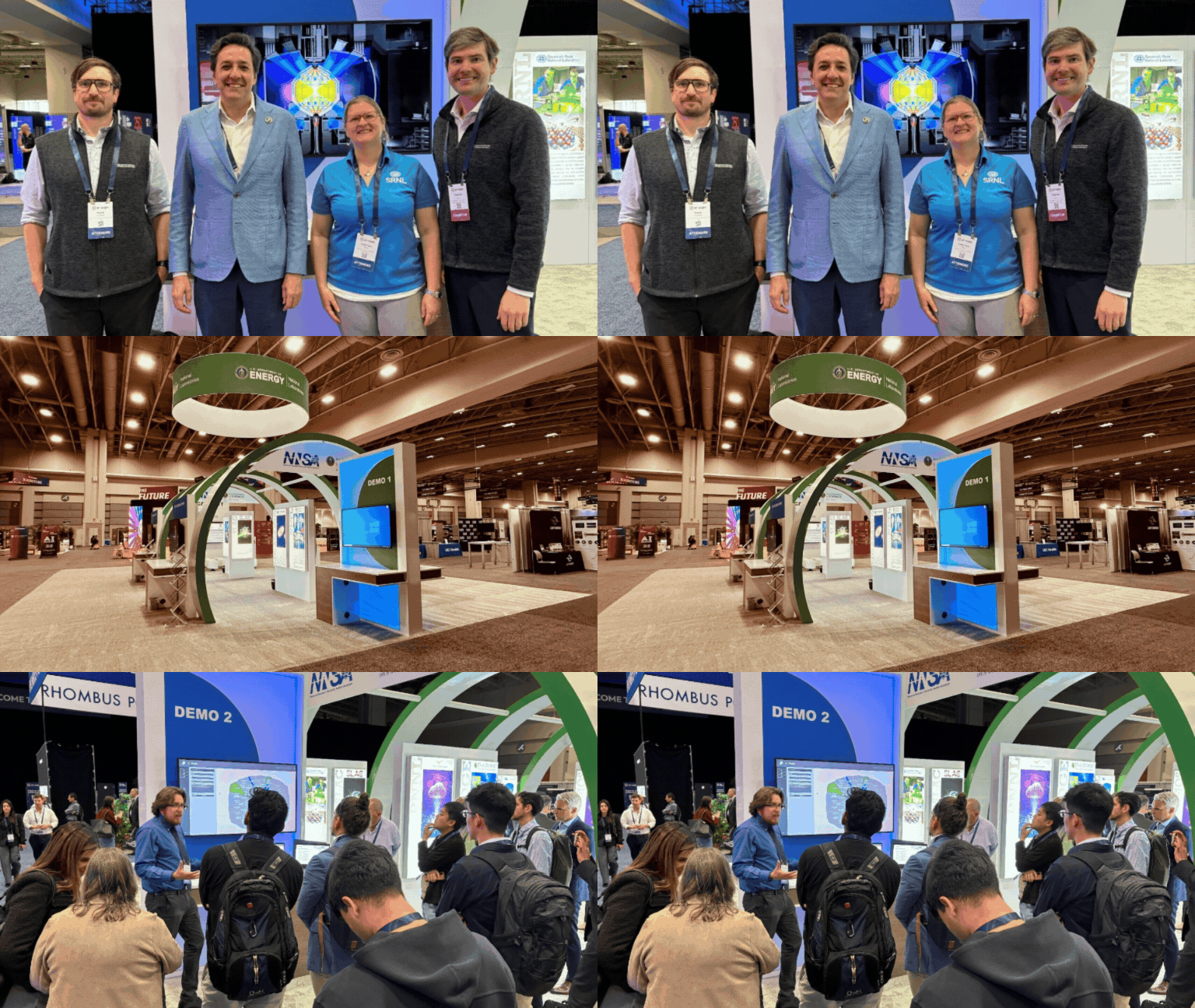 The Savannah River National Laboratory was one of the 17 national laboratories to represent the U.S. Department of Energy (DOE) at the 2026 AI+ Expo in Washington, D.C. At the DOE Pavilion, officials emphasized the value of the national laboratories in applying the power of artificial intelligence and advancing science through the Genesis Mission.
Later, SRNL researchers Zachary Tener and Vincent DiNova continued the momentum with their AI-focused demonstrations that highlighted SRNL’s leadership in critical materials recovery and AI-enabled manufacturing. SRNL is the DOE’s Office of Environmental Management sole-sponsored laboratory.
SRNL broadened its impact through engagements with national lab computing leadership and an impromptu conversation with DOE Under Secretary for Science Darío Gil, who leads the Genesis Mission.
SRNL’s presence reinforced the lab’s integral role in delivering mission-driven AI capabilities across the 17 DOE national laboratories.
Read more about SRNL’s AI and machine learning efforts in the latest edition of Matter Magazine.
-Contributor: Sara Shoemaker
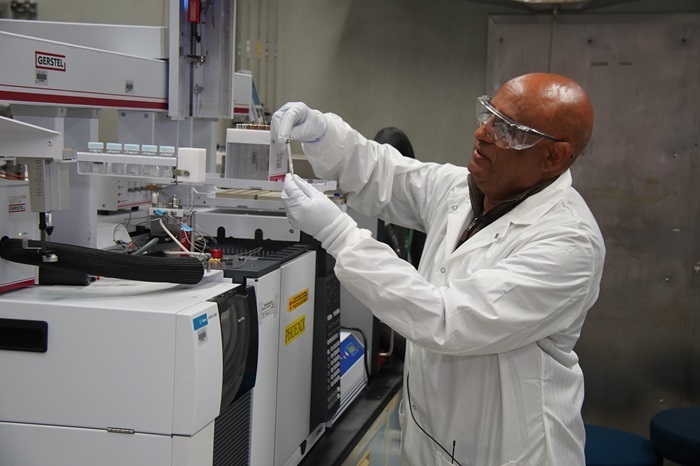 Using a research method that significantly reduces sample turnaround times, scientist Solomon Bairai operates equipment to analyze tank waste samples for organic chemicals at the 222-S Laboratory on the Hanford Site..
RICHLAND, Wash. — The U.S. Department of Energy’s Office of Environmental Management (EM) is seeing significant improvement in sampling and analysis times at the 222-S Laboratory at the Hanford Site.
The laboratory has achieved a major accomplishment in reducing the time it takes from receiving a sample to delivering analytical results by 50% over the past five years.
For 75 years, the lab has been the analytical backbone of Hanford’s evolving mission, delivering data that guides critical decisions. Today, contractor Navarro-ATL is advancing one of the lab’s most significant modernization periods, with upgraded facilities, new analytical methods, state-of-the-art instrumentation, and targeted infrastructure improvements that are positioning the lab for future mission needs.
“These upgrades aren’t just technical improvements — they deliver more capacity, better precision and greater confidence for decisions that reduce risk,” said Mark Hughey, Navarro-ATL’s general manager.
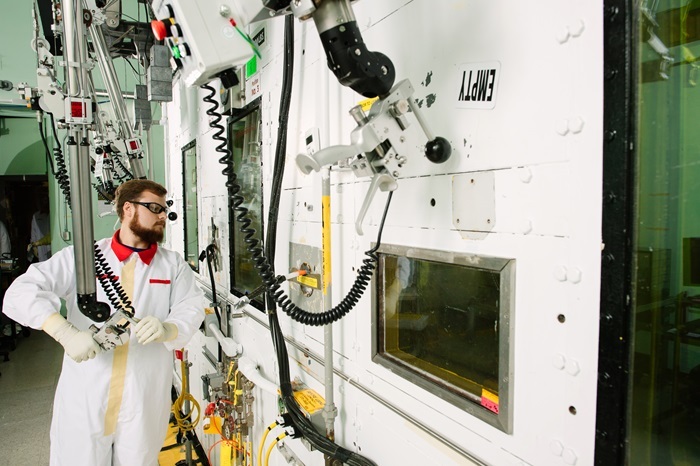 At the 222-S Laboratory, modern upgrades and innovative research methods have cut turnaround times by 50%. From behind shielded glass, scientist Caleb Mortensen guides a mechanical manipulator, reflecting the lab’s commitment to safer, faster work.
Upgrades Expand Capability, Reduce Downtime
EM and Navarro-ATL have invested in improvements that strengthen the lab’s ability to support a growing and increasingly complex cleanup mission. Renovated analytical laboratory rooms and 29 new or modernized instruments installed have expanded capacity and improved reliability.
When the workload increased fourfold in 2025, the lab’s upgrades and process improvements enabled the team to keep pace and deliver results reliably, while also reducing the average turnaround time for essential analytical data from 180 days to less than 90 days — a key accomplishment as EM prepares for treating and processing the waste stored in underground tanks.
A major advancement came with the Washington State Department of Ecology’s approval of the Twister Stir Bar method. Developed by Navarro-ATL chemists, the technique provides more precise identification of complex organic compounds and cuts the time required to separate targeted compounds from a sample from two to three days to just three hours.
Inside the lab’s hot-cell complex, new lead-shielded windows have replaced aging units. The lab is also installing new mechanical manipulators to replace older models. These upgrades enhance the potential 24/7 operations needed to support a faster pace of treatment by the Direct-Feed Low-Activity Waste (DFLAW) program and future grout campaigns.
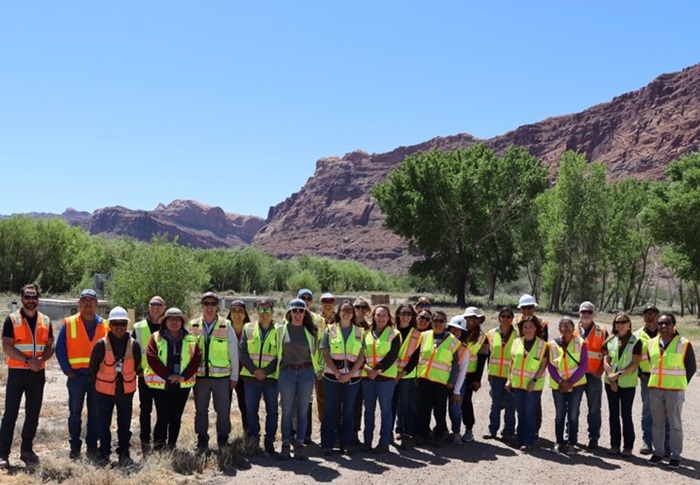 Representatives from the U.S. Department of Energy’s Office of Legacy Management, Navajo Nation and Hopi Tribe tour the Moab site well field alongside Moab Uranium Mill Tailings Remedial Action Project staff, gaining a firsthand look at remediation efforts along the Colorado River.
MOAB, Utah — The Moab Uranium Mill Tailings Remedial Action Project recently conducted site tours for representatives from the U.S. Department of Energy’s (DOE) Office of Legacy Management (LM) and two regional tribal nations, Hopi Tribe and Navajo Nation.
Attendees received an on-the-ground view of cleanup progress at the Moab Project’s two active sites. At the Moab site, along the Colorado River, the visitors observed remediation of the former uranium processing facility. Thirty miles north at the Crescent Junction site, they viewed the engineered disposal cell where the uranium mill tailings and other contaminated materials are permanently contained.
The visit came at a significant moment in Moab Project history: Crews recently reached a major milestone with the removal of the site’s 16-million-ton tailings pile, following 17 years of relocating the tailings to Crescent Junction for permanent disposal.
Cleanup efforts are now focused on removing remaining contaminated soil, and developing a final groundwater compliance action plan. At Crescent Junction, crews are working to finish the disposal cell and constructing an evapotranspiration cover to manage moisture and protect the disposal cell’s long-term integrity.
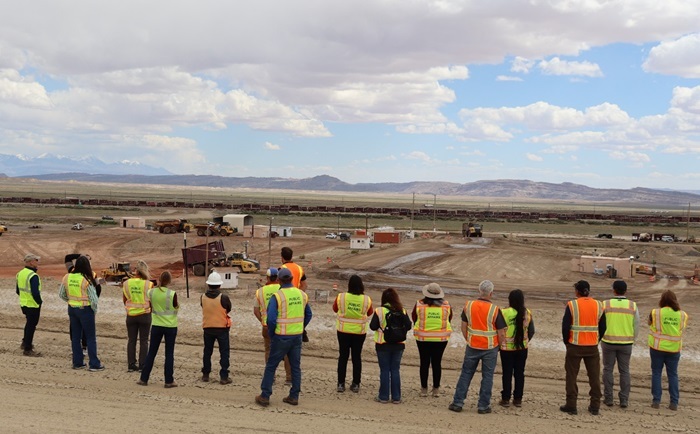 Tour participants view the Crescent Junction site’s radiological buffer area, where steel containers carrying contaminated materials from the Moab site are emptied into the permanent disposal cell.
This visit served as a valuable interagency opportunity. Upon completing the DOE’s Office of Environmental Management (EM) cleanup mission at the Moab Project, the Moab and Crescent Junction sites will transition to the Office of Legacy Management for long-term surveillance and maintenance. Hosting that office’s representatives for onsite tours supports a smooth handoff between the two DOE offices.
“This was a tremendous opportunity to showcase the progress our team has made while strengthening relationships,” said Elizabeth Moran, Moab Project environmental manager. “Having our Office of Legacy Management colleagues and tribal partners see things firsthand sets the stage for a successful transition and continued responsible stewardship.”
The tours reflect EM’s commitment to government-to-government engagement with tribal nations whose communities have long been connected to the Colorado River corridor and the broader Four Corners region.
-Contributor: Barbara Michel
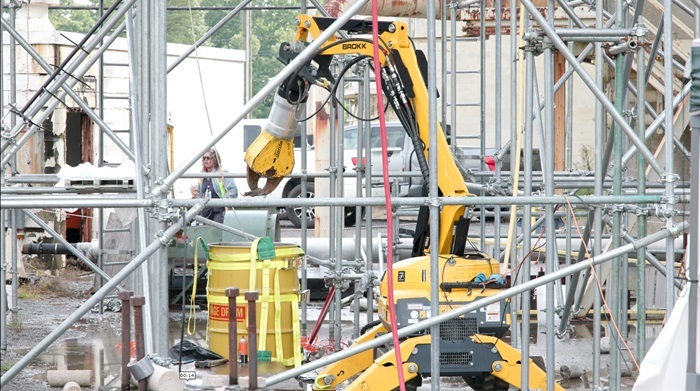 A robotic arm with a new attachment is central to a mock-up demonstration prior to field work at the former Radioisotope Development Laboratory’s final hot cell.
OAK RIDGE, Tenn. — Oak Ridge team members designed a new attachment for robotic equipment that’s helping accelerate cleanup at Oak Ridge National Laboratory (ORNL) while handing taxpayers half a million dollars in savings.
The Oak Ridge Office of Environmental Management (OREM) and cleanup contractor United Cleanup Oak Ridge (UCOR) are deactivating the final hot cell of the former Radioisotope Development Laboratory, preparing one of the most contaminated structures at ORNL for demolition.
Work to clear debris from the structure requires use of remote robotic equipment due to contamination. Previous equipment could only pick up one item at a time. However, the new attachment UCOR operators designed allows a robotic arm to scoop up waste in bulk, streamlining cleanup.
“This simple innovation has helped to accelerate cleanup inside the cell with more efficient debris removal while safeguarding our employees from exposure,” said UCOR Senior Vice President of End State Delivery Clint Wolfley.
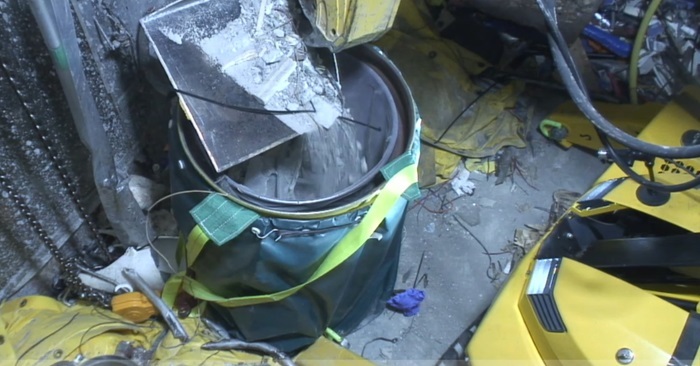 A new attachment designed by United Cleanup Oak Ridge operators allows a robotic arm to scoop up debris in bulk, streamlining cleanup.
With remote-style deactivation slated for other highly contaminated hot cell facilities at ORNL, the attachment can benefit other projects.
“This operator-driven solution highlights the value of leveraging the expertise of the crews performing the work and empowering them to pursue improvements and better approaches to tasks,” said ORNL Portfolio Federal Project Director Steve Clemons. “In this instance, their ingenuity will result in savings for future projects, too.”
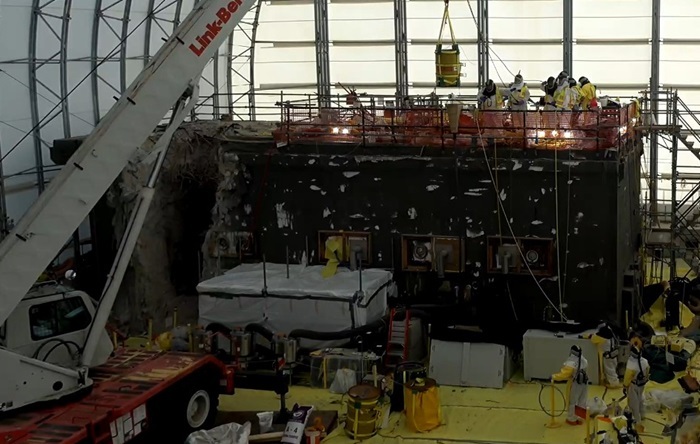 Workers remove one of 40 drums from the former Radioisotope Development Laboratory’s final hot cell, preparing it for demolition.
The remote-controlled demolition robot — deployed last fall — protects employees by allowing them to perform material removal and heavy demolition in hazardous environments from a distance.
Crews demolished the five other hot cells and the outer structure of the former laboratory, known as Building 3026, in previous years.
The cells were heavily shielded concrete rooms that provided researchers protection from radioactive material as they conducted research. The laboratory was built in 1945 to support isotope separation and packaging and was later used to examine irradiated reactor fuel experiments and components.
The final hot cell is divided into two subcells. Crews began demolishing one last year, and now they’re preparing the other for demolition. Removing this hot cell eliminates a significant hazard in the heart of ORNL, opening space for research and innovation missions.
-Contributor: Ryan Getsi
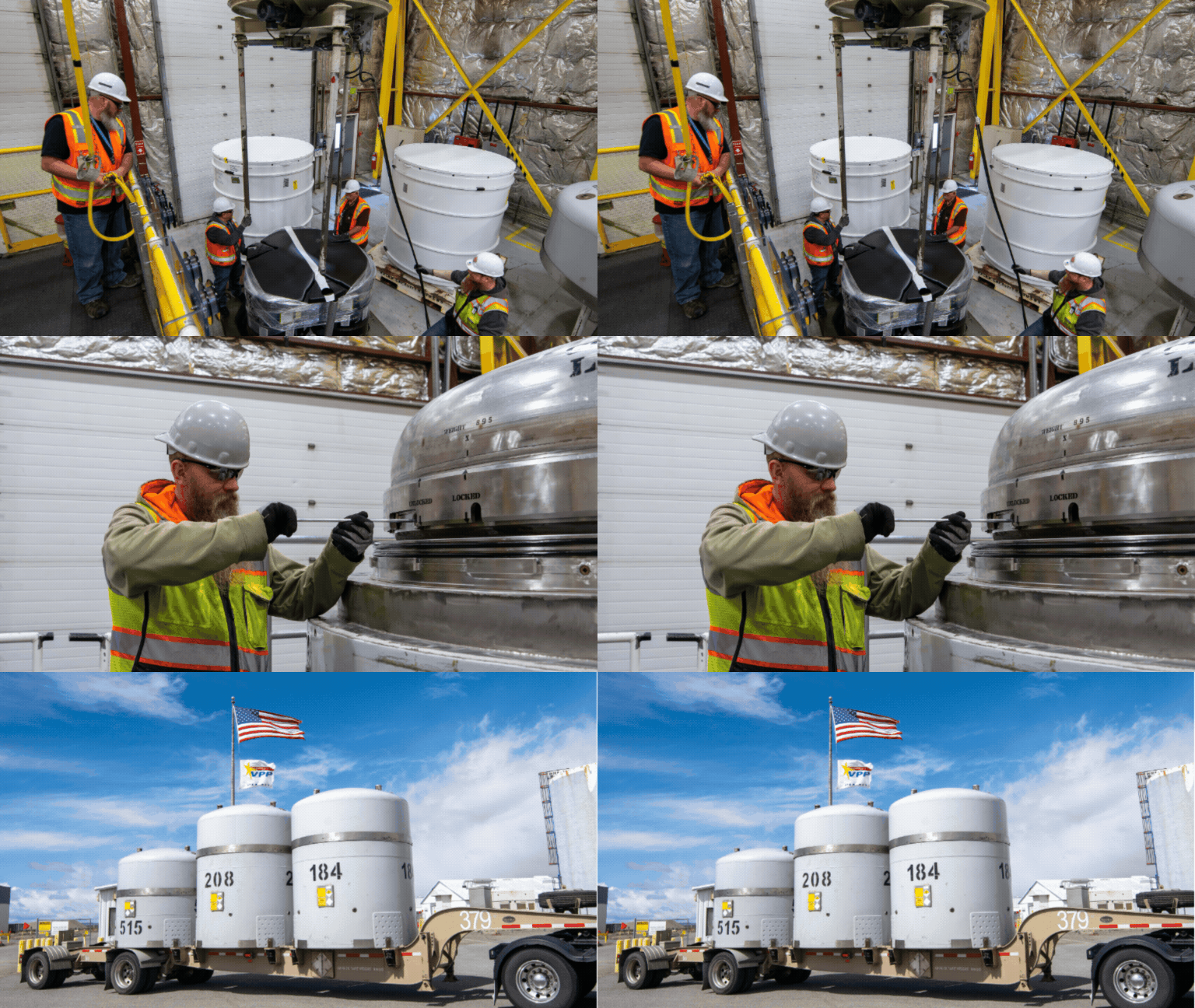
Progress in Action: Teams prepare and ship glovebox waste to WIPP
IDAHO FALLS, Idaho — The Idaho Cleanup Project (ICP) has completed two shipments of a Los Alamos National Laboratory (LANL) glovebox to disposal facilities, underscoring the ICP’s critical role in addressing complex waste streams across the U.S. Department of Energy (DOE) complex.
Crews with ICP contractor Idaho Environmental Coalition (IEC) sent the mixed low-level and transuranic waste to offsite disposal facilities, including DOE’s Office of Environmental Management Waste Isolation Pilot Plant (WIPP) in New Mexico.
The crews disassembled the glovebox at the ICP’s Advanced Mixed Waste Treatment Project. They packaged components into 100-gallon drums to meet WIPP’s waste acceptance criteria, ensuring safe transport and disposal of the transuranic waste.
Last fall, LANL safely shipped the glovebox to the Idaho National Laboratory Site according to waste transportation regulations. A glovebox is a sealed, stainless steel containment enclosure equipped with glove ports and windows, designed to protect personnel from radiological and chemical hazards when handling radioactive materials.
ICP and LANL have a long history of collaborating on waste cleanup projects.
“This project showcases the expertise and collaboration that make Idaho a leader in advancing DOE’s cleanup mission,” IEC Waste Management Senior Project Director Kelly Wooley said. “These shipments reflect the team’s commitment to completing this work safely, efficiently and on schedule.”
-Contributor: Ryan Christensen
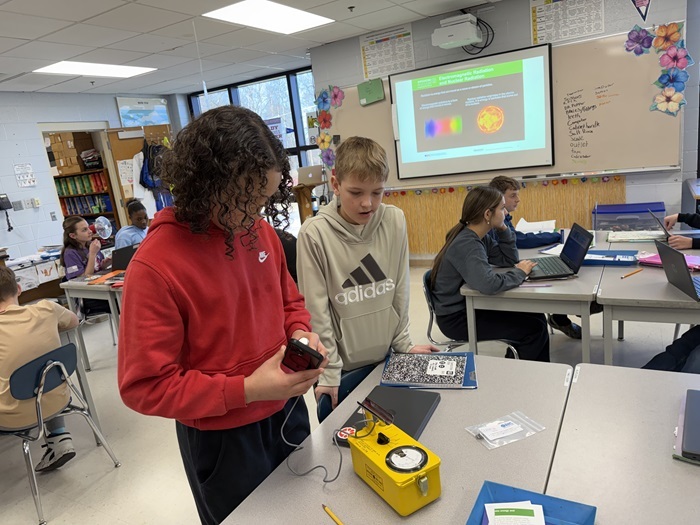 Sixth grade students at Heath Middle School in Kentucky learn about Geiger counters. Teacher Brandy Roberts obtained the equipment and lesson plans through the Waste Management Education STEM Council.
LEXINGTON, Ky. — Two educators in communities near the U.S. Department of Energy’s (DOE) Portsmouth, Ohio, and Paducah, Kentucky, locations are maximizing resources to help cultivate the next generation of talent to advance the nation’s energy sector and future redevelopment at the DOE sites.
Jennifer Buckler, a science, technology, engineering, art, and math (STEAM) and career development teacher for kindergarten through sixth grade at Western Local Schools in Ohio, and Brandy Roberts, a sixth grade science teacher at Heath Middle School in Kentucky, attended the Waste Management Symposia for the second year. Both came away with materials and innovative ideas for their classrooms.
Portsmouth and Paducah team members joined more than 2,500 conference participants who shared knowledge on radioactive materials, decommissioning nuclear facilities and innovative solutions to increase worker safety and project efficiency.
“My favorite part of Waste Management was attending a panel where the different companies shared their outreach stories,” Buckler said. “One organization from Savannah River developed a document with job opportunities and outlined information kids need to get that job,” such as formal academic credentials and alternative career pathways.
Roberts served on the panel, “Creating the Workforce of the Future,” where she and others highlighted recent successes in creating paths for students to support the missions at the Portsmouth and Paducah sites.
“I share everything I bring back from the exhibit hall with my students,” Roberts said. “I also met someone from the United Steelworkers who is going to present to my students about their work and the history of the Paducah Site.”
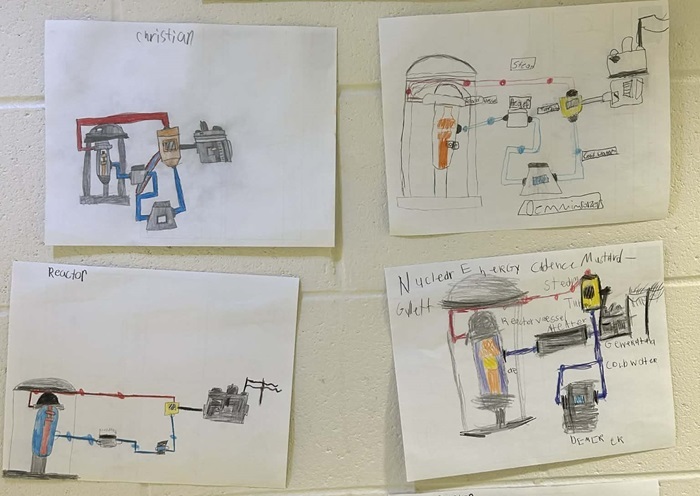 Student drawings of nuclear reactors hang on the wall at Western Local Schools in Ohio. Teacher Jennifer Buckler believes it is important for students to learn about nuclear energy as early as possible.
Both teachers serve on the Waste Management Education STEM Council, which bolsters the ideas and activities teachers carry into their classrooms. Buckler discovered the group through the educational outreach program, STEAM Ahead, from the Portsmouth Site’s deactivation and demolition contractor.
“This program reinforced how critical it is to introduce career awareness and exploration as early as possible,” Buckler said. “Research shows students begin forming ideas about careers as early as elementary school, and early exposure significantly increases their likelihood of pursuing STEM-related pathways later in life.”
Roberts learned about the council when Health Middle School competed in the West Kentucky Regional Science Bowl. She has since obtained lesson plans on subjects like radiation basics.
“The American Nuclear Society donated Geiger counters for my classroom,” Roberts said. “Now, we learn about things like natural forms of radiation and how to use the Geiger counters.”
Buckler’s students explore nuclear energy by creating diagrams of nuclear reactors, and learn the difference between fission and fusion.
Both teachers have educated members of the DOE’s Office of Environmental Management workforce, including Paducah Site General Engineer Mitchell Guthrie. Now, they prepare the next generation for cleanup jobs and future industries at the two sites.
Buckler is organizing the third annual STEAM Career and Community Connects Event, aiming to expose kindergartners through 12th graders to career paths. More than 100 vendors, including site contractors and other tenants, plan to attend.
“We need stronger alignment to ensure students understand the opportunities available and the required skills, especially in rural areas,” Buckler said. “This is not an ability gap, it’s an exposure gap. Intentional partnerships between schools and local industry can bridge this gap and better prepare students for meaningful, in-demand careers.”
-Contributor: Sarah Marko
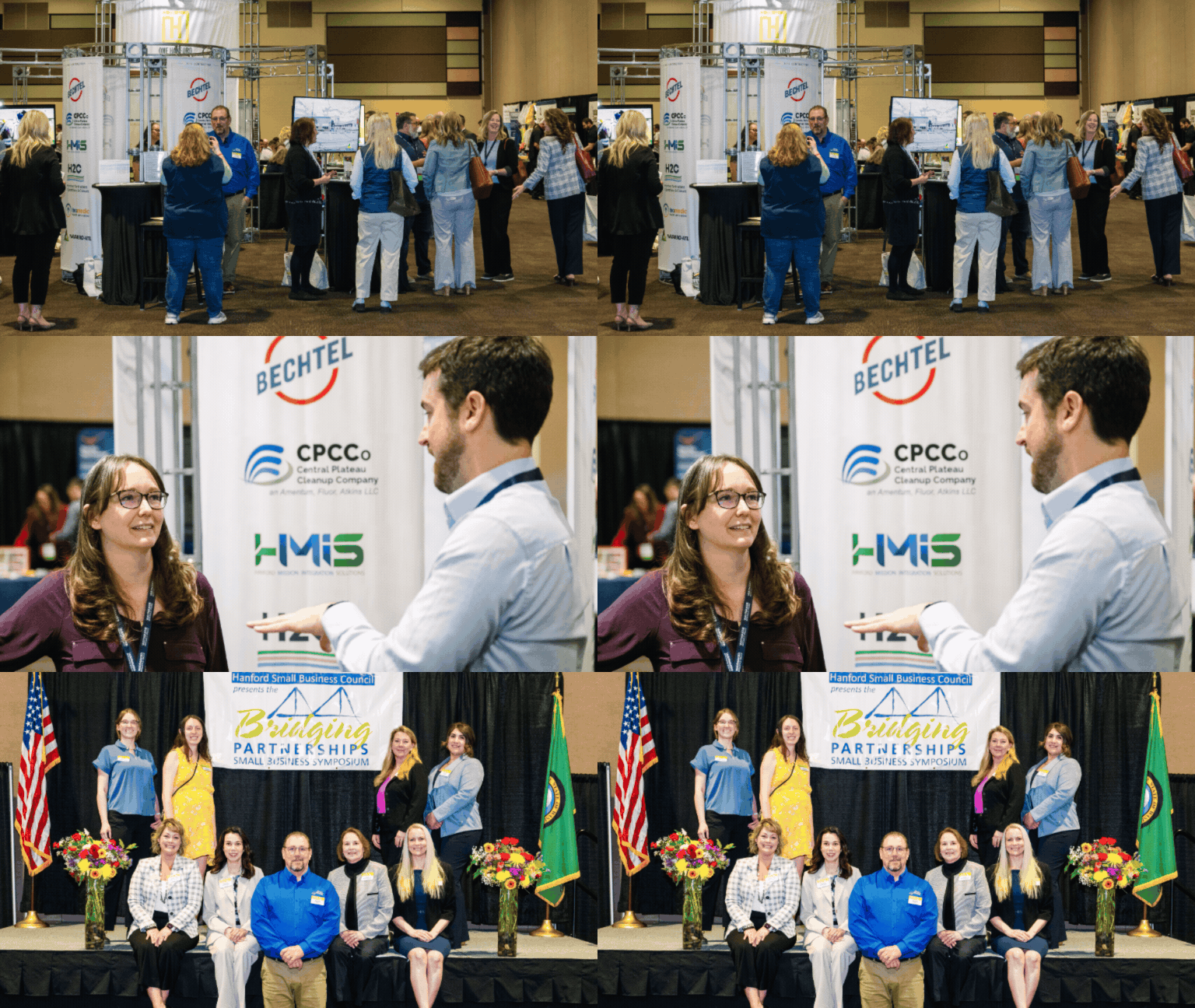
RICHLAND, Wash. — Small Business Program managers from the Hanford Site’s prime contractors recently hosted the 19th annual Bridging Partnerships Small Business Symposium, which focused on creating connections and building relationships between Hanford Field Office contractors and small businesses interested in opportunities at the site. The event guides small business owners through the subcontracting process and provides insight into how they can play a part in Hanford’s cleanup mission. The event was sponsored by the Hanford Small Business Council and the Tri-City Regional Chamber of Commerce, and attracted more than 300 attendees. A One Hanford exhibit was a featured display showcasing information about cleanup progress, with contractor representatives available to speak with small business owners about potential opportunities.
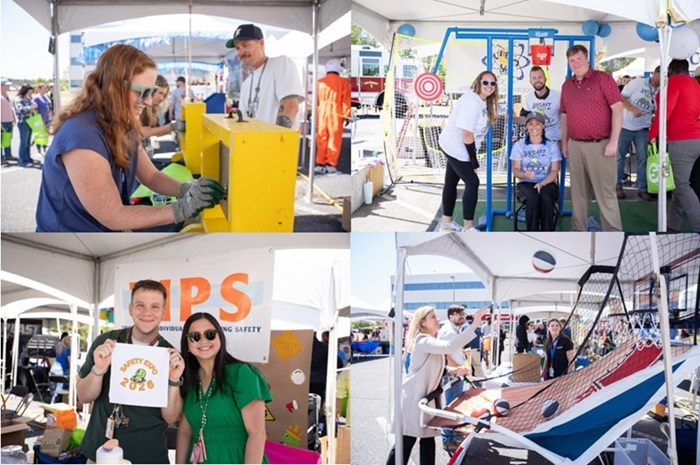 Employees from across the 310-square-mile Savannah River Site engage in all aspects of safety and security through interactive games and discussions at the Safety Expo.
AIKEN, S.C. — Nearly 4,000 members of the Savannah River Site (SRS) federal and contractor workforce recently attended the annual two-day Safety Expo, held onsite for the first time in over a decade.
Nearly 80 booths offered information about workplace safety, environmental stewardship, personal health and local community services. Among them were 23 interactive booths hosted by Local Safety Improvement Teams, which serve as a management-worker communication bridge and foster worker involvement to achieve the goal of zero injuries.
Through games, quizzes and other activities, employees reviewed critical safety and security principles while having fun.
“Hosting the expo onsite for the first time in a long time not only increased accessibility but also provided employees with meaningful opportunities to engage with important resources, making this year’s event an outstanding success,” said Duane McLane, senior vice president of environment, safety, health and quality for U.S. Department of Energy Office of Environmental Management contractor Savannah River Nuclear Solutions (SRNS), which sponsored the event.
Jaylon Tharp, an SRNS software engineer, volunteered for the expo and enjoyed the opportunity to interact with individuals from across the 310-square-mile site.
“As a first-time attendee, I valued the chance to engage with the various booths and organizations to further understand the work they do to support the site’s missions, especially in terms of safety,” Tharp said. “The experience was both informative and rewarding, and I look forward to attending again in the future.”
In addition to a vibrant atmosphere, the event featured plenty of food. Vendors set up food trucks, and a food drive gathered donations to assist the local community.
“I want to thank everyone who worked so hard to make this year’s Safety Expo a success,” said Health and Safety Manager Lea Simons, who also served as the expo’s planning lead. “The expo is the result of months of dedication and teamwork from our planning teams, who continuously strive to deliver an informative and engaging experience for everyone. Their commitment and collaborative spirit truly reflect our values at SRS, and I couldn’t be more proud of what we accomplished together.”
-Contributor: Fallan Flatow
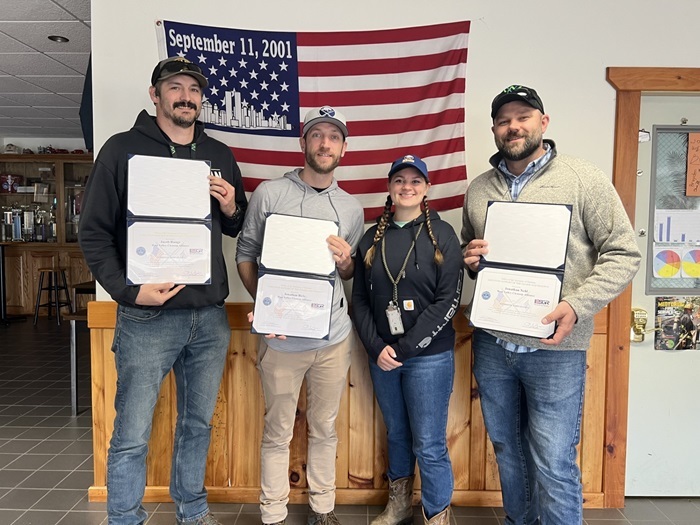 From left, West Valley Demonstration Project radiation protection supervisors Jacob Runge, Jonathan Biela and Jonathan Nehl pose with their Patriotic Employer Awards from Employer Support of the Guard and Reserve and the U.S. Secretary of Defense. Genevieve Boucher, a West Valley radiation control technician, second from right, nominated the three supervisors for the award.
WEST VALLEY, N.Y. — Three supervisors at the U.S. Department of Energy’s West Valley Demonstration Project were honored with the Employer Support of the Guard and Reserve - Department of Defense’s Patriotic Employer Award, recognizing their exceptional support for employees who serve in the military’s reserve components.
The nomination came from Genevieve Boucher, a West Valley radiation technician and Navy Reserve Master-at-Arms 1st Class Petty Officer. She nominated the trio — radiation protection supervisors Jacob Runge, Jonathan Biela and Jonathan Nehl — because of the understanding, flexibility and genuine respect they’ve shown as Boucher balances civilian work with her commitment to serve.
“Serving in the Navy Reserves for the past 11 years has been a rewarding and honorable experience. As a leader in my command, the number of required trainings and schools may impact my schedule, but I enjoy being able to apply those skills to my civilian career here at West Valley,” Boucher said. “This wouldn’t be possible without the amazing support and flexibility from my supervisors.”
The Patriotic Employer Awards program strengthens the bond between service members and their civilian employers, encouraging workplaces to exceed expectations of the Uniformed Services Employment and Reemployment Rights Act, a federal law that protects civilian job rights and benefits for veterans, reservists and National Guard members.
“We are proud to have service men and women working at the project,” said Stephen Bousquet, U.S. Department of Energy Office of Environmental Management assistant director for the West Valley Office of Project Management and a former service member. “They bring experience and perspective that strengthen our cleanup mission. It’s the collective expertise of our entire team that fuels our resilience and problem-solving.”
Employer Support of the Guard and Reserve is a U.S. Department of War office established in 1972 to promote cooperation and understanding between reserve component service members and their civilian employers, and to help resolve conflicts arising from an employee's military commitment.
-Contributor: Joseph Pillittere
|