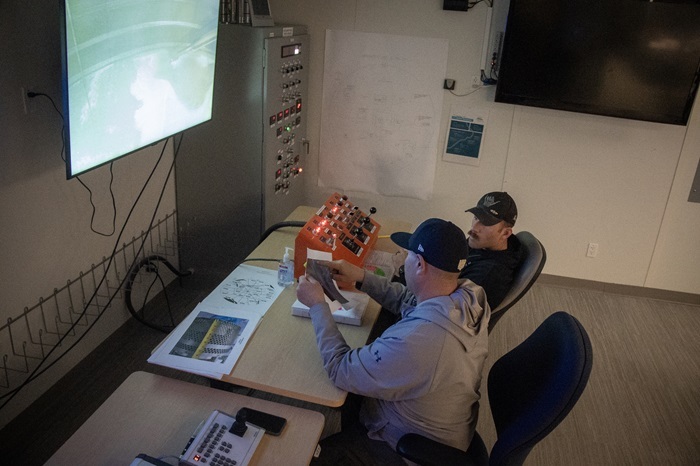
 Hanford Tank Waste Operations & Closure nuclear chemical operators, Enoc Flores, left, and Trace Martin, discuss the contents of Tank A-102 during the final days of waste retrieval field operations.
RICHLAND, Wash. — The U.S. Department of Energy’s (DOE) Hanford team has finished removing radioactive waste from the 23rd underground storage tank, marking continued progress towards site remediation and revitalization.
“Safely retrieving waste from aging tanks is one of Hanford’s highest priorities,” said Mat Irwin, Hanford Field Office assistant manager for Tank Waste Operations. “This retrieval reflects steady progress, disciplined execution and our continued commitment to protecting human health and the environment.”
Workers with tank operations contractor Hanford Tank Waste Operations and Closure (H2C) transferred about 41,000 gallons of decades-old solid waste from single-shell Tank A-102 in the site’s East Area to a double-shell tank for continued safe storage. Waste removed from the 23 tanks to date totals about 3.4 million gallons.
From 1944 to 1989, Hanford produced 74 tons of plutonium for the country’s nuclear weapons program. To store the radioactive and chemical byproducts, the site built thick, reinforced concrete tanks lined inside with steel and buried under several feet of soil to shield workers from radiation. The tanks held up to a million gallons each, and when production stopped at the end of the Cold War, 56 million gallons of waste was in 177 of the large tanks.
The Department and its contractors have completed retrieval operations in two of the site’s tank farms. A Tank Farm is the third to have waste moved out of the older tanks with a single steel liner into newer tanks that have a second liner for added leak protection.
“The Hanford workforce is highly skilled and well-trained to meet the unique challenges that come with tank waste retrieval,” said Phil Breidenbach, H2C’s chief operating officer. “Their success stems from their ownership of the mission and their commitment to reducing risk.”
Workers already are making progress removing waste from the site’s 24th single-shell tank, A-106. Retrieval operations on that tank should wrap up later this summer.
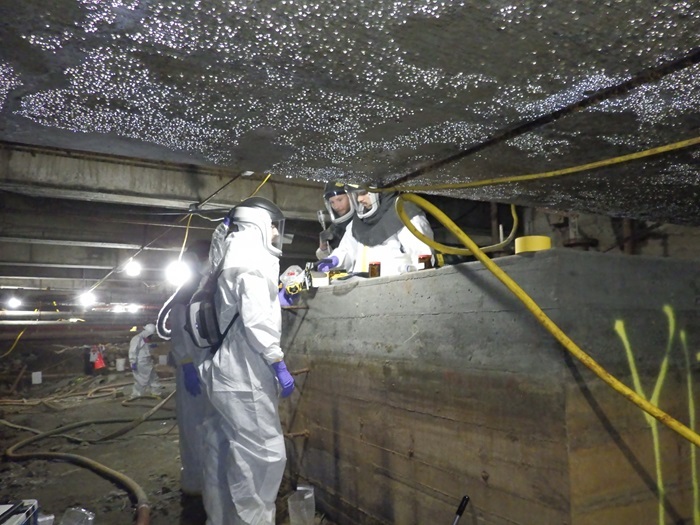 Workers collected more than 900 samples to support characterization efforts inside the 210,000-square-foot Beta-1 facility at the Y-12 National Security Complex. The building was constructed to enrich uranium for the Manhattan Project.
OAK RIDGE, Tenn. — The Oak Ridge Office of Environmental Management (OREM) and cleanup contractor United Cleanup Oak Ridge (UCOR) are setting a new benchmark in cleanup progress — conducting demolition on two former Manhattan Project uranium enrichment facilities in a single year.
Crews have successfully prepared the 210,000-square-foot Beta-1 facility for teardown to begin this summer at the Y-12 National Security Complex. That demolition comes after workers finished knocking down Alpha-2 six months ahead of schedule.
“Achieving demolition readiness so promptly highlights the caliber of our workforce,” said Morgan Carden, Y-12 portfolio federal project director. “The precision of this sequencing avoids lag times and allows our crews to move immediately to the next project to continue Y-12’s transformation in a major way.”
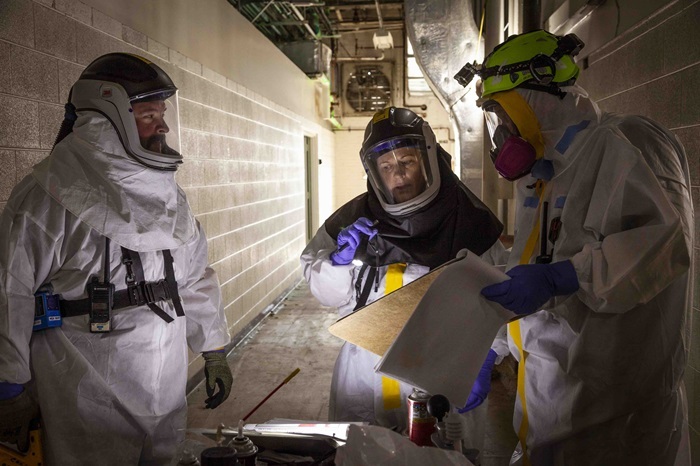 Crews discuss isolating electricity to get the Beta-1 building to the “cold and dark” stage before deactivation can safely begin.
OREM and UCOR have cleared more than 20 acres of Manhattan Project and Cold War infrastructure at Y-12, and deactivation is underway in facilities spanning another 20 acres. These projects are removing hazards, enabling modernization and opening space to advance important national security missions.
After deactivating Beta-1’s above-ground floors, crews began addressing the basement in fall 2024. It was a complex, multidisciplinary effort, including collecting more than 900 samples, pumping 17 million gallons of water, testing and removing 3,000 feet of drainpipes, and pouring more than 2,500 truckloads of a cement mixture.
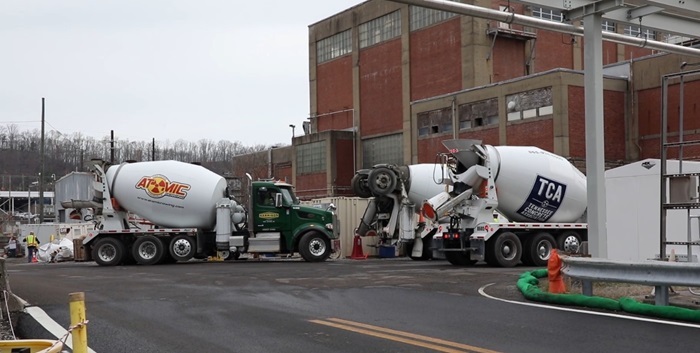 Getting the Beta-1 facility demolition-ready involved filling its basement with 2,500 truckloads of a concrete mixture to support the weight of large teardown equipment.
Use of light detection and ranging scanning technology helped quicken the pace of Beta-1’s deactivation while strengthening worker safety. The technology provided engineers a detailed 3D map of building spaces without requiring workers to enter contaminated or confined spaces.
“The journey to bring Beta-1 to this point has been nothing short of extraordinary,” said Clint Wolfley, UCOR’s senior vice president of end state delivery. “This accomplishment, alongside the completion of Alpha-2, represents a transformative moment for Y-12, demonstrating our unwavering commitment to safety, innovation and reclaiming valuable land for the future of our nation.”
Beta-1's demolition is set to conclude in 2028. Following that project, crews will pivot immediately to remove the Old Steam Plant at Y-12.
-Contributor: Ryan Getsi
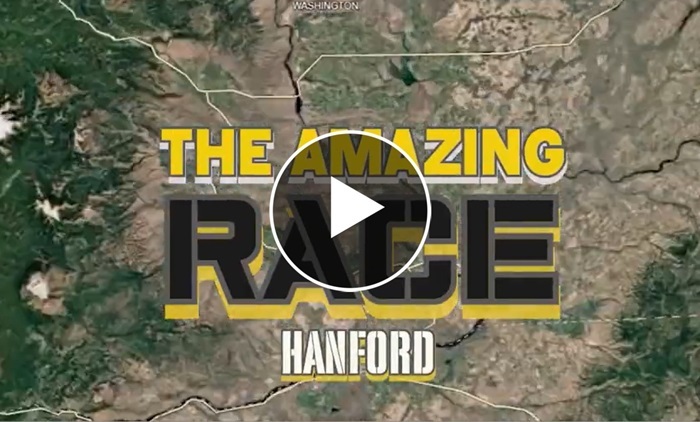 EMTV: In March alone, a groundwater sampling team with Hanford Site contractor Central Plateau Cleanup Company covered thousands of miles taking water level readings in 850 wells in just 30 days, an annual feat of endurance highlighted in this video.
RICHLAND, Wash. — Sampling crews with U.S. Department of Energy contractor Central Plateau Cleanup Company (CPCCo) are always on the move in pursuit of groundwater cleanup progress on the Hanford Site.
Each year, these road warriors log more than 80,000 miles across the 580-square-mile site, collecting up to 25,000 samples of soil and groundwater from 4,300 well trips. The samples are carefully packaged and labeled before being shipped to an offsite laboratory for analysis.
Detailed data gleaned from analysis of the measurements and samples helps gauge the performance of ongoing remediation efforts and supports decision-making to drive efficient, cost-effective cleanup approaches.
“Groundwater sampling is a key part of our robust remediation program,” said Naomi Jaschke, Hanford Field Office assistant manager for River and Plateau, Soil & Groundwater Division. “The quality of information we get from the thousands of collected samples each year is invaluable for evaluating current cleanup methods and planning future cleanup efforts to support our mission to protect the Columbia River.”
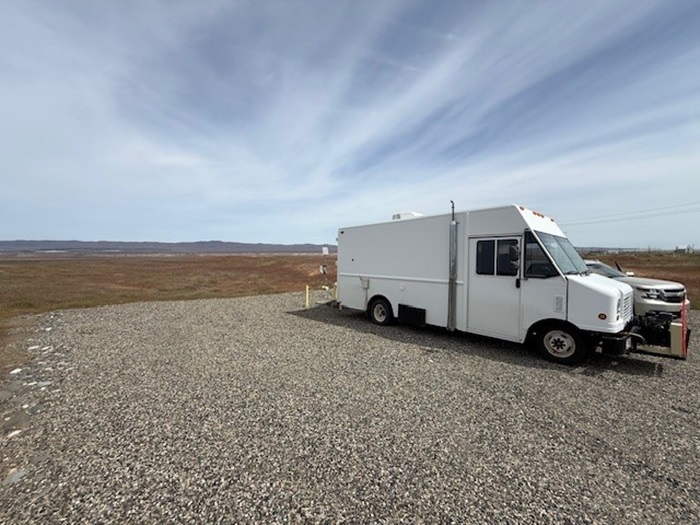 Many of the thousands of wells on the 580-square-mile Hanford Site are in remote locations, requiring significant travel to conduct groundwater sampling activities.
 |
|
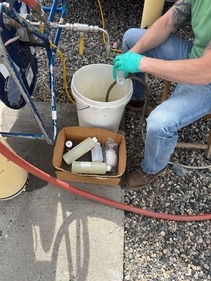
A worker with contractor Central Plateau Cleanup Company collects a groundwater sample on the Hanford Site. The samples are analyzed to help determine the success of current cleanup methods and support future decision-making. |
Sampling results indicate the level of contaminants in plumes — or areas of underground contamination — to help determine the effectiveness of groundwater cleanup methods, such as pump-and-treat operations. Over the past two decades, the results highlight a significant reduction in groundwater contamination along the river, particularly of hexavalent chromium, a toxic chemical used as a corrosion inhibitor in the reactors during Hanford operations.
The placement of monitoring wells is also determined using modeling data based on sample analysis. Well location is important for understanding groundwater flow to help manage and reduce contamination in the plumes.
“Our crews are out in all seasons and weather conditions, with many of our wells and sampling locations off the beaten path,” said Josh Griffith, CPCCo field sampling operations manager. “It certainly presents a unique set of challenges, but our field crews are good at what they do and they do it safely. Our extraordinary vehicle safety record is something we’re very proud of.”
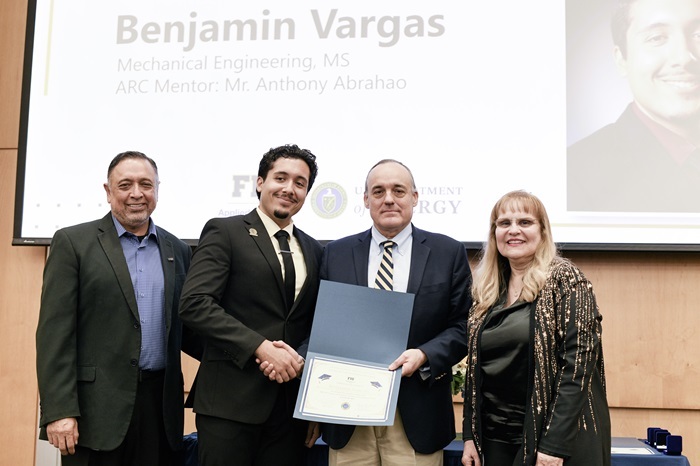 Benjamin Vargas, second from left, is inducted as a U.S. Department of Energy (DOE) Fellow at a recent ceremony. He is pictured with DOE Office of Environmental Management Chief Technology Officer John Dupuy, second from right, Florida International University Program Director Leonel Lagos, left, and Applied Research Center Executive Director Inés Triay.
MIAMI — The U.S. Department of Energy (DOE) and Florida International University (FIU) recently marked progress in growing the STEM workforce by inducting 10 students as DOE Fellows.
The DOE Fellows program, a science, technology, engineering and math workforce development initiative, is sponsored by DOE's Office of Environmental Management (EM). It aims to attract, train and retain a skilled workforce for the complex task of cleaning up the nation's nuclear legacy.
The 19th annual induction ceremony and accompanying events over two days underscored the ongoing partnership between DOE and FIU in preparing the next generation of scientists and engineers for critical environmental management challenges.
Since its inception in 2007, the Fellows program has inducted 230 students. Fellows are mentored in research, development and deployment of new cleanup technologies. They participate in 10-week summer internships at facilities across the DOE complex and present their research at the Waste Management Symposia in Phoenix, Arizona, and other conferences around the world.
The Fellows program results in a 98% hiring rate for students who complete the program, including 24 Fellows hired by DOE, contractors or national laboratories such as Savannah River National Laboratory — the sole EM-sponsored national lab; 20 hired by other federal, state and local government agencies; and 90 hired by the private STEM industry.
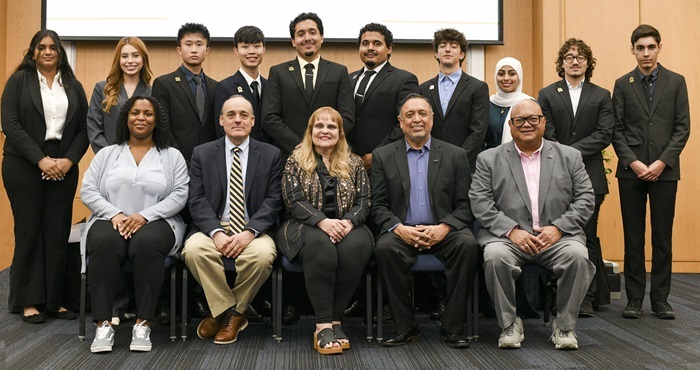 The new DOE Fellows gather for a photo with participants from Florida International University and the U.S. Department of Energy Office of Environmental Management to conclude the induction ceremony.
Participants in the latest induction ceremony, held at FIU's Modesto Maidique Campus, welcomed the new Fellows class. The program began with remarks and keynote speakers, including John Dupuy, the new EM chief technology officer. This was followed by the induction of nine FIU students as EM Fellows and one as a DOE Office of Legacy Management Fellow.
Organizers then held a DOE Fellows Poster Exhibition and laboratory tours at the Applied Research Center (ARC) – FIU's Engineering Center. This provided an opportunity for the new fellows and guests to engage in current research projects and witness firsthand the innovative work being conducted.
The next day focused on the future of technology in environmental management with a workshop on artificial intelligence, robotics, augmented and virtual reality and digitalization held at ARC. EM representatives and the ARC team discussed DOE’s current initiatives and needs, and research projects and capabilities at ARC, emphasizing the collaborative spirit and forward-thinking approach of the program.
ARC supports EM’s mission of accelerated risk reduction and cleanup. The center’s work includes developing robotic platforms and tools to better detect potential leaks in waste tanks underground at the Hanford Site in Washington state, developing hydrological models to predict the fate and transport of contaminants at Savannah River Site and developing digital elevation maps for the Waste Isolation Pilot Plant.
The collaboration between DOE and FIU, spanning nearly two decades, has been instrumental in addressing environmental challenges and building a robust talent pipeline for the EM mission. The newly inducted class will contribute to this legacy, focusing on applied engineering and science studies relevant to DOE's mission. The program offers students educational opportunities and a pathway to careers in STEM fields within DOE, with DOE contractors, and in private industry.
-Contributor: Danielle Chambers
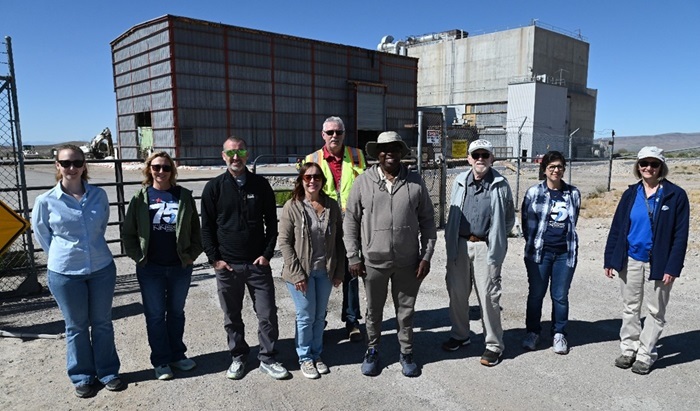 Nevada Site Specific Advisory Board members observed significant advancements in demolishing the Engine Maintenance, Assembly and Disassembly facility cold bay.
LAS VEGAS — Nevada Site Specific Advisory Board (NSSAB) members recently viewed progress firsthand in the U.S. Department of Energy’s (DOE) Environmental Management (EM) Nevada Program mission at the Nevada National Security Site (NNSS).
The board is part of the EM Site-Specific Advisory Board, a volunteer stakeholder group that offers independent advice, information and recommendations to the Assistant Secretary for EM and associated representatives about issues affecting the EM program at eight DOE sites across the country.
“Visiting the NNSS and learning more about EM Nevada activities during the tour through hands-on displays, pictures and presentations is invaluable for providing informed input to the DOE,” NSSAB Vice Chair Eddie Williams said.
The NSSAB’s first tour stop was the Engine Maintenance, Assembly and Disassembly (EMAD) facility. Constructed in 1968, this facility supported staging, assembly and disassembly of rocket engines as part of the Nuclear Rocket Development Station.
NSSAB members observed the removal of asbestos-coated steel panels and demolition of a portion of the EMAD facility known as the cold bay area in preparation for onsite disposal at the NNSS. Troy Thomson, projects director for EM Nevada contractor Navarro Research & Engineering, noted that this work preserves the structural integrity of the remaining large concrete building for potential future reuse that supports DOE’s mission to advance American energy dominance.
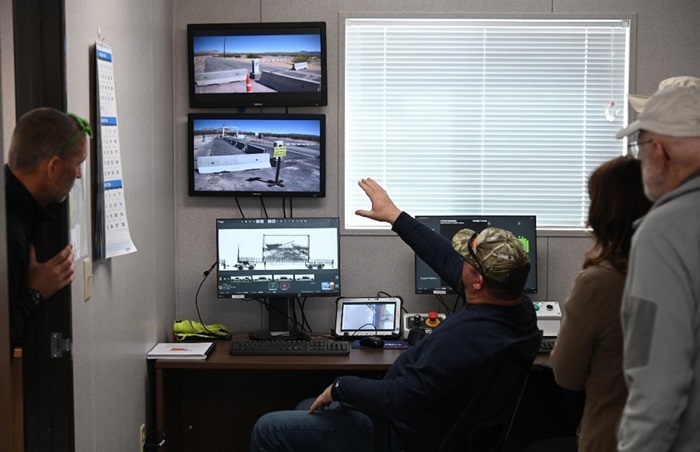 Nevada Site Specific Advisory Board members were briefed on a new drive-through truck portal at the Radioactive Waste Management Complex.
EM Nevada is accomplishing its environmental restoration mission according to the Federal Facility Agreement and Consent Order (FFACO), which establishes a strategy and timeline for completing corrective actions to safely and effectively remediate and restore contaminated sites.
This spring marks the 30th anniversary of FFACO. Of the 3,044 sites identified in the regulatory agreement, 2,959 have been closed with regulatory approval.
“The last few sites are undergoing corrective actions and investigations, and we expect that all FFACO sites will be closed in the next few years,” EM Nevada FFACO/Regulatory Lead Tiffany Gamero said. “It’s exciting to be nearing the end of this important endeavor to address the legacy contamination at the NNSS and ensure the health and safety of Nevada residents and the environment.”
The second stop for the NSSAB included a tour and briefing on radioactive waste management at the NNSS Radioactive Waste Management Complex. They viewed a new drive-through truck portal and learned how the advanced technology will monitor arriving low-level radioactive waste shipments for disposal at the NNSS.
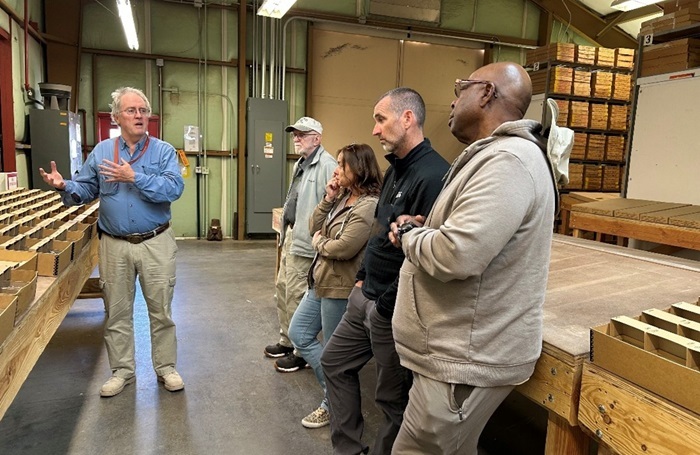 Nevada Site Specific Advisory Board members examined rock cuttings collected every 10 feet during a recent well drilling campaign.
The final stop of the day was the U.S. Geological Survey Core Library and Data Center, which stores more than 60 years of rock samples for multiple agencies, including from EM Nevada groundwater characterization.
Chief Geologist Chris Lewis described the recently completed drilling of two new wells and deepening of a third at the Pahute Mesa corrective action area on the NNSS. Rock samples from the Core Library provided important information on the Pahute Mesa subsurface to help plan the drilling campaign.
This month, well development and testing of these wells will begin, and the data will help assess and verify groundwater models that currently forecast contamination from historic nuclear testing on the NNSS will not exceed regulatory safety standards at the closest public land boundary within 1,000 years. These model forecasts are supported by the results of sampling performed by DOE and independent entities that have not detected tritium from underground nuclear testing in any onsite or offsite drinking water wells.
The NSSAB’s next scheduled meeting is June 17 in Las Vegas. For more information, contact the NSSAB office at nssab@emcbc.doe.gov.
-Contributor: Barbara Ulmer
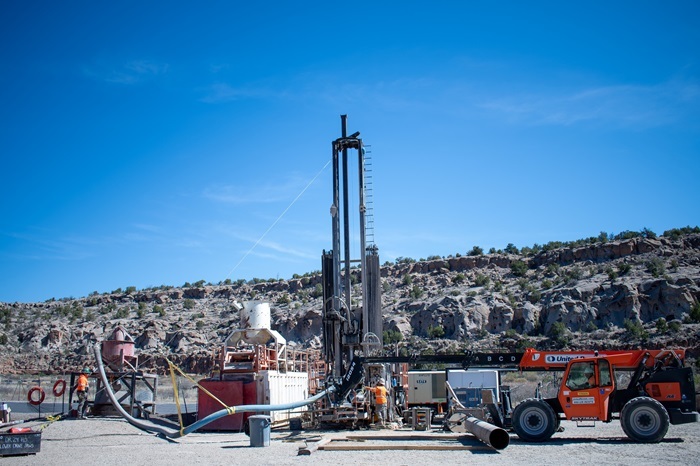 Environmental Management Los Alamos Field Office field crews conduct drilling operations at the R-80 monitoring well in Mortandad Canyon. The new well will further characterization efforts in the northeast portion of the hexavalent chromium plume.
LOS ALAMOS, N.M. — Over the next two years, the legacy cleanup contractor for the U.S. Department of Energy’s Environmental Management Los Alamos Field Office (EM-LA) will continue to protect critical water supplies, clean up contaminated land and reduce remaining radioactive waste at Los Alamos National Laboratory (LANL).
Newport News Nuclear BWXT-Los Alamos LLC (N3B) will also maintain its strong record of meeting milestones under the revised 2016 Compliance Order on Consent, which governs certain cleanup activities at the site.
“We look forward to our continued partnership with N3B on this next phase of the LANL legacy cleanup mission and building on the progress achieved,” said Stanley Pyram, acting EM-LA manager.
As of the end of 2025, N3B has:
- Protected water supplies using an interim measure to control and reduce the hexavalent chromium plume at LANL
- Disposed of more than 12,000 cubic meters of contaminated soil and debris, and more than 15,000 cubic meters of radioactive waste, including more than 900 cubic meters of legacy transuranic waste
“I am proud that EM-LA has the trust in N3B to continue this critical mission at LANL,” said Brad Smith, N3B president and general manager.
The hexavalent chromium plume in the regional groundwater aquifer, approximately 1,000 feet beneath Mortandad and Sandia canyons at LANL, remains a top priority. N3B will continue to drill new monitoring wells to strengthen plume characterization as well as work to implement recommendations from an expert technical review to enhance long-term cleanup effectiveness.
N3B will continue to advance soil cleanup in LANL’s Aggregate Areas, which are geographical areas within watersheds or canyons that contain soil and debris contaminated from legacy operations at LANL.
N3B will also maintain shipments of legacy transuranic waste to the Waste Isolation Pilot Plant (WIPP), along with disposal of low-level and mixed low-level waste. Removing this material from the site remains a critical step in reducing long-term risk.
Over the next two years, N3B anticipates:
- Completing drilling of two groundwater monitoring wells and permitting one additional well
- Making progress on implementing the expert technical review recommendations to augment hexavalent chromium plume cleanup efforts
- Substantially reducing the above-ground inventory of legacy transuranic waste
- Furthering progress on Aggregate Areas
- Implementing a documented safety analysis for Area G, which is intended to further mitigate risks to workers and the environment. Area G at LANL is dedicated to storing, characterizing, remediating and shipping LANL’s legacy transuranic waste to WIPP and low‑level radioactive waste offsite
“We have a lot of work ahead of us, but I know the N3B team will continue to demonstrate the dedication, the focus on safety and the commitment to operational excellence that has been at the core of our success to date,” Smith said.
-Contributor: Mike Nartker
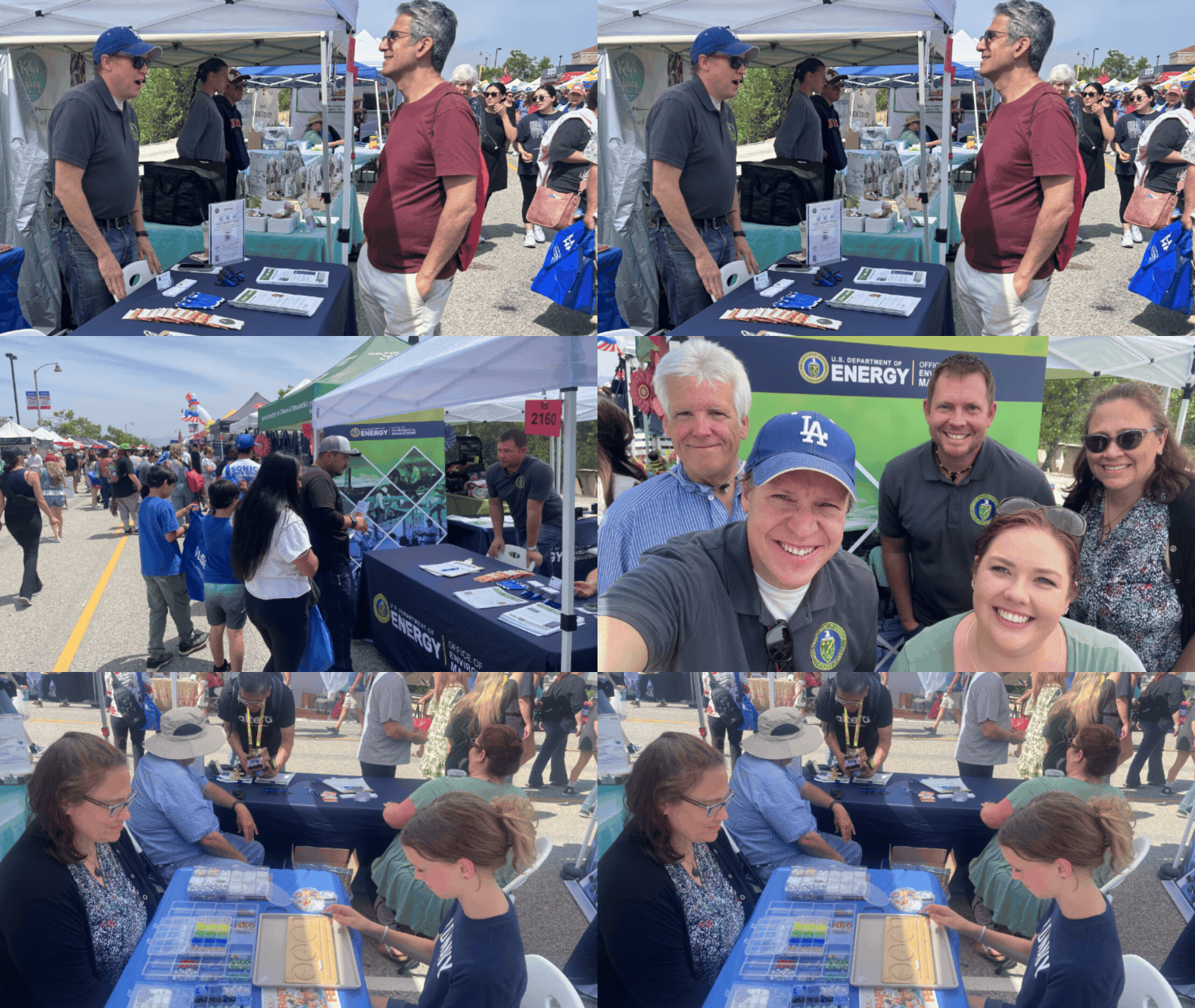 The U.S. Department of Energy's Energy Technology Engineering Center team recently hosted a booth at the Simi Valley Street Fair, where visitors could learn about the cleanup at the Santa Susana Field Laboratory, build their own spectroscope or bracelet, pick up current issues of the CleanUpdate newsletter or snag some California poppy seeds or a pen.
SIMI VALLEY, Calif. — The warm weather and bright sun that drew thousands to the Simi Valley Street Fair earlier this month was the perfect setting to create a spectroscope, an instrument that separates white light into a rainbow of colors based on wavelengths.
The spectroscope was one of two activities — along with bracelets — that the U.S. Department of Energy (DOE) offered at its booth at the biannual fair sponsored by the Simi Valley Chamber of Commerce.
DOE was among hundreds of local artists and crafters, businesses, community leaders, civic organizations, police and fire departments, and school districts that participated in the event.
At DOE’s booth, visitors could learn about the cleanup at the Energy Technology Engineering Center (ETEC) at the Santa Susana Field Laboratory (SSFL), a 2,850-acre former nuclear energy research and rocket engine testing facility.
DOE’s Office of Environmental Management (EM) is charged with remediating Area IV at SSFL where DOE previously conducted nuclear energy and liquid metals research.
Many people were curious about DOE’s work to clean up its portion of SSFL and asked questions about the site’s history and what remediation is being done. Some also shared about their past work at SSFL or that they knew someone who previously worked at the site.
There was also a lot of interest in the ETEC team’s new Community Outreach, Neighbor Notifications, Engagement, Collaboration and Training (CONNECT) Series, which launched with a community update meeting in January.
On May 13, the ETEC team will host the second CONNECT community update, where they will discuss EM’s overall cleanup across the DOE complex and how that helps inform the cleanup at SSFL. The public can also ask staff questions.
In addition to DIY activities and learning about the work at SSFL, fair attendees who stopped by DOE’s booth also had the opportunity to get copies of the December 2025 and March 2026 issues of the CleanUpdate newsletter, snag some local California poppy seeds or a pen, and register to receive updates from the ETEC team.
-Contributor: Melissa Simon
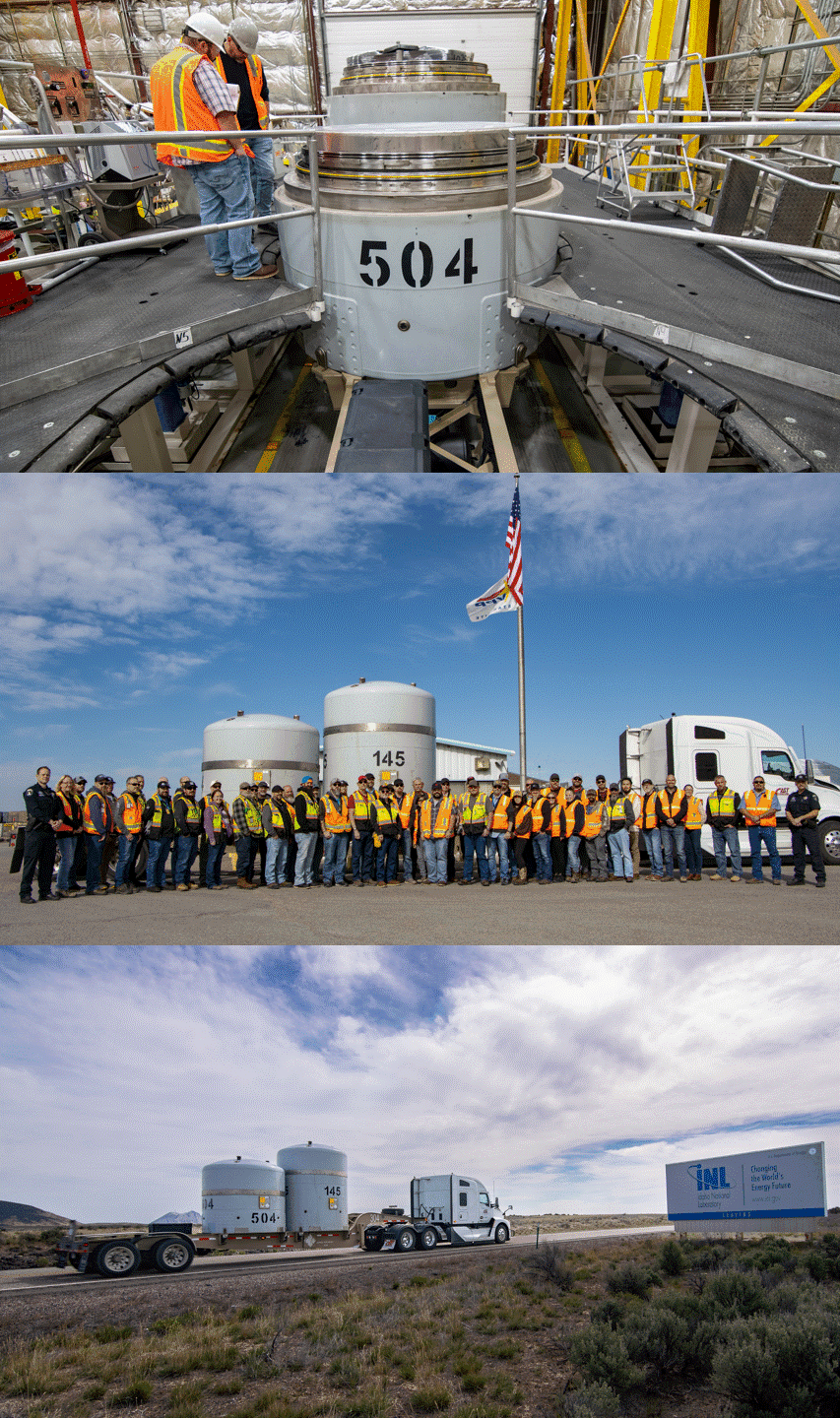
Idaho Cleanup Project sends first remote-handled waste shipment to Waste Isolation Pilot Plant in over a decade
IDAHO FALLS, Idaho — The Idaho Cleanup Project (ICP) has successfully resumed shipments of remote-handled transuranic waste to the Waste Isolation Pilot Plant (WIPP) in Carlsbad, New Mexico, for permanent disposal for the first time since 2014.
The first of the shipments departed this spring, marking an important milestone in the safe disposal of legacy waste and the continued fulfillment of commitments under the Idaho Settlement Agreement.
“The shipment represents a significant step forward in advancing the Department of Energy’s (DOE) Environmental Management mission, emphasizing the remediation of contaminated sites and the safe, permanent disposal of transuranic waste,” said Nick Balsmeier, acting ICP manager. “These efforts align with DOE’s vision of sustainability while safeguarding the environment for future generations.”
While cleanup crews at the Idaho National Laboratory (INL) Site routinely ship contact-handled transuranic waste to the underground repository, this marks the first time in over 10 years they will ship remote-handled transuranic waste there. Transuranic waste consists of manufactured radioactive elements heavier than uranium on the periodic table. The remote-handled waste has higher radioactivity levels than the contact-handled waste. Click here to learn more about this waste.
The latest achievement reflects months of careful readiness by ICP contractor Idaho Environmental Coalition (IEC). Crews safely prepared, loaded and transported the waste in compliance with regulatory and safety standards, ensuring protection of workers, the public and the environment. They developed a mock-up to demonstrate the process they will follow to safely package and ship the waste. The mock-up allowed them to gain proficiency in loading waste drums into protective shielded overpacks compliant with safe shipping and disposal requirements.
“This milestone is a testament to the hard work and dedication of everyone involved in the Idaho Cleanup Project,” said Dan Coyne, IEC president. “Resuming remote-handled transuranic waste shipments is about more than safely moving waste — it’s about fulfilling our promises to the state of Idaho, reducing risks to the environment and demonstrating progress that matters to the community and the nation. It’s a proud moment for our team and a step forward in building a cleaner, safer future.”
The resumption of remote-handled transuranic waste shipments reflects ICP’s steadfast commitment to environmental stewardship, measurable results and accountability to taxpayers. As cleanup continues, the focus remains on protecting communities and ecosystems while tackling the complex challenges of the nation’s nuclear legacy and unlocking opportunities for a sustainable future.
-Contributor: Ryan Christensen
|