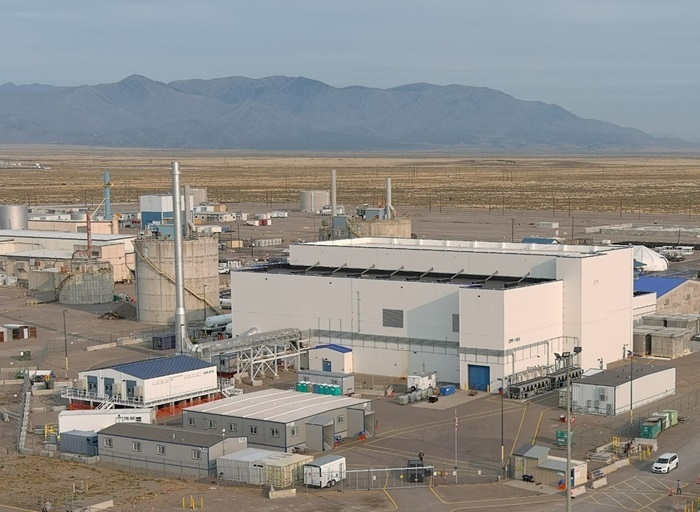
 The Integrated Waste Treatment Unit is a one-of-a-kind facility designed to convert a liquid radioactive waste stored at the Idaho National Laboratory Site into a safer, more stable granular solid. The facility has so far processed a third of this waste.
IDAHO FALLS, Idaho — The Idaho Cleanup Project (ICP) has successfully converted a third of the radioactive liquid waste stored at the Idaho National Laboratory (INL) Site into a safer solid form, advancing its mission to safely meet cleanup commitments with the state of Idaho while helping protect the underlying Snake River Plain Aquifer.
To date, the Integrated Waste Treatment Unit (IWTU) has processed approximately 312,000 of the 900,000 gallons of the sodium-bearing waste stored in underground tanks on the INL Site.
“I am proud of the progress the IWTU team has made. The dedication and commitment of the IWTU team is second to none,” Acting ICP Manager Nick Balsmeier said. “Treating the remaining sodium-bearing waste is a top priority for the Idaho Cleanup Project and demonstrates our commitment to the state of Idaho in meeting our regulatory milestones, protecting Idaho’s Snake River Plain Aquifer and the future of the Idaho National Laboratory.”
Jimmy Spells, IWTU Nuclear Operations senior director with ICP contractor Idaho Environmental Coalition (IEC), credited the facility's success to the commitment and sacrifice of its employees.
“Our employees have dedicated their careers and given up precious holiday, weekend and vacation time to support the IWTU,” Spells said. “I am incredibly proud of them and honored to celebrate this achievement with them.”
Following multiple successful waste processing runs, IWTU crews emptied one of three tanks onsite containing the waste, reducing risk to workers, the public and the environment.
Bill Kirby, IEC chief operating officer, applauded IWTU employees for their contributions to the waste treatment campaigns.
“I’m continually impressed by the team at IWTU,” Kirby said. “The IWTU’s performance has improved with each processing run, and I look forward to recognizing more achievements to come.”
Sodium-bearing waste is a byproduct of decontamination activities associated with more than 40 years of used nuclear fuel recycling runs at the INL Site’s Idaho Nuclear Technology and Engineering Center that ended in 1992.
IWTU will continue processing the waste until all 900,000 gallons are treated. This process is expected to take five to seven years, including routine maintenance. Once the waste is fully processed, crews will clean, grout and permanently close the underground storage tanks.
-Contributor: Carter Harrison
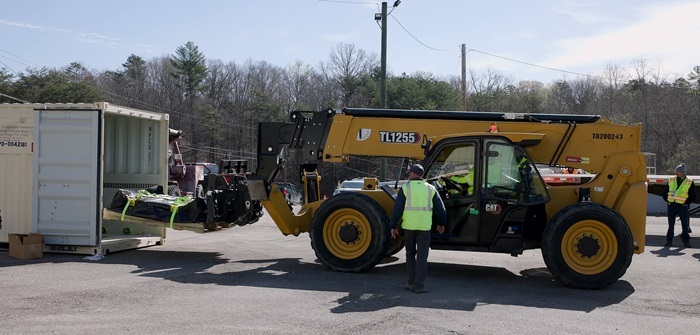 Oak Ridge Office of Environmental Management crews lift and load two packaged sodium shields into a container for shipment and treatment offsite.
Demonstration represents crucial step in addressing challenging legacy waste streams from America's nuclear research history
OAK RIDGE, Tenn. — A demonstration of an innovative technology has proved successful in safely treating and permanently disposing of a complex legacy waste stored at Oak Ridge National Laboratory (ORNL) for the past 50 years, reducing significant risk.
“This effort demonstrates how innovation and strong partnerships can solve some of the most complex cleanup challenges,” said Steve Clemons, ORNL portfolio federal project director for the Oak Ridge Office of Environmental Management (OREM). “It also establishes a potential blueprint for handling similar complex waste streams across the U.S. Department of Energy (DOE) complex.”
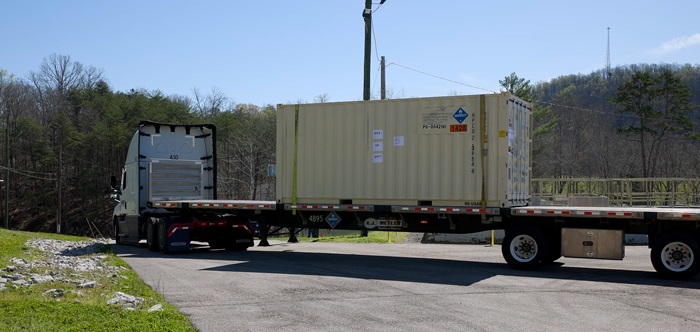 The final shipment of sodium shields recently departed Oak Ridge en route to Veolia Nuclear Solutions’ treatment facility at Waste Control Specialists in Andrews, Texas.
OREM and cleanup contractor United Cleanup Oak Ridge (UCOR) employed Veolia Nuclear Solutions’ patented GeoMelt technology at the Waste Control Specialists facility in Andrews, Texas. The vitrification process successfully converted the waste, highly reactive metals called sodium shields, into stable, durable glass for safe, permanent disposal.
Sodium metal presents unique hazards because it is unstable and can be highly reactive when mixed with water. The GeoMelt process is unique because it does not use any liquid to support treatment and avoids generating other challenging waste streams. After treatment, the vitrified waste form no longer exhibits reactive or ignitable characteristics.
OREM crews had shipped the sodium shields in seven large aluminum and steel containers weighing a combined 12,350 pounds for use in the demonstration. They sent a limited number to validate that the technology could safely and compliantly address this waste stream.
The sodium shields were used in the 1960s and 1970s to pioneer radiation shielding research. The largest of them is about 5 feet high and weighs over 30,000 pounds.
Collaboration and coordinated planning were critical to the project’s success. The DOE Office of Environmental Management's Technology Operations Office funded the effort, while UCOR’s waste management and operations team developed a comprehensive packaging strategy to safely transport the shields to Veolia’s treatment facility.
“Successfully completing this demonstration shows what can be achieved when experienced waste management teams are devoted to solving complex waste challenges safely and efficiently,” said John Witzeman, UCOR’s waste disposition specialist. “Our team worked across several disciplines to develop and execute a specialized waste treatment approach.”
-Contributor: Ryan Getsi
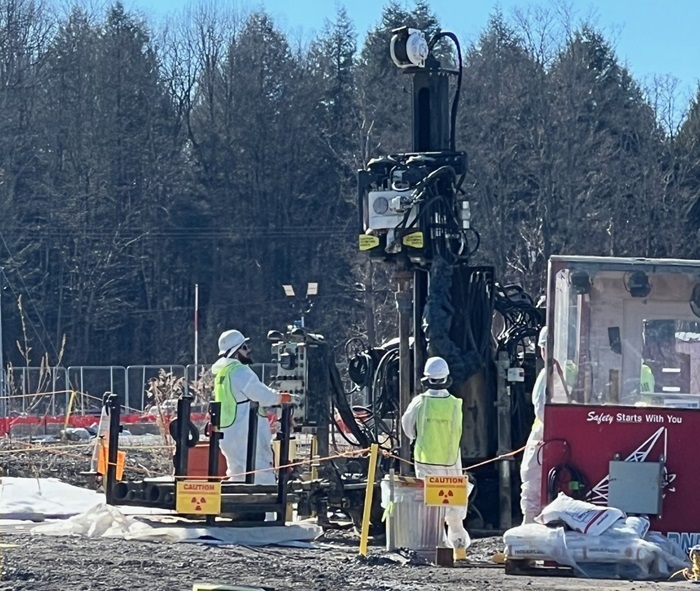 West Valley Demonstration Project workers remove soil samples to assess contamination levels in the footprint for the former Main Plant Process Building site prior to completing cleanup there.
WEST VALLEY, N.Y. — West Valley Demonstration Project workers have finished the second of three phases to drill holes for subsurface soil sampling in and around the former Main Plant Process Building site to assess contamination levels and inform safeguards before completing further cleanup there.
So far, the U.S. Department of Energy’s Office of Environmental Management (EM) and contractor West Valley Cleanup Alliance (WVCA) have drilled 46 holes to gather samples that provide critical data on contamination prior to remediating the soil and demolishing remaining components of the Main Plant at ground level and below ground.
The first two radiological characterization phases focused on soil around the Main Plant site; a third phase is now underway to drill 16 holes within the former facility’s footprint.
“West Valley continues to maintain the highest standards of safety and compliance when planning work,” said Stephen Bousquet, EM assistant director for West Valley’s Office of Project Management. “It is this strong preparation that ensures the work is carried out with exceptional discipline and care.”
The team screened each sample from the borings for radiation, and will safely ship them to an offsite laboratory for more specific isotopic analysis. Like a scientific fingerprint, isotopic analysis sheds light on a sample’s origin, composition and history.
The West Valley team will use such information to plan and design soil remediation within the former footprint of the Main Plant, which crews successfully removed last year. That five-story facility was the only commercial used nuclear fuel reprocessing facility to operate in the United States.
Crews last year also used a geotechnical boring machine to collect and evaluate soil, rock and groundwater samples for future planning and design work, including a retention wall to be constructed around the former Main Plant site. It will help stabilize the excavation area and prevent water infiltration, allowing crews to safely excavate the soil.
The team implemented lessons learned throughout the soil sampling project.
“Sharing information throughout the work scope helped to enhance safety and increased efficiency and productivity,” said Daniel Way, WVCA Decontamination and Decommissioning manager.
-Contributor: Joseph Pillittere
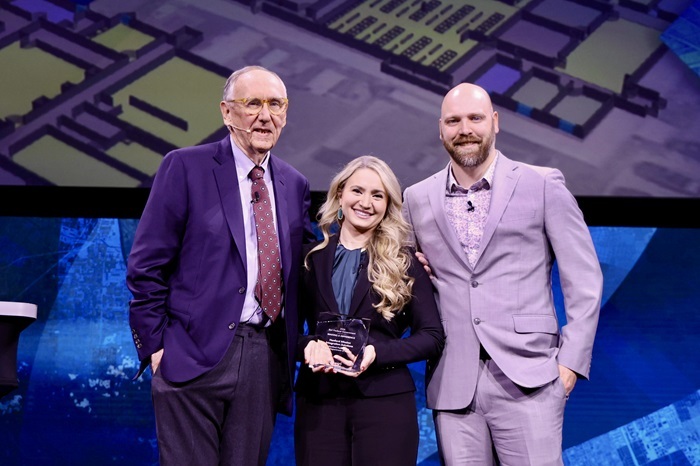
RICHLAND, Wash. — The Hanford Site’s essential services prime contractor was recently recognized with the Making a Difference award for its exceptional use of geographic information systems (GIS) in contributing to a better world.
Hanford Field Office contractor Hanford Mission Integration Solutions (HMIS) received the award at the annual FedGIS conference — a leading event for geospatial professionals in government. The award recognizes teams that use GIS technology to improve operations and benefit their communities.
Esri, a global leader in geographic information system software, acknowledged HMIS’ outstanding application of GIS technology to innovate Hanford’s operations to advance the site’s cleanup mission.
HMIS is driving innovation and efficiency with GIS by streamlining infrastructure operations, improving emergency response capabilities and supporting environmental management practices.
Esri President and Founder Jack Dangermond, left, presented the award to HMIS Geospatial Information Systems Manager Elizabeth Schutte, center, and HMIS Chief Artificial Intelligence Officer Jason Walli, right, at the 2026 FedGIS conference in Washington, D.C.
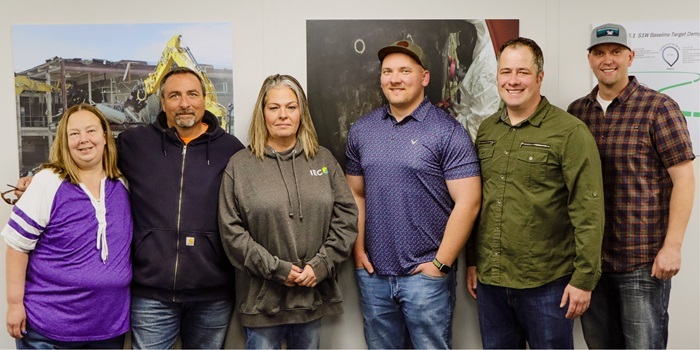 Idaho Environmental Coalition employees, from left, April Conley, Eric Garcia, Krista Williams, Caden Andersen, Andy Groesbeck, and Connor Littlewood. Williams had exhibited signs of a medical emergency, and the other team members pictured helped her before medical professionals arrived on the scene.
IDAHO FALLS, Idaho — Several team members tapped into training they received at the Idaho National Laboratory Site to help a co-worker in distress.
The five team members, all Industrial Health and Safety employees with Idaho Cleanup Project (ICP) contractor Idaho Environmental Coalition, were on a bus returning to Idaho Falls from their worksite at the Naval Reactors Facility when co-worker Krista Williams began exhibiting signs of a medical emergency. They intervened immediately, drawing from training to perform CPR and life-preserving efforts until medical professionals arrived.
“We often discuss the importance of safety culture within the DOE, and these individuals exemplify what it means to prioritize safety above all else,” ICP Acting Manager Nick Balsmeier said. “It is moments like these that remind us why we emphasize safety so much and why it is a core value in everything we do.”
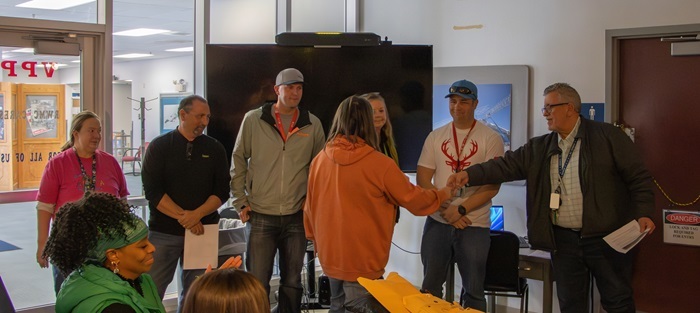 Idaho Environmental Coalition President and Program Manager Dan Coyne, far right, honors employees who helped a co-worker in distress.
Andy Groesbeck, who was sitting next to Williams, acted first, calling on the bus driver to pull over and instructing others to call 911. April Conley, Caden Andersen, Connor Littlewood and Eric Garcia helped assess Williams’ vital signs and moved her to the bus aisle.
“Past experience and training just kicked in,” said Garcia, a former emergency medical technician and firefighter. “We communicated well and drew on our knowledge to ensure our co-worker was cared for until help arrived.”
Some of the team members are part of ICP’s Medical Response Team (MRT), which trained them to use emergency equipment, including an automated external defibrillator, and follow a chain of command to ensure each person has a clear role in providing quality care.
Andersen reflected on how well the ICP training program prepared him to confidently respond to a real-world emergency.
“Our training is really robust,” Andersen said. “I learned things through our training here that were applicable to this event that I had not learned through past work experience in the medical field.”
Conley encouraged all employees to complete MRT training.
“At home or work, you never know when that training could make the difference for someone,” Conley said.
Williams said the outcome felt like nothing short of a miracle, made possible by training and a workplace culture where people care for each other.
-Contributors: Ryan Christensen, Carter Harrison
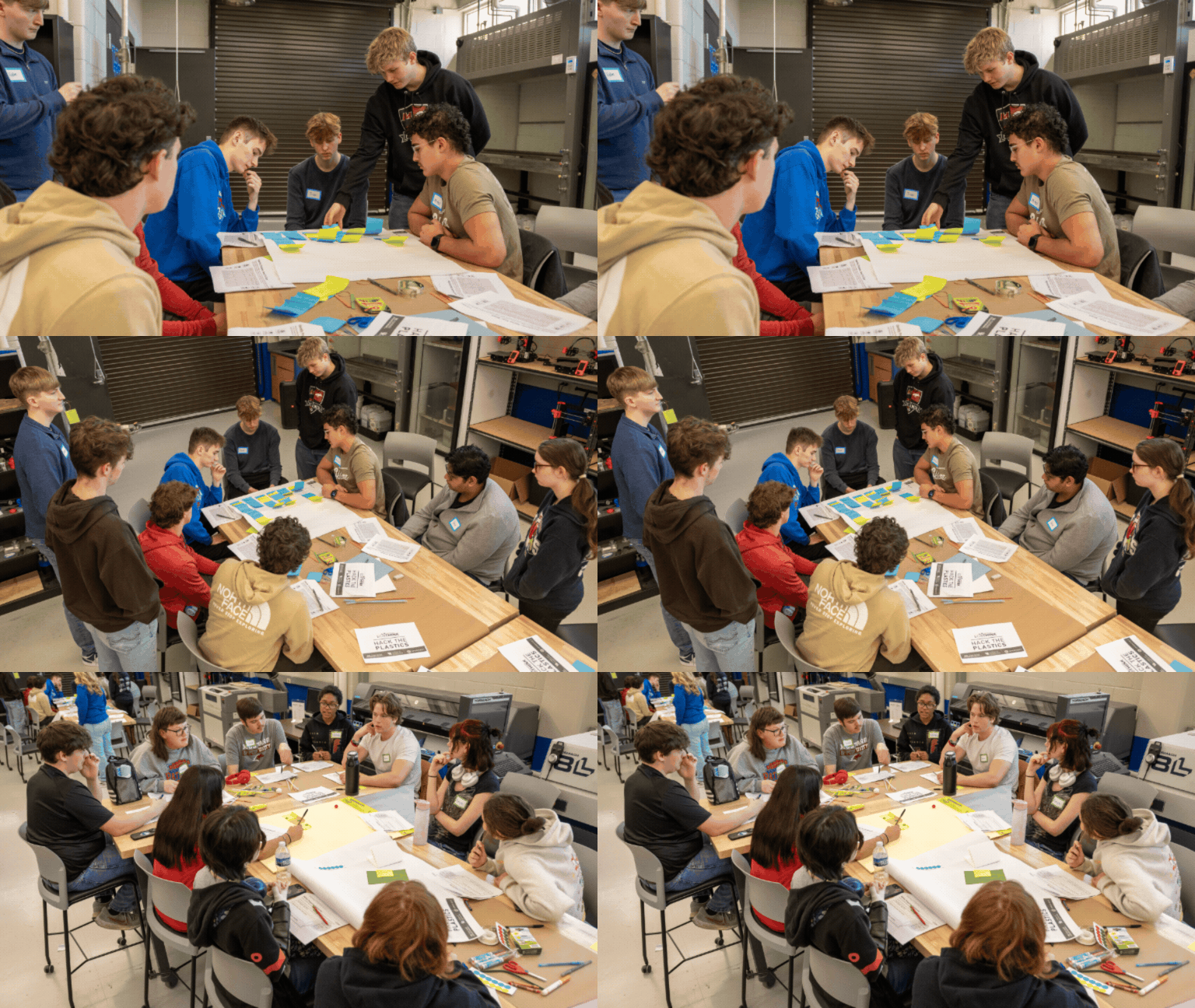
PADUCAH, Ky. — Students from six regional high schools recently participated in the Paducah Site’s annual EcoThink program. Sponsored by deactivation and remediation contractor Four Rivers Nuclear Partnership, EcoThink engages students interested in STEM in brainstorming sessions to imagine creative solutions to environmental issues in their community and worldwide. This year, the students focused on the management and mitigation of plastic waste with Jeff Seay, a chemical engineering professor at the University of Kentucky College of Engineering – Paducah Campus. Seay shared the challenges posed by plastic waste, which led him to develop a small-scale, low-cost reactor to convert plastic waste into fuel oil. Students pitched their ideas to Seay and learned about future Paducah Site career opportunities.
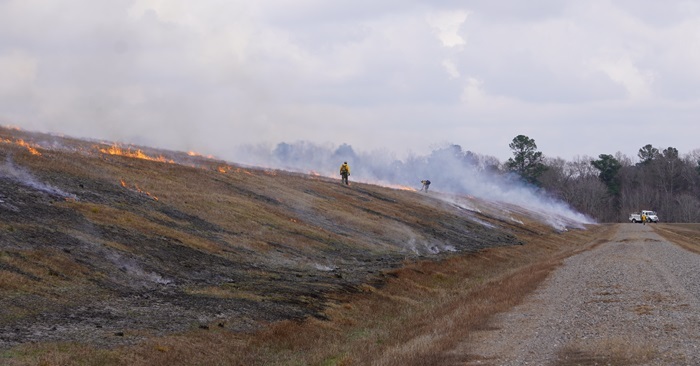 U.S. Forest Service firefighters conduct prescribed burns across the Savannah River Site.
AIKEN, S.C. — A U.S. Department of Energy Office of Environmental Management contractor has teamed up with the U.S. Forest Service to conduct prescribed burns across 33 legacy waste locations at the Savannah River Site (SRS).
The collaboration marks a return to meticulously planned controlled burns by the Forest Service to maintain the integrity of the legacy waste sites. Workers built protective structures within the ground containing waste that accumulated since the construction of SRS in the 1950s. They capped these structures with barrier material and soil, preventing rainwater infiltration from moving contaminants to the groundwater.
Savannah River Nuclear Solutions (SRNS) conducts routine monitoring and inspection of these sites to protect employees and the environment, and to ensure regulatory compliance.
“We are responsible for ensuring the integrity of Savannah River Site’s waste units by conducting routine inspections to verify that weather, invasive plants, and human and animal activity have not compromised the protective caps, and that vegetation remains healthy,” said SRNS Area Completion Projects Manager Kelsey Holcomb. “Working with the Forest Service to apply prescribed fire to these caps is critical to removing invasive plants and maintaining the caps’ vegetation structure.”
As of earlier this year, the Forest Service completed prescribed burns at 11 of the 33 legacy waste sites, covering 216 of 351 acres. The firefighters will treat the remaining acres as part of a prescribed fire season for 20,000 acres in the area that began this month.
“Leveraging the expertise of the Forest Service for prescribed burns has allowed Area Completion Projects to redirect resources to other critical objectives,” Holcomb added.
-Contributor: Fallan Flatow
|