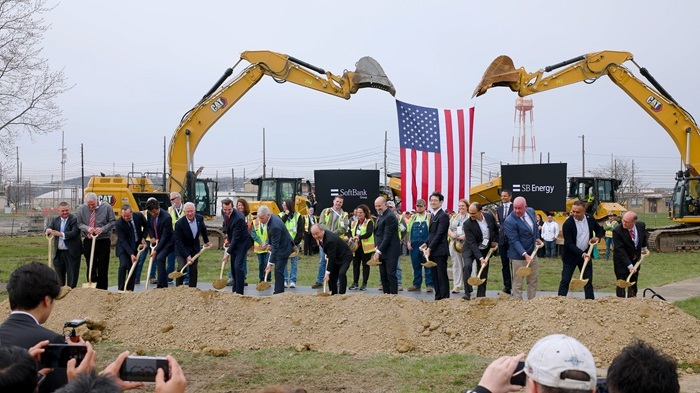
 U.S. Energy Secretary Chris Wright, seventh from left, U.S. Commerce Secretary Howard W. Lutnick, ninth from left, and Assistant Secretary of Environmental Management Tim Walsh, fifth from left, join federal and state elected officials, representatives from SB Energy, SoftBank Group, AEP Ohio, the Japan External Trade Organization New York and others to break ground at the Portsmouth Site on March 20 for a new 10-gigawatt artificial intelligence data center.
PIKETON, Ohio — SB Energy, a SoftBank Group company, announced a unique public-private partnership last week to construct the world’s largest artificial intelligence (AI) data center at the U.S. Department of Energy’s (DOE) Portsmouth Site, and committed to build 10 gigawatts of new power generation that will connect to the local grid to prevent costs to American families.
“There’s a reason we’re here. It’s a community with strong, hardworking people,” U.S. Energy Secretary Chris Wright said during an event at the site of the future PORTS Technology Campus. "This massive investment is going to create a lot of jobs, and there's going to be other industries that will come in here to be near this energy production, to be near this intelligence generation."
The partnership comes on the heels of recent announcements regarding gas-powered generation and modernization of energy infrastructure, prioritizing affordable electricity while advancing the AI race. The project is expected to generate 10,000 construction jobs and more than 2,000 permanent positions for the region.
 U.S. Energy Secretary Chris Wright highlights the new PORTS Technology Campus to attendees of the SB Energy groundbreaking event, noting that the investment will attract other industries to the Portsmouth Site to be near the energy production and intelligence generation.
As the DOE’s Office of Environmental Management (EM) cleans up the site of the former uranium enrichment plant at the Portsmouth Site, the land is safely made available for reuse, aligning with the Trump administration’s executive orders, Removing Barriers to American Leadership in Artificial Intelligence, Unleashing American Energy, and Accelerating Federal Permitting of Data Center Infrastructure.
SB Energy is leasing federal land at the site for this project, which helps fast-track development. The company also committed to helping fund EM’s accelerated environmental cleanup at the Portsmouth Site and advance revitalization efforts.
For decades, the site played a pivotal role in the nation’s security and will now be home to America’s energy dominance.
“This is referred to as the A Plant,” Assistant Secretary of Environmental Management Tim Walsh said, referring to the former Portsmouth Gaseous Diffusion Plant. “It will soon be referred to as the AI Plant. This is a catalyst for reindustrialization. You should be extremely proud of the role you played in history and the role you will play in the future.”
Development of the AI data center is expected to begin this year with an initial phase on 189 acres on the Portsmouth Site.
-Contributor: Sarah Marko
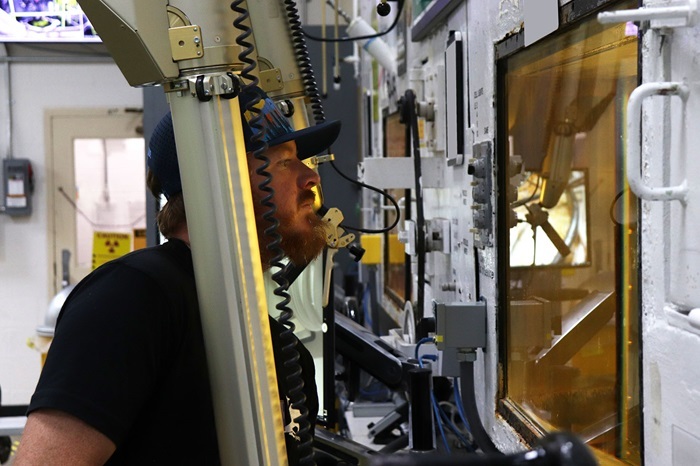 Isotek employees have surpassed Office of Environmental Management annual processing goals since 2019, disposing of nearly 650,000 pounds of solidified uranium-233 waste in total.
OAK RIDGE, Tenn. — The Oak Ridge Office of Environmental Management (OREM) recently achieved a priority for the U.S. Department of Energy’s nuclear cleanup program by reaching the halfway mark in its uranium-233 (U-233) processing campaign.
Since the campaign began in 2019, contractor Isotek Systems has exceeded OREM processing goals, disposing of nearly 650,000 pounds of solidified U-233 waste in total.
This project advances OREM’s highest-priority cleanup project at Oak Ridge National Laboratory (ORNL) by steadily eliminating the nation’s inventory of U-233 from storage in the world’s oldest operating nuclear facility. Processing is required to convert the material into a form safe for transportation and disposal.
“Processing and disposing of half of the U-233 is a tremendous milestone — one that brings us significantly closer to eliminating a major legacy risk at ORNL,” said Sarah Schaefer, Isotek president and project manager. “This achievement reflects the dedication and grit this Isotek team brings every day.”
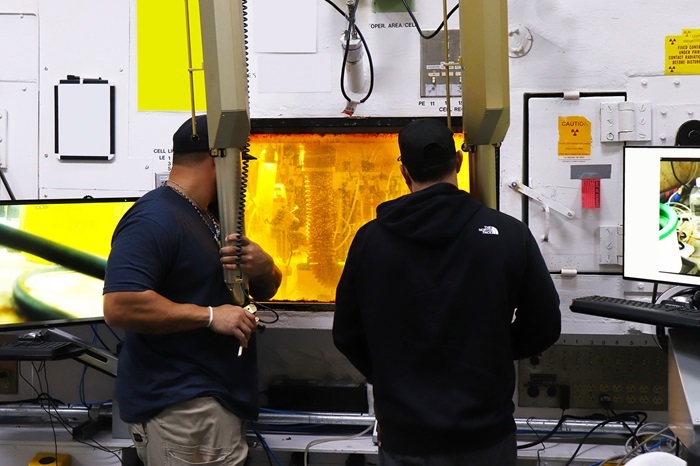 Operators use hot cells to process higher-dose uranium-233.
Eliminating the material will remove a major risk, avoid significant costs associated with keeping the inventory safe and secure and enable demolition of the storage facility to transform ORNL’s central campus, supporting the national laboratory’s research and innovation missions.
U-233 was created in the 1950s and 1960s for potential use in nuclear reactors but proved unviable as a fuel source. The material, sent from nuclear facilities around the country to ORNL for storage, takes different forms.
“There is no such thing as routine when it comes to the challenges presented by the variety and uniqueness of the material we are processing,” Isotek Operations Manager Dale Caquelin said.
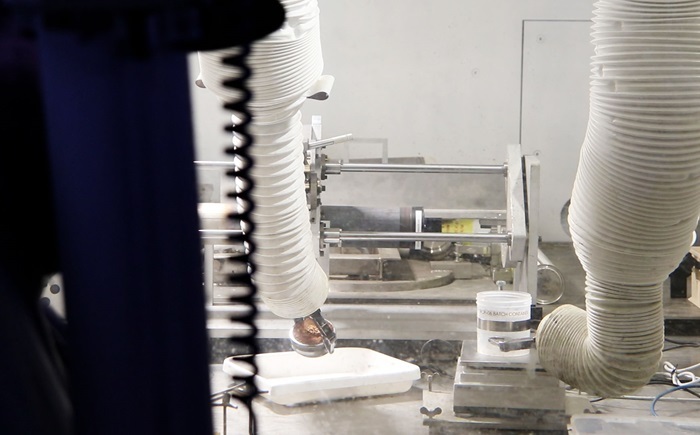 Employees use remote manipulators to open canisters of uranium-233 in a hot cell.
The contractor has disposed of 75% of the U-233 inventory stored at ORNL. Team members finished disposing of half the inventory in 2017. That material was solidified, and didn’t require processing. They started processing lower-dose U-233 material in gloveboxes in 2019 before transitioning to higher-dose U-233 material in hot cells in 2022.
Isotek is also extracting rare medical isotopes, thorium-229, from the U-233 material prior to processing and disposal. Through an innovative public-private partnership with nuclear innovation company TerraPower, these isotopes are helping advance next-generation cancer treatment research.
“The isotopes that Isotek is preserving is paving the way for safer, more effective cancer treatments,” Schaefer added.
TerraPower recently announced it has enough thorium-229 to produce cancer treatment material commercially, providing sustained access to the global pharmaceutical community. Isotek has already increased the global supply by almost 2,000%, and the first treatments using this material are expected to enter the marketplace in 2027.
-Contributor: John Gray
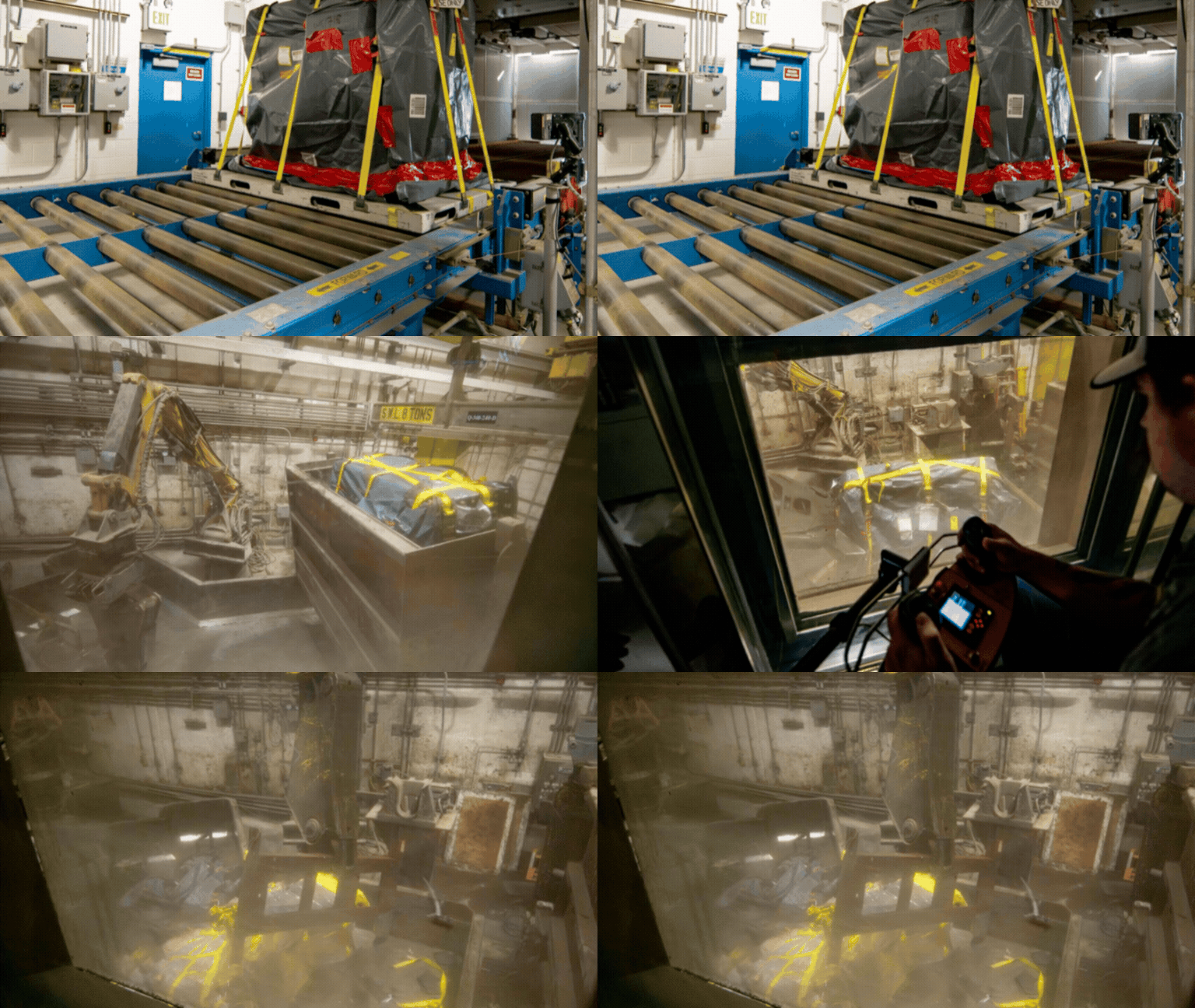 A Los Alamos National Laboratory glovebox, securely packaged in a soft-sided bag, is loaded into the treatment facility at the Advanced Mixed Waste Treatment Project at the Idaho National Laboratory site, where it undergoes processing for safe disposal.
IDAHO FALLS, Idaho — Idaho Cleanup Project (ICP) crews recently processed and packaged a glovebox from Los Alamos National Laboratory (LANL), an accomplishment that could lead them to treat and certify similar waste from LANL before disposing of it at the Waste Isolation Pilot Plant (WIPP) in New Mexico.
“This project demonstrates ICP’s critical role in addressing complex waste streams and advancing the Department of Energy’s (DOE) cleanup mission while adhering to our commitments to the state of Idaho,” ICP Manager Nicholas Balsmeier said. “The team’s efforts ensure waste is processed safely and efficiently, protecting the environment and enabling continued progress in waste management.”
Last fall, LANL safely shipped the glovebox to the Idaho National Laboratory site according to waste transportation regulations. ICP workers ensured the glovebox and its components met WIPP’s waste acceptance criteria. A glovebox is a sealed, stainless steel containment enclosure equipped with glove ports and windows, designed to protect personnel from radiological and chemical hazards when handling radioactive materials.
With the help of remote-controlled equipment, crews at ICP’s Advanced Mixed Waste Treatment Project (AMWTP) treatment facility disassembled the glovebox in shielded workspaces and packaged it into 100-gallon drums, which now await certification and shipment to WIPP for permanent disposal.
LANL and ICP have a long history of collaboration. From 2013 to 2014, LANL shipped multiple corrugated metal boxes to AMWTP for processing. Similarly, from 2010 to 2011, the Hanford Site sent waste to Idaho in a series of shipments. Processing this waste at AMWTP resulted in a 68% reduction in the number of shipments going to WIPP for disposal, allowing for more efficient use of WIPP’s disposal space.
Dan Coyne, president and program manager for ICP’s cleanup contractor, Idaho Environmental Coalition, believes this project supports DOE’s cleanup mission, as well as other national interests.
“Our team is well-positioned to process challenging waste inventories from across the DOE complex. We have the right people and the right equipment to get the job done,” Coyne said. “This project is more evidence that Idaho continues to play a key role in reducing DOE’s environmental liabilities, which further supports future nuclear missions within the DOE complex.”
-Contributors: Ryan Christensen, Leslie Dal Lago
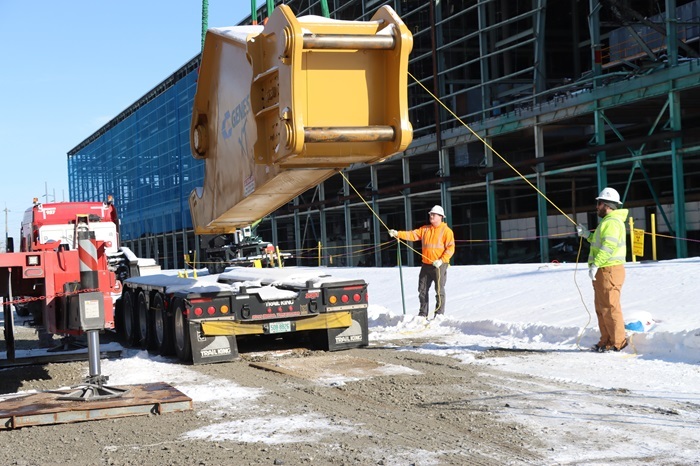 Massive shears are delivered to the Portsmouth Site. In the background is a view of the west side of the X-333 Process Building, currently undergoing demolition at the Portsmouth Site.
PIKETON, Ohio — Oversized heavy shears and custom-made excavators will be used to efficiently dismantle the X-333 Process Building at the U.S. Department of Energy’s (DOE) Portsmouth Site. The unique equipment will safely remove steel support beams and heavy-duty process gas equipment, helping ensure demolition success.
“Since the X-333 Process Building served as the entry point for uranium enrichment feed material, the equipment and the building design are larger than the others in the system,” said Federal Project Director Christy Brown. “Likewise, the demolition equipment to downsize the building framework and internal equipment has to be robust and right-sized for the job.”
Securing such equipment for efficient cleanup is an example of how the DOE Office of Environmental Management (EM) conducts remediation with urgency and responsibility on behalf on taxpayers. EM strives to complete the cleanup on schedule to help shape the American nuclear renaissance, enabling long‑term economic growth, community revitalization and high‑quality jobs for American workers.
 |
|
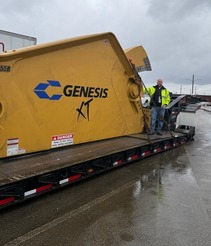
Southern Ohio Cleanup Company Director of Demolition and Balance of Plant Joe Saltsman stands next to oversized heavy shears that will be used to safely and efficiently demolish the X-333 Process Building at the Portsmouth Site. |
At more than 56,000 pounds, the shears weigh more than the equivalent of four African bush elephants. They are 9.5 feet wide and 25 feet long, about the size of an orca whale. The jaw opening is approximately 54 inches. In addition to the hefty shears, other attachments will be used to pulverize concrete and manage piles of debris as part of demolition.
“The undercarriage of the carriers that will be delivered for the shears has been widened and reinforced to support a longer reach,” said Joe Saltsman, Southern Ohio Cleanup Company (SOCCo) director of Demolition and Balance of Plant. “The heavier demolition shears will be essential for working at greater heights and will streamline demolition efforts.”
SOCCo is the deactivation and demolition contractor for the Portsmouth Site.
Reinforced excavators are scheduled to arrive this spring. Standard excavators would not be able to safely lift the shears, especially with the extended boom. The specialized equipment will handle the largest materials, and an assembly line of other equipment will reduce the size of remaining debris. Saltsman said the modified units are the only ones of their kind in the world.
Structural demolition of the X-333 Process Building began in September. Teardown of the building will take about five years to complete although there are opportunities to finish the job earlier. X-333, the largest building at the site, covers 33 acres of land and stands 82 feet high.
-Contributor: Michelle Teeters
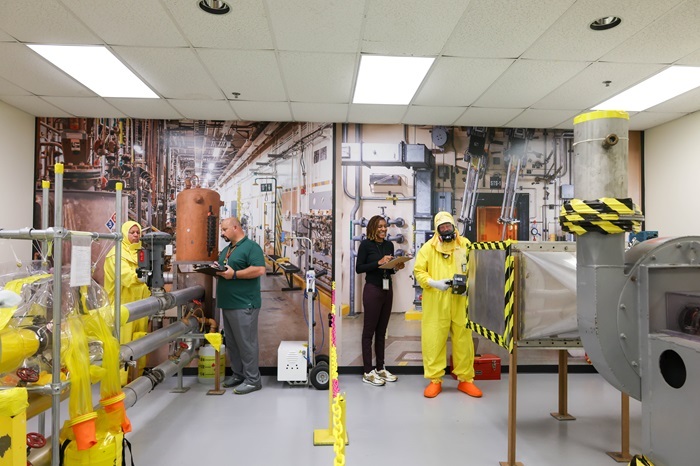 Radiological instructors demonstrate mock-up evaluations in the new training space. At left, they perform a pre-job survey using a drain resin mock-up. At right, they assess dose rates on a ventilation system mock-up.
AIKEN, S.C. — A U.S. Department of Energy Office of Environmental Management contractor has transformed radiation protection training at the Savannah River Site, redesigning a single room filled with miscellaneous equipment into a cutting-edge facility featuring dedicated spaces for radiological-specific training.
The Savannah River Nuclear Solutions (SRNS) training department plays a vital role in equipping radiation workers with essential skills. The upgrades deliver a more efficient, realistic approach to instruction, with improved training environments that mimic scenarios workers encounter on the job.
“When the decision was made to transform the facility, the team set an ambitious 30-day schedule to complete the project. Remarkably, the work was finished nearly 10 days ahead of schedule,” Site Training Project Manager Harold Saunders said. “Even more impressive is the fact that the extensive remodeling effort was carried out without interrupting a single class.”
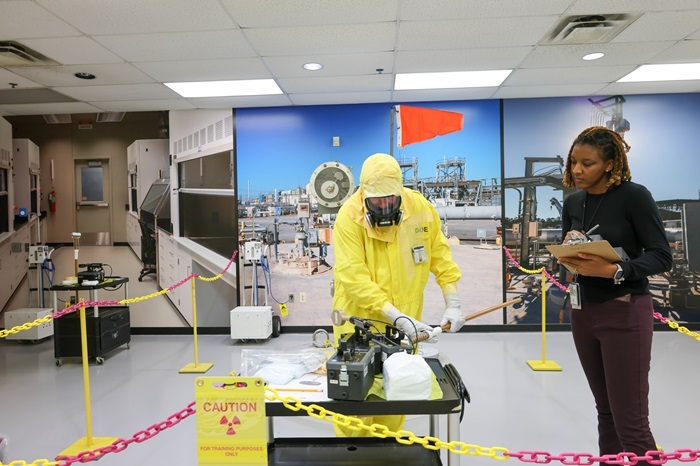 Radiological protection instructors perform readings on sample media using contamination instrumentation.
One room in the redesigned facility houses all necessary setup materials and equipment trainees might need before entering training simulations. The other two rooms offer immersive environments that replicate actual field conditions, allowing workers to better understand safety protocols, equipment usage and operational procedures, which builds expertise.
The new layout accommodates twice as many sessions simultaneously. Separate training spaces help instructors focus on specific areas of instruction.
The revamped facility’s training environments provide new trainees practical experiences to build confidence and understanding while offering seasoned employees opportunities to stay sharp and adapt to new protocols and technologies.
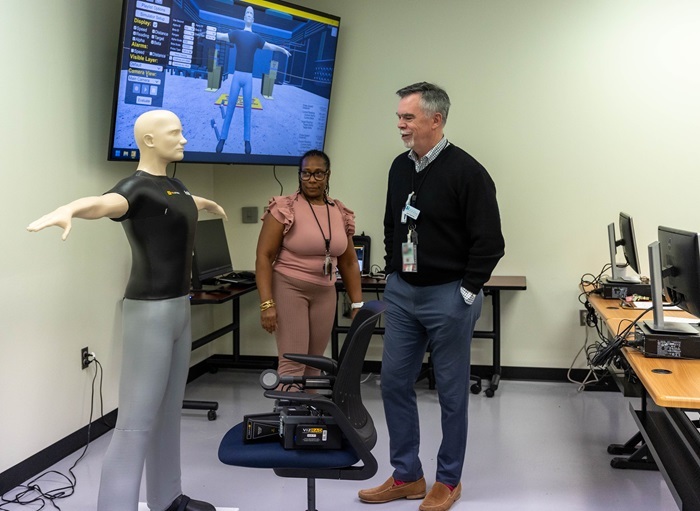 Savannah River Nuclear Solutions President and CEO Jeff Griffin tours the new facility to view the new and improved radiation protection training scenarios.
“The new mock-up facilities are amazing,” Radiological Protection Inspector Haven Riley said. “Of all the mock-ups I’ve participated in, this one felt the closest to an in-field experience.”
Sauders said the upgrades do more than prepare workers for the field; they ensure employees excel when they get there.
“The transformation has sparked fresh ideas to ensure the site remains at the forefront of radiation worker training,” he said.
-Contributor: Fallan Flatow
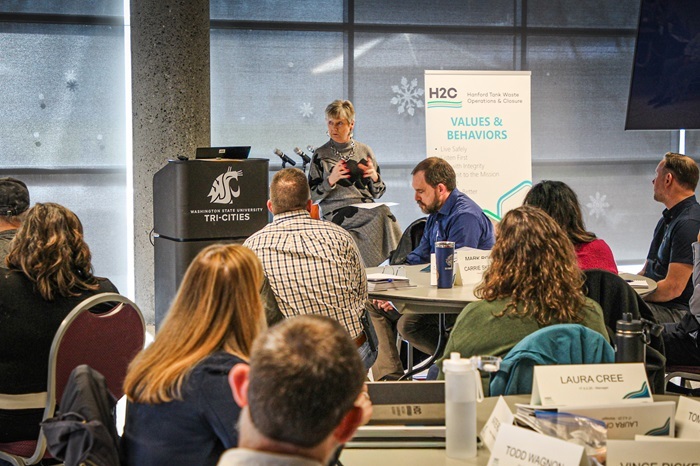 Carol Johnson, Hanford Tank Waste Operations & Closure president and program manager, addresses a group of the company’s senior managers during the first installment of its Nuclear Leadership Academy, a weeklong workshop focused on growing leaders that model nuclear professionalism.
RICHLAND, Wash. — A new leadership development program for senior managers is strengthening key skills vital to helping the U.S. Department of Energy’s Office of Environmental Management accelerate cleanup progress at the Hanford Site.
The first weeklong session of the Nuclear Leadership Academy wrapped up in February with 25 senior managers completing workshops focused on developing leaders who consistently model nuclear professionalism based on established values and expected behaviors.
Hanford Tank Waste Operations & Closure (H2C), the contractor responsible for treating and stabilizing tank waste, launched the academy with goals to strengthen safety culture, build high-quality performance competencies required at each management level and foster collaboration across organizational boundaries.
Strong leadership is essential to achieving Hanford’s cleanup mission and protecting the environment.
“The Hanford Site has achieved an incredible milestone in recent months with the start of vitrification, and significant work still lies ahead,” said Andy Wiborg, director of the Tank Farm Programs Division. “The commitment shown by our contractors to developing future leaders underscores the importance and complexity of the cleanup mission.”
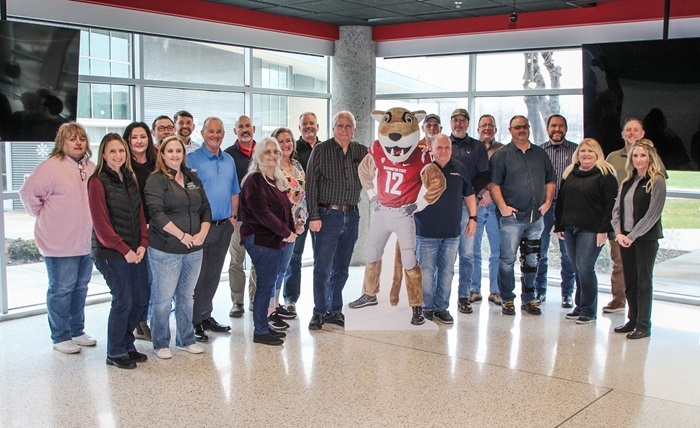 Twenty-five senior managers at Hanford Tank Waste Operations & Closure participated in the first group of the company’s Nuclear Leadership Academy, held near its offices in Richland, Washington, on the campus of Washington State University – Tri-Cities.
Carol Johnson, H2C president and program manager, spoke to the academy participants about the importance of earning trust and viewing leadership as a lifelong discipline.
“You learn something from every experience — even if it’s learning from mistakes,” Johnson said. “The toughest assignments stretch you and ultimately make you more resilient and capable. If you lean into them, they shape you into the leader others know they can trust.”
By strengthening leadership capability and capacity, H2C creates a foundation for innovation — such as digital tools and automation — to improve safety and reduce costs for taxpayers. Jordan Davis, H2C’s chief digital officer, encouraged academy participants to embrace technology to streamline operations.
“Leaders are measured not by the time their teams put in, but by the value they deliver and the capacity they create — through empowering people with the right training, tools, and technologies to work smarter, not longer,” Davis said.
A second session for an academy group was held in early March, with a third scheduled for April.
-Contributor: Jenna Roberts
|