AIKEN, S.C. — Researchers at Savannah River National Laboratory (SRNL) are supporting the U.S. Department of Energy’s (DOE) Genesis Mission by employing artificial intelligence (AI) and machine learning to tackle complex environmental challenges, which can significantly reduce costs and improve efficiency in the DOE Office of Environmental Management’s cleanup.
Announced in late 2025, the Genesis Mission seeks to revolutionize the scientific process by integrating AI. Earlier this month, the Trump administration unveiled 26 initial research challenges under the mission, including one focused on transforming nuclear cleanup and restoration. With decades of experience in environmental monitoring and a proven track record of integrating advanced technologies into large-scale cleanup efforts, SRNL is uniquely positioned to tackle this challenge.
SRNL is advancing AI Accelerated Strategies and Solutions in Environmental Technology (AI-ASSET), an initiative built upon the successful Advanced Long-Term Environmental Monitoring Systems (ALTEMIS) project. By deploying a smart sensor network, ALTEMIS transforms raw soil and water data into actionable insights that forecast exactly how pollutants migrate through the environment. In doing so, long term monitoring can be performed at a fraction of the cost.
"SRNL is leading a paradigm shift in long term environmental monitoring by bridging the lab’s deep-rooted expertise with the precision of AI and machine learning," said Eric Pierce, associate laboratory director at SRNL. "This innovation enables us to tackle some of the Department of Energy’s most complex cleanup challenges more efficiently while dramatically reducing costs."
 |
|
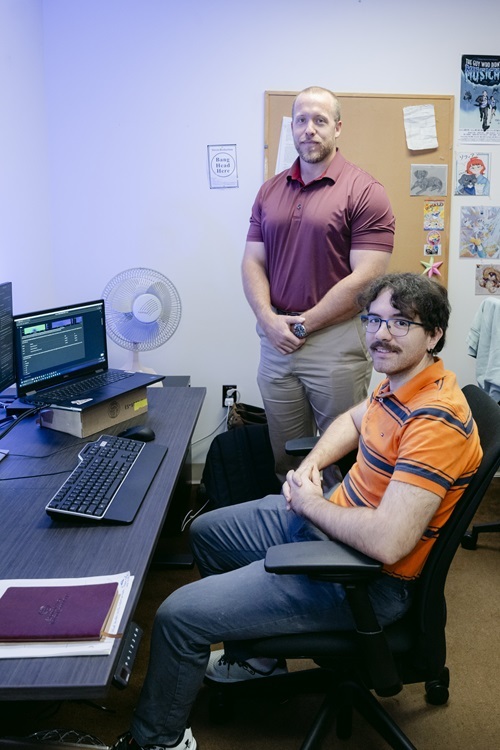
Savannah River National Laboratory’s Tom Danielson, standing, and Alejandro De La Noval are creating software that uses artificial intelligence and machine learning to monitor environmental contamination. |
ALTEMIS, which SRNL developed over the course of about 15 years, has been used at a contaminated groundwater plume at Savannah River Site. AI-ASSET uses AI and machine learning technology to make ALTEMIS useable at other contaminated sites throughout the DOE complex. These sites have their own specific environmental conditions and unique contaminant data, which creates applicability challenges.
“What we want to do is shorten that time span such that a site could get ALTEMIS up and running within a year, if not under a year,” said SRNL scientist Tom Danielson. “To achieve this, AI is being brought to bear. AI and machine learning tools such as generative AI and large language models are being used to tailor the approach on a site-specific basis.”
The AI and machine learning software being developed by SRNL scientist Alejandro De La Noval can hopefully transition the technology from groundwater projects to monitoring contamination at facilities. The AI-ASSET team hopes to deploy the system at different sites around DOE complex. International sites are also targets for AI-ASSET deployment in the near future, making it applicable across the globe.
Read more about SRNL’s AI and machine learning efforts in the winter edition of Matter Magazine.
-Contributors: Kent Cubbage, LJ Gay
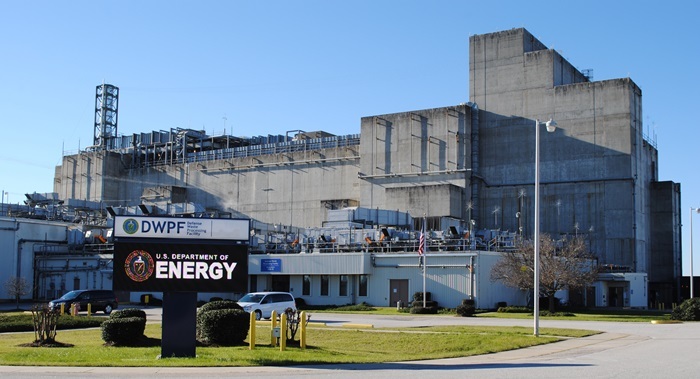 The Defense Waste Processing Facility at the Savannah River Site has been safely pouring high-level waste canisters for 30 years.
AIKEN, S.C. — For the last 30 years, the waste vitrification plant at Savannah River Site (SRS) has been transforming radioactive liquid material into a solid form safe for long term storage.
The Defense Waste Processing Facility (DWPF) at the U.S. Department of Energy's (DOE) Office of Environmental Management (EM) site has been in operation since March 12, 1996, when former Secretary of Energy Hazel O’Leary officially commenced radioactive operations with the historic push of a button.
The first canister of vitrified high-level radioactive waste was poured six weeks later. Since then, DWPF has produced more than 17 million pounds of glass, filling just over 4,500 canisters, which is more than half of the canisters expected to be filled.
Tony Robinson, DOE-Savannah River acting assistant manager for waste disposition, said DWPF has been a model for EM’s mission to remediate legacy waste.
“For many years, DWPF was the only operating waste vitrification plant in the nation,” Robinson said. “The success of this facility benefited similar waste stabilization and disposal technologies across the DOE complex.”
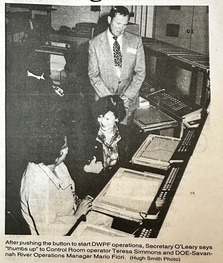 |
|
A news clipping from an April 1996 edition of “SRS News” commemorates the startup of the Defense Waste Processing Facility. |
Savannah River Mission Completion (SRMC), EM’s liquid waste contractor at SRS, operates DWPF. SRMC is responsible for treating and disposing of the millions of gallons of waste remaining in underground tanks at SRS, as well as closing the tanks.
DWPF uses the process of vitrification to turn the radioactive waste into glass. The highly radioactive waste is combined with frit, a sand-like material, and heated until molten in a 75-ton melter. The molten glass is poured into 10-foot-tall stainless steel canisters where it cools and hardens.
The canisters are then sealed by a remote welding process, and the waste is considered immobilized and safe for long term disposal. The canisters are stored safely in interim storage buildings onsite until a federal repository for high-level waste is established.
Mike Borders, SRMC executive vice president and chief operations officer, said this milestone at DWPF is a testament to the innovative thinking and industrious efforts of SRS teams past and present.
"DWPF’s longevity is not just about the impressive three decades of continuous, safe operations, but about the forward-thinking vision of the individuals who designed, built, and now maintain and operate this world-class facility,” Borders said. “From the scientists and engineers who developed the groundbreaking vitrification process to the highly skilled operators and engineers who ensure its success every day, every milestone the DWPF has achieved is a testament to their collective ingenuity and determination.”
-Contributor: Colleen Hart
 Waste Isolation Pilot Plant (WIPP) driver Tommy Cash is pictured alongside a WIPP waste shipment truck.
CARLSBAD, N.M. — Over the past 43 years, Tommy Cash has accumulated more than 3.5 million safe miles as a professional truck driver, a distance comparable to more than seven round trips to the moon. For more than half of that time, he’s served as a waste shipment driver for the Waste Isolation Pilot Plant (WIPP).
That impeccable record is among the reasons the Truckload Carriers Association recognized Cash with one of its 2026 Professional Drivers of the Year Awards at the association’s recent annual convention in Orlando, Florida.
Cash is an exceptional driver who has made a significant impact on the trucking industry, his colleagues, his community and the company that employs him, WIPP transportation contractor CAST Specialty Transportation, according to the association.
“Driving for the federal government, especially with WIPP, has been more than a job; it's been a profound responsibility and an honor. CAST’s safe transportation record is a testament to the meticulous care and respect this work demands,” Cash said.
Mark Bollinger, manager of the U.S. Department of Energy (DOE) Office of Environmental Management Carlsbad Field Office, which oversees WIPP, said CAST has shown unwavering reliability and dedication as the primary waste transporter for WIPP for over two and a half decades.
"With an unparalleled record of safety and commitment to excellence, they have driven more than 17 million loaded miles across the United States," Bollinger said. "This success has enabled DOE to continue to meet its critical environmental cleanup mission."
WIPP drivers transport transuranic waste shipments from DOE generator sites to the WIPP underground waste repository near Carlsbad, New Mexico. They must meet extensive driving and background requirements before being considered for employment and complete almost 200 hours of training prior to transporting their first shipment. The training includes use of package securement devices, radiation detection equipment and emergency management procedures.
Each shipment is inspected to Commercial Vehicle Safety Alliance Level VI standards, the industry’s highest level, prior to departing a transuranic waste generator site. Transuranic waste is comprised of debris, residues, soil, and other items contaminated with radioactive elements — largely plutonium — that have atomic numbers greater than uranium.
"The entire staff at CAST Specialty Transportation extends heartfelt appreciation for Mr. Cash’s dedication to safety on the roadways and his remarkable career," said Rich DeFeyter, CAST president. "Congratulations for being honored with such a prestigious award."
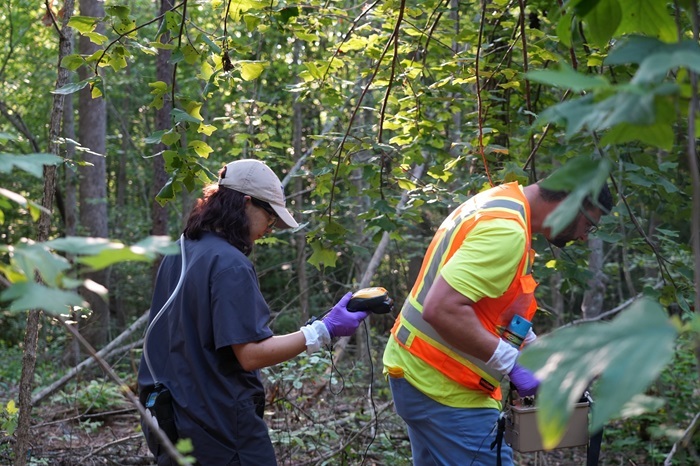 As part of the field characterization process at White Wing Scrap Yard at Oak Ridge, teams conduct radiological surveys to identify areas requiring excavation and cleanup.
OAK RIDGE, Tenn. — The Oak Ridge Office of Environmental Management (OREM) and contractor United Cleanup Oak Ridge (UCOR) have begun major field work to address an old scrapyard, a project that will remove risks and allow future industrial reuse on the land.
The site, called White Wing Scrap Yard, is adjacent to an announced multibillion-dollar uranium enrichment facility and near the East Tennessee Technology Park, where private industry has announced billions of dollars in capital investments that will generate an estimated 2,500 new jobs.
“Our environmental cleanup goal at White Wing is to reduce risk and clear land to support future reuse opportunities,” UCOR End State Delivery Director Clint Wolfley said. “We are seeing that more everyday with companies moving into the area.”
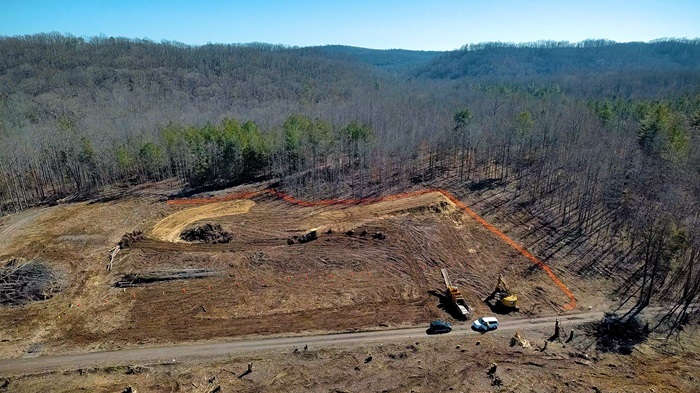 An aerial view of White Wing Scrap Yard. Crews have cleared trees from 20 of the 39 acres. Tree clearing is scheduled to be complete this summer.
UCOR crew members have completed characterizing the scrapyard site, and they are currently felling trees to support subsurface cleanup activities.
The scrapyard area contains various materials and scrap used from the 1940s through the 1960s. All three sites on the Oak Ridge Reservation used the area, including the former K-25 Site, Y-12 National Security Complex, and Oak Ridge National Laboratory.
“Characterization is an essential step to understand what we’re dealing with and what types of hazards we may encounter,” said OREM Project Manager Alex Schenk. “After collecting material for nearly thirty years, clearing this site poses many unique challenges, but we’re approaching it methodically to ensure safe and efficient cleanup of the site.”
 |
|
Crews have completed early site preparation and field characterization to support the next phases of cleanup at White Wing Scrap Yard. |
Field characterization provided crucial data needed before crews could mobilize and begin tree clearing. Work underway now paves the way for teams to evaluate and conduct cleanup actions at the site.
So far, UCOR has cleared 20 of the 39 acres, with tree clearing scheduled to be complete this summer.
“This is high-hazard work with lots of moving parts and pieces,” said Matt Putinas, UCOR area project manager for the scrapyard project. “But our team of workers, including laborers, operators, technical support, and project management, go above and beyond to safely execute our cleanup mission.”
Following tree felling, focus will shift to clearing debris and hazards so the land can be reused.
-Contributor: Ella Stewart
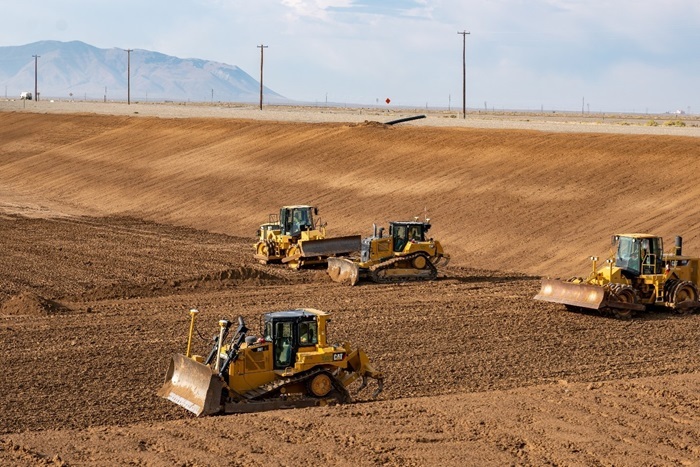 Earthmoving equipment prepares the foundation for an additional cell at the Idaho CERCLA Disposal Facility, part of the ongoing expansion to support future cleanup at the Idaho National Laboratory site.
IDAHO FALLS, Idaho — The Idaho Cleanup Project (ICP) is expanding a disposal facility by constructing a third cell to support the U.S. Department of Energy's Office of Environmental Management (EM) mission here for the next 30 years, ensuring efficient remediation and disposal of defueled reactor components and other waste generated at the Idaho National Laboratory (INL) site.
Team members have integrated several design enhancements into the Cell 3 construction, including improved leachate collection systems, more leak detection systems and additional operating space. Leachate is water from rain and snowmelt that filters through the Idaho CERCLA Disposal Facility (ICDF).
CERCLA stands for Comprehensive Environmental Response, Compensation, and Liability Act, a law enacted by Congress in 1980 that requires stringent waste acceptance criteria, ensuring protection of the public and the underlying Snake River Plain Aquifer. ICDF’s criteria, which are approved by multiple regulatory agencies, serve as a critical safeguard to ensure only appropriate waste streams are disposed of at the facility.
Construction of Cell 3 is central to the ICP’s mission to transform environmental liabilities into opportunities, underscoring EM’s commitment to supporting local communities, advancing innovation and maintaining the highest standards of safety and reliability.
“By expanding the ICDF, we’re not only reducing costs but also enabling more remedial actions to take place, ensuring that reactor components and other waste streams are managed safely and efficiently,” said Craig Reese, the ICDF expansion project manager with ICP contractor Idaho Environmental Coalition.
While operating Cell 3 will boost ICDF’s overall disposal capacity, its operations will focus on managing exceptionally heavy waste components, such as defueled reactor vessels, empty tanks and structural debris from INL site nuclear facilities. Some of these components exceed 100 tons, requiring a strategic approach to disposal to address the unique challenges posed by oversized and dense waste.
-Contributors: Ryan Christensen, Leslie Dal Lago
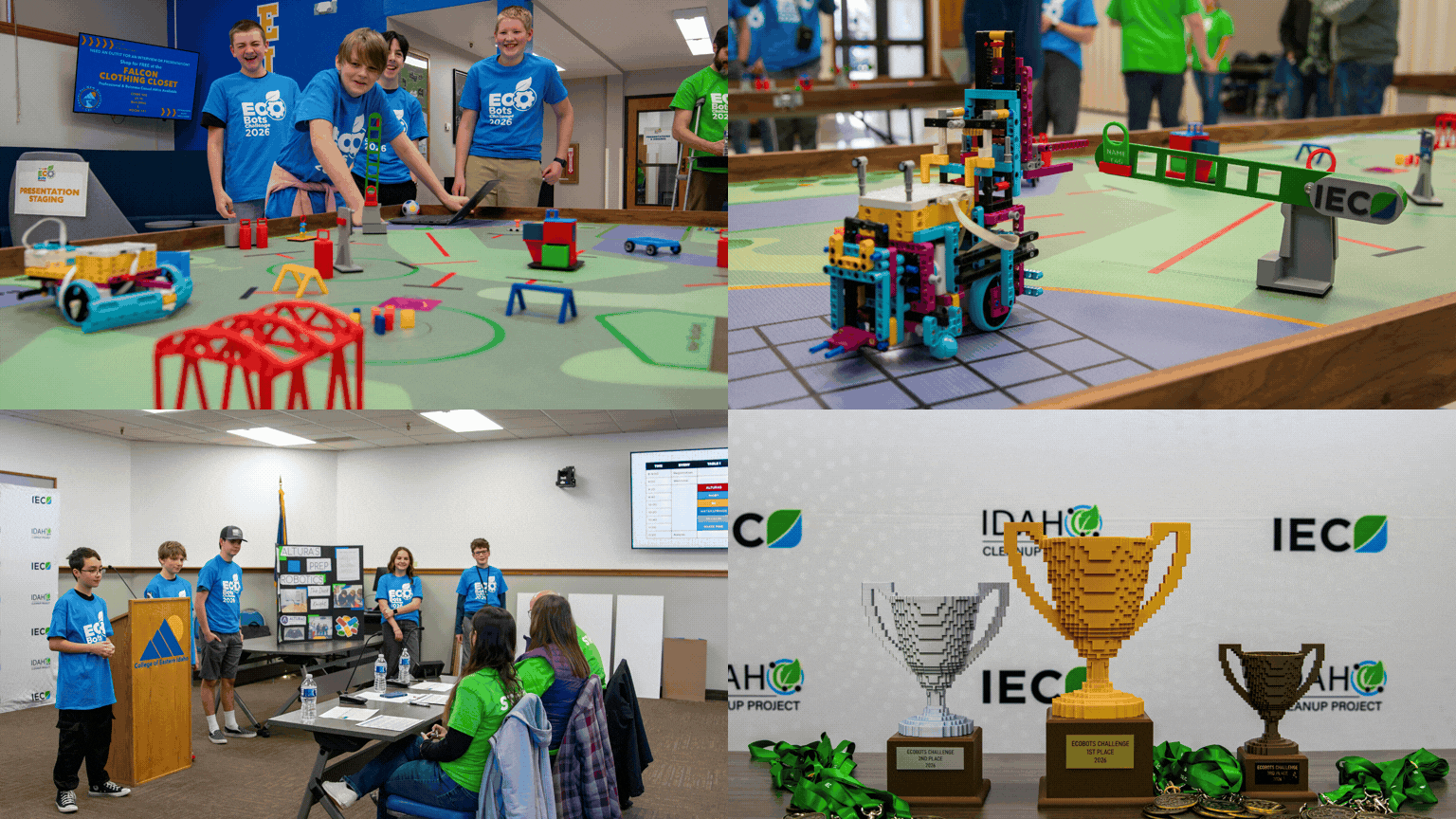 Eighth graders in southeastern Idaho competed in this year’s Ecobots Challenge, hosted by Idaho Cleanup Project contractor Idaho Environmental Coalition.
IDAHO FALLS, Idaho — A first annual robotics competition hosted by the Idaho Cleanup Project contractor challenged eighth grade students to complete tasks inspired by real world cleanup efforts, showcasing how STEM education helps prepare the future workforce for meaningful contributions to environmental remediation and innovation.
In the Ecobots Challenge held by Idaho Environmental Coalition (IEC), students from southeastern Idaho designed, built and programmed robots to navigate complex missions with challenges modeled after waste management and environmental restoration activities at the Idaho National Laboratory site. They also honed collaboration and presentation skills, gaining valuable experience to prepare them for careers in technical fields supporting environmental cleanup and stewardship.
 Rigby Middle School won first place in this year’s Ecobots Challenge. From left, coach Camille Barnes, Isaac Hart, Cameron Barnes, Brinley Thurgood and Karlee Simmons. Not pictured: coach Lingpei Zou.
Rigby Middle School’s team earned first place, winning $1,500 for its school’s science, technology, engineering and math programs. Praxium Mastery Academy and Black Canyon Middle School placed second and third, respectively, with both schools receiving funding to strengthen their STEM initiatives. Teams from Alturas Preparatory Academy, Watersprings School and White Pine STEM Academy also took part.
“Our students worked very hard to prepare for this competition, and their hard work paid off,” Rigby Middle School coach Lingpei Zou said. “We are so grateful to IEC for giving our students the opportunity to expand their STEM skills.”
Dan Coyne, IEC president and program manager, emphasized the importance of engaging students with hands-on opportunities connecting STEM learning to real world challenges.
“The Ecobots Challenge reflects the kind of creativity and problem-solving needed to address environmental cleanup projects,” Coyne said. “By supporting STEM education, we’re helping to inspire the next generation of innovators who can contribute to the long term success of our mission and our communities.”
-Contributors: Ryan Christensen, Leslie Dal Lago, Leamarie Mitchell
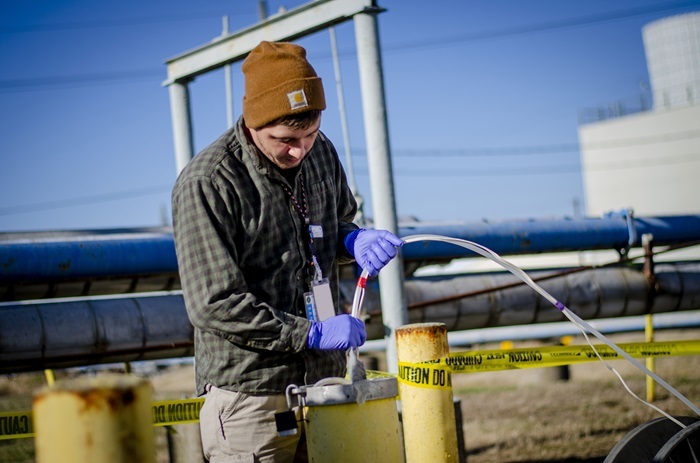 A Paducah Site team member takes groundwater samples from a monitoring well. The information gathered from the samples provides data for the site’s environmental monitoring and cleanup progress published in the Annual Site Environmental Report.
LEXINGTON, Ky. — The U.S. Department of Energy’s (DOE) Portsmouth and Paducah sites recently released annual reports of their environmental monitoring and compliance activities central to cleanup as they transition from nuclear remediation to nuclear renaissance.
The Annual Site Environmental Report (ASER) is a component of the DOE Office of Environmental Management’s (EM) commitment to provide up-to-date information to the public as cleanup progresses. It explains how EM evaluates air, water, soil and groundwater conditions, ensuring results align with environmental management regulations.
The most recent reports cover the full calendar year of 2024, with final data, including results from thousands of samples that required extensive laboratory analysis and validation, compiled and verified throughout 2025.
“The ASER is an essential method to validate our actions meet our cleanup goals,” Portsmouth Paducah Project Office Interim Acting Deputy Manager and Paducah Site Lead April Ladd said. “Most importantly, the reports demonstrate how we use data and science to guide cleanup decisions for the safety of the workers, community and the environment.”
The ASER also records the progress and performance of environmental monitoring programs that support safe cleanup and long term management of the sites, highlighting how monitoring data is used to evaluate trends, confirm the effectiveness of controls and identify opportunities for improvement.
“The ASER is a key tool for maintaining trust with our stakeholders,” Acting Portsmouth Site Lead Jud Lilly said. “It shows how we are responsibly managing cleanup progress, meeting regulatory requirements and using monitoring results to support safe and effective cleanup.”
Access the reports on the Portsmouth and Paducah ASER web pages.
Hard copies of the 2024 ASERs are also available. A printed copy of the Portsmouth ASER can be viewed at the Environmental Information Center at the Endeavor Center, 1862 Shyville Road, Piketon, Ohio, and public libraries in Pike, Ross, Jackson, and Scioto counties in Ohio.
In Paducah, a printed copy is available at the Paducah Citizens Advisory Board office in Room 221 of the Emerging Technology Center, 4810 Alben Barkley Drive, Paducah, Kentucky.
-Contributors: Shawn Jordan, Dylan Nichols
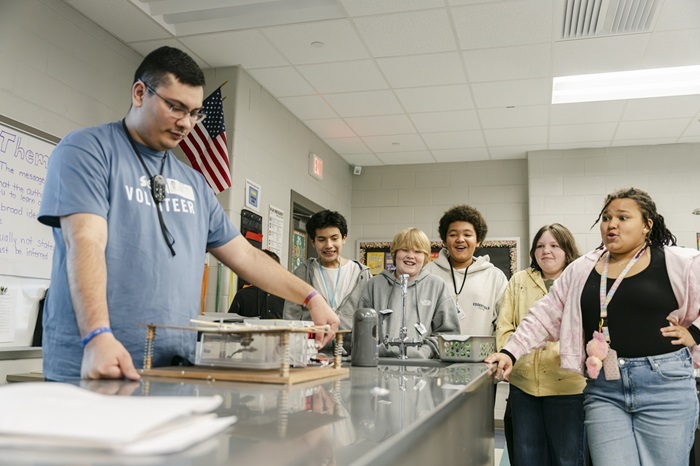 Highland Springs Middle School students watch as their carefully built earthquake-resistant structure succumbs to the forces of simulated seismic activity on the shake table during a Discover Engineering week event.
AIKEN, S.C. — Fifty engineers from the Savannah River Site (SRS) engaged over 2,600 students from area middle schools in hands-on activities during Discover Engineering week earlier this year, demonstrating how engineering shapes everyday life.
Education Outreach Programs from Savannah River Nuclear Solutions (SRNS), the site’s management and operations contractor, are vital to shaping the future nuclear workforce by connecting education, industry and community. The programs draw students from pre-K to high school to science, technology, engineering, and math (STEM) in ways exciting and accessible for all.
Engineers at SRS have devoted thousands of volunteer hours to provide impactful STEM experiences to over 600,000 students, educators and community members since 2008, according to Taylor Rice, SRNS education outreach lead.
“These young minds grow into our next cohort of interns, apprentices and future mission leaders who will deliver critical missions for the Department of Energy and the National Nuclear Security Administration,” said Rice. “Discover Engineering sparks interest in careers that protect the nation and shape global security one demonstration at a time.”
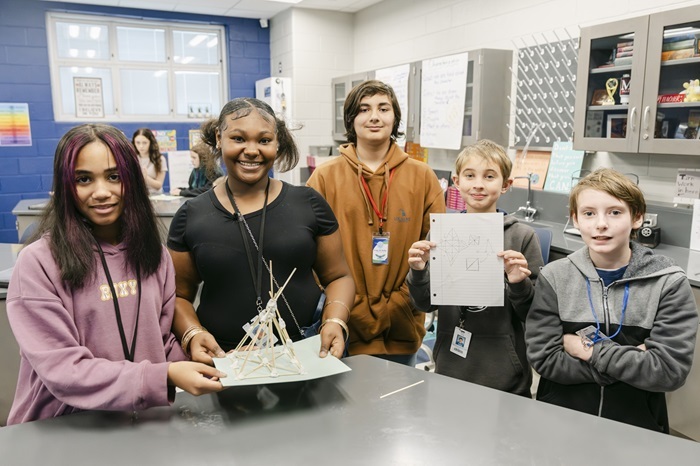 Highland Springs Middle School team members showcase their complete earthquake-resistant structure alongside a design plan, highlighting their teamwork and engineering creativity.
Hunter Harris, an SRNS process control engineer, volunteered at Highland Springs Middle School, leading a lab on plate tectonics and earthquake-resistant structures. The twist? He was teaching in the classroom of Becky Miller, his former fifth grade teacher.
“This was a full circle moment for me,” said Harris. “I volunteered to show her students how teamwork drives innovation. In engineering, collaboration is key and when diverse ideas come together, great things can happen. Every student has the potential to contribute to something bigger than themselves, and I hope I sparked that curiosity.”
The experience was just as meaningful for Miller.
“Seeing Hunter’s accomplishments since leaving my classroom is proof of what these kids can achieve,” she said. “When students see someone like them succeed, it broadens their horizons and makes STEM careers feel attainable. Investing in local schools strengthens our community and prepares students for the jobs we need to fill locally. It sends a powerful message that their education matters and they are valued as future members of society.”
The students learned how engineers design earthquake-resistant structures by building wooden stick models and testing their stability and survivability on a shake table.
“It was both exciting and slightly nerve-wracking to watch it shake, but our structure held up really well,” shared sixth grader Jaxon Prosser. “This experience really opened my eyes to how many different types of engineering careers exist. It’s made me even more interested in pursuing construction engineering, following in my dad’s footsteps, and learning how organizations like SRS create structures designed to stand the test of time.”
The SRS volunteers also discussed engineering degrees, salaries, recommended courses and strategies for early success.
-Contributor: Mackenzie McNabb
|