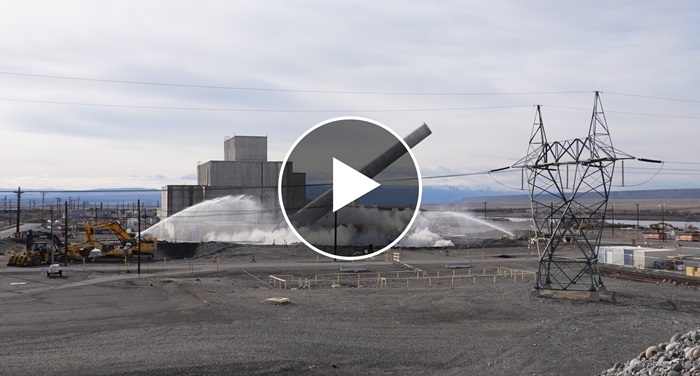
 EMTV: Watch a video of the safe and successful demolition of the 175-foot-tall K West Reactor exhaust stack at the Hanford Site.
RICHLAND, Wash. — The U.S. Department of Energy's (DOE) Hanford Site and contractor Central Plateau Cleanup Company (CPCCo) are advancing the Hanford mission with safe and successful demolition of the 175-foot-tall K West Reactor exhaust stack. This achievement represents another step towards cocooning the last of nine Hanford reactors to be placed in safe, long-term storage. The high-visibility demolition reflects prioritization of sequenced work that delivers tangible risk reduction and demonstrates responsible stewardship of taxpayer dollars.
“This project demonstrates how we are using careful planning and expert technology to expedite legacy cleanup actions,” said Hanford Site Manager Ray Geimer. “Safely removing this structure is an important step in clearing the area around the K reactor for the next phase of demolition where heavy equipment will access and demolish the old K West fuel storage basin that is connected to the K West reactor building. In doing so, we are clearing the path for the final stages of decommissioning the K West Reactor, which supports an overarching strategy to expedite decommissioning, reduce long-term surveillance and maintenance requirements, and eliminate threats to the environment.”
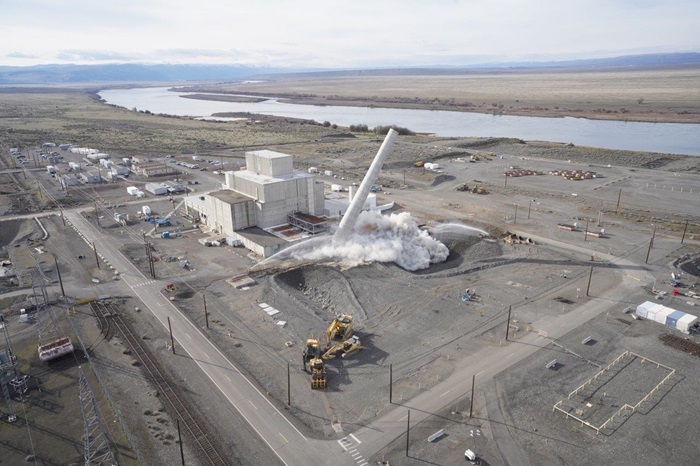 The U.S. Department of Energy's Office of Environmental Management and contractor Central Plateau Cleanup Company are advancing the Hanford Site mission with the safe and successful demolition of the 175-foot-tall K West Reactor exhaust stack, clearing the way for the final stages of decommissioning the reactor building.
“Our team is focused on execution and mission completion,” said CPCCo President Bob Wilkinson. “Successfully bringing down this structure allows us to accelerate the timeline for cocooning K West, demonstrating our commitment to being responsible stewards of the land and continuing our drive to reduce sitewide risk.”
With the stack removed, crews can finalize the enclosure of the reactor core, effectively “shrinking” the area requiring active oversight along the Columbia River. By removing these aging structures, Hanford continues to transition from its Manhattan Project and Cold War legacy toward a safe and prosperous future.
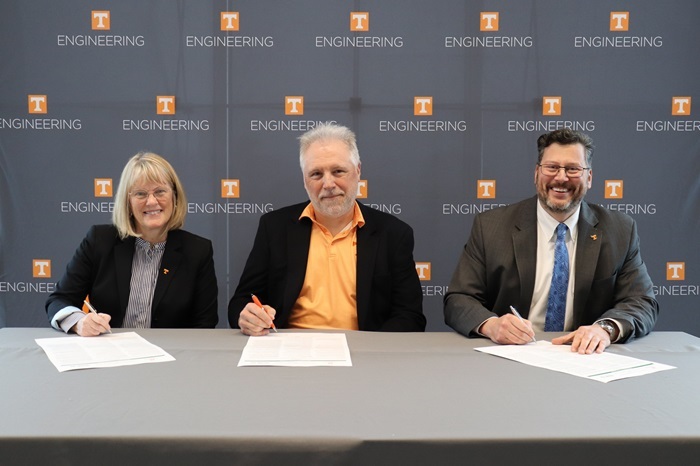 From left, University of Tennessee Vice Chancellor for Research Deborah Crawford; United Cleanup Oak Ridge President and CEO Ken Rueter; and Tickle College of Engineering Dean Matthew Mench are pictured at the signing ceremony for an expanded partnership to provide unique learning opportunities for nuclear safety specialists supporting the U.S. Department of Energy Office of Environmental Management mission.
Partnership underpins ‘Cleanup Today for a Nuclear Tomorrow’ initiative supporting $12 billion in next-generation nuclear investments at Oak Ridge
OAK RIDGE, Tenn. — Oak Ridge Office of Environmental Management (OREM) cleanup contractor United Cleanup Oak Ridge (UCOR) recently expanded a university partnership to provide unique learning opportunities for nuclear safety specialists supporting the U.S. Department of Energy (DOE) Office of Environmental Management (EM) mission.
UCOR has partnered with local colleges and universities for more than a decade to help educate and train the next generation of workers. This workforce development effort is helping OREM continue its record-setting pace of cleanup momentum.
The company’s long-standing partnership with the University of Tennessee (UT) has led to many successes over that span, including the launch of the nation’s first nuclear decommissioning and environmental management minor degree.
This month, UCOR and UT signed an updated memorandum of understanding (MOU) that increases the scope of the original agreement to address critical needs for the current cleanup workforce.
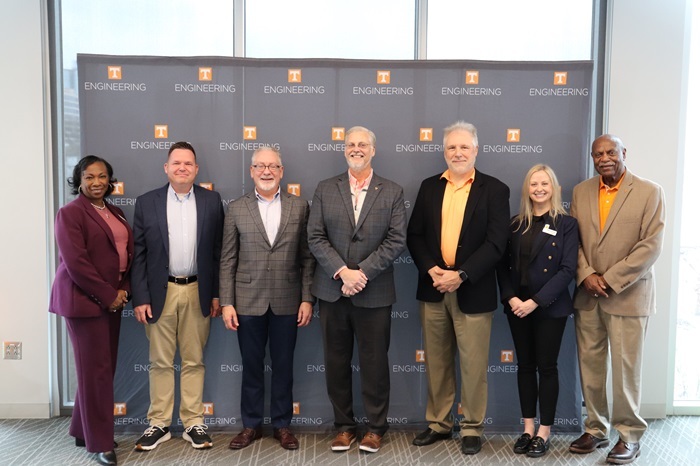 University of Tennessee Tennessee Valley Authority Nuclear Engineering Department Chair Brian Wirth, center, met with the United Cleanup Oak Ridge team after the signing ceremony to discuss the new minor degree in nuclear criticality safety, among other activities.
During a campus visit for the MOU signing, UCOR President and CEO Ken Rueter gave a graduate colloquium presentation and met with nuclear engineering students and faculty.
“I enjoyed sharing how UT has been an essential partner in our ‘Cleanup Today for a Nuclear Tomorrow’ initiative to enable federal land transfers for the $12 billion in next-generation nuclear investments and thousands of jobs coming to Oak Ridge, and now we’re kicking off our second decade of enabling rewarding nuclear careers in the Oak Ridge Corridor,” said Rueter.
The renewed agreement develops training and educational opportunities that benefit UT students and the UCOR workforce executing OREM projects. It also supports the development and expansion of a new nuclear safety minor degree focused on EM cleanup and operations.
“Most nuclear engineering curricula focus on the Nuclear Regulatory Commission system rather than the regulatory frameworks specific to DOE facilities,” explained Jay Mullis, UCOR chief nuclear officer. “To address this gap, UCOR and UT will collaborate to offer a DOE-focused nuclear and criticality safety program that will benefit the entire DOE complex.”
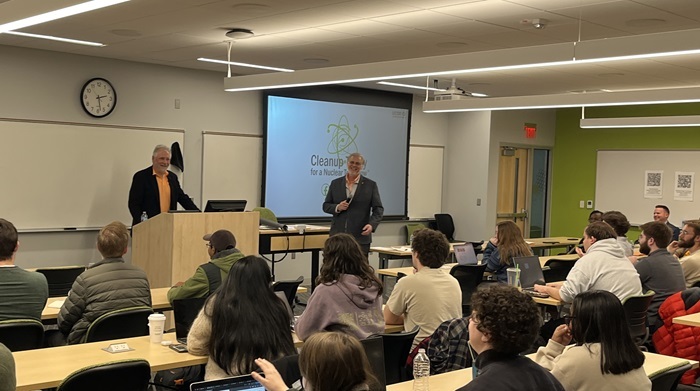 United Cleanup Oak Ridge President and CEO Ken Rueter, pictured at the podium, gave a graduate colloquium presentation, “Cleanup Today for a Nuclear Tomorrow,” and met with University of Tennessee nuclear engineering students and faculty.
The new program is designed for the next generation of workers pursuing careers in the nuclear field, including work on aging reactors and nuclear facilities around the nation.
The minor degree complements a nuclear engineering degree by providing additional coursework and training in regulations and policy, safety analysis and hazard control, safety strategies for aging facility conditions, and deactivation and demolition. The goal is to help add to the number of qualified candidates for cleanup work at Oak Ridge and other sites in the EM complex.
Since 2022, UCOR has hosted more than 70 interns from UT, with many joining the workforce full time after graduation.
UCOR’s continued partnership will provide students with hands-on experience and career opportunities, including internships, collaborations on research projects, subject matter experts serving on college and university advisory boards, and mentors for senior design projects. These efforts help ensure curricula align with work currently being performed on DOE’s Oak Ridge Reservation.
-Contributor: Shannon Potter
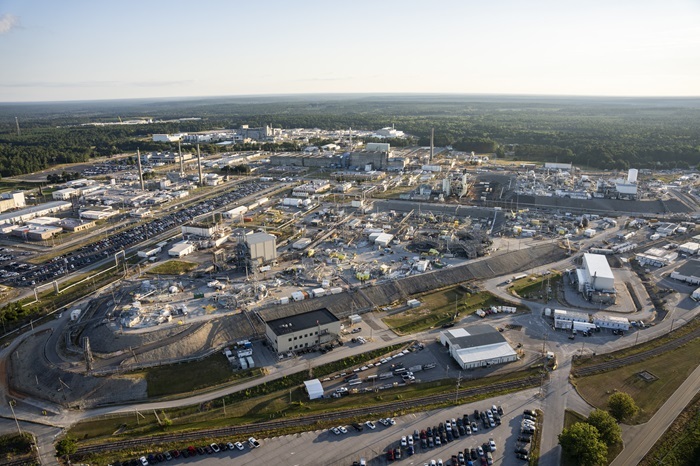 Legacy radioactive waste totaling 33 million gallons is stored at Savannah River Site in two groupings of underground waste tanks known as tank farms, including the H Tank Farm, pictured.
AIKEN, S.C. — A record amount of radioactivity has been reduced in Savannah River Site (SRS) legacy radioactive tank waste over the past four years.
There are 46 million fewer curies in the tank waste since 2022, more than double the amount removed over the last eight years. A curie is a unit of measurement for radioactivity.
While some of the radioactivity in the tank waste decayed naturally, the vast majority of the curie reduction — 36 million — has been through the U.S. Department of Energy (DOE) Office of Environmental Management’s (EM) radioactive liquid waste processing facilities, such as the Salt Waste Processing Facility (SWPF) and Defense Waste Processing Facility (DWPF).
Curies are reduced from the waste by removing the highly radioactive sludge, where the majority of the curies are found in the high-activity radionuclides like cesium and strontium, from the tanks. The sludge is treated at DWPF, where it is vitrified and poured into stainless steel canisters safe for long term storage and disposal.
Increased production at SWPF has also accounted for the curie-reduction milestone. Since 2022, more than 10.6 million gallons of salt waste has been processed through SWPF, with a significant hike in production last fall after new cross flow filters were installed to handle higher capacity through the plant. More than 1.8 million gallons were processed from August to December 2025 alone.
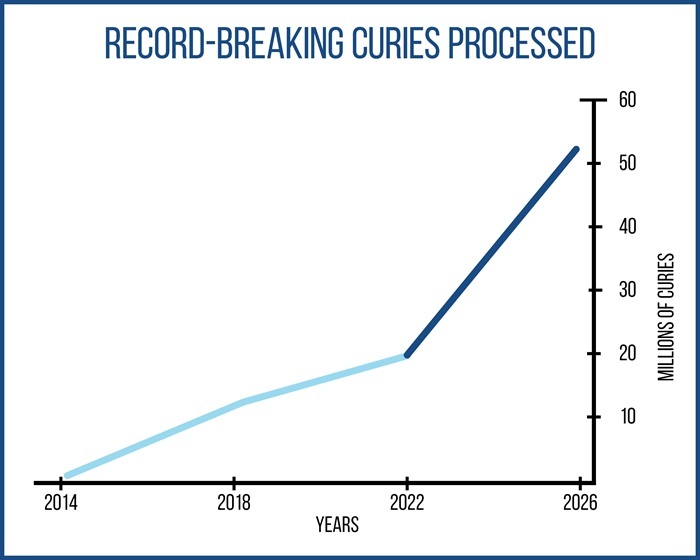 Since 2022, the U.S. Department of Energy's Office of Environmental Management and its liquid waste contractor at the Savannah River Site have processed more than 36 million curies from the underground tank waste at the Savannah River Site — a staggering increase over the lifespan of the site’s liquid waste mission.
Tony Robinson, DOE-Savannah River acting assistant manager for waste disposition, said EM continues to address the legacy waste of the past while safely meeting its cleanup responsibilities.
“The team at Savannah River is reducing the risk of the remaining waste and delivering on the Department’s commitment to accelerate cleanup,” Robinson said. “While this work is a substantial undertaking, we are making tremendous progress in remediating and safely reducing the legacy waste inventory at SRS.”
The waste at SRS is byproduct from processing nuclear materials for national defense, research, medical programs, and for NASA missions. The waste — totaling 33 million gallons — is stored at SRS in two groupings of underground waste tanks known as tank farms.
EM’s liquid waste contractor at SRS, Savannah River Mission Completion (SRMC), has been determined to operate with an end-state mindset, according to Thomas Burns Jr., SRMC president and program manager. The contractor is responsible for treating and disposing of the tank waste remaining at SRS, as well as closing the tanks.
“Our aggressive approach to going after curies early in the contract has proven to be the right strategy for risk reduction,” Burns said. “The decision to clear out the waste from multiple tanks before allocating resources to grout the tanks has exponentially enabled the rate of curie reduction from the tank waste.”
SRMC has prioritized accelerating preliminary cease waste removal milestones, the strategy that reduces real risk sooner and will streamline the process for operational tank closure when it’s time to grout tanks in bulk in the future.
Over the last year, SRMC has also accelerated the tank sampling schedule, bringing final tank closure even closer in sight. Some of the innovative factors contributing to this success include:
- Using drones for sampling and inspection of tanks, which saves four weeks and $700,000 per tank;
- Partnering with an offsite laboratory for tank sample analysis, which saves up to six months and $2 million per tank; and
- Developing a 3D-printed tool for tank sampling that uses a centrifuge, which saves up to six months in the tank closure schedule.
-Contributor: Colleen Hart
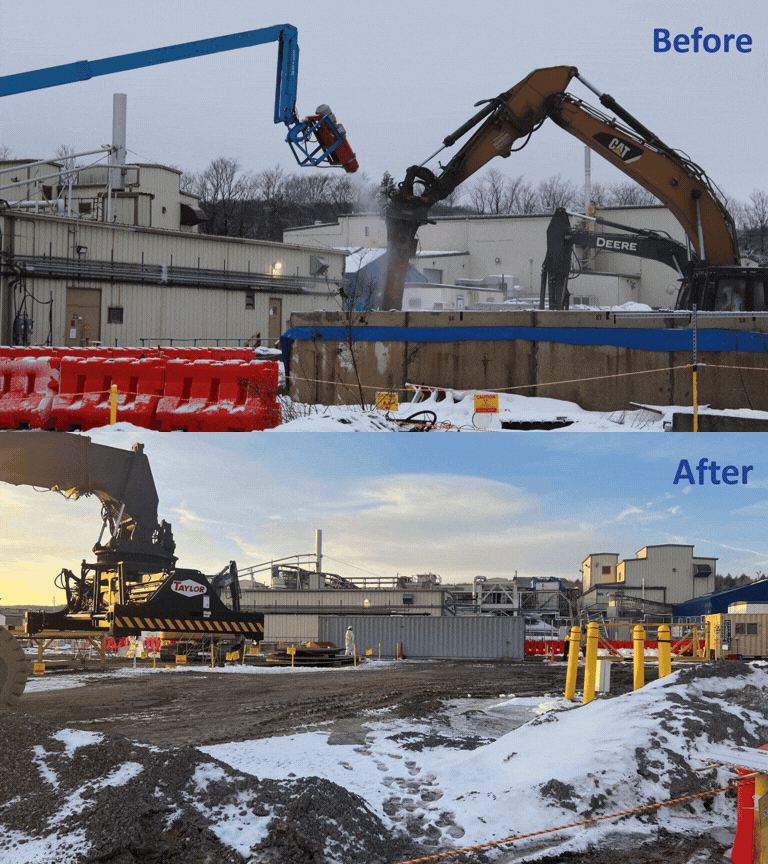 Before and after views of the demolition of two storage vaults at the West Valley Demonstration Project: In the first frame, workers use heavy equipment to reduce the size of one of the vaults. They loaded the debris in waste containers and safely shipped them offsite to a licensed disposal facility. The second frame shows the storage vault demolition area after completion of the work.
WEST VALLEY, N.Y. — The U.S. Department of Energy's Office of Environmental Management (EM) and its cleanup contractor at the West Valley Demonstration Project have reached another milestone by demolishing two storage vaults. Removing these obsolete structures continues to reshape the site’s landscape while eliminating risks associated with legacy waste.
“These accomplishments show how the West Valley team continues to meet federal responsibilities by reducing risks, driving efficiencies and positioning the site for future cleanup,” EM West Valley Office of Project Management Assistant Director Stephen Bousquet said.
The reinforced concrete vaults each weighed 673,000 pounds and measured about 63 feet long, 15 feet wide and 7 feet high.
More than two decades ago, cleanup crews removed mobilization and transfer pumps from West Valley’s underground high-level waste tanks, sealed them in containment boxes and stored them in the vaults recently torn down. Mobilization pumps kept tank contents circulating, while transfer pumps moved material between tanks.
Last summer, team members pulled the pumps from storage, grouted them for placement in shielded containers and shipped them offsite for disposal. This left the vaults empty and no longer needed.
“Our team planned and executed this work safely and on schedule,” said Daniel Way, Deactivation and Decommissioning manager for contractor West Valley Cleanup Alliance. “We continue to apply innovative cleanup strategies that protect workers, advance progress and deliver strong value for taxpayers.”
-Contributor: Joseph Pillittere
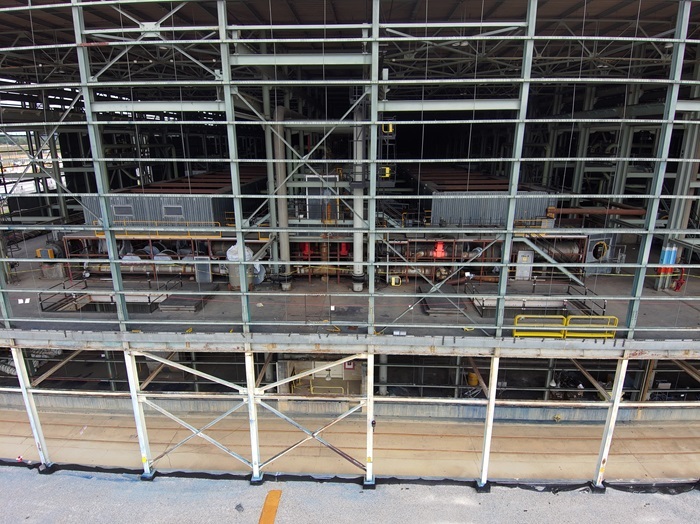 A close-up of an open section of the X-333 Process Building shows three of the brightly painted valves awaiting demolition, at center.
PIKETON, Ohio — When it comes to safely demolishing a 33-acre facility, Portsmouth Site team members think pink: They painted nearly 300 valves inside a former uranium enrichment plant bright pink to make their presence easily visible during the building demolition.
The valves controlled the flow of uranium hexafluoride during legacy uranium enrichment activities. They still contain residual uranium deposits and must be segregated during deactivation and demolition (D&D) of the X-333 Process Building, the second of Portsmouth’s three former uranium process buildings to undergo demolition.
Using lessons learned from the site’s successful X-326 Process Building demolition, the team determined the valves in X-333 couldn’t be removed during deactivation of the facility due to their large size, and will be taken out as the building is dismantled during demolition.
“The valves weigh up to 10,000 pounds, which makes extracting them from the building more complex,” said Federal Project Director Christy Brown. “A plan for safely identifying, removing and characterizing the valves during demolition was developed."
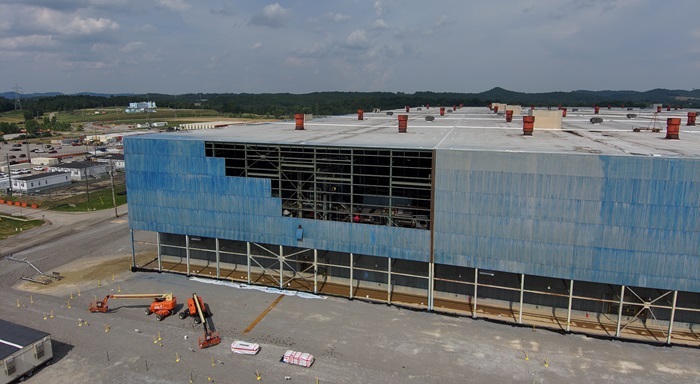 As transite panels come down from the outside of the X-333 Process Building, bright pink valves are revealed, making them easy to spot for removal during the demolition process.
Engineering drawings are used to prepare the demolition team daily before beginning work. They show where the valves are located in the portion of the building planned for demolition at the time.
“The 289 valves were painted bright pink for high visibility, and all of them were numbered for tracking purposes,” Southern Ohio Cleanup Company (SOCCo) Deputy Deactivation Director Carla Salisbury said. “Part of the building has to be demolished to create staging areas for the valves.”
SOCCo is the D&D contractor for the Portsmouth Site.
As demolition methodically progresses, heavy equipment operators will be able to spot the bright pink valves for easy removal and segregation. Crews will use equipment to measure the quantities of uranium deposits in the valves that remain from enrichment operations.
Team members will repaint the valves bright yellow to show they meet established criteria, and are ready to be downsized and taken to the On-Site Waste Disposal Facility. Valves that do not meet the established criteria will remain pink and, if necessary, be sent offsite for disposal.
The Portsmouth Paducah Project Office conducts cleanup activities at the Portsmouth Site in accordance with a consent decree with the state of Ohio and director’s final findings and orders with the Ohio Environmental Protection Agency.
-Contributor: Michelle Teeters
RICHLAND, Wash. — Hanford Site workers recently completed two important upgrades to an underground waste-storage tank, advancing safe and efficient management of radioactive waste.
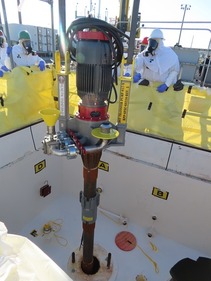
Crews with contractor Hanford Tank Waste Operations & Closure (H2C) installed a new transfer pump in AP-104, a double-shell tank key to Hanford’s Direct-Feed Low-Activity Waste program. The tank is vital for moving waste from older single-shell tanks and staging materials for treatment at the nearby Tank-Side Cesium Removal System before the material is converted into glass for long term storage.
Workers first removed the aging pump, which had become less reliable and could have affected future waste transfers. The new equipment will help ensure waste moves safely and efficiently as cleanup continues.
“This new pump upgrade is another step forward in protecting our workers, community and environment,” said Bibek Tamang, program manager for the Hanford Field Office. “Reliable, safe waste transfers are critical as we continue to treat Hanford’s tank waste.”
 |
|
Crews install a new 45-foot, 10-inch transfer pump, weighing 3,125 pounds, in the Hanford Site’s AP-104 underground waste-storage tank, helping ensure safe and reliable movement of waste as part of ongoing cleanup efforts. |
A new slurry distributor with extra shielding is installed at AP-104 A Pit at the Hanford Site, reducing radiation exposure and improving safety for workers. |
|
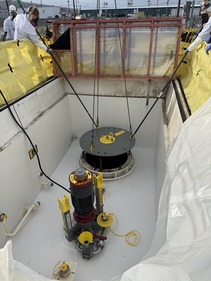 |
Alongside the pump upgrade, crews also installed a new slurry distributor — equipment that helps manage settling waste inside the tank. The new distributor cover includes three additional inches of steel shielding to reduce radiation levels and protect workers during future maintenance. This improved cover eliminates the need for temporary shielding during repairs, streamlining work and improving safety.
“Not only do these upgrades help us get work done faster, but they also dramatically reduce exposure to radiation — from levels usually seen in this kind of work to nearly negligible,” said Carol Johnson, H2C president. “It’s a big win for safety and progress on Hanford’s cleanup mission.”
These upgrades reflect Hanford’s ongoing commitment to safety, teamwork and continuous improvement as cleanup work moves forward.
View a video of the pump installation here.
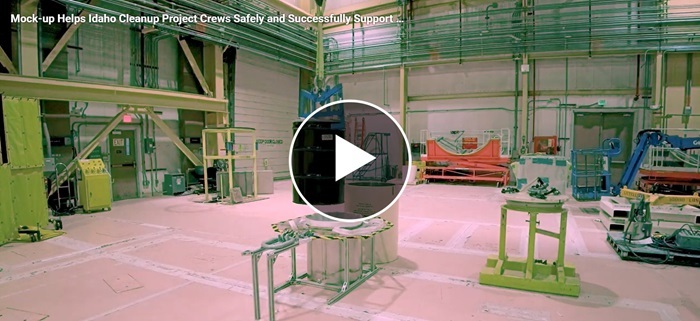 A mock-up is helping Idaho Cleanup Project crews demonstrate the process they will follow to safely package remote-handled transuranic waste drums.
IDAHO FALLS, Idaho — Idaho Cleanup Project (ICP) crews developed a mock-up to demonstrate the process they will follow to safely package and ship remote-handled transuranic waste drums for permanent disposal out of the state for the first time in over a decade.
While cleanup crews at the Idaho National Laboratory (INL) Site routinely ship contact-handled transuranic waste to the U.S. Department of Energy Office of Environmental Management (EM) Waste Isolation Pilot Plant (WIPP) for disposal, this marks the first time in over 10 years they will ship remote-handled transuranic waste to the underground repository. Contact-handled transuranic waste has a lower radiation dose rate than the remote-handled type. Click here to learn more about contact- and remote-handled transuranic waste.
This spring, ICP anticipates resuming remote-handled transuranic waste shipments to WIPP since the last one made in 2014. ICP Manager Nick Balsmeier recognizes the importance of restarting these shipments and the role they will play in achieving EM’s cleanup mission.
“Resuming these shipments will remain a key component in not only meeting our obligations to the state but also in the Department’s efforts to protect the underlying Snake River Plain Aquifer,” Balsmeier said.
The mock-up will allow crews to gain proficiency in loading waste drums into protective shielded overpacks compliant with safe shipping and disposal requirements. While a challenging aspect of handling remote-handled transuranic waste drums is the higher radiological activity of the waste stored in them, the mock-up will help crews develop the skills needed to manage this challenge and safely support the effort.
Much of the ICP’s remote-handled transuranic waste was generated from the 1970s through the 1990s at Argonne National Laboratory – East in Illinois, as well as some locations at the INL Site, including the Advanced Mixed Waste Treatment Project. That facility was built to retrieve, characterize, treat, repackage, certify and ship transuranic waste to WIPP.
Dan Coyne, president and program manager for ICP contractor Idaho Environmental Coalition, acknowledged the significance of this achievement to the state of Idaho.
“The process to package and ship remote-handled transuranic waste has changed significantly from previous years. The ICP has spent several years preparing to resume shipments of this waste after a 12-year hiatus,” Coyne said. “The mock-ups make up the final preparations before we begin this important effort to meet our commitments to the citizens of Idaho.”
-Contributor: Carter Harrison
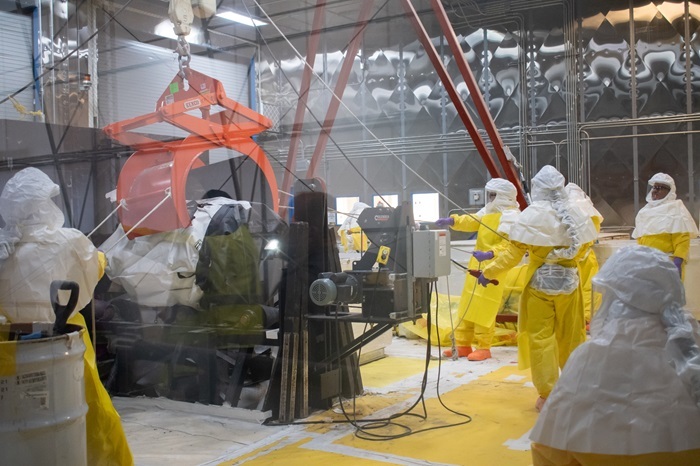 Newport News Nuclear BWXT-Los Alamos LLC employees process a radioactively contaminated corrugated metal pipe as part of the U.S. Department of Energy Office of Environmental Management’s legacy waste cleanup at Technical Area 54, Area G at Los Alamos National Laboratory in New Mexico.
DOE Office of Worker Protection and Nuclear Safety applauds EM-Los Alamos contractor for invaluable dedication to fostering culture of transparency, continuous improvement
LOS ALAMOS, N.M. — Environmental Management Los Alamos Field Office contractor Newport News Nuclear BWXT-Los Alamos LLC (N3B) was recently recognized by the U.S. Department of Energy (DOE) Office of Worker Protection and Nuclear Safety for outstanding, proactive contributions to DOE’s knowledge base through the Occurrence Reporting and Processing System (ORPS).
The Office of Worker Protection and Nuclear Safety commended the Los Alamos National Laboratory legacy cleanup contractor for fostering a culture of transparency and continuous improvement, which, according to the proclamation, directly strengthens workforce safety and reliability.
Larry Perkins, the office’s director, lauded N3B for its exemplary commitment to safety and operational excellence.
“Their diligence in sharing crucial insights, even when not strictly required, significantly enhances the collective understanding of potential risks and best practices across the DOE complex,” Perkins wrote in a certificate of recognition.
ORPS is a system used for reporting and analyzing events that affect health, safety, environment, security and reputation.
“Safety is the cornerstone of everything we do at N3B,” said Brad Smith, N3B president and general manager. “Reporting occurrences is a tried-and-true method for improving safety and performance across the board. I am pleased DOE recognizes our efforts to reduce risk and promote best safety practices.”
The Office of Worker Protection and Nuclear Safety develops and maintains requirements and guidance for worker safety and health, nuclear safety, safety management programs, and quality assurance.
The N3B ORPS Team includes Gail Helm, Luis Santana and John Guy with Facility Operations; Cassie Brown, Steve Maze and Jeremiah McLaughlin with Environmental Remediation Operations; and Eilidh Wilson, Lauren Griffith, Anne Forde, Chris Mae Palelon and Brandy Fiedler with Contractor Assurance System/Mission Assurance.
-Contributor: Donavan Mager
|