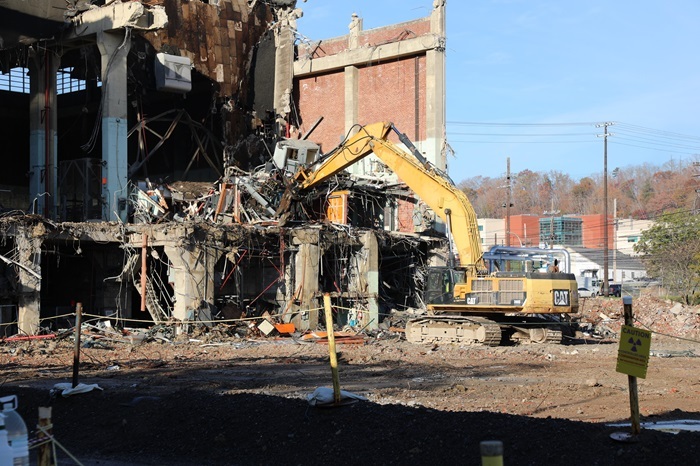
 Crews work to tear down the last remaining walls of the Alpha-2 building at the Y-12 National Security Complex. They took down the final portions of the building last week.
OAK RIDGE, Tenn. — The final wall of a 325,000-square-foot former uranium enrichment facility fell last week, marking the completion of the Oak Ridge Office of Environmental Management’s (OREM) largest demolition project yet at Y-12 National Security Complex.
Demolition of the Alpha-2 building by OREM and cleanup contractor United Cleanup Oak Ridge (UCOR) cleared away a Manhattan Project-era facility, helping modernize the site to support important national security missions.
“This has been a massive undertaking,” said Alpha-2 Federal Project Director Morgan Carden. “The ability to not only complete a task of this scale, but achieving it months ahead of schedule, speaks volumes about the skill, expertise and commitment of this team.”
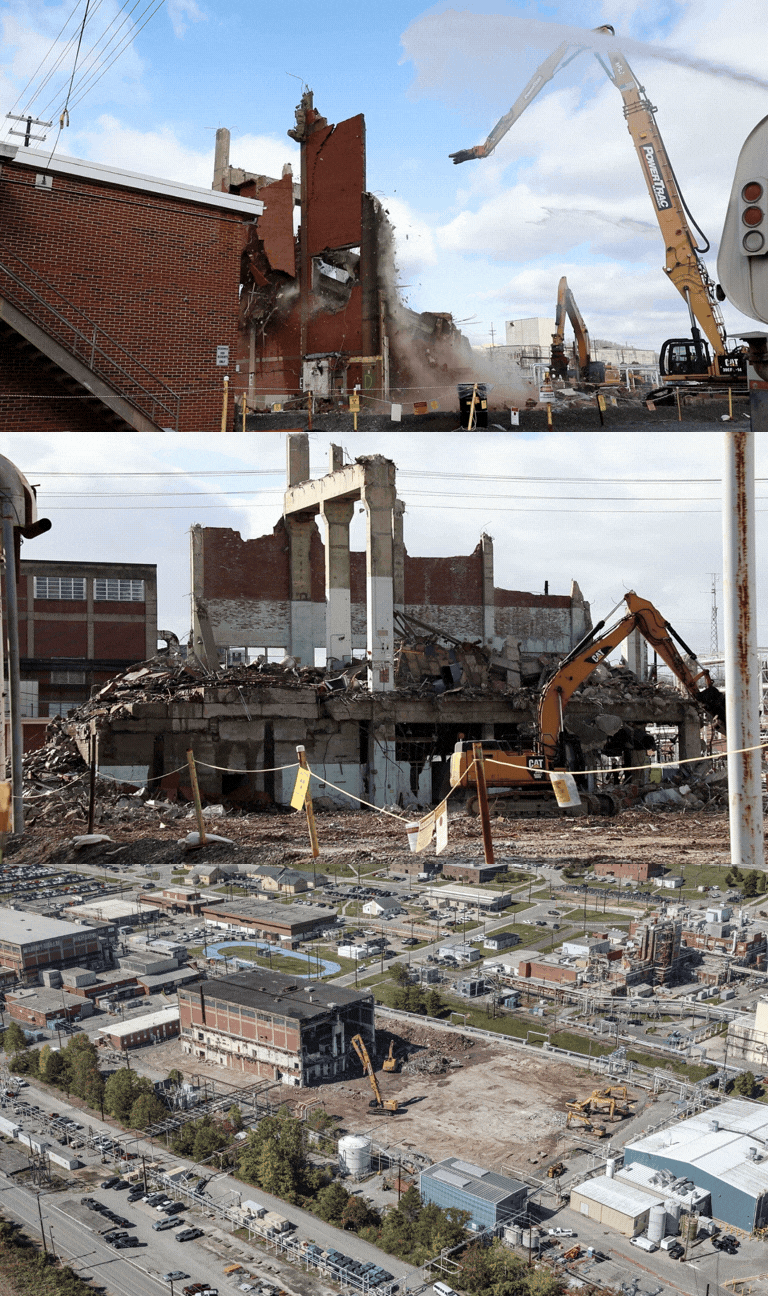 A view of demolition progress on Alpha-2 before Oak Ridge crews completed the teardown of the facility last week.
Preparing Alpha-2 for demolition was itself a monumental task, requiring four years of work beginning in 2020. It involved meticulous removal of radiological and chemical hazards from inside the facility and rerouting active utility lines — including steam, air, gas and water — outside the facility that are essential to Y-12’s operations.
That work was made possible through collaboration by a mix of highly skilled employees versed in a wide array of fields including characterization, safety, waste handling, project management, craft and engineering.
Alpha-2’s teardown began in September 2024 with crews finishing above grade-demolition this month.
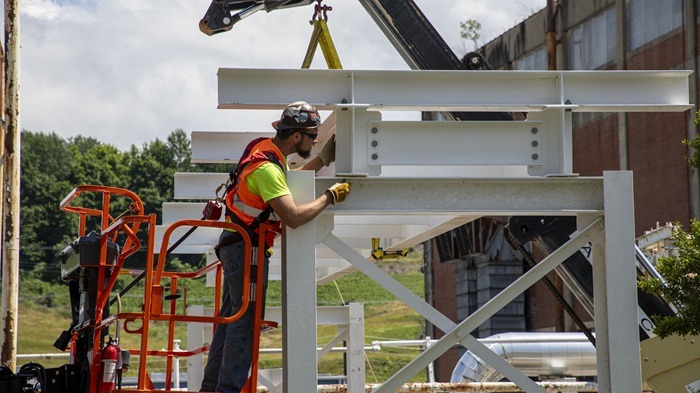 A United Cleanup Oak Ridge crew member works to install one of three bridges to support the relocation of utilities away from the Alpha-2 facility at the Y-12 National Security Complex, a crucial step that enabled demolition to begin. Each bridge weighs over 2,000 pounds.
The knockdown started with removal of the carpentry shop followed by the south and north low bay areas, and then the 80-feet tall high bay area. The demolition generated massive amounts of waste and debris — approximately 62 million pounds in total.
This project is only the beginning of Y-12’s transformation.
Crews will begin tearing down the 9401-1Steam Plant this summer, and OREM and UCOR will also complete deactivation on the next former uranium enrichment facility slated for near term demolition: the 210,000-square-foot Beta-1 facility.
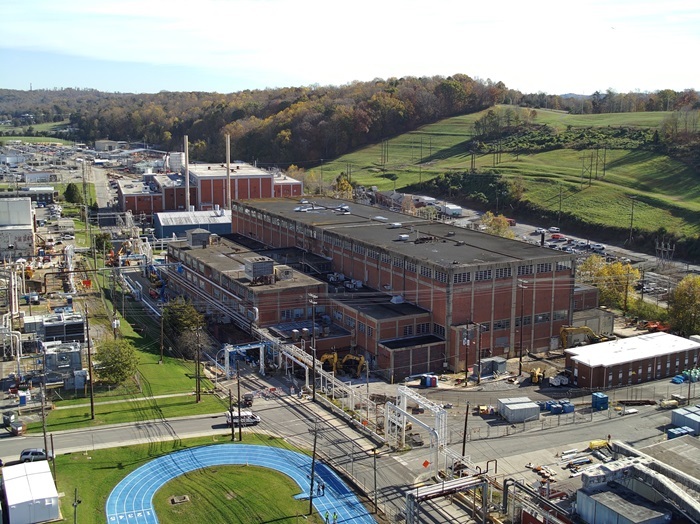 An aerial view of Alpha-2’s north low bay and the high bay area before demolition. The 325,000-square-foot facility covered a 2.5-acre footprint at the Y-12 National Security Complex.
UCOR crews achieved the Alpha-2 deactivation and demolition milestones all while extending an impressive safety record. Employees there worked more than 800,000 hours without a recordable injury or illness.
With Alpha-2 torn down to the ground, characterization and debris disposition is underway — a necessary step before the project is officially deemed complete. This work involves further sampling, analyzing, downsizing, packaging and shipping of remaining waste for disposal.
That work is expected to wrap up this summer.
-Contributor: Ryan Getsi
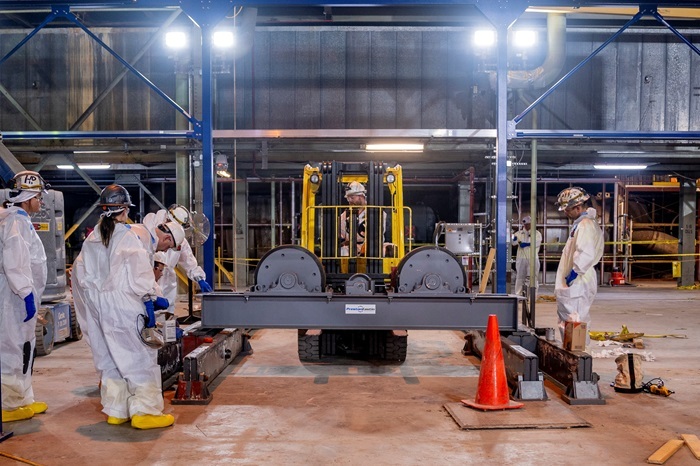 Crews lay out a process gas converter roller stand in the Paducah C-333 Process Building. Drawing from the Portsmouth Site’s lessons learned, the Paducah Site integrated a floor-mounted roller stand into the design and construction of the dust collection system for the segmentation area in C-333. The roller stand is used to efficiently cut converter shells.
LEXINGTON, Ky. — Sharing knowledge of the best approaches to deactivating process buildings is one of the ways the two Portsmouth Paducah Project Office (PPPO) sites in Ohio and Kentucky align to advance cleanup of former uranium enrichment plants and free up land for America’s golden era of energy dominance and strong national security.
“At Portsmouth, we are farther along in the cleanup process than Paducah, so we’ve been able to share some of our key successes in deactivation with them, such as how we handle process gas converters and compressors, compact or crush converter bundles, and track components to disposal,” acting Portsmouth Site Lead Jud Lilly said. “By sharing knowledge and helping each other, we can work more efficiently and optimize our efforts.”
The Portsmouth team completed demolition on the first of its three massive process building and is currently demolishing a second while simultaneously deactivating the final process building before tearing it down. At the Paducah Site, two of the four process buildings are currently undergoing deactivation prior to demolition. These buildings house gaseous diffusion process equipment once used at the former gaseous diffusion plants at each site.
“Deactivation is an especially methodical process necessary to safely demolish a building,” Paducah Site Lead April Ladd said. “By understanding lessons learned from the Portsmouth Site, we’re able to be more calculated and refine our deactivation process at the Paducah Site.”
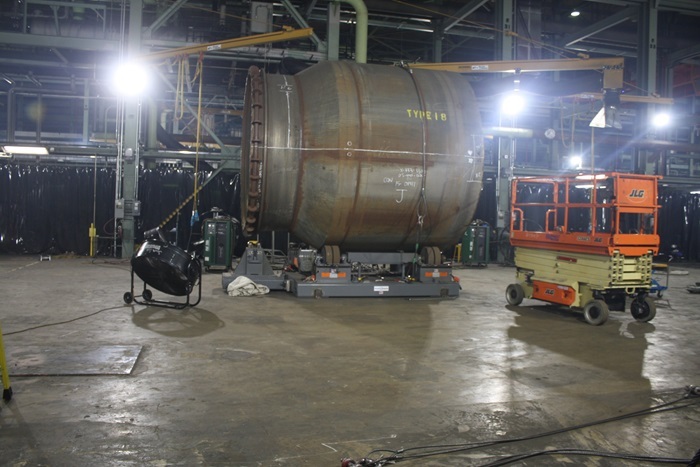 A side-by-side view of a process gas converter sitting on a roller stand, left, and an omnidirectional cart at the Portsmouth Site. The switch from the cart to the roller stand for use in cutting converter shells resulted from a lesson learned: metal dust caused the cart to short circuit the electronics, resulting in prolonged downtime from operations.
Deactivation involves characterizing the building and equipment; disconnecting process equipment; preparing waste for disposal; identifying and removing equipment and material for potential reuse or recycling; removing asbestos and other hazardous waste; isolating and disconnecting utilities; and other work necessary to ensure adequate protection of workers, public health and safety, and the environment.
“When workers initially used plasma cutters to decouple converters and compressors, they needed better airflow, and the purified air-powered respirators were insufficient,” Portsmouth Deactivation Manager Carla Salisbury said. “To improve air flow, we removed panels from cell housings, used ventilation fans and mobilized the wet air system to pull hazardous smoke away from workers.”
Such lessons learned from Portsmouth allowed Paducah to hit the ground running. Although Paducah crews had previously disabled the wet air system, they took a page from Portsmouth’s lessons by streamlining the panel removal process and adding more ventilation fans to improve airflow.
“By sharing knowledge between the two sites, we addressed a number of challenges before work began and continue to share best practices while each site maintains progress,” Paducah Deactivation Manager Donnie Harris said. “For example, with the help of a lesson learned from Portsmouth, we developed a dust collection system that captures smoke from the plasma cutting process and reduces the amount of dust and other particles generated during cutting of the converter shells.”
A best practice shared between the sites was the shift from omnidirectional carts that radiate in all directions equally to floor-mounted roller stands for better ergonomics and worker safety, allowing two workers to efficiently cut the converter shell simultaneously. Team members integrated the lesson learned from this efficiency into the design and construction of the segmentation area at the Paducah Site when work began in the C-333 Process Building.
Another improvement involved upgrading the crusher for bundles, which are internal parts of the converters that are recycled. The upgrades allowed workers to crush the bundles four times faster. Drawing from a lesson learned from Portsmouth, Paducah has since modified its equipment to address wear and tear during bundle crushing.
“It’s all about maximizing opportunities to deliver more at a good value for American taxpayers,” Paducah’s Ladd said. “Anytime we can be more efficient and learn from teams who have successfully completed this type of work before, it benefits everyone.”
PPPO conducts cleanup activities at the Portsmouth Site in accordance with a consent decree with the state of Ohio and the director’s final findings and orders with the Ohio Environmental Protection Agency. At Paducah, cleanup is being conducted in accordance with the Comprehensive Environmental Response, Compensation, and Liability Act.
-Contributors: Dylan Nichols, Michelle Teeters
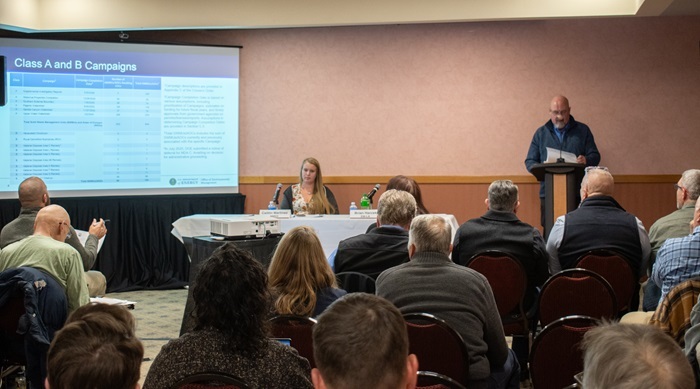 Brian Harcek, the Environmental Management Los Alamos Field Office (EM-LA) director of the Office of Quality and Regulatory Compliance, and designated agency manager, presents at the Annual Public Meeting for Cleanup of Los Alamos National Laboratory Legacy Waste. EM-LA and the New Mexico Environment Department hosted the meeting to inform the public of progress on campaigns for the revised 2016 Compliance Order on Consent as reflected by completion of milestones and other deliverables over the fiscal year that ended Sept. 30 last year, as well as the plan for the current fiscal year that ends Sept. 30 this year.
LOS ALAMOS, N.M. — The Environmental Management Los Alamos Field Office (EM-LA) and New Mexico Environment Department (NMED) recently hosted the Annual Public Meeting for Cleanup of Los Alamos National Laboratory (LANL) Legacy Waste.
Caitlin Martinez, water resource professional with NMED, provided updates on the revised 2016 Compliance Order on Consent, including classification of LANL legacy cleanup Class A and Class B campaigns.
The Class A campaigns are those in which EM-LA and NMED agree that campaign completion dates can be established. These campaigns have five-year schedules.
Class B campaigns are those in which EM-LA and NMED agree that campaign completion dates cannot yet be established due to the status of corrective action activities. The designation of a campaign as Class A or Class B does not reflect the priority of that campaign.
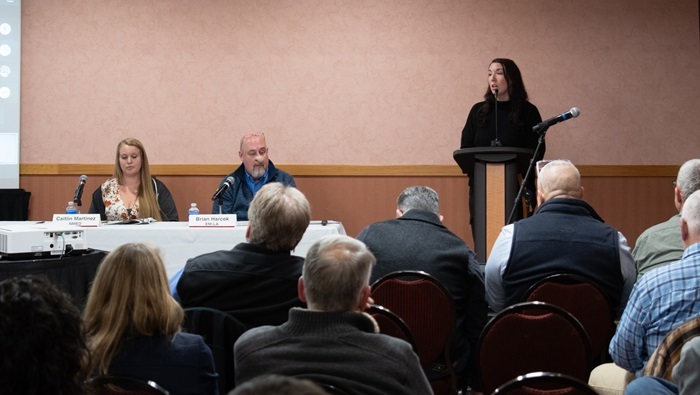 Environmental Management Los Alamos Field Office Manager Jessica Kunkle addresses public comments and questions.
Brian Harcek, the EM-LA director of the Office of Quality and Regulatory Compliance and EM-LA’s designated agency manager, presented on consent order milestones completed for fiscal year (FY) 2025 and agreed milestones for FY 2026. For FY 2025, all 11 milestones were completed on or ahead of schedule; and EM-LA submitted 83 other consent order deliverables to NMED. For FY 2026, EM-LA and NMED agreed to 10 milestones, in areas such as soil investigation and remediation, the hexavalent chromium plume, and material disposal areas. EM-LA has already completed one FY 2026 milestone.
EM-LA will provide updates on the status of FY 2026 milestones and LANL legacy cleanup progress at public engagements throughout the year, which can be found on the EM-LA website.
Newly formed directorate to accelerate technology development, strengthen partnerships
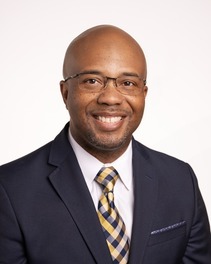
AIKEN, S.C. — Savannah River National Laboratory (SRNL) has appointed Roderick Jackson as associate laboratory director for the Science, Energy and Innovation (SEI) Directorate.
Jackson will lead the recently established directorate, which is designed to integrate fundamental research, energy resilience and innovation under a unified, mission-focused framework. The directorate aims to accelerate technology development and expand SRNL's impact through strengthened partnerships with industry, academia and government.
SRNL is the sole national laboratory sponsored by the U.S. Department of Energy (DOE) Office of Environmental Management.
Jackson joins SRNL from the National Laboratory of the Rockies (NLR), where he led the strategic agenda for the lab’s Building Technologies Research portfolio. As laboratory program manager for the Buildings Research Program, he directed strategic planning and cross-functional integration for research funded by the DOE Building Technologies Office, while also supporting state and community energy programs and other strategic partnerships.
Jackson previously served as the group leader for Building Envelope Systems Research at Oak Ridge National Laboratory, where he led the discovery, development and integration of efficient, durable and cost-effective building materials and systems. His leadership at both labs strengthened partnerships in basic science, applied engineering and academia.
“Roderick brings a unique combination of scientific depth, engineering leadership and strategic vision,” said SRNL Director Johney Green. “I’m excited to have him join the SRNL team and to have his experience guiding our new Science, Energy and Innovation Directorate. His leadership will be instrumental in strengthening our mission impact and accelerating the advancement of our research into real world solutions.”
Jackson, who holds bachelor’s, master’s and doctoral degrees in mechanical engineering from the Georgia Institute of Technology, has been recognized as a distinguished member of research staff at the NLR, serves on the American Council for Energy Efficient Economy Research Advisory Board and is a current DOE Oppenheimer Science and Engineering fellow.
-Contributor: Bridget Ford
|
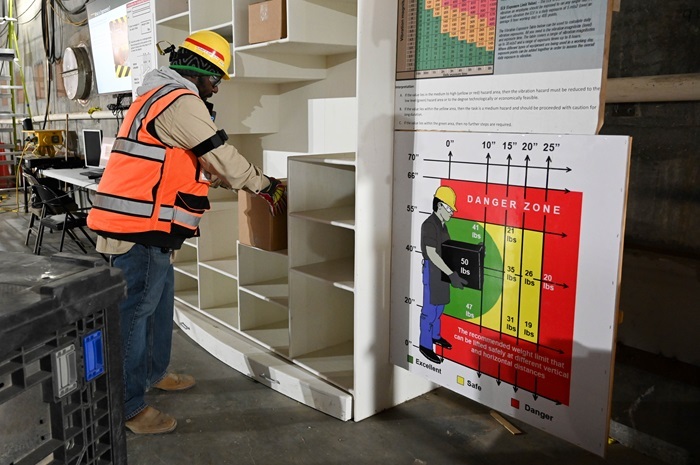 A Waste Treatment and Immobilization Plant safety representative demonstrates use of a new ergonomics monitor, located on his upper arm.
RICHLAND, Wash. — The Hanford Site’s Waste Treatment and Immobilization Plant (WTP) is enhancing worker safety with next-generation physiological monitoring technology following a successful pilot program at the High-Level Waste (HLW) Facility.
The program equipped selected workers with two wearable monitors that track movement and vital signs, helping identify potential risks before they result in incidents or injuries.
“Innovation plays a critical role in keeping our people safe,” said Bill Clarno, acting HLW project manager. “By applying new technology in the field, we can identify risks earlier and better protect the people doing the work.”
The two monitors serve different purposes, each tracking specific aspects of worker health and movement. One monitor tracks posture and body movements relevant to ergonomic risk such as poor lifting technique, sustained arm elevation and twisting motions. The device warns users with audio and vibration alerts when unsafe movements are detected.
The second measures exertion by continuously monitoring heart rate as a potential sign of heat stress. Safety professionals can configure individualized thresholds for each worker, and the monitor will alert the workers and supervisors if thresholds are exceeded.
“These wearables track workers’ movements and physiological data to reduce strain, monitor vital signs in real time and flag potential risks before they become incidents,” said Mark Johnson, principal vice president for Bechtel National Inc., the U.S. Department of Energy Office of Environmental Management contractor designing, building and commissioning the Direct-Feed High-Level Waste plant. “So far, early results show measurable improvements in worker health and safety, as well as increased productivity.”
Hanford is home to 56 million gallons of radioactive and chemical waste stored in 177 massive underground tanks. The waste was generated as part of the nation’s efforts to end World War II and win the Cold War.
WTP will transform the waste into a stable glass form for long term disposal using a process known as vitrification.
The plant facilities can be viewed using the self-guided Hanford Virtual Tour available here.
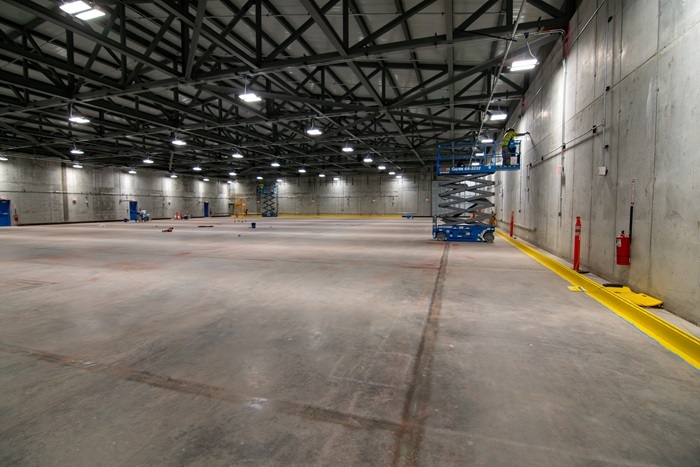 Idaho Cleanup Project construction of a second storage building increases the storage capacity at the Integrated Waste Treatment Unit to 84 total vaults for safely storing 1,344 canisters of treated sodium-bearing waste.
IDAHO FALLS, Idaho — Idaho Cleanup Project construction crews have completed a new 20,000-square-foot building, more than doubling the current storage capacity for waste treated at the Integrated Waste Treatment Unit (IWTU).
Since beginning radiological operations in April 2023, IWTU has converted more than 279,000 gallons of radioactive liquid sodium-bearing waste to a safer, granular solid using steam-reforming technology. Once in a dried form, the waste is transferred to stainless steel canisters and placed in concrete vaults. Vaults are then transported to two buildings for storage, including the new one recently built.
IWTU is on track to resume waste treatment operations this spring, following completion of scheduled maintenance. During this maintenance pause, IWTU engineers successfully replaced the granulated activated carbon beds, which remove mercury during radiological operations, and swapped out the process gas filter bundles. Gases from the facility's primary reaction vessel are filtered through 18 filter bundles comprised of 342 individual filters. They also conducted minor maintenance operations in the run-up to restart.
The new storage building adds space for an additional 48 vaults for a combined capacity of 84 concrete vaults consisting of 1,344 canisters. Treated sodium-bearing waste will be safely stored in the two buildings until a national geologic repository is available for permanent disposal.
The second storage building has the same stringent design features and operational requirements as the existing storage building. Constructed of structural steel and reinforced concrete, the new structure connects with the existing storage building by a breezeway.
Construction of the new storage building began in 2023 and was completed in early September last year at an estimated cost of $23 million. In December, the U.S. Department of Energy Office of Environmental Management received authorization from the Idaho Department of Environmental Quality to begin storing IWTU treated waste in the building.
Sodium-bearing liquid waste being treated at IWTU was generated during decontamination activities following historic spent nuclear fuel reprocessing runs, which ended at the Idaho Nuclear Technology and Engineering Center in 1992. More than 850,000 gallons of liquid waste from those operations were transferred to three underground stainless steel storage tanks.
Treatment of the liquid waste is required by the Site Treatment Plan, which requires 15% of the liquid waste to be treated per year based on a three-year running average. Once the three tanks are emptied, they and an unused spare tank will be washed, grouted and closed under federal regulations. The site of the underground tanks will then be capped and closed under the U.S. Resource Conservation and Recovery Act.
-Contributor: Erik Simpson
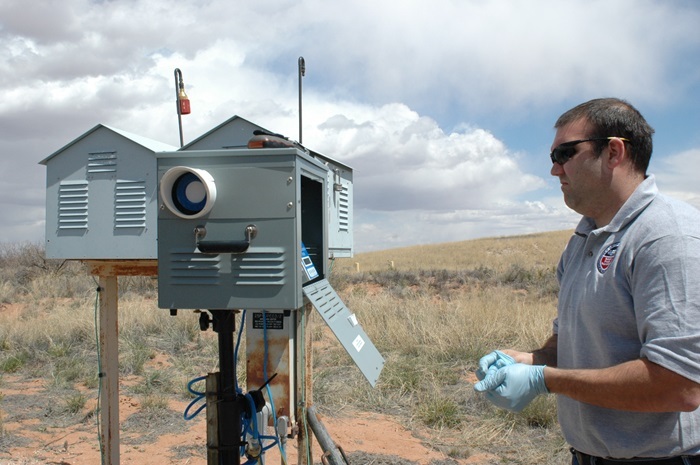 Advetage Vice President of Services Christopher Royce checks an air sample monitor. Central Plateau Cleanup Company recently partnered with Advetage as part of the U.S. Department of Energy’s Mentor-Protégé Program.
RICHLAND, Wash. — The Hanford Site continues to deliver significant progress by forging meaningful relationships with smaller, specialized businesses looking to gain more experience in the nuclear cleanup complex.
Hanford contractor Central Plateau Cleanup Company (CPCCo) recently completed agreements with two protégé companies through the U.S. Department of Energy (DOE) Mentor-Protégé Program.
That program seeks to foster long term business relationships between small businesses and DOE prime contractors, and increase the overall number of small businesses that receive DOE contract and subcontract awards.
CPCCo’s mentorship of Advetage Solutions — a service-disabled veteran-owned small business specializing in radiation detection and analysis — accelerates the company’s development and enhances Hanford’s safety and operational efficiency. Meanwhile, the partnership provides Advetage with technical guidance, business support and opportunities to contribute directly to Hanford’s mission.
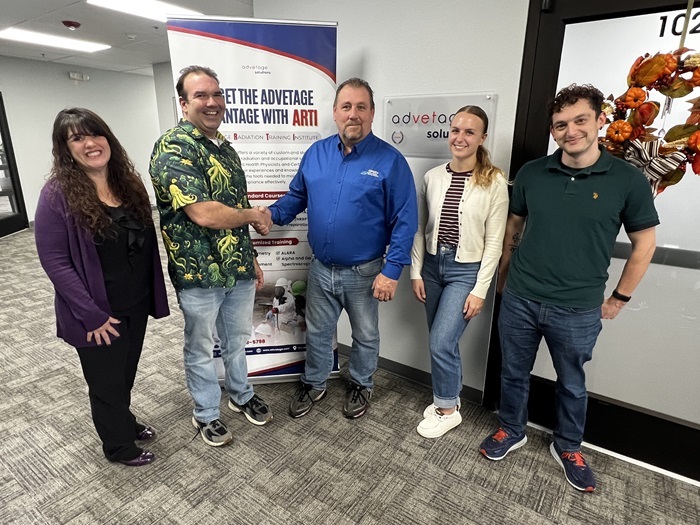 From left, Paula Kurth, Christopher Royce, Lloyd Foster, Emma Harvey and Michael Blough are part of the Central Plateau Cleanup Company-Advetage Solutions mentor-protégé partnership team.
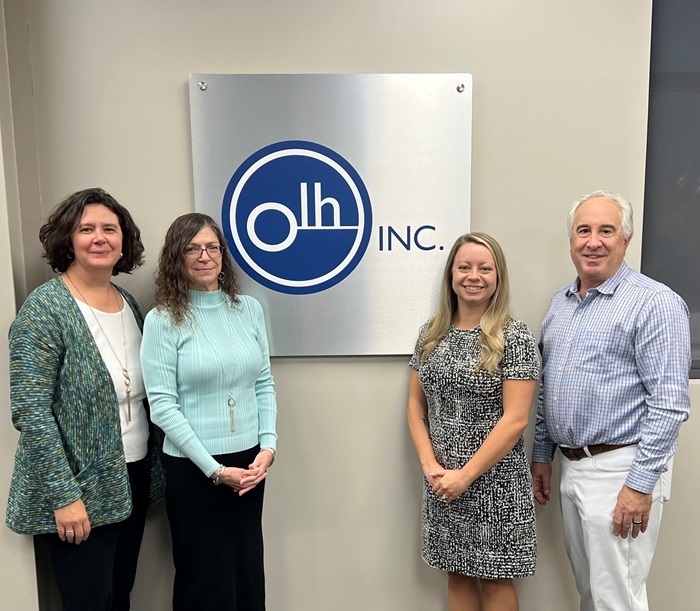 Members of Central Plateau Cleanup Company protégé company OLH Inc., from left: Mollie Fortino, director of Marketing; Gina Bennett-Norris, CEO and president; Nikki Roberts, assistant vice president of Federal Services; and Phil D’Ambrogi, executive vice president and chief operating officer.
CPCCo also welcomed OLH Inc. — a woman-owned small business with more than a decade of DOE support experience — as a mentor-protégé partner. OLH’s expertise includes project management, staffing and technical solutions. The partnership enables OLH to expand its Hanford presence and invest in developing new talent for the evolving needs of site cleanup.
Both protégé companies plan to set up offices in the Hanford community.
“By building strategic partnerships with small businesses like Advetage Solutions and OLH Inc., CPCCo leverages collective expertise, shares best practices and creates pathways for small business growth while advancing the Hanford cleanup mission,” said CPCCo Small Business Program Manager Lloyd Foster. “These relationships truly offer a win-win solution.”
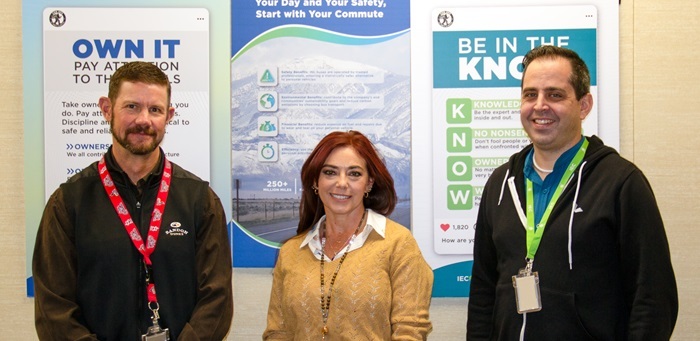 Idaho Environmental Coalition (IEC) Baseline Management Manager Jamie Potter, IEC Baseline Compliance & Analytics Sr. Manager Brandy Cooper and IEC Business Intelligence Manager Ben Barnes.
IDAHO FALLS, Idaho — Idaho Cleanup Project (ICP) contractor Idaho Environmental Coalition (IEC) found a more efficient way to manage the cleanup mission at the Idaho National Laboratory Site, resulting in a cost savings of $1.4 million. By modernizing reporting systems, applying advanced business tools and improving cross-group collaboration, the IEC baseline management team is delivering real-time insight into costs, resources and performance to strengthen IEC’s ability to safely and effectively meet cleanup commitments to the state of Idaho on behalf of ICP. This achievement demonstrates how the U.S. Department of Energy Office of Environmental Management reins in costs without sacrificing safety or effectiveness, delivering more for American taxpayers.
-Contributor: Carter Harrison
|