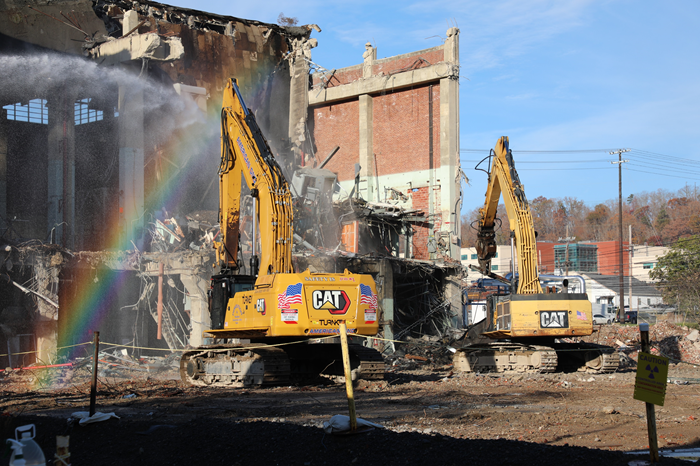
 Crews remove a high-bay area of the Alpha-2 facility at the Y-12 National Security Complex. Demolition is scheduled to be completed in early 2026, marking the largest ever demolition at Y-12 and clearing more than 2.5 acres of land to support modernization and national security missions.
OAK RIDGE, Tenn. — Building on the groundwork laid in 2025, the Oak Ridge Office of Environmental Management (OREM) and its contractors are set to achieve significant progress in 2026.
Their projects are removing risks, supporting the U.S. Department of Energy’s modernization efforts to advance important national missions and providing land for Oak Ridge to serve as a hub for nuclear energy technology and innovation.
Projects set for the months ahead will remove old, contaminated buildings to clear space for national security and research missions, prepare more Manhattan Project and Cold War-era facilities for demolition, reduce inventories of nuclear material stored onsite and transfer land to the community for reuse to boost economic development opportunities.
The year kicks off with United Cleanup Oak Ridge (UCOR) crews finishing demolition on a former uranium enrichment facility and beginning that process on another 1940s-era building at the Y-12 National Security Complex.
Teams are in the final stages of tearing down the 325,000-square-foot Alpha-2 facility. This project marks the largest ever demolition at Y-12, clearing more than 2.5 acres of land to support modernization and national security missions.
 Oak Ridge Office of Environmental Management contractor Isotek is steadily processing and disposing of the nation’s remaining inventory of uranium-233 stored at Oak Ridge National Laboratory. In 2026, employees are working to reach the halfway mark in the processing campaign.
Crews this spring are also set to initiate demolition of the Old Steam Plant at Y-12, and they will finish preparing for demolition on the 300,000-square-foot Beta-1 former uranium enrichment facility.
OREM and UCOR are also ramping up efforts at Oak Ridge National Laboratory (ORNL), where cleanup is transforming the skyline in the central campus.
Teams will begin demolishing 11 highly contaminated former radioisotope processing facilities known as Isotope Row, and complete removal of the former Radioisotope Development Laboratory's remaining hot cell, one of the most contaminated structures at ORNL.
Crews are also working to complete deactivation of the Oak Ridge Research Reactor, one of the largest structures in the heart of the site.
OREM contractor Isotek is steadily processing and disposing of the nation’s remaining inventory of uranium-233 stored at ORNL. In 2026, employees are expected to reach the halfway mark in the processing campaign, which is the highest priority cleanup project at the site. Eliminating this inventory will remove risks and avoid significant costs to taxpayers associated with keeping it safe and secure.
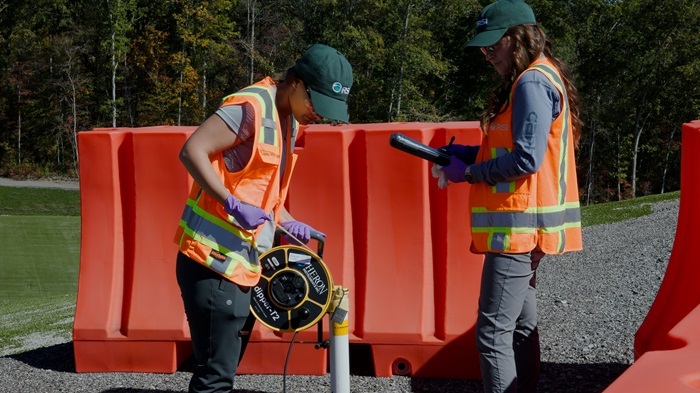 Employees gather samples from 29 wells located on the future footprint of the Environmental Management Disposal Facility. In 2026, they will finish a two-year effort to gather data to understand groundwater levels needed to finalize the facility’s design.
OREM and UCOR are moving closer to starting construction for the new Environmental Management Disposal Facility (EMDF), crucial to complete cleanup at ORNL and Y-12 by adding necessary low-level waste capacity.
Teams will finish a two-year effort monitoring groundwater levels that provides data needed to finish the facility’s design. Crews will also begin grading soil and constructing support facilities for the EMDF, scheduled to be operational in 2030.
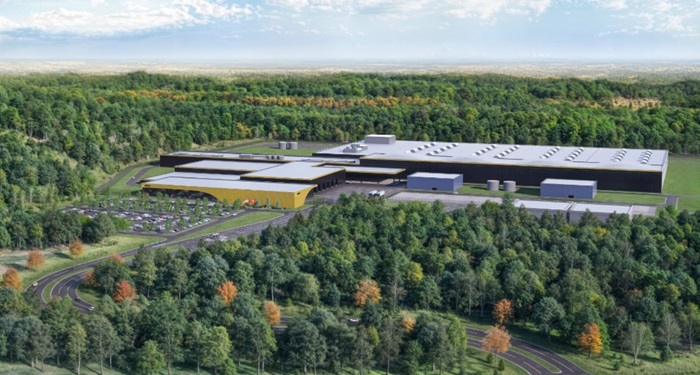 The Oak Ridge Office of Environmental Management is set to transfer more than 700 acres to the community for economic reuse in 2026. Orano USA has announced plans to use one of those parcels for its new facility — among the largest uranium enrichment plants in North America. The rendering is shown here.
Previous cleanup successes have made land available for community reuse. In 2026, OREM is set to transfer more than 700 acres for economic development.
Two leading nuclear energy companies have already announced plans to invest a combined $6.7 billion to locate on this acreage, and their operations are projected to create 1,100 local jobs.
-Contributor: Ryan Getsi
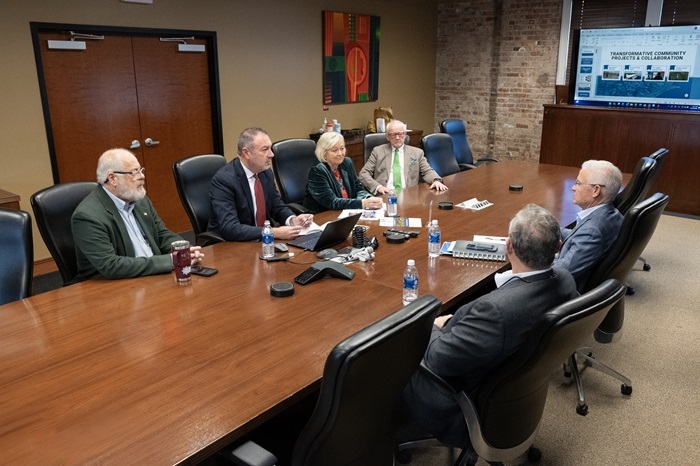 U.S. Department of Energy Office of Environmental Management (EM) Assistant Secretary Tim Walsh, far right, discusses opportunities for economic growth at EM’s Paducah Site with community leaders during a recent visit. Walsh, along with EM Acting Principal Deputy Assistant Secretary Joel Bradburne, met with, from left, McCracken County Judge Executive Craig Clymer, Greater Paducah Economic Development President and CEO Bruce Wilcox, Paducah Area Chamber of Commerce President Sandra Wilson and City of Paducah Mayor George Bray to learn more about the community’s ideas on future use of the Paducah Site.
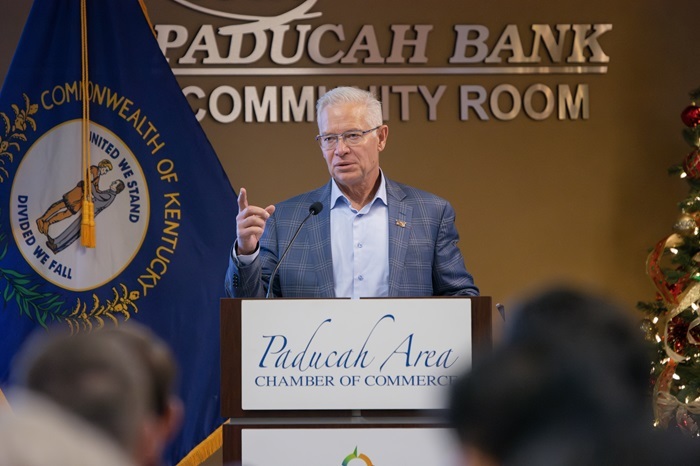 U.S. Department of Energy Office of Environmental Management Assistant Secretary Tim Walsh welcomes attendees to Industry Day at the Paducah Area Chamber of Commerce. The event offered attendees additional information about a request for offer, seeking proposals from companies to build and power artificial intelligence data centers on the Paducah Site. Event activities included presentations from subject matter experts, a site tour and a meeting with community leaders regarding economic development initiatives.
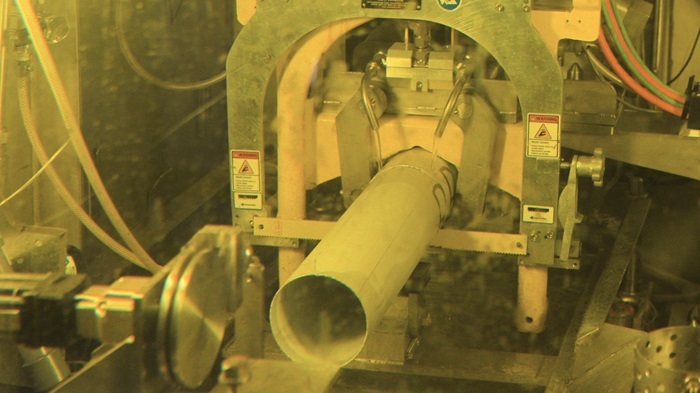 Cutting the first Mark-18A target inside a Savannah River National Laboratory (SRNL) shielded cell. The photo was taken through a 3-foot-thick leaded glass window. Photo by SRNL.
Retrieval of key isotopes advances President Trump’s goal of reinvigorating nuclear industrial base
AIKEN, S.C. — Savannah River National Laboratory (SRNL) took the first step towards recovery of rare and valuable plutonium-244 and heavy curium isotopes from Mark-18A targets.
The Savannah River Site (SRS) stored irradiated Mark-18A target assemblies for several decades in the SRS L Basin. In 2014, a collaboration between SRNL and Oak Ridge National Laboratory, sponsored by the National Nuclear Security Administration (NNSA), brought a renewed focus on the Mark-18A targets as a valuable resource to benefit future research and analysis efforts.
“The Mark-18A Target Recovery Program is a monumental step forward in advancing our nation’s nuclear capabilities,” said SRNL Director Johney Green. “Recovering rare isotopes not only strengthens U.S. nuclear nonproliferation efforts and critical scientific research but also exemplifies the transformative power of innovation. By turning legacy nuclear materials into indispensable resources, this program showcases the vital role SRNL plays in supporting national security, fostering technological leadership and preparing the next generation of scientists and engineers to tackle the challenges of tomorrow.”
SRNL is the sole national laboratory sponsored by the U.S. Department of Energy Office of Environmental Management (EM).
“EM’s role in this endeavor goes beyond safe storage; it’s about proactive stewardship and unlocking the inherent value within our legacy materials,” said Edwin Deshong, Savannah River Operations Office manager. “The transfer of this first target is a testament to the seamless integration of our environmental cleanup mission, while turning historical waste materials into strategic resources for the nation.”
“Startup of this project is a giant leap forward for our lab,” said Chris Armstrong, program manager for the Mark-18A Program. “This is the culmination of many years of effort involving scores of talented and dedicated staff. We have launched a new nuclear recovery capability at SRNL as a first step to providing high-value isotopes to meet critical U.S. government missions.”
Following is the full NNSA announcement on the Mark-18A Target Recovery Program.
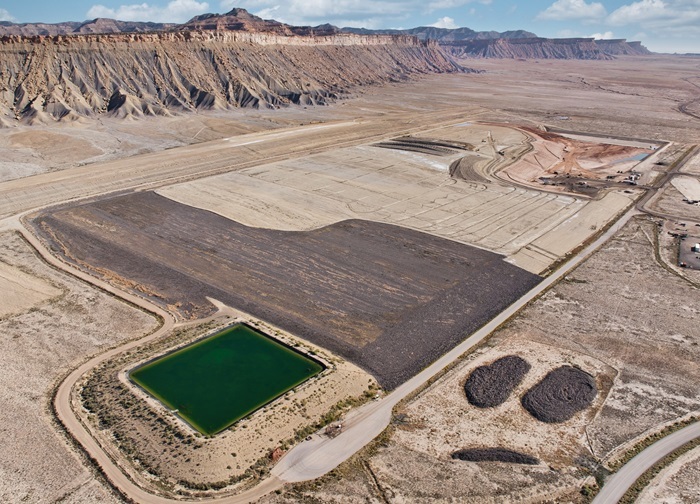 A view of the Moab Uranium Mill Tailings Remedial Action Project disposal cell at the Crescent Junction site, near the Book Cliff mountains.
MOAB, Utah — The Moab Uranium Mill Tailings Remedial Action Project recently finished installing another interim cover on a section of its disposal cell, moving the cleanup closer to completion.
The U.S. Department of Energy (DOE) Office of Environmental Management (EM) oversees cleanup activities at the Moab site, located along the Colorado River, near Moab, Utah. Since 2009, EM crews have been transporting uranium mill tailings by rail from the Moab site to the Crescent Junction site, where the engineered disposal cell is being constructed.
Made of clean, noncontaminated soil, the interim cover protects the compacted tailings in the disposal cell from erosion and disturbance, reduces water infiltration and provides a stable working surface while additional portions of the cell are filled. It serves as a temporary protective layer until the permanent engineered cover, or cap, is built.
This past fall, EM marked a significant priority, removing a cumulative 16 million tons of the tailings and other contaminated material from the Moab site for disposal at the Crescent Junction site.
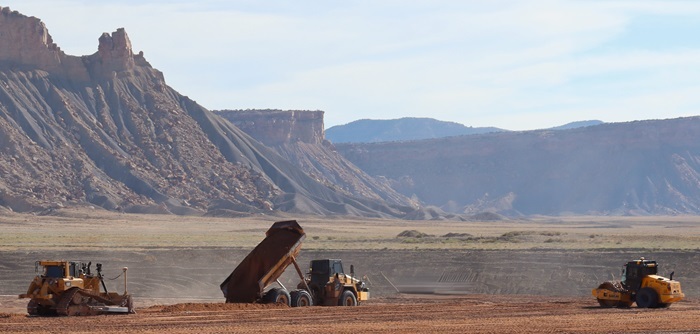 Crews use construction equipment to create a controlled lift inside the Crescent Junction disposal cell.
The disposal cell is designed to isolate radioactive tailings for centuries. Its effectiveness depends on rigorous quality assurance and control practices throughout the entire lifecycle of the cell, from design and construction to long term monitoring. As the cell is filled, the Moab Project conducts continuous testing to ensure all design specifications are met.
Before the tailings leave the Moab site, they are dried and blended to meet the disposal cell specifications. Once transported and deposited at Crescent Junction, the tailings are hauled to a designated area, placed in a uniform layer, moisture-conditioned as needed, and compacted.
Each placement area within the cell is known as a controlled lift. Every aspect of the lift — it’s thickness, moisture content and degree of compaction — is carefully managed to achieve the required density and stability. Once a section of controlled lifts is complete, the interim cover of clean, noncontaminated soil is placed over it.
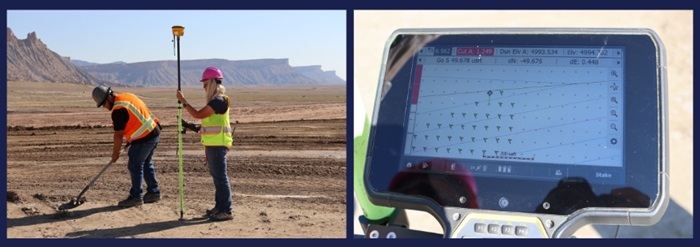 Moab Uranium Mill Tailings Remedial Action Project staff members perform compliance testing of the newly installed interim cover.
Automated sensors on haul trucks, dozers and other equipment assist operators in building each lift to specification. Personnel then perform geotechnical testing to verify density and moisture content. Proper compaction is essential because it reduces settlement, improves structural stability and minimizes water infiltration, among other things.
The Moab Project anticipates completing the disposal cell in 2029. EM will then transfer responsibility for the site to DOE’s Office of Legacy Management for long term stewardship and monitoring.
-Contributor: Barbara Michel
 Through the Reuse and Recycle Community of Practice, Argonne National Laboratory in Illinois transferred four clean portable units for the safe storage of chemical and radiological hazardous waste to Brookhaven National Laboratory in New York for reuse, saving the U.S. Department of Energy $250,000.
A U.S. Department of Energy (DOE) collaboration led by the Office of Environment Management (EM) has saved $250,000 by empowering federal and contractor team members at program offices and field sites across the complex to share excess materials and equipment among themselves, reducing costs for new projects, maintenance and disposition.
“First and foremost, everyone across DOE is passionate about reusing the equipment and materials we have to the best extent possible to cut overhead costs and focus on the mission,” said Shannon Chester, with EM’s Office Infrastructure and D&D, which leads the collaboration known as the Reuse and Recycle Community of Practice.
In this voluntary effort, members seek cost-saving opportunities to benefit the Department’s mission projects. Among the collaboration’s success stories was the transfer of four clean portable units for the safe storage of chemical and radiological hazardous waste from Argonne National Laboratory in Illinois to Brookhaven National Laboratory in New York.
Brookhaven requested the units — which feature exhaust systems, an alarm, fire suppression, spill containment and explosion-proof lighting — due to costly storage space shortages. The national laboratory now stores chemicals in centralized areas, has additional space for future storage and can increase efficiency while reducing chemical exposure risks, saving DOE $250,000.
“It’s easy to buy new items and throw them away when you are done. But if you look at the pathways of disposing of materials, it’s the same process you would need to go through for reuse or recycling,” Chester said. “Reuse is cheaper, and with recycling, you get money back. You cut long term project costs for acquisition and disposal and save precious landfill space at the same time.”
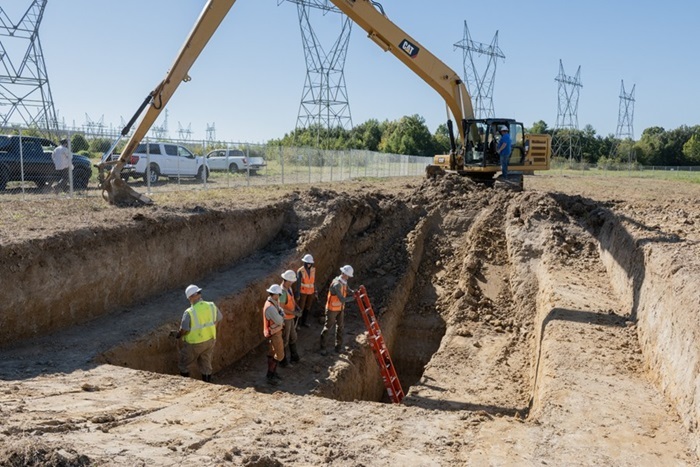 A 250-foot-long, 13-foot-deep trench is excavated at the Paducah Site to gather essential geological data for upcoming cleanup decisions that play a major part in the site’s holistic cleanup strategy, dubbed “Decision 2029.”
EM partners with university entities to advance cleanup, transition from nuclear remediation to nuclear renaissance
PADUCAH, Ky. — The U.S. Department of Energy Office of Environmental Management (EM) partnered with a University of Kentucky consortium and research center to complete field work culminating a larger investigation that provides valuable geologic data for upcoming cleanup decisions at the Paducah Site.
The field work supports an initiative dubbed “Decision 2029.” Working with the U.S. Environmental Protection Agency and state of Kentucky, EM is advancing a streamlined approach that's reducing regulatory decisions by 90%, allowing for accelerated cleanup and freeing up land at the site for future use as quickly as possible.
EM, the Kentucky Research Consortium for Energy and the Environment and the Kentucky Geological Survey dug a 250-foot-long, 13-foot-deep trench. Geologists then photographed, mapped and logged the soil in the walls of the trench, capturing the structure and sequence of sediment, informing engineering designs and options for future cleanup.
“This level of technical detail strengthens the foundation for the cleanup decisions ahead,” Paducah Site Lead April Ladd said. “Our goal is to ensure every evaluated option is supported by rigorous, defensible data and enables us to make cleanup decisions that protect workers, the community and the long term integrity of the site.”
 A geologist logs observations of sediment and rock layers in the walls of a trench workers dug to gather information for the Paducah Site and confirm geologic conditions used to evaluate alternatives for cleanup.
By integrating the trenching results with geophysical surveys and borehole data collected in earlier phases of the study, EM is fortifying a model of the site to evaluate waste disposal alternatives for upcoming demolition and remediation activities.
As part of Decision 2029’s “three-legged stool,” waste disposal alternatives are being evaluated along with options for facility deactivation and decommissioning and remediation of environmental media such as soils and surface water at the Paducah Site.
Myrna Redfield, program manager for Paducah Site deactivation and remediation contractor Four Rivers Nuclear Partnership (FRNP), reiterated the importance of data gathered during the recent field work to move the site toward future cleanup milestones.
“This investigation provides critical insight into how the ground has behaved over time,” Redfield said. “That understanding is essential for designing any future engineered systems to complete the cleanup mission at the Paducah Site while ensuring they perform safely and reliably.”
-Contributor: Dylan Nichols
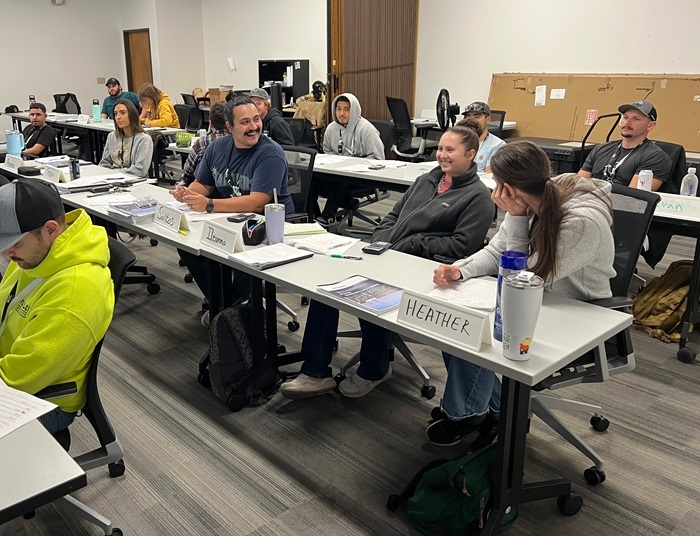 Santos Gallegos and Ileanna Meyer are two of the current nuclear chemical operators taking part in training at a facility near the Hanford Site in Washington state.
RICHLAND, Wash. — Internships at the Hanford Site are giving local students a chance to gain valuable skills and start their careers while helping support the cleanup of one of the nation’s most complex environmental projects.
Two recent interns with contractor Hanford Tank Waste Operations & Closure (H2C) are now employees undergoing nuclear chemical operator (NCO) training.
Ileanna Meyer grew up in Tri-Cities, Washington, and recently completed her associate’s degree in nuclear radiation protection at Columbia Basin College (CBC) in Pasco. She joined H2C as a summer intern, working full-time as she completed the requirements for her degree.
“I started out working under Human Performance Improvement and Conduct of Operations,” said Meyer. “The internship helped me build a strong foundation, allowing me to learn skills like identifying and avoiding potential precursors to errors and how to communicate effectively with co-workers and management.”
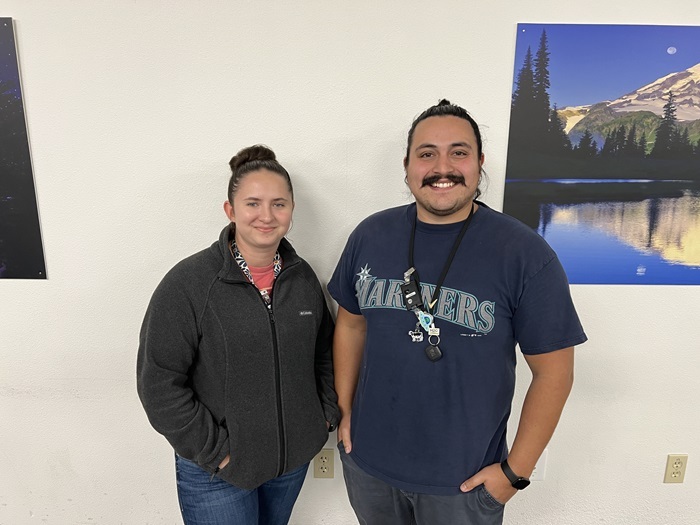 Ileanna Meyer, left, and Santos Gallegos were recently hired by contractor Hanford Tank Waste Operations & Closure after they completed college programs and participated in the U.S. Department of Energy Office of Environmental Management contractor’s internship programs.
The partnership between the U.S. Department of Energy Office of Environmental Management, Hanford Site contractors, CBC and Washington State University’s Tri-Cities campus provides training and internship opportunities that prepare students for critical cleanup roles. The program helps ensure Hanford has qualified operators who understand the importance of safety, consistency and disciplined operations.
Another local graduate, Santos Gallegos, switched careers after earning his certification at CBC.
“One hundred percent, it was a great move,” said Gallegos, who completed the certification program over the summer and landed the full-time H2C job following the co-op internship. “I’m looking forward to completing NCO training and putting everything I’ve learned into practice.”
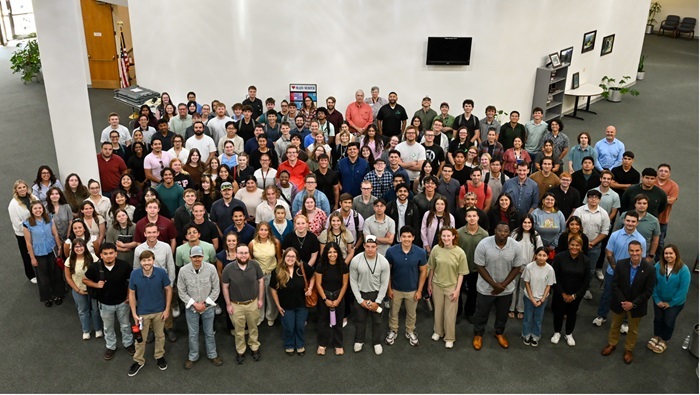 More than 130 college students participated in summer internships at the Hanford Site in 2025, filling temporary roles while learning about career opportunities that support the tank waste cleanup mission.
Internships play a vital role in preparing the next generation of workers who will carry out the Hanford cleanup mission,” said Mat Irwin, assistant manager for Tank Waste Operations at the Hanford Field Office.
“These opportunities help students understand the significance of their work while giving our teams a chance to develop the talent needed to reduce risks, maintain safe operations and support progress across the Hanford Site,” Irwin said.
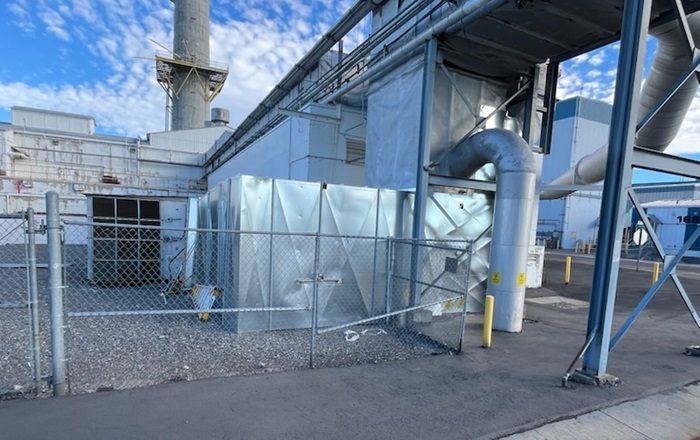 Crews replaced aging ducting at the Idaho Nuclear Technology and Engineering Center, providing critical ventilation for the facility’s onsite underground waste tanks.
IDAHO FALLS, Idaho — Idaho Cleanup Project (ICP) crews replaced aging ducting at the Idaho Nuclear Technology and Engineering Center to improve a crucial ventilation system supporting operation of onsite underground waste tanks, completing an infrastructure upgrade that will increase safety and functionality.
Prior to these improvements, the ducting hadn’t seen a major upgrade since it was installed nearly 50 years ago, creating concerns about the integrity of the ducting materials and the potential for safety risks to the workforce.
The original ducting consisted of an outer layer of canvas that became weathered by the harsh Idaho climate and often exposed the inner components of the system. Due to the age of the equipment, there was an increased risk of exposure to asbestos and other hazardous materials.
Upgrading the ducting presented a unique set of challenges. The ventilation system is situated within a radiological buffer area, a protective administrative barrier meant to reduce the risk of radiation exposure for those who work at nuclear facilities. As a result of precautionary measures that must be taken to work in these areas, crews donned double-set contamination suits and wore respirators to complete the updates.
The complexity of the project was further compounded by the need to access difficult-to-reach areas, requiring the use of an aerial work platform to safely perform the necessary updates.
In total, 200 feet of ducting were upgraded after nearly two months of work.
Of the 11 underground stainless steel storage tanks, three are currently used to store radioactive liquid waste generated during past spent nuclear fuel reprocessing and plant decontamination efforts.
“Upgrading the ducting provided a much-needed improvement,” said ICP Nuclear Operations Maintenance Senior Manager Kasey Baisch. “I am incredibly proud of our team for safely completing this work.”
-Contributor: Carter Harrison
|