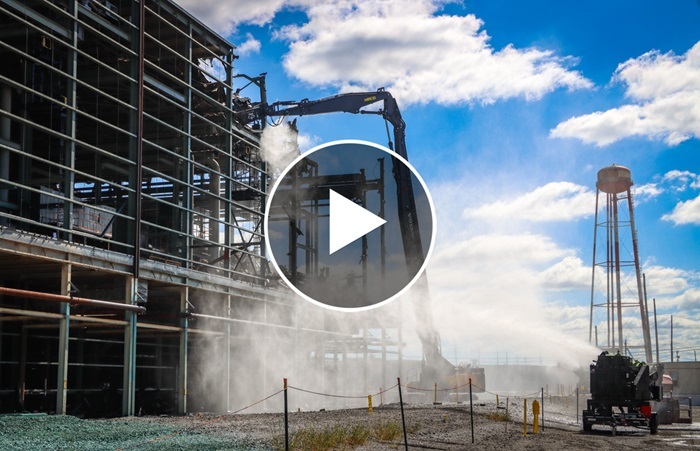
 EMTV: Watch a video on Portsmouth Paducah Project Office 2025 accomplishments. In this photo, a heavy equipment operator uses a 75-ton high-reach excavator to cut and remove roofing material and steel beams on the southwest end of the Portsmouth Site’s X-333 Process Building. Starting demolition of this building was a U.S. Department of Energy Office of Environmental Management priority.
LEXINGTON, Ky. — Thanks to their safe and successful cleanup work in 2025, the Portsmouth and Paducah sites demonstrated the strong role the U.S. Department of Energy (DOE) Office of Environmental Management (EM) plays in advancing American energy dominance and innovation.
“Looking back at the progress we made in 2025, I can’t help but be excited about the future,” Portsmouth Paducah Project Office Acting Manager Reinhard Knerr said. “The Portsmouth and Paducah sites played a significant role in American energy and security during the Cold War. Now, thanks to our cleanup progress and what we will achieve going forward, these sites will again be important contributors to American prosperity.”
This year saw the Paducah Site in western Kentucky continue to grow as an attractive location for new nuclear energy development. In August, DOE reached an innovative lease agreement with advanced nuclear firm General Matter for reuse of a 100-acre parcel to construct a new domestic uranium enrichment facility to provide fuel for nuclear reactors. The planned project is a $1.5 billion investment, expected to create approximately 140 full-time jobs and generate more than $70 million in annual regional economic benefits.
Notably, the agreement helps EM to continue cleanup progress. The pact provides General Matter with cylinders of existing depleted uranium hexafluoride (DUF6) from past enrichment operations to use as supply fuel for the new facility. Combined with an agreement with Global Laser Enrichment, the partnerships allow both companies to access a portion of the Paducah Site’s remaining 40,000 DUF6 cylinders, turning liabilities into assets and accelerating production of domestic energy supplies.
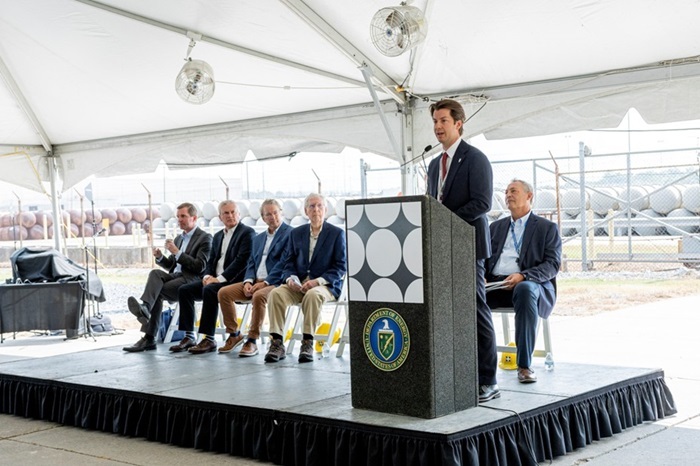 General Matter CEO Scott Nolan addresses the crowd during a groundbreaking ceremony at the Paducah Site in August. The domestic
private-sector uranium enrichment facility will sit on a leased 100-acre parcel of land at the Paducah Site.
This year, DOE also selected the Paducah Site as one of four Department locations to move forward with plans to invite private-sector partners to develop cutting-edge artificial intelligence (AI) data center and energy generation projects. As Energy Secretary Chris Wright said in announcing the selection of Paducah and the other DOE sites, “By leveraging DOE land assets for the deployment of AI and energy infrastructure, we are taking a bold step to accelerate the next Manhattan Project — ensuring U.S. AI and energy leadership.”
The Portsmouth Site, in southern Ohio, is already home to a variety of firms working to drive American energy dominance. This year, DOE continued to make land at the Portsmouth Site available for redevelopment by providing a third parcel of land to the Southern Ohio Diversification Initiative, a local community reuse organization, bringing the total to more than 350 acres transferred for reindustrialization.
State officials in Kentucky and Ohio are increasingly interested in additional ways the Paducah and Portsmouth sites can drive American energy. State nuclear authorities from Kentucky and Ohio visited the sites this year, underscoring their prime locations for reindustrialization in conjunction with the local communities’ visions.
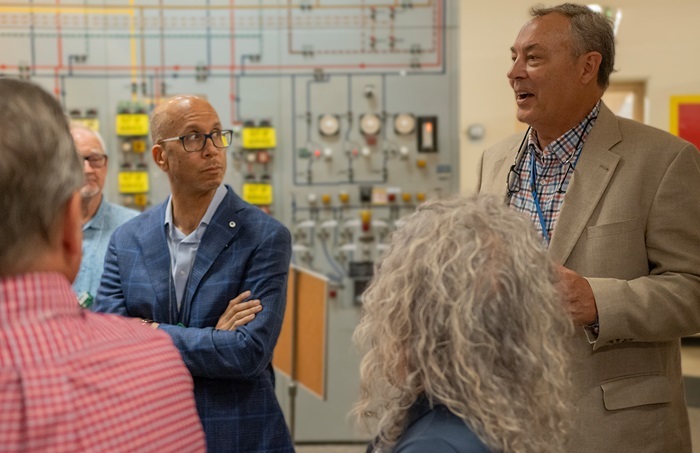 Members of the Kentucky Nuclear Energy Development Authority tour the Paducah C-300 Central Control Building during a site tour. The group visited the Paducah Site to explore its potential role in the state’s nuclear energy future.
‘First Bite’ of Second Enrichment Building Among Cleanup Accomplishments
DOE’s success in reusing the Portsmouth and Paducah sites for American energy and innovation stems from the successful cleanup underway at both locations. This year, EM achieved a priority by taking the “first bite” of the massive X-333 Process Building at Portsmouth. This 33-acre facility is the second of the site’s three former uranium enrichment process buildings to be demolished.
Portsmouth workers also continued excavating contaminated areas at the site and made progress constructing the next cells for the On-Site Waste Disposal Facility to hold demolition debris.
Working with federal and state environmental regulators, EM continued to advance an initiative dubbed “Decision 2029” at the Paducah Site. The initiative seeks to accelerate regulatory decision-making, and ultimately, enable more cleanup to begin sooner.
Crews also continued to prepare the Paducah Site’s former uranium enrichment process buildings for eventual demolition. At the C-333 Process Building, workers safely completed segmentation activities for more than 450 large pieces of equipment called converters. Deactivation activities also began in the C-337 Process Building. In addition, crews safely demolished unused facilities at the Paducah Site, reducing the cleanup footprint by approximately 19,000 square feet.
At the DUF6 conversion facilities at the Paducah and Portsmouth sites, the team checked off an EM priority by converting more than 1,000 cylinders of DUF6 into a safer, more stable oxide form.
“Everything we have achieved at Portsmouth and Paducah, and what we will continue to achieve, is based on a foundation of strong partnerships with all those who play a role in the cleanup and future of these sites,” Knerr said. “Our partnerships with state and local leaders and private industry ensure that as they see cleanup is accelerating, it will drive future use of these sites.”
-Contributor: Sarah Marko
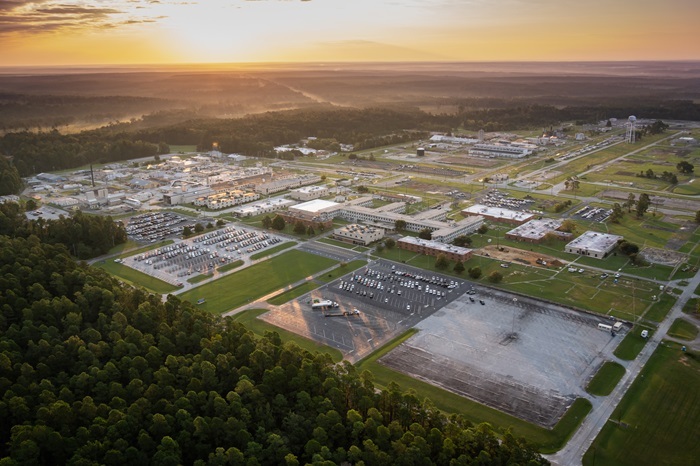 An aerial view of the Savannah River National Laboratory in Aiken, South Carolina.
AIKEN, S.C. — As the U.S. Department of Energy (DOE) moves forward with its recently launched Genesis Mission — a national effort to use artificial intelligence (AI) and advanced computing to accelerate American discovery — Savannah River National Laboratory (SRNL) is set to play a unique and critical role alongside its fellow national laboratories.
Highlighting the mission's momentum, DOE Under Secretary for Science Darío Gil testified on its objectives and impact during a hearing of the House Science, Space and Technology Committee. SRNL Director Johney Green, alongside directors from the other 16 national laboratories, demonstrated a unified commitment to transforming scientific discovery and problem-solving through Genesis.
The Genesis Mission, a top DOE priority, unites national labs, private industry and academia to develop a discovery platform aimed at doubling the productivity and impact of U.S. science and engineering over the next decade. This mission aims to accelerate solutions to some of the world’s most consequential grand challenges in energy, scientific discovery and national security.
 Collaborative Efforts and Innovative Approaches
“The Genesis Mission represents a bold shift in how the nation approaches discovery,” Green said. “By applying modern AI and advanced analytics to the vast data already generated across DOE, we can uncover insights that dramatically improve how we tackle legacy waste and support environmental cleanup. SRNL is excited to contribute our expertise and advanced capabilities to the mission’s overall success.”
In line with this vision, SRNL has developed a concept using AI to accelerate the cleanup at the Savannah River Site (SRS) and across the DOE complex, potentially saving billions of dollars. By leveraging subsurface characterization data collected at federal sites like SRS and Hanford, SRNL aims to use this data as a national asset to fast-track environmental cleanups, enhance domestic energy production and boost the extraction of critical minerals and materials.
Advanced Manufacturing and Integrated AI
Using SRNL’s Advanced Manufacturing Collaborative facility, the lab is uniquely positioned to integrate cutting-edge AI technologies, enhancing the efficiency of defense-ready material production. SRNL’s leadership in chemical processing, nuclear materials management and computing underscores its significance in ensuring the mission’s success, particularly in closing the fuel cycle.
As the sole EM-sponsored national laboratory, SRNL has access to extensive data from decades of cleanup of former nuclear weapons production sites, offering invaluable insights for novel materials development, isotope recovery, advanced manufacturing and subsurface sciences. By combining this data with AI tools, SRNL, in collaboration with other labs, aims to significantly improve DOE’s cleanup efforts of legacy waste from the Cold War and Manhattan Project eras, thereby supporting the Genesis Mission’s research objectives.
The Genesis Mission will launch a set of inaugural Model Teams, spanning the national laboratories in collaboration with industry partners, to begin developing AI models that will accelerate discovery and innovation, advance American energy dominance and bolster national security. SRNL will support teams focused on:
- Using vast amounts of grid data to incorporate AI and autonomous systems into power system planning and operations
- Securing the domestic supply chain of critical minerals and materials through new discovery, extraction and processing methods
- Reducing timelines for design and engineering studies in magnetic confinement fusion
- Advancing next-generation nuclear fission technologies
Together, these collaborative efforts will drive groundbreaking discoveries and expedite solutions to national priorities, reinforcing SRNL’s crucial role in advancing scientific frontiers and ensuring national security.
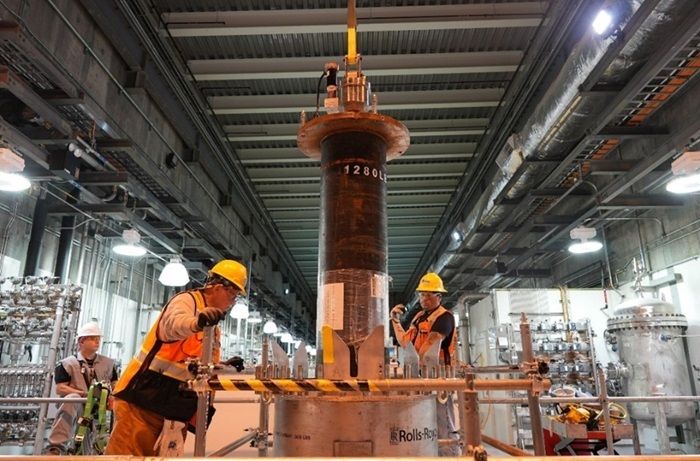 Savannah River Mission Completion installed three larger, higher-capacity cross flow filters used in the decontamination process at the Salt Waste Processing Facility to achieve the facility’s optimum production rates. Pictured are personnel conducting a mock-up trial of the filter changeout before executing the work in a highly radioactive area.
Innovation central to the site’s achievement of an EM priority to help execute key cleanup projects to address risk safely
AIKEN, S.C. — A trio of new and improved filters in a key operating facility at the Savannah River Site (SRS) has optimized efficiency and accelerated production of the radioactive waste tank cleanup mission — marking the completion of a U.S. Department of Energy Office of Environmental Management (EM) priority to execute key cleanup to safely address the risk associated with legacy waste.
EM’s liquid waste contractor at SRS installed larger, higher-capacity cross flow filters at the Salt Waste Processing Facility (SWPF) during a planned system-wide operational outage this year to conduct repairs and upgrades across all SRS liquid waste facilities.
Tony Robinson, DOE-Savannah River acting assistant manager for waste disposition, said increasing the processing rate at SWPF was critical to advancing the cleanup mission at SRS.
“Salt waste is the majority of the volume that remains in the tank waste at SRS,” Robinson said.
“SWPF is the key facility to remediate the remaining tank waste. The increased processing rate and improved operational reliability of SWPF will accelerate the tank waste mission and reduce the risks of this legacy waste.”
 In a significant feat of innovation, Savannah River Mission Completion (SRMC) engineers devised a novel way to double the available surface area of the filters. The previous 10-foot-long filters, containing 234 filter tubes, were replaced with 16-foot-long filters, containing 288 filter tubes.
SWPF receives salt waste from the tank farms, a grouping of underground waste tanks, and decontaminates the waste by removing the highly radioactive contaminants using filters and a solvent-extraction process.
The cross flow filters at SWPF are used in the decontamination process to separate the radioactive materials, such as strontium, uranium, and plutonium, and solid particles from the less-radioactive salt waste stream. Filtration is the first step before the liquid waste undergoes a solvent-extraction process to then remove the cesium from the waste.
Since restarting the plant post-outage with the new filters, SWPF continues to set new processing records. SWPF set a new 30-day processing record in November of over 600,000 gallons.
When operating only one filter, SWPF can process at a rate of 18.5 gallons per minute, providing the throughput to meet mission needs.
Operating a first-of-a-kind and highly integrated nuclear facility does not come without unique challenges that require innovative solutions, according to Thomas Burns Jr., SRMC president and program manager.
“SRMC has had transformative success with the targeted effort to increase throughput capabilities at SWPF,” Burns said. “This is a world-class team that leans into ingenuity to apply breakthroughs to any challenge that comes our way.”
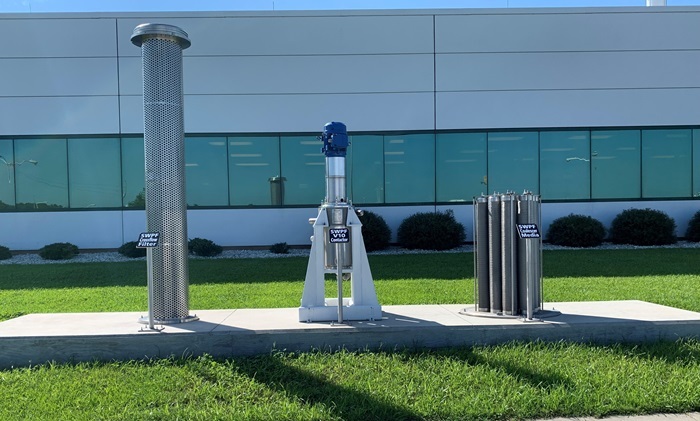 A display of a cross flow filter, a contactor and coalescer media in front of the Salt Waste Processing Facility at Savannah River Site.
The installation of cross flow filters is just one of the ways SRMC is using innovation and technology for critical tasks associated with the cleanup mission.
Recently, SRMC successfully demonstrated ultrasonic cleaning of the SWPF contactors. These mechanical mixers remove radioactive cesium from the liquid salt waste. During operation, solids build up inside the contactors. The accumulated solids are removed by a manual process. Ultrasonic cleaning is a faster, more thorough cleaning that minimizes downtime and is safer for workers. Additionally, drones are being used to perform internal inspections of waste tanks, generating precise mapping of the tank and its waste.
Other SWPF optimizations completed by SRMC over the last three years include streamlining the strategy for contactor cleaning and repair, improving the cleaning process of the strip effluent coalescer and acquiring a bank of 16 spare contactors. All of these improvements increase plant availability to process waste.
-Contributor: Colleen Hart
LOS ALAMOS, N.M. — In 2025, the U.S. Department of Energy (DOE) Office of Environmental Management Los Alamos Field Office (EM-LA) and its contractor achieved substantial progress in the legacy cleanup mission underway at Los Alamos National Laboratory (LANL) matched by strong safety performance, federal and contractor leaders said here last week.
“EM-LA and N3B made excellent progress in its goals for fiscal year 2025, including meeting all Appendix B milestones, and we look forward to a productive 2026,” EM-LA Field Office Manager Jessica Kunkle said at this quarter’s Environmental Management Cleanup Forum, hosted in conjunction with LANL legacy cleanup contractor Newport News Nuclear-BWXT Los Alamos LLC (N3B).
A highlight of the LANL legacy cleanup mission in 2025, officials said, was the increased progress made in reducing inventories of legacy radioactive waste. EM-LA and N3B shipped more than 190 cubic meters of transuranic (TRU) waste to the Waste Isolation Pilot Plant (WIPP) near Carlsbad, New Mexico, for disposal — more than three times the fiscal year 2025 goal of 62 cubic meters.
Efforts to dispose of a set of corrugated metal pipes (CMPs) containing cemented TRU waste also took a major step forward, with completion of size-reduction activities and commencement of shipments of the CMP waste to WIPP.
In addition, EM-LA and N3B finished disposing of remaining legacy containers of low-level and mixed low-level waste containers stored at Area G. Kunkle noted over 28,500 containers of legacy TRU waste have been shipped from LANL to WIPP for final disposal since 2000, demonstrating DOE’s commitment to safely and effectively removing legacy waste from LANL.
“We made substantive progress in all aspects of the LANL legacy cleanup mission,” said Brad Smith, N3B president and project manager. “We look forward to another year of collaborating with our various cleanup partners, including the Department of Energy, area stakeholders, pueblos and the state of New Mexico.”
This year also saw EM-LA and N3B continue their strong track record in meeting annual cleanup commitments under the New Mexico Environment Department (NMED) Compliance Order on Consent, which governs some legacy cleanup activities at LANL. EM-LA and N3B met all 11 fiscal year 2025 milestones on or ahead of schedule, bringing the total met since the N3B contract began in 2018 to 115 out of 116.
EM-LA Working with State Agencies to Address Chromium Concerns
Kunkle provided an update on one of the highest priorities in the LANL legacy cleanup mission — addressing hexavalent chromium groundwater contamination. While the contamination plume does not pose an immediate threat to public or private drinking water wells, EM-LA has a strong history of collaborating with NMED, Pueblo de San Ildefonso and Los Alamos County to monitor, control and address the contamination, Kunkle said.
EM-LA and N3B are working to expeditiously complete the installation of a new monitoring well to increase understanding of the boundaries of the contamination plume, according to Kunkle. She also noted work is underway to evaluate and refine the conceptual site model and to analyze potential enhancements for the interim pump-and-treat system in place to control the spread of the plume.
“EM-LA remains committed to addressing the hexavalent chromium plume and we are excited to establish an adaptive site management approach with NMED, the Office of the State Engineer, Pueblo de San Ildefonso and Los Alamos County,” Kunkle said.
Adaptive site management is a systematic and iterative approach used to manage complex cleanup projects, allowing for flexibility and adjustments based on new information and changing conditions.
Best Safety Performance in Five Years
Smith said that N3B also realized one of its strongest years for safety performance in 2025.
Based on the company’s most up-to-date injury rate information published by the Bureau of Labor Statistics for 2025, N3B had 60% fewer injuries and nearly 75% fewer serious injuries compared to the average high-hazard cleanup company.
“Employee engagement and ownership is the key factor in our safety performance,” Smith said.
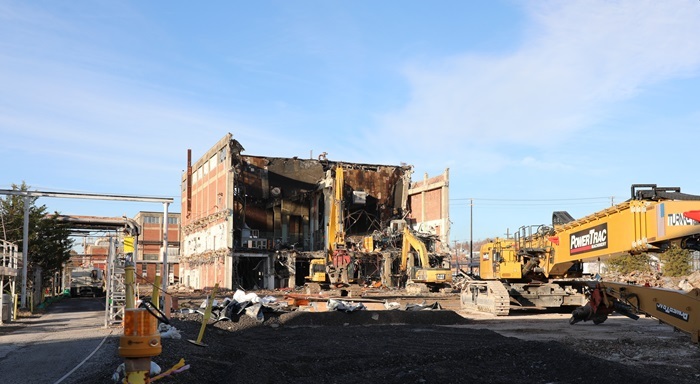 One project that contributed greatly to Oak Ridge’s waste total this year was the demolition of Alpha-2 at the Y-12 National Security Complex. Here, crews remove lead and work to complete demolition on the west side of the 2.5-acre facility.
Waste haul highlights marked progress to eliminate risks, enable modernization and open space for national security missions and future research and innovation
OAK RIDGE, Tenn. — Crews removed 64 million pounds of waste from Oak Ridge’s cleanup sites in 2025, a tally showcasing the pace and progress of projects clearing away old infrastructure and preparing numerous buildings for demolition.
“This remarkable number puts the scale of our work in perspective,” Oak Ridge Office of Environmental Management (OREM) Deputy Manager Teresa Robbins said. “It also highlights how much of our progress is often unseen but is equally important to mission success. A considerable amount of this material was generated by deactivation crews inside buildings at the Y-12 National Security Complex and Oak Ridge National Laboratory (ORNL) being prepared for near-term demolition.”
The 64 million pounds of waste compares in weight to about 15,000 average-sized automobiles. Deactivation and demolition (D&D) projects at Y-12 contributed the lion’s share of the overall waste total, generating approximately 59 million pounds of waste. Most of that debris came from tearing down the 325,000-square-foot Alpha-2 building. It marks the largest demolition yet at Y-12, and the first removal of a former uranium enrichment facility at the site.
Adding to the count was waste generated from readying the 300,000-square-foot Beta-1 facility for demolition and disposing of legacy containers from inside Alpha-4, a sprawling facility covering 13 acres of land. Both are former Manhattan Project-era uranium enrichment facilities whose removal will eliminate risks, enable modernization and open space for national security missions.
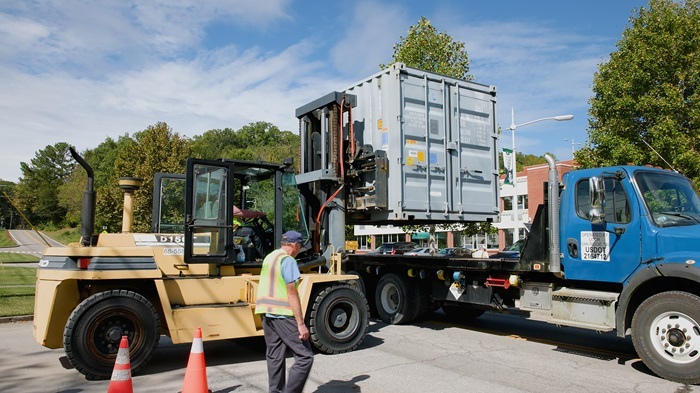 Workers remove a hot cell from Building 3038, a former radioisotope processing facility, located in Isotope Row in the central campus area of Oak Ridge National Laboratory.
Crews at ORNL advanced multiple D&D projects this year that boosted the waste total.
Workers completed deactivation, demolition and disposal of Building 3003, a structure that had supported the historic Graphite Reactor. They also made strides deactivating and removing portions of the former Radioisotope Development Laboratory’s remaining hot cell.
Teams advanced deactivation inside the Oak Ridge Research Reactor and at 11 highly contaminated former radioisotope processing facilities, collectively referred to as Isotope Row.
Together, these projects at ORNL resulted in more than 2 million pounds of waste, and they support the continued transformation of the site’s central campus area to open space for future research and innovation.
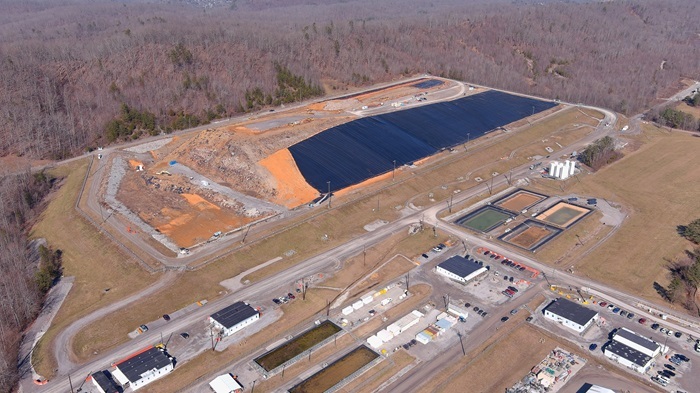 The Environmental Management Waste Management Facility is a key piece of infrastructure that supports timely, efficient cleanup across the Oak Ridge Reservation. The facility has strict waste acceptance criteria, only taking low-level waste comprised mostly of debris, concrete and soil from building demolition and soil excavation projects.
At the East Tennessee Technology Park (ETTP), teams downsized and disposed of more than 100 pieces of excess heavy equipment, small support structures and excess materials totaling approximately 3 million pounds. These projects supported closure activities to help OREM transition the site from federal ownership into a private industrial park.
OREM contractor UCOR also identified opportunities to recycle 17,835 feet of fencing from ETTP, reducing impact to the onsite landfills’ capacity and demonstrating continued commitment to minimizing waste.
“We are committed to more than just performing cleanup operations, performing them in ways that maximize the investment of tax dollars and find the best solution to continue our mission on the Oak Ridge Reservation,” said UCOR Waste Management & Operations Director Sean Dunagan.
Nearly 95% of generated waste is disposed of onsite at the Oak Ridge Reservation Landfills or the Environmental Management Waste Management Facility. That includes debris, concrete and soil with little or no contamination. Highly contaminated waste, accounting for 99.8% of the generated waste’s total radioactivity, is shipped out of state for permanent disposal.
-Contributor: Ryan Getsi
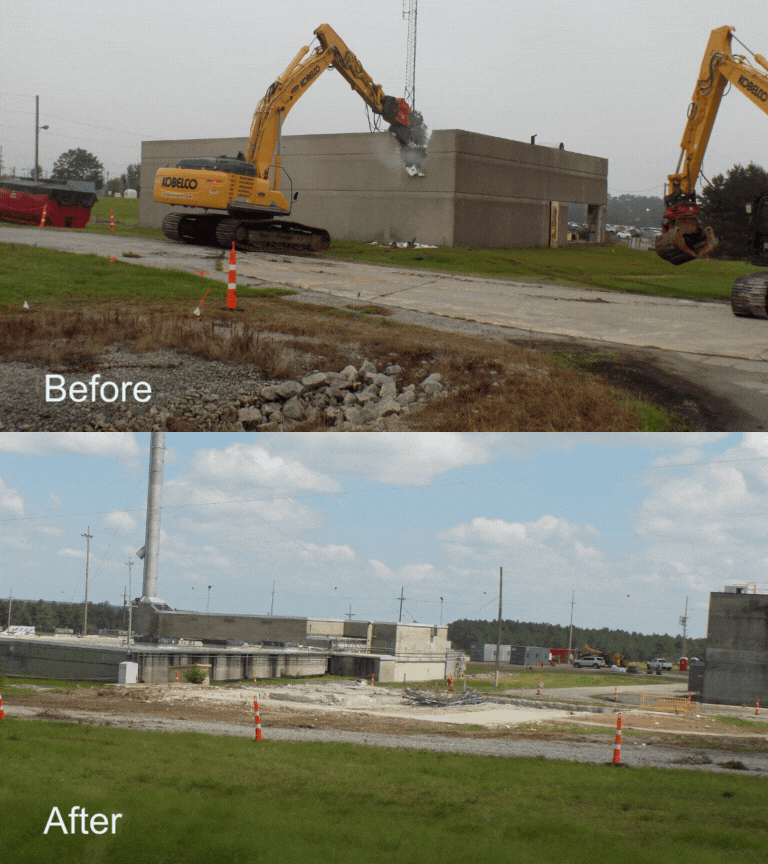 Before and after photos show the successful demolition of the 720-F Central Alarm Station down to a slab.
AIKEN, S.C. — Crews recently reduced the legacy footprint at the Savannah River Site (SRS) by demolishing two structures surrounding a facility that once helped power deep-space missions such as Galileo, Ulysses and Cassini.
The achievement marks a U.S. Department of Energy Office of Environmental Management (EM) priority, implementing common sense solutions that meet cleanup responsibilities while delivering more value for American taxpayers.
 The EM crews tore down key ancillary structures of the F-Area Material Storage Building (235-F) called the 701-4F Entry Control Facility and the 720-F Central Alarm Station. This initiative, in the works for over a decade, supports EM’s mission to safely decommission legacy facilities while strategically reducing the number of structures requiring management and oversight, with the ultimate goal of safely decommissioning 235-F and associated structures.
“This demolition project is a perfect example of how the EM mission at SRS is meeting our cleanup commitments while being smart stewards of taxpayer dollars,” said Edwin Deshong, Savannah River Operations Office manager. “By safely decommissioning these legacy structures around 235-F, we are reducing our legacy footprint and positioning the facility for final in-situ decommissioning.”
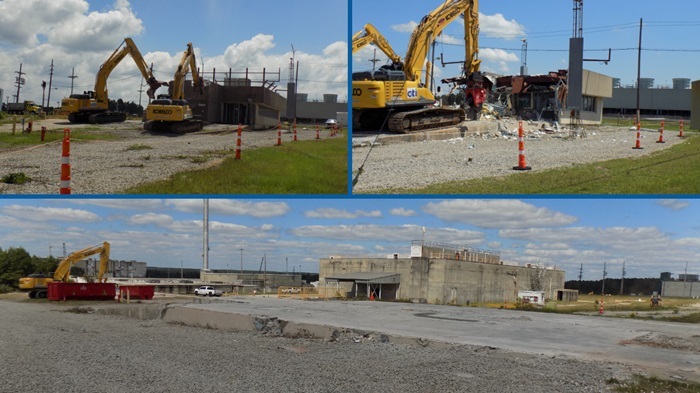 Views of 701-4F Entry Control Facility demolition progress from start to finish.
The crews also dismantled two layers of perimeter security fencing and removed electronic security components located between the fences.
“This ongoing work serves as another testament to our commitment to making the world a safer place,” said Jeff Griffin, president and CEO of EM contractor Savannah River Nuclear Solutions (SRNS). “We pride ourselves on the progress achieved so far and remain steadfast in our efforts to see this vital project through to completion.”
Workers produced the fuel spheres and pellets from plutonium-238 for the deep-space missions at 235-F, constructed in the early 1950s. The two-story, reinforced concrete structure has been inactive for more than 25 years. Deactivating 235-F in 2023 positioned it in a safe condition for continued surveillance and maintenance until in-situ decommissioning, which involves permanently entombing the facility in place, can proceed.
“This isn't just about dismantling structures; it's about building a safer future,” 235-F Decommissioning Project Manager Pat O'Neill said. “With the Department, SRNS and our state and federal regulatory partners, we remain dedicated to fulfilling our environmental commitments, ensuring safety and compliance at every step.”
SRNS Design Engineering completed the conceptual design for the 235-F decommissioning in August. The project team is now developing the detailed design, revised safety basis documents to support final decommissioning and a detailed project schedule and estimate. In-situ decommissioning field work is scheduled for the fiscal year that begins in October.
-Contributor: Fallan Flatow
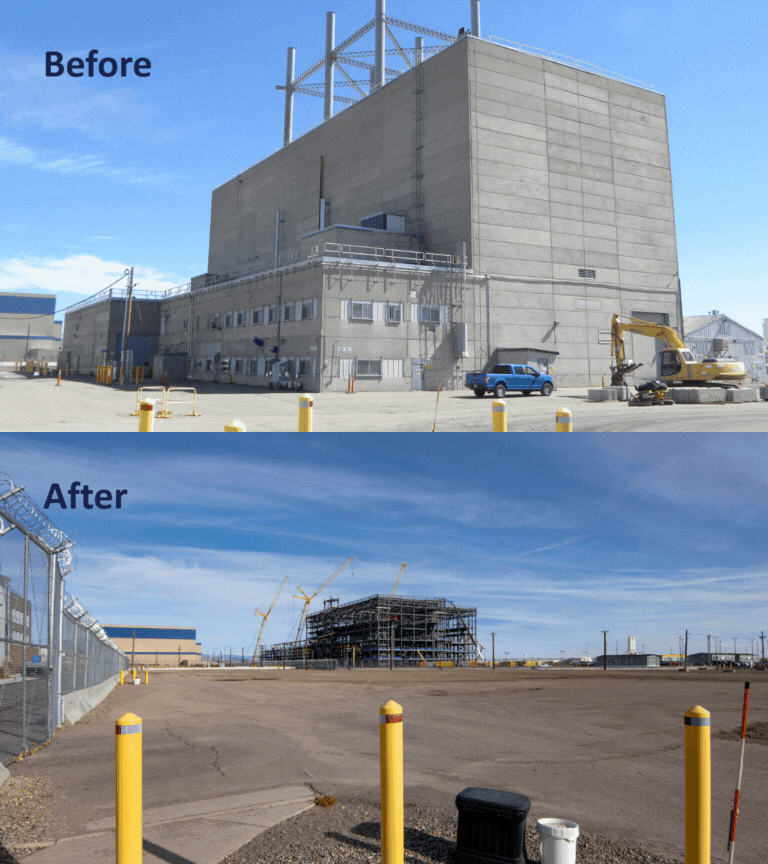 Before and after: Idaho Cleanup Project crews have finished deactivation and demolition of the Submarine 1st Generation Westinghouse prototype. The first photo shows the prototype building before demolition and the second photo shows the site of the building after demolition in the foreground, with new Naval Reactors Facility construction pictured in the background.
IDAHO FALLS, Idaho — The Idaho Cleanup Project (ICP) has closed the first chapter of cleanup of three legacy nuclear propulsion prototypes at the Naval Reactors Facility (NRF) by completing deactivation and demolition (D&D) of the defueled Submarine 1st Generation Westinghouse (S1W) — the historic Navy prototype that helped develop the first nuclear-powered submarine, USS Nautilus.
The site of the S1W now sits bare for the first time in nearly 75 years. Crews have worked diligently since May to size-reduce, recycle and remove debris from the S1W prototype’s footprint after ICP used explosive charges to bring down the prototype’s high bay building.
A major part of this effort involved cutting the remaining hull pieces and transporting them to the Idaho National Laboratory Site CERCLA disposal facility. Each piece weighed several hundred thousand pounds and took several weeks to cut using specialized saws and cutters. CERCLA stands for Comprehensive Environmental Response, Compensation, and Liability Act, a law enacted by Congress in 1980. As a result of the CERCLA regulatory process, the disposal facility has stringent waste acceptance criteria.
With the S1W project complete, cleanup crews have turned their attention to D&D of the Aircraft Carrier 1st Generation Westinghouse (A1W) and Submarine 5th Generation General Electric (S5G) prototypes.
Workers have prepared for large-scale D&D at A1W by removing targeted hazardous materials like asbestos and polychlorinated biphenyls (PCBs) from the prototype. They also removed ancillary buildings around A1W.
Deactivation progress at the S5G prototype continues since NRF turned the site over to the U.S. Department of Energy Office of Environmental Management (EM) in October 2024.
With D&D of S1W now in the past, ICP D&D Projects Operations Director Shawna Burtenshaw recognizes the benefit experience will provide as the team looks to tackle the difficult work ahead.
“Many of the challenges we will face moving forward will be similar to those we experienced by completing D&D at the S1W prototype,” said Burtenshaw. “Thanks to a talented and experienced crew, we are prepared to effectively meet these challenges.”
ICP has managed D&D of the three legacy nuclear propulsion prototypes since 2022 as a result of an agreement signed by EM and the U.S. Navy in 2019. These prototypes were constructed to support the Naval Nuclear Propulsion Program and provided training ground for prospective nuclear fleet operators.
ICP crews are scheduled to complete D&D of A1W and S5G over the next six years.
-Contributor: Carter Harrison
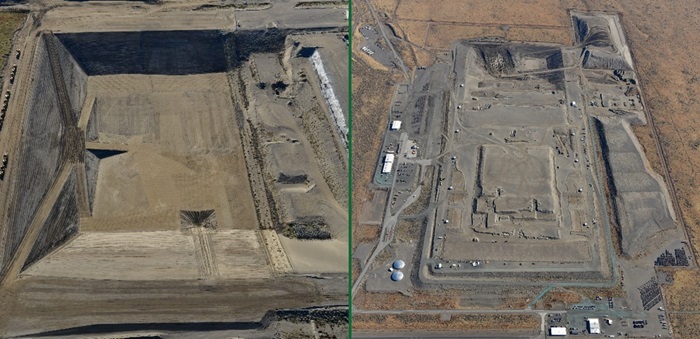 Workers with contractor Central Plateau Cleanup Company recently completed excavation for Super Cell 11, left, at the Hanford Site’s Environmental Restoration Disposal Facility, right. The expansion will add about 2.8 million cubic yards of disposal capacity to support Hanford cleanup efforts through at least 2040.
RICHLAND, Wash. — Hanford Site crews recently finished digging a new disposal area at the Environmental Restoration Disposal Facility (ERDF), the site’s engineered landfill.
Excavation began last summer on the facility’s 11th disposal cell — called a “super cell” because it is twice the size of the facility’s original cells. The new cell, which was dug 80 feet deep and measures 500 feet wide by 1,000 feet long, will add about 2.8 million cubic yards of disposal capacity to support Hanford’s ongoing cleanup mission through at least 2040.
“ERDF has been a cornerstone of our waste disposal strategy for nearly 30 years, and this expansion is essential to provide uninterrupted, efficient and safe disposal for years to come,” said Kelly Ebert, director for the Projects and Facilities Division with the U.S. Department of Energy Office of Environmental Management’s Hanford Field Office.
Next spring, workers with contractor Central Plateau Cleanup Company (CPCCo) will complete the expansion project by installing an engineered liner. The liner is designed to collect potentially contaminated water from rain and dust-suppression activities to ensure the protection of groundwater.
ERDF is located near the center of the 580-square-mile Hanford Site. It accepts low-level radioactive and hazardous chemical waste generated from Hanford cleanup operations. Since opening in 1996, ERDF has received nearly 20 million tons of waste. This is the fifth expansion following additions in 1999, 2003, 2007 and 2011.
“Our team remains committed to safe and efficient operations at ERDF, and our experienced crews are excited about the progress being made on this important project to support continued risk reduction at Hanford,” said CPCCo President and Project Manager Bob Wilkinson.
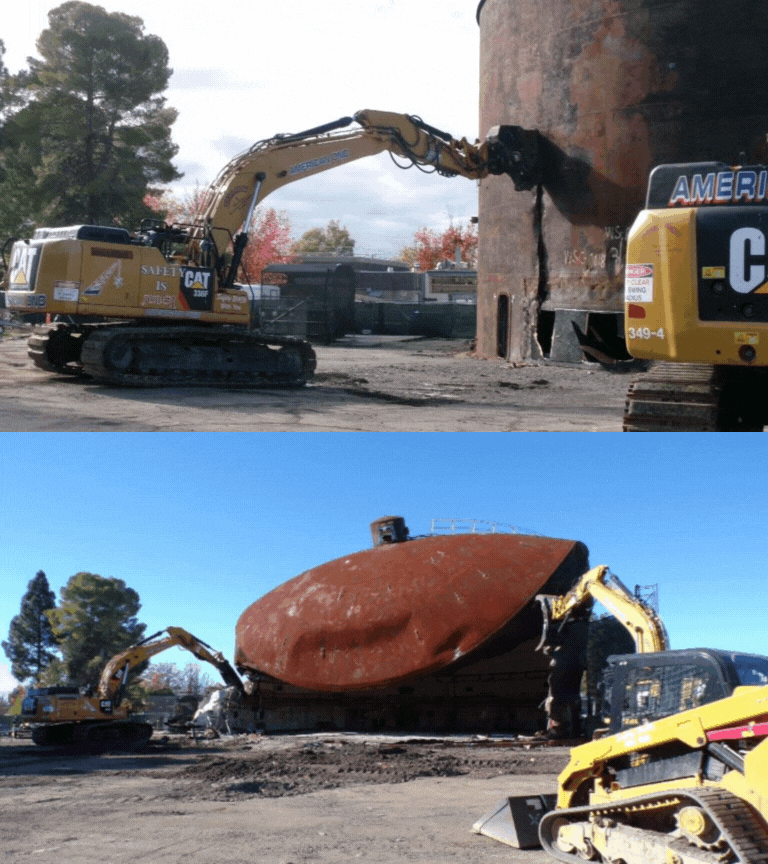
LIVERMORE, Calif. — Crews with the U.S. Department of Energy Office of Environmental Management (EM) have made steady progress removing a legacy research reactor dome, Building 280, located on the Lawrence Livermore National Laboratory site. EM, in coordination with the U.S. Army Corps of Engineers and other partners, is performing radioactive waste management and excess facility demolition at the laboratory site to open space for new opportunities on the laboratory’s small footprint. The first photo shows the dome on Nov. 19. It compares with the second photo taken Dec. 8, following work to remove it.
-Contributor: Stephanie Shewmon
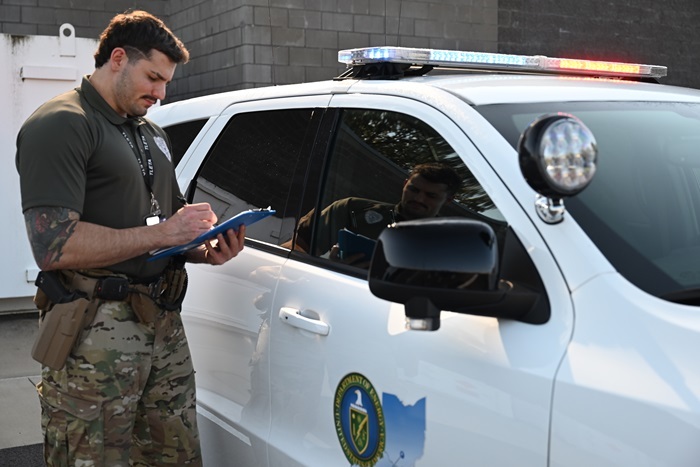 Paducah Site Security Police Officer Joe Molinaro conducts an inspection of a Protective Force vehicle before starting his shift. Routine vehicle inspections played a significant role in the force achieving 106,000 miles accident-free during fiscal year 2025.
PADUCAH, Ky. — The Paducah Site Protective Force has marked 106,000 miles of driving without any accidents in one year.
It was the first time members of the force exceeded 100,000 miles for a fiscal year, and the second consecutive fiscal year they drove accident-free, with nearly 195,000 miles driven combined for the two years.
“The Protective Force are always in constant patrol,” U.S. Department of Energy Office of Environmental Management Portsmouth Paducah Project Office Security Team Lead Mark Allen said. “They ensure the Paducah Site and its employees are provided around-the-clock protection, and it’s proven with the miles driven.”
The Protective Force primarily attributed the fiscal year 2025 accomplishment to the diligence of its security police officers through an enhanced vehicle maintenance program and a heightened sense of responsibility for their vehicles.
“At the Paducah Site, the security police officers take ownership, pride and accountability for their patrol vehicles 24 hours a day, seven days a week and 365 days a year,” Paducah Site Protective Force Security Director Eddie Gray II said. “Reaching this accomplishment shows they take their job seriously to ensure the Paducah Site and the community are safe in any type of security event.”
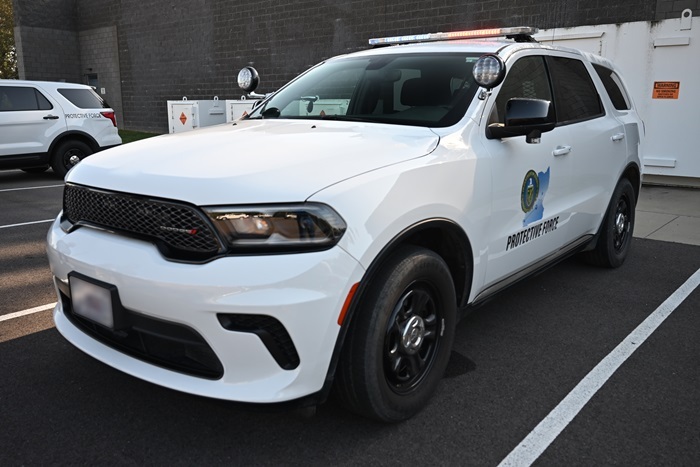 A Protective Force vehicle sits at the ready for Paducah Site security police officers. Recent upgrades have provided them a new sense of pride and responsibility for their vehicles.
Reaching this landmark is especially notable considering the officers add about 1,500 to 2,000 miles to each patrol vehicle odometer each week at a site with around 19 miles of road. Driving 106,000 miles is equivalent to traveling around the world five times.
Due to the high mileage, the Protective Force implemented a program to track routine maintenance and ensure the vehicles are up to U.S. General Services Administration standards.
“A good, safe vehicle allows us to get that kind of mileage,” Paducah Site Protective Force Security Manager Mike Turner said. “Before the tracker tool was in place, we would catch tires not to General Services Administration standards and oil changes past due. We keep them maintained for a level of safety for the security police officers and their response capability.”
Part of this program includes oil changes every 3,000 miles instead of the standard 6,000 miles. Additionally, the officers perform internal and external vehicle inspections at the beginning and end of each shift. They also clean their vehicles inside and out at least weekly.
“The security police officers understand it’s important for them to have these vehicles,” Paducah Site Protective Force Capt. Shawn Craven said. “They show more dedication to their vehicles. Many of them will wipe down their patrol car before entering, which keeps it extra clean and organized, helping prepare them for each shift.”
-Contributor: Zachary Boyarski
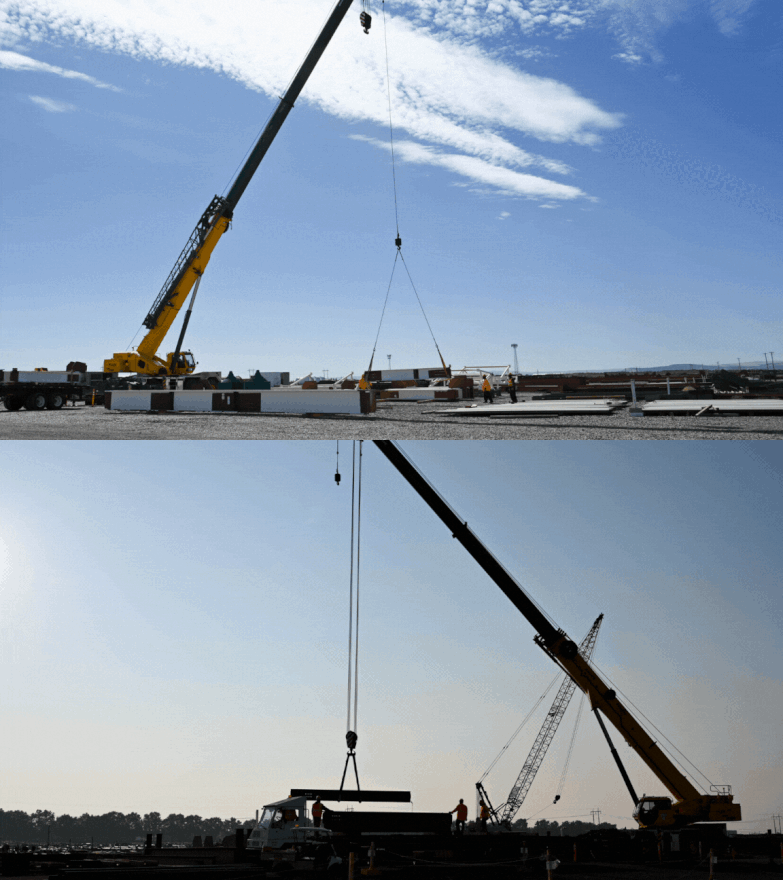
RICHLAND, Wash. — Crews used cranes and lifts to install heavy steel beams nearly 60 feet above the Waste Treatment and Immobilization Plant’s High-Level Waste Facility on the Hanford Site. The work, performed by contractor Bechtel National Inc., is a key step to completing the facility’s roof. Once the roof is in place, crews can begin installing systems that will turn highly radioactive waste into glass for long term storage.
Before installation, each beam was cleaned, coated with fire-resistant material and inspected to ensure it can withstand extreme conditions.
Watch this video to see the scale and precision of the work.
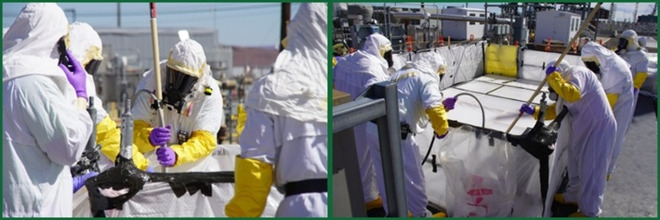 Workers with Hanford Tank Waste Operations & Closure use long-reach tools to tighten nozzle connectors while installing the final piece of piping needed to connect the tank farms to the Waste Treatment and Immobilization Plant.
Cleanup program recently awarded performance-based fee payments to 12 of its contractors at sites across the DOE complex
The U.S. Department of Energy Office of Environmental Management (EM) recently awarded performance-based fee payments to 12 of its contractors at sites across the cleanup complex, including Hanford, Savannah River, Paducah, Portsmouth, Waste Isolation Pilot Plant, Idaho, Nevada, Los Alamos, and Savannah River National Laboratory.
EM releases information relating to contractor fee payments — earned by completing work called for in the contracts — to further transparency in its cleanup program.
Following are the fee payments for the contractors over varying performance evaluation periods within fiscal year 2025, which ended Sept. 30:
- Hanford Tank Waste Operations & Closure LLC, the Hanford Field Office (HFO) tank operations contractor, was awarded nearly $26.3 million, or 94% of the available fee of about $28.1 million for the period of Feb. 24, 2025, through Sept. 30, 2025.
- HFO cleanup contractor Central Plateau Cleanup Company LLC was awarded close to $18.6 million, or 96% of the available fee of almost $19.3 million for fiscal year 2025.
- HFO 222-S Laboratory contractor Hanford Laboratory Management and Integration LLC received nearly $5.1 million, or 95% of the available fee of $5.3 million for fiscal year 2025.
- Hanford Mission Integration Solutions LLC, HFO mission support contractor, was awarded close to $21.9 million, or 96% of the available fee of nearly $22.9 million for fiscal year 2025.
- Savannah River Mission Completion LLC, the liquid waste contractor at Savannah River Site, received about $966,100, or all of the available fee for Task Orders 10, 11 and 12 for fiscal year 2025.
- At Savannah River National Laboratory, management and operations (M&O) contractor Battelle Savannah River Alliance LLC was awarded about $5.7 million, or 94% of the available fee of nearly $6.1 million for fiscal year 2025.
- Four Rivers Nuclear Partnership LLC, the Paducah Site deactivation and remediation contractor, received close to $15.7 million, or 98% of the available fee of almost $16.1 million for fiscal year 2025.
- Mid-America Conversion Services LLC earned nearly $4.9 million, or 88% of the available fee of more than $5.5 million for the period of Oct, 1, 2024, to May 31, 2025, for its operation and maintenance of the depleted uranium hexafluoride (DUF6) conversion facilities at the Portsmouth and Paducah sites.
- Salado Isolation Mining Contractors LLC, the Waste Isolation Pilot Plant M&O contractor, received close to $15.4 million, or 97% of the available fee of about $15.8 million for fiscal year 2025.
- Idaho Environmental Coalition LLC, the Idaho Cleanup Project cleanup contractor, received over $27.6 million, or 96% of the available fee of more than $28.7 million for fiscal year 2025.
- Navarro Research and Engineering Inc., the EM Nevada Program cleanup contractor at the Nevada National Security Site, was awarded more than $1.7 million, or 95% of the available fee of nearly $1.8 million for fiscal year 2025.
- Newport News Nuclear BWXT-Los Alamos LLC, the EM Los Alamos Field Office legacy cleanup contractor at Los Alamos National Laboratory, earned over $15.8 million, or 95% of the available fee of more than $16.7 million during fiscal year 2025.
|