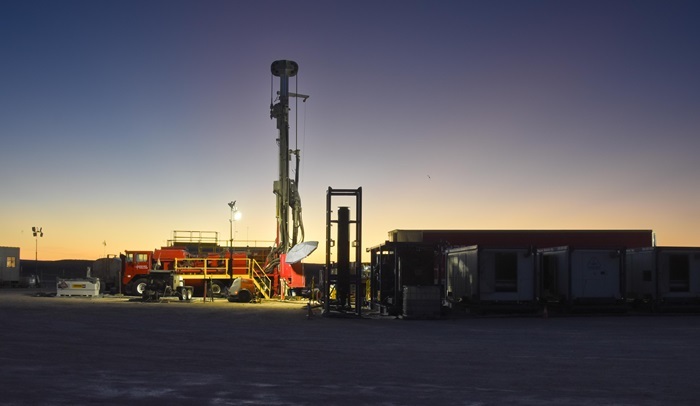
 Drilling operations at sunrise at the second of two new groundwater monitoring wells constructed on the remote Pahute Mesa at the Nevada National Security Site.
LAS VEGAS — The U.S. Department of Energy Environmental Management (EM) Nevada Program recently completed drilling of two new groundwater monitoring wells and deepened a third at the Nevada National Security Site (NNSS).
Data from the new wells will help EM strengthen its groundwater monitoring models.
Pahute Mesa is the final groundwater closure area at the site, and the installation of new wells brings the program a step closer to completing the groundwater monitoring mission at NNSS. EM previously installed groundwater monitoring wells at Frenchman Flat, Yucca Flat, Rainier Mesa and Shoshone Mountain.
 Since 1989, EM has been documenting the nature and extent of the contamination of groundwater resulting from the historic nuclear testing at the NNSS, forecasting where contaminated water is headed and the rate of movement. The monitoring well data is used to develop groundwater flow and transport models.
"This project required coordination among a number of organizations," said EM Nevada Program Manager Rob Boehlecke. "This coordination, coupled with an emphasis on safety, resulted in success."
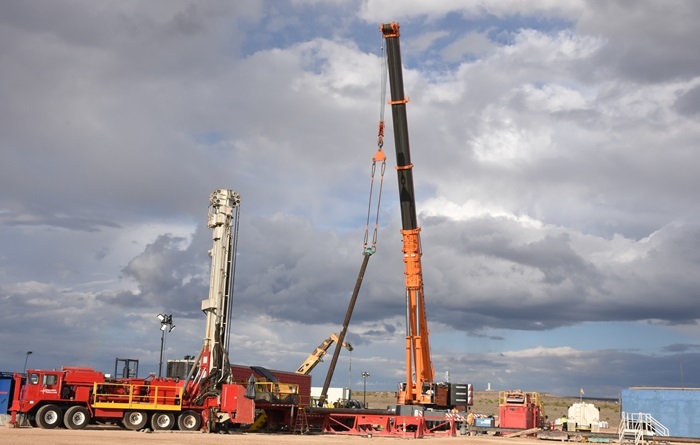 Crews complete work to deepen an existing groundwater monitoring well on Pahute Mesa.
The project was completed by EM Nevada Environmental Program Services contractor Navarro Research and Engineering with the assistance of subcontractor Premier Drilling.
Navarro Field Operations Manager Brian Haight said the project employed close to 100 people, with many workers coming from the small, rural communities of Beatty, Pahrump, Tonopah and Amargosa Valley, Nevada. The team used innovative technology to successfully and safely drill the wells. The driller developed a “baffle box” to reduce the pressure of water discharges and created a noise filter to reduce the amount of noise emanating from compressors onsite.
 |
|
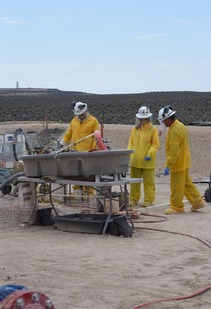
Navarro Research and Engineering Environmental Scientist Olivia Jensen and Navarro subcontractor Klaas Doeden, at right, collect water samples for field water quality analyses. Navarro Geologist and Senior Modeler Kevin Day, at left, collects cuttings samples for geologic analysis from one of two new groundwater monitoring wells on Pahute Mesa. |
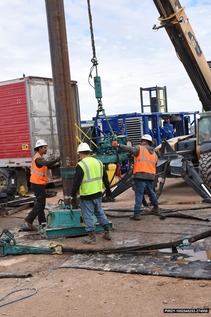
Crews connect casing for a new groundwater monitoring well on Pahute Mesa. They use “power tongs” — like a hydraulic-powered wrench — to tighten the casing to the specified torque. |
|
 |
“The wells are important,” Boehlecke said, “because they demonstrate the reliability of our computer modeling results and they support the future closure of the final groundwater corrective action units at the NNSS.”
-Contributor: Glenn Puit
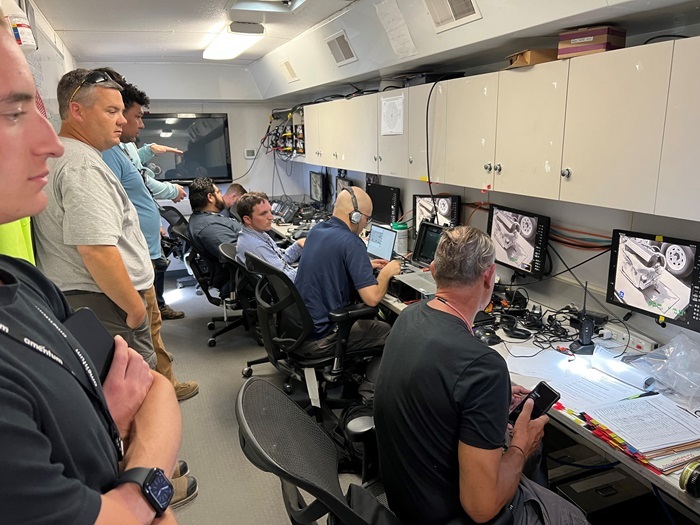 Hanford Tank Waste Operations & Closure operators oversaw the cold spray system application remotely from a nearby trailer after it was deployed inside one of the Hanford Site’s double-shell tanks.
RICHLAND, Wash. — Crews at the Hanford Site have introduced an advanced metal coating technology to help extend the life of underground tanks that hold radioactive waste, reinforcing a U.S. Department of Energy Office of Environmental Management (EM) commitment to innovation and safe, long term cleanup.
Contractor Hanford Tank Waste Operations & Closure (H2C) is using a technique called "cold spray," which applies metal powder at supersonic speed to strengthen tank surfaces. While cold spray is commonly used in industries like aerospace and marine repair, this marks the first time EM has adapted the approach to Hanford’s aging double-shell tanks.
"Incorporating cold spray technology into our toolkit is crucial for maintaining these large, underground tanks as we prepare to turn tank waste into glass,” said Erik Nelson, Hanford Field Office Tank and Pipeline Integrity program manager. “Extending the lifespan of these tanks is vital to our cleanup mission."
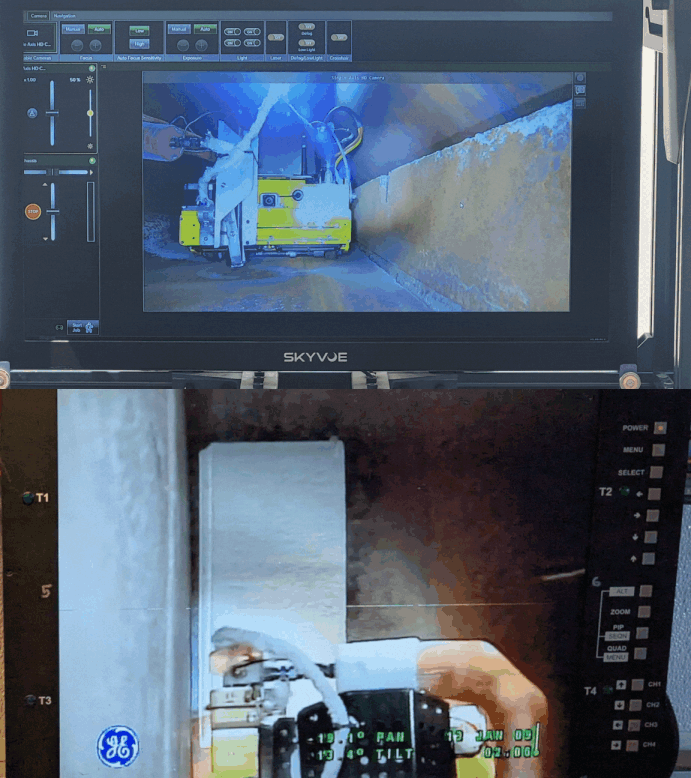 A remotely controlled robot used cold spray technology to apply a 7-by-16-inch metal patch on the floor between the inner and outer shells of a Hanford Site double-shell tank.
Workers used a remotely controlled robot to apply a 7-by-16-inch metal patch between the primary and secondary walls of a double-shell tank. This comes after years of testing and demonstrated the system’s potential to extend tank service life.
Stephanie Doll, the H2C technical lead for the project, expressed pride in adapting this technology for Hanford's needs: "It's rewarding to bring this industrial technique to our site and enhance our ongoing tank monitoring efforts."
See how crews applied the technology in this video recap.
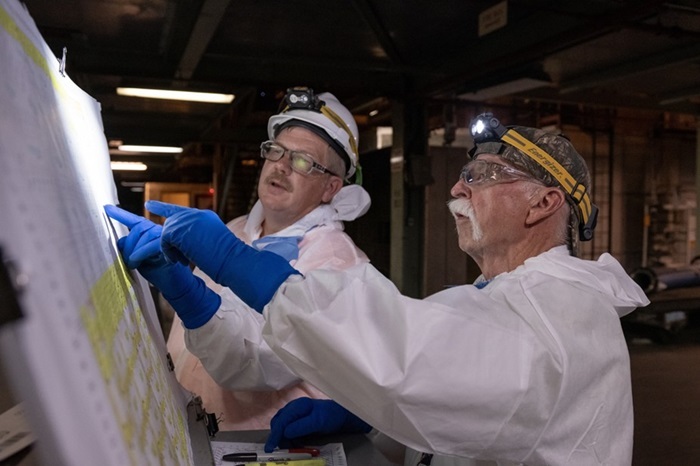 Paducah Site workers review a map of the C-337 Process Building while installing new barcode-enabled signage on columns. The signage uses a grid mapping system developed as a lesson learned from the C-333 Process Building deactivation to improve tracking of component locations as deactivation work progresses.
PADUCAH, Ky. — Cleanup crews are wrapping up work to prepare the C-333 Process Building for future demolition, and they are taking lessons learned in innovation, efficiency and safety with them as they shift focus to the C-337 Process Building at the U.S. Department of Energy Office of Environmental Management (EM) Paducah Site.
New tools, refined approaches and valuable lessons learned from successes in C-333 will guide the next phase of work at C-337.
The C-333 and C-337 facilities are the largest at the Paducah Site. They combine for over 40 miles of piping, 100 acres of floor space and thousands of process components once part of uranium enrichment operations for decades. Both facilities are similar in construction and are slated for deactivation and demolition as cleanup continues at the site.
As crews launch deactivation activities in C-337, several key takeaways from the C-333 deactivation shape the overall strategy to increase efficiency and worker safety. As components are removed for downsizing in the site’s material-sizing area, crews prepare the equipment to be dismantled. Through benchmarking with other EM sites, different methods, including removal of lead paint, proved to be more effective to prepare equipment, saving time and minimizing potential exposure to workers.
Paducah Site Lead April Ladd praised the team members for their continued innovation and discipline.
“The work in the C-333 Process Building demonstrates the value of refining processes, challenging old assumptions and learning from every phase of the cleanup,” Ladd said. “These improvements not only enhance safety and efficiency but strengthen our long term path toward the overall cleanup mission at the Paducah Site.”
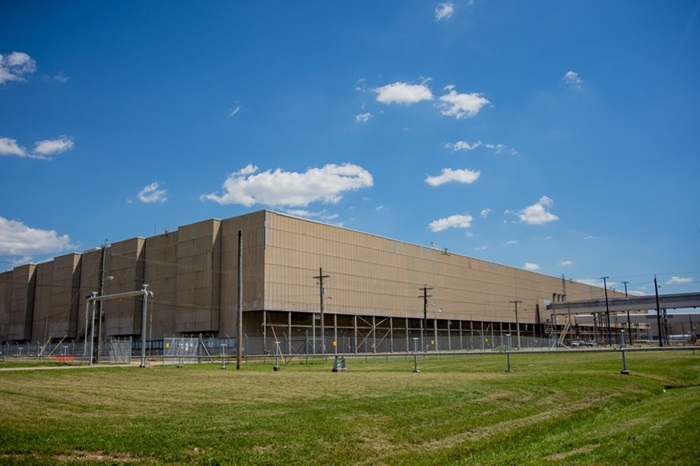 A view of the northwest corner of the C-337 Process Building at the Paducah Site. With deactivation in the C-333 Process Building wrapping up, lessons from the facility are being applied as work shifts to the C-337 Process Building.
In addition to efficiencies in preparations, new process improvements address challenges associated with the scale of deactivation operations. One such upgrade is a new grid-based tracking system.
During C-333 deactivation activities, tracking the hundreds of components stored around the facility was challenging. The new system assigns precise grid locations for components and introduces barcoding technology to enhance accuracy. Once demolition preparation begins, this upgraded tracking capability will enable the project to quickly produce detailed inventories of items within each grid area, improving organization, documentation and execution.
“Each lesson learned in the C-333 Process Building directly informs our work in the C-337 Process Building,” Four Rivers Nuclear Partnership (FRNP) Program Manager Myrna Redfield said. “Our teams continue to rise to the occasion with smart solutions, strong collaboration and a deep dedication to safely preparing these massive facilities for demolition.”
FRNP is the Paducah Site deactivation and remediation contractor.
“As the Paducah Site transitions to deactivation of the next process building, lessons learned from the C-333 are invaluable in refining work practices, strengthening safety controls and improving the overall efficiency of deactivation,” Ladd said. “Each improvement represents the team’s continued commitment to safe, compliant and forward-looking deactivation work, supporting the long term cleanup mission at the Paducah Site.”
-Contributor: Dylan Nichols
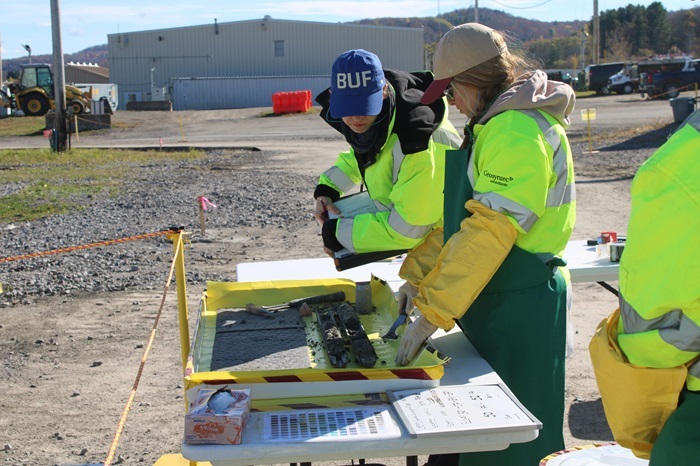 Geologists log samples at the geotechnical boring worksite at the West Valley Demonstration Project. The samples will be sent offsite for analysis.
WEST VALLEY, N.Y. — Workers are making progress drilling holes for subsurface sampling that will provide critical data to inform safeguards in the broader mission to remediate soil at the West Valley Demonstration Project (WVDP), once home to the only commercial spent nuclear fuel reprocessing facility to operate in the U.S.
By studying the soil, composition and groundwater flow beneath the surface, engineers will gain insight into the land’s character. Information collected from the sampling will be used to remediate soil at the former location of the Main Plant Process Building, which the U.S. Department of Energy Office of Environmental Management (EM) successfully removed earlier this year.
“This work is about collecting the best data to make the best decisions,” said Stephen Bousquet, assistant director of Project Management for the EM cleanup site. “Beyond understanding soil conditions, we’re uncovering potential hazards like unstable ground. Every detail guides us toward the safest, most compliant path forward.”
 |
|
Workers use a geotechnical boring machine to collect and evaluate soil, rock, groundwater and other conditions for future planning and design work in their mission to remediate soil at the West Valley Demonstration Project. |
Data gathered from the subsurface sampling will serve as a blueprint, supporting planning and design of a retention wall to be constructed around the former Main Plant site. It will help stabilize the excavation area and prevent water infiltration, allowing crews to safely excavate the soil.
So far, EM and its prime contractor, West Valley Cleanup Alliance (WVCA), have drilled 11 of 20 planned boreholes. From varying depths, they’ve gathered soil samples — sending them offsite for analysis, each one a clue in the puzzle of how best to plan and protect the land.
“Ultimately, it comes down to stewardship,” said Day Way, manager of Decontamination and Decommissioning at WVCA. “Our objective is to mitigate legacy risks at the site. Accordingly, our planning and execution are guided by lessons learned and best practices derived from the data we have collected.”
-Contributor: Joseph Pillittere
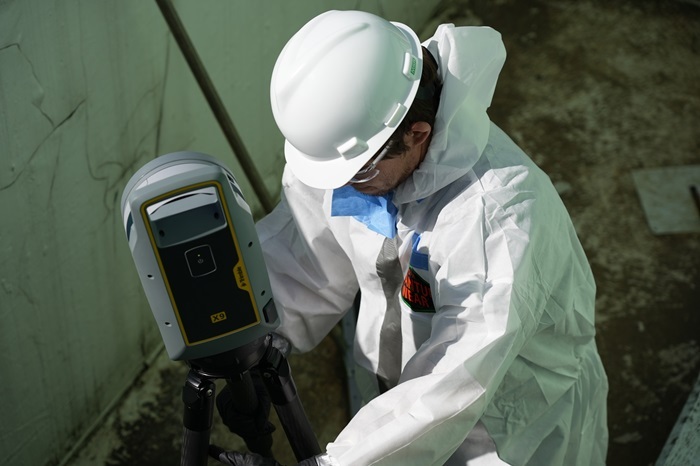 A radiation technician uses light detection and ranging equipment to perform scans at Oak Ridge National Laboratory. Workers are using the technology at the former Fission Production Development Lab to collect specific measurements to support deactivation and demolition activities.
OAK RIDGE, Tenn. — A technology that features a remote sensing method using laser pulses to measure distances and create high-resolution 3D models is making a big impact for teams tasked with preparing Manhattan Project and Cold War era facilities for demolition at Oak Ridge.
The light detection and ranging technology is reducing the number of entries team members need to make inside contaminated facilities. It’s also eliminating the need for workers to enter confined spaces, trimming the hours required for surveying, and providing more data to all the teams responsible for getting legacy buildings demolition-ready.
While this isn’t new technology, previous information technology restrictions prevented its deployment on the footprint of the Y-12 National Security Complex, where the Oak Ridge Office of Environmental Management (OREM) and United Cleanup Oak Ridge (UCOR) conduct large-scale cleanup. Their technology development group identified the light detection and ranging technology as a resource that could be approved, and now it’s being put to work, helping advance several major cleanup projects.
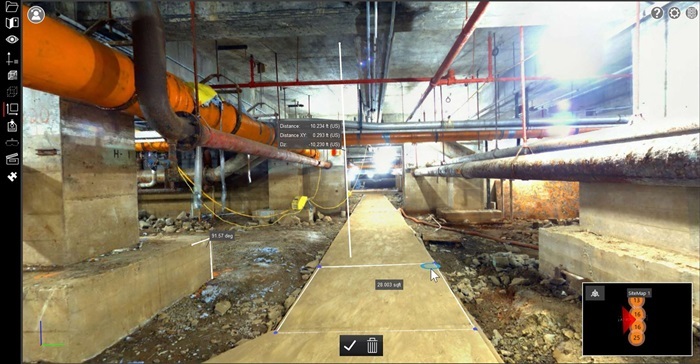 A view of light detection and ranging scans in the basement of the Beta-1 building at the Y-12 National Security Complex. Teams use this data to support excavation planning.
One example is at Y-12’s Beta-1 building, a 300,000-square-foot former uranium enrichment facility. Due to minimal documentation of equipment inside the structure’s Large Coil Test Facility, UCOR is using the technology to map it out. That approach helps keep workers from entering confined spaces.
Crews also employ the technology in the Beta-1 basement to support excavation planning. They will see a significant reduction in the hours required to walk through the site to inspect it. Without the scanning technology, workers spent more than 300 hours on this task at the nearby Alpha-2 building. UCOR estimates that could drop by 80 hours this time around.
At Oak Ridge National Laboratory (ORNL), another large-scale cleanup site, workers apply the technology at the former Fission Production Development Lab, also known Building 3517, to collect specific measurements to support deactivation and demolition (D&D) activities.
“This technology is changing the way we do work,” Scott Ward, UCOR cleanup and D&D engineering manager, said. “It will never eliminate walkdowns, but it will greatly reduce time spent in hazardous environments.”
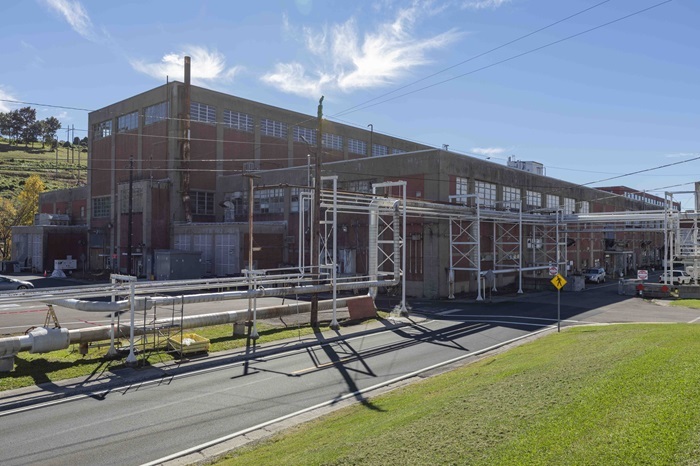 An exterior view of the 300,000-square-foot Beta-1 building at the Y-12 National Security Complex. Light detection and ranging technology reduces the time needed to walk through these sprawling buildings to inspect them, and it provides more data to the teams responsible for getting buildings demolition-ready.
The technology will also help workers with verifying drawings, supporting inventory management and other tasks.
Now that the technology is part of the OREM-and-UCOR toolbox, future opportunities exist to gather information to determine the types and levels of contamination to support work planning, worker safety, and waste management at other facilities planned for demolition, including ORNL’s Process Waste Treatment Plant and at Y-12’s Beta-4 facility.
-Contributor: Ella Stewart
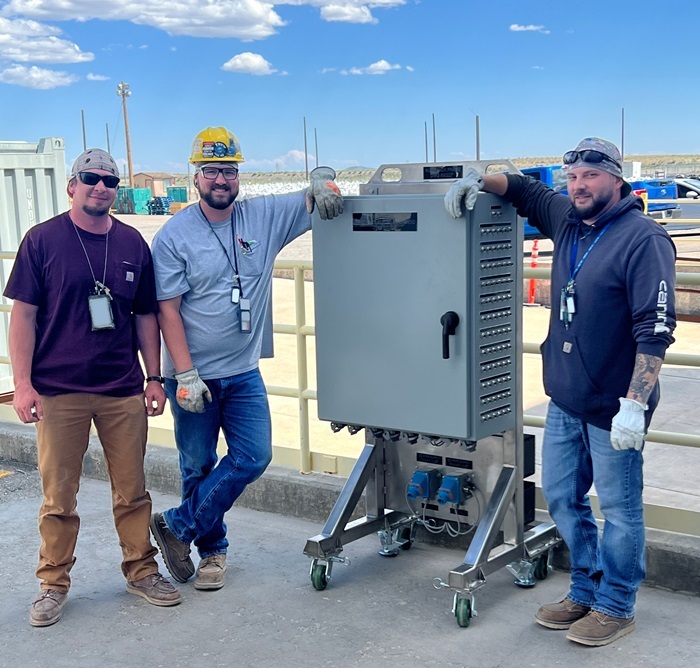 Idaho Environmental Coalition electricians, from left, Jaron Day, Bryen Baret and Jon Petersen stand by a robotic control panel that will be used by the Calcine Disposition Project.
IDAHO FALLS, Idaho — An Idaho Cleanup Project (ICP) team created state-of-the-art process control panels that will ensure coordinated operation of a waste retrieval system and robotic equipment hundreds of feet away.
The control system was designed and programmed by Ed Harlow, an instrumentation specialist with ICP contractor Idaho Environmental Coalition (IEC) with the help of other IEC employees. Harlow praised IEC and the Calcine Disposition Project management team for supporting his vision.
“They are always willing to adapt cutting-edge technology and provide the personnel to execute projects that quickly achieve mission goals,” said Harlow.
The technology uses redundant industrial computers to control the panels across a fiber-optic network. Using the control panels, Calcine Disposition Project staff members will be able to operate several pieces of equipment at the same time. Multiple panel connection ports on the control system also can be quickly reconfigured to accommodate the different equipment that will be required to safely remove the radioactive waste.
The project is tasked with developing retrieval, transfer and monitoring equipment that will allow engineers to transfer granulated calcine from large, concrete silos called bin sets for disposition. The team has focused on demonstrating the capability to transfer calcine from Bin Set #1 to Bin Set #6, but the technology developed by the team, like the process control panels, is adaptable to retrieve calcine from the other four bin sets.
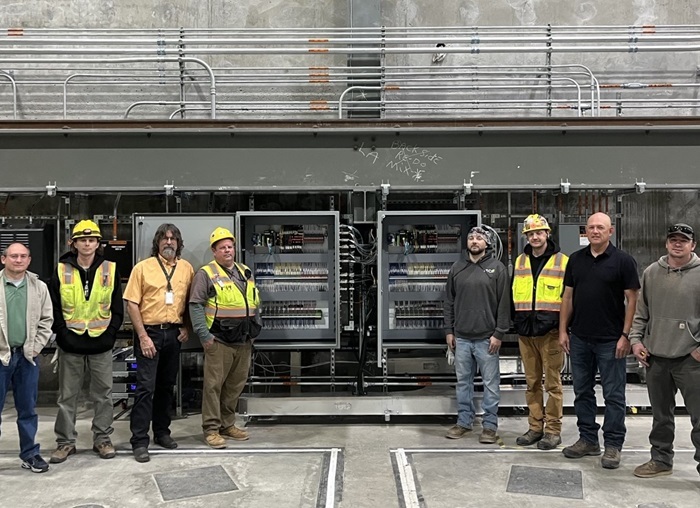 Idaho Environmental Coalition employees, from left, Seth Robinson, Chris Wright, Tim Egan, Clark Speirs, Jon Petersen, Kade Sloup, Ed Harlow and Jaron Day stand next to the state-of-the-art process control panels developed for the Calcine Disposition Project.
Information and experience gained during the retrieval demonstrations will enable ICP to transfer the 4,400 cubic meters of calcine waste from the six bin sets. This high-level waste will be shipped out of Idaho in compliance with the 1995 Idaho Settlement Agreement.
Calcine is a dried byproduct of spent nuclear fuel processing that took place at the Idaho Nuclear Technology and Engineering Center (INTEC) from the early 1950s to 1992. The liquid waste generated during reprocessing runs was dried and transferred to the six large bin sets at the INTEC facility.
“These new, developed systems can be easily reconfigured for other equipment supporting other projects,” Harlow said. “In fact, with instruction, these panels could be used for a variety of field work — including mobilization and demobilization activities — throughout the U.S. Department of Energy complex.”
-Contributor: Erik Simpson
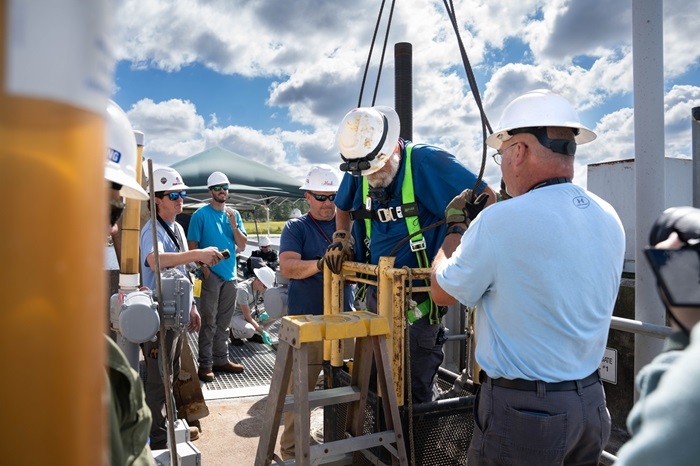 Richard Swygert, Savannah River Nuclear Solutions Site Infrastructure engineer, descends into one of four vertical shafts to inspect roughly 600 feet of conduit for mechanical integrity, ensuring all mechanical parts are in optimal condition at the Steel Creek Dam at L Lake.
AIKEN, S.C. — In a significant achievement for dam safety, a U.S. Department of Energy (DOE) Office of Environmental Management (EM) contractor has successfully completed inspections of two high-hazard dams at the Savannah River Site (SRS).
Occurring every five years, the inspections of the Steel Creek and PAR Pond dams included functional testing and preventive maintenance, and adhered to rigorous guidelines to ensure safety and effectiveness.
The Steel Creek Dam, built for reactor cooling water, contains contaminated sediment. Maintaining the dam and keeping the sediment submerged is not only cost effective but also beneficial for local wildlife, such as fish or osprey. PAR Pond is a large, man-made reservoir at SRS also built for reactor cooling water. The reactors are no longer in service.
“Many different Site Services groups came together to make this happen, despite challenges of confined space entry and numerous mechanical inspections,” said Danny Banks with EM contractor Savannah River Nuclear Solutions (SRNS), which manages the two high-hazard dams as well as eight low-hazard dams at the site. “The comprehensive inspection required six months of preparation and two days in the field, showcasing the SRNS commitment to safety.”
Banks and Richard Swygert are key SRNS figures in the site’s dam inspection process.
“We completed this inspection on time, with no injuries, thanks to the extensive planning and preparation from various groups across the site,” said Swygert, who has over 30 years of experience at SRS. “These inspections are vital for the ongoing operability and safety of our dams.”
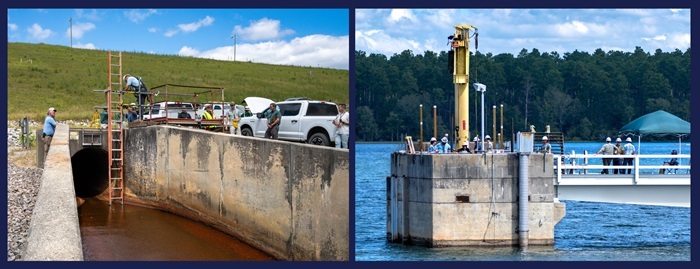 Savannah River Nuclear Solutions Site Services personnel perform the inspection of Steel Creek Dam at L Lake.
Requested by DOE, the inspections required a comprehensive critical lift plan to ensure safe descent into the wells for examination. Employees at Steel Creek Dam surveyed four vertical shafts in the intake tower, each roughly 80 feet deep, by descending each shaft in a crane basket. An inspection team then walked through the 72-inch diameter, 600-foot-long outlet conduit from the spillway to the intake tower. The inspection identifies any issues concerning mechanical parts and structural integrity.
The inspections were a collaborative effort for SRNS, involving employees from several divisions, from Radiological Protection to the SRS Fire Department. Their tasks included:
- Surveying and inspecting conduit for mechanical integrity
- Inspecting all mechanical parts to ensure optimal condition
- Examining concrete structures for signs of structural cracking and other issues
Beyond the five-year independent high-hazard dam inspections, SRNS records lake level readings twice a week and conducts monthly walking inspections, among other tasks.
The Federal Energy Regulatory Commission also conducted a thorough review of the Steel Creek and PAR Pond dams, finding no issues. DOE relies on the commission for annual inspections, complementing the continuous monitoring by SRNS.
“The collaborative effort of various work groups is another example of how challenging tasks can be accomplished through meticulous planning and execution,” said Randy Keenan, SRNS director of Site Services. “The outcomes of this critical inspection prove that the dam will continue to perform its function for years to come.”
Click here to watch the inspection highlight video.
-Contributor: Mackenzie McNabb
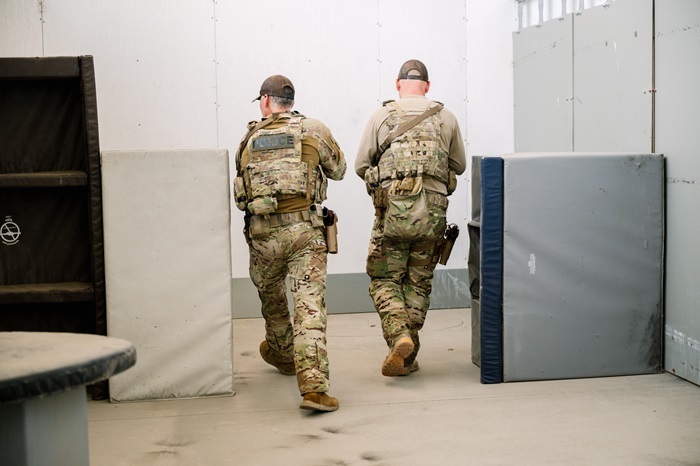 Hanford Patrol officers move through training areas during an emergency response exercise on the Hanford Site.
RICHLAND, Wash. — Keeping the Hanford Site community safe is a 24/7 operation for the Hanford Patrol and Hanford Fire Department. The two teams strengthen coordination by practicing how they would respond together during an emergency, including an active shooter situation.
The weeklong training took place at Hanford’s Patrol Training Academy, combining classroom lessons with hands-on exercises. The goal was to better understand each team’s role and how to better support one another in an emergency.
"Ensuring safe and secure operations is central to our mission at Hanford, and we are always looking for ways to strengthen our response and coordination,” said Tim Haddick, director of the Hanford Field Office’s Security and Emergency Services Division. “Collaboration like this helps us stay ready and continue improving how we protect people onsite.”
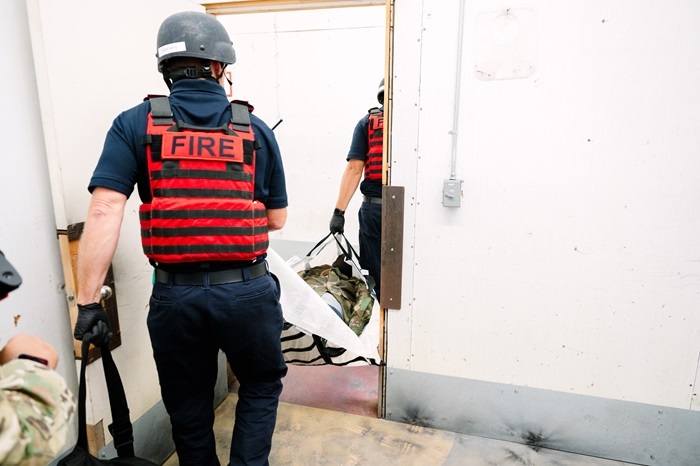 Hanford Fire Department personnel train alongside Hanford Patrol officers during rescue team scenarios in an active shooter drill.
In an active shooter event, patrol teams focus on stopping the threat and securing the area so firefighters and medics can quickly reach those in need.
“Working with the fire department on this training shows how committed we are to being ready,” said Ronald Hayden, Hanford Patrol’s training manager. “It helps ensure we are prepared, and it shows the importance of teamwork. We rely on each other, and training together makes us stronger.”
|