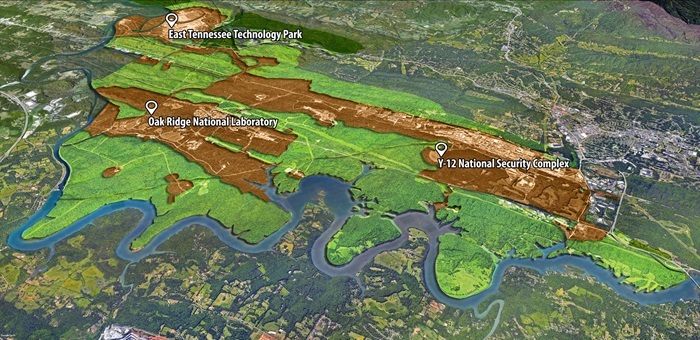
 More than 16,000 acres, shown in green, of the 33,000-acre Oak Ridge Reservation were not impacted by the U.S. Department of Energy’s historic operations and do not require environmental cleanup. This designation provides clarity about the condition of the land, simplifies future transfers and supports beneficial reuse on those parcels.
Designation by U.S. Environmental Protection Agency, Oak Ridge Office of Environmental Management simplifies future land transfers
OAK RIDGE, Tenn. — The U.S. Environmental Protection Agency (EPA) and Department of Energy (DOE) Oak Ridge Office of Environmental Management (OREM) have confirmed half of the federal acreage on the 33,000-acre Oak Ridge Reservation was not impacted by historic operations and does not require environmental cleanup.
This designation provides clarity about the condition of more than 16,000 acres, simplifies future land transfers and supports beneficial reuse on those parcels.
“Ensuring communities around our cleanup sites are safe, clean and prosperous is at the core of our mission,” said OREM Manager Erik Olds. “This clarification is noteworthy because it helps Oak Ridge to continue growing and thriving in the years ahead by providing a more accurate view of the area and simplifying the land transfer process.”
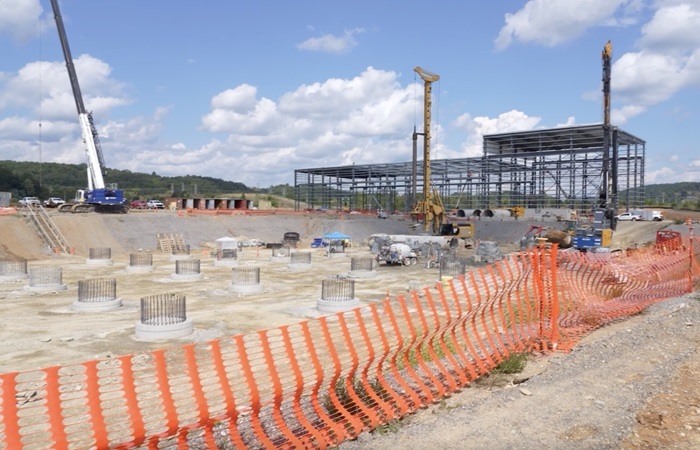 The Oak Ridge Office of Environmental Management has transferred more than 1,800 acres to the community for economic development to date. That land has attracted more than 25 businesses that have announced $8 billion in capital investments, and more developments are expected in the years ahead. Pictured is construction progress on Kairos Power’s new demonstration reactor facility at the East Tennessee Technology Park at Oak Ridge.
While DOE will not transfer all this acreage under the recent designation, the clarification presents a clearer understanding of the landscape and supports the transfers that do occur. It also allows for a wider variety of uses and developments on the land.
EPA placed the entire Oak Ridge Reservation on the Superfund program’s National Priorities List in 1989 to expedite cleanup, said OREM Regulatory Specialist Roger Petrie.
“That approach allowed cleanup to begin sooner by avoiding the cost and time otherwise spent to characterize all of the land at that time,” Petrie said.
OREM and the Tennessee Department of Environment and Conservation have since conducted investigative efforts and environmental surveys to provide a clearer picture of the areas not impacted by DOE’s previous operations. Now that information is being put to use, so that land can be, too.
“All the property won't be transferred because there are portions of this property that DOE will retain for security purposes and for other reasons,” said Petrie. “We've been very successful to this point transferring about 1,800 acres. Now, having 16,000 acres that are opened up, it is even a more attractive place for people to come.”
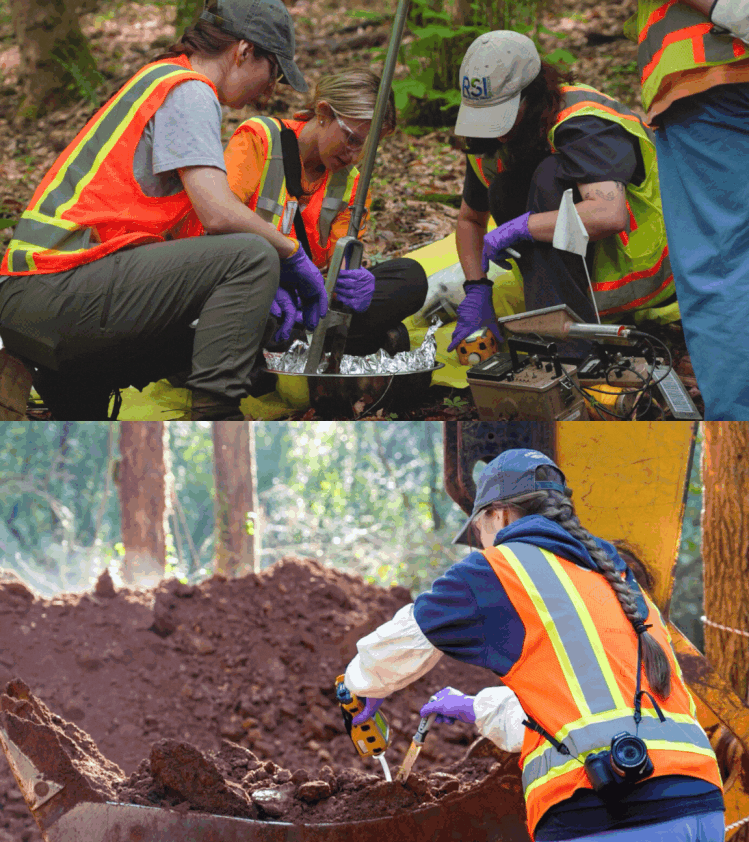 The Oak Ridge Office of Environmental Management and Tennessee Department of Environment and Conservation conducted investigative efforts and environmental surveys to provide a clearer picture of the areas of the 33,000-acre Oak Ridge Reservation not impacted by the U.S. Department of Energy’s previous operations.
This is the latest in a line of recent success from OREM and EPA’s partnership in Oak Ridge.
Through support from EPA’s Region 4 office, OREM is setting the pace for environmental cleanup across all the 175 federal facilities in the Superfund program. Since 2020, OREM has accounted for 16% of all completed cleanup tasks across those sites and 35% for Region 4 in the southeast region of the U.S.
Earlier this year, EPA confirmed all soil cleanup is complete at a portion of the East Tennessee Technology Park (ETTP), a 1,400-acre area known as Zone 1, enabling the reuse of land for economic development. It marked the fourth record of decision advancing cleanup signed in the past three years.
ETTP is formerly known as the K-25 Site or Oak Ridge Gaseous Diffusion Plant that operated from the mid-1940s until 1985. The plant was originally used to enrich uranium as part of the Manhattan Project, but it continued operations after World War II to produce enriched uranium for defense missions and commercial power.
Decades of cleanup by OREM and its contractors have transformed the former uranium enrichment complex into a multiuse industrial center, historical park and conservation area that benefit the community. ETTP was the recipient of EPA’s 2024 National Federal Facility Excellence in Reuse Award.
To date, OREM has transferred more than 1,800 acres to the community for economic development. That land has attracted more than 25 businesses that have announced $8 billion in capital investments, and more developments are expected in the years ahead.
-Contributor: Ben Williams
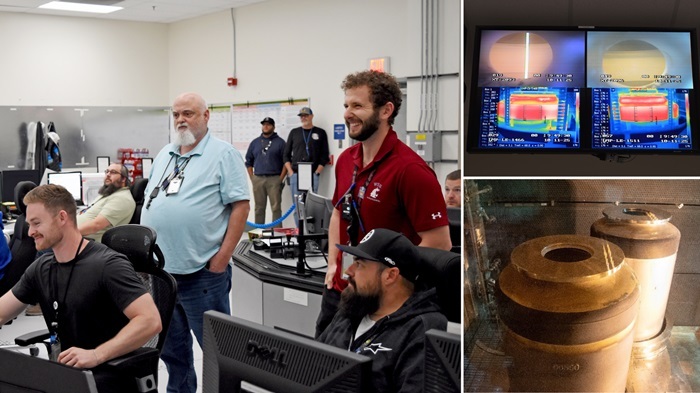 A Waste Treatment and Immobilization Plant crew vitrified the first Hanford Site tank waste inside one of two melters in the Low-Activity Waste Facility. At top, a camera inside the melter’s pour cave shows the vitrified waste being poured into a stainless steel container as seen via remote camera as well as the hot liquid inside the container. Below, the first two containers filled with vitrified waste are seen in the pour cave prior to being lidded, swabbed to verify their exterior is free of contamination, and then moved into the export bay.
RICHLAND, Wash. — The Hanford Site’s Waste Treatment and Immobilization Plant (WTP) has reached another major commissioning milestone, producing more than 20 stainless steel containers of immobilized low-activity waste.
“Each container represents tangible progress in the mission to protect the Columbia River and community,” said Mat Irwin, the Hanford Field Office assistant manager for WTP.
The first pretreated tank waste was transferred to the plant’s Low-Activity Waste Facility in early October, when hot commissioning began. Inside that facility’s two 300-ton melters, radiological and chemical waste is combined with glass-forming materials and then heated to 2,100 degrees Fahrenheit.
That process, called vitrification, transforms the waste into a stable glass form and seals it in stainless steel containers, each of which is 4 feet wide and 7.5 feet tall, weighing approximately 7 metric tons when filled. The vitrified product meets the state of Washington’s requirements for long term disposal at Hanford’s Integrated Disposal Facility.
“Our team has turned progress into momentum, and we’re committed to carrying that forward through continued operations,” said Brian Hartman, WTP project director and senior vice president with Bechtel, the contractor leading design, construction and commissioning of the plant.
The accomplishment also represents the beginning of extended hot commissioning, during which the team will build production consistency and establish a steady rhythm of performance for safe and sustained operations.
Hanford is home to 56 million gallons of radioactive and chemical waste stored in 177 massive underground tanks. The waste was generated as part of the nation’s efforts to end World War II and win the Cold War.
The plant facilities can be viewed using the self-guided Hanford Virtual Tour available here.
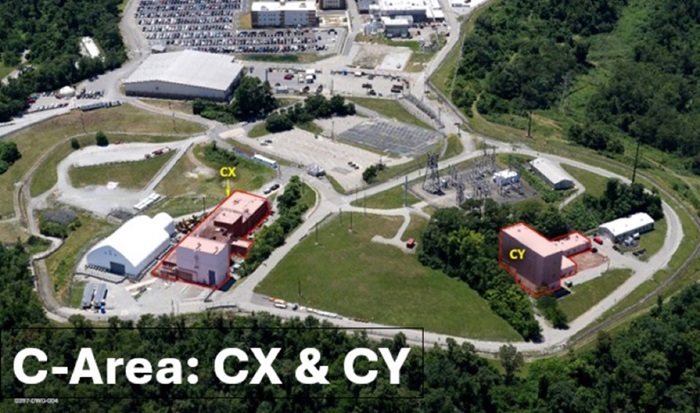 The CX and CY buildings at Bettis Atomic Power Laboratory.
EM selects demolition for C-Area facilities following public meeting on potential cleanup work
WEST MIFFLIN, Pa. — The U.S. Department of Energy (DOE) Office of Environmental Management (EM) will demolish two buildings and address potentially contaminated soil in the project footprint in the Bettis Atomic Power Laboratory’s C-Area, where legacy facilities were used to support design and development of nuclear propulsion systems for the U.S. Navy.
The work is part of a broader partnership between EM and DOE Office of Naval Reactors (NR) to address legacy facilities at the Bettis Laboratory.
EM recently issued an action memorandum that selects demolition for the CX and CY buildings. The cleanup program had evaluated multiple alternatives for the C-Area Engineering Evaluation/Cost Analysis (EE/CA), which was issued for a 30-day public review and comment period on Sept 4. The public provided comments on EM’s evaluation of C-Area cleanup alternatives.
EM and NR held a public meeting to discuss the project on Sept. 18. Team members briefed community members, regulators and officials from the borough of West Mifflin on their partnership to address the legacy facilities.
 |
|
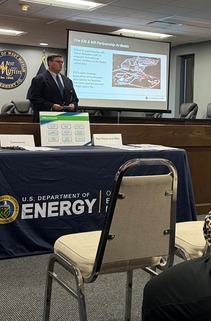
U.S. Department of Energy Office of Environmental Management (EM) Project Manager Matt Young guides attendees of a public meeting through EM’s historical site assessment and evaluation of two legacy buildings located in the C-Area of Bettis Atomic Power Laboratory. The stakeholder and public engagement is part of EM's partnership with the Office of Naval Reactors to transform the legacy facilities. |
EM Project Manager Matt Young hosted the public meeting in West Mifflin’s Administration Building. Joined by NR Project Officer David Harper, Young guided attendees through the history of the CX and CY buildings and the EE/CA, which documents removal options for the buildings, which are currently unused but maintained by NR.
According to the EE/CA, demolition, listed as Alternative 3, is the most effective and protective alternative that is permanent, eliminates risks and allows NR to meet and adapt to changing mission needs at the Bettis Laboratory.
“Empowering the people of West Mifflin with the information they needed to have a voice in this project was of critical importance to me as EM’s project manager,” Young said. “We are proud to bring EM’s expertise in cleanup, and to support NR and the Bettis Laboratory community in evaluating options, and now to address these old spaces safely and efficiently.”
The public meeting was part of the broader EM Community Involvement Plan, issued this past summer, as well as EM efforts to gather comments and community feedback on options to remove the two facilities.
The action memorandum and all project documents and details are available here.
EM expects to start C-Area demolition preparation early next year.
-Contributor: Stephanie Shewmon
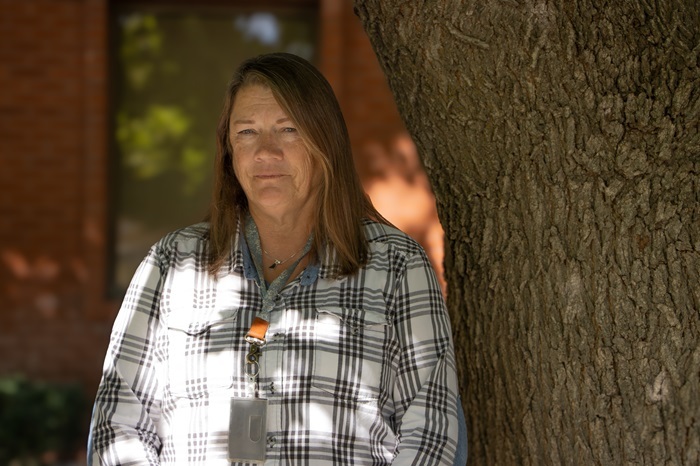 Sue Vilord is a program environmental lead for Idaho Cleanup Project contractor Idaho Environmental Coalition and supports the incorporation of sound environmental policies and practices into all phases of work.
IDAHO FALLS, Idaho — As Idaho Cleanup Project (ICP) demolition crews prepared to demolish the building over the defueled Submarine 1st Generation Westinghouse naval nuclear propulsion prototype reactor plant earlier this year, a nest of ravens was discovered atop the 100-foot structure.
As required by the U.S. Migratory Bird Treaty Act and other federal and state wildlife management laws, the U.S. Department of Energy Office of Environmental Management crews called ICP Program Environmental Lead Sue Vilord, who serves as the resident expert on bird species found on the Idaho National Laboratory (INL) Site.
Vilord worked closely with project crews to ensure the work could continue safely. Later, the birds flew away before the scheduled event, and the demolition proceeded without delay.
Vilord's expertise is crucial to ensuring ICP contractor Idaho Environmental Coalition (IEC) meets its legal wildlife management obligations, and her role with the projects involves monitoring bird populations and advising ICP staff on measures to protect them during project activities.
When wildlife appear within project boundaries it can disrupt work, highlighting the importance of collaboration between operational staff and the environmental programs team.
"These are people who care about wildlife and take steps to follow training and the law,” Vilord said. “That allows me to do my job.”
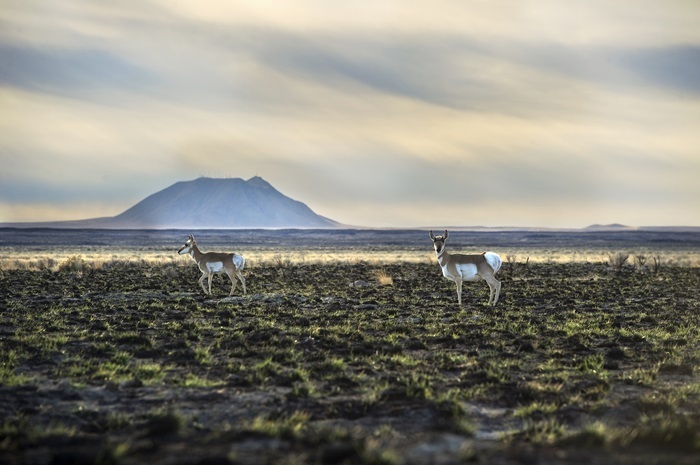 Pronghorn are among the big-game mammals that find the desert surrounding the Idaho National Laboratory Site suitable habitat.
A pair of great horned owlets recently took shelter at the Idaho Nuclear Technology and Engineering Center, where they accidentally set off alarms. Crews called Vilord for assistance. After safely encouraging the owlets, they flew off on their own.
Vilord has roots in the Environmental Surveillance, Education, and Research group, whose mission was to manage ecological and environmental research, offsite environmental surveillance and environmental education for the INL Site.
Vilord's passion for the outdoors led her to pursue a degree in wildlife management from Utah State University. She has since grown knowledge of the diverse species of the INL Site, from sage grouse and big-game animals, like elk, moose and pronghorn, to rabbits and snakes. Vilord has also participated in studies and surveys on the diverse missions of the INL Site and its relationship with the natural world.
-Contributor: Carter Harrison
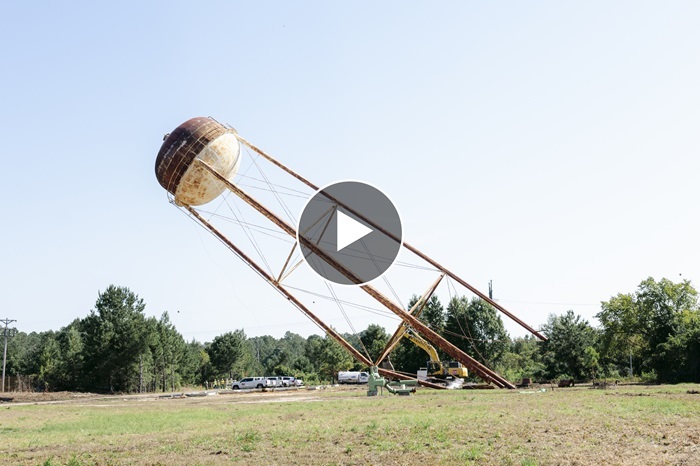 EMTV: Watch this video about the demolition of the D Area water tower at the Savannah River Site.
AIKEN, S.C. — Cleanup crews continued shrinking the legacy footprint on the 300-square-mile Savannah River Site (SRS) when they recently removed a water tower that had become a safety hazard after it was taken out of service years ago.
The safe and successful demolition of the tower joins more than 4,240 projects the U.S. Department of Energy Office of Environmental Management (EM) has completed on, or ahead, of schedule at SRS since 1993. To date, crews have demolished over 317 buildings — covering more than 2.5 million square feet — significantly reducing the site's legacy footprint while eliminating expensive maintenance costs.
“The work performed by our team is foundational — not only to the success of the organization but also to our broader commitment to national security and environmental protection,” said Kelsey Holcomb, manager of Area Completion Projects (ACP) with EM contractor Savannah River Nuclear Solutions. “Removing outdated infrastructure like this water tower ensures that we can continue to move mission objectives forward safely and responsibly.”
The tower was originally placed into service during the mid-1990s, providing treated water to the site’s D Area powerhouse and surrounding facilities. When the powerhouse was shut down in 2014, the tower was drained and taken out of service.
This latest demolition marks another step toward the complete decommissioning of the 210-acre D Area and brings the ACP team closer to fulfilling its legacy cleanup mission at SRS. Workers have removed 60% of D Area structures, with only two major structures remaining, the powerhouse and the Water Treatment Plant. Decommissioning and demolishing these structures involves extensive asbestos abatement, removal and disposal. Land-use controls will be in place in addition to ongoing groundwater monitoring to ensure the safety and viable reuse of the area. Plans are also underway to install solar panels in D Area, representing a significant step toward repurposing the site for industrial use.
D Area facilities once produced heavy water for nuclear reactors and generated steam and electricity to support much of what was previously known as the Savannah River Plant, which was developed in the 1950s.
With the tower no longer supporting operations, its condition began to deteriorate over time. ACP made the decision to remove the structure to eliminate potential risks to personnel, facilities and nearby systems.
To ensure a safe and efficient demolition, a third-party engineering firm and a demolition subcontractor developed a detailed removal plan. Crews removed a section of one of the tower’s four legs along with the anchor bolt nuts from the remaining three.
They attached a wire rope to the structure for use with a track-mounted excavator positioned outside the tower’s fall radius. This method allowed the team to carefully pull the structure away from nearby systems and permanent equipment.
Once the tower was on the ground, crews cut it into sections, loaded the pieces onto trucks and transported them to an offsite recycling facility.
“Savannah River Nuclear Solutions Area Completion Projects continues to drive its mission forward, focusing on environmental stewardship, regulatory compliance and safety excellence,” Holcomb said.
-Contributor: Fallan Flatow
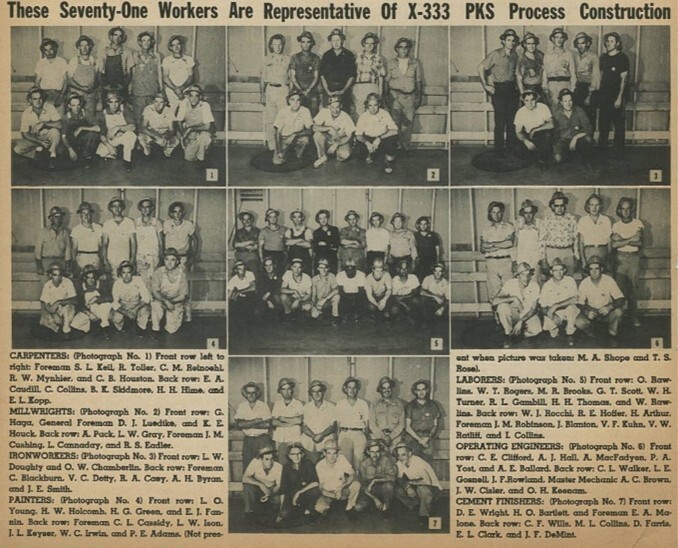 Photos of the carpenters, millwrights, ironworkers, painters, laborers, operating engineers and concrete finishers celebrating the end of construction of the X-333 Process Building were published in the site’s newspaper on July 15, 1955.
Safe, compliant cleanup of massive structure helps pave the way for site redevelopment
PIKETON, Ohio — The Portsmouth Site announced the start of structural demolition on the X-333 Process Building last month, almost 70 years to the day it was turned over to the Atomic Energy Commission, a predecessor agency to the U.S. Department of Energy (DOE), to assume the facility’s role in fueling America’s fight in the Cold War.
As the DOE Office of Environmental Management (EM) cleanup makes way for the Portsmouth Site’s part in the nation’s nuclear renaissance, EM team members reflected on the immense X-333 structure that served as the entry point to enrich uranium needed for national defense.
At the time of construction, the site’s three process buildings were among the largest facilities in the world. X-333, the largest building at the site, covers 33 acres of land and stands 82 feet high.
“My grandfather was part of the team who poured the concrete for the footers in the process buildings,” Portsmouth Site Lead Jeremy Davis said. “He could not share his work with the family due to the classified nature of the site during the Cold War, so he always told me that he was working at the Purina Dog Food Factory. When I saw the iconic water towers, I believed him. It wasn’t until years later when my uncle showed me around that I understood the importance of the site for the community and the nation.”
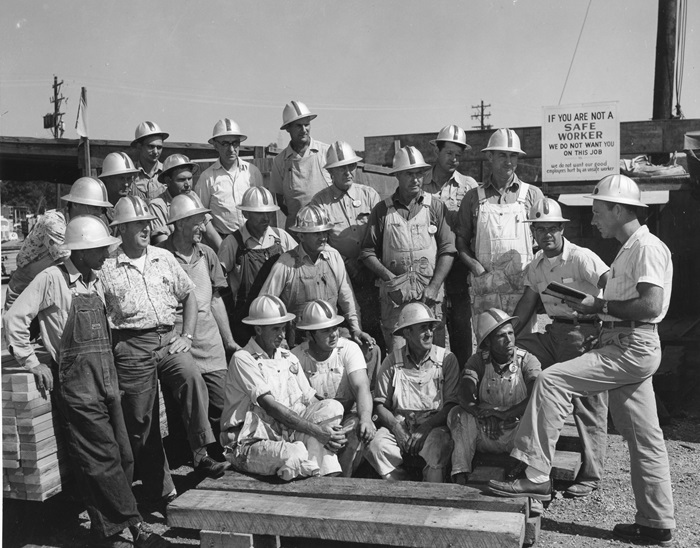 Portsmouth Site construction crews gather for a safety meeting before their shift begins with a sign in the background reminding personnel, “If you are not a safe worker we do not want you on this job.”
The site wasn’t just powering the nation’s defense; it was transforming a community. At the peak of construction in 1954, as many as 22,500 construction workers were employed. Four years earlier, the population of Pike County, the home of the site, was just under 15,000 people.
Mike Milam began work as a chemical engineer at the site in 1968, spending a good portion of his early career in X-333. Milam worked at the site until he retired in 2005.
“From 1968 until the mid-1970s, all the process operators and building management were from the original startup crews,” said Milam. “There were so many great stories, but what was most apparent in listening to these men was that they learned how to operate much of the equipment by their own intuition, and trial and error. It would have been very intimidating and exciting starting up this massive operation with very little of an operating guide.”
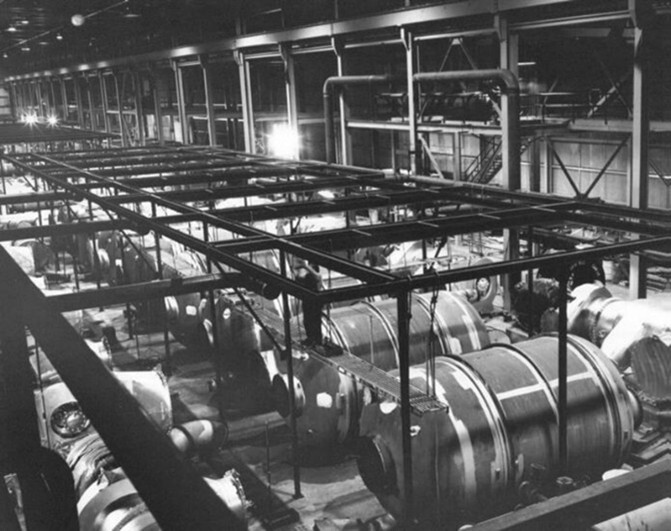 A view from the X-333 Process Building cell floor during construction. The facility included the largest equipment to handle the start of the uranium enrichment process.
The present-day workforce at the site is responsible for safely taking down this giant in history and preparing the site for future development.
“The construction of the Portsmouth Site helped this community grow, and now, as we continue towards safe demolition of the site, we are focused on making the site ready for new opportunities for future generations,” Federal Project Director Christy Brown said.
Brown’s family farm is located near the site. She was raised there, and family members still live on the property. As a member of the community, Brown not only understands the importance of the cleanup but also has a vested interest in ensuring its safe and compliant completion.
Demolition of X-333 is expected to be completed by 2031.
The Portsmouth Paducah Project Office conducts cleanup at the Portsmouth Site in accordance with a consent decree with the state of Ohio and director’s final findings and orders with the Ohio Environmental Protection Agency.
-Contributor: Cindi Remy
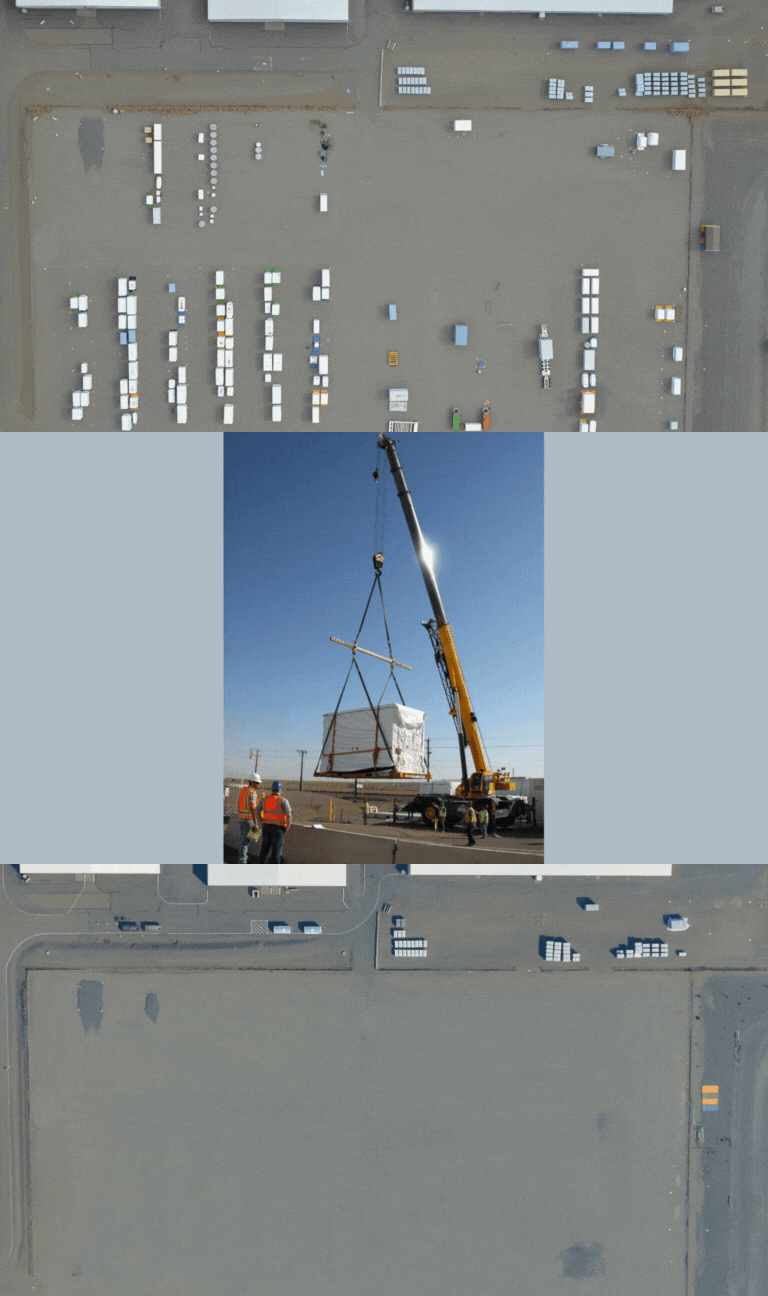 Workers with Hanford Site contractor Central Plateau Cleanup Company recently finished relocating more than 130 large waste containers from two outside storage areas, completing a significant cleanup milestone a year ahead of schedule.
RICHLAND, Wash. — Now you see them, now you don’t!
Crews at the Hanford Site have safely moved more than 130 large waste containers from two outdoor storage areas at the Central Waste Complex, completing a significant risk-reduction project a year ahead of schedule.
The relocation project took more than six years and involved crews from contractor Central Plateau Cleanup Company (CPCCo) to move waste containers weighing up to 50 tons and 19 feet tall. Much of the waste was sent to an offsite facility for treatment and repackaging into containers for safe and compliant shipment and disposal at the Waste Isolation Pilot Plant in New Mexico, the U.S. Department of Energy (DOE) national repository for transuranic waste.
“The skillful and efficient handling of these massive containers with no incidents is a testament to Hanford workers’ focus and commitment to safety,” said Scott Green, Hanford Field Office deputy assistant manager for River and Plateau cleanup. “This project not only reduces risk but meets a significant regulatory milestone.”
In 2018, DOE and Hanford’s regulators — the U.S Environmental Protection Agency and Washington State Department of Ecology — established a milestone requirement under the Tri-Party Agreement to remove all containers from the outside storage areas by Sept. 30, 2026.
The containers — made of metal, concrete or fiberglass-reinforced plywood — store a variety of solid waste, such as reactor and laboratory equipment, tools, contaminated clothing and other items used during Hanford’s plutonium production mission.
“The whole team worked safely and efficiently to manage this complex project,” said Andy Drom, CPCCo project director. “The success of this work is testimony to what can be achieved by working together to meet the challenges of our critical cleanup mission head-on.”
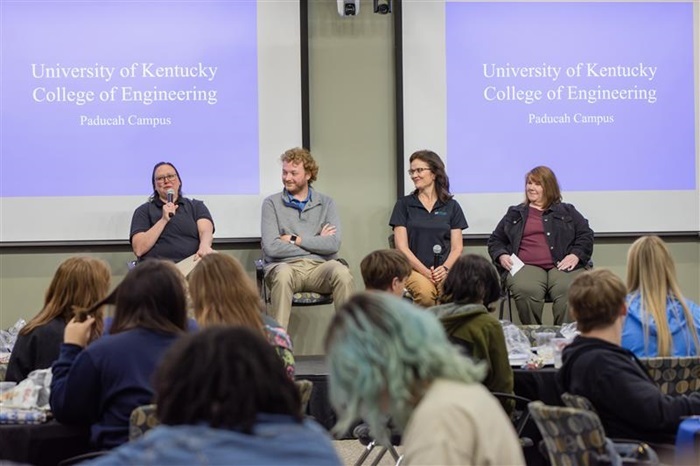
PADUCAH, Ky. — Paducah Site Lead April Ladd, left, speaks to local high school students during a panel discussion at the recent Engineering Empowerment Day, hosted by the University of Kentucky College of Engineering – Paducah Campus. Ladd was joined by Paducah Site federal and contractor team members, including, from left, U.S. Department of Energy Office of Environmental Management General Engineer Mitchell Guthrie, Four Rivers Nuclear Partnership (FRNP) Program Manager Myrna Redfield and FRNP Nuclear Safety Manager Teresa Stephens. The panel provided career advice to students and spoke on several topics, including general information on the Paducah Site and its mission, the path to their current careers and what qualities they look for in a potential employee.
-Contributors: Zachary Boyarski, JT Crawford
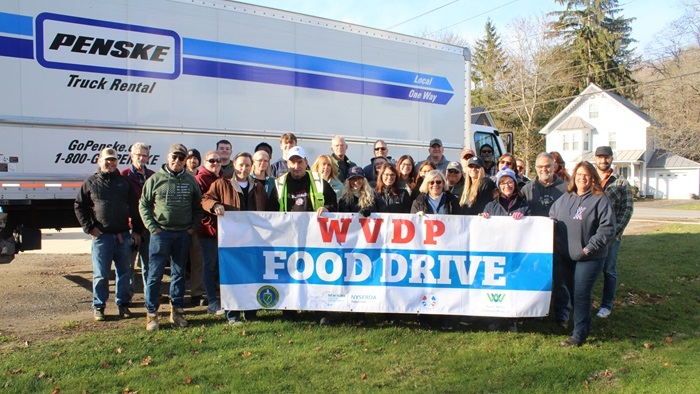 West Valley Demonstration Project team members pose for a photo on their first stop to deliver turkeys, holiday essentials and other food staples to eight food pantries in Erie and Cattaraugus counties.
WEST VALLEY, N.Y. — The West Valley Demonstration Project federal and contractor workforce delivered more than 9,500 meals, including 160 turkeys, holiday essentials and pantry staples, to eight food pantries in the region, continuing a longstanding commitment to help people in need in the local community through an annual food drive.
"This tradition, launched in 1989, has consistently provided vital assistance to families in need,” said Joseph Pillittere, Communication and External Affairs manager and Food Drive coordinator for West Valley Cleanup Alliance, the site’s prime contractor. “Since its inception, the drive has collected more than 2.5 million pounds of food.”
On a day off from work, the more than 30 West Valley team members joined with other volunteers to help deliver 472 cases of food and turkeys to the food pantries.
|