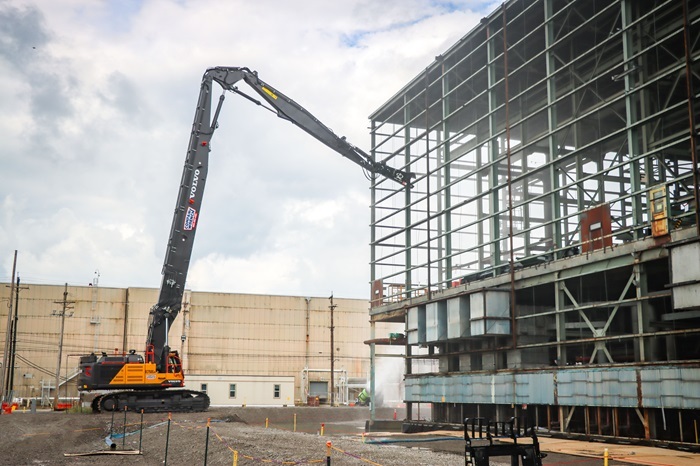
 Portsmouth Site workers have taken the “first bite” of the massive X-333 Process Building, signaling the start of demolition and achieving a U.S. Department of Energy Office of Environmental Management priority.
PIKETON, Ohio — Workers have begun demolishing the massive X-333 Process Building, achieving a U.S. Department of Energy Office of Environmental Management (EM) priority to begin demolition of the second of the Portsmouth Site’s three former uranium process buildings.
“The start of X-333 Process Building demolition marks the next significant step in the final cleanup of the Portsmouth Site,” said Portsmouth Site Lead Jeremy Davis. “When this building is down, we will further position the site to support the community’s future economic development vision for the site.”
 The largest of the three process buildings at the site, X-333 has 66 acres of floor space under roof and measures 1,456 feet long, 970 feet wide and 82 feet high. The building once housed the largest pieces of the site’s enrichment equipment, including converters that weighed as much as 66,000 pounds each.
Teardown of X-333 will take about five years to complete although there are opportunities to finish the job earlier.
“Although we have incorporated a number of useful lessons learned from the X-326 Process Building demolition, this one will take longer due to the sheer size of the building and building structures, as well as technical challenges,” Federal Project Director Christy Brown said.
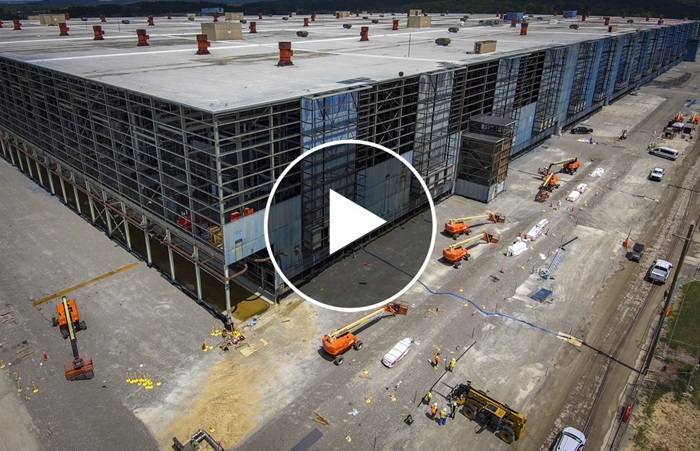 EMTV: Watch a video about the start of structural demolition of the Portsmouth Site's X-333 Process Building, a U.S. Department of Energy Office of Environmental Management priority. In this photo, crews remove transite panels from X-333's south side to prepare for demolition.
During their operational heyday, the three process buildings functioned together as a type of “cascade” to enrich uranium to the desired levels for use in national security and energy production. X-333 served as the entry point for feed material for the cascade before material moved to the other two buildings.
With deactivation complete, the building is now being taken apart piece by piece in a process called controlled demolition. Skilled operators are cutting through the structural steel and downsizing the debris for disposal in the On-Site Waste Disposal Facility. This approach is safer for the workers by making sure they are protected by the cab of the equipment and at a distance from the actual demolition work.
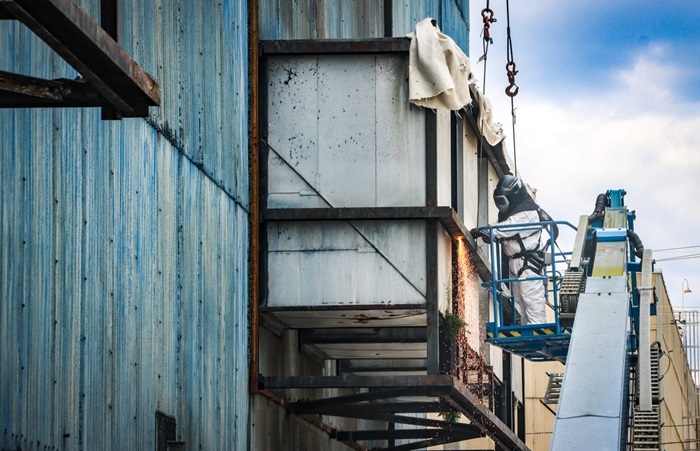 Laborer Mike Dunn removes a structural steel cage from the north side of the Portsmouth X-333 Process Building to prepare for demolition of the structure.
“Safety, as always, is a priority,” said Greg Wilkett, program manager for Portsmouth Site contractor Southern Ohio Cleanup Company. “In addition to the numerous workforce controls, other safety measures are in place. During demolition, water is sprayed continuously to suppress dust, and air monitors positioned around the building and the perimeter of the site ensure we keep the environment and the public safe.”
As each section of the building is torn down, the debris will be moved out of the way and cut into smaller pieces. The debris will be inspected and loaded into trucks that will travel to the disposal facility.
-Contributor: Shawn Jordan
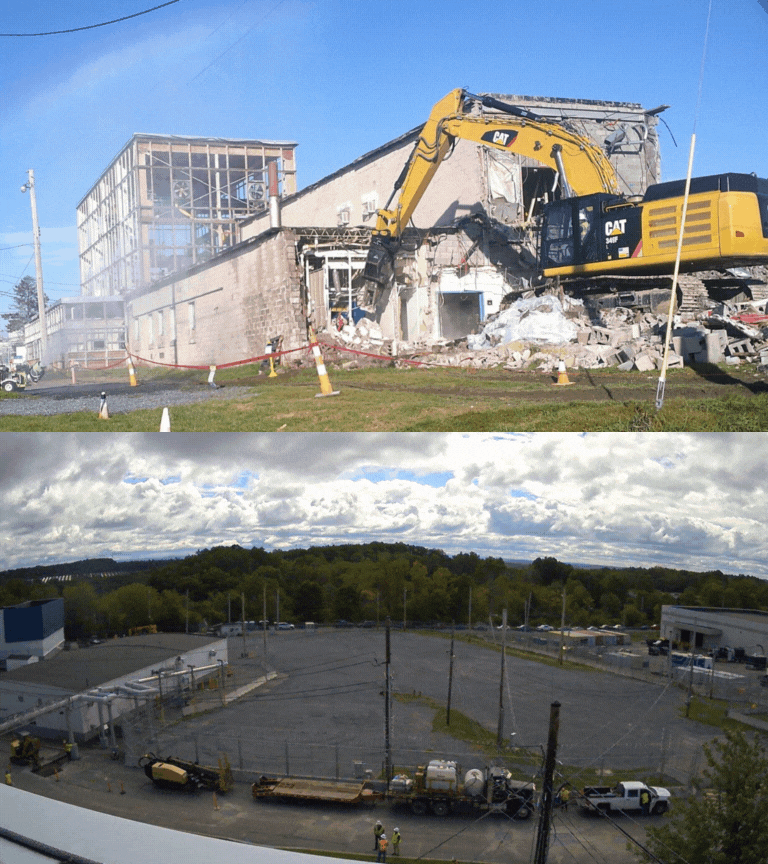 Before and after: The first photo shows the demolition of Building Q4. Built in 1951, Building Q4 was the oldest of the Q-Complex buildings at Knolls Atomic Power Laboratory. The second photo shows the restored Q-Complex site that the U.S. Department of Energy Office of Environmental Management returned to the Office of Naval Reactors this past summer for future mission use.
EM successfully completed deactivation, decommissioning and removal of the Q-Complex at the Knolls Atomic Power Laboratory as part of a broader agreement with the Office of Naval Reactors to support cleanup of legacy environmental liabilities across Naval Nuclear Laboratory sites.
NISKAYUNA, N.Y. — U.S. Department of Energy Office of Environmental Management (EM) crews demolished seven structures that make up the Q-Complex at the Knolls Atomic Power Laboratory and returned the restored site to the Office of Naval Reactors for redevelopment.
“EM is honored to assist Naval Reactors with transforming legacy facilities like the Q-Complex into opportunities in support of Naval Reactor’s critical national security mission,” said Marty Krentz, federal project director of the EM Consolidated Business Center (EMCBC) New York Project Support Office.
The EMCBC-New York Project Support Office and contractor North Wind Site Services safely completed the demolition, remediation and restoration of the complex this past summer. The project began in 2023.
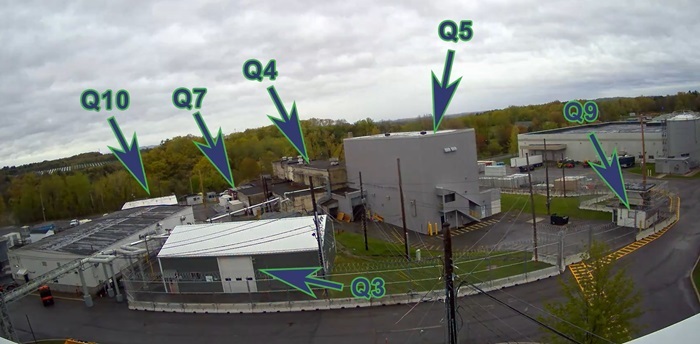 The Q-Complex at the Knolls Atomic Power Laboratory included seven buildings, several which were used to support reactor component assembly and testing, prototype assemblies and mock-ups, and storage of clad uranium fuel. Later uses of these buildings included laboratory, radiological training and office space, and general storage.
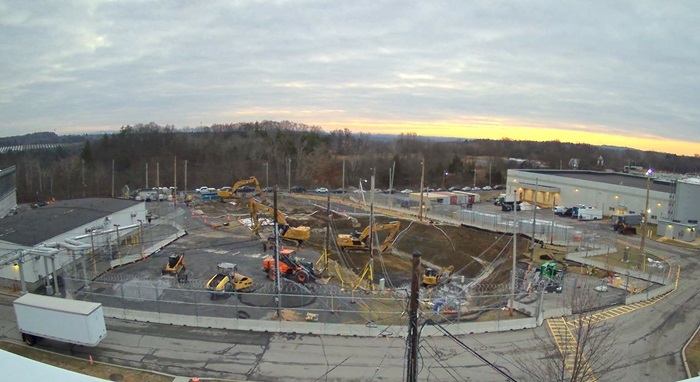 Below-grade remediation of the Q-Complex footprint required removal of concrete slabs, concrete and treated-wood piers, concrete pits, contaminated soil and piping, and several obsolete utility systems.
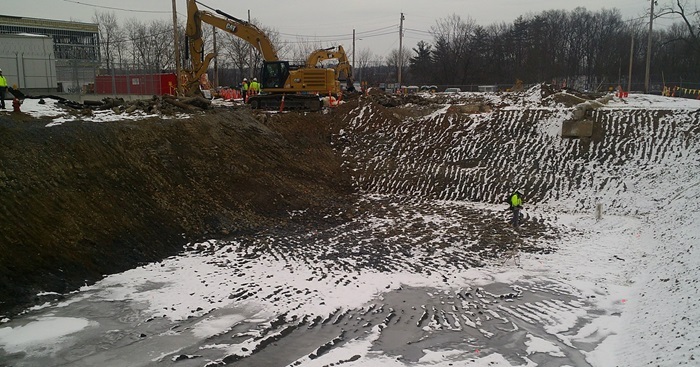 U.S. Department of Energy Office of Environmental Management crews removed about 15,000 cubic yards of material from the Q-Complex footprint as part of below-grade remediation.
It was the first cleanup project to be completed under an agreement between EM and the Office of Naval Reactors. The agreement tasks EM with performing deactivation, decommissioning, removal and remediation of legacy environmental liabilities at Naval Nuclear Laboratory sites.
The EM crews tore down buildings originally used to support reactor component assembly and testing, prototype assemblies and mock-ups, and storage of clad uranium fuel. Later uses of these buildings included laboratory, radiological training and office space, and general storage.
Below-grade remediation of the complex footprint required team members to remove concrete slabs, concrete and treated-wood piers, concrete pits, contaminated piping and several obsolete utility systems. They removed about 15,000 cubic yards of material — enough to fill an estimated 1,250 large dump trucks — for disposal in approved regulated waste facilities.
-Contributor: Stephanie Shewmon
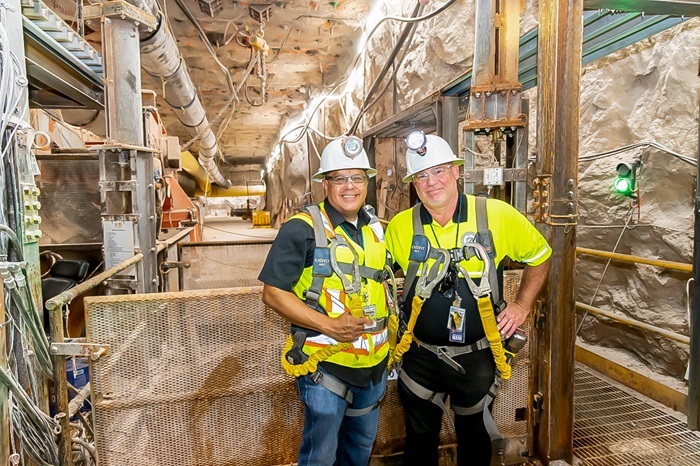 Carlsbad Field Office Manager Mark Bollinger, right, stands with Joe Lopez, the office’s chief of staff, fully equipped with safety gear in the underground of the Waste Isolation Pilot Plant in southeast New Mexico.
Mark Bollinger is manager of the U.S. Department of Energy Office of Environmental Management’s (EM) Carlsbad Field Office (CBFO), which oversees the Waste Isolation Pilot Plant (WIPP) in southeast New Mexico. To mark the successful completion and startup of a new ventilation system at WIPP, EM Update spoke with Bollinger about the important role WIPP plays for EM and the broader DOE, and the work in progress to prepare the site for a successful future.
 |
|
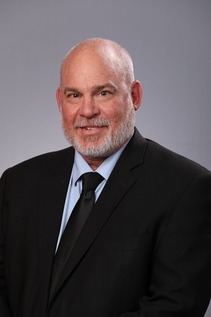
Mark Bollinger, manager of the Carlsbad Field Office, which oversees the Waste Isolation Pilot Plant in southeast New Mexico. |
What brought you to WIPP and what excites you most about managing this key site?
The exciting part is being involved in a mission that is so clearly beneficial to everybody in this country and really, on this planet. A mission that has cleaned up generator sites across the U.S. while having so much support from this local community. To have community members feel ownership of the facility and to support it consistently is very rewarding.
EM is celebrating the successful completion of WIPP’s Safety-Significant Confinement Ventilation System. What role does this new system play in helping WIPP contribute to EM and DOE goals?
It’s all about supporting the cleanup of DOE sites. It’s important for WIPP to be a reliable partner and to be there when they need us. For example, as we continue to clean up Los Alamos National Laboratory (LANL), they'll have a need for us to be available and operating. What the new ventilation system, now known as the Underground Ventilation System, or UVS, does is allow us to do waste emplacement at the same time we do mining in preparation of future waste placement areas. Concurrently, we can maintain ground-control activities to keep everything safe in the underground. This system allows us to do all of that at the same time, with plenty of fresh air for all the workers in the underground.
Can you further discuss how WIPP supports EM in the legacy cleanup mission at LANL?
We have prioritized all waste removal from LANL, as it becomes available. The state of New Mexico will reap benefits from having WIPP here. We're very proud that LANL’s shipping rate has doubled on a weekly average and they have been able to move well ahead of schedule on disposing of waste from the corrugated metal pipe project.
With the new ventilation system complete, what are EM’s next steps for upgrading infrastructure at WIPP and preparing for the future?
As I look out my office window, I can see the salt hoist, a project we completed an overhaul on that allows us to remove salt from the 2,150-foot level and bring it to the surface for storage. That system, to be fair, was ancient, so we made a huge investment of our operational dollars to prioritize that project to make it a system that will be a tremendous asset for many years.
The biggest topic we are now planning for is hoisting. Everything we do is reliant on our ability to hoist things up and down over 2,000 feet. We have a new project called the Hoisting Capability Project that will give us at least two major hoisting benefits. One is that we will replace what we call the air intake shaft hoist. That hoist has a motor from 1926, almost 100 years old! We need a brand new purpose-built hoisting system. The other element to the hoisting project is to take the new utility shaft, which is a massive air intake shaft, and put in a purpose-built hoisting system to move personnel and materials safely, on a high frequency basis. That will allow us to reserve our waste hoist for its primary purpose — to move waste into the underground.
WIPP plays a unique role for our country in serving as the only geological repository approved for radioactive waste disposal. As DOE works to unleash commercial nuclear power, what lessons can WIPP offer for creating successful disposal approaches for waste?
If you're writing the history of the success of WIPP, most of the book is going to be about the partnerships we have with our state, the U.S. Environmental Protection Agency and especially the surrounding communities. As the city fathers have told me many times in story after story, they used to go to Washington to demand that WIPP be located here, in Carlsbad, New Mexico. That’s exactly the type of community I would be looking for if working to site a commercial nuclear power project or any other sort of waste disposal facility in the future. I would look for a community that understands operations and how safe it really is.
The other thing we've learned over time is that there is no benefit to rushing — you can lose years and billions of dollars when you make small, simple mistakes. I stress to our team that we work at the speed of safety, that we don't do the work if we can't do it safely. With those two tenets, partnership and working safely, you're very highly likely to be successful in future commercial nuclear power activities and disposal activities.
What do you think has been the secret to EM’s success in building and maintaining strong relationships with the communities around WIPP?
I think it’s been the commitment of many in EM to work day-in and day-out with key people in the community, keeping an open door policy to work as true partners in what we're doing. The community here understands what they're doing on behalf of America and they are very, very proud of it. It’s important to all of us to do everything we can to keep them proud.
What are you most proud of in your time here at CBFO?
It's not just one thing, it's a number of things. I'm very proud of our ability to get the big infrastructure projects done. I'm very proud that we keep being a reliable partner for our generator sites throughout completing those big infrastructure projects, continuing to emplace waste throughout most of those efforts. I'm especially proud of our relationship with the community and their support for WIPP. And on a very personal level, I'm just very, very happy that I have been part of building a team and watching the individuals succeed, whether they are contractor partners or DOE employees.
I'll end on one little quip. Oftentimes I get asked, “Why are you still a pilot plant? You've been around 25 years.” The answer is that we're still learning how to be a plant, even though we’ve operated for 26 years. And when we eventually go into a closure phase — decades from now — we will learn how to close the site correctly and be the pilot of that. The funny answer is, when you’re a pilot, you don’t stop the airplane when you're at 30,000 feet. You continue to be the pilot until you safely land and get back to the gate.
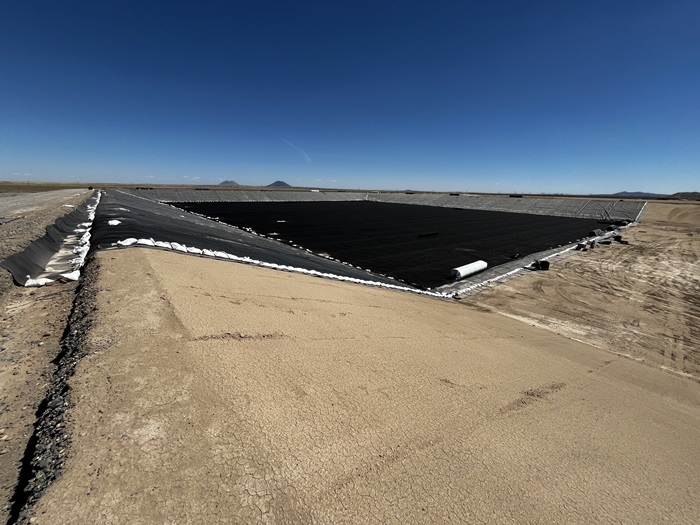 Crews are expanding an onsite disposal facility to support the Idaho Cleanup Project mission and ensure protection of the environment.
IDAHO FALLS, Idaho —The Idaho Cleanup Project (ICP) is expanding a critical disposal facility, employing lessons learned from two decades of operational success and the best of American technology to continue safely disposing of waste and enabling the U.S. Department of Energy Office of Environmental Management (EM) to meet its commitments to the state of Idaho.
The Idaho CERCLA Disposal Facility (ICDF) has provided safe, cost effective and environmentally responsible disposal for contaminated waste generated by cleanup on the Idaho National Laboratory (INL) Site.
CERCLA stands for Comprehensive Environmental Response, Compensation, and Liability Act, a law enacted by Congress in 1980 that requires stringent waste acceptance criteria, ensuring protection of the public and the underlying Snake River Plain Aquifer.
In 2020, ICP determined it would need to expand the landfill to dispose of a projected 340,000 cubic meters of waste — comparable in size to more than 150 hot air balloons — over the next several decades, far outpacing the ICDF’s remaining available disposal capacity of 90,000 cubic meters.
The ICDF’s new disposal cell and evaporation ponds will be constructed using multiple layers of liners made specifically for disposal of CERCLA-generated waste.
In addition, an engineered collection and detection system for leachate, or liquid that seeps through the landfill, is critical to the facility.
Together, that system and the liners significantly reduce the likelihood of water percolating through the landfill into the aquifer. Instead, that water will be diverted to the evaporation ponds.
Prior to the expansion project, a coordinated effort with EM identified several lessons learned to improve operations. For instance, the expansion will offer more operational space, better management of occasional spring snowmelt water surges, easier control of water levels by linking the new evaporation ponds with the original evaporation ponds, and the capability to dispose of larger debris while maintaining landfill safety.
Craig Reese, project manager with ICP contractor Idaho Environmental Coalition, recognizes the importance of environmental responsibility as his team constructs the new disposal area.
“Every aspect of the design, construction and future operation of the engineered Cell 3 landfill and leachate collection system focuses on environmental protection,” said Reese. “This includes learning from more than 20 years of operation that will allow us to fulfill our mission.”
-Contributor: Carter Harrison
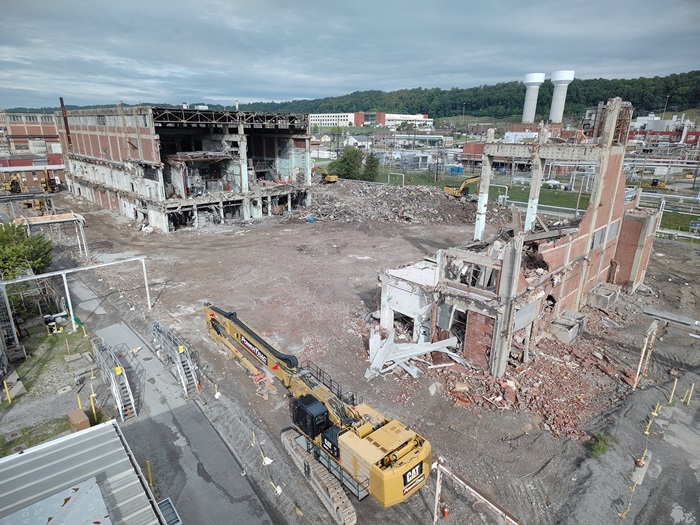 Oak Ridge crews are approaching the halfway mark demolishing Alpha-2 at the Y-12 National Security Complex. They have taken down 143,000 square feet of the 325,000-square-foot building. This marks the largest demolition yet at Y-12 — removal of a former uranium enrichment facility to open space for new infrastructure.
OAK RIDGE, Tenn. — The Oak Ridge Office of Environmental Management (OREM) made strides moving environmental cleanup and reindustrialization forward across Oak Ridge with the help of contractors United Cleanup Oak Ridge (UCOR) and Isotek in the fiscal year that recently ended.
Employees maximized tax dollars by pushing forward wide-ranging projects, including building deactivation, demolition, waste processing and disposal, and reindustrialization. OREM’s progress is removing hazards, reducing inventories of nuclear material, and opening land for national security and research missions, and new economic growth.
Crews are approaching the halfway mark on the Alpha-2 demolition project. Taking down the 2.5-acre former uranium enrichment facility is the largest teardown yet at the Y-12 National Security Complex, and its removal provides much needed space for new infrastructure to support national security missions.
Workers are also busy preparing for other Y-12 demolition projects. They are in the final stages of deactivating Beta-1 and the early stages of cleanup in the massive Alpha-4 building. Both are Manhattan Project-era uranium enrichment facilities.
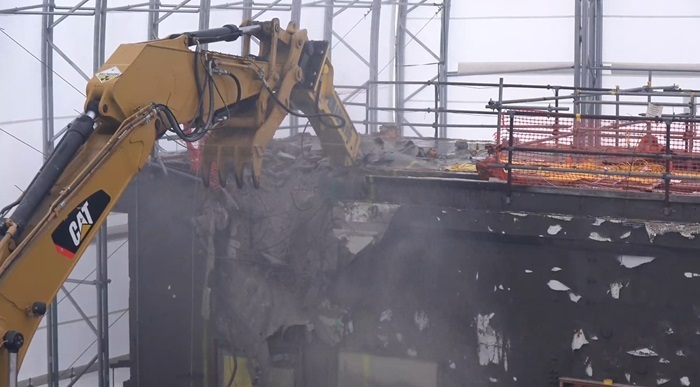 In fiscal year 2025, crews began demolition on a portion of the final hot cell from the former Radioisotope Development Laboratory, which is one of the most contaminated structures at Oak Ridge National Laboratory (ORNL). It was one of two demolitions happening simultaneously at ORNL for the first time.
Demolition crews have also been busy at Oak Ridge National Laboratory (ORNL), where UCOR conducted multiple teardowns simultaneously for the first time there.
Crews took down Building 3003, a support structure for the Oak Ridge Graphite Reactor dating back to 1943, along with a portion of the final hot cell from the former Radioisotope Development Laboratory, which is one of the most contaminated structures at ORNL.
It was a bustling scene as workers deactivated the former Isotope Development Lab, known as Building 3038, and a collection of 11 highly contaminated former radioisotope processing facilities referred to as Isotope Row. Their efforts lay the groundwork for a major transformation in the heart of ORNL. Demolition of those facilities is scheduled to begin next year.
 Isotek processed 77 canisters of uranium-233 in fiscal year 2025, exceeding the goal of 50. Workers are seen loading the processed and downblended material for shipment and disposal.
Old buildings weren’t the only things disappearing in fiscal year 2025. OREM also steadily eliminated inventories of nuclear material and radiological waste from storage.
Isotek advanced the highest priority cleanup project at ORNL by processing and disposing of 77 canisters of uranium-233, surging past the goal of 50 canisters. That processing campaign is now approximately 40% complete.
Additionally, UCOR helped OREM meet its goal to complete eight shipments of transuranic waste to the Waste Isolation Pilot Plant in New Mexico for permanent disposal. Their fiscal year 2025 shipments removed 232 drums.
To date, crews have processed 98% of the lower-contaminated contact-handled transuranic waste at Oak Ridge and shipped 94% of it for disposal. They have also processed approximately 98% of the higher-contaminated remote-handled waste and shipped 80% of it. Click here for an explanation of contact- and remote-handled transuranic waste.
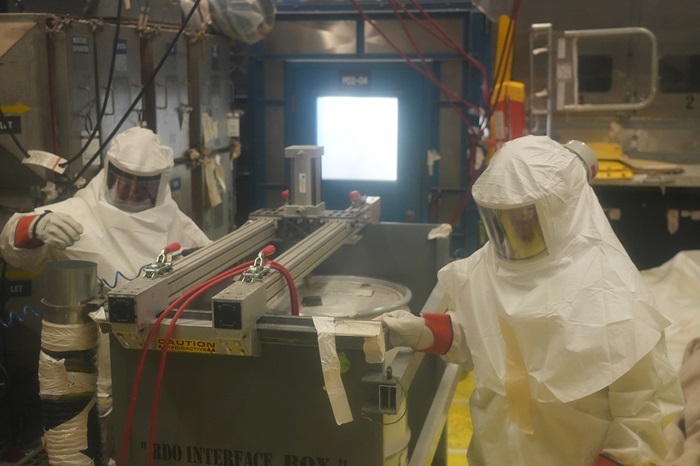 Workers treat waste at the Transuranic Waste Processing Center in Oak Ridge. To date, crews have processed 98% of the legacy transuranic debris waste in an ongoing effort to eliminate this waste from the site.
UCOR also helped achieved a breakthrough to eliminate a complex waste stored at ORNL for the past 50 years. The contractor completed two shipments of large aluminum and steel containers filled with highly reactive metals — called sodium shields. Through a successful technology demonstration, this material was converted into a stable glass for disposal.
OREM and UCOR have also been busy transitioning the East Tennessee Technology Park from a former cleanup site into a thriving industrial center benefiting the community. OREM transferred 50 acres for economic development in fiscal year 2025, bringing the total to 1,832 acres. Employees also made progress toward transferring other parcels that will make hundreds of additional acres of land available for reuse in the year ahead.
The transferred land is now home to more than 25 businesses. Together, they are making a projected capital investment of $8 billion and expect to generate 2,500 private sector jobs.
-Contributor: Ryan Getsi
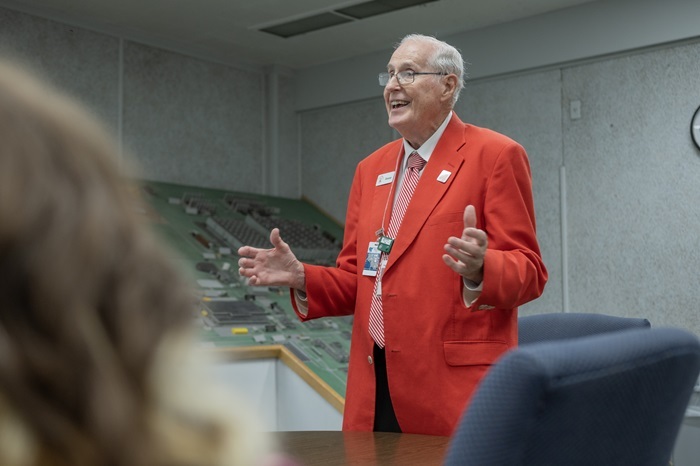 Donnie Chumbler, a retiree who worked at the former Paducah Gaseous Diffusion Plant for 36 years, shares past work experiences with a public tour group.
LEXINGTON, Ky. — Public tour participants heard firsthand accounts from past employees of the former gaseous diffusion plants at the Portsmouth and Paducah sites this year while learning how U.S. Department of Energy (DOE) Office of Environmental Management (EM) projects are transforming liabilities into opportunities to unleash American energy, support national security and enable U.S. innovation and jobs.
This year, tour organizers invited retirees to share personal stories and insider perspectives with the hundreds of visitors as they received updates on EM’s environmental cleanup progress and future use plans during the tours at the Portsmouth, Ohio, and Paducah, Kentucky, cleanup sites.
“Having our retirees step into a leadership role on the public tours is incredibly meaningful,” Portsmouth Paducah Project Office acting Manager Reinhard Knerr said. “Their knowledge brings history to life in a way that no report or presentation can produce. It also highlights the important connection between the sites, the workforce and the communities we serve.”
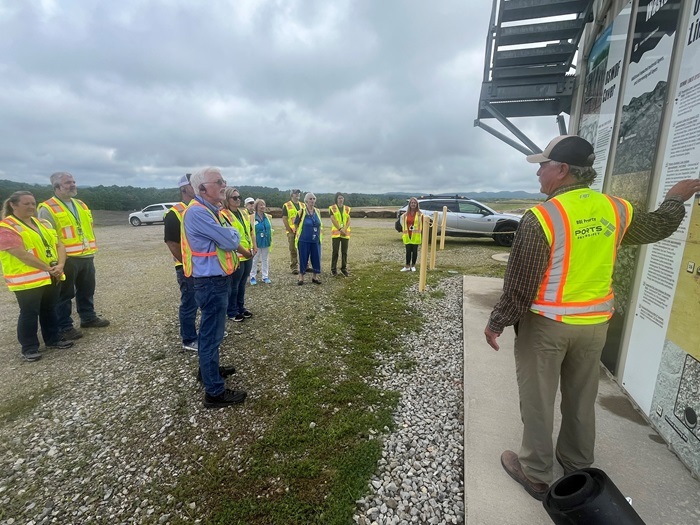 Portsmouth Site On-Site Waste Disposal Facility (OSWDF) Senior Construction Manager Chris McDade, right, discusses a system used for debris placement at the facility during a public tour. Jack Snyder, center, listens regarding the process since the OSWDF was created after he retired.
At the Paducah Site, retiree Donnie Chumbler said leading tours equipped him with an opportunity to educate and connect with his community.
“These tours helped satisfy the curiosity of the public as to what the plant did during operations as well as what DOE and its contractors have accomplished,” Chumbler said. “There seemed to be a better kinship with the plant and the people after the tour. It was a chance in their lifetime to capture a glance at the nuclear industry and understand the role Paducah played.”
Portsmouth Site retiree Jack Snyder said the experience allowed him to relive history while educating the public.
“You don’t understand the impact the site had on the economy and the nation until you see it for yourself,” Snyder said. “Not only was the site a place of accomplishment for me, but to see the future possibilities is priceless. You can see the impact these tours have on people and the positivity that abounds when the tour ends.”
Tour participants also viewed land identified for transfer or lease to the local community, providing insight firsthand into how EM reduces risk and brings benefits to their communities and the nation.
EM hosts annual tours at both sites, allowing the public an opportunity to better understand DOE’s environmental cleanup mission, future land use possibilities and ongoing commitment to safety.
-Contributors: Steve Christmas, Shawn Jordan
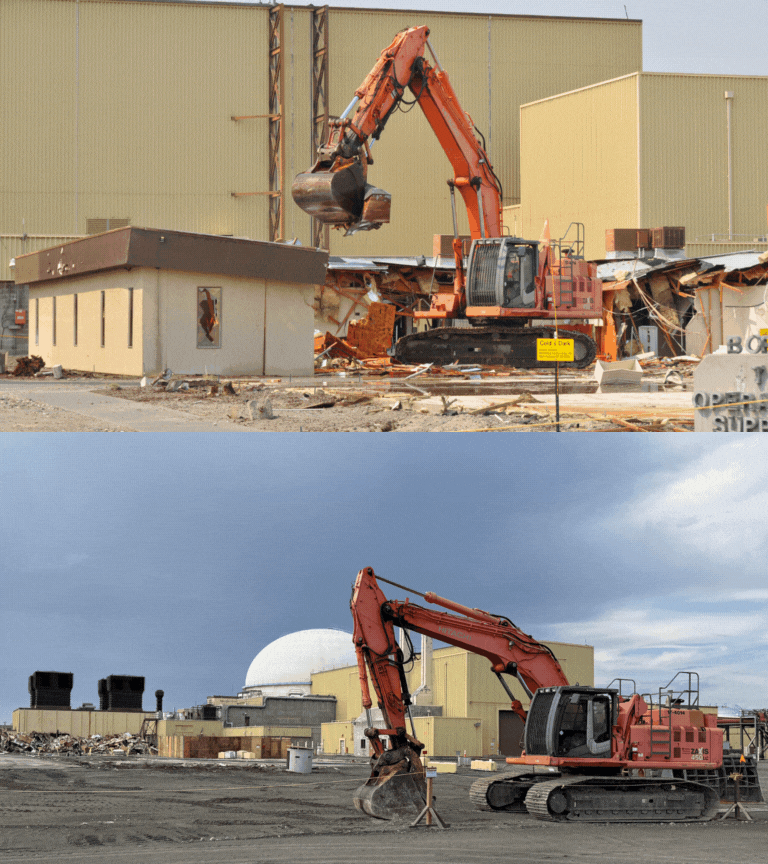 Crews with Central Plateau Cleanup Company have removed the 4710 Building at the Hanford Site. The building once supported the Fast Flux Test Facility, a nuclear research and test reactor shut down in 1993.
RICHLAND, Wash. — Crews have removed a large office building at the Hanford Site that supported the former Fast Flux Test Facility (FFTF), a nuclear research and test reactor.
The 37,000-square-foot structure, called the 4710 Building, provided office space for managers, engineers and other staff supporting FFTF operations. It’s one of several structures safely removed this year by contractor Central Plateau Cleanup Company.
FFTF was a 400-megawatt sodium-cooled nuclear research and test reactor. Operating from 1982 to 1992, it advanced nuclear fuels, materials and reactor safety designs. The reactor was shut down in 1993. Crews completed deactivation in 2009, and the reactor was placed in long term surveillance and maintenance.
TIME-LAPSE VIDEO: Watch crews make quick work of a former Hanford office building.
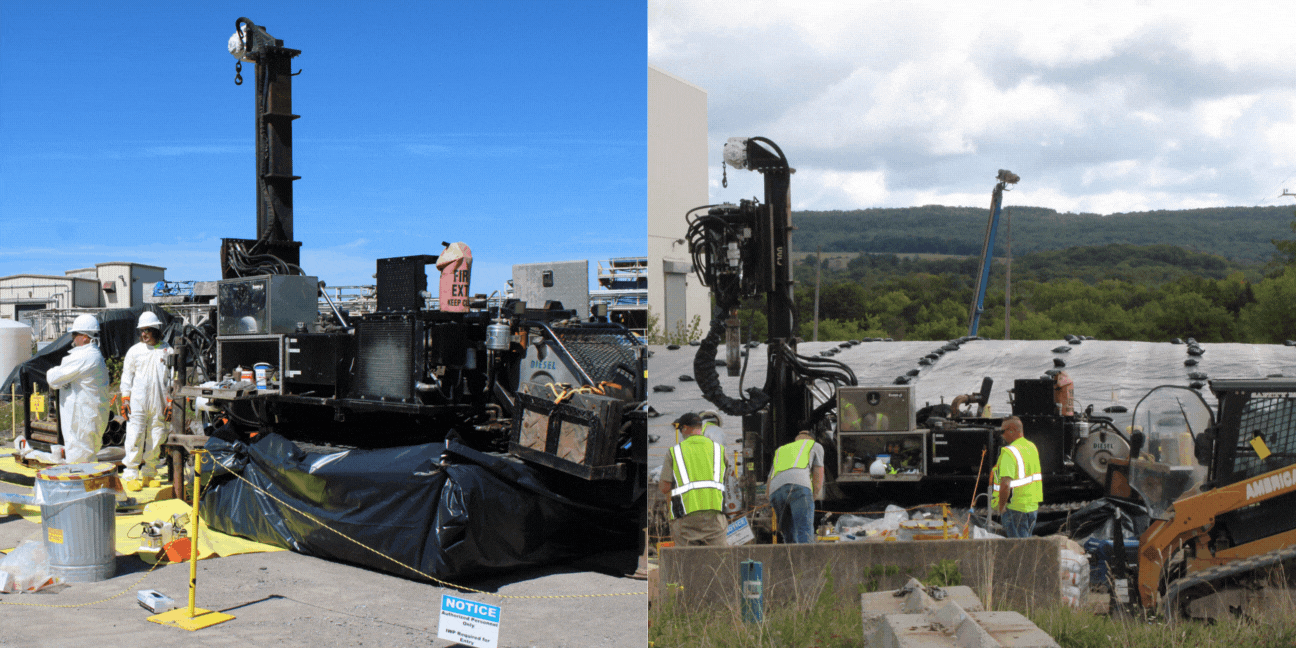 Workers at the West Valley Demonstration Project use a boring machine to remove soil samples for radiological characterization at the West Valley Demonstration Project. The sampling is being conducted prior to remediating the soil at the former location of the Main Plant Process Building, which cleanup crews removed in June.
WEST VALLEY, N.Y. — Workers have laid the groundwork to assess contamination levels before completing further cleanup at the site of the Main Plant Process Building, which crews safely took down earlier this year in a major milestone for the West Valley Demonstration Project.
The U.S. Department of Energy Office of Environmental Management (EM) and contractor West Valley Cleanup Alliance (WVCA) finished boring all 28 holes to evaluate soil contamination levels prior to remediating the soil and demolishing remaining components of the Main Plant, which are located at ground level and below ground.
“The West Valley team continues to make progress on reducing the environmental legacy risks and footprint of the site in a safe and compliant manner,” said Stephen Bousquet, EM assistant director of West Valley’s Office of Project Management. “Our crews did an excellent job in their planning and safe execution of this work.”
The EM team screened each sample from the borings for radiation, and safely shipped them offsite for more specific isotopic analysis.
Like a scientific fingerprint, isotopic analysis sheds light on the sample’s origin, composition and history. The West Valley team will use this information to better plan and design soil remediation work scope in Waste Management Area-1, where the five-story, 35,100-square-foot Main Plant had stood before crews removed more than 70 sections and areas of the facility in a deliberate sequence and pace.
“Prior to the start of this work activity, crews walked through the process together and improved it based on shared feedback, lessons learned and best practices,” Daniel Way, WVCA Decontamination and Decommissioning manager, said of the follow-up work at the Main Plant site. “Sharing information and expertise among a team enhances safety and increases efficiency and productivity. It is what teamwork is all about.”
-Contributor: Joseph Pillittere
|