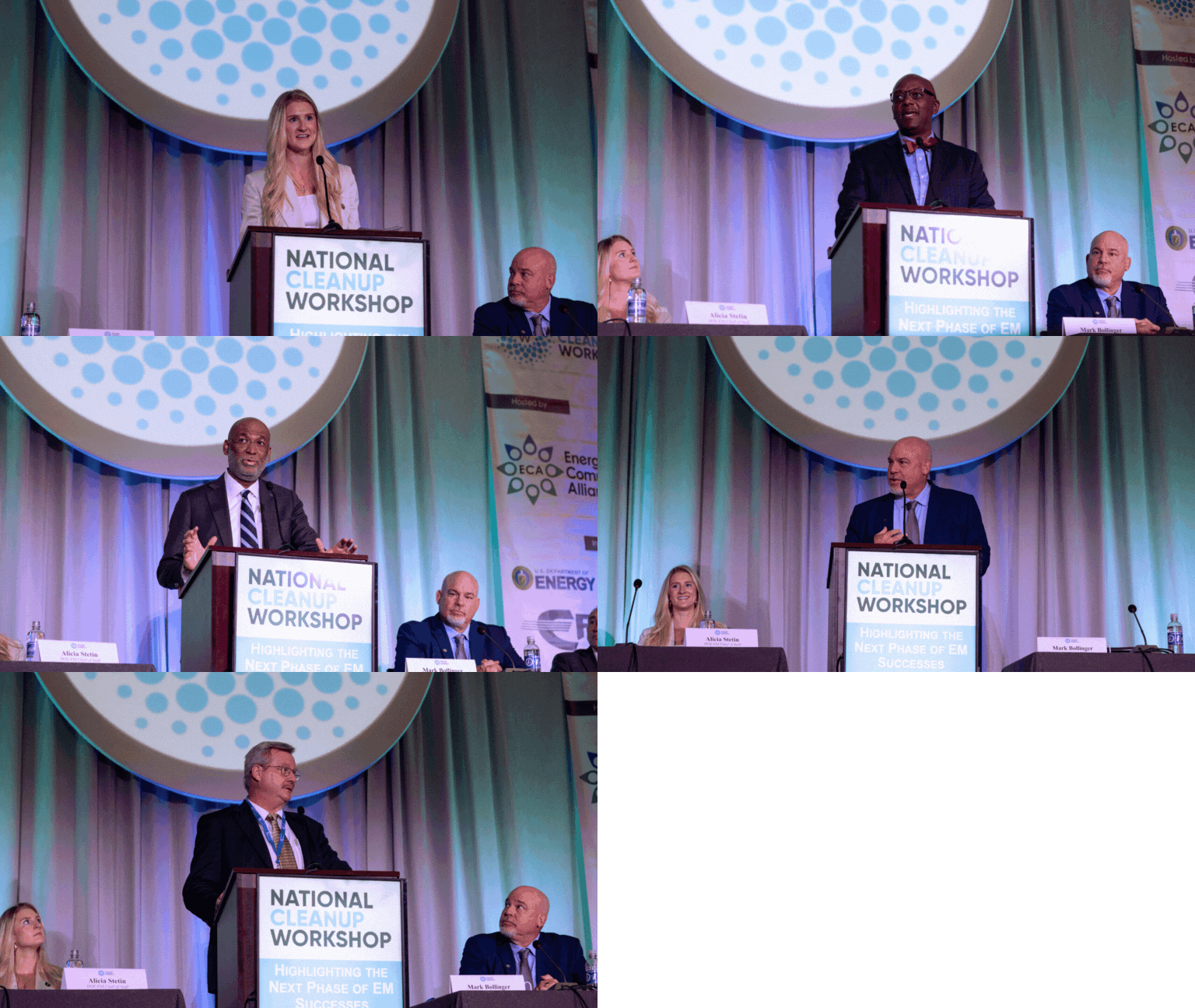
 Participants of the “Highlighting the Next Phase of EM Success” panel session included moderator Alicia Stetin, U.S. Department of Energy Office of Environmental Management chief of staff; Edwin Deshong, Savannah River Operations Office manager; Johney Green, Savannah River National Laboratory director; Mark Bollinger, Waste Isolation Pilot Plant manager; and Jack Zimmerman, Consolidated Business Center director.
ARLINGTON, Va. — Senior leadership from the U.S. Department of Energy Office of Environmental Management (EM) joined executives from Savannah River National Laboratory (SRNL), Salado Isolation Mining Contractors (SIMCO) and West Valley Cleanup Alliance (WVCA) at the 11th Annual National Cleanup Workshop to highlight key successes from the past several months and look ahead to future work.
“Together we are writing the next chapter of EM, one that not only benefits all the Department of Energy but the entire nation,” said Alicia Stetin, EM chief of staff, as she kicked off the panel session. Stetin shared her deep appreciation for the EM mission and the cleanup program’s role in unleashing American energy and driving economic growth in communities surrounding EM sites.
Edwin Deshong, Savannah River Operations Office manager, teamed up with Johney Green, SRNL director, to give an update on the recently completed Advanced Manufacturing Collaborative facility at the University of South Carolina-Aiken. The duo discussed why the facility was needed and the powerful impact it will have on the cleanup mission moving forward. Opening the state-of-the-art facility was commemorated on the 200th day of the Trump administration, with Energy Secretary Chris Wright cutting the ribbon and marking a new chapter for American innovation in South Carolina.
 Mark Bollinger, EM Waste Isolation Pilot Plant manager, and Ken Harrawood, president and program manager for WIPP management and operations contractor SIMCO, discussed the recently commissioned Underground Ventilation System, a critical infrastructure project that allows crews to do concurrent mining and waste emplacement operations while reducing risk to worker safety. That project was completed 15 months ahead of schedule and $10 million under budget. Harrawood also outlined several other infrastructure projects, including two new hoists that will increase efficiency and rate of work at the site.
To close out the panel session, Jack Zimmerman, EM Consolidated Business Center director, and Jason Casper, president and program manager for WVCA, the EM West Valley Demonstration Project (WVDP) cleanup contractor, played a time-lapse video showing two years of demolition activity in two minutes.
WVDP completed demolition of the Main Plant Processing Building in June. Accomplishing this EM 2025 priority did not come without challenge. Zimmerman shared some of the challenges with the audience, such as the complicated nature of the demolition due to high contamination levels within certain parts of the facility. Casper closed out the session reflecting on how the team was able to overcome those challenges and complete the project ahead of schedule and $40 million under budget. Casper cited the highly experienced workforce and advanced radiation monitoring techniques, and praised the team’s consistent coordination with the local community to ensure those in the area understood the risks present and how they were being mitigated.
-Contributors: Jordan Anderson, Kyle Hendrix
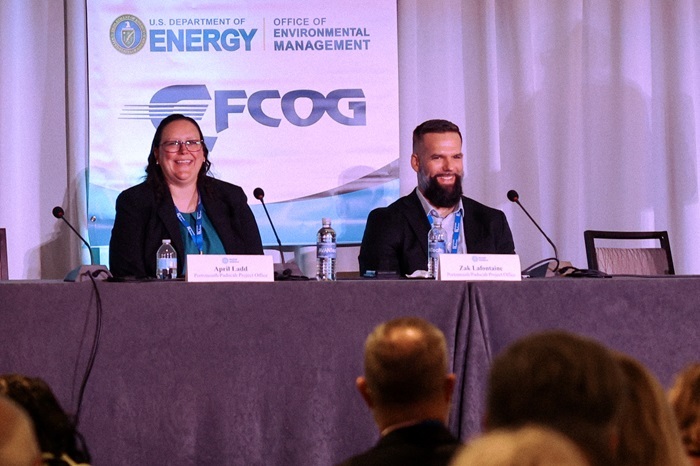 Portsmouth Paducah Project Office Paducah Site Lead April Ladd, left, and Depleted Uranium Hexafluoride Program Manager Zak Lafontaine participate in the panel session, “A New Vision for Paducah and Portsmouth” at the National Cleanup Workshop. The two spoke about how the Portsmouth and Paducah sites are driving efforts to transform liabilities into assets to help unleash nuclear power.
ARLINGTON, Va. — As the U.S. Department of Energy (DOE) Office of Environmental Management (EM) works to enable American energy and security, innovative approaches and strong partnerships at the Portsmouth and Paducah sites drive efforts to transform liabilities into assets to help unleash nuclear power, EM officials, industry representatives and local leaders said here last week at the 2025 National Cleanup Workshop.
“We’re integrating reindustrialization with cleanup to be able to have property and land for transfer sooner,” Portsmouth Paducah Project Office (PPPO) Paducah Site Lead April Ladd said during the “A New Vision for Paducah and Portsmouth” workshop panel session. “If you have reindustrialization going on at the same time as cleanup … workers aren’t working themselves out of a job, they’re working to their next job.”
One of EM’s most significant accomplishments this year was finalizing plans to provide 100 acres of land at the Paducah Site to the nuclear company General Matter for use in building a new uranium enrichment plant. Bruce Wilcox, president and CEO of Greater Paducah Economic Development, noted that General Matter’s project is the largest ever sited in western Kentucky.
“This one project … surpasses the capital investment of all the other projects we’ve done in the past five years,” Wilcox said.
Key to EM’s ability to carry this out, officials said, was use of a leasing process that made it easier to work with private industry and faster to provide the parcel.
“Each step of the lease process we had people expeditiously and effectively getting done what they needed to get done,” General Matter Paducah Program Manager Jantien Shizuru said. “With that lease, we’re planning to execute our vision to restore domestic uranium enrichment capability.”
While it can take a year or two to execute a land transfer, EM and PPPO were able to complete the leasing process with General Matter in approximately four months, said Zak Lafontaine, PPPO Depleted Uranium Hexafluoride (DUF6) Program manager.
Another advantage is the ability for DOE to provide shared services, like security and emergency management, to private firms leasing land.
“It helps everyone to play to their strong suits.” Shizuru said. “Using everyone’s best qualities helped make this project a reality.”
EM is also working to enable reuse of stockpiles of DUF6, a coproduct of former enrichment activities, at the two sites. Already, portions of the stockpile have been identified for private industry, including General Matter and Global Laser Enrichment, to help spur the development of new enrichment capabilities. The National Nuclear Security Administration is also using the material to advance efforts the modernize the U.S. nuclear deterrent.
“We have a pretty sizeable portion of our inventory identified for reuse purposes,” Lafontaine said, adding that reuse can “shave decades off of the lifecycle” for completing disposition of EM’s DUF6 inventory.
A key component of EM’s plans to accelerate cleanup at Paducah is working with federal and state environmental regulators to advance an innovative regulatory approach intended to streamline necessary decision documents. This approach, known as “Decision 2029,” is expected to reduce the number of necessary regulatory documents from 51 to approximately five, Ladd said.
“You’re changing your focus from paper-based documents to a bias for action. You’re using more dollars to efficiently do cleanup,” she said. “Everything is clicking and we’re being able to accelerate and do some pretty cool stuff amazingly quickly.”
Currently, work is focusing on three major regulatory decision documents covering environmental media, facility deactivation and decommissioning, and waste disposal, including a decision on a potential onsite disposal facility, according to Myrna Redfield, program manager with Four Rivers Nuclear Partnership (FRNP), the deactivation and remediation contractor at the Paducah Site.
“The only way we’re going to get there is to look at things differently and work as a team,” Redfield said, praising the extensive communications among FRNP, DOE and federal and state regulators.
Ladd also highlighted EM’s strong partnership with stakeholders around the Paducah Site.
“We’re all in lockstep together,” she said. “It’s amazing when your community is behind you. I think that leads to the success we’ve had at Paducah.”
-Contributors: Jordan Anderson, Sarah Marko, Michael Nartker
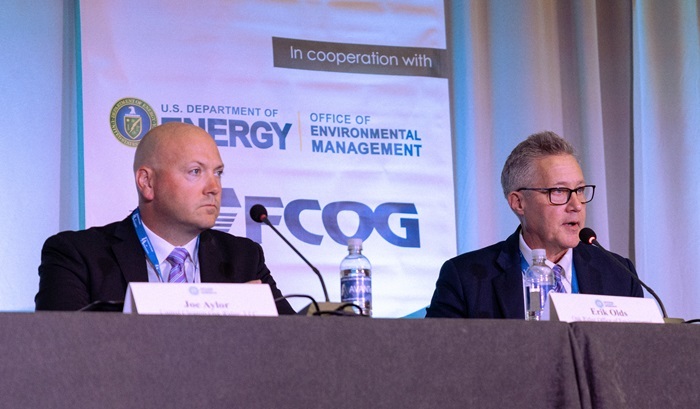 U.S. Department of Energy Oak Ridge Office of Environmental Management Manager Erik Olds, right, speaks to the audience at the 2025 National Cleanup Workshop during the panel session titled, “Enabling Efficiency and Driving Innovation at Oak Ridge.” UCOR Critical Projects Director Joe Aylor is also pictured.
ARLINGTON, Va. — A suite of innovative approaches to cleanup that can result in more than $100 million in savings is being evaluated at the Oak Ridge Reservation, federal and industry representatives said here last week.
“We're basically asking ourselves, what can we do differently, and where can these efficiencies really contribute to the core mission that is cleanup?” said Erik Olds, manager of the U.S. Department of Energy (DOE) Oak Ridge Office of Environmental Management (OREM).
Oak Ridge cleanup contractor UCOR has developed a five-point “efficiency plan” targeting safety, contracting, environment, performance and assessment, UCOR Critical Projects Director Joe Aylor said during a panel session at the 2025 National Cleanup Workshop.
That plan involves components such as an “OSHA-plus framework” for worker safety similar to what the National Nuclear Security Administration (NNSA) uses for some projects, expanded project management authority and a more cooperative approach to audits, Aylor said.
“Early estimates are showing savings specifically within our contract north of $100 million over the next several years,” Aylor said. "This is money that we can sink back into helping accelerate cleanup.”
DOE and UCOR are taking a “deliberate” approach to utilizing new cleanup approaches and making sure they result in “measurable” improvements, Olds said.
“I love that we have those opportunities to look at our toolbox and find things we can do differently, faster and better, but we have to be very deliberate in our approach and what we can choose to change and how we choose to change it,” Olds said. “We want to ensure that our roadmap that we develop, given all of these opportunities, is very precise and it's very clear to our team, so everyone knows the direction that we're heading.”
He also emphasized the need to ensure that new approaches can be sustained going forward.
“Sustainable changes are the best changes, right? We want performance efficiencies that are repeatable and that are consistent over time and teachable,” Olds said. “There's going to be other people sitting in these seats doing these jobs and we want to make sure they can take advantage of the good things that we're putting in place. So we want to ensure that our teams really understand and are prepared to fully support the changed environment.”
Oak Ridge’s efforts to identify innovative and more efficient approaches to cleanup come as DOE as a whole is looking to streamline requirements for its major programs, according to panel moderator John Longenecker, CEO of Longenecker & Associates and managing director of the Energy Facility Contractors Group.
“When the new administration came in, they put an even greater emphasis on streamlining,” Longenecker said. “We know that reducing risk and cleaning up the sites is really good for everyone. It's certainly good for the communities because of the tremendous economic development we can get by freeing up land. It’s also important to NNSA and the [DOE Office of] Science and others to get additional footprint so they can do these critical missions at existing institutions. It’s certainly good for the workers … and at the end of the day for the taxpayers.”
-Contributors: Jordan Anderson, Michael Nartker
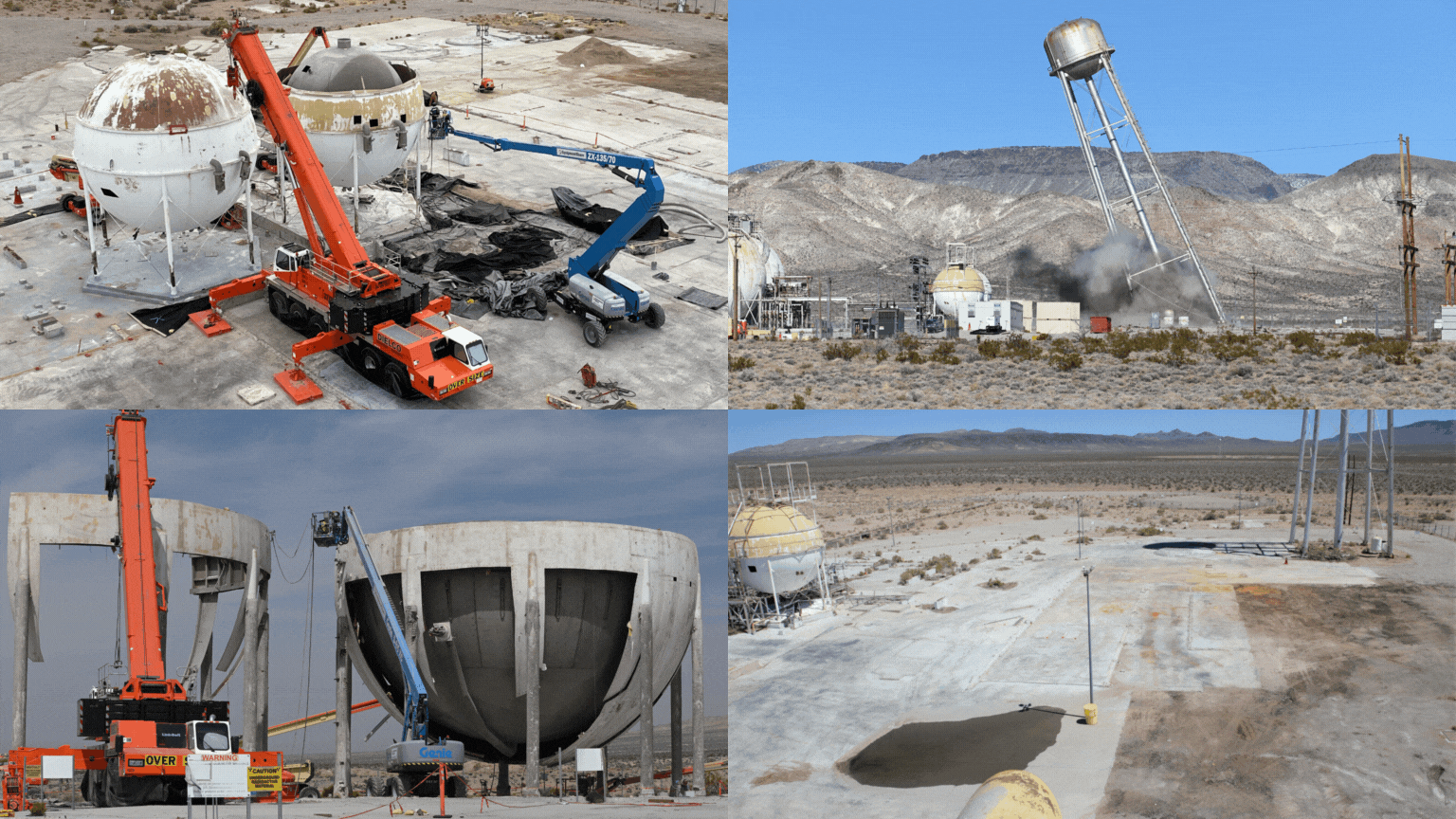 Scenes from the takedown of the Test Cell C facility at the Nevada National Security Site. Environmental Management Nevada Program crews recently completed the demolition of the historic industrial structure.
LAS VEGAS — The Environmental Management (EM) Nevada Program has achieved a significant milestone with the successful demolition of a historic industrial structure at the Nevada National Security Site (NNSS).
U.S. Department of Energy (DOE) Office of Environmental Management crews dismantled the facility, Test Cell C (TCC), during three years of meticulous, labor-intensive work at Area 25 at the NNSS.
“By remediating TCC, we have reduced the EM footprint, furthered EM’s waste cleanup mission and met our obligations to Nevada residents by being strong stewards of the Silver State’s environment,” said Program Manager Robert Boehlecke. “We’ve done the work safely and we’ve met our environmental compliance milestones. We are all very proud of this work and it is great to see it come to a completion.”
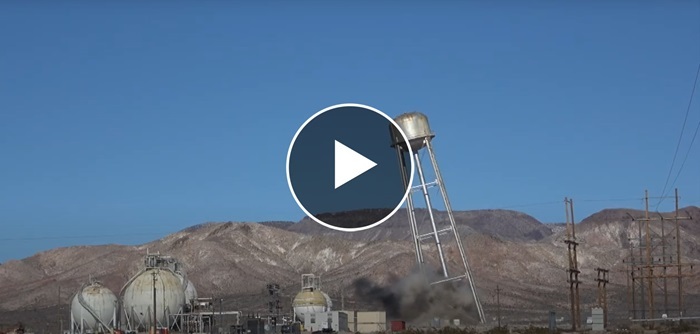 Watch an overview of demolition activities at the Test Cell C facility and hear from Environmental Management Nevada Program Manager Robert Boehlecke on what it means for the cleanup mission at the Nevada National Security Site.
Constructed in 1961, TCC was one of six major NNSS facilities that were part of the United States’ innovative efforts to develop nuclear-powered engines for rockets. Large, spherical tanks known as dewars at TCC held hundreds of thousands of gallons of liquid hydrogen used for ground testing of rocket engines.
EM Nevada contractor Navarro Research & Engineering began planning for the TCC demolition in 2022. Crews conducted biological surveys and took radiological samples throughout closure activities. They also removed electrical and lighting components known to contain regulated waste. Asbestos abatement was completed at all structures at TCC before demolition began.
Workers tore down a string of ancillary buildings at TCC using traditional demolition techniques. They used explosives to bring down a 150,000-gallon elevated water tank on a cold January morning in 2024.
Another challenge was removing insulation material, perlite, located between the inner and outer shells of the dewars. Crews carefully removed, packaged and disposed of about 500,000 pounds of the material prior to size-reduction activities of the dewars.
By far, the biggest challenge of the project was dismantling the dewars, said Navarro Construction Manager Jason Sofie. The largest of the globe-like structures were nearly four stories high and constructed using thick carbon and stainless steel. Watch a video about the dewars teardown here.
With unclear drawings from the 1960s, it took time to assess how thick the inner and outer sphere shells were and how the internal support system was arranged, Sofie said.
“All this drove a very unique cut plan to be able to safely and efficiently remove panels and segments of the outer and inner sphere shells,” Sofie said. “This was done without challenging the overall structural capabilities of the support systems within the vessel.”
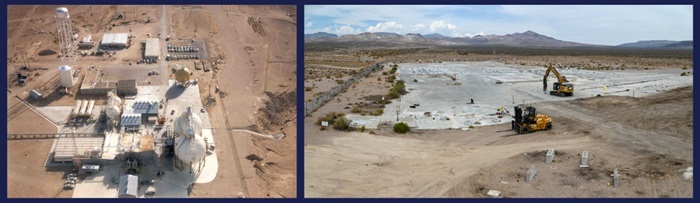 Before and after: At left is a view of the Test Cell C facility at the Nevada National Security Site prior to demolition. At right is the concrete pad that remains following demolition of the historic industrial structure.
With safety in mind, Navarro and subcontractor Clauss Construction employed high-pressure, specialized water jets to make precise cuts as opposed to traditional torch-cutting methods. After the water jet cutting was complete, crews sectioned apart the dewars like an onion, and loaded and shipped the inner and outer shell segments for disposal.
“The team brought different experiences to the table and together, we adjusted and kept moving forward to complete the mission,” Sofie said.
Their successful completion of the TCC project is part of the broader story of how EM leverages the best of American industry to run the largest environmental cleanup program in the world, safely meeting DOE’s legal cleanup responsibilities to ensure American communities are safe and prosperous.
The EM Nevada team determined the stainless steel from the inner shells of the dewars was not contaminated and therefore could be recycled. The team worked with National Nuclear Security Administration contractor Mission Support & Test Services to recycle it.
“We ended up with close to 420,000 pounds of high-quality stainless steel available for recycling,” Sofie said.
With TCC demolished, the EM Nevada Program and Navarro have turned their attention to continued demolition work at the nearby Engine Maintenance, Assembly and Disassembly (EMAD) facility. EMAD is a much larger complex than TCC and was also part of the Nuclear Rocket Development Station.
Crews have already brought down a train shed and water tower at EMAD. The next phase of demolition will focus on the 100,000-square-foot main structure of EMAD.
“The EM Nevada Program is extremely proud of the work done to demolish and clean up Test Cell C,” Boehlecke said. “The project was carried out with safety of our workers the top priority from day one.”
-Contributors: Kevin Knapp, Glenn Puit
 Environmental Management Cleanup Forum panelists, shown seated, from left: Brad Smith, Newport News Nuclear BWXT-Los Alamos LLC (N3B) president and general manager; Jessica Kunkle, Environmental Management Los Alamos Field Office manager; Ellen Gammon, N3B contact handled transuranic waste deputy program manager; and Casey Gadbury, National TRU Program Certification Division director with the U.S. Department of Energy Office of Environmental Management Carlsbad Field Office.
LOS ALAMOS, N.M. — U.S. Department of Energy Environmental Management Los Alamos Field Office (EM-LA) team members highlighted the importance of characterizing legacy waste safely and efficiently, and disposing of that waste off Los Alamos National Laboratory property, during the recent Environmental Management Cleanup Forum.
Presenters at the quarterly forum also discussed how different types of legacy waste are managed at LANL’s Technical Area 54, Area G, and how the waste is safely prepared for offsite disposal.
The forum serves as an important part of EM-LA’s stakeholder and public engagement as cleanup crews advance the DOE Office of Environmental Management legacy cleanup mission at LANL.
EM-LA Manager Jessica Kunkle expressed that shipping waste to EM’s Waste Isolation Pilot Plant (WIPP) has been and continues to be one of EM-LA’s main priorities.
“Since May 2000, DOE has made significant progress to ship waste offsite to WIPP,” Kunkle said. “The inventory of above-ground transuranic waste at Area G has been reduced by approximately 90 percent — from 24,466 containers to 2,558 containers.”
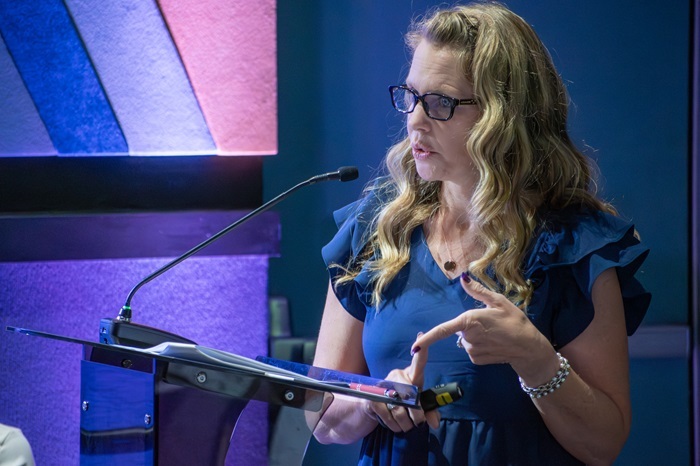 Ellen Gammon, Newport News Nuclear BWXT-Los Alamos LLC contact handled transuranic waste deputy program manager, provides insight on the Environmental Management Los Alamos Field Office legacy waste program.
Ellen Gammon, contact handled transuranic waste deputy program manager with EM-LA legacy cleanup contractor Newport News Nuclear BWXT-Los Alamos LLC (N3B), talked about how waste items are categorized and packaged, and where they are shipped.
“It is my job to ensure waste is properly characterized and safely transported off the hill,” Gammon said, referring to LANL’s location in Los Alamos.
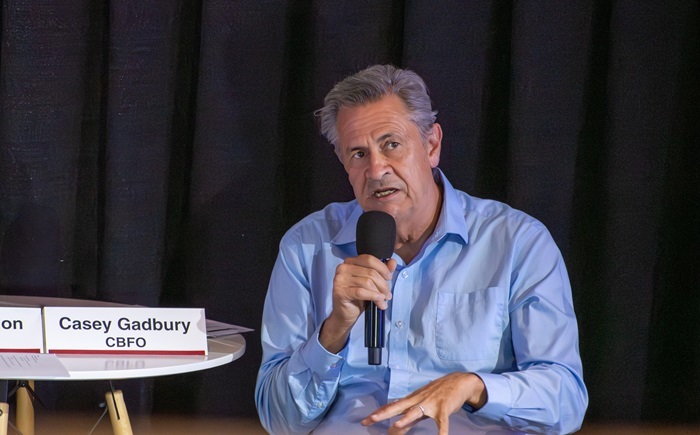 Casey Gadbury, National TRU Program Certification Division director with Carlsbad Field Office, answers questions from attendees at the Environmental Management Cleanup Forum.
Casey Gadbury, National Transuranic (TRU) Program Certification Division director with the Carlsbad Field Office, which oversees WIPP, focused on the partnership for completing the characterization and certification process necessary to meet the waste acceptance criteria for shipments to WIPP.
“We go as fast as we can as long as it’s safe and compliant,” Gadbury said. “And, we have to be mindful of resources as we are stewards of the taxpayer dollars.”
The next forum is set for later this year and will pilot a new format of presentations, public Q&A and an interactive component for the public to speak directly with subject matter experts.
-Contributor: Elicia Williams
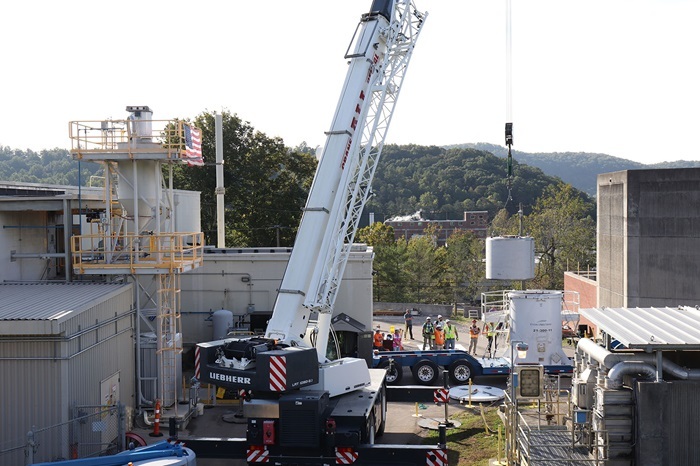 Workers load processed and downblended uranium-233 into a shipping cask for shipping and disposal. To date, they’ve transported about 490,000 pounds of the solidified waste for disposal out of state.
OAK RIDGE, Tenn. — The Oak Ridge Office of Environmental Management (OREM) and contractor Isotek Systems met a U.S. Department of Energy Office of Environmental Management (EM) 2025 priority to process 50 canisters of the radioactive material uranium-233 for shipment and disposal three months ahead of schedule, advancing the highest priority cleanup project at Oak Ridge National Laboratory (ORNL).
“The team at Isotek has addressed every technical challenge tied to processing this material to deliver this EM priority for calendar year 2025 well ahead of schedule,” said Sarah Schaefer, Isotek president and project manager. “Their expertise and skill always amaze me.”
What’s more, Isotek team members soared past a separate EM goal by processing 77 canisters of uranium-233 for shipment and disposal during the fiscal year ending today, far exceeding their goal of 50 canisters for fiscal year 2025.
 Isotek is contracted to eliminate the nation’s inventory of uranium-233 stored in the world’s oldest operating nuclear facility. Eliminating this material will remove a major risk, avoid significant costs associated with keeping the inventory safe and secure, and enable the demolition of the storage facility to transform ORNL’s central campus, supporting the national laboratory’s research and innovation missions.
“We focus on meeting our commitments and making the most of our opportunities,” Isotek Operations Manager Dale Caquelin said. “Now we have set our sights on completing the next 50 canisters for fiscal year 2026, which is a very challenging but worthy and achievable goal.”
Uranium-233 was created in the 1950s and 1960s for potential use in nuclear reactors but proved unviable as a fuel source. The radioactive material was sent to ORNL for long term storage where it has remained for decades.
Half of the inventory was dispositioned between 2011 and 2017. The remaining material requires processing to convert it into a form safe for transportation and disposal. Isotek began processing the remaining inventory in 2019.
“The material we are processing is problematic because of its significant radiological hazard and safeguard risk,” Caquelin said. “Processing converts the material to a stable, secure and compliant form that reduces these risks.”
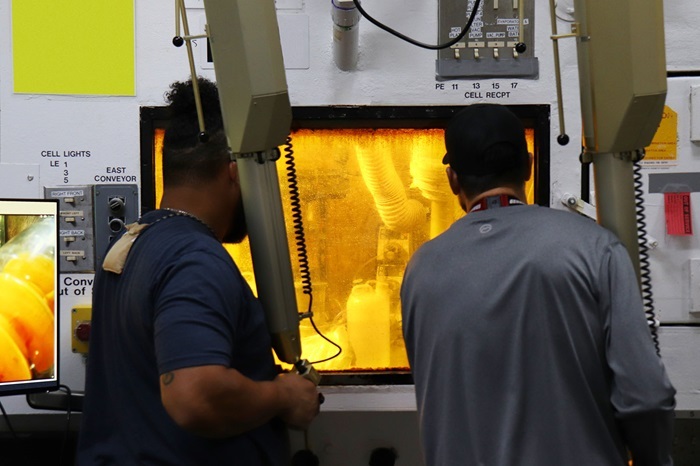 Isotek employees at Oak Ridge met a U.S. Department of Energy Office of Environmental Management priority to process 50 canisters of uranium-233 in 2025. The team met this goal three months ahead of schedule.
Isotek recently began processing a more challenging portion of the inventory called radiochemical processing-06. This material was solidified in a ceramic form unlike the powdered oxide in most of the other canisters. Workers developed special cutting equipment to segment it into sizes suitable for processing.
To date, Isotek has processed and removed more than 40% of the remaining uranium-233 inventory stored at ORNL. Workers have transported about 490,000 pounds of solidified waste for disposal out of state.
Isotek is also extracting an extremely rare medical isotope, thorium-229, from the uranium-233 before it’s processed and disposed of. This isotope is a crucial ingredient for a promising form of cancer treatment currently in clinical trials.
Isotek has already extracted more than 17 grams of thorium-229, which represents a 1,700% increase in the world’s supply. Currently, only 1 gram is available worldwide outside of Oak Ridge.
-Contributor: John Gray
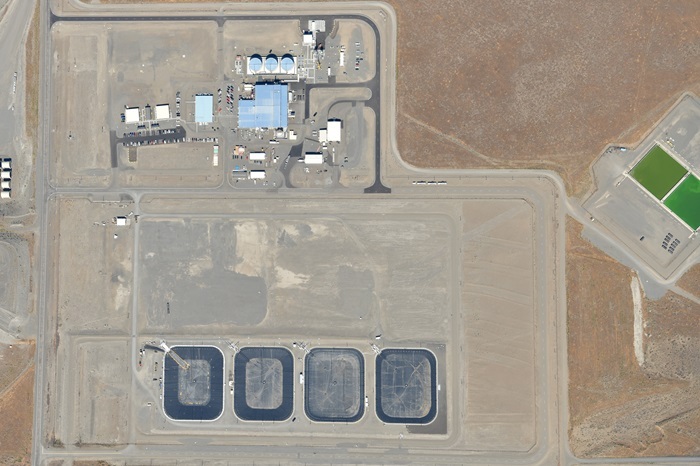 The latest processing campaign at the Hanford Site’s Effluent Treatment Facility lowered the level of one wastewater storage basin, the second basin from the right shown here, by almost 17 feet.
RICHLAND, Wash. — Workers at the Hanford Site treated more than 7.25 million gallons of wastewater over a six-month period that ended recently. This effort lowered the water level in one of Hanford’s large wastewater storage basins by almost 17 feet, creating space for future tank-waste treatment operations.
“This progress reduces risk today while also creating space we need for future cleanup,” said Will Ruane, Tank Farms Program Division manager at Hanford Field Office. “Every gallon treated strengthens our ability to protect workers, the environment and the community as we move forward with Hanford’s mission.”
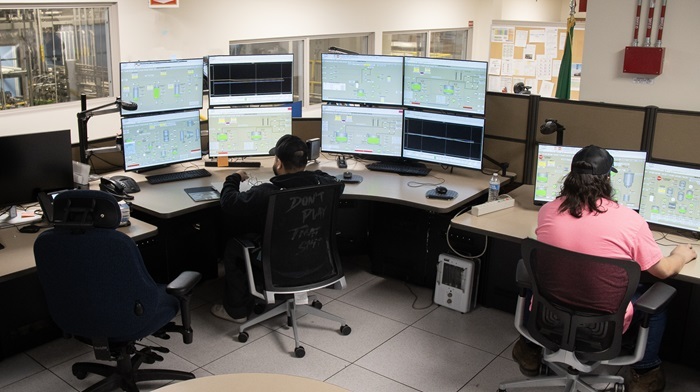 Nuclear chemical operators monitor wastewater processing in the Hanford Site’s Effluent Treatment Facility control room.
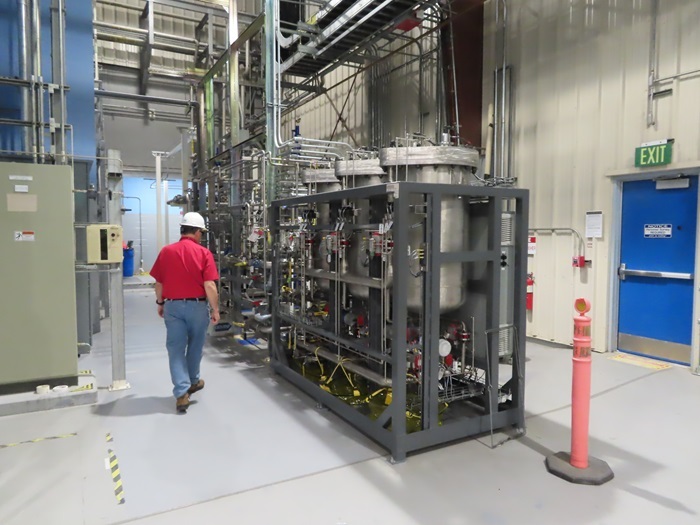 A new filtration system is among the many improvements made to the Hanford Site’s Effluent Treatment Facility since 2019 to boost its capacity and reliability.
The water was processed at the Effluent Treatment Facility (ETF), designed to clean contaminated wastewater. Managed by U.S. Department of Energy Office of Environmental Management contractor Hanford Tank Waste Operations & Closure (H2C), the facility has undergone approximately $200 million in upgrades since 2019 to enhance capacity and reliability. These upgrades will help accommodate a new waste stream from the Waste Treatment and Immobilization Plant (WTP), which will turn Hanford’s tank waste into glass for safer storage.
“The upgrades and successful processing campaigns demonstrate our commitment to environmental stewardship and innovation,” said Scott Booth, H2C operations director. “Our efforts are crucial in ensuring the safety and efficiency of waste management at Hanford.”
As part of Hanford’s Direct-Feed Low-Activity Waste Program, the ETF is expected to treat about 5 million gallons of wastewater annually once full operations begin at WTP.
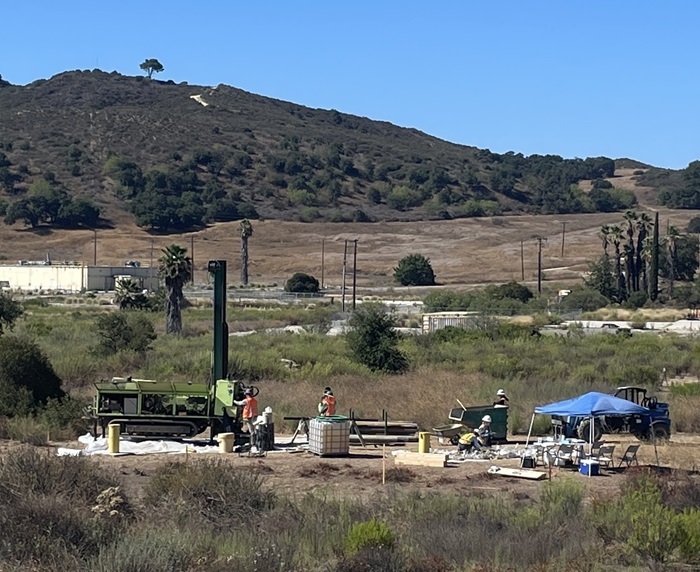 Crews operate a sonic drill rig to install monitoring boreholes and document rock core samples taken for an innovative groundwater pilot study at the Energy Technology Engineering Center.
SIMI VALLEY, Calif. — Drilling for an innovative groundwater pilot study at the U.S. Department of Energy (DOE) Energy Technology Engineering Center (ETEC) at the Santa Susana Field Laboratory (SSFL) is afoot.
SSFL is a 2,850-acre former rocket engine and nuclear research facility comprised of four operational areas. DOE’s Office of Environmental Management (EM) is charged with remediation in Area IV, where ETEC previously operated.
The pilot will apply the innovative remediation approach known as in-situ biological and chemical reduction, which involves injecting amendments into the ground that create a reductive environment in-situ, or in-place, to stimulate natural degradation of the contaminants present. EM will then monitor the progress over time.
 |
|
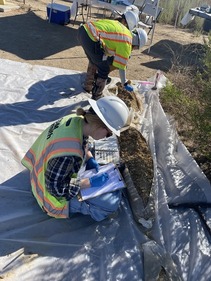
Geologists supporting the U.S Department of Energy Office of Environmental Management inspect and record rock core material obtained during borehole drilling to create a detailed log of the subsurface conditions at the Energy Technology Engineering Center. |
This past summer, crews broke ground on the first of 18 boreholes that will be drilled near two wells in Area IV as part of the pilot study at ETEC’s Hazardous Materials Storage Area.
After the boreholes are drilled, crews will install monitoring wells and take samples to determine the current groundwater conditions. They will then inject the amendments into the wells and take samples monthly for six months to determine if there have been any effects on the contaminants.
EM will use these results to determine whether to expand this innovative groundwater remediation approach or implement other methods to treat the groundwater contamination and complete a safe and effective cleanup at SSFL.
Quarterly monitoring and reporting will continue after that as part of the permit approved in July by the California State Water Resources Control Board.
-Contributor: Melissa Simon
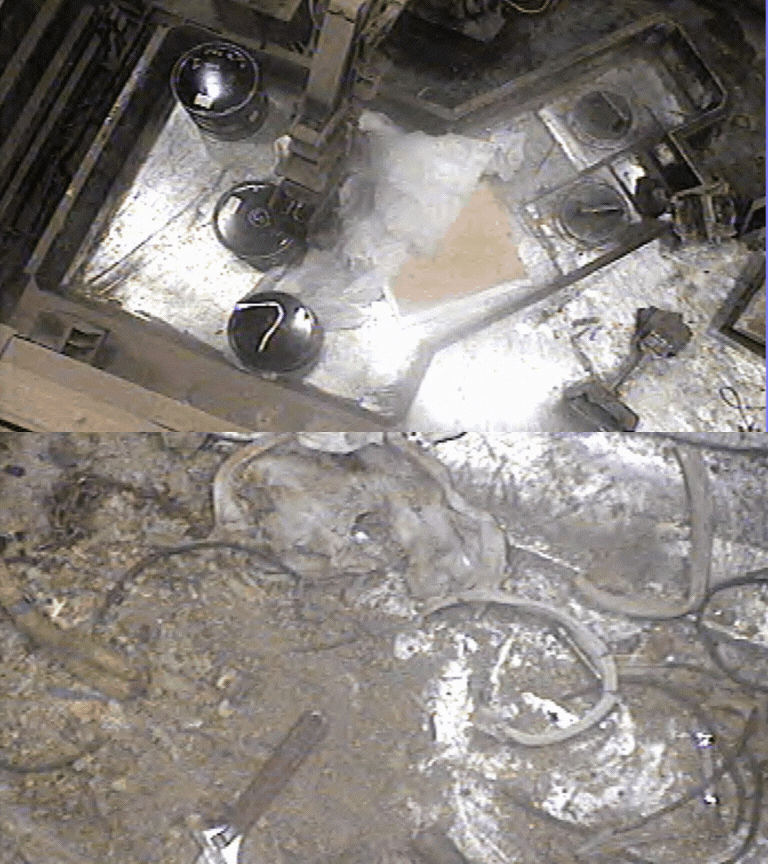 Crews are re-treating and repackaging previously containerized transuranic waste at the Advanced Mixed Waste Treatment Project at the Idaho National Laboratory Site to ensure its safe shipment to the Waste Isolation Pilot Plant in New Mexico.
IDAHO FALLS, Idaho — The U.S. Department of Energy Office of Environmental Management (EM) is nearing completion of a campaign in Idaho that involves reconditioning previously containerized transuranic waste to allow its safe shipment to the Waste Isolation Pilot Plant (WIPP) in New Mexico for permanent disposal.
The waste originated from the Advanced Mixed Waste Treatment Project (AMWTP) at the Idaho National Laboratory Site, where 55-gallon drums containing the waste were crushed in the facility’s supercompactor using 4 million pounds of force to form compact "pucks," reducing volume for shipping and storage. The supercompactor is known as the facility’s workhorse.
During compaction, liquids and solids are often squeezed out of the drums. Liquids known as squeezants are collected in the supercompactor's sump, then moved to 4-liter jars and placed into 55-gallon drums. Workers had added an absorbent to those drums and blended the contents with other debris. Next, they partially crushed the drums to avoid further leakage and overpacked them with 100-gallon drums.
In 2022, two shipments of that waste destined for WIPP were returned to the Idaho Cleanup Project (ICP) after drums developed pinholes during transit and leaked a small amount of liquid inside the shipping casks. Crews had filled those drums with squeezant pucks years before and placed the drums in storage at AMWTP before they were shipped to WIPP. As a precaution, ICP contractor Idaho Environmental Coalition (IEC) suspended all shipments of that waste.
Crews later reopened the containers holding the pucks at AMWTP using a robotic arm, retreated the waste with absorbents, inspected it to ensure no prohibited items, including liquids, were present, and then performed compaction in the supercompactor, eliminating void spaces.
IEC AMWTP Treatment Facility Operations Manager Don Barnett said the campaign has progressed well.
"We had a slow start to the fiscal year due to planned maintenance and minor equipment issues, but we picked up the pace, and things are running smoothly now," he said.
Barnett noted that AMWTP teams completed an EM milestone of processing 150 drums seven weeks early and continue to make progress on the remaining inventory. Just 56 drums remain to be processed.
-Contributor: Erik Simpson
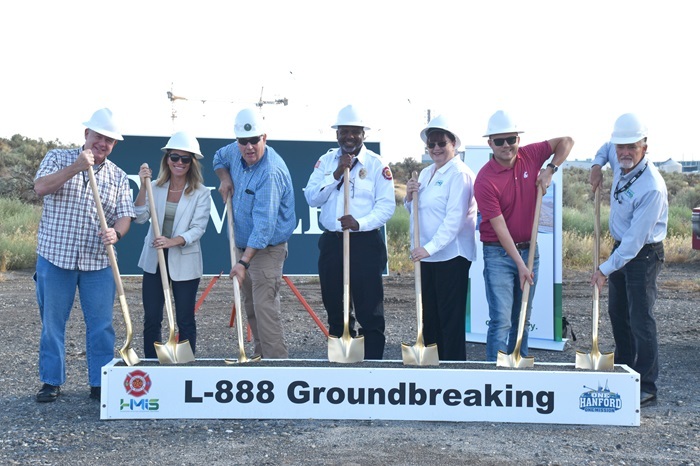 Officials prepare to turn dirt as part of the groundbreaking ceremony for a new fire station on the Hanford Site. From left: Tim Haddick, Hanford Field Office (HFO) director of Security and Emergency Services; Vanessa Turner, HFO acting assistant manager of Mission Support; Brian Harkins, HFO acting deputy manager; Nick Thomas, Hanford fire chief; Amy Basche, Hanford Mission Integration Solutions (HMIS) president; Brooks Payne, Fowler Construction president; and David Chase, HMIS vice president of Safeguards, Security and Emergency Response.
RICHLAND, Wash. — Construction is set to begin on a new fire station at the Hanford Site, boosting emergency response for workers and operations that support the U.S. Department of Energy Office of Environmental Management cleanup mission.
The Hanford Fire Department, managed by Hanford Mission Integration Solutions (HMIS), will operate the 22,000-square-foot facility. The single-story building will house up to 12 firefighters and include vehicle bays for eight emergency response units.
Hanford Site leaders participated in the groundbreaking ceremony for the new station earlier this month.
“The ability to respond quickly and effectively during emergencies is essential to our mission,” said Brian Harkins, acting deputy manager for Hanford Field Office. “The new fire station represents an important step forward when it comes to the continued safety of our workforce.”
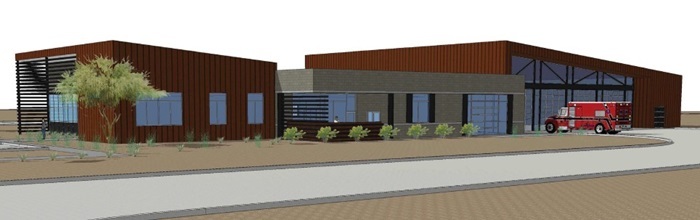 An artist’s rendering shows what the Hanford Site’s newest fire station will look like when construction is completed in 2027.
The new station will be built in the central part of the site, where much of the 75 square miles of active cleanup work takes place.
“This new station will bring our firefighters and emergency responders closer to where the work is happening,” said Hanford Fire Chief Nick Thomas. “We’ll be better equipped to protect Hanford’s people and property, along with the environment.”
Construction is expected to begin in October and should be complete in spring 2027.
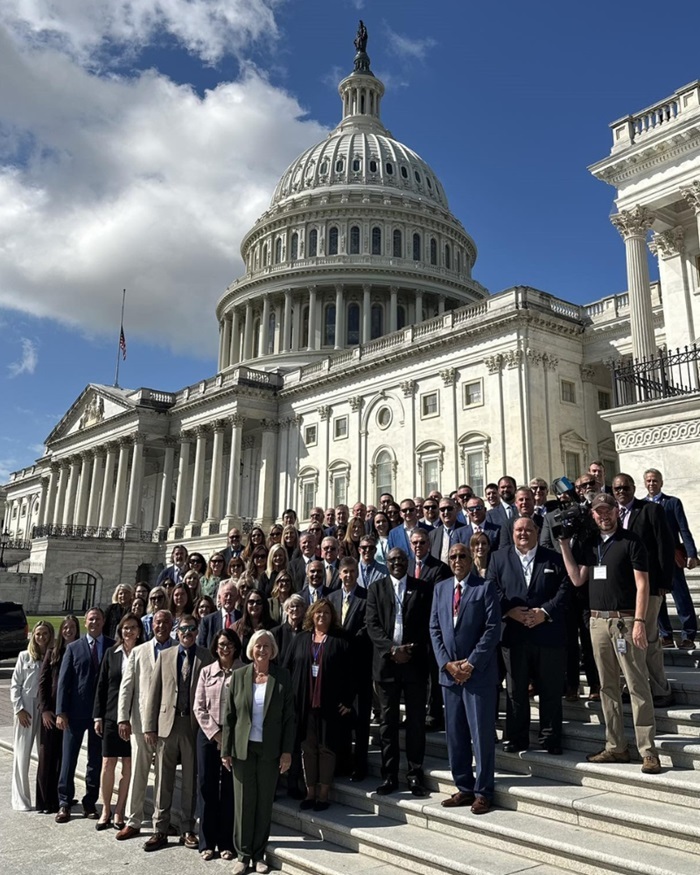 The more than 80 members of the Paducah Chamber of Commerce Fly-In delegation are pictured outside the U.S. Capitol Building during the recent trip to meet with federal legislators and U.S. Department of Energy leadership.
WASHINGTON, D.C. — The more than 80 community leaders who took part in the recent Paducah Chamber of Commerce Fly-In discussed environmental cleanup progress, upcoming project milestones and long term planning for reindustrialization of the Paducah Site with members of Kentucky’s congressional delegation and U.S. Department of Energy (DOE) leaders.
The meetings emphasized DOE’s commitment to advancing its Office of Environmental Management (EM) cleanup to support the community’s future use goals, ensuring the Paducah Site is poised to serve as a driver for regional economic growth through reindustrialization efforts like those announced with General Matter.
During the visit, Deputy Secretary of Energy James P. Danly met with the group and highlighted DOE efforts to ensure reliable, affordable energy abundance and noted that the Department relies on the American people to help with these objectives, with Paducah being a prime example. The chamber group talked about reindustrialization and other topics with acting EM Assistant Secretary Joel Bradburne and other members of the EM leadership team, including Greg Sosson, Kristen Ellis and Steve Trischman.
The annual fly-in, which drew a record number of participants this year, provides an opportunity for the Paducah community to present a unified voice on regional priorities. The event underscores the strong collaboration between DOE, federal lawmakers and community stakeholders to ensure Paducah Site cleanup activities position western Kentucky as a leader in the energy renaissance across the country.
“It shows how much our community values the time in D.C. to discuss priorities for our community. When we go to D.C., we work on issues important to our region,” Paducah Area Chamber of Commerce President Sandra Wilson said. “This includes more funding for the Paducah Site and new businesses that will occupy the land transferred back to the community.”
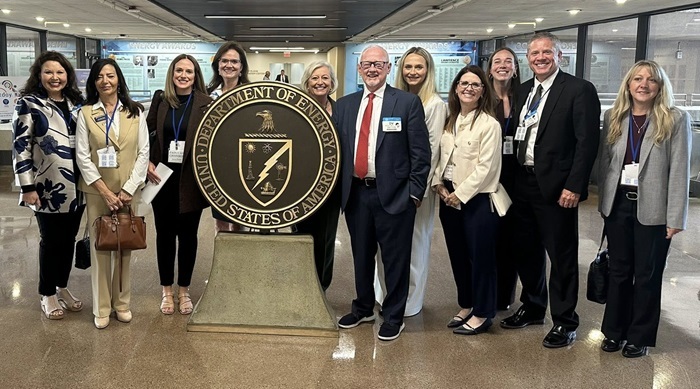 A small group from the Paducah Chamber of Commerce Fly-In delegation pose for a photo during a visit to the U.S. Department of Energy headquarters to discuss future reindustrialization plans at the Paducah Site.
Bradburne said the event is an important forum for reinforcing DOE’s collaboration with Paducah community leaders.
“Continued engagement with Paducah’s unified voice ensures we are aligning cleanup progress with the community’s long term vision for the site,” Bradburne said.
Key priorities discussed during the meetings included the importance of sustained funding for Paducah Site cleanup, implementation of a holistic cleanup strategy, and investment in infrastructure to attract advanced manufacturing and a potential artificial intelligence data center siting. Chamber leaders highlighted the site’s role as one of the region’s largest employers, with more than 1,500 workers supporting DOE’s mission.
“Understanding the community’s vision for the site is a key factor in working towards final cleanup decisions,” Paducah Site Lead April Ladd said. “An important tenant of our mission is partnering with community leaders as we steadily make progress at the Paducah Site.”
-Contributor: Dylan Nichols
|