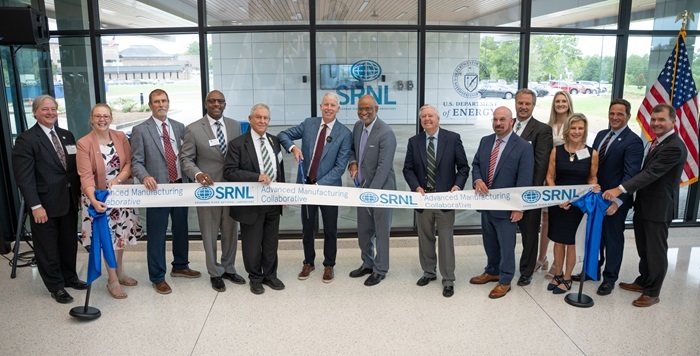
 Energy Secretary Chris Wright opened the Advanced Manufacturing Collaborative facility on the campus of the University of South Carolina-Aiken on Aug. 7. From left are Harry Lightsey, South Carolina secretary of commerce; Tammy Taylor, deputy laboratory director for science and technology, Savannah River National Laboratory (SRNL); Tony Polk, assistant manager for nuclear materials stabilization, U.S. Department of Energy Office of Environmental Management (EM), Savannah River Operations Office (SROO); Edwin Deshong, manager, SROO; U.S. Rep. Joe Wilson, South Carolina; Wright; Johney Green, director, SRNL; U.S. Sen. Lindsey Graham, South Carolina; Roger Jarrell, principal deputy assistant secretary, EM; Michael Mikolanis, manager, National Nuclear Security Administration, Savannah River Field Office; Alicia Stetin, chief of staff, EM; Teresa Haas, chair, Aiken County Commission for Higher Education, Daniel Heimmermann, chancellor, University of South Carolina Aiken; and South Carolina Sen. Tom Young.
DOE leaders launch Savannah River National Laboratory’s new Advanced Manufacturing Collaborative facility
AIKEN, S.C. — Joined by local, state and congressional leaders, Energy Secretary Chris Wright and other U.S. Department of Energy (DOE) officials opened the doors to Savannah River National Laboratory’s (SRNL) new Advanced Manufacturing Collaborative (AMC) last week during a ribbon-cutting ceremony on the campus of the University of South Carolina Aiken (USC Aiken), launching a new chapter for American innovation in South Carolina.
The milestone follows through on a vision that began more than seven years ago and represents a new era of collaboration between government, academia and industry. The 63,000-square-foot state-of-the-art facility provides modern laboratory, office and conference facilities designed to foster innovation in advanced manufacturing in areas such as additive manufacturing, artificial intelligence-driven automation, and novel materials for fusion energy, energy resilience and nuclear applications.
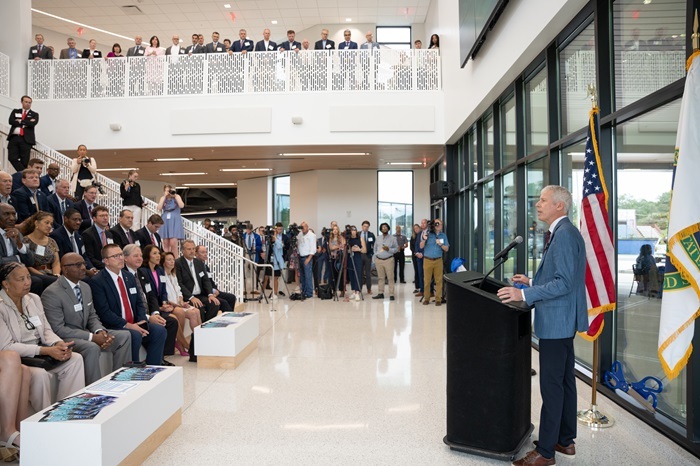 Energy Secretary Chris Wright addresses officials at the opening of the Advanced Manufacturing Collaborative facility in Aiken, South Carolina. The 63,000-square-foot state-of-the-art facility connects industry, academia and government to increase capabilities in areas such as additive manufacturing, artificial intelligence-driven automation, and novel materials for fusion energy and energy resilience.
“The Advanced Manufacturing Collaborative will bring the expertise of the Department of Energy’s national labs together with innovators from academia and the private sector with one shared goal: to unleash America’s energy potential,” Wright said. “This mission was started by President Trump in his first term, and I am proud to be representing the Department of Energy 200 days into his second administration for the grand opening of this facility, completed in record time.”
SRNL will operate the facility, serving as a catalyst to attract new technology and manufacturing to the region, as well as build a pipeline of talent to support the Savannah River Site mission and regional manufacturing growth. The AMC also provides a platform for public-private partnerships, supporting DOE Office of Environmental Management (EM) and broader Departmental mission objectives while creating jobs, spurring innovation and maximizing the reach of industry in South Carolina.
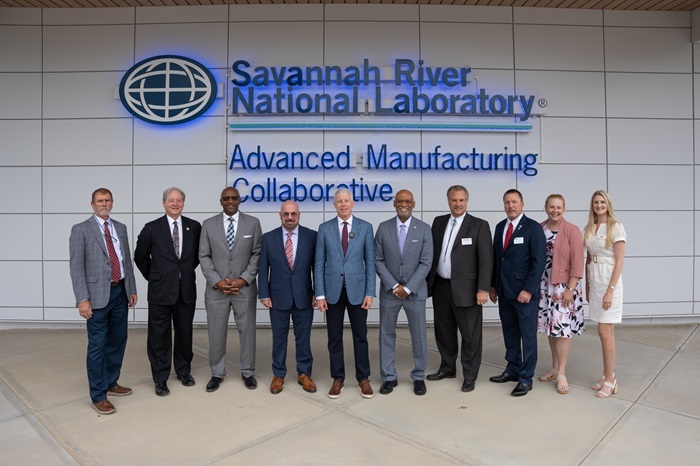 Energy Secretary Chris Wright toured the Advanced Manufacturing Collaborative facility in Aiken, South Carolina, on Aug. 7. From left are Tony Polk, assistant manager for nuclear materials stabilization, U.S. Department of Energy Office of Environmental Management (EM), Savannah River Operations Office (SROO); Harry Lightsey, South Carolina secretary of commerce; Edwin Deshong, manager, SROO; Roger Jarrell, principal deputy assistant secretary, EM; Wright; Johney Green, director, Savannah River National Laboratory (SRNL); Michael Mikolanis, manager, National Nuclear Security Administration, Savannah River Field Office; Steve Stamper, director, Savannah River Laboratory Office, SROO; Tammy Taylor, deputy laboratory director for science and technology, SRNL; and Alicia Stetin, chief of staff, EM.
“The Advanced Manufacturing Collaborative is more than a building — it is a bold step toward redefining how SRNL works with the best of American industry and academia to solve our nation’s most pressing energy and security challenges,” said SRNL Director Johney Green. “We are grateful to everyone across the Department, the University of South Carolina-Aiken, our partners and dedicated laboratory staff for making this vision a reality.”
USC Aiken Chancellor Daniel Heimmermann also provided remarks and emphasized the educational impact of the facility during the ceremony. He thanked the Aiken County Commission for Higher Education for locating AMC on the USC Aiken campus and bringing together academia, industry and the national laboratories across the manufacturing sectors.
 Katie Hill, right, senior scientist, Savannah River National Laboratory (SRNL), briefs Energy Secretary Chris Wright, second from left, during his tour of the laboratory with Johney Green, SRNL director, fourth from left, and Roger Jarrell, U.S. Department of Energy Office of Environmental Management principal deputy assistant secretary, sixth from left.
 Energy Secretary Chris Wright toured the Savannah River National Laboratory (SRNL) on Aug. 6. From left are Tony Polk, assistant manager for nuclear materials stabilization, U.S. Department of Energy Office of Environmental Management (EM), Savannah River Operations Office (SROO); Tammy Taylor, deputy laboratory director for science and technology, SRNL; Edwin Deshong, manager, SROO; Wright; Roger Jarrell, principal deputy assistant secretary, EM; Johney Green, director, SRNL; Michael Mikolanis, manager, National Nuclear Security Administration, Savannah River Field Office; and Steve Stamper, director, Savannah River Laboratory Office, SROO.
With the opening of the AMC, SRNL will deliver an economic engine for South Carolina, providing entrepreneurs and manufacturers a new access point to DOE and SRNL.
“I look forward to working with all of you to harness that potential in a community that has played a key role in our security, science and energy missions for so many decades,” EM Principal Deputy Assistant Secretary Roger Jarrell said. “This facility will help produce a pipeline of talent to support the Savannah River Site mission and regional manufacturing for decades to come.”
In conjunction with opening the AMC, Wright visited SRNL, which is ushering in a nuclear and industrial renaissance, leading to new frontiers of scientific discovery and global technological dominance. The visit marked his 11th stop in his goal to visit all 17 of the DOE national laboratories this year.
 Depleted uranium hexafluoride cylinders stand in a cylinder yard at the Paducah Site. A portion of the site’s inventory of more than 40,000 remaining cylinders will be available to commercial partners to turn legacy coproduct of the former uranium enrichment process into opportunities for future energy supplies.
PADUCAH, Ky. — Recent agreements and partnerships to provide land and a portion of a legacy coproduct from the former uranium enrichment process at the Paducah Site to commercial partners is turning liabilities into assets, accelerating production of domestic energy supplies.
“These agreements and partnerships turn what was considered an environmental challenge into a critical national asset,” Portsmouth Paducah Project Office (PPPO) Manager Joel Bradburne said. “The work being done at Paducah and across the nation is at the heart of the nuclear renaissance this administration is collectively working toward.”
With a portion of the depleted uranium hexafluoride (DUF6) cylinders available for re-enrichment, the Paducah Site has the ability to jump-start domestic uranium enrichment with commercial partnerships. Through these innovative partnerships, the DUF6 inventory will help expedite future enrichment activities by providing a stable feed of uranium hexafluoride for multiple projects.
Last week, PPPO signed a lease agreement with General Matter for approximately 100 acres of land for a future private-sector domestic uranium enrichment facility. General Matter is a California-based nuclear firm.
“Together, we hope to make Paducah not just the Atomic City of the past, but the Atomic City of the future,” General Matter Founder and CEO Scott Nolan said.
The Paducah Site is also partnering with Global Laser Enrichment (GLE). The private commercial company plans to build the Paducah Laser Enrichment Facility on recently acquired land adjacent to the Paducah Site and has submitted its license application for the facility to the U.S. Nuclear Regulatory Commission.
The partnerships allow both companies access to a portion of the Paducah Site’s remaining inventory of more than 40,000 DUF6 cylinders. DUF6 is a coproduct of the uranium enrichment process and has been stored in cylinders at the site for decades.
An onsite facility has been converting DUF6 into a more stable chemical form that can be reused, stored or disposed of.
With the added benefit of the DUF6 cylinder inventory already in the chemical form needed for enrichment activities, providing access to a portion of the DUF6 cylinders can shorten nearly a decade of conversion facility operations and avoid costs associated with disposition of the material.
“Ultimately, these partnerships will save U.S. taxpayers hundreds of millions of dollars,” Bradburne added. “In turn, the companies will unlock significant potential in the resources readily available to DOE.”
This effort supports the administration’s goal to accelerate production of domestic energy supplies and creates opportunities to turn federal liabilities into assets.
Moreover, the collaboration between DOE, commercial entities and the Paducah community signals a step forward in the re‑emergence of nuclear energy, ensuring the Paducah Site continues its vital role in securing energy independence and meeting cleanup challenges.
-Contributors: Sarah Marko, Dylan Nichols
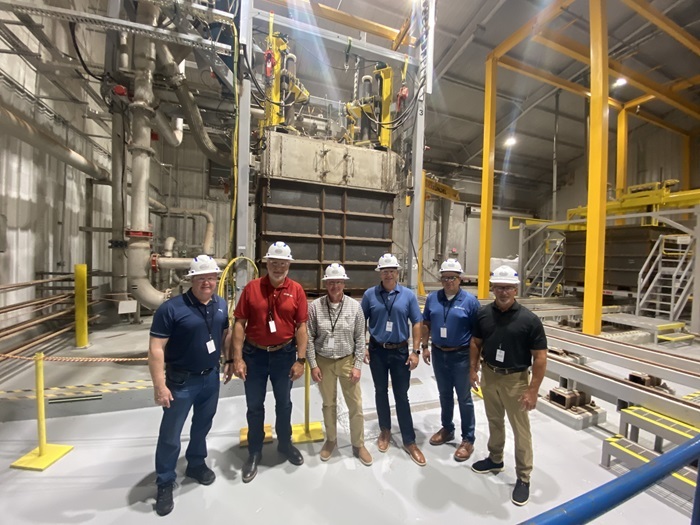 Oak Ridge Office of Environmental Management (OREM) and UCOR officials visit the Waste Control Specialists facility in Andrews, Texas, to observe a demonstration project that has created a disposal path for reactive metals. UCOR President and CEO Ken Rueter is pictured second from left, OREM Manager Erik Olds is third from left, and UCOR Waste Management and Operations Director Sean Dunagan is fourth from left.
OAK RIDGE, Tenn. – Drawing from an innovative technology, the Oak Ridge Office of Environmental Management (OREM) and contractor UCOR have achieved a breakthrough set to eliminate a complex legacy waste stored at Oak Ridge National Laboratory for the past 50 years.
In recent weeks, U.S. Department of Energy (DOE) Office of Environmental Management (EM) crews shipped the first of several large aluminum and steel containers filled with highly reactive metals — called sodium shields — for use in a demonstration of the technology that provides a pathway for their permanent disposal. The demonstration was completed successfully.
The sodium shields were used in the 1960s and 1970s to pioneer radiation shielding research. The largest of them is about 5 feet high and weighs over 30,000 pounds.
 Oak Ridge Office of Environmental Management crews packed and shipped the first of the sodium shields to the Waste Control Specialists facility in Andrews, Texas, for vitrification in recent weeks.
This breakthrough effort was made possible through EM's Technology Operations Office funding the demonstration project to ship and process the first sodium shield.
The first challenge involved shipping the sodium shields from Oak Ridge. That challenge was solved after OREM and UCOR obtained a special permit from the U.S. Department of Transportation, thanks to a months-long effort by subject matter experts to conduct an extensive safety analysis and develop a packaging strategy for the waste.
The second challenge was determining if the selected technology could successfully process the reactive metals from the sodium shields. OREM and UCOR employed Veolia Nuclear Solutions’ patented GeoMelt technology at the Waste Control Specialists facility in Andrews, Texas. The vitrification process proved successful by converting the metals into a stable glass form for safe, permanent disposal.
 |
|
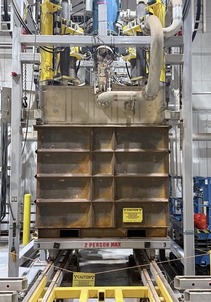
In a demonstration at the Waste Control Specialists facility in Andrews, Texas, a vitrification process successfully converted the first of the sodium shields stored at Oak Ridge National Laboratory into stable glass for disposal. |
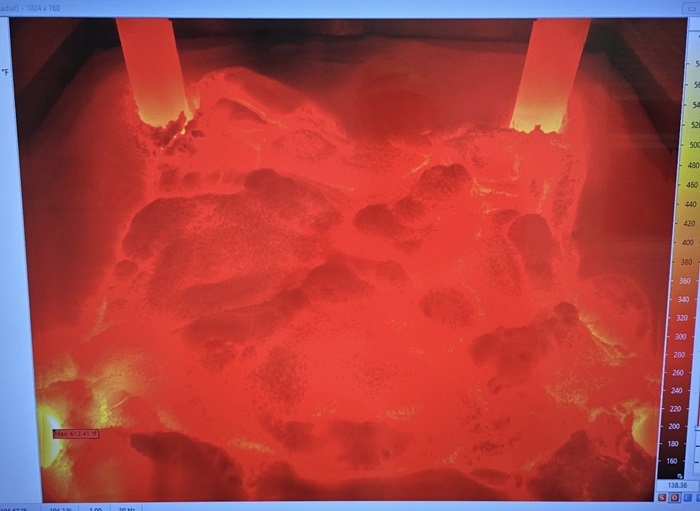 The GeoMelt technology heats the sodium shields to more than 2,700 degrees Fahrenheit, turning the reactive metal into a stable glass form for safe, permanent disposal through a process known as vitrification.
Sodium metal presents unique hazards because it is unstable and can be highly reactive when mixed with water. The GeoMelt process is unique because it does not use any liquid to support treatment and avoids generating other challenging waste steams during the treatment process. After treatment, the vitrified waste form no longer exhibits reactive or ignitable characteristics.
"This represents a significant advancement in our ability to address legacy materials that have posed unique storage and handling challenges for half a century," said Clint Mori, manager of UCOR's difficult waste streams. "A successful sodium shield vitrification demonstration opens the door to a safe and compliant disposal pathway for this challenge."
The Veolia demonstration project represents a crucial step in addressing challenging legacy waste streams from America's nuclear research history, establishing a potential template for handling similar reactive metal waste streams across the DOE complex.
-Contributor: Mike Butler
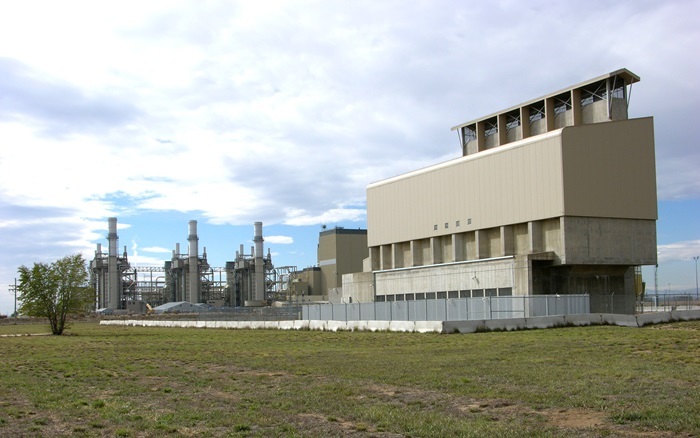 A view of the Fort St. Vrain Independent Spent Fuel Storage Installation and power station in northern Colorado.
IDAHO FALLS, Idaho — The U.S. Department of Energy (DOE) Office of Environmental Management (EM) Idaho Cleanup Project (ICP) is modernizing operations and security at two spent nuclear fuel facilities licensed by the U.S. Nuclear Regulatory Commission.
The efforts to upgrade infrastructure at the two facilities is part of EM's work to address the legacy of the past while supporting national security. EM drives innovation and efficiency while leveraging the best of American industry to run the largest environmental cleanup program in the world, safely meeting DOE’s legal cleanup responsibilities to ensure American communities are safe and prosperous.
The first EM facility undergoing improvements, located at the Idaho National Laboratory (INL) Site, is the Independent Spent Fuel Storage Installation (ISFSI), where spent nuclear fuel debris from the 1979 Three Mile Island Unit 2 accident in Pennsylvania is stored.
The improvements, some of which are the first since the fuel and debris from the facility were moved to the Idaho Nuclear Technology and Engineering Center at the INL Site about 25 years ago, include repairs and sealing of the facility’s concrete base pad, application of a coating to repel water and preserve the facility’s horizontal concrete modules, procurement of a new scissor lift and guard railing to aid in inspections and repairs, and additional inspection and security improvements.
“Over time, the outdoor facility has experienced some aging effects, but with these and previous improvements, we are able to extend its useful life and keep it in compliance with Nuclear Regulatory Commission licensing requirements well into the future,” said Jeff Long, program manager for ICP contractor Idaho Environmental Coalition (IEC), which manages the two spent nuclear fuel facilities on behalf of EM.
 |
|
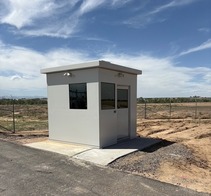
Efforts to upgrade infrastructure at the Fort St. Vrain spent nuclear fuel facility in northern Colorado included construction of a new guard building. |
IEC also manages the Fort St. Vrain (FSV) ISFSI located in northern Colorado. It was established following the shutdown and decommissioning of the Fort St. Vrain Generating Station, a gas-cooled reactor that operated from 1979 to 1989. The site has since been converted to a natural gas-powered generating station, but much of the spent nuclear fuel remains in temporary storage in the nearby ISFSI.
Long said crews have completed significant infrastructure upgrades at the FSV facility, including installation of backup power capabilities, a new guard shack installation, repairs to roads and grounds, updates to facility lighting and other systems, and improvements to security equipment.
“Despite FSV being located two states away, our responsibility to manage the spent nuclear fuel remains the same as for the Idaho ISFSI, which we see every day,” he said. “We not only have a responsibility to EM and the Nuclear Regulatory Commission, but to the state of Colorado as well.”
Since IEC took over management of the ICP in 2022, it has since integrated FSV with company processes, procedures and organizations. For example, IEC Emergency Management completed its second annual exercise at FSV in May that included local FSV staff, ICP Emergency Management personnel and local emergency response resources.
Long said these integration efforts have raised the standards and quality of the entire Nuclear Regulatory Commission-licensed facilities management program and associated processes as IEC draws from the expertise of experienced professionals for continuous improvements.
-Contributor: Erik Simpson
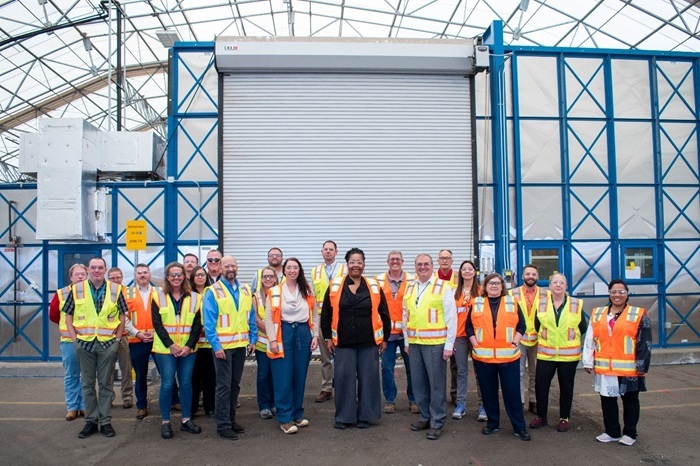
LOS ALAMOS, N.M. — Members of the Defense Nuclear Facilities Safety Board (DNFSB) viewed progress underway to address legacy transuranic waste during a visit to Los Alamos National Laboratory (LANL) on July 30.
Acting DNFSB Chair Thomas Summers, Board Member Patricia Lee and board staff toured Area G at LANL’s Technical Area 54, where they saw waste storage facilities and processing operations to prepare the transuranic waste for eventual disposal at the Waste Isolation Pilot Plant (WIPP).
“The DNFSB plays an important role in helping to ensure safe operations at a variety of U.S. Department of Energy sites, including LANL,” said Jessica Kunkle, manager of the DOE Office of Environmental Management Los Alamos Field Office (EM-LA). “We appreciate the good-working relationship we have with the board, and we were glad to be able to show them how we are safely carrying out this important mission.”
Safely shipping transuranic and other radioactive waste offsite for disposal is a key component of the legacy cleanup mission at LANL. Since 2018, EM-LA and its legacy cleanup contractor, Newport News Nuclear BWXT-Los Alamos LLC (N3B), have shipped more than 615 cubic meters of transuranic waste to WIPP, and more than 14,000 cubic meters of low-level and mixed low-level radioactive waste to offsite disposal facilities.
“We’re proud of our progress in reducing legacy waste at LANL,” N3B President and General Manager Brad Smith said. “Safety is at the core of our performance for the legacy waste mission and all of our cleanup activities at LANL.”
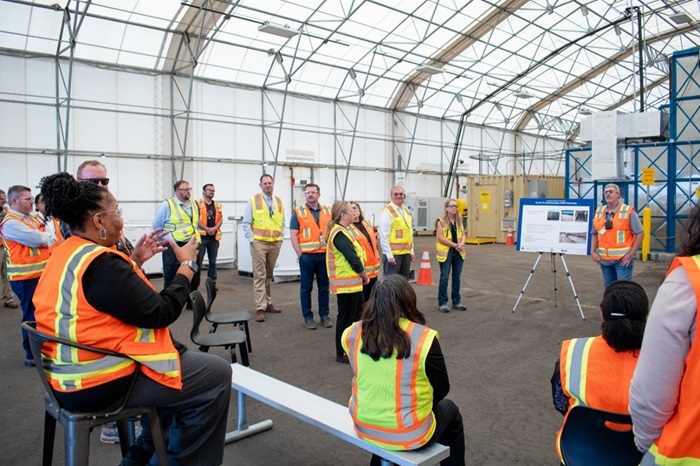 Newport News Nuclear BWXT-Los Alamos LLC (N3B) Contact Handled-Transuranic Program Manager Brian Clayman explains to Defense Nuclear Facilities Safety Board members and staff the history of corrugated metal pipes (CMPs) that were filled with cemented legacy transuranic waste and buried at Technical Area 54 in 1986. N3B has safely completed the retrieval and size reduction of the 158 legacy CMPs and is now in the process of shipping the 792 segmented pieces to the Waste Isolation Pilot Plant.
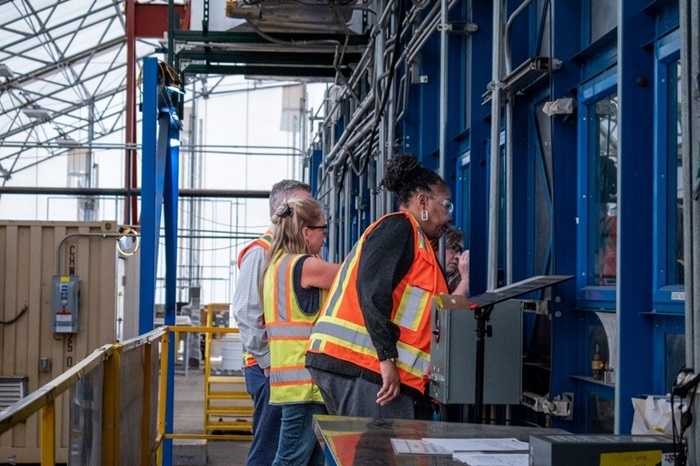 Defense Nuclear Facilities Safety Board members observe equipment used for legacy waste processing. Contact Handled-Transuranic Deputy Program Manager Ellen Gammon, second from left, explains how the corrugated metal pipes size-reduction work was safely conducted using protective gear, specialized equipment and continuous air monitoring to abate risk to workers, the public and the environment.
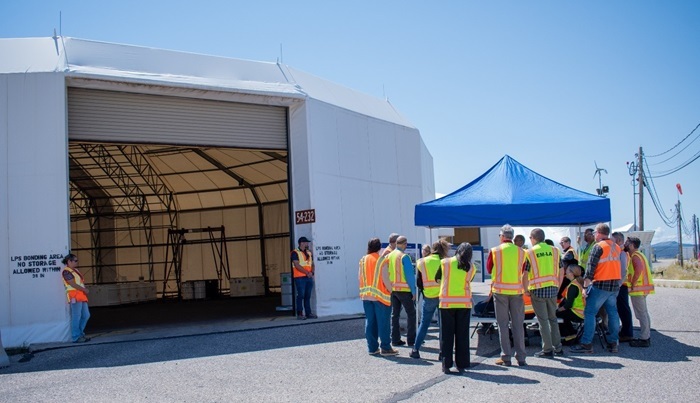 Defense Nuclear Facilities Safety Board tour participants stop in front of Dome 232 at Technical Area 54, Area G, to view a legacy transuranic waste storage site. Contact Handled-Transuranic Program Manager Brian Clayman discussed ongoing remediation processes, including glovebag operations and drill-and-drain techniques, which are used to safely remove liquids from solid waste containers to ensure that containers meet the compliance requirements for shipment to the Waste Isolation Pilot Plant.
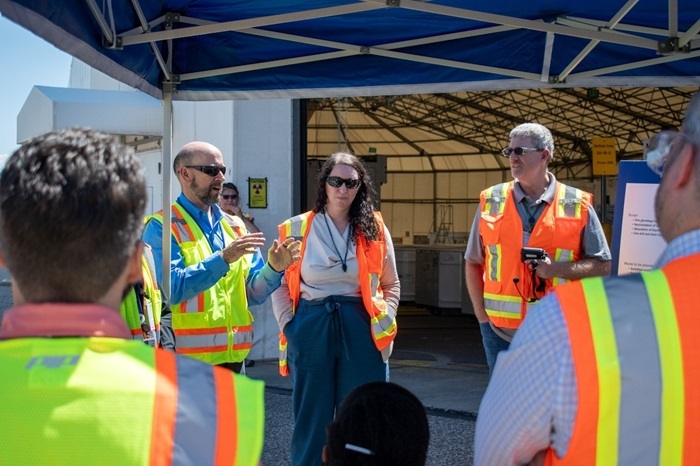 Newport News Nuclear BWXT-Los Alamos LLC (N3B) President and General Manager Brad Smith, front left, speaks to Defense Nuclear Facilities Safety Board tour participants in front of Dome 232 at Technical Area 54, Area G, emphasizing the critical nature of the Environmental Management Los Alamos Field Office and N3B’s environmental cleanup work. He noted the proximity of the site to neighboring communities and emphasized the importance of safely and effectively managing legacy waste.
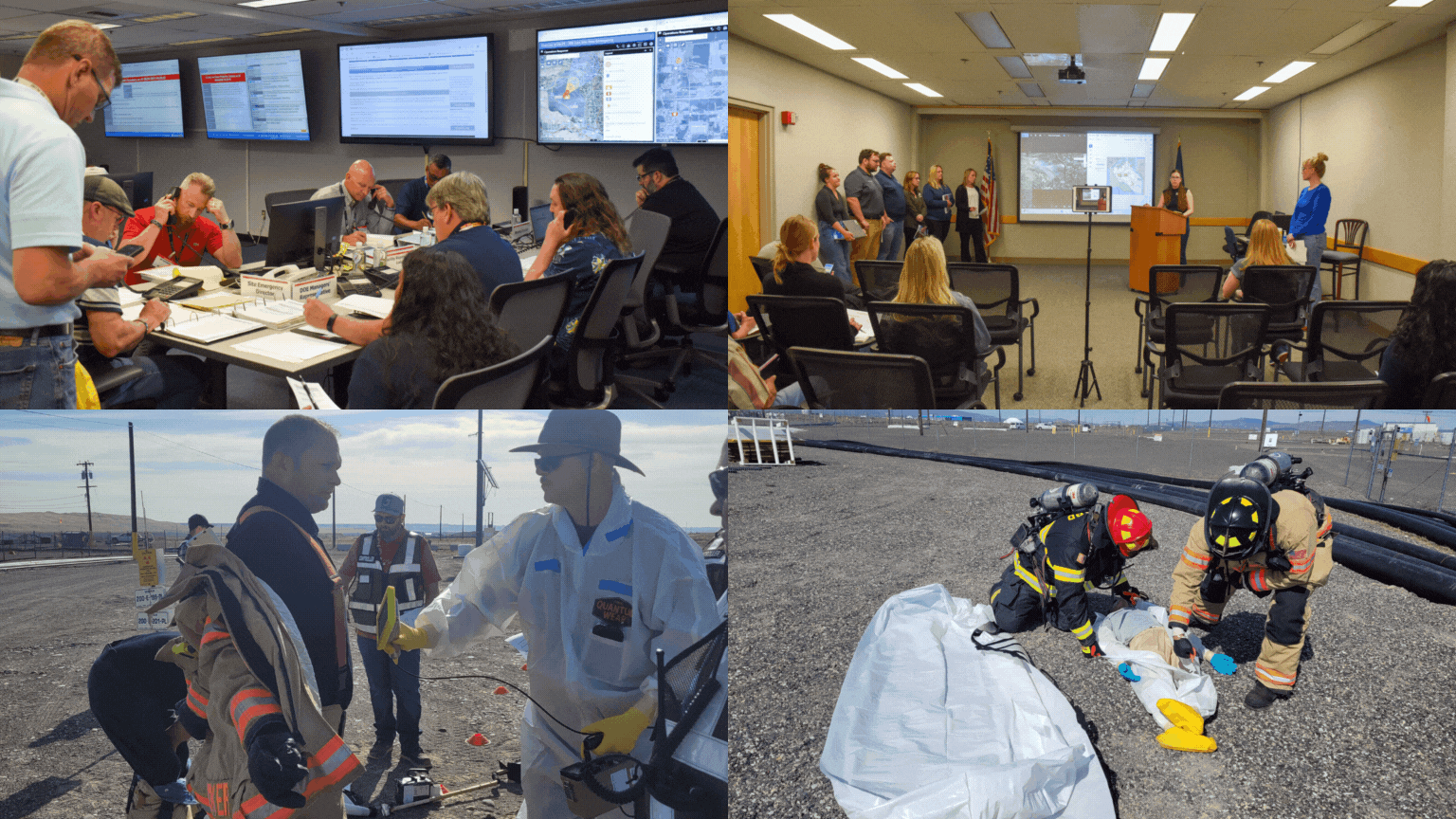
RICHLAND, Wash. — The Hanford Site's annual emergency preparedness field exercise put responders to the test with a challenging scenario designed to simulate a complex, high-stakes emergency. This year’s scenario involved a simulated plane crash near an underground waste tank. The exercise helps evaluate the readiness and coordination of Hanford's Emergency Response organization and teams across the Hanford Site.
A key highlight of this year's exercise was integrating a drone to livestream aerial footage from the mock crash site directly to the Emergency Operations Center. Hanford's small unmanned aircraft system provided real-time information to enhance decision-making capabilities.
This exercise underscores Hanford's commitment to safety, preparedness and innovation in protecting the workforce and community.
-Contributor: Melissa Ver Steeg
|