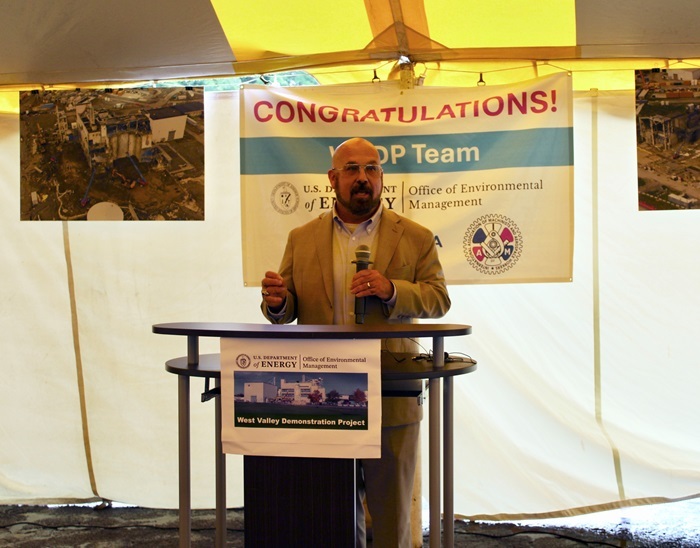
 U.S. Department of Energy Office of Environmental Management Principal Deputy Assistant Secretary Roger Jarrell speaks during an event marking the completion of the Main Plant Process Building demolition at the West Valley Demonstration Project.
EM accomplishes demolition project in 30 months and more than $30 million under budget
WEST VALLEY, N.Y. — U.S. Department of Energy Office of Environmental Management (EM) Principal Deputy Assistant Secretary Roger Jarrell recently joined community stakeholders and employees at the West Valley Demonstration Project (WVDP) to celebrate a major milestone: the safe completion of demolition of the Main Plant Process Building.
The West Valley workforce achieved an EM 2025 priority by successfully finishing the largest, most complex demolition of a radioactively contaminated facility at the West Valley site to date. In addition to resulting in a significant skyline change, the facility’s demolition was an historic event, as the Main Plant was the only commercial spent fuel reprocessing facility to ever operate in the United States.
Jarrell and other EM officials toured the site to observe cleanup efforts and meet with employees, key stakeholders and others. They included representatives from the New York State Energy Research and Development Authority, EM prime contractor CH2M HILL BWXT West Valley (CHBWV) and the West Valley Citizen Task Force, which provides recommendations regarding completion of the WVDP cleanup and closure or long term management of the site.
“By safely delivering this achievement on time and under budget, our team is meeting federal cleanup responsibilities, reducing risks, driving efficiency and positioning West Valley for the next phase of success,” Jarrell said during a celebration marking the milestone to an audience of 200 employees, stakeholders and dignitaries. “As we pivot to the next phase of West Valley cleanup, EM will continue advancing safe, compliant progress and a strong future for the people of New York.”
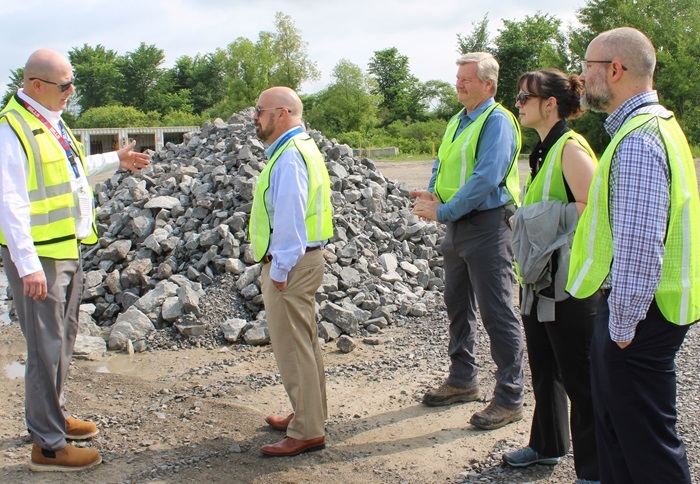 West Valley Demonstration Project Office of Project Management Director Stephen Bousquet, far left, discusses the site's rail line located beyond the stone pile during a tour for U.S. Department of Energy Office of Environmental Management (EM) officials. Also pictured from left are EM Principal Deputy Assistant Secretary Roger Jarrell, EM Consolidated Business Center Director Jack Zimmerman, EM Associate Principal Deputy Assistant Secretary Kristen Ellis, and EM Deputy Chief of Staff John Howard.
EM and CHBWV took down the five-story, 35,100-square-foot Main Plant in a deliberate sequence and pace, removing more than 70 sections and areas of the building over the course of 30 months, finishing the project more than $30 million under budget.
U.S. Rep. Nick Langworthy of New York called the accomplishment a major milestone for WVDP, western New York and environmental cleanup efforts nationwide.
“The demolition of the last major facility on site is the culmination of this decades-long project to remove dangerous nuclear waste, protect our land and water and create good-paying local jobs," Langworthy said. "The commitment from CHBWV, the community leaders and the dedicated workers at International Association of Machinists and Aerospace Workers Local 2401 has made a profound impact on our region and we are all grateful. I’m proud to have supported this effort and thank the dedicated workers and agencies who made it possible.”
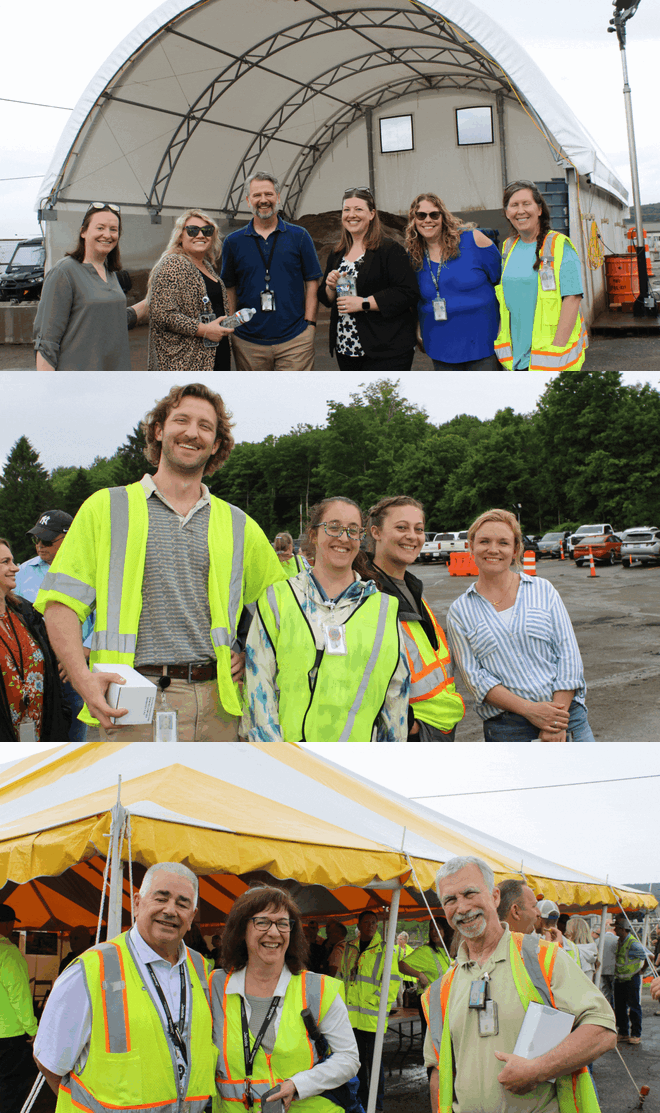 Employees at the West Valley Demonstration Project celebrate the completion of the Main Plant Process Building demolition.
WVDP is located in the Town of Ashford. Town Supervisor John Pfeffer said the successful demolition of the Main Plant marks a significant milestone in the ongoing environmental remediation efforts, eliminating a major source of contamination and “bringing us closer to our goal of restoring this land” for future generations.
“While we celebrate this important progress, significant work remains ahead, and we remain committed to working with all stakeholders to see this critical project through to completion,” Pfeffer said. “The Town of Ashford appreciates the hard work by all to complete this major effort.”
EM West Valley Director Bryan Bower commended employees on a job well done.
“This and other work at the West Valley Demonstration Project only happens because of the skills, dedication and commitment of our employees to complete the work in a safe and compliant manner,” Bower said. “For that, I personally want to thank all of you.”
CHBWV President and General Manager Jason Casper thanked employees for their hard work and dedication.
“On behalf of the senior management team, I want to thank everyone for completing this work safely and compliantly,” Casper said. “Together, I am confident that we will continue our work to meet challenges head-on, find solutions to complex cleanup problems and safely reduce risks at the site.”
-Contributor: Joseph Pillittere
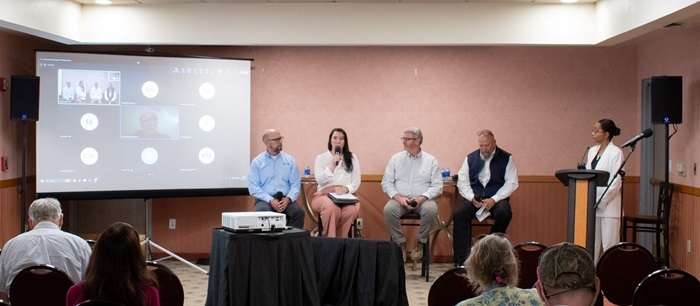 Senior officials with the U.S. Department of Energy Office of Environmental Management Los Alamos Field Office and legacy cleanup contractor Newport News Nuclear BWXT-Los Alamos LLC provide responses during the public Q&A period at the Environmental Management Cleanup Forum.
Comprehensive sampling and monitoring program outlined at public forum
LOS ALAMOS, N.M. — Protecting water supplies is a key priority of the Los Alamos National Laboratory (LANL) legacy cleanup mission.
Earlier this month, senior officials from the U.S. Department of Energy (DOE) Office of Environmental Management Los Alamos Field Office (EM-LA) and its cleanup contractor stated that they have instituted a robust monitoring and remediation program.
“My priority has been and remains to be ensuring that the legacy cleanup mission is implemented safely, efficiently, effectively and transparently,” EM-LA Manager Jessica Kunkle said at an Environmental Management Cleanup Forum held June 12.
“It is my goal to continue to be transparent with EM-LA’s engagements and share progress on our priority cleanup work, including our legacy waste operations, as well as our soil and water investigation and remediation,” Kunkle added.
Newport News Nuclear-BWXT-Los Alamos LLC (N3B), the legacy cleanup contractor at LANL, has instituted a comprehensive approach to protecting water quality that includes monitoring and managing various water supplies, along with addressing contaminated soils that could pose a threat, according to N3B acting Environmental Remediation Program Manager Vince Rodriguez.
 |
|
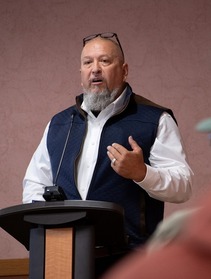
Vince Rodriguez, acting Environmental Remediation program manager for legacy cleanup contractor Newport News Nuclear BWXT-Los Alamos LLC, provides a comprehensive overview on keeping water supplies protected for the Los Alamos National Laboratory legacy cleanup mission. |
Protecting Water Quality and Addressing Groundwater Plumes
“Protecting the water supply is the ultimate goal,” Rodriguez said. “What we are doing — working with DOE, N3B, the pueblos — and the actions that we are taking ensures that the water quality is protected at all times.”
One aspect of the LANL legacy cleanup mission focuses on addressing two groundwater plumes: a hexavalent chromium plume and the royal demolition explosives plume, according to Rodriguez. While neither plume currently threatens offsite water supplies, EM-LA and N3B are working to monitor and control potential migration while cleanup remedies are developed.
For the hexavalent chromium plume, EM-LA and N3B are using an interim measure, a pump-and-treat system that has treated almost 460 million gallons of groundwater since May 2018, Rodriguez said.
Today, the interim measure is running 24 hours per day, seven days a week, Kunkle said, praising the system’s performance.
“Since partial restart of the interim measure in September 2024, chromium concentrations at and near monitoring wells have shown significant decrease based on the latest May sampling data,” she said.
Soil Cleanup Progress
To help prevent water contamination, EM-LA and N3B work to address legacy soil contamination through LANL’s 34 “Aggregate Areas,” each of which is within a single watershed or canyon. Aggregate Areas contain Solid Waste Management Units (SWMUs), where waste was placed, and/or Areas of Concern (AOCs), which may have had a release of hazardous waste or hazardous constituents. Since May 2018, 435 SWMUs or AOCs have been investigated and, if necessary, remediated, Rodriguez said.
Currently, there are more than 480 SWMUs and AOCs in the Aggregate Areas that have received certificates of completion from the New Mexico Environment Department (NMED), and another 120 requests for certificates of completion are pending with NMED.
More Than 48,000 Samples Collected Since Legacy Cleanup Contract Began
N3B also conducts sampling and monitoring for water, soil and vapor to provide critical insight into the effectiveness of various cleanup approaches and to determine the extent of contamination. Since the start of N3B’s contract in May 2018, more than 48,000 water, soil and vapor samples have been collected, Rodriguez said, adding that the summer sampling includes a four-day raft trip along the Rio Grande River.
N3B’s sampling program helps demonstrate that “our stormwater and engineering control systems are working,” Rodriguez said. “It also confirms that cleanup is effective. Any time you do a cleanup, you’re going to do confirmation. That is the goal here: to ensure whatever we’re cleaning up, we’re cleaning it to a point that meets the applicable standards. Whether it’s through air, whether it’s through water, or whether it’s through soil, that’s what sampling tells us.”
-Contributor: Michael Nartker
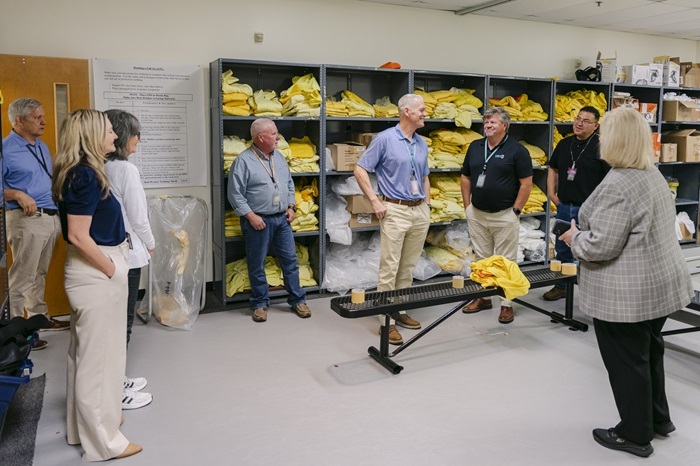 At far right, BooBoo Roberts, Savannah River Nuclear Solutions Apprenticeship School program manager, shares the “Radiological Worker 2” course requirement for nuclear operators with representatives from the Waste Isolation Pilot Plant. In the course, apprentices learn how to properly dress to safely perform work in radiological areas.
One EM site shares best practices with another to build future workforce
AIKEN, S.C. — Representatives from the Waste Isolation Pilot Plant (WIPP) recently toured the acclaimed Apprenticeship School at the Savannah River Site (SRS) as they look to launch a similar program to help fill critical positions for the underground waste repository in New Mexico.
Launched in 2020 by U.S. Department of Energy Office of Environmental Management contractor Savannah River Nuclear Solutions (SRNS), the Apprenticeship Program was designed to address attrition and establish a robust pipeline for a skilled workforce. The school has graduated over 800 apprentices to date, with 90% of them accepting full-time positions at SRS.
“To meet the growing workforce demands to support our site missions, SRNS plans to hire 2,000 additional employees over the next five years,” said Booboo Roberts, SRNS program manager, Apprenticeship School and Pipeline Programs. “The SRS Apprenticeship Program offers three pathways — youth, key skilled technician, and professional and degree-based — to create a pipeline of skilled employees supporting critical missions for the Department of Energy and the National Nuclear Security Administration.”
Inspired by a presentation at the Waste Management conference in March, WIPP sought to benchmark the SRS model to create a similar program for electricians and nuclear operators in southeastern New Mexico.
“We struggle to fill critical job needs due to our remote location and competition with oil and gas companies,” said Denis Asay, deputy vice president of Performance Improvement, Salado Isolation Mining Contractors, the WIPP management and operations contractor. “We aim to launch our apprenticeship program within a year, using the SRS Apprenticeship School as a guide. The collaboration and example set by this team demonstrates what the entire DOE complex should strive for. Such partnerships can only make us stronger."
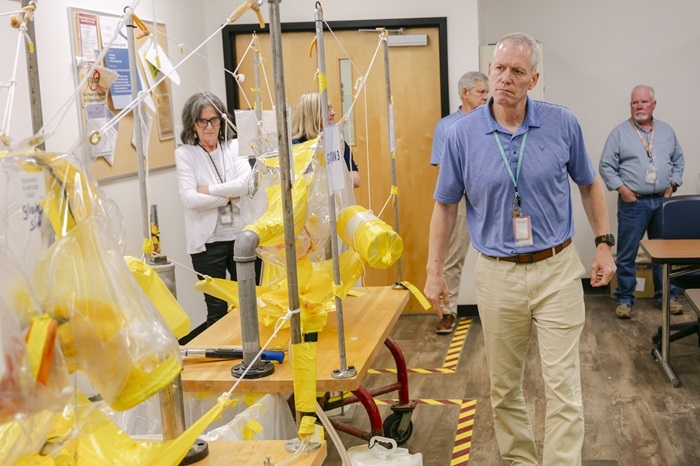 Angela Carrejo, left, human resource generalist with Salado Isolation Mining Contractors (SIMCO), and Denis Asay, vice president, Performance Improvement, SIMCO, inspect radiological containment areas during a tour of the 766-H Training Facility at the Savannah River Site. Apprentices who work in containment areas at SRS are required to complete a course on this subject.
The two-day visit by the WIPP team began with a site tour that included a briefing on the 766-H Training Facility. Apprentices receive instruction and hands-on training at the facility.
“The tour offered a firsthand look at the training and infrastructure that supports our apprentices,” said Kevin Whitt, SRNS director of Operational Excellence and Quality Assurance. “By integrating hands-on training and classroom education, both here and at our partner colleges, we provide our apprentices the tools they need to thrive in their new roles. We are proud to share our lessons learned to benefit others across the complex.”
The second day of the visit focused on the importance of community partnerships, which provide apprentices paid, on-the-job training and networking opportunities to help them succeed in highly technical fields. SRS partners with Denmark Technical College, Aiken Technical College, Augusta Technical College, and economic development agencies like the Lower Savannah Council of Governments, Apprenticeship Carolina and the SRS Community Reuse Organization.
“One major takeaway is the critical importance of clear communication between SRNS and educational partners to ensure curriculum and training align with industry needs, particularly in nuclear deterrence and nonproliferation,” said Dorian Newton, SRNS director of Site Training.
Since its inception, the SRS Apprenticeship School has gained national recognition. For example, the school was honored with the 2023 A. Wade Martin Innovation Team of the Year Award from the South Carolina Technical College System Foundation, and it was featured on National Public Radio’s “Marketplace Morning Report.”
“The Savannah River team was incredibly gracious, and their hospitality made the visit worthwhile. This top-notch program has us excited to adopt and implement some of these strategies at WIPP over the next year,” Asay said.
-Contributor: Mackenzie McNabb
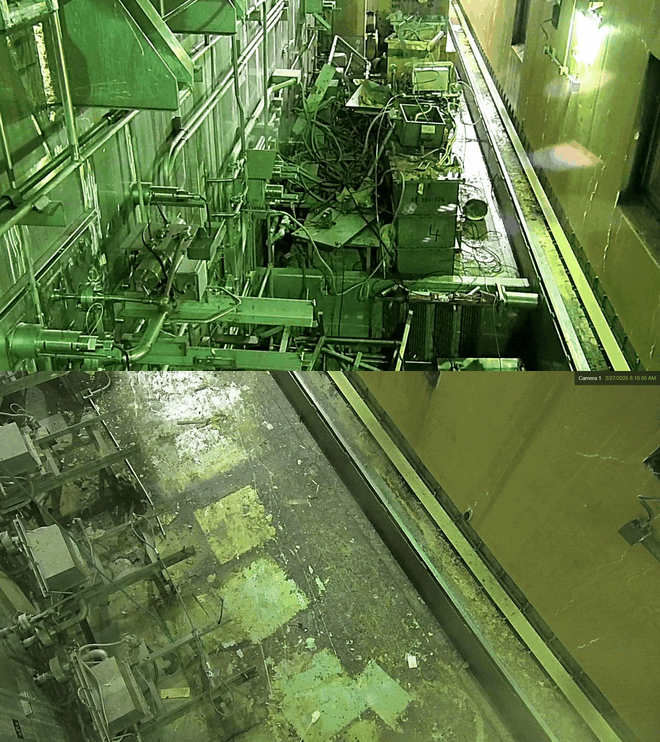 A hot cell at the Idaho Cleanup Project’s New Waste Calcining Facility is shown before and after crews removed more than 27,000 pounds of radioactive material, allowing easier access to crucial valves needed to transfer radioactive liquid waste from underground tanks to the Integrated Waste Treatment Unit.
IDAHO FALLS, Idaho — A crew recently removed thousands of pounds of legacy radioactive waste from a hot cell, enabling the Idaho Cleanup Project to advance its environmental cleanup and boost efficiency by allowing personnel easier access to crucial valves necessary to transfer liquid waste from nearby underground tanks to a treatment facility.
Just as many people have a junk drawer in their kitchens, the hot cell at the Idaho Nuclear Technology and Engineering Center’s New Waste Calcining Facility (NWCF) was used for several decades as a collection point for radioactive equipment, debris and waste boxes.
The problem was the debris restricted access to a pit within the hot cell where several valves are located, representing a mid-point between the underground tanks and the Integrated Waste Treatment Unit (IWTU). That facility is tasked with treating the remaining nearly 567,000 gallons of sodium-bearing liquid waste from the tanks. The liquid is a byproduct of decontamination activities between historic spent nuclear fuel reprocessing runs, a mission that ended in 1992.
NWCF has the necessary infrastructure to transfer liquid waste to IWTU based on its prior role of solidifying the liquid tank waste through a process called calcining. During the NWCF's previous mission and the mission of the first-generation calciner, millions of gallons of waste were converted to a granular solid and transferred to six bin sets, which currently hold 4,400 cubic meters of the material. The hot cell, a heavily shielded concrete room, provided protection from the radioactive material during the legacy operations.
Prior to beginning the hot cell cleanout, crews wrapped exposed pipes with lead blankets to control the radiation and installed “sticky” mats to control the contamination in the hot cell. Personnel donned personal protective equipment and filtered breathing masks.
Eighteen waste boxes ranging in size from 90 to 225 cubic feet were stored in the hot cell for decades. To compare, a large refrigerator is about 20 cubic feet in size. The boxes were filled with cords, power equipment, plastic totes and other debris.
A crane was used to raise the boxes to the top of the hot cell for removal. In total, crews removed almost 27,000 pounds of radioactive debris from the location. The only evidence the material was there in the first place is the clean spaces that remain on the floor.
“I’m extremely proud of the teamwork that was on display during this very challenging ‘house-cleaning’ task,” said Bill Kirby, chief operating officer for U.S. Department of Energy Office of Environmental Management cleanup contractor Idaho Environmental Coalition. “Crews performed flawlessly in an otherwise confined area with unique radiological and physical hazards. We didn’t create the mess, but we responsibly cleaned it up.”
-Contributor: Erik Simpson
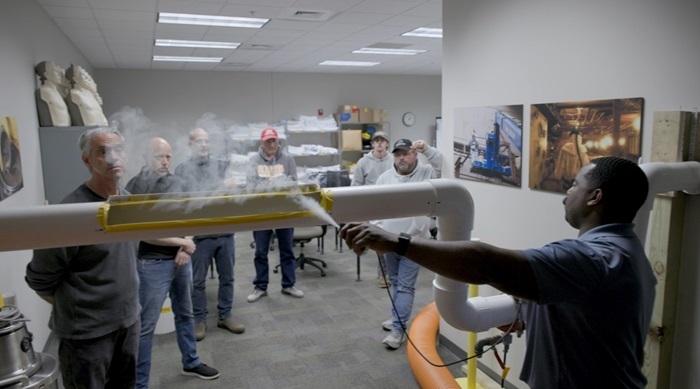 Workers get hands-on experience in UCOR’s new mercury training program. The program helps educate the workforce on what mercury is, where it’s found, the hazards associated with it and control strategies to reduce hazards.
OAK RIDGE, Tenn. — The Oak Ridge Office of Environmental Management (OREM) and contractor UCOR have developed a first-of-its-kind training program for workers supporting cleanup at mercury-contaminated facilities.
The program is designed to ensure protection of workers as they perform decontamination and deactivation in Manhattan Project and Cold War-era facilities to be demolished at the Y-12 National Security Complex. Officials believe it can also be adapted at other sites dealing with mercury across the U.S. Department of Energy (DOE) complex.
Large amounts of mercury were used in Y-12’s operations during the 1950s and 1960s. Over the years, large amounts leaked from equipment into buildings and the surrounding soil and surface water. The largest concentrations are in three massive buildings slated for demolition — Alpha-4, Alpha-5 and Beta-4.
Mercury presents a unique hazard because it is a metal in liquid form that emits vapors, especially in high-temperature environments. Workers must be protected from contacting mercury or breathing its vapors because it can result in acute health effects.
“Until now, DOE did not have a dedicated mercury mitigation training program,” said Joanna Hardin, OREM’s portfolio federal project director for Y-12. “As our cleanup work progressed at Y-12, it became clear that we were encountering increasing quantities of mercury that demanded a higher level of training to ensure our workers remain safe.”
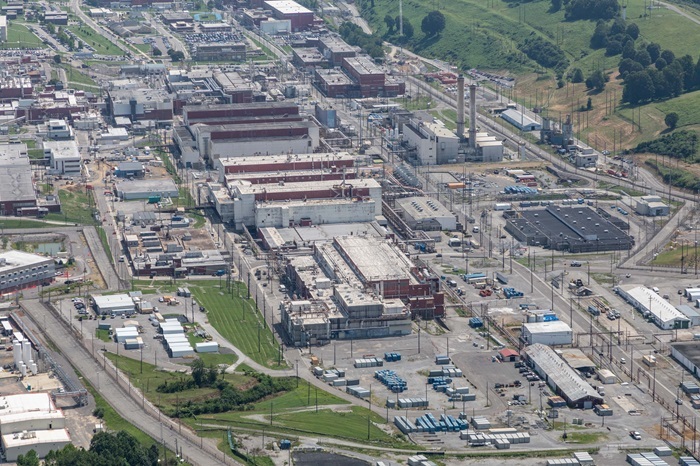 The Alpha-4, Alpha-5 and Beta-4 facilities are pictured, center, at the Y-12 National Security Complex. These facilities have the highest concentrations of mercury contamination at Y-12 due to the operations conducted in the buildings during the 1950s and 1960s.
The multifaceted program trains workers on measures to protect against mercury vapors.
With OREM’s support, UCOR created the program using a team of safety, industrial hygiene and training personnel, and environmental scientists. UCOR worked closely with laborers and construction trades responsible for performing tasks around mercury residues in the buildings undergoing cleanup prior to demolition.
“A cross-functional team worked together to identify this solution to address mercury hazards,” said Larry Brede, UCOR’s Y-12 area project manager. “I am proud of the level of ingenuity, proactiveness and teamwork demonstrated by this team. This is a testament to how a team with diverse talents and skills can solve big problems when they come together focused on workforce safety.”
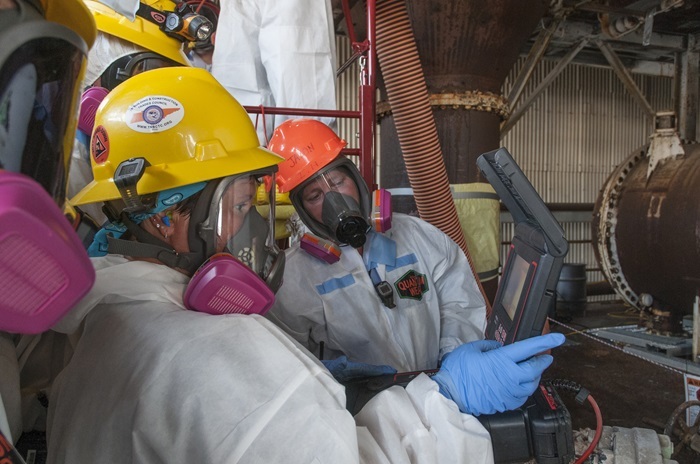 Oak Ridge workers address mercury contamination outside the Alpha-4 building at the Y-12 National Security Complex.
UCOR’s industrial hygiene group developed a hands-on mercury worker-training program to better educate the workforce on what mercury is, where it’s found, the hazards associated with it and control strategies to reduce hazards.
The training program consists of a two-hour classroom portion and two hours of hands-on scenarios where trainees dress in personal protective equipment and perform tasks in mock scenarios based on their work.
In addition, UCOR engineers developed a robust ventilation design and validation process for vapor mitigation and control strategies.
Another element of the program involves a medical surveillance program operated by UCOR’s health clinic. Crews working in areas with potential for mercury exposure are required to get a baseline test for mercury exposure, and then they are tested every six months or annually based on test results.
OREM and UCOR anticipate the program will minimize the hazards of working in mercury contaminated facilities and provide crews with the knowledge needed to protect themselves and their co-workers.
-Contributor: Sonya Johnson
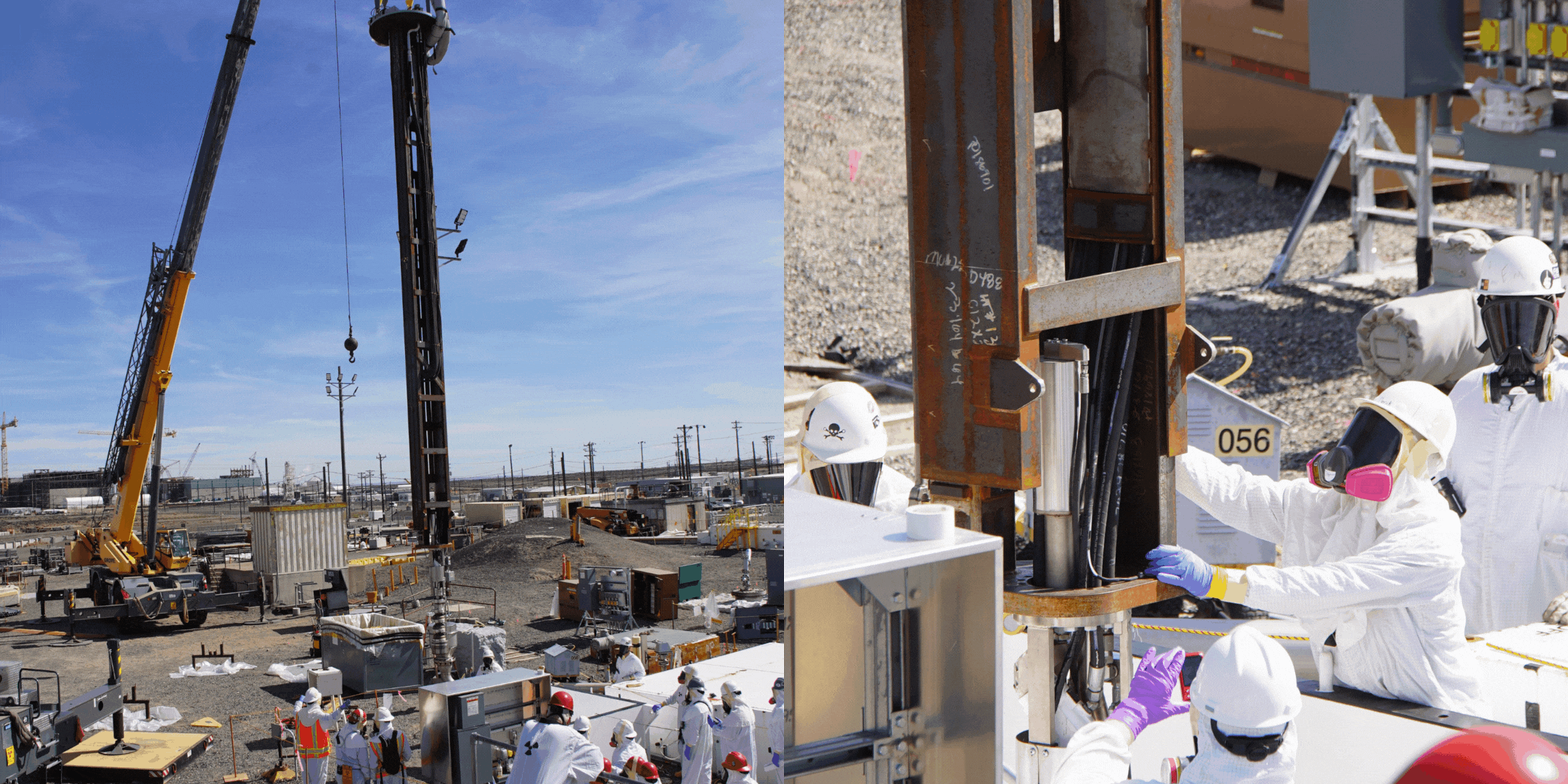 Workers with Hanford Tank Waste Operations & Closure guide a new pump into Tank A-106 that will retrieve radioactive waste from the aging tank to support the U.S. Department of Energy Office of Environmental Management’s mission to treat and safely dispose of the waste.
RICHLAND, Wash. — Workers at the Hanford Site installed a new pump inside an underground waste-storage tank, advancing efforts to safely manage radioactive and chemical waste.
The equipment will help transfer waste from aging Single-Shell Tank A-106 to a newer, double-shell tank, where it will be stored until it can be safely turned into glass through a process known as vitrification.
“This pump supports our mission of removing decades-old waste and reducing risk,” said Jim Greene, a Hanford Field Office program manager for single-shell tank retrievals. “Every step we take to safely move waste out of aging tanks supports our ongoing efforts to protect our workforce, the community and environment.”
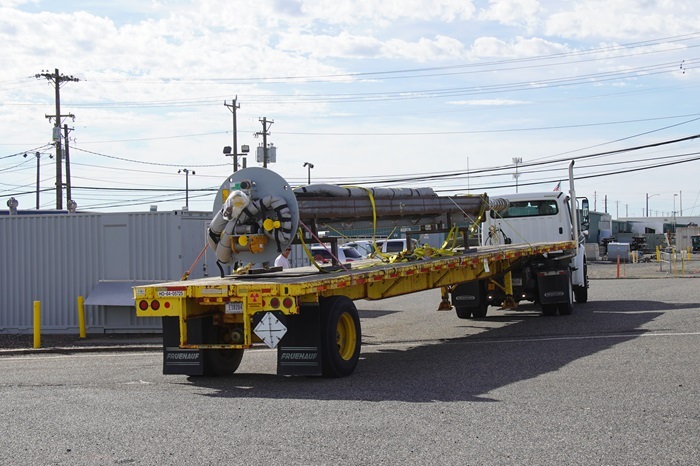 Crews deliver a new waste pump to one of the Hanford Site’s underground storage tanks. Its length shows the depths of tanks belowground.
Before installation, crews cut through the tank’s protective dome, an operation that required careful planning and precision. They also tested new drilling equipment on a simulated tank, or mock-up, using worker feedback and lessons learned to guide the project.
“Our teams continue to find innovative, safer and more efficient ways to advance the Hanford cleanup mission,” said Dave Saueressig, retrievals manager for contractor Hanford Tank Waste Operations & Closure.
Waste retrieval from Tank A-106 is expected to begin later this year. The work is part of Hanford’s ongoing efforts to manage waste left from World War II and the Cold War defense production.
For more details, watch a video of the pump installation here.
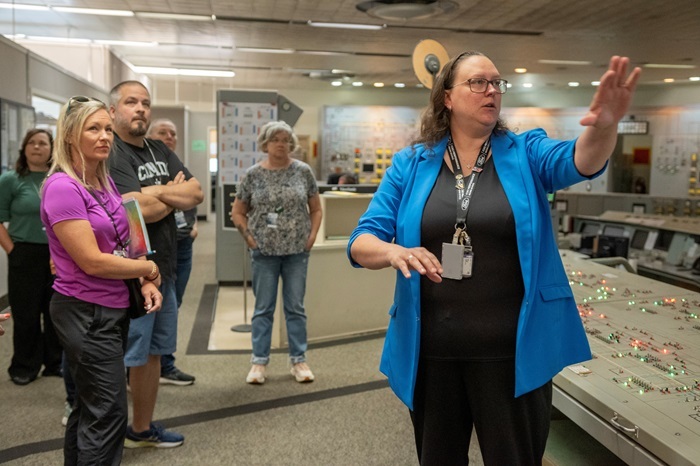 Paducah Site Lead April Ladd guides a tour of educators through the C-300 Central Control Facility during the Educator Externship tour. The facility managed the cylinders inside the former uranium enrichment process buildings during operations at the Paducah Site.
PADUCAH, Ky. — The U.S. Department of Energy Office of Environmental Management (EM) Paducah Site recently welcomed local educators for the immersive Educator Externship as part of a regional initiative to strengthen the future workforce through community and classroom connections.
The event, held in partnership with the Paducah Area Chamber of Commerce, provided teachers, counselors and school administrators a behind-the-scenes look at the nuclear cleanup mission and the diverse career opportunities supporting it. Participants toured key facilities, engaged with technical experts and learned how EM and its contractors invest in workforce development across western Kentucky.
“By engaging directly with educators, we’re planting seeds for the future,” Paducah Site Lead April Ladd said. “Today’s students are tomorrow’s engineers, scientists and business professionals.”
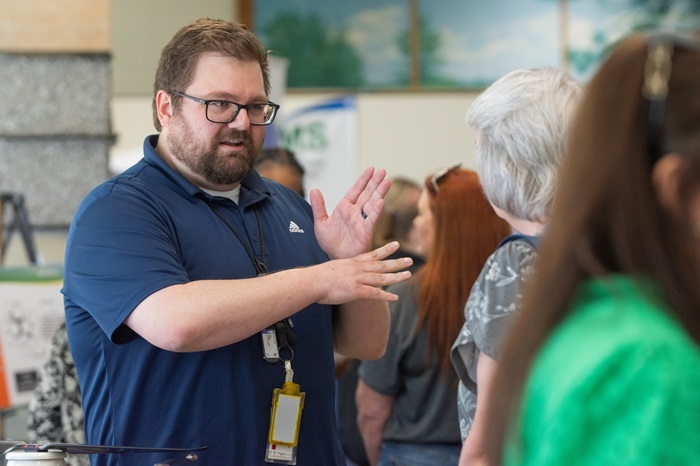 Four Rivers Nuclear Partnership Engineer Daniel Hatton explains how drones are used at the Paducah Site to conduct land surveys to local educators.
The Paducah Site cleanup mission, conducted in accordance with the Comprehensive Environmental Response, Compensation and Liability Act, is focused on environmental remediation and deactivating facilities to plan for future site reuse. As EM looks ahead to reindustrialization opportunities, cultivating a skilled local workforce remains a priority.
In the Education Externship, educators learn about technical and trade career pathways supporting EM’s mission, including engineering, construction, environmental science and project controls. The experience equips educators to better advise students on high-demand fields and the education and training needed for them.
“This kind of outreach is key to closing the gap between classroom learning and real-world applications,” Four Rivers Nuclear Partnership (FRNP) Program Manager Myrna Redfield said. “We help educators connect the dots for their students.”
FRNP is the deactivation and remediation contractor at the Paducah Site.
The Educator Externship is one of several initiatives created through a partnership involving EM, site contractors and schools to highlight education, workforce development and community collaborations in the Paducah region.
-Contributor: Dylan Nichols
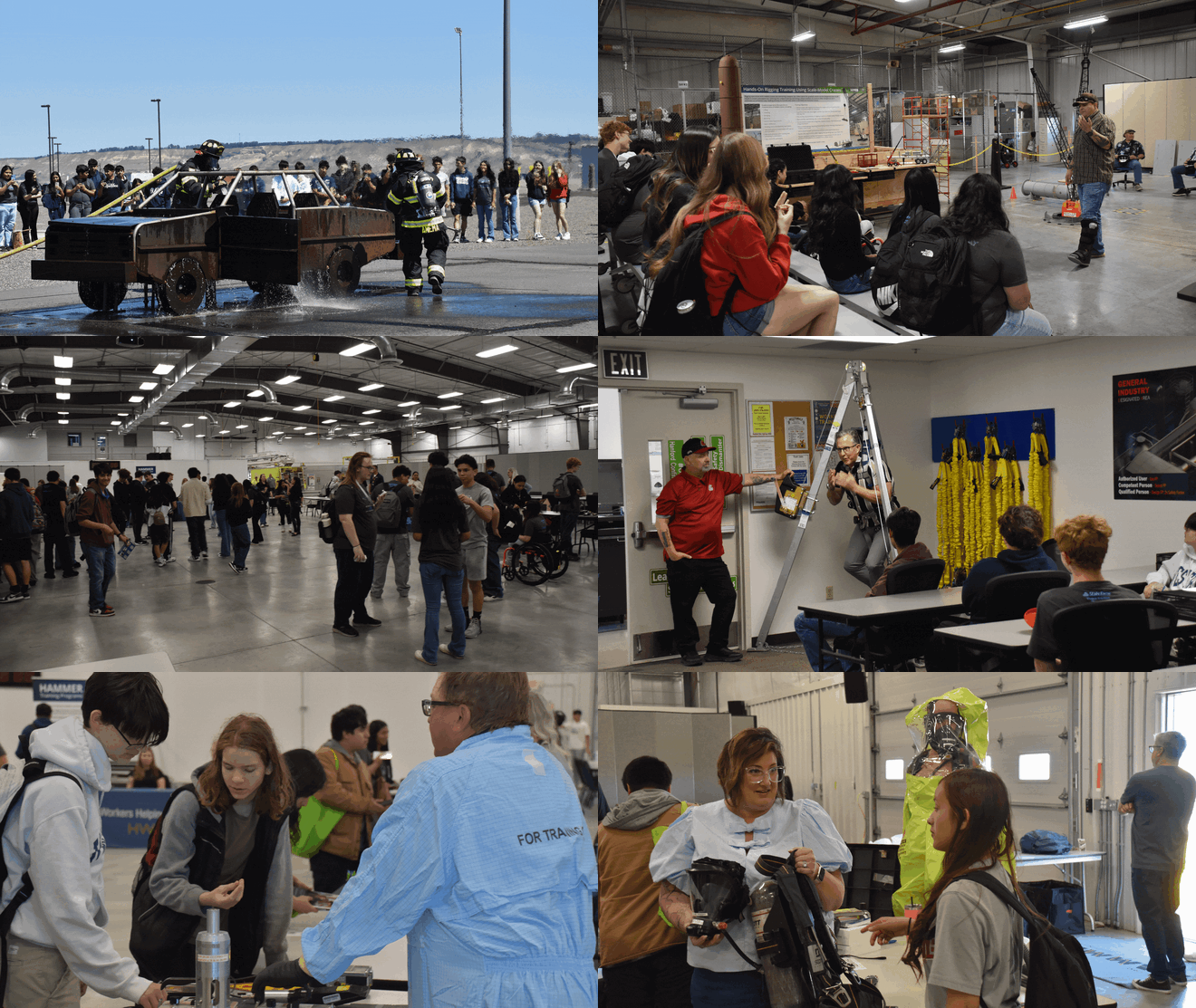
RICHLAND, Wash. — More than 50 high school students stepped out of the classroom and into the world of science, technology, engineering and math (STEM) during a recent hands-on event held at the Hanford Site’s Volpentest HAMMER Federal Training Center.
Students explored real-world STEM applications tied to Hanford's cleanup mission, including health and safety, crane operation, emergency response and radiological protection.
Hosted by Hanford Field Office contractor Hanford Mission Integration Solutions, the event aimed to spark interest in local STEM careers and strengthen the region's future workforce.
The day also featured a career and resource fair, connecting students with Hanford contractors and educational institutions while opening doors to internships and training opportunities.
By giving students an up-close view of STEM in action, organizers hope the event inspires the next generation of scientists and engineers.
HAMMER stands for Hazardous Materials Management and Emergency Response.
|