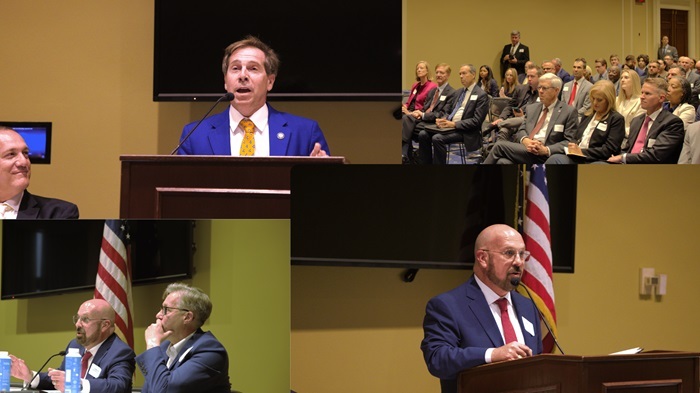
 U.S. Department of Energy Office of Environmental Management (EM) leaders participated in a U.S. House Nuclear Cleanup Caucus event last week. Pictured at top left is U.S. Rep. Chuck Fleischmann of Tennessee; at bottom left are EM Principal Deputy Assistant Secretary Roger Jarrell, left, and Oak Ridge Office of Environmental Management Manager Erik Olds; and bottom right, Jarrell.
D&D achievements, tank waste cleanup progress among focal points
WASHINGTON, D.C. — Just six months into 2025, the U.S. Department of Energy Office of Environmental Management (EM) has racked up significant cleanup accomplishments across the country, with more progress on the horizon, senior EM federal and contractor executives said here last week.
“This is a cleanup community we can be proud of. At this point of the year, it is always a great time to look back and reflect. It’s a good time to take stock of what we’ve achieved and what we have to do,” EM Principal Deputy Assistant Secretary Roger Jarrell said during the second of three U.S. House Nuclear Cleanup Caucus events this year.
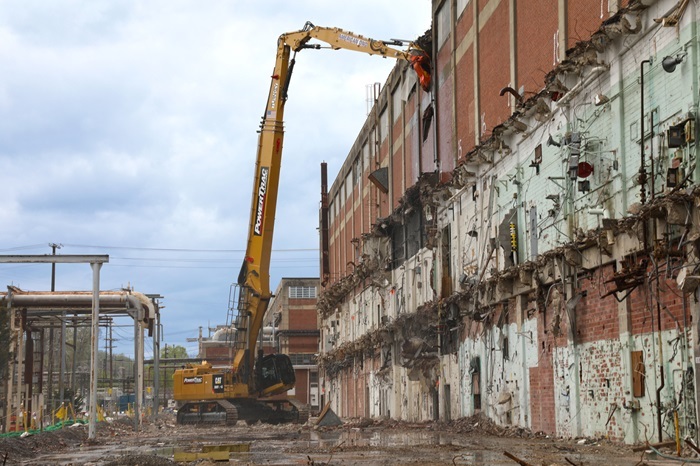 Operators use high-reach equipment to begin demolition on the high-bay area of the Alpha-2 building at the Y-12 National Security Complex. The high-bay area stands 80 feet tall, and its safe removal requires highly skilled and trained operators.
EM’s cleanup highlights so far this year include:
- Removing external panels from X-333, the second of three former uranium enrichment process buildings to be demolished at the Portsmouth Site later this year;
- Advancing demolition of the Alpha-2 former uranium enrichment facility at the Y-12 National Security Complex at Oak Ridge, marking the largest demolition project conducted at Y-12 to date;
- Finishing demolition of the Main Plant Process Building at the West Valley Demonstration Project, the last major facility there, on schedule and under budget;
- Completing the Test Bed Initiative at Hanford, successfully demonstrating the use of grout as a more cost-effective option to treat tank waste there;
- Completing construction and commissioning of the new Safety Significant Confinement Ventilation System at the Waste Isolation Pilot Plant (WIPP) ahead of schedule and under budget; and
- Obtaining approval from federal and state environmental regulators that waste has been successfully removed from two underground tanks at the Savannah River Site (SRS), moving them to the next stage of sampling and analysis as part of the closure process.
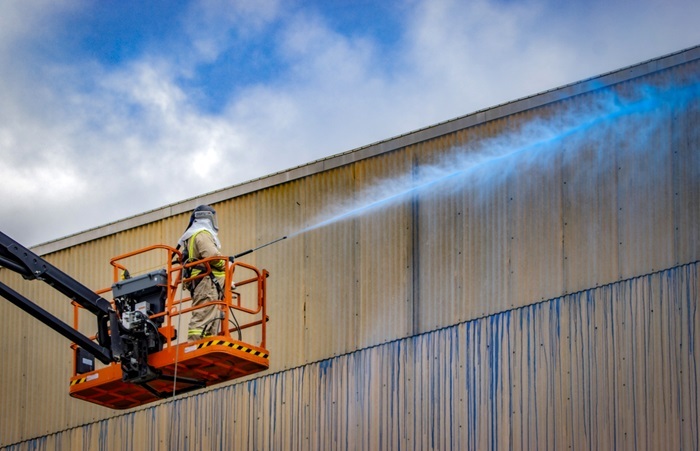 Demolition Specialist Jeff Howard sprays a blue fixative to the Portsmouth Site’s X-333 Process Building to maintain dust suppression on the transite panels.
“Overall, we're driving innovation with the potential to shave decades and billions off of some of our most challenging missions. The idea of completing something in 2082, 2086, maybe 2092, is no longer acceptable. So, we're changing the paradigm,” Jarrell said.
Jarrell was joined at the event by Erik Olds, manager of the Oak Ridge Office of Environmental Management; Tom Burns, president and program manager for Savannah River Mission Completion (SRMC), EM’s liquid waste contractor at SRS; and Ken Harrawood, president and project manager for Salado Isolation Mining Contractors, the management and operations contractor for WIPP.
The event was sponsored by three key EM stakeholder organizations — the Energy Facility Contractors Group, Energy, Technology and Environmental Business Association and Nuclear Energy Institute.
Digital Tools Have Potential to Help EM Run ‘More Like a Business’
Going forward, EM is working to identify and drive more innovative approaches to cleanup at its sites to operate the program “more like a business,” Jarrell said.
“Across the Department, Secretary of Energy Chris Wright is looking to all of us to work safely, work smarter and deliver more,” he said.
An approach with significant potential to help a variety of cleanup activities, according to federal and contractor executives, is the use of artificial intelligence (AI) and digital tools. Burns noted that SRMC is examining the use of digital tools to help optimize tank waste processing at the Salt Waste Processing Facility and Defense Waste Processing Facility at SRS.
“We really process every element in the periodic table,” Burns said. “We’re using very advanced data analytics tools to help tease out what combination of factors upstream and downstream help the plants run better, faster and cheaper.”
Another potential use of AI is to assist with training.
“We know that if you look at the demographics of our workforce, we do have, in some cases, an aging workforce. So, the question is, ‘What are the best practices around transferring knowledge that people have to the next workers that are coming in?’ So, let’s go to the teams that are working on those types of things and use AI and other types of technologies to do that,” Harrawood said.
At Oak Ridge, EM is interested in using digital tools to help enhance worker safety, Olds said. Site cleanup contractor UCOR has been piloting the use of a biometric system worn by workers to help remotely monitor them for potential heat exhaustion.
“Now we can actually see what’s happening with workers in real time and we can change the working conditions. That’s the kind of technology that I would like to see more of — things that get into the work that we're actually doing and become valuable tools and help us with the mission,” Olds said.
-Contributors: Jordan Anderson, Michael Nartker
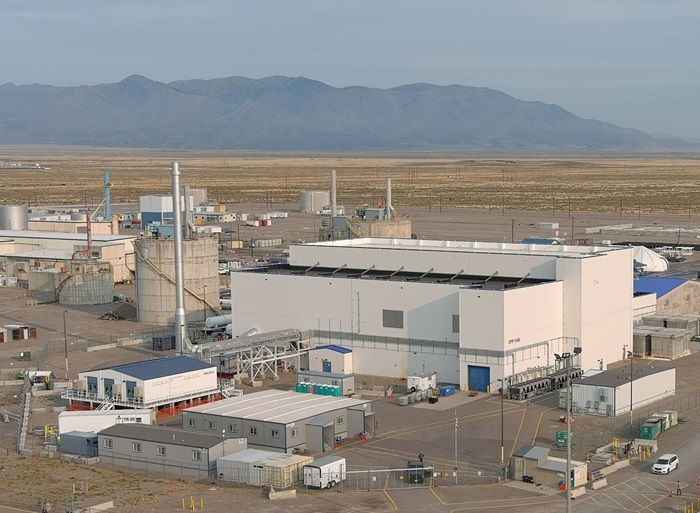 U.S Department of Energy Office of Environmental Management cleanup progress at the Idaho National Laboratory Site, including at the Integrated Waste Treatment Unit, pictured, continues to benefit the laboratory.
IDAHO FALLS, Idaho — Two decades ago, one contract encompassing the work of the U.S. Department of Energy (DOE) Environmental Management (EM) and Nuclear Energy (NE) offices at the Idaho National Laboratory (INL) was split into two, one for each office.
The idea behind the change was that one contract for EM would accelerate the legacy environmental cleanup mission to reduce DOE’s environmental liabilities and enhance the INL’s nuclear mission. Meanwhile, the NE contract would progress and expand the laboratory’s NE and Homeland Security missions.
In light of the EM-NE partnership and EM’s progress meeting cleanup milestones, the state of Idaho recently signed a waiver to the 1995 Idaho Settlement Agreement, a pact for the DOE, state of Idaho and U.S. Navy that outlines several waste management and cleanup milestones and limits the import of spent nuclear fuel to the state. The waiver enables the INL to receive a research cask containing spent nuclear fuel from the North Anna Generating Station in Louisa County, Virginia. NE’s research will provide data for the licensing of extended storage at spent nuclear fuel facilities.
In the waiver, the parties noted that EM finished transferring the remainder of government-owned fuel from a pool to safer, dry storage nine months ahead of an Idaho Settlement Agreement milestone. That work by EM and contractor Idaho Environmental Coalition is yet another example of how EM’s success is benefiting the INL.
Almost 18 months ago, the INL was allowed to receive research quantities of spent nuclear fuel from the Byron Generating Station in Illinois after EM’s Integrated Waste Treatment Unit (IWTU) filled a single stainless steel canister of treated sodium-bearing waste from onsite underground tanks. After filling an additional 99 canisters with treated waste during a processing run that converted more than 68,000 gallons of liquid to a stable, granular solid, the INL could receive additional quantities of spent nuclear fuel for research.
To date, IWTU crews have treated more than 279,000 gallons — about 33% of the total volume of the site’s sodium-bearing waste — from three tanks. Currently, the facility is in an outage to replace granulated activated carbon beds, which remove mercury during radiological operations.
“Through our successful actions, we continue to underpin the importance of the Idaho Settlement Agreement, and in turn, benefit the INL’s important work as the country’s lead Nuclear Energy and Homeland Security laboratory,” said Nick Balsmeier, acting EM manager for the DOE-Idaho Operations Office.
IWTU uses steam-reforming technology to treat sodium-bearing waste generated during decontamination activities between historic spent nuclear fuel reprocessing runs at the Idaho Nuclear Technology and Engineering Center.
Idaho Gov. Brad Little spoke favorably of the most recent waiver that allowed the North Anna Generating Station cask to come to the INL for research.
“The collaborative effort between the state of Idaho, the U.S. Department of Energy and the Idaho National Laboratory showcases our commitment to advancing nuclear energy research while upholding the goals of the 1995 Settlement Agreement,” he said. “We are proud to support innovation in nuclear energy that will support national security and energy independence into the future.”
-Contributor: Erik Simpson
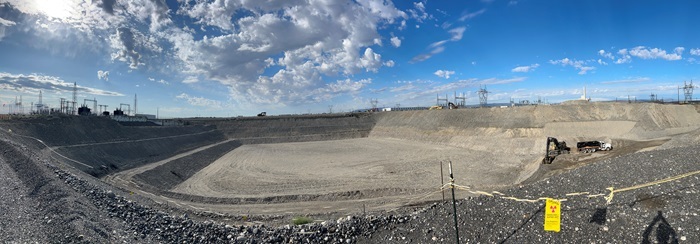 Workers with Central Plateau Cleanup Company are nearing completion on a massive excavation project to dispose of oil-contaminated soil from a waste site near the former K East Reactor.
RICHLAND, Wash. — Workers at the Hanford Site have nearly completed excavation at a former waste site near the Columbia River. The multiyear remediation project spans an area roughly the size of six football fields and focuses on removing waste and reducing long term environmental risk.
Crews are working to remove oil-contaminated soil from the waste site in Hanford's K Area. The area once supported two plutonium-producing reactors, K East and K West, and included an underground bunker used to store fuel oil for reactor operations.
“This project highlights our commitment to protecting the Columbia River and reducing risk across the site," said Manuel Lopez, Hanford Field Office engineer for the Project and Facilities Division. "Removing this legacy waste allows us to move forward safely and efficiently on future cleanup work."
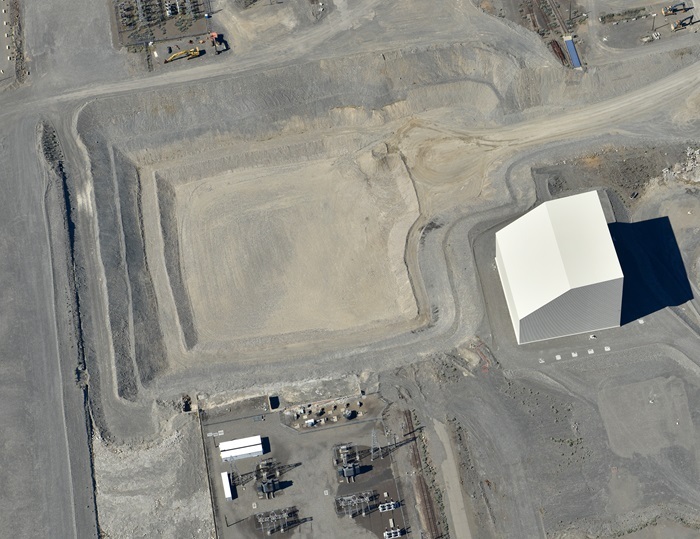 Crews used sloping and benching techniques, visible here in the stepped walls, to safely excavate and manage the massive volume of waste.
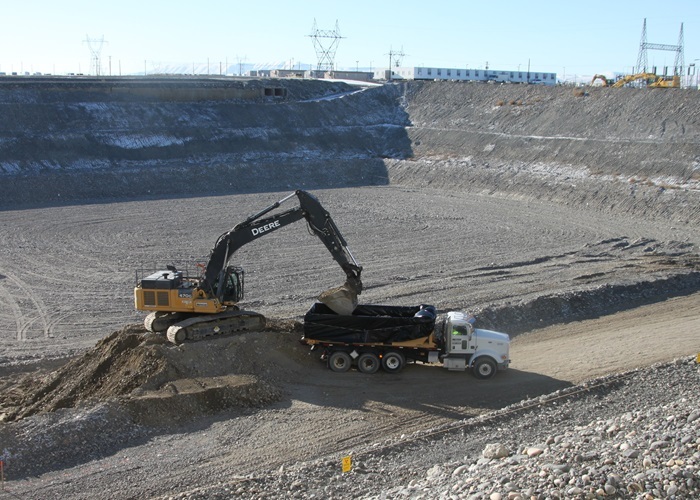 Excavators worked through 300,000 tons of contaminated soil and more than 20,000 tons of concrete as part of the Hanford Site's ongoing risk-reduction efforts.
The waste site remediation required workers to dig an area of about 560 feet long, 600 feet wide and up to 60 feet deep. In total, about 300,000 tons of contaminated soil and more than 20,000 tons of concrete were trucked to Hanford's Environmental Restoration Disposal Facility, an engineered landfill for low-level radioactive and hazardous waste. Crews also preserved another 430,000 tons of clean soil, which will be reused as backfill material to help restore the area.
“The coordinated effort between team members to move a colossal amount of waste to the landfill for disposal is beyond impressive,” said Travis Creach, project manager for U.S. Department of Energy Office of Environmental Management contractor Central Plateau Cleanup Company.
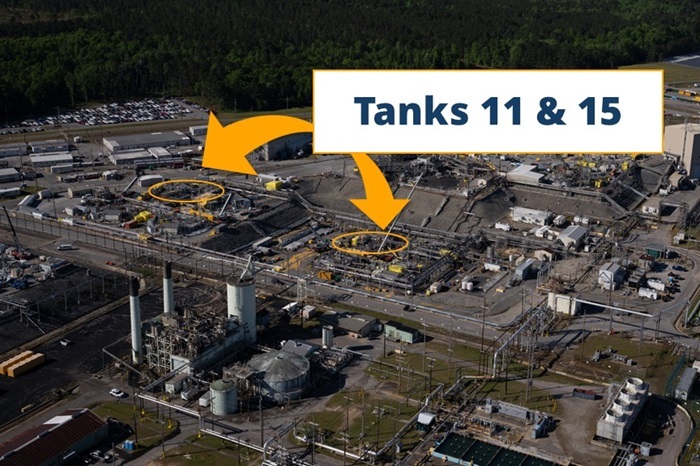 The U.S. Department of Energy Office of Environmental Management and liquid waste contractor Savannah River Mission Completion completed preliminary cease waste removal for Tanks 11 and 15 in H Tank Farm at the Savannah River Site ahead of schedule.
AIKEN, S.C. — The U.S. Department of Energy (DOE) Office of Environmental Management (EM) has received regulatory concurrence that the Savannah River Site (SRS) has successfully removed waste from two more tanks ahead of schedule, marking another major cleanup milestone.
Tanks 11 and 15 are the fourth and fifth waste tanks in 12 months to meet the milestone of preliminary cease waste removal (PCWR) regulatory approval, seven and 19 months ahead of schedule, respectively.
PCWR is a regulatory milestone for old-style tanks at SRS that designates agreement among the South Carolina Department of Environmental Services, U.S. Environmental Protection Agency, and DOE that, based on preliminary information from the waste removal activities completed, there is reasonable assurance that performance objectives for tank closure will be met.
This concurrence also means that work can begin on the sampling and analysis phase for these tanks as part of the tank closure process. This next phase will verify these conclusions, based on laboratory analysis of any remaining material, and final residual volume determination, prior to stabilization and final isolation of the waste tank.
Savannah River Mission Completion (SRMC) is EM’s liquid waste contractor responsible for safely treating and disposing of the millions of gallons of waste remaining in the underground tanks at SRS, as well as closing the tanks.
Tony Robinson, EM acting assistant manager for waste disposition at SRS, said each PCWR milestone completed is further proof that EM is committed to employing the highest standards of safety and innovation in the Department’s cleanup efforts.
"Ensuring the safe and effective removal of radioactive liquid waste from our storage tanks is a critical step in the tank closure process,” Robinson said. “This action not only reduces the environmental risk but also protects the health and safety of our communities and future generations.”
Mike Borders, SRMC chief operations officer, said SRMC is setting an impressive pace on the track to tank closure.
“Savannah River Mission Completion has been delivering results related to the goals we’ve set for our mission,” Borders said. “Removing waste from and cleaning five tanks in 12 months shows that we are serious about reducing operational and environmental risk. We are leveraging this momentum to empty and clean more tanks this year.”
SRMC has also completed PCWR on Tank 4, Tank 9, and Tank 10 — all 7 months to a year ahead of the agreed-upon deadlines.
This important tank closure milestone is outlined in the SRS Federal Facility Agreement. The agreement establishes a procedural framework, including liquid waste tank milestone agreements, such as the schedule for waste removal and operational tank closures, and other site cleanup priorities.
-Contributor: Colleen Hart
Federal and contractor team members across the cleanup complex have been honored for demonstrating exceptional performance in making small business vital to the U.S. Department of Energy’s (DOE) mission success.
The DOE Office of Small and Disadvantaged Business Utilization (OSDBU) recently announced awardees from its Annual Small Business Awards Program for fiscal year 2024 (FY24), the most recent period in which achievements have been recognized.
Six of the 18 awards went to DOE Office of Environmental Management (EM) team members at the EM Consolidated Business Center (EMCBC) in Cincinnati, Ohio; Savannah River Site (SRS) in Aiken, South Carolina; and Portsmouth Site in Piketon, Ohio.
Click here for a full description of the awards and honorees.
Following are the EM award winners:
- Federal Small Business Program Manager of the Year: EMCBC Small Business Program Manager Kenneth Johnson
Johnson provides outcome-focused initiatives through outreach and training to small businesses, focusing on enhancing the competencies and capabilities of the small business supplier base in the areas of matchmaking, capability statement development and coaching sessions on doing business with EM. His tireless efforts and commitment to DOE's critical small business efforts are impactful.
"I am fortunate to have been entrusted with a strong small business program that my predecessors worked hard to develop, and to have had the continuous support of EM and EMCBC leadership in fostering a ‘small business first’ environment at our office,” Johnson said.
 |
|
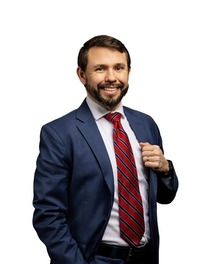
U.S. Department of Energy Office of Environmental Management Consolidated Business Center Small Business Program Manager Kenneth Johnson |
- Federal Contracting Officer of the Year: EMCBC Contracting Officer Michael Forsgren
Forsgren demonstrated skillful acquisition support and expertise for two Moab Uranium Mill Tailings Remedial Action Project contracts. His unwavering dedication to the Moab Project, exceptional contract management skills and steadfast commitment to the End-State Contracting Model have been integral contributions to the Moab Project's success.
- Facility Management Contractor Small Business Program Manager of the Year: Savannah River Nuclear Solutions (SRNS) Small Business Program Manager Lisa Tanner
Tanner's leadership and unwavering commitment to small business development at SRNS have driven remarkable achievements in FY24. Through her strategic initiatives and advocacy, Tanner has significantly expanded small business participation, fostered supplier diversity and strengthened SRNS's commitment to small business utilization.
“We are dedicated to working with and helping small businesses grow, and we take pride in opportunities made available to work with SRNS,” said Tanner. “SRNS executes a ‘small business first’ approach for procurements, with some buyers awarding over 93% of work, in any given month, to small businesses.”
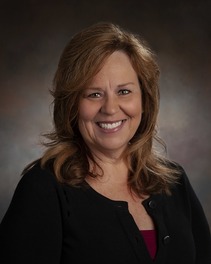
Savannah River Nuclear Solutions Small Business Program Manager Lisa Tanner |
|
 |
SRNS has demonstrated exceptional commitment to exceeding the expectations of the DOE Mentor-Protégé Program. Through innovative approaches, dedicated mentorship and tangible results, SRNS has cultivated protégé growth and empowered small businesses to achieve remarkable success in FY24.
- Facility Management Contractor Procurement Director of the Year: Fluor-BWXT Portsmouth (FBP) Government Contracts Senior Director Mark Ashby
Ashby demonstrated exceptional leadership and unwavering commitment to maximizing small business, specifically throughout FY24. Under his guidance, FBP successfully expanded small business participation in nontraditional, functional areas, resulting in significant, tangible benefits for both the small business community and the local four-county commitment area surrounding the Portsmouth Site.
“It has always been a priority to bolster our engagement with small businesses in the local four-county areas surrounding the Portsmouth Site, and I am honored to receive this award on behalf of all the hard work our FBP Acquisitions Organization has done over these past nearly 15 years,” Ashby said. “Their dedication to success is clearly evidenced by this award.”
 |
|
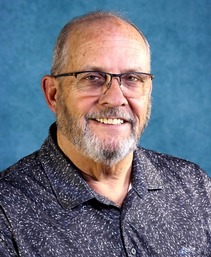
Fluor-BWXT Portsmouth Government Contracts Senior Director Mark Ashby |
- 8(a)/Small Disadvantaged Business of the Year: North Wind Dynamics, Portsmouth Site
North Wind Dynamics incorporated safety, quality and sustainability into performance of work, resulting in sustained safety performance, uninterrupted services, an improved infrastructure, support to the site mission goals, and cost savings, all while promoting and maintaining a strong safety culture.
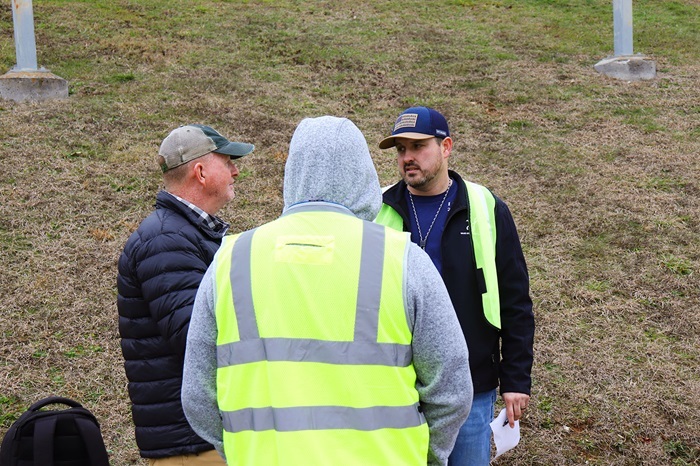 Isotek Waste Management Specialist Shane Kilby, right, provides guidance for an upcoming waste shipment at Oak Ridge.
OAK RIDGE, Tenn. – Oak Ridge Office of Environmental Management (OREM) contractor Isotek Systems found savings of more than $10,000 annually thanks to the initiative and questioning attitude of its employees.
Isotek leads OREM’s highest priority cleanup project at Oak Ridge National Laboratory, which involves processing and disposing of the nation’s inventory of uranium (U)-233 stored in the world’s oldest operating nuclear facility.
Processing this material not only generates U-233-related waste, but the contractor’s operations also create a wide variety of other waste streams that take time and money for disposal. One of the waste streams generated by operations is used batteries — and lots of them.
“We go through a few hundred batteries every year,” said Shane Kilby, Isotek waste management specialist. “Some of them, like the lead acid batteries, need special handling to properly dispose of, so it can cost a lot of money.”
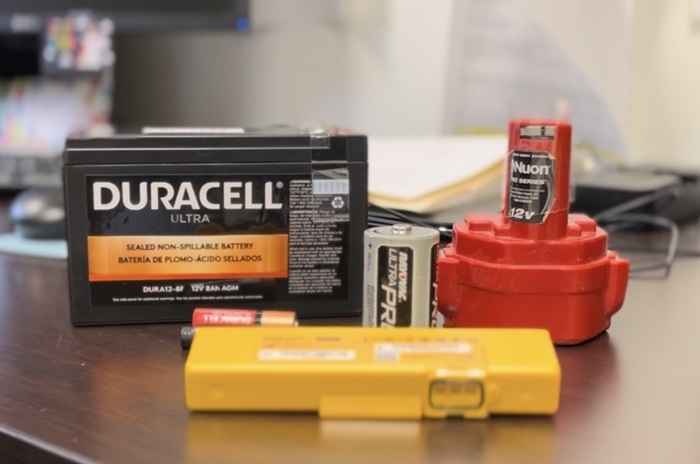 Isotek’s operations at Oak Ridge require the use and disposal of a wide variety of batteries. A revised approach for their disposal is avoiding more than $10,000 in costs annually.
Using his previous experience as a supervisor at a recycling plant, Kilby believed there could be a more affordable solution for recycling lead batteries than subcontracting a company to pick up large containers of the batteries for recycling. The lead acid batteries are similar to those found in cars.
He did the research and found a local company that not only takes lead acid batteries but also pays for them. Instead of incurring $10,000 in costs annually, Isotek is now receiving funds from battery removal.
“I applaud Shane’s questioning attitude,” said John Garrity, Isotek deputy project manager. “Isotek has a lot of really innovative people on this project, and it’s because of them that we are able to continually improve.”
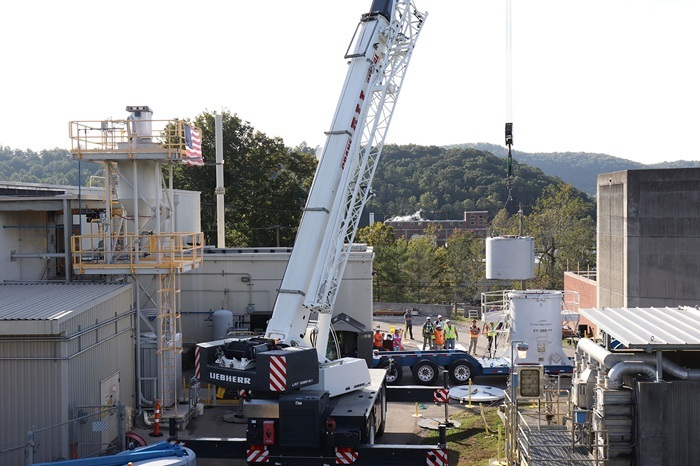 Isotek’s operations at Oak Ridge National Laboratory generate several waste streams. The primary waste stream is processed and downblended uranium-233 material that is disposed of offsite. That material is pictured being loaded for shipment.
Isotek is also saving money disposing of alkaline batteries. Tabatha Montgomery, Isotek waste management database administrator, researched different recycling services for other kinds of batteries.
“I found that we could save a significant amount of money if we used different packaging and shipped the batteries ourselves rather than having a contractor come pick them up,” she said.
The prior method of disposing of alkaline batteries cost around $3,000 per year, but the recent change reduces that cost to only $400 annually.
-Contributor: John Gray
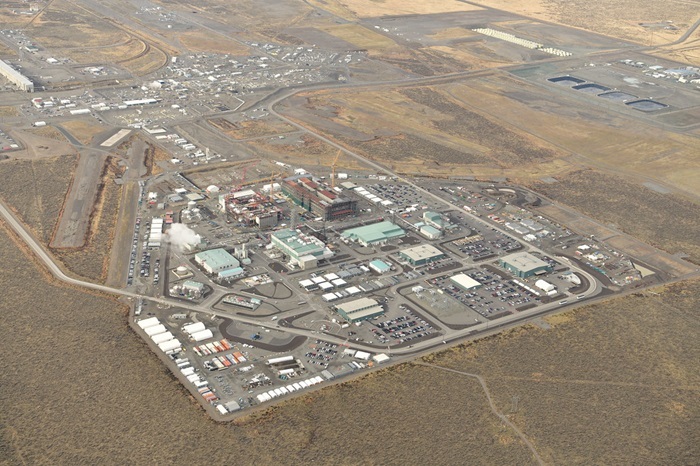 The Hanford Site’s Waste Treatment and Immobilization Plant and nearby underground waste storage tanks are central to the U.S. Department of Energy Office of Environmental Management’s mission to treat millions of gallons of radioactive waste for safe disposal.
RICHLAND, Wash. — Hanford crews are preparing for the site’s first-ever transfer of radioactive waste from one of its large underground tanks to the Waste Treatment and Immobilization Plant (WTP).
Contractors on both ends of the waste transfer are coordinating practice runs to prepare for those operations.
Teams from Hanford Tank Waste Operations and Closure (H2C) and Bechtel National Inc. are working together to verify each step of the transfer process. H2C is focused on preparing the underground tank systems that hold the waste, while Bechtel leads operations at the WTP, where the waste will eventually be turned into glass. Their joint efforts include checking pump systems, testing leak detectors and coordinating procedures between waste tank and treatment plant control rooms.
“Preparing for a first-of-its-kind waste transfer takes more than technical readiness, it takes alignment, communication and teamwork,” said Andy Wiborg, Hanford director for Tank Waste Operations. “These practice runs are proving what’s possible when Hanford teams unite to advance our tank waste treatment mission.”
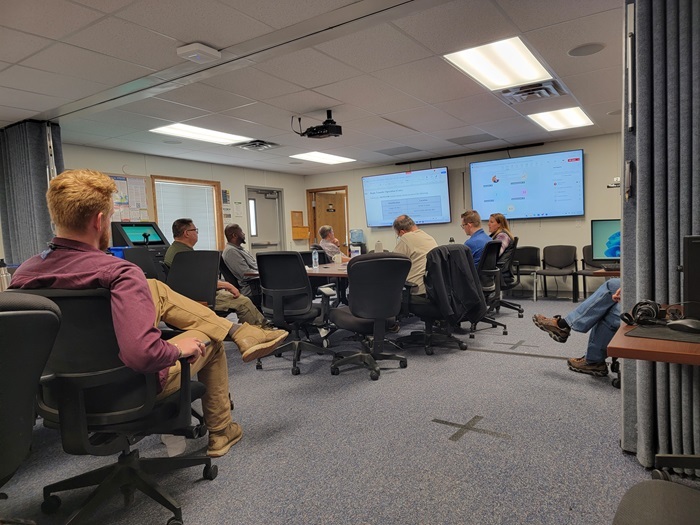 Teams from Hanford Tank Waste Operations and Closure and Bechtel National Inc. rehearse procedures for the first transfer of waste from one of the Hanford Site’s large underground tanks to the Waste Treatment and Immobilization Plant later this summer.
Practice runs will continue through June as teams align procedures and confirm that equipment is functioning as intended. These coordinated efforts are key to getting the site ready for hot commissioning — the next major step in Hanford’s tank waste cleanup, expected to begin later this summer.
During hot commissioning, the WTP will receive pretreated radiological and chemical waste, combine it with glass-forming materials, and heat it to 2,100 degrees Fahrenheit. This process, called vitrification, transforms the waste into a stable glass form, which is then sealed in stainless steel containers for safe disposal.
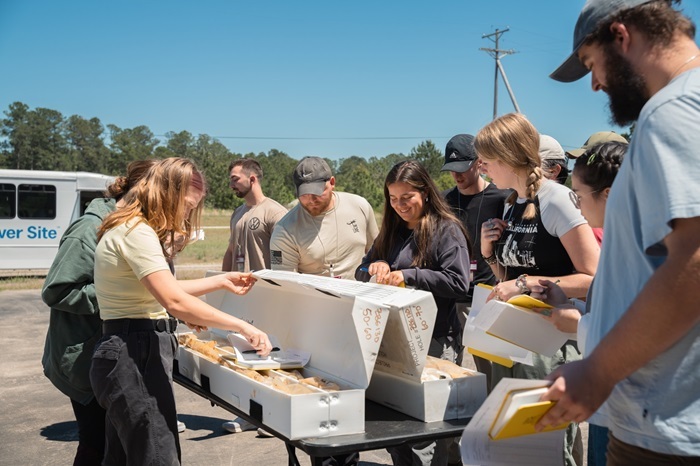 Fourteen students from Georgia Southern University sample coal and saltstone from the Savannah River Site.
Students explore unique archive of subsurface investigations at the Savannah River Site
AIKEN, S.C. — Fourteen geoscience students from Georgia Southern University recently toured the Geological Core Repository at the Savannah River Site (SRS).
The repository, a vast warehouse of sediment and rock cores from SRS, serves as a unique archive of over 50 years of subsurface investigations, with core samples valued at over $60 million.
“Core samples are invaluable for understanding sediment heterogeneity, physical properties and seismic hazards,” said Kim Mitchell, Education Outreach lead with U.S. Department of Energy Office of Environmental Management contractor Savannah River Nuclear Solutions (SRNS). “They help predict groundwater movement and the behavior of contaminants and mitigants, while adding geotechnical rigor to facility siting and foundation design. Beyond SRS, core samples support university research, state and federal geologic surveys and museum displays."
 |
|
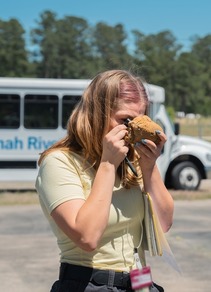
Georgia Southern University junior Delaney Love uses a hand lens to examine core from the Savannah River Site. |
Edward Lo, assistant professor of geology at Georgia Southern University, was inspired to make SRS an annual visit for his sedimentation and stratigraphy course after reading about the repository.
“I hope my students connect textbook concepts with real-world applications to ensure that nationally important work is done to the highest standards,” he said. “Witnessing the Cold War history and the site’s modern role was eye-opening. Every American should visit to understand how federal tax revenue is invested in our defense."
During the visit, students used various tools to inspect and describe soil samples from the site’s Z Area, home to the Saltstone Disposal Facility. They used hand lenses for detailed inspection, grain-size scales for classifying sediments, color books for accurate color description and geologic field books to record their observations.
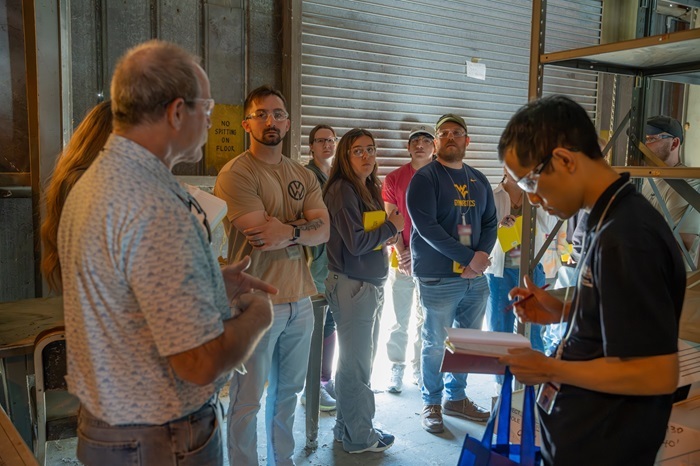 The “rock library” at the Geological Core Repository at the Savannah River Site is home to over 1,200 cores stored in 22,000 boxes that create 35 miles of geological core.
Dillion Daniels, a senior geosciences student, has been in the Army for nearly seven years as a geospatial intelligence imagery analyst. There, Daniels developed a passion for geosciences.
“I see potential for new, motivated individuals to aid in core organization and inventory,” Daniels said. “The operational standards at SRS were similar to those I used in the Army, making the tour even more relevant to my experience."
Core samples are costly to collect, sometimes exceeding $1 million due to the depth and complexity involved. It's a cost that many universities cannot afford, making the site’s collection a unique and critical resource.
The samples also support environmental reports for agencies such as the U.S. Environmental Protection Agency and the South Carolina Department of Environmental Services.
"By offering students the opportunity to visit the site, we provide them with valuable insights into our operations and mission. Engaging with students allows us to nurture future professionals,” SRNS Environmental Compliance and Area Completion Projects Geologist Terry Killeen said. “Over the years, we have hired several interns from local schools in South Carolina and Georgia, showcasing our commitment to developing local talent.”
-Contributor: Mackenzie McNabb
|