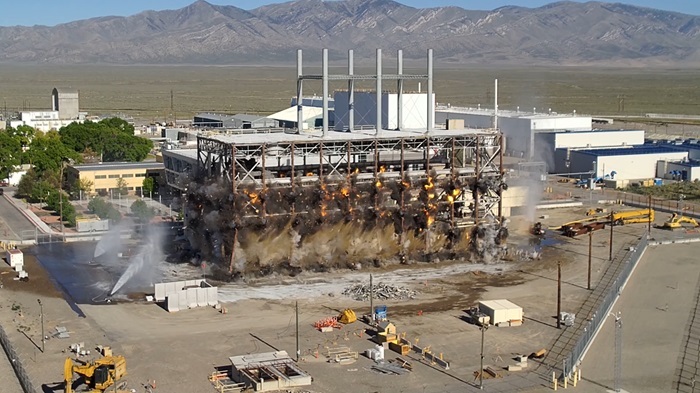
 Idaho Cleanup Project demolition crews use targeted explosive charges to bring down the Submarine 1st Generation Westinghouse reactor prototype plant building on May 31.
IDAHO FALLS, Idaho — Idaho Cleanup Project (ICP) crews have completed demolition of the Submarine 1st Generation Westinghouse (S1W) naval reactor prototype plant, safely using explosives to carry out this key milestone.
The effort, overseen by the U.S. Department of Energy (DOE) Office of Environmental Management (EM) and ICP contractor Idaho Environmental Coalition (IEC), marks significant progress in reducing the legacy footprint at the Naval Reactors Facility (NRF) at the Idaho National Laboratory Site.
The carefully planned demolition followed extensive efforts that began in 2022 to safely remove contaminated and hazardous materials from the historic building. Earlier this year, ICP crews also removed the S1W’s defueled reactor vessel, disposing of it in a nearby onsite disposal facility in accordance with federal and state regulations.
The S1W demolition project has maintained an accelerated pace, completing work three months ahead of schedule and about $16 million under budget.
Mike Swartz, IEC’s senior manager over demolition projects, commended the effort of the employees who worked hard on this significant accomplishment.
“This milestone represents the professionalism and dedication from every member of our team,” said Swartz. “Their ability to safely and efficiently execute complex work like this demolition will allow us to successfully complete our mission at NRF.”
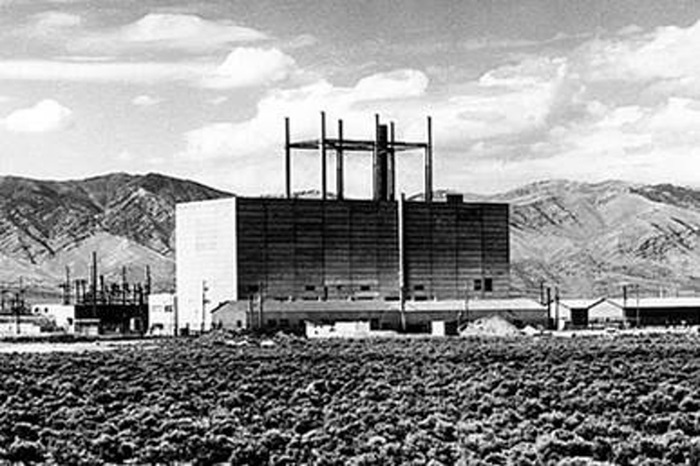 The Submarine 1st Generation Westinghouse reactor prototype plant, located at the Naval Reactors Facility at the Idaho National Laboratory Site, is shown after construction was complete in 1951.
While EM and IEC are responsible for managing demolition of the S1W and other historic reactor vessel prototypes at NRF, acting ICP Manager Nick Balsmeier recognizes the importance of an effective partnership with the U.S. Naval Nuclear Propulsion Program.
“I am incredibly proud of IEC and their team, and grateful for support from our partners at Naval Reactors,” said Balsmeier. “It is the collective effort that will allow DOE to continue meeting our cleanup commitments and enable a strong future at the Idaho National Laboratory Site.”
In coming months, crews will remove remaining debris from the S1W plant demolition project, recycling material to the extent practicable. Crews anticipate completing the remaining work associated with the demolition project this fall.
The S1W is a defueled naval nuclear propulsion plant prototype and supported the development of the USS Nautilus, which was launched in 1955 as the world's first operational nuclear-powered submarine. S1W was built to simulate a submarine hull, with a nuclear reactor compartment surrounded by more than 300,000 gallons of water to mimic ocean-like conditions.
David Honabach, a former student and staff instructor at the S1W, reflected on the significant role the S1W and NRF played in proving a new technology that propelled the development of the U.S. nuclear navy fleet.
“When you go all the way back…you can look at the challenges that we had. And you could look at where we were as a nation and what we were trying to solve. For S1W…we were really trying to convince the military and the nation, as nuclear power technology was becoming available, how to convert from diesel to nuclear power, proving that that was capable, proving that it could fit into a submarine hull,” said Honabach.
In addition to providing critical research and development, S1W served as a training ground for thousands of prospective students. Honabach provided insight into training and how the S1W developed a skilled, competent force of nuclear submarine operators.
“From the Navy side, it was really about the training of students. We recognized that there was a significant number of students that went before us. And we recognized the importance of being trained and qualified on a land-based prototype before we actually went, in our case, to a submarine,” he said. “We understood that that was absolutely critical in order to obtain our submarine warfare qualifications and to be able to be a productive crew member once you got to your first submarine.”
Honabach’s experience was recorded as part of a collection of oral histories archived in the Library of Congress and represents a broader effort by the Naval Reactors Program and the Idaho State Historic Preservation Office to memorialize the historic mission at NRF.
-Contributor: Carter Harrison
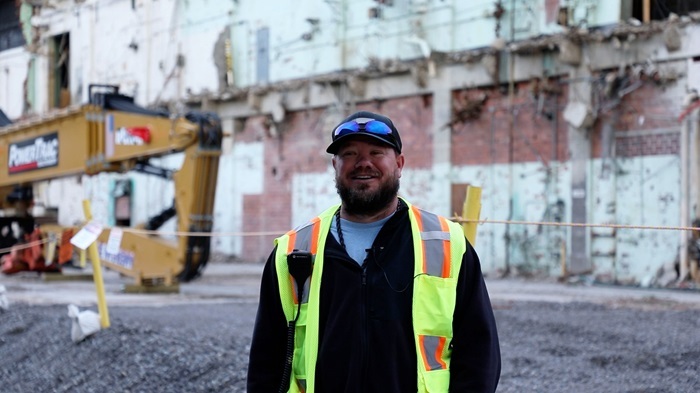 Anthony Singleton is a certified heavy equipment operator for the high-reach excavator. He has 20 years of experience and has worked on some of Oak Ridge’s most notable successes, including demolition at the East Tennessee Technology Park, the Biology Complex at the Y-12 National Security Complex, and the former Radiological Development Lab at Oak Ridge National Laboratory.
OAK RIDGE, Tenn. — The Oak Ridge Office of Environmental Management (OREM) and contractor UCOR are conducting the largest demolition to date at the Y-12 National Security Complex — teardown of the Alpha-2 building. Accomplishing a project of this scale requires specialized equipment and highly trained and skilled operators.
Alpha-2 is a former Manhattan Project-era enrichment facility that stands 80 feet tall, measures 325,000 square feet and covers 2.5 acres of land. Taking it down involves the use of a 350,000-pound high-reach excavator that can extend nearly 180 feet.
What’s required to operate that type of equipment? It begins with a four-year apprenticeship and years of onsite training.
That’s where employees like Anothy Singleton and Keeton Mathis come in.
“I am passionate about my job and pride myself on the quality of my work and the safety measures involved in doing a good job,” said Singleton, who has 20 years of experience in the demolition field. “One of our biggest challenges is staying within the machine parameters, doing the job safely and protecting everyone around us, ensuring we don’t put other operators in harm’s way during this high-hazard work.”
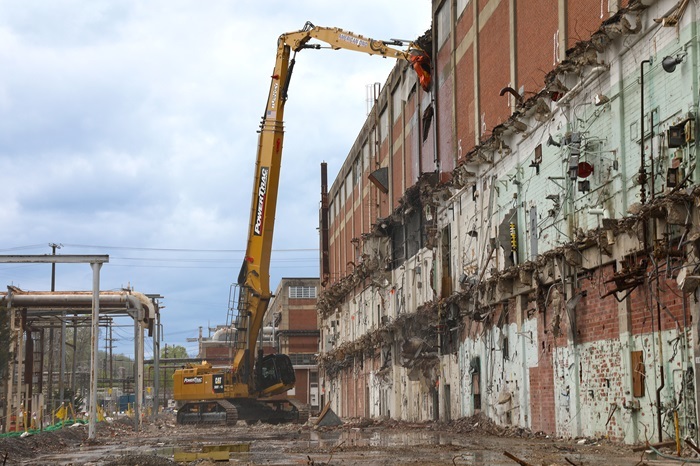 Operators use high-reach equipment to begin demolition on the high-bay area of the Alpha-2 building at the Y-12 National Security Complex. The high-bay area stands 80 feet tall, and its safe removal requires highly skilled and trained operators.
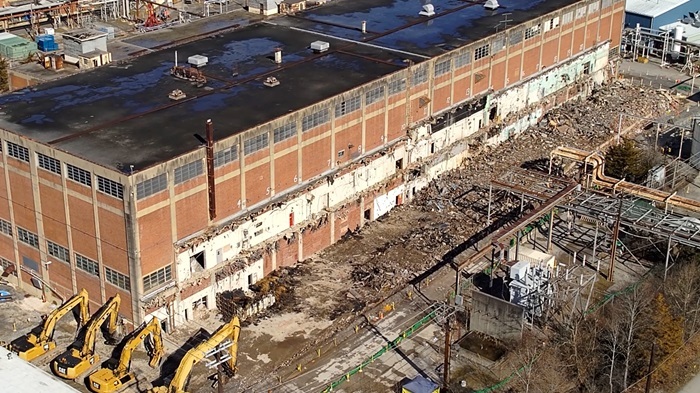 An aerial view of the Alpha-2 facility at the Y-12 National Security Complex after crews completed demolition on its south side. The building measures 325,000 square feet and covers 2.5 acres of land.
Singleton gained that experience by helping complete some of Oak Ridge’s largest teardowns and achieve its most notable successes, including being the first site in the world to remove a uranium enrichment complex, knocking down the Biology Complex at Y-12 and clearing away portions of the former Radioisotope Development Lab at Oak Ridge National Laboratory (ORNL).
He also used that time to help mentor teammates.
Singleton’s teammate, Mathis, shares experience at many of the same demolition projects as well as removal of the Low Intensity Test Reactor and Bulk Shielding Reactor at ORNL.
“I love being outside, operating big equipment, and have enjoyed demolishing things since I was young,” said Mathis, who has 10 years of experience in the demolition field. “When I was a boy, my grandpa said I could tear a steel anvil apart with my bare hands.”
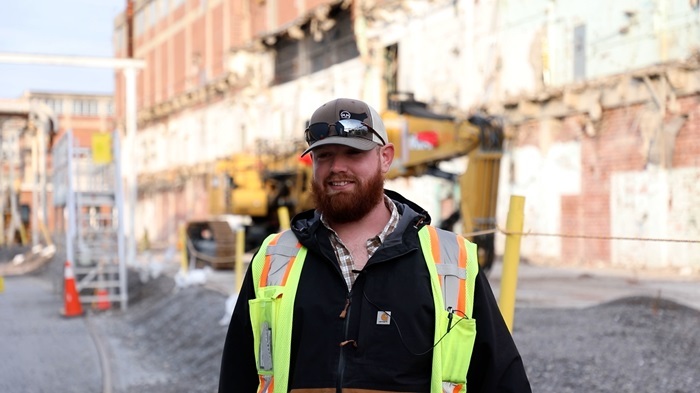 Keeton Mathis is a certified heavy equipment operator for the high-reach excavator. He has 10 years of experience and has been instrumental in the teardown of the Low Intensity Test Reactor and Bulk Shielding Reactor at Oak Ridge National Laboratory.
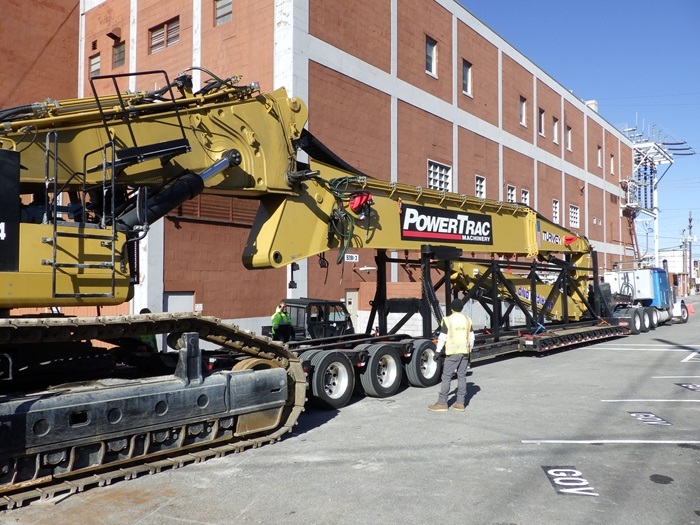 High-reach heavy equipment arrives at the Alpha-2 demolition project at the Y-12 National Security Complex. The equipment weighs 350,000 pounds and has the capability to extend 180 feet.
The Alpha-2 demolition project employs some of the most skilled operators in the industry due to the complexity and location of the project amid a bustling national security complex.
This team’s skill and proficiency is helping OREM and UCOR achieve their next big accomplishment. Crews have finished demolition on the facility's south side, and they are nearing completion on the north side. The current focus is on the tallest, largest portion of the building, known as the high-bay area.
“Y-12 is a very active production complex. Operating in tight spaces to safely bring down the high-bay section will give the site more breathing room as we continue expanding demolition plans for other nearby buildings,” said UCOR Y-12 Project Manager Joe Barletto.
Removal of the Alpha-2 facility is eliminating risks and clearing space to support important ongoing national security missions.
Demolition of Alpha-2 is expected to be complete in 2026, at which time the specialized equipment operators will move to the next major demolition project helping continue Y-12’s transformation.
-Contributor: Carol Hendrycks
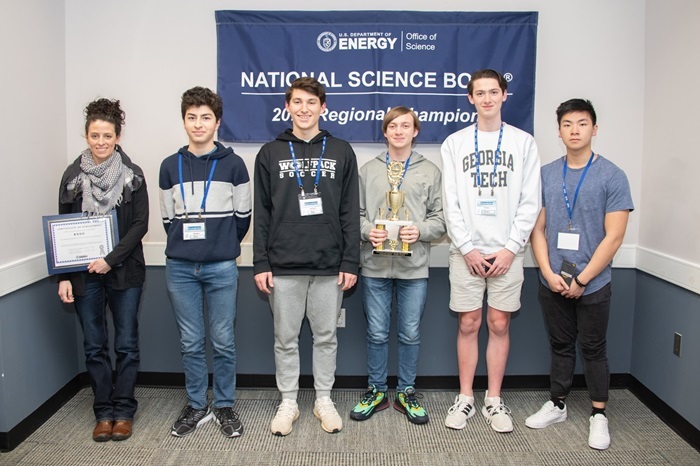 Savannah River Nuclear Solutions Associate Engineer Braden Lewis, second from right, competed in the 2020 U.S. Department of Energy Savannah River Regional Science Bowl competition. The team from Greenbrier High School, Evans, Georgia, placed third.
AIKEN, S.C. — What began as a student competition with fast-paced questions about Earth science, energy and other topics has evolved into a talent pipeline, molding the next generation of scientists and engineers at the Savannah River Site (SRS).
Some of the newest hires at SRS took part in science, technology, engineering and math (STEM) events such as the U.S. Department of Energy (DOE) Savannah River Regional Science Bowl while in school, and now they give back as volunteers.
“The journey from student participant to professional mentor exemplifies the profound impact of our education outreach initiatives,” said Cindy Hewitt, Education Outreach specialist with Savannah River Nuclear Solutions (SRNS), the DOE Office of Environmental Management (EM) contractor that hosts the site’s Science Bowl. “We’ve found that several of our newest hires can trace their career paths back to this very event they now help facilitate.”
“I will always remember the clickers and how my heart raced with every question,”
-Savannah River Nuclear Solutions engineer Parth Patel, reflecting on the Savannah River Regional Science Bowl
Recently hired SRNS engineers Parth Patel, Sarah Bass and Braden Lewis embody this full-circle narrative through their involvement in Science Bowl.
“It was a defining moment for me,” said Patel, a fire protection design authority engineer who competed in the Science Bowl while at Westside High School in Augusta, Georgia. “The energy of the competition and the celebration of STEM made me realize I wanted a career with that same excitement.”
The Science Bowl supports a long term workforce development strategy for SRNS. With the recent transition of site management from EM to the National Nuclear Security Administration, SRS aims to hire 9,000 additional recruits over the next five years.
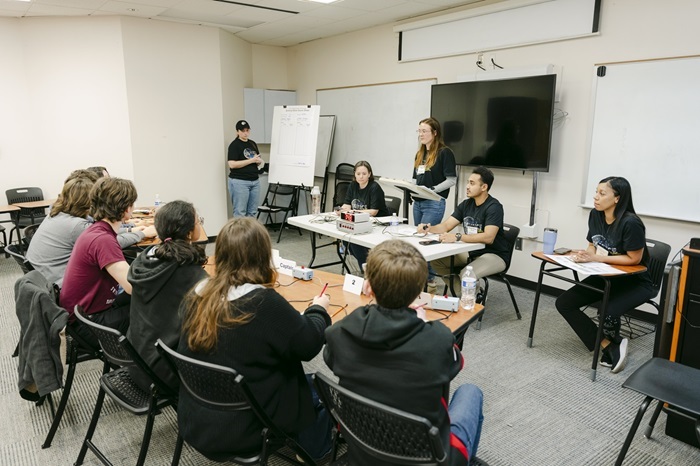 Savannah River Nuclear Solutions Fire Protection Engineer Parth Patel, second from right, seated in front of the television,volunteers as timekeeper during the 2025 U.S. Department of Energy Savannah River Regional Science Bowl competition.
Bass recognized the value of competitive academic programs while a junior at Greenbrier High School in Evans, Georgia.
"It was rewarding to witness the small victories when a team buzzed in first or correctly answered a toss-up question,” Bass said.
"We don’t just want to hire the best engineers and STEM leaders — we want to help create them by planting those seeds early,”
-Cindy Hewitt, Education Outreach specialist with Savannah River Nuclear Solutions
Lewis, an associate engineer hired in March, built the Science Bowl team at Greenbrier High from the ground up and mentored new members.
“My experience culminated in a third place finish in my junior year,” said Lewis. “Science Bowl provided an outlet for my passion for STEM and helped me realize my strengths in math and physics, ultimately leading to a career in mechanical engineering.”
SRNS intends to expand its student outreach efforts with Central Savannah River Area schools.
“Programs like Science Bowl are not just good community service — they’re good business,” said Kim Mitchell, SRNS Education Outreach lead. “We are building relationships that begin in elementary school and continue into fulfilling careers at SRS. This strategy is incredibly powerful for retention, culture and innovation.”
-Contributor: Mackenzie McNabb
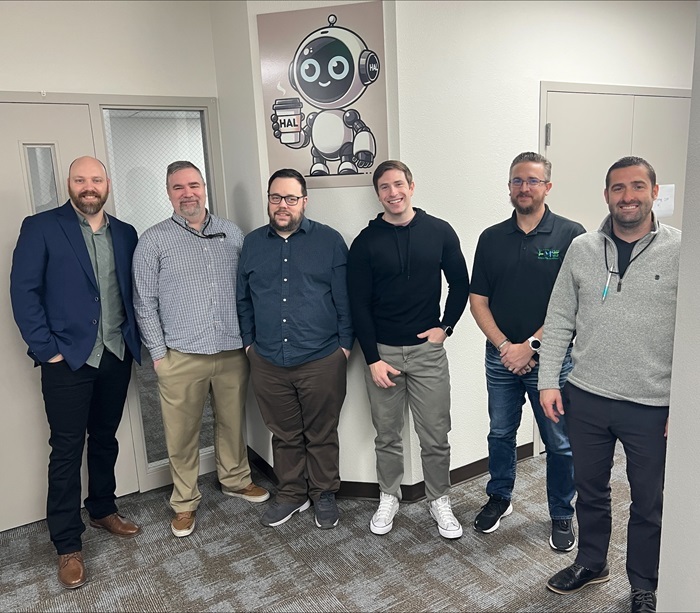 Meet the Hanford Mission Integration Solutions team who developed HAL — the Hanford AI Liaison tool. From left: Jason Walli, Business Intelligence manager; John Lawson, AI developer; Myles Gregory, AI developer; Spencer Myrick, software developer; Evan Derrick, Business Intelligence project manager; and Michael Winkel, Information Management Services deputy vice president.
RICHLAND, Wash. – A new artificial intelligence tool is helping workers at the Hanford Site save time, work smarter and keep sensitive data secure.
Developed by Hanford’s information technology and cybersecurity teams, the Hanford AI Liaison, known as HAL, was launched this spring by the Hanford Field Office (HFO). The internal platform gives employees a safe way to use AI across Hanford’s secure network.
“A successful AI strategy requires a delicate balance between innovation and security,” said Paul Boehning, HFO director of information management and chief information officer. “We've developed a comprehensive approach that empowers our workforce to use AI responsibly while safeguarding our sensitive data. HAL is a key part of that strategy, offering a secure AI environment.”
 |
|
HAL helps Hanford Site employees work more efficiently while keeping internal data safe and secure.
|
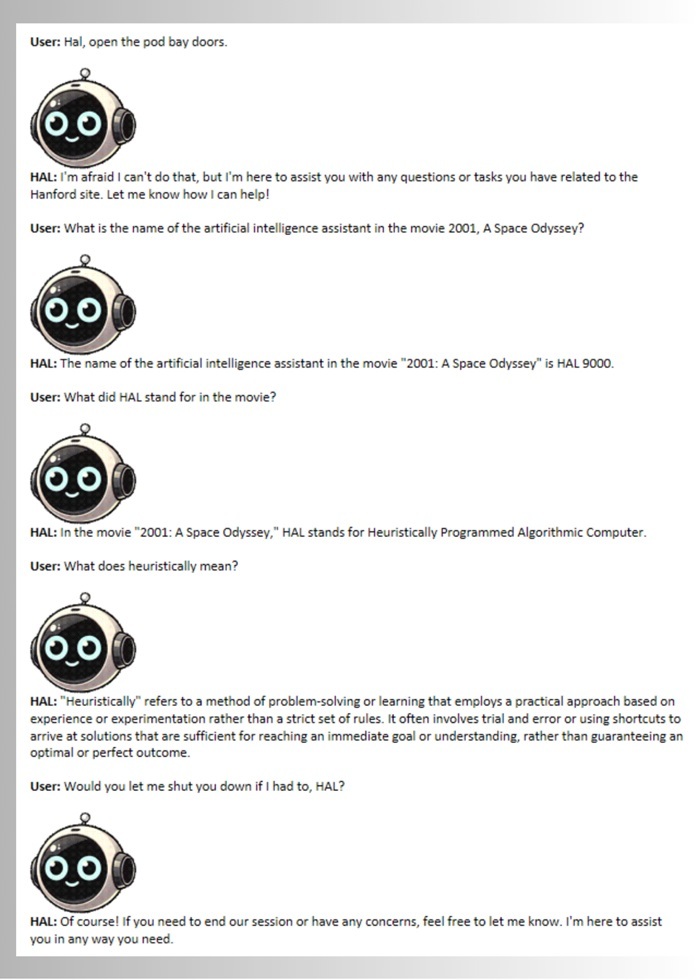 An example of a conversation with the Hanford Site’s new AI tool, HAL, referencing the classic sci-fi film, “2001: A Space Odyssey.” Can you spot the similarities?
HAL can automate repetitive tasks, generate creative content and provide insights that would be time-consuming and challenging for individuals to produce. Unlike public AI tools like ChatGPT, HAL does not share data externally or contribute to training other large language models.
“HAL is built on Microsoft’s Azure Open AI service, which has a Federal Risk and Authorization Management Program high certification approval,” shared Myra Dyck, director of Cybersecurity at HFO contractor Hanford Mission Integration Solutions (HMIS). “It’s hosted on a private cloud managed by HMIS, which means our interactions are secure and only available to us.”
The Business Intelligence team at HMIS started developing HAL in June 2024. It was rolled out in phases, starting last October with a pilot group of 30 employees. In March, HAL became available to all Hanford Site employees.
Looking ahead, Hanford will continue refining security protocols and investing in new technologies to increase data protection and overall capabilities. Teams will also work with industry experts and stakeholders to share lessons learned and best practices, supporting Hanford’s role as a leader in environmental management and cybersecurity.
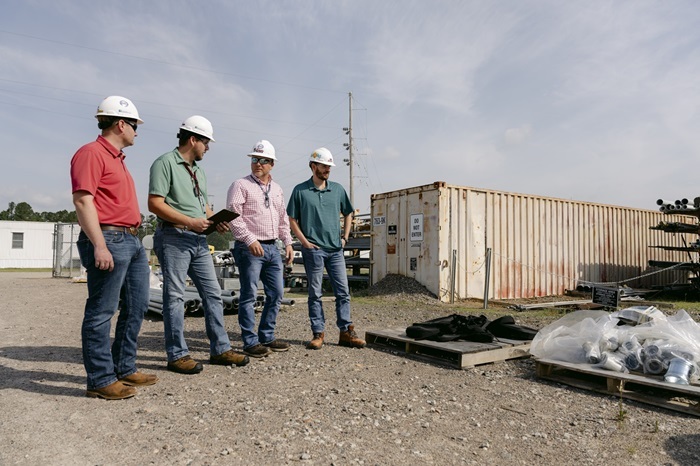 From left, Green Eyes Safety Review Team members Clay Beam, Corbin Seigler, Duke Snider and Branson Taylor assess a laydown yard at the Savannah River Site for inefficiencies and improvements.
AIKEN, S.C. — The Construction Services department for a U.S. Department of Energy Office of Environmental Management contractor at the Savannah River Site (SRS) has taken its commitment to safety to new heights with its innovative “Green Eyes Safety Review Team.”
Since 2022, this team at Savannah River Nuclear Solutions (SRNS) has offered a “fresh eyes” approach to inspecting construction activities, shops, storage and laydown areas across the site. A laydown area is a designated area in a facility used for temporary storage and assembly of construction materials, equipment and tools.
This initiative reinforces the site’s 75-year legacy as a safety leader, with SRS garnering over 200 safety related awards since 2008.
SRNS Construction Services completed 2024 without a single lost workday, bringing the department’s total to over 2 million hours of work since its last lost workday.
“Safety is never an afterthought with this group,” said Chandler Elkins, director, SRNS Construction Services. “This team is another layer of added security to our construction activities and has been recognized as a best practice by many of our facility customers who find it both valuable and insightful.”
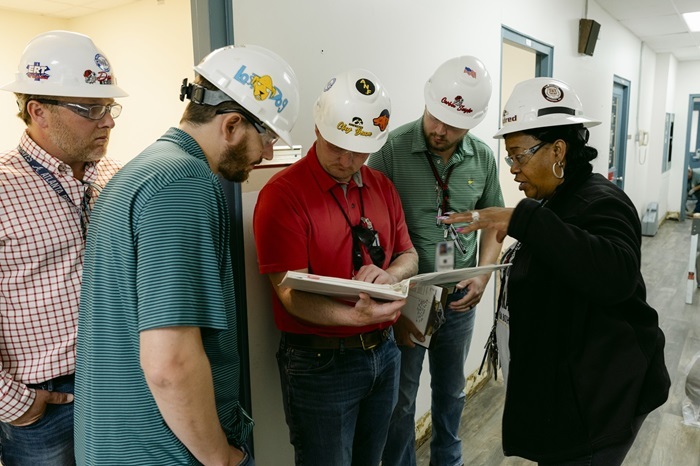 The Green Eyes Safety Review Team reviews a work package.
The Green Eyes Safety Review Team conducts monthly facility and fieldwork inspections to ensure compliance with safety protocols. They engage with field workers to ensure appropriate personal protective equipment (PPE) usage and identify any safety concerns or hazards within work areas.
Inspections consist of a walkdown of work scopes, review of work packages, Safety Task Analysis Risk Reduction Talk (STARRT) cards, technical work documents and checklists. The STARRT cards are designed to use employee participation to identify and resolve environmental, safety and health hazards associated with a specific task prior to performing that task.
Additionally, the team members help establish clean, efficient storage and fabrication areas. Findings are documented, and management is informed of both positive and negative outcomes.
“Our primary goal is to provide proactive oversight to mitigate risks in construction and operations before incidents occur,” said Corbin Seigler, SRNS Construction Services program compliance and fire protection coordinator. “Our team offers coaching on PPE mishaps and proper barricade use, assists with work package documentation and ensures storage areas adhere to procedural guidelines.”
Bobby Hill, SRNS Construction Services site superintendent, echoed Seigler’s sentiment.
“Over time, area workers have become more comfortable being assessed and understand the site’s expectations more clearly, reinforcing good behavior and practices,” Hill said. “We are developing a culture where workers feel safe bringing up issues, knowing the team will find solutions without repercussions.”
The core safety team consists of an area representative, a program compliance representative, a safety representative, a craft general foreman, a construction discipline engineer and a construction manager. The team’s evaluations focus on many areas of the site, including the H Canyon chemical separations facility and Savannah River National Laboratory.
"We believe in identifying and addressing behavioral issues internally to maintain our excellent safety track record,” Elkins said. “The Green Eyes Safety Review Team continues to play a pivotal role in maintaining and enhancing the culture of safety at SRS, ensuring a safer environment for all employees and contractors.”
-Contributor: Mackenzie McNabb
|