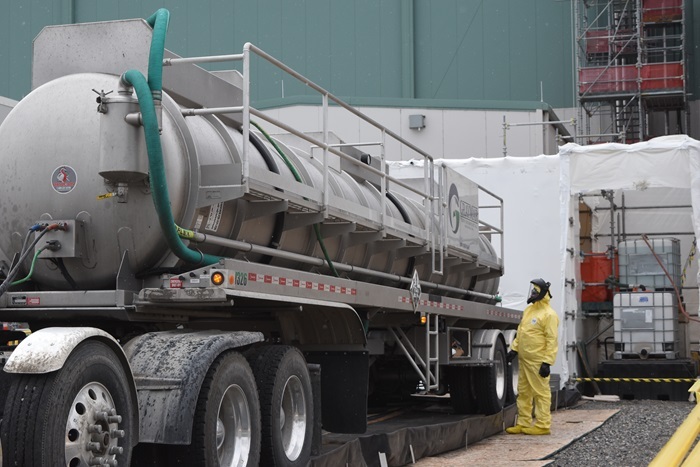
 Workers offload nitrogen into the Low-Activity Waste Facility at the Waste Treatment and Immobilization Plant. The nitrogen, mixed with other materials, will simulate Hanford Site tank waste and be used to prepare the facility for operating with waste later this summer.
RICHLAND, Wash. — The U.S. Department of Energy Office of Environmental Management is advancing the Hanford Site tank waste mission by introducing key chemicals into the Waste Treatment and Immobilization Plant as part of ongoing cold commissioning testing. This represents another step toward solidifying Hanford tank waste in glass later this year.
“Our progress in cold commissioning is the result of decades of preparation, dedication and collaboration between the Department and our contractor partners and is another step toward safely addressing Hanford tank waste,” said Hanford Field Office Acting Manager Brian Harkins.
With the introduction of ammonia and nitrous oxide-producing chemicals into the WTP melters to replicate tank waste, the Hanford team is ensuring systems are fully operational. Testing the plant and its systems with chemicals in simulated tank waste over the next few months is a key step in validating that all systems and equipment run safely and appropriately before nuclear waste components are introduced later this year. This achievement builds on significant progress over the last several years in the Direct-Feed Low-Activity Waste program across the Hanford Site.
“Leadership from DOE and strong partnerships with the trade unions, suppliers, regulators, other Hanford contractors and local community have helped make this happen,” said Bechtel National Inc. Project Director and Senior Vice President Brian Hartman. “We’re proud to be part of a mission that’s critical to the health of our community and the environment.”
Once full-scale operations begin, the plant will process an average of 5,300 gallons of tank waste per day, mixing the treated waste with glass-forming materials, heating it to 2,100 degrees Fahrenheit, and pouring it into stainless steel containers for safe, long term disposal. Approximately 3.5 containers, weighing a total of 21 metric tons, will be produced each day.
The plant facilities can be viewed using the self-guided Hanford Virtual Tour available at www.Hanford.gov.
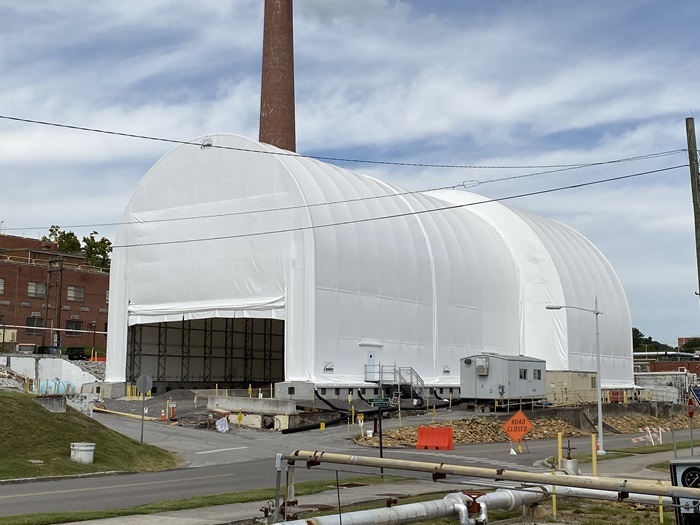 The Oak Ridge Office of Environmental Management and contractor UCOR installed a six-story protective cover over the former Radioisotope Development Laboratory demolition project to ensure surrounding research missions at Oak Ridge National Laboratory are not impacted.
OAK RIDGE, Tenn. — Demolition is underway on the last remaining hot cell structure at the former Radioisotope Development Laboratory at Oak Ridge National Laboratory (ORNL) — a U.S. Department of Energy Office of Environmental Management priority for 2025.
Removing the structure will complete demolition of the former laboratory, eliminate a significant risk, enable modernization at ORNL and open space to support ongoing research and science missions at the site.
“The hammers that we hear in the background are music to our ears,” said Mike Vestal, federal project manager. “We like to hear that because that means we’ve got to the main part we are trying to succeed at, which is demolishing the building and then successfully getting rid of the waste.”
 Preparing this structure for teardown required years of planning and deactivation by the Oak Ridge Office of Environmental Management and cleanup contractor UCOR due to the levels of radioactivity inside.
“This marks the beginning of the end,” said Steve Clemons, ORNL portfolio federal project director. “This project has been going on for well over a decade. To get to this point is a great achievement. Not only does it mark a success there, but it also allows us to gain experience, knowledge and lessons learned that we will be able to apply to other projects across ORNL’s central campus.”
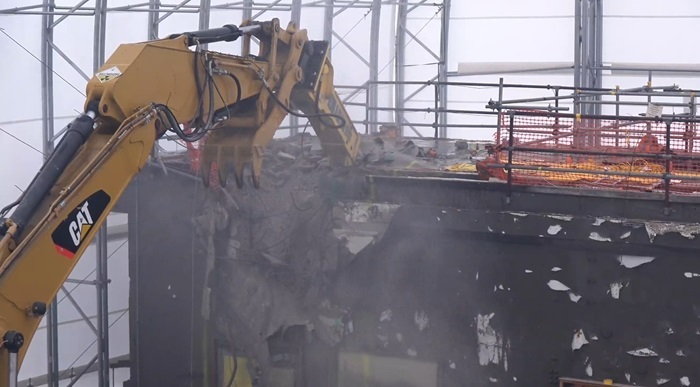 Demolition close-up: The final hot cell bank at the former Radioisotope Development Laboratory is divided into subcells A and B. Demolition is underway on subcell B, which comprises the far left side of the structure.
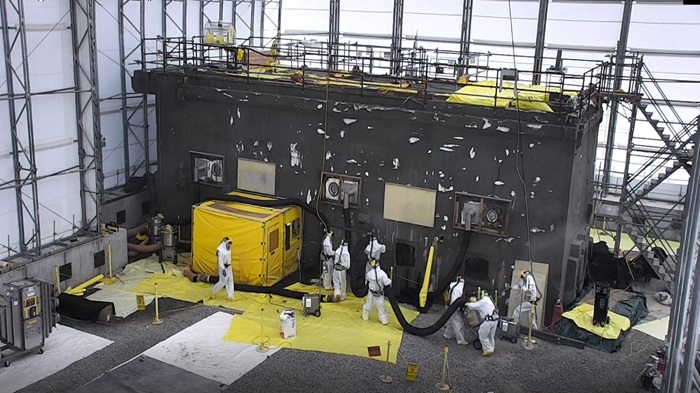 Workers collected samples, conducted deactivation tasks and performed extensive analysis to get the final hot cell structure from the former Radioisotope Development Laboratory ready for demolition.
Crews demolished the facility’s outer structure and the other five hot cells in the former laboratory, known as Building 3026, in previous years.
The cells were heavily shielded concrete rooms that provided researchers protection from radioactive material as they conducted research. The laboratory was built in 1945 to support isotope separation and packaging and was later used to examine irradiated reactor fuel experiments and components.
The final hot cell is divided into subcells A and B. Crews will demolish subcell B first. Next, workers will use remotely operated equipment to assist with deactivating subcell A due to the high radioactivity there. Demolition is scheduled for completion next year.
“This removal underscores the commitment to overall safety and meeting the environmental cleanup goals,” said Chad York, UCOR’s ORNL cleanup area project manager. “The strategic cleanup strategy required a deliberate, sequenced approach to ensure worker safety.”
-Contributor: Carol Hendrycks
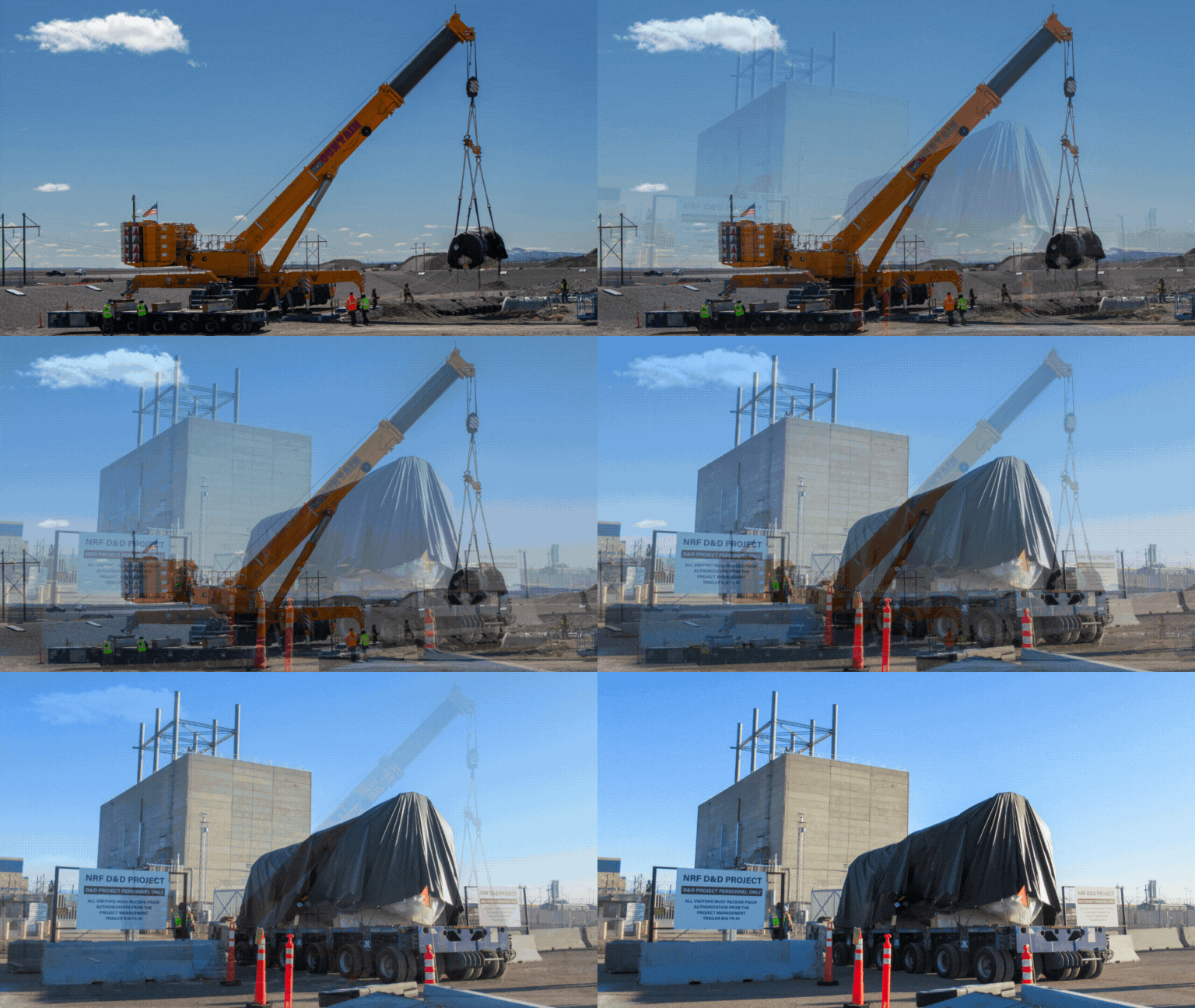 Cleanup crews have successfully removed the defueled reactor vessel from the Submarine 1st Generation Westinghouse naval nuclear propulsion prototype reactor plant, moving the plant closer to demolition.
IDAHO FALLS, Idaho — Idaho Cleanup Project crews have achieved a significant milestone in the deactivation and demolition (D&D) of the defueled Submarine 1st Generation Westinghouse (S1W) naval nuclear propulsion prototype reactor plant, which had once served as a training ground for about 14,000 U.S. Navy submariners and plant operators.
Crews successfully removed, transported and disposed of the prototype’s reactor vessel, one of the last heavy components from the S1W, in an onsite landfill, the Idaho CERCLA Disposal Facility (ICDF). CERCLA stands for Comprehensive Environmental Response, Compensation, and Liability Act, a law enacted by Congress in 1980. As a result of the CERCLA regulatory process, the ICDF has stringent waste acceptance criteria.
Once used to support the first nuclear-powered submarine, the prototype now moves closer to demolition, a major step toward advancing environmental cleanup at the Idaho National Laboratory Site.
Removing such components, including the reactor vessel, has been ongoing since the U.S. Department of Energy Office of Environmental Management assumed responsibility for demolishing the S1W in 2022. That work was preceded by extensive efforts to isolate the prototype’s electrical and mechanical components and remove hazardous materials, such as asbestos and lead shielding. Demolition and ICDF project teams with cleanup contractor Idaho Environmental Coalition (IEC) coordinated to ensure proper disposal in the landfill.
“I am incredibly proud of our team and our partners at ICDF,” said Mike Swartz, IEC director for D&D and capital projects. “This achievement is the culmination of an extraordinary team effort and has moved us one step closer to completing this historic mission.”
The project also worked closely with a local subcontractor, which provided much needed support by staging and operating a crane used for disposal.
Built inside a section of a submarine hull at the Naval Reactors Facility on the Arco Desert west of Idaho Falls, the land-based S1W was the nation’s first nuclear submarine prototype and became an important training facility for U.S. Navy nuclear operators.
Demolition of the S1W prototype reactor plant is expected to be complete by the end of 2025 and is being conducted in compliance with CERCLA.
-Contributor: Carter Harrison
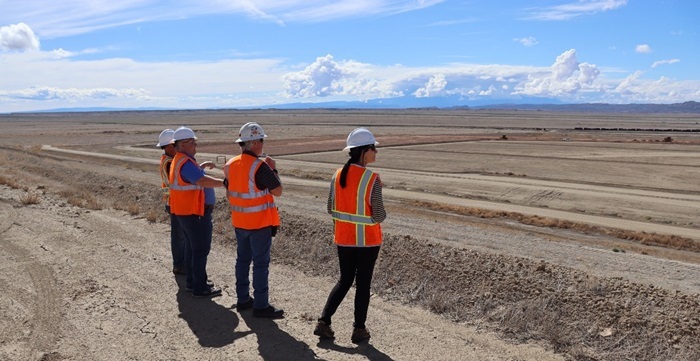 Oak Ridge Institute for Science and Education representatives are joined by Moab Uranium Mill Tailings Remedial Action Project personnel as they view the Moab Project’s disposal cell near Crescent Junction, Utah.
MOAB, Utah ― Representatives from the Oak Ridge Institute for Science and Education (ORISE) recently made their first of several visits to the Moab Uranium Mill Tailings Remedial Action Project to independently verify the U.S. Department of Energy (DOE) Office of Environmental Management's (EM) environmental cleanup for both of the Moab Project’s working sites.
Located in Oak Ridge, Tennessee, ORISE is a DOE asset managed by the Oak Ridge Associated Universities. The institute has been providing independent verification for DOE, the U.S. Nuclear Regulatory Commission and others for more than 40 years.
“Having ORISE perform independent verification of our sites’ cleanup is essential, especially considering the community’s desire for ownership of the Moab property once cleanup is complete,” said EM Physical Scientist Kenny Schafer, who oversees the project’s Radiological Verification Program.
The City of Moab and Grand County, Utah, have joined together to request ownership of the Moab Project site property. Their hope is to build an outdoor park and recreation area on the land, which is adjacent to the Colorado River.
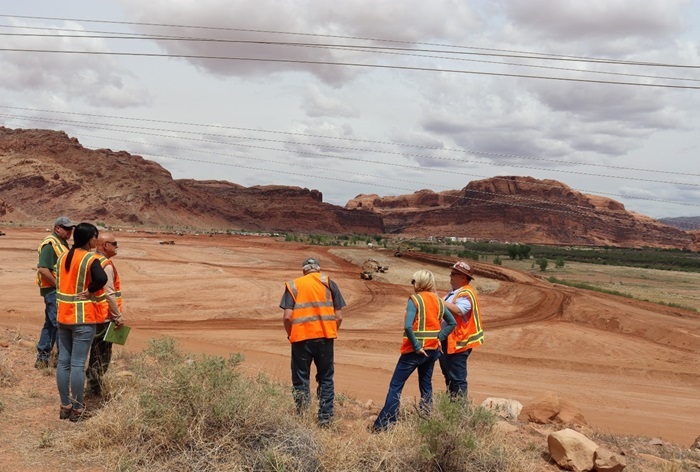 Oak Ridge Institute for Science and Education and Moab Uranium Mill Tailings Remedial Action Project personnel view the Moab Project site from an overlook along State Route 279.
Uranium Reduction Company constructed the Moab mill in 1956 and operated it until 1962, when the assets were sold to Atlas Minerals Corporation. Uranium concentrate was the milling product. Known as “yellowcake,” it was sold to the U.S. Atomic Energy Commission, a predecessor agency to DOE, through December 1970 for use in national defense programs.
During its years of operation, the mill processed an average of about 1,400 tons of ore a day, resulting in an estimated 16-million-ton mill tailings pile. Atlas declared bankruptcy in 1988, and responsibility for the cleanup was transferred to DOE in 2001 with enactment of the Floyd D. Spence National Defense Authorization Act.
ORISE’s work with the Moab Project will take place throughout the remaining cleanup and closure of both sites. The mill tailings pile is located in Moab, and the disposal cell for the Moab Project is located near Crescent Junction, Utah.
EM expects to complete removal of contaminated material, including the pile, sub-pile and off-pile areas in 2027, and site closure in 2029. Sub-pile refers to the contaminated soil beneath the surface tailings pile, and off-pile refers to the additional contaminated soil and debris adjacent to the surface pile.
The cleanup program also anticipates DOE’s Office of Legacy Management will perform ongoing groundwater monitoring due to the Moab Project’s proximity to the Colorado River. That monitoring would follow the completion of EM’s Moab Project cleanup mission.
-Contributor: Barbara Michel
AIKEN, S.C. — Just over 400 legacy transuranic waste containers remain at the Savannah River Site (SRS) after workers there have sent more than 35,000 of them to the Waste Isolation Pilot Plant (WIPP) in New Mexico for disposal since the underground repository opened in 1999.
U.S. Department of Energy Office of Environmental Management workers at the Solid Waste Management Facility (SWMF) at SRS are working to prepare the remaining waste drums for shipment to WIPP. They are the most challenging to ready for shipment due to factors such as the types of materials contained in them and the radioactivity levels of the waste.
SWMF Deputy Facility Manager Jonathan Hall with Savannah River Nuclear Solutions, the SRS management and operations contractor, said different criteria were used to segregate transuranic waste as it was created and packaged for disposal when operations began at SRS in the 1950s — decades before WIPP opened with limits in place for waste emplacement.
“It was put into drums or waste boxes as it was created to meet the rapid pace in which the site was producing materials,” Hall said.
 |
|
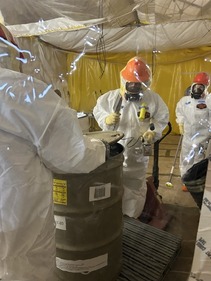
Operators at the Solid Waste Management Facility at the Savannah River Site are removing waste drums from overpacks to separate drums ready to be shipped to the Waste Isolation Pilot Plant from those that are not yet ready for shipment. The overpacks are standard waste boxes containing a group of drums. They perform removal activities in a plastic hut, using full personal protective equipment. |
However, WIPP requires transuranic waste packages meet current limits and standards before the waste repository will accept the packages for disposal. SWMF workers are removing waste drums from overpacks, which are standard waste boxes containing a group of drums, to separate drums ready to ship to WIPP from those that are not yet ready for shipment.
“As legacy containers continue to ship, it becomes increasingly more difficult to group and certify containers due to variables associated with the type of materials contained, availability of historic documentation, container integrity and plutonium equivalent curies limits,” Hall said. “In order to ship as much transuranic waste offsite as quickly as possible, we have focused on waste containers that have been readily certifiable. Now we are challenged with the more difficult containers.”
Dealing with such challenging transuranic waste containers requires strategic planning, coordination and procedure changes to ensure the waste meets WIPP shipment criteria, according to Hall.
SRNS President and CEO Dennis Carr commended SWMF employees.
“SWMF has a long history of strong operational performance and delivering on the job safely and efficiently,” Carr said. “SRNS is proud of our efforts to remove the inventory of transuranic waste from SRS with more than 1,740 total shipments completed to date from the Solid Waste Management Facility.”
-Contributor: Lindsey MonBarren
 Workers at the Paducah Depleted Uranium Hexafluoride plant install valve replacements for the specialized cylinders.
PADUCAH, Ky. — The Paducah Depleted Uranium Hexafluoride (DUF6) project team has marked a milestone by successfully fabricating valves from old equipment and installing them on 137 specialized cylinders, enabling crews in the future to transform the DUF6 stored inside them into depleted uranium oxide, a stable chemical form suitable for reuse, storage or disposal.
The valves are essential for feeding the DUF6 material into the conversion system, which also produces the coproduct hydrofluoric acid, which is reused industrially.
“These 137 cylinders represent an innovative solution to reuse former gaseous diffusion plant equipment from decades ago to containerize DUF6 material,” Portsmouth Paducah Project Office (PPPO) DUF6 Program Manager Zak Lafontaine said. “Their unique size and configuration presented a significant challenge to the Mid-America Conversion Services team, and I am pleased we have safely completed the first phase of this endeavor.”
Mid-America Conversion Services is the PPPO DUF6 contractor.
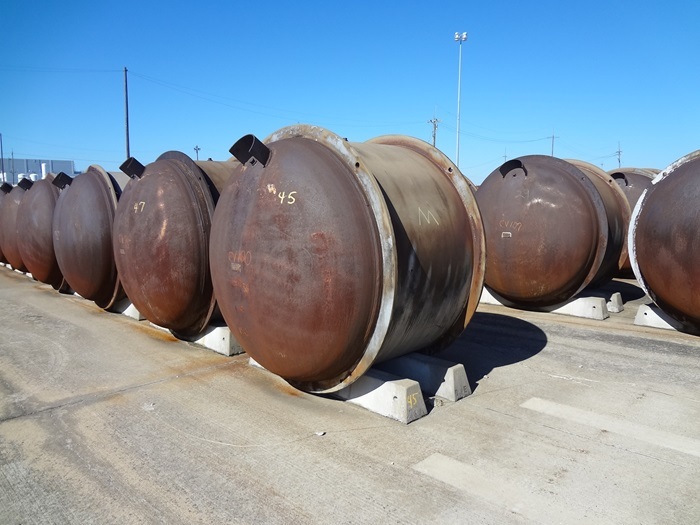 The specialized cylinders stand in a cylinder yard at the Paducah Site. They are the largest depleted uranium hexafluoride cylinders by volume in the site’s inventory, with a full cylinder weighing approximately 39,000 pounds.
Historically, DUF6 was containerized during the enrichment process as tails, which are large quantities of depleted uranium. It has been stored in cylinders of various types over the years.
In the latest milestone, workers removed the cylinder plugs and carefully attached the valves, which were fabricated from obsolete converter components from the gaseous diffusion plant. This meticulous work was performed outdoors and required rigorous safety protocols due to the inherent risks associated with handling cylinders with unknown pressure conditions.
The 137 specialized cylinders, known as Cylinder Valve-19 cylinders, are the largest DUF6 cylinders by volume in the Paducah Site inventory, with a full cylinder weighing approximately 39,000 pounds. The DUF6 Conversion Project operates facilities at the PPPO sites of Paducah in Kentucky and Portsmouth in Ohio.
Paducah DUF6 Plant Manager Rob Gentry said completing the valve installations on the specialized cylinders is an achievement that underscores the team's commitment to environmental stewardship and operational excellence.
"We are proud of the dedication and teamwork demonstrated by the production support and environment safety health groups during this complex project," Gentry said. "Their commitment to safety and compliance was instrumental in completing this important work on time and without incident."
The Paducah and Portsmouth plants will now proceed with the next phase: installing a DUF6 evacuation vacuum header. This work allows for a more efficient and flexible means to process the DUF6 material. The specialized cylinders don’t fit in the project’s autoclave used for heating, so workers will transfer the DUF6 material from the specialized cylinders to standard cylinders so the material can be processed in the autoclave. A full standard cylinder weighs about 32,700 pounds.
The DUF6 project draws from innovative methods and technologies to manage and convert DUF6 into usable materials, ensuring compliance with all safety and environmental regulations. PPPO conducts operations of the DUF6 conversion plants as required by Public Law 107-206.
-Contributor: Kearney Canter
 Team members from a variety of companies were critical to the Hanford Site’s transition to a unified procurement process. Pictured, front row, from left: Mark Young-McMurchie, Hanford Field Office; Jodi O’Connor, Inomedic Health Applications; Lloyd Foster, Central Plateau Cleanup Company; and Maria Alleman, Washington APEX. Back row, from left: Shannon Malisani, Navarro-ATL; Kylie Rollosson, Bechtel National Inc.; Talia Ochoa, Pacific Northwest National Laboratory; Stephanie Melling, Hanford Field Office; Makaylah Nelson-Ferritto, Hanford Tank Waste Operations & Closure; and Chris Fairchild, Hanford Mission Integration Solutions.
RICHLAND, Wash. — Contractors at the Hanford Site have teamed up to launch a new ordering system that speeds up supply requests while improving security and efficiency.
Hanford Field Office contractors — Hanford Mission Integration Solutions, Hanford Tank Waste Operations & Closure and Central Plateau Cleanup Company — are now using a streamlined supply ordering system to simplify purchases and easily track electronic billing.
“These systems are now linked together, making the approval process quicker and smoother for everyone involved,” said Ben Moyers, material procurement manager at Hanford Mission Integration Solutions.
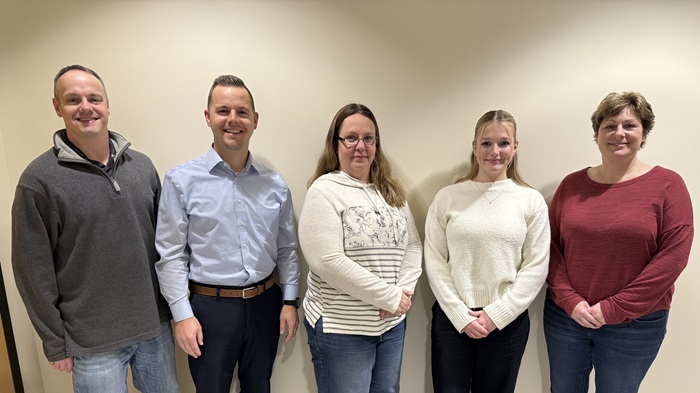 A team from Hanford Tank Waste Operations & Closure was integral to the Hanford Site’s transition to a unified procurement process. Hanford Tank Waste Operations & Closure team members, from left: Erik Kubik, Seth Neds, Erin Snodgrass, Sydney Downing and Trisha Gauntt.
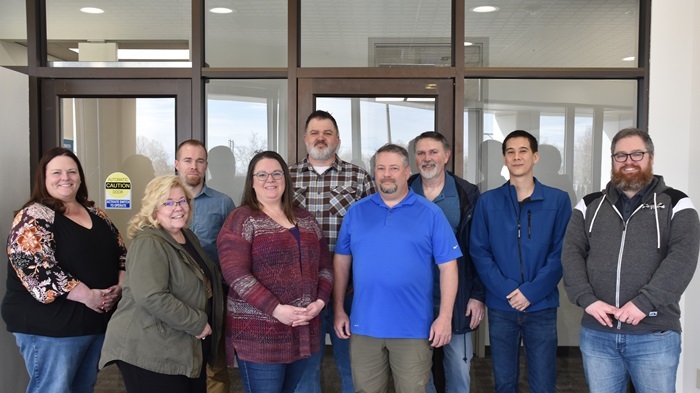 A team from Hanford Mission Integration Solutions joined other Hanford Field Office contractors to launch a new ordering system for the Hanford Site. The Hanford Mission Integration Solutions team members, from left: Holly Munroe, Shanna Reynolds, Ben Moyers, Annette Fox, Chris Downing, Sean Reffalt, Rob Dewey, Chris Nelson and Jim Damskov.
The online catalog, supported by the U.S. Department of Energy’s Supply Chain Management Center, provides a one-stop shop for thousands of supplies with prenegotiated deals, offering better prices and service.
“The new ordering system is already saving us a lot of time,” said Erin Snodgrass, purchasing card program manager and procurement support specialist at Hanford Tank Waste Operations & Closure. “It’s been a team effort, and we’re excited to see the cost savings.”
The previous purchasing system, custom-made for Hanford nearly 20 years ago, lacked modern features. Now, users can access predefined or custom reports to help with tracking orders and transactions.
The updated system reduces the number of tools contractors need and replaces a complex, outdated process.
“We meet weekly to collaborate on project plans and improve how we work together," said Lloyd Foster, small business program manager at Central Plateau Cleanup Company. “We’re focused on building relationships with local small businesses, expanding opportunities and helping new partners understand how to do business at Hanford.”
-Contributor: Shyanne Palmus
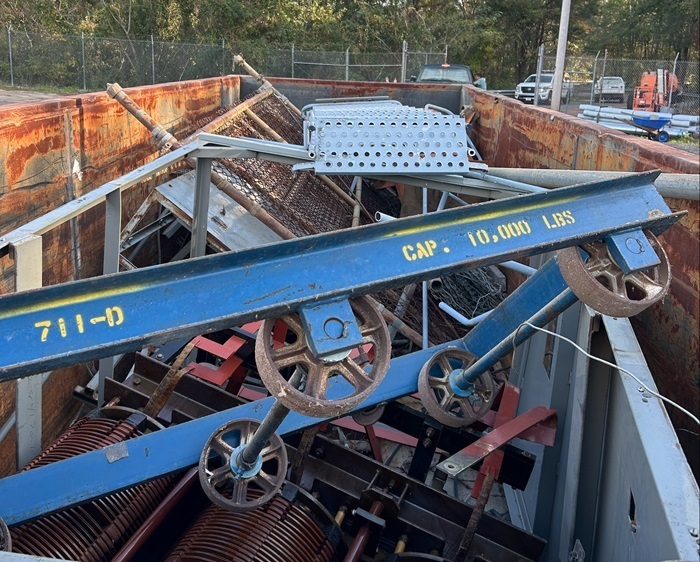 Savannah River Site recently recycled over 47,000 pounds of scrap metal as part of a switchgear replacement project at the site’s River Water Pumphouse.
AIKEN, S.C. — The Savannah River Site (SRS) continues to demonstrate its commitment to environmental stewardship by ramping up recycling efforts, resulting in substantial reductions in waste and cost savings.
The site is on track to surpass its fiscal year 2024 recycling efforts in the current fiscal year ending Sept. 30. In the previous fiscal year, U.S. Department of Energy Office of Environmental Management contractor Savannah River Nuclear Solutions (SRNS) recycled over 26 million pounds of materials, significantly contributing to operational efficiency at SRS. The materials included an estimated 19.5 million pounds of concrete and asphalt waste, 5.3 million pounds of scrap metal, 881,000 pounds of office paper and 383,000 pounds of office furniture. Additional recycling initiatives focused on batteries, consumer electronics, toner cartridges, used tires, used oil, refrigerants and other waste.
"Our comprehensive recycling initiatives underscore our commitment to reducing our environmental footprint and supporting cost-effective waste management," said Jennifer Weedon, with the SRNS Energy Efficiency and Environmental Stewardship division. “One of our recent and notable efforts included the recycling of five switchgear transformers, each weighing 100,000 pounds.”
 |
|
Savannah River Nuclear Solutions donated five transformers to the Savannah River Site Community Reuse Organization. One of them is pictured here. |
SRNS donated the 115-kilovolt transformers to the Savannah River Site Community Reuse Organization (SRSCRO) after they reached the end of their 70-year lifespan.
“The recycling of these components mitigates safety and congestion issues in active construction zones and also aligns with the Department of Energy’s (DOE) push for effective resource utilization,” said Andrew Ellsworth, with the SRNS Utilities and Operating Services division. “Given the transformers’ large size and valuable components, they were perfect resources to allocate to SRSCRO.”
SRSCRO has reused DOE surplus property and equipment from SRS since 1993, making them available at reasonable prices to organizations that create jobs and support economic development in the region.
“In addition to supporting the local community, recycling through SRSCRO saves the site from incurring landfill disposal and handling costs,” said Randy Keenan, director of SRNS Site Services.
SRS recently recycled over 47,000 pounds of scrap metal, the majority of which came from internal switchgear components that had exceeded their design life inside the site’s River Water Pumphouse.
Upcoming projects will focus on decommissioning and recycling former steam and power lines installed decades ago, helping reduce the site’s footprint and mitigating potential hazards.
"Our proactive approach to recycling ensures that we remain at the forefront of responsible stewardship," Ellsworth said. "We are proud of our achievements and committed to continuing these efforts in the future."
-Contributor: Mackenzie McNabb
|