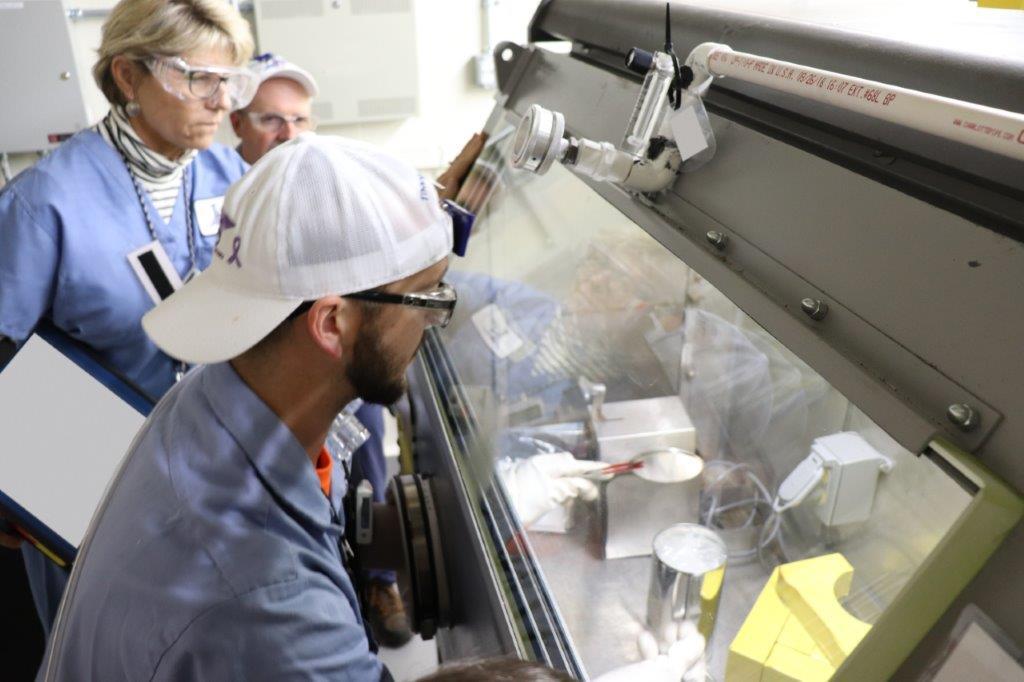
 Isotek began extracting and providing medical isotopes to TerraPower in 2019. From 2019 until 2021, employees processed lower-radiation canisters of uranium-233 in gloveboxes. The next phase involved processing higher-dose canisters in hot cells beginning in 2022.
OAK RIDGE, Tenn. — Oak Ridge Office of Environmental Management (OREM) contractor Isotek has surpassed a significant milestone supporting clinical trials across the globe. Employees have extracted more than 15 grams of an extremely rare isotope, thorium-229, which is crucial for a promising form of cancer treatment.
While 15 grams might not sound like much, it represents a 1,500% increase in the world’s supply. Currently, only 1 gram is available worldwide outside of Oak Ridge.
“We are incredibly proud to have reached this milestone,” said Sarah Schaefer, Isotek president and project manager. “This is the result of years of hard work and great attention by the operations team.”
This accomplishment was made possible through an innovative public-private partnership among TerraPower, Isotek and OREM.
Isotek is tasked with processing and disposing of the nation’s inventory of uranium-233 stored at Oak Ridge National Laboratory (ORNL). Through the partnership, Isotek employees extract thorium-229 for TerraPower before processing and shipping the uranium-233 material for permanent disposal.
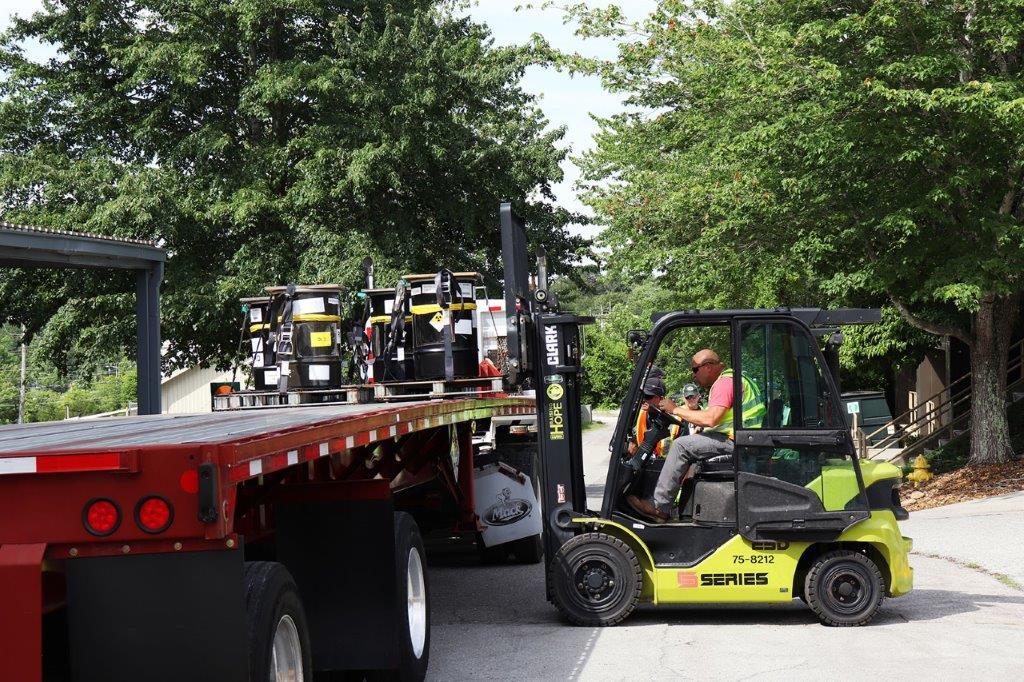 Isotek employees load canisters of thorium-229 that will go to TerraPower to support cancer treatment research.
Originally created in the 1950s and 1960s for potential use in reactors, uranium-233 proved to be an unviable fuel source. Eliminating the inventory of uranium-233 is OREM’s highest cleanup priority at ORNL, as it is stored in the world’s oldest operating nuclear facility and very costly to keep safe and secure.
Isotek began extracting medical isotopes in 2019. At that time, crews processed lower-radiation canisters in gloveboxes. When processing operations began on the higher-dose canisters in hot cells in 2022, employees saw a boost in the amount of medical isotopes they could extract and provide to TerraPower.
“As we progress through the inventory, we’ll have opportunities to extract greater amounts of thorium,” Schaefer said. “We continue to refine our processes to keep our extraction efficiency as high as possible.”
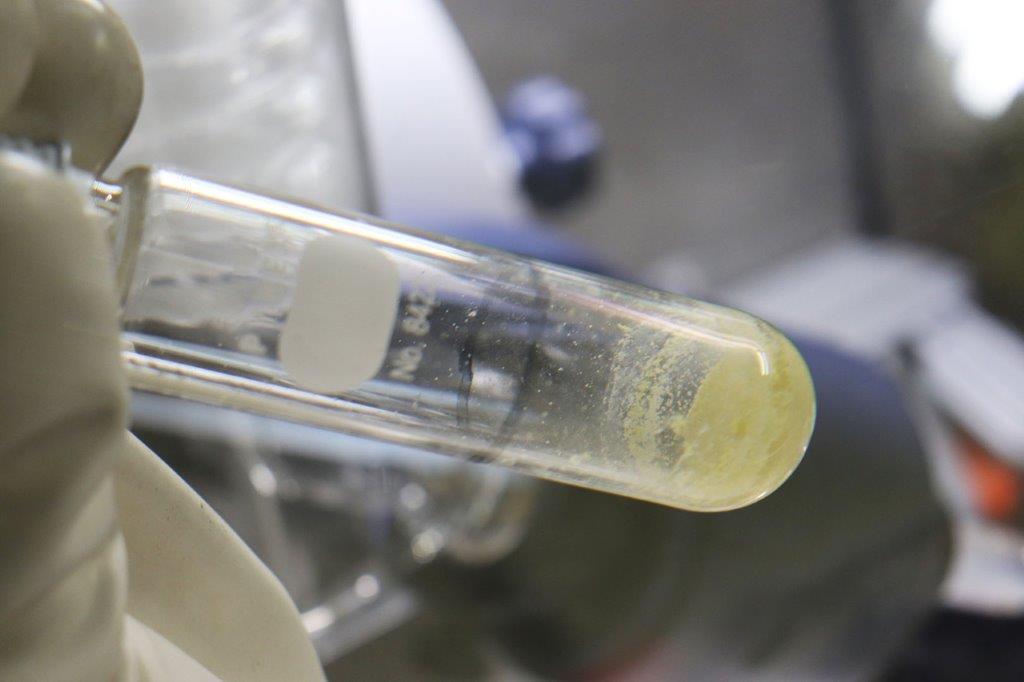 A test tube containing milligrams of extremely rare thorium-229. Only 1 gram of the isotope exists outside of Oak Ridge. Isotek expects to provide 40 grams to support cancer treatment research.
TerraPower uses the thorium-229 it receives from the project to extract actinium-225, the key component for treatments targeting forms of cancer previously thought untreatable. These next-generation treatments help selectively target and destroy cancer cells while avoiding damage to nearby healthy cells.
TerraPower announced last year it has enough thorium-229 to produce actinium-225 at a commercial scale, providing sustained access to the global pharmaceutical community.
Global demand is expected to increase as more treatments are developed, making the work performed by OREM and Isotek even more vital.
Isotek has processed and removed approximately 40% of the remaining inventory of uranium-233 stored at ORNL. By the end of the project, Isotek expects to extract 40 grams of thorium-229, enough to create 100 times more doses of treatments annually than is currently available worldwide.
-Contributor: John Gray
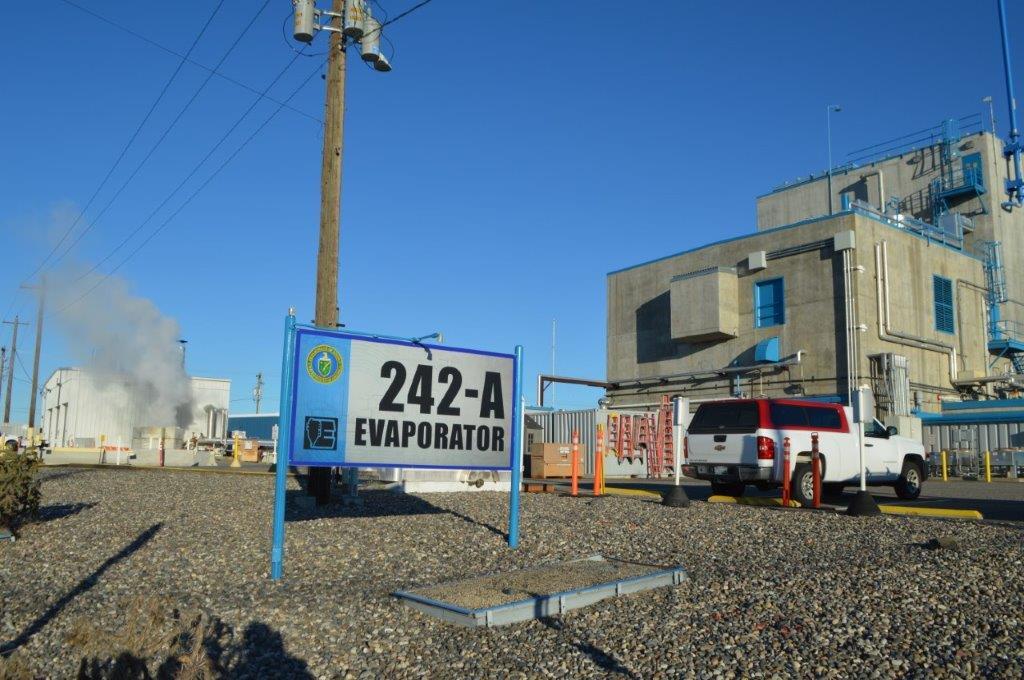 Steam started venting at the Hanford Site’s 242-A Evaporator boiler annex, left, in March as workers prepared the evaporator facility, right, to resume operations.
RICHLAND, Wash. — A key facility supporting the Hanford Site’s tank waste cleanup mission is back in service following a series of repairs, upgrades and training sessions.
The 242-A Evaporator removes water from radioactive and chemical waste stored in underground tanks, creating more storage space for waste retrieved from older tanks awaiting treatment as Hanford prepares to begin immobilizing the waste in glass for safe disposal.
Site contractor Hanford Tank Waste Operations & Closure (H2C) restarted the facility in March. It’s now running three campaigns over two months.
“Enhancements made to the evaporator ensure it continues to operate safely and efficiently at a higher capacity, which will be needed to support mission acceleration as we move to the next phase in cleanup,” said Ricky Bang, Hanford deputy assistant manager for Tank Waste Operations.
Upgrades to the facility include:
- Temperature monitoring system upgrades to safeguard operations during cold weather
- Fire and process system upgrades
- Seismic improvements to the boiler annex
- Waste transfer line installation totaling 1,300 feet
 |
|
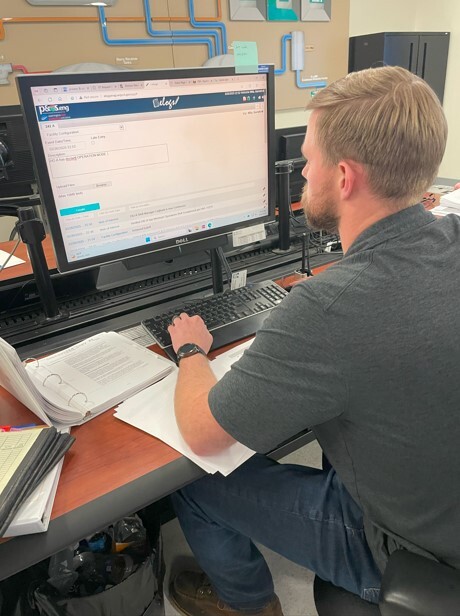
Garrett Wilz, a 242-A Evaporator shift manager for Hanford Tank Waste Operations & Closure, declared the Hanford Site facility in operation mode on March 26, 2025. |
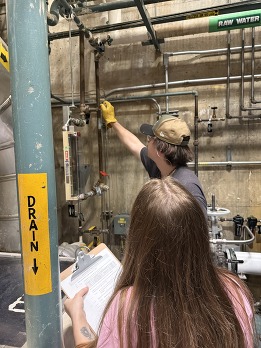
Payton Smelser and Ashley Vertner, nuclear chemical operators with Hanford Tank Waste Operations & Closure, perform valving to bring steam to the reboiler as part of the 242-A Evaporator startup. |
|
 |
“This has been a long and difficult but rewarding journey. The facility is safer, the crews are better trained, and processes have improved since the facility last ran in 2019,” said Carol Johnson, H2C president and program manager. “The team’s commitment to the mission is commendable, especially over the last few months.”
The facility receives waste from a nearby group of underground waste storage tanks, where it’s boiled at low pressure to evaporate water. The remaining concentrated waste, known as slurry, is transferred back to a storage tank. The evaporated water is filtered and sent to Hanford’s Effluent Treatment Facility for additional treatment and disposal.
Since the evaporator began operating nearly 50 years ago, it has helped remove more than 81 million gallons of liquid from the site’s waste tanks.
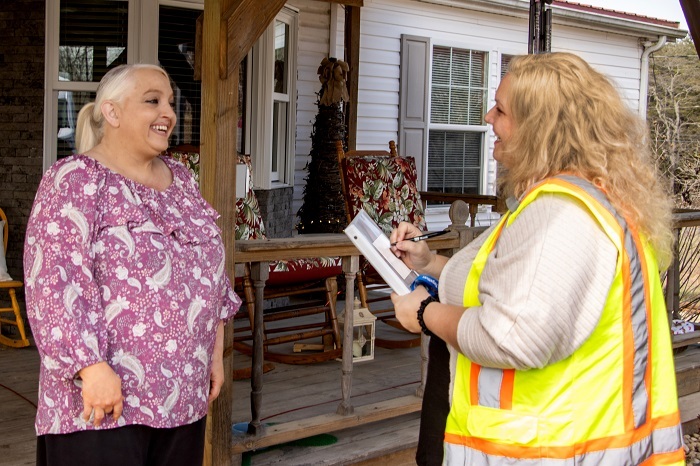 Envoy Lead Cindi Remy, right, visits Betty Coleman, a fence line neighbor who participates in the Portsmouth Site’s Envoy Program. Envoys typically keep in touch with their fence line neighbors through phone calls, emails and home visits.
PIKE COUNTY, Ohio — A good neighbor who is there to help when needed can make all the difference.
Through its Envoy Program, the Portsmouth Site aims to be such a neighbor to dozens of residents and other property owners along the site’s fence line. The program started as a way to establish an open line of communication with neighbors of the U.S. Department of Energy Office of Environmental Management (EM) cleanup site.
“The Envoy Program has helped build important relationships with our neighbors living closest to the site,” Portsmouth Site Lead Jeremy Davis said. “These relationships have been reciprocally beneficial as the cleanup project moves forward.”
The program consists of 11 employees. In addition to their jobs at the site, these employees are responsible for keeping in touch with more than 90 fence line neighbors — less than a dozen per employee.
The envoys personally alert the neighbors about road closures, plans to test the public warning siren system and other important information that needs to be shared with them. In turn, the neighbors can reach out to the envoys with questions or requests regarding their properties.
“When you have worked at the site for a while, it’s easy to forget how massive the operation can appear to someone on the outside,” Envoy Team Lead Cindi Remy said. “Our neighbors may need information or have a problem we can help with and not know who to call. With the Envoy Program, we develop a friendly rapport and are consistent in our follow-up.”
Lynn Wilber, an emergency management manager with Fluor-BWXT Portsmouth, EM’s decontamination and decommissioning contractor for the Portsmouth Site, has been a part of the Envoy Program since it was created in 2011. She enjoys meeting with others and, as a neighbor of the site herself, appreciates the efforts to keep the lines of communication open.
“It really gives neighbors the feeling that the site listens to them,” said Wilber. “The one-on-one format makes it easier for neighbors to discuss their questions versus going to a public meeting where they might not feel as comfortable in that setting.”
While the envoys typically alert the neighbors to upcoming work, there are times when they work to help the neighbors solve problems.
“A couple of years ago, we had a neighbor who was having trouble getting their satellite signal because the trees on the Portsmouth Site property had grown too tall and were blocking the signal,” said Remy. “The neighbor worked through his envoy to get the problem solved.”
The program may be a small part of the site’s effort to connect and talk with the local community, but for the envoys, it’s more than just that — it’s about being a good neighbor.
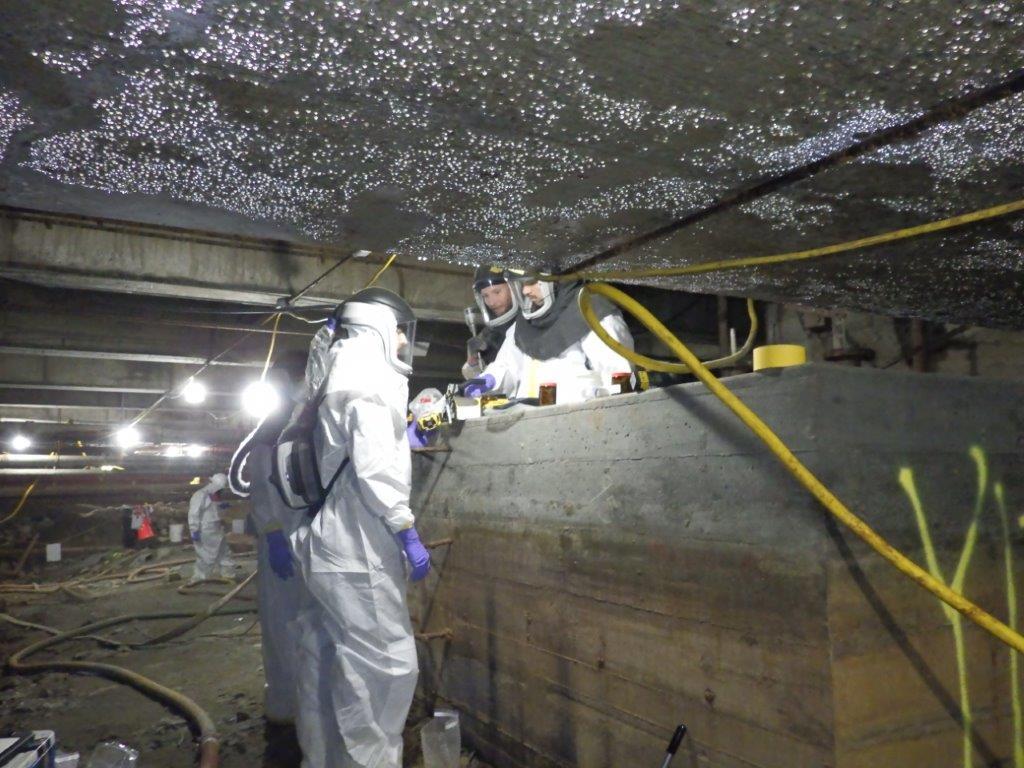 UCOR crews perform sampling and deactivation tasks in the basement of Beta-1 at the Y-12 National Security Complex.
OAK RIDGE, Tenn. — Crews with the Oak Ridge Office of Environmental Management (OREM) and contractor UCOR are making headway to prepare for the next major demolition project at the Y-12 National Security Complex.
The Beta-1 building is categorized as a high-risk, excess contaminated facility due to its contents and condition, and it’s next in line to be torn down to reduce risks and enable modernization at the site.
Beta-1 was constructed in 1944 as part of the Manhattan Project to enrich uranium during World War II. It was later converted to laboratory space for fusion energy technology.
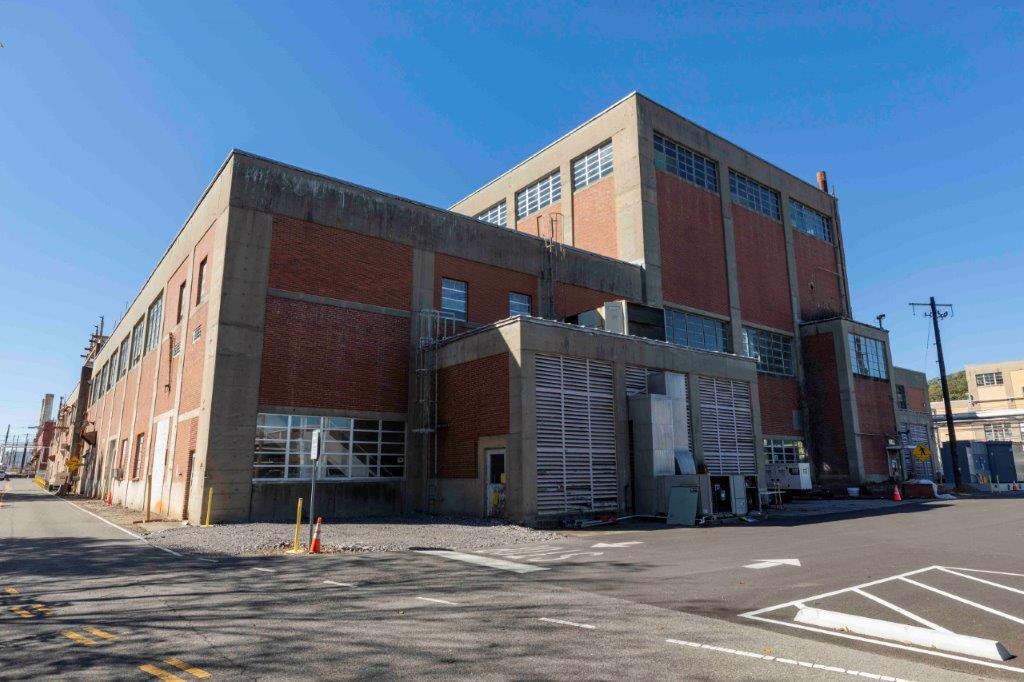 A view of Beta-1. The building was constructed in 1944 as part of the Manhattan Project to enrich uranium during World War II. Today, it is categorized as a high-risk excess contaminated facility and slated for near-term demolition.
UCOR has completed deactivation of the above-ground floors, and teams are now busy deactivating the basement, where water intrusion has been an ongoing challenge.
“Battling water intrusion to keep the levels in the 111,000-square-foot basement drained affects access to perform work,” explained Larry Brede, UCOR’s Y-12 cleanup area project manager. “Deactivation activities cannot be performed in areas with standing water.”
Crews deactivating the basement level of the massive 300,000-square-feet building have pumped, processed and eliminated more than 10 million gallons of water. To maintain dry conditions for deactivation, pipefitters are installing a second water treatment system to reduce downtime caused by groundwater flooding.
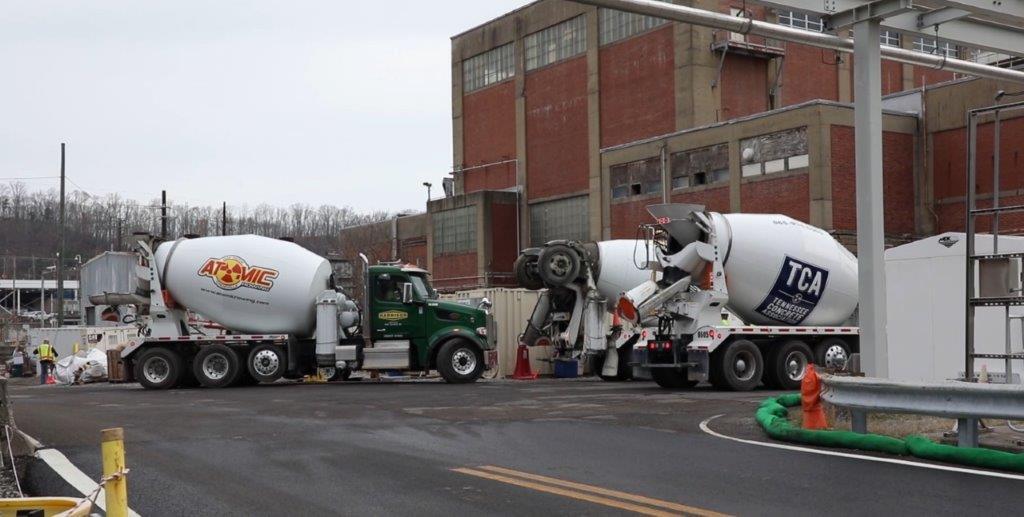 Crews are pouring more than 3,000 truckloads of controlled low-strength material into the basement through the fall. These pours help prevent water from entering that area, and it stabilizes the slab for heavy equipment during demolition.
A critical step in preparing the facility for demolition is pouring controlled low-strength material (CLSM), similar to concrete, into the basement. To accomplish this, workers core-drilled 526 holes from the first floor to allow the team to pour more than 3,000 truckloads of material into the basement.
Filling the basement helps prevent water intrusion and stabilizes the slab at ground level to support heavy equipment used during demolition. CLSM placement is already underway and scheduled for completion this fall.
This work is moving Beta-1 one step closer to demolition, which will begin once crews finish tearing down the nearby Alpha-2 facility.
The Alpha-2 demolition project is OREM’s first effort to remove a former Manhattan Project-era uranium enrichment facility at Y-12. Beta-1 will mark the second.
-Contributor: Carol Hendrycks
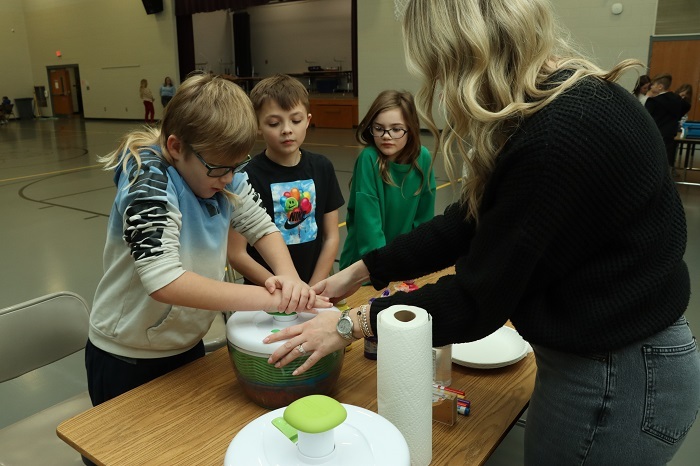 Valley Elementary School third graders use a salad spinner and paint to learn more about centrifugal force, which is a fictitious force in Newtonian mechanics that appears to act on all objects when viewed in a rotating frame of reference.
PIKETON, Ohio — As STEAM Ahead enters its fifth year of bringing science to life for young students in southern Ohio, the popular educational outreach program conducted by mentors from the Portsmouth Site expands into a second county.
In each of the past four years, the U.S. Department of Energy Office of Environmental Management site added a school district in Pike County, Ohio, to the program. Now with all four Pike County school districts in STEAM Ahead, the Portsmouth Site has crossed county lines to add a school district in neighboring Scioto County for 2025. STEAM stands for science, technology, engineering, arts and math.
“Adding a second county to our STEAM Ahead program is a testament to the importance of these types of learning opportunities in our schools,” Portsmouth Site Lead Jeremy Davis said. “It is great to see our employees interacting with students and helping them find the fun in learning, and maybe even getting the students to start thinking about a possible career.”
Jeremy Clark, principal of Valley Elementary School in Scioto County, says the STEAM Ahead expansion to the school is a great benefit for students.
“Programs like STEAM Ahead are incredibly helpful in encouraging students to get excited about learning because they bring the classroom to life in a way that traditional lessons sometimes can't,” said Clark. “By incorporating hands-on, interactive activities, students are able to see real world applications of what they're learning, which helps spark their curiosity. These programs show students that learning doesn't just happen in textbooks. It can be creative and a lot of fun.”
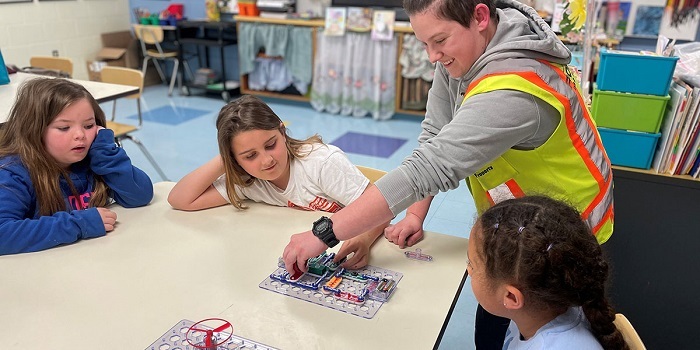 Flour-BWXT Portsmouth First Class Instrument Mechanic Lauren Snodgrass helps Waverly Intermediate School third grade students understand how electricity flows by using an interactive circuit board.
More than 50 mentors keep STEAM Ahead running. They include employees from Portsmouth Site contractors Fluor-BWXT Portsmouth, North Wind Dynamics and Enterprise Technical Assistance Services. Representatives from The Ohio State University, Ohio University, Shawnee State University, Pike County Solid Waste and Recycling, and the Electrical Training Academy also serve as program mentors.
From January through May each year, a team of mentors visits the schools to present to third and fourth grade classes. Each class has one STEAM Ahead day during the school year.
Students are organized into small groups to help ensure they get hands-on experiences and remain interactive during each of the program’s four 15-minute stations.
Inspired by the Washington State STEM Education Foundation’s “STEM Like ME!” Program, STEAM Ahead credits the support of the mentors and the community for the program’s ability to reach more students year after year.
“When we started with six mentors and one school, we were excited for the program’s potential growth,” said STEAM Ahead co-chair Tim Poe, who works as a nuclear operations director with Fluor-BWXT Portsmouth, the site’s deactivation and demolition contractor. “Now, just five years later, we are in two counties, five school districts, and have plans to continue this growth to provide opportunities for more southern Ohio students so they can learn about the possibilities and potential a career in science, technology, engineering, arts, and math can mean for their future.”
STEAM Ahead is one of several Portsmouth Site educational outreach programs. Others include the South Central Ohio Regional Science Bowl, Science Alliance, scholarships and internship programs.
-Contributor: Cindi Remy
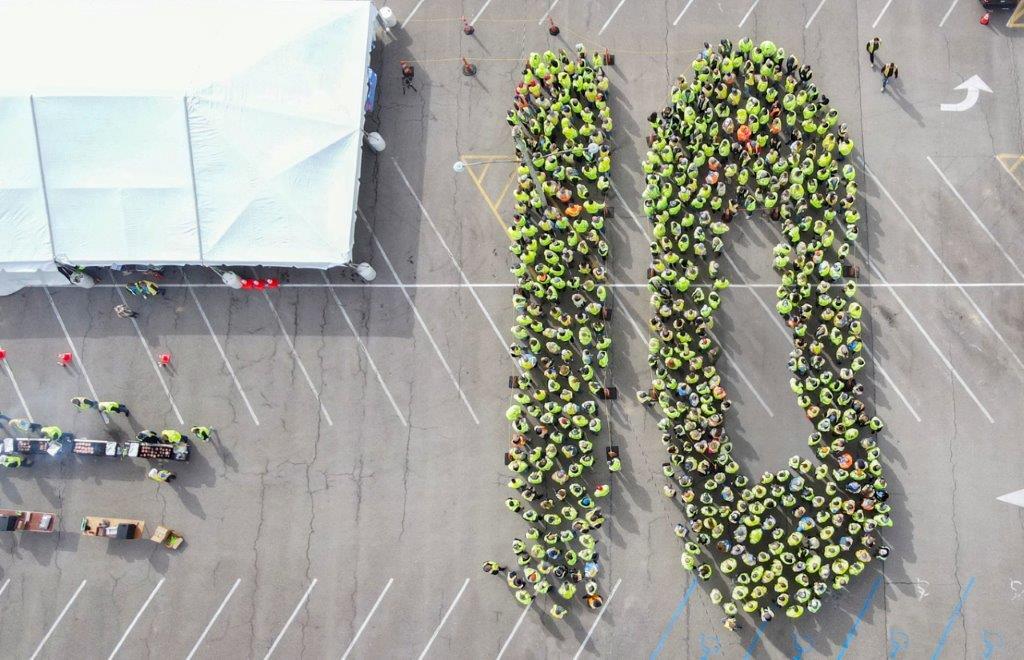 Fluor-BWXT Portsmouth employees gather to form the shape of the number 10. The deactivation and demolition contractor recently celebrated 10 million safe work hours without a lost-time accident at the Portsmouth Site.
LEXINGTON, Ky. — Four contractors with the U.S. Department of Energy Office of Environmental Management’s Portsmouth Paducah Project Office (PPPO) recently reached significant safety milestones, collectively achieving nearly 18 million safe work hours. The accomplishment demonstrates their commitment to a strong safety culture while making substantial progress in cleanup at the sites.
Fluor-BWXT Portsmouth (FBP), the deactivation and demolition contractor at the Portsmouth Site, reached 10 million hours without a lost-time accident in February. Four Rivers Nuclear Partnership (FRNP), the deactivation and remediation contractor at the Paducah Site, exceeded 4 million hours without a lost-time accident in March. Mid-America Conversion Services (MCS), the operator of the depleted uranium hexafluoride conversion facilities in Portsmouth and Paducah, recently surpassed 2.5 million hours without a lost-time incident. Swift & Staley Team (SST), the infrastructure support services contractor at the Paducah Site, achieved 1 million hours without a recordable injury in February.
“Our contractors make safety the highest priority,” PPPO Manager Joel Bradburne said. “Seeing these milestones reaffirms what we already know: The most important thing is ensuring our team goes to work each morning and returns home safely each and every day.”
As work progresses toward the future reindustrialization of the sites, these accomplishments serve as a reminder that a robust safety culture is not just a priority, it is integral to the mission. FBP represents the largest PPPO contractor workforce, with approximately 2,000 employees, which impacts how quickly the team accumulates safe work hours. This marks the first time in the site’s history they have reached the 10 million-hour milestone.
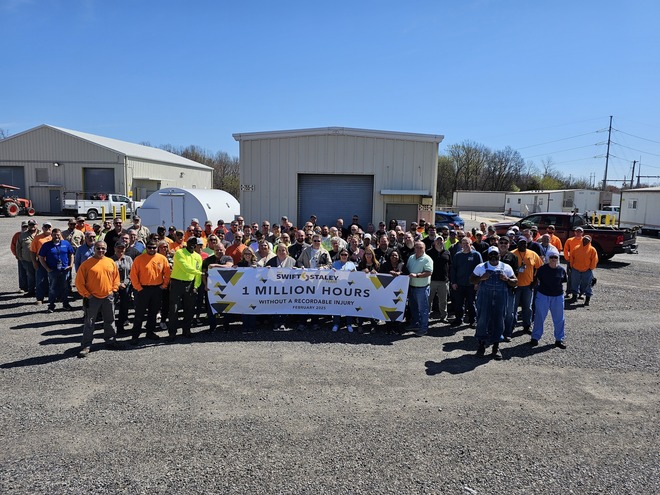 The Swift & Staley Team, the infrastructure support services contractor at the Paducah Site, gathers for a photo after achieving 1 million hours without a recordable injury.
“We are proud of this accomplishment and the culture shift that has happened here onsite,” FBP Site Project Director Greg Wilkett said. “It’s not about the numbers, it’s about the people and the laser focus everyone has on safety for themselves and their co-workers.”
FRNP’s 4 million safe work hours represent a continuous safety record since February 2023, the most hours during the FRNP contract and by any cleanup contractor at the Paducah Site.
“This accomplishment reflects the dedication, vigilance and teamwork of everyone involved as we continue the critical work that will lead to investment in future reindustrialization for our nation’s energy industry and the community that supports our work,” FRNP Site Program Manager Myrna Redfield said.
The MCS team is approaching three years without a lost-time accident.
“We are incredibly proud of this achievement, which reflects our relentless commitment to safety and the well-being of our employees,” MCS Project Manager Dutch Conrad said. “This milestone is not just about the numbers. It represents the collective effort of our dedicated team who prioritizes safety in every aspect of their work.”
The SST achievement also represents three years of performing work safely.
“The milestone reflects SST’s commitment to risk recognition and control,” SST Acting Project Manager Anthony Gilbert said.
The Paducah and Portsmouth sites continue to demonstrate prioritizing workforce safety is essential to achieving operational goals. Other contractor teams, including the technical support services contractor, Enterprise Technical Assistance Services, and the Portsmouth infrastructure support services contractor, North Wind Dynamics, also continue to work safely and advance toward significant safety milestones.
-Contributors: Kearney Canter, Shawn Jordan, Dylan Nichols, Amanda Scott
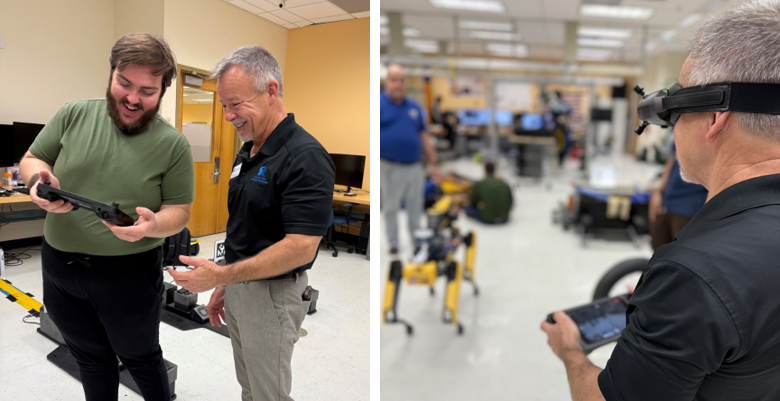 DOE Fellows Program Mechanical Engineer Brendon Cintas, left, and Savannah River Nuclear Solutions Director of Engineering Technical Services Ken Burrows, right, test out the Boston Dynamics robot nicknamed Spot, showcasing cutting-edge technology being integrated into DOE projects.
AIKEN, S.C. — In an effort to strengthen academic and industry partnerships, representatives from the Savannah River Site (SRS) recently visited Florida International University (FIU), a leading public research university in Miami, Florida. The visit aimed to bolster the growing collaboration between FIU’s Applied Research Center (ARC) and the U.S. Department of Energy (DOE).
Since 2007, the DOE-FIU Science & Technology Workforce Development Initiative, also known as the DOE Fellows Program, has played a pivotal role in advancing the missions of DOE’s Office of Environmental Management (EM) and Office of Legacy Management (LM).
In fiscal year 2024, Savannah River Nuclear Solutions (SRNS), the site’s management and operations contractor, began establishing a partnership with FIU to increase the number of interns transitioning into full-service roles, strengthen technical capabilities and elevate industry reputation and visibility with academic institutions.
"This partnership brings fresh perspectives and innovative solutions to the complex challenges we face at DOE facilities," said Bryan Ortner, SRNS Workforce Services and Talent Management acting senior vice president. "By collaborating with FIU, we hope to harness the capabilities of their students and faculty, yielding valuable research outcomes and providing students with hands-on experience in addressing real-world problems."
 |
|
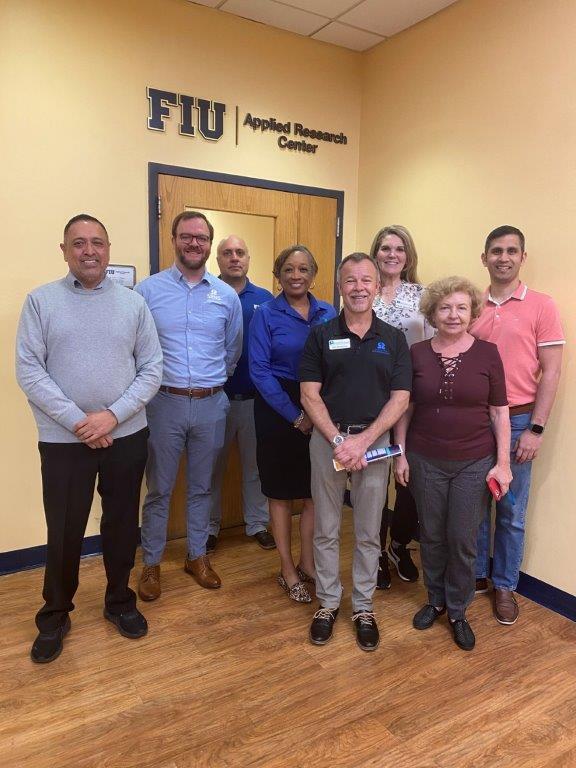
From left: Leonel “Leo” Lagos, DOE Fellows Program director; Bryan Ortner, Savannah River Nuclear Solutions (SRNS) acting senior vice president of Workforce Services and Talent Management; Anthony Abrahao, Florida International University (FIU) research scientist; Angela Martin, SRNS talent acquisition manager; Ken Burrows, SRNS director of engineering technical services; Carla Wheeler, SRNS engineering staffing and development manager; and FIU senior research scientists Yelena Katsenovich and Ravi Gudavalli. |
The program includes a two- to four-year mentoring component, offering paid research experiences to address technical problems that benefit DOE missions. Research areas include deactivation and decommissioning of contaminated facilities, soil and groundwater remediation, workforce development, robotics, intelligence applications, radioactive waste management, information technology, and environmental protection.
“SRS plans to hire 9,000 full-time employees over the next five years, so it is imperative to leverage this agreement to build a robust talent pipeline,” said Leonel “Leo” Lagos, DOE Fellows Program director. “By integrating coursework, DOE fieldwork, and applied research at FIU, we create a well-structured program that brings highly skilled individuals into the workforce to fill those critical gaps.”
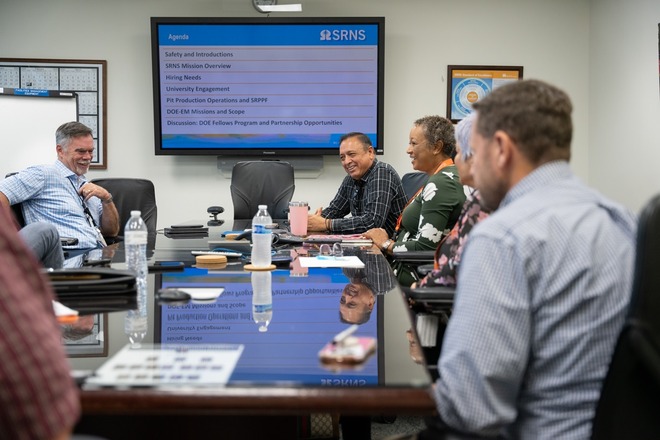
During the visit, representatives from SRNS Workforce Services, Talent Management, and Engineering departments toured FIU’s research facilities, reviewed student projects and revisited past research findings.
 Savannah River Nuclear Solutions (SRNS) established a partnership with Florida International University in 2024 to increase the number of interns transitioning into full-service roles at the Savannah River Site. From left: SRNS Senior Vice President of Plutonium Disposition Operations and Programs Jeff Griffin, DOE Fellows Program Director Leonel "Leo" Lagos, and SRNS Talent Acquisition Manager Angela Martin.
“The initiative marked a significant step towards rekindling and strengthening our ties with FIU,” said Ken Burrows, SRNS director of engineering technical services. “The innovative work being conducted is directly applicable to solving the challenges we face in our aging nuclear facilities and supporting new projects for DOE-EM and NNSA missions. Interacting with the faculty and students has given me confidence that there is a bright, capable group ready to tackle our challenges at SRNS.”
SRS plans to implement a high-level memorandum of understanding with FIU to ensure a steady stream of skilled specialists are available to tackle technical challenges through grant-funded research or the SRNS Internship Program.
This summer, DOE Fellows Program intern Kevin Yulkowsky will join SRS to gain hands-on experience in H Canyon — the only operating, production-scale, radiologically shielded chemical separations facility in the United States. Additionally, FIU students and faculty are scheduled to visit the site in May for a comprehensive tour.
-Contributor: Mackenzie McNabb
|