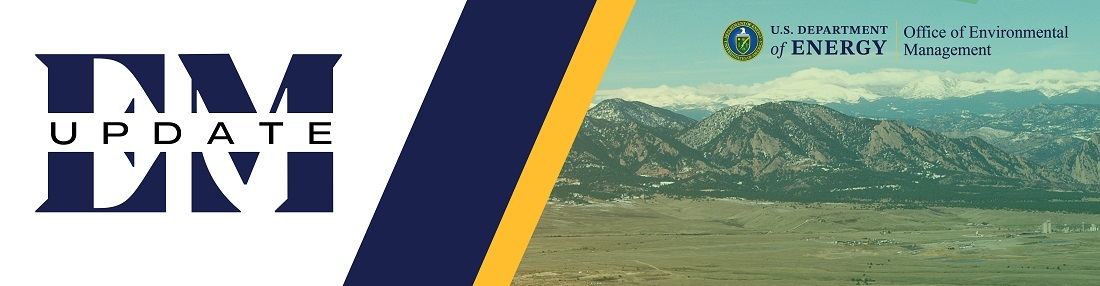
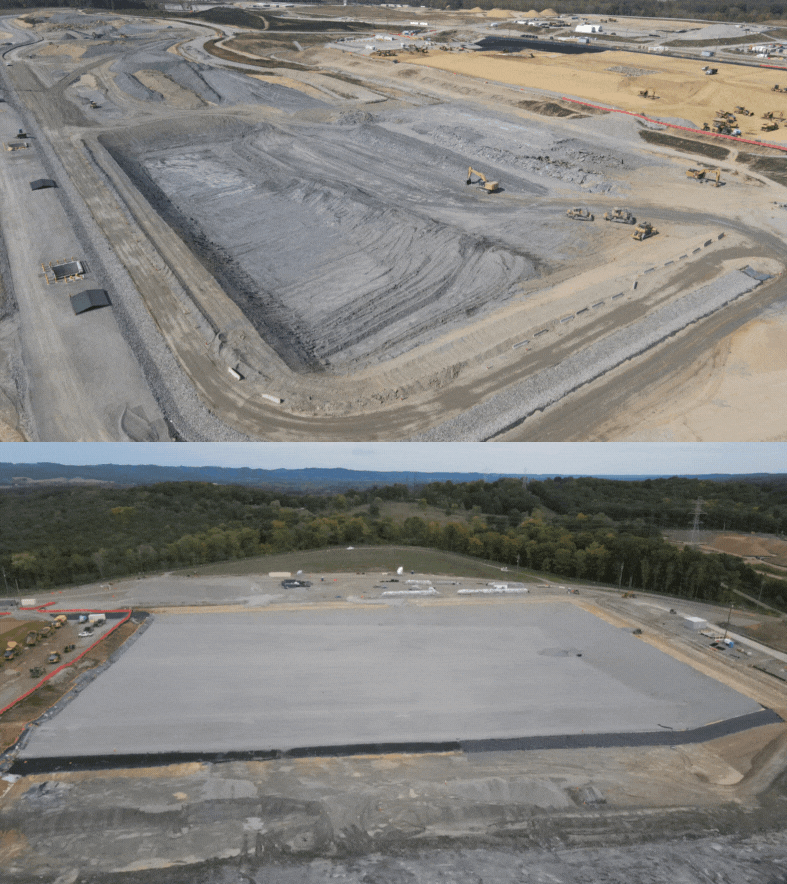
 Before-and-after views of construction of a new cell at the Portsmouth Site's On-Site Waste Disposal Facility. The first photo shows when construction was underway, and the second photo shows the completed cell.
Cleanup progress at former Portsmouth Site uranium enrichment plant is helping enable new opportunities for local community
PIKETON, Ohio — Workers at the U.S. Department of Energy (DOE) Office of Environmental Management (EM) Portsmouth Site have reached another milestone by completing construction of the fourth cell at the On-Site Waste Disposal Facility (OSWDF).
“Completion of the fourth OSWDF cell is essential to completing the next phase of the cleanup mission at the Portsmouth Site,” Federal Project Director Jud Lilly said. “The fourth cell is needed for disposal of debris from the demolition of the next process building.”
Teardown of the X-333 Process Building — the second of three former uranium enrichment process buildings to be demolished at the site — helps enable new opportunities for the local community to continue advancing U.S. energy and security goals, contributing to the goal of ushering in a new golden era of American energy dominance.
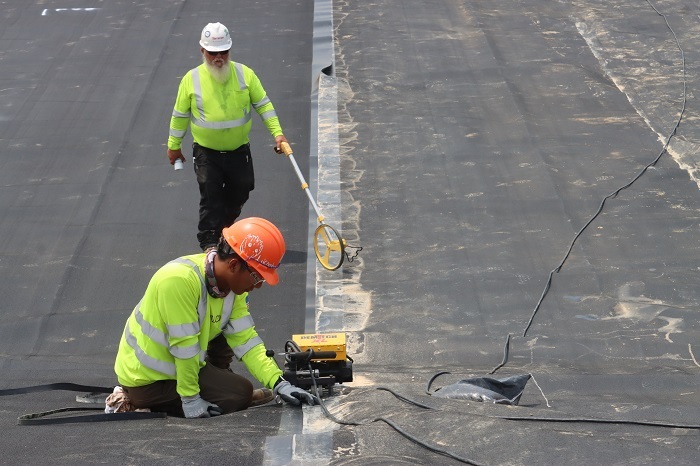 Crews at the Portsmouth Site install a thick geomembrane lining material inside the new cell at the On-Site Waste Disposal Facility. Each seam of the liner is welded together and inspected to ensure impermeability.
Two more cells of the disposal facility are scheduled for completion later this year. When complete, OSWDF will be comprised of 10 cells with the potential for two additional contingency cells to accept demolition debris and impacted soils from the deactivation and demolition project that meet the waste acceptance criteria.
OSWDF is a specially engineered disposal site. Each cell has a multi-layer liner and cap system to consolidate demolition debris into one centralized, confined space that protects public health and the environment.
In April last year, EM crews finished excavating an approximately seven-acre space for the fourth cell. Next, they placed select fill, a clay liner and geosynthetic material to finish the cell.
“We are proud of the quality construction of the cell while maintaining a safe work environment,” said Paul Larsen, director of OSWDF at Fluor-BWXT-Portsmouth, EM's decontamination and decommissioning contractor for the site.
Placement of debris from X-333 into the new cell is slated to begin this spring. The two-story, 33-acre facility is one of the largest facilities in the DOE complex.
The Portsmouth Paducah Project Office conducts cleanup at the Portsmouth Site in accordance with a consent decree with the State of Ohio and director’s final findings and orders with the Ohio Environmental Protection Agency.
-Contributor: Shawn Jordan
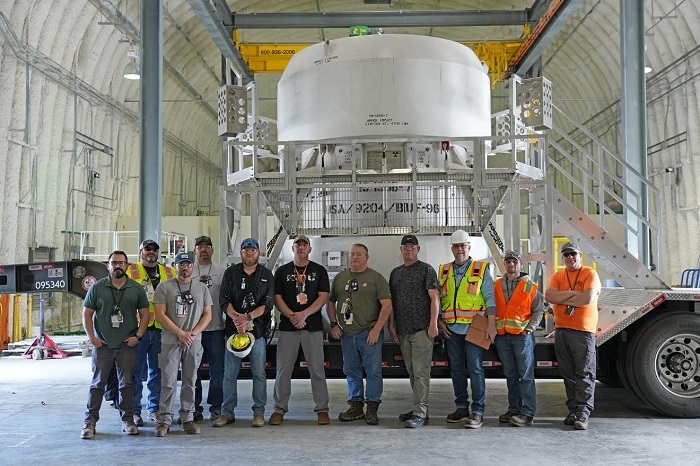 Oak Ridge Office of Environmental Management team members used a multi-layered containment system to safely ship processed waste out of state for permanent disposal. It involved packaging a drum containing the waste inside a transportation cask designed to provide shielding and protection during transit.
OAK RIDGE, Tenn. — Gone from Oak Ridge National Laboratory (ORNL) is legacy radioactive waste that had been stored there for more than 50 years, thanks to continued cleanup progress from the Oak Ridge Office of Environmental Management (OREM) and contractor UCOR.
Employees at the Transuranic Waste Processing Center recently completed processing and shipment of a highly radioactive source, comprised of the isotope radium-226 and boron, out of state for permanent disposal.
“Completing this task is a significant risk reduction accomplishment,” OREM Project Manager Mike Vestal said. “This effort, and others like it, are enhancing safety at the site by steadily removing inventories of legacy waste.”
The material was used in experiments at ORNL in the 1970s. The experiments helped scientists understand the structure of the atomic nucleus, and the forces that hold it together.
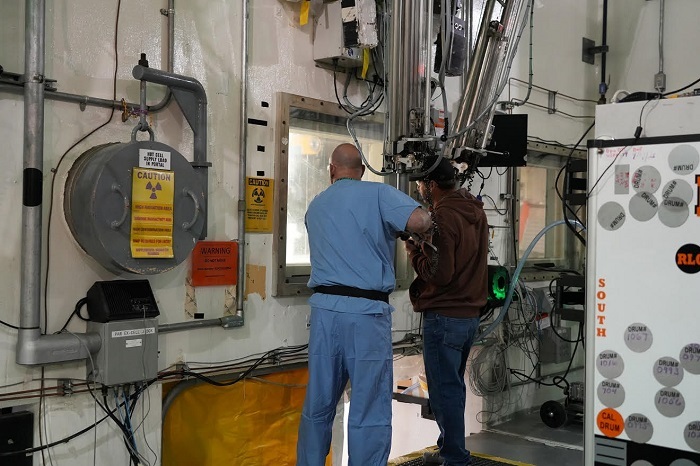 Employees at the Transuranic Waste Processing Center process the highly radioactive source to prepare it for shipment and disposal out of state.
Due to the level of radioactivity, crews used a multi-layered containment system to ship the processed material for disposal. They placed the source in a vessel, which they inserted into a 55-gallon drum. Crews then placed that drum inside a larger drum.
Team members then packaged the drum in a transportation cask for shipment to the disposal site. The cask offered a specialized configuration engineered to provide superior shielding against radiation and ensure containment even under severe accident scenarios during transit.
“Packaging a radioactive source like this one requires considerable expertise and a knowledge of the packaging protocols required to provide protection from radiation during transit and ultimate disposal,” Patrick Rapp, Transuranic Waste Processing Center area project manager, said. “The team did an outstanding job in preparing the shipment, following all regulations with the safety of workers and the public in mind.”
Workers at the Transuranic Waste Processing Center retrieve, treat and package transuranic and low-level waste for compliant offsite disposal. Oak Ridge’s transuranic waste, which is comprised of human-made elements heavier than uranium, was generated from decades of research, primarily at ORNL.
Teams at the facility have processed 98% of Oak Ridge’s inventory of contact-handled and remote-handled transuranic debris waste. They have also shipped 94% of the contact-handled waste and 78% of the remote-handled waste for disposal.
-Contributor: Michael Butler
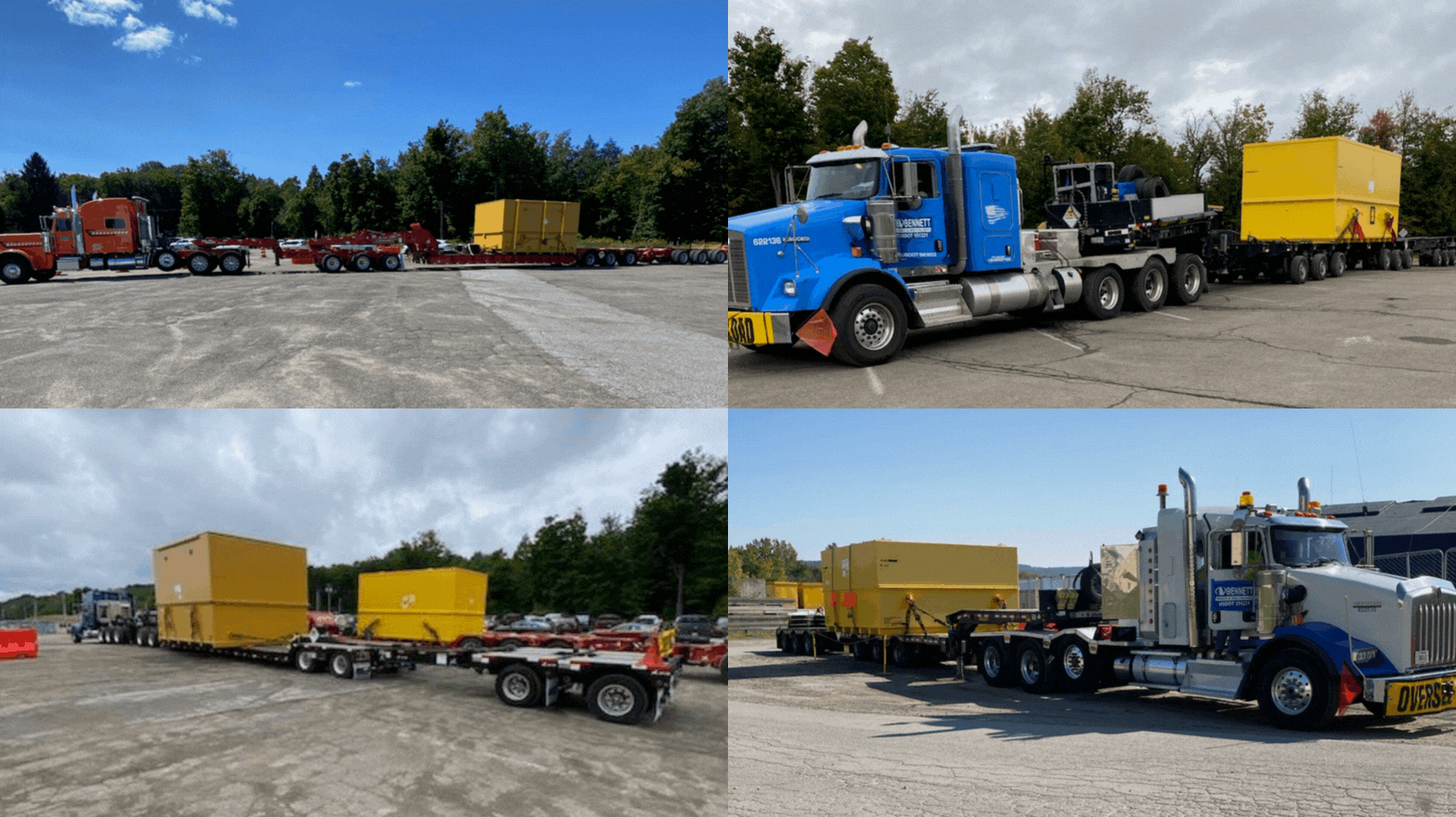 Cleanup milestone: Crews at the West Valley Demonstration Project recently finished the safe, compliant disposition of legacy waste produced during past operations. In total, they completed 32 shipments of 28 large containers weighing almost 1.9 million pounds to an offsite disposal location.
WEST VALLEY, N.Y. — U.S. Department of Energy Office of Environmental Management (EM) crews have met a notable milestone in the cleanup of the West Valley Demonstration Project by safely completing 32 shipments containing nearly 1.9 million pounds of legacy waste to an offsite disposal location.
“The completion of this major milestone is an important accomplishment in the progress to decommission the West Valley Demonstration Project,” EM West Valley Director Bryan Bower said. “This accomplishment speaks volumes on the importance of solid communication, teamwork and best practices. The team did an excellent job in completing this major milestone.”
Cleanup crews processed, packaged and shipped equipment and containers from past nuclear fuel reprocessing operations at the site about 35 miles south of Buffalo, New York. Among the contents of the 28 large, heavy containers were pumps and degraded waste containers.
“The West Valley Demonstration Project team was deliberate in the planning and execution of this work, resulting in the safe and compliant disposition of all legacy waste,” said Jason Casper, president of CH2M HILL BWXT West Valley, the prime contractor at West Valley. “We met our objective through extensive planning, engineering controls and lessons learned. This is a proud moment for our team and the work they continue to do at the West Valley Demonstration Project.”
Workers followed procedures and the Integrated Safety Management System at West Valley to control and prevent the spread of radioactive contamination while protecting workers and the environment as they completed the work for this milestone.
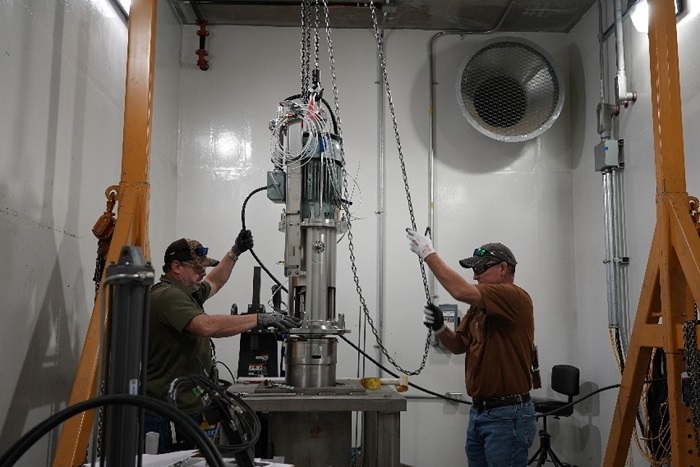 Savannah River Mission Completion workers are pictured at the Salt Waste Processing Facility at the Savannah River Site. The company’s workforce recently surpassed 20 million safe work hours without an occupational-related injury or illness that results in an employee’s inability to return to work the next day.
AIKEN, S.C. — The workforce responsible for treating and safely disposing of millions of gallons of radioactive waste remaining in underground tanks at Savannah River Site (SRS) has achieved 20 million safe work hours — a significant accomplishment in the U.S. Department of Energy Office of Environmental Management (EM) complex.
Savannah River Mission Completion (SRMC) reached the new peak last month. Employees worked without an occupational-related injury or illness resulting in an employee's inability to return to work the next day. The total spans nearly 3 years. SRMC has been the SRS liquid waste contractor since February 2022.
SRMC President and Program Manager Dave Olson said keeping the company's workforce safe is the priority core value.
"For each function we perform in our mission, we lead with safety; it’s our strong foundation," Olson said. "We hold pre-job safety briefings, and we encourage our workers to call a timeout if they have a concern or see something that doesn't appear to be right to them. This record achievement proves our strong safety culture paves the way to worker safety and higher productivity."
Among the duties performed by SRMC's workforce is removing high-activity radioactive waste from underground tanks, then treating and disposing of it safely. In addition, workers perform the tasks required to clean underground waste tanks to move the tanks and ancillary structures toward final closure. Since taking the helm of the liquid waste program, SRMC achieved preliminary cease waste removal with three tanks in 2024, all ahead of schedule, with more scheduled in 2025. That status indicates that regulators concur that interim milestone objectives for eventual tank closure have been met.
Tony Robinson, the EM acting assistant manager for waste disposition at SRS, said he sees daily that SRMC performs well in keeping workers safe.
“Across the liquid waste facilities of SRS, there has always been a premium placed on the safety of workers,” Robinson said. “Maintaining good standards for safety means that injuries are less likely as we move toward closing the remaining waste tanks.”
-Contributor: Jim Beasley
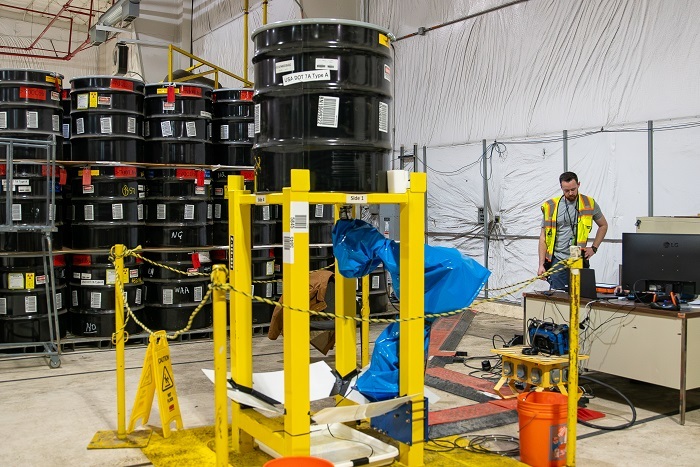 Michael Miller with Integrity Assessment Group supervises an evaluation of ultrasonic testing technology recently at the Advanced Mixed Waste Treatment Project at the Idaho National Laboratory Site.
IDAHO FALLS, Idaho — Idaho Cleanup Project personnel were so impressed with an inventive robotic technology during its demonstration recently that they immediately put it to work confirming the integrity of thousands of legacy waste drums, enabling their safe and compliant shipment to the Waste Isolation Pilot Plant for disposal and saving taxpayers tens of millions of dollars.
During the demonstration at the Advanced Mixed Waste Treatment Project, a crew evaluated ultrasonic testing equipment, which included a robotic arm with an affixed scanner and high-tech software, to validate the thickness of a 100-gallon transuranic waste drum in storage for more than four years.
The technology will ensure more than 4,000 stored drums meet U.S. Department of Transportation minimum thickness requirements — comparable to the width of automotive sheet metal.
The technology provides real-time data on the integrity of each waste drum. The equipment scans more than 95% of the impact area of the drum bottom followed by the lower one-third of the drum. Just as gel is used for ultrasound scanners, water is used to displace the air during ultrasonic testing, providing a more effective scan. During the first full day using the equipment, personnel scanned 24 drums.
If drums meet the Transportation Department thickness requirements, they can be loaded directly into shipping casks without overpacking, leading to a minimum cost savings of $26 million. An overpack is a container designed to provide additional protection.
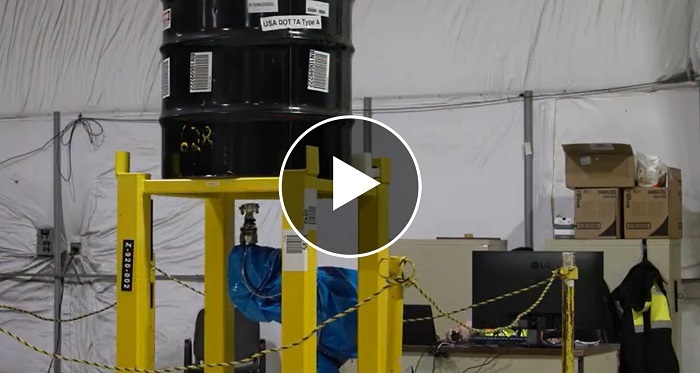 EMTV: Watch this video about the robotic ultrasonic drum inspection demonstration at the Idaho National Laboratory Site.
David Martin, Advanced Mixed Waste Treatment Project Operations director for Idaho Environmental Coalition, the U.S. Department of Energy Office of Environmental Management cleanup contractor at the site, said he is impressed with the technology.
“Based on what we’ve seen, our goal is complete the scanning of thousands of drums by the end of the year,” he said.
The need for this technology stems from two 2022 incidents where super-compacted waste packaged in 100-gallon drums developed pinholes and leaked while in transit to the underground waste repository in New Mexico. Both shipments were returned to the Idaho National Laboratory Site for removal of contents and decontamination of the shipping casks.
Engineering studies indicated that drums more than five years old have the potential to develop pinholes and breach during their transport. As a conservative measure, Idaho Environmental Coalition halted shipments of waste drums older than four years old, resulting in thousands of drums remaining in storage as costly overpacks are manufactured.
Work at the Advanced Mixed Waste Treatment Project is being performed under the Resource Conservation and Recovery Act and in support of the 1995 Idaho Settlement Agreement, which requires stored legacy transuranic waste be shipped out of Idaho.
-Contributor: Erik Simpson
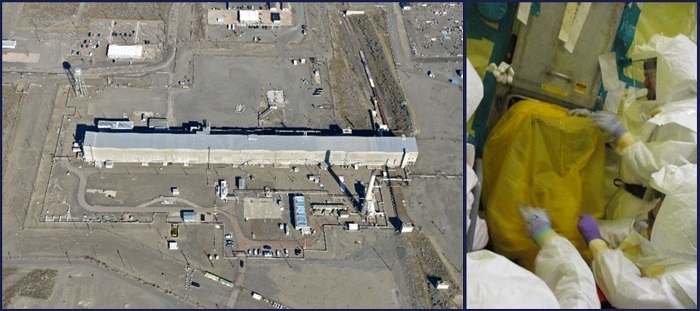 Crews with Hanford Field Office contractor Central Plateau Cleanup Company recently replaced 72 air filters at the Hanford Site’s Plutonium Uranium Extraction Plant to ensure the continued safe operation of the facility’s ventilation system.
RICHLAND, Wash. — Swapping out an air filter at home is a simple task that most people can complete in minutes. But replacing dozens of massive, high-efficiency filters in a 70-year-old plutonium processing plant? That's a challenge.
Crews at the Hanford Site's Plutonium Uranium Extraction Plant (PUREX) facility — a sprawling, multi-story structure with 40 feet of its footprint underground — recently tackled that job. Hanford's longest-running chemical separations plant, which played a key role in plutonium production for national defense, is being prepared for eventual demolition.
"Replacing these filters is an important part of maintaining safe conditions at the facility," said Heather Dale, assistant manager for River and Plateau with the Hanford Field Office. "This work ensures the ventilation system continues to protect workers and the environment as we move forward with cleanup and risk reduction."
Dressed in protective gear from head to toe and using respirators, workers from U.S. Department of Energy Office of Environmental Management Hanford Site contractor Central Plateau Cleanup Company (CPCCo) completed the project. Crews replaced 72 high-efficiency particulate air filters in the plant's exhaust system — each weighing 65 pounds and the size of a 2-by-2-foot box, 1 foot thick.
The filters, housed in three large units, were removed using long-reach tools, bagged to contain contamination and placed in specialized boxes for disposal at Hanford's Environmental Restoration Disposal Facility for radioactive waste.
“I’m proud of our team for their dedication and determination in completing this project," said Dave McMahon, a demolition manager for CPCCo. "This helps us keep the PUREX complex safe and ready for ongoing monitoring, maintenance and future cleanup efforts."
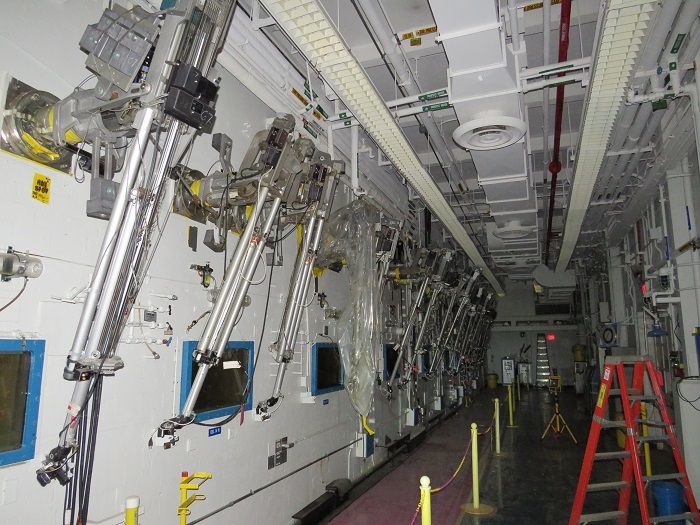 Oak Ridge Office of Environmental Management crews recently finished characterizing all 21 hot cells at the former Fission Production Development Lab. The hot cells, shown here, have manipulators used to safely handle highly radioactive material inside these heavily shielded rooms when the lab was operational.
OAK RIDGE, Tenn. — The U.S. Department of Energy (DOE) Oak Ridge Office of Environmental Management (OREM) notched a significant cleanup achievement after crews finished characterizing all 21 hot cells at a Cold War facility, a complex task that informs plans to safety remove waste and prepare the structure for demolition.
As part of the characterization work, OREM and cleanup contractor UCOR identified the types and levels of contamination in the former Fission Production Development Lab, known as Building 3517, at Oak Ridge National Laboratory (ORNL).
“Completing this phase sets the stage for some much bigger accomplishments,” said Steve Clemmons, OREM’s acting ORNL portfolio federal project director. “This is one of the most difficult facilities we’re responsible for addressing, and it’s eventual removal will be a meaningful risk reduction in ORNL’s central campus area.”
OREM and UCOR’s progress is steadily reducing the number of high-risk excess contaminated facilities at ORNL, clearing away hazards and opening space for researchers to advance innovation and make their next big discovery.
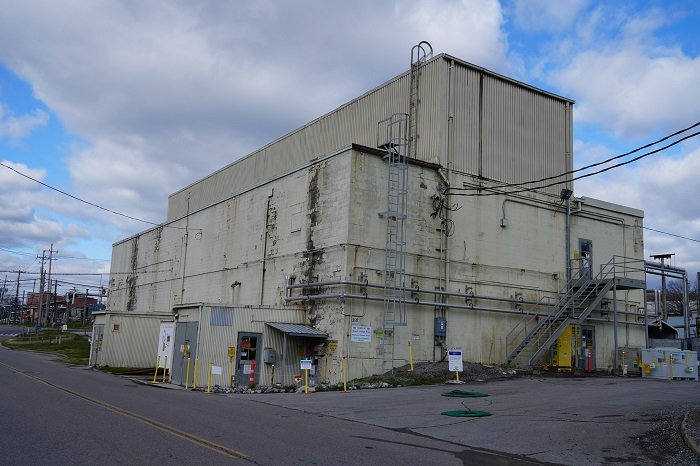 The former Fission Production Development Lab at Oak Ridge National Laboratory is categorized as a high-risk excess contaminated facility due to its condition and contents.
Crews could not enter the hot cells to conduct the characterization work due to the extremely high radiation and contamination levels inside them, a challenge that made the accomplishment especially noteworthy. Hot cells are heavily shielded rooms designed to safely contain highly radioactive material during operations.
Operating from 1958 through 1989, Building 3517 was built to recover large quantities of fission products from waste generated in reactor fuel reprocessing operations. It also supported processing and recovery of other reactor-produced isotopes.
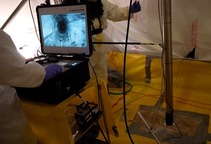
Crews drilled through concrete covers to access each cell, and those openings allowed them to gather remote video footage and perform initial radiological surveys.
 |
|
Teams drilled through concrete covers of the hot cells to gather remote video footage and perform initial radiological surveys. |
Crews perform sampling and characterization of the hot cells in the former Fission Production Development Lab. |
|
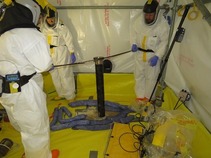 |
The team also created a mobile enclosure that served as a containment area and proved to be incredibly helpful during drilling and data collection. Employees were able to move the enclosure as they progressed from one cell to the next.
“This is an outstanding effort by our workforce to complete investigation and initial characterization of these hot cells,” UCOR ORNL Cleanup Area Project Manager Chad York said. “For this team to execute this high-risk work scope, encountering significant levels of contamination daily, and perform the work without incident speaks volumes to the experience and knowledge this team has.”
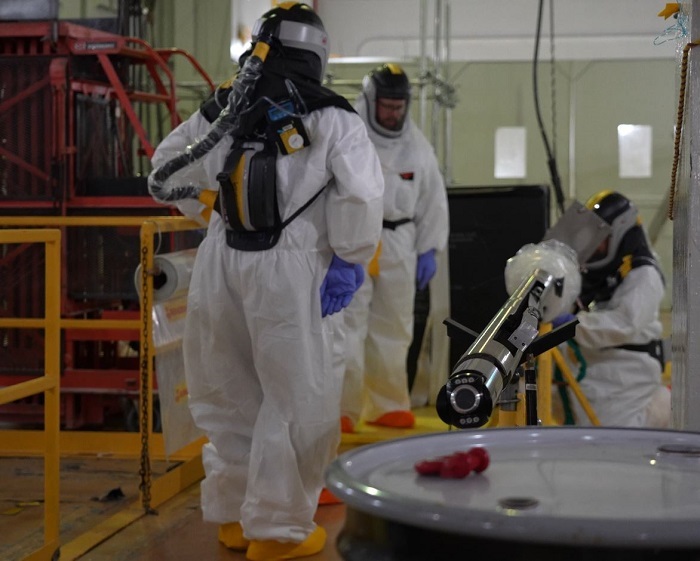 Workers set up equipment to remotely enter the hot cells to gather video footage and radiological surveys.
Another Milestone: EM Team Removes ORNL’s Single Largest Source of Legacy Radioactivity
OREM has also successfully removed ORNL’s single largest source of legacy radioactivity material, which was located at Building 3517. A partnership with private industry removed a 500-watt radioisotope thermoelectric generator from storage to be recycled into a source of energy for new power systems used by the U.S. Department of Defense.
-Contributor: Carol Hendrycks
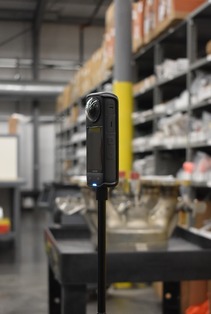
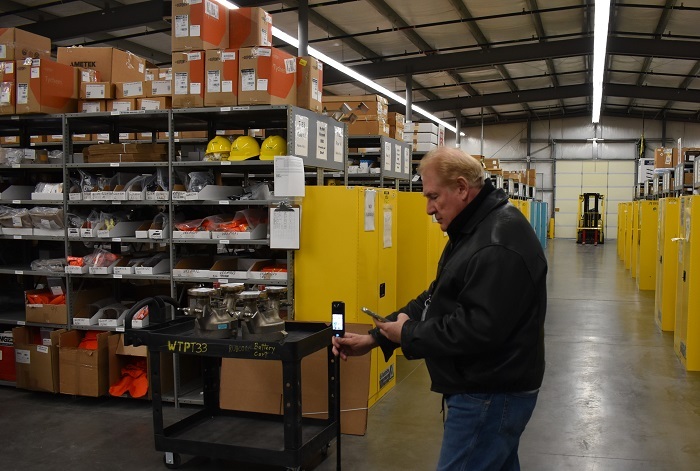 Instructional Developer Randy Miller at the Hanford Site’s Waste Treatment and Immobilization Plant sets up a special 360-degree camera inside a plant warehouse.
RICHLAND, Wash. — The Hanford Site’s Waste Treatment and Immobilization Plant is taking computer-based training to the next level by creating virtual walkthroughs of plant facilities.
The walkthroughs will allow staff to explore and familiarize themselves with facilities and equipment from their computer screens before beginning fieldwork.
“These walkthroughs will bridge the gap between basic training and hands-on experience for both new and current team members,” said Mat Irwin, Hanford’s assistant manager for the Waste Treatment and Immobilization Plant Project. “The enhanced realism adds valuable context to the training concepts, which will help build better understanding of plant facilities, equipment and procedures.”
 |
|
A 360-degree camera used to create virtual walkthroughs. |
The training staff creates the walkthroughs using a high-definition, 360-degree camera to photograph spaces. They upload these detailed photos into special software that merges them into seamless views, allowing users to look around the spaces as if they were physically present in them. They then arrange these views into a sequence that guides users through facilities step by step. Finally, they add narration tailored to each training and facility, providing important information and instruction throughout the virtual tour.
“These will be game changers in readying our team for future operations,” said Chris Musick, general manager for Waste Treatment Completion Company, the main subcontractor for Bechtel National Inc., the contractor designing, building and commissioning the plant. “This level of preparation will build our team’s confidence in its abilities and ensure it’s fully equipped to perform safe, high-quality work from Day 1.”
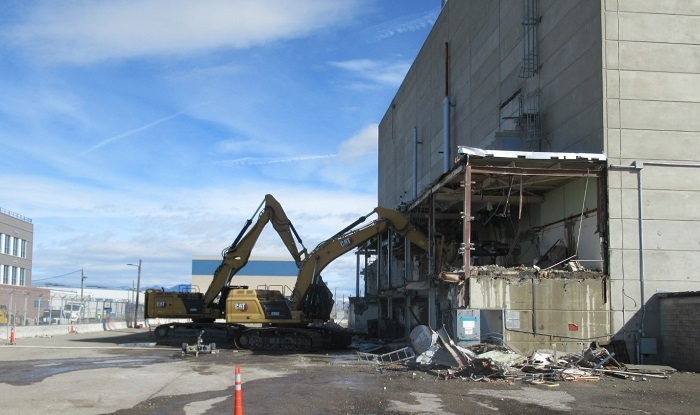 Decontamination and demolition continues at the Submarine 1st Generation Westinghouse building at the Naval Reactors Facility at the Idaho National Laboratory Site.
IDAHO FALLS, Idaho — The Idaho Cleanup Project (ICP) has logged a series of performance and cost efficiency victories, allowing it to reinvest associated savings into more cleanup work.
The ICP’s 10-year cleanup contract with the Idaho Environmental Coalition (IEC) is broken up into large, individual tasks, each with their own contract identifying cleanup mission objectives, costs, schedule and resource needs. The U.S. Department of Energy Office of Environmental Management (EM) and IEC agree to all conditions before the work begins.
Three years into the contract, much of the work to date has been completed months ahead of schedule and under budget. In fact, identifying efficiencies is the rule rather than the exception.
Most recently, IEC’s Waste Management Program began using ultrasonic testing technology to validate transuranic waste drum integrity. Management estimates use of this technology will lead to a minimum cost savings of $26 million. The technology scans the drums to ensure they have a required thickness, and if they do, they don’t need to be placed in overpack containers prior to shipment for emplacement at the Waste Isolation Pilot Plant underground repository in New Mexico. That means the program saves money on the cost of the overpack containers, which are expensive to manufacture. See a related story in this EM Update issue.
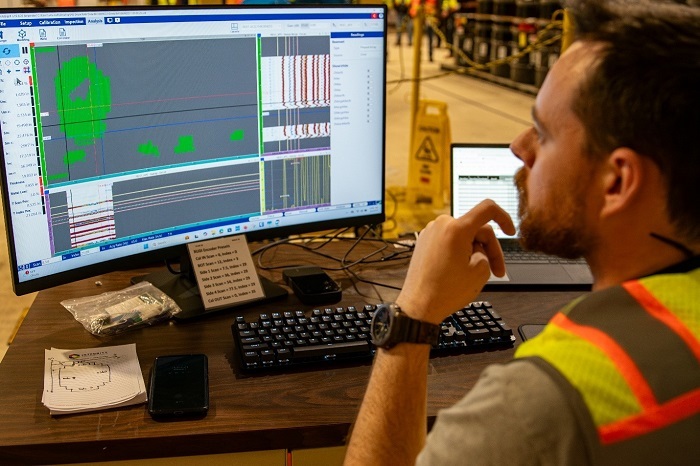 A subcontract employee monitors a demonstration of ultrasonic testing technology to ensure transuranic waste drum integrity at the Advanced Mixed Waste Treatment Project at the Idaho National Laboratory Site.
Additionally, IEC has realized $8 million in savings through fuel purchasing and onsite materials testing, and $19 million through efficiencies within its U.S. Navy decontamination and demolition effort.
“We purposely designed this contract to be aggressive with an end state in mind,” said Mark Brown, EM program manager with ICP. “Completing this important work safely, efficiently and ahead of schedule creates tangible cost savings, which are applied to accelerate other work or applied to additional work scope.”
When IEC completes a project, it retrains workers, if necessary, for new roles in the cleanup program, drawing from the existing workforce rather than hiring externally. The contractor recently employed this strategy for the Accelerated Retrieval Project (ARP), in which workers deactivated and demolished 11.9 acres of buried waste retrieval enclosures two months ahead of schedule.
ARP management also transferred excess materials and equipment to other projects, resulting in cost savings over the purchase of new items.
With the same intent to realize efficiencies, legacy buildings — such as a liquid waste treatment building or a spent nuclear fuel storage facility — have been modified for other projects, often at cost savings in the tens of millions of dollars.
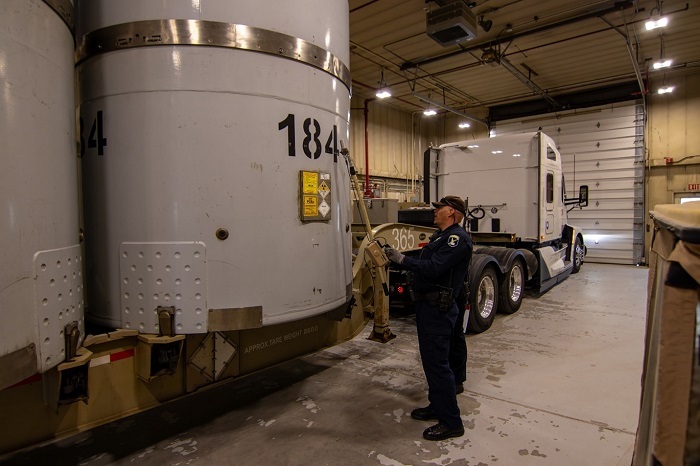 An Idaho State Police specialist inspects the Idaho Cleanup Project’s 7,500th shipment of transuranic waste before it departs Idaho for the Waste Isolation Pilot Plant in New Mexico.
“Our team, in partnership with DOE, began proactively implementing cost reduction measures in 2023 that have resulted in bringing our current spending levels below what they were even in fiscal year 2022,” IEC President Dan Coyne said. “We owe our success to the partnership we have established with DOE and to our workforce’s excellence in solving complex issues and performing safe, compliant work.”
Looking ahead, EM and IEC are focused on completing construction of an onsite landfill for legacy waste debris and demolition debris from Navy prototype propulsion plant decontamination and demolition efforts, maintaining offsite waste shipments, continuing liquid waste treatment at the Integrated Waste Treatment Unit, and finishing the final cover over a remediated Cold War-era landfill.
-Contributor: Erik Simpson
|