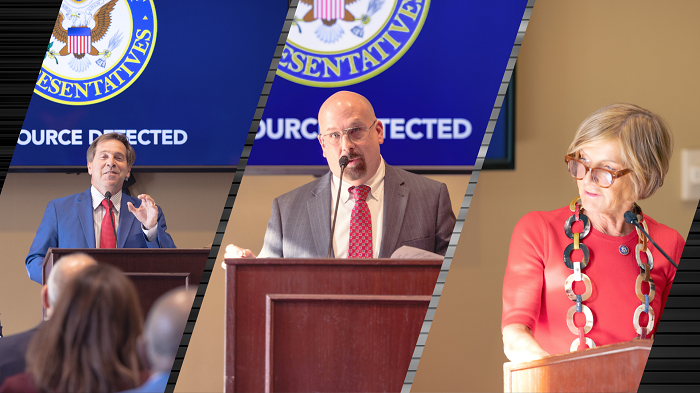
WASHINGTON, D.C. — More than 100 people attended the first U.S. House Nuclear Cleanup Caucus event of the year, where officials spoke to the theme of “Cleanup Today for a Nuclear Tomorrow —How the DOE Office of Environmental Management is Helping to Unleash Energy Innovation and Commercial Nuclear Power.” EM Senior Advisor Roger Jarrell addressed the audience at the March 26 event of the caucus, which marks its 30th anniversary this year. Energy Secretary Chris Wright has a bold, ambitious agenda for ushering in a golden era of American energy dominance and unleashing nuclear power, and EM is uniquely positioned to contribute to this golden ere as it transforms liabilities into assets, Jarrell noted. Jarrell was joined at the event by caucus co-chairs U.S. Reps. Chuck Fleischmann and Susie Lee, U.S. Rep. Bill Foster, and a panel that included senior leaders from Oak Ridge cleanup contractor UCOR; Orano USA, which has announced plans to build a new uranium enrichment plant in Oak Ridge; Centrus Energy, which operates a new enrichment facility at the Portsmouth Site and manufactures enrichment technology at Oak Ridge; and Oklo Inc., an advanced reactor developer that has announced plans to locate an advanced reactor at the Portsmouth Site. Pictured from left are Fleischmann, Jarrell and Lee.
-Contributors: Jason Modeste, David Sheeley
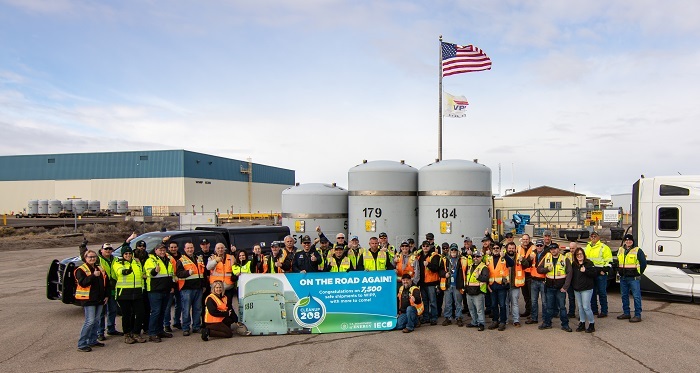 Crews gather in front of the Idaho Cleanup Project’s 7,500th shipment to the Waste Isolation Pilot Plant.
IDAHO FALLS, Idaho — The Idaho Cleanup Project (ICP) team recently celebrated 7,500 transuranic waste shipments from the Idaho National Laboratory (INL) Site to the Waste Isolation Pilot Plant (WIPP) in New Mexico — a feat resulting from careful planning, safe execution and coordination between the two sites.
“I am proud of our many dedicated and hardworking employees,” said Kelly Wooley, Waste Management senior project director for Idaho Environmental Coalition, ICP’s cleanup contractor. “This accomplishment would not be possible without them and our collaborative partnership with WIPP.”
The U.S. Department of Energy Office of Environmental Management and IEC manage the Advanced Mixed Waste Treatment Project (AMWTP), where transuranic waste is characterized, treated, repackaged, certified and shipped to WIPP for emplacement in the underground waste repository. This work is performed under the Comprehensive Environmental Response, Compensation, and Liability Act and the 1995 Idaho Settlement Agreement between DOE and the state of Idaho. IEC will continue shipping the remaining balance of several thousand transuranic waste containers slated for disposal at WIPP. As many as 12 shipments leave AMWTP each week.
-Contributor: Carter Harrison
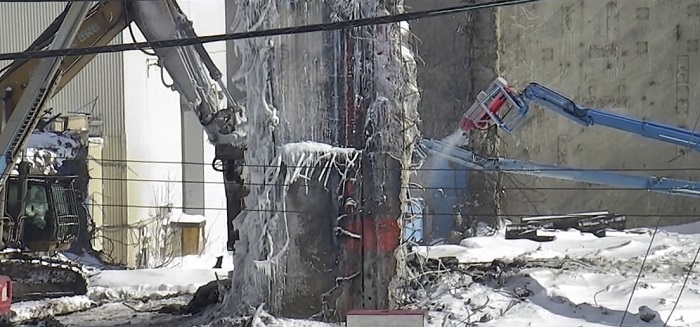 Workers at the West Valley Demonstration Project take down the Off-Gas Cell as part of the ongoing controlled demolition of the Main Plant Process Building.
WEST VALLEY, N.Y. — U.S. Department of Energy Office of Environmental Management (EM) crews at the West Valley Demonstration Project have safely removed a concrete cell used during legacy nuclear fuel reprocessing operations as they continue progress on the Main Plant Process Building demolition.
The Main Plant is one of the last remaining major facilities at West Valley and the teardown is 88% complete. Its successful demolition will further reduce environmental risks and position the site for the next phase in cleanup. The demolition began in September 2022 and is expected to be completed early this summer.
The Off-Gas Cell had housed ventilation equipment for the Main Plant’s many tanks and vessels, as well as a condenser for a low-level waste evaporator.
The steel-reinforced concrete cell was 366 square feet in size with a ceiling height of 29 feet. Its walls varied in size from 2 feet to 5 feet thick.
During legacy fuel reprocessing operations, a leak of acid contaminated the cell’s northwest corner, requiring special demolition techniques to bring a portion of the cell wall to the ground.
“Safety comes down to planning, preparation and safe execution of work,” EM West Valley Main Plant Project Director Stephen Bousquet said. “Our team worked together to carefully plan the controlled demolition of this cell while ensuring structural integrity and keeping contamination at its source.”
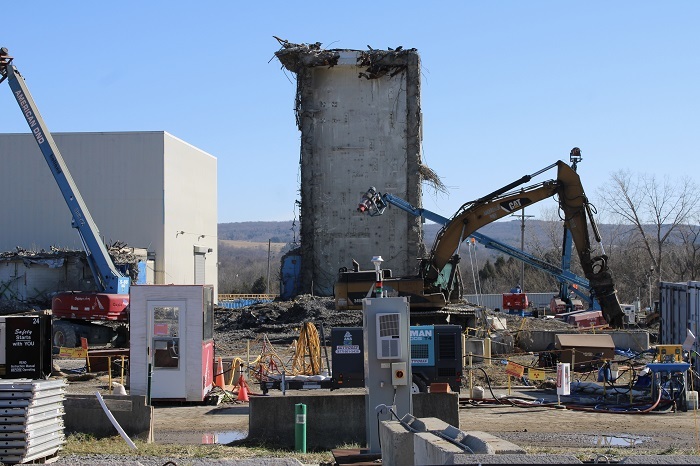 The Product Purification Cell, a highly contaminated cell resembling an elevator shaft, can now be seen clearly from this vantage point following the recent removal of the 366-square-foot Off-Gas Cell. Crews at the West Valley Demonstration Project removed the Off-Gas Cell in March.
One special demolition technique involved crews painting lines from top to bottom on the outside of the cell to highlight the areas to be demolished. These lines guided the operator to remove small sections of the structure in a deliberate, controlled manner.
Workers deployed two pieces of equipment to safely and compliantly remove each cell section from top to bottom. An operator used a hydraulic hammer to chisel around a section and free it from the steel reinforcement. Using a grapple, or claw, attachment, a second operator grabbed the section and lowered it to the ground for packaging. Crews ran misters during the work to control dust at its source.
“Interdisciplinary collaboration and lessons learned from previous demolition activities has been an excellent combination for safety and success,” said Tom Dogal, facility disposition manager for CH2M HILL BWXT West Valley, EM’s cleanup contractor at the site. “This work evolution was executed without incident or unplanned radiological releases, and I am very proud of our team.”
-Contributor: Joseph Pillittere
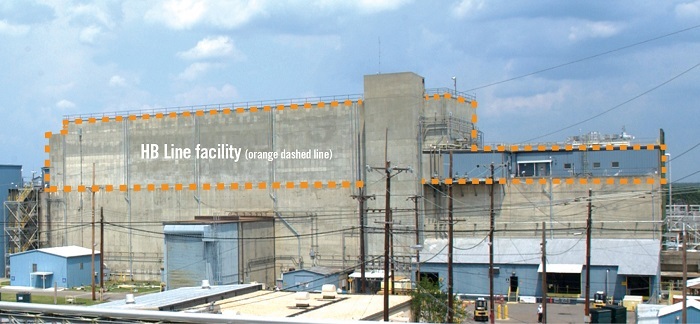 The HB Line facility is located atop the H Canyon chemical separations facility at Savannah River Site.
Team transfers unique uranium materials, which had been produced at Y-12 National Security Complex, to Savannah River National Laboratory for use in developing cleanup plans
AIKEN, S.C. — As part of work to clear the last items from a facility once used to produce plutonium oxide at the Savannah River Site (SRS), U.S. Department of Energy Office of Environmental Management crews safely removed special legacy uranium materials that had been produced by the Y-12 Nation Security Complex at Oak Ridge, Tennessee.
Removing such materials from HB Line — a process called de-inventorying — is occurring after workers placed the facility into a reversible safe shutdown in 2020. The shutdown preserved HB Line's capabilities for future use and saves about $40 million in taxpayer money each year.
“While most of the material has been de-inventoried from the HB Line facility, a small number of unique and hard-to-disposition items remain,” said HB Line Operations Manager Marty Ogden with Savannah River Nuclear Solutions, the site’s managing and operating contractor. “One group of these items was legacy uranium from the Y-12 uranium facility sent to SRS around 2008.”
Due to the unique makeup of the items and competing missions in HB Line, the material had been in safe storage in the facility since its arrival, Ogden added.
“Removal of the samples of the Y-12 legacy material completes one of the more challenging efforts associated with removal of the remaining items out of the facility,” Ogden said. “Now that this material is gone, we are much closer to a full de-inventory state. The team performed flawlessly to make the transfers safely and I want to thank them for their dedication, perseverance and hard work.”
The team transferred the materials to the Savannah River National Laboratory (SRNL) for use in developing plans for the disposition of similar items at SRS. The complex transfer involved the creation of new training for employees and close coordination between SRNS and SRNL to ensure the safety of workers and the environment.
Located atop the H Canyon chemical separations facility, HB Line was formerly used to process plutonium and uranium materials for various historical missions, including the manufacture of power sources for deep space probes, such as the Cassini space research mission by NASA.
-Contributor: Lindsey MonBarren
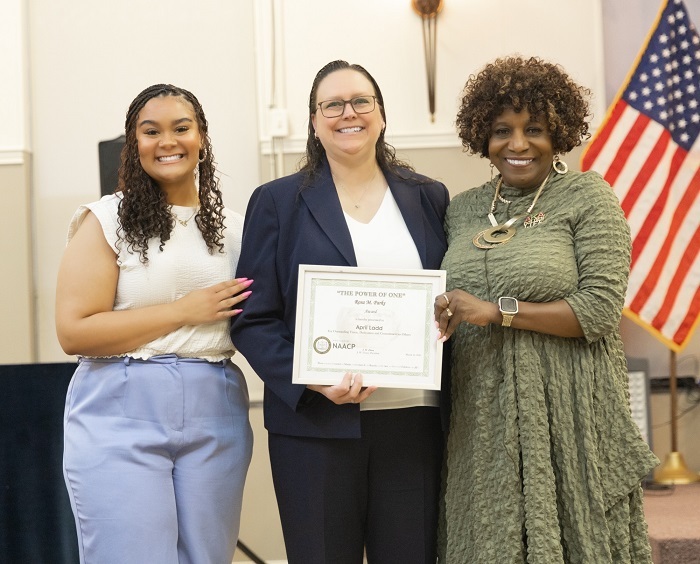 U.S. Department of Energy Office of Environmental Management Paducah Site Lead April Ladd, center, poses with organizers of the Paducah-McCracken County NAACP Rosa Parks Power of One Banquet as she receives honors for her leadership role in the community. Photo courtesy of Ebone Charles
PADUCAH, Ky. — The Paducah-McCracken County NAACP recently honored U.S. Department of Energy Office of Environmental Management (EM) Paducah Site Lead April Ladd for her leadership and commitment to community engagement during the organization’s Rosa Parks Power of One Banquet.
The annual event recognizes individuals who exemplify the spirit of Rosa Parks by making a significant impact in their communities.
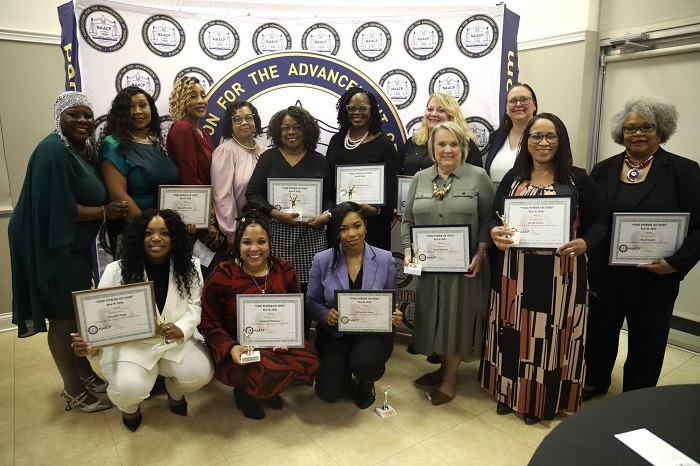 Honorees from this year’s Paducah-McCracken County NAACP Rosa Parks Power of One Banquet, including U.S. Department of Energy Office of Environmental Management Paducah Site Lead April Ladd, third from right, gather for a photo. Photo courtesy of Ebone Charles
Ladd leads EM’s efforts at the Portsmouth Paducah Project Office Paducah Site to advance decontamination and decommissioning work while fostering strong relationships with local stakeholders. Under her leadership, plans are underway to transfer the first parcel of land to the community. Ladd and the EM team are working with community leaders to position the Paducah Site to be a key part of DOE’s mission to advance commercial energy opportunities.
This year’s honorees were recognized for their contributions to women’s leadership in shaping progress in the region. Ladd’s nomination and award underscore the impact her leadership has in the community and within DOE as a driving force in the ongoing success of the Paducah Site.
-Contributor: Dylan Nichols
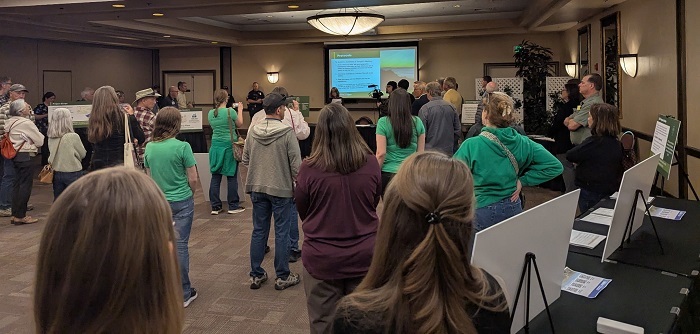 About 40 people attended the U.S. Department of Energy Office of Environmental Management’s in-person open house March 18 for its Supplemental Environmental Impact Statement (SEIS) for cleanup at Santa Susana Field Laboratory. Attendees had the opportunity to engage one-on-one with experts, share ideas and provide comments on the SEIS. Photo courtesy of Lucas Ray
SIMI VALLEY, Calif. — Why now, what’s changed?
This was the main question from many community members at recent public scoping meetings for the U.S. Department of Energy Office of Environmental Management (EM) Supplemental Environmental Impact Statement (SEIS) for cleanup at the Santa Susana Field Laboratory (SSFL).
Joshua Mengers, EM’s federal project director for SSFL, said the SEIS builds on the 2018 Final Environmental Impact Statement (FEIS) that includes cleanup alternatives for soils and groundwater and building removal at the Energy Technology Engineering Center (ETEC).
“Since 2018, we have made a lot of progress at ETEC: EM demolished all our remaining buildings, accelerated groundwater remediation and conducted additional soils studies,” Mengers said.
 |
|
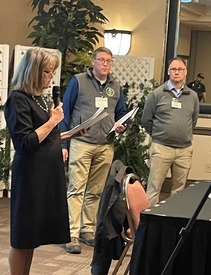
Meeting facilitator Wendy Green Lowe, left, provides an overview for the March 18 scoping meeting for the U.S. Department of Energy Office of Environmental Management (EM) Supplemental Environmental Impact Statement for cleanup at Santa Susana Field Laboratory (SSFL). Also pictured are Joshua Mengers, EM’s federal project director for SSFL, center, and Rob Seifert, EM’s director for the Office of Infrastructure, Disposition and Regulatory Policy. Photo courtesy of Melissa Simon |
Other changes prompting a SEIS include the state regulator, the California Department of Toxic Substances Control, certifying its Final Program Environmental Impact Report and proposing a new soil remediation alternative based on multiple lines of evidence.
Preparing a SEIS is part of the National Environmental Policy Act (NEPA) process for EM to evaluate additional alternatives for soils cleanup at SSFL.
EM is charged with cleaning up residual contamination remaining in Area IV, including ETEC, and the Northern Buffer Zone at the 2,850-acre former rocket engine testing and nuclear research facility located in Ventura County, adjacent to Los Angeles County.
Although additional alternatives are being considered, EM is committed to its agreements and a safe cleanup protective of human health and the environment, Mengers said.
“We want to make sure we don’t needlessly remove clean soil and destroy habitats and cultural sites,” he said.
EM is pursuing a SEIS to find solutions to challenges in implementing a background cleanup standard that were outlined in its FEIS. The SEIS will include soils remediation alternatives not previously evaluated in the FEIS.
“Nothing has been decided. We are proposing solutions so EM can continue the cleanup the community deserves,” Mengers said.
EM held a virtual meeting on March 6 to present the alternatives to the public and gather comments. An in-person open house was held March 18, where attendees could engage with experts one-on-one, share ideas and provide comments.
“It was great to see all the public engagement, allowing opportunity for our stakeholders to provide their input in developing alternatives to keep this project moving forward,” Mengers said about the scoping period, which closed March 27.
Comments collected during the scoping period will be reviewed and incorporated into the draft SEIS. Once the draft SEIS is released, the public will have another chance to provide comments.
Community feedback will help EM get to a final, implementable soils cleanup plan at SSFL.
More information on the SEIS is available on the Department of Energy’s NEPA website.
-Contributor: Melissa Simon
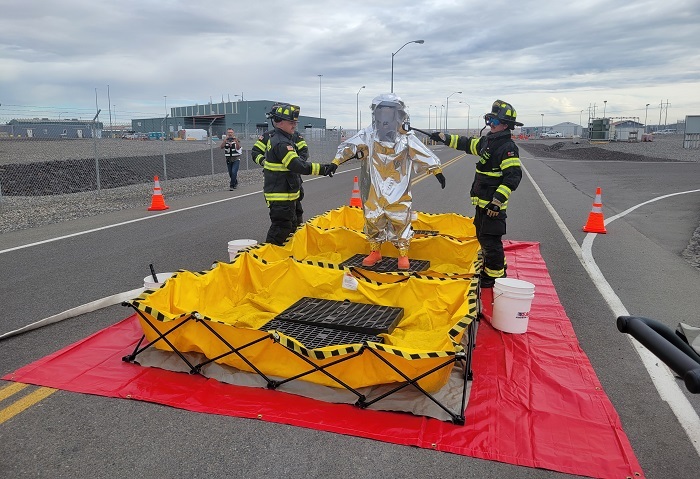 Hanford Site firefighters are training on emergency response at the Waste Treatment and Immobilization Plant as part of their readiness training for startup of waste treatment.
RICHLAND, Wash. — Hanford firefighters are training in emergency response with teams at the Waste Treatment and Immobilization Plant (WTP) as the site gets ready to start treating radioactive waste from large, underground tanks.
The Hanford Fire Department, operated by Hanford Field Office (HFO) contractor Hanford Mission Integration Solutions, started working with plant staff last year to plan and participate in several emergency preparedness drills. The drills included all fire department teams that used real equipment in the simulations.
“Drilling and training in emergency response are key parts of demonstrating our readiness to start treating waste from Hanford tanks,” said Tim Haddick, HFO director of Security and Emergency Services. “Drills enhance our ability to continue protecting our workforce and the community.”
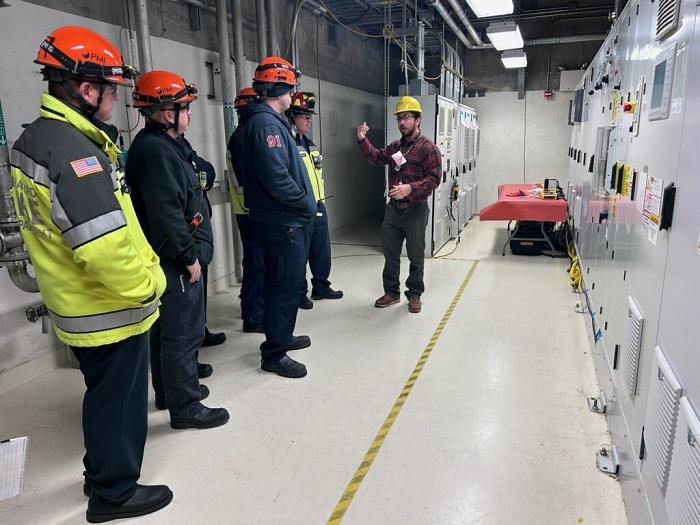 Waste Treatment and Immobilization Plant personnel give Hanford Site firefighters an in-depth look at the plant’s layout and hazards to prepare for responding during an emergency.
With waste treatment bringing new radiological and chemical hazards at the plant, training is evolving. Radiological control technicians and firefighters are practicing controlling contamination when workers remove their protective gear following use. Firefighters are also walking through plant facilities to learn the layout and consult with experts on technical issues.
"Holding so many drills really helps us calibrate with the facility,” said José Garcia, the fire department’s battalion chief. “When the drills started, it took some time to iron out expectations from both the facility and the fire department. Our performance in response to different scenarios continues to improve."
-Contributor: Melissa Ver Steeg
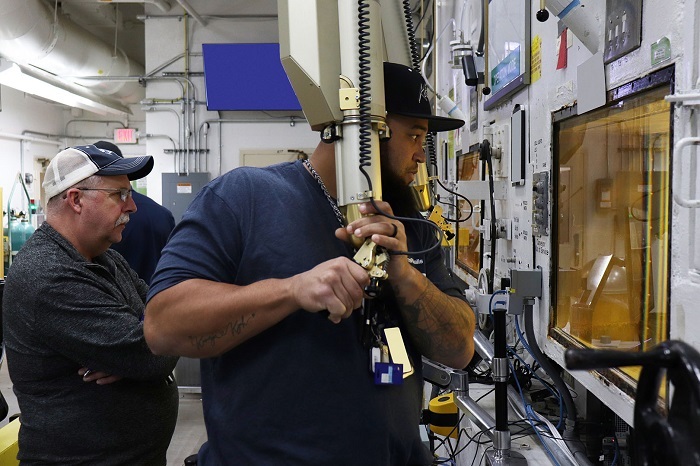 Isotek employees have begun processing radiochemical processing-06 material in hot cells as they advance the Uranium-233 Disposition Project, the highest priority cleanup project at Oak Ridge National Laboratory.
Highest priority cleanup project at Oak Ridge National Laboratory is removing nation’s inventory of Uranium-233 from storage in the world’s oldest operating nuclear facility
OAK RIDGE, Tenn. — The Oak Ridge Office of Environmental Management (OREM) and contractor Isotek have begun processing a new set of material as part of the Uranium (U)-233 Disposition Project.
Together, OREM and Isotek are eliminating the nation’s inventory of U-233 from storage in the world’s oldest operating nuclear facility, located at Oak Ridge National Laboratory (ORNL).
U-233 presents risks and is costly to keep safe and secure. Originally created in the 1950s and 1960s for potential use in reactors, it proved to be an unviable fuel source. Its removal is the highest priority cleanup project at ORNL.
Employees are now processing material known as radiochemical processing (RCP)-06. It differs from portions of the inventory they’ve processed previously. The material has also presented unique challenges, prompting years of preparation before treating it.
“It is much larger in mass and in a significantly different form,” said Isotek Nuclear Safety Manager Dana Cresci.
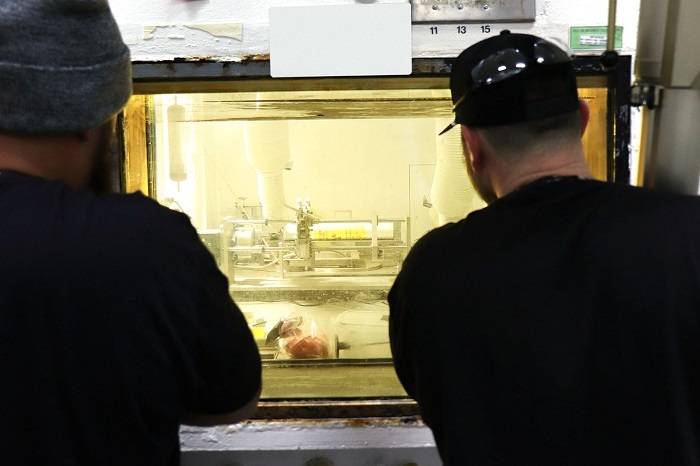 Workers place a radiochemical processing-06 canister in a hot cell for processing. The Hanford and Savannah River sites sent this material to Oak Ridge in the 1970s. It was originally in a liquid form, but the material was solidified in the 1980s for safe long term storage.
Up to this point, all material Isotek has processed using heavily shielded rooms called hot cells has been in the chemical compound form of oxide or a powder-like form. The RCP-06 material is in a 2-foot-long, solidified, ceramic cylinder.
Much of the preparation went into designing a cutting device that could divide the material into segments small enough to meet critical mass restrictions during processing. These limits enhance safety and reduce risks associated with fissile material by helping prevent potential reactions.
“It’s basically like cutting through concrete,” said Isotek Senior Processing Technical Advisor Karl Thomas. “Performing these procedures within the limited confines of a hot cell is no small feat.”
RCP-06 canisters contain U-233 that the Hanford Site in Washington and Savannah River Site in South Carolina sent to Oak Ridge in the 1970s. The material was originally in a liquid form, but it was solidified in the 1980s for safe long term storage. Oak Ridge was designated the location for U-233 storage.
“Getting to this point has taken a lot of hard work by the entire Isotek team,” said Isotek President and Project Manager Sarah Schaefer. “Each phase of processing presents unique challenges, and Isotek is driven to successfully address them.”
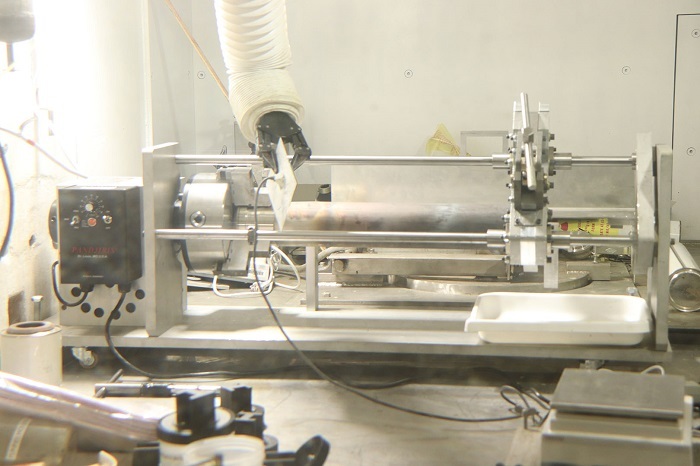 Radiochemical processing-06 material is removed from its storage container before it is divided into segments small enough to meet critical mass restrictions during processing.
Isotek will continue processing the first subset of RCP-06 canisters through mid-year. The remaining canisters require further planning due to the high mass of their contents, but the project expects to begin processing those in 2026.
Isotek has processed and removed approximately 40% of remaining U-233 inventory stored at ORNL.
Additionally, Isotek continues to extract extremely rare medical isotopes during processing operations for next generation cancer treatment research. These isotopes are key to a promising form of treatment that is showing success in clinical trials against types of cancer previously thought untreatable.
Currently, only one gram of those isotopes is available worldwide outside of Oak Ridge. However, through this project, Isotek is extracting an estimated 40 grams. That is enough to create 100 times more doses of treatments annually than is currently available worldwide. So far, Isotek has extracted nearly 15 grams.
-Contributor: John Gray
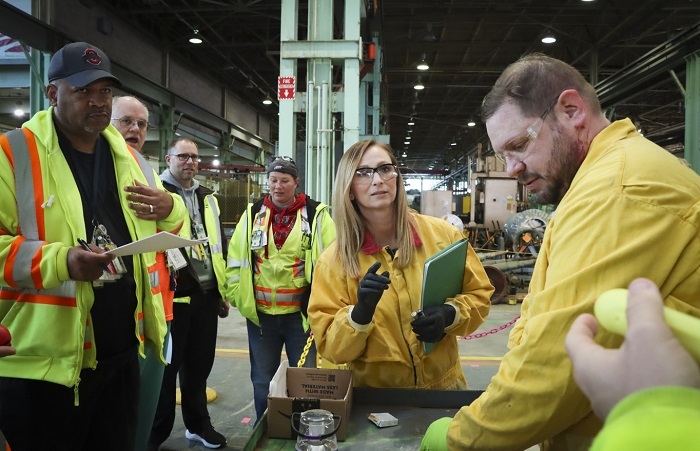 Radiation Protection Training Supervisor Leslie Koehler, center, leads a class through one of the team’s interactive training exercises. Koehler’s favorite activity for trainees is role playing, in which radiation protection technicians are given hand-held buzzers and buzz in when Koehler and training instructor Scott Henry, far right, perform non-compliant actions during a scripted job scenario.
PIKETON, Ohio — A radiation protection training supervisor has generated excitement in employee learning at the U.S. Department of Energy (DOE) Office of Environmental Management’s Portsmouth Site with the help of life-size board games, interactive competitions, and escape rooms where employees solve puzzles that require calculations, procedures and job knowledge to solve.
Leslie Koehler draws from her unique training method to enhance the radiation control technician training experience.
“The reason these exercises are making a difference is simple: it’s engagement,” Koehler said. “It’s been my experience that lecture-based training is minimally effective. It doesn’t matter how much an instructor knows if they can’t find a way to keep the class engaged and focused.”
Due to a rigorous training and qualification program, the site has a separate training department for all radiation protection personnel qualified at the technician and supervisor levels.
Koehler, along with Radiation Protection Training Manager Lorrie Graham and training instructor Scott Henry, are revolutionizing that training.
“It’s great to see our employees not only looking for ways to enhance our safety onsite, but also taking ownership of their programs to make improvements for everyone,” Portsmouth Site Lead Jeremy Davis said. “The new radiation protection training activities are sparking a new interest in learning and helping teams focus on safety.”
Most of these training elements involve some friendly competition.
“Creating a level of competition adds a level of engagement by adding a time element or splitting them into teams,” Koehler said of the training participants. “Without engagement, the information presented is often lost before the class is even over. But with the new interactive training, the radiation protection technicians are more involved and retain more information.”
In addition to the interactive training, the training team has developed preparation sessions for those ready to advance their careers by taking the oral board exams needed for higher levels of radiation control technician, including junior to senior, lead and supervisor.
“The team recognized that while the candidates often know or understand the content, sometimes they struggle when it comes to how to best communicate the material,” said Koehler. “With the prep sessions, we work with them to discover the communication style that best suits their knowledge and personality.”
Since the introduction of the new oral board training, the success rate of radiation control technicians passing the test has jumped from 74% to 95.6%.
“The oral board prep process is working. The interactive activities that have been incorporated into our continuing training schedule are working,” said Graham. “We have received a proficiency rating from a recent DOE assessment, and that is an accomplishment.”
-Contributor: Cindi Remy
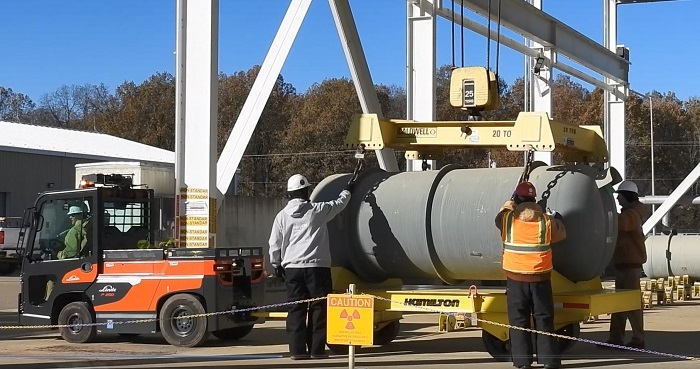 Team members at the Paducah Site depleted uranium hexafluoride plant use a tow motor to move a cylinder. The addition of the new equipment marks a pivotal advancement in operational safety and efficiency at the Paducah and Portsmouth project sites.
LEXINGTON, Ky. — Recent upgrades have significantly improved operational efficiency, safety and environmental sustainability for the Depleted Uranium Hexafluoride (DUF6) Conversion Project at the U.S. Department of Energy Office of Environmental Management (EM) Portsmouth, Ohio, and Paducah, Kentucky, sites.
A key development is the introduction of tow motors and carts for transporting DUF6 cylinders. This innovative shift enhances maneuverability and increases safety compared to legacy equipment used for past operations.
“Introducing tow motors is a game changer for the DUF6 project,” said Zak Lafontaine, Portsmouth Paducah Project Office (PPPO) DUF6 program manager. “This upgrade improves safety, reduces environmental impact and ensures more efficient operations at our sites.”
By integrating these advancements, the DUF6 project sites are setting a benchmark for modernization in industrial operations. These upgrades reflect a forward-thinking approach, combining safety and environmental stewardship with operational excellence, paving the way for a safer future.
PPPO conducts operations of the DUF6 conversion plants as required by Public Law 107-206.
For decades, these gaseous diffusion plants enriched uranium for use in nuclear weapons and later began supplying enriched uranium to the commercial nuclear industry. DUF6 is a coproduct of the uranium enrichment process. The DUF6 Conversion Project converts the stored DUF6 into depleted uranium oxide, a more stable chemical form that can be reused, stored or disposed of.
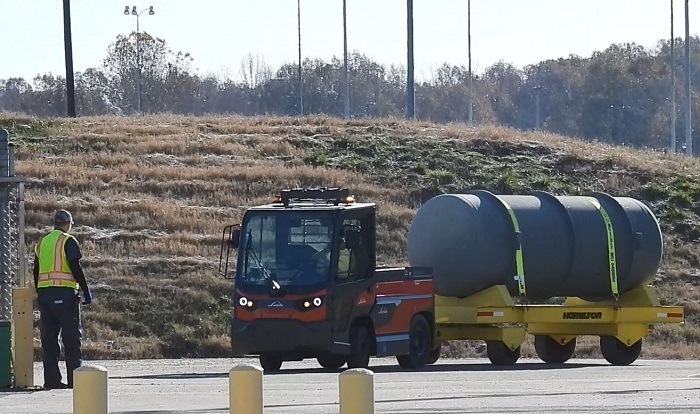 Workers at the Depleted Uranium Hexafluoride Project use new tow motors and carts for transporting depleted uranium hexafluoride cylinders for processing.
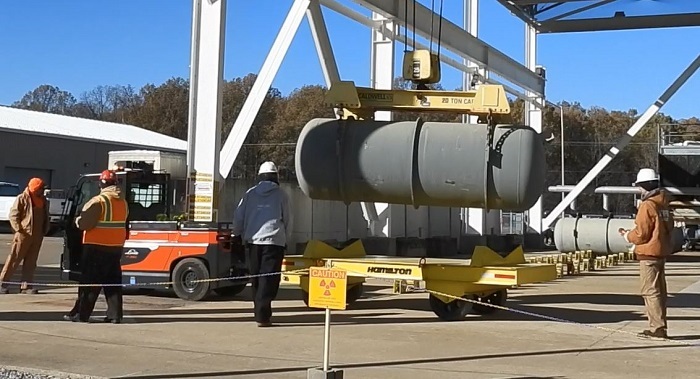 Workers use tow motors to offload a cylinder at the Paducah Site depleted uranium hexafluoride plant.
Tow motors, compared to a previous cylinder handler, offers numerous advantages for cylinder storage yard operations. These systems are smaller and easier to maneuver, and provide greater visibility for operators. This reduces the potential for accidents, ensuring a safer environment for technicians working in cylinder storage areas. The reduced size and increased precision of the equipment minimize wear and tear on the infrastructure, prolonging its operational life and reliability.
Beyond safety, these upgrades contribute to more sustainable operations. Tow motors significantly lower fuel costs while decreasing harmful emissions, aligning with broader environmental objectives.
"This upgrade demonstrates our dedication to progress and innovation,” said Dutch Conrad, project manager at Mid-America Conversion Services, the EM contractor responsible for DUF6 operations and maintenance. “Notably, our systems can deliver up to fourteen cylinders, underscoring the efficiency and reliability of this advanced technology.”
-Contributor: Kearney Canter
|