 U.S. Department of Energy Office of Environmental Management crews at the Idaho National Laboratory Site recently completed the single largest demolition project in Idaho Cleanup Project history, demolishing more than 520,000 square feet of building space three months ahead of schedule and under budget.
Teardown of buildings goes down in Idaho Cleanup Project history as single largest demolition project
IDAHO FALLS, Idaho — Crews at the Idaho National Laboratory (INL) Site recently completed the single largest demolition project in Idaho Cleanup Project history three months ahead of schedule and under budget.
In total, workers demolished more than 520,000 square feet of building space — about three times the footprint of the U.S. Capitol building in Washington, D.C. — and checked off a 2024 priority for the U.S. Department of Energy (DOE) Office of Environmental Management (EM).
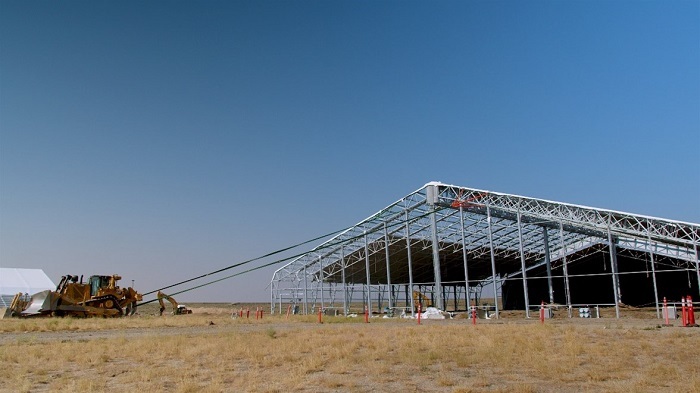
 Decontamination and demolition (D&D) crews with cleanup contractor Idaho Environmental Coalition (IEC) removed the last of 10 steel-framed, soft-sided buildings — nine for waste exhumation and one for waste storage — constructed over a 97-acre Cold War-era landfill called the Subsurface Disposal Area.
The landfill accepted INL Site-generated radioactive and hazardous waste beginning in 1952, and waste from the former Rocky Flats Plant near Denver, Colorado, and other waste generator sites from 1954 to 1970. In 2008, the DOE, state of Idaho and U.S. Environmental Protection Agency agreed to exhume targeted radioactive and hazardous waste from the landfill. The waste from nine areas of the landfill covering a total of 5.69 acres included filters and molds, solidified sludge and a reactive uranium material called “roaster oxides.”
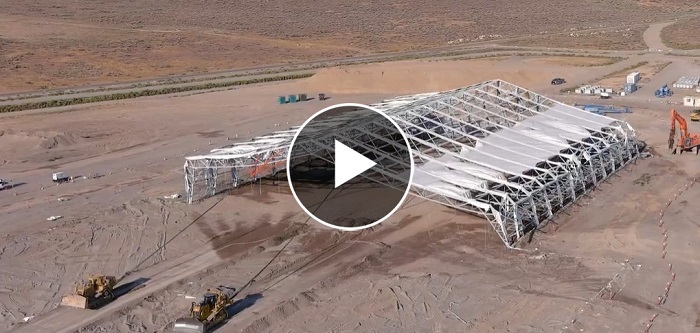 EMTV: Watch this video on the U.S. Department of Energy Office of Environmental Management's completion of decontamination and demolition of the Subsurface Disposal Area at the Idaho Cleanup Project.
The exhumation project was completed 18 months early. To date, more than 90% of the exhumed waste has been shipped out of Idaho for permanent disposal.
Following completion of waste exhumation at two of the enclosures, the buildings were repurposed for crews to reduce the size of waste boxes from Rocky Flats and large gloveboxes from the former Mound Site in Miamisburg, Ohio. Later, the enclosures were used to treat and repackage sludge waste originating from Rocky Flats. A third enclosure was used to condition the roaster oxides from Rocky Flats before workers at the facility began targeted waste exhumation.
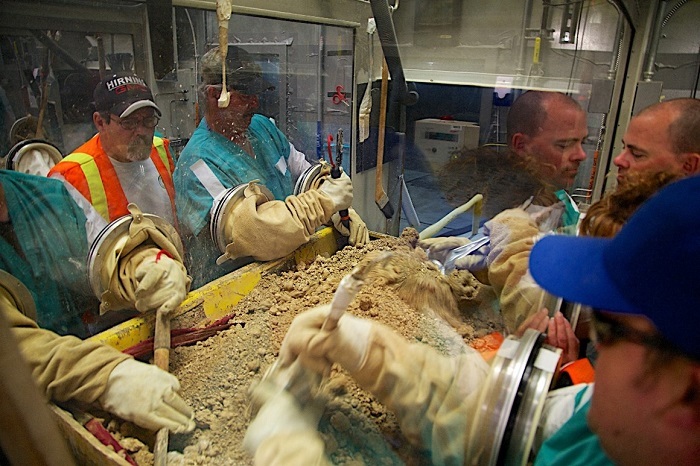 Idaho Cleanup Project workers treat sludge waste at the Accelerated Retrieval Project V facility.
To prepare for the demolition of each enclosure, crews removed internal equipment and performed extensive decontamination activities on the highly contaminated structures to allow for safe demolition. They covered the exhumation footprint with clean soil and removed the facility ventilation system.
Final steps included applying fixatives, removing the exterior skin and weakening the support components of the buildings through an engineered approach. Large bulldozers pulled the skeletal frames over. Following the sizing of the metal structures with heavy equipment, the contaminated debris was buried, and clean cover material was placed over each former waste exhumation footprint.
Eventually an engineered cover containing native materials will be constructed over the entire landfill to ensure long term protection of the underlying Snake River Plain Aquifer.
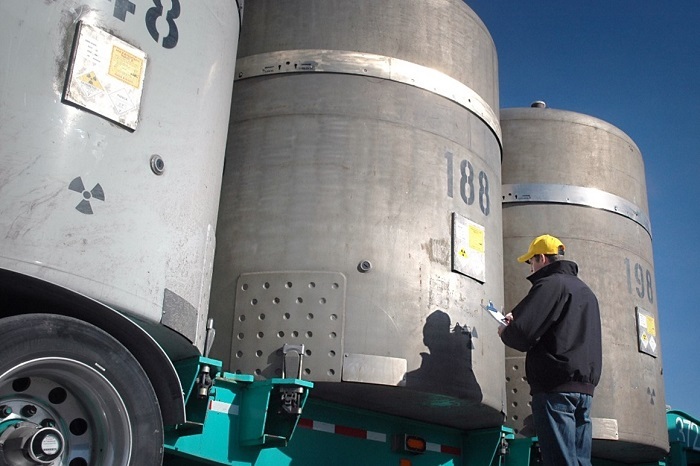 A shipment of transuranic waste exhumed from the Subsurface Disposal Area at the Idaho National Laboratory Site is placed in TRUPACT containers and sent out of Idaho for permanent disposal.
“Removing these enclosures from the Subsurface Disposal Area puts us a step closer to closing the final chapter on the Subsurface Disposal Area landfill,” EM Idaho Cleanup Project Manager Mark Brown said. “This was a combined effort by a very talented contractor workforce, with effective management by our cleanup contractor, IEC, and excellent oversight by my federal staff.”
IEC President Dan Coyne was equally appreciative.
“The dedication of our workforce is exemplified every day in the risks we reduce to our communities and environment,” he said. “Thank you all for completing this important work safely and be proud of what you have accomplished.”
-Contributor: Erik Simpson
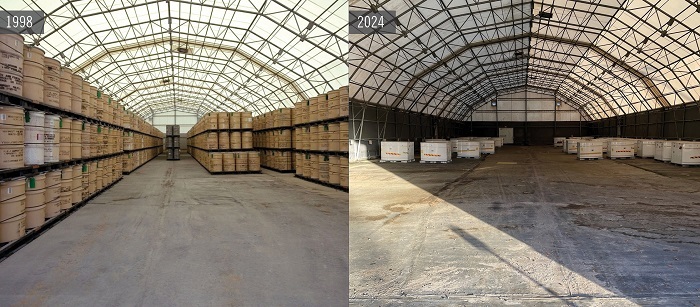 Drums containing transuranic waste are shown in storage in the Solid Waste Management Facility at Savannah River Site in 1998, before the Waste Isolation Pilot Plant opened in 1999, left, and in 2024, right.
AIKEN, S.C. — The numbers are in, and the U.S. Department of Energy Office of Environmental Management (EM) shipped the largest volume of its transuranic waste for disposal from the Savannah River Site (SRS) in a decade during the past fiscal year ending Sept. 30.
The Solid Waste Management Facility, which is responsible for the disposition of transuranic and other waste at SRS, achieved the significant reduction in transuranic waste working closely with EM’s Waste Isolation Pilot Plant (WIPP), the underground repository where the defense-generated nuclear waste is emplaced.
In the last fiscal year, the facility shipped 150 cubic meters of the waste to WIPP, about 30 cubic meters more than in fiscal year 2022, when the facility marked its second-highest total of transuranic waste shipped to WIPP in the last decade.
Over the past 10 years, EM has reduced the total volume of transuranic waste at the SRS facility by 66%, from approximately 746 cubic meters to 256 cubic meters.
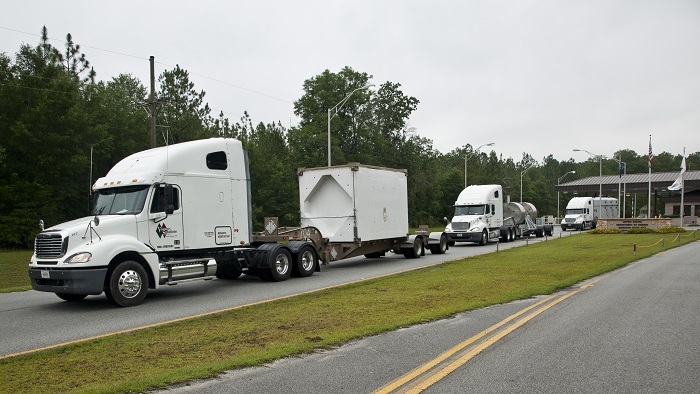 Savannah River Site made U.S. Department of Energy history in 2012 when it shipped three transuranic waste shipments to the Waste Isolation Pilot Plant on the same day, using three different shipping containers. The three trucks transporting the shipments are pictured.
The SRS facility is managed by Savannah River Nuclear Solutions (SRNS), the site’s management and operations contractor.
“SRNS is committed to making the world safer, which involves ensuring that transuranic waste is properly handled, stored and dispositioned,” said SRNS President and CEO Dennis Carr. “This past year’s accomplishments in the Solid Waste Management Facility are a testament to this commitment and to the hard work and collaboration between WIPP and SRNS employees.”
Transuranic waste typically consists of protective clothing, tools, rags, equipment and miscellaneous items contaminated with small amounts of plutonium and other heavy elements.
-Contributor: Lindsey MonBarren
In honor of Veterans Day on Nov. 11, the U.S. Department of Energy Office of Environmental Management (EM) is highlighting veterans who have transitioned from the military to civilian service in the cleanup program.
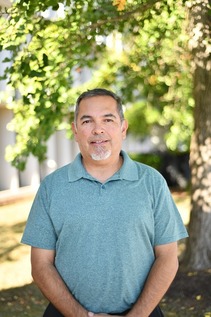
Raul Holguin is one of 13 veterans working in the cleanup program who are newly featured on the EM Veterans webpage this year. Holguin is a contract specialist for the Oak Ridge Office of Environmental Management.
 Read EM's Q&A with Holguin:
What is your name, and what do you do at EM?
Raul Holguin, and I am a contract specialist for the Oak Ridge Office of Environmental Management.
What branch did you serve in; when; where stationed? How many years of service?
I served in the United States Air Force for 20 years, from 1989-2009. During that time, I was stationed in Germany, South Korea, North Dakota, Virginia and New Mexico to name a few.
 |
|
Raul Holguin is a contract specialist for the Oak Ridge Office of Environmental Management and a military veteran who served in the U.S. Air Force for 20 years. |
Most memorable event/moment during your service?
It would have to be Germany. I hadn’t been there long — November 1989 — when the Berlin Wall fell. East and West Germany were reunited, and there were celebrations everywhere, not just that night but in the following months. It was especially memorable because many older generations, separated by the wall for so long, were finally able to reconnect.
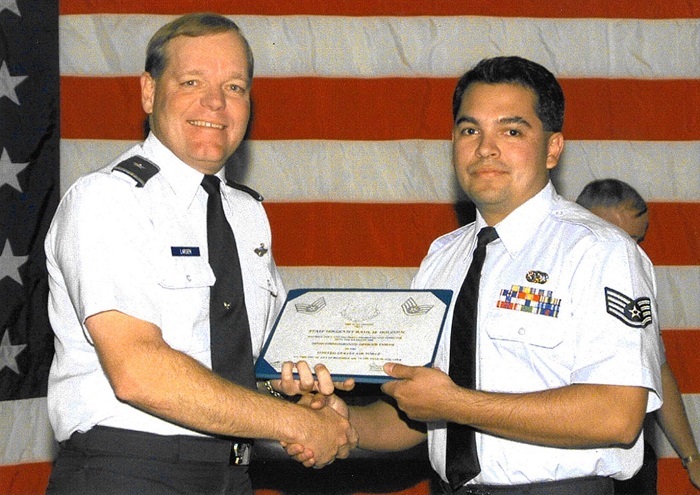 Raul Holguin, right, was promoted to staff sergeant in 1996 while stationed at Grand Forks, North Dakota.
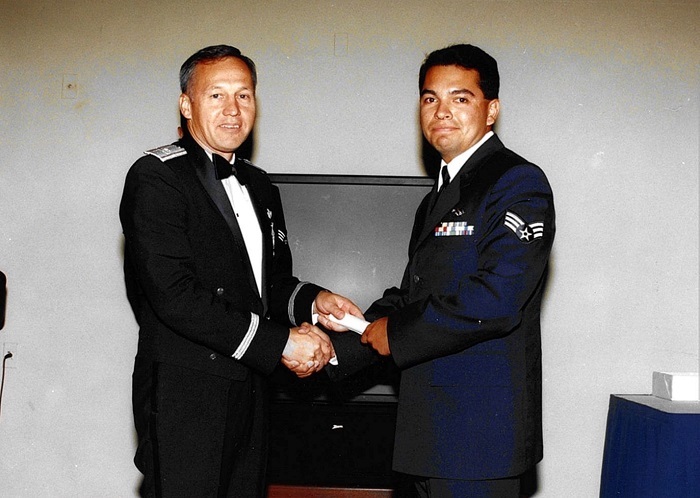 Raul Holguin, right, was promoted to senior airman in 1992 while stationed in Spangdahlem, Germany.
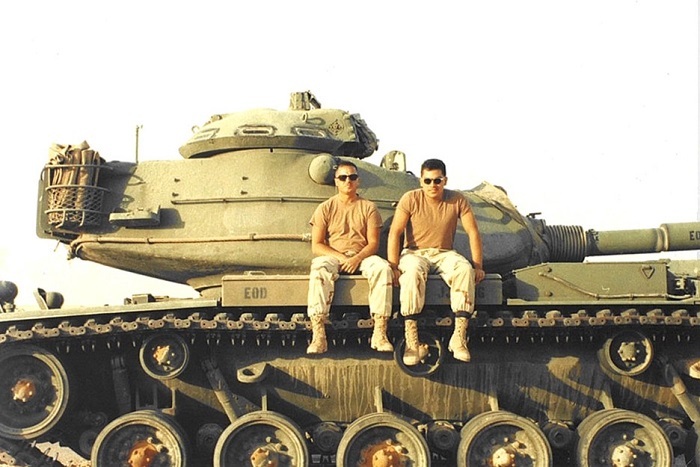 Raul Holguin, right, is pictured while on deployment to Al Kharj, Saudi Arabia, in 1993.
How has your military service helped prepare you for the job you do in EM?
The teamwork and reliance on each other — learning our differences, cultures, histories, work ethics, strengths and weaknesses.
When did you begin working for EM, and what got you interested in the cleanup mission?
I’ve been with EM for one year. I became interested in the cleanup mission because of the research and discovering that DOE has a great work atmosphere and culture. Its important missions date back to the Manhattan Project and continue to affect environmental cleanup efforts today.
Watch an interview with Holguin here.
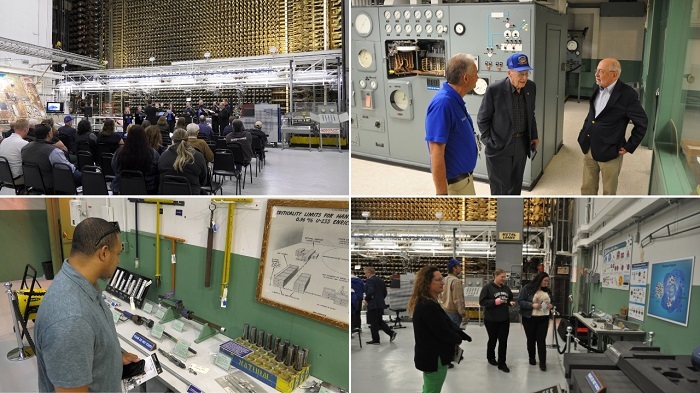 More than 50 guests gathered to mark the 80th anniversary of the historic startup of the B Reactor on the Hanford Site. B Reactor was the world’s first full-scale plutonium production reactor. Today, it is part of the Manhattan Project National Historical Park, which includes locations in Oak Ridge, Tennessee, and Los Alamos, New Mexico.
RICHLAND, Wash. — Eighty years ago, in the arid expanse of southeastern Washington state, history was quietly — and powerfully — made at the Hanford Site.
On Sept. 26, 1944, Hanford’s B Reactor — the world’s first full-scale plutonium production reactor — achieved a self-sustaining nuclear reaction. What began as a wartime effort transformed the course of history. Today, B Reactor stands as a symbol of American ingenuity, scientific collaboration and the spirit of innovation.
Last month, about 50 guests took a seat in front of the face of the massive, long-deactivated reactor to celebrate the 80th anniversary of its historic startup. It was a time to reflect on the legacy of those who worked tirelessly to build and operate the reactor during World War II and to honor the enduring significance of this pioneering achievement.
Attendees gathered to hear speakers from the U.S. Department of Energy (DOE), National Park Service (NPS), B Reactor Museum Association and African American Community Cultural Education Society. The speakers talked about their support for the Manhattan Project National Historical Park and the role they play in the continued maintenance and preservation of B Reactor. They highlighted B Reactor’s legacy, not just as a marvel of engineering but also as a reminder of the important work still being done at Hanford today.
“Our mission to safely clean up and manage the legacy waste is as important as the original mission to build the reactor,” said Heather Dale, DOE Office of Environmental Management assistant manager for River and Plateau. “Today, our workers carry forward the same spirit of innovation and dedication as those who built B Reactor, as we work as a One Hanford team to protect our environment and future generations.”
The Mid-Columbia Mastersingers performed two musical numbers, and organizers gifted visitors a commemorative 3D print of the reactor as a memento of the celebration. After the formal program concluded, organizers treated attendees to a tour of B Reactor, where its control room and other areas have been preserved as if the reactor was still in operations. Stepping back in time, they experienced the sights and sounds of a facility that changed the world. For some, it was a walk down memory lane.
“I walk through here and remember all the stuff we did. Yeah, it looks the way it was when I worked here — except it’s all cleaned up!” said Vanis Daniels, a retired Hanford employee who attended the event. “When I walked these halls, removing asbestos and other hazards, I was dressed all in whites. Now I can walk through in my normal clothes. I guess that means we did a good job with the cleanup.”
Since B Reactor achieved national park status in 2015, the NPS has stepped in with DOE to comanage the facility. DOE maintains the facility while NPS interprets and shares multiple perspectives of the Manhattan Project story.
Since then, NPS has expanded public access to more parts of B Reactor and created a robust digital experience for those who can’t visit B Reactor in person, including a website, social media posts, and a phone app offering an in-depth virtual tour. Those outreach efforts not only apply to B Reactor, but also to the other two Manhattan Project National Historical Park locations in Oak Ridge, Tennessee, and Los Alamos, New Mexico.
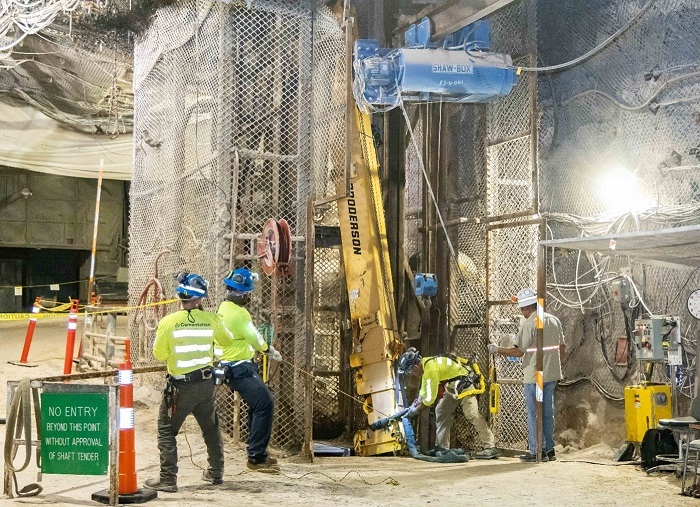 Crews demolish and replace structural steel needed to remove mined salt from the Waste Isolation Pilot Plant underground repository.
Refurbishing ‘salt pocket’ aims to enhance safety, mining capability
CARLSBAD, N.M. — The team at the Waste Isolation Pilot Plant (WIPP) recently began renovating a critical piece of the underground repository’s infrastructure, mobilizing more than 2,100 feet below the Earth’s surface to overhaul a mammoth steel-framed bin known as the “salt pocket.”
WIPP, the nation’s only repository for defense-related transuranic waste, receives waste left from research and production of nuclear weapons and emplaces those materials in underground rooms mined out of an ancient salt formation.
Key to WIPP’s mining operations, the underground salt pocket is used to stage mined salt that will be lifted to the surface in a hoist. WIPP emplaces transuranic waste in salt so it can be encased over time by the salt, which moves, or creeps, at a rate of 2 to 6 inches a year. That same salt creep also eventually squeezes manmade structures in the underground repository, such as the structural steel supporting the salt pocket.
The work is part of a U.S. Department of Energy (DOE) Office of Environmental Management (EM) ongoing effort to upgrade WIPP infrastructure to ensure the facility remains ready to support its vital national security and environmental cleanup missions.
“WIPP has successfully completed 25 years of safe operations and is a national asset in continuing DOE’s vital mission in cleaning up America,” said Mark Bollinger, EM’s Carlsbad Field Office manager. “Keeping WIPP’s infrastructure, such as the salt pocket, operating safely and reliably will allow continued efficient mining and waste emplacement.”
WIPP management and operations contractor Salado Isolation Mining Contractors (SIMCO) oversees the salt pocket refurbishment project as transuranic waste shipments continue arriving to the site and are safely emplaced into the underground repository.
SIMCO contracted with Cementation, a global mine contracting company, to perform the work. The project includes demolishing the existing loading pocket and structural steel, remining, installing supports and constructing an entirely new 110-foot-deep loading pocket.
The refurbished salt pocket will also feature upgraded hoist controls, installed at a safe distance, to enhance worker accessibility and safety.
“The salt pocket refurbishment project is progressing well,” said Brandon Jones, SIMCO Capital Asset Projects manager. “The team is in the process of safely demolishing the old structural steel and will begin work on the new structure soon.”
The salt pocket refurbishment is expected to be completed by spring.
-Contributor: Roy Neese
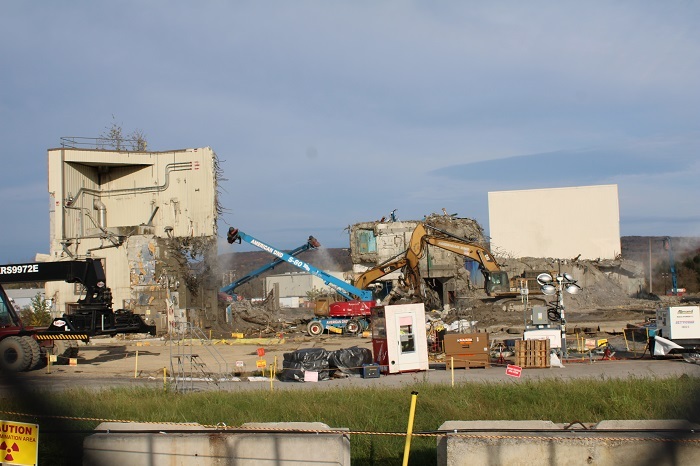 Crews at the West Valley Demonstration Project continue the demolition of the Main Plant Process Building, which is now 75% complete. The team recently surpassed 1 million work hours without a lost-time illness or injury since April last year. Site leaders attribute these successes to their conscientious workforce and the use of protected assumptions.
Site reaches 75% completion mark in Main Plant demolition
WEST VALLEY, N.Y. — The U.S. Department of Energy Office of Environmental Management (EM) has completed 75% of the Main Plant Process Building demolition at the West Valley Demonstration Project as its cleanup contractor at the site exceeds 1 million work hours without a lost-time illness or injury since April last year.
Site leaders attribute these successes to a conscientious workforce and the use of protected assumptions.
Protected assumptions are rules that govern the deactivation and decommissioning of the Main Plant. Work crews follow these assumptions to ensure work is performed in a manner that keeps the workers, public and environment safe.
“The protected assumptions are the first line of defense to control airborne and surface contamination at its source,” said Stephen Bousquet, EM assistant director for West Valley’s Office of Project Management. “In addition, EM’s planned approach also incorporates best practices, lessons learned and robust safety controls and techniques to demolish the building.”
Pre-job briefings are held daily to discuss the protected assumptions while team members review a 3D model of the Main Plant. The site considers the 3D model to be an indispensable tool for demolition safety as it shows everything from walls and support beams to equipment and piping within the Main Plant.
Subject matter experts with EM and its West Valley cleanup contractor, CH2M HILL BWXT West Valley (CHBWV), also observe the workforce’s implementation of the protected assumptions. That helps ensure adherence to the assumptions while providing real-time information for continuous improvements.
In addition to the protected assumptions, the site has protections associated with equipment, demolition rate and sequence, dust suppression, monitoring, wind speed and direction, debris and water management, and handling of specialty items, such as a tank that needs to be removed and packaged.
Jason Casper, CHBWV president, said the site has an excellent workforce that is capable, knowledgeable and safety-minded.
“They know the importance of adhering to the protected assumptions and have the authority to stop work when conditions change or could pose a safety hazard,” Casper said.
He added, “The Main Plant is the most difficult facility to remove from the site. Deconstructing this building and others has become almost a science with extensive planning, engineered controls, characterization, robust safety measures, specialized equipment and lessons learned.”
-Contributor: Joseph Pillittere
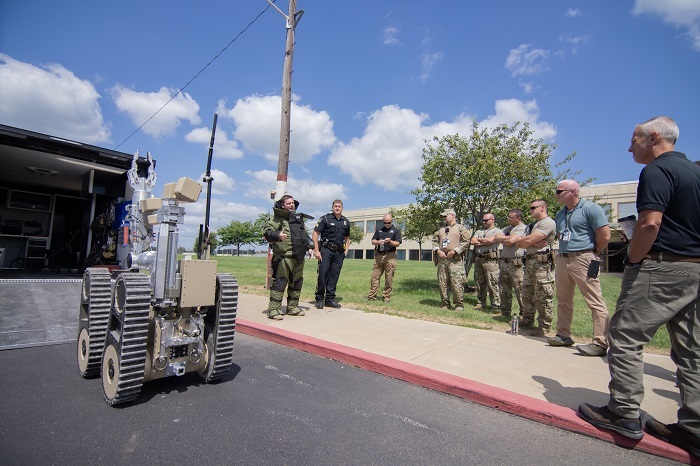 Paducah Police Department Community Engagement Officer Blake Quinn conducts a briefing on the capabilities of the department’s bomb squad robot during a recent demonstration at the Paducah Site.
PADUCAH, Ky. — The Paducah Site is continuing its commitment to safety and security by bolstering collaboration with local law enforcement.
A highlight of this partnership was the recent demonstration of the Paducah Police Department (PPD) bomb squad robot at the Paducah Site in coordination with the site’s protective force and emergency management organizations.
The demonstration showcased the advanced technology and techniques local law enforcement uses in handling hazardous situations. Paducah Site personnel witnessed firsthand the capabilities of the robot, designed to safely inspect and neutralize potential explosive devices. The robot's ability to navigate complex environments, assess threats and perform delicate operations remotely is a significant asset in ensuring the safety of the public and first responders.
“The benefit of the mutual aid agreement is so both parties can understand what the other may need in the event of an emergency,” Portsmouth Paducah Project Office Security Lead Mark Allen said.
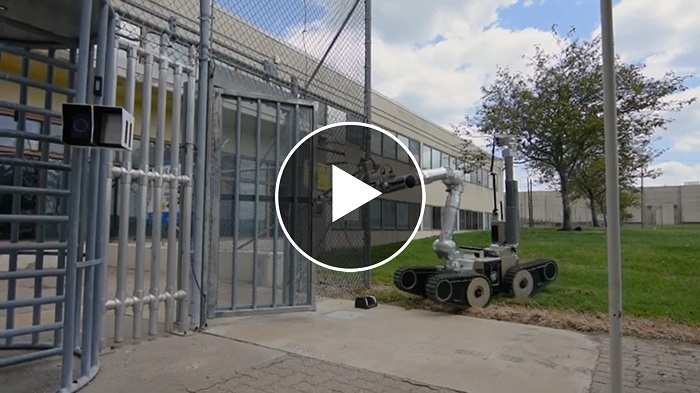 EMTV: Watch this video about a recent demonstration of the Paducah Police Department’s bomb squad robot in coordination with the Paducah Site’s protective force and emergency management organizations.
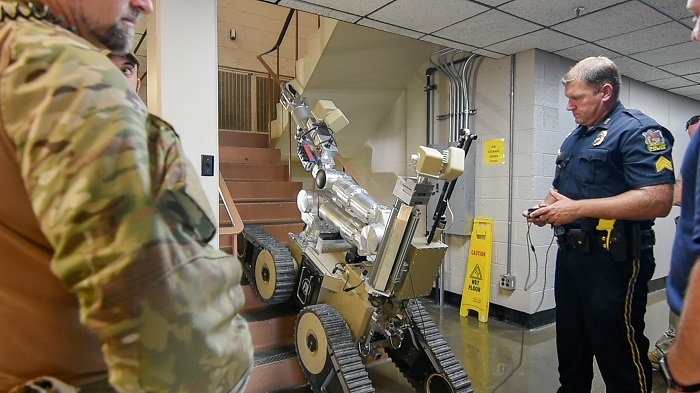 Paducah Police Department Sgt. Matt Hopp negotiates the department’s bomb squad robot on a staircase in the C-100 Administration Building at the Paducah Site during a joint training and demonstration with the site’s protective force officers.
The demonstration not only highlighted the technical proficiency of the PPD, but also underscored the importance of interagency cooperation in maintaining the safety of the Paducah Site. By working closely with local law enforcement, the U.S. Department of Energy (DOE) Office of Environmental Management can ensure all necessary resources are available in the event of an emergency, providing an added layer of security for the site and the surrounding community.
“[The mutual aid] agreement in place presents a tremendous opportunity for DOE and the PPD,” PPD Community Engagement Officer Blake Quinn said. “To have [PPD] resources available for DOE has a huge impact on public safety and the folks who work there. It also enhances our capabilities because we are presented with issues there we might not get outside the facility.”
The Paducah Site’s mutual aid agreement with the PPD is important to EM’s mission at the site, ensuring a coordinated and efficient response to a wide range of potential incidents, from natural disasters to potential security threats, all while increasing the overall preparedness and resilience of the Paducah community.
“Through continued collaboration, resource sharing and joint training exercises like the bomb squad demonstration, DOE and PPD are better equipped to respond to any challenges that may arise,” Allen added.
-Contributors: J.T. Crawford, Dylan Nichols
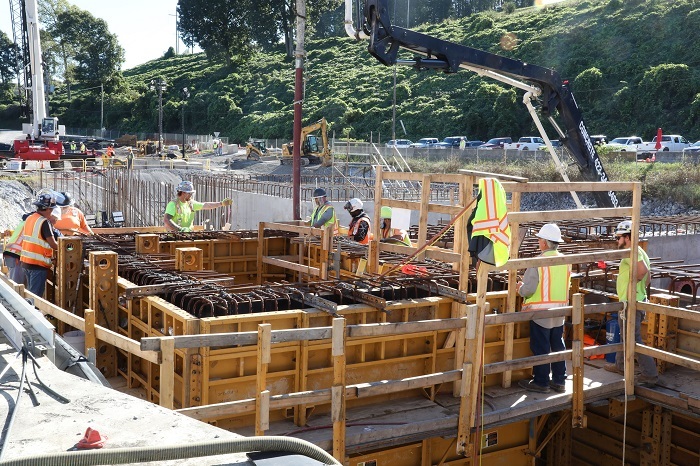 Oak Ridge crews pour concrete at the Mercury Treatment Facility’s headworks facility located at Outfall 200 at the Y-12 National Security Complex.
OAK RIDGE, Tenn. – The Oak Ridge Office of Environmental Management (OREM) and contractor UCOR continue making steady progress on the construction of the Mercury Treatment Facility at the Y-12 National Security Complex.
“The work underway is moving this crucial infrastructure project closer to completion, and it will enable the next major phase of cleanup at Y-12,” said Steve Clemons, OREM project manager.
That latest progress involves workers resuming erecting structural steel at the treatment plant after they finished installing three large sludge-settling tanks for the plant.
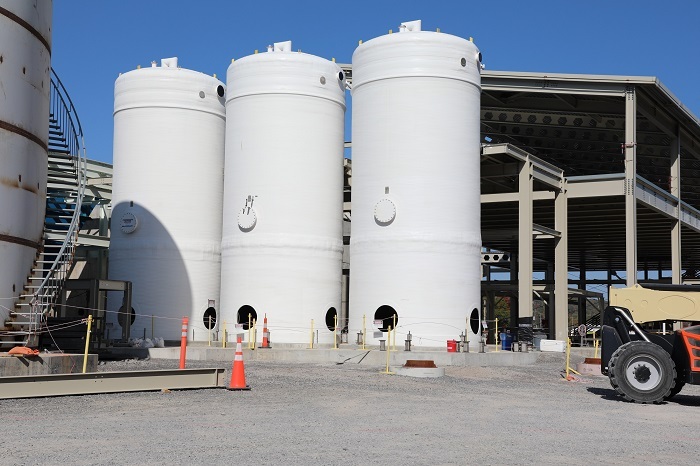 Oak Ridge workers have installed all three sludge-settling tanks at the Mercury Treatment Facility’s treatment plant. With those installed, crews can resume installing structural steel at the facility.
The Mercury Treatment Facility project encompasses two components at two locations: a headworks facility and a treatment plant, both connected by a half-mile-long transfer pipeline.
The headworks facility will capture flow from East Fork Poplar Creek on the west end of Y-12, store excess stormwater collected during large rainfalls, remove grit and pump water via the pipeline to the treatment plant on the east side of Y-12.
A small business supporting OREM’s cleanup, GEM Technologies is working with UCOR to perform this installation. The treatment plant still requires the installation of 760 pieces of steel with a combined weight of nearly 175 tons.
“Installation of the structural steel is a significant achievement,” said Jack Huminsky, a UCOR construction engineer for the facility. “UCOR and GEM Technologies crews are working together to enable safe placement of the steel.”
Concrete placement also continues at the headworks facility. So far this year, UCOR has poured more than 1,100 cubic yards, or 110 truckloads, of structural concrete.
“We have built and sustained a long-lasting partnership with UCOR in supporting mission critical projects across the Oak Ridge Reservation,” said Kent DeRoos, GEM vice president of field services. “These partnerships are a vital component to exceeding client expectations while solving some of the nation’s most complex challenges.”
The Mercury Treatment Facility is essential infrastructure that allows OREM to fulfill its regulatory commitments to reduce mercury levels in the creek and begin large-scale cleanup at Y-12. When operational, it will limit and control potential mercury releases as crews demolish massive Manhattan Project and Cold War-era buildings and address the soil beneath them.
Once completed, the facility will process up to 3,000 gallons of water per minute and collect stormwater in a 2 million-gallon storage tank.
-Contributor: Ella Stewart
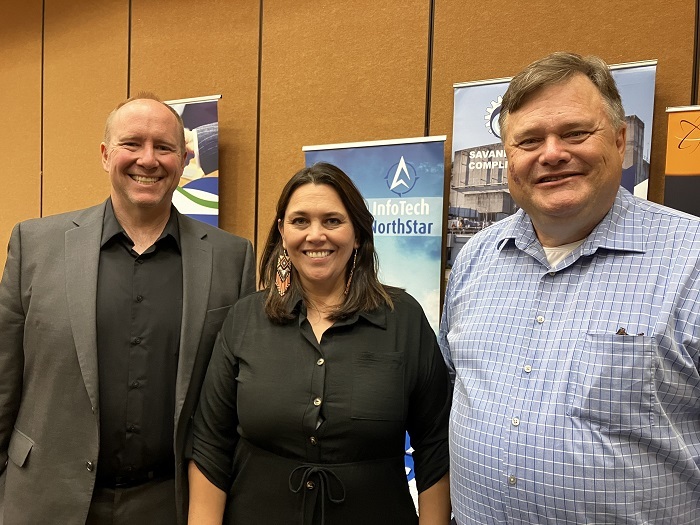 Savannah River Mission Completion attended the recent U.S. Department of Energy Mentor-Protégé Forum in Albuquerque, New Mexico, with its newest small business protégé, InfoTech NorthStar, as well as DBD, Inc. From left are InfoTech NorthStar leadership: Nolan Wright, vice president of operational technology and quality assurance, Silvina Wright, president and owner, and Dwight Brayton, vice president of information technology.
AIKEN, S.C. — A small business specializing in technology solutions is learning how to navigate business with the federal government from world-class experts through the U.S. Department of Energy (DOE) Mentor-Protégé Program at the DOE Office of Environmental Management‘s (EM) Savannah River Site (SRS).
SRS liquid waste cleanup contractor Savannah River Mission Completion (SRMC) recently added InfoTech NorthStar (ITNS) to its mentor-protégé program. SRMC is the EM contractor responsible for safely treating and disposing of the millions of gallons of radioactive waste remaining in underground tanks at SRS.
Since SRMC’s contract began in 2022, the contractor has supported the DOE Mentor-Protégé Program, an initiative that assists small businesses in improving capabilities as subcontractors across the DOE complex.
A disadvantaged woman-owned small business, ITNS provides support for operational technology, informational technology (IT) and quality assurance, specializing in safety-significant systems and software built for the DOE complex and its contractors.
SRMC Chief Information Officer Mirwaise Aurah works directly with ITNS on projects that support SRS liquid waste system engineering and facilities. He said working with ITNS has already proven to be a mutually beneficial partnership.
“InfoTech NorthStar is helping us by supporting our facilities with development of IT-related applications and technologies,” Aurah said. “And we are supporting them as the company scales from a startup phase to growing their clients significantly. SRMC is looking forward to the valuable support ITNS will continue to bring to the liquid waste cleanup mission.”
In addition to ITNS, SRMC mentors three other small businesses:
-
WesWorks, a local, woman-owned small business with project controls services;
- Columbia County Concrete, a local, woman-owned small business concrete supplier;
- DBD, Inc., a small business specializing in modeling and visualization tools that recently opened a local Aiken office.
One protégé company — BlueStar Rental and Sales, a local, HUBZone small business — has already completed the program. HUBZone stands for Historically Underutilized Business Zone.
-Contributor: Colleen Hart
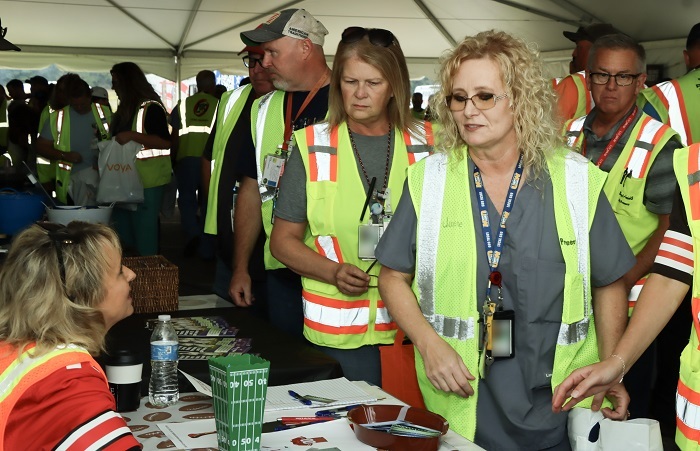 Employees at the Portsmouth Site visit with colleagues and vendors during the Health and Safety Fair.
PIKETON, Ohio — Safety is the highest priority at the Portsmouth Site, and more than 1,000 federal and contractor team members there recently joined the local community to refresh their focus on this core value during the site’s annual Health and Safety Fair.
“Each year the event gets bigger and better,” Portsmouth Site Lead Jeremy Davis said. “It is nice to see so many community and local partners participate and provide information at the Portsmouth Site.”
At the fair, vendors provide information on personal protective equipment such as work shoes and safety glasses. Local healthcare providers offer screenings for diabetes, blood pressure, body mass index and strength through grip testing.
“It’s a one-stop shop for all things health and safety related,” Event Coordinator Stephanie Neu said. “This is a good place to have fun while we refresh our focus.”
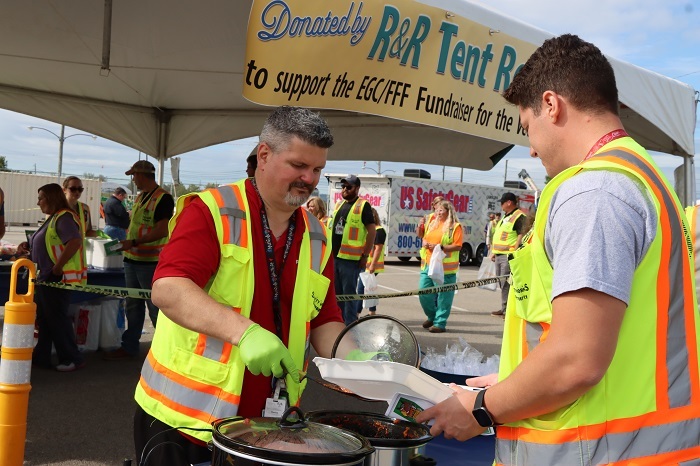 Fluor-BWXT Portsmouth Public Affairs Supervisor Donnie Locke serves food to Environmental Science Technician Isaac Mullins during the Health and Safety Fair at the Portsmouth Site. The lunch served as a fundraiser for the Feds Feed Families program.
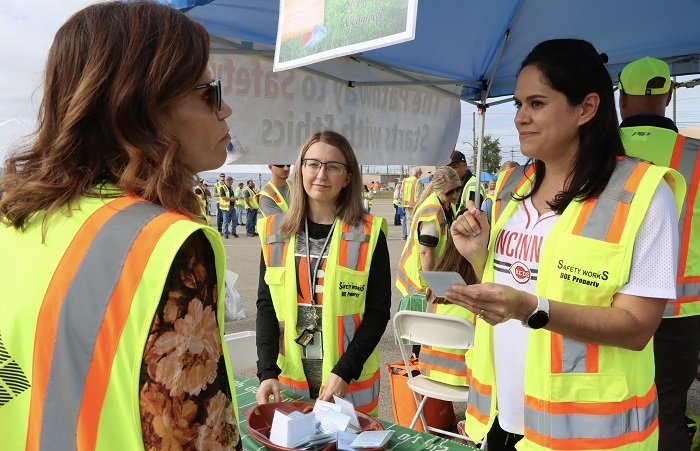 Manager Lydian Torres Garcia, right, and Internal Auditor Rachel Thompson, center, from Fluor-BWXT Portsmouth Compliance and Internal Audit, quiz Environmental Science Supervisor Jodi Hall on ethics fundamentals during the Health and Safety Fair.
Several departments at the U.S. Department of Energy Office of Environmental Management site set up booths at the event, offering games and trivia about safety to win prizes. The event also provided opportunities to learn more about the site’s Diversity Council and to support a Feds Feed Families event by purchasing a lunch. Since Feds Feed Families launched in 2009, the campaign has collected more than 107 million pounds of food for donation.
“Not only is this a place where employees can get health screenings and play safety trivia for prizes, but it’s a place where they can share the importance of safety with one another, and that is where our culture strengthens,” said Greg Wilkett, project manager for Fluor-BWXT Portsmouth, the prime contractor for the Portsmouth Site’s decontamination and decommissioning project.
-Contributor: Shawn Jordan
|