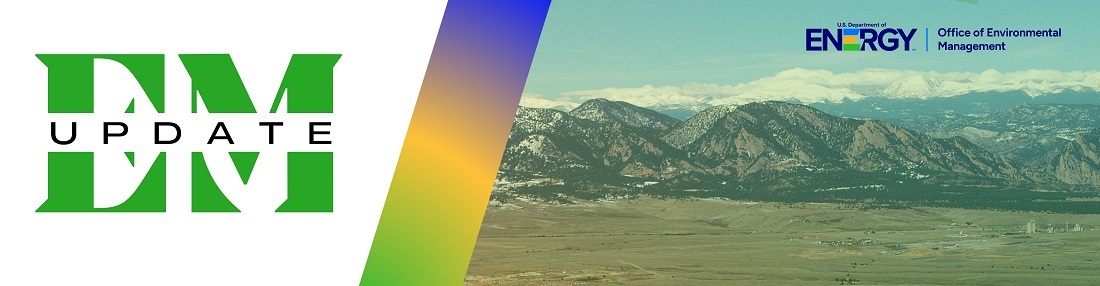
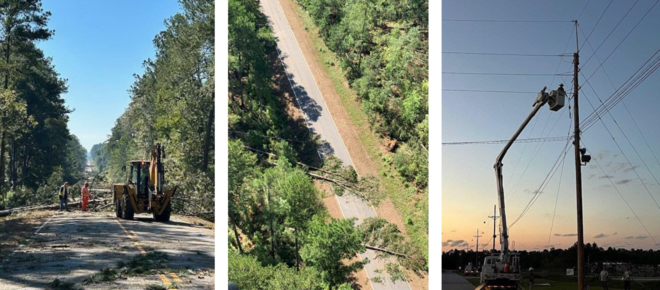
 Savannah River Nuclear Solutions Site Services and the Savannah River Site Fire Department cleared thousands of downed trees and power lines. Power lines spanning over three miles were repaired to restore normal configuration of the site’s electrical grid.
AIKEN, S.C. — In the wake of Hurricane Helene’s devastating impact in the Southeast, the Savannah River Site (SRS) mobilized teams from Savannah River Nuclear Solutions (SRNS) Site Services, SRS Emergency Response Organization (ERO), SRS Fire Department (SRSFD), Centerra-SRS and U.S. Department of Agriculture Forest Service–Savannah River to address extensive damage, repairs and recovery efforts across the site.
“The impacts of Hurricane Helene to the site and our neighboring communities were unprecedented and remain challenging for many,” said Mike Budney, manager, U.S. Department of Energy (DOE) Savannah River Operations Office. “Team SRS stepped up response efforts immediately to ensure the safety of personnel, the environment and our nuclear facilities. I’m extremely proud of the outstanding work of our emergency preparedness and essential personnel — all of our workforce — in coming together to serve and lend support in this difficult time.”
 |
|
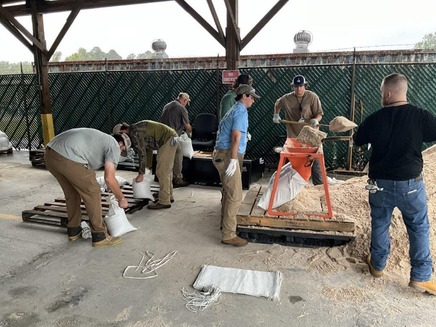
Savannah River Nuclear Solutions Site Services personnel filled over 2,500 sandbags in preparation for Hurricane Helene. |
With thousands of trees uprooted and utility lines down, essential employees worked around the clock to restore SRS to normal operations.
“Nearly all major roadways at SRS were impacted by fallen trees or downed power lines. The majority of this was cleared and restored in two days,” said Donny Barfield, director, SRNS Site Services. “We plan for these extreme weather events, so our team was prepared to begin work on recovery efforts immediately.”
In preparation for the storm, SRNS Site Services and the Savannah River National Laboratory Atmospheric Technologies Group implemented the severe weather procedure. Activities included staging equipment in three response zones, filling 2,500 sandbags and adjusting shift schedules. The hurricane made landfall as a Category 4 storm late in the evening of Sept. 26, bringing wind gusts up to 82 mph.
“Nearly 80 Site Services employees consisting of heavy equipment operators, road crews and six linemen reported to the site during initial recovery efforts. The team collaborated with the SRSFD and the U.S. Forest Service to clear roadways and rescue several motorists trapped inside their vehicles,” continued Barfield.
SRSFD Fire Chief Travis Scott added, “The fire department mobilized all available personnel in the immediate aftermath of the storm, with over 50 employees actively engaged in tree removal, rescuing trapped civilians and responding to various emergencies caused by the storm. I am incredibly proud of the unified effort demonstrated by all.”
During recovery efforts, the site was in an operational emergency status, or a state of heightened alertness and operational flexibility to manage unforeseen challenges.
“In the face of Hurricane Helene, the ERO turned a potential crisis into a showcase of our strength and collaboration,” said Neal Gilmore, SRNS director of Safeguards, Security and Emergency Services. “I witnessed firsthand how our proactive emergency protocols and the swift decision-making of all site tenants enabled us to manage water intrusion and process interruptions with no significant impact to site operations. This experience has underscored the strength of our response teams and the power of coming together in times of crisis.”
SRS coordinated with offsite fuel shipments of gasoline, ethanol and diesel fuel to ensure SRS critical loads were supplied. Over 14,000 gallons of gasoline and diesel fuel were provided to essential employees to combat offsite gas shortages. In addition, SRNS subcontractor Russell’s Pizza provided nearly 7,500 meals to responding employees. Weather and safety leave was made available to all full-service employees unable to work.
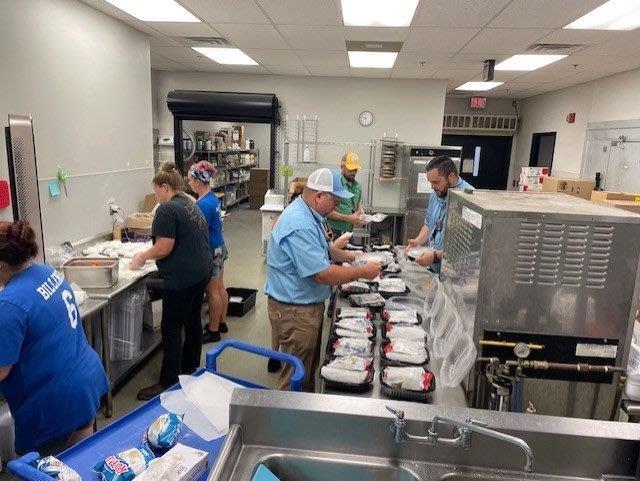
Nearly 7,500 box lunches were provided to on-duty essential personnel by Savannah River Nuclear Solutions subcontractor Russell’s Pizza. |
|
 |
Recovery teams were able to clear thousands of trees and power lines from SRS roadways, repair approximately three miles of power lines and replace over 30 power poles and 60 cross arms. In addition, SRS assisted the South Carolina Department of Transportation with clearing debris on South Carolina Highway 125 and U.S. Route 278, and collaborated with Dominion Energy to restore the site’s electrical grid.
Dennis Carr, SRNS president and CEO, believes responding personnel demonstrated remarkable resilience in the wake of Hurricane Helene.
“Our employees’ commitment to safety and their tireless efforts around the clock have been instrumental in restoring the site to normal operations,” said Carr. “In the face of adversity, they have not only demonstrated exceptional work ethic but have reaffirmed our dedication to each other and the community. Together, we can rebuild and emerge stronger than ever before.”
-Contributor: Mackenzie McNabb
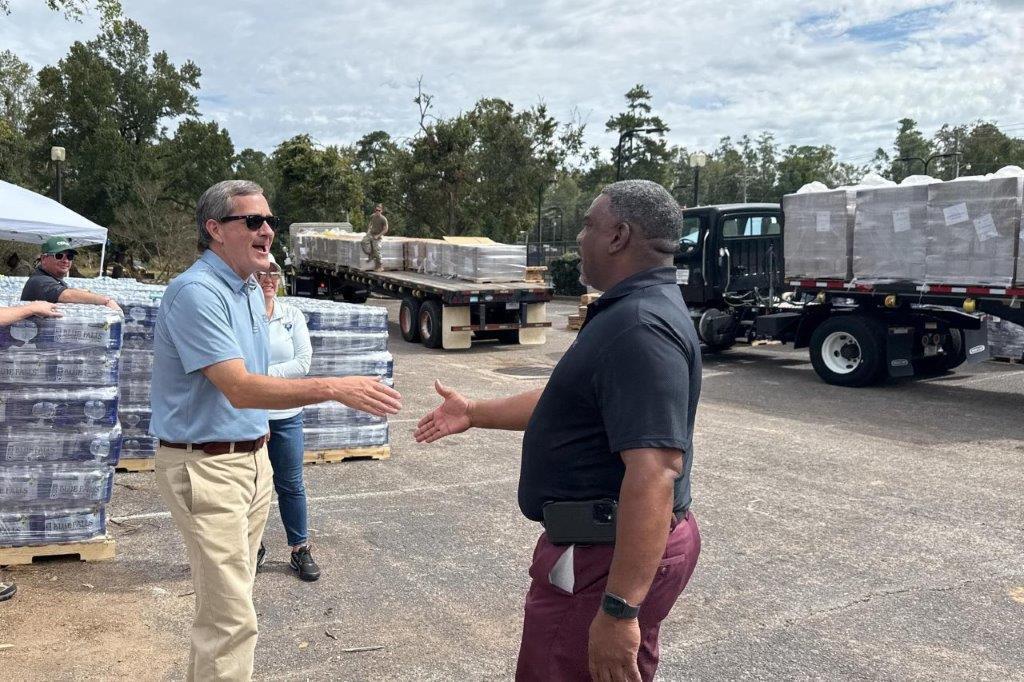 Savannah River Nuclear Solutions Central Warehousing Manager Donald Smalls, right, meets North Augusta Mayor Briton Williams, left, after delivering over 30,000 ready-to-eat meals from the Savannah River Site to support hurricane relief efforts.
AIKEN, S.C. — In a collaborative effort to support local relief agencies recovering from Hurricane Helene, nearly 40,000 ready-to-eat meals were recently distributed by the National Nuclear Security Administration (NNSA), U.S. Department of Energy-Savannah River (DOE-SR) and Savannah River Nuclear Solutions (SRNS).
As part of its continuity of operations plan, the Savannah River Site (SRS) maintains a stock of the meals to ensure essential operations during emergencies.
The meals were originally purchased as a contingency to sustain operations during the COVID-19 pandemic. If not used, they would expire in January, according to Michael Mikolanis, manager, NNSA-Savannah River Field Office.
“This was a great win-win to support our local community by providing more than 39,000 meals to agencies and first responders working Hurricane Helene recovery,” he said.
Tammy Rimes, SRNS senior director of Supply Chain Operations and Programs, said it was remarkable to see team members come together to successfully navigate the crisis and execute delivery of the meals within 24 hours.
“The process of preparing, loading and transporting the meals to each agency was truly inspiring,” she said.
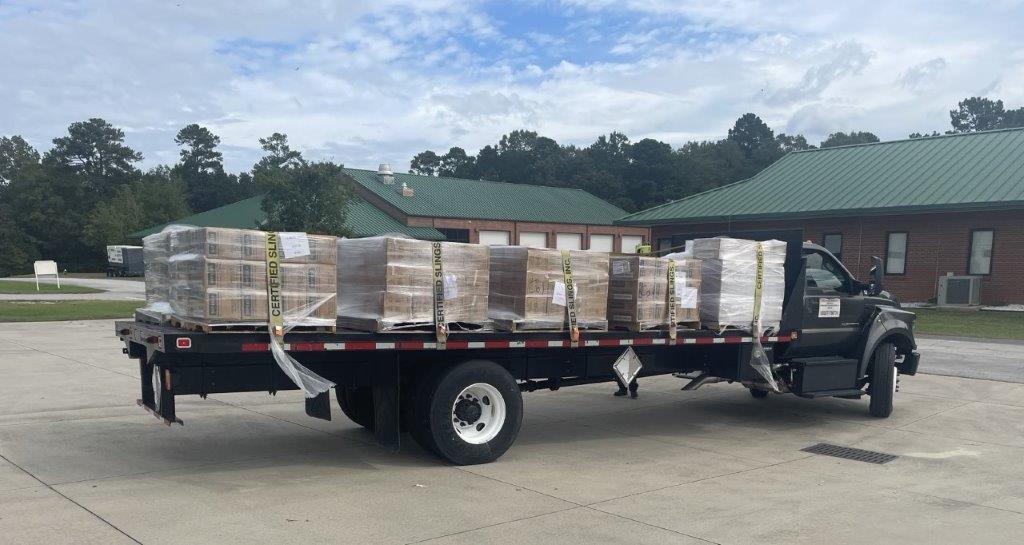 Ready-to-eat meals prepared for transport to community relief agencies.
Recipients of the meals included the North Augusta Community Center, Aiken Regional Medical Center, Augusta University, Wellstar MCG, Georgia East Central Public Health District, Burke County Emergency Management, South Carolina Fire Academy and Allendale Emergency Management.
“The leadership displayed across NNSA, DOE-SR, and SRNS is unmatched and essential to the success of SRS. We recognize that our employees and community are still recovering from the devastating impacts of Helene,” said Mike Budney, manager, DOE-Savannah River Operations Office. “This is more than just a meal; it reflects our commitment to uplift those affected, and further support the brave first responders working tirelessly to help.”
In addition, SRNS contributed $50,000 to the American Red Cross of Central South Carolina and East Central Georgia for storm recovery relief efforts.
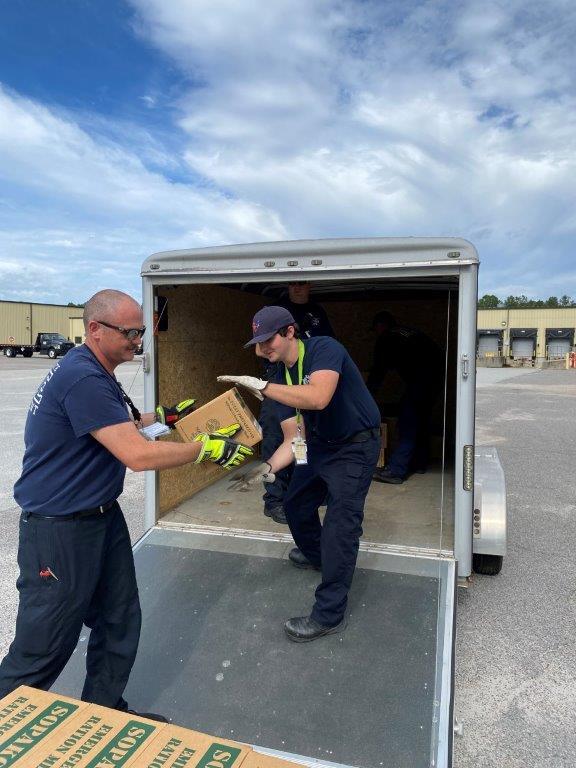
The Savannah River Site Fire Department's David Satterwhite, left, and Camden Stanley load ready-to-eat meals for delivery to Allendale County Emergency Management. |
|
 |
“Our hearts are with those impacted by this storm,” said Dennis Carr, SRNS president and CEO. “By supporting our local American Red Cross branches, SRNS is helping our neighbors rebuild and recover quickly from this disaster. Together, we can turn this challenge into a renewed strength for our community.”
Susan Landreth-Everitt, executive director for the East Central Georgia chapter of the American Red Cross, expressed gratitude for the ongoing support from SRNS.
“Nearly 1,900 American Red Cross responders are actively assisting communities across the Southeast as they come to grips with the extensive losses caused by Hurricane Helene,” said Landreth-Everitt. “Our work is far from over. With SRNS’ generous donation, we will be there to support those in need as they recover in the weeks and months to come.”
-Contributor: Mackenzie McNabb
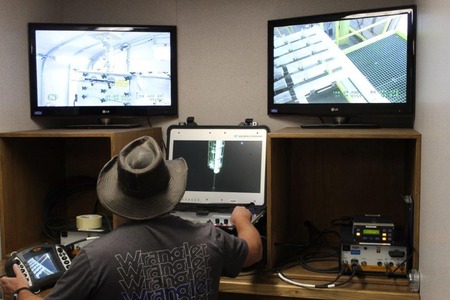
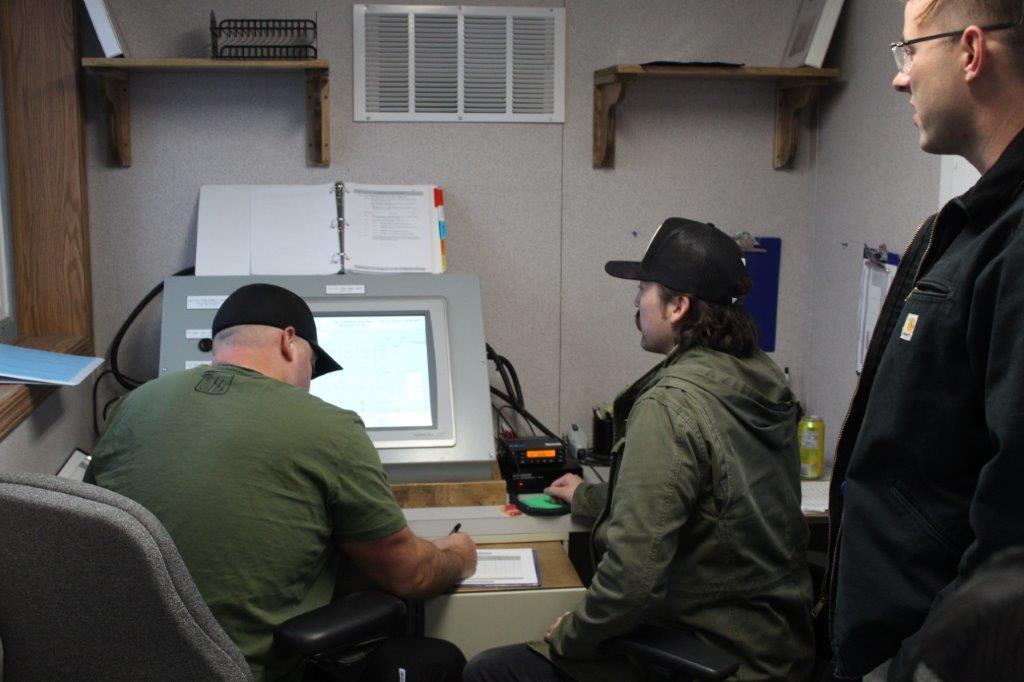 Hanford Site tank operations contractor Washington River Protection Solutions staff monitor a Test Bed Initiative (TBI) demonstration. Pictured are Operator Matt Fiorito, left, TBI Operations Engineer Jaryd Anderson, center, and TBI Engineer Keenan Moll, right.
RICHLAND, Wash. — About 2,000 gallons of radioactive and chemical tank waste is one step closer to disposal as part of a treatment technology demonstration at the Hanford Site.
Hanford tank operations contractor Washington River Protection Solutions (WRPS) recently completed treatment operations of the Test Bed Initiative (TBI) demonstration project. This project utilized a treatment system placed inside one of the site’s massive underground waste storage tanks to remove cesium and other solids from 2,000 gallons of low-activity tank waste, removing over 98% of the radioactivity.
“This was an exciting project for our Operations team,” said Peggy Hamilton, WRPS Retrievals & West Operations manager. “Removing waste from a tank is nothing new, but using a treatment system placed inside a tank is something we have not done at this scale on the Hanford Site, and it’s an exciting accomplishment.”
Watch this video for more information.
 |
|
Nuclear chemical operators, like Joe McCoy, pictured, monitor the pretreatment activities of the Hanford Site’s Test Bed Initiative demonstration, utilizing cameras placed inside a temporary shelter. |
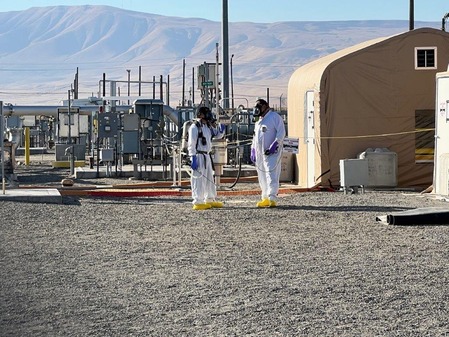
Industrial hygiene technicians with tank operations contractor Washington River Protection Solutions monitor the area where the Test Bed Initiative demonstration is operating at the Hanford Site. |
|
 |
To support the current 2,000-gallon TBI activity, the Washington State Department of Ecology conducted a public comment period earlier this year, including a public information session, before issuing a research, development and demonstration permit for the 2,000-gallon TBI in July.
“The TBI demonstration project does not impact operations to immobilize tank waste in glass under the Direct-Feed Low-Activity Waste Program and supports the Department’s goal to consider additional options for safely and efficiently treating low-activity waste at Hanford,” said Katie Wong, U.S. Department of Energy Office of Environmental Management Tank Farms Programs Division.
Samples of the treated waste will now be sent for laboratory testing. This testing, combined with robust packaging, will ensure that the treated low-activity waste is well below the limits for safe transportation and commercial disposal in Texas and Utah. In the extremely unlikely case of a severe accident, the highest potential radiation exposure for an individual would be less than that from a single abdominal x-ray.
The TBI demonstration and shipment will provide valuable information supporting the Department’s commitment to safely and efficiently progressing Hanford cleanup.
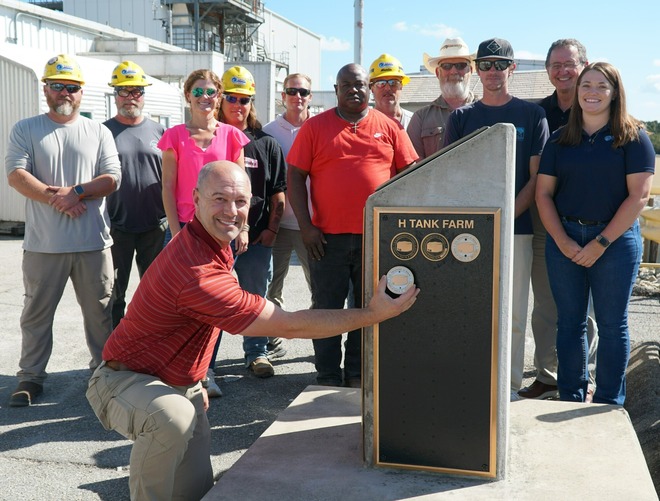 Jim Rush, H Area Waste Retrieval and Tank Closure manager for Savannah River Mission Completion, ceremoniously places a medallion commemorating the preliminary cease waste removal milestone for Tank 9 in the Savannah River Site’s H Tank Farm. This milestone marked concurrence from state and federal regulators to suspend waste removal activities in Tank 9 and move to the next step in the closure process, accomplishing a Federal Facility Agreement milestone. Pictured with Rush are some members of the Tank 9 closure team representing construction, operations, facility integration, radiological control, design authority engineering, project management and senior leadership.
AIKEN, S.C. — The U.S. Department of Energy (DOE) Office of Environmental Management received concurrence this month from the South Carolina Department of Environmental Services (SCDES) and U.S. Environmental Protection Agency (EPA) that the Savannah River Site (SRS) has successfully removed waste from Tank 9 and may now proceed to the next step in the closure process for that tank.
Completing this phase of work on the waste tank, called preliminary cease waste removal (PCWR), is the second waste-tank-related Federal Facility Agreement (FFA) milestone completed by SRS liquid waste contractor Savannah River Mission Completion (SRMC) this year. The first PCWR milestone was achieved for Tank 10 in May, seven months ahead of the agreed-upon December 2024 deadline.
PCWR for Tank 9 was accomplished more than a year ahead of the December 2025 deadline.
PCWR is a regulatory milestone for old-style tanks that designates agreement between DOE, SCDES, and EPA that, based on preliminary information, there is reasonable assurance that performance objectives for tank closure will be met. Also, the concurrence means that work can begin on the sampling and analysis phase of the tank closure process. This next phase will verify these conclusions, based on laboratory analysis of any remaining material and final residual volume determination, prior to stabilization and final isolation of the waste tank.
The FFA establishes a procedural framework, including liquid waste-tank milestone agreements and other site cleanup priorities. It also specifically outlines the schedule for the waste removal and operational closure of the remaining 16 oldest-style tanks at SRS. Eight of the 51 tanks at SRS have already been operationally closed. All 43 remaining waste tanks are slated to be operationally closed by 2037.
Jim Folk, DOE-Savannah River assistant manager for waste disposition, said PCWR continues to be a significant step toward achieving tank closure.
“Completing waste-tank closure milestones ahead of schedule is of exceptional interest to our regulators, our stakeholders and our communities,” Folk said. “The environmental management work that the Department of Energy is completing at the Savannah River Site, such as preliminary cease waste removal, is benefiting our workers and the public alike.”
Tank 9 was also the first tank to have a drone used in the annulus inspection process. The tank’s annulus provides secondary containment and protection for these tanks in the event of a leak. Before drones, wall-crawling robots were used for the inspections. The drones provide more flexibility and capability, as the aircraft can cover more area than a magnetic crawler — and do so more quickly.
SRMC Chief Operations Officer Wyatt Clark said PCWR efforts at SRS continue to be a huge success.
“Most importantly, the team has been safe while completing a tremendous task in our mission to safely dispose of radioactive waste, demonstrating our effort to accomplishing another FFA commitment, and ultimately, completing the SRS liquid waste mission by 2037,” Clark said.
Tank 9 is an underground storage tank placed into service in 1955. It is 75 feet in diameter and stands 24.5 feet tall and has a capacity of 750,000 gallons.
-Contributor: Colleen Hart
Team holds community forum in Las Vegas, New Mexico
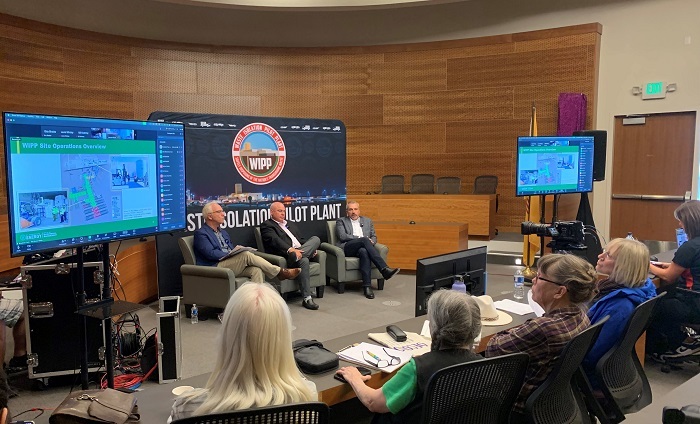
LAS VEGAS, N.M. — The Waste Isolation Pilot Plant (WIPP) team held a community forum in Las Vegas, New Mexico, last week with participants joining in person and virtually. WIPP periodically holds community forums throughout New Mexico to increase the public’s engagement and understanding of WIPP’s New Mexico and national cleanup mission under the U.S. Department of Energy Office of Environmental Management (EM). The forums, or public meetings, were also held in Roswell and Carlsbad this past year.
Moderator Tom Carroll, left, assisted while Mark Bollinger, center, manager of EM’s Carlsbad Field Office, and Ken Harrawood, right, president and program manager of Salado Isolation Mining Company, provided a WIPP operations update and answered questions from the audience. Most of the two-hour session was devoted to Q&A, with many questions centered around the safety of transporting defense-related transuranic waste to WIPP.
CAST Specialty Transportation truck drivers, New Mexico State Police vehicle inspectors and New Mexico WIPP Transportation Safety Program Manager Eletha Trujillo were in attendance and helped answer questions. A CAST semi-tractor truck and platform with empty transuranic waste shipping containers was parked outside to give attendees a closer look and the opportunity to ask questions. Salado Isolation Mining Contractors is WIPP’s prime management and operations contractor, and CAST is the contractor hauling waste shipments from EM sites to WIPP.
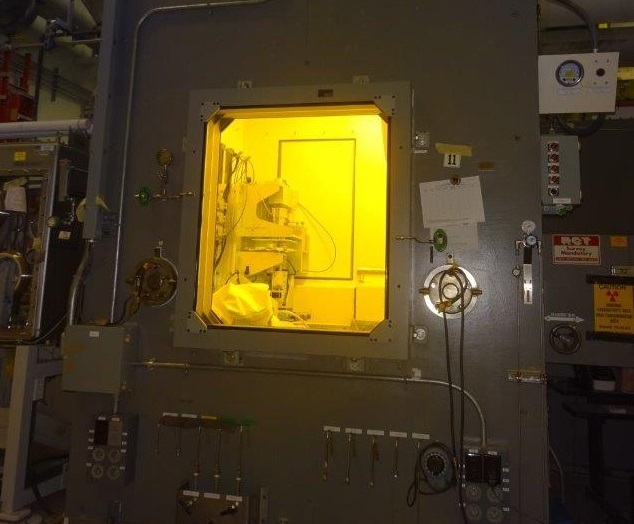 A newly installed hot cell window at the Hanford Site’s 222-S Laboratory improves visibility and sets up the lab to continue supporting Hanford’s cleanup mission.
RICHLAND, Wash. — Workers recently completed an 18-month project of replacing 11 hot cell windows at the 222-S Laboratory on the Hanford Site.
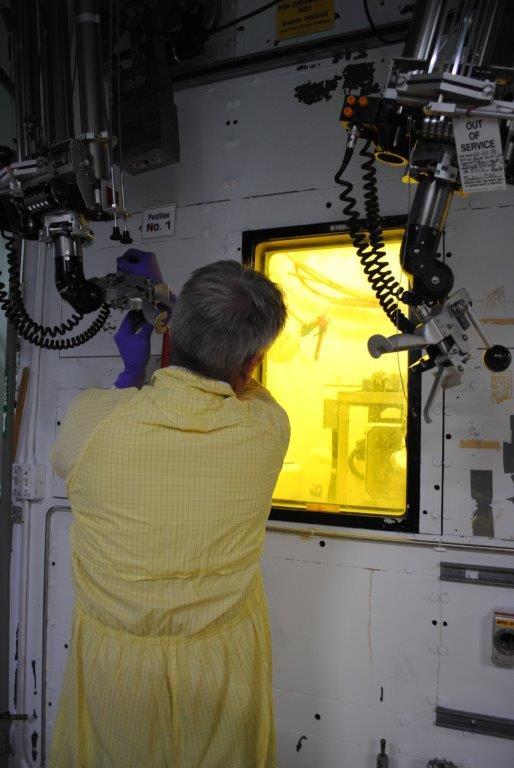
Hanford contractor Navarro-ATL manages the laboratory, which provides critical analyses for all onsite projects. Lab technicians use specially designed hot cells to remotely handle highly radioactive samples of tank waste while minimizing radiation exposure.
“The 222-S Laboratory is the primary lab analyzing radioactive samples at the Hanford Site,” said Delmar Noyes, Hanford assistant manager for Tank Waste Operations. “These upgrades help keep lab technicians safe as the cleanup mission progresses."
 |
|
A 222-S Laboratory technician uses a mechanical manipulator in a hot cell to remotely analyze a sample. Crews recently replaced 11 hot cell windows, improving safety and reliability in the lab. |
The replacement work required substantial planning and preparation, including radiation controls and mock-ups, not only because the solid glass windows weighed between 5,000 and 10,000 pounds each, but also because the work was done while continuing operations.
"Installing the new windows is a significant achievement for Navarro-ATL," said Ray Geimer, Navarro-ATL general manager. "Completing this project improves visibility into the hot cells and sets up the 222-S facility to continue to reliably support the Hanford cleanup mission.”
In addition to the window replacement project, Navarro-ATL is also renovating outdated laboratory rooms, replacing aging analytical equipment and hot cell manipulator arms.
These projects position the laboratory to expand its capacity as operations begin at Hanford’s Waste Treatment and Immobilization Plant. The plant is part of the Direct-Feed Low-Activity Waste Program, which will treat tank waste by immobilizing it in glass for safe disposal.
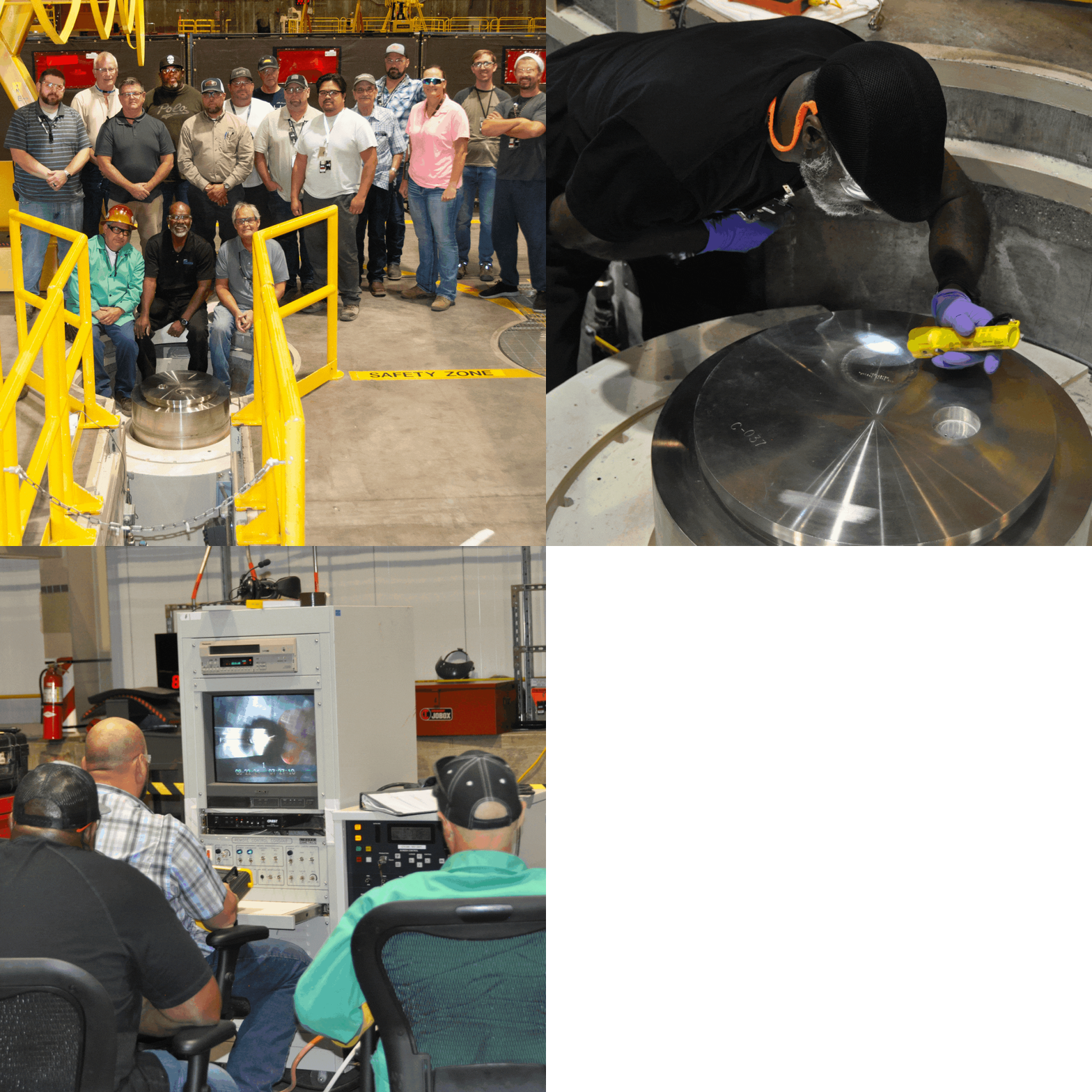 Workers with U.S. Department of Energy Office of Environmental Management contractor Central Plateau Cleanup Company recently finished welding covers on 15 containers of spent fuel at the Canister Storage Building at the Hanford Site.
RICHLAND, Wash. — U.S. Department of Energy Office of Environmental Management contractor Central Plateau Cleanup Company (CPCCo) recently “put the lid” on a project to permanently seal 15 stainless steel containers of spent nuclear fuel, reducing risk at the Hanford Site.
In the early 2000s, workers welded covers onto nearly 400 containers of spent fuel in interim storage at Hanford’s Canister Storage Building (CSB). However, they left the covers unwelded on 15 containers, called multi-canister overpacks (MCO), as part of a long-term monitoring plan.
After the monitoring program was complete, the CSB project team reestablished the welding program to place the remaining MCOs into long-term storage.
“As we focus on risk reduction and mission progress, permanently sealing the final MCOs not only improves safety and security of interim spent fuel storage, but also saves money by reducing annual monitoring and maintenance costs,” said Andy Wiborg, Hanford Field Office acting deputy assistant manager for River and Plateau cleanup.
The CSB supports Hanford’s cleanup mission by providing interim storage for about 2,300 tons of irradiated spent nuclear fuel from the N Reactor and other former Hanford facilities. The 42,000-square-foot facility on Hanford’s Central Plateau is composed of three underground concrete vaults, each capable of holding 220 carbon-steel tubes. The MCOs are stored in the tubes until a final disposal decision is made.
“So many people played a role in the safe and compliant completion of this critical risk-reduction project,” said CPCCo Project Manager Lance Guzek. “From all our support organizations to operations to management, and of course to our welding crews, it was a true team effort.”
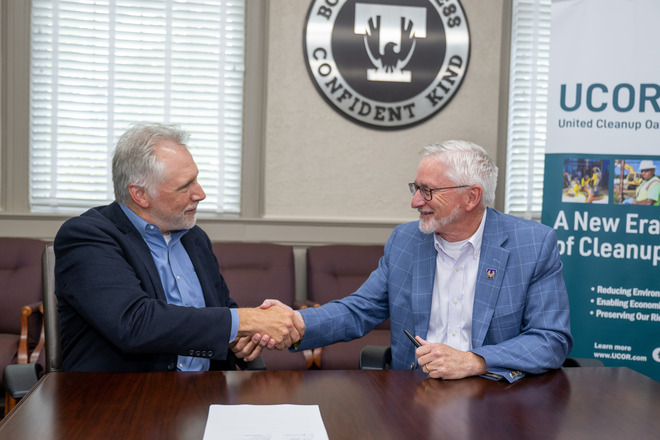 UCOR President and CEO Ken Rueter, left, and Tennessee Tech University President Phil Oldham sign an agreement last year formalizing a partnership between the school and the contractor. UCOR provided support that helped the university launch its new nuclear engineering degree this fall.
OAK RIDGE, Tenn. — Environmental cleanup and transformation are happening across the Oak Ridge Reservation, and leadership with Oak Ridge Office of Environmental Management (OREM) and contractor UCOR are focused on ways to maintain that momentum.
One of the highest priorities is maintaining and attracting a workforce capable of taking on the complex projects slated in the years ahead as experienced employees approach retirement.
Recent OREM and UCOR initiatives have focused on expanding partnerships with higher education. These collaborations help train and educate the future federal and contractor workforce, and they’re also benefiting the colleges and universities involved.
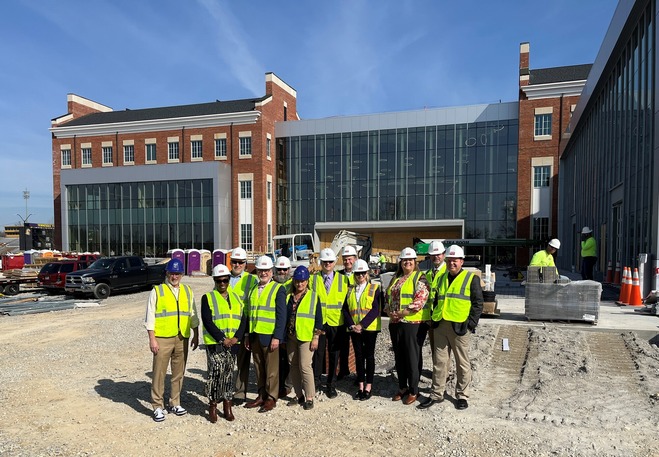 Oak Ridge Office of Environmental Management and UCOR leadership take a tour of the new Ashraf Islam Engineering Building that houses nuclear engineering classes at Tennessee Tech University. The school hosted a grand opening in October.
The latest partnership helped Tennessee Tech University launch a new bachelor’s degree in nuclear engineering this fall.
"Looking at the overall needs in the industry, there did appear to be some niches that were a good fit for Tennessee Tech without being duplicative,” said Tennessee Tech President Phil Oldham. “We surveyed students, and they were very interested in pursuing this pathway.”
This is only the second nuclear engineering program currently available in the state of Tennessee, and it will create greater accessibility for students to enter the nuclear industry.
"If we can keep folks in state, we want to do that,” said OREM Manager Jay Mullis. “UCOR has been working very closely over the past year, and they’ve put in quite a bit of effort into helping Tennessee Tech establish that program as a feeder for all the nuclear work that's now taking place in East Tennessee."
 |
|
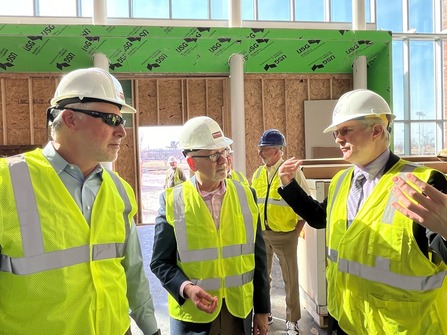
From left: UCOR President and CEO Ken Rueter and Oak Ridge Office of Environmental Management Manager Jay Mullis tour the construction of the new Ashraf Islam Engineering Building with Joseph Slater, dean of the College of Engineering at Tennessee Tech University. |
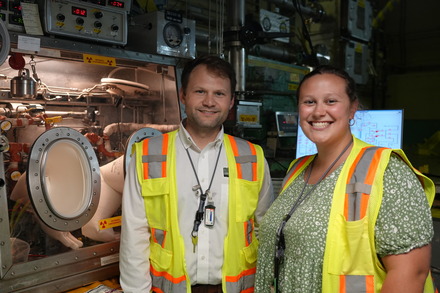
Tennessee Tech University intern Avery Newman, right, with mentor Garrett Hester at the Molten Salt Reactor Experiment at Oak Ridge National Laboratory. |
|
 |
The inaugural class already has 23 students, and the university expects to enroll nearly 50 students in the program by its fifth year. Hitting those projections would increase the number of nuclear engineering graduates in the state by nearly 30%.
UCOR provided Tennessee Tech with subject matter experts to help as the school developed its curriculum, and they also shared insight into how courses would best fit the industry and the needs within the state.
Through this partnership, UCOR also provides students with hands-on experience and career opportunities, collaborations on research projects, and scholarships and other financial assistance.
Since 2022, UCOR has hosted 18 interns from Tennessee Tech, with several joining the workforce full time.
“Developing and maintaining a trained workforce to work in hazardous nuclear environmental cleanup projects is essential to the future of companies like ours,” UCOR President and CEO Ken Rueter said. “Our industry needs the leaders that this program is producing. In Oak Ridge alone, there are jobs for decades to come associated with environmental cleanup.”
The new nuclear engineering degree adds to the College of Engineering’s eight accredited engineering programs with 17 additional concentrations, six master’s degree programs, and a college-wide Ph.D. program that supports chemical engineering, civil and environmental engineering, computer science, electrical and computer engineering, manufacturing engineering technology, and mechanical and aerospace engineering.
-Contributor: Shannon Potter
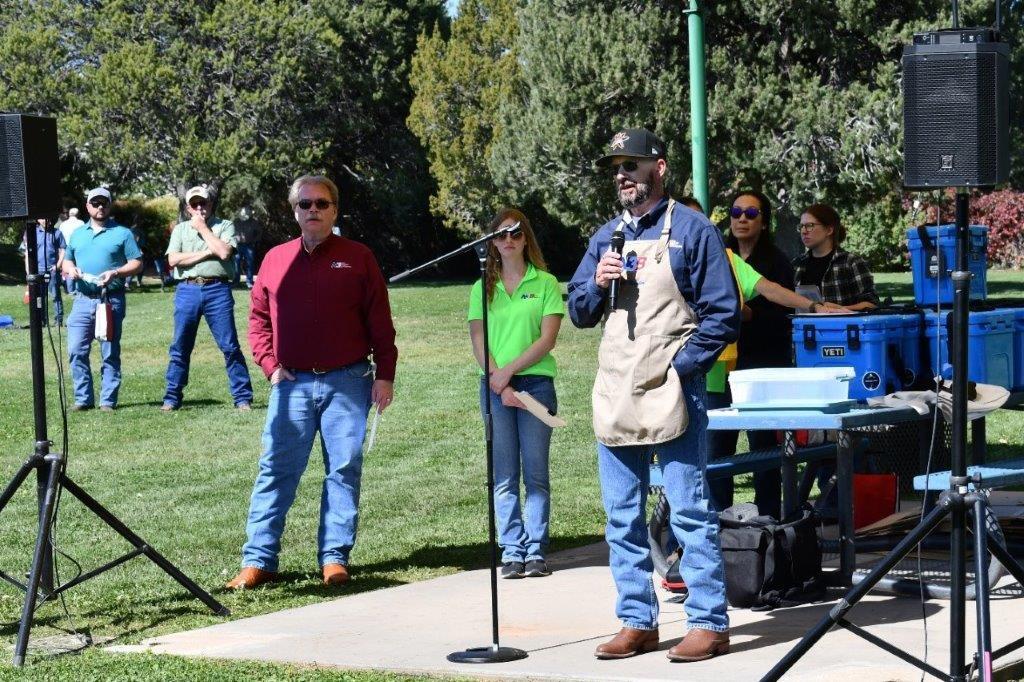 Newport News Nuclear BWXT Los Alamos (N3B) President and General Manager Brad Smith welcomes employees to the Safety Fair, highlighting N3B’s focus on safety performance and continuous improvement. “What I’m most proud of in all our fiscal year 2024 accomplishments is our team’s emphasis and focus on how the work is performed. We completed our work safely while maintaining our attention on N3B’s three key success factors: safety first, safety always; operational excellence driving environmental success; and one team, one mission,” Smith said.
LOS ALAMOS, N.M. — Newport News Nuclear BWXT Los Alamos (N3B), the legacy cleanup contractor at the Los Alamos National Laboratory, recently held its annual Safety Fair. The event recognized N3B employees for performing cleanup work safely and for improving safety performance over the course of fiscal year 2024.
 |
|
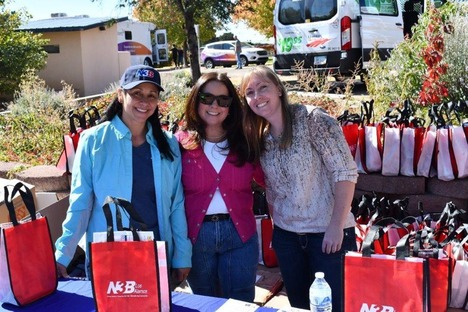
From left, Security Specialist Margaret Trujillo, Emergency Preparedness Specialist Andrea Romero and Security Specialist Bridget DeLanoy welcome employees to the Safety Fair. |
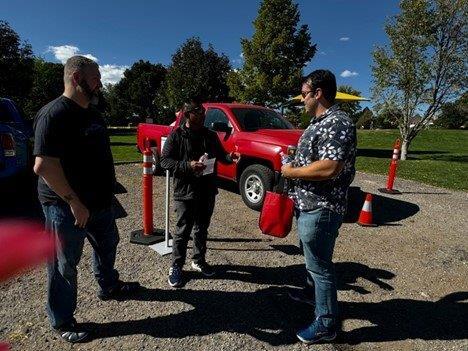
Newport News Nuclear BWXT Los Alamos employees participate in a vehicle safety demonstration. |
|
 |
 |
|
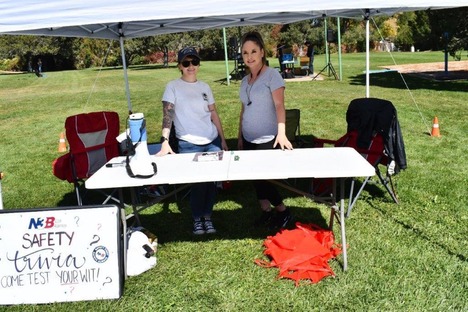
Maintenance Planner Amy Trujillo, left, and Work Operations Manager Erica Salazar host a safety trivia quiz stand as part of the Newport News Nuclear BWXT Los Alamos Safety Fair. |
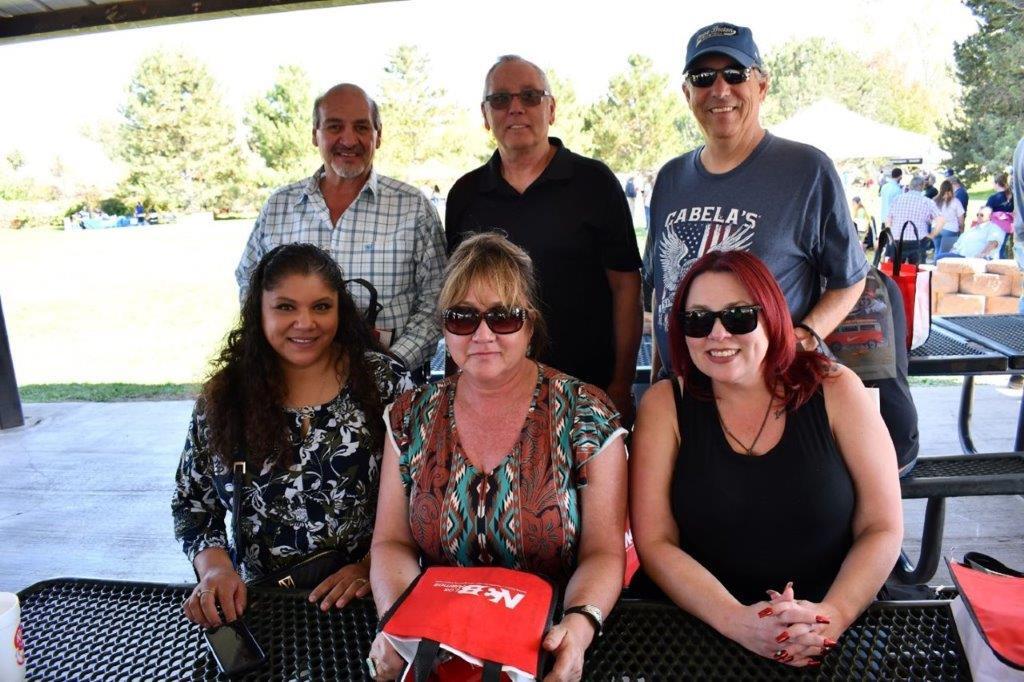 Members of the Newport News Nuclear BWXT Los Alamos Mission Excellence organization’s subcontract representative team. “Any time you are working with people, there is room for error. The potential is there. We work with electrical, septic and other areas to make sure procedures are followed and aligned and consistent throughout,” Subcontract Representative Angela Herrera said. Back, left to right: Victor Serrano, William Grimmer, Thomas Greigo; front, left to right: Cassandra Rios, Angela Herrera, Audrey Sanchez.
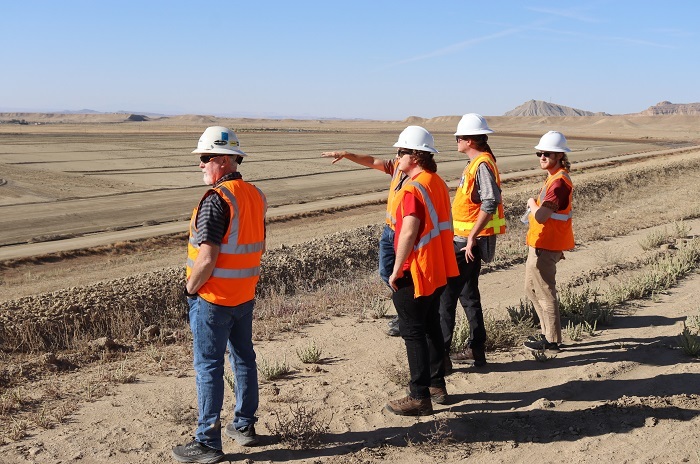 Students from the University of Utah American Nuclear Society Student Section look out over the Moab Uranium Mill Tailings Remedial Action Project’s Crescent Junction site disposal cell.
MOAB, Utah ― Students from the University of Utah’s American Nuclear Society (ANS) Student Section recently toured the U.S. Department of Energy (DOE) Office of Environmental Management’s (EM) Moab Uranium Mill Tailings Remedial Action (UMTRA) Project sites.
Earlier this month, members of the university's ANS Student Section toured both the Moab and Crescent Junction sites of the Moab UMTRA Project, interacting with federal staff and project experts.
At the Moab Site, the group observed work operations, seeing close-up the multipart process of tailings removal, which has been ongoing since 2009. When DOE took possession of the property in 2001, an estimated 16 million tons of uranium mill tailings were present. To date, DOE has removed a cumulative 15 million tons of that pile.
While at the Moab Site, the group also toured the well field, learning about the project’s groundwater interim action activities, which protect the nearby Colorado River from site contaminants.
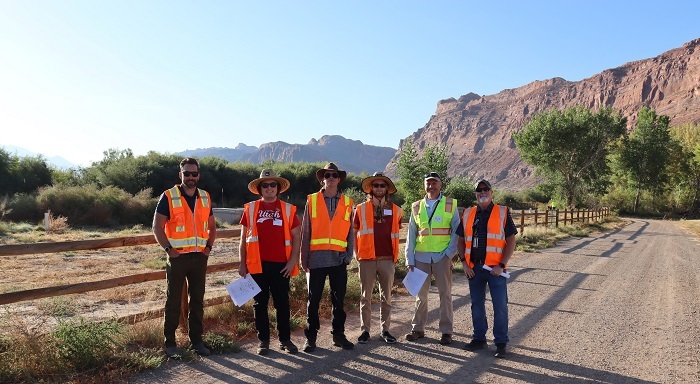 Moab Uranium Mill Tailings Remedial Action Project staff and University of Utah American Nuclear Society Student Section members visit the Moab Site well field.
Thirty miles north at the Crescent Junction site, the group watched the second step in the tailings journey: disposal cell placement. Since the engineered disposal cell is in the process of being filled, the group saw active tailings placement and compaction and learned about the proposed evapotranspiration cover, which will be the upper-most layer or “cap” on the cell.
“It was great to have the students visit our site to learn firsthand about the ongoing cleanup work that DOE is doing. We want to encourage students, especially those in science and engineering, by giving them real world examples and experience. These individuals could potentially be the future of DOE,” Moab Project Engineer Chris Pulskamp said.
-Contributor: Barbara Michel
|