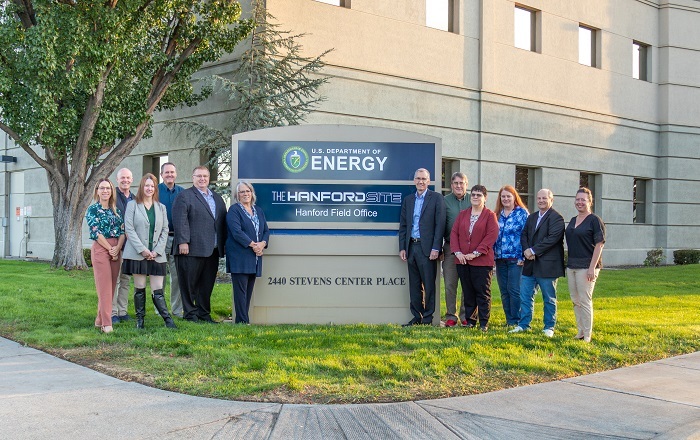
 The Hanford Field Office leadership team gathers around a new sign today at the Stevens Center Complex in Richland, Washington, after a morning meeting. The Hanford Field Office is the newly-named U.S. Department of Energy office leading the Hanford Site cleanup and takes the place of two legacy offices at the site.
RICHLAND, Wash. — The two U.S. Department of Energy (DOE) offices responsible for performing the Hanford Site’s environmental cleanup work have been combined under a new name, the Hanford Field Office, beginning today.
The Richland Operations Office had been in place since the late 1960s after the Hanford Site transitioned from the U.S. Atomic Energy Commission. In 1989, the mission of the Hanford Site and the Richland Operations Office changed from national security to environmental cleanup.
Congress created the DOE Office of River Protection (ORP) as part of the National Defense Authorization Act for Fiscal Year 1999. ORP was established to provide a singular focus on delivering the capability to safely treat chemical and radioactive waste stored in massive underground tanks at Hanford.
“With the capability of large-scale tank waste treatment now in the commissioning process through the Direct-Feed Low-Activity Waste facilities and program, the objective for which ORP was created has been effectively achieved,” said Brian Vance, manager of the now-combined Hanford Field Office.
“Over the last several years, we’ve taken organizational steps to address redundancies between the offices, realizing efficiencies and enhancing our alignment toward achieving our cleanup goals. The office combination is the logical next step in establishing an integrated and galvanized enterprise to successfully lead the full scope of the cleanup mission into the future,” Vance said.
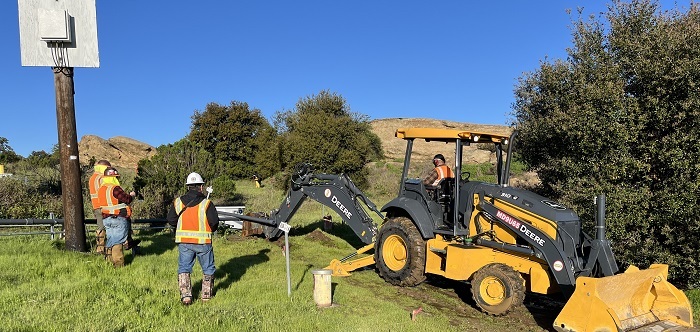 U.S. Department of Energy contractors with CDM Smith and Raymond Padilla, a Native American monitor with the Santa Ynez Band of Chumash Indians, provide oversight of trenching activities in April during the installation of an automated pumping system in the Former Sodium Disposal Facility at the Santa Susana Field Laboratory. Photo courtesy of Aps Bakouros.
SIMI VALLEY, Calif. — An agreement between the U.S. Department of Energy (DOE), state officials and local tribal governments has been extended for 10 years, allowing cleanup to continue at the Santa Susana Field Laboratory (SSFL).
DOE, California State Historic Preservation Officer (SHPO) Julianne Polanco and the Santa Ynez Band of Chumash Indians signed an amendment to their Programmatic Agreement under the National Historic Preservation Act. The agreement provides a roadmap for making decisions that affect cultural resources at the Energy Technology Engineering Center (ETEC) in Area IV, a 290-acre portion of SSFL.
SSFL is a 2,850-acre former rocket engine testing and nuclear research facility with four operations areas located northwest of Los Angeles, California. DOE’s Office of Environmental Management (EM) is charged with cleanup of residual contamination remaining in Area IV.
The amended agreement extends the agreement another 10 years and allows DOE to continue making progress toward cleaning up its portion of SSFL. The agreement, which was developed with input from many interested parties and the public, documents an agreed-upon process to avoid, minimize or mitigate impacts on cultural resources from DOE’s cleanup activities. Important cultural resources at ETEC include archaeological sites and a cultural district associated with the practices and traditions of local Native American communities.
Agreements like this ensure that DOE follows the many laws related to environmental cleanup while preserving the rich history of the local area.
“A lot of things go into a successful cleanup — safety, cultural and biological considerations, and community perspectives — and extending this agreement is just one piece of the puzzle that allows us to keep making progress,” said Josh Mengers, EM’s federal project director for ETEC. “We’re gathering input and coordinating with the relevant state and federal agencies so we can keep everyone informed and involved with what’s going on at the site.”
DOE followed the agreement, which was executed in September 2019, when it completed the above-ground demolition of its 18 remaining buildings, disposal of all waste offsite and installation of several new wells.
More recent progress includes the May installation of a groundwater interim measure system. The automated solar-powered groundwater system was installed near the Former Sodium Disposal Facility and has pumped more than 19,000 gallons of water to date.
“The amended Programmatic Agreement allows DOE to continue moving forward with cleanup activities following a step-by-step process that includes continued coordination with the SHPO, tribal governments and the public,” said Karen Foster, cultural resources manager at the ETEC site.
The agreement will help DOE with ongoing groundwater monitoring and interim cleanup actions like removing more than 40,000 gallons of contaminants from the groundwater at ETEC. It will also guide future actions like initiating final groundwater treatment approaches and beginning soil remediation.
Read the agreement and accompanying annual reports on the ETEC website to learn more about DOE’s recent activities at SSFL.
-Contributor: Melissa Simon
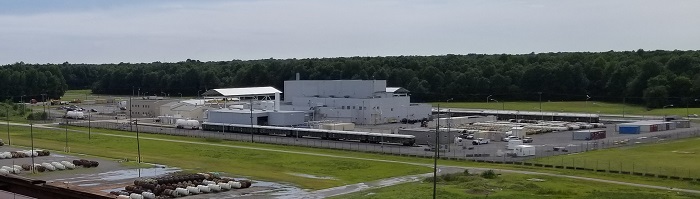 A view of the Depleted Uranium Hexafluoride Conversion Facility at the Paducah Site. After completing upgrades, the plant safely returned to operations this year.
LEXINGTON, Ky. — The U.S. Department of Energy Office of Environmental Management’s plants that convert depleted uranium hexafluoride (DUF6) to more stable compounds recently returned to full operations at both the Portsmouth and Paducah sites’ first-of-a-kind facilities.
“The successful restarts were achieved by our workforce through careful and deliberate adherence to conduct of operations, while also continuing to improve the plants through implementing multiple plant upgrades, setting us up for continued success in the years ahead,” said Zak Lafontaine, DUF6 lead for the Portsmouth Paducah Project Office in Lexington. “This recent experience sets a new benchmark for excellence in operational reliability for the project.”
Recent plant upgrades include enhanced process control systems, upgraded uranium hexafluoride flowmeters and the implementation of a new process data historian. Safely restarting nuclear facilities after being shut down takes hard work and a safe, conservative approach.
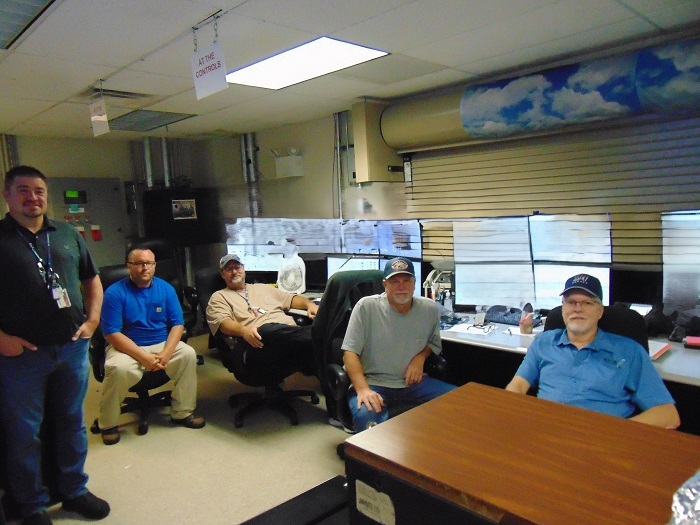 Portsmouth Site Depleted Uranium Hexafluoride Facility team members gather in the control room before restarting the plant after a successful outage earlier this year.
The upgraded control systems replaced the plant's original system, offering improved reliability and security. The new flowmeters enhance the accuracy of uranium hexafluoride flow rates, facilitating better process control and reducing downtime caused by poor oxide powder quality.
Additionally, the historian collects and analyzes operational data, providing insights that help manage plant operations, troubleshoot equipment issues and optimize processes. These interrelated upgrades are expected to drive continued success for the plants in the future.
The Paducah Site in Kentucky recently exceeded a project record by running all four conversion lines continuously for 41 straight days, demonstrating the benefits of the recent improvements as well as the determination and focus of the DUF6 team.
“This is an exciting time for us at DUF6,” said Dutch Conrad, project manager for Mid-America Conversion Services, the DUF6 operations and maintenance contractor. “Our team has worked diligently to bring both plants back online safely and efficiently.”
The Portsmouth Site in Ohio recently completed a successful planned maintenance outage, during which plant upgrades were implemented seamlessly, while maintaining a world-class safety record and surpassing 4.5 years without a lost-time injury.
Commissioned in 2010 and 2011, the DUF6 facilities convert the decades’ worth of enrichment byproducts from the former Paducah, Portsmouth and Oak Ridge, Tennessee, gaseous diffusion plants. The resulting materials are depleted uranium oxide and aqueous hydrofluoric acid for safe reuse or disposal.
-Contributor: Kearney Canter
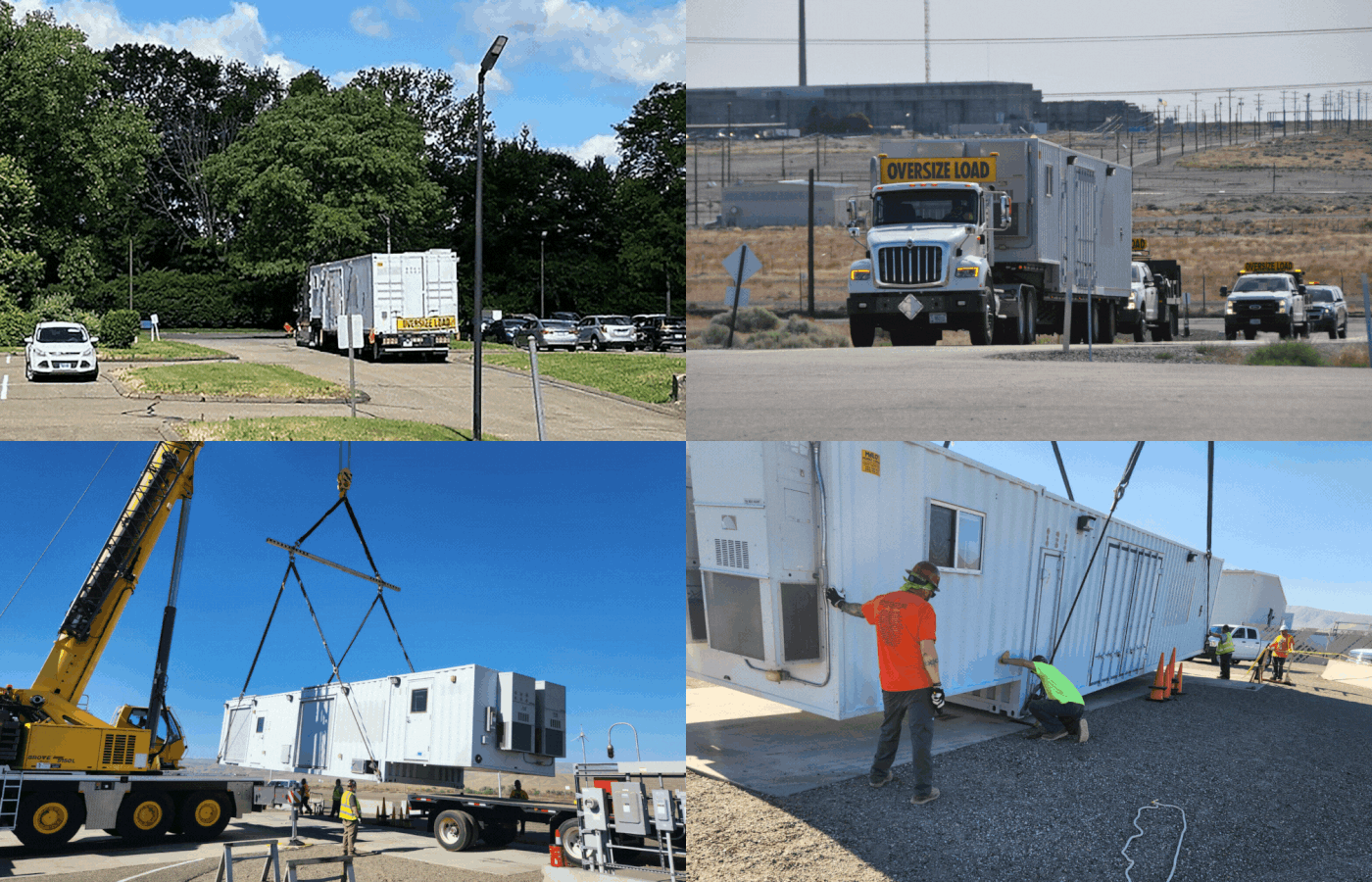 Crews with Hanford Site contractor Central Plateau Cleanup Company recently welcomed the return of specialized equipment to support the site’s capability to certify containers of waste for shipment and disposal at the Waste Isolation Pilot Plant in New Mexico.
RICHLAND, Wash. — Crews at the Hanford Site recently welcomed the return of specialized equipment sent offsite for refurbishment nearly a year ago.
The super high efficiency neutron counter, also known as the Super HENC, is just one of three of its kind in the country. The “super” power of this self-contained, mobile unit comes from its ability to accurately scan and measure the amount and type of radioactive waste in containers.
This equipment will play a key role in the U.S. Department of Energy Office of Environmental Management transuranic waste certification process. Transuranic waste consists of tools, rags, protective clothing, sludges, soil and other materials contaminated with radioactive elements, including plutonium.
It was upgraded to support Hanford’s capability to certify containers of waste for disposal at the Waste Isolation Pilot Plant (WIPP) in New Mexico.
“The equipment contributes to Hanford’s mission of risk reduction by enabling the efficient certification of transuranic waste as we prepare to resume shipments to WIPP,” said Kelly Ebert, Hanford’s director for projects and facilities. “Refurbishing the equipment not only supports this mission but also resulted in significant time and cost savings compared to purchasing new.”
All transuranic waste shipped to WIPP must be approved by a WIPP-certified program and comply with WIPP’s disposal, packaging and transportation requirements.
“Getting the Super HENC prepared for waste certification operations was a true team effort,” said Tim Southworth, Transuranic Waste Program manager for Hanford contractor Central Plateau Cleanup Company. “So many different groups contributed to the success of this important project.”
Crews will begin certifying transuranic waste at Hanford in 2026, with shipments to WIPP set to resume in 2028.
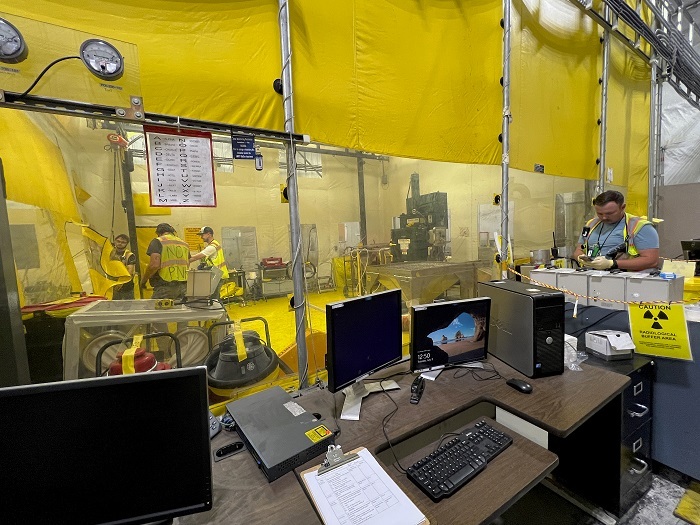 Workers prepare the inner contamination enclosure for waste handling operations at the Advanced Mixed Waste Treatment Project at the Idaho National Laboratory Site.
IDAHO FALLS, Idaho — Cleanup crews at the Idaho National Laboratory (INL) Site are using a soft-sided enclosure — basically a building within a building — to open containers to treat and repackage transuranic waste inside of them, enabling the material to be compliantly shipped to the Waste Isolation Pilot Plant (WIPP) in New Mexico for permanent disposal.
U.S. Department of Energy Office of Environmental Management (EM) contractor Idaho Environmental Coalition recently began repackaging waste in the recently upgraded contamination enclosure within the Waste Management Facility-635 building at the Advanced Mixed Waste Treatment Project (AMWTP).
Transuranic waste, a byproduct of the nation’s nuclear defense program, consists of materials like clothing, rags, tools, gloves, debris and residue leftover from handling items with radioactive properties. These items are packaged and then secured inside solid, shielded vaults. The waste is then transported to the WIPP underground repository and emplaced in perpetuity.
At the INL Site, the metal-framed, soft-sided shelter is made of a heavy-duty, plastic-like canvas fabric called herculite. A reverse-flow ventilation system draws air from inside the enclosure toward HEPA filters, effectively containing contamination within the structure.
The upgraded enclosure is being used primarily to open drums or containers classified as newly generated waste. That is waste generated because of repackaging, treatment, retrieval, characterization, and handling of retrieved or stored legacy waste, or resulting from maintenance. The enclosure is outfitted with multiple power tools to allow employees dressed in personal protective equipment and respiratory protection to reduce the size of larger items.
“This upgraded enclosure is allowing us to continue our efforts to align small waste streams with the acceptance criteria and get them shipped,” AMWTP Manager Dave Martin said.
The enclosure will likely be used for the duration of AMWTP’s mission. The site continues to send eight shipments a week to WIPP.
EM has successfully employed soft-sided contamination enclosures in Idaho in the past for a variety of uses, including opening and repackaging degraded waste containers, sizing large metal items like steel girders and using cutting tools to reduce the size of large, contaminated gloveboxes.
“Our crews have an outstanding track record of safety and performance in these enclosures,” said Martin.
The vast majority of 65,000 cubic meters of transuranic and low-level waste at AMWTP originated at the former weapons production facility known as the Rocky Flats Plant near Denver, Colorado. Crews have retrieved, characterized, treated, certified and shipped for disposal about 73% of that inventory since 2000.
-Contributor: Erik Simpson
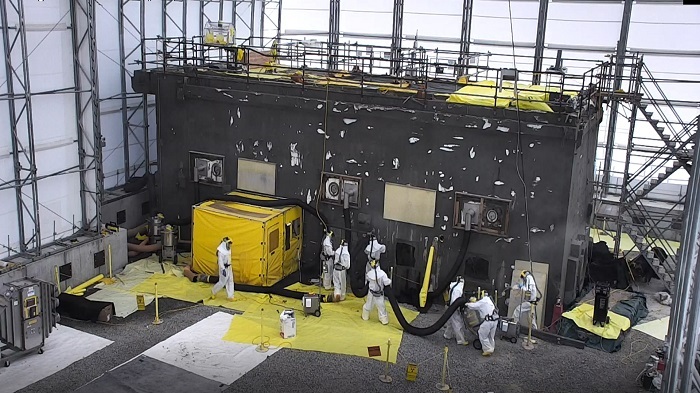 U.S. Department of Energy Office of Environmental Management crews are preparing to apply grout and concrete in the final hot cell of the former Radioisotope Development Laboratory at Oak Ridge National Laboratory. The work will stabilize the waste and provide shielding for workers. Demolition is expected to begin next year.
OAK RIDGE, Tenn. — Cleanup crews are making steady progress on deactivation projects across Oak Ridge National Laboratory (ORNL) to prepare for the next wave of demolitions as they continue transforming the site.
Crews with Oak Ridge Office of Environmental Management (OREM) and cleanup contractor UCOR are performing deactivation in 13 buildings at ORNL. A precursor to demolition, deactivation places an excess facility into a stable condition to minimize existing risks and protect workers, the public and the environment.
The projects, underway in a wide range of structures, come on the heels of two successful teardowns and a significant milestone toward a third. Workers demolished the Bulk Shielding Reactor and Low Intensity Test Reactor, and in recent weeks, they removed the reactor vessel from the Oak Ridge Research Reactor to prepare it for knockdown.
Work continues in six former isotope labs in an area known as Isotope Row. The other buildings where deactivation is progressing include the Experimental Gas-Cooled Reactor, two development laboratories, an old process waste treatment facility and the Graphite Reactor support facilities.
“We have a tremendous amount of work going on in the heart of ORNL’s campus,” said James Daffron, ORNL portfolio federal project director. “We’re laying the foundation for significant, visible changes in the years ahead that will open land to support important research missions.”
 Workers have transitioned the 107,000-square-foot Experimental Gas-Cooled Reactor at Oak Ridge National Laboratory to the cold and dark state and completed initial deactivation activities, primarily in the underground areas.
Deactivation is nearing completion at the Graphite Reactor support facilities, where demolition is expected to begin in 2025. The former Radioisotope Development Laboratory is also scheduled for demolition next year.
In the Fission Product Development Laboratory, crews continue to investigate and characterize the facility’s numerous hot cells. They are taking radiation measurements and high-resolution videos to better understand the contents of each cell to support future deactivation activities. Hot cells are thick, concrete rooms, heavily shielded to provide protection from highly radioactive material.
Teams have placed the former Process Waste Treatment Plant in the cold and dark state by isolating all potential energy sources.
Deactivation work is ongoing in six of the 11 buildings comprising Isotope Row. In the largest of those, the Isotope Development Laboratory, workers have made the first shipment of transuranic waste for permanent disposal from the facility, and they are isolating and removing equipment.
Crews have also removed four large krypton tanks from the Isotope Row facilities. Krypton-85 was stored in four 2,000-pound, 9-foot-long horizontal tanks used in thermal diffusion operations.
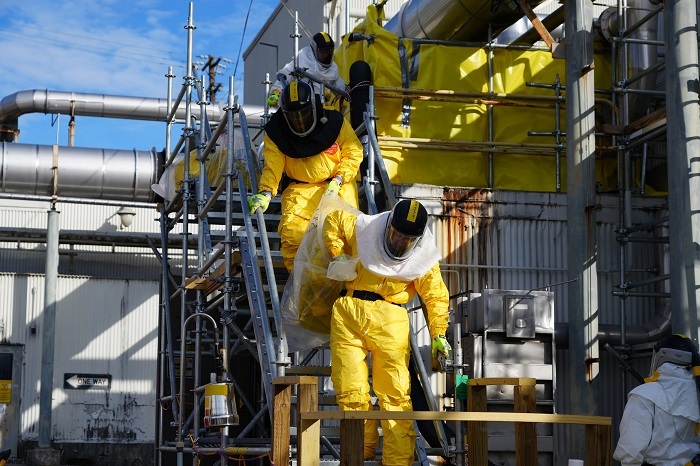 Deactivation activities are in full swing at Oak Ridge National Laboratory’s Isotope Row facilities. Crews used a scaffolding staircase system equipped with handrails and landings that proved invaluable in providing safe access to and from the rooftop as they removed HEPA filters on top of the facilities.
Workers transitioned the 107,000-square-foot Experimental Gas-Cooled Reactor to the cold and dark state and completed initial deactivation activities, primarily in the underground areas.
“I am continually amazed by our workers. Even during these long hot summer days, they keep the projects moving forward. It is a significant challenge for them when we have extreme heat to work in the protective equipment required in these high-risk facilities,” said Larry Brede, UCOR site integration and cleanup manager. “Fortunately, our workforce has a high-level commitment to keeping themselves and their co-workers safe every day.”
In addition to the work underway at ORNL, OREM and UCOR are moving forward on major cleanup projects at the Y-12 National Security Complex, where demolition began last month on the Alpha-2 complex.
-Contributor: Carol Hendrycks
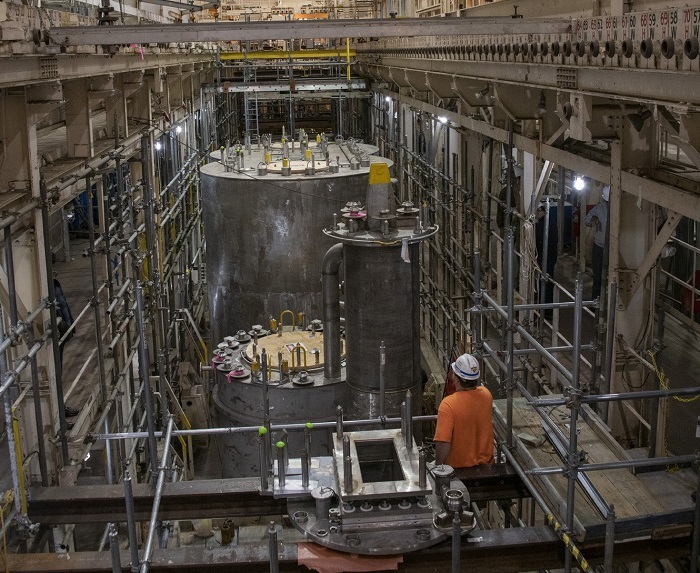 Crews installed an electrolytic dissolver in the H Canyon Chemical Separations Facility at the Savannah River Site to dissolve nuclear material and support the U.S. Department of Energy’s nonproliferation mission. Before installing the dissolver at H Canyon, employees conducted test runs in a mock-up facility.
AIKEN, S.C. — In another major milestone, the H Canyon Chemical Separations Facility at Savannah River Site (SRS) recently started dissolving nuclear material from a Japanese research reactor, leading to its safe disposal.
The U.S. Department of Energy Office of Environmental Management achievement follows years of preparation by multiple site contractors and involved replacement of an electrolytic dissolver and its support equipment to process Japan’s Fast Critical Assembly fuel.
The electrolytic dissolver system was designed and built by SRS in the 1960s. Replacing it required extensive planning, testing and engineering to revitalize this one-of-a-kind capability.
“The Fast Critical Assembly fuel is different than the other material we have recently been dissolving in H Canyon because it is coated in stainless steel cladding, rather than aluminum,” said Janice Lawson, senior vice president of Environmental Management Operations for Savannah River Nuclear Solutions, the site’s management and operations contractor. “The other dissolvers in the canyon are chemical dissolvers that use nitric acid to process the fuel; however, nitric acid alone doesn’t work on stainless steel.”
This is not the first time H Canyon has performed electrolytic dissolution. From 1969 to 1980, the facility used this method for fuel clad in stainless steel and zirconium. The fuel is lowered into a nitric acid solution, and electricity is used to dissolve the stainless steel cladding and fuel. This produces a liquid that is sent through the site’s liquid waste facilities, where it is made into glass through the process of vitrification. It is then safely stored onsite until a federal repository is identified.
“I’ve had the privilege of seeing this material arrive at the site in 2016 as well as the opportunity to oversee the progress and hard work it took to get to the point of dissolution,” Lawson said. “The team has faced a lot of hurdles to get here, but have used their ingenuity, capacity for teamwork and their vast knowledge to make this happen. This is a big day for the Department of Energy, National Nuclear Security Administration (NNSA), the Japan Atomic Energy Agency, Savannah River Site and the entire nation.”
The Japan Atomic Energy Agency sent the reactor’s plutonium fuel along with funding for the disposition to SRS, fulfilling a pledge by Japan and the U.S. to remove all separated plutonium and highly enriched uranium from the reactor in Japan. The fuel is currently stored onsite and is being transferred to the canyon for dissolution on a prescribed schedule. The entire campaign is expected to take 18 to 24 months to complete.
“We appreciate the employees of H Canyon, K Area, Savannah River National Laboratory, Savannah River Mission Completion and Centerra for their partnership and commitment to this nonproliferation mission,” said Virginia Kay, NNSA director of the Office of Plutonium Disposition. “Preventing nuclear weapons proliferation and reducing the threat of nuclear and radiological terrorism around the world are key U.S. national security strategic objectives. The startup of this mission is a testament to the ability of SRS to handle the nation’s critical nuclear materials challenges.”
-Contributor: Lindsey MonBarren
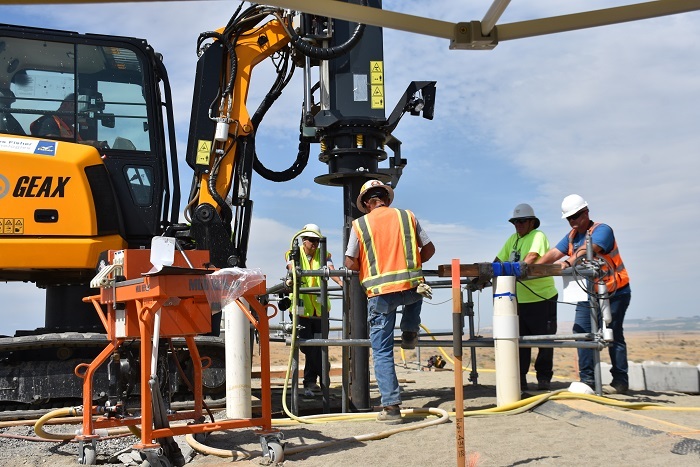 A mock-up facility helped a Hanford Site contractor team train and refine a new technology before using it on an actual waste-storage tank on the site.
RICHLAND, Wash. — A contractor is using an innovative system at the Hanford Site to cut into a waste-filled underground tank, showcasing new technology that improves efficiency and reduces worker and environmental risks.
Field crews with tank farms contractor Washington River Protection Solutions spent five months building and testing the technology on tank dome replicas before performing the work on an actual tank in October 2023. Workers used a large drill on the tank’s thick concrete top to create a new access hole. They then installed a pipe to accommodate new equipment for future waste retrieval operations.
The technology allowed workers to access the dome without removing the soil covering the top of the tank by hand. It also reduced safety risks associated with manual soil excavation, like falling or confined space entry.
“The Department of Energy Office of Environmental Management is committed to Hanford’s risk-reduction mission, which includes finding safer alternatives to traditional waste removal activities,” said Delmar Noyes, Hanford assistant manager for Tank Waste Operations. “This system was developed keeping worker safety in mind, and refined following an extensive mock-up process with worker input.”
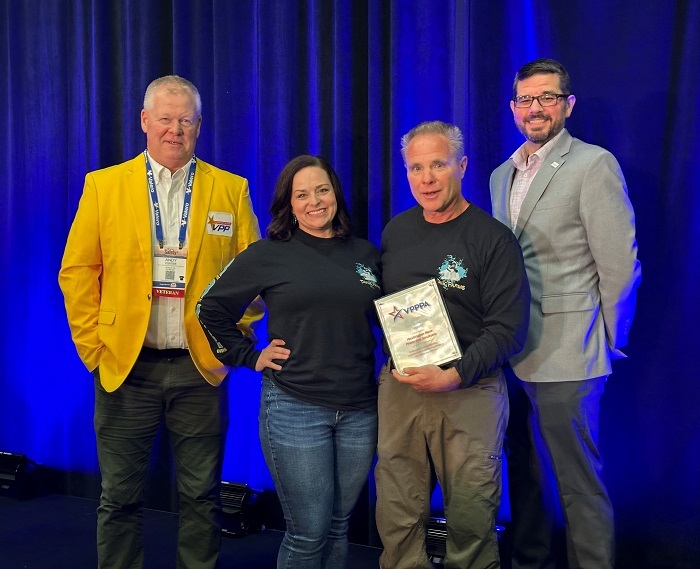 Voluntary Protection Programs Participants’ Association board member Andy Foster, far left, and executive director Chris Williams, far right, recently presented a U.S. Department of Energy Voluntary Protection Program Innovation Award to Hanford Site contractor Washington River Protection Solutions. Accepting the award are Washington River Protection Solutions Safety Specialist Mandy Reeves, middle left, and Nuclear Chemical Operator Bruce Watkins, middle right.
This safety-focused work recently helped Washington River Protection Solutions receive its seventh U.S. Department of Energy Voluntary Protection Program Innovation Award. This award is for new technology that significantly reduces the potential for worker injury.
“The award reflects the teamwork that went into improving existing technology and worker safety,” said Peggy Hamilton, the contractor’s retrievals manager. “This technology will enable future equipment installation to be handled in a similar manner, further reducing employee exposure and keeping our workers safe.”
Watch workers drill a hole into the dome of an underground waste-storage tank to install waste-retrieval equipment here.
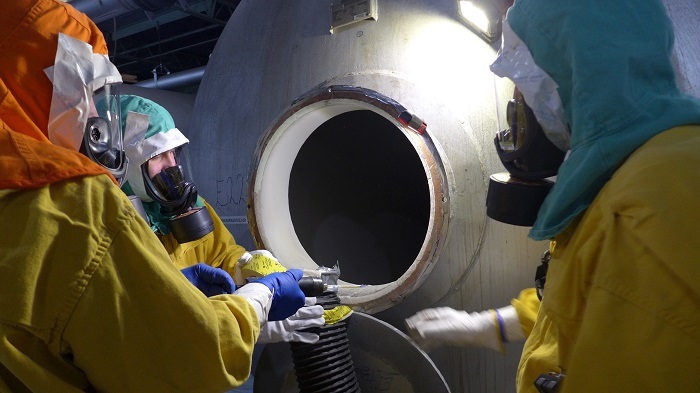 Deactivation crews collect samples from one of 42 storage tanks in the Paducah Site’s C-333 Process Building.
PADUCAH, Ky. — For the first time in 70 years, crews at the U.S. Department of Energy Office of Environmental Management (EM) Paducah Site recently opened storage tanks used in the uranium enrichment process.
The tanks, used for containing the gases used in the enrichment process, went through a rigorous sampling process to be placed in a safe, stable condition for the C-333 Process Building demolition in the future.
In total, crews sampled 42 tanks measuring 40 feet long and 8 feet in diameter with a combined capacity of 86,000 cubic feet — enough to hold nearly all the water from an Olympic-size swimming pool.
C-333, one of the largest buildings at Paducah, enriched uranium for national security and defense, and later for nuclear power before ceasing operations in 2013 and transitioning to deactivation.
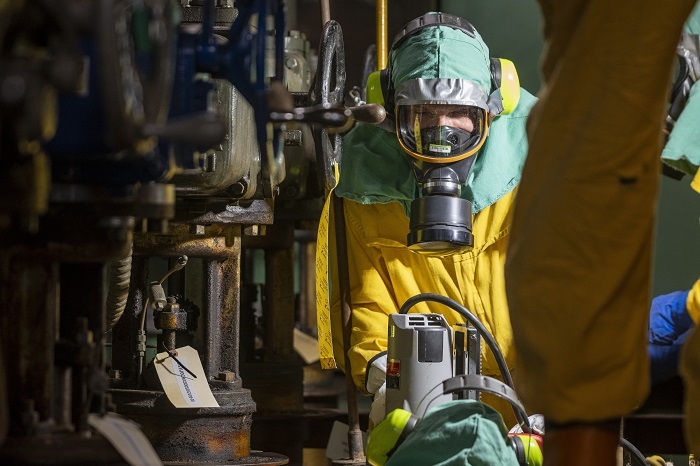 Four Rivers Nuclear Partnership Deactivation Crew Maintenance Mechanic Jason Murphy positions a core drill for sampling of piping for storage tanks in the C-333 Process Building.
Workers inspected and sampled remaining contents of the tanks to ensure any hazardous material left over from enrichment operations could be removed. They also took scans of the valves, piping and other components in support of the overall sampling of C-333. The samples taken of the tanks and other components provide information needed for analysis for the equipment to be demolished in place as part of the overall facility demolition in the future.
“Completing this project is part of the bigger puzzle and a big step in deactivating the facility,” Portsmouth Paducah Project Office Manager Joel Bradburne said.
Deactivation in C-333 is complex, requiring multiple crews to tackle big challenges in a sequence supporting the overall goal. The Paducah team incorporated lessons learned from similar sampling efforts in the tanks supporting the X-326 Process Building at EM’s Portsmouth Site in Ohio. The integrated teams shared information to ensure the work was completed safely and ahead of schedule.
“Since they were installed, these tanks had never been opened. The preparation that went into the planning for this project was instrumental in its success and is a testament to the emphasis FRNP puts on safety,” Four Rivers Nuclear Partnership (FRNP) Program Manager Myrna Redfield said.
FRNP is the deactivation and remediation contractor charged with deactivating C-333.
-Contributor: Dylan Nichols
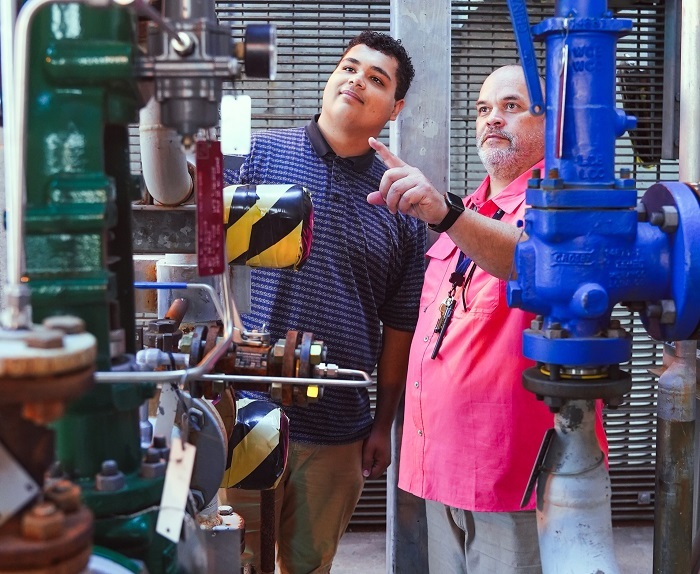 The Technical Student Program allows students like Donavyn Simpkins, left, a senior process engineering major at the University of South Carolina Aiken, to continue gaining work experience at the Savannah River Site while in school. He is learning from managers like Pedro Flores, Defense Waste Processing Facility deputy engineering manager, right.
AIKEN, S.C. – A U.S. Department of Energy Office of Environmental Management program at the Savannah River Site (SRS) that simplifies the process of transitioning interns into new hires has grown to record levels for one SRS contractor.
Many science, technology, engineering and math (STEM) students have jump-started their careers at SRS through summer internships with Savannah River Mission Completion (SRMC), the SRS liquid waste contractor. To retain interns who are good matches for the liquid waste program, the Technical Student Program (TSP) was created in 2021.
Since its inception, the program has been successful, averaging about a half dozen or so students who are in it each year and hired by SRMC.
However, this year the program jumped from a handful of students each year to 26 participants in the TSP — nearly half of the 58 interns who were working for SRMC this summer.
The TSP allows select students to stay employed with SRMC after their summer internships end. As students work to finish school, they remain part-time employees of SRMC, reducing the time it takes to become SRMC-qualified engineers when they are hired full time.
The program is mutually beneficial for students and for SRMC, according to Tom Burns, SRMC chief engineer.
“Our Technical Student Program is an excellent avenue that allows us to offer these top-notch students the opportunity to work, learn and get their career off to a great start,” Burns said. “We believe this process is an excellent example of SRMC’s core value of continuous improvement. Also, our job is to ensure the workforce continues to add the best and brightest employees to meet our mission requirements.”
Donavyn Simpkins, a senior process engineering major at the University of South Carolina Aiken and current TSP participant, worked this past summer with the Chemical Process Cell group in the Defense Waste Processing Facility doing various process engineering tasks, such as updating an extensive list of parts to critical spare designation, and design documents for isolating several pressure control and safety valves for a series of systems taken out of service.
As part of TSP, he continues his work on the designs for isolating the valves, as well as completing necessary classes and training.
Simpkins, who will graduate in May, said he is thankful for the opportunity to continue gaining work experience while in school.
“The TSP represents opportunity both in gaining real-world experience through my work and mentorship under the guidance of my co-workers,” Simpkins said. “I enjoyed working this summer, and I relished at the opportunity to not only continue working at SRMC but also pave a path that would allow me to have an advantage in continuing work there after college.”
-Contributor: Dean Campbell
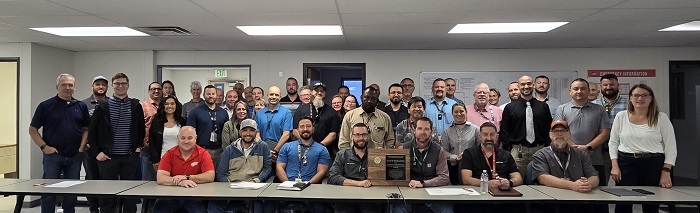 The Hanford Site’s Waste Treatment and Immobilization Plant staff display the U.S. Department of Energy’s Voluntary Protection Program Star of Excellence award, earned for safety programs they’ve implemented within the last year.
RICHLAND, Wash. — Over the past year, the Hanford Site’s Waste Treatment and Immobilization Plant (WTP) team has implemented innovative safety programs that have helped reduce injury rates to 75% below the industry average.
One standout among the new programs is the introduction of physiological monitoring by WTP’s industrial hygiene team. The monitoring program tracks workers’ vital signs, including heart rate and body temperature, at regular intervals during high-risk tasks. These vital signs are used to detect early indicators of fatigue, stress or other risk factors that could lead to injury, helping ensure that workers can take preventive action before issues arise.
“It’s essential that every worker feels empowered to stop work if they feel safety is at risk,” said Mat Irwin, Hanford’s acting assistant manager for the WTP Project. “The safety of our people comes first, and these programs help ensure workers can continue to get work done safely.”
Building off the monitoring program, a comprehensive safety leadership training is provided for WTP managers, supervisors and foremen. This training emphasizes the importance of creating a “safety first” culture and encourages leaders to empower their teams to pause work if they feel conditions are unsafe. It also helps ensure all managers are equipped to support and enforce these safety protocols.
“We’ve seen firsthand how a strong safety culture directly translates to fewer injuries,” said Rick Holmes, Bechtel National Inc. principal vice president and general manager for WTP. “These programs are vital to helping ensure everyone goes home safely at the end of the day.”
The success of these programs and the corresponding drop in injury rates led to the U.S. Department of Energy recently recognizing WTP with its Voluntary Protection Program Star of Excellence award. This is the second time WTP has received this award.
-Contributor: Tyler Oates
|