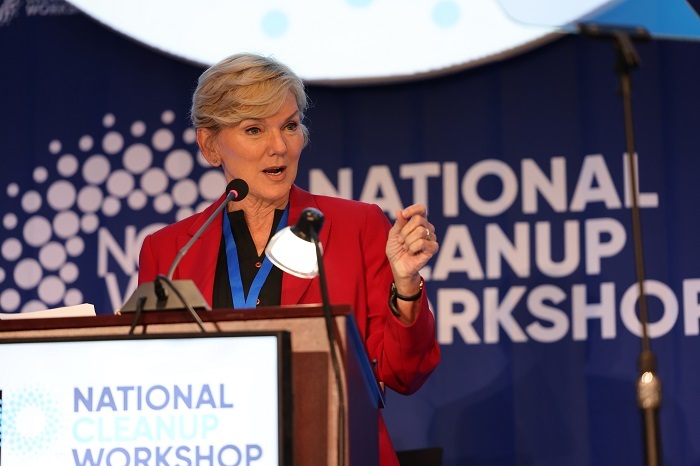
 U.S. Energy Secretary Jennifer Granholm provides an overview of the Department of Energy's Cleanup to Clean Energy initiative In the keynote address at the 2024 National Cleanup Workshop. Photo by Matt Roberts
ARLINGTON, Va. — The U.S. Department of Energy (DOE) nuclear cleanup program has worked with local economic development leaders to reindustrialize land and create new jobs, formed partnerships to strengthen STEM education and create workforce opportunities, and engaged in meaningful consultations with tribal leaders about access to and protection of sacred sites and natural resources, Energy Secretary Jennifer Granholm told the audience at the 2024 National Cleanup Workshop in the keynote address today.
It's all part of the efforts of the employees, contractors and intergovernmental groups who form the cleanup family, and they represent the very best argument Granholm can make for why public service matters.
"You take on the problems that no one else wants to get near — literally and figuratively," Granholm said. "Like at Hanford, where you cracked the code on how to treat radioactive tank waste. Or in Idaho, where you discovered a clever new way to turn liquids to solids for safe disposal. And Brookhaven, where you’ve officially completed DOE’s 92nd cleanup site. Now, there are 15 more to go."
Hosted by Energy Communities Alliance with the cooperation of the DOE Office of Environmental Management (EM) and the Energy Facility Contractors Group, the workshop is the premier annual gathering to discuss progress in environmental cleanup of former government weapons sites and nuclear research facilities. The event marks its 10th anniversary this year.
Granholm pointed to DOE’s sacred obligations at each cleanup site: To ensure the surrounding air, water, and lands are safe, and to invite communities and tribes to the table to decide their own futures.
Two years ago, Granholm met some of the tribal leaders when she visited with the Confederated Tribes of the Umatilla Indian Reservation, Nez Perce Tribal Nation, Yakama Tribal Nation and Wanapum Band of Indians.
“I came away from those meetings even more convinced that the success of our mission cannot be measured merely in cubic feet of soil discarded, or gallons of tank waste treated,” she said. “Our mission also has to be measured by the trust that we build and the promises that we keep to those who are most affected by our nuclear programs.”
Granholm noted that public service isn’t just about fixing problems. It’s also about creating new opportunities.
For example, just last week, Orano announced its plans to build one of North America’s largest uranium enrichment plants on remediated Oak Ridge land.
"This massive investment in the future of civil nuclear is only possible because of your cleanup efforts," Granholm told the audience.
DOE’s Cleanup to Clean Energy initiative is also creating new opportunities. The initiative will help achieve President Joe Biden’s ambitious climate goals and an executive order directive for agencies to use their properties for the development of new clean electricity generation.
DOE is partnering with developers to build some of the largest clean energy projects in the world, Granholm noted.
"As of this morning, we’ve selected the developers for the first five sites — in Washington state, South Carolina, Nevada, Idaho and New Mexico,” she said. “Each of these are going to build massive, utility-scale solar projects."
Granholm stressed that DOE will need all hands on deck for the initiative.
“We’re going to need unions. I’m thrilled that EM inked its first-ever project labor agreement with North America’s Building Trades Unions at Oak Ridge this year. Let’s build on that. We need, also, a deep and diverse bench of experts in science, technology, engineering, and math. We need an EM workforce that looks like America, because diversity of experiences always means better results,” Granholm said.
She added: "I’m here to encourage folks to join the EM workforce, to push contractors to keep recruiting, to welcome communities and tribes to the table, to invite startups to bring us your ideas for what comes next.”
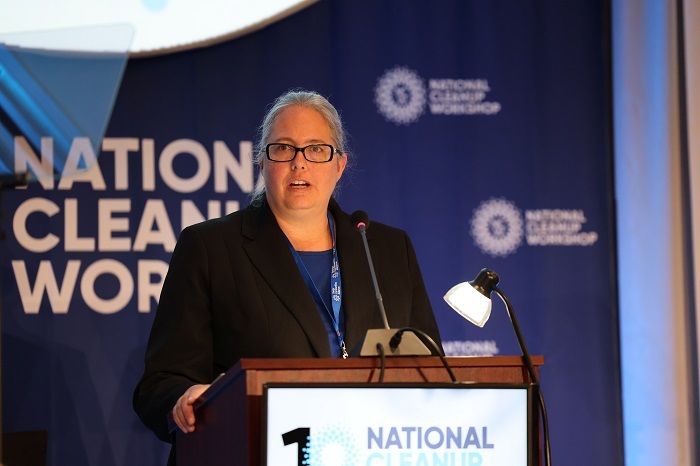 U.S. Department of Energy Office of Environmental Management Senior Advisor Candice Robertson speaks at the 2024 National Cleanup Workshop, focusing on partnerships that lead to progress as the cleanup program marks its 35th year. Photo by Matt Roberts
Robertson Reflects on Workshop Theme: “EM at 35 Years: Partnering for Progress”
In her remarks at the workshop earlier Tuesday, EM Senior Advisor Candice Robertson spoke about partnerships that have led to critical cleanup progress as well as important lessons learned.
“The value of strong partnerships and the work it takes to maintain them is perhaps one of the most important lessons EM has learned over the past 35 years,” Robertson said.
The EM team at Hanford did a tremendous job after many years of work in negotiating with the U.S. Environmental Protection Agency (EPA) and State of Washington on a breakthrough agreement charting a path forward for the Hanford tank waste mission, she said.
“We were able to work through tough issues because DOE, EPA and the State of Washington share an unwavering commitment to advancing the tank waste mission at Hanford,” Robertson said. “And, in the end, we are in a place where we can get down to the business of more fully executing the tank waste mission resulting in benefits for the environment and the people of Washington state.”
At Oak Ridge, EM has been able to move forward with the new Environmental Management Disposal Facility thanks in large part to leadership in Congress from U.S. Rep. Chuck Fleischmann and the commitment demonstrated by the Oak Ridge community, the State of Tennessee and EPA.
“It’s a prime example of what is possible when EM and our cleanup partners remain focused on the long term goals and achieve alignment on key priorities,” Robertson said.
Partnerships that fuel progress are also on clear display at the Savannah River Site, where the EM team is closing in on 10 million gallons of tank waste treated at the Salt Waste Processing Facility. Robertson also noted progress at the site’s Defense Waste Processing Facility and Saltstone Production Facility.
“The maturity of the tank waste mission there is a testament to the longstanding collaborative partnership among Mike Budney’s EM team, the State of South Carolina and Dave Olson’s Savannah River Mission Completion team,” Robertson said.
Robertson emphasized that such achievements all come down to effective partnerships among all people of EM, including the federal and contractor workforce, labor unions, regulators, the best of American industry, congressional cleanup champions, tribal nations, pueblos, states, intergovernmental groups, and local communities near EM sites.
“As a former local elected official myself, I know how important it is to have that kind of local leadership and engagement,” she added.
New Mexico plays such an important role in EM’s mission, both from the past and into the future, Robertson said.
"It’s home to two national labs and of course, one of our jewels of the cleanup, the Waste Isolation Pilot Plant (WIPP), a facility that is marking its 25th anniversary this year and is making some real headway in preparing for the years to come by completing construction of the new ventilation system out there,” she said.
Robertson recently traveled to Northern New Mexico to view EM's Los Alamos legacy cleanup mission and heard from the Los Alamos workforce, pueblo representatives, local government leaders, environmental nongovernmental organizations and the public. And in a recent visit to the WIPP site and community, Robertson engaged with the workforce as well as local leaders in the community and labor union.
“I heard firsthand the concerns and priorities of these pueblos, communities, labor unions, workers, which all reinforced the need to foster partnerships built on trust, collaboration and progress as EM maintains cleanup momentum, solves remaining challenges and plans for the future,” Robertson said.
 She also focused on EM’s No. 1 priority of safety, the need for innovative solutions to get the job done safer, sooner, and more efficiently, and the importance of building EM’s workforce.
“From investments in STEM, intern and apprenticeship opportunities, partnerships with academia and EM’s first-ever agreement with a national labor union, I appreciate the creativity embodied by industry in helping us build a pipeline of future talent,” she said.
While EM has made a lot of progress, there’s still a lot to go, and some of the cleanup program's toughest challenges lay ahead, Robertson noted.
"At the end of the day, it’s about a shared cleanup mission, a shared sense of community and a shared vision for the future," she said. "I look forward to focusing on that shared vision this week and to hearing your thoughts on what comes next."
-Contributor: David Sheeley
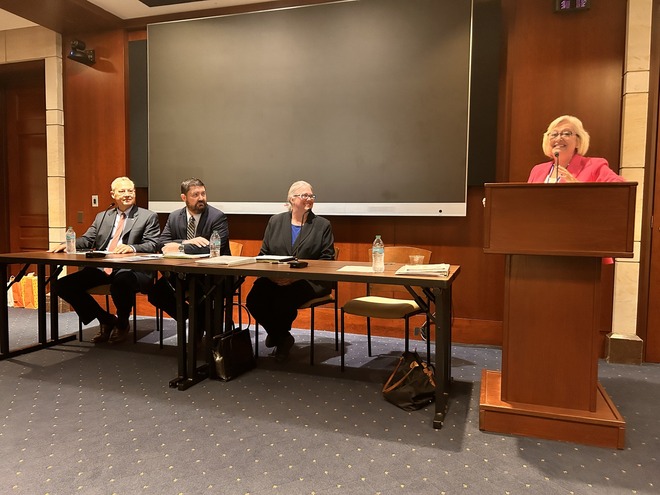 WASHINGTON, D.C. — More than 70 community leaders from Paducah, Kentucky, met with leadership with the U.S. Department of Energy Office of Environmental Management (EM) to discuss federal priorities and continued collaboration on future cleanup and land transfer during the annual Paducah Chamber of Commerce Fly-In last week. Sandra Wilson, president and CEO of the Paducah Area Chamber of Commerce and mayor pro tem for the City of Paducah, is shown speaking during the visit to EM headquarters. EM Senior Advisor Candice Robertson, pictured third from left, told the group she looks forward to continued collaboration. Also pictured are Portsmouth Paducah Project Office Manager Joel Bradburne, far left, and EM Principal Deputy Assistant Secretary Jeff Avery.
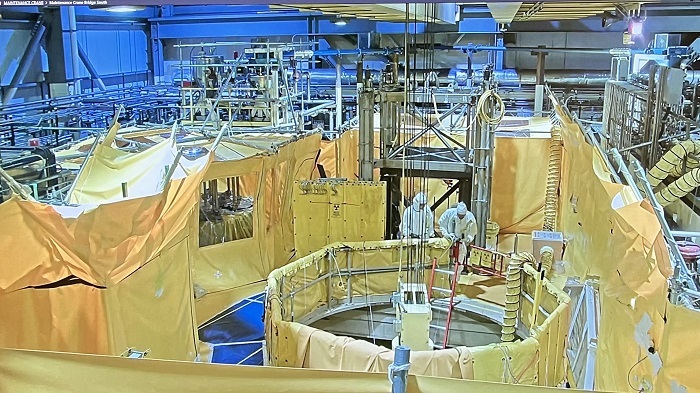 Integrated Waste Treatment Unit crews replace filter bundles inside the process gas filter.
IDAHO FALLS, Idaho — U.S. Department of Energy Office of Environmental Management crews have resumed waste processing operations at a radioactive liquid waste treatment facility at the Idaho National Laboratory Site following the completion of two maintenance campaigns.
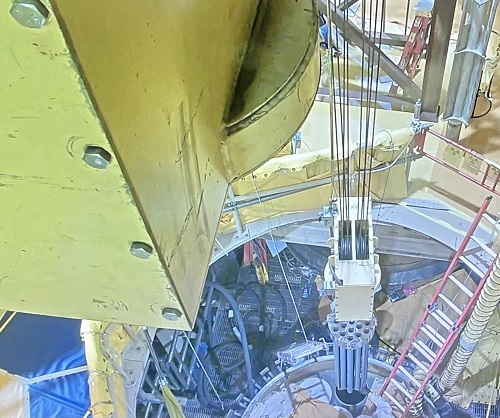
During the Integrated Waste Treatment Unit operational pause, engineers replaced the granulated activated carbon beds, which remove mercury during the sodium-bearing waste treatment process. Crews also replaced process gas filter bundles and conducted minor maintenance operations. Gases from the facility's primary reaction vessel are filtered through 18 filter bundles comprised of 342 individual filters.
 |
|
A close-up view of Integrated Waste Treatment Unit crews replacing filter bundles inside the process gas filter. |
To date, the facility has treated more than 80,000 gallons of radioactive liquid waste that remains in underground waste tanks at the Idaho Nuclear Technology and Engineering Center.
Sodium-bearing waste is a byproduct of decontamination and rinse campaigns associated with historic spent nuclear fuel reprocessing runs at the center. The waste treatment facility uses a steam-reforming process to convert the liquid waste into a dry, granular solid, which is transferred to stainless steel canisters and placed in concrete vaults for onsite storage.
Sodium-bearing waste treatment is expected to take three to seven years to complete, accounting for outages to conduct regular maintenance on the facility.
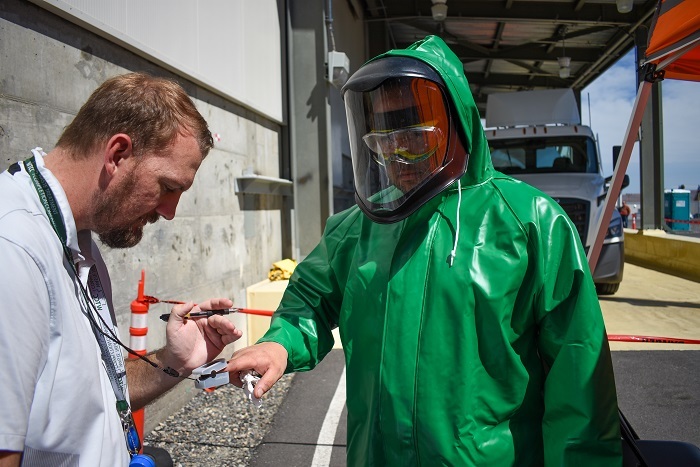 Casey Slack, a Waste Treatment and Immobilization Plant industrial hygienist at the Hanford Site, monitors a worker’s pulse during a chemical delivery earlier this summer.
AURORA, Colo. — The U.S. Department of Energy (DOE) and an association that helps worksites advance safety and health goals recently presented 21 awards to contractors across the cleanup complex — from Washington and New Mexico to New York and South Carolina — for achievements in safety, health, innovation and outreach.
Alfred G. Traylor, director of the DOE Office of Worker Safety and Health Assistance, presented the Voluntary Protection Program (VPP) awards to DOE Office of Environmental Management contractors at the DOE-VPP Preconference Meeting, held at the Voluntary Protection Programs Participants’ Association annual Safety+ Symposium, which marked its 40th anniversary this year.
Working through cooperative efforts among labor, management and government at DOE contractor sites, VPP promotes improved safety and health performance through public recognition of outstanding programs. The program recognized the contractors for going above and beyond the basic requirements of its safety and health regulations, orders and standards.
Contractors are eligible to be VPP participants if they meet specific safety related criteria, such as injury rates meeting the DOE standard of 50% below industry average and performing mentoring and outreach activities. Participants also exemplify the five VPP elements: management leadership, employee involvement, worksite analysis, hazard prevention and control, and safety and health training.
VPP’s Contractor Champions Award, which honors outstanding performance and leadership in furthering the advancement of VPP, went to Richard “Tom” Perkes with UCOR at Oak Ridge.
“As a former European professional basketball player, Tom is the epitome of a team player and VPP ambassador,” said Michelle Keever, UCOR Safety and Health Program specialist. “His talents and passion are evident in the workplace and the community."
VPP’s Superior Star was awarded to Hanford Laboratory Management and Integration at the Hanford Site. The Superior Star recognizes a leader in safety and health performance that has achieved a consistently superior level of performance in meeting established safety and health goals, actively conducting outreach to others, and achieving an injury and illness rate significantly below the average of similar businesses and operations.
Through their full dedication and total commitment to the principles of VPP, recipients of the Star of Excellence have achieved an outstanding level of performance in meeting established safety and health goals, actively conducting outreach to others, and achieving an injury and illness rate significantly below the average of similar businesses and operations. This award went to:
- Central Plateau Cleanup Company, Hanford Site;
- Hanford Mission Integration Solutions, Mission Support Services, Hanford Site;
- Hanford Mission Integration Solutions, Safeguards and Security, Hanford Site;
- Hanford Mission Integration Solutions, Volpentest Hazardous Materials Management and Emergency Response Federal Training Center, Hanford Site;
- Washington River Protection Solutions, Tank Operations, Hanford Site;
- Waste Treatment Completion Company, Waste Treatment and Immobilization Plant Project, Hanford Site;
- UCOR, Oak Ridge;
- North Wind Dynamics, Portsmouth Site;
- Battelle Savannah River Alliance, Savannah River National Laboratory;
- Savannah River Nuclear Solutions, Savannah River Site;
- Savannah River Mission Completion, Savannah River Site;
- Salado Isolation Mining Contractors, Waste Isolation Pilot Plant; and
- CH2M HILL BWXT West Valley, West Valley Demonstration Project.
The Voluntary Protection Programs Participants’ Association honored EM contractors with six awards.
The association's Emerging Safety Leader Excellence Award, which recognizes outstanding individuals with less than 10 years of experience in the environment, health and safety field, went to:
- Ginger Benecke with Hanford Mission Integration Solutions;
- Daryl Butler Jr. with Savannah River Nuclear Solutions; and
- Jade Nealious with Savannah River Nuclear Solutions.
Central Plateau Cleanup Company's safety team received the Safety and Health Outreach Award, which honors individuals, companies or worksites that excel in extending their safety, health, technical and management knowledge to other departments within their site.
The association honored Washington River Protection Solutions and UCOR with the VPP Innovation Award, which recognizes an individual, company or worksite that has developed and successfully implemented an innovation, encouraged others to try new approaches and emphasized the value of creativity and flexibility in the resolution of worker safety and health problems.
-Contributor: David Sheeley
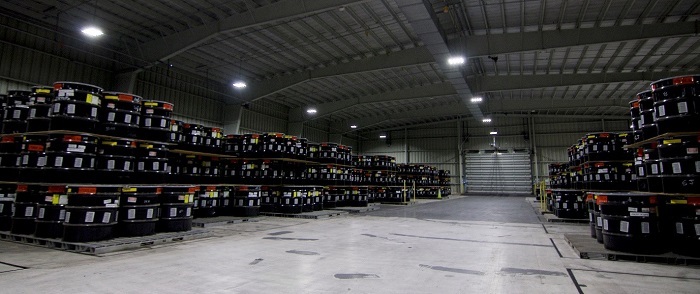 A view of 100-gallon transuranic waste drums awaiting shipment to the Waste Isolation Pilot Plant from the Advanced Mixed Waste Treatment Project at the Idaho National Laboratory Site.
IDAHO FALLS, Idaho – The U.S. Department of Energy Office of Environmental Management (EM) will employ an innovative technology to scan 6,000 legacy waste drums at the Idaho National Laboratory (INL) Site to affirm their integrity, enabling their shipment to the Waste Isolation Pilot Plant (WIPP) for permanent disposal and potentially saving taxpayers millions of dollars.
EM and contractor Idaho Environmental Coalition (IEC) are working with subcontractor Spectra Tech to develop, test and deploy ultrasonic testing technology that will use a robotic-arm scanner and high-tech software to determine the thickness of 100-gallon transuranic waste drums that have been in storage for four or more years at the Advanced Mixed Waste Treatment Project (AMWTP). The technology will ensure the drums meet the U.S. Department of Transportation (DOT) minimum thickness requirements of 0.053 inches, or about the thickness of automotive sheet metal.
The need for this technology stems from two 2022 incidents where 100-gallon drums containing supercompacted waste developed pinholes and leaked while in transit to WIPP. Both shipments were returned to the INL Site for removal of contents and decontamination of the TRUPACT-II shipping casks that held the drums.
Engineering studies indicated that drums greater than five years old have the potential to develop pinholes and breach during their transport. As a protective measure. IEC halted shipments of waste drums older than four years old, resulting in approximately 6,000 drums remaining in storage.
In the fiscal year that ended Sept. 30, 2023, IEC contracted Atlas to perform manual ultrasonic testing on a variety of 100-gallon containers with packaging dates greater than five years old. A total of 869 drums were tested at eight locations on the bottom of each drum. Approximately 60% of the drums tested passed DOT shipping requirements.
The estimated initial cost for the robotic ultrasonic testing is $150,000 for development and onsite demonstration by Spectra Tech, with a total cost of $1.2 million for completion of testing of all 6,000 containers. The schedule is four to six months for development and demonstration, with deployment to the field two months following demonstration. Total field time to complete ultrasonic testing of 6,000 containers is estimated at six months.
Using this technology can save taxpayers as much as $38 million over the cost of using standard waste boxes to “overpack” two 100-gallon drums prior to shipment for disposal.
The vast majority of 65,000 cubic meters of transuranic and low-level waste at AMWTP originated at the former weapons production facility known as the Rocky Flats Plant near Denver, Colorado. Crews have retrieved, characterized, treated, certified and shipped about 73% of that inventory since 2000.
“We’re very encouraged by the ultrasonic testing technology,” said EM Idaho Project Manager Mark Brown. “The 6,000 drums represent a sizeable inventory of waste that remains at AMWTP. Being able to verify the integrity of these waste drums will ensure their safe transport to WIPP.”
-Contributor: Erik Simpson
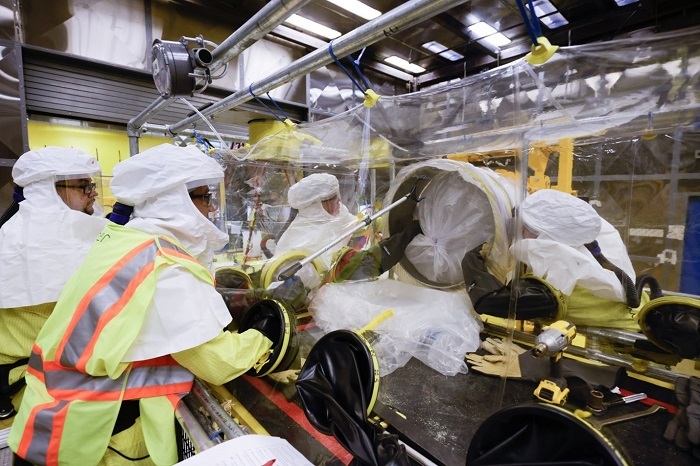 Newport News Nuclear BWXT Los Alamos waste processing operators repackage materials from a legacy waste container to a new lined drum in a mock-up glovebag exercise with nonradioactive materials. Glovebags are flexible plastic containers that allow operators to use the inner gloves attached to the containers to safely handle transuranic waste inside the containers.
LOS ALAMOS, N.M. — The Environmental Management Los Alamos Field Office and cleanup contractor Newport News Nuclear BWXT-Los Alamos (N3B) recently resumed preparation of certain legacy transuranic waste at Los Alamos National Laboratory for disposal at the Waste Isolation Pilot Plant (WIPP).
This month, N3B resumed a process called “drill and drain” to remove free liquids and other materials from transuranic waste drums that do not meet WIPP’s waste acceptance criteria.
Transuranic waste is defined as radioactive waste containing more than 100 nanocuries of alpha-emitting transuranic isotopes per gram, with half-lives greater than 20 years. Typically, this waste consists of contaminated protective equipment, tools, debris and other materials.
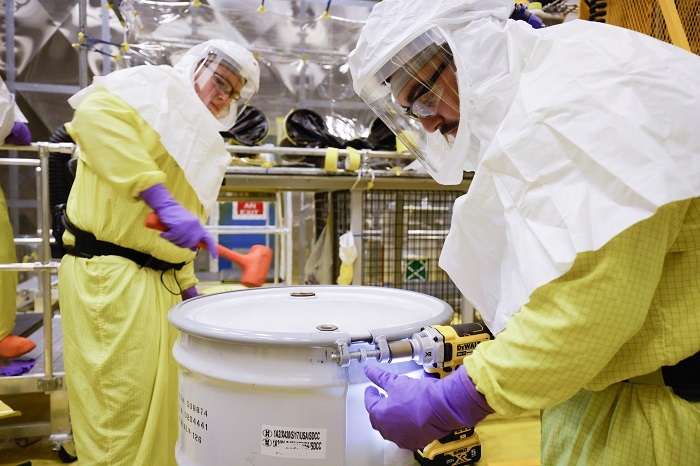 Newport News Nuclear BWXT Los Alamos waste processing operators close up legacy waste containers after remediation using drill and drain and glovebag process lines.
The drill and drain process involves drilling holes in drum liners to remove free liquids and other materials. The extracted liquid is treated and then solidified using an absorbent. The solidified material and the waste are repackaged in new drums and prepared for characterization, certification and shipment. Waste characterized as transuranic waste is sent for disposal at WIPP, and mixed low-level and low-level waste is sent to offsite disposal facilities.
“The team has invested considerable effort in getting the facility, procedures and training in place to safely resume the drill and drain process,” said Brian Clayman, N3B contact-handled transuranic waste program manager. “This process allows us to remove liquids that do not meet WIPP’s waste acceptance criteria from the transuranic waste stream while maintaining our commitment to safe operations and minimizing exposure to radioactive material.”
In addition to the drill and drain process, N3B is using glovebags to enhance the safety and efficiency of waste handling. Glovebags enable operators to transfer and remediate waste materials that do not meet WIPP’s waste acceptance criteria from a legacy waste container into a new, lined drum securely without the spread of contamination. N3B has established two glovebag process lines, which are expected to significantly increase the rate at which transuranic waste can be processed and disposed of at WIPP.
Since N3B’s contract began in 2018, more than 575 cubic meters of transuranic waste have been shipped to WIPP.
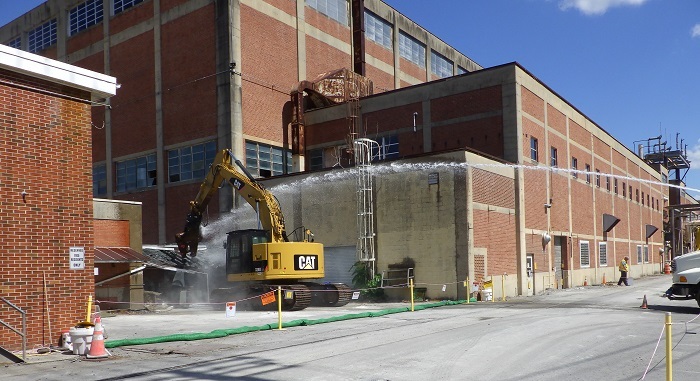 Demolition is underway on the Alpha-2 complex. In October, crews are scheduled to transition to tearing down the complex’s 325,000-square-foot main structure that covers 2 1/2 acres at the Y-12 National Security Complex.
OAK RIDGE, Tenn. — Crews at Oak Ridge recently achieved a U.S. Department of Energy Office of Environmental Management 2024 priority by initiating demolition on a facility in the Manhattan Project-era Alpha-2 complex at the Y-12 National Security Complex.
The Oak Ridge Office of Environmental Management (OREM) and contractor UCOR began deactivating the Alpha-2 complex in 2020. It includes three major buildings. The main facility is Alpha-2, a 325,000-square-foot former uranium enrichment facility that covers 2 1/2 acres. The other structures are the Carpentry Shop and Old Steam Plant.
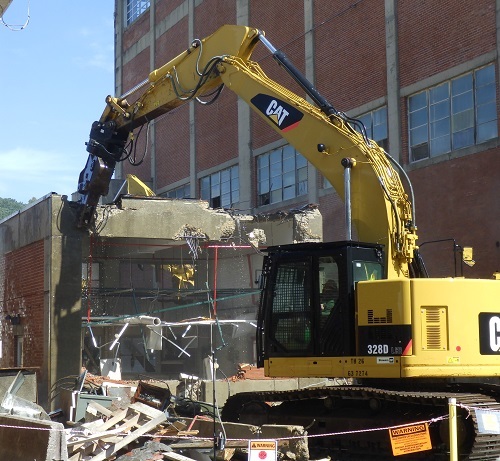
 Teardown commenced on the Carpentry Shop on Sept. 6. Meanwhile, crews are finishing the final demolition preparation tasks in the basement of the adjacent Alpha-2 building.
“After years of hard work deactivating these facilities, it’s exciting to begin the next phase of cleanup at the Alpha-2 complex,” OREM Project Manager Morgan Carden said. “This is an important first step as we look to achieve the first teardown of a former enrichment building and our biggest demolition project yet at Y-12.”
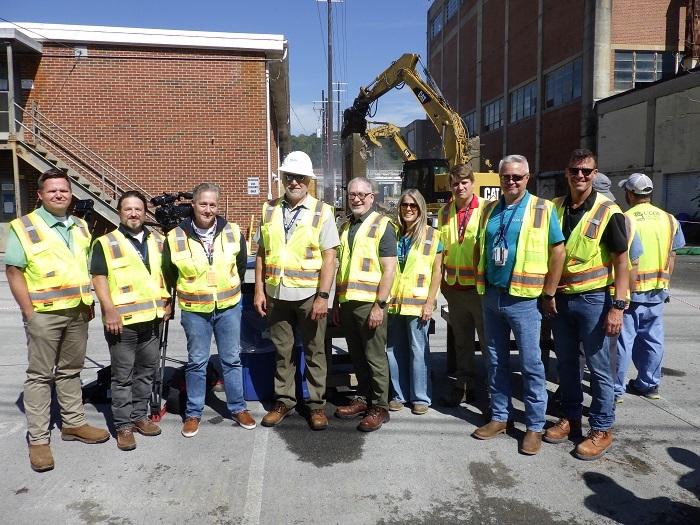 UCOR Chief of Staff Jamie Standridge, UCOR Safety Systems and Services Manager Clint Wolfley, Oak Ridge Office of Environmental Management (OREM) Deputy Manager Erik Olds, UCOR President and CEO Ken Rueter, OREM Manager Jay Mullis, UCOR Deputy Chief Operating Officer Samantha Dolynchuk, UCOR Alpha-2 Deactivation Project Manager Billy Lloyd, UCOR Y-12 National Security Complex Area Project Manager Chad York and UCOR Site Integration and Cleanup Manager Larry Brede visited the Carpentry Shop project site as demolition began.
More than 60% of the facilities throughout the National Nuclear Security Administration complex are more than 40 years old. The Alpha-2 complex is one of the oldest among them, dating back to the 1940s.
Alpha-2 is categorized as a high-risk excess contaminated facility, and its removal eliminates hazards and opens land for national security missions moving forward.
“It is exciting to finally see demolition begin. We’ve been deactivating Alpha-2 for almost four years. During that time, we have dealt with supply chain issues due to the pandemic and a number of other unexpected challenges,” said Chad York, area project manager for Y-12. “We have reached this point thanks to our amazing team of workers who do this kind of high-hazard work in the safest possible way.”
 |
|
Demolition began on the Carpentry Shop in the Alpha-2 complex on Sept. 6, marking a U.S. Department of Energy Office of Environmental Management priority for 2024. |
Demolition on the main Alpha-2 facility is scheduled to begin in October. Crews have also completed deactivation on the Old Steam Plant, and that building is slated for demolition after the Alpha-2 facility is removed.
With this project underway, OREM has now achieved all of its EM priorities for the year. The other priorities completed include processing and disposition of at least 35 canisters of uranium-233 from storage at Oak Ridge National Laboratory and finishing soil remediation at East Tennessee Technology Park.
-Contributor: Susanne Dupes
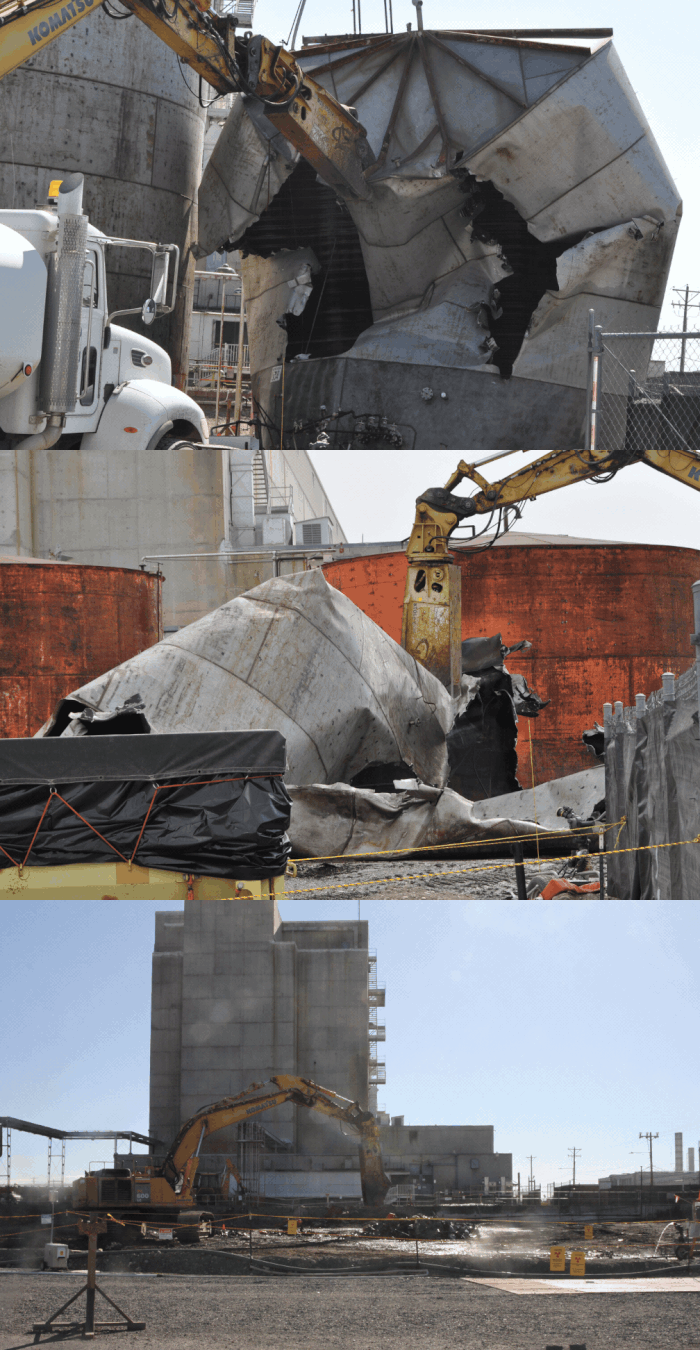 Crews with U.S. Department of Energy Office of Environmental Management contractor Central Plateau Cleanup Company recently demolished a former chemical storage area at the Hanford Site’s Reduction Oxidation Plant.
RICHLAND, Wash. — Crews are reducing risk at the Reduction Oxidation Plant, one of five former plutonium production facilities at the Hanford Site.
Workers with U.S. Department of Energy Office of Environmental Management contractor Central Plateau Cleanup Company recently demolished a former chemical storage area that supported the plant during Hanford operations.
The demolition included removing eight empty aboveground chemical storage tanks ranging in capacity from 4,300 gallons to 149,000 gallons, and two smaller empty aboveground tanks.
Crews spent the past year removing asbestos and other hazardous materials from and around the tanks. They also disconnected electrical and mechanical equipment to prepare the area for safe demolition.
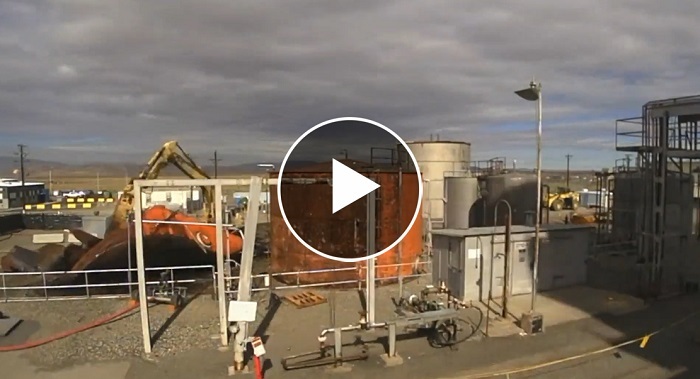 Down and out: A time-lapse video highlights the demolition of the former chemical storage area.
“Removing these aging chemical storage tanks reduces risk now and also paves the way for safe and efficient risk-reduction activities in the future,” said Andy Wiborg, Hanford acting deputy assistant manager for River and Plateau cleanup.
The plant operated from 1952 through 1967, separating plutonium and uranium from irradiated fuel rods.
“I’m proud of our team’s effort to safely prepare for and demolish the area as we continue to advance our risk-reduction work,” said Eric Denton, contractor project manager.
The plant work follows a similar project completed earlier this year to remove more than two dozen chemical storage tanks at the Plutonium Uranium Extraction Plant, another of Hanford’s former processing facilities.
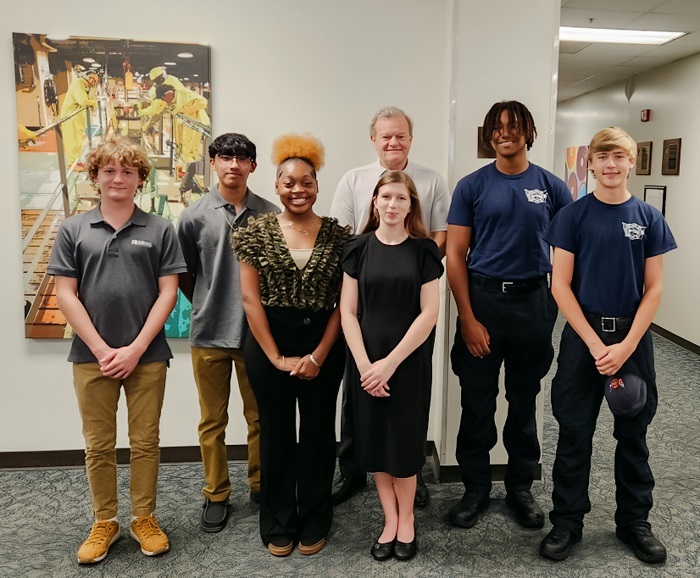 Savannah River Site youth apprentices gather for a meet-and-greet with Savannah River Nuclear Solutions President and CEO Dennis Carr.
AIKEN, S.C. — The Savannah River Site (SRS) has welcomed six high school students from the area to participate in the inaugural Youth Apprenticeship program.
Following a successful pilot program in 2022, the program has expanded, providing more students with opportunities to gain early professional development experience. It’s operated by U.S. Department of Energy Office of Environmental Management contractor Savannah River Nuclear Solutions (SRNS).
The two-year program enables rising high school juniors and seniors to complete on-the-job training within departments across the site, including information technology (IT), fire protection and site training. Upon completing the program, they earn a certificate recognizing them as a youth apprentice from the U.S. Department of Labor. They’re allowed to continue the program for up to a year after graduation, and then have the option to transfer to the adult Apprenticeship Program.
“We are thrilled to announce a partnership between Aiken County Public School District Career and Technical Education Department and Savannah River Nuclear Solutions to launch an IT and EMS Apprenticeship Program,” Kenneth O. Lott, the district’s Career and Technical Education director and principal of Aiken County Career Center, said of the Emergency Medical Services Apprenticeship Program. “Students from North Augusta High School's Dell Tech Crew and Aiken County Career and Technology Center's EMS Pathway will gain hands-on training and the skills needed to excel in today's evolving workforce, bridging the gap between education and industry.”
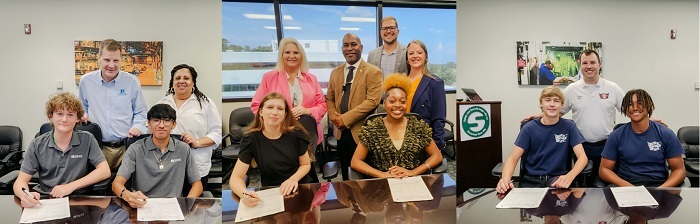 Savannah River Site youth apprentices pose for a photo with their employers in information technology (IT), site training and the Savannah River Site Fire Department. Pictured from left: Jacob Lott and Alejandro Aguirre Jr., IT apprentices; Elisabeth Corley and Labria Jacobs, records management clerk apprentices; and Reagan Plummer and Andrew Hill Jr., emergency medical technician apprentices.
BooBoo Roberts, SRS Apprenticeship School Program manager, said the Youth Apprenticeship program is a unique opportunity for students to gain professional work experience while still in school.
“We interview candidates from all over the Central Savannah River Area, treating this just like any other job application process,” Roberts said. “Our hope is that this program provides an invaluable experience that prepares students earlier for the workforce while still focusing on their education.”
Considered limited-service employees, youth apprentices are able to earn a wage and learn valuable professional skills while attending school. Students work part time around their studies but can work full time during school breaks. Depending on their high school, some students are also able to earn work-based learning credit to go towards their diploma.
“It is important for us to intersect the workforce pipeline at three strategic junctures: engaging the unemployed, engaging the underemployed and engaging those who enter the workforce for the first time,” SRNS Executive Vice President and Chief Administrative Officer Sean Alford said. “Youth apprenticeships are measurable and highly productive avenues for companies to engage those who are entering the workforce for the first time.”
Asked about his time as a youth apprentice, pilot program graduate Drew Platts said it was an excellent experience that helped shape the career path he wanted to take after finishing high school.
“The apprenticeship training team taught me the process the site uses to keep a steady pipeline of employees to fulfill the needs and keep the site operating safely,” Platts said.
Upon graduating high school, Platts was hired as a full-time operator at the Savannah River National Laboratory, where after eight months of training, he received his certificate in nuclear fundamentals and is in the process of obtaining his full facility qualifications.
Current SRNS Records Management Clerk Youth Apprentice Labria Jacobs discovered the program through LinkedIn and decided to apply to expand her horizons and learn about different career opportunities.
“I am greatly enjoying my time here at SRNS,” said Jacobs. “Coming through the barricade, the vast size of the site and number of employees who work here was very surprising to me. The safety culture is unlike anything I’ve ever seen before.”
To participate in the Youth Apprenticeship program, students must first obtain permission from a parent or guardian and consent to undergo a background check. Students are also not allowed to perform radiological work or handle sensitive nuclear information.
To qualify for the Youth Apprenticeship program, students must meet the following criteria:
- 16 years of age or older;
- U.S. citizen;
- Junior or senior in high school, on track to completing a diploma;
- A valid state driver’s license;
- Personal reliable transportation;
- Ability to work part time during the day from Monday through Thursday; and
- Successful completion of SRS General Employee Training and substance abuse processing.
Click here for more information about programs offered through the SRS Apprenticeship School.
-Contributor: Fallan Flatow
|