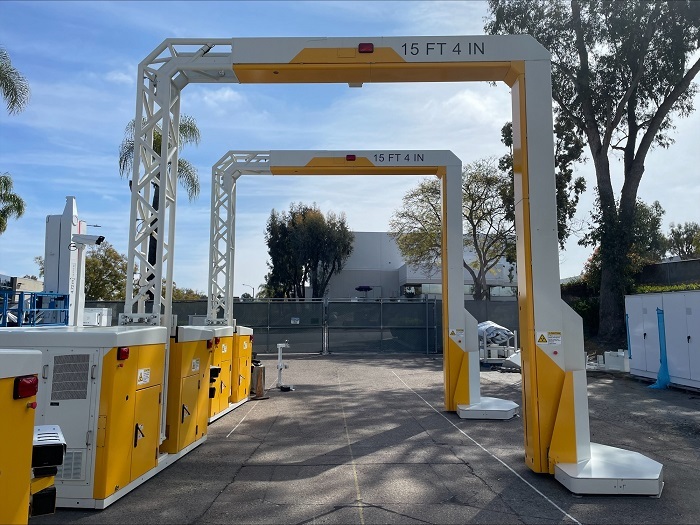
 A look at two versions of the new real-time radiography drive-through portal device side by side. The U.S. Department of Energy Office of Environmental Management Nevada Program will soon receive one of them.
LAS VEGAS — The U.S. Department of Energy (DOE) Office of Environmental Management (EM) Nevada Program is preparing to receive a new real-time radiography (RTR) drive-through portal that will expand the radioactive waste verification capabilities at the Nevada National Security Site (NNSS).
The scanner portal will allow for larger items to be screened by the NNSS at the Area 5 Radioactive Waste Management Complex.
“This should further offer stakeholders assurance that the NNSS is vigilant about working with generators to enhance confidence that waste received is compliant with the waste acceptance criteria,” said Radioactive Waste Acceptance Program (RWAP) Manager Marilew Bartling.
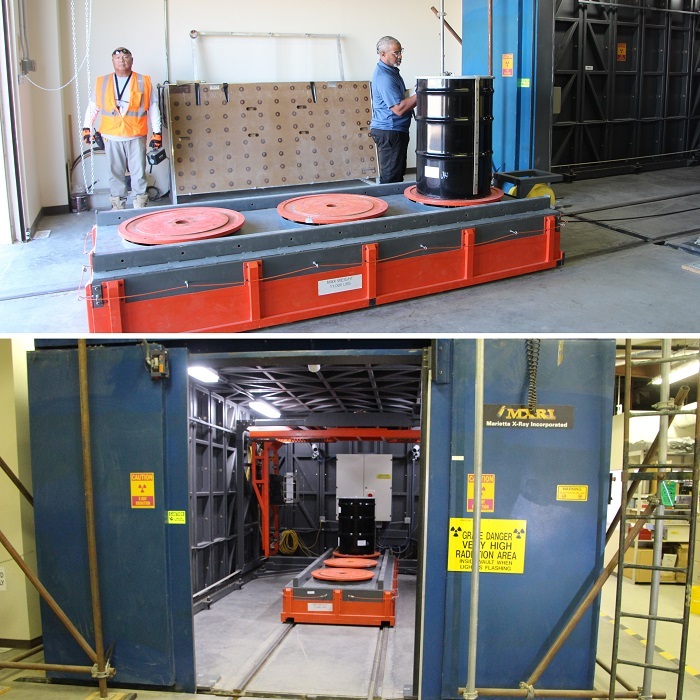 A look at the current real-time radiography (RTR) unit at Area 5. RTR technician Byron Smith observes barrels being loaded onto the scanner.
Currently, the NNSS has one RTR device at Area 5. The device takes what are essentially X-ray images of waste packages to scan for prohibited items such as liquids, batteries or electronics. The biggest limiting factor with the current RTR unit is size restrictions.
"The current system weight capacity is 11,000 pounds. This limits the size of packages that are viewed in a single RTR observation,” said RTR technician Byron Smith. "The new system is a drive-through portal, which will allow us to examine a wider variety of waste containers, furthering our ability to identify multiple types of waste items."
EM Nevada is responsible for the safe disposal of low-level and mixed low-level waste shipments received from RWAP-approved DOE and U.S. Department of Defense generators across the United States. The waste is placed in waste disposal cells at the NNSS, which collectively make up the Radioactive Waste Management Complex, an engineered land disposal unit built into the desert terrain.
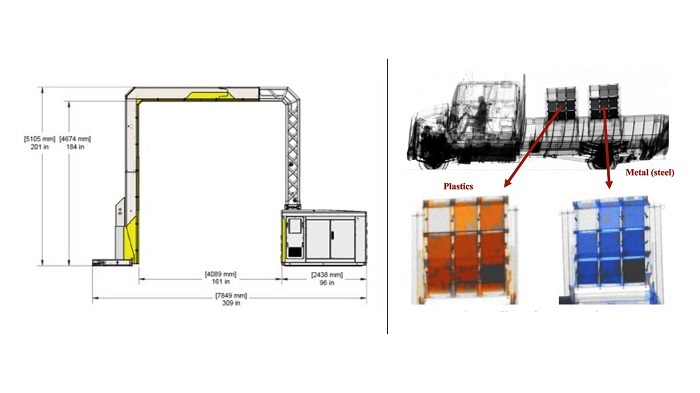 Dimensions of the portal are shown here. The right image displays an example of the machine distinguishing plastics from metal using different colors. The driver will pass through the scanner before full power is initiated.
The new drive-through portal will not replace the existing RTR unit, rather it will offer an additional valuable screening tool for shipments entering the site. The portal will allow entire trucks to be scanned and features technology that distinguishes between specific materials such as liquids and solids or plastics and metals.
“More containers will be subject to RTR technology,” Bartling said. “RWAP will support NNSS management and operating contractor Mission Support and Test Services (MSTS) if any indeterminate items are detected during screening.”
The scanner can penetrate up to 305 millimeters of steel. The system will use one operating mode, “cargo only,” which detects the gap between cab and trailer, ensuring the driver has passed through before initiating the X-ray source at full power. Drivers will maintain a speed of 2 to 10 mph.
The drive-through portal is the result of an additional $15 million in funding allocated by Congress to the EM Nevada Program in 2022. MSTS crews have built a new access road for trucks to reach the area and are installing two trailers to house a control room, equipment and extra office space. They will add walkways, power lines and other necessary infrastructure. MSTS also plans to expand the storage pad behind the existing RTR building so more containers can be staged to support RTR operations.
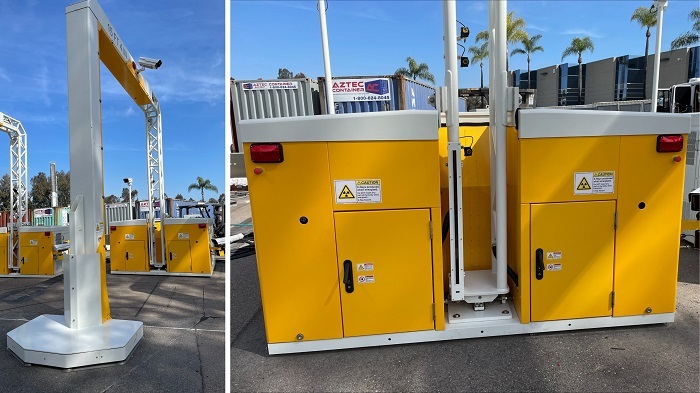 A closer look at the portal and the power boxes it is equipped with.
The drive-through portal is currently in California, where it has been tested and determined to be functional. MSTS is awaiting a design plan to determine how best to install the unit.
“They're going to have a design for where the unit's going to sit and how the utilities have to go to that unit to power it,” said MSTS Environmental Management and Compliance Manager Reed Poderis. “After that’s done, we’ll complete the walkway and remaining infrastructure improvements.”
Poderis expects to receive the design plan in the coming months and accept the unit this summer. After it is put in place, crews will run power lines, finish setup of the operator building and complete necessary additions. The scanner is expected to be operational in 2025.
To learn more about radioactive waste acceptance at the NNSS, click here.
-Contributor: Grant Johnson
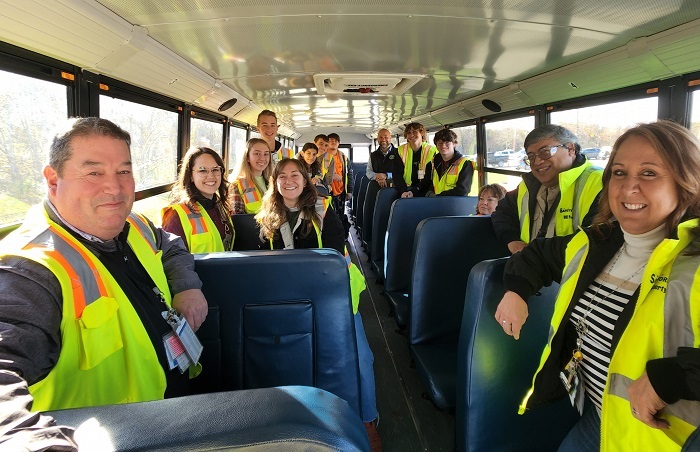 Portsmouth Site team members join Eastern High School students for a windshield tour of the Portsmouth Site before starting their research projects. Pictured with the students are Portsmouth Site Lead Jeremy Davis, back, EM Federal Coordinator Greg Simonton, left, Fluor-BWXT-Portsmouth Communications Director Shawn Jordan, right, and Fluor-BWXT Environmental Remediation Director Jyh-Dong Chiou, second from right.
PIKE COUNTY, Ohio — Local high school students partnered with the U.S. Department of Energy Office of Environmental Management's Portsmouth Site and Ohio University Voinovich School of Leadership and Public Service to develop and publish this year’s Student Summary of the Annual Site Environmental Report, commonly referred to as the Student ASER.
“For the first time in the program, we had two schools working on the project, and our first school from neighboring Scioto County,” Federal Coordinator Greg Simonton said of Eastern and Northwest high schools. “The growth of the program is a great example of how we are able to give local students educational opportunities that go beyond the classroom.”
The ASER is key to EM’s effort to keep the public informed about environmental conditions at the Portsmouth Site and offers a detailed overview of environmental activities each year.
The Student ASER provides a summary in a visual and condensed format. To better understand the content, students work with subject matter experts, attend field trips and spend months learning about the site’s history and EM’s deactivation and demolition work.
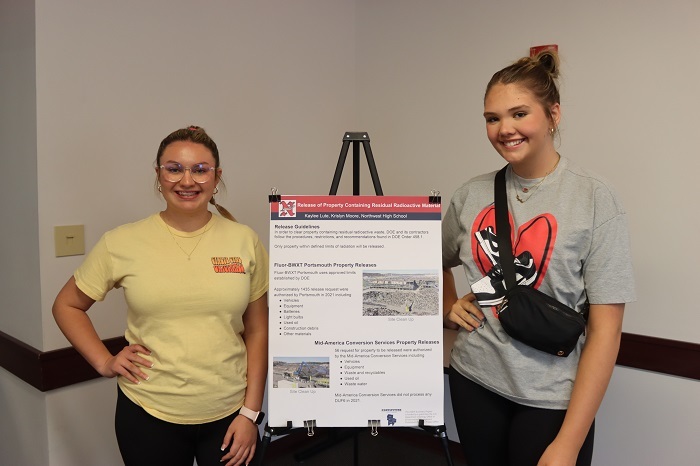 Krislyn Moore, left, and Kaylee Lute present their poster on the release of property containing residual radioactive material for the Student Annual Site Environmental Report Summary Expo.
“My dad works at the Portsmouth Site but I never really knew what all he did at work, so this was an excellent opportunity to better understand the work going on at the site,” said Kaylee Lute, a student at Northwest High School in Scioto County.
The students met regularly with guest speakers from EM, Ohio University, Fluor-BWXT-Portsmouth (FBP) and the Southern Ohio Diversification Initiative to learn the site’s history and the safe cleanup progress to prepare for future reindustrialization. FBP is EM's decontamination and decommissioning contractor for the site.
“I have lived near the plant my whole life, so I really enjoyed this chance to get a deeper understanding of the site,” said Anna Lesh, a student of Eastern High School in Pike County. “You hear plenty of rumors, but this program really helped me learn more about the work that is going on and the plans for the future.”
The Ohio University Voinovich School of Leadership and Public Service manages the annual program through a grant from EM. This year, the students created academic posters and presented them to guests from EM, Portsmouth Site contractors and the public.
-Contributor: Cindi Remy
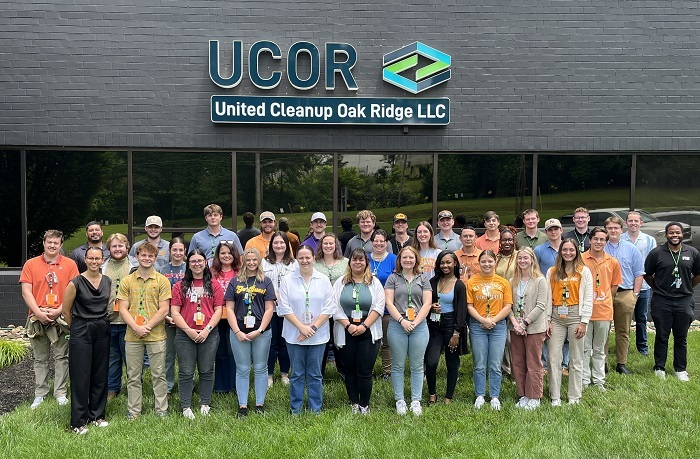 Oak Ridge Office of Environmental Management contractor UCOR added 39 students from 13 schools across the nation to its workforce for the summer through its internship program.
OAK RIDGE, Tenn. — Planning ahead to bridge an expected experience gap as many members of the workforce reach retirement age, Oak Ridge Office of Environmental Management (OREM) contractor UCOR began expanding its internship program in recent years. This summer, the company added 39 students from 13 schools across the nation to its team.
The intern program provides unique opportunities for students like Jessica Ariks.
After 15 years serving as the nurse for a local elementary school, Ariks was looking for a fresh start in a new career. A newly single mom, she sought the schedule stability of her former career but with an income to better provide for her three kids.
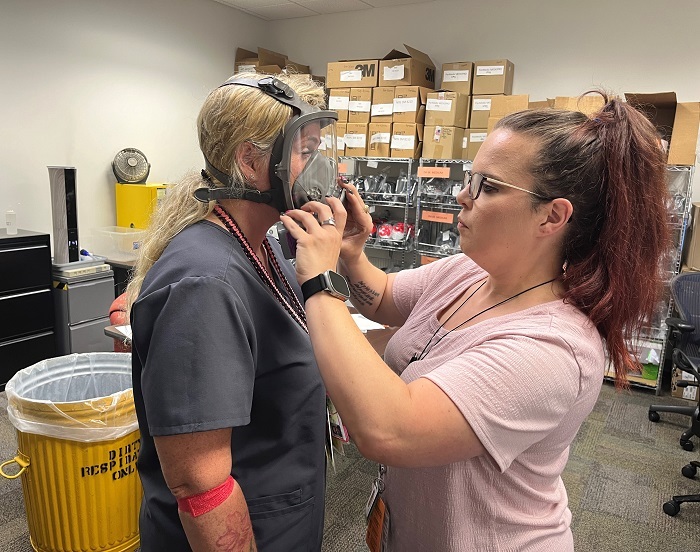 Intern Jessica Ariks performs respirator testing on a member of the UCOR workforce.
After exploring options that could complement her nursing education, Ariks decided on the UCOR-sponsored Environmental Health Technology program at Roane State Community College in Harriman, Tennessee. Excited to be among the first safety and industrial hygiene interns from that program, Ariks said this has been her dream job since she first enrolled.
“This internship is the realization that I can set goals and put in the work to achieve them,” Ariks said. “It’s the discovery that my efforts are worth the sacrifices I’ve made. It’s the example I’ll use years from now with my three daughters when they go through hard things and doubt themselves.”
University partnerships have enabled UCOR to more easily recruit military veterans. The summer intern program hosts a record three veterans in this year’s class, including Kaitlyn Raven.
After finding nursing school wasn’t for her, Raven joined the U.S. Army. After her medical retirement, she took part in the Army’s Chapter 31 aptitude testing for the exit to civilian life, which led her to choose civil engineering at Tennessee State University.
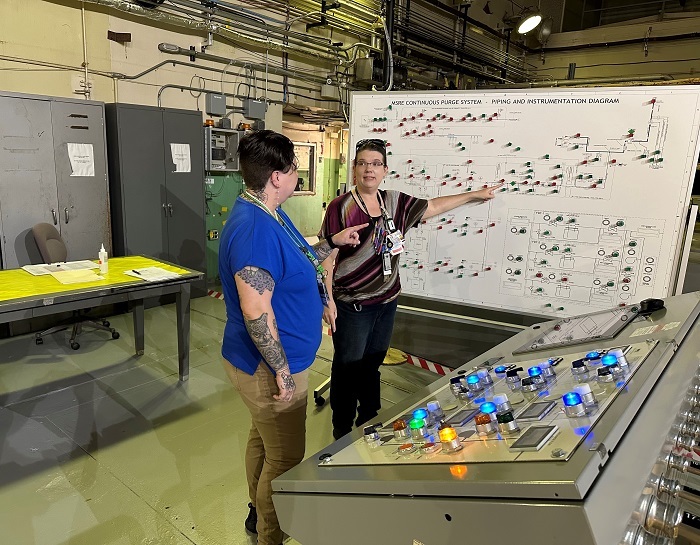 Intern Kaitlyn Raven, at left, learns about a new system that’s helping enhance safety and oversight at Oak Ridge National Laboratory’s Molten Salt Reactor Experiment.
“I chose UCOR for my first internship at the recommendation of my professor,” said Raven, one of UCOR’s first interns from Tennessee State University in Nashville.
An engineer supporting work at the Molten Salt Reactor Experiment at Oak Ridge National Laboratory, Raven is leaning on her Army experience.
This year, UCOR expanded intern opportunities into new areas, including Raven’s assignment. Nyree Macklin, also from Tennessee State University, is the first intern assigned to support the company’s human resources department. Other new areas for interns in 2024 include project controls and work coordination for the nuclear operations team.
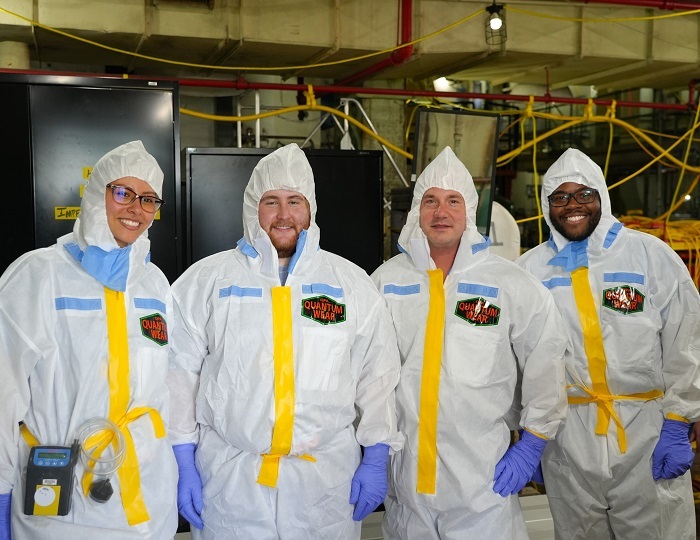 From left, interns Cari Estrada Cardona, John Woods, Josh Vejda and Shawn Cameron dress for a demonstration at the Oak Ridge Research Reactor. UCOR is deactivating that facility for near-term demolition, continuing to transform Oak Ridge National Laboratory’s central campus.
The company continues its partnership with Florida International University, where Shawn Cameron graduated in May with a master’s degree in mechanical engineering.
Cameron completed research and internships with the U.S. Department of Energy Office of Legacy Management through a DOE fellowship. Now, he’s excited to support the DOE Office of Environmental Management (EM) by working in UCOR’s Technology Development group. Drawing on experience from a previous internship studying sink holes at EM's Waste Isolation Pilot Plant, Cameron produced a design in his first three weeks of his current UCOR internship.
UCOR’s summer internship program pairs college students with mentors in their respective departments. Nearly half of the interns have pursued careers at UCOR after completing their internships. Ten students from the 2023 class returned for the 2024 internship program, while 11 students joined UCOR as full-time employees upon graduation.
This year’s class includes a student from the DOE Mentorship for Environmental Scholars Program, which focuses on recruiting underrepresented students from historically Black colleges and universities, tribal colleges and universities, Hispanic-serving institutions and other minority serving institutions.
-Contributor: Shannon Potter
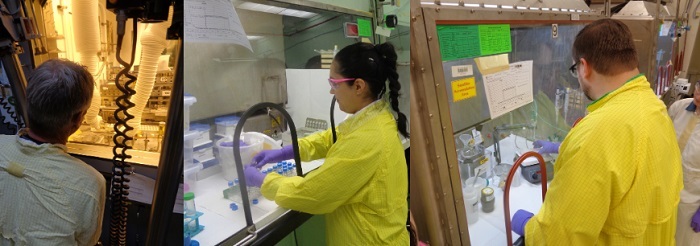 RICHLAND, Wash. — Technicians at the Hanford Site’s 222-S Laboratory, operated by U.S. Department of Energy Office of Environmental Management contractor Navarro-ATL, are processing the second batch of radioactive tank waste samples in support of the Direct-Feed Low-Activity Waste (DFLAW) Program. The lab is characterizing 17 samples from waste-storage Tank AP-104 to ensure they are suitable to be treated using vitrification, a process in which the waste is immobilized in glass. The waste analysis is not only an important step as the site readies for around-the-clock DFLAW operations but will be a key function during 24/7 waste treatment activities.
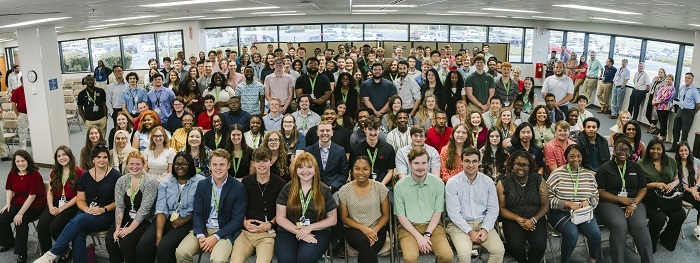 A total of 193 interns recently earned spots in the Savannah River Nuclear Solutions Internship Program this summer.
AIKEN, S.C. — A total of 193 interns hailing from 57 colleges and 12 states recently earned spots in a U.S. Department of Energy Office of Environmental Management (EM) contractor’s paid summer internship program at the Savannah River Site (SRS).
The interns will focus on a variety of disciplines within Savannah River Nuclear Solutions (SRNS), including engineering, computer science, physical sciences, business services, communications, information technology, and nuclear materials control and accountability.
“The caliber of talent and passion already displayed by this internship cohort is truly inspiring,” said Kedesha McClary, SRNS internship coordinator. “We are proud to announce this year’s participation from historically Black colleges and universities has increased significantly — indicating a strong commitment to diversity, inclusion and valuable learning experiences for SRNS interns.”
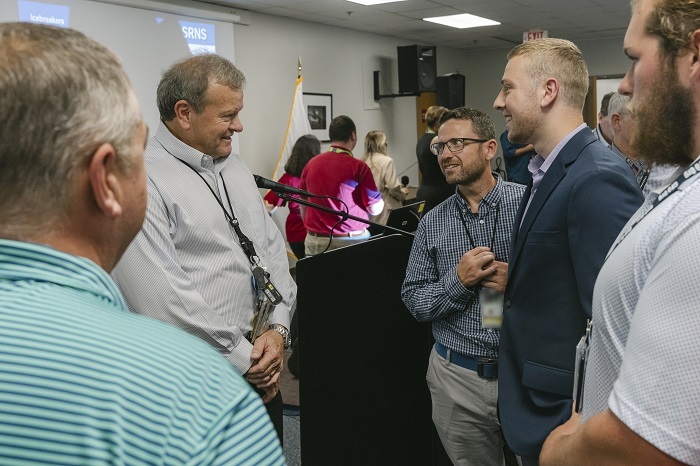 Savannah River Nuclear Solutions (SRNS) President and CEO Dennis Carr talks with incoming interns during a meet-and-greet, which connected 193 interns with SRNS senior executives and managers.
The program commenced with a recent event connecting the interns with SRNS executives and industry leaders. Keynote speakers provided insight into SRS missions, internship expectations and ways to succeed at the site.
Hunter Holden, a chemical engineering intern from Georgia Institute of Technology, returned to SRS for a second summer to continue developing valuable insights and experiences.
“I returned this summer to gain and retain valuable contacts in the industry and to advance my career in a competitive job market,” explained Holden. “In my short time at SRS, I have learned many lessons from veterans in the field of chemical engineering, with high importance placed on safety.”
SRNS President and CEO Dennis Carr believes the program is a great way to extend job offers to budding professionals. In fiscal year 2023, SRNS extended full-time job offers to over 55 interns.
“Our interns are talented, motivated, innovative and committed to SRNS missions,” Carr added. “Our local pipelines continue to pay off as we create a solid foundation that will carry SRNS forward for years to come.”
For more information about the SRNS Internship Program, click here.
-Contributor: Mackenzie McNabb
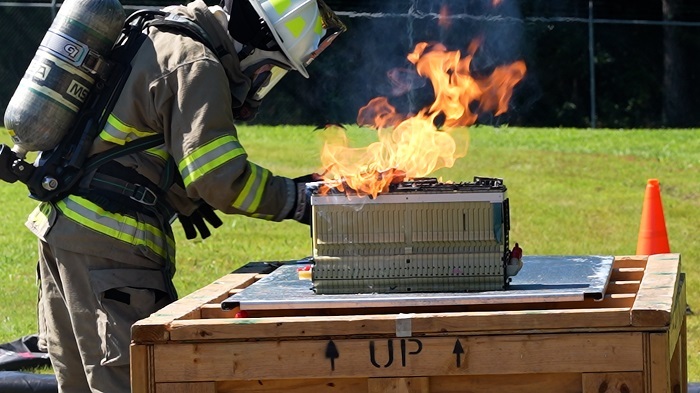 Fire protection professionals ignite an electric vehicle module as part of a demonstration. Multiple modules make up the full-size electric vehicle battery system.
OAK RIDGE, Tenn. — More than 125 fire chiefs and other fire protection professionals from across the U.S. Department of Energy (DOE) complex attended the DOE/Energy Facility Contractors Group Fire Protection Workshop last week, helping mark the largest attendance for the annual event in recent years.
Oak Ridge National Laboratory, Y-12 National Security Complex, and DOE Office of Environmental Management (EM) contractor UCOR hosted the four-day meeting at Y-12’s New Hope Center.
“This year’s turnout shows there’s a growing interest and awareness in the importance of safety,” said Erik Olds, deputy manager for the Oak Ridge Office of EM. “That’s resulting in more people receiving valuable training, sharing lessons and hearing perspectives they can take back to their respective workplaces at sites across the country.”
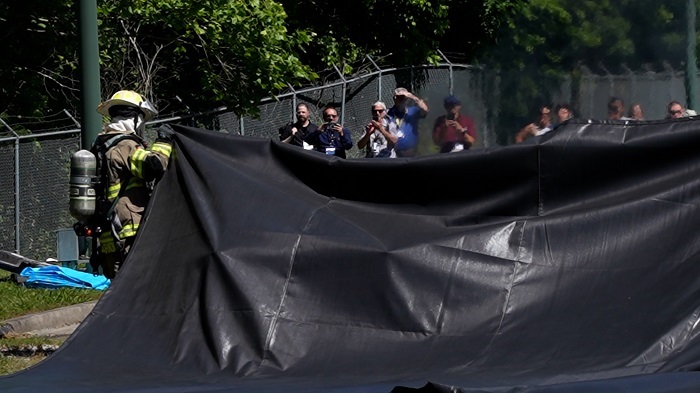 Fire protection professionals demonstrate the use of an electric vehicle fire blanket, which is more effective than water to extinguish lithium fires.
On the first day of the workshop, participants attended a live fire demonstration involving lithium-ion batteries, simulating an electric car fire.
Professionals demonstrated fire with single-cell lithium-ion batteries, a pack of the batteries, and a system of batteries used in electric vehicles. The demonstration included the use of an electric vehicle fire blanket to help extinguish the flame, which is more effective than water.
DOE recently announced four EM sites received honors for significant contributions toward a Biden administration goal of achieving a 100% zero-emissions vehicle fleet by 2035. With an increasing number of electric cars, concerns for handling a lithium fire have grown. However, the opportunity to simulate these fires is rare.
“It’s been a topic of concern, what electric vehicle fires are going to do, and how they react different,” said Jim Arnold, Y-12 fire chief.
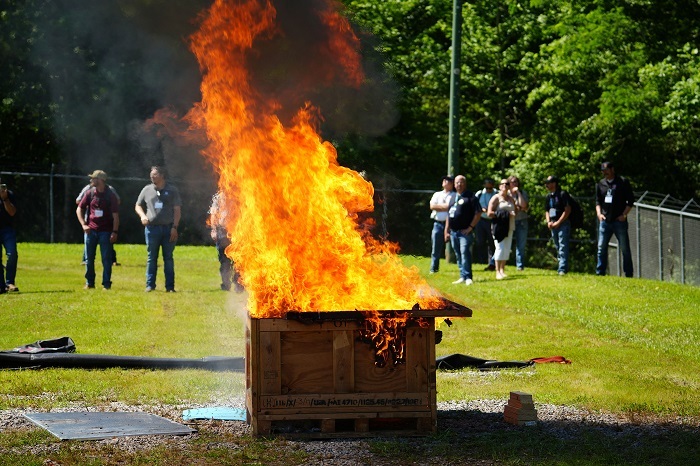 Fire protection professionals from U.S. Department of Energy (DOE) sites across the country observe a live fire demonstration on the opening day of the annual DOE/Energy Facility Contractors Group Fire Protection Workshop.
In addition to the live fire event, workshop participants explored a wide array of topics presented by representatives across the DOE complex.
Los Alamos National Laboratory’s Elisa Baker shared information on glovebox combustible controls. Gloveboxes are used to handle radiological material in a controlled setting. Y-12’s Tom Christman presentation was titled, “A Fire Protection Engineer’s Worst Nightmare — Fire Barriers.”
“We had great cooperation from our hosting partners as well as the other fire protection professionals from across the complex,” said Rob Deschambeault, UCOR fire protection program manager. “Both the demonstration and the workshop sessions provided opportunities for discussing the challenges we all face and exploring ways to handle new challenges.”
-Contributor: Susanne Dupes
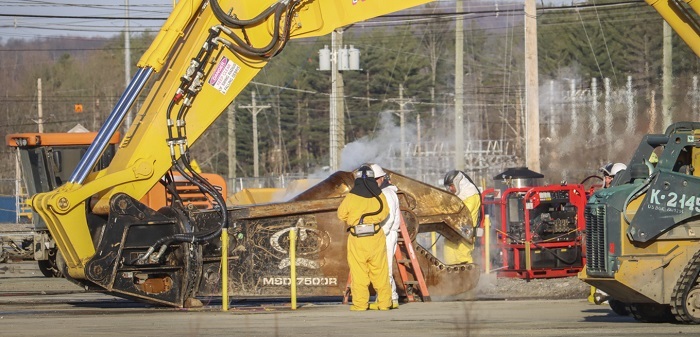 Fluor-BWXT Portsmouth workers decontaminate equipment at the Portsmouth Site.
LEXINGTON, Ky. — The U.S. Department of Energy Office of Environmental Management (EM) Portsmouth/Paducah Project Office (PPPO) recently awarded $9.8 million, or about 98% of the available fee, to Fluor-BWXT Portsmouth, the prime contractor for the Portsmouth Site’s decontamination and decommissioning project in Ohio, for its performance during the evaluation period of the first four months of fiscal year 2024.
PPPO also awarded $1.6 million, or about 79% of the available fee, to Mid-America Conversion Services, the prime contractor for depleted uranium hexafluoride (DUF6) operations in Ohio and Kentucky, for its performance during the first four months of fiscal year 2024, which was from October last year through January this year.
“The contractors and their collective workforce continue to execute a multifaceted cleanup scope for the Department of Energy,” PPPO Manager Joel Bradburne said. “We appreciate efforts that continue to safely deliver for the environment, the taxpayer and our communities.”
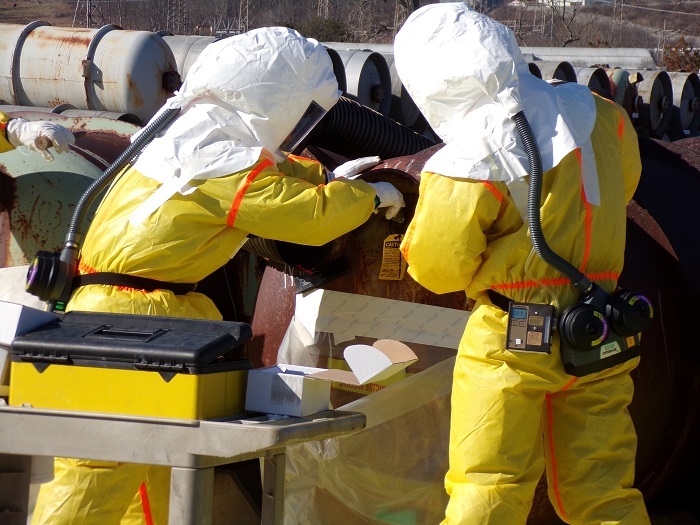 Mid-America Conversion Services Mechanical Maintenance Technicians Jay Shelton, left, and Eric Kent perform a cylinder valve change on a depleted uranium hexafluoride (DUF6) feed cylinder at the Portsmouth Site.
The cleanup program releases information relating to contractor fee payments — earned by completing work called for in the contracts — to further transparency in its cleanup program.
EM’s cost-plus-award-fee contracts are designed to provide incentive for excellence. In determining the awards, EM considers overall performance along with completion of specific mission objectives. The results are summarized on scorecards, and metrics are set in accordance with specified performance evaluation measurement plans.
|