WASHINGTON, D.C. — Following President Joe Biden's nomination of William “Ike” White to serve on the Defense Nuclear Facilities Safety Board (DNFSB), the U.S. Department of Energy (DOE) has selected Candice Robertson to lead the Office of Environmental Management (EM) as it continues to advance its critical cleanup mission.
Under White’s leadership, EM has achieved historic levels of cleanup, strengthened relationships with tribal nations, improved community and stakeholder engagement and implemented a sustainable vision for the future of the program.
“Perhaps the most important responsibility I have had is to ensure the program I am leaving behind can be even better without me," White told employees. "And I am absolutely confident I am leaving EM with one of the strongest leadership teams in its history.”
Robertson has over 20 years of experience in radioactive waste management and has previously served in several leadership roles within the Department and EM, including as EM’s principal deputy assistant secretary. She brings a wealth of leadership and continuity to the EM program that is critical to sustaining cleanup momentum.
While White awaits confirmation to the DNFSB, he will serve as a senior advisor, applying his expertise across DOE's critical missions.
Read the official announcement here.
 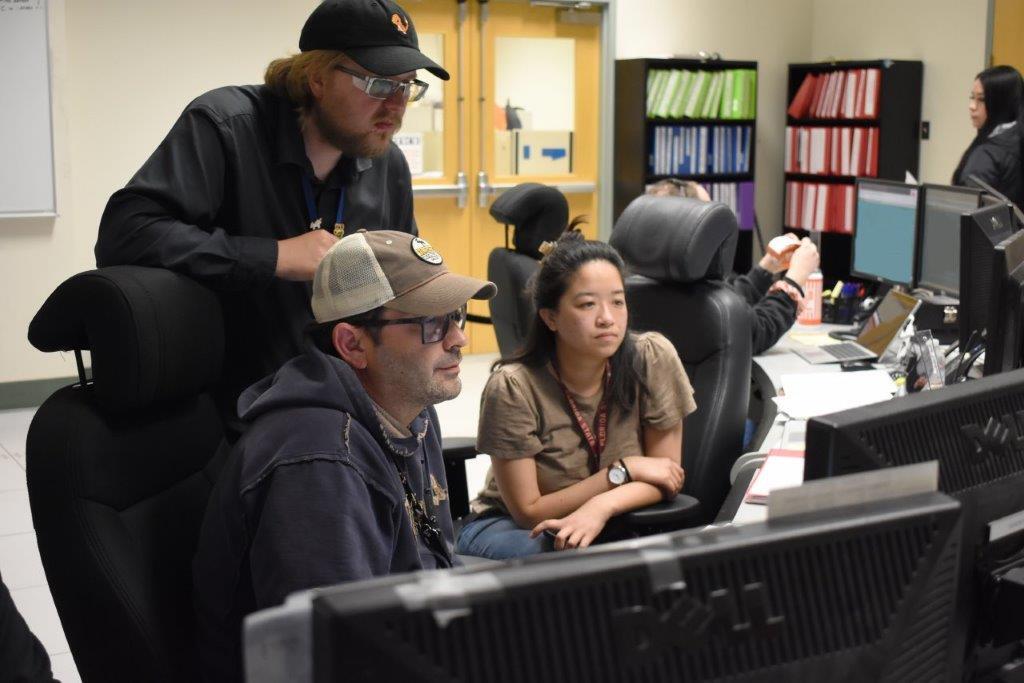 A crew at the Hanford Site’s Waste Treatment and Immobilization Plant monitors melter systems during the first pour of test glass from a second melter.
RICHLAND, Wash. — Crews at the Hanford Site’s Waste Treatment and Immobilization Plant (WTP) have poured the first test glass from a second melter into a stainless steel container in the plant’s Low-Activity Waste (LAW) Facility.
“Plant crews have demonstrated that both melters are fully operational and capable of pouring glass,” said Mat Irwin, U.S. Department of Energy Office of Environmental Management acting assistant manager for WTP. “System tests will begin to look more like future waste treatment operations moving forward.”
Plant personnel will continue to pour glass from Melter 2 in batches so control room staff can practice the process until they have filled the container. WTP produced the first container of test glass last year after completing a similar series of pours from Melter 1.
Personnel heating up melters and pouring test glass are an important part of commissioning the facility to prepare for vitrifying, or immobilizing in glass, millions of gallons of radioactive and chemical waste from Hanford’s large underground tanks.
“The first pour from Melter 2 is another important step in commissioning the plant and preparing for the future sustained production of vitrified waste,” said Brian Hartman, senior vice president for Bechtel National Inc., lead contractor for WTP. “I’m proud of our team’s progress in heating a second melter, managing other first-time systems and moving forward with filling more containers.”
During future waste treatment operations, Hanford crews will feed waste from underground tanks that have been treated to remove radioactive solids and cesium to the melters inside the LAW Facility. The waste will be mixed with glass-forming materials in the melters, then poured into specially designed stainless steel containers for disposal at Hanford’s Integrated Disposal Facility.
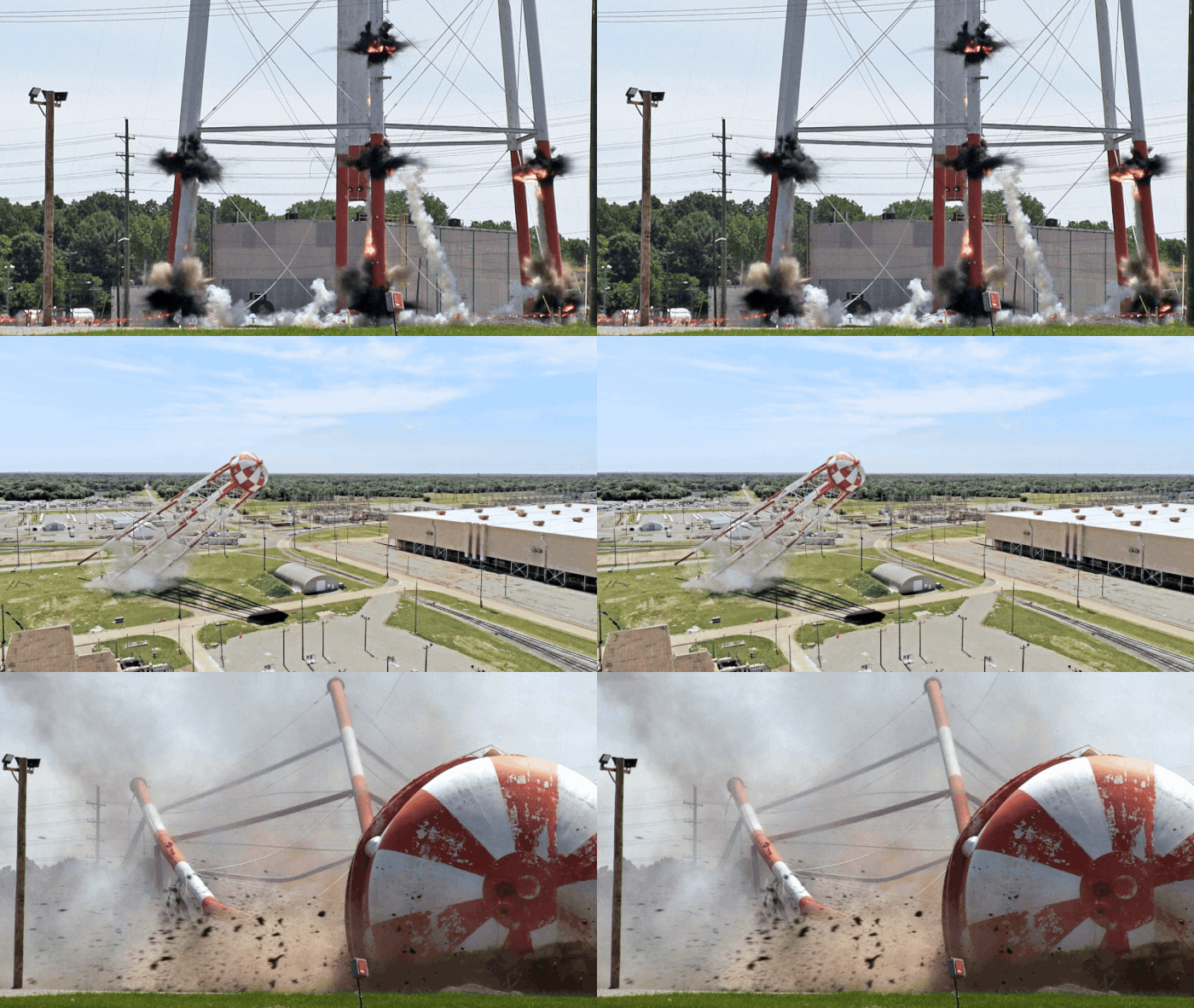
PADUCAH, Ky. — A controlled demolition of the high-pressure fire water tower at the U.S. Department of Energy (DOE) Office of Environmental Management Paducah Site last week took mere seconds, but it required months of planning and preparation ahead to ensure the approximately 300-foot water tower was brought down safely to the ground.
The demolition of the water tower — a part of the site since 1958 — is a striking horizon change.
With its recognizable red and white checkerboard pattern, the water tower was taken out of service when the Paducah Site transitioned its fire suppression systems to a dry-hybrid system.
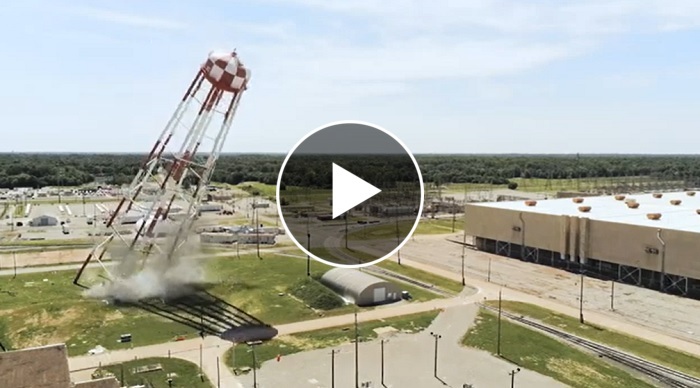 EMTV: Watch a video about the demolition of the Paducah Site water tower.
Plans to demolish the water tower began late last year as deactivation and remediation contractor Four Rivers Nuclear Partnership (FRNP) evaluated methods for demolition.
“Removal of unused facilities paves the way for expanded cleanup of the Paducah Site,” Portsmouth/Paducah Project Office Manager Joel Bradburne said. “In turn, a project like this also provides opportunities to provide recyclable material to the Paducah Area Community Reuse Organization to fund economic development in the region.”
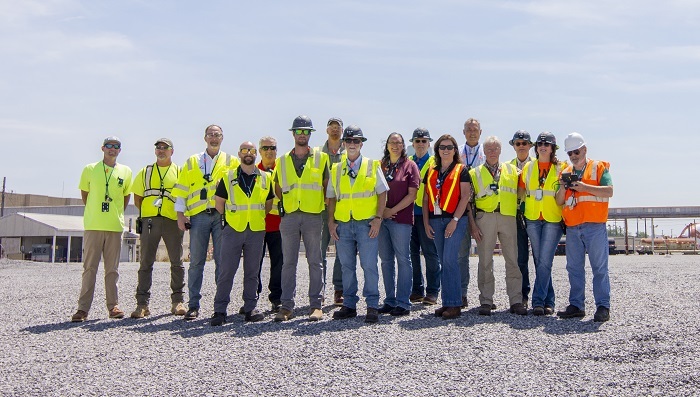 The Paducah Site water tower demolition project group gathers for a photo after the successful demolition last week.
Controlled demolition of water towers using explosives is not a new approach in the DOE complex and by bringing the water tower to the ground, workers are able to easily cut away sections of the structure without the use of aerial lifts, eliminating a significant hazard.
The controlled use of explosives uses precision and methodical execution to ensure a structure falls in a specific way that drastically minimizes flying debris. In the case of the water tower at the Paducah Site, relief cuts were made into the support legs, which when impacted by the explosives, acted like a hinge ensuring the structure fell in a designated area.
“By demolishing the tower with this method, the hazard for our workers is significantly reduced and I applaud the effort of our team to put safety first to complete this major milestone for the site,” FRNP Program Manager Myrna Redfield said.
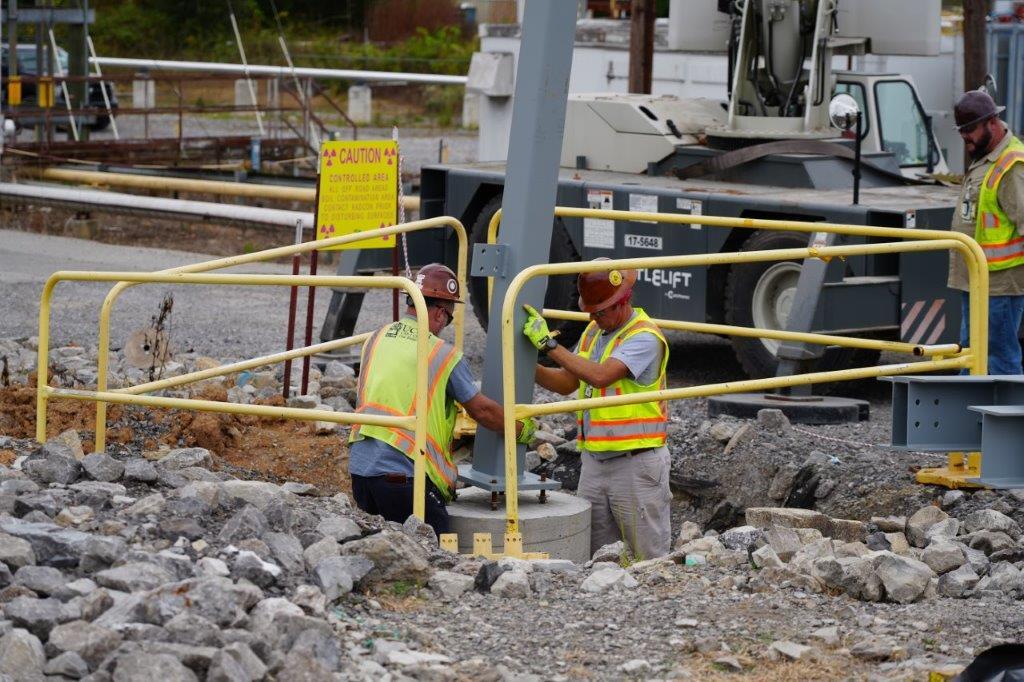 Crews rerouted utilities as part of this project. In some cases, that involved excavating areas, pouring foundations and installing structural steel.
OAK RIDGE, Tenn. — Crews with Oak Ridge Office of Environmental Management (OREM) cleanup contractor UCOR took the first step toward preparing a former waste treatment facility for demolition at Oak Ridge National Laboratory (ORNL).
Workers at the Process Waste Treatment Plant, known as Building 3544, are isolating all potential energy sources to the building so deactivation crews can safely enter and perform work inside the facility.
“This was a notable achievement due to the complexities involved with this project,” said Greg McGinnis, ORNL area project manager. “The Building 3544 Complex is a key hub for three utilities that support ongoing operational Liquid and Gaseous Waste Operations (LGWO) treatment systems.”
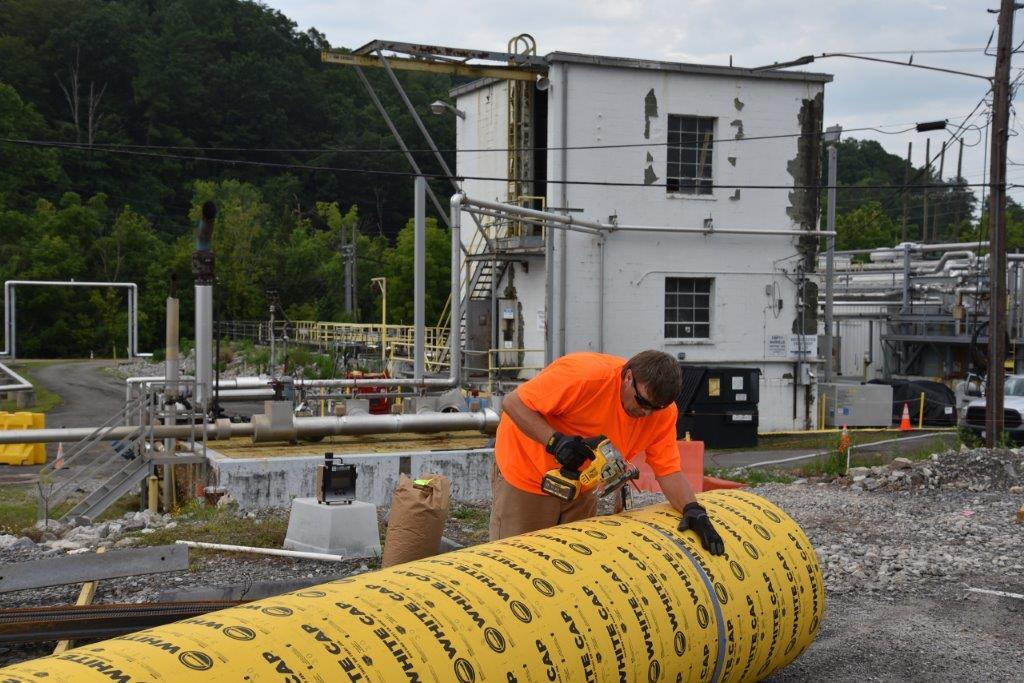 Workers cut and installed more than 500 feet of potable water and rerouted steam lines as part of the Building 3544 project.
Through coordination with UT-Battelle, ORNL’s management and operations contractor, workers completed all utility deactivations, including steam, electrical, and potable water. Electricians removed permanent power and installed temporary power to the complex for future deactivation work.
Crews excavated areas and installed foundations to support utility reroutes. They placed concrete forms and rebar, installed structural steel, and wrapped and insulated 500 feet of potable water piping. Workers also rerouted steam lines and installed a new steam station.
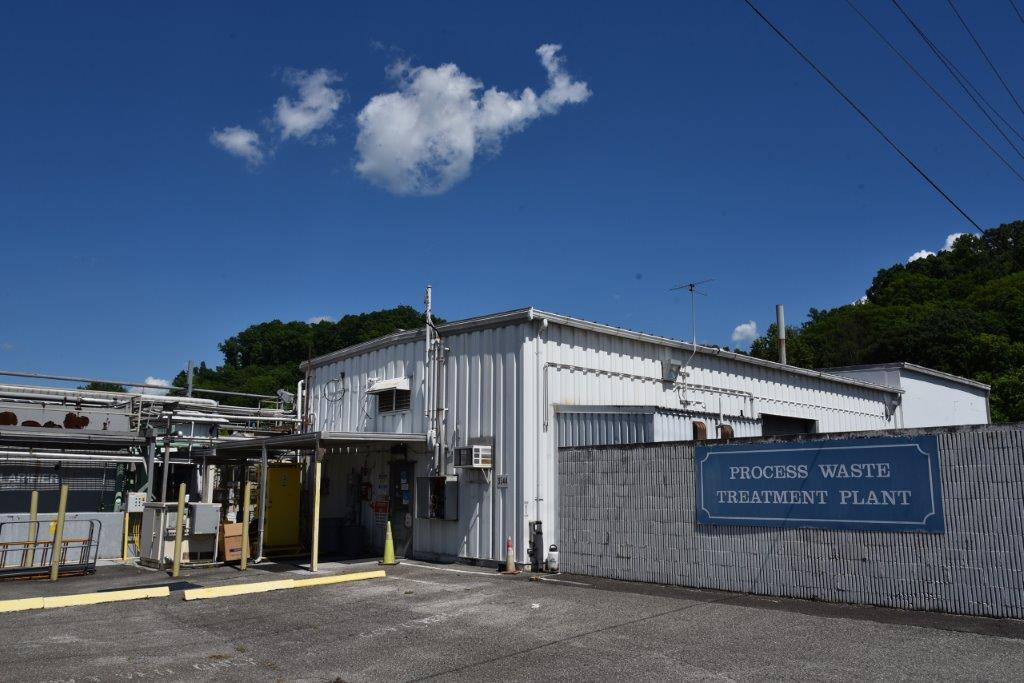 A view of Building 3544, which was constructed in 1976. It has been shut down since 2021 when the Oak Ridge Office of Environmental Management finished installing upgrades that moved operations to Building 3608.
Constructed in 1976, Building 3544 had exceeded its design life and posed one of the biggest risks to operations at LGWO.
The LGWO system is critical to ORNL’s ongoing missions, and any outage would result in immediate impacts at the site. It contains three waste treatment systems that collect, treat and reduce the volume of liquid and gaseous waste across the laboratory. It encompasses more than 60 facilities and 27 miles of piping that process waste generated from cleanup operations, research and development laboratories, and active and deactivated nuclear reactors.
LGWO previously had two Process Waste Treatment Complexes. Building 3608 treated non-radiological wastewater, while Building 3544 treated radiological wastewater. However, recent installations and upgrades consolidated all treatment into a single facility at Building 3608.
Those investments have paved the way for OREM to eliminate the old, contaminated infrastructure at Building 3544, enhance efficiency and costs savings associated with waste treatment and enable modernization at the site.
-Contributor: Carol Hendrycks
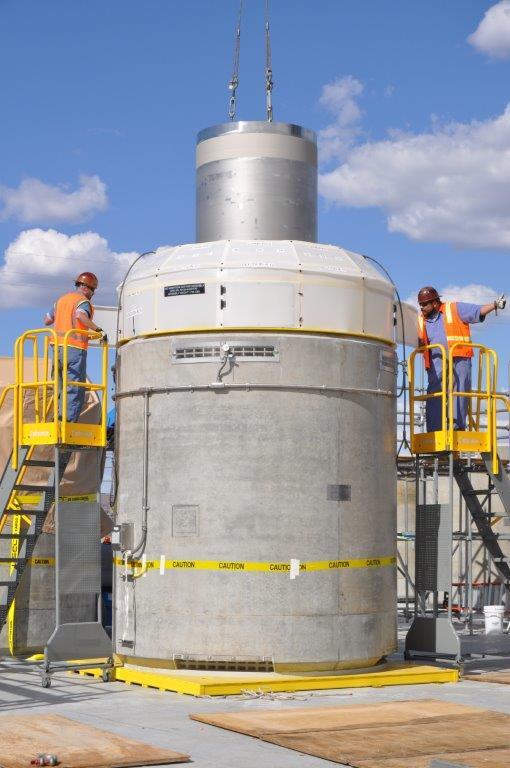
Crews with U.S. Department of Energy Office of Environmental Management contractor Central Plateau Cleanup Company recently began assembling a cask storage system for 1,936 radioactive capsules at the Hanford Site. When fully loaded, each concrete cask will weigh up to 170,000 pounds.
RICHLAND, Wash. — U.S. Department of Energy Office of Environmental Management (EM) contractor Central Plateau Cleanup Company has begun assembling a cask storage system that will support moving almost 2,000 radioactive capsules out of a water-filled basin into safer dry storage, a significant step in risk reduction at the Hanford Site.
In the mid-1970s, workers removed cesium and strontium from waste in Hanford’s underground storage tanks to reduce the waste temperature. At Hanford’s Waste Encapsulation and Storage Facility (WESF), workers placed both elements in sealed, stainless steel capsules for safe storage under 13 feet of water. The water provides shielding from radiation and keeps the capsules from overheating.
Workers will begin transferring the capsules from the WESF basin next year into large concrete casks for air-cooled storage on a secure, concrete pad near the facility. Dry storage will eliminate the possibility of a release of radioactive material in the unlikely event of a loss of basin water, and subsequent overheating and breach of the capsules.
“The dry storage configuration also paves the way for eventual decontamination and demolition of the WESF facility,” EM Federal Project Director Gary Pyles said. “Deactivating the facility will reduce operating costs, eliminate a risk in our cleanup operations and keep the Hanford mission moving forward.”
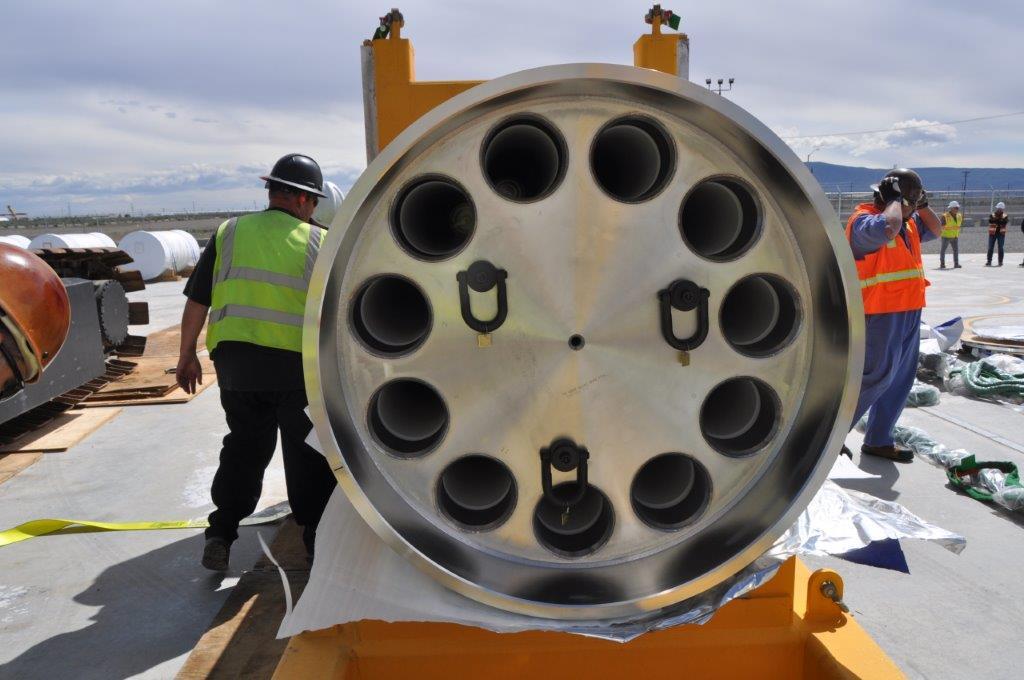 A transportable storage container is a key component of the cask storage system for 1,936 radioactive capsules on the Hanford Site. The capsules will be moved from an underwater basin in Hanford’s Waste Encapsulation and Storage Facility and placed in concrete casks for safe, interim dry storage.
Workers modified WESF last fall to support the transfer of capsules and they are installing and testing remote-operated equipment to move capsules from the basin into a shielded room for inspection. The capsules are loaded into protective sleeves filled with helium, which helps dissipate heat.
They will then load the sleeves in a container that fits in a large, reinforced concrete cask that provides shielding and weighs up to 170,000 pounds when fully loaded.
After workers move the casks to the outdoor storage pad, airflow keeps the temperature of the sealed capsules within safe limits. This is similar to how spent nuclear fuel from commercial nuclear plants is stored.
The capsules contain about a third of the radioactivity on the Hanford Site.
WATCH THIS: Timelapse video highlights assembly of the cask storage system.
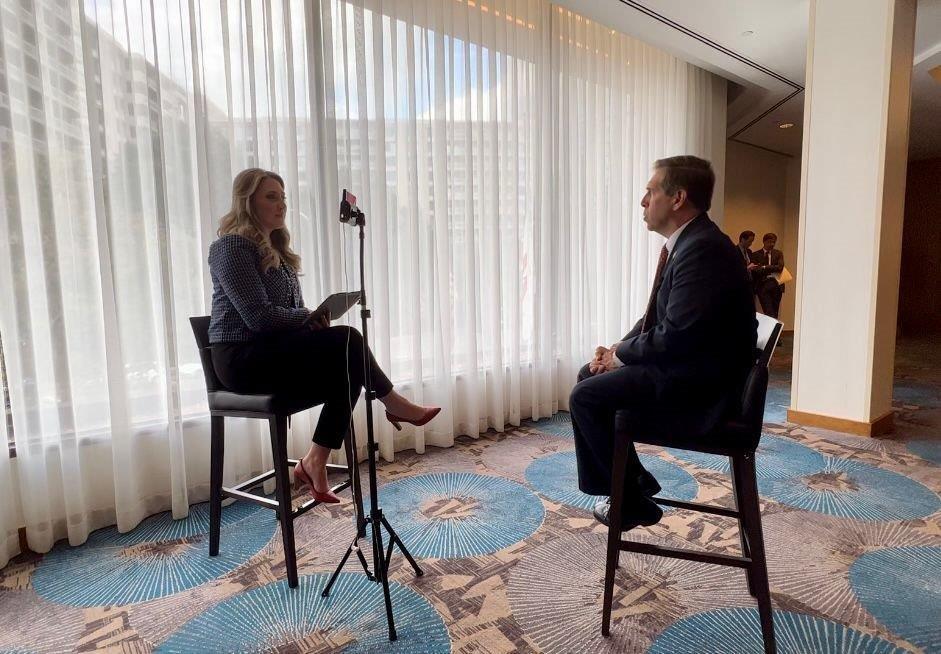 Summer Dashe, host of "Energycast Oak Ridge," interviews U.S. Rep. Chuck Fleischmann at the 2023 National Cleanup Workshop.
OAK RIDGE, Tenn. — “Energycast Oak Ridge,” a monthly news show produced by the Oak Ridge Office of Environmental Management (OREM), took home national awards recognizing excellence in storytelling and public outreach.
Watch the latest episode here.
“We’re honored to receive this national recognition,” OREM Manager Jay Mullis said. “Our communications team does a tremendous job of identifying and sharing stories that educate the community about our organization and the positive impacts our mission has across the region.”
OREM’s communications team won three Hometown Media Awards, which were established to promote community media, community radio, and local cable programs distributed on public, educational, and governmental access cable television channels.
The newscast, which launched in 2022, airs on community television channels in 24 counties across middle and eastern Tennessee. This year, it earned the top spot in three award categories: public health programming, educational activities and government meeting coverage by an independent producer.
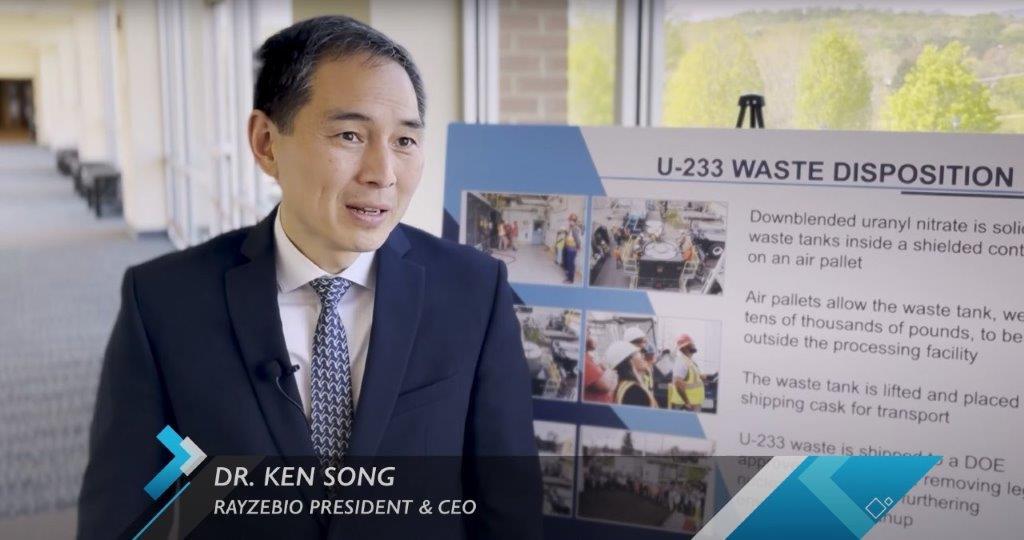 Oak Ridge Office of Environmental Management won the public health programming category for its coverage of a project providing rare medical isotpes to advance a promising form of cancer treatment. Dr. Ken Song, president and CEO of RayzeBio, speaks about that form of treatment, called targeted alpha therapy, in "Energcast Oak Ridge."
Energycast’s public health programming covered a partnership that’s increasing accessibility to a promising cancer treatment called targeted alpha therapy. An OREM project is extracting rare medical isotopes from nuclear material slated for disposal. Those isotopes are supporting clinical trials and will help produce more than 500,000 cancer treatment doses annually for this form of treatment.
The newscast also covered the Junior Achievement of East Tennessee’s BizTown to showcase OREM employees volunteering at the highly interactive educational event. Staff interviewed local middle school students responsible for running their own businesses and city for a day to teach them about the responsibilities involved in numerous careers.
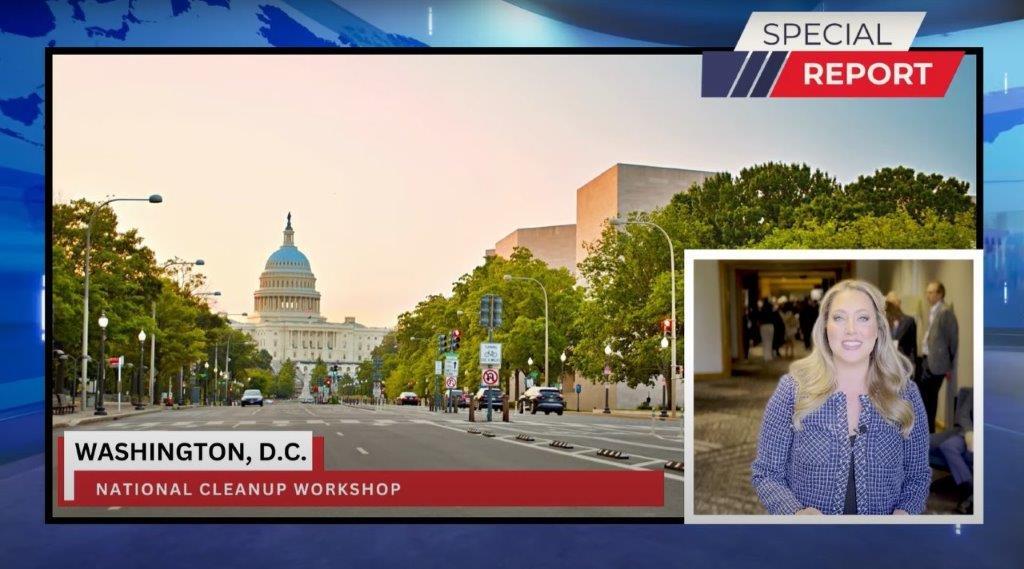 Oak Ridge Office of Environmental Management won the government meeting coverage category for its coverage from the National Cleanup Workshop. It involved talking to congressional representatives, U.S. Department of Energy leadership, regulators and event organizers about the top issues facing environmental cleanup across the country.
Finally, the team won for its government meeting coverage at the National Cleanup Workshop. The annual meeting brings together top government and business leaders who share lessons and approaches for advancing environmental cleanup in communities nationwide.
Each year, nearly 1,000 entries are submitted to the Hometown Media Awards. A panel of more than 150 judges from the industry evaluate entries on several factors. Awards are presented to the most creative programs that address community needs, develop diverse community involvement, challenge conventional commercial television formats and move viewers to experience television in a different way.
New episodes of “Energycast Oak Ridge” are released the last Wednesday of each month, and they are available on OREM’s YouTube channel.
Anyone interested in subscribing to monthly e-mails with new episodes can send a request to OakRidgeEM@orem.doe.gov.
-Contributor: Ben Williams
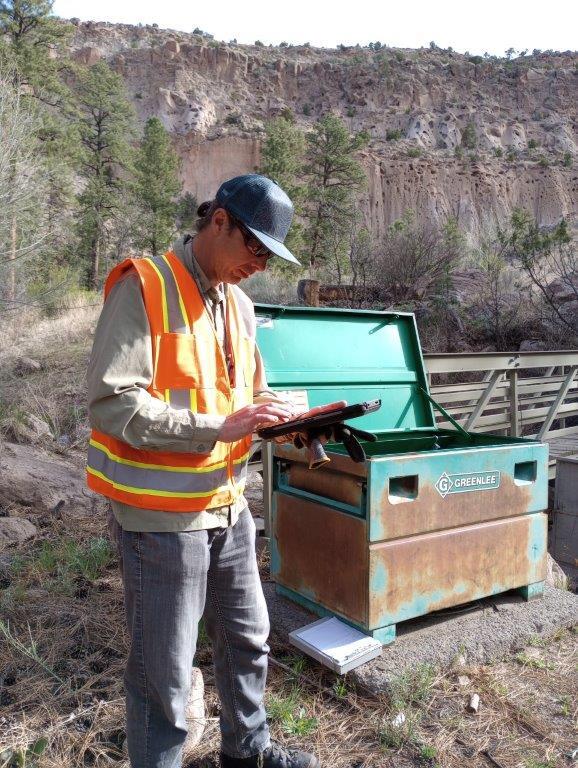
A Newport News Nuclear BWXT Los Alamos Environmental Remediation group member collects stormwater samples in Los Alamos Canyon.
LOS ALAMOS, N.M. — The rainy season holds significant importance in a high desert region. It also plays a crucial role in the commitment of the U.S. Department of Energy Office of Environmental Management Los Alamos Field Office (EM-LA) to protect water quality in Northern New Mexico.
The Environmental Remediation Water Program of Newport News Nuclear BWXT Los Alamos (N3B), EM-LA’s legacy waste cleanup contractor, oversees collection of surface water and stormwater samples around the Los Alamos National Laboratory (LANL). This program is especially active during the June-to-September rainy season. Thousands of water samples are collected each year, working around threatened and endangered species and existing mission work. Many sampling locations are in remote and difficult terrain.
Automated stormwater sampler activations begin in the spring, coinciding with warmer weather and snowmelt. Each activation involves documenting the work, ensuring sampler functionality, replacing worn parts and preparing samplers for storm events.
Crews face several challenges activating automated samplers and collecting samples, including restrictions related to threatened and endangered species, such as the Mexican spotted owl and the Jemez Mountain salamander. For example, during certain times of the year, N3B modifies fieldwork so that it does not disturb owls and salamanders in their critical habitat.
Other challenges include accessing sites, which may depend on LANL mission work; traveling to hard-to-reach areas; and managing logistical resources for 290 sampler locations spanning the 40-square-mile LANL site.
Water sample data helps determine the next steps for remediation and corrective action if contaminant exceedances are detected. Stormwater sampling and monitoring at LANL is governed by a National Pollutant Discharge Elimination System permit. The system, a permitting program to protect and improve water quality, was created by the Clean Water Act and is administered by the U.S. Environmental Protection Agency.
“The data we collect is a crucial indicator of the effectiveness of our legacy waste cleanup actions at LANL,” N3B Surface Water and Storm Water Manager Karly Rodriguez said.
“Ensuring water quality is a priority in our cleanup efforts,” Rodriguez said.
-Contributor: Sarah Jimenez
|