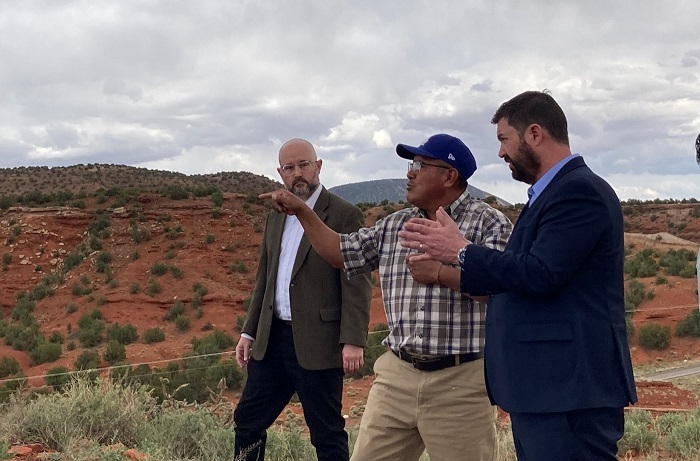
 Pueblo of Jemez Tribal Historic Preservation Officer Christopher Toya, center, provides U.S. Department of Energy Office of Environmental Management Principal Deputy Assistant Secretary Jeff Avery, right, a tour of a pueblo cultural site situated in the distinctive red rocks surrounding the pueblo.
LOS ALAMOS, N.M. — U.S. Department of Energy (DOE) Office of Environmental Management (EM) Principal Deputy Assistant Secretary Jeff Avery recently visited with the Accord Pueblos comprised of Pueblo de Cochiti, Pueblo de San Ildefonso, Pueblo of Jemez and Santa Clara Pueblo. Avery shared a meal with members of Pueblo de San Ildefonso, including Gov. Christopher Moquino and Lt. Gov. Raymond Martinez. Pueblo de San Ildefonso is the only pueblo that shares a boundary with EM’s legacy cleanup mission in Los Alamos. Close coordination with the pueblo has been essential, particularly when addressing a hexavalent chromium plume at Los Alamos National Laboratory. Avery visited Pueblo de Cochiti, where he toured the pueblo and Cochiti Lake, received a cultural presentation and met with leadership. He also visited Pueblo of Jemez, where Tribal Historic Preservation Officer Christopher Toya provided a tour and a cultural presentation. Clarice Madalena, the pueblo’s Natural Resources Department director, shared regarding the department, which is supported, in part, by the Los Alamos Pueblo Project funded by DOE. At Santa Clara Pueblo, Lt. Gov. Charles Matthew Sisneros and Tribal Historic Preservation Officer Ben Chavarria provided a tour of the Second Pond area, which has been significantly impacted by wildfires in recent decades, and Puye Cliff Dwellings. Avery saw the Santa Fe Indian School and its greenhouse, and received a presentation on the school’s Community Based Education Program supported by DOE.
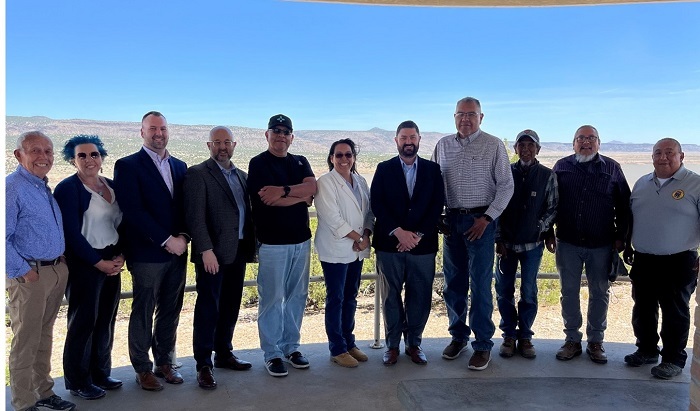 U.S. Department of Energy Office of Environmental Management Principal Deputy Assistant Secretary Jeff Avery, center right, and staff were hosted by Pueblo de Cochiti leadership on a visit to Cochiti Lake located south of Los Alamos National Laboratory. Pueblo leaders explained the history of the installation of a dam there and its impacts to the pueblo’s traditional ways of life.
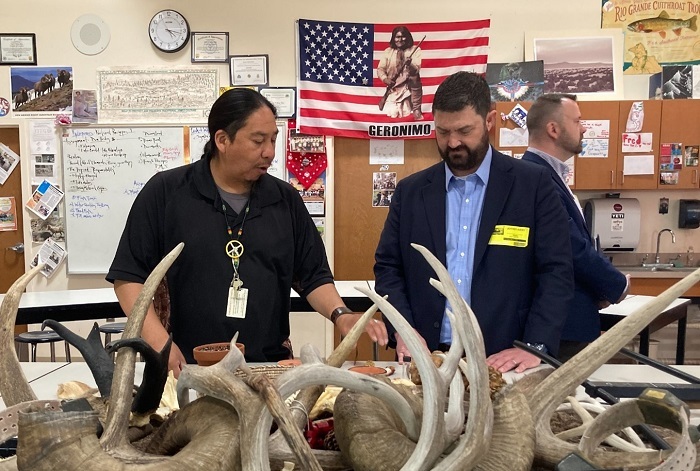 Kai-t Blue-Sky, teacher at the Santa Fe Indian School Community Based Education Program, shares his classroom with U.S. Department of Energy (DOE) Office of Environmental Management Principal Deputy Assistant Secretary Jeff Avery, right, highlighting the integrated approach to science, technology, engineering and math (STEM) education at the school. The Community Based Education Program is supported by DOE.
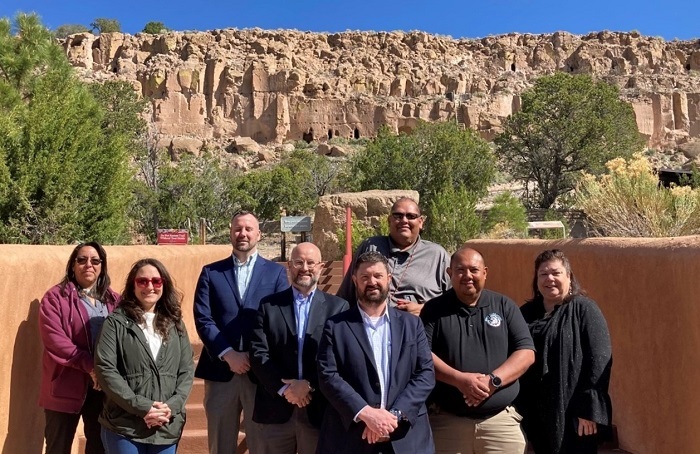 Santa Clara Pueblo Lt. Gov. Charles Matthew Sisneros and Tribal Historic Preservation Officer Ben Chavarria are pictured at Puye Cliffs with U.S. Department of Energy Office of Environmental Management Principal Deputy Assistant Secretary Jeff Avery, center right. Puye Cliffs Dwellings was home to 1,500 pueblo people who lived, farmed and hunted game there from the 900s to 1580.
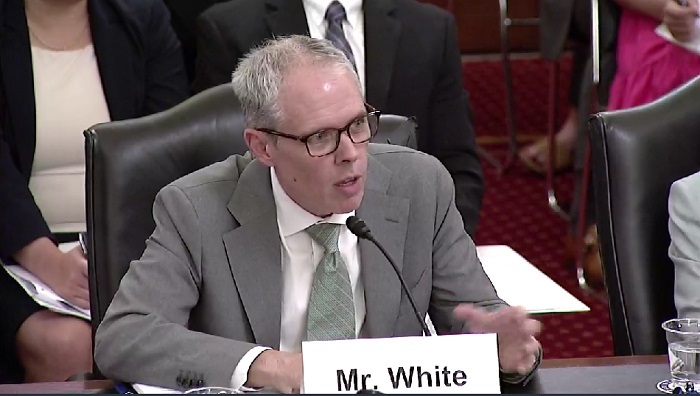
WASHINGTON, D.C. — U.S. Department of Energy (DOE) Office of Environmental Management (EM) Senior Advisor William “Ike” White joined National Nuclear Security Administration (NNSA) and NNSA Office of Naval Reactors leaders on Capitol Hill on May 22 to testify before the Senate Subcommittee on Strategic Forces Committee on Armed Services on their missions and commitments supporting DOE’s fiscal year 2025 budget request. In White’s opening statement, he emphasized EM’s commitment to cleaning up the environmental legacy of national defense programs that helped end World War II and the Cold War, stating that, “while our mission is rooted in the past, we’re focused on the future.” White’s testimony highlights EM’s 35 years of progress, transformational results, steady progress planned for fiscal year 2025, support for national security missions and how EM is investing in the future. The budget request allows for continued improvement to the rigor of program and project management, as well as opportunities to progress cleanup safely and more efficiently.
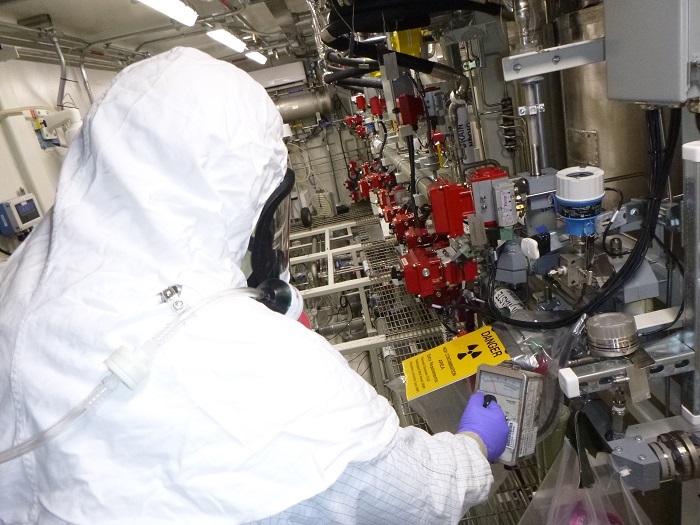 Crews with Hanford Site contractor Washington River Protection Solutions prepare the Tank-Side Cesium Removal System to process a batch of tank waste.
RICHLAND, Wash. — Laboratory testing at the Hanford Site confirms that over 200,000 gallons of treated radioactive waste is ready to be vitrified, or immobilized in glass.
U.S. Department of Energy Office of Environmental Management (EM) contractor Washington River Protection Solutions (WRPS) continues to process tank waste through the Tank-Side Cesium Removal (TSCR) System. TSCR is a demonstration project that removes radioactive cesium and solids from the waste.
Under Hanford’s Direct-Feed Low-Activity Waste Program, the treated waste will be fed directly to the Low-Activity Waste Facility at the Waste Treatment and Immobilization Plant (WTP) beginning next year.
“The Tank-Side Cesium Removal System is accomplishing its mission as the first step in treating Hanford’s tank waste,” said Delmar Noyes, Hanford assistant manager for Tank Waste Operations. “We’re making great progress towards the start of WTP operations in 2025.”
 |
|
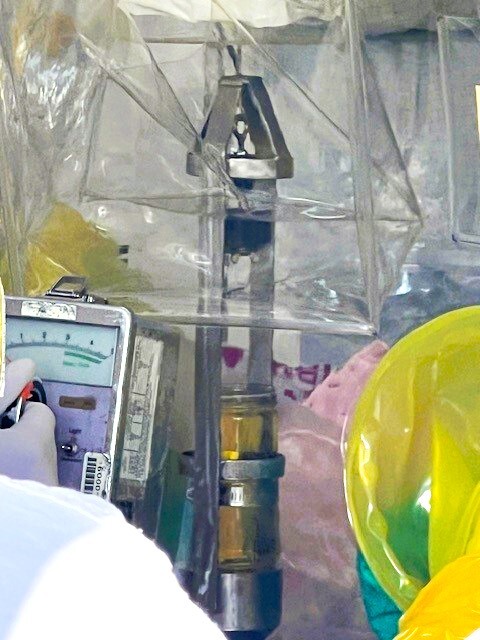
The 222-S Laboratory, operated by Hanford Site contractor Navarro-ATL, tests liquid waste from the underground storage tank that will feed it to Hanford’s Waste Treatment and Immobilization Plant. |
The 222-S Laboratory, operated by EM contractor Navarro-ATL, tests TSCR-processed waste after each batch. WRPS must provide certified data to demonstrate that the feed to the WTP is within acceptable limits for radiological and chemical makeup. The processed waste is staged in an underground storage tank until the WTP has progressed in the commissioning process and is ready for treated tank waste to be delivered for vitrification.
“The Direct Feed Low-Activity Waste Program is truly a One Hanford effort; all site contractors have a role,” said Wes Bryan, WRPS president and project manager. “We’re proud of our team and the dedicated workforce that is moving this first large-scale treatment of Hanford waste forward.”
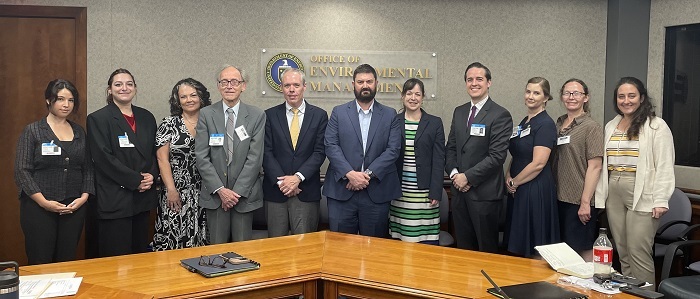
WASHINGTON, D.C. — U.S. Department of Energy Office of Environmental Management (EM) leaders met last week with representatives from the Alliance for Nuclear Accountability (ANA), a national network of 34 organizations from communities across the nuclear weapons complex, to address cleanup issues. Engaging in transparent and open dialogue with alliance representatives from California, New Mexico, Idaho and Washington state resulted in meaningful conversations with a shared sense of cooperation and understanding between the two organizations. The ANA representatives are pictured with members of the EM team, including EM Senior Advisor William “Ike” White and Principal Deputy Assistant Secretary Jeff Avery at center.
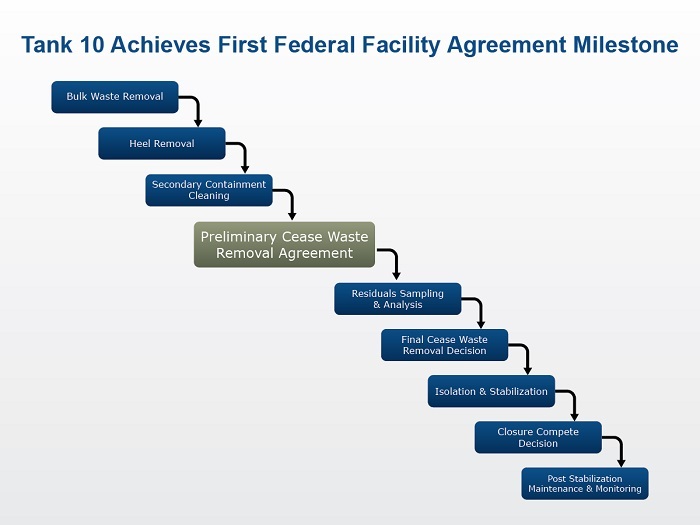 This diagram shows the nine general steps of operational closure of a waste tank at the Savannah River Site. With regulatory concurrence, the U.S. Department of Energy Office of Environmental Management and contractor Savannah River Mission Completion have achieved the important fourth step, preliminary cease waste removal, for Tank 10.
AIKEN, S.C. — The U.S. Department of Energy (DOE) Office of Environmental Management (EM) received concurrence from the South Carolina Department of Health and Environmental Control (SCDHEC) and U.S. Environmental Protection Agency (EPA) on May 23 that the Savannah River Site (SRS) has successfully removed waste from Tank 10 and may now proceed to the next step in the closure process for that tank.
Completing this phase of work on the waste tank, called preliminary cease waste removal (PCWR), is the first waste tank related Federal Facility Agreement (FFA) milestone achieved by SRS liquid waste contractor Savannah River Mission Completion (SRMC), and it was accomplished seven months ahead of schedule.
PCWR is a regulatory milestone for old-style tanks that designates agreement between DOE, SCDHEC, and EPA that, based on preliminary information, there is reasonable assurance that performance objectives for tank closure will be met. Also, the concurrence means that work can begin on the sampling and analysis phase of the tank closure process. This next phase will verify these conclusions, based on laboratory analysis of any remaining material and final residual volume determination, prior to final isolation and stabilization of the waste tank.
The FFA establishes a procedural framework, including liquid waste tank milestone agreements and other site cleanup priorities. It also specifically outlines the schedule for the waste removal and operational closure of the remaining 16 oldest-style tanks at SRS. Eight of the 51 tanks at SRS have already been operationally closed. All 43 remaining waste tanks are slated to be operationally closed by 2037.
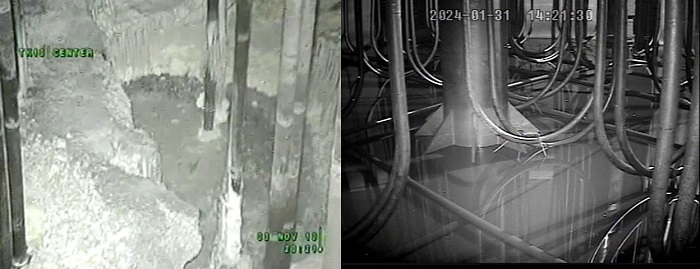 The U.S. Department of Energy Office of Environmental Management has received concurrence from state and federal regulators to suspend waste removal activities in Tank 10 at the Savannah River Site and move to the next step in the closure process, accomplishing a Federal Facility Agreement milestone. Pictured at left is the interior of Tank 10 during the cleaning process, showing a large buildup of saltcake, and at right, the tank's interior is shown after the cleaning process.
Jim Folk, DOE-Savannah River assistant manager for waste disposition, said PCWR is a significant step toward achieving eventual tank closure.
“The required process for properly closing these waste tanks is very demanding, and DOE is pleased with the safe work to accomplish this task,” Folk said. “While there are many steps to closing all the SRS waste tanks, we have a path and a plan to get there.”
SRMC President and Program Manager Dave Olson said he continues to be proud of the work by employees who demonstrate they want to achieve the mission.
“Our workers know the impact our liquid waste can have on people and the environment,” Olson said. “Achieving PCWR is another stride in protecting our communities.”
Tank 10, built between 1951 and 1953, is 75 feet in diameter and stands 24.5 feet tall. The tank has a capacity of 750,000 gallons.
-Contributor: Jim Beasley
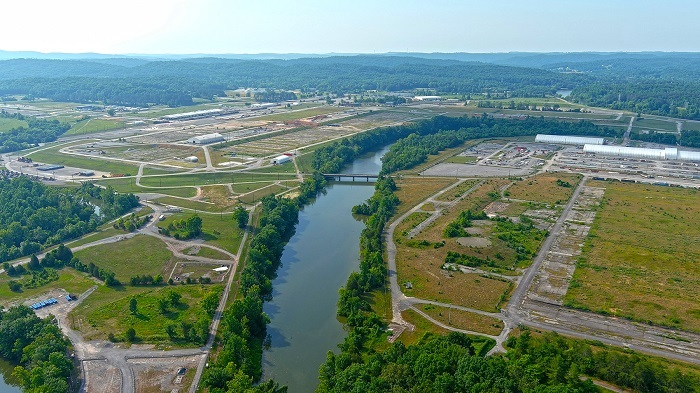 An aerial view of the East Tennessee Technology Park shows the Main Plant Area at left of Poplar Creek and the K-31 and K-33 Area at right.
OAK RIDGE, Tenn. — With crews set to finish remediating soil at the East Tennessee Technology Park (ETTP) this year, the Oak Ridge Office of Environmental Management (OREM) is shifting focus to groundwater — the final phase of cleanup there.
That work can now move forward with the recent signing of two records of decision between OREM, the U.S. Environmental Protection Agency and Tennessee Department of Environment and Conservation.
The formal regulatory documents, shared with the public for input last spring, provide guidance and the approved, agreed-upon remediation methods to conduct the work.
“One of our program’s guiding principles is always pursuing progress and completing the work we start,” OREM Manager Jay Mullis said. “The partnership and collaboration displayed with our regulators is allowing us to do just that. With these signings, we can move forward with completing our mission at the East Tennessee Technology Park.”
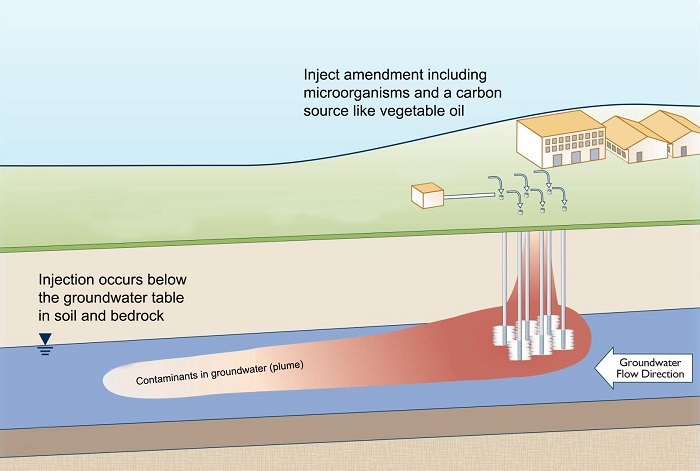 This graphic shows the Oak Ridge Office of Environmental Management's remediation approach, known as enhanced in-situ bioremediation, for groundwater plumes in the Main Plant Area. Employees will inject microorganisms into the ground capable of reducing the contaminants.
OREM and contractor UCOR completed building demolition at ETTP in 2020. That concluded a two-decade effort that removed more than 500 facilities, including five massive uranium enrichment buildings, with a combined footprint that could span 225 football fields.
Since then, they’ve been steadily completing soil remediation projects across the site — an EM 2024 priority.
“The site cleanup and soil remediation successes are paving the way for a brighter future at a site that once housed deteriorated, contaminated buildings,” said Ken Rueter, UCOR president and CEO. “This final phase of remediation would not have been possible without all the hard work, expertise and partnering successes that allowed us to successfully and safely complete this work.”
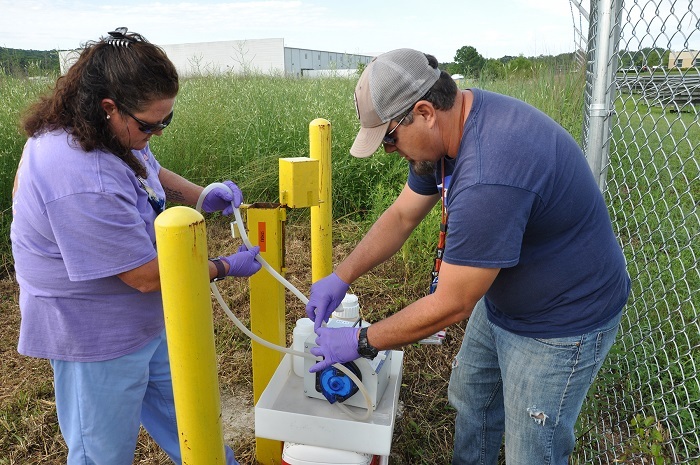 Employees have conducted extensive sampling across the East Tennessee Technology Park to identify any areas with groundwater plumes that need to be addressed or remediated.
ETTP is divided into three sections for groundwater remediation planning. One section is the Main Plant Area, which encompasses most of the operations area at the former enrichment complex. Another section is the area where the large K-31 and K-33 uranium enrichment buildings once stood. The third section is called Zone 1, which is the area immediately surrounding the Main Plant and K-31 and K-33 areas.
The two records of decision signed this month are for the Main Plant Area and the K-31 and K-33 Area.
The groundwater remediation approach in the Main Plant Area is called enhanced in-situ bioremediation. A widely used technology for treating contaminated waste, it involves injecting microorganisms and a carbon source, such as vegetable oil, into the ground. The microorganisms reduce or detoxify the contaminants.
For the K-31 and K-33 Area, OREM will use a process called monitored natural attenuation. Monitored natural attenuation relies on natural processes that reduce contaminant concentrations in groundwater. Using this process as the remedial action involves monitoring groundwater conditions with land use controls limiting potential exposures.
A future record of decision will detail groundwater remediation activities for Zone 1.
OREM’s projects have transformed the former uranium enrichment complex into a private industrial park that benefits the community. Crews have cleared away all the former buildings, addressed impacted soil and transferred more than 1,700 acres of land to the community to attract new economic development. To date, 25 businesses are located there, with more expected soon.
-Contributor: Wayne McKinney
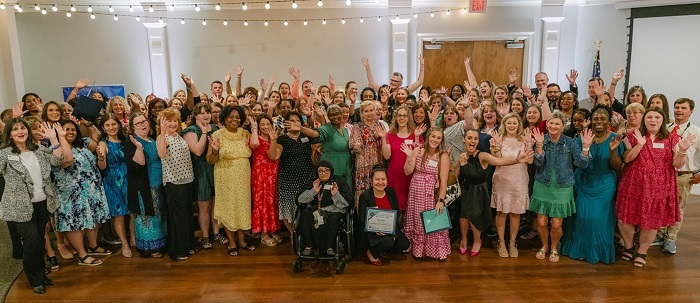 During the recent Savannah River Nuclear Solutions (SRNS) Innovative Teaching Mini Grants Program reception, 117 educators from the Central Savannah River Area and Orangeburg County received their shares of $75,000 in grants.
AIKEN, S.C. — A U.S. Department of Energy Office of Environmental Management contractor at the Savannah River Site (SRS) continues to recognize innovative teaching methods by contributing thousands of dollars through the Innovative Teaching Mini Grants Program each year.
This year, 117 educators received their shares of $75,000 at a celebration in Aiken. And since 2009, Savannah River Nuclear Solutions (SRNS) has contributed over $975,000 to support educators from public, private and charter schools in Aiken, Allendale, Bamberg, Barnwell, Edgefield, Orangeburg, Columbia and Richmond counties.
“As a former educator, this program means the world to me as it recognizes outstanding teachers for their dedication to student learning,” SRNS Education Outreach Specialist Taylor Rice said. “SRNS continues to put educators first as they develop the STEM (science, technology, engineering and math) skills we need in our future workforce.”
 |
|
Barnwell Elementary School educator Tanya Anderson wins a door prize during the Savannah River Nuclear Solutions Innovative Teaching Mini Grants Program reception. Anderson will use the funds to purchase financial literacy and budgeting materials for her classroom. |
Mallory Walp, East Aiken School of the Arts, wins a door prize during the Savannah River Nuclear Solutions (SRNS) Innovative Teaching Mini Grants Program reception. Walp is introducing Diplo Legos to her first grade classroom, using SRNS grant funds. |
|
 |
 |
|
Savannah River Nuclear Solutions Innovative Teaching Mini Grants Program recipient Wendy Schilling and her guest pose for a photo booth picture during the reception for the grants. |
The grants fund the purchase of various project materials, hands-on kits and computer programs. A panel of 50 SRS employees serve as judges and select the winners. Educators seeking classroom supplies are eligible for $500 grants, while those enhancing STEM curriculums receive grants ranging from $750 to $1,000.
“SRNS’ support is instrumental in nurturing students’ passion for STEM, paving the way for rewarding careers,” remarked Kristina Istre, A.R. Johnson Health Science and Engineering Magnet School educator. “The funding will enable the introduction of an aquaponics unit in my seventh grade science class, teaching students how to create aquariums, address food deserts and cultivate soilless plants indoors.”
Stephany Griffin, an educator at Tall Pines STEM Academy, expressed gratitude for the opportunity to establish her classes’ first pollination garden.
“My students can now study plant adaptations, reproduction and the important role bees play in the world,” Griffin said. “I will continue to spread the word about SRNS mini grants and the significant impact it has on our school.”
 Cedar Ridge Elementary School students program Edison robots funded by the Savannah River Nuclear Solutions Innovative Teaching Mini Grants Program.
Greenbrier Middle School educator David Phillips and Cedar Ridge Elementary School educator April Barbin stressed the importance of grant funding to provide new opportunities inside the classroom.
“Our entire engineering program is funded by SRNS mini grants,” said Phillips. “The number of projects and classrooms SRNS has impacted across the Central Savannah River Area is truly remarkable.”
Barbin added: “My kids have learned how to work together, create and code in ways they would not be able to do without SRNS mini grants. This program creates thriving STEM students who are well equipped for middle school and beyond.”
Click the blue box to learn more about the SRNS Innovative Teaching Mini Grants Program:
-Contributor: Mackenzie McNabb
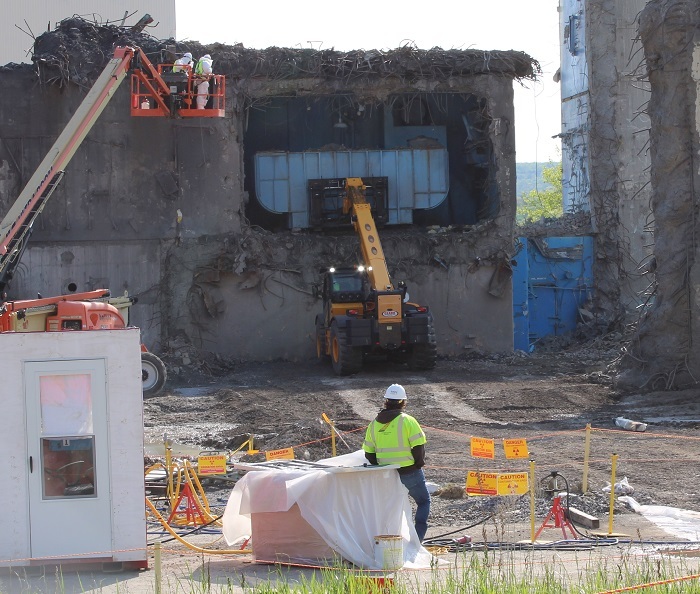 An operator uses a fork truck to safely remove a vent washer from the west side of the Main Plant Process Building at the West Valley Demonstration Project.
WEST VALLEY, N.Y. – U.S. Department of Energy Office of Environmental Management (EM) crews safely removed and packaged for disposal another massive component from the Main Plant Process Building recently as part of the facility’s ongoing demolition at the West Valley Demonstration Project (WVDP).
The vent washer weighed approximately 15,000 pounds and was approximately 7 feet wide, 20 feet long and more than 7 feet high. Its removal comes after EM crews successfully cleared the “Green Giant” from the facility. Painted green decades ago, it was a system that held samples from various vessels used in former spent fuel reprocessing operations at West Valley. It weighed 1,100 pounds, with 75,000 pounds of steel and lead shield plates on the outside of it.
"The West Valley Demonstration Project team continues to make great progress in the demolition of the Main Plant as part of our cleanup efforts,” Stephen Bousquet, EM West Valley assistant director of Project Management, said of the vent washer removal.
The vent washer filtered airborne particulates from ventilated air before it passed through HEPA filters and was exhausted through the Main Stack during spent fuel reprocessing operations. The airborne particles originated from sawing and shearing of fuel rods and the ventilation flow from other cells and reprocessing equipment, including ventilation hoods in the Main Plant.
“This all comes down to deliberate speed and comprehensive planning,” Bousquet said. “Developing a comprehensive plan that defines the work, analyzes the hazards, develops controls, and utilizes feedback and lessons learned helped this evolution to be safe and successful."
The vent washer is one of more than 120 items at the Main Plant identified by EM requiring special handling and packaging for disposal.
Crews added a cement mixture known as grout to the vent washer to fix and stabilize internal contamination before pulling it from the Main Plant.
The vent washer was safely taken out of the Ventilation Wash Room through the Main Plant’s west wall. It was then placed in a custom-built waste package, bringing the total weight to more than 135,000. Moving that load posed a challenge to workers, but they did so safely and successfully through special rigging and material handling. The heavily shielded waste box will be disposed of at an offsite facility.
Scott Chase, deputy manager for Facility Disposition for EM cleanup contractor CH2M HILL BWXT West Valley (CHBWV), echoed Bousquet’s sentiment.
“This is the most physically challenging work at the site when you include radiological and industrial hazards, layers of protective clothing and limited mobility,” Chase said. “This crew used lessons learned and planning to enhance safety and improve efficiency. They put their collective knowledge into practice to complete this work evolution safely.”
The Main Plant is one of the last remaining major facilities at West Valley. Its successful demolition will further reduce environmental risks and position the site for the next phase in cleanup. The demolition is expected to be completed in fiscal year 2025.
-Contributor: Joseph Pillittere
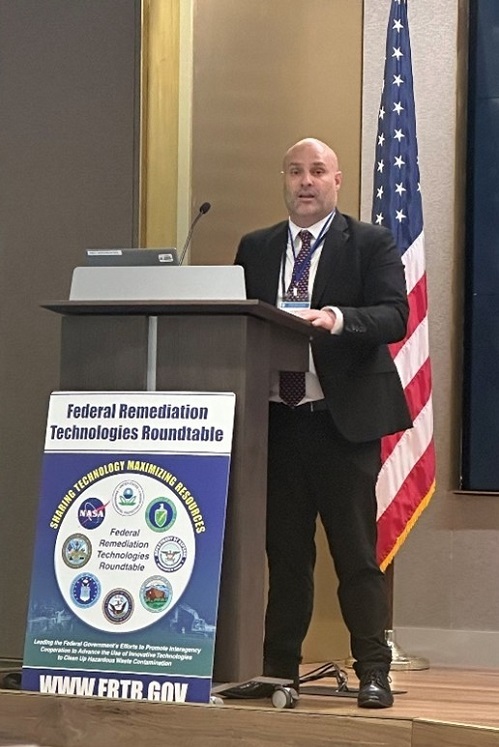
WASHINGTON, D.C. — Jean P. Pabón, pictured, program manager with the U.S. Department of Energy (DOE) Office of Environmental Management (EM) Office of Technology Operations, focused on artificial intelligence and machine learning as part of the Federal Remediation Technologies Roundtable last week.
The group works to build a collaborative atmosphere among federal agencies involved in hazardous waste site cleanup. At the meeting held at the U.S. Environmental Protection Agency, participants honed in on the progress and results of recent artificial intelligence and machine learning projects related to advanced contaminant plume characterization, predictive modeling and improved cleanup efficiency.
Machine learning is the process of using computers to detect patterns in massive datasets and then make predictions based on what the computer learns from those patterns. This makes machine learning a specific and narrow type of artificial intelligence. Full artificial intelligence involves machines that can perform abilities we associate with the minds of human beings and intelligent animals, such as perceiving, learning and problem solving. Members of the roundtable have reviewed technology advances including robotics, unmanned systems and analysis of large data sets to support site characterization and remediation.
Meeting attendees highlighted case studies in which the technologies significantly enhanced remedial decisions, remedy implementation and performance monitoring, thereby reducing the need for extensive sampling at EM sites.
The discussions aimed to provide valuable information and best practices for deploying artificial intelligence and machine learning technology to remedial project managers and technical staff from over 10 government agencies, laboratories, industries and academia. Also taking part in the latest roundtable meeting were DOE’s Savannah River and Pacific Northwest national laboratories and Florida International University. They are conducting projects that will benefit EM’s cleanup.
Click the blue box for more information:
|
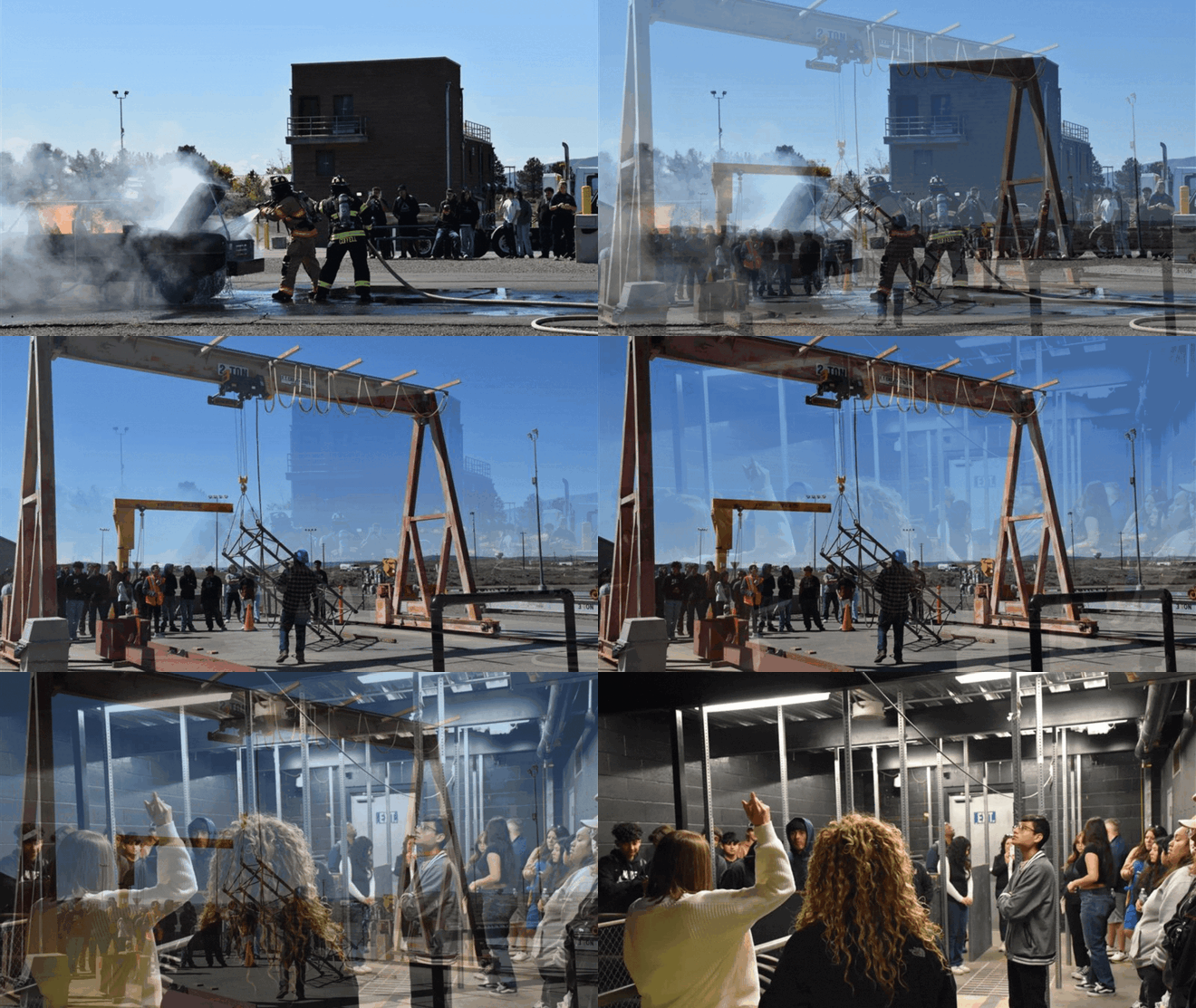
RICHLAND, Wash. — More than 50 high school students recently visited the Hanford Site’s Volpentest HAMMER Federal Training Center to learn about STEM career opportunities at the Hanford Site. The event, hosted by contractor Hanford Mission Integration Solutions, builds pathways for students to pursue science, technology, engineering and math careers and encourages future workforce development aligned with the Hanford cleanup mission. Students rotated through hands-on demonstrations and presentations on radiation safety, respiratory protection, hoisting and rigging, emergency and fire response, and the Hanford Patrol’s K-9 program. Students ended their day at a career fair with members of the One Hanford team made up of U.S. Department of Energy Office of Environmental Management and its contractors, and representatives of the Central Washington Building Trades Council and local colleges, to learn about career and internship opportunities at Hanford. HAMMER stands for Hazardous Materials Management and Emergency Response.
-Contributor: Shyanne Palmus
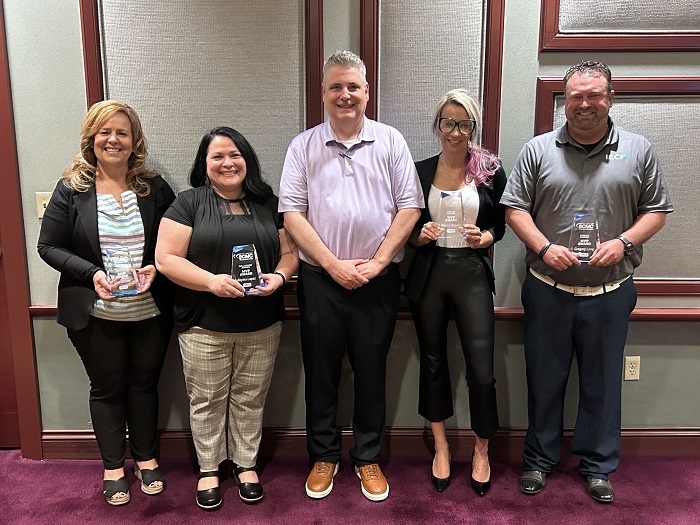 Supply Chain Management Center Senior Director Scott Bissen, center, honors the 2023 Strategic Sourcing and Small Business Advocate MVP award winners. Also pictured from left are Lisa Tanner, Savannah River Nuclear Solutions small business liaison officer; Royina Lopez, Sandia National Laboratories Mentor-Protégé Program lead; Hayley Bowers, Y-12 National Security Complex senior subcontract administrator; and Greg Long, Idaho Environmental Coalition senior procurement specialist.
Two members of the U.S. Department of Energy (DOE) Office of Environmental Management (EM) team have been recognized for outstanding performance providing cost savings and added value to DOE last year.
Greg Long, a senior procurement specialist with Idaho Environmental Coalition (IEC), EM’s cleanup contractor at the Idaho National Laboratory Site, was honored as the 2023 EM Strategic Sourcing MVP. Lisa Tanner, a small business liaison officer for Savannah River Nuclear Solutions (SRNS), the management and operations contractor at Savannah River Site (SRS), was named the 2023 EM Small Business Advocate MVP.
“It is an honor and a privilege to be recognized among my fellow peers, mentors and colleagues in the industry,” Long said. “There are a lot of amazing people across the DOE complex who make just as much an impact by doing the same work at their respective sites."
DOE’s Supply Chain Management Center (SCMC) presented the awards during a ceremony at its Spring Face-to-Face Meeting in Las Vegas, Nevada, earlier this spring.
The center is a strategic supply chain program dedicated to simplifying the buying process to enable savings for EM and National Nuclear Security Administration (NNSA) contractors.
Each winner demonstrated outstanding performance and a commitment to strategic sourcing and small business programs while closely working with procurement professionals and suppliers in-house or across the DOE enterprise. The center’s EM and NNSA site advisory committees selected this year’s recipients for their exceptional expertise and demonstrated talent for collaboration and knowledge-sharing.
“Greg demonstrates exceptional professional expertise and talent for collaboration and knowledge-sharing,” said Shawna Southwick, IEC senior manager for Supply Chain Management. “His management and oversight of our supply chain processes and inventory ensures our project receives materials they need on time. That means our workforce gets what they need to continue to work safely.”
In fiscal year 2023, Long averaged 1,300 purchase orders, with 61% of the dollars spent going to small businesses. His effective use of a new auction system developed for the SCMC resulted in $792,000 of savings, representing 38% of IEC’s total savings in that fiscal year.
Tanner collaborated to improve the visibility and performance of the supplier onboarding process. She also noted the pending implementation of a supplier portal and risk assessment software.
“Our team is vital in supporting SRS missions, and I remain focused on the deployment of these tools for future onboarding efficiencies,” Tanner said.
Dave Dietz, SRNS Procurement senior director, said Tanner and the SRNS Supply Chain Procurement team are key in establishing the Supply Chain Center of Excellence by consistently assessing and evaluating supplier performance.
“Lisa also supports the ‘Small Business First’ policy by guiding our various buyer teams to consider small business suppliers whenever possible,” Dietz said. “These efforts have been extremely successful with some buyers awarding over 80% of work in any given month to small businesses.”
-Contributors: Mackenzie McNabb, Jessica Vasseur, Elisabeth Warn
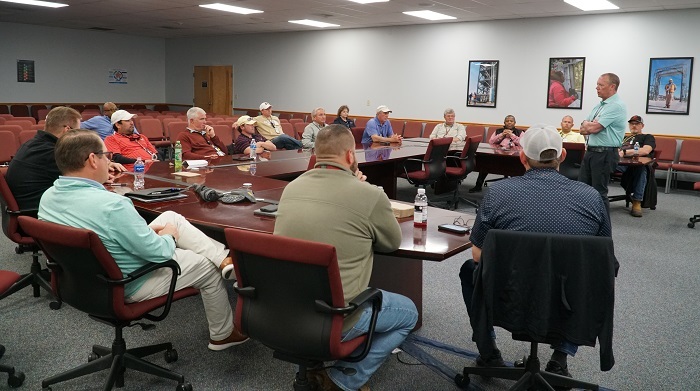 Savannah River Mission Completion (SRMC) Conduct of Operations (CONOPS) Program Manager Kenny Dukes shares an update on SRMC’s CONOPS program and procedure at a recent first line manager forum — a new initiative at SRMC to continue candid dialogue between line and senior managers.
AIKEN, S.C. — A new initiative continues the conversation among all levels of leadership for the U.S. Department of Energy Office of Environmental Management's (EM) liquid waste contractor at the Savannah River Site (SRS).
Savannah River Mission Completion (SRMC) created a first line manager forum to continuously improve communication and information-sharing between upper and line management. First line managers are responsible for critical day-to-day operations, worker safety and productivity, and support of company objectives, goals, and plans.
SRMC is completing EM’s radioactive tank waste cleanup mission at SRS and operates facilities such as the Salt Waste Processing Facility (SWPF), Defense Waste Processing Facility, End Stream Delivery Facilities, and SRS Tank Farms, which is a grouping of underground radioactive waste tanks.
Last year, all SRMC first line managers participated in the company’s first line manager workshops — an intensive developmental program where the supervisors learned the interpersonal and leadership skills needed to be an effective first line manager.
Tank Farms Project Director Scott Germain, who serves as the forum’s executive sponsor, says the initiative helps ensure expectations are understood and identifies any issues that prevent line management from being able to meet and enforce those expectations with their crews.
“At the end of each first line manager workshop last year, the participants were given time to share candid feedback with senior management,” Germain said. “That feedback — whether it was on programs, processes or procedures — proved to be invaluable for continuous improvement within the company. We wanted to keep that conversation going with this forum.”
At the quarterly sessions, representatives from each SRMC facility gather to hear and share information on topics tailored to the job of a first line manager, such as changes to procedures, scheduling of training for employees, and human resource updates. Senior managers also provide high-level status of operational and organizational structure to give the line managers a better understanding and perspective of company operations across facilities.
Ray Coogler, a first line manager at SWPF, said the new forum has proven to be a highly effective avenue to bring improvement items to the highest levels of management.
“We have had very open and frank conversations, and the communication up the chain of command has improved tremendously, which started with the leadership workshops and is continuing with this forum. It really keeps the dialogue going,” Coogler said. “I appreciate the transparency, commitment to improvement and willingness to listen displayed by SRMC’s leadership. It has helped me better explain the ‘why’ to my employees on some of the things we do as a company.”
-Contributor: Colleen Hart
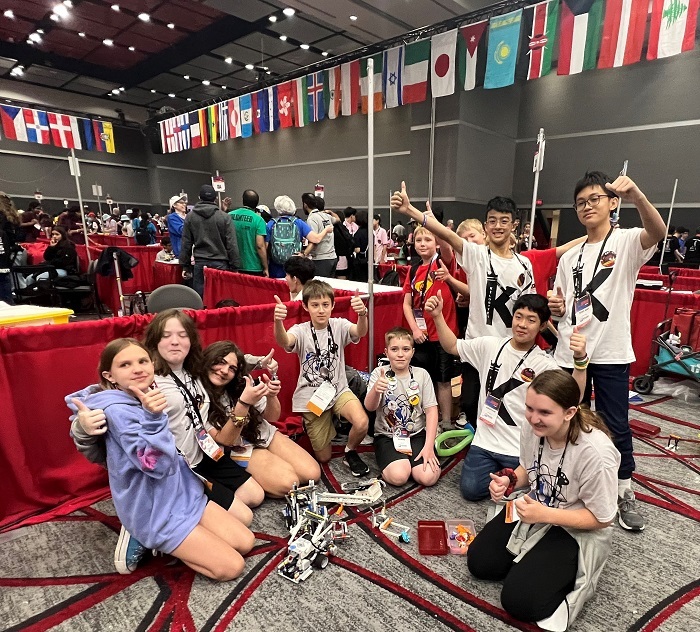 Students from Jefferson Middle School attended the FIRST World Festival. They participated in a game where they were paired with teams from New Mexico and Maylasia to code a robot.
OAK RIDGE, Tenn. – Oak Ridge cleanup contractor UCOR is awarding $45,000 in grants for science, technology, engineering and math (STEM) projects benefiting 29 schools across the region.
Since launching the grants program in 2012, UCOR has given $395,000 to support education, heighten awareness about STEM fields and help develop the next-generation workforce through the awards, known as mini grants.
UCOR’s environmental cleanup work relies heavily on workers in STEM fields. The company’s cleanup workforce of more than 2,200 people includes a large number of STEM professionals: chemical operators, electricians, engineers, industrial hygienists, nurses, project managers, radiation control technicians and more.
The company provides different dollar amounts for the three grant award categories. They are $750 for individual classroom projects, $1,000 for multi-classroom projects and $1,500 for whole school projects.
This year, the contractor awarded grants for 41 projects across elementary, middle and high schools with titles such as “Let's Get Cooking! Linking Science, Math, and Literature Through Cooking Experiences,” “Empowering Young Meteorologists” and “Wild About Manufacturing.”
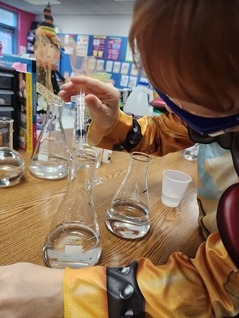 |
|
Students at Wynn Habersham Elementary School participate in science, technology, engineering and math (STEM) projects using grant funding from UCOR. |
Tiffany Logsdon, an elementary school teacher at Wynn Habersham Elementary School in Duff, Tennessee, said she was able to purchase several resources for her project, "Creating a STEAM inspired classroom."
STEAM stands for science, technology, engineering, art and math.
A multi-year grant winner, Logsdon said, “The mini grants have been a huge blessing for me and my students.”
She’s been able to provide furniture for collaboration, resources for math and tablets to incorporate technology.
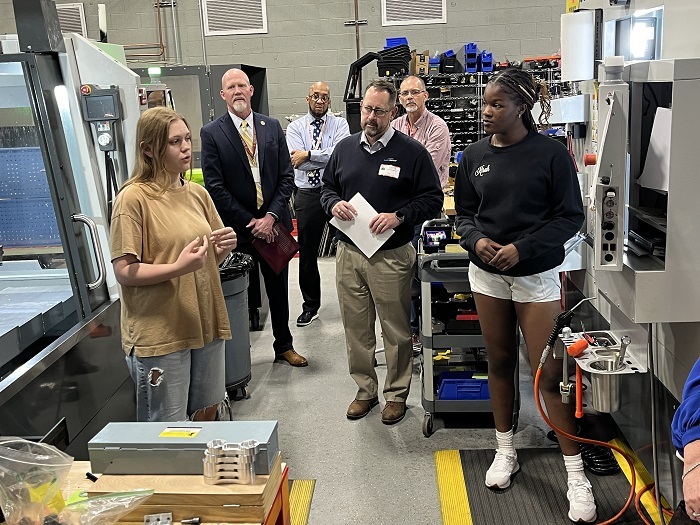 Oak Ridge High School used grants for the project, “Creating the Next Generation of Manufacturing Innovators.”
Janie Shanafield, from Jefferson Middle School in Oak Ridge, used her grant for the project, “Build Bigger,” which enables competitions for the school’s Lego League Team.
The school team was able to participate in the FIRST World Festival, where they were able to interact with other middle school students from over 50 countries. They also participated in an encore game where they were paired with teams from New Mexico and Maylasia to code a robot for a new game in a short amount of time.
Mark Buckner, robotics innovation design and manufacturing teacher at Oak Ridge High School, used grants to purchase some of the required tooling for computer-aided design and manufacturing experience.
A former research scientist who turned to teaching in retirement, Buckner has a classroom with a unique mix of equipment for students to create real-world solutions in which they design and make products for local businesses.
-Contributor: Shannon Potter
|