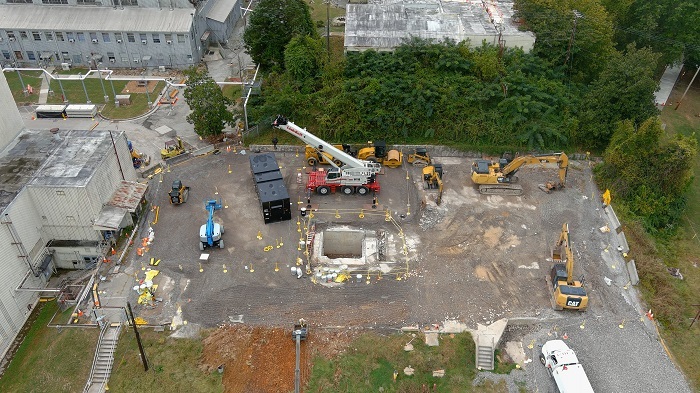
 An aerial view of the footprint of the Low Intensity Test Reactor after U.S. Department of Energy Office of Environmental Management crews demolished it. Crews have since shipped the reactor vessel and backfilled the pit where the facility once stood.
OAK RIDGE, Tenn. – U.S. Department of Energy Office of Environmental Management (EM) crews have completed cleanup associated with the demolition of a major reactor at Oak Ridge National Laboratory (ORNL).
Workers finished the teardown of the Low Intensity Test Reactor and disposition of rubble and debris from the facility last fall, achieving an EM priority that year. However, the reactor vessel remained on the building’s footprint until it could be shipped for final disposition offsite.
Last week, employees loaded the 30-foot-long, 37,600-pound vessel onto a truck and shipped it to a facility in Clive, Utah, for final disposition.
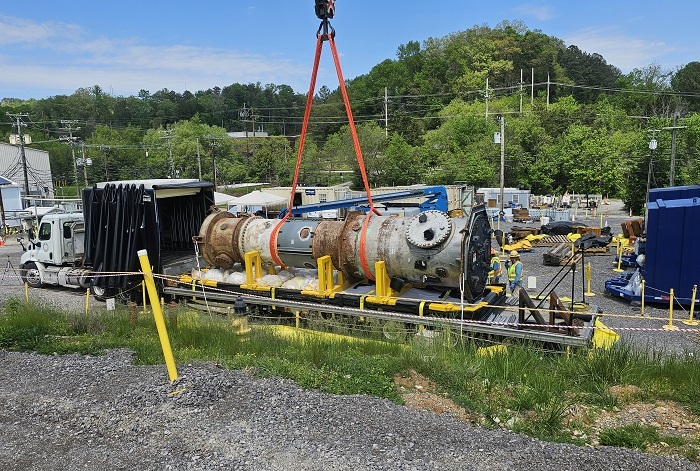 UCOR employees use a crane to load the 30-foot, 37,600-pound Low Intensity Test Reactor vessel for transport to its final disposition location in Clive, Utah. The shipment was successfully completed last week.
Known as Building 3005, the reactor was built in 1949 as a criticality testing facility that used highly enriched fuel with water as a coolant. It operated until 1968. Researchers used the reactor in numerous experiments through the years, and the core was often reconfigured to perform those experiments.
EM cleanup contractor UCOR characterized and sampled the reactor, employing multiple modeling software programs to develop the final characterization. That enabled employees to identify how to safely transport and dispose of the reactor.
“Completion of decontamination and transporting the reactor vessel for disposition is a big accomplishment that presented technical difficulties and a unique safety focus to finalize the cleanup at the Building 3005 site,” said UCOR Project Manager Greg McGinnis.
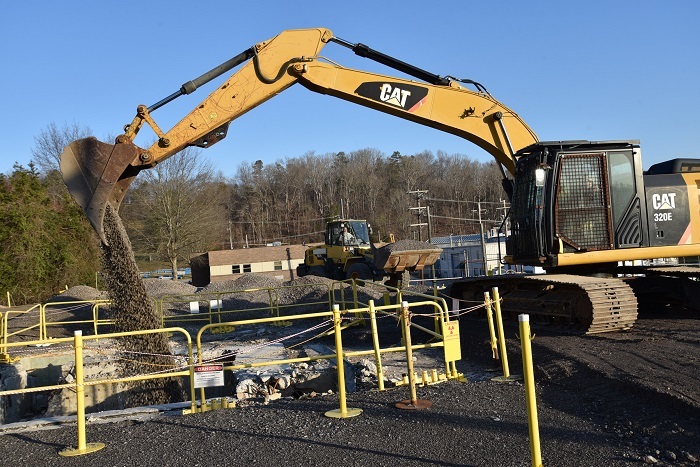 Workers fill the pit where the Low Intensity Test Reactor vessel once stood. It was one of the final tasks associated with the cleanup project, clearing space to support two upcoming U.S. Department of Energy Office of Environmental Management demolition projects.
Workers backfilled the pit where the vessel was removed and completed repairs needed on the footprint.
“Completing these final tasks are crucial to our ongoing efforts at ORNL,” said Acting ORNL Portfolio Federal Project Director Jim Daffron. “Clearing and backfilling this area gives our employees a staging area to support safe and efficient demolition for our next two major projects.”
Workers are deactivating the Graphite Reactor support facilities and the Oak Ridge Research Reactor, which are adjacent to the footprints of the Low Intensity Test Reactor and Bulk Shielding Reactor.
These projects are continuing EM’s mission to eliminate risks and transform the heart of ORNL to enable future research missions and growth at the site.
-Contributor: Carol Hendrycks
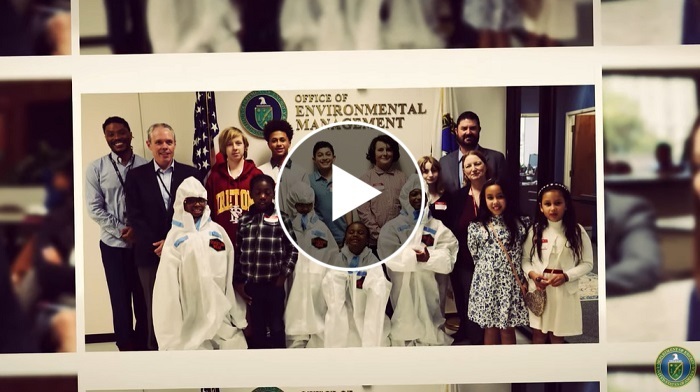
WASHINGTON, D.C. — Shadowing their parents at work, the children of U.S. Department of Energy (DOE) Office of Environmental Management (EM) employees joined more than 400 DOE participants in the National Take Your Child to Work Day on April 25. As they helped plant the seeds for the future workforce, employees with the cleanup program at the DOE headquarters James Forrestal Building sparked interest by highlighting the roles of EM team members and educating the children on the disposal of nuclear waste through hands-on activities, including donning personal protective equipment. U.S. Deputy Energy Secretary David Turk provided remarks, and the children met with EM Senior Advisor William “Ike” White and EM Principal Deputy Assistant Secretary Jeff Avery. View this video recap of Take Your Child to Work Day:
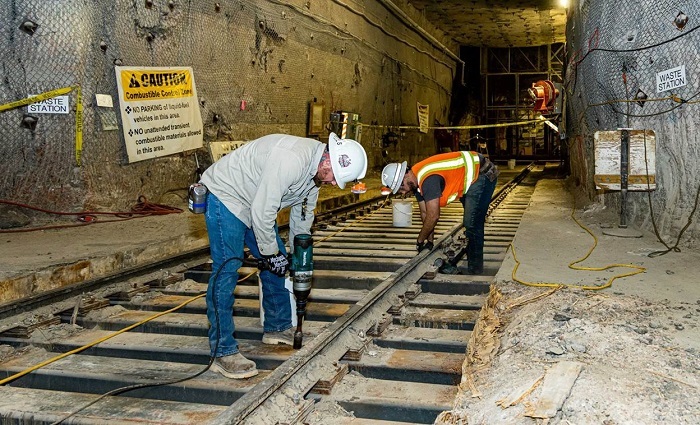 Workers disassemble underground railing for releveling during one of the largest underground activities completed during the Waste Isolation Pilot Plant’s annual maintenance period.
Crews complete 162 corrective and preventive maintenance projects
CARLSBAD, N.M. – Workers at the U.S. Department of Energy Office of Environmental Management’s (EM) Waste Isolation Pilot Plant (WIPP) completed a lengthy checklist of projects ahead of schedule during the facility’s recent annual maintenance period.
“The annual maintenance period showcased the skills of our employees and demonstrated how efficiently maintenance can be done when it is well planned,” said Ken Harrawood, president and program manager of Salado Isolation Mining Contractors (SIMCO), the contractor that operates WIPP for EM.
Because the maintenance was so well planned in the summer of 2023, it allowed time for crews to meticulously pivot to unplanned, unexpected projects, like a multi-day challenge of changing a 10,600-pound wire rope on the waste hoist.
“The planning and teamwork of maintenance, and the various site support groups was amazing,” said SIMCO Manager Kenny Walker. “They did an excellent job, completing critical projects in a safe and timely manner.”
The annual maintenance period, Feb. 5 through March 31, originally included 150 corrective and preventive maintenance projects that normally interrupt WIPP operations because they take multiple days to complete, or are in critical areas that would pause or stop other operations. Twelve projects were added due to the staff’s proficiency for a total 162 projects completed.
WIPP coordinated with EM and National Nuclear Security Administration sites across the nation in advance as new shipments of defense-generated transuranic waste for disposal at WIPP were put on hold during the maintenance period.
The largest projects completed include:
- Salt rock was mined in the WIPP underground to create a dedicated exhaust air route for future waste emplacement panels.
- At the bottom of the hoist used for lowering waste into the underground, steel framework was supported and the salt rock underneath the structure, rails and associated mechanisms were all releveled.
- The contact-handled waste bay area, where transuranic waste payloads are downloaded into the mine, underwent maintenance on four overhead cranes, ventilation fans and the four docks used for waste processing.
- The large contact-handled waste bay area floor received a new coating.
-Contributor: Roy Neese
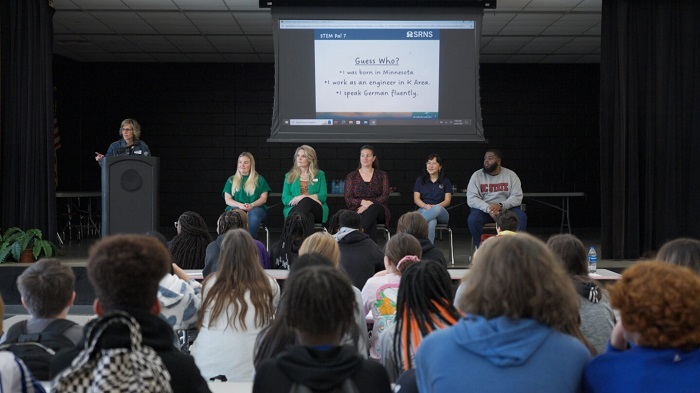 Jackson STEAM Middle School students participate in a “Guess Who?” game to meet their Savannah River Site STEM Pal for the first time. Cynthia Hewitt, Education Outreach specialist for Savannah River Nuclear Solutions, left, introduces SRS STEM Pals Allison Flatt, Carla Wheeler, Colleen Davis, Sounisa Phadoungsy and Terry Wilder.
Students explore science and math career opportunities through letter writing
AIKEN, S.C. — The long-lost art of letter writing is linking the next generation of scientists and engineers with Savannah River Site (SRS) employees.
The SRS STEM Pals program aims to demystify science, technology, engineering and math (STEM) careers, humanize STEM professionals and empower students to explore new opportunities.
Formerly known as STEMulating Conversations with SRS Experts, STEM Pals is a yearlong letter writing program with five schools in Aiken County, South Carolina. In January, U.S. Department of Energy Office of Environmental Management contractor Savannah River Nuclear Solutions (SRNS) revamped the Education Outreach program, connecting 12 SRS “pals” with nearly 200 students.
“The STEM Pals initiative allows elementary and middle school students to pick the brain of expert scientists and engineers,” said Cindy Hewitt, SRNS Education Outreach specialist. “Exchanges happen pretty rapidly, with roughly one letter shared each week between SRS and participating schools.”
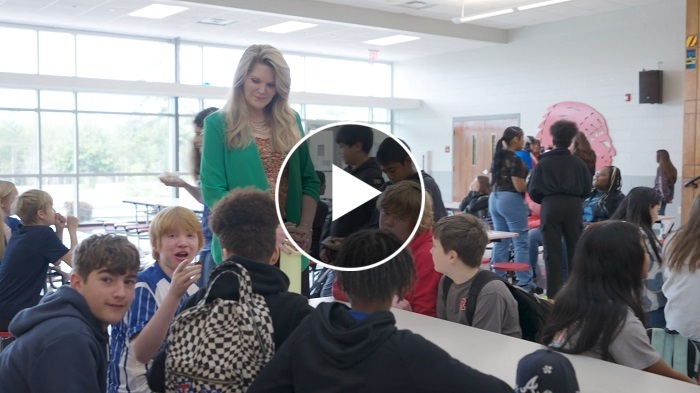 EMTV: Watch the Savannah River Site STEM Pals program reveal.
Educators initiate the writing relationship by drafting a letter with students that contains questions on SRS careers and STEM-related topics.
After months of exchanging letters, Jackson STEAM Middle School students met their experts face-to-face.
“My favorite part of the experience was reading the unique and thoughtful questions from each student,” said Allison Flatt, SRNS Mechanical Systems engineer. “I am not here to make every student an engineer, but to inspire students to pursue higher education opportunities and find their true passion. I loved describing my role as a female engineer at SRS and getting to know each class on a personal level.”
Jackson STEAM Middle School educator Jennifer McMillian was amazed at how the letters quickly became a class favorite, with students spending time each week reading and responding to the them.
“My students have anxiously awaited the opportunity to meet their pals, after corresponding since January on different STEM topics,” said McMillian. “It is a great way to incorporate writing into our curriculum while getting to know real experts in the scientific community.”
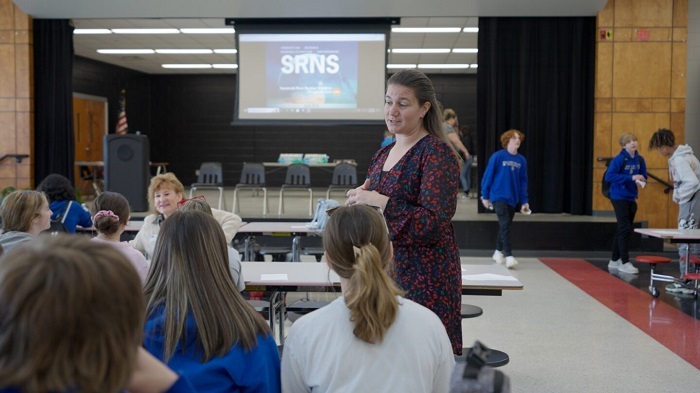 Savannah River Site STEM Pal Colleen Davis discusses engineering careers with students at Jackson STEAM Middle School.
Letter topics often connect to classroom lectures, studies, field trips and local STEM opportunities.
“This opportunity has furthered our classroom discussions,” continued McMillian. “We’ve been able to respond to our STEM Pals with class pictures and descriptions of our activities covering invertebrates, snap circuits and watersheds.”
Zoe Marshall, a sixth grade student at the school, benefited by discussing career opportunities with SRS STEM Pals Victoria Ibarra and Anthony “Tony” Holm, both engineers.
“Reading each letter from Victoria and Tony was something I looked forward to every Friday,” said Marshall. “It brought our entire class together as we learned each other’s interests and perspectives. I would love the chance to continue this STEM Pal relationship in the future.”
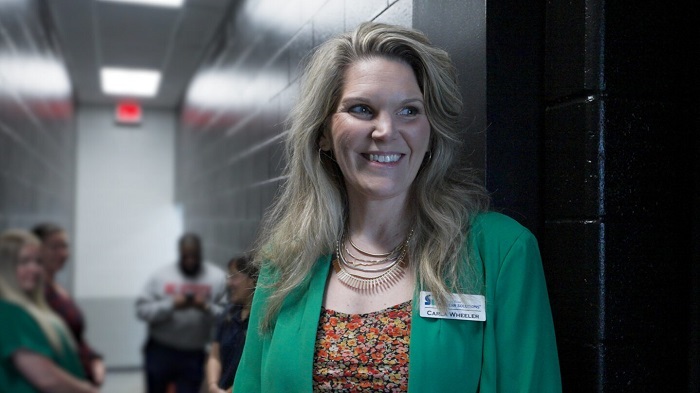 Savannah River Site STEM Pal and Engineering Staffing and Development Manager Carla Wheeler waits to greet Jackson STEAM Middle School students after writing pen pal letters since January.
Hewitt said SRS hopes to inspire students by exposing them to unique careers available at the site.
“Our STEM Pal initiative makes it easy for our employees to volunteer and broaden students’ scope of career possibilities as they advance through school,” Hewitt said.
To spark a pen pal relationship with an SRS expert, fill out an interest form.
-Contributor: Mackenzie McNabb
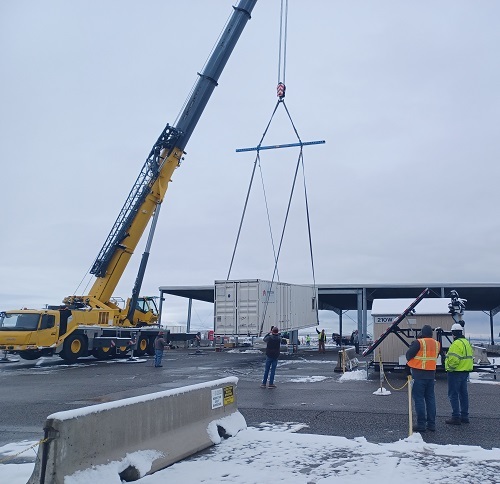
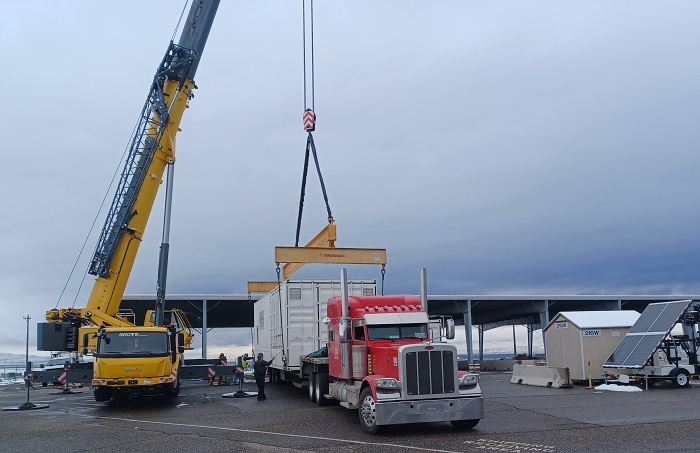 Crews unload five trucks from the Carlsbad Field Office with more than 60 tons of specialized equipment for the Hanford Site’s transuranic waste program.
RICHLAND, Wash. — Crews at the Hanford Site received five truckloads of specialized equipment that will double Hanford’s capability to certify containers of transuranic waste to meet requirements for shipment to the Waste Isolation Pilot Plant (WIPP) in New Mexico for disposal.
The special delivery from the U.S. Department of Energy Office of Environmental Management (EM) Carlsbad Field Office, which oversees WIPP, included a refurbished large box counter for measuring the amount and type of radioactive waste in containers.
“The large box counter greatly enhances Hanford’s capacity to safely and effectively certify transuranic waste as we prepare to resume shipments to WIPP,” said Kelly Ebert, EM acting director for projects and facilities at Hanford. “Refurbishing the existing equipment resulted in significant time and cost savings compared to purchasing it new.”
 |
|
A delivery from the U.S. Department of Energy Office of Environmental Management (EM) Carlsbad Field Office to EM contractor Central Plateau Cleanup Company contained a large box counter that will double the Hanford Site’s capacity to certify waste for shipment and disposal at the Waste Isolation Pilot Plant in New Mexico. |
Transuranic waste consists of tools, rags, protective clothing, sludges, soil and other materials contaminated with radioactive elements including plutonium. These human-made elements have atomic numbers greater than uranium on the periodic table of elements — thus “trans-uranic” or beyond uranium — and require long-term isolation from the public while their radioactivity decays.
“With thousands of containers of transuranic waste in storage at Hanford, the large box counter is a critical tool for increasing the speed and efficiency of certifying waste,” said Tim Southworth, transuranic waste program manager for Hanford contractor Central Plateau Cleanup Company.
Crews will begin certifying transuranic waste at Hanford in 2026, with shipments to WIPP expected to start in 2028.
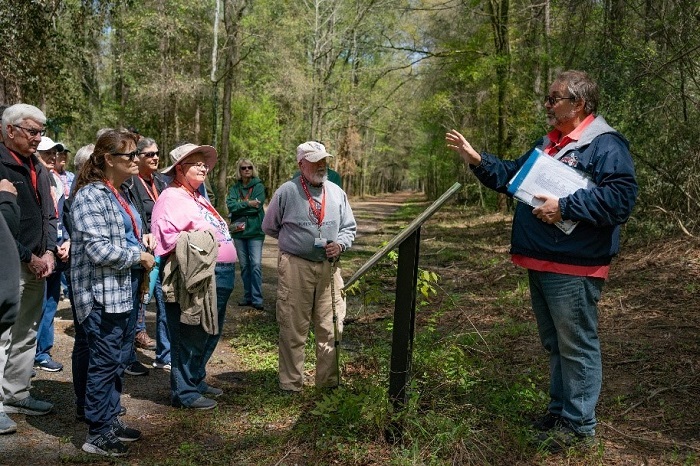 George (Buddy) Wingard with the Savannah River Archeological Research Program explains the local history of Ellenton, South Carolina, to tour participants.
AIKEN, S.C. — The Savannah River Site (SRS), one of the U.S. Department of Energy (DOE) Office of Environmental Management (EM) cleanup locations, is marking the site’s history through walking tours of what was once Ellenton, South Carolina, a town displaced during the Cold War for construction of SRS.
For nearly 75 years, SRS has been part of the Central Savannah River Area, a region of Georgia and South Carolina close to the Savannah River and Augusta, Georgia. To preserve the site’s rich history, Savannah River Nuclear Solutions (SRNS), the managing and operating contractor at SRS, is now offering public walking tours of the area that once included Ellenton.
“In collaboration with the Savannah River Archeological Research Program, we are excited to pilot two walking tours of Ellenton,” said SRS Cold War Historic Preservation Program Manager Susie Ferrara. “The first tour completely sold out and guests really enjoyed learning the history and seeing, firsthand, the old streets and building foundations of the former residences and businesses.”
The University of South Carolina's Savannah River Archaeological Research Program manages all archaeological and historic resources for DOE at SRS.
Ferrara noted that the SRS Heritage Foundation hosted the inaugural tour of the Ellenton Trail prior to the coronavirus pandemic but stopped the visits following the outbreak of the virus.
“With the feedback we received from our historic public tour surveys, our guests made it very clear they wanted to see more of the former community, so we listened,” Ferrara said.
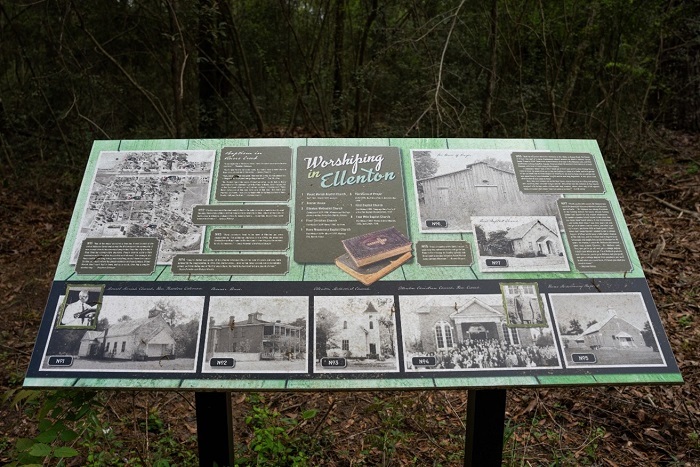 A tour informational board on the route of a walking tour displaying the history of Ellenton, South Carolina.
In 1880, Ellenton was officially incorporated as a town. It later became populated by farmers from nearby communities, benefiting from local railroad and train stations. In 1950, DOE’s predecessor agency, the U.S. Atomic Energy Commission, and the E. I. du Pont de Nemours Company announced that the Savannah River Plant would be built on land in Aiken, Barnwell and Allendale counties in South Carolina.
Dedicated to maintaining the highest possible safety and security standards, SRS is a key DOE industrial complex responsible for environmental stewardship and cleanup, nuclear waste management and disposition of nuclear materials.
“Both the SRS Cold War Historic Preservation and the Savannah River Archeological Research programs are committed to preserving the decades of culture, artifacts, accomplishments and history associated with the Savannah River Plant being built and operated in South Carolina,” said Andy Horcher, senior manager with the Natural Resources Program for DOE’s Savannah River Operations Office. “SRS is committed to its people, missions and the future, but also recognizes the sacrifices made so we can exist. Our ongoing missions couldn’t have happened without the patriotism, bravery and dedication of those that came before.”
There are 12 remaining SRS public tours and one Ellenton walking tour in 2024. Visitors can gain an understanding of the DOE facilities, missions and workforce that changed the face of counties near SRS and helped the United States during the Cold War. Tour guests also will learn about current and future EM and National Nuclear Security Administration missions at SRS.
For more information or to register for the SRS Tour Program, click here.
-Contributor: Aunarey Herbert
RICHLAND, Wash. — The Analytical Laboratory team at the Hanford Site’s Waste Treatment and Immobilization Plant (WTP) recently began radiological testing to calibrate laboratory instruments and confirm procedures, a significant step toward future waste-treatment operations.
“The testing will validate the lab’s chemical and radiological safety measures,” said Mat Irwin, acting assistant manager for the WTP project. “The team will demonstrate that instruments are qualified to perform analyses of radioactive waste samples during future waste-treatment operations.”
 |
|
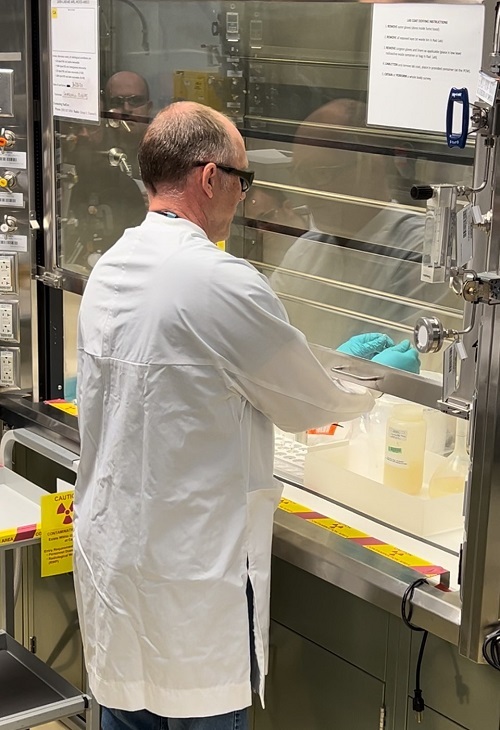
Chemist Brian Anderson opens the first vial of radioactive liquid inside a protective fume hood in the Analytical Laboratory at the Hanford Site’s Waste Treatment and Immobilization Plant. |
WTP staff completed a comprehensive review of lab systems, teams and processes to ensure readiness for the radiological testing prior to opening the first ever vial of radioactive solution in the lab.
“Our team confirmed all radiological control instruments were fully operational and demonstrated our chemists’ proficiency in radiological and chemical safety practices," said Jessica Coughlin, laboratory analytical manager for Hanford subcontractor Waste Treatment Completion Company.
During future plant operations, workers will immobilize in glass millions of gallons of radioactive and chemical waste from large underground tanks at Hanford. WTP’s Analytical Laboratory staff will analyze samples of the waste as it is transferred to WTP. These analyses will be used to determine the correct “recipe” of glass-forming materials to mix with the waste before it is transferred into one of the plant’s two 300-ton glass melters for vitrification.
-Contributor: Tyler Oates
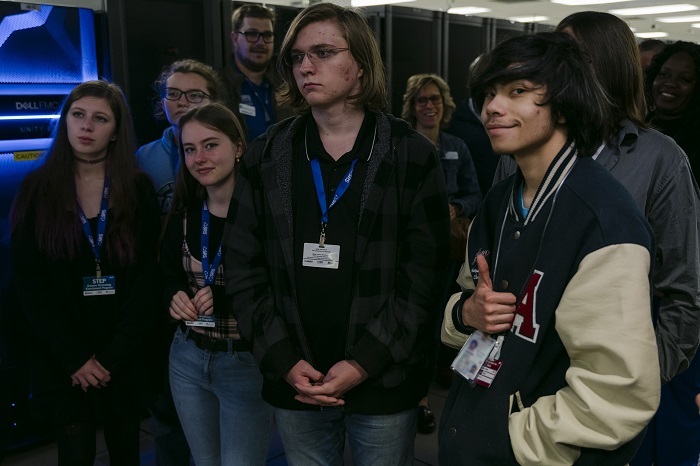 Prospective students for the IT Youth Apprenticeship recently toured the Savannah River Site Central Computing Facility that houses the site’s primary servers and core network infrastructure.
AIKEN, S.C. — U.S. Department of Energy Office of Environmental Management (EM) contractor Savannah River Nuclear Solutions (SRNS) will select the first information technology (IT) youth apprentice from a pool of 16 area high school students who toured the Savannah River Site (SRS).
“We have worked closely with the Aiken County Public School District to give each of these high-performing tech students the chance to become the first IT youth apprentice,” said SRNS Senior IT Manager Tim Arnold. “Employed students will complete their high school curriculum while gaining hands-on experience alongside our employees.”
North Augusta High School students enrolled in the Advanced Computer Services and Repairs, Dell Student TechCrew, perform daily tasks in advanced computer repair and diagnostics. In the past three years, the school’s TechCrew students have successfully repaired nearly 2,000 devices for the school district.
“This life-changing opportunity with SRS seemed fitting for my students who are eager to gain employment their senior year,” said Michelle O’Rourke, instructor. “All students on the TechCrew are Dell-certified and have a ton of experience repairing computers for our school district.”
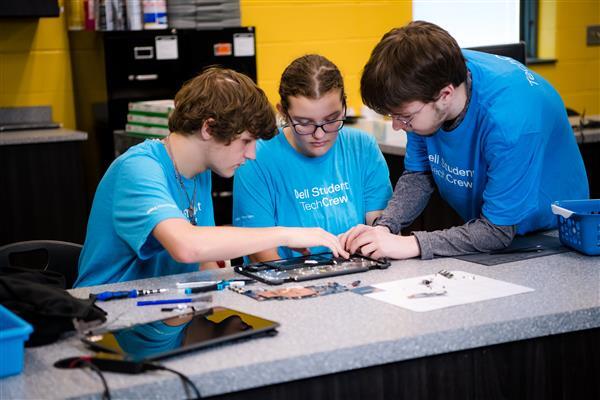
North Augusta High School Dell Student TechCrew students, from left, Connor Mohn, Renee Womack and Sterling Glover repair a laptop.
SRNS Education Outreach coordinated the tour of the PC Administration Facility and the Central Computing Facility for participating students. Students learned how computers are assembled, configured, and prepared for distribution to employees across SRS.
“The ultimate goal for this program is to hire youth apprentices to learn the ins and outs of our IT department,” said Sean Alford, SRNS executive vice president and chief of administration. “Any chance we have to connect with students at the high school level is a benefit to our organization and the job pipeline we are building, year after year.”
After the tour, SRNS personnel visited North Augusta High School to train students in proper interview etiquette and the SRS hiring process.
Jacob Lott, a prospective candidate for the apprenticeship, said he enjoys the complexity of computer repairs and was eager to tour some of the important IT facilities at SRS.
“I feel extremely honored to not only tour SRS, but to have the chance to interview for a paid apprenticeship experience,” said Lott. “I’ve spent my entire life building computers from scratch with my family and playing games like Minecraft and Terraria. This apprenticeship is a rare opportunity that will allow me to utilize my computer skills.”
SRNS plans to select the IT youth apprentice by June. The program, which runs 12 to 15 months, will allow the participant to complete on-the-job IT training. After completing the program, the apprentice will earn a certificate from the U.S. Department of Labor.
In 2022, SRNS established the first youth apprenticeship that successfully graduated two high school students.
For more information about SRS Apprenticeship School, click here.
-Contributor: Mackenzie McNabb
|