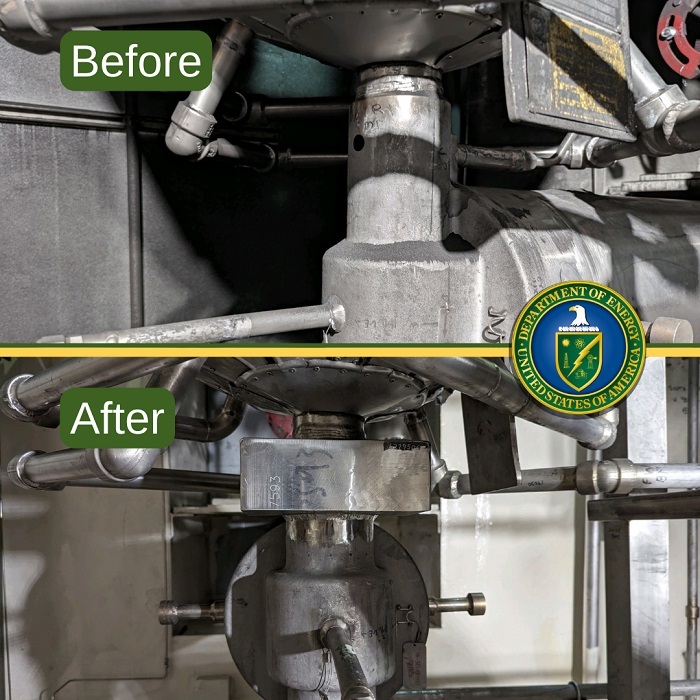
 Before and after photos show modifications made to the affected valve body in a cell of the Integrated Waste Treatment Unit at DOE's Idaho National Laboratory Site. At top is the valve body prior to the modifications.
IDAHO FALLS, Idaho – Heat-up of a liquid waste treatment facility has resumed this month in anticipation of beginning radiological operations at the facility at DOE’s Idaho National Laboratory Site.
Most recently, EM crews at the Integrated Waste Treatment Unit (IWTU) removed a partial obstruction within a line into the Carbon Reduction Reformer, a key treatment vessel in the steam-reforming process. The temperature of the facility was reduced to allow for safe maintenance of the line.
Earlier, crews completed repairs to equipment responsible for a leak of nonradiological material inside one of the facility’s processing cells.
To perform the repairs, welders installed a thick, stainless steel plate over a hole that formed in a valve body inside one of the facility’s two cells where dried, treated material will be transferred to long, stainless steel canisters. The filled canisters will then be placed into concrete vaults for long term storage. A similar valve in the second cell was also modified in the same way as a precaution.
Shortly before the completion of the heat-up process in late December, IWTU operators noticed the nonradiological solids leak during routine inspection of the shielded cell using installed cameras. The leak occurred during a normal purging process, which directs bursts of nitrogen through stainless steel lines to prepare for the transfer of treated simulant. Operators immediately began a normal shutdown of IWTU.
Following the shutdown and cooldown of the facility, investigation of the leak revealed the damaged valve body. Inspections indicated the damage was erosion of the valve body due to the interaction of alumina and nitrogen purges. Alumina, a commonly used material in sandpaper, is introduced into the IWTU’s steam-reforming process to improve the movement, or fluidization, of dried waste material inside the facility’s primary reaction vessel. Inspections extended to other parts of the facility that have similar valves, but no other wear was noted.
Approximately 900,000 gallons of sodium-bearing liquid waste from three nearby underground stainless steel storage tanks will be converted to a more stable granular solid. The tanks will then be cleaned and grouted, and the group of tanks will be closed under federal and state regulations. Treated waste will be stored onsite until a national geologic repository is available for permanent disposal of IWTU’s treated waste.
Moving forward, the canister-fill cell lines will be purged for a shorter duration to reduce the likelihood of wear to the valves.
The leak of nonradiological material also allowed engineers to consider how they would respond in case of a similar event during radiological operations. Radiation exposure would be primarily managed by shielding and increasing the distance between the worker and source of radiation. Contamination levels would be controlled though use of containment tents, ventilation and cleanup.
-Contributor: Erik Simpson
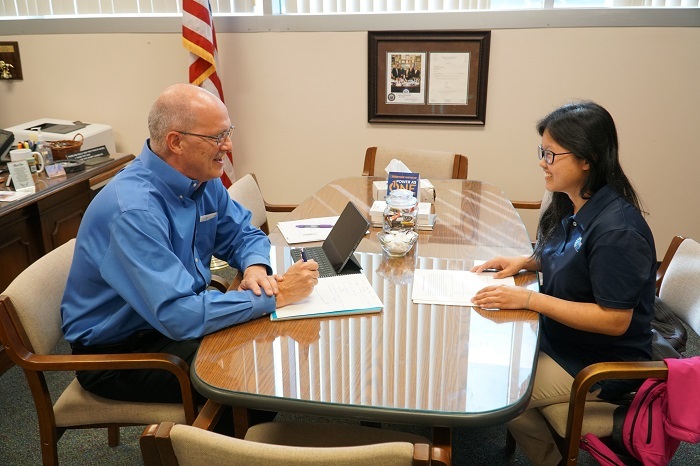 Savannah River Mission Completion (SRMC) engineer Shanna Xia meets with SRMC President and Program Dave Olson as part of his Shadow the President mentoring program.
AIKEN, S.C. – EM’s liquid waste contractor at the Savannah River Site (SRS) is focusing on a new growth opportunity for the workforce.
Employee development has been an important focus area for Savannah River Mission Completion (SRMC) since beginning its SRS contract in February 2022. Over the last year, SRMC has graduated its first class from the SRMC Leaders' Forum, established a group to promote diversity, equity, and inclusion, and joined membership with other SRS contractor professional development groups.
In addition to these initiatives, SRMC employees have the chance to shadow and learn directly from SRMC President and Program Manager Dave Olson. He hosts each interested participant for a brief introductory session to understand shared interests and review personal career plans. A full day of shadowing is then scheduled with the president or another member of the executive staff whose position is more aligned with the employee’s aspirations.
According to Olson, the key objectives of the shadowing program are for participants to see the liquid waste mission from the perspective of the president’s office, learn how decisions are made, gain insight from and network with the president, and offer ideas and recommendations for the company.
“Preparing the next generation of leaders is crucial to the future of the liquid waste mission at the Savannah River Site,” Olson said. “Offering a shadowing program is just one of the ways we can engage in succession planning to ensure this important mission continues safely and efficiently over the coming years.”
Shanna Xia, a shift technical engineer at the Defense Waste Processing Facility, chose to participate in the shadowing program for several reasons.
“This is a great opportunity to get to know the SRMC president and to learn about our mission from the highest level,” Xia said. “I want to know what it means to be the president and what daily challenges and successes he faces. Also, I want to learn how I can grow to support the Liquid Waste Program.”
Employees with jobs ranging from project management to procurement to facility engineering have participated in executive shadowing opportunities.
-Contributor: Colleen Hart
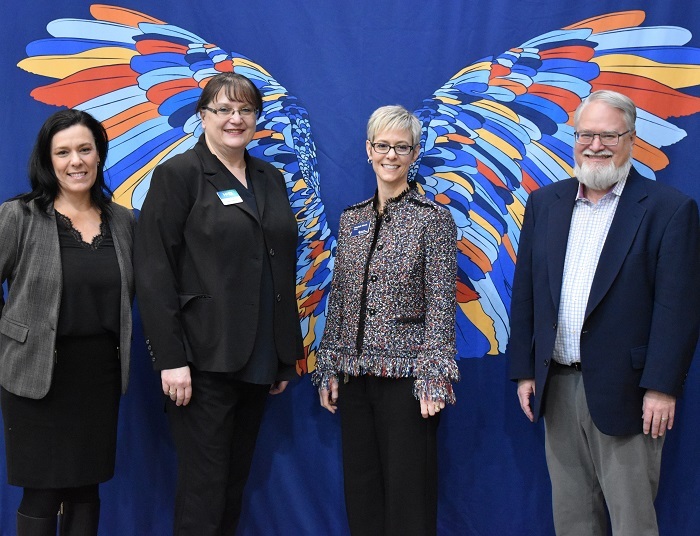 Hanford Mission Integration Solutions Vice President of Workforce Solutions Julie Lindstrom, far left, and Chief Operations Officer Amy Basche, center left, presented a $150,000 donation to Columbia Basin College representatives President Rebekah Woods, center right, and Vice President of Instruction Michael Lee for a program that helps students find career pathways to the Hanford Site.
RICHLAND, Wash. – Identifying, training and readying the next-generation workforce is important to the continued long-term success of sites across the EM complex, and a contractor at the Hanford Site continues to invest in programs to support this initiative.
EM Richland Operations Office (RL) contractor Hanford Mission Integration Solutions (HMIS) recently donated $150,000 to Columbia Basin College (CBC) in Pasco, Washington, for the Pathways to Hanford Program.
The program helps students envision a future career at Hanford and provides support, skills training and guidance as they build their career pathway. Participants will explore a variety of careers and skills needed; the contractors’ work and company values; internship programs; and the hiring process.
“Guiding students to the numerous opportunities at Hanford, including STEM careers, is vital,” said Cameron Salony, Hanford Site STEM lead. “Programs like Pathways to Hanford, along with the contractor’s financial support, help local students learn about these opportunities and receive the support they need to join our Hanford team as we continue to achieve cleanup successes.”
STEM stands for science, technology, engineering and math.
 |
|
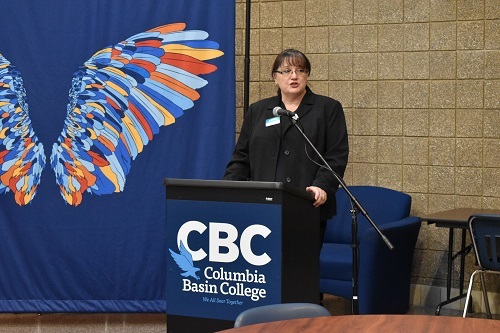
At the donation ceremony, Hanford Mission Integration Solutions Chief Operations Officer Amy Basche, who has more than 25 years of experience in her career at the Hanford Site, highlighted the need to train the next-generation workforce to support continued success in site cleanup. |
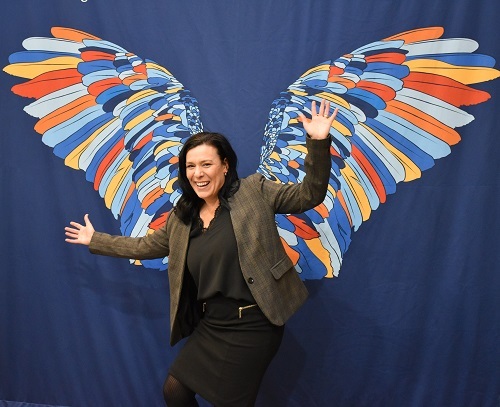
Hanford Mission Integration Solutions Vice President of Workforce Solutions Julie Lindstrom attended Columbia Basin College in Pasco, Washington, and interned at the Hanford Site. Lindstrom says the Pathways to Hanford Program can be both educational and fun. |
|
 |
“HMIS has been an incredible community partner, supporting internships, hosting information sessions on campus and creating opportunities for our students,” said CBC President Rebekah Woods. “This generous donation will allow us to strengthen and diversify the workforce pipeline by helping students go from Hawks (the CBC mascot) to Hanford.”
The contractor’s donation will provide enhanced support for the Pathways to Hanford Program for the next three years. Beginning with an initial group of 15 students, program enhancements will include a range of services and support for students in their first years of the program.
“As a strong supporter of this program from its inception, we wanted to ensure students have the tools and resources they need to enter programs prepared, finish on time and be ready to enter the workforce,” said HMIS Chief Operations Officer Amy Basche. “We know firsthand the importance of partnerships, like this, with our educational institutions, and know this donation will help prepare future generations of Hanford workers.”
-Contributor: Reneé Brooks
|