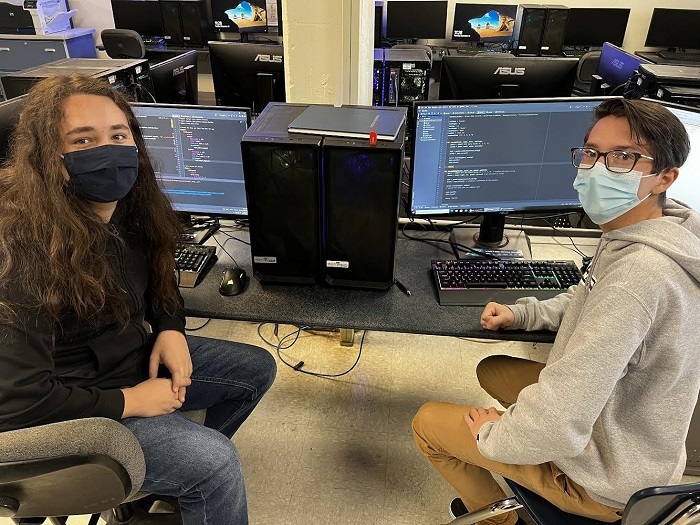
 Carlsbad High School students Andres Chappa, left, and Riley Antiporda are designing a system to address the lack of real-time information available to parents and school administrators when students are on a school bus. They’re undertaking the project as part of an engineering class.
CARLSBAD, N.M. – The wheels on the bus go round and round, but soon you can see just where in town they are going.
Carlsbad High School students Riley Antiporda and Andres Chappa are designing a system to address the lack of real-time information available to parents and school administrators when students are on a school bus. EM Waste Isolation Pilot Plant (WIPP) management and operations contractor Nuclear Waste Partnership (NWP) is helping fund the effort.
“Providing students with a strong foundation for solving complex problems is essential for future research and discovery of issues existing in today’s society,” said Nichole Lundgard, NWP engineering manager. “The local community has a pool of talent ready to be captured by NWP, and if they have an education in engineering, science, math, and robotics, they will be well positioned to join us at WIPP.”
The high school offers a course called Engineering Design and Development (EDD), the fourth class in a program of engineering courses designed to introduce students to the engineering mindset. In EDD, students identify a problem and use the engineering process to develop a functioning and marketable solution.
 |
|
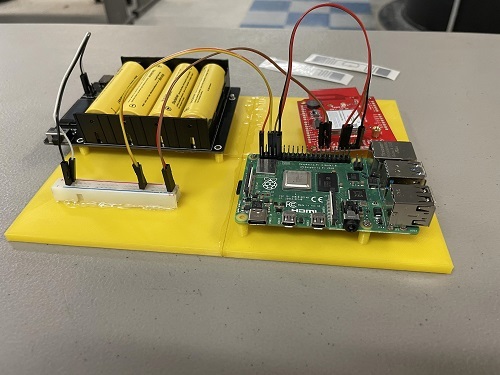
Pictured is the prototype of a system being created by Carlsbad High School students Riley Antiporda and Andres Chappa to determine the real-time location of students who take the bus to and from school for school administrators and parents. |
After brainstorming a problem to solve, Antiporda and Chappa landed on creating a system to passively detect elementary students boarding and unloading from buses and generate real-time GPS location information for the students’ parents. Inspiration for the project came from Chappa’s mother, a schoolteacher.
The system will monitor the status of students from when they board a bus to when they get off. It requires a smartphone app, onboard student detection, and a server and database to store information and coordinate the flow of data.
Antiporda and Chappa have begun developing the software, including the app and server. NWP is helping fund the duo’s prototype, which would allow the students to use a working model to test in the bus system.
The engineers-in-training are both in the top 10% of their class. They’ve excelled in other engineering courses, such as Introduction to Engineering Design, Principles of Engineering, and Digital Electronics, as well as advanced high school courses, including AP Chemistry, AP Physics I and AP Calculus.
Throughout the past year, NWP has donated to projects in science, technology, engineering, and math (STEM) to support local education.
-Contributor: Shannon Carr
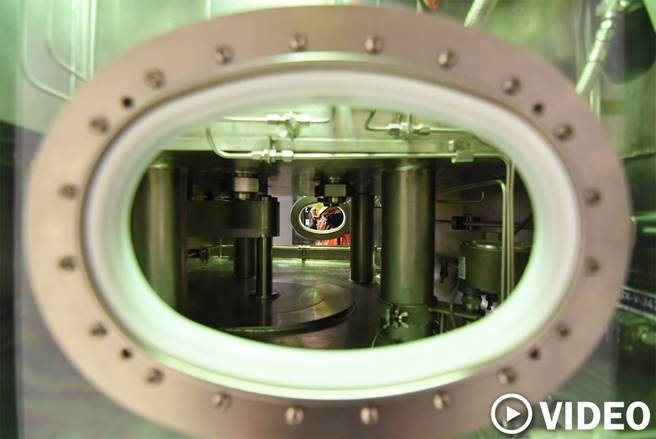 RICHLAND, Wash. – View this video about how laboratory technicians at the Hanford Site’s Waste Treatment and Immobilization Plant have been building proficiency in using a system that will safely transfer samples of radioactive waste from the Low-Activity Waste (LAW) Facility to the plant’s Analytical Laboratory for analysis. This autosampling system functions much like a pneumatic tube system at a bank drive-thru. Samples collected from LAW Facility process vessels are put into containers and transferred to the lab through a tube system by using pressurized air. During Direct-Feed Low-Activity Waste Program operations, plant chemists and technicians will analyze about 3,000 waste samples per year. Their analyses will confirm the correct “recipe” of glass-forming materials needed to mix with the waste during vitrification, or immobilization in glass, for safe disposal. This step ensures the plant produces a consistent glass form that meets all regulatory requirements and standards for disposal at Hanford’s Integrated Disposal Facility. Click here for the video of the testing.
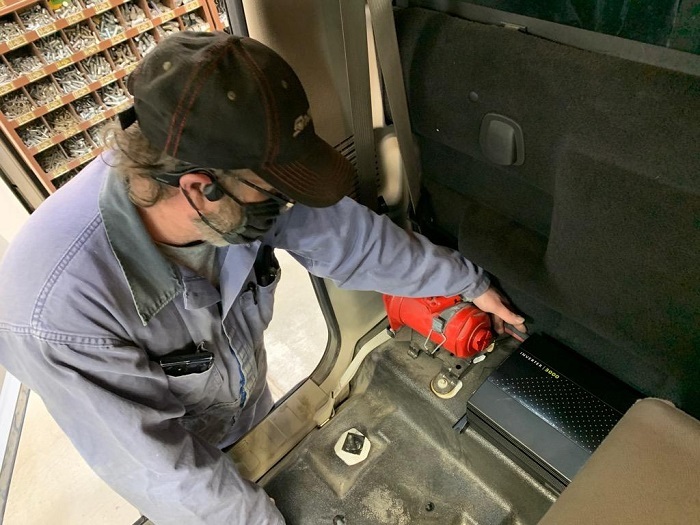 Hanford Mission Integration Solutions mechanic David Dean installs updates on a truck used by Washington River Protection Solutions workers to transport tank waste samples to the Hanford Site’s Analytical Laboratory.
RICHLAND, Wash. – An innovative team of truck drivers, engineers, mechanics and others has revamped trucks to make them more functional while transporting samples to support the tank waste mission at the Hanford Site.
In the collaborative effort among EM contractors, Richland Operations Office (RL) contractor Hanford Mission Integration Solutions (HMIS) installed a reengineered lift system on trucks used by tank operations contractor Washington River Protection Solutions (WRPS) to haul samples of tank waste to the site’s 222-S Laboratory for analysis.
“Our contractors routinely operate as a team to complete important work on the Hanford Site in a safe, timely and cost-effective manner,” said Brian Harkins, RL assistant manager for mission support. “This integrated approach reduces risk and effectively advances our cleanup mission.”
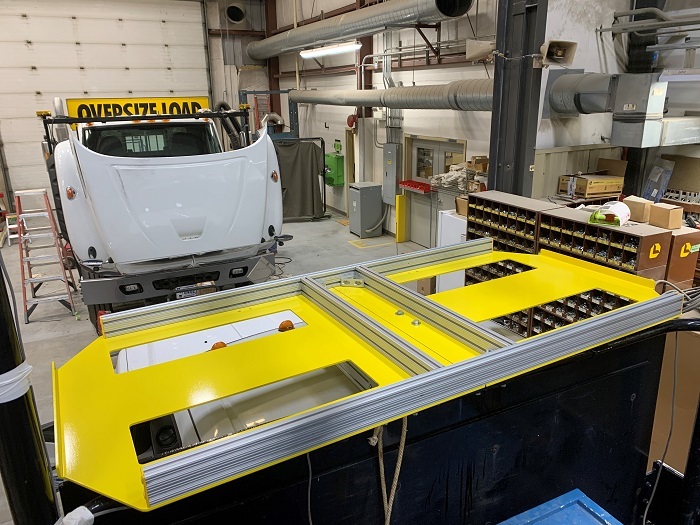 Hanford Mission Integration Solutions mechanics installed a rotating table and electric hoist onto the back of a truck used to transport tank waste samples, improving efficiency and worker safety.
Before the overhaul, the trucks were designed to hold two shielded sample containers. They didn’t have dedicated space for both heavy lids when removed from the containers, and the containers could only be accessed one at a time.
The former design for the trucks included a manual lift for the lids of the containers. But WRPS truck drivers and engineers sketched out a new design that uses a machine to lift the lids and features a staging platform to store them, making the whole system safer and more ergonomic. HMIS mechanics followed the re-engineered designs by WRPS to make the updates.
“By replacing a manual hoist with an electric one, it now requires much less exertion from the workers,” said Peter Griffin, WRPS tank farms projects engineer. “These simple modifications will pay big dividends in terms of efficiency and worker safety.”
-Contributor: Robin Wojtanik
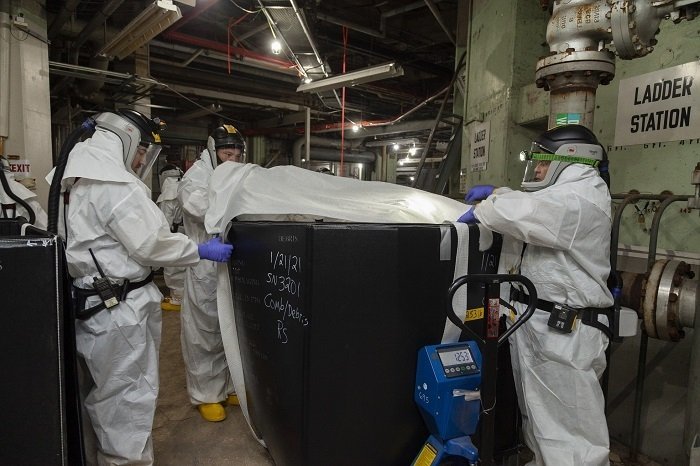 UCOR workers remove waste from Alpha-2 as part of deactivation work at the Y-12 National Security Complex at Oak Ridge.
OAK RIDGE, Tenn. – EM recently awarded Oak Ridge cleanup contractor UCOR $24.7 million for its performance from April 2021 through October 2021, amounting to 98% of the available fee for the evaluation period.
The Oak Ridge Office of Environmental Management (OREM) issued its fee determination scorecard for UCOR for the seven-month period after completing its evaluation of the contractor.
EM releases information relating to contractor fee payments — earned by completing the work called for in the contracts — to further transparency in its cleanup program.
The contractor received “excellent” ratings for project management and business systems, quality and safety culture, and regulatory and stakeholder activity; a “good” rating for operations management; and “high confidence” for cost and schedule incentive, according to the scorecard.
Following are significant accomplishments by UCOR during the evaluation period:
- Projected to underrun its contract by more than $68 million by completing work ahead of schedule and under budget.
- Advanced cleanup on 27 excess contaminated facilities at the Oak Ridge National Laboratory and the Y-12 National Security Complex, which house DOE's largest inventory of high-priority excess facilities, and completed actions required to close the East Tennessee Technology Park.
- Effectively addressed supply chain challenges related to the COVID-19 pandemic, minimizing cost and schedule impacts.
- Continued implementing effective COVID-19 controls with no workplace transmission cases since the start of the pandemic.
- Awarded about 85% of its subcontracts to small businesses in fiscal 2021, exceeding its goal of 65%.
While UCOR continues to be responsive to incidents and make improvements in work planning and control, OREM noted improvements needed for respirator usage and transportation.
View the scorecard here.
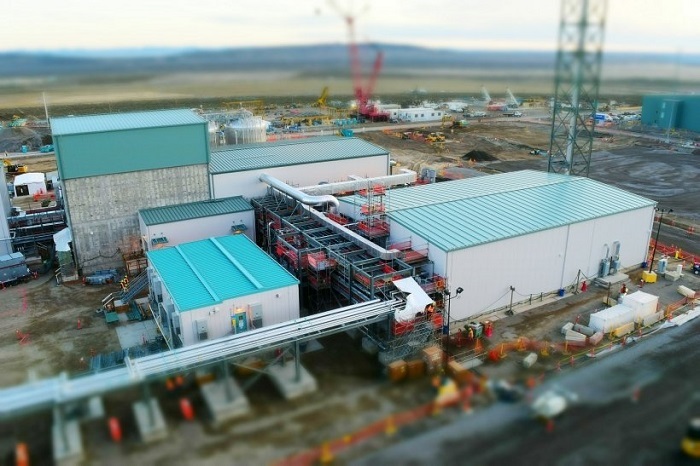 The Effluent Management Facility (EMF), part of the Waste Treatment and Immobilization Plant, plays a key role in the Direct-Feed Low-Activity Waste (DFLAW) Program at the Hanford Site. DFLAW is a system of interdependent projects and infrastructure improvements, managed and highly integrated as a program, that must operate together to vitrify the tank waste, which means immobilizing it in glass. During DFLAW operations, secondary liquid called effluent is generated. This effluent goes to the EMF, where excess water is evaporated from it and transferred to a nearby retention facility.
RICHLAND, Wash. – EM’s Office of River Protection awarded Waste Treatment and Immobilization Plant (WTP) contractor Bechtel National, Inc. (BNI) approximately $5.8 million, about 74% of the available fee for work performed during the 2021 calendar year.
EM releases information relating to contractor fee payments — earned by completing the work called for in their contracts — to further transparency in its cleanup program.
According to the BNI award fee determination scorecard, the contractor received an “excellent” rating for its design work and meeting most of its milestones associated with the High-Level Waste Facility; a “very good” rating in Direct-Feed Low-Activity Waste Program integration and working with other contractors to resolve issues; and a “good” rating for the remaining four performance areas, including project performance, and environmental, safety, health, and quality assurance.
BNI successfully transitioned from the construction and startup phases to commissioning of the WTP, according to the scorecard. This included completion of all WTP construction and startup testing, as well as the loss of offsite power test and qualification of the commissioning technicians to operate the plant.
Another achievement noted in the scorecard was BNI’s work to improve safety and quality assurance, including the following:
- Implementing and maintaining an effective quality assurance program as the project transitioned from construction through startup to commissioning;
- Continuing to strengthen the overall quality culture and make appropriate revisions to program requirements to support needs during implementation; and
- Completing two software quality assurance reviews to validate that quality assurance requirements continue to be met.
Opportunities for improvement, according to the scorecard, include the need to continue emphasis on safely achieving forecasted schedule objectives for activities and deliverables, and to anticipate changes in maintenance and staffing requirements during the WTP commissioning phase.
View the BNI fee determination scorecard here.
|