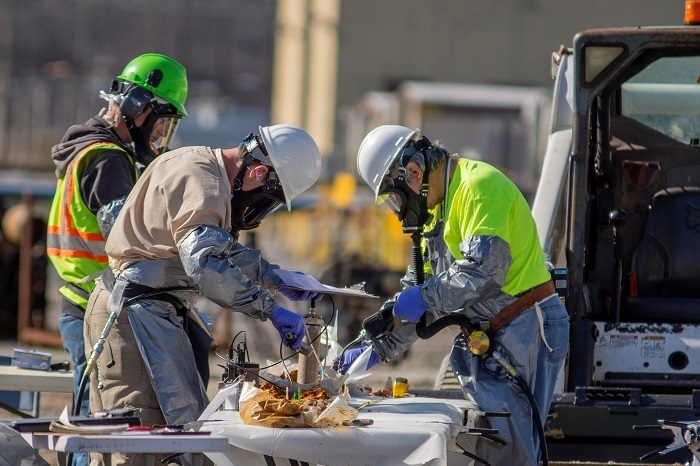
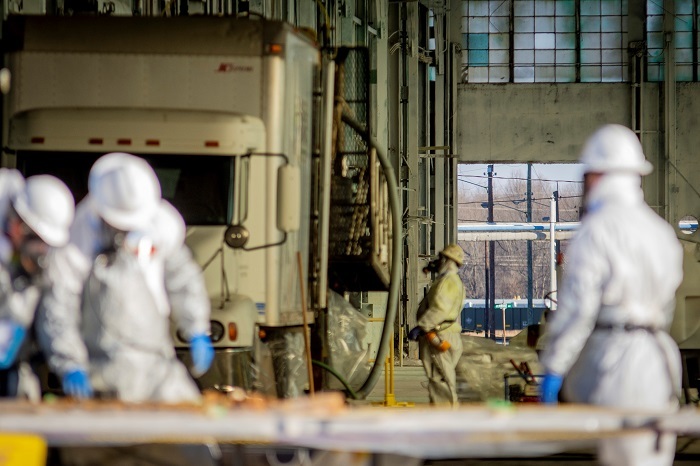
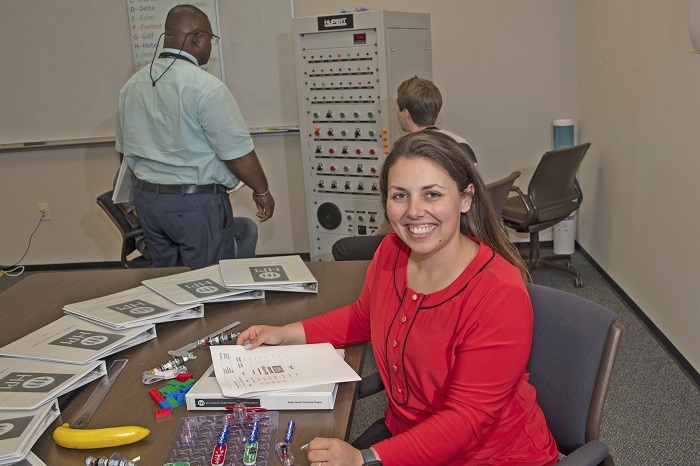
 Crews recently competed startup testing on one of the Waste Treatment and Immobilization Plant’s vital safeguards in the unlikely event of a temporary power loss — the Low-Activity Waste Facility’s uninterruptable electrical power system.
RICHLAND, Wash. – The EM Hanford Waste Treatment and Immobilization Plant team recently finished startup testing for the Low-Activity Waste (LAW) Facility's uninterruptable electrical power system (UPS), one of the plant's vital safeguards in the unlikely event of a temporary power loss.
“The uninterruptable power system is an important step in the commissioning sequence and preparing for an upcoming loss-of-power test and then melter heatup later this year," said Mat Irwin, EM deputy assistant manager for the plant.
A loss-of-power test will demonstrate the plant’s ability to respond in the unlikely event of a loss of electrical power by placing the LAW Facility into a safe configuration and restoring power to two 300-ton melters for continued operations.
Once the melters are heated, they must be kept at a high operating temperature or will need to be replaced. During waste treatment operations, the melters will heat Hanford’s low-activity tank waste and glass-forming materials to 2,100 degrees Fahrenheit — a process called vitrification — before the mixture is poured into stainless steel containers for disposal.
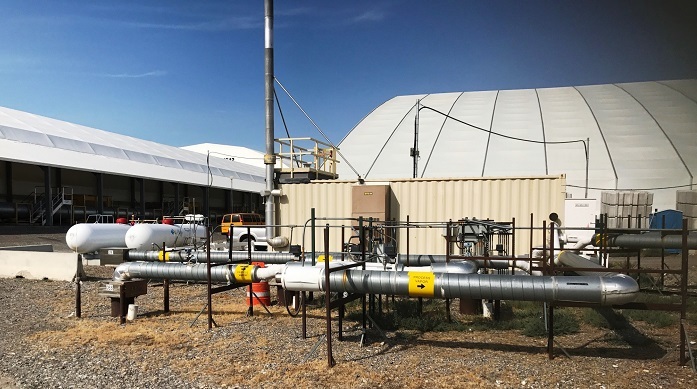
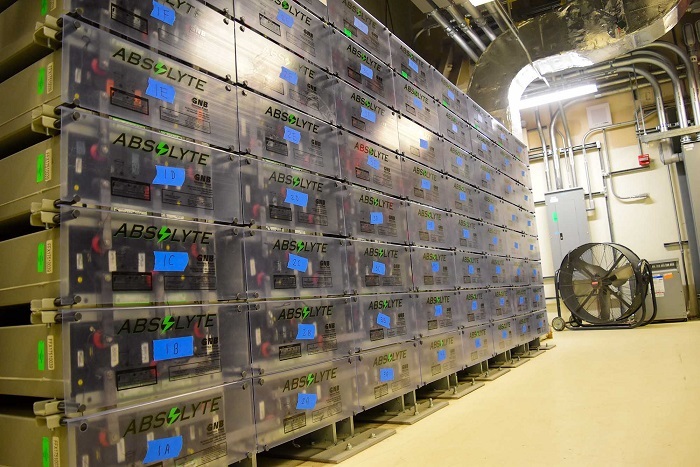
The plant’s main electrical switchgear building feeds power to the LAW Facility's utility systems, the melters, and critical safety systems. The UPS is located inside the LAW Facility and consists of several sets of industrial-sized backup batteries that can provide near-instantaneous backup power to plant systems.
“Our startup team and support groups did a tremendous job to get the uninterruptable power system across the finish line," said Roy Tyrie, startup director for Waste Treatment Completion Company, subcontractor to EM Office of River Protection contractor Bechtel National, Inc. “We're continuing our focus to finish LAW Facility startup testing in preparation for the loss-of-power test this summer.”
The UPS has been handed over to the plant management team to initiate the commissioning phase. The commissioning phase ensures the utilities and process systems are integrated and ready to support future plant operations. A total of 59 of the LAW Facility’s 94 total systems have been handed over to plant management.
Information on the commissioning process, including melter heatup, is available on the Journey to Melter Heatup website. The plant facilities can be viewed using the self-guided Hanford Virtual Tour.
-Contributor: George Rangel
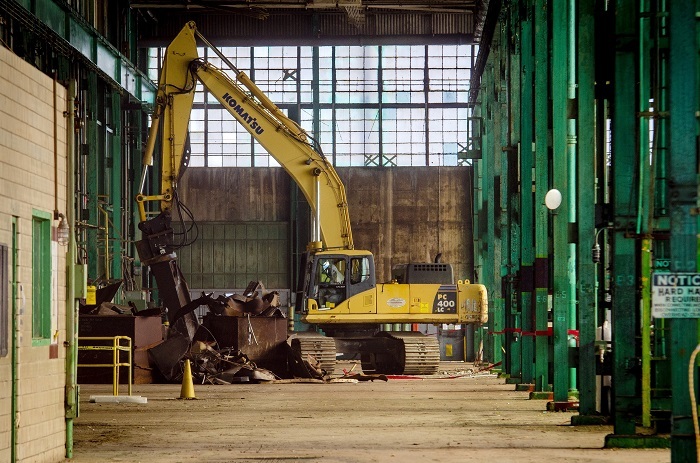
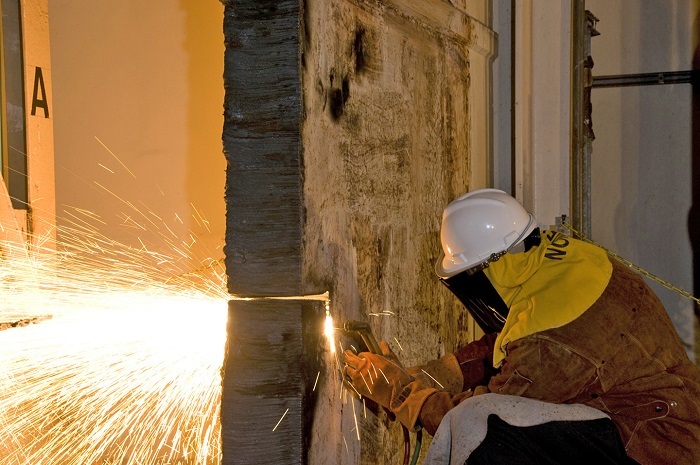 Thick steel doors within P and R Reactor buildings at the Savannah River Site were removed prior to filling the facilities with concrete-like grout. The doors formerly shielded workers from a room containing a nuclear process vessel. EM finished decommissioning the buildings in 2011.
AIKEN, S.C. – EM and the management and operations contractor at the Savannah River Site (SRS) have surpassed a major environmental restoration milestone by deactivating and decommissioning (D&D) 50 buildings — more than 1 million square feet of space — since 2008.
That was the year Savannah River Nuclear Solutions (SRNS) became the site’s management and operations contractor. The SRNS Area Closure Projects management team is working from a federally approved list of buildings to deactivate, decommission, grout, or demolish at the site.
Within the next year, an additional 13 buildings are scheduled for demolition within the site’s D Area, where electricity, steam, and heavy water were produced for Cold War operations.
“As a result of this extensive number of deactivation and decommission projects across the site, we no longer need to incur the ongoing costs associated with these inactive and obsolete structures,” said Steve Conner, an environmental project manager with SRNS. “We can continue to safely and efficiently demolish and remove unneeded buildings to eliminate the need for surveillance and maintenance activities, while preventing any potential release of hazardous substances to the environment.”
Warehouses, reactors, reactor fuel manufacturing facilities, and an enormous cooling tower have been taken down at SRS.
Built in the 1950s, the P and R Reactor buildings were mammoth structures both above and below ground. In 2011, crews decommissioned them using a unique process that filled the structure to ground level with a specially designed, concrete-like grout. This cleanup work locked contamination inside the buildings and avoided the cost of continuing interior maintenance.
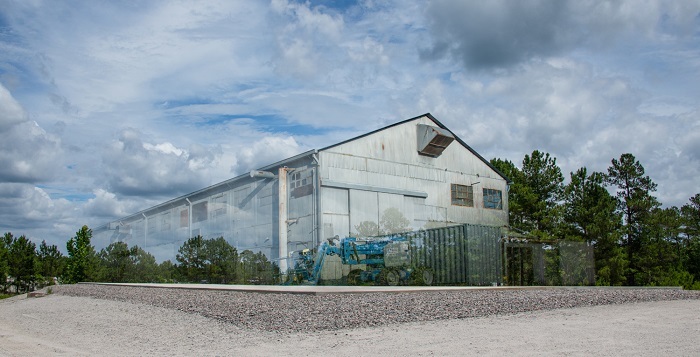 All that remains of the Ford Building at the Savannah River Site is a new six-inch concrete cap over its original foundation, marking the official closure of the deactivation and decommissioning project. This graphic image merges two photos: one of the Ford Building and one of the empty space where the building once stood.
More recently, SRS demolished the radiologically contaminated Ford Building.
Decades ago, employees at the Ford Building worked daily on hundreds of control rod assemblies used to ensure a stable nuclear criticality within reactor vessels, which are now dormant.
Made by Ford Motor Company, the control systems played an important role in the production of plutonium and tritium.
Later, the Ford Building was reconfigured to function as a repair facility for nuclear reactor heat exchangers used to cool reactor vessels. During the Cold War, SRS operated five reactors, each using 12 heat exchangers.
“What most people don’t realize is that each building we D&D presents its own set of challenges from beginning to end,” said Chris Bergren, SRNS director of environmental compliance and area closure projects. “Often, hundreds of hours and a lot of hard work goes into planning and preparing a building for grouting or destruction, long before the heavy equipment arrives. Electrical wiring, radioactive contamination, and friable asbestos are just a few of the hazards we may face. Safety is preeminent. The structure has to be cold, empty, and dark before the roof and walls can be touched by the demolition equipment.”
SRNS continues to reduce the footprint of the Cold War at SRS. About 15% of remaining site property requires environmental cleanup.
-Contributor: DT Townsend
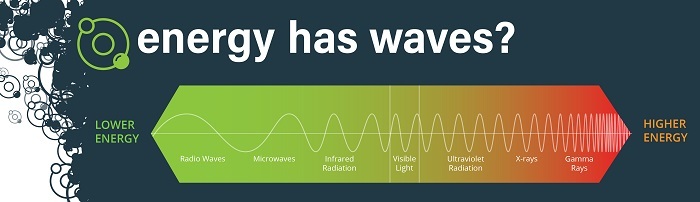 As part of a radiation safety campaign, the Hanford Site dives into the basics of radiation. For example, the campaign shares information about how radiation is energy that travels at the speed of light. This energy has wave-like properties, as highlighted in this graphic. Higher energy radiation, like x-rays and gamma rays, can cause damage to cells. Each type of radiation has different properties that determine how it affects people and how they can detect it.
RICHLAND, Wash. – Providing information on the basics of radiation, and the controls and efforts to reduce radiation risks at the Hanford Site, is the goal of the Hanford Health and Safety Education Campaign.
The EM Office of River Protection (ORP) and Richland Operations Office (RL) launched the campaign recently to share knowledge with stakeholders and community members.
ORP and RL are posting facts about radiation on their social media accounts and the Hanford website, and sharing information through direct outreach. The campaign will increase awareness of safety measures taken at Hanford and provide background on what represents a radiation risk.
“We want to educate the public and our stakeholders about how we manage hazards at Hanford, including the controls we have in place to safeguard workers, the community, and the environment,” said Brian Stickney, RL deputy manager and chief operating officer. “The outreach campaign also provides context on actual versus perceived risks.”
The focus of the Hanford cleanup mission is to remediate the sources of radiation risk by retrieving and treating waste from underground tanks; removing buildings and their contents; remediating waste burial sites; safely storing nuclear and waste materials until they can be dispositioned; and removing contamination from groundwater. Performance of this work is highly regulated, and laws and DOE orders are implemented to establish strict requirements for protecting workers, the public, and the environment from radiation hazards.
The three-phased outreach campaign began in May 2021 and will end in December 2022. The first phase concentrates on radiation and radiation safety basics; the second phase will educate on work controls for current cleanup projects; and the last phase will focus on radiation program monitoring and assessment.
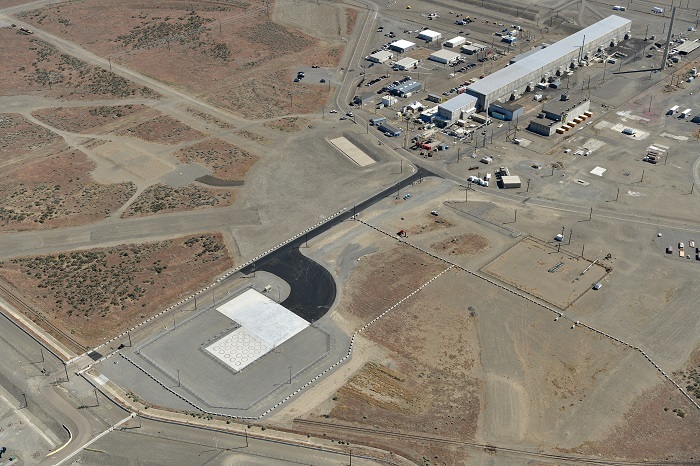 Construction is nearly complete on an outdoor dry storage area, bottom left, built to hold casks containing nearly 2,000 radioactive capsules currently located in an underwater basin at the nearby Waste Encapsulation and Storage Facility. That facility is shown at top right, attached to the longer B Plant.
Following construction of two large concrete storage pads last fall, EM Richland Operations Office contractor Central Plateau Cleanup Company (CPCCo) continued activities this spring with installation of lighting, a fire protection pipeline, and fencing around the pads, as well as paving a new road for the half-mile transfer of the capsules from the WESF. Final construction activities, which include rerouting overhead electrical utilities to support movement of the capsules, are expected to be finished this month. The capsules have been stored at the WESF since the mid-1970s. The cesium and strontium were removed from tank waste at Hanford to reduce the temperature of the waste inside the tanks.
“Completion of the dry-storage area is a key accomplishment and gets us another step closer to moving the capsules out of the aging WESF facility,” said Gary Pyles, EM federal project director. “While the capsules are currently in a safe and compliant configuration, transferring the capsules to dry storage will enable the planned deactivation of the WESF and reduce the risk and cost for storage of the capsules.”
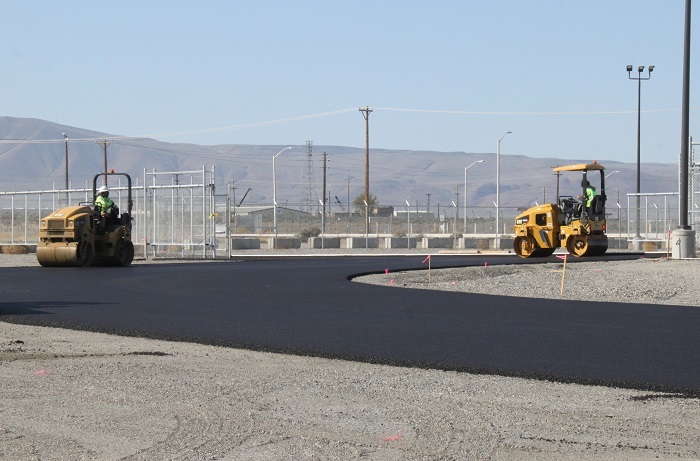 Workers with EM contractor Central Plateau Cleanup Company recently finished paving a new road to support the half-mile transfer of dry-storage casks from the Waste Encapsulation and Storage Facility to a storage pad.
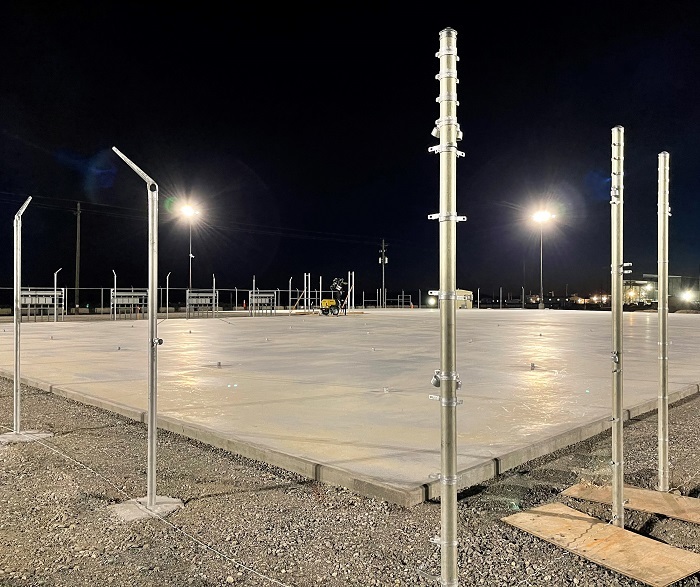 EM contractor Central Plateau Cleanup Company installed lighting and fencing around two large storage pads this spring. The project to load nearly 2,000 radioactive capsules in dry-storage casks and transport the casks to the storage area is expected to be completed in 2025.
The capsules will be placed in stainless-steel-and-concrete casks before being moved to the dry-storage pad. The dry cask storage system is designed for passive cooling by the airflow within the cask. This same system is used at commercial nuclear power plants. Storing the capsules this way will also reduce annual operating costs by an estimated $6 million.
Earlier this year, CPCCo awarded a $9.5 million construction subcontract to Apollo Mechanical Contractors, Inc. to make the necessary structural and utility-related modifications to the WESF and install the system needed to transfer the capsules to the dry-storage casks.
“Our team has made tremendous progress over the past year on several key components of this challenging project,” said Mark Buckmaster, CPCCo capsule transfer project manager. “We look forward to continuing to work with the DOE and our other partners to keep the momentum going on this critical risk-reduction effort.”
Movement of the capsules to the dry-storage area is expected to be completed in 2025.
-Contributor: Dieter Bohrmann
|