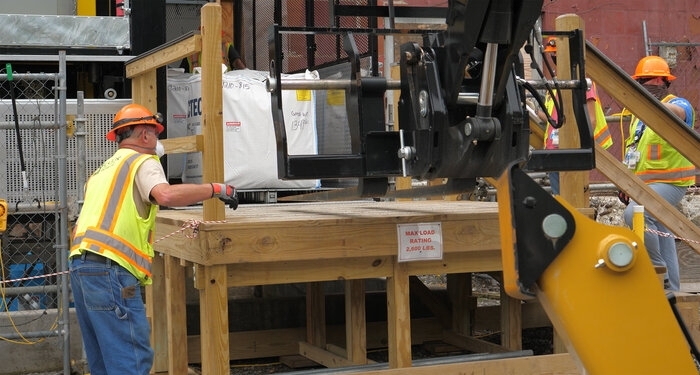
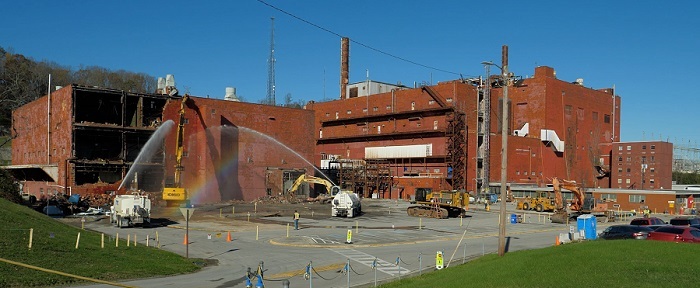
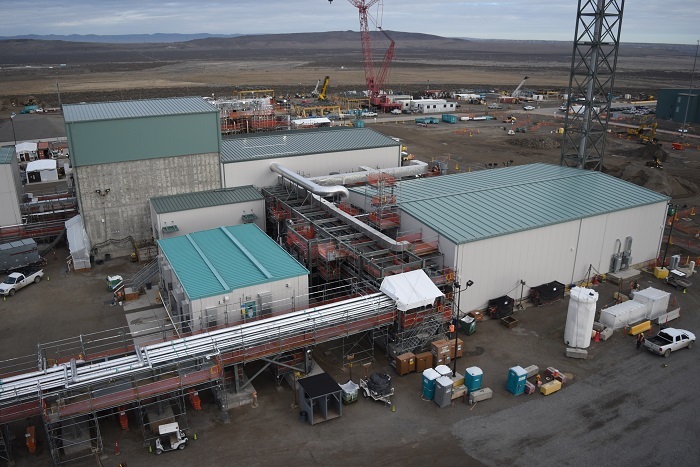
 The Effluent Management Facility (EMF) is the final major construction effort to support the Direct-Feed Low-Activity Waste approach at the Hanford Site. The EMF is needed to handle liquid secondary waste, called effluent, generated by the Low-Activity Waste Facility melters and offgas treatment system.
EM Hanford Site Manager Brian Vance led a Waste Management Symposia 2021 panel with leaders from the site’s major cleanup contractors to discuss transformative leadership during a period of dynamic change.
In the last year, the Hanford team led the site through the challenges of implementing a range of safeguards to ensure the safety and health of the workforce during the pandemic. They successfully transitioned two major contracts, continued to move site culture toward the start of treating low-activity waste, and delivered important progress on cleanup projects across the site.
“Even during a year of unprecedented challenges, the Hanford team demonstrated not only innovation and dedication, but also tenacity and flexibility,” Vance said. “Almost overnight, more than 6,000 employees transitioned from our traditional way of doing work to telework. While no change of that magnitude is ever perfect, the Hanford team worked through issues and corrective actions professionally and constructively while supporting the mission from home.”
Hanford was a featured U.S. site at the symposia, with three panel discussions focused on its work. To kick off the panels, Hanford team leaders discussed their recent cleanup accomplishments and strategies to safely progress activities and projects at Hanford.
“Hanford success has been tied to risk reduction since 1989,” said Brian Stickney, acting deputy manager for the Richland Operations Office. Stickney opened the site’s risk reduction panel by highlighting the significant progress cleaning up the reactor areas along the Columbia River.
Scott Sax, president of Hanford’s Central Plateau Cleanup Company, discussed his company’s plans to place two K Area reactors in interim safe storage — the last two of nine Hanford reactors to be placed into safe storage. Sax also highlighted risk reduction efforts in groundwater treatment and the planned transfer of cesium and strontium capsules to dry storage.
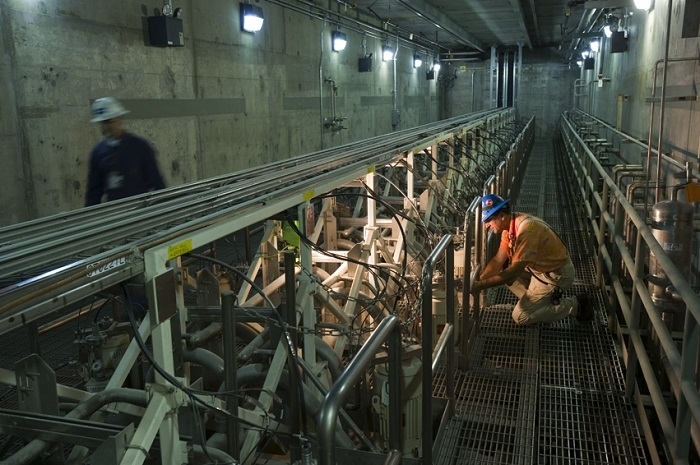
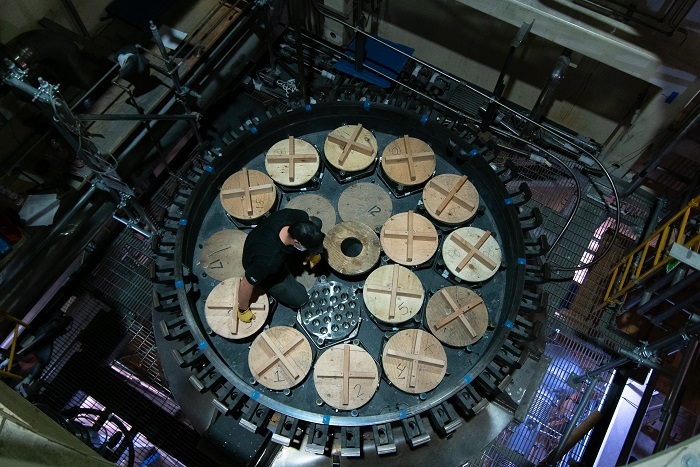
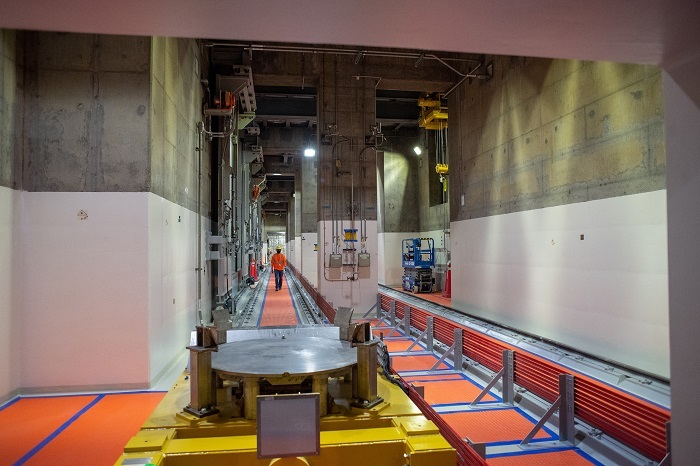 In the Low-Activity Waste (LAW) Facility, concentrated low-activity waste will be mixed with silica and other glass-forming materials and will be fed into the LAW Facility’s two melters and heated to 2,100 degrees Fahrenheit. The glass mixture will then be poured into stainless steel containers, which are 4 feet in diameter, 7 feet tall, and weigh more than 7 tons. The Waste Treatment and Immobilization Plant startup team is currently testing mechanical equipment for the facility’s “bogie,” or cart transport rail system, pictured here.
Startup of the Direct-Feed Low-Activity Waste (DFLAW) treatment — the subject of the final of the three featured site panels — was a chance for Hanford leaders to show their close coordination to prepare the system for operations. The panel demonstrated how an integrated approach was necessary to achieve success in beginning the treatment process and how robust infrastructure and enhanced communications were critical for success.
“With collaboration and communication as the backbone, the DFLAW team is poised to pre-treat tank waste and heat up the world’s largest melter as early as the end of this calendar year,” said Tom Fletcher, the DFLAW program manager. “These two major accomplishments would not be possible without the dedicated and talented workforce who continue to make significant progress despite COVID challenges.”
In addition to Vance, Stickney, Sax, and Fletcher, Hanford team members who served on the panels included Office of River Protection Deputy Manager Ben Harp; Hanford Chief Financial Officer Greg Jones; Hanford Communications Director Carrie Meyer; Assistant Manager for Tank Farms Delmar Noyes; Assistant Manager for Technical and Regulatory Support Glyn Trenchard; Assistant Manager for River and Plateau Bill Hamel; Assistant Manager for Mission Support Jeff Frey; Washington River Protection Solutions President John Eschenberg; Hanford Mission Integration Solutions (HMIS) President Bob Wilkinson; HMIS Chief Operations Officer Amy Basche; and Hanford Vitrification Plant Project Director Valerie McCain.
-Contributor: Cameron Hardy
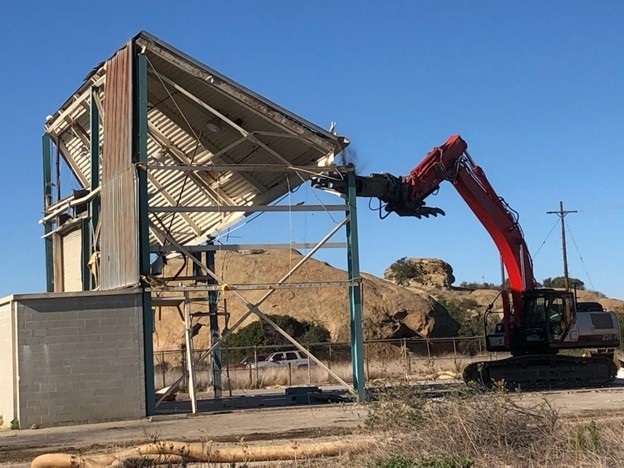
Earlier this year, EM workers knocked down the 13th of 18 DOE-owned buildings at the Energy Technology Engineering Center.
Cleanup success at the Energy Technology and Engineering Center (ETEC ) in California is due in large part to the site’s outreach to the community and its nurturing of key partnerships, Federal Project Director John Jones said at the Waste Management Symposia 2021.
Jones said the site took determined steps to educate the public about its history, its natural features, and the steps EM was taking to thoroughly characterize the site and develop an environmental impact statement (EIS) to inform cleanup decisions.
Actions included outreach to neighbors and area residents, local service clubs, former site workers, and Native Americans who consider the area sacred. Jones said he recruited John Cherry, a noted hydrology expert, to conduct a class for the community on groundwater.
Further, the site held workshops as it was forming its EIS. Former site workers were invited back for tours. Native Americans were invited to write a chapter on their history for the EIS, and the Santa Ynez Band of Chumash Indians became a cooperating agency in the cleanup.
“We started a public effort parallel with the technical work we were doing,” Jones said during a panel discussion at the virtual conference where ETEC was a featured site. “We did intensive stakeholder meetings. We were meeting weekly with the community, with the regulators, with Boeing, the landowner. We held various seminars, town halls. We were meeting with people one on one. We did newsletters, posters.
“What this did was personalize to the community that we were listening to them,” Jones said. “It really helped us.”
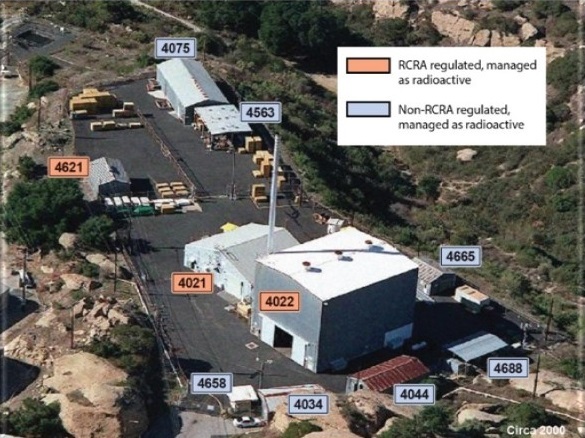
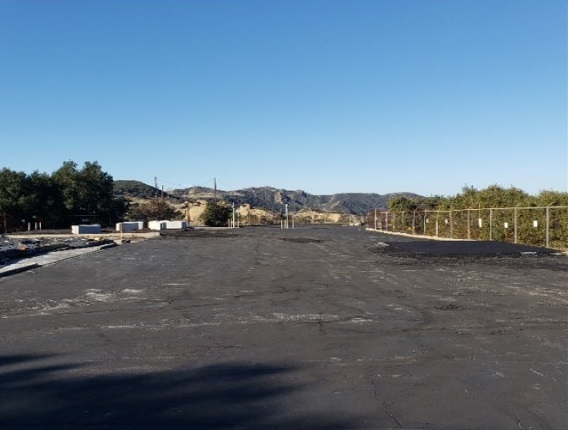
Before-and-after photos of EM’s cleanup at the Energy Technology Engineering Center’s Radioactive Materials Handling Facility. In early November, workers safely and successfully tore down the last of 10 buildings at the facility.
Covering only 90 acres leased from the Boeing Corp., within the Santa Susana Field Laboratory on a rugged hilltop between the San Fernando and Simi valleys outside Los Angeles, ETEC nonetheless came with big challenges, Jones said. The site once was nestled amidst farmland; today, more than a million people live nearby including a number of organizations with energetic interests in the cleanup.
ETEC personnel conducted testing of miniature nuclear reactors and researched liquid metals in the 1950s and 1960s. Most site activities ceased in the late 1980s and cleanup ensued but was halted following a judicial ruling in 2007 that prompted DOE to undertake an EIS.
Field workers gathered more than 10,000 samples that were analyzed for more than 200 radiological and chemical components. Jones said the extensive sampling helped build further credibility.
The site also formed partnerships with state and federal agencies as it advanced cleanup plans, Jones said.
ETEC has issued records of decision for demolition of the final 18 DOE-owned buildings at the site, and for groundwater remediation. All but five buildings have been demolished, with the remainder expected to be down by the end of the year.
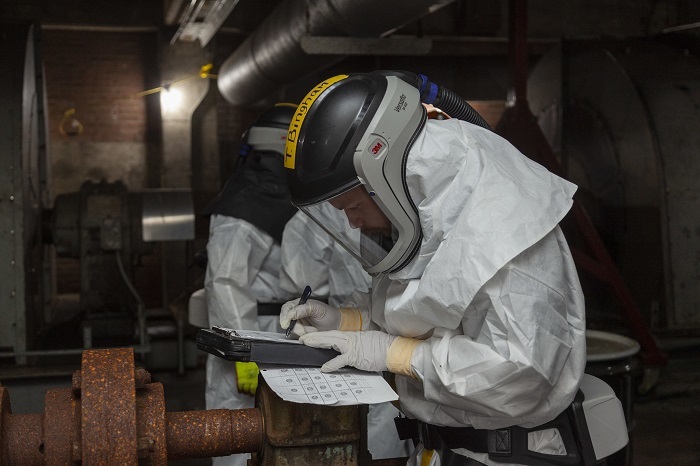 EM crews have transitioned from the successful completion of core cleanup at the East Tennessee Technology Park to projects at the Oak Ridge National Laboratory and Y-12 National Security Complex. Pictured are workers performing deactivation activities inside Manhattan Project-era facilities at Y-12.
EM sites provided updates on their cleanup progress during individual sessions at Waste Management Symposia 2021.
Oak Ridge
Leaders from DOE’s Oak Ridge Office of Environmental Management (OREM), cleanup contractor UCOR, and the Oak Ridge community highlighted the approaches that led to Oak Ridge’s historic cleanup success last year and a new chapter of transformation on the horizon during a session at the Waste Management Symposia 2021.
OREM Manager Jay Mullis covered the cleanup progress that has occurred since last year’s symposia, with the most significant achievement being the completion of core cleanup at the East Tennessee Technology Park (ETTP). It was DOE’s largest-ever completed deactivation and demolition project and the first removal of a former enrichment site in the world. Mullis also shared a preview of the major EM projects underway at the Oak Ridge National Laboratory (ORNL) and Y-12 National Security Complex (Y-12).
UCOR President and CEO Ken Rueter highlighted the strategies that led the contractor to achieve the world-first accomplishment under budget and ahead of schedule. His presentation focused on the innovations and partnerships that made ETTP’s cleanup possible. Rueter noted that those innovations and partnerships are leading to new successes at ORNL and Y-12.
The Oak Ridge session also included two panels. The first featured representatives from OREM, UCOR, and the community who discussed EM’s unique approach at ETTP that converted a contaminated enrichment complex into a community asset that is attracting new businesses and providing opportunities for the region through economic development, tourism, and recreation.
The second panel featured federal and contractor managers who explored the complexities of moving a large workforce from an EM-owned site — ETTP — to ORNL and Y-12, where DOE has important ongoing research and national security mission. Panelists also detailed the transformation and modernization EM will enable at those sites in the years ahead.
-Ben Williams
Waste Isolation Pilot Plant (WIPP)
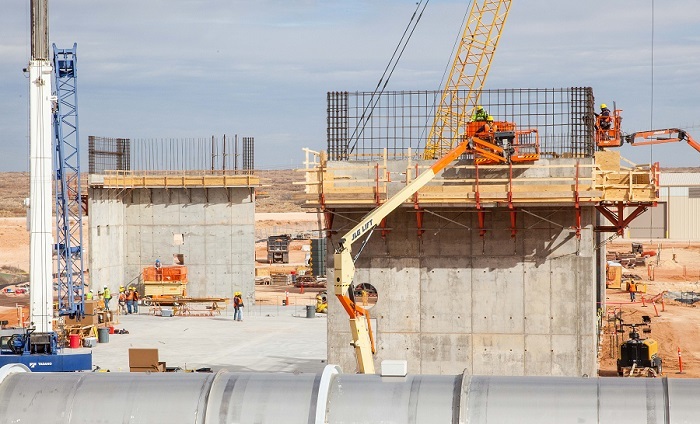
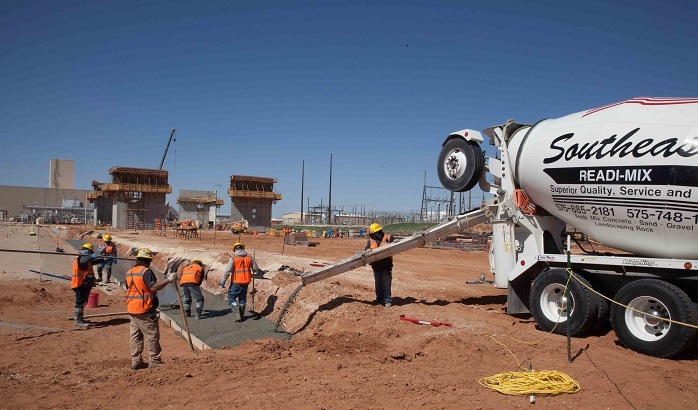 Workers pour concrete for what is known as a mud mat at the Safety Significant Confinement Ventilation System’s New Filter Building. The concrete mat will be used to place the building slab on grade formwork. The 55,000-square-foot building's filters will be the final stop for air exhausted from the Waste Isolation Pilot Plant underground repository.
EM’s WIPP is poised for a huge leap forward in 2021 and beyond.
WIPP slowed, but did not stop, operations during the COVID-19 pandemic and is laying the groundwork to rebound in the years ahead, participants in a panel focused on WIPP updates said during the Waste Management Symposia 2021.
The panelists included EM Carlsbad Field Office Manager Reinhard Knerr and Nuclear Waste Partnership President and Project Manager Sean Dunagan.
“The safety of the people and the safety of the mine are our No. 1 focus,” Dunagan said.
The facility outside Carlsbad, New Mexico is the nation’s only deep geologic underground repository for defense-generated transuranic (TRU) waste.
WIPP is processing up to five TRU waste shipments per week during the pandemic; that number is expected to increase to 17 per week by 2025.
Two capital projects and more than a dozen infrastructure improvement projects, including a new fire protection system, will upgrade the 30-year-old facility to continue its critical national mission.
The Safety Significant Confinement Ventilation System will advance repository airflow from 170,000 cubic feet per minute to 540,000 cubic feet per minute; the utility shaft will be the primary air intake and have hoisting capability as WIPP begins mining new panels to the west.
Los Alamos
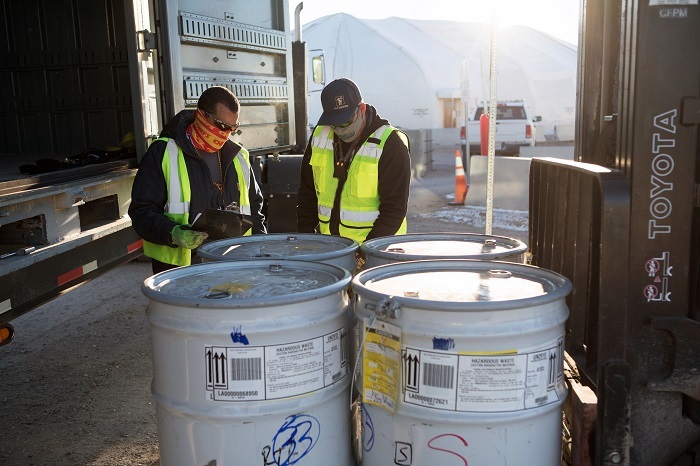 N3B employees prepare transuranic waste drums at Area G for transportation to the Los Alamos National Laboratory's Radioassay and Nondestructive Testing facility.
A panel at the Waste Management Symposia 2021 highlighted EM’s successes in legacy cleanup and waste management at EM’s Los Alamos National Laboratory (LANL) site in northern New Mexico.
The panel featured several subject-matter experts from N3B, the EM Los Alamos Field Office’s (EM-LA) cleanup contractor.
N3B President Glenn Morgan discussed key accomplishments since the start of N3B’s Los Alamos Legacy Cleanup Contract with EM-LA in 2018, including significant progress controlling the migration of the hexavalent chromium groundwater plume, commencing transuranic (TRU) shipments to the Waste Isolation Pilot Plant (WIPP) three years ahead of schedule, and starting comingled EM and National Nuclear Securing Administration (NNSA) TRU shipments from NNSA’s Radioassay and Nondestructive Testing facility at LANL. The latter effort will lead to increased efficiency in shipping waste offsite from LANL.
N3B Vice President Joe Legare addressed the site’s response to COVID-19, including a Resumption Operations Center and an Operational Excellence Initiative training for workers whose jobs were not suited to telework during the pandemic.
The panelists discussed Technical Area 21’s Building 257 — the last remaining building to be demolished at the technical area — and shared lessons learned applicable to EM sites across the complex.
Groundwater remediation discussions centered on a chromium interim measure, which uses a pump-and-treat system to control the hexavalent chromium plume’s migration, and data that will support EM-LA as it determines a final remedy for groundwater remediation.
Panelist also detailed how EM-LA and N3B approach TRU waste retrievals, processing, and disposition, including unique and challenging waste types at LANL.
N3B also focused on how the Technical Working Group — a monthly discussion with stakeholders on technical issues related to legacy cleanup — has maintained momentum during the pandemic, benefiting stakeholders and EM’s legacy cleanup mission at LANL.
-Contributor: Estevan Lujan
Portsmouth/Paducah Project Office (PPPO)
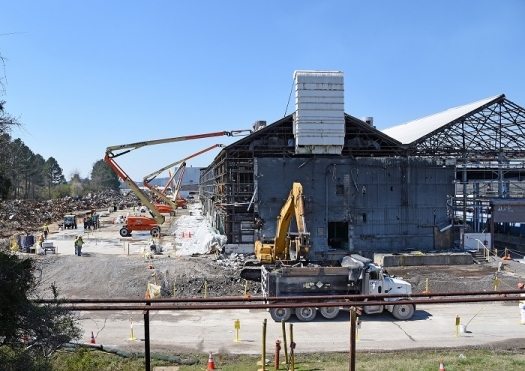
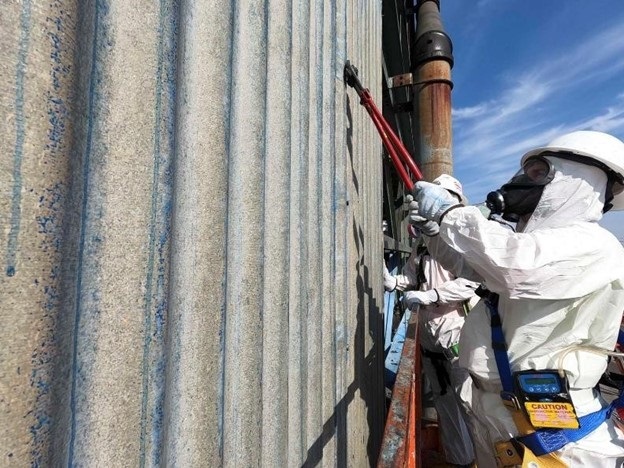
This remotely captured photograph shows Portsmouth Site workers snipping the bolts near the top of the X-326 Process Building prior to removal of a transite-siding panel. Structural demolition of the building begins this year.
EM Portsmouth Site Lead Jeff Bettinger opened his panel presentation at the Waste Management Symposia 2021 with news that transite-siding removal has begun to prepare for structural demolition of the X-326 uranium-enrichment process building.
Lessons learned from the preparations to remove the massive building at the Portsmouth Site in Ohio also are benefitting Portsmouth’s X-333 building deactivation as well as work at the Paducah, Kentucky site, Bettinger added.
PPPO is looking to bring down four of 10 sections at X-326 this year, with much of the resulting debris placed in the newly constructed Portsmouth On-Site Waste Disposal Facility (OSWDF). Advanced run-off treatment systems are in place for both the building and OSWDF, and additional air-monitoring stations are operational around the site.
Soil from groundwater plumes will serve as fill material for the lined disposal cells. After plume removal, the underlying land could be returned to the community. Finally, 200 more acres will be transferred to the local community this year. Added to the 80 acres transferred in 2018, this will represent 10% of the site’s footprint set aside for economic diversification.
“It’s an exciting time at Portsmouth,” Bettinger said. “We have a very intense and unified strategic focus.”
Meanwhile, the Paducah Site will tear down its last electrical switchyard from production years. A new substation now provides the site’s 12 hourly megawatts. This right-sizing from the previous 3,000 megawatt-per-hour infrastructure is one of many efforts to reduce surveillance and maintenance costs, said Site Lead Jennifer Woodard. Some of the material from these projects goes to support regional economic development efforts. Also underway at Paducah is the disposition offsite of 1.5 million pounds of refrigerant.
Speaking for PPPO’s Depleted Uranium Hexafluoride (DUF6) Conversion Project, Program Manager Zak Lafontaine described recent upgrades to improve plant safety and reliability. The improvements were made safely at both the Portsmouth and Paducah DUF6 facilities, Lafontaine said.
-Contributors: Donnie Locke, Brad Mitzelfelt
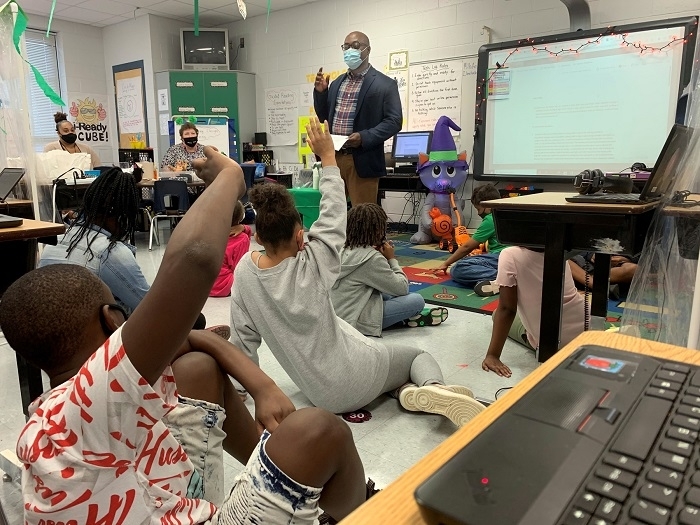 Savannah River Operations Office Engineer Joel Maul talks with students at Diamond Lakes Elementary School in Hephzibah, Georgia during a visit after several weeks of correspondence with the students.
EM is committed to promoting science, technology, engineering, and math (STEM) initiatives and developing the inclusive nuclear workforce of the future, panelists said during the Waste Management Symposia 2021.
The Global STEM Initiatives Panel covered issues including diversity and inclusion, nurturing interest through STEM programs, and the unique challenges and opportunities posed by the COVID-19 pandemic.
Nicole Nelson-Jean, EM Associate Principal Deputy Assistant Secretary for Field Operations, said EM seeks to employ a workforce that is not only diverse, but inclusive of the perspectives brought by people of varying backgrounds.
“It is really important that we cast the net wide and ensure that we are deliberate when we do it,” Nelson-Jean said. “That’s where you get a diverse and inclusive workforce for better decision-making and, ultimately, better results.”
EM manages and participates in partnerships and programs encouraging interest in STEM. Six national laboratories participate in the Minority Serving Institution Partnership Program, managed by the Savannah River National Laboratory. The program trains scientists and engineers in addition to deploying technologies that specifically contribute to the EM mission, and Nelson-Jean said the program “serves as a pipeline for diverse talent.”
EM supports university programs and partnerships, such as the DOE-Florida International University Science and Technology Workforce Development Program and the Oak Ridge National Laboratory’s partnership with the University of Tennessee. Additionally, EM contributes $3 million directly to STEM education each year.
Fostering STEM education and employment pipelines is critical to EM, particularly in the face of projected workforce gaps. Kristen Ellis, Senior Advisor for STEM and Talent Acquisition, said that only 8% of the government-wide workforce is under the age of 30, and within EM headquarters, less than 15% of the workforce is under 40.
“We need to be prepared,” Ellis said. “We need to identify which positions don’t have successors...and how we are growing the next generation.”
Ellis also identified opportunities in the transition to virtual work and learning due to COVID-19, such as increased flexibility in job recruiting and interest in online materials like DOE STEM Rising.
“As we continue to gain lessons learned from the pandemic, we will continue to look at how to make these programs more vibrant and appealing to future students, while recognizing that we have to do outreach to all students and make sure we don’t leave anyone behind,” Ellis said.
-Contributor: Rachel Palmour
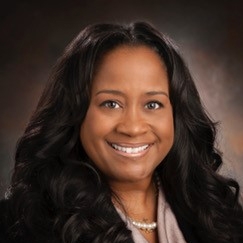
Nicole Nelson-Jean, EM Associate Principal Deputy Assistant Secretary for Field Operations, participated in the Women of Waste Management program at the Waste Management Symposia 2021.
Panelists talked about their careers and offered guidance to students and early-career professionals in the program sponsored by the Fluor Corporation.
Nelson-Jean’s advice: “You can go as far as you want to go, and do any job or any particular thing that you would like to do in your career. I would not want anyone to set their limitations to someone else’s standards. I never set limitations on myself. I would say, talk to as many people as you can about their own journeys. I was always open to possibilities in my career and did not pigeonhole myself to any particular job. I would tell anyone to always be open because people always want to work with people who are willing to say yes, willing to do something new, to get a little bit uncomfortable. Sometimes to be able to move to the next step you have to get a little bit uncomfortable.”
Other featured panelists were Lisa Gordon-Hagerty, former Under Secretary of Energy for Nuclear Security and Administrator of the National Nuclear Security Administration; and Cheryl Cabbil, Amentum senior vice president, operations. Jan Preston, Fluor Corporation senior director, operations, served as moderator.
|
 |
Top EM officials and leaders from cleanup communities will headline the 2021 National Cleanup Workshop that will be held Sept. 8-10 in Alexandria, Virginia.
Speakers will include William “Ike” White, Acting Assistant Secretary for Environmental Management; Todd Shrader, Principal Deputy Assistant Secretary for Environmental Management; and other officials from EM headquarters and field sites.
Participants also will include Ron Woody, county executive of Roane County, Tennessee, Brent Gerry, mayor of the City of West Richland, Washington, and Rebecca Casper, mayor of the City of Idaho Falls, Idaho.
The annual National Cleanup Workshop brings together DOE executives, industry leaders, national and local elected officials, and other stakeholders to discuss DOE's progress on the cleanup of the environmental legacy of the nation's Manhattan Project and Cold War nuclear weapons program.
This year’s program theme is “Capitalizing on a New Era to Build on Cleanup Successes.”
Topics to be discussed will include new EM initiatives; the path toward initiating tank waste treatment at Hanford; opportunities for small business subcontracting; implementation of the End-State Contracting Model; infrastructure priorities across the EM complex; progress on radioactive waste tank closure; lessons learned from operations during COVID; planning for the workforce of the future; and building on D&D successes to further reduce risk and site footprints.
The Energy Communities Alliance sponsors the workshop in cooperation with EM and the Energy Facility Contractors Group. More information will be forthcoming. Check EM’s 2021 National Cleanup Workshop website for updates.
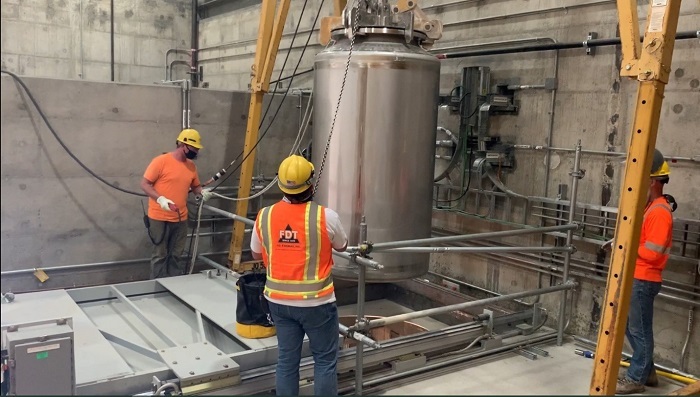 Workers at Hanford’s Waste Treatment and Immobilization Plant manipulate an empty container that will be filled with waste immobilized in glass when the plant begins treating Hanford’s tank waste following commissioning of facilities.
RICHLAND, Wash. – EM’s Office of River Protection contractor for the Hanford Waste Treatment and Immobilization Plant (WTP), Bechtel National, Inc. (BNI), has earned $5.54 million, or 70.4% of the available award fee of $7.87 million for the performance evaluation period of calendar year 2020.
EM releases information relating to contractor fee payments — earned by completing work called for in the contracts — to further transparency in its cleanup program.
BNI’s performance was evaluated against six criteria incentives. Of the six criteria, BNI received one “excellent,” one “very good,” and four “good” ratings. The overall rating was “good.”
BNI’s achievements included completing the turnover of all systems in the WTP Low-Activity Waste (LAW) Facility and Effluent Management Facility (EMF) from construction to startup testing prior to a Dec. 31, 2020 milestone for completing the work in the Hanford Consent Decree. Those facilities will support the site’s Direct-Feed Low-Activity Waste (DFLAW) program to begin treating radioactive waste from large underground tanks. Startup testing is the phase between construction and commissioning. Commissioning is the phase between startup testing and facility operations.
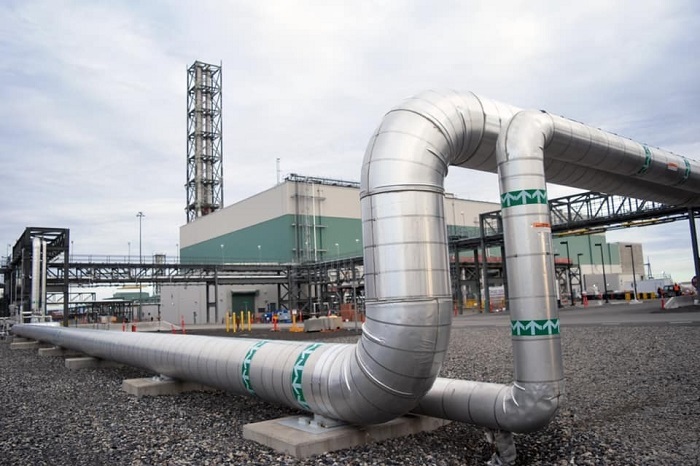 The high-pressure steam system at the Hanford Site’s Low-Activity Waste Facility was recently activated. During full operations, these aboveground pipe racks will deliver steam 24/7 to the facility where tank waste will be immobilized in glass.
The work at WTP to complete construction of all facilities required for DFLAW operations was done safely and on time despite the unprecedented challenges presented by reduced operations during the COVID-19 pandemic, and BNI ensured effective safety controls were in place that protected the health and safety of the workforce.
Additional examples of BNI achievements in 2020 include approval of chemical safety management and nuclear material maintenance programs, as well as updates to the plant’s commissioning plan. BNI also completed the Analytical Laboratory readiness-to-operate performance milestone and validated implementation of safety management programs through an executive safety review board. That laboratory, which is part of WTP, is where technicians and chemists will analyze approximately 3,000 samples of tank waste each year to support DFLAW operations.
Areas for improvement for BNI include implementing corrective actions, resolving issues to mitigate single-point failures, and maturing the plant operations culture.
View the 2020 scorecard for BNI here.
|