|
AIKEN, S.C. – Workers at the Savannah River Site (SRS) have completed risk reduction and cleanup activities in a building containing residual plutonium (Pu)-238 oxide, once used to power deep space missions.
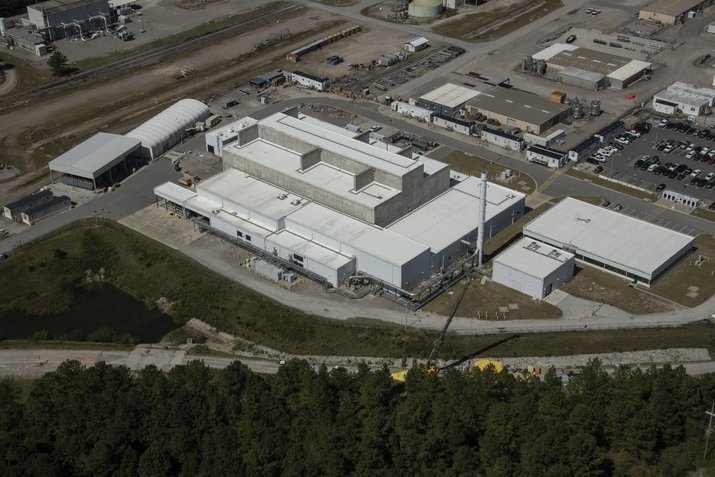
The two-story, blast-resistant, windowless, reinforced concrete building, known as Building 235-F, has been inactive for more than 25 years. One section of Building 235-F, known as the Plutonium Fuel Form (PuFF) Facility, was used to make fuel spheres and pellets out of Pu-238 to provide heat to electrically power long-term, deep-space missions, such as Galileo, Ulysses and Cassini.
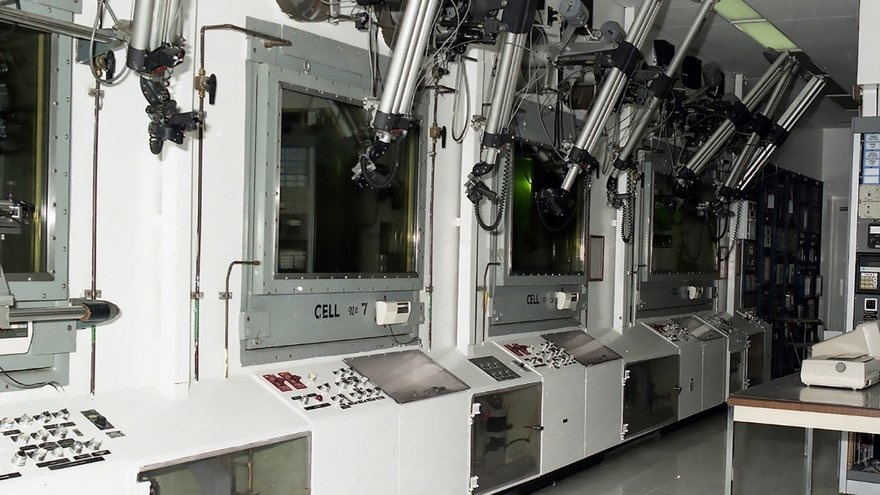
“Since late 2012, Savannah River Nuclear Solutions (SRNS) has been executing the Department of Energy’s implementation plan to reduce the hazards associated with the material at risk that remains as residual contamination in the Building 235-F facility,” said Building 235-F Project Manager Jeff Hasty. “Most of the residual contamination in the facility is within the hot cells where processing of plutonium was performed.”
In 2019, following several years of prep work, SRNS conducted risk reduction activities that included the removal of a portion of residual plutonium contamination. Measurements conducted during the removal activities indicated that the plutonium oxide, which is left behind in a manner that was expected to be easily disturbed, was harder to spread (and less of an immediate hazard to co-located workers) than previously believed. This also meant that further plutonium removal activities were not necessary.
Upon the partial removal of the residual plutonium contamination, a revised risk reduction strategy was developed to ensure the facility is safe until it can be decommissioned.
Under the risk reduction strategy, the Savannah River National Laboratory completed characterization by performing an analysis to determine the amount of residual plutonium that remained in the facility. Following characterization, SRNS, the management and operations contractor of SRS, hired an independent contractor to evaluate potential fire scenarios, specifically looking at whether a fire could occur and, if so, whether it could impact the plutonium.
Based on the reports, the SRNS project team removed or replaced ceiling tiles in rooms containing plutonium and removed combustibles identified above the ceiling tiles. Also the PuFF cells were sealed. Waste generated during plutonium removal was characterized and prepared for shipment to the SRS Solid Waste Management Facility.
With the rsk reduction project completed, the project team transitioned in May 2020 to deactivating the facility. Deactivation will place the facility in a stable configuration for long-term safe storage until eventual decommissioning. The final deactivation plan is scheduled to be issued in September 2020.
-Contributor: Lindsey MonBarren
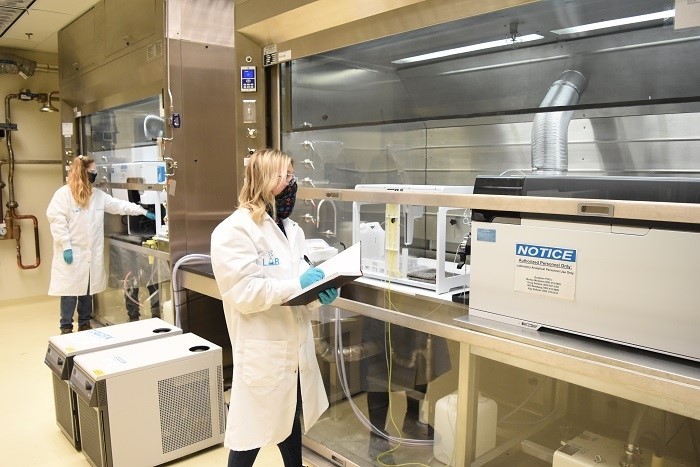
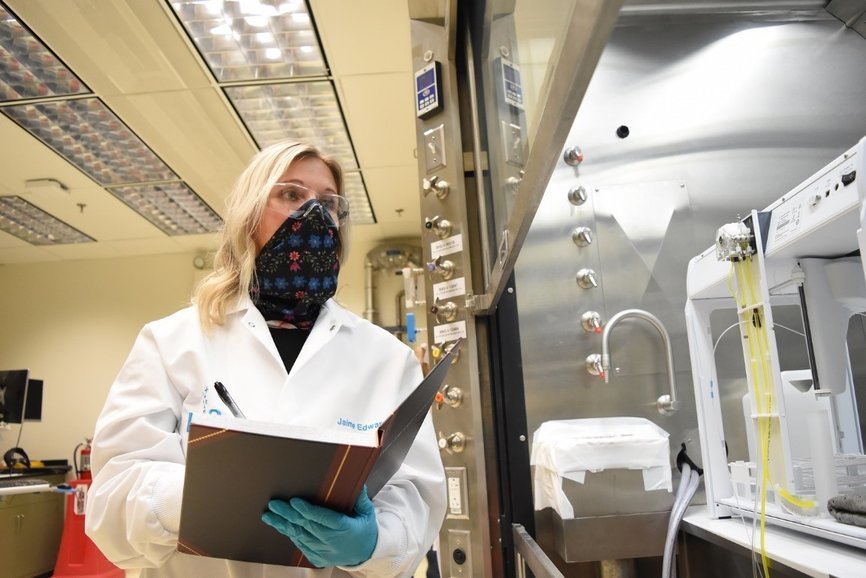 Chemists at Hanford’s Waste Treatment and Immobilization Plant, such as Jaime Edwards, developed training and procedures and verified laboratory equipment performance over the past two years while working from a temporary off-site lab at Columbia Basin College in Pasco, Washington. Rigorous processes, procedures, and training developed by the team will ensure the waste vitrified in the Low-Activity Waste Facility is safe for long-term storage.
RICHLAND, Wash. – A team of chemists and lab technicians has moved into its permanent home in the Analytical Laboratory (LAB) at Hanford’s Waste Treatment and Immobilization Plant (WTP).
Over the past two years, the scientific team developed training and procedures and verified laboratory equipment performance while working from a temporary laboratory at Columbia Basin College (CBC) in Pasco, Washington. In parallel, startup testing of systems in the LAB was completed to allow the team to transition to the site. The Analytical Laboratory is a key component to the Direct-Feed Low-Activity Waste (DFLAW) approach that will enable Hanford to begin treating task waste.
“It’s a critical moment in time for the project to welcome the laboratory team to the jobsite,” said Valerie McCain, project director for lead contractor Bechtel National, Inc. “I appreciate CBC’s collaboration as we leveraged the capabilities in our community to help progress the mission. Now, with the people and equipment here, we are well positioned for cold and hot commissioning for Direct-Feed Low-Activity Waste.”
The LAB’s key function is to determine the correct “recipe” of glass-forming materials for each incoming batch of tank waste, and then to confirm the glass produced by the Low-Activity Waste (LAW) Facility meets state and federal regulatory requirements. Rigorous processes, procedures, and training developed by the team will ensure the vitrified waste is safe for long-term storage.
“This is a key step in preparations to bring the vitrification plant online, begin making glass, and continue moving forward in our Hanford cleanup mission,” said Tom Fletcher, WTP federal project director. “Over the next several months, we will have fewer construction workers and more commissioning and operations workers. It’s exciting and a long time in coming.”
Under the DFLAW process, the tank farms will feed waste directly to the LAW Facility for vitrification. During the cold commissioning phase, a waste-like simulant will be run through the LAW Facility. Then, a hot-commissioning vitrification phase will begin turning low-activity radioactive tank waste into stable glass. The LAB will analyze 3.000 process samples annually to ensure the quality of vitrified waste.
-Contributor: Staci West
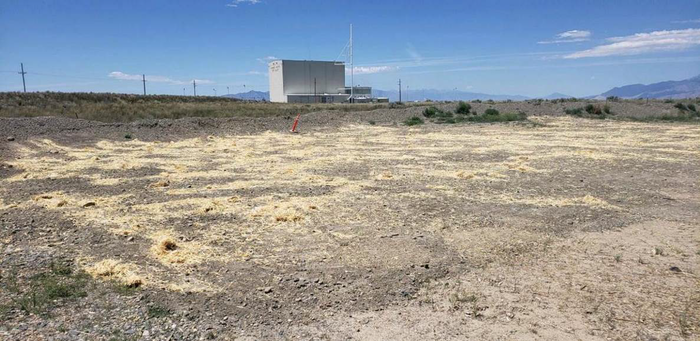 Following cover placement, the Materials and Fuels Complex Landfill was reseeded and mulched. In a few years, it will look like the surrounding terrain.
IDAHO FALLS, Idaho – Work crews at the Idaho National Laboratory (INL) Site have completed the installation of a soil cover over a construction debris landfill at the Materials and Fuels Complex (MFC).
The landfill was created to dispose of nonradioactive and nonhazardous debris generated during the demolition of ancillary buildings, structures, and equipment associated with the Experimental Breeder Reactor-II, which operated until 1994. Metal, concrete, empty storage tanks, and non-friable asbestos were disposed of in a 9.1-acre natural depression near the MFC facility.
In all, 4,400 cubic yards of debris were disposed of in the landfill over the last decade, with the last load delivered in August 2019. About 1.6 acres of the depression were filled with debris.
Last summer, crews from cleanup contractor Fluor Idaho began to cover the landfill with 18 inches of compacted native soils and six inches of topsoil. When winter arrived early, crews had to curtail work until this year.
Over the course of the summer, nine natural grasses and plants, including sage brush, were planted on the landfill cover. The purpose is to match the surrounding terrain while minimizing erosion and excessive settling. A berm was erected on the southern end the landfill to divert water runoff around the landfill during heavy rainfall.
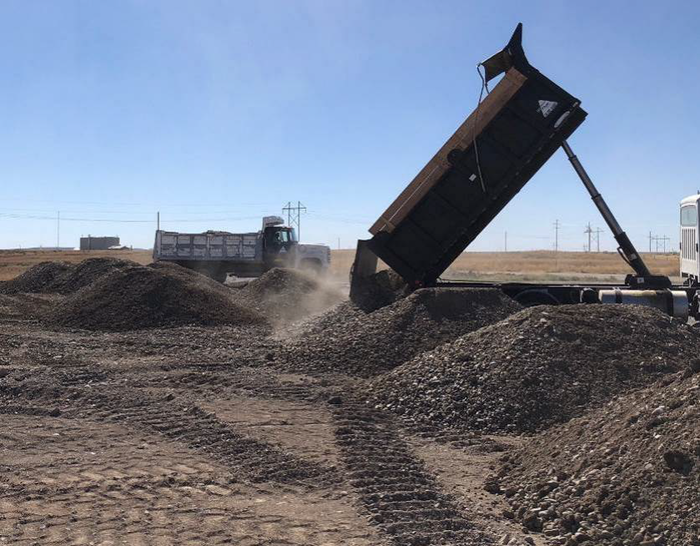 Heavy equipment was used to stockpile fill material for the landfill cover. The material was trucked from a borrow source near the Advanced Test Reactor Complex.
“Our goal was to match up the vegetation on the landfill with the nearby natural plants and grasses,” said Fluor Idaho Field Support Specialist Dave Eaton.
Once its closure is approved by DOE, the Environmental Protection Agency, and state of Idaho Department of Environmental Quality, the landfill will be turned over to the Idaho site’s Environmental Restoration Program for long-term institutional controls to include controlling access, subsidence/vegetation monitoring, and maintenance as necessary.
-Contributors: Nicole Badrov, Erik Simpson
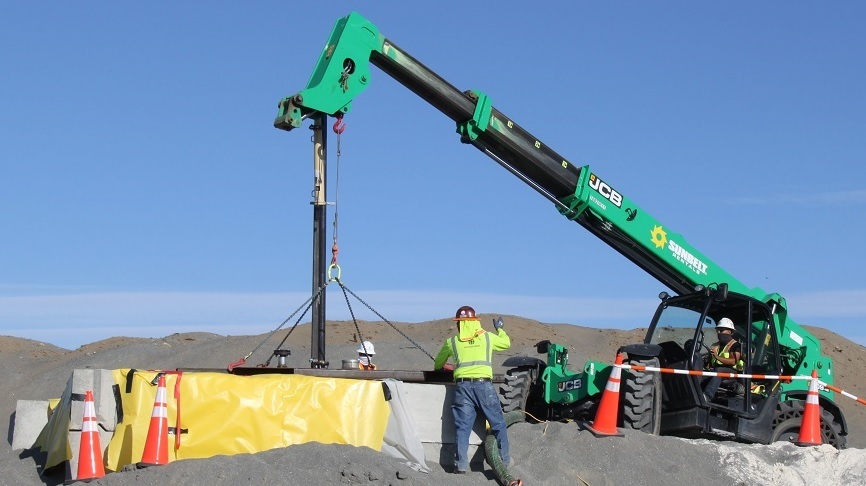 EM Richland Operations Office contractor CH2M HILL Plateau Remediation Company tests an off-site mock-up of a conveyance system that will be used to move engineered grout from trucks into three at-risk underground structures.
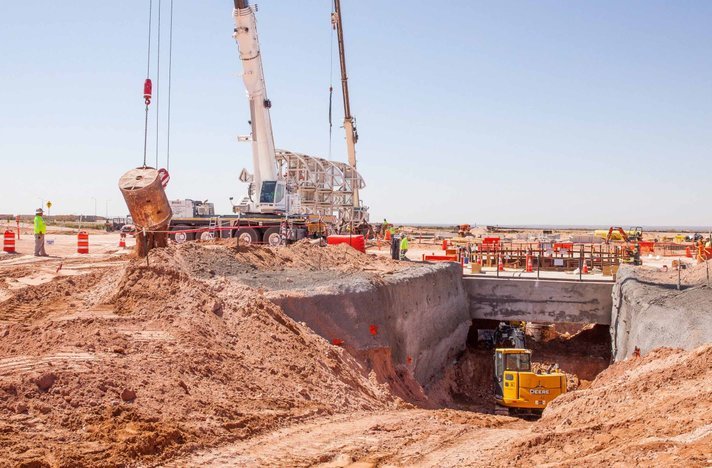
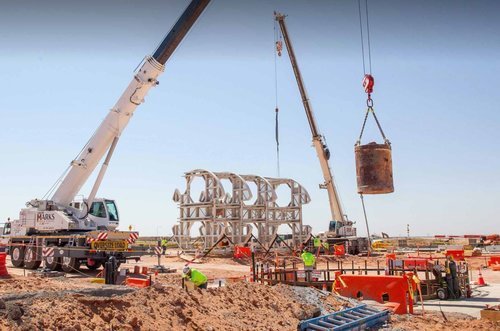
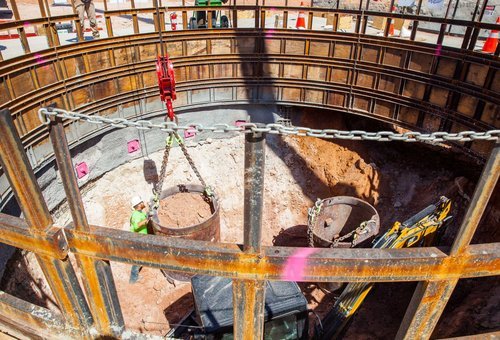
RICHLAND, Wash. – A Hanford Site project to stabilize three at-risk underground structures with engineered grout is well underway, with workers starting field preparations this month after successfully testing a full-scale mock-up of the grouting system earlier this summer.
The three structures, located near the former Plutonium Finishing Plant on Hanford’s Central Plateau, received liquid waste during Hanford’s plutonium production operations and contain residual radioactive and chemical contamination. A 2019 report indicated the structures are at risk of age-related failure.
EM Richland Operations Office (RL) contractor CH2M HILL Plateau Remediation Company (CHPRC) is filling the structures with engineered grout to protect workers and the environment, while not precluding future remedial actions or final closure decisions.
“This work is critical to Hanford’s ongoing risk reduction mission,” said Al Farabee, Hanford’s senior technical advisor for the project. “We are confident in the process, having used grout to safely stabilize other at-risk structures on the Hanford Site, most recently PUREX Tunnels 1 and 2.”
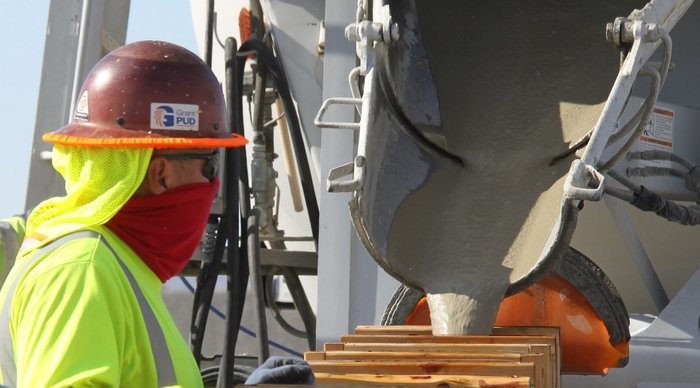
Engineered grout will be pumped from trucks through more than 1,500 feet of pipe to stabilize three underground structures at the Hanford Site. |
|
 |
Last month’s off-site mock-up tests provided another boost of confidence for the project.
“We learned valuable lessons about the grout conveyance system,” said Delise Savior, CHPRC project manager. “It let us see firsthand what would and would not work, and allowed us to fix those issues in a clean environment before we started work in radiologically contaminated areas.”
This animation shows the grout delivery and conveyance system that will be used to safely stabilize the structures. The use of grout will provide additional protection, while not precluding future remedial actions or final closure decisions.
Grouting is expected to begin this fall with project completion scheduled near the end of the 2020 calendar year. For more information, visit the stabilization project webpage.
-Contributor: Joan Lucas
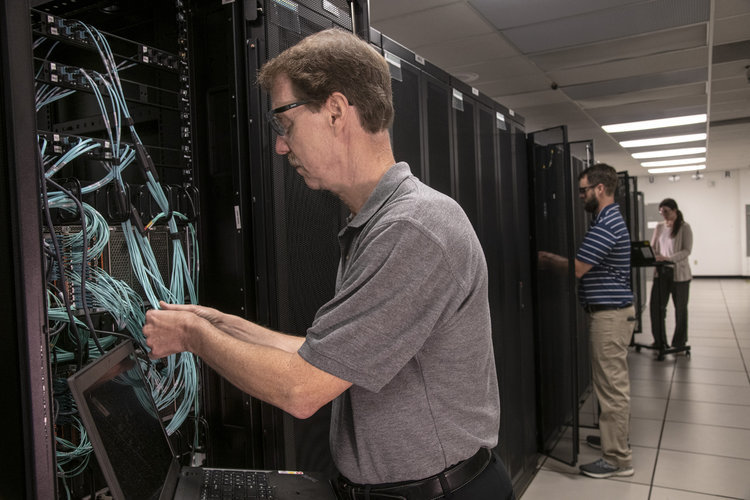 From left, Savannah River Nuclear Solutions IT Network Engineers Alan Chafin, Kyle Garner, and Nicole Arnold complete the configuration of 800 computer network switches in dozens of buildings across the Savannah River Site. The project was completed nearly a year ahead of schedule.
AIKEN, S.C. –The future of cybersecurity was brought to reality at the Savannah River Site (SRS) with a hardware upgrade that replaced 800 computer network switches in dozens of buildings across the site and the installation of new, cutting-edge security software. The multi-year project was completed nearly a year ahead of schedule.
A network switch is an essential component used as an interface between a computer, server, or computerized hardware, such as a printer, plotter, and other peripheral equipment. Through a company or sitewide data network, a computer user sends and receives email and accesses the internet.
Alan Chafin, network engineer with Savannah River Nuclear Solutions (SRNS), the management and operations contractor at SRS, managed a team of SRNS information technology (IT) personnel assisted by several subcontractor employees. They used innovative thinking and strategic planning to compress the project schedule.
Project management carefully coordinated outages with SRS organizations that were heavily reliant on IT equipment. This was crucial to avoid lost productivity and delayed completion of application-based tasks. Affected systems included payroll processing, employee benefits, and security programs.
“We began this project about two and a half years ago for several reasons, primarily because we wanted to proactively replace the switches before age-related maintenance issues appeared,” Chafin said. The improved switches recognize and harness new security software that older switches could not support.
“This is a game changer,” said Henry Longley, SRNS lead network engineer. “The new software, called Identity Services Engine or ISE, requires a new way of thinking in order to fully understand the immense and versatile capabilities it offers SRNS IT. Moving to ISE software is like moving from black-and-white television to virtual reality. It has that kind of potential impact to radically improve our ability to defend our data network and defeat attacks.
“We are really excited about the nearly limitless potential, which is so great it’s difficult for us to fully grasp at this time,” he added.
SRS utilizes Defense-in-Depth cybersecurity, which means layers of security are in place to protect computer systems and data. IT employees continually work to identify and patch vulnerabilities on network equipment, in order to maintain this defense strategy.
“DOE recognizes this project as a significant accomplishment,” said Lewann Belton, chief information officer, DOE-Savannah River Cyber and Information Technology Division. “Everyone involved in completing this project is to be commended.”
-Contributor: DT Townsend
|