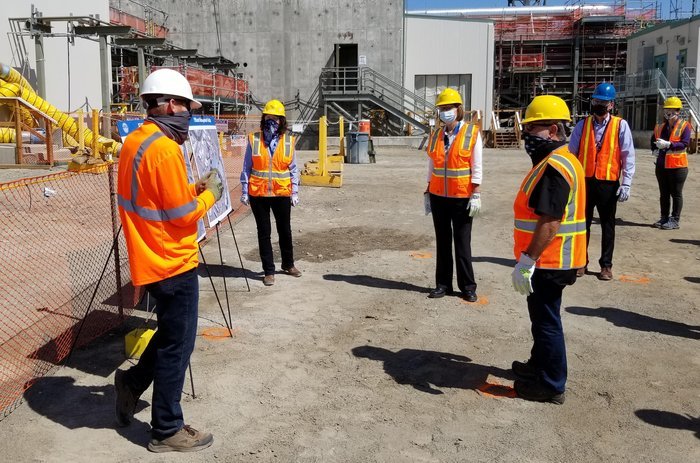
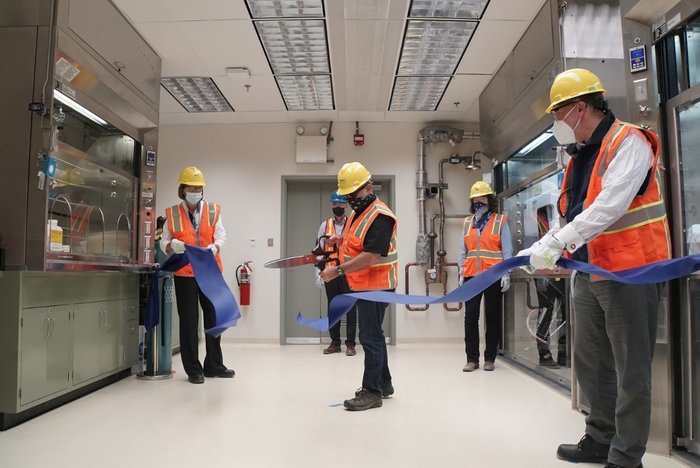
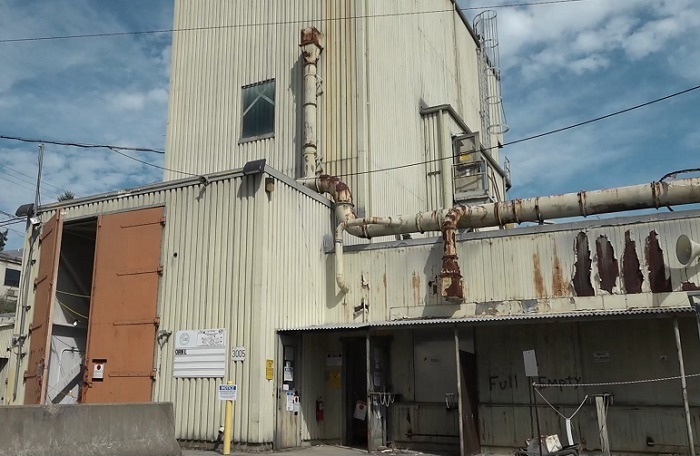
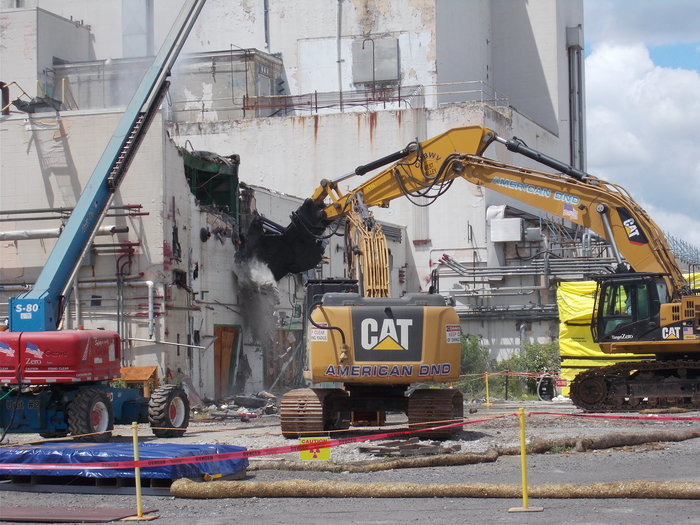
 Workers start the demolition of the Utility Room building at the West Valley Demonstration Project, which is one of seven ancillary support buildings being demolished at the site.
WEST VALLEY, N.Y. – Crews recently demolished the 6,955 square foot Utility Room building (UR) at the West Valley Demonstration Project. Built in 1964, the UR was used to produce and distribute various utilities required for Main Plant processes. This is the sixth of seven Main Plant support structures demolished, and brings EM’s total number of structures removed at West Valley to 67.
The UR was constructed with a steel frame, concrete block, and masonry exterior. The single story building measures 79 feet wide, 88 feet long and 23 feet high.
DOE WVDP Director Bryan Bower commended the team for its work.
“The landscape and footprint around the Main Plant has been changed forever, and is a sign of the ongoing progress here.”
John Rendall, president of CH2M HILL BWXT West Valley (CHBWV), EM’s cleanup contractor, said employees continue to perform work safely while adhering to COVID-19 protocols.
“Our team continues to complete demolition work at the site in a safe and environmentally-sound manner.”
-Contributor: Joseph Pillittere
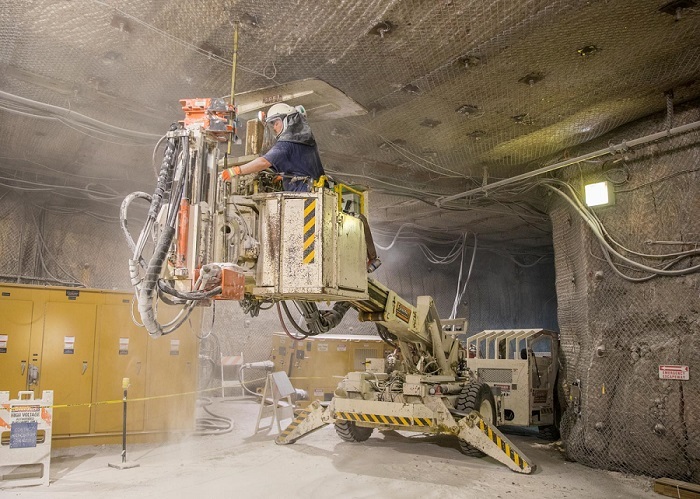 Mine operations technician Ben Medina installs a rock bolt in the Waste Isolation Pilot Plant underground. Rock bolts assure ground stability and worker safety in the underground transuranic waste repository.
CARLSBAD, N.M. – EM Waste Isolation Pilot Plant (WIPP) crews have marked a significant achievement by installing more than 13,000 bolts this year to slow the natural movement of salt rock in the underground repository where radioactive waste is emplaced.
That tally continues to grow as 2020 progresses. Bolting controls the movement of salt rock — known as salt creep — in the WIPP underground. The waste repository’s walls, roof, and floor can move three to six inches a year. The salt rock seals fractures and naturally closes all openings, permanently encapsulating the waste.
In an average week, WIPP crews install 100 to 150 bolts. In late April, crews installed 344 bolts, a single-week record.
“The mining crews, underground maintenance, and underground facility operations’ performance has been exemplary,” Mine Operations Deputy Manager Kenny Padilla said.
WIPP’s comprehensive ground control system ensures a safe environment for employees working 2,150 feet below the surface in the WIPP underground. The system includes installation of bolts using bolting machines, and monitoring and evaluation of the underground conditions. Wire mesh on the walls corrals small pieces of salt that break free. Engineers walk the underground’s drifts daily, looking for broken bolts or new rock movement.
The effort is bolstered by WIPP’s geotechnical department, which performs electronic monitoring and measures salt movement manually. If the rate of salt movement in an underground area is too high, bolts are added.
The salt in the WIPP underground is a series of layers divided by clay. Holes are drilled from one salt layer into the next, and steel bolts, some as long as 14 feet, are inserted. Steel plates are tightened on to the bottom of the bolt with a nut to cinch it up against the salt, and a lanyard is added to limit movement of the bolt when it eventually breaks.
The bolts are designed to withstand 60,000 pounds of pressure from the advancing salt. But they do break, at an average of two or three per day out of the thousands installed, and the bolting crews install new ones.
“The mine management team worked with the mining crews to refine the roof bolting process so we could improve the safety factor in the mine roof,” Padilla said. “The mining crews, coupled with underground facility operations personnel, met the challenge and improved the roof bolting operation.”
-Contributor: Roy Neese
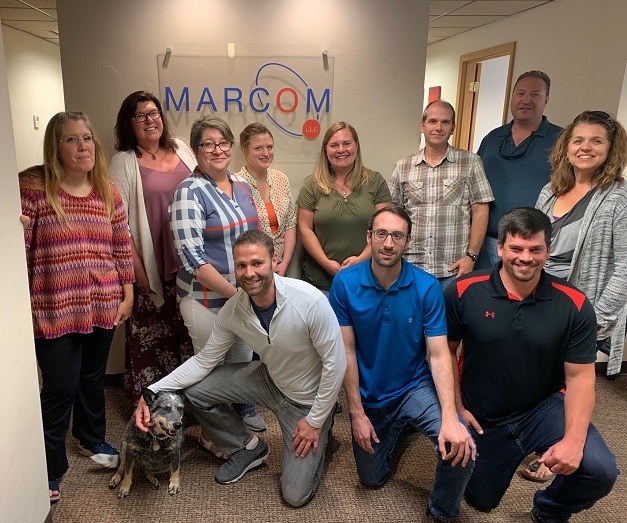 In this photo from February, MarCom employees are shown with the company’s mascot, the dog Moxie. MarCom President Marcella Medor is second from left. Fluor Idaho, EM’s Idaho National Laboratory Site cleanup contractor, entered into a mentor-protégé agreement with MarCom.
IDAHO FALLS, Idaho – EM’s Idaho National Laboratory (INL) Site cleanup contractor has signed a mentor-protégé agreement with a firm named DOE’s Small Business of the Year for fiscal 2019.
The agreement will benefit both companies. Fluor Idaho, the mentor, will provide MarCom, the protégé, on-site work experience for employees and business development expertise to enhance the small company’s ability to bid on future federal contracts.
DOE's Office of Small and Disadvantaged Business Utilization (OSDBU) manages the Department's Mentor-Protégé Program. The program seeks to foster long-term business relationships between small businesses and DOE prime contractors and to increase the number of small businesses that receive DOE prime contracts and subcontracts.
“This is a great program developed by the Department of Energy to share valuable business expertise between two companies,” Fluor Idaho Small Business Liaison Jennifer Lloyd said. “The idea behind it is to increase the pool of companies that can provide trained staff and beneficial services at DOE sites.”
Fluor Idaho and INL nominated MarCom to be named the 2019 Small Business of the Year by OSDBU. Read more about DOE's fiscal 2019 small business award winners here.
In its nomination of MarCom for the award, Fluor Idaho noted the company's innovative ideas and extraordinary customer service in response to Fluor Idaho's growing work scope in fiscal 2019, and that MarCom provided integral technical support in areas such as information technology and records management.
Founded in 2003, MarCom is a Native American- and woman-owned small business that provides management, administrative, engineering, nuclear operations, and health and safety services to DOE sites throughout the U.S.
Marcella Medor, MarCom’s president, is enthusiastic about the potential the agreement creates.
“We will bring our unique skillsets to Fluor Idaho, while gaining the knowledge and business expertise to facilitate continued growth and long-term company success,” Medor said.
This is Fluor Idaho’s second mentor-protégé agreement with a small business. The cleanup contractor also signed an agreement with HukariAscendent to provide planning, nuclear safety, and engineering specialists in support of the Idaho Cleanup Project Core contract.
-Contributor: Erik Simpson
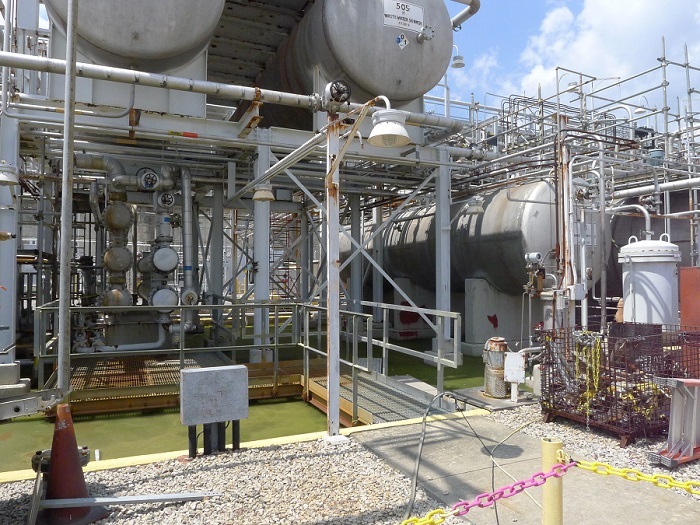 A view of the interior of the Savannah River Site H Canyon, where steam provides heat for chemical processing activities and the transfer of radioactive materials between tanks. A dedicated team has been hired to prepare for outages full time at the facility.
AIKEN, S.C. – Employees of the H Canyon at the Savannah River Site recently improved planning for steam outages at the chemical processing facility by hiring staff members dedicated to preparing for those periods full time.
“In the past, we relied on the existing work control team to also plan for outages,” H Area Maintenance Manager James Rosema said. “Having a dedicated work control staff to just focus on preparing for outages has left our team better prepared.”
Steam is used in H Canyon and its associated facilities to provide heat for chemical processing activities and transferring radioactive materials between tanks. It is also used to provide heat for the control room and offices in the facility.
H Canyon undergoes two steam outages a year to repair steam pressure header systems. Outages generally last about two weeks but can last longer if needed.
H Canyon employees take advantage of steam outages to perform required inspections to ensure the structural integrity of remote parts of the facility associated with the air exhaust system.
Planning for outages begins approximately six months in advance because they entail a large amount of work in a short period.
“That means that as soon as we are done with one outage, planning needs to begin for the next, said Rosema. “With a dedicated work control staff, we are able to do that more efficiently and effectively.”
-Contributor: Lindsey MonBarren
RICHLAND, Wash. – EM crews are taking steps to prevent vehicles from striking wild animals on Hanford Site roadways.
With the mating season for elk and deer due to begin in September, EM Richland Operations Office (RL) contractor Mission Support Alliance (MSA) is implementing a pilot program to help lower the number of animal-vehicle collisions. The program is based on studies done by the Wyoming Department of Transportation and the State of Utah.
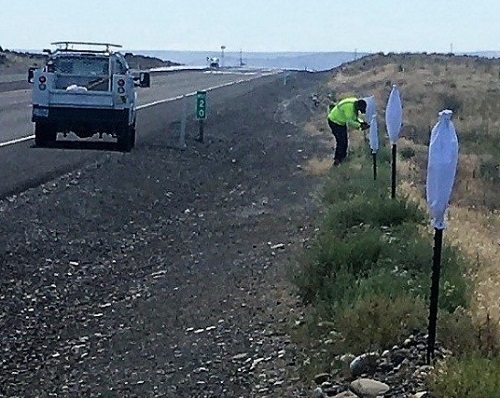
Workers are installing posts with white canvas bags wrapped around them at 50-foot intervals on stretches of roadways on the 580-square-mile site where there have been a high number of deer and elk strikes.
According to the studies, when illuminated by headlights, the bags look like a danger signal to the animals by appearing to be a white-tailed deer running. Animals generally waited until the illumination disappeared before crossing the road, the research says.
 |
|
Hanford Site road maintenance worker Chris Bates covers posts with white canvas bags along a section of roadway as part of a pilot project to discourage deer and elk from crossing in front of vehicles. |
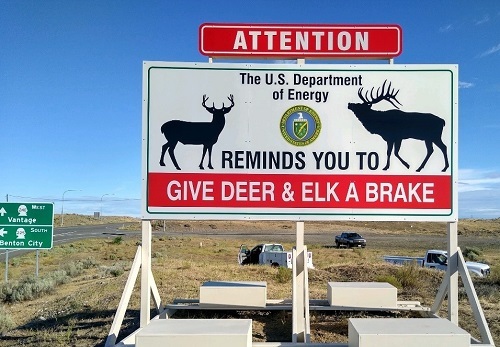
A Hanford Site traffic safety initiative includes placing 6-by-12-foot signs along a state highway that crosses the site. These signs help alert motorists that deer and elk may be in the area. |
|
 |
“The safety of the workforce is paramount and is a fundamental part of any traffic improvement program,” said Jeff Frey, RL assistant manager for mission support. “We’re optimistic that what has helped reduce deer and elk strikes in Utah and Wyoming will work here at Hanford.”
After the posts are installed, workers will set up cameras along the roadway. The footage will be used to determine the viability of the effort during a one-year trial.
“Placing the white canvas bags on posts along the road could be an effective and practical way to help reduce the number of animal strikes,” said Andy Foster, manager of MSA safety support and chair for the Hanford Site Traffic Safety Committee. “We hope this program will improve the safety of our workforce during their daily commute.”
-Contributors: Ginger Benecke, Bruce Drake
|