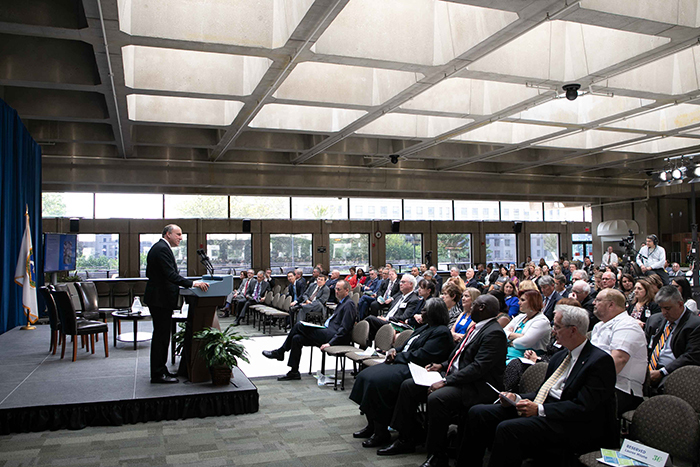
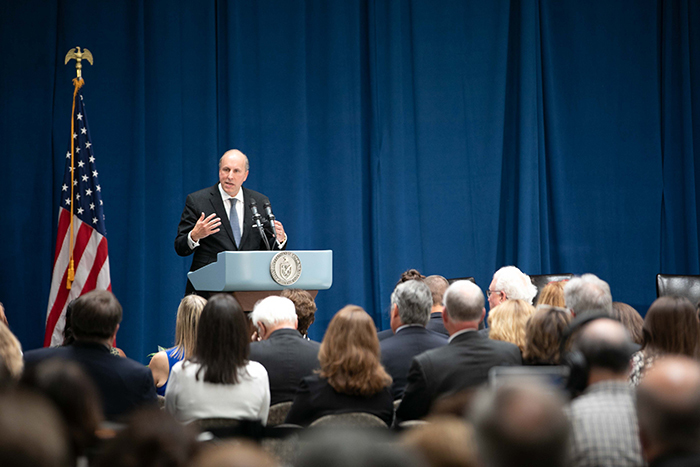
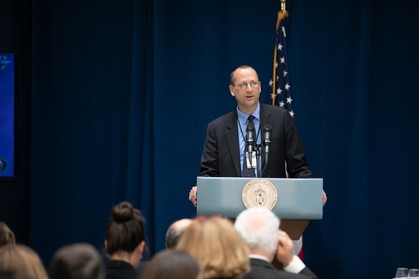
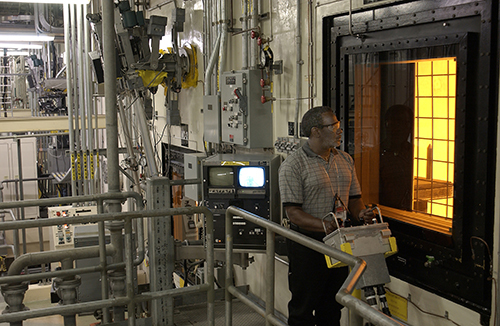
DOE Under Secretary for Science Paul Dabbar highlighted EM's accomplishments to a crowd of past and present colleagues at the EM 30th anniversary celebration.
WASHINGTON, D.C. – Current and former leaders and colleagues past and present gathered to mark the 30th anniversary of EM achievements and progress in cleaning up the environmental legacy of the nation’s nuclear production and research.
At a September 10 celebration, DOE Under Secretary for Science Paul Dabbar recognized EM’s federal employees and contractors for their ongoing dedication to a demanding job, acknowledging the hurdles they’ve overcome and their commitment to continued progress in the years ahead.
“Three decades ago, the task seemed almost insurmountable — the cleanup of 107 sites must have seemed really daunting,” Dabbar told guests. “It’s been a long way, and we’re not just looking back, but we’re looking forward to the future. It’s about our commitment not only to the progress which has happened, but where we see it going forward.”
DOE Under Secretary for Science Paul Dabbar emphasized the progress EM has made at cleanup sites through technology and reliable partnerships.
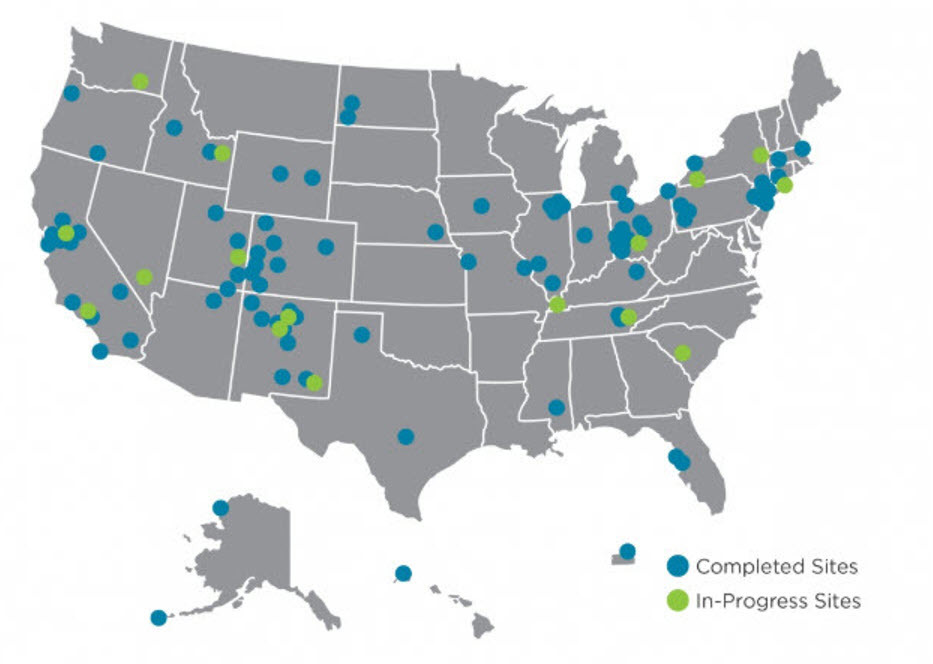
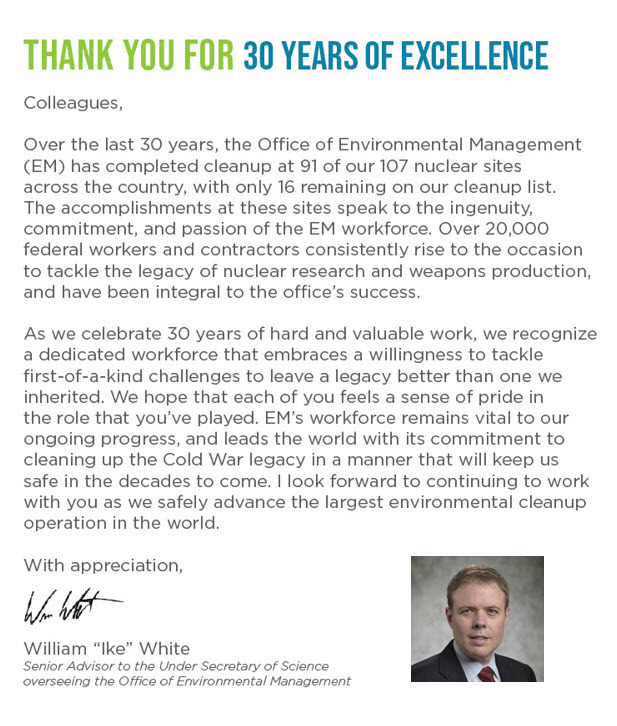
EM was established in 1989 to lead the cleanup of the nation’s most hazardous radioactive sites, a legacy of World War II and Cold War nuclear weapons production and government-sponsored nuclear energy research. EM has completed cleanups at 91 of the 107 nuclear sites across the country, and the 16 sites that remain are some of the most challenging.
In his address, Dabbar spoke of how EM is incorporating new technologies, deploying partnerships to share knowledge and gain insights, and collaborating with local communities to advance its work.
“There have been some amazing things that have been done around technology. We should be proud of the last 30 years,” Dabbar said, citing examples such as drones, 3-D printing and unique collaborations that have accelerated progress at the sites. He also applauded success stories such as cleanup at the the Fernald site in Ohio and the local partnerships EM has established in Carlsbad, New Mexico.
“The program has come very far, the Under Secretary said. “A tremendous amount of progress has been made.”
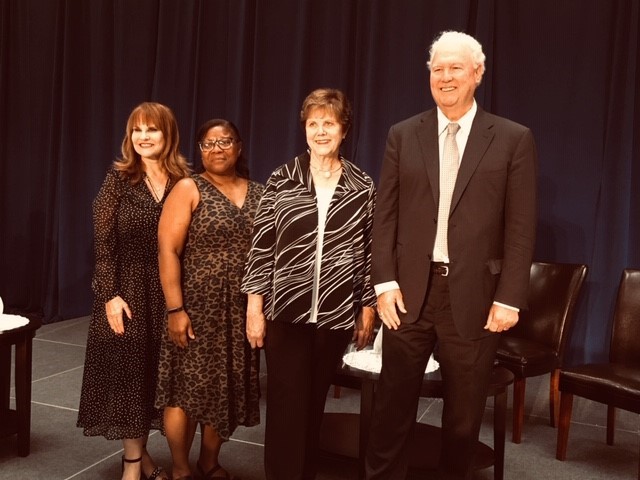
From left, former EM Assistant Secretaries Ines Triay, Jessie Roberson, Carolyn Huntoon and Thomas Grumbly attended the 30th anniversary celebration.
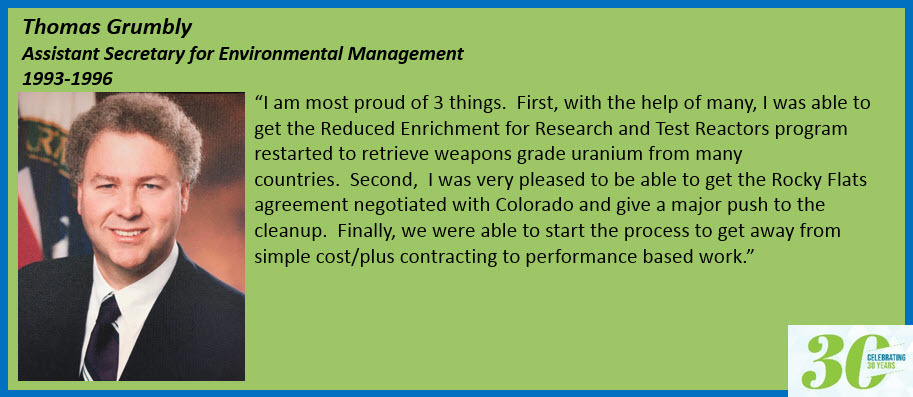
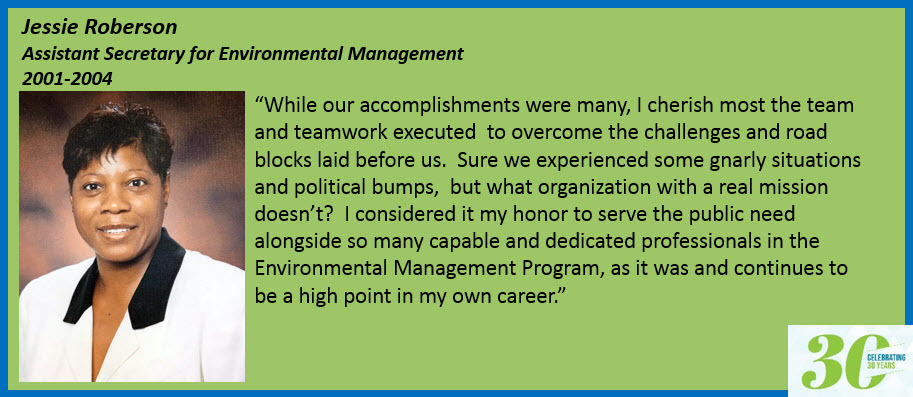
The 30th anniversary event drew more than 200 people to DOE headquarters, including U.S. Representative Dan Newhouse of Washington state and former EM Assistant Secretaries Ines Triay, Carolyn Huntoon, Thomas Grumbly and Jessie Roberson. Also in attendance were Suzanne Rudzinski, EM’s former director of the Office of Policy, as well as Joyce Connery, a member of the Defense Nuclear Facilities Safety Board who previously served as the White House’s Director of Nuclear Energy Policy.
To further mark the anniversary, EM produced a new video that shares the history of the program’s creation and the important work it has accomplished over the past three decades.
EM Principal Deputy Assistant Secretary Todd Shrader welcomed guests and led a panel discussion with long time EM associates.
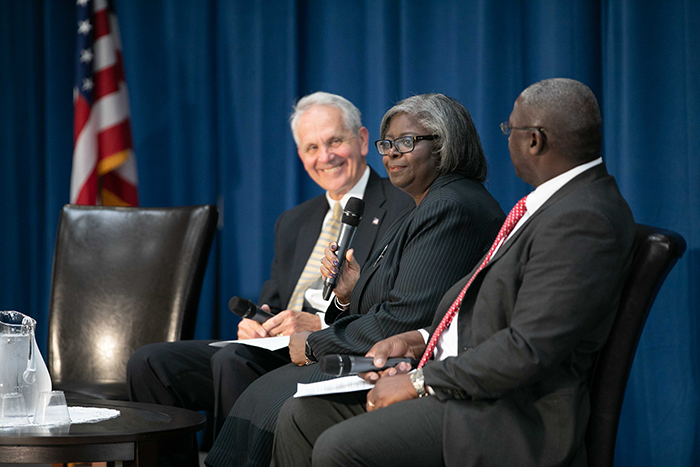
From left, James Owendoff, Mell Roy and Thomas Johnson, Jr. participated in a panel discussion of their most memorable moments and the advancements in the EM program.
A panel discussion featuring veterans of EM and moderated by EM Principal Deputy Assistant Secretary Todd Shrader looked back at key moments in the program.
“One of the things that’s really important that we all appreciate is that the journey to get here is built on the work of many, many people before and going forward for the complex and for the cleanup,” Shrader said.
James Owendoff spent more than 20 years with EM in posts including Acting Assistant Secretary, Principal Deputy Assistant Secretary, and Chief Operations Officer among other roles. He recalled working with many of EM’s Assistant Secretaries over the years, thanking each for their contributions to the program
Owendoff, who presently is DOE Chief Risk Officer, said his most memorable highlight was the palpable excitement the night before the Waste Isolation Pilot Plant (WIPP) opened, once all regulatory approvals had been secured and the site could begin receiving shipments of waste.
Mell Roy, Chief Counsel and Assistant Director of the Office of Chief Counsel at the Environmental Management Consolidated Business Center in Cincinnati, noted how sites have succeeded in bringing together diverse groups with different perspectives, from local communities to state and federal regulators.
In nearly 30 years at EM, Roy said she has seen sites transition from being an “idle curiosity” to being more integrated with their communities, something she believes should continue as EM works toward turning sites back to their communities for multipurpose uses.
Thomas Johnson, Jr., Associate Deputy Manager of the Savannah River Operations Office, said EM has become much stronger in recent years, particularly through innovations in the contracting process.
Among Johnson’s memorable highlights was the injection of funds into nuclear waste cleanup through the American Recovery and Reinvestment Act of 2009. He also emphasized how EM has partnered with local colleges and universities to reach the next generation of workers.
“There are no easy answers for our sites. If it was easy, someone else would be doing our jobs,” Roy said. “We’re here because we take on the challenge, and in taking on the challenge we recognize there are unique aspects of each of our sites and unique aspects to the different waste management challenges we have, and we’re going to take those challenges and move forward.”
Click here for more information on the EM program and 30th anniversary highlights.
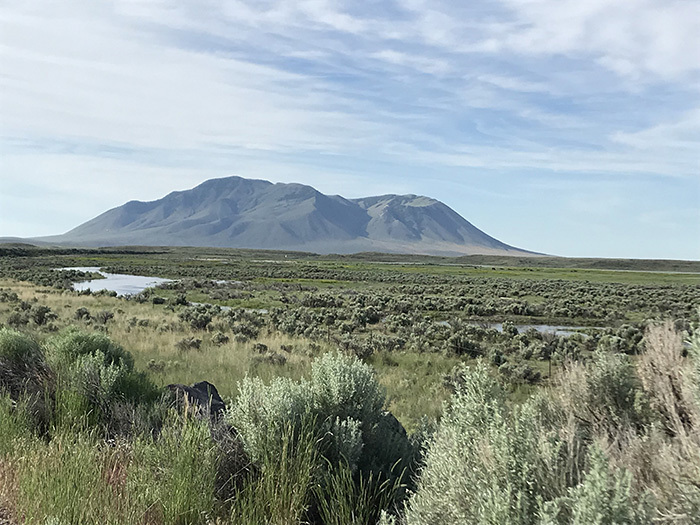
At the Idaho National Laboratory Site, 30 years of cleanup success has made the underlying Snake River Plain Aquifer considerably safer. Here, the Big Lost River flows onto the 890 square-mile site, which helps to recharge the water supply in the aquifer.
IDAHO FALLS, Idaho – When it comes to cleanup at the Idaho National Laboratory (INL) Site, it’s “all about the aquifer” — the Snake River Plain Aquifer, that is, the primary drinking and agricultural water source for more than 300,000 residents.
Over the 30 years of cleanup at the INL Site, aquifer protection has always been one of the primary drivers. DOE’s Idaho Cleanup Project (ICP) has made vast strides to clean up and further safeguard the lifeblood of Idaho’s famous agricultural industry.
In addition to changing past practices, such as discontinuing use of disposal ponds and injection wells, DOE has been proactive in removing threats to the aquifer. The INL Site is the No. 1 shipper of transuranic waste to the Waste Isolation Pilot Plant in New Mexico, removing a significant above-ground source of potential contamination to the aquifer.
The ICP has removed over 9,100 cubic meters, or nearly 46,000 drums, of radioactive and hazardous waste from an unlined Cold War landfill that sits above the aquifer. High-pressure pumps are being used to remove solvent vapors from beneath the landfill. To date, nearly 256,000 pounds of vapors have been removed and destroyed by treatment units.
The ICP has taken several other significant steps to clean up past contamination of the aquifer, and to remove future threats. These include:
An aquifer treatment unit at the north end of the INL Site that has treated nearly 700 million gallons of water, the equivalent of 1,060 Olympic-sized swimming pools, through a pump-and-treat system, and the use of bioremediation, in which a food-grade whey is injected into the aquifer in the vicinity of a contaminant plume to encourage microorganisms to feed on the waste.
More than 58,000 cubic meters of stored transuranic and mixed low-level waste shipped out of state for disposal.
Over 98 percent of the INL Site’s spent nuclear fuel transferred to safer dry storage, including all EM-managed fuel.
Eleven of 15 underground high-level waste tanks have been emptied, cleaned, and grouted.
Removal of more than 200 contaminated surplus buildings, including nuclear reactors, a reprocessing facility, and the world’s largest hot cell.
More significant work remains, including near-term milestones such as meeting the commitment to remove targeted buried waste, finishing the shipment of stored transuranic waste for offsite disposal, safely converting the 900,000 gallons of liquid waste stored on site to a granular solid, and placing the remaining spent fuel in dry storage. Longer term challenges include treating the stored high-level waste and preparing spent nuclear fuel for eventual offsite disposal. But the work already accomplished at the INL Site has significantly improved the safety of the Snake River Plain Aquifer.
Click here for more information on the Idaho Cleanup Project.
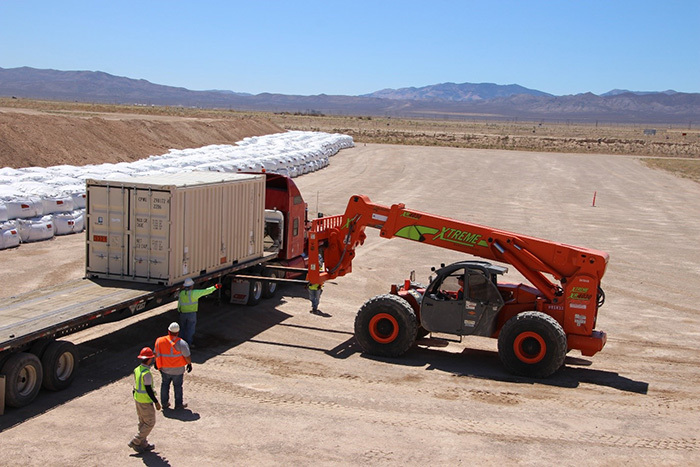
The final Clean Slate III shipment is lifted off a truck for permanent disposal at the Nevada National Security Site Area 3 Radioactive Waste Management Site.
LAS VEGAS – The EM Nevada Program has safely and successfully completed environmental corrective actions at historically contaminated soils sites on the Nevada National Security Site (NNSS) and Air Force-controlled Nevada Test and Training Range (NTTR).
This significant achievement resulted in a cost savings of $66 million and wrapped up decades of work six years ahead of schedule — a feat realized by streamlining the closure process at multiple sites, negotiating closure strategies that balanced worker and environmental risks with planned land use, and utilizing funds gained through other operation efficiencies to complete work earlier to offset costs associated with long-term maintenance.
On August 28, 2019, the last of 457 waste shipments made the roughly 200-mile journey from the Clean Slate III site on the NTTR to the NNSS Area 3 Radioactive Waste Management Site where it was permanently disposed. Clean Slate waste shipments consisted of contaminated soils and debris excavated from the surface and shallow subsurface of sites where safety experiments were conducted in the spring of 1963 to determine if nuclear weapons could be accidentally set off and produce a nuclear yield.
Of utmost importance, environmental corrective actions were completed at the 144 soils sites with no Occupational Safety and Health Administration-recordable injuries, and worker exposures were minimized through careful planning such that none exceeded established safety limits. This is significant because hundreds of scientists, technicians, laboratory employees, and other team members supported completion of characterization and environmental corrective actions at the sites — 138 on the NNSS and six on NTTR.
Dozens of stakeholders also contributed to the success of this effort, including representatives of the State of Nevada, U.S. Air Force, tribes, other intergovernmental entities, and the Nevada Site Specific Advisory Board, which provides recommendations to the EM Nevada Program.
This accomplishment will culminate with the anticipated approval of the closure report in early fiscal 2020, which is required by the Federal Facility Agreement and Consent Order (FFACO). The FFACO is a legal agreement that sets forth the requirements for completing environmental corrective actions at locations in Nevada historically contaminated by DOE and Department of Defense activities.
Click here for more information on the EM Nevada Program.
RICHLAND, Wash.– The line running through the past, present and into the future of the Hanford Site is filled with markers of success.
“From its earliest days as a scientific and engineering wonder through the years in which we characterized waste, developed technologies, and built the trained workforce to carry out our plans for progress in the years ahead, the Hanford Site is a testament to our workers’ dedication to what we have achieved and what our nation has asked us to do,” according to Brian Vance, Hanford Site manager,
Vance said remediating the 220-square-mile Columbia River Corridor has been the hallmark of all aspects of cleanup. “Tearing down the small cities that supported six nuclear reactors, and cocooning the reactor cores, was a monumental achievement that changed the Hanford footprint,” he said. “Removing more than 18 million tons of soil and debris, treating more than 20 billion gallons of contaminated groundwater, and removing more than 12,000 cubic meters of plutonium contaminated waste are just a few examples of our significant and measurable progress.”
“Through the skills and technologies we have developed, our Soil and Groundwater program continues to protect the Columbia River. We have remediated hundreds more facilities and waste sites, and are now moving into the next phase of cleanup where we are tackling some of our hardest sites,” Vance said.
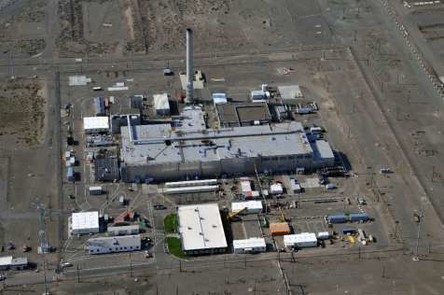
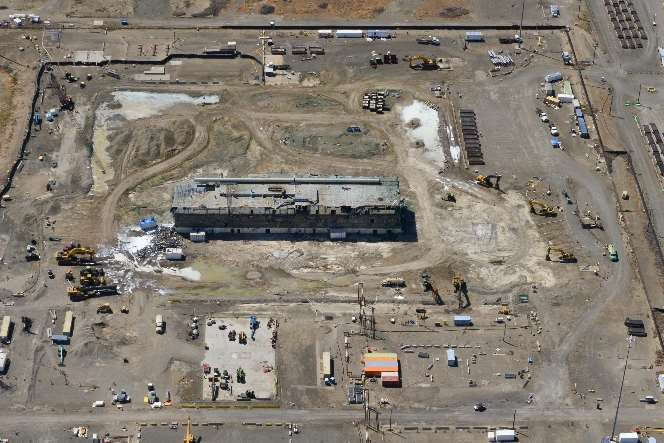
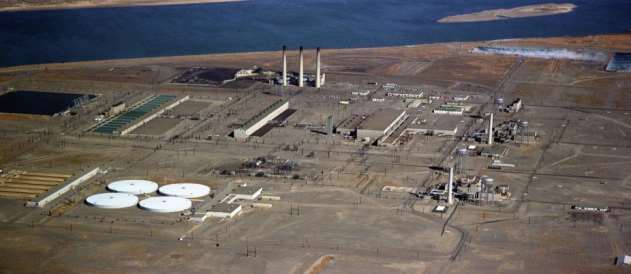
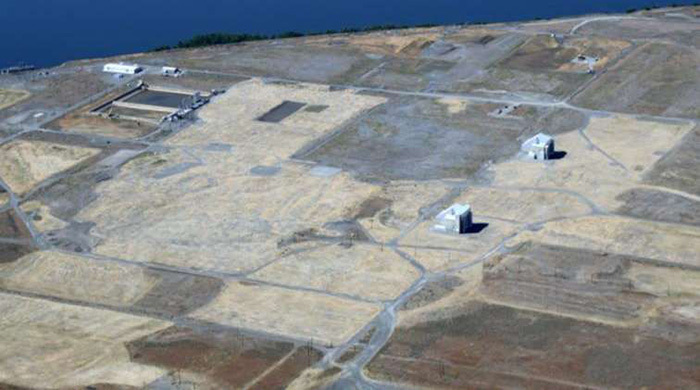
Demolition continues at the Plutonium Finishing Plant, once considered the most hazardous facility in the EM complex, shown here in 2010 and immediately below in 2019.
Hundreds of facilities have been demolished or removed around the plutonium production reactors at the Hanford Site. Six of the nine reactors are now in interim safe storage, including the former D and DR Reactors, shown below.
On the Site’s Central Plateau, workers are continuing their focus on treatment of the 56 million gallons of waste stored in 176 underground tanks, the by-product of Hanford’s plutonium production mission.
“As we develop our vision for the site’s future, we remain committed to being results-driven and completion-focused, while making sure we deliver a Hanford Site cleanup that is the best value to the taxpayer,” Vance said. “Our successes of the past have positioned us to achieve future cleanup successes.”
Click here for more information on the Richland Operations Office and here for more information on the Office of River Protection.
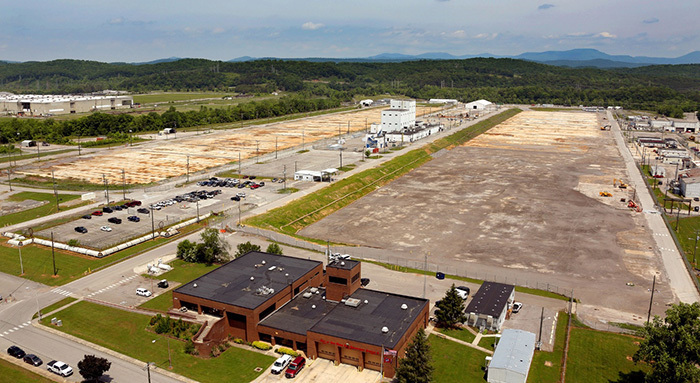
Oak Ridge’s EM program is nearing its Vision 2020 goal, which involves completing all demolition and major cleanup at the East Tennessee Technology Park by the end of next year.
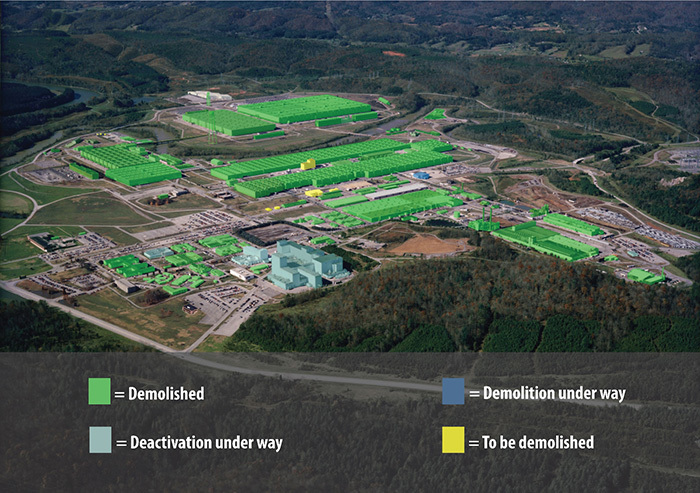
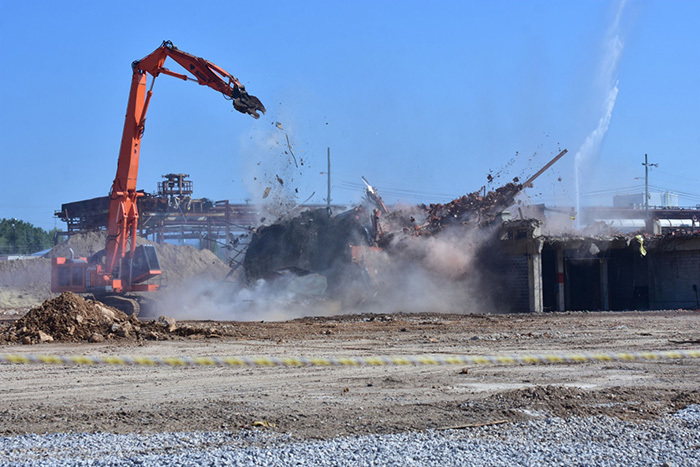
OAK RIDGE, Tenn. – With a forceful push from heavy machinery, the final wall of Oak Ridge’s last gaseous diffusion uranium enrichment building crashed to the ground in summer 2016. In that moment, Oak Ridge became the first site in the world to successfully remove all of its former enrichment facilities.
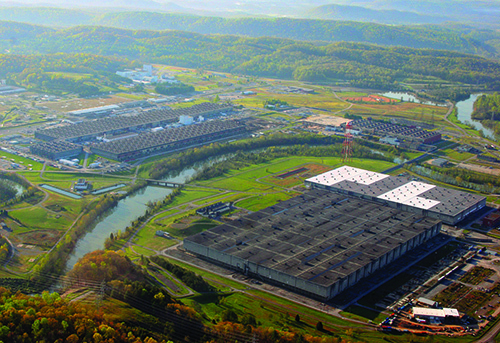
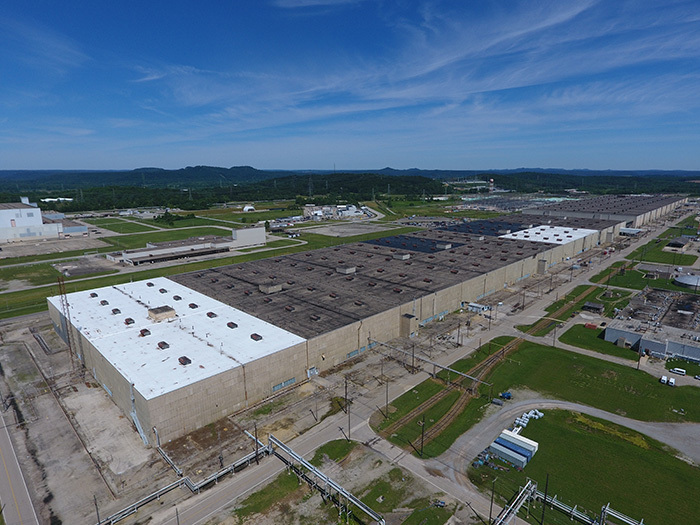
This accomplishment required four contracts, untold hours of planning and preparation, and a decade of demolition to tear down five gaseous diffusion plants — K-25, K-27, K-29, K-31, and K-33 — that had a sprawling 4.5-million-square-foot footprint.
These structures housed workers and operations that helped end the World War II and produced highly enriched uranium for national defense and commercial energy production until the site was shuttered in 1987.
The path to this journey began in 1997, when Oak Ridge’s EM program awarded its first contract to decontaminate and decommission K-29, K-31, and K-33. During the multi-year project, workers dismantled, removed, and dispositioned more than 159,000 tons of materials and equipment, paving the way for their future demolition.
An aerial view of K-25, K-27, K-31, and K-33 at the East Tennessee Technology Park before they were demolished.
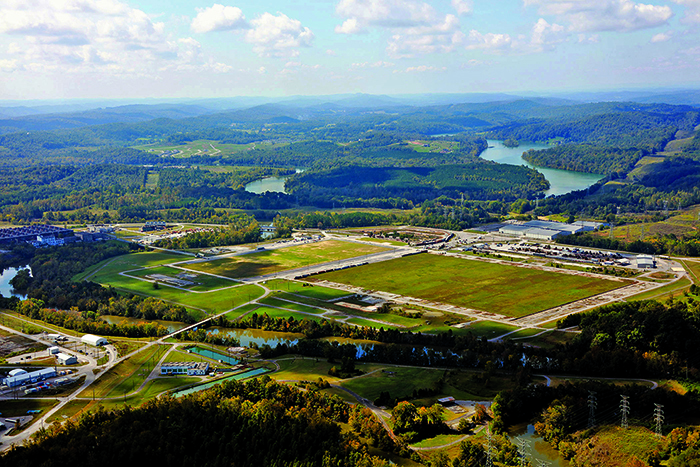
K-31 and K-33 once stood on this 200-acre parcel of land. After cleanup, EM transferred the land to the community for reuse and economic development for new industry.
In 2006, crews demolished the first gaseous diffusion building, K-29. In 2008, EM began work on K-25, an unprecedented task that presented an entirely new size and scope. The facility stood four stories tall with a base footprint of 44 acres. Crews began taking down what was once the world’s largest building when it was constructed in 1943.
In 2011, workers finished removing the second largest building at the site — K-33. During the project, workers moved 164,000 tons of steel and concrete from the building and another 61,300 tons from the concrete slab.
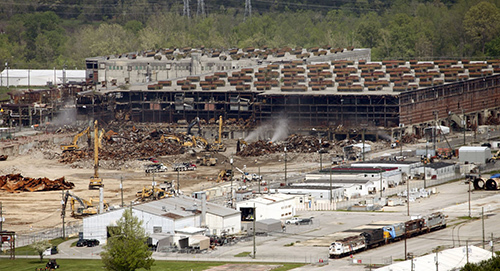
In 2011, EM also awarded a contract to UCOR to complete the remaining cleanup scope at the East Tennessee Technology Park, which included K-31, K-27, and a portion of K-25. The K-25 project presented challenges due to the building’s increasingly contaminated units as demolition progressed along the mile-long facility. By 2013, the demolition was complete.
In 2015, UCOR achieved success again with completion of K-31, and the goal was completed in 2016 with the removal of K-27.
K-27 was the final gaseous diffusion building demolished in Oak Ridge. EM completed the project in 2016, marking the first time in the world that feat had been accomplished.
Demolition of the 1.6-million-square-foot K-25 Building was completed in 2013. It was EM's largest-ever demolition project.
K-25’s footprint spans 44 acres, and that area is now part of the Manhattan Project National Historical Park.
Today, Oak Ridge’s EM program is on its way to another world’s-first distinction by completing all demolition and major cleanup at the former enrichment complex next year — a goal known as Vision 2020.
EM’s ultimate vision for the site is a thriving, multi-use industrial park. To date, crews have removed 12 million square feet of aging and contaminated facilities, with only 750,000 square feet remaining.
Additionally, EM has transferred nearly 1,300 acres of land at the site back to the community for new industrial development and economic growth.
Click here for more information on the Oak Ridge EM program.
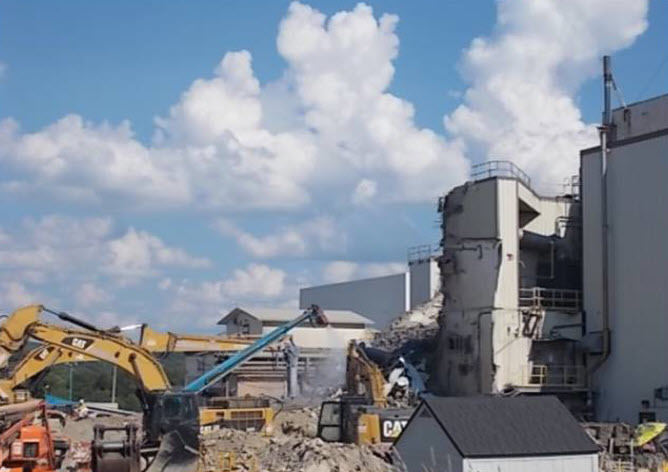
Heavy equipment breaks through the reinforced concrete of the WVDP Vitrification Facility in the final phase of demolition. This is the only vitrification facility in the US that was built, operated, and demolished.
WEST VALLEY, N.Y. – In 2018, EM and its cleanup contractor safely completed the demolition of the 50-foot-tall, 10,000-square-foot Vitrification Facility at the West Valley Demonstration Project (WVDP).
The take-down of the Vitrification Facility represented the largest and most complex demolition of a radioactively contaminated facility at the WVDP to date, and was a key accomplishment in the progress to decommission the site.
The undertaking by EM and CH2M Hill BWXT West Valley (CHBWV) demonstrated that robust engineering controls and monitoring techniques can accomplish the safe removal of nuclear facilities, while protecting the workforce, public, and the environment.
“The WVDP team was deliberate in the planning and execution of this critical workscope, which resulted in the safe and compliant demolition of the Vitrification Facility,” said Bryan Bower, EM WVDP Director. “I am proud of the work they have accomplished in reducing legacy risks at the site.”
The Vitrification Facility was used to solidify radioactive liquid high-level waste stored at the WVDP. It was originally constructed in the 1980s as a non-radioactive testing area for the vitrification melter. The facility was later expanded and converted into a full-scale remotely operated vitrification facility.
Designed with reinforced concrete walls, the facility solidified 600,000 gallons of high-level liquid radioactive waste from 1996 to 2002. This waste was generated from 1966 to 1972 during the reprocessing of spent fuel by Nuclear Fuel Services, the former operator of the site.
Demolition of this facility began in September 2017. The first phase involved removing the outer sheet metal and steel portions of the facility with the least radiological contamination. Using a variety of heavy equipment and specialized tools, workers tore down three sides of the facility, including operating aisles, a control room, restrooms, truck bays, stairways, and tool and equipment storage rooms.
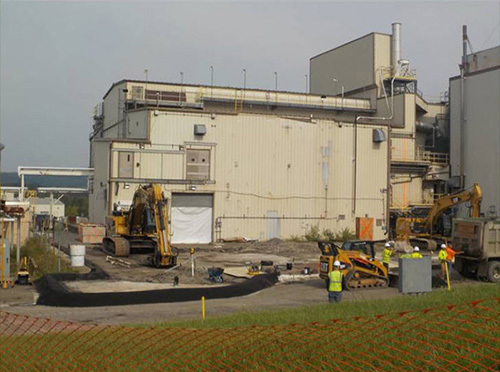
A view of the Vitrification Facility prior to demolition at the West Valley Demonstration Project. The facility was the largest and most complex demolition at WVDP to date. The WVDP team used lessons learned, best practices and a methodical approach to safely complete this major milestone.
The second phase began in November 2017, and involved demolition of the heavily reinforced concrete process cell and remaining in-cell equipment. Using similar equipment, workers safely removed four in-cell coolers weighing 7,188 pounds each, six shield windows, and a 38,000-pound process crane.
The final phase was the removal of a 60-ton transfer tunnel door, 100-ton crane maintenance room shield door, cranes, and equipment. In addition, crews demolished the transfer tunnel, crane maintenance room, and secondary filter room, all structures made of reinforced concrete.
Worker safety and protection of the environment were top priorities during the demolition. Workers used extensive controls to prevent the spread of radioactive contamination and safety professionals provided continuous monitoring and sampling during the demolition process. The demolition was completed in one year, in challenging weather conditions, resulting in no lost-time injuries, no radiological releases, and no environmental issues.
Click here for more information on the West Valley Demonstration Project.
A major milestone awaits the Portsmouth X-326 Process Building, which is scheduled to be declared “criticality incredible,” meaning the massive building is radiologically safe for demolition.
PIKE COUNTY, Ohio – Next month, the most significant milestone in the Portsmouth Site’s decontamination and decommissioning (D&D) project so far is set to be realized as the X-326 Uranium Enrichment Process Building is poised to be declared “criticality incredible.”
One of the final steps of deactivation, a “C.I.” designation means the massive building is radiologically safe for demolition, which is expected in late 2020.
“From an environmental, programmatic, technical, and regulatory standpoint, the Portsmouth Site is poised to proceed to final cleanup and closure sooner than many thought possible just a few years ago,” said Robert E. Edwards III, manager of EM’s Portsmouth/Paducah Project Office.
Numerous environmental cleanup efforts have taken place at the Portsmouth Site since EM’s establishment, and much of it well before the end of gaseous-diffusion uranium enrichment in 2001. These efforts include treating contaminated groundwater, closing landfills and lagoons, and removing waste and inactive facilities.
Challenging as those projects have been, they are dwarfed in size and complexity by the X-326 Building, whose deactivation required removal of thousands of pieces of process gas equipment and over a million measurements of residual uranium in process piping and tubing.
The Portsmouth D&D program, which began in 2011, addresses approximately 415 total facilities. This includes three process buildings and equipment that span an area equivalent to 158 football fields, along with other structures.
In 2015, the State of Ohio and DOE agreed to the plan to demolish the process buildings that is now being implemented. The record of decision (ROD) for the Portsmouth process buildings and complex facilities D&D project was finalized following a multi-year public outreach process, public meetings, and an extended four-month public-comment period. A related ROD also was finalized approving a combination of off-site disposal and construction of the On-Site Waste Disposal Facility (OSWDF).
Both the D&D and the waste disposition projects associated with the plant’s three large enrichment process buildings are underway. The OSWDF is under construction with the first placement of liners and a leak detection system installed to prepare for receiving demolition debris from the X-326 into the first waste cell beginning next year.
Click here for more information on the Portsmouth Site.
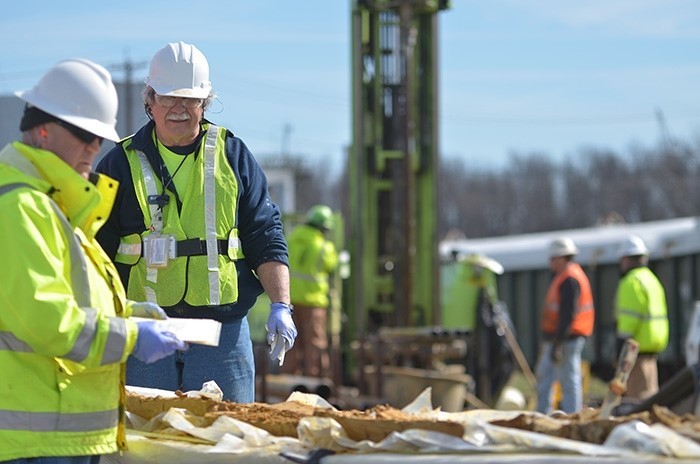
Geologists Rob Flynn, left, and Ken Davis examine core samples used to determine the location of the wells to optimize pump-and-treat operations at the Paducah Site’s northeast groundwater contamination plume.
PADUCAH, Ky. – Throughout its 30-year history, EM has focused on a particular environmental issue at the Paducah Gaseous Diffusion Plant site in western Kentucky: addressing contamination of groundwater.
The primary groundwater contaminant was trichloroethylene (TCE), an industrial degreasing solvent used during production years to clean equipment. DOE initially responded by providing bottled water and later municipal water service to plant neighbors affected by the contamination while performing additional investigative work to determine the extent of the problem.
EM installed and started operating two pump-and-treat systems beginning in the mid-1990s to control the offsite migration of the contamination. As of 2018, these systems have treated over 4.2 billion gallons of groundwater. EM has also performed specific remedial actions to reduce the TCE source areas. The treatment systems, combined with several TCE source remediation projects, have removed 7,855 gallons of TCE from the soils and groundwater.
During much of EM’s remediation activities at the site, uranium enrichment continued. After the plant facilities were returned to DOE from a commercial enrichment company lease in 2014, the site’s cleanup scope expanded significantly.
Since receiving back the uranium enrichment facilities in 2014, EM’s Portsmouth/Paducah Project Office (PPPO) now is attacking the primary source contributing to the largest offsite contaminated groundwater plumes in the complex.
While EM continues to treat, monitor, and optimize the groundwater treatment systems, its current near-term strategy focuses on characterization and remediation of the C-400 Complex, which is the size of an entire city block. The C-400 Complex is the primary source of TCE contamination in the groundwater plumes.
“We have accomplished significant reduction of the high concentration areas,” PPPO Manager Robert E. Edwards, III said. “Now we’re looking to address the largest source at the C-400 Complex even more since we have the entire facility back under EM.”
Edwards added that the Paducah strategy is a comprehensive approach that takes into account EM’s mission, regulatory agreements, and community input.
“It allows for cleanup of the most significant contributor to groundwater contamination while we continue to thoroughly characterize hazards associated with the balance of the site facilities,” he said.
Click here for more information on the Paducah Site.
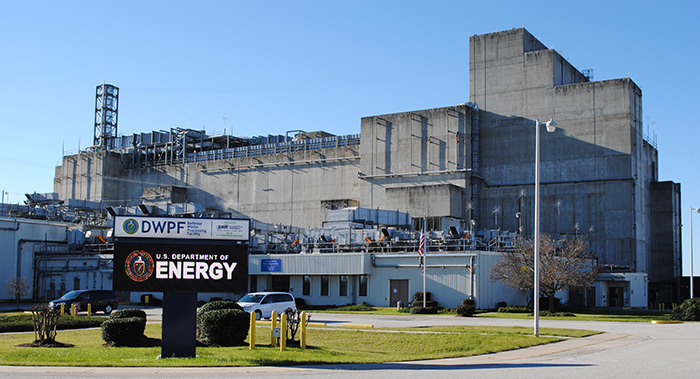
The Defense Waste Processing Facility at the Savannah River Site, operated by Savannah River Remediation, is the only operating waste vitrification plant in the nation.
AIKEN, S.C. – For 23 years, EM at the Savannah River Site (SRS) has been using the nation’s only operating vitrification plant to help reduce the single greatest environmental risk to South Carolina.
The Defense Waste Processing Facility (DWPF) has vitrified, or glassified, just over 4,200 canisters of high-level radioactive sludge waste. About 35 million gallons of radioactive waste, part of the byproduct of Cold War nuclear weapons production and considered by state regulators to be the state’s greatest environmental risk, are safely stored in waste tanks at SRS.
The high-level waste stream is sent to DWPF to be processed through the “heart” of the facility, a key vessel known as the melter. Inside the melter, the waste is mixed with a borosilicate glass, or frit, and heated until molten, then poured into stainless steel canisters to harden. The facility is projected to produce about 8,121 canisters, according to the SRS liquid waste system plan.
The canisters are kept safely in interim storage — underground lead-lined vaults in two buildings adjacent to DWPF, destined for a future federal repository.
An operator at the Defense Waste Processing Facility maneuvers a canister inside the DWPF canyon via remote controls. All radioactive operations inside DWPF are conducted remotely.
Immobilizing the waste in a solid form reduces the risks associated with the continued storage of the liquid waste and prepares it for final disposal.
More than 16 million pounds of glass have been produced through DWPF over the last two decades.
Currently operated by Savannah River Remediation (SRR), the site’s liquid waste contractor, DWPF has also assisted in the closure of high-level waste tanks at SRS. Eight of the 51 tanks at SRS have been operationally closed — emptied, cleaned, and filled with a specially formulated grout.
DWPF will continue to immobilize the liquid waste and aid in tank closure, further reducing risk to workers, the community, and the environment.
Click here for more information on the Savannah River Site.
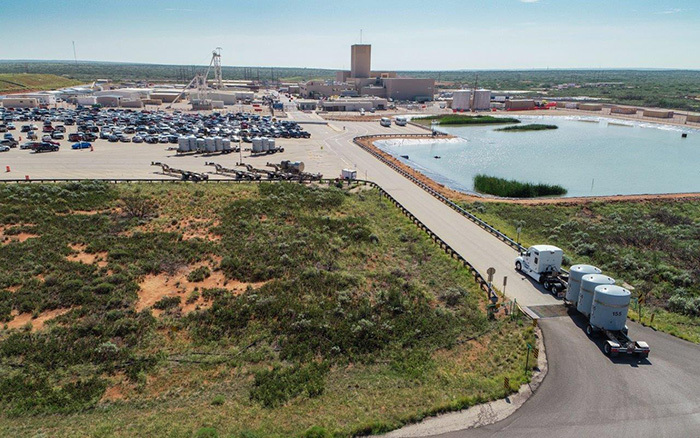
A shipment of defense-generated transuranic waste arrives at the WIPP repository for emplacement in an ancient salt formation 2,150 feet underground.
CARLSBAD, N.M. – The Waste Isolation Pilot Plant (WIPP) joins EM in celebrating an anniversary in 2019. Twenty years ago, the first waste shipment entered WIPP’s gates to the cheers and applause of hundreds who had gathered to celebrate the long-awaited occasion.
The nation’s only operating deep geologic repository for nuclear waste, WIPP plays a critical role in the EM cleanup program’s mission to address the nation’s Cold War environmental legacy.
Since its opening on March 26, 1999, WIPP has accepted more than 12,500 shipments of defense-generated transuranic (TRU) waste, removing all legacy TRU waste from more than 20 sites around the DOE complex for emplacement in an ancient salt formation 2,150 feet underground.
TRU waste began accumulating in the 1940s with the beginning of the nation’s nuclear defense program. It is comprised of debris, residues, soil, and other items contaminated with radioactive elements that have atomic numbers greater than uranium.
As early as the 1950s, the National Academy of Sciences recommended salt deposits for the permanent disposal of radioactive waste, as salt would slowly encapsulate the waste, isolating it from the environment.
Throughout the 1960s, government scientists searched for an appropriate site for a repository, eventually testing a remote desert area of southeastern New Mexico where, 250 million years earlier, evaporation cycles of the ancient Permian Sea had left a 2,000-foot-thick salt bed.
In this salt bed, large disposal panels are mined out, with each panel consisting of seven rooms. TRU waste barrels and boxes are stacked in rows on the floor of the disposal rooms.
Waste is currently being emplaced in Panel 7, while Panel 8 is being mined. Panels are not mined until right before they are needed for waste emplacement, as the natural movement of salt begins to close the mined opening within a relatively short period of time.
Click here for more information on the Waste Isolation Pilot Plant.
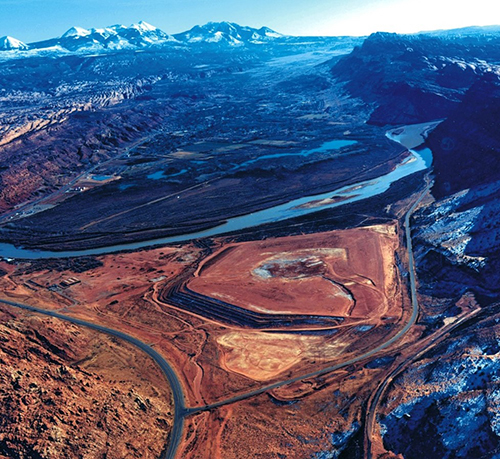
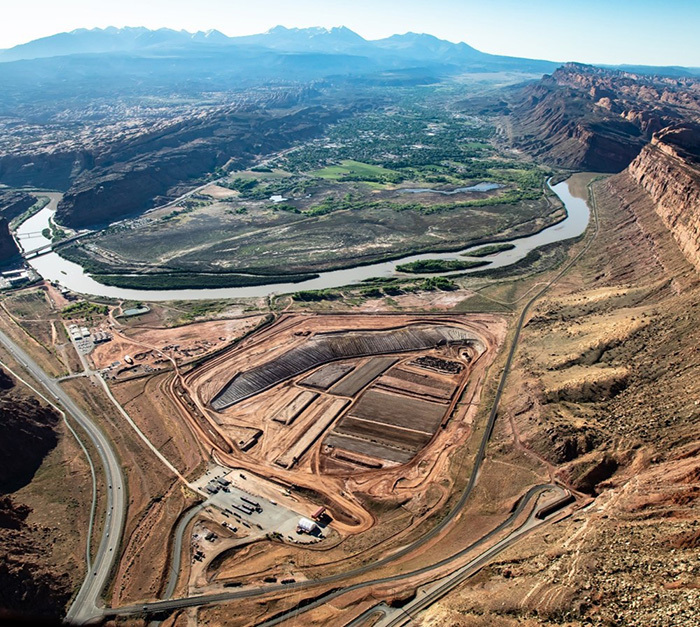
MOAB, Utah – This year, EM’s Moab Uranium Mill Tailings Remedial Action (UMTRA) Project expects to reach a milestone of 10 million tons of residual radioactive material safely relocated.
Ten years ago, the Moab UMTRA Project began relocating mill tailings out of Moab, Utah, and away from the Colorado River, to the newly-created Crescent Junction, Utah disposal cell about 30 miles north. Once the milestone is reached, the Moab UMTRA Project estimates six million tons of tailings will remain.
In addition, EM is actively protecting the Moab Site’s neighboring Colorado River by extracting contaminants from groundwater underlying the site. In 2019, the Moab Site surpassed 925,000 pounds of ammonia and 5,000 pounds of uranium removed from the groundwater system since 2003.
EM is also tackling debris left over from the former uranium mill that once stood on the Moab Site. Debris requires special attention because of its large size, jagged shape, and degree of contamination. More than 30,000 tons have been safely excavated and shipped to the disposal cell this fiscal year.
The Moab, Utah site in 2001 when DOE assumed ownership of a former uranium mill site.
The Moab, Utah site in 2018, showing a dramatic reduction in the tailings pile.
EM is also focused on its Crescent Junction Site. Project leaders are reevaluating the disposal cell cover’s design to increase its long-term performance and reduce cost.
More than 65 years ago, famed prospector Charlie Steen discovered a major uranium ore body in the Colorado Plateau. His discovery created a desire for a processing mill in southeastern Utah near the source. It was built and began operating in 1956.
About 28 years later, the mill ceased operations. Crews demolished the processing buildings and buried them in the tailings pile. An interim cover was placed over the pile as part of decommissioning activities conducted between 1988 and 1996.
In 2001, DOE assumed ownership of the Moab Site and started on the road to cleanup.
Click here for more information on the Moab Project.
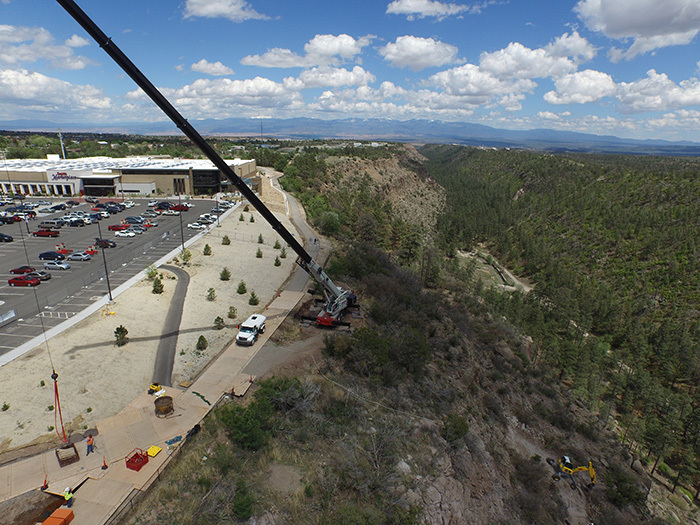
Soil cleanup near Smith's Marketplace in Los Alamos completed in 2015.
LOS ALAMOS, N.M. – Much of the mission of Los Alamos National Laboratory during the Manhattan Project and the early Cold War period took place at what was known as Technical Area-01 (TA-01).
Perched on a plateau near a canyon edge, TA-01 was the laboratory’s original footprint. The area that once comprised TA-01 is part of the Los Alamos townsite and was the focus of a cleanup that the DOE and laboratory have safely and successfully completed.
Decades ago, TA-01 was the site of several chemical and physics research laboratories. Operations performed there and at nearby technical areas resulted in soil contamination.
Since the early 1950s, the sites once associated with these former technical areas were subjected to various decommissioning, demolition, investigation, remediation, and construction activities. Beginning in the late 1950s, much of the land was turned over to non-DOE entities for commercial, recreational, and residential uses.
In total, 115 legacy sites were identified across what is now the Los Alamos townsite on private property, Los Alamos County property, and DOE property adjacent to Los Alamos Canyon. In 2005, DOE began investigating and cleaning up these sites, where required, in compliance with regulatory requirements identified first in the 2005 Compliance Order on Consent with the New Mexico Environment Department and more recently under the 2016 Consent Order.
Before cleaning up legacy sites, DOE and the laboratory analyzed the nature and extent of the contamination. Contaminants from legacy activities include chemicals such as solvents, metals such as lead and mercury, and radionuclides such as uranium and plutonium.
Most of the original infrastructure from legacy operations was removed over the past several decades. During this period, DOE and the laboratory evaluated the soil surrounding previously existing buildings, waste lines, underground storage tanks, septic tanks, waste storage areas, outfalls, and additional infrastructures.
If soil samples indicated levels of contaminants above regulatory standards, DOE and the laboratory removed the soil until the site met acceptable risk-based cleanup levels developed by the U.S. Environmental Protection Agency. The risk-based cleanup levels are based on the projected land use, such as commercial or residential uses. The soil that was removed was packaged in compliance with waste management regulations and sent to licensed disposal facilities.
In the summer of 2017, the final two known legacy sites requiring cleanup in the townsite were cleaned up along Los Alamos Canyon. Their relatively inaccessible location, combined with the steep and uneven topography of the canyon, required the use of a crane to enable the safe movement of a spider excavator, fieldwork personnel, waste bags, and restoration materials.
Click here for more information on the EM Los Alamos Field Office.
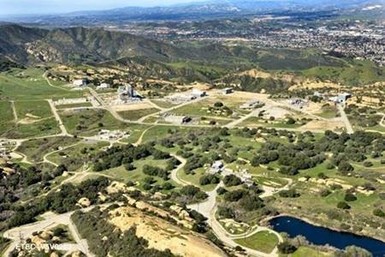
In the early 1960s, the U.S. government established the Energy Technology Engineering Center (ETEC) as a “center of excellence” for liquid metals research, located in Area IV of Santa Susana Field Laboratory in the southeast corner of Ventura County, California. All nuclear energy activities and research within Area IV ceased in 1988 and DOE shifted its focus to facility decontamination and demolition (D&D), and environmental cleanup. So far, DOE has safely demolished more than 250 buildings at the site and has successfully performed major soil and groundwater remediation activities at key locations. Remaining cleanup includes the demolition of 18 DOE-owned buildings, groundwater remediation, and soil remediation. In 2007, DOE stopped active cleanup when a federal court held that DOE must complete an Environmental Impact Statement (EIS) and issue a Record of Decision (ROD) pursuant to the National Environmental Policy Act. From 2009-2014, some 10,000 soil samples were collected to investigate the nature and extent of contamination at the site. In December 2018, DOE issued its Final Environmental Impact Statement for Area IV and the adjoining Northern Buffer Zone. The next step is issuance of a Record of Decision. The Department is ready and eager to begin final stage cleanup.
Click here for more information on the Energy Technology Engineering Center.
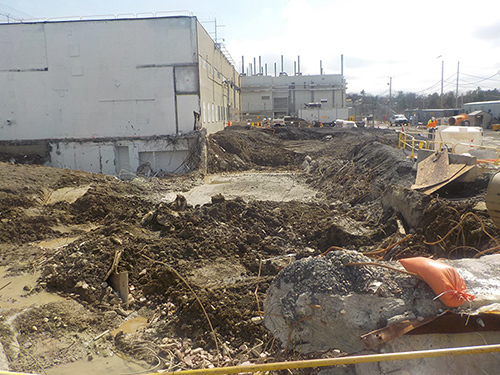
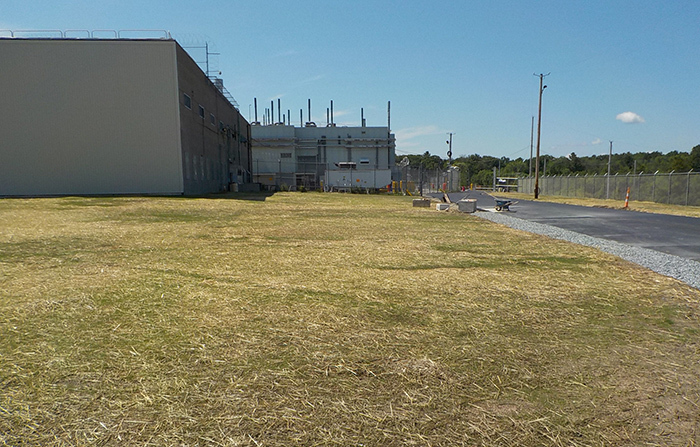
NISKAYUNA, N.Y. – EM recently completed deactivation, decontamination, demolition, and site restoration at the Separations Process Research Unit (SPRU) nuclear facilities at the Knolls Atomic Power Laboratory.
“The culmination of SPRU fieldwork is a significant achievement to be celebrated by DOE Environmental Management, our prime contractor AECOM, and the SPRU field office technical support staff,” said Steven Feinberg, EM’s SPRU federal project director.
The SPRU nuclear facilities consisted of a main processing facility known as Building G2, a waste processing facility called Building H2, underground tank vaults, and an underground pipe tunnel connecting the two buildings. Buildings G2 and H2 included process cells with thick concrete shield walls, contained more than 8 miles of process piping, and 85 process vessels ranging from 5- to 10,000-gallon capacities. Building H2 was one story above grade and two levels below grade, while Building G2 was two stories above grade and one level below grade.
Before and after photos of the Separations Process Research Unit building demolition and site restoration fieldwork.
A former pilot plant for researching and proving the chemical separation of plutonium from irradiated fuel materials, SPRU operated from 1949 to 1951 and completed its mission to prove the chemical separation of plutonium from irradiated fuel materials.
The SPRU facilities were decommissioned in 1953. That work included flushing the process equipment and placing the facilities in safe caretaking status.
The deactivation, decontamination, and demolition work began in December 2007.
Click here for more information on the Separations Process Research Unit.