EM Assistant Secretary Anne White addressed the 2019 Waste Management Symposia in Phoenix on March 4.
PHOENIX – On March 4, EMAssistant Secretary Anne White addressed the 2019 Waste Management Symposia, the preeminent international conference for the management and disposition of radioactive wastes and decommissioning of nuclear facilities. Following are White’s remarks as prepared. More coverage of the conference will appear in the March 12 EM Update.
Thank you for inviting me to join you today. I appreciate Waste Management for making this event possible.
In his recent State of the Union address, President Trump challenged us, as Americans, to choose greatness. He said, and I quote:
“This is the time to reignite the American imagination. This is the time to search for the tallest summit, and set our sights on the brightest star.”
I couldn’t agree more.
This sentiment is embodied in this Administration’s long-term vision for modernizing the federal government in a way that enables agencies to deliver on our missions and serve as effective stewards of taxpayer dollars.
In order to transform that vision into reality, EM is focusing on improving our acquisition process, shifting from low-value to high-value work and developing a 21st century workforce. A theme we are all exploring more this week given the very fitting theme of this symposium.
With Secretary Perry, Deputy Secretary Brouillette, and Under Secretary Dabbar, we are fortunate to have leaders at the helm of the Department of Energy with the vision and tenacity to get things done. To choose greatness. Who understand that innovation — not regulation — is key to our national security, to American energy preeminence, and to meeting our environmental legacy responsibilities.
I am honored to have Deputy Secretary Brouillette with us here today, whose breadth of experience and forward-looking leadership is helping better position EM to tackle the cleanup challenges of the next 30 years. We will hear from him in just a bit.
We are also fortunate to have tremendous cleanup champions like Congressman Mike Simpson with us.
As a leader of the House Energy and Water Appropriations Subcommittee and a longstanding advocate for Idaho and all of our EM sites, I appreciate his steadfast support for all things nuclear.
Whether its defense waste cleanup, commercial nuclear power, research and more, Congressman Mike Simpson has been there every step of the way providing leadership, resources, and wise counsel.
Industry, thank you for standing beside me, supporting my vision and supporting our mission.
The focus of this year’s symposium is “Encouraging Young Men & Women to Achieve Their Goals in Radwaste Management” — a topic that is near and dear to me.
As I work to institutionalize a completion-centric mindset within EM, I know cleanup success will ultimately depend on the next generation of problem-solvers, innovators, and leaders intent on getting great things done.
With that in mind, I would like to ask the early career professionals in the room to stand so we can recognize you.
It’s important to me that EM and our contractor partners serve as an incubator for the next generation workforce to meet cleanup mission needs and prepare the leaders of tomorrow — the young people in the room today.
Since “time is of the essence,” I want to express my commitment to bringing on the next generation of EM workers. In fact, I’m reinstating an internship program, the EM Pathways Program, to help strengthen the workforce by creating a future pipeline of talent.
The program will provide opportunities for recent undergraduate and graduate students to join the federal government with a pathway to permanent employment.
We need to cultivate the next generation and navigate federal hiring to bring these folks on board in public service to this great country. I have found it to be a great honor to be serving the American taxpayer.
Opportunity for Transformative Action Versus Treading Water
While it doesn’t always make headline news, progress through action is being made at each of our EM sites.
We are making real progress towards Direct Feed Low Activity Waste vitrification at Hanford. The site is coalescing around this important mission.
On the other end of the cycle we safely completed demolition of the 50-foot-tall, 10,000-square-foot Vitrification Facility at West Valley.
Ground has been broken on the new ventilation system at WIPP, a facility that is key to the final disposition of transuranic waste across the EM complex.
Work performed by Oak Ridge’s EM Program in 2018 brought the site closer to its ambitious goal to complete major cleanup at the East Tennessee Technology Park (ETTP) in 2020.
At Separations Process Research Unit (SPRU), we completed H2 Building and Tank Farm D&D.
And we published the Final Environmental Impact Statement at Energy Technology Engineering Center (ETEC). A document 10 years in the making.
From my time in industry, I understand where work gets done. It is not east of the Potomac, it is out in the field. Our field managers, staff, and contractors are doing a great job progressing the baseline scope —but we must do more.
Even with all this great work being done, and progress being made, EM still faces significant challenges.
Cleanup progress is being significantly outpaced by ever-extending site closure dates, leading to increased environmental liabilities. Time equals money!
As most of you have heard me say, environmental liabilities represent the third largest liability for the U.S. taxpayer. EM makes up 84 percent of that total.
Even with significant budgets, EM is swimming upstream.
Rather than fight the current of environmental liabilities, risks, M&O hotel costs, lifecycle schedules, and to-go costs that we have all seen grow each year despite progress on the ground, it’s time to change the course of the river.
The fact is, cleanup progress cannot outpace this current if EM stays on the same course it has been for nearly 30 years.
During the early years, EM was rightfully focused on figuring out what kinds of waste it had, how much it had, and where it was.
That evolved into cleanup plans and agreements with states and regulators based on the best available information and science at the time.
At one point in our history, we were stemming the tide as we completed work at Fernald, Rocky Flats, and Mound.
This program, that we used to call a project, started in 1989. But we’re not here to discuss the EM of the past.
At this point, we’ve all been at this a long time — this is our 30-year anniversary.
It’s time to modernize EM. Our knowledge and technology have matured significantly over the years. It’s time for EM, our regulators, and our stakeholders to reexamine the assumptions and approaches made over the past two decades to determine the adequacy and appropriateness in today’s environment.
We need to employ cleanup that is reflective of the latest knowledge in the areas of waste composition and risks, lessons learned over decades of cleanup, and attainable end-states.
It’s time to work together toward a future that will not simply enable EM to keep treading water — but will propel the mission forward and drive cleanup toward completion and closure.
How Do We Get There? How Does EM Maximize Opportunities for Acceleration?
So, how do we get there?
That’s a big part of what my team and I are looking at.
It starts with abandoning vague notions of our challenges and truly getting to the bottom of what we are dealing with using accurate, up-to-date information. We provided this transparency and understanding by updating the Hanford Lifecycle Baseline as part of our Tri-Party Agreement milestone.
You can’t manage what you can’t measure. You should expect a continued focus on strengthening program management, oversight, and accountability to ensure value for the American taxpayer.
Work must be prioritized based on real risks and sound science, rather than perceived risks or soundbites. I will drive down risk, not simply move it around.
We will soon complete our site options assessments that we began last year. We look forward to engaging with stakeholders, regulators, and in particular, the local communities in which these sites reside.
I want us to consider the range of possibilities in terms of what could be achieved at sites across the complex if we are willing to reassess our assumptions, consider new approaches and disposal options, and just think outside the box.
Know that this is a starting point in what will be a collaborative approach as the options analysis evolves. This process will include several opportunities for meaningful input and public comment next year.
Better Options for Waste Management/Disposal
Now, I’d like to discuss an issue that I have been personally involved with for a long time — the interpretation of high-level waste. I am glad to see the Department moving the discussion on this forward after so many reports and recommendations from outside groups.
The local Richland community provided a significant amount of positive input.
I hope that many of you will provide your unique insight into efforts underway to examine possible options to better manage and dispose of waste that has been stored at sites for decades with no near-term path forward.
The Department issued for public comment its interpretation of the statutory term, high-level radioactive waste. An interpretation that would bring the U.S. more in line with definitions used by the rest of the world — having the option to classify waste based on its actual contents and associated risks versus solely on the source of the waste.
It is important to note this is but the first step in a process that must comply with existing regulatory requirements and law.
In no case will the interpretation abrogate the Department’s responsibilities under existing regulatory agreements.
Stretching Every Cleanup Dollar
EM is also taking steps to get the best value out of every cleanup dollar with which we are entrusted.
Consistent with the Deputy Secretary’s initiative on regulatory reform, I have directed staff and the field to look at opportunities for change. Based on my experience in the field, this will lead to an enhanced safety culture because many of the reforms are common sense approaches that can streamline our work.
I want to see EM drive down the operating and maintenance costs for our facilities, which take up a significant portion of our annual cleanup budget, and instead plow those resources into actual cleanup work.
As project lifecycle schedules drag out, aging facilities, components, and equipment are stretching resources. It’s simple math — we can either put money towards cleanup or we can maintain aging facilities and build new, but we can’t do it all.
One of our most transformative initiatives that I’ve undertaken is in the area of contracting.
As many of you are acutely aware, on Valentine’s Day, the Department released a Final Request for Proposal for the Tank Closure Contract (TCC) and the Central Plateau Cleanup Contract (CPCC) at the Hanford Site — both of which are representative of the new contract model.
EM has billions of dollars in procurements coming up at some of our largest sites over the next few years, representing a significant opportunity to improve our procurement processes, contract management, and oversight performance.
End-state contracting is not a contract type, but an approach to creating meaningful and visible progress through defined end-states, even at sites with completion dates far into the future. This is intended to drive a culture of completion.
With this new approach, EM will adhere to a “manage the contract, not the contractor” model.
Here’s what we are not changing, though. The new model does not diminish the required subcontracting or small business goals for acquisitions, nor will it change the definition for what DOE considers meaningful work.
Attainable Aligned Regulatory Agreements
I am hopeful that contract approach combined with the discussions we are having on the regulatory front will yield impactful results.
Based on the experience and lessons learned in the last three decades of cleanup and advances in technology and approaches, there are opportunities to streamline and accelerate cleanup by pursuing strategies that are faster, more cost effective, and more technically sound, and would reduce risk to human health and the environment.
We have opportunities to utilize tools available to work together on removing barriers to efficient cleanup. These could include CERCLA and RCRA integration at the end, aligning end-use to cleanup standards and recognizing that some areas will need to remain under government control in perpetuity, and streamlining our internal decision processes.
Today we face important decisions about the trajectory of the EM program.
The most successful EM is a program reflective of the latest scientific knowledge about waste, using the most up-to-date cost and schedule estimates, and that incorporates a “Live and Learn” philosophy from the last 30 years of cleanup.
We are instilling and institutionalizing a completion-centric approach to cleanup that is focused on getting projects/sites “done, done” and off the books in a manner that enables our host states and communities to plan for a vibrant future.
We can get back to where EM is having major site completions and closures again — like we had at Rocky and Fernald. That kind of success and excitement will attract the next generation of engineers.
Opportunities like WM that promote collaboration across such a broad spectrum as we have here today are crucial as we work to uphold the federal government’s responsibility to complete cleanup of our nuclear waste legacy and reduce the ever-growing environmental liability for the American taxpayer.
I encourage you to connect with me, with my team at DOE headquarters, and with your site leadership to share your input and ideas as EM marks its 30th anniversary this year and we enter the next chapter of cleanup together.
The last of the Navy’s spent nuclear fuel stored in an onsite basin was transported recently to the Naval Reactors Facility, where it was placed into dry storage.
IDAHO FALLS, Idaho – EM and cleanup contractor Fluor Idaho recently completed a 12-year effort bringing DOE closer to meeting a 2023 milestone with the state of Idaho that all spent nuclear fuel be transferred to dry storage at the Department’s Idaho National Laboratory Site.
The last of the Navy’s spent nuclear fuel was moved from the CPP-666 spent nuclear fuel storage pools at the Idaho Nuclear Technology and Engineering Center (INTEC) to be packaged for dry storage at the Naval Reactors Facility, located about five miles north of INTEC.
“I can’t thank enough the many employees who were so dedicated to supporting this effort,” Fluor Idaho Spent Nuclear Fuel Project Manager Claude Kimball said of the hundreds of employees who supported the work. “A 12-year track record of working safely is certainly an added bonus.”
The last of the spent nuclear fuel was transferred in a 100-ton large cell cask — the cask’s 118th shipment.
With the completion of this work scope, only the Advanced Test Reactor and Experimental Breeder Reactor-II fuel types remain in the world’s largest spent nuclear fuel storage pools. That fuel is being transferred to dry storage at the Materials and Fuels Complex, operated by Battelle Energy Alliance for DOE’s Office of Nuclear Energy, and INTEC, which is operated by Fluor Idaho for EM.
WASHINGTON, D.C. – EM has published its 2018 Year in Review, summarizing the accomplishments of cleanup workers across the DOE complex over the course of the year.
The Year in Review highlights major achievements at each EM site and at EM headquarters, including:
Demolishing the 50-foot-tall, 10,000-square-foot vitrification facility at the West Valley Demonstration Project.
Consolidating more than 400,000 cubic yards of coal ash and ash-contaminated soil at the Savannah River Site, completed 14 months ahead of schedule and $9 million under budget.
The Portsmouth Site transferring the first 80 acres of land to the Southern Ohio Diversification Initiative for economic development.
The Hanford Site beginning to move radioactive sludge out of the K West Reactor Basin and transporting it to the T Plant in the center of the site.
The Oak Ridge Office of Environmental Management tearing down the Toxic Substances Control Act (TSCA) Incinerator and completing site preparation for construction of the Mercury Treatment Facility.
The Separations Process Research Unit completing the last phase of building demolition.
The Waste Isolation Pilot Plant breaking ground for the Safety Significant Confinement Ventilation System.
The Moab Site reaching the milestone of shipping 9 million tons of uranium mill tailings to the Crescent Junction disposal site.
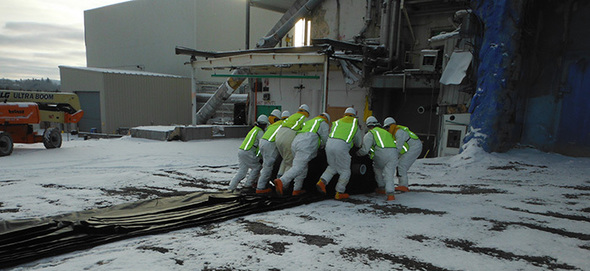
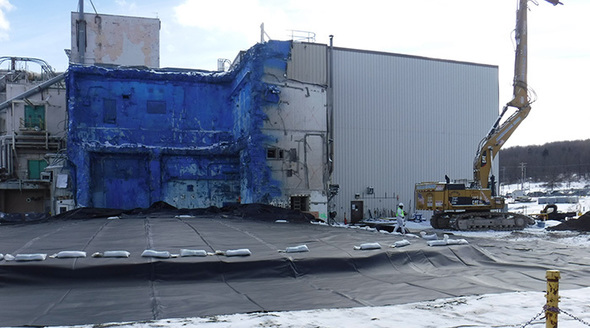
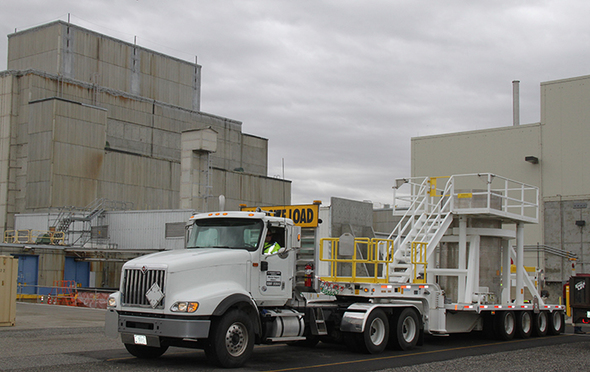
Crew members work together to roll the cover over the Vitrification Facility concrete slab.
WEST VALLEY, N.Y. – EM’s West Valley Demonstration Project (WVDP) Site has finished installing a protective cover over the Vitrification Facility site, signifying the end of physical work associated with the demolition project.
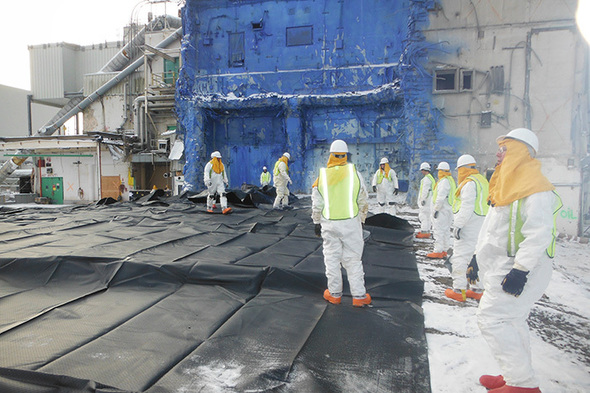
The weather-shielding cover over the remaining concrete slab prevents water infiltration into the below-grade portion of the facility.
The facility was a three-story, 10,700-square-foot structure made of steel, reinforced concrete, and metal siding. Its footprint was 133 feet long by 102 feet wide. It is one of two vitrification facilities to have operated in the U.S., and the first one to complete its mission. The teardown was completed in September.
Workers pull and smooth out the cover over the Vitrification Facility concrete slab. The Main Plant, which is in the process of being deactivated, is in the background.
“The WVDP team continues to eliminate potential environmental threats and reduce the site’s footprint. Their safe and compliant work demonstrates their deliberate and methodical approach to decommissioning,” said Dan Sullivan, EM WVDP federal project director for the Vitrification Facility demolition.
“The installation of this cover signifies months of planning, safe execution, and reducing environmental risks,” said Scott Anderson, president of CH2M HILL BWXT West Valley, EM’s WVDP Site cleanup contractor. “I am proud of our team and what they continue to accomplish.”
The Vitrification Facility demolition area after installation of the cover. The Main Plant, which is in the process of being deactivated, is in the background.
Prior to the demolition, crews removed approximately 10,000 cubic feet of material from the facility, including a 195-ton melter and two tanks each weighing more than 150 tons.
In the demolition phases, workers first removed exterior parts of the facility with the least contamination. They later took down the heavily reinforced concrete process cell and remaining in-cell equipment. In the final phase, they demolished the crane maintenance room and transfer tunnel, each with doors weighing 100 tons and 60 tons, respectively.
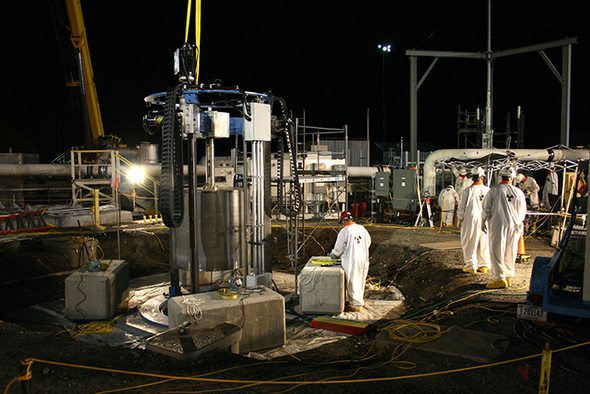
Workers cut a hole in the dome of an underground single-shell tank at Hanford to accommodate installation of waste removal equipment. New Pacific Northwest National Laboratory research may help improve overall tank access.
RICHLAND, Wash. – At the Hanford Site, waste retrieval has been completed in 17 of 149 large concrete underground single-shell tanks (SSTs). The tanks were constructed of carbon steel and reinforced concrete between 1943 and 1964 to store a radioactive mix of sludge and saltcake waste from nuclear processing activities.
Management and disposition of this waste is the responsibility of EM's Office of River Protection, assisted by Washington River Protection Solutions (WRPS), operations contractor for the Hanford tank farms.
Because of the potential to reduce the overall time and cost required to retrieve the waste and prepare the tanks for closure, WRPS is considering options for installing new access holes in the tank domes for future retrieval efforts.
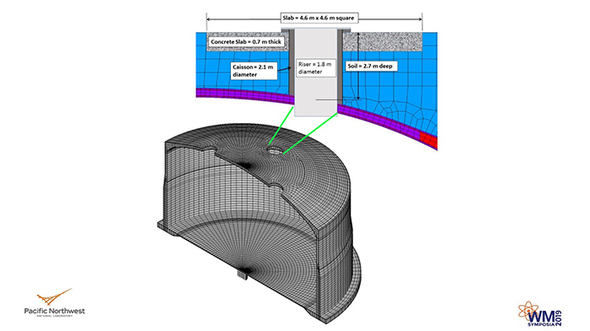
Working with Becht Engineering, Pacific Northwest National Laboratory (PNNL) completed a structural analysis of an SST dome with new access holes for deploying waste retrieval equipment.
Their analysis confirms the continued structural integrity of the SSTs with new dome penetrations and retrieval equipment loads on the soil above the tank dome. The analysis concluded:
It may be less expensive to bore new penetrations and install new risers in the tank domes than to remove existing contaminated hardware in existing risers.
New large access holes up to 6 feet in diameter.
Kenneth Johnson, a mechanical engineer in PNNL’s experimental and computational engineering group, presented the analysis at this year’s Waste Management Symposia in Phoenix.
"Removing long-length equipment from Hanford’s SSTs is one of the most difficult and time-consuming activities associated with tank waste retrieval,” said Keith Carpenter, WRPS engineer. “The analytical work completed by PNNL is another great step forward in our pursuit of installing new risers in the SSTs and minimizing the amount of long-length equipment that must be removed.”
The study team included Ken Johnson, Naveen Karri, and John Deibler of PNNL; and F. George Abatt, Ken Stoops, Larry Julyk, and Brian Larsen of Becht Engineering.
Using detailed computer models, Pacific Northwest National Laboratory researchers examined the anticipated stresses from cutting new access holes in a Hanford single-shell tank.
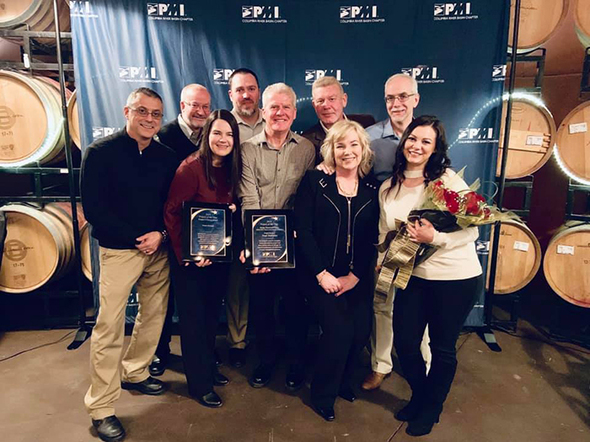
Employees with CH2M HILL Plateau Remediation Company hold the awards they received from the Columbia River Basin Chapter of the Project Management Institute. From left, Jeff Broussard, Dan Wood, Ketra Evans, Matt St Germaine, Neal Sullivan, Ty Blackford, Adria Johnson, Tarik Dillsi, and Rochelle Twomey.
RICHLAND, Wash. – For the third consecutive year, the Columbia River Basin Chapter of the Project Management Institute (PMI) recently honored a Hanford project at its annual awards gala. EM’s Richland Operations Office (RL) endorsed the winning entry.
The PMI chapter presented the Project of the Year award to contractor CH2M HILL Plateau Remediation Company (CHPRC) for a project to retrieve, package, and transfer highly radioactive sludge from a water-filled storage basin to safe interim storage in the central part of the Hanford Site, reducing a significant threat to the environment. CHPRC also won the People’s Choice Award for the same project.
Following years of preparation, sludge transfer began in June 2018 and will continue through December 2019, meeting regulatory deadlines.
An engineered container filled with radioactive sludge is prepared for transport from the 105-K West Annex to safer storage in the central part of the Hanford Site. Sludge removal from the basin is expected to be complete by the end of the year, reducing a significant environmental risk.
“Moving the radioactive sludge out of the K West Reactor Basin will eliminate one of the largest remaining risks along the Columbia River,” said Brian Vance, manager of RL and the Office of River Protection. “After the sludge is out of the basin, we will be able to store this material safely until it is treated for disposal.”
In 2017, another Hanford contractor, Washington River Protection Solutions, earned the prestigious Global Project of the Year award for the Double-Shell Tank AY-102 Recovery Project.
Last year, CHPRC won the Project of the Year award for successfully grouting Tunnel 1 of the Plutonium Uranium Extraction Plant following a partial collapse.
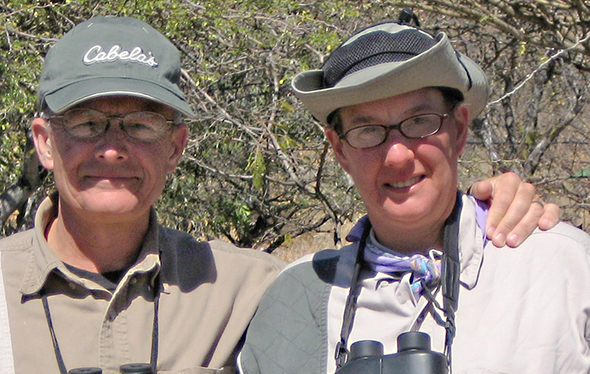
Lee and Nanette Gallant toured EM’s Paducah Site last year and said they found it unique due to the number of intact facilities.
PADUCAH, Ky. – When Nanette Gallant stepped off a bus onto EM’s Paducah Site during a site tour last year, she was amazed by the extensiveness of the former gaseous diffusion plant operations.
Gallant and her husband, Lee, live in Knoxville, Tennessee. The couple has toured a number of former nuclear energy sites, nuclear-themed museums, and other points of interest related to the Manhattan Project of World War II and the Cold War that followed. The experience at the Paducah Site exceeded expectations.
“The Paducah Site is the most unique of all the places we’ve visited because so many buildings are still intact,” Gallant said of the plant that ceased uranium enrichment in 2013. “We have been astounded at the enormity, yet efficiency, of these plants and activities to help our military be prepared to defend our nation at multiple levels.”
While studying at East Carolina University in the 1970s, Nanette Gallant decided to pursue a career in the U.S. Army. She and Lee, a former nuclear weapons specialist in the U.S. Air Force, are lured by the history of nuclear energy, the dedication of the workers at these former sites, and the scientific advancements that developed as a result, she said.
According to EM Paducah Site lead Jennifer Woodard of the Portsmouth/Paducah Project Office, interest in Cold War history is a big part of what has drawn 1,450 people to tour the site. Online registration for the April 6 and May 18, 2019 tours is now open.
“You have to see the facilities for yourself to truly grasp the magnitude of the former gaseous diffusion operations here,” Woodard said. “DOE is proud to welcome the public to the Paducah Site for the fourth consecutive year to learn about not only the former missions here, but also the economic benefits to the community and the progress of our environmental cleanup.”
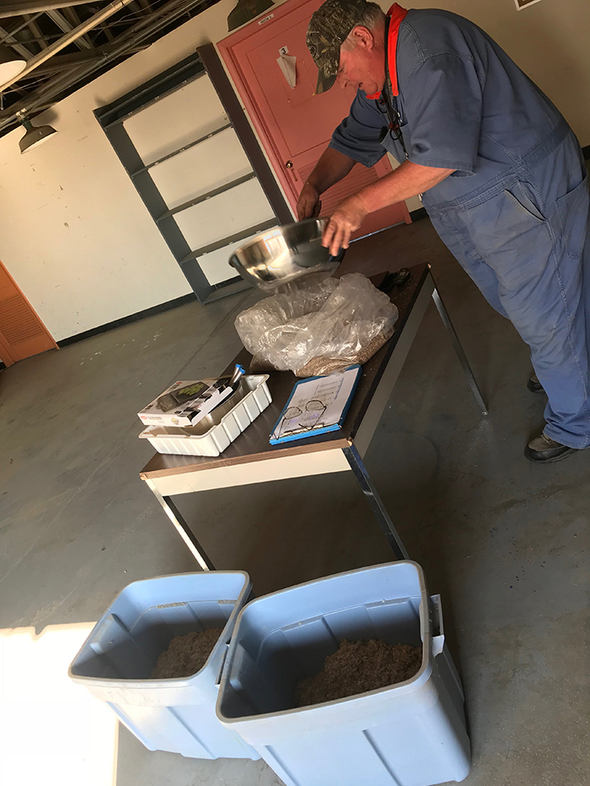
Richard Roos, a Mission Support Alliance environmental scientist, takes great care to weigh and mix seeds for revegetation efforts at the Hanford Site.
RICHLAND, Wash. – EMRichland Operations Office (RL) contractor Mission Support Alliance (MSA) is changing the landscape when it comes to revegetation by using innovative planning and planting techniques.
As part of the long-term stewardship program, MSA monitors revegetated areas within 220 square miles of the Hanford Site, mostly along the Columbia River corridor. Select areas are replanted with native species and monitored for at least five years to determine if goals, including shrub density, native plant cover, and lack of invasive species, are being met.
Routine monitoring in 2017 identified revegetated areas where the plants were not thriving. MSA’s long-term stewardship and ecological monitoring and environmental surveillance groups developed an innovative and integrated approach to revegetate the poorly growing areas.
“With more than 140 acres that were not meeting the success criteria, we decided to take a closer look at how we could increase the chances of success,” said Joy Shoemake, MSA’s land stewardship manager. “We used a variety of methods to ensure the best outcome for vegetation on the Hanford Site.”
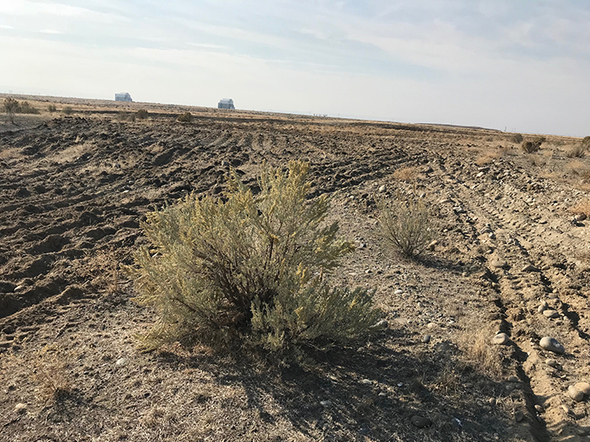
While revegetating cleaned up areas at the Hanford Site, crews made sure to leave any mature plants in place. Mature sagebrush plants such as this will provide a seed source for planting new seedlings.
Workers considered different landscapes and site conditions to determine which plants, shrubs, and grasses were thriving in certain areas. They considered soil conditions and used results from a Hanford Site pollinator study when selecting plant species. This study identifies habitats with large bee populations on the Hanford Site.
Armed with this knowledge, the teams improved revegetation strategies and implemented supplemental planting for more than half of a 140-acre section to save areas of successful growth. They used the results of the pollinator study to create a specially formulated seed mix to encourage pollination and species diversity.
“With this project, MSA demonstrated the kind of forward thinking and innovation that we value,” said Randall Krekel, RL land management program manager. “These new approaches will improve the sustainability of these habitats at Hanford.”
The revegetation project will be completed this month, and MSA will closely monitor the results over the next few years to determine success rates and help refine future efforts.
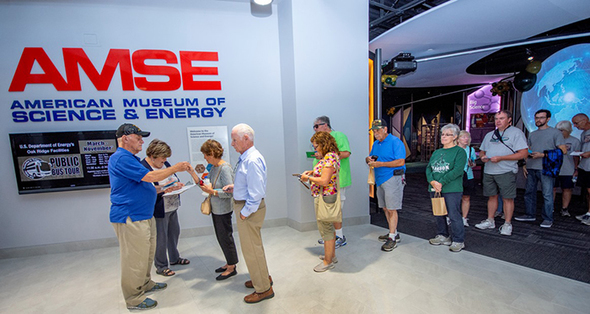
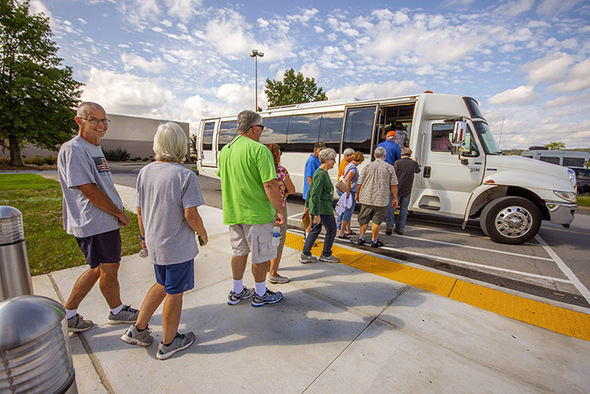
DOE’s annual Oak Ridge facilities public bus tour, which departs the American Museum of Science and Energy, runs from March until November annually.
OAK RIDGE, Tenn. – This week, DOE kicked off its annual Oak Ridge facilities bus tour, which has attracted more than 40,000 people from all 50 states since it began in 1996.
The tour, which continues through November, offers visitors a firsthand look at DOE’s facilities and historical commentary about Oak Ridge’s evolution over the past 75 years.
“This interactive program provides one of the most effective ways for us to show the scope of Oak Ridge’s cleanup mission and to help the public understand the progress we are achieving,” Oak Ridge Office of Environmental Management (OREM) Executive Officer Mike Koentop said.
Since DOE began offering the Oak Ridge Facilities Public Bus Tour in 1996, it has attracted more than 40,000 visitors from all 50 states.
The tour is staffed with unpaid guides who provide nearly 1,000 volunteer hours every year to run the program. In most cases, they are former employees who are excited to share a glimpse into Oak Ridge’s history, accomplishments, and ongoing work with visitors from around the nation.
The bus has multiple stops along its route that allow riders to see everything from pre-Manhattan Project structures to the world’s oldest nuclear reactor and cutting-edge research facilities.
The final portion of the tour runs through ETTP, which was formerly known as the Oak Ridge Gaseous Diffusion Plant. Visitors learn about the gaseous diffusion process that enriched uranium there for military and energy purposes from 1945 to 1985. They also see the footprint of Building K-25, which was the world’s largest building when it was constructed in the 1940s. OREM completed demolition of K-25 in 2013.
Each year as the bus travels through ETTP, onlookers witness how crews have continued transforming the site to achieve EM’s goal to complete major cleanup there by the end of 2020. With more than 400 structures demolished and nearly 1,300 acres transferred, ETTP is closer than ever to becoming an economic asset for the community as a private industrial park.
While many of the structures have been taken down, EM is also raising new ones to preserve the history at ETTP by commemorating the men and women who worked there and highlighting the technological advances they developed.
EM is opening the K-25 History Center this fall, which will be added to the tour, and plans are underway to open the Equipment Building and Viewing Tower in 2021. The Equipment Building is a representative cross section of the former K-25 Building that highlights the technological advances designed and developed at the site. The Viewing Tower, which is part of the Equipment Building, allows people to see the entire footprint of K-25 and understand the magnitude of the site.
More information about the DOE Public Bus Tour is available here.
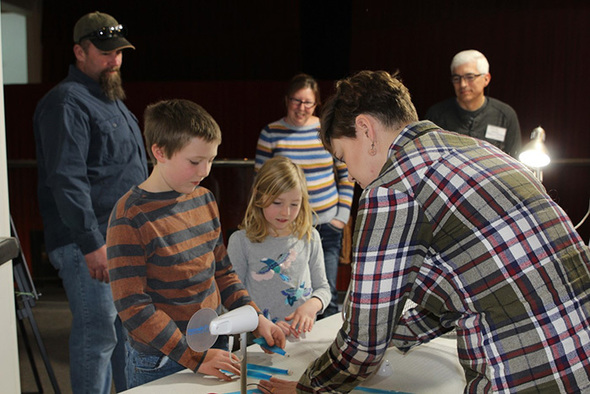
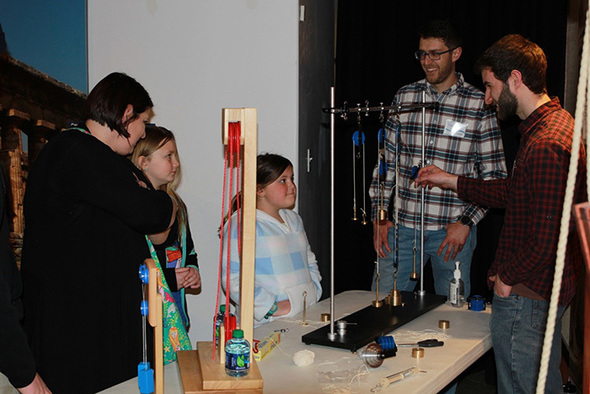
Joseph and Ashley Short watch as Fluor Idaho Mechanical Engineer Elizabeth Bush shows how the pitch of a turbine blade can impact how much electricity is made by a wind turbine.
IDAHO FALLS, Idaho – Area students have a better idea of how engineering principles impact their lives thanks to engineers from Fluor Idaho, EM’s cleanup contractor at the Idaho National Laboratory Site.
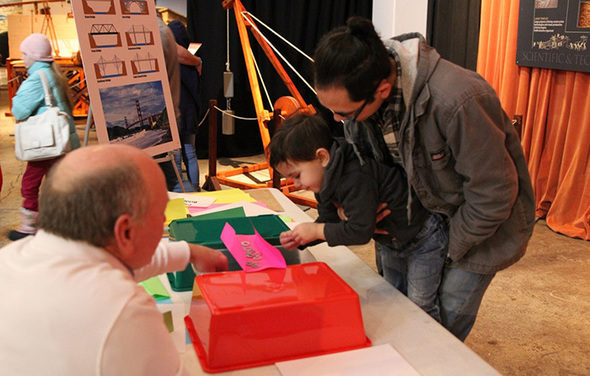
More than 400 students participated in the Fluor Idaho-Museum of Idaho Engineering Day during the Feb. 17-23 National Engineering Week. They gained a better understanding of how bridges work, learned about how photovoltaics and wind power can generate electricity, and even tested the Archimedes' principle on water displacement.
“Fluor Idaho engineers did an amazing job engaging the kids in the activities they brought to demonstrate engineering principles,” Museum of Idaho Director of Education Chloe Doucette said. “These were fun lessons, but more important, each display helped children learn by sparking their problem-solving and discovery skills, and actively developing solutions.”
Concepts associated with bridge construction are tested by Liam Tom and his father Bryan under the watchful eye of electrical engineer Bill Reed.
Fluor Idaho mechanical engineers Chris Graham and Derek Allen demonstrate how pulleys can provide a mechanical advantage to lifting heavy weights to, from left, Jennifer Redman and her daughters Emma and Abby.
Lea Squires and her daughter Rylea fashion a container used to test Archimedes theory of water displacement.
Fluor Idaho Chief Engineer Joe Giebel coordinated Fluor Idaho’s involvement in the event.
“As students and their parents discovered, engineering can be fun,” Giebel said. “Concepts that might seem difficult can be easily explained and, in the process, we encourage students’ active engagement in finding solutions and learning.”
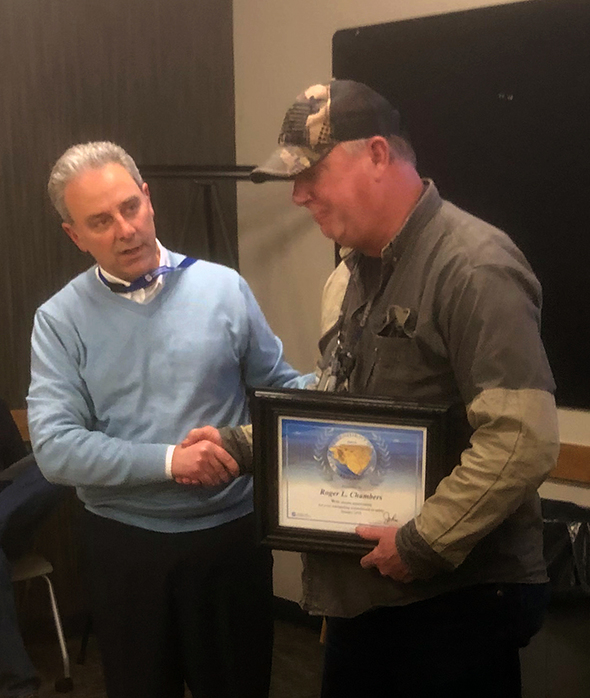
Hanford tank farms worker Roger Chambers, right, receives the President’s Lifesaving Award from Washington River Protection Solutions President John Eschenberg for providing assistance at the scene of a traffic accident involving two young pedestrians.
RICHLAND, Wash. – An EMOffice of River Protection (ORP) tank farm worker was recently recognized for lifesaving actions in the face of tragedy.
Roger Chambers, an employee of ORP tank operations contractor Washington River Protection Solutions (WRPS), had left the Hanford Site and was on his way home from work in November last year when a traffic accident involving pedestrians occurred.
Chambers, a chemical technician work leader at the Hanford Site’s 222-S Laboratory, was driving in the left lane and stopped his vehicle at a crosswalk on a busy four-lane road in Richland as two brothers, aged nine and 12, darted across the street. Another motorist passed Chambers on his right and hit both boys. Chambers reacted immediately.
“First, I told another motorist to call 911,” Chambers said. “One boy wasn’t moving. I administered first aid to the older boy, who appeared to have a broken leg. Fortunately, paramedics were stationed nearby and arrived within minutes. They started caring for the younger boy while I comforted his brother.”
Both boys were rushed to a local hospital. The younger boy was placed in intensive care with a brain injury and fractures of his skull, pelvis, collarbone, and ribs. His brother suffered fractures to his leg and back and injuries to his other leg. Both boys are still recuperating from their serious injuries.
“I just happened to be there when the accident happened,” Chambers said. “My actions were a reaction to the situation. My training and experienced just kicked in.”
WRPS President and Project Manager John Eschenberg awarded Chambers the WRPS President’s Lifesaving Award for his “outstanding commitment” to safety.
“Our employees are committed to look out, not only for their own safety, but for the safety of those around them,” Eschenberg said. “Roger’s fast action demonstrates his dedication to safety and to our community.”
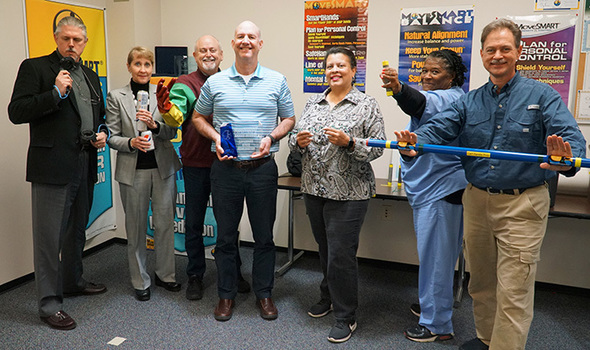
Savannah River Remediation (SRR) Environmental Safety and Health Programs Manager Kevin Smith, center, holds the 2019 MoveSMART Excellence Award given to SRR. Other SRR employees display MoveSMART props used during training classes. From left are Terry Miller, Patricia Allen, Roger Staten, Mildred Jackson, Tootsie Williams, and Dean Hayden.
AIKEN, S.C. – EM’s liquid waste contractor at the Savannah River Site (SRS) was recently recognized for its efforts in championing personal safety across the company.
Savannah River Remediation (SRR), among just five winners globally, earned the 2019 MoveSMART Excellence Award, which is presented to organizations with exceptional processes, projects, and “champions” making a significant positive impact on employee safety.
MoveSMART is a safety program designed to empower employees to take control of their own safety, often dramatically reducing workplace injuries. It focuses on preventing strains, falls, and other injuries through movement techniques, such as strength, control, and balance.
SRR has been using MoveSMART tools since 2009 and has since seen a decrease in the number of sprain and strain-type injuries. Seven SRR employees serve as MoveSMART instructors, and classes are held periodically to train employees on the correct use of techniques.
In a letter to SRR, MoveSMART Founder and Managing Director Robert Pater congratulated the team for its consistent actions that have led to positive results in safety.
“We’re impressed with your successes, from developing a virtual reality (VR) environment to help reinforce the balance training, designating a MoveSMART classroom, adjusting class logistics in order to provide improved training and participant understanding of MoveSMART, engaging maintenance personnel to supply props, and routinely including MoveSMART methods, techniques, and refresher ideas in your companywide communications and training materials,” Pater said.
SRR implemented a VR training tool last year to help new employees get a feel for walking in unfamiliar and unusual environments, such as the SRS Tank Farms, ultimately helping to prevent slips, trips, and falls.
SRR Environmental, Safety, and Health Director Patricia Allen said the company has been committed to raising awareness of personal safety and preventing injuries in the workplace.
“Workplace incidents are often easily avoidable, and the MoveSMART program helps to teach simple ways to mitigate an accident or injury,” Allen said. “Earning the 2019 Excellence Award further proves our efforts to develop and implement new safety programs, like the virtual reality training, are worth it.”