Oak Ridge Crews Finish Preparing Site for New Mercury Treatment Facility; Four More WTP Support Facilities Move Into Startup and Testing Phase; and much more!
DOE Office of Environmental Management sent this bulletin at 12/11/2018 04:02 PM EST
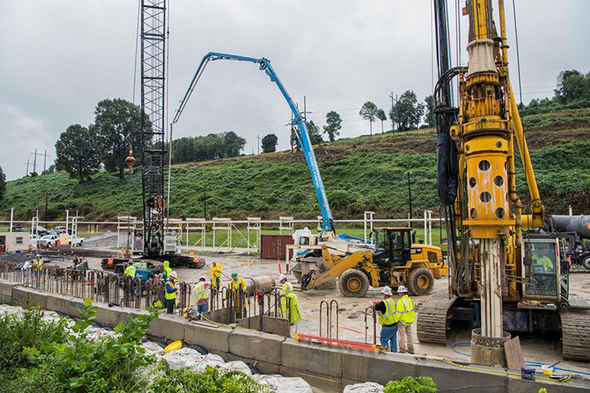
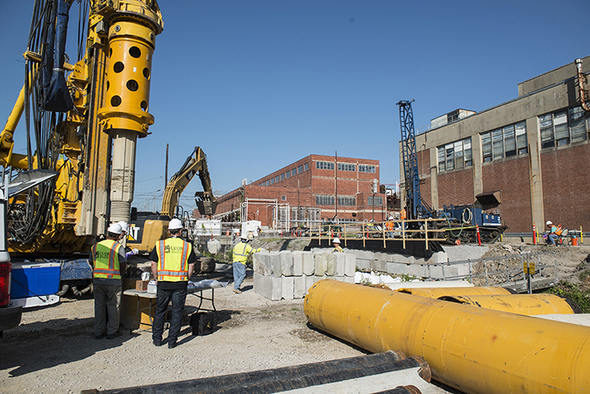
Crews constructed two secant pile retaining walls to retain soils, control water seepage, and provide a deep, secure foundation for the water intake structure.
OAK RIDGE, Tenn. – DOE’s Oak Ridge Office of EM (OREM) has completed site preparations necessary to begin construction of the Outfall 200 Mercury Treatment Facility.
This vital piece of infrastructure will help fulfill OREM’s regulatory commitments to reduce mercury levels in the East Fork Poplar Creek and enable large-scale cleanup and demolition to start at the Y-12 National Security Complex (Y-12).
Mercury cleanup is EM’s highest priority at Y-12. Operations used large amounts of mercury during the 1950s and 1960s, and a portion was lost into the environment. When complete, the new facility opens the door for demolition of Y-12’s large, deteriorated, former mercury-use facilities and soil remediation beneath those buildings.
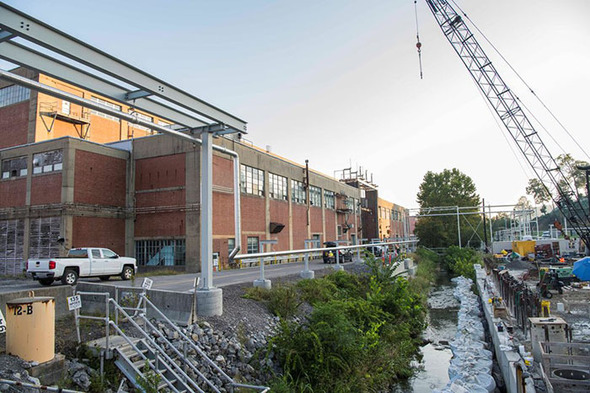
Outfall 200 is a location at Y-12 where the headwaters originate for the Upper East Fork Poplar Creek, and where the storm drain system discharges from the mercury-contaminated area of the site.
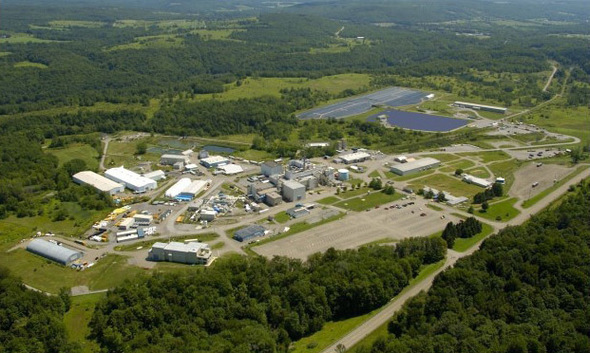
A view of the Outfall 200 area, where the headwaters originate for the Upper East Fork Poplar Creek.
UCOR, Oak Ridge’s lead cleanup contractor, began work on the treatment facility with a subcontractor a year ago following a groundbreaking event attended by Sen. Lamar Alexander and Rep. Chuck Fleischmann of Tennessee, Deputy Energy Secretary Dan Brouillette, and other top DOE and state officials.
The treatment facility will be comprised of two components — a headworks facility and a treatment plant connected by a pipeline. The headworks facility will capture creek flow on the west end of Y-12, store excess stormwater collected during large rainfalls, remove grit, and pump water through the pipeline to the treatment plant on the east side of Y-12. The treated water will then flow into the East Fork Poplar Creek.
Site preparation reduced risks for the construction project, as crews routed mechanical and electrical utilities to the site boundaries, removed small structures in the area, and cleared vegetation along creek banks.
Employees dug up to 40 feet in the ground in some cases to pour concrete for the retaining wall.
At the future headworks site, teams re-routed a steam condensate return line, demolished abandoned concrete structures, and installed two retaining walls. The south secant pile retaining wall consists of 65 piles installed at depths of 20 to 40 feet. The north wall consists of 19 piles drilled approximately 16 feet deep.
These walls will retain soils, control water seepage, and provide a deep, secure foundation for the water intake structure to divert Upper East Fork Poplar Creek waters into the headworks portion of the facility.
This week, EM continued moving forward with the project by awarding a four-year $92 million contract for construction to begin in early 2019. Once operational, the treatment facility will have a treatment capacity of 3,000 gallons per minute and a 2-million-gallon storage capacity.
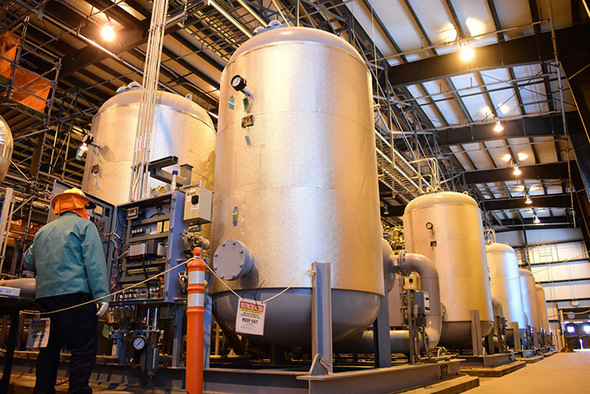
A Waste Treatment and Immobilization Plant employee inspects electrical control equipment in the Chiller Compressor Building, which was recently turned over for startup and testing.
The WTP project continues to transition from construction to startup and commissioning, supporting EM’s plan to treat tank waste at the Hanford Site through the Direct Feed Low-Activity Waste (DFLAW) approach by 2023.
The Anhydrous Ammonia Facility, Glass Former Storage Facility, Chiller Compressor Building, and Steam Plant Building are now in the startup phase, where they are verified and tested as complete and in safe working order. The startup phases for the facilities are scheduled for completion in 2019.
“We are steadily progressing on our path to completion as we turn more and more systems and facilities over from construction to startup and commissioning,” said Valerie McCain, Bechtel National Inc. (BNI) principal vice president and WTP project director. BNI is ORP’s contractor for the WTP project.
After startup, systems will undergo a commissioning phase to ensure they are ready to support future plant operations.
The four support facilities will provide critical support to WTP during operations:
The Anhydrous Ammonia Facility will store liquid ammonia and transfer gaseous ammonia to the vitrification facilities to reduce nitrogen oxide in their off-gas streams.
The Glass Former Storage Facility will house the glass-forming materials to be mixed with the waste during operations, allowing the liquid waste to be converted to glass.
The Chiller Compressor Building houses major equipment for plant and instrument service air, and chilled water, which all provide utility services to WTP.
The Steam Plant will supply high-pressure steam to equipment in the vitrification facilities. The plant also provides low-pressure steam for heating equipment throughout WTP.
“Turning these four buildings over to startup is another step that demonstrates our continued commitment to meeting the mission and supporting DOE’s DFLAW approach,” said Rick Holmes, Waste Treatment Completion Company general manager.
BOF contains a total of 56 systems, including electrical power distribution, backup power, water purification, compressed air, steam, communication and control, and fire water systems. Of the 56 systems, 27 have successfully completed startup and testing and have transitioned to the commissioning phase; 24 are in the startup phase; and the final five are nearing turnover from construction to startup.
The DFLAW approach is expected to allow treatment of low-level waste to begin by the court-ordered milestone date of 2023.
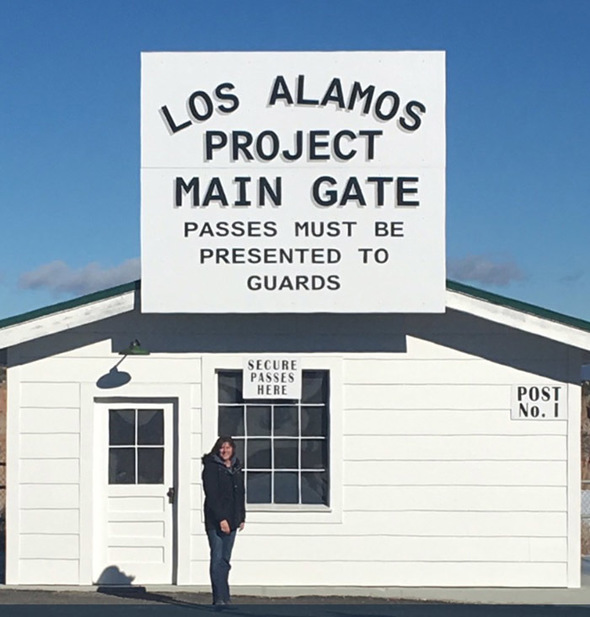
EM Assistant Secretary Anne White recently visited the EM Los Alamos Field Office to view progress in EM's cleanup work at the site.
EM Assistant Secretary Anne White recently viewed progress in EM’s cleanup at the Los Alamos Site, and met with Naval Reactors employees in San Diego, where she received training before riding in a submarine. Following is her report on the trip:
I’m particularly excited to be writing this trip report because with my visit to Los Alamos, I can now say I’ve been to all of our major EM cleanup sites as Assistant Secretary for Environmental Management. As I said when I met with the EM Los Alamos Field Office (EM-LA) employees, I saved the best for last! I worked at Los Alamos for several years, and lived in Nambé, so it was great to be back at my old stomping grounds to see the progress that EM is making at the site, visit with some old friends and colleagues, and of course, eat some green chile. Los Alamos is a great example of a site where we can make some significant cleanup progress and get “done done” to reduce our overall environmental liability.
I started the day with Ray Martinez from the Pueblo of San Ildefonso. Ray and I had a good discussion on EM’s work with the Pueblos on STEM (science, technology, engineering, and math) initiatives, and discussed the possibility of expanding these efforts in the future. I look forward to working with Ray and the other Pueblos to make that a reality.
Next, I headed “up the hill” to the Pueblo Complex where I met with members of our EM-LA staff. I especially enjoyed my lunch with the early career professionals from EM-LA and its contractor, N3B. From my discussions with them, I could tell they are engaged in the mission at Los Alamos, and they are enthusiastic about getting work done at the site.
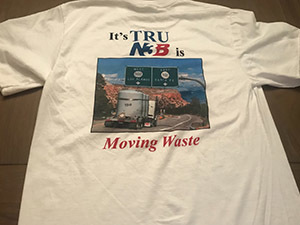
Even though the site had 4 inches of snow the day before I arrived, EM-LA Manager Doug Hintze and his team still took me out to see some of the great progress we are making there. At Area G, I got to see two awesome women, Stephanie Griego and Ellen Gammon, running the show. I’m so proud of the work being done at Area G, and I’m very encouraged they have gotten out their first shipment to the Waste Isolation Pilot Plant. They even gave me one of the T-shirts they had made to commemorate the shipment! At TA-21, I really felt at home and my old friend Duane Parsons and I discussed what has changed since we worked there together.
EM Los Alamos Field Office employees gave EM Assistant Secretary Anne White a T-shirt commemorating the first waste shipment from Technical Area 54’s Area G at Los Alamos National Laboratory to the Waste Isolation Pilot Plant (WIPP) since WIPP resumed operations in January 2017. The shipment to WIPP was completed in October this year.
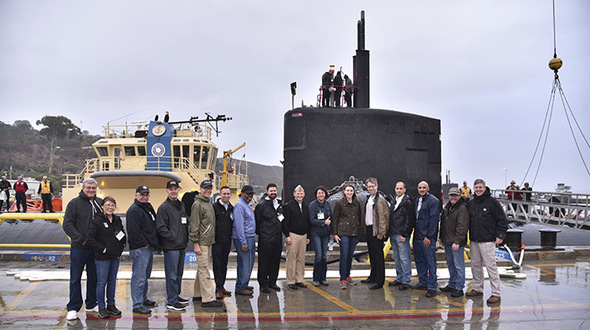
EM Assistant Secretary Anne White, seventh from right, gathers with others waiting to board the USS Pasadena in San Diego.
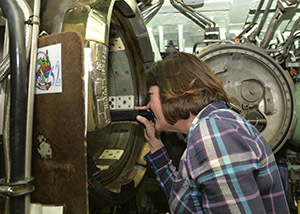
EM Assistant Secretary Anne White peers down an empty torpedo tube on the USS Pasadena.
From New Mexico, I headed to San Diego, where our colleagues at the Naval Reactors invited me to take a ride on the USS Pasadena (SSN 752), a Los Angeles-class fast-attack submarine. I was also able to visit the Submarine Learning Center where I got a small taste of the advanced training that Navy sailors complete prior to going out to sea. In the Control Team Trainer, a trainer configured as a submarine control room, I sat in the stern planes position, which controls the depth of the ship. In the Submarine Piloting and Navigation Trainer, I wore virtual reality goggles and navigated a simulated ship through the channel, and also "rescued" Oscar when he "fell off" a bridge as part of a training exercise. I want to give a big shoutout to Lieutenant Jonadel Caro. She is one of the first female submariners in the Navy, and she did an awesome job walking us through the Submarine Learning Center.
After my training sessions, I was ready to head out to sea. I was so impressed by every person I met on the USS Pasadena. Normally, I like to name a few of the folks who make a big impression on me during my trips, but if I did that for the USS Pasadena, I would have to name everyone I met on board! The team gave me great explanations of the various parts of the ship, as well as impressive demonstrations of diving, turning, and emergency drills.
I was truly impressed by how professional and knowledgeable the sailors were. Not only were they highly trained, they were also among the most personable and engaging group I have ever met. It was an amazing experience to get to spend a day at sea with them. Commander Corey Poorman has a great group of men working for him, including my fellow Jayhawk, Executive Officer, Lieutenant Commander Hector Marin. I also have to thank Captain Chris Cavanaugh, the Commander for Submarine Squadron 11 in San Diego, as well as Jeff Avery and Steve Kamas, for organizing the trip. Thank you for welcoming me onto your ship, and for giving me total access to see your team in action!
“CH2M HILL BWXT West Valley (CHBWV) continues to foster a positive working relationship with DOE through effective partnering during this rating period,” said Ken Armstrong, EM’s fee determining official.
CHBWV’s noteworthy achievements for the period include:
“Very good” partnering with EM, with no reported injuries resulting in days away from work, restricted work activity, or transfer to another position.
Continuous support in functional areas regarding quality and timely submittals of contract deliverables of good quality.
Meeting its small business goal, with demonstrated improvements in the communication program and results of the annual Facility Information Management System validation, allowing better tracking of infrastructure costs.
Notable planning and execution of legacy waste processing and shipping, and good planning associated with infrastructure improvements.
Effective use of mockups in the Main Plant deactivation and the safe removal of the Vitrification Facility cooler units.
Timely submittal of all environmental and regulatory reports and continued fostering of positive regulatory relations through partnering.
The scorecard also noted that the contractor did not meet EM’s goal for its total recordable injury case rate. CHBWV received a notice of violation related to waste management activities and an assessment of civil penalty from the Utah Department of Environmental Quality. Additionally, CHBWV struggled with managing project risk for the Vitrification Facility demolition and debris shipping, resulting in an increase in project costs.
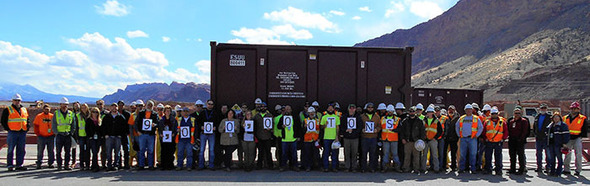
Moab Uranium Mill Tailings Remedial Action Project partners celebrated a milestone in 2018 after safely shipping 9 million tons of residual radioactive material from a former uranium-ore processing facility in Moab to an engineered disposal cell in nearby Crescent Junction. The project has shipped about 58 percent of the total estimated 16 million tons.
MOAB, Utah – EMMoab Uranium Mill Tailings Remedial Action (UMTRA) Project Cleanup Director Russell McCallister recently approved a newly revised partnering agreement with the site’s two prime contractors focusing on teamwork, project quality, early conflict resolution, and partner consensus.
McCallister made partnering a top priority after becoming the director in December 2017. EM and contractor employees — some of whom are new to the project or have new roles and responsibilities — met over the summer to advance the project’s existing agreement and align it with the group’s priorities. Used across the EM complex, the pact provides a framework for collaborative working relationships centered on mutually desired outcomes.
“The partnering process was a helpful exercise and a reminder that we are teammates who share a mission to get the Moab Site cleaned up,” McCallister said. “As the agreement outlines, working together and maintaining good communication will help us overcome roadblocks and get the job done.”
Officials with the project’s prime contractors — North Wind Portage, the remedial action contractor, and S&K Logistics Services, the technical assistance contractor — welcomed the revised accord.
“Partnership and collaboration are key to the continued success of the project and provide perspective and opportunity that may not otherwise be recognized or sustained,” said Greg Church, project manager with North Wind Portage.
Joe Ritchey, the program manager with S&K, envisioned successful collaboration from the agreement.
“As a contractor, we welcome the partnering process and the cooperation it brings. It allows us to use our various areas of expertise for the overall good of the project,” Ritchey said.
In addition to the partnering-specific objectives, the team identified overall cleanup goals, including safety, efficient resource management, environmental stewardship, open communication, and continuous improvement.
EM introduced a partnering policy eight years ago to improve contract and project management with the goal of delivering results on time and within cost. EM field site partnering agreements can be found here.
View the Moab Site’s partnering agreement here. It lays out the project’s mission, vision, commitment statement, strategic project goals, partnering goals, and logistics.
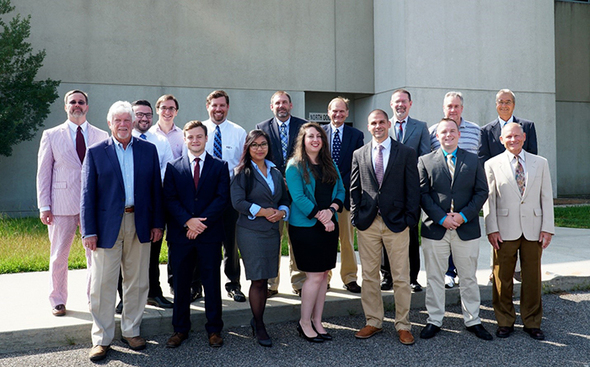
Savannah River Remediation nuclear and criticality safety engineers who support the development of documented safety analyses for the liquid waste facilities. Front row, from left: Eric Sliger, Nicholas Eigenbrot, Danielle Quijano, Selina Guardiano, Jonathan Bricker, Daniel Tenpenny, and John Humphrey. Back row, from left: Marvin Barnett, Jorge Medina, Callum Bushe, Blake McKibbin, Chris Cope, Herbert Benhardt, David Allison, David Kennedy, and Gary Dorfler.
AIKEN, S.C. – EM protects workers, the public, and the environment at and around the Savannah River Site (SRS) through safe work practices and controls established by nuclear and criticality safety engineers.
These engineers with SRS liquid waste contractor Savannah River Remediation (SRR) establish controls to maintain a safe work environment at the liquid waste facilities. They accomplish that by developing and revising documented safety analyses (DSAs). The controls are produced from the analyses of events that could compromise liquid waste operations.
Salt waste comprises approximately 90 percent of the 34.9 million gallons of liquid waste inventory stored at the two SRS tank farms, making its disposition a priority. Workers prepare batches of the waste, process them to separate radionuclides from the waste, and stabilize and store the resultant streams.
The engineers revised liquid waste facility DSAs to accommodate increased salt feed rates from the Salt Waste Processing Facility (SWPF), which is in testing and commissioning. They also update the DSAs to ensure safe interface between the liquid waste facilities and SWPF.
SRR’s nuclear and criticality safety team recently completed the safety bases supporting tank closure cesium removal (TCCR). This supplemental salt processing technology demonstration project features self-shielded ion exchange columns and a specialty resin designed to remove cesium from the salt waste.
That team establishes the foundation for how work is safely performed, said Dr. Jonathan Bricker, manager of SRR’s nuclear and critical safety group.
“In recognition of the importance of processing salt waste to the SRR mission, the SRR nuclear and criticality safety organization has focused efforts on the development of documented safety analyses supporting salt batch preparation as well as salt waste processing initiatives,” Bricker said. “This includes tank closure cesium removal and preparing the liquid waste facilities to interface with the Salt Waste Processing Facility.”
It took two years to develop the TCCR DSA, allowing for analyses of potential hazards, including a hurricane or earthquake.
Jim Folk, DOE-Savannah River Assistant Manager for Waste Disposition, said ensuring infrastructure is designed for the worst-case scenario guarantees the future of SRS and the surrounding areas.
“Developing and deploying facility DSAs is a large part of the process to safely begin or restart operations,” Folk said. “SRR employees are steady in their approach to ensuring quality products, and I commend them for completing the work in a safe and disciplined manner.”
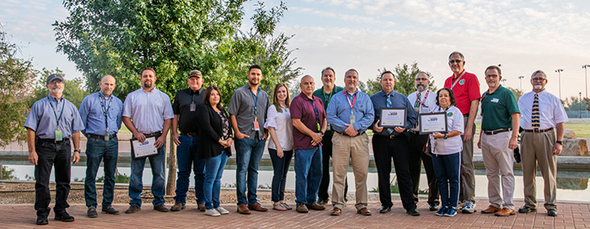
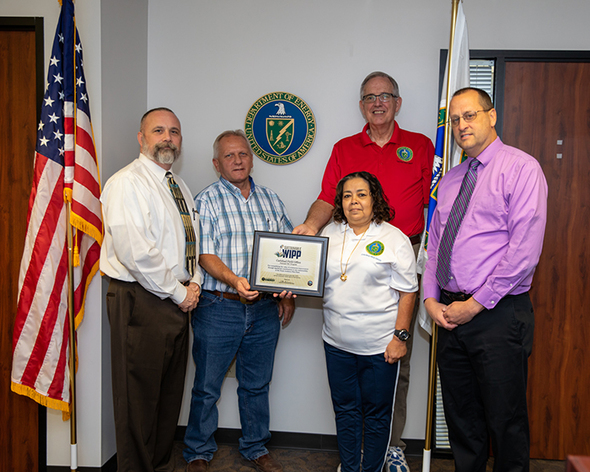
From left, recipients of Waste Isolation Pilot Plant sustainability awards include Rick Chavez of AECOM; Anthony Stone of Carlsbad Field Office (CBFO); John Haschets, Adam Ray, Jennifer Martinez, Aran Quintela, Natalie LaClair, Ken Urquidez, and William Harriman of AECOM; Jim Morrison and Ronnie Lee of Nuclear Waste Partnership (NWP); Kenneth Princen, Norma Castaneda, and Dan Standiford of CBFO; Bruce Covert of NWP; and Mike Brown of CBFO.
CARLSBAD, N.M. – EM’s Carlsbad Field Office (CBFO) recently presented sustainability awards to employees for continuous improvement efforts that include working toward a goal of becoming paperless in a portion of Waste Isolation Pilot Plant (WIPP) operations.
A team from AECOM, the parent company of Nuclear Waste Partnership (NWP), the WIPP management and operations contractor, launched a database in the Integrated Data Center earlier this year that streamlined the WIPP waste confirmation process.
The database, in concurrence with the use of electronic records, allowed for the reduction of printed pages per WIPP waste shipment from an average of 400 to five. EM uses the database to perform management reviews. It’s considered a key to maintaining sustainability at WIPP.
The Carlsbad Field Office (CBFO) presented Waste Isolation Pilot Plant sustainability awards to CBFO employees. From left are Kenneth Princen, Andy Walker, Norma Castaneda, Dan Standiford, and CBFO Manager Todd Shrader.
CBFO recognized employees for their design and programming support, including NWP software developers Jim Morrison and Ray McGinnis; AECOM regulatory environmental services waste confirmation team members Adam Ray, Jeremy Nelson, Renee Romo, Ken Urquidez, Jennifer Martinez, Aran Quintela, and John Haschets; and CBFO EM management review team members Dan Standiford, Norma Castaneda and Andy Walker.
The team expects to implement the use of electronic signatures — the final step for the program to become fully paperless — this year.
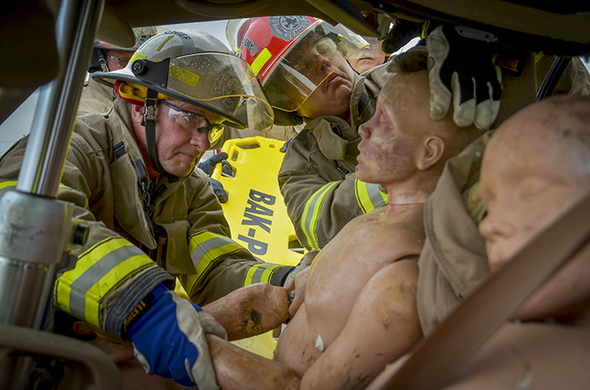
Fire Chief Darrell Howard, left, and Jake Mason stabilize rescue mannequins during a vehicle extrication simulation.
PADUCAH, Ky. – The fire services team at EM’s Paducah Site recently conducted vehicle extrication training courses at the site.
The goal of the advanced courses is to train fire responders in the codes and standards of the National Fire Protection Association.
The training ensures that emergency response personnel have a thorough knowledge and understanding of techniques and hazards associated with auto extrication, including sizing up the accident scene; mitigating hazard; establishing safety zones; and reinforcing use and establishment of the incident command system, a standardized approach to emergency response.
“While our goal is always to prevent accidents before they happen at the Paducah Site, we also need to be prepared to act with efficiency and precision if an event were to occur. Since we have mutual aid agreements, this training will also benefit our community,” said Jennifer Woodard, the Paducah site lead for EM’s Portsmouth/Paducah Project Office.
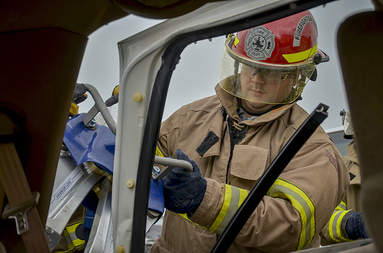
EM site worker Andrew Bachuss uses Jaws of Life to remove a vehicle door.
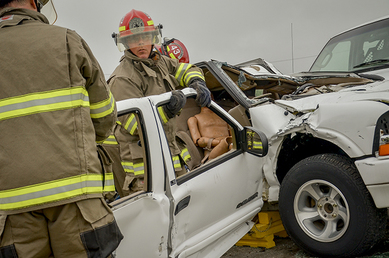
EM site firefighters access occupants trapped in a vehicle in a mock accident.
A key feature of the vehicle extrication education is a simulation of a vehicle accident rescue, in which fire responders use hydraulic jacks and the Jaws of Life, a hydraulic apparatus used to pry apart the wreckage of crashed vehicles to free people trapped inside.
After completing training, firefighters are able to demonstrate the ability to stabilize the vehicle; take off the roof, doors, and glass from the vehicle; and remove the occupants.
The training was conducted by EM’s deactivation and remediation contractor, Four Rivers Nuclear Partnership.
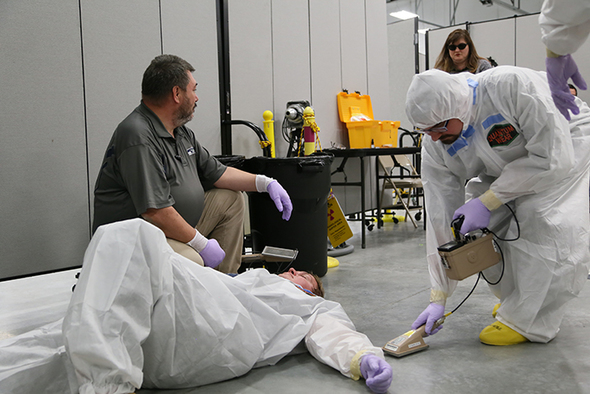
Hanford Site health physics technicians participate in radiological control technicians’ training. The class offers interactive exercises like the decontamination demonstration shown here, which incorporates radiological work practice techniques.
RICHLAND, Wash. – Hanford Site workers have implemented a new interactive training course to ensure radiological control technicians have the tools and resources they need to keep workers safe.
“Radiological control technicians are essential to safety in Hanford Site cleanup,” said Jill Conrad, the EM program manager at HAMMER. Their responsibilities include controlling contamination and exposure to radiological hazards, and conducting radiological surveys of areas and surfaces where contamination might be present.
“It’s essential that technicians are trained to work safely and effectively. One of the best ways to do that is to have experienced technicians teaching incoming employees using real scenarios and activities, and these technicians will be in high demand for a long time,” Conrad said.
Since October, 120 radiological control technicians, first-line managers, and health physicists from contractors CH2M HILL Plateau Remediation Company, Mission Support Alliance, and Washington River Protection Solutions have attended the training. Planners have scheduled weekly sessions through March 2019 and expect to accommodate nearly 600 students.
“There is a vast amount of untapped experience and knowledge within the Hanford Site’s radiological control technicians’ groups,” said Michael Meyer, HAMMER health physics staff instructor. “Our goal at HAMMER is to create a training environment that encourages student interaction and the sharing of work practices that will lead to a safer work environment for everyone.”