West Valley Site Completes Second Phase of Vitrification Facility Demolition; Idaho Site Crews Find New Uses for Former Spent Nuclear Fuel Hot Cells; and Much More!
DOE Office of Environmental Management sent this bulletin at 07/17/2018 01:24 PM EDT
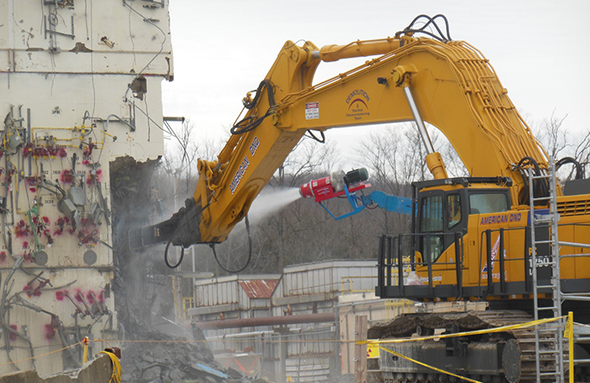
Crews take the “first bite” of the Vitrification Facility during the second phase of demolition.
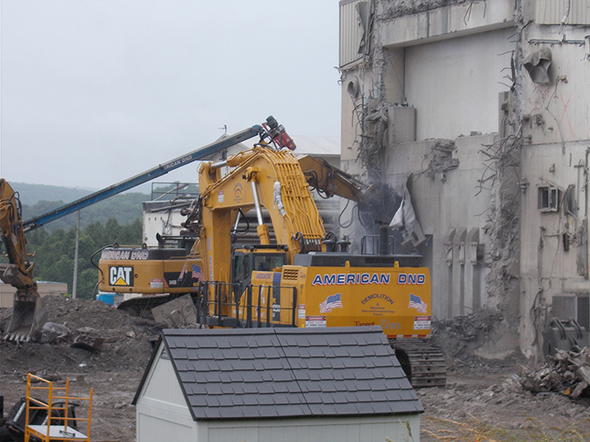
WEST VALLEY, N.Y. – EM and cleanup contractor CH2M HILL BWXT West Valley (CHBWV) recently finished demolishing a heavily reinforced process cell and removed thousands of pieces of equipment in the Vitrification Facility at the West Valley Demonstration Project (WVDP).
“The CHBWV team continues to perform well in the safe execution of this high hazard work evolution,” WVDP Director Bryan Bower said. “This accomplishment allows the workforce to continue with the demolition of the Vitrification Facility, another step forward in the ultimate closure of the site.”
This latest work — the project’s second phase — began in November 2017. The process cell contained higher levels of radiological contamination than the building exterior and aisle areas demolished in the first phase.
“The CHBWV team is making great progress with the safe completion of the second phase of this facility’s demolition,” CHBWV President and General Manager Jeff Bradford said. “The Vitrification Facility demolition is one of the project areas we were able to accelerate using this year’s additional funding. This helps pave the way for Phase 3 work activities and the eventual completion of this major milestone.”
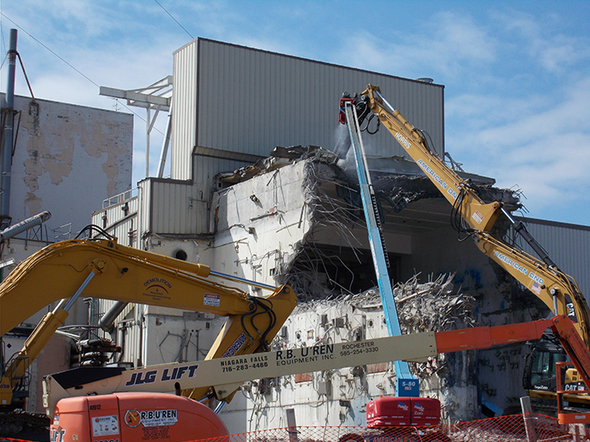
Workers tear down a portion of the Vitrification Facility containing a process cell.
With the second phase of the Vitrification Facility demolition project complete, all that remains for removal is the south wall, shield doors, small cranes, and minor equipment.
Using a variety of heavy equipment and specialized tools, workers safely removed, processed, and shipped for disposal four 7,188 pound in-cell coolers, six shield windows, and a 38,000-pound process crane.
In the third and final phase, crews will remove the 100-ton crane maintenance room shield door, 60-ton transfer tunnel shield door, cranes and equipment, and south wall. Completion of the Vitrification Facility demolition is planned for later this year.
The facility was used to solidify 600,000 gallons of high-level liquid radioactive waste from 1996 to 2002. This waste was generated from 1966 to 1972 during the reprocessing of spent fuel by Nuclear Fuel Services, the former operator of the site.
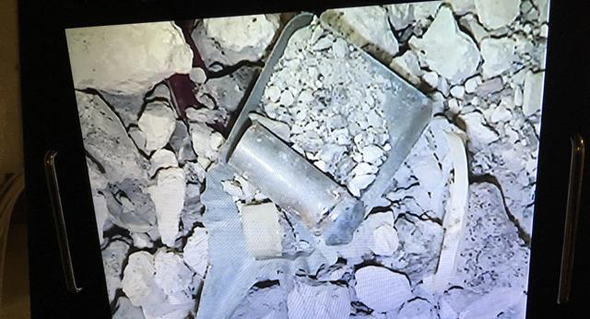
A view of radioactively contaminated concrete debris found inside one of 27 containers being processed at the former spent nuclear fuel hot cells at the Idaho Nuclear Technology and Engineering Center.
IDAHO FALLS, Idaho – EM and its cleanup contractor at DOE’s Idaho Site have repurposed former spent nuclear fuel hot cells to characterize and segregate waste, eliminating the need to construct new buildings or purchase equipment.
Fluor Idaho crews identified 27 containers with waste requiring shielding and remote-handling equipment as they retrieved waste at the Advanced Mixed Waste Treatment Project (AMWTP). They transferred those containers to the Idaho Nuclear Technology and Engineering Center (INTEC) hot cells for processing. The hot cells had been used for spent nuclear fuel reprocessing until 1992.
“Using our existing hot cells with proven remote handled waste characterization, treatment, and repackaging capabilities is a tremendous benefit to the Department versus setting up a new process at the AMWTP and dealing with the potential unknowns of this legacy waste,” Fluor Idaho Operations Manager Steve Poling said.
To date, 16 of the containers — ranging in size from 55- and 85-gallon drums to large boxes containing internal drums — have been processed. Crews move the separated remote-handled waste to temporary storage at INTEC and return the contact handled waste, which has lower radioactivity than the remote handled waste, to AMWTP for processing, certification, and eventual shipment to the Waste Isolation Pilot Plant (WIPP).
Using the INTEC hot cells supports the Department’s commitment to the state of Idaho to ship 65,000 cubic meters of above-ground waste at the AMWTP to WIPP and other off-site disposal facilities.
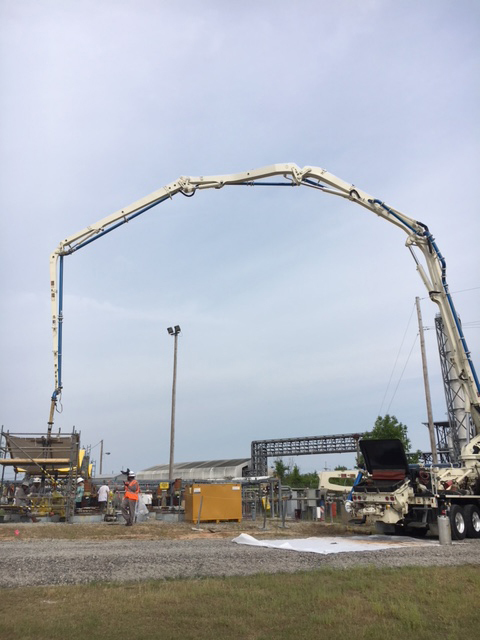
An extended boom reaches over the tank farm to pour concrete into the underground storage tanks.
AIKEN, S.C. – A team of federal and contractor employees at the Savannah River Site (SRS) recently grouted four 30,000-gallon underground solvent storage tanks about five weeks ahead of schedule.
Located near the site’s H Canyon chemical separation facility, the tanks once held hazardous and radioactive waste. Unlike the liquid waste tanks at SRS, these contained a solvent used to dissolve a solute and make a solution. This solvent can only be managed and stored in a permitted facility.
Workers used a specialized camera designed by EM’s Savannah River National Laboratory (SRNL) to verify the vessels were empty, and the South Carolina Department of Health and Environmental Control approved the tanks for grouting.
“Grouting the tanks gets us closer to our goal of tank closure,” said Wyatt Clark, senior vice president of Environmental Management Operations for Savannah River Nuclear Solutions (SRNS), the site’s management and operations contractor. “Benefits of closing the tanks include lessening the risk to the environment and public, meeting the RCRA (Resource Conservation and Recovery Act) requirements, cost savings related to manpower hours for daily inspections and required maintenance, along with reducing the footprint of SRS facilities.”
Prior to filling the tanks with grout, a structural mechanical engineer ensured the material would not cause a structural failure due to weight and pressure.
SRNS used a specifically formulated grout developed by SRNL to fill the tanks. The grout has been used in decommissioning of other nuclear and radiological facilities at the site.
“I appreciate the collaboration between SRNS and SRNL and the work of our employees to finish the grouting of these tanks quickly and safely,” Clark said.
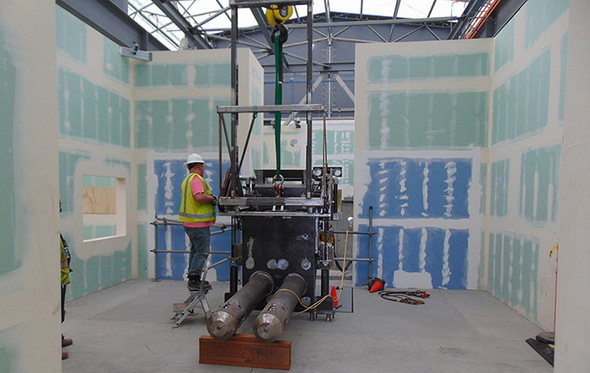
Workers on Hanford’s 324 Building Disposition Project are training on equipment to be used to transfer highly contaminated debris and soil.
RICHLAND, Wash. – Hanford Site workers continue to prepare to remove highly radioactive soil under a former engineering laboratory located about 300 yards from the Columbia River and less than a mile from Richland.
EMRichland Operations Office (RL) contractor CH2M HILL Plateau Remediation Company (CHPRC) recently removed debris from the 324 Building’s airlock, which allows workers to access the building’s hot cells.
Workers also finished removing debris from two of the four hot cells where operators once handled radioactive materials using remote-handling equipment. Removing the contaminated debris paves the way for installing equipment to dig up contaminated soil under the hot cells, which is too radiologically contaminated for workers to handle directly.
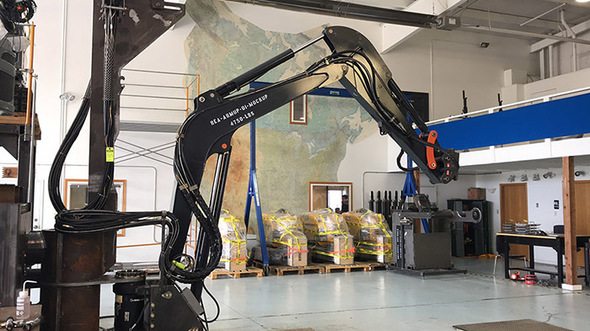
An upcoming phase of work at the 324 Building mockup includes installation of a remote excavator arm to be used to remove the concrete floor to allow access for removing the contaminated soil below the building.
“Removing large pieces of debris from the hot cells is the next step in accessing the floor and installing excavation equipment,” said Ben Vannah, RL project engineer. “This work is very hazardous, and to protect the workers, DOE funded the construction of a simulated hot cell where workers can train and work out procedures for tackling these hazards.”
Workers train at a non-radiological mockup that includes a replica of the hot cell located directly above the highly-contaminated underground waste. Soil remediation plans call for creating a hole in the floor of the hot cell, excavating contaminated soil using remote-controlled equipment, and mixing the soil with other materials prior to disposal.
“Our 324 mockup is an essential training location for our team to practice using remote equipment in a non-radiological area and apply lessons learned,” said Tammy Hobbes, CHPRC vice president of the 324 Building Disposition Project. “Our team includes dedicated and well-trained personnel who continue to demonstrate they are ready for the challenge.”
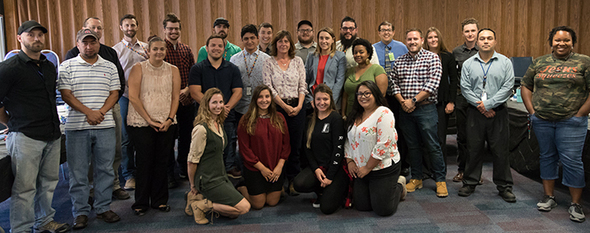
EM Assistant Secretary Anne White, center, gathers with members of the Waste Isolation Pilot Plant Young Professionals group.
CARLSBAD, N.M. – Members of an ambitious early career group at EM’s Waste Isolation Pilot Plant (WIPP) are making strides in their professions and the community.
They have participated in a technology exchange with workers across the DOE complex, engaged community leaders in a professional growth forum, and collected more than 4,000 pounds of food and raised more than $10,000 for people in need.
Founded two years ago, the 54-member WIPP Young Professionals group under WIPP management and operations contractor Nuclear Waste Partnership (NWP) takes part in the technology exchanges with employees at the Hanford, Savannah River, Los Alamos, and Oak Ridge sites.
“The main focus of the events is to share the knowledge and experience gained at each site,” said Forrest Queen, the group’s co-president. “Bringing all of the different sites together helps people see the whole picture of the nuclear waste legacy we are facing.”
In June, members of the organization had lunch with EM Assistant Secretary Anne White when she visited WIPP for the groundbreaking of new and improved underground ventilation system.
“It was a pleasant meal paired with good discussions on how we each got to our positions, the struggles we face, and improvements we feel can benefit the complex,” said Queen, an engineer who worked on the underground ventilation system.
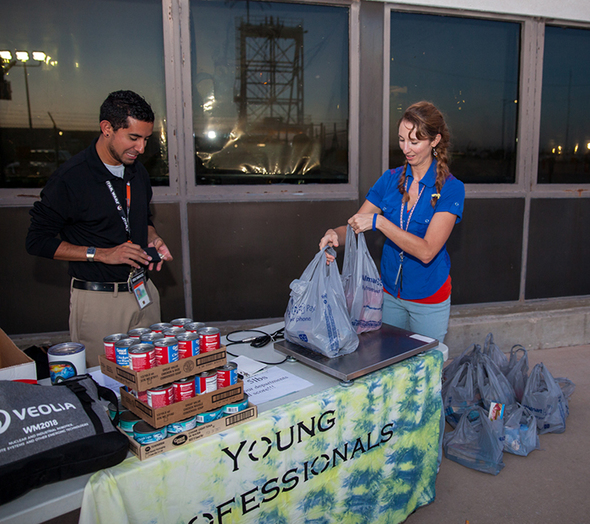
Chris Dominguez and Sheree Turner of the Waste Isolation Pilot Plant Young Professionals group volunteer at a food drive.
White said she enjoyed hearing ideas and viewpoints from the newest members of WIPP’s workforce and the activities they coordinate to network and give back to the Carlsbad community. She added that Queen and Sheree Turner are doing a great job as co-presidents.
Turner, an operations administrative assistant, said the group’s goal is to improve the lives of its members.
“The point of the group is to better ourselves, and people are never too old or too young to better themselves,” Turner said. “Our mission is to provide young professionals an outlet for professional development, networking, charitable association, and socialization.”
Earlier this year, members began giving presentations to new hires at WIPP.
At the professional growth forum, five community leaders including Bruce Covert, NWP president and project manager, and Tammy Reynolds, NWP deputy project manager and chief operating officer, advised members on creating successful career paths.
At a recent food drive, the organization gathered more than 4,000 pounds of food for Carlsbad’s Battered Families Shelter, Outreach Center, Jonah’s Place, and Isaiah’s Kitchen. NWP matched donations raised as part of the drive for a total of more than $10,000 for the four organizations. The group also has participated in Day of Caring and other events by the United Way of Carlsbad and South Eddy County.
Social events outside of work include evening gatherings with food and games, hikes, barbecues and community events.
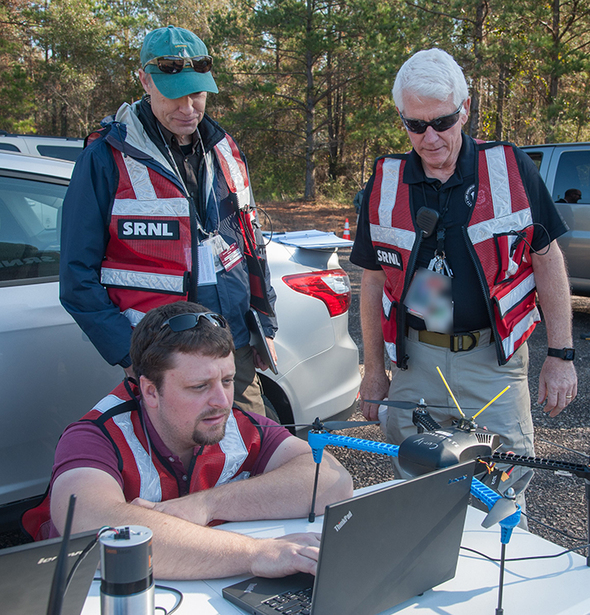
From left, Drew Morgan and Kevin Kochersberger of Virginia Tech, and Todd Coleman of Savannah River National Laboratory prepare a test flight to demonstrate how unmanned aircraft support EM’s cleanup mission.
Until recently, flying a UAS was not permitted at SRS. In recent months, SRNL worked with the site to develop an operations manual and program plan, procured commercially available UASs, and trained personnel. SRNL has since flown several successful missions and is preparing for more.
Originally developed for use by other federal agencies, the laboratory’s UAS program is expanding to a variety of EM-related applications, including collecting field data, and monitoring and inspecting remediated facilities.
“We are going very methodically, very cautiously, and deliberately as we look at what’s possible,” said Todd Coleman, program manager for SRNL’s National Security Strategic Initiatives. “It really is opening up many options to reduce risk to workers and reduce cost to perform difficult tasks or in some cases perform things we’ve never really been able to do.”
SRNL collaborates with the DOE-Savannah River Office of Safeguards and Security, DOE-Savannah River Flight Readiness Review Board, SRS Operations Center, DOE headquarters’ Office of Aviation Management, and Federal Aviation Administration to conduct the missions.
Earlier this year, SRNL worked with SRS management and operations contractor Savannah River Nuclear Solutions (SRNS) to use a UAS to capture video of the entombed P Reactor building rooftops. The flight provided about an hour of video, enabling SRNS personnel to perform a clear inspection of areas that might affect the integrity of the roof. The method previously used for such inspections was a site photographer in a helicopter. That was time-consuming and did not provide the desired detail, Coleman said.
SRNL is set to return with a special hexacopter equipped with a herbicide spray apparatus to target and spot-treat unwanted vegetation on the roof of both P and R reactor buildings. SRNL is partnering with Virginia Tech, which has this aircraft as part of its Unmanned Systems Laboratory, to accomplish the mission.
SRNL and SRNS are working to identify more opportunities to use UASs to support the cleanup mission and site infrastructure, including inspection of power lines.
“In several areas of the site, there are high transmission power lines that are in difficult locations or are extremely hard to inspect,” Coleman said. “This is a great opportunity to make a real impact on site operations.”
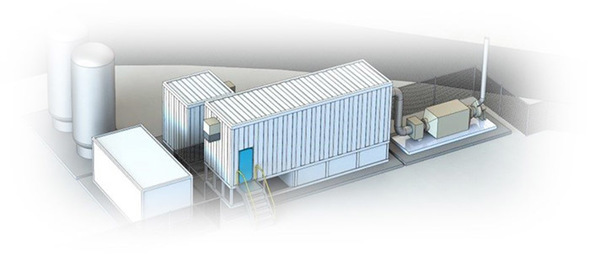
The Tank-Side Cesium Removal system conceptual drawing.
RICHLAND, Wash. – EMOffice of River Protection (ORP) contractor Washington River Protection Solutions (WRPS) has awarded a subcontract to design and build a new tank waste pretreatment capability at the Hanford Site.
The Tank-Side Cesium Removal (TSCR) demonstration project, awarded to AVANTech, Inc. of Columbia, South Carolina will separate both cesium and solid materials from tank waste, providing a low-level radioactive waste (LLW) stream that will be sent to the Waste Treatment and Immobilization Plant’s Low Activity Waste (LAW) Facility for vitrification. The system supports EM’s plans to begin treating tank waste through its Direct Feed Low-Activity Waste (DFLAW) vitrification approach.
The TSCR project relies on a technology successfully deployed at several locations worldwide, including EM’s Oak Ridge Site and the Fukushima Daiichi Nuclear Power Station nuclear cleanup in Japan. It also uses a design concept similar to that of a unit built for the Savannah River Site.
TSCR will filter waste from a Hanford double-shell tank to remove solids and then process the waste through a series of ion-exchange columns that will remove cesium. The resulting LLW solution will be pumped to a different double-shell tank for storage until it can be sent to the LAW Facility.
The project is expected to pretreat approximately 5 million gallons of waste to support the initial operation of the LAW Facility. The ion-exchange columns will be replaced periodically, and the used columns will be safely stored at a nearby interim storage facility.
“This efficient and cost-effective technology is a key step toward enabling ORP to begin pretreating Hanford’s tank waste as soon as possible,” said Glyn Trenchard, ORP assistant manager for tank farms.
The DFLAW approach is expected to allow treatment of LLW to begin by the court-ordered milestone date of 2023.