Two-Part November EM Update Issue Highlights Fiscal Year 2011 Accomplishments
WASHINGTON, D.C. – The November issue of EM Update is being delivered to readers in two segments this month. In this first segment contained in this email, read about the accomplishments of the Office of Environmental Management (EM) in fiscal year 2011 as the organization advances the world’s largest nuclear cleanup program.
The second segment of the issue will be released later this month. It will feature additional EM achievements in fiscal year 2011, which spanned October 2010 through September 2011. The second segment will feature highlights of important environmental cleanup work from sites across the DOE complex, such as Hanford, Idaho, Paducah and Savannah River.
EM’s Office of Disposal Operations Spotlights Achievements in Busy Fiscal Year
WASHINGTON, D.C. – EM’s Office of Disposal Operations helped DOE achieve significant accomplishments in fiscal year 2011, including the completion of legacy transuranic (TRU) waste cleanup at four additional DOE sites, issuance of the draft Greater-Than-Class-C Environmental Impact Statement, disposal of low-level waste and leadership in international activities.
Those are among the many achievements of the Office during fiscal year 2011. The Office provides integration, planning, and analysis for all EM waste types to ensure disposal operations are carried out smoothly. The Office also develops policy and guidance for waste management and disposal, and approval of waste disposition plans.
Following are accomplishments by the Office in fiscal year 2011:
Office Supports TRU Waste Disposal
•The Office supported the National Transuranic Waste Program in making optimal use of the resources at the Waste Isolation Pilot Plant (WIPP) in New Mexico and EM base and American Recovery and Reinvestment Act investments to maximize EM’s legacy TRU waste disposal. The focus is on EM’s Strategic Goal to dispose of 90 percent of legacy TRU waste by 2015. As a result, in fiscal year 2011:
o7,313 cubic meters of TRU waste was emplaced at WIPP; and
oDOE sites completed 1,040 TRU shipments to WIPP.
•Working with the Carlsbad Field Office (CBFO) and the EM Recovery Act Program Office, the Office boosted efforts to complete the removal of TRU waste from four small-quantity TRU waste sites, including Lawrence Berkeley National Laboratory in Berkeley, California; the Nuclear Radiation Development, LLC (NRD) site near Grand Island, New York; the Bettis Atomic Power Laboratory in West Mifflin, Pa.; and Argonne National Laboratory in Illinois. These completions contribute to the 2015 goal to complete the disposition of 90 percent of legacy TRU waste by 2015 and advance EM’s overall nuclear waste cleanup mission.
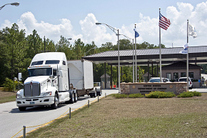
•The Office helped EM complete the first TRUPACT-III shipment to WIPP. The shipment from the Savannah River Site in South Carolina occurred in August 2011. The new shipping package allows EM to package and ship large-box TRU waste for disposal at WIPP, eliminating cost and time to reduce the size of waste and enhancing worker safety.
The first TRUPACT-III shipment leaves the Savannah River Site.
Office Publishes Statement on Impact of Radioactive Waste Disposal
•The Office published a draft environmental impact statement (EIS) analyzing the potential human health and environmental impacts from the disposal of a class of radioactive waste known as Greater-Than-Class-C (GTCC) low-level waste (LLW). Under federal law, the Department is responsible for disposal of this waste and developing a disposal facility for it. This GTCC waste results from research, medical treatments and diagnostics, various industrial uses of radioactive materials, and cleanup of DOE contaminated sites. In addition, some metals from decommissioning of nuclear power plants also meet the definition of GTCC. Radioactive materials encased in metal, or sealed sources, could be used in radiological dispersal devices, like dirty bombs, and pose a national security risk. The need for disposal of these materials presents a national security concern, and publication of the Draft GTCC LLW Disposal EIS marked an important step toward resolution of this risk.
Office Supports Low-Level Waste Disposal
•The Office supported the safe and cost-effective disposal of LLW generated at DOE sites. DOE LLW and mixed low-level waste (MLLW) generators shipped a total of 1,766,254 cubic feet of waste to the Nevada National Security Site for disposal. Waste generated from Recovery Act-funded activities represented 44 percent of the total disposal volume in the fiscal year.
Office Supports DOE Opening of New Mixed Low-Level Waste Disposal Unit in Nevada
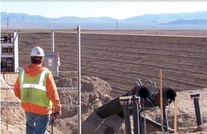
• In fiscal year 2011, the Office supported the opening of the new MLLW disposal unit at the Nevada National Security Site (NNSS) to receive waste generated by cleanup activities across the DOE complex. The unit has a capacity of 25,000 cubic meters and is compliant with requirements of the Resource Conservation and Recovery Act, including multiple liners and a leachate collection system. It received its first mixed low-level radioactive waste package on Jan. 26, 2011, and replaced the MLLW disposal cell that closed on Nov. 30, 2010. As of mid-November 2011, 1,416 cubic meters of MLLW had been disposed in the new cell.
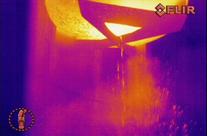
Workers test the leachate collection system of the new mixed low-level waste disposal unit at the Nevada National Security Site.
Office Leads International Activities on the Joint Convention on the Safety of Spent Fuel Management and on the Safety of Radioactive Waste Management
•The Joint Convention on the Safety of Spent Fuel Management and on the Safety of Radioactive Waste Management (Joint Convention) is an international agreement ratified and implemented by the U.S. and 61 other nations and the European Atomic Energy Community, which works in several areas of atomic energy, including research, development of safety standards, and the peaceful uses of nuclear energy. The Joint Convention established a three-year cyclical peer review process with the goal of increasing the worldwide safety culture on management of spent fuel and radioactive waste. DOE has the technical lead within the U.S. for this process. The EM Deputy Assistant Secretary for Technical and Regulatory Support co-leads an Interagency Executive Steering Committee, which oversees U.S. implementation activities. The process begins with development of a report that is submitted for international peer review. The Office of Disposal Operations is responsible for the preparation of the U.S. National Report for the Fourth Review Cycle, which was issued in September 2011 and is publicly available here. The report provides a comprehensive overview of spent fuel and radioactive waste management in the U.S. in both the commercial and government sectors. Information is provided on spent fuel and waste management facilities, inventories, and ongoing decommissioning projects. The report is currently under review by participants in the convention who will provide questions and comments to the U.S. in February 2012. The review cycle culminates during confidential review sessions at the Fourth Review Meeting of the Parties in Vienna, Austria, in May 2012.
Moab Uranium Mill Tailings Removal Project Makes Progress in Fiscal Year 2011 in Utah
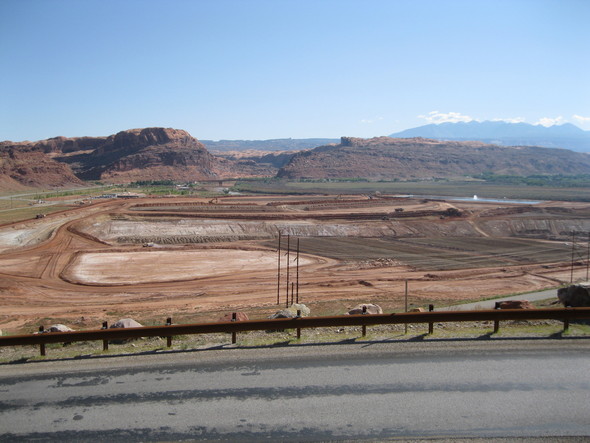
A view of the uranium mill tailings pile, looking east toward Moab.
MOAB, Utah – The Moab Uranium Mill Tailings Remedial Action Project had a successful fiscal year 2011.
Using EM base funding, more than 733,000 tons of uranium mill tailings were relocated from the Moab site near the banks of the Colorado River to a disposal cell being constructed 30 miles north near Crescent Junction. That work in fiscal year 2011 brought the total tailings removed to almost 4.55 million tons, including shipments funded through the American Reinvestment and Recovery Act. That total represented about 28 percent of the total 16 million tons contained in the uranium mill tailings pile at Moab.
“We are very proud to have met the shipping and disposal goals set for the remedial action contractor, EnergySolutions,” said Federal Project Director Donald Metzler. Those goals were to remove 2.53 million tons under the base program with another 2 million tons added using funding from the Recovery Act. The tailings are shipped by rail on one train a day, five days a week.
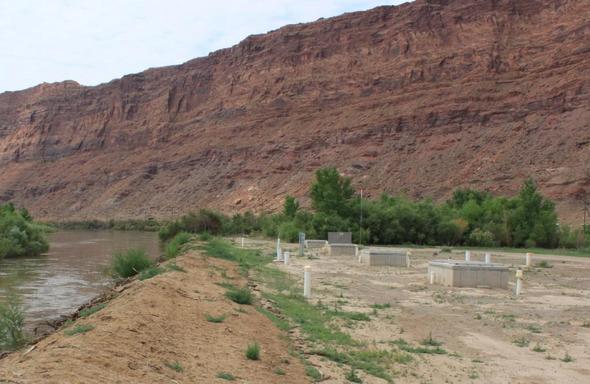
A view of wells closest to the Colorado River used for injection of freshwater.
The Moab Project also conducted groundwater remediation efforts to prevent elevated concentrations of site contaminants, mainly ammonia and uranium, from discharging to the Colorado River. The river is a critical habitat for several endangered fish species, including the Colorado pikeminnow and razorback sucker. During fiscal year 2011, the technical assistance contractor, S&K Aerospace, LLC, extracted more than 10.5 million gallons of groundwater. This water is eliminated through evaporation and used for dust control on the Moab site.The ammonia in the extracted groundwater volatilizes in the air, and the uranium precipitates as the water evaporates.
Also, freshwater (diverted river water) was injected in wells close to the river to create an underground “mound” of water that changes the flow of the groundwater, thus providing a temporary barrier to contaminants reaching the river. More than 9.4 million gallons of freshwater was injected during the fiscal year.
Team Develops Quality Assurance Guidance to Support EM’s Cleanup Mission
WASHINGTON, D.C. – EM helped prepare key guidance in fiscal year 2011 to improve quality assurance processes and support the successful completion of the world’s largest nuclear cleanup program.
The two guidance documents provide expectations for integrating quality assurance in the design process for nuclear facility construction and offer guidelines to assure that items and services purchased for projects perform successfully and safely.
EM helped create the guidance as part of its work on the EM Quality Assurance Corporate Board, which ensures that major quality assurance program decisions and recommendations across the EM complex promote the use of the best practices and commonly accepted standards in the nuclear industry. The board includes senior DOE and contractor representatives involved with EM projects.
The documents, which have been distributed for use in EM projects, were developed by federal employees and the contractor organization known as the Energy Facility Contractors Group (EFCOG). EM worked closely with EFCOG to develop the documents with the goal of incorporating best practices. Federal site managers also endorsed the documents, which are available here.
The team developed the documents after the board identified several issues requiring attention in the EM complex. For example, many suppliers that previously supported the construction of commercial nuclear power plants discontinued maintenance of their nuclear-grade quality programs. As a result, EM had to procure commercial-grade items and dedicate them for safety-related use. The dedication was performed inconsistently and sometimes inadequately. In turn, the board developed training courses on commercial-grade dedication for federal and contractor personnel. During the training, the board determined a single guidance document would be beneficial to provide consistent understanding of the dedication process and requirements.
Similarly, integration of quality assurance in the project design process has been inconsistent and inadequate, resulting in project delays. In response, EM management, working with the Board, issued guidance to provide expectations for integrating quality assurance into the design, construction, operation, and decommissioning of nuclear facilities.The document was developed from the lessons learned of EM facilities, including the Salt Waste Processing Facility, Waste Treatment Plant, Sodium Bearing Waste Treatment Facility, which are under construction, and the depleted uranium hexafluoride conversion plants, which are now operational. The document has been provided to the National Nuclear Security Administration as it begins new construction.
Nevada Site Office Accomplishments in Fiscal Year 2011 Bolster EM Mission
LAS VEGAS – The Nevada Site Office’s (NSO) Environmental Management (EM) program wrapped up activities in fiscal year 2011 with major accomplishments.
Workers remediated key historic nuclear test locations, demolished facilities, disposed cleanup-related waste, and drilled deep groundwater wells — all in support of accelerated cleanup and footprint reduction across the DOE complex.
“We have been able to make significant strides in our cleanup efforts at the Nevada National Security Site (NNSS) and Tonopah Test Range, all the while remaining safe, efficient, and consistent with the NSO’s high standard of operation,” EM Assistant Manager Scott Wade said. “Our efficiencies have allowed us to reach these goals ahead of schedule and under the projected cost.”
Following are the NSO’s major EM achievements for fiscal year 2011:
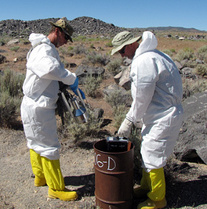
Workers completed closure activities at 21 historic nuclear test locations at the NNSS, including Sedan, Schooner, Danny Boy and Buggy. Remediation of these sites, which involves implementing use restrictions and long-term institutional controls, represents a significant achievement for the DOE complex. In this photo, workers take radiological measurements at the Danny Boy site.
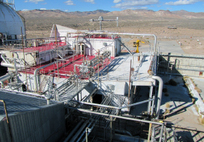
Crews completed demolition activities at three contaminated facilities at the NNSS. Removal of these facilities will ultimately save costs associated with long-term operations, maintenance and infrastructure. This photo shows the site of the Test Cell C before demolition of several structures.
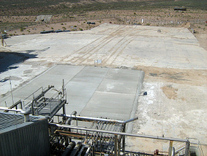
This photo shows the site of the Test Cell C after demolition of several structures.
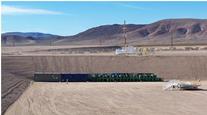
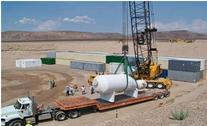
Crews completed the construction of a mixed waste disposal unit at Area 5 Radioactive Waste Management Site at the NNSS. The opening of the facility benefits waste generators at the NNSS and throughout the DOE complex seeking permanent disposal for their mixed waste.
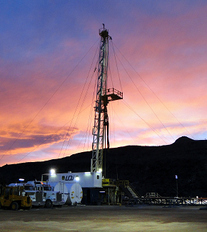
Groundwater specialists completed the drilling of two characterization wells in the northwestern region of the NNSS known as Pahute Mesa. These wells, each approximately 3,400 feet deep, are part of a larger well network that provides scientists critical data about water chemistry, geology and the potential groundwater flow paths at the NNSS. In this photo, workers drill a well at Pahute Mesa.
Waste management specialists disposed approximately 1.8 million cubic feet of low-level and mixed low-level radioactive waste at the Area 5 Radioactive Waste Management Site, which amounts to 2,558 shipments and 13,173 packages of waste.These volumes constitute approximately 5 percent of the low-level and mixed low-level waste generated throughout DOE complex.
EM Office Teams With Scientists, Engineers to Develop First-Ever Cleanup Treatment
WASHINGTON, D.C. – In fiscal year 2011, EM’s Office of Deactivation and Decommissioning and Facility Engineering (D&D/FE) teamed with scientists and engineers from the Idaho Cleanup Project (ICP) to conduct a research and development effort to eliminate highly reactive sodium from the decommissioned Experimental Breeder Reactor II at the Idaho National Laboratory site.
In the cleanup project funded by the American Recovery and Reinvestment Act, the D&D team collaborated with subject-matter experts from ICP and the University of Idaho to develop the world’s first process of its kind to remove that sodium. The treatment involves the use of citric acid to efficiently remove sodium and sodium residue from piping and tanks.
In October 2011, project team members successfully treated the sodium and sodium-potassium alloy inside the reactor vessel using the newly developed process funded by D&D/FE.
Sodium can react violently with air and water to produce hydrogen, heat, and caustic sodium hydroxide. After the reactor shut down in 1994, most of the sodium was drained from it. Years later, moist carbon dioxide (CO2) was used to passivate the remaining highly radioactive sodium, or make it inert. However, that process left an estimated 800 gallons of untreated elemental sodium beneath a thick crust of sodium bicarbonate — similar to baking soda — within the system.
A view inside the EBR-II shows the first molten sodium dripping from the intermediate heat exchanger during sodium treatment.
“The D&D team developed the new treatment process, built a new system, and implemented safety controls in 18 months, with no previous research available anywhere else in the world.” Materials and Fuels Complex D&D Project Manager Jason Casper said.
ICP D&D Engineering/Planning Manager Kirk Dooley said, “It is estimated that this technique will save at least $6 million over the original plan.”
That plan called for removing piping and equipment in small sections and treating each separately with water, a process that would have extended the project schedule by at least four years, Dooley said.
The D&D team is sharing its experience worldwide.
“We are still on the leading edge of understanding the physics and chemistry of sodium reactions and how to control them during the treatment process. Some people have been working on this for 25 years; we had a treatment solution in less than a year,” Dooley said.
Waste Isolation Pilot Plant Looks Back on Successful Fiscal Year 2011
CARLSBAD, N.M. – The fiscal year 2011 at the Waste Isolation Pilot Plant (WIPP) ended with a monumental milestone.
On the evening of Sept. 24, the 10,000th shipment of defense-generated transuranic (TRU) waste rolled up to the underground repository near Carlsbad, N.M. The arrival occurred almost 12 ½ years after receipt of the first waste shipment at WIPP.
“WIPP's transportation system has been nationally recognized for excellence in transportation safety and this accomplishment was achieved by the dedication of many people,” Carlsbad Field Office Interim Manager Ed Ziemianski said.
As with the 9,999 shipments that arrived before, the TRU waste inside the milestone shipment was carefully, removed, inspected and ultimately disposed of permanently 2,150 feet below the surface.
WIPP’s fiscal year 2011 highlights included key developments in site cleanup, regulatory authorization and VIP visits.
The Blue Ribbon Commission on America’s Nuclear Future toured WIPP in January. Public meetings were held in Carlsbad and Albuquerque, N.M. as part of the visit. At the direction of President Obama, Secretary of Energy Steven Chu established the commission to conduct a comprehensive review of policies for managing the back end of the nuclear fuel cycle and to provide recommendations for developing a safe, long-term solution to managing the nation's used nuclear fuel and nuclear waste.
Other fiscal year 2011 highlights at WIPP included successful completions of legacy waste cleanups and the first TRUPACT-III shipment, which were noted in this issue's story from EM's Office of Disposal Operations.
Meanwhile, fiscal year 2011 was a tremendous year for WIPP’s international program. WIPP’s outreach efforts to serve as an international model for repository science culminated in September, when Dr. Dorothee Műhl, Deputy Director General Manager of Germany’s Federal Ministry of Economics and Technology (BMWi), signed a memorandum of understanding (MOU) agreeing to an exchange of knowledge between the two nations on matters related to radioactive waste disposal.
“Germany and the United States have the world’s most extensive experience with radioactive waste disposal in salt formations,” EM Acting Assistant Secretary Dave Huizenga said. “A strong partnership between the United States and Germany is good for advancing radioactive waste management activities around the world.”
WIPP and Carlsbad also hosted the 8th meeting of the U.S./Argentina Joint Standing Committee on Nuclear Energy Cooperation (JSCNEC). JSCNEC bilateral meetings help to coordinate policies, establish technical cooperation activities and discuss policy issues of importance to both countries. The JSCNEC Carlsbad conference included meetings on nuclear energy policy, international security and nonproliferation, technological cooperation and nuclear safeguards. This year’s conference also took advantage of being near WIPP and introduced a waste disposal component to the discussion for the first time.
It was also a key year for WIPP in terms of regulatory authorization. On Nov. 18, 2010, the project received its second recertification by the U.S. Environmental Protection Agency (EPA) for a period of five years. Then on Nov. 30, 2010, WIPP received its Hazardous Waste Facility Permit renewal from the New Mexico Environment Department, granting WIPP another 10 years of operations.
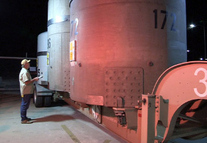
Paul Paneral of URS Washington TRU Solutions Facility Operations checks the 10,000th shipment of transuranic (TRU) waste upon its arrival at the Waste Isolation Pilot Plant.
Dec. 21 – TRU waste shipments received at WIPP and intersite shipments result in 1,194 shipments — the highest yearly total of shipments in WIPP history (intersite shipments do not go directly to WIPP and are instead first transported to Idaho National Laboratory for final characterization to ensure they meet WIPP acceptance criteria)
Jan. 26 - Blue Ribbon Commission on America’s Nuclear Future tours WIPP
March 24 - Disposal operations begin in WIPP’s Panel 6, which consists of seven disposal rooms
March 26 - WIPP celebrates 12 years of operations
June 3 – Legacy cleanup completed at Lawrence Berkeley National Laboratory
June 24 – Legacy cleanup completed at the NRD site
July 7 – Disposal operations in Panel 5 are complete
July 13 – 500th remote-handled TRU waste shipment arrives at WIPP
Sept. 8 – URS Washington TRU Solutions honored with Safe Operator of the Year Award by the New Mexico Mining Association and New Mexico Bureau of Mine Safety
Sept. 14 – Germany and U.S. sign repository science MOU at WIPP
Sept. 23 - Legacy cleanup completed at Bettis Atomic Power Laboratory
Sept. 24 - 10,000th shipment of waste arrives at WIPP