The EM officials met with leaders of the San Ildefonso, Santa Clara, Cochiti, and Jemez pueblos, all of which signed agreements with DOE in 1992 to formalize the government-to-government relationships and address issues involving Tribal land, associated pueblos, and surrounding communities.
Their first stop was the San Ildefonso Pueblo. EM Acting Assistant Secretary Mark Whitney, EM Los Alamos Site Office Acting Field Manager Christine Gelles, and EM Tribal Affairs Director Albert Brandt Petrasek joined with National Nuclear Security Administration (NNSA) officials for the visit to San Ildefonso, which borders Los Alamos National Laboratory (LANL), part of DOE’s network of national laboratories and the site of EM nuclear cleanup work.
Whitney met with San Ildefonso Gov. James Mountain, Lt. Gov. M. Wayne Martinez, the Tribal Council, and Department of Environmental and Cultural Protection staff members. He also saw a Tribal sacred area and the site of LANL’s proposed investigation well on San Ildefonso land. The well will be used to help characterize the groundwater conditions.
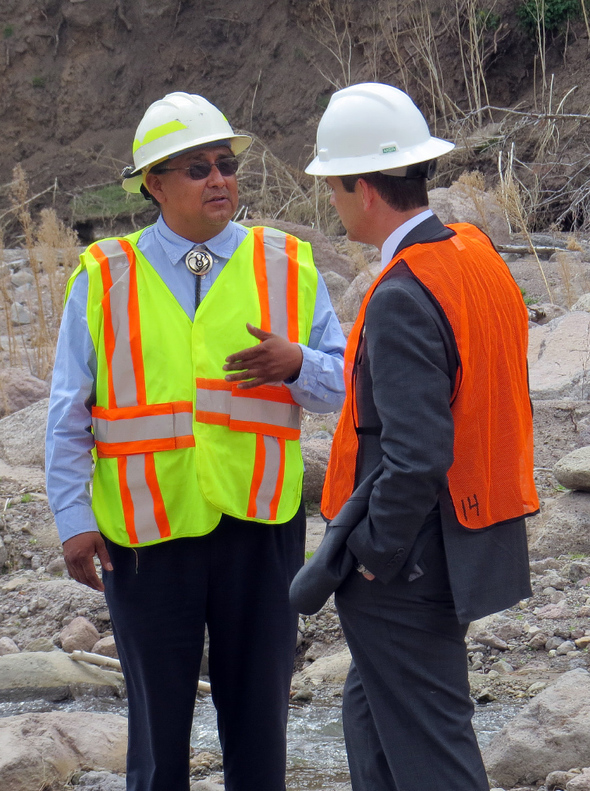
EM Acting Assistant Secretary Mark Whitney, right, talks with Santa Clara Gov. J. Michael Chavarria.
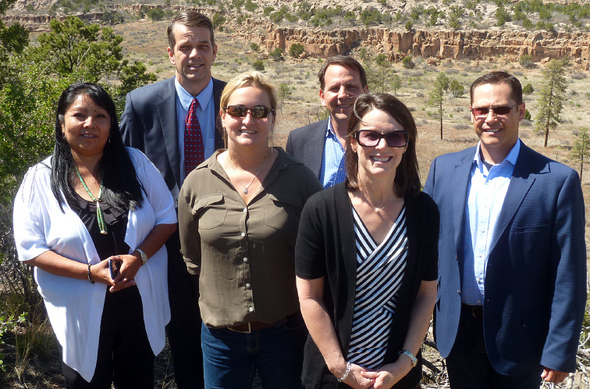
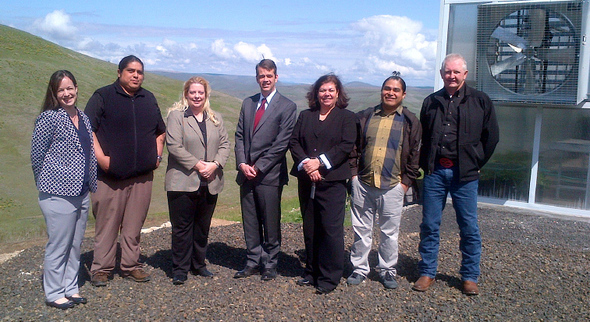
Officials gather at the location of a proposed regional aquifer groundwater well at San Ildefonso Pueblo. Pictured left to right are Tribal Councilor Irene Tse-Pe, EM Acting Assistant Secretary Mark Whitney, EM Los Alamos Site Office Acting Field Manager Christine Gelles, EM Tribal Affairs Director Albert Brandt Petrasek, National Nuclear Security Administration Los Alamos Site Manager Kim Davis Lebak, and San Ildefonso Gov. James Mountain.
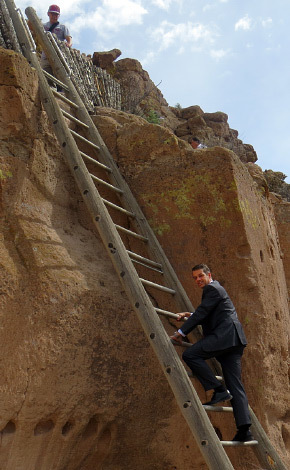
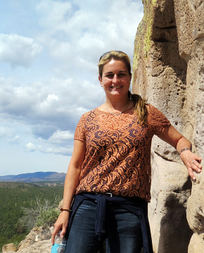
EM Acting Assistant Secretary Mark Whitney climbs a ladder at the Santa Clara Pueblo’s Puye Cliff Dwelling.
EM Los Alamos Site Office Acting Field Manager Christine Gelles at the Puye Cliffs located in Santa Clara.
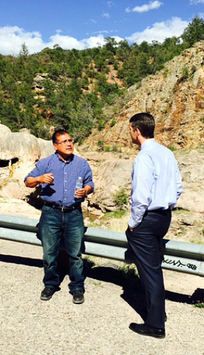
EM Acting Assistant Secretary Mark Whitney, right, discusses an important Jemez site with Jemez Tribal Historic Properties Officer Christopher Toya.
Whitney and Gelles then met with Gov. Leroy Arquero, Lt. Gov. Dwayne Herrera, and Cochiti Pueblo Environment Department staff of the Cochiti Pueblo, which is about 14 miles south of LANL. The pueblo is concerned with LANL-derived contaminants in sediments that collect in the Cochiti reservoir. Tribal elder Regis Pecos gave the EM delegation a presentation on the history, beliefs, and values of the Cochiti Pueblo.
Next, Whitney and Gelles arrived at Jemez Pueblo, where they met Tribal elders, Lt. Gov. Aaron Cajero, Sr., and representatives of the Jemez Department of Natural Resources. Jemez is west of LANL and considers the Valles Caldera, a large, volcanic crater, part of its sacred area. Whitney toured the area, and Tribal Historic Properties Officer Christopher Toya told him about the significance of the caldera to the Jemez people.
Whitney, Gelles, Petrasek, NNSA Los Alamos Site Manager Kim Davis Lebak, NNSA Environmental Coordinator Pete Maggiore, and others met with Santa Clara Pueblo Tribal officials, including Gov. J. Michael Chavarria, Lt. Gov. James Naranjo, Environmental Director Dino Chavarria, and Intergovernmental Director Allen Naranjo.
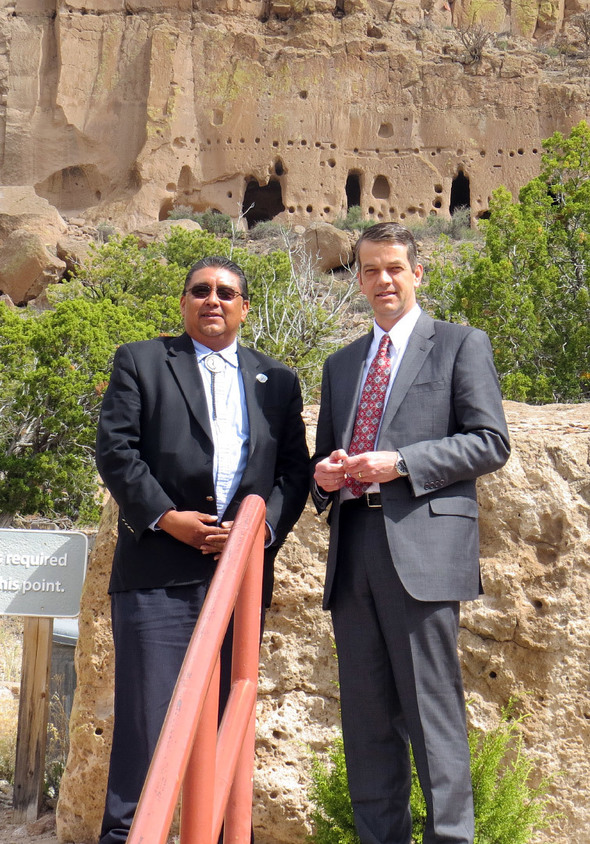
The group toured the Puye Cliffs, Santa Clara’s ancestral dwellings. Whitney surveyed areas of the Santa Clara Canyon damaged by storm water flood events resulting from the Las Conchas fire in 2011. Restoration projects to stabilize the canyon are ongoing. The Santa Clara Pueblo continues to be concerned with storm water events that threaten the pueblo.
Whitney also went to EM’s new Los Alamos Site Office, which was recently formed after cleanup operations at LANL were transferred from NNSA to EM.
“I see a new sense of energy as I look around the room, and we will certainly need it as we look forward to carrying out our important EM mission here,” Whitney said of the new office.
EM and Nez Perce officials visit the Bio-Control Center on the Nez Perce Reservation. From left to right: Kristen Ellis, EM Office of Intergovernmental and Community Activities Director; Gabe Bohnee, Manager of the Nez Perce Environmental Restoration and Waste Management Program; Stacy Charboneau, EM Richland Operations Office (RL) Manager; Mark Whitney, EM Acting Assistant Secretary; Jill Conrad, RL Tribal Program Manager; Josiah Pinkham with Nez Perce Cultural Resources; and Jack Bell, Nez Perce National Resource Trustee Representative.
EM Acting Assistant Secretary Mark Whitney recently traveled to Idaho, Oregon, and Washington to visit the Confederated Tribes and Bands of the Yakama Nation, Wanapum Band, Confederated Tribes of the Umatilla Indian Reservation, and Nez Perce Tribe.
During his visits, Whitney listened to concerns from the Tribes about the protection of treaty rights and resources, and the importance of involving the Tribes early in decision-making at the Hanford Site.
Past activities in EM’s nuclear cleanup have impacted Tribes near Hanford. EM consults the Tribes when Hanford cleanup decisions may affect the Tribes' rights and resources.
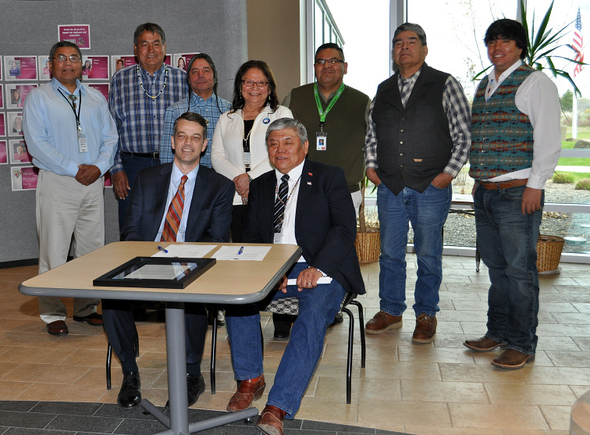
Umatilla Tribes Board of Trustees members gather behind Whitney, left, and Board Chairman Gary Burke in Mission, Ore.
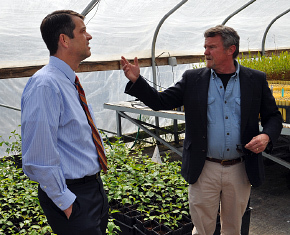
Whitney, left, tours the Umatilla Tribes’ Tribal Native Plant Nursery with Wildlife Program Manager Carl Scheeler.
While on his visit to the Northwest, Whitney signed memorandums of understanding with the Umatilla and Wanapums to enable DOE and the Tribes to agree on protocols for future use of the Tribes’ resources in remediated areas of the Hanford Site. The Yakama and Nez Perce have not yet entered into such agreements, but have the option to do so in the future.
Whitney observed traditional native science at work in the Umatilla Tribes’ Tribal Plant Nursery, which specializes in local indigenous plants, He also saw high-tech fish hatcheries focused on returning salmon and lamprey to the region, and a Bio-Control Center for research on natural ways to address noxious weeds.
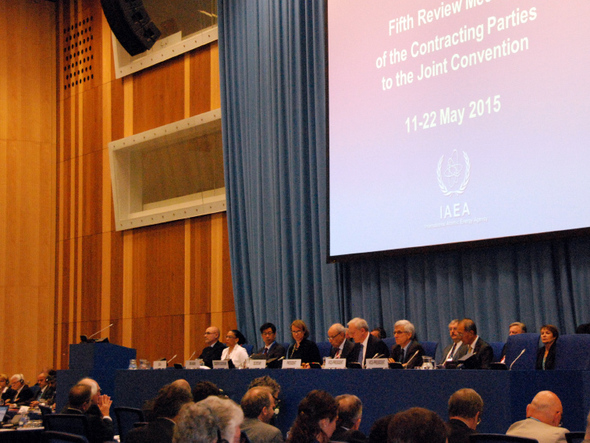
The Fifth Review Meeting of the Contracting Parties to the Joint Convention took place this month at the IAEA headquarters.
EM officials recently participated in the Fifth Review Meeting of the Parties to the Joint Convention on the Safety of Spent Fuel Management and on the Safety of Radioactive Waste Management (Joint Convention) at the International Atomic Energy Agency (IAEA) headquarters.
Delegates from 69 contracting parties to the Joint Convention — representing the 68 countries and Euratom, or European Union, that signed the treaty for the convention — took part in the meeting. Established in 2001, the convention was the first instrument to directly address issues related to the safety of spent fuel and radioactive waste management on a global scale.
EM officials believe the convention is an important vehicle for achieving and maintaining a high level of safety worldwide in spent fuel and radioactive waste management.
The recent meeting, held May 11 to 22, focused on each nation’s progress in achieving and maintaining that high level of safety, ensuring effective defenses against potential hazards during all stages of management of such materials, and preventing accidents with radiological consequences.
At the meeting, the U.S. report was presented by EM Associate Principal Deputy Assistant Secretary Monica Regalbuto and the U.S. Nuclear Regulatory Commission Office of Nuclear Material Safety and Safeguards Deputy Director Scott Moore.
Following their presentation, there was a period for questions and discussion of the U.S. report. Contracting parties commended the U.S. for sharing lessons learned on an international level after a truck fire and radiological event occurred at EM’s Waste Isolation Pilot Plant (WIPP) in February 2014.
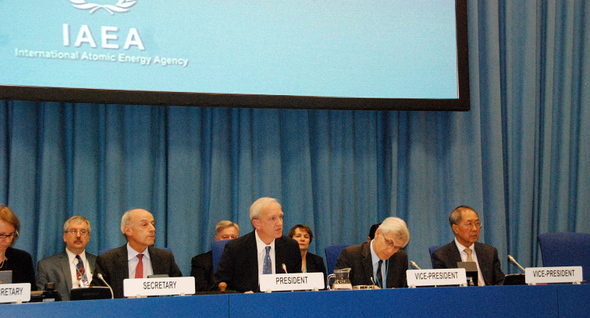
Participants in the opening plenary session are shown, front row, left to right: Gabriela Siraky of IAEA, Denis Flory, Deputy Director General of IAEA, Dave Huizenga of NNSA, Phillippe Jamet of the French Nuclear Safety Authority, and Myung Jae Song of South Korea; back row, left to right, Doug Tonkay of EM, Frank Marcinowski of EM, and Isabelle Forrest of the French Nuclear Safety Authority.
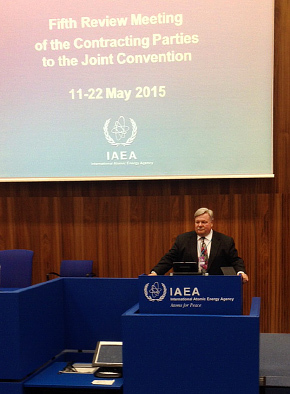
EM’s Frank Marcinowksi provides a briefing on the Waste Isolation Pilot Plant recovery to IAEA staff and convention delegates.
The WIPP recovery — one of EM’s highest priorities — was the focus of a briefing by EM Waste Management Deputy Assistant Secretary Frank Marcinowski. About 200 IAEA staff members and convention delegates attended. With support from EM Office of Safety Management Director Todd Lapointe, Marcinowski discussed the events that led to the radiological release from the underground repository.
“There is much work to be done, but the Department remains confident in the long-term performance and safety of WIPP for geological disposal,” Marcinowski said. “We are committed to making the changes necessary to restore full confidence in operational safety, response, and environmental protection.”
U.S. Defense Nuclear Non-Proliferation Program Principal Assistant Deputy Administrator Dave Huizenga served as president of the review meeting. Huizenga was elected in May 2014 by the Contracting Parties. It was the first time a U.S. representative served as the meeting's president.
“As nations continue to consider the application of nuclear technology to diversify their energy sources and reduce greenhouse gas emissions, we cannot minimize the importance of management of spent fuel and radioactive waste," Huizenga said at the opening of the meeting. “I challenge you to fully consider your global responsibilities to safely manage spent fuel and radioactive waste, protecting current and future generations and the environment from the harmful effects of ionizing radiation.”
Determination Leads Employee on Career Fast Track at EM’s Office of River Protection
RICHLAND, Wash. – Even though she only understood two words, it was probably the best early Mother’s Day present ever for Adela Chavez.
Adela, mother of Isidro, sat for three hours May 9 watching scores of graduates from Washington State University Tri-Cities (WSU) walk on stage and collect diplomas. She watched and listened without understanding as speakers gave advice and good wishes. But it wasn’t until she heard the name of her third of four children, Isidro Chavez, that Adela, who only has five years of formal education, cried.
“She doesn’t understand English so she didn’t really know what they were saying, but she sat there the whole time,” said Isidro, a procurement management support specialist working with EM’s Office of River Protection contractor North Wind Solutions to help clean up Cold War legacy nuclear waste at the Hanford Site in Washington state.
Born in Mexico, Isidro moved to California as a 3 year old. By the time he was ready for high school, he knew he wanted to do something with his life that would require more education. Isidro made a request to take traditional high school courses instead of ESL (English as a Second Language) courses. Isidro passed a test allowing him to take English-I instead of ESL — a move he thought was important to his academic success.
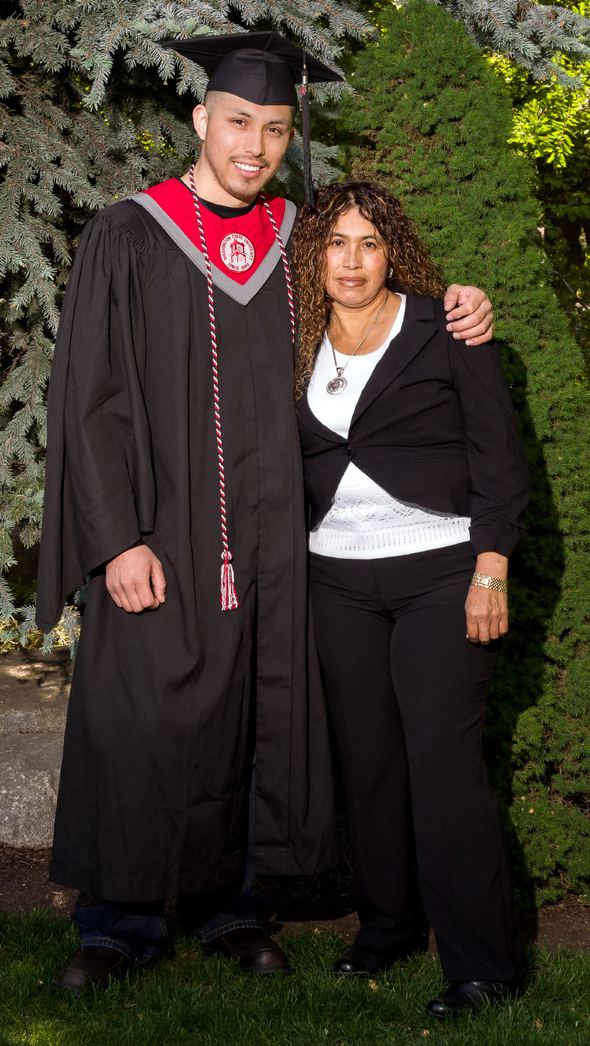
Isidro Chavez with his mother, Adela.
After earning an associate degree from Hartnell College in Salinas, Calif., Isidro moved to the Tri-Cities where he enrolled in Columbia Basin College. There, he went on to earn two more associate degrees, one in business administration and another in innovation.
When he enrolled at WSU, he was working at a home-improvement store where he was named employee of the month — his first month on the job. He quickly rotated through various sections of the store as he caught on and mastered new positions, proving his work ethic and learning potential.
“A professor at WSU saw a potential in me and suggested I apply for internships,” he explained. “I remember that when I was going to classes I would pass by the building I work in today and think, for some reason, that it looked like a great place. I told myself as I passed it, that one day I would work there.”
He was surprised when he was accepted for an internship with the ANR Group, an ORP contractor, and was escorted into the very building he passed every day on Stevens Drive.
His internship paid off as his mentors and co-workers realized Isidro was rapidly mastering material they threw his way. His last day of work before receiving his bachelor’s degree in business administration was May 6. Five days later, he started his job with North Wind Solutions to help keep track of federal property on the Hanford Site.
Isidro became the first in his family to earn a bachelor’s degree. Now, he is looking at options for a master’s degree in business administration.
He reflected on his DOE internship and important people in his life who supported him as he worked hard to achieve career success.
"The DOE summer intern program is such an amazing opportunity. I never viewed it as just a summer job, but an opportunity to build the professional skills to start me on my career path," he said. "I put in a lot hard work and time to get where I am, but I couldn’t have done it without the support of my mentor Marc McCusker, my co-workers, my parents, and my fiancée Maria. I hope my story inspires other to pursue their dreams."
EM’s Richland Operations Office Marks Milestone in Preparing its Highest-Risk Facility for Demolition
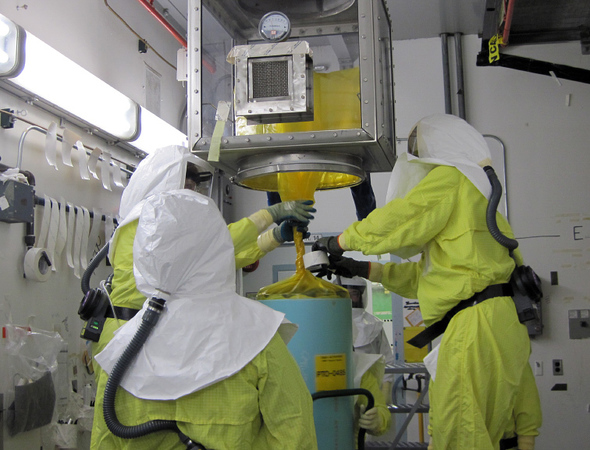
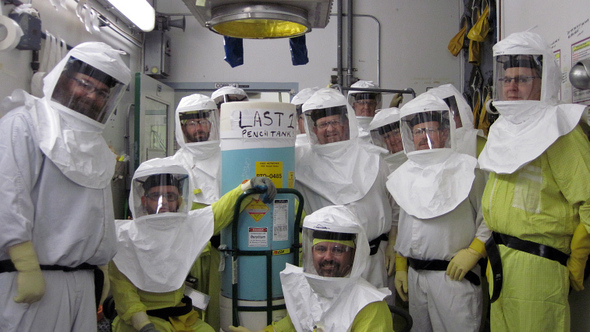
Hanford workers safely and compliantly packaged and prepared for disposal the last of more than 50 pencil tank assemblies from the Plutonium Finishing Plant (PFP) recently. The tanks are nicknamed pencil tanks due to their long, narrow shape. Removing the tanks was a major step toward preparing PFP for demolition because it reduces chemical and radiological hazards for workers. Workers with EM’s Richland Operations Office contractor CH2M Hill Plateau Remediation Company now focus on cleaning the large concrete canyon in which the tanks once hung, as well as removing sections of contaminated ventilation ducting and piping. Read more about this accomplishment here. Watch a video here.
TEPP provides federal, state, local, and Tribal responders with the plans, training, and technical assistance necessary to safely, efficiently, and effectively respond to radiological transportation accidents.
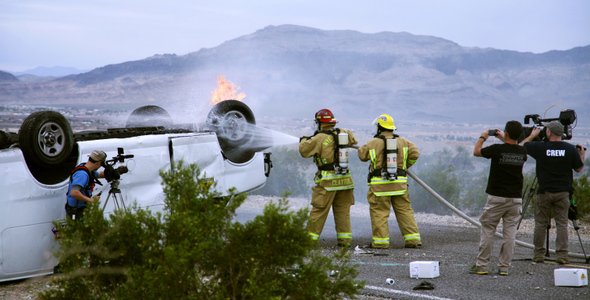
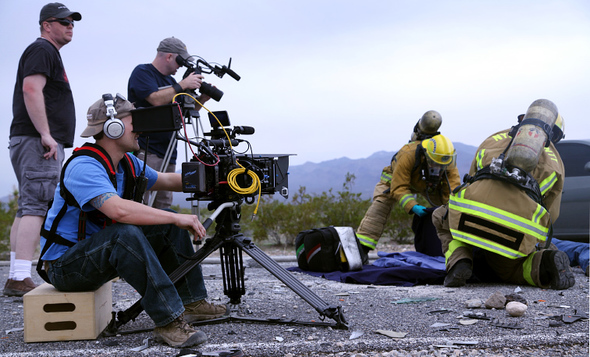
PAHRUMP, Nev. – A dramatic scene played out on a closed road here, with emergency responders — and a cast of actors, multiple cameras, makeup, and film crew — at a mock car crash.
Pahrump was chosen as the filming location for several reasons. It has somewhat predictable weather. The community was willing to support the video project by providing the needed emergency response equipment and staff, as well as an approved road block for a week. Just as important, the Nye County crews involved in the filming had also recently completed MERRTT training, so everything was still fresh in their minds.
Multiple organizations were involved in supporting the video, including Pahrump Valley Fire and Rescue, Nye County Volunteer Fire Department, Nye County Emergency Management, and Desert View Hospital. The vehicles were donated by a local insurance company, and a local tow company assisted in transporting and staging them. The actors were seasoned instructors to ensure that the video efficiently demonstrated the proper emergency response techniques.
Also present at the video shoot was a member of the Nevada Site Specific Advisory Board, a volunteer community advisory board federally chartered to provide recommendations to DOE on environmental cleanup activities at the Nevada National Security Site.
“As a member of the community, I know that the level of training of Pahrump and Nye County’s emergency personnel and their ability to respond to such threats has been a concern. After observing the shoot and mingling with the crew for a few days, I am now confident and very impressed by their knowledge and professionalism, and have complete trust in their ability to be prepared to respond to similar situations,” said Michael D’Alessio of Pahrump.
Actors and a camera crew film a scene for the new Emergency Response Radiological Transportation Training video.
With the help of the new video, this important training will continue to be offered to emergency response organizations throughout the nation, including several in Nevada within the next few months.
“In the last two years, this training has been offered in Pahrump, Beatty, Reno, Wendover, Elko, and Winnemucca. Students have included Nevada Highway Patrol, firefighters, EMTs/paramedics, hazardous materials response teams, State of Nevada Radiation Control Program staff, and others,” said John Lund of Technical Resources Group, the TEPP contractor that was tasked with leading the video project. “Classes are scheduled for the Henderson Fire Department in June 2015 and other training in the Clark County/Las Vegas area is being planned for this summer and/or fall.”
For more information on TEPP, click here. For more information on MERRTT, click here.
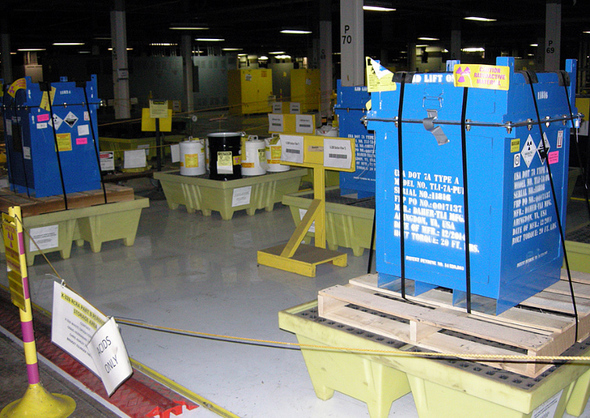
A pup is a reusable blue overpack that weighs about 360 pounds.
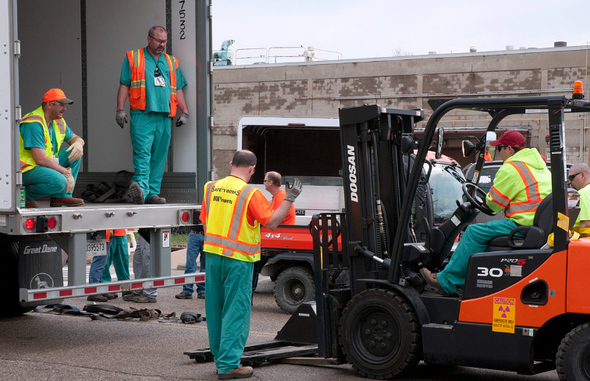
PIKETON, Ohio – Workers at EM’s Portsmouth Gaseous Diffusion Plant Site recently closed the lid on a brand new transportation container called a ‘pup’ and sent it off site for treatment and disposal.
The waste contained by the pups is an ash byproduct from a flame tower used in the 1970s to improve recovery of uranium during the enrichment processes at the Portsmouth Site. The plant ceased gaseous diffusion enrichment operations in 2001, but the waste cleanup continued.
The ash contains uranium and hazardous components. Its unique pedigree required finding a suitable treatment and disposal facility along with a container that could be certified for transporting the material. There was only one problem: no certified container existed for this unique waste.
Undaunted, waste operation and transportation workers with EM's decontamination and decommissioning (D&D) contractor, Fluor-B&W Portsmouth (FBP), began a multi-year effort to find treatment and transportation solutions.
“We are at a phase in cleanup where wastes with a clear treatment, transportation and disposal path have been dealt with,” said Marc Jewett of FBP Regulatory Planning and Stakeholder Affairs. “What is left is the hard stuff that requires more creativity and ingenuity.”
The team found a commercial package supplier with a reusable shipping package weighing in at 360 pounds, known as a pup. The final package was tested with DOE and contractor quality assurance oversight.
Project workers, left to right, Jim Book, Anthony Howard, Matt Davis, and Josh Knipp make final presentations for loading the conveyance.
“In addition to our internal requirements, we must follow the U.S. Environmental Protection Agency’s rigorous requirements and comply with Department of Transportation regulations,” Jewett said. “Each shipment on the D&D project represents a team effort between site contractors, federal and state regulators, and the DOE. To get things done, it is important to maintain transparency and trust among all parties.”
“DOE and site contractors found a pathway for transportation and disposal of this unique waste stream,” EM’s Portsmouth/Paducah Project Office Portsmouth Site Lead Joel Bradburne said. “The goal is always to find the most safe, effective approaches to cleanup work, and this project demonstrates that mindset.”
An estimated 78 pup containers of ash solution will need to be shipped to complete the removal of 22,000 pounds of waste.
“This material has been here for 30 years," FBP Deputy Site Project Director Fred Hughes said. “I am proud of the team effort it took to see it leave the site and I look forward to the steady removal of it in the coming years.”
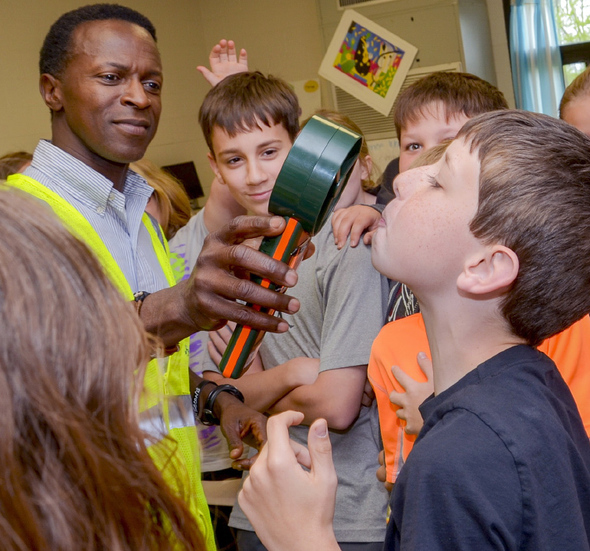
Darryl Pea of Fluor Paducah Deactivation Project demonstrates use of a wind-speed meter to a class at Carlisle County Middle School.
PADUCAH, Ky. – Encouraging student interest in pursuing careers in science, technology, engineering, and math (STEM) is critical to meeting EM’s future challenges related to environmental cleanup and decontaminating and decommissioning nuclear facilities.
That’s why EM and its contractors at the Paducah Gaseous Diffusion Plant Site collaborate with administrators and teachers in school districts in western Kentucky to identify critical areas of need and ways that businesses can help prepare students for the future.
“The Department and its contractors have career opportunities locally as well as across the nation,” said Jennifer Woodard, Paducah Site Lead for EM’s Portsmouth/Paducah Project Office. “Students with a strong foundation in science, engineering and math combined with problem-solving skills will have many interesting options and career fields in their future.”
Volunteers from EM and its contractors participated in Career Day at McCracken County High, Carlisle County Middle, and Ballard County Elementary schools. Many employee volunteers also have mentored students and participated in local science fairs and regional events, including DOE’s National Science Bowl.
As part of the Paducah Site’s educational outreach efforts for the 2015 school year, several employees from EM contractors LATA Environmental Services of Kentucky and the Fluor Federal Services Paducah Deactivation Project recently participated in career days, career fairs, and classroom presentations to help the students connect classroom science with real-world careers.
Mentors used safety tools such as an anemometer (wind speed meter), light, sound and cable-height meters, and personal protective clothing. They also showed PowerPoint presentations with embedded videos, pictures, and model illustrations to help students understand and get excited about STEM.
Reflecting on the activity, one sixth-grade student at Carlisle County Middle School said, “I learned about teamwork and how to get along with others. Also, I learned what choices I have in life, how to be safe, and how to use tools to help be safe.”
CWI crews recently began treating and repackaging 719 additional drums of sludge material from the Advanced Mixed Waste Treatment Project to enable the waste to eventually be shipped offsite for permanent disposal.
Generated during nuclear weapons production decades ago at the now-closed Rocky Flats Plant near Denver, the waste was sent to Idaho where it was stored on a pad and covered with soil for more than 30 years. In its present form, the waste can’t be shipped for disposal because it contains small amounts of liquid from sludge containing both carbon tetrachloride and plutonium that first needs to be removed.
This challenging waste is part of the 65,000 cubic meters of transuranic material that is scheduled to be shipped out of state in accordance with the 1995 Idaho Settlement Agreement between the DOE and state of Idaho.
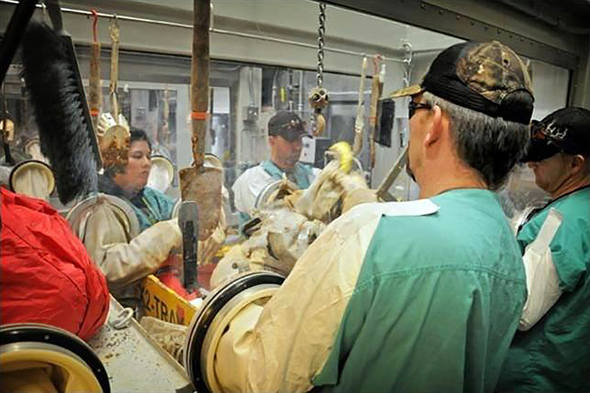
Crews are opening, treating, and repackaging waste from about 10 drums per day. The drums are being opened within a secondary-containment area by specially designed excavators where operators wear protective clothing with supplied air.
The waste treatment and repackaging effort is taking place within a soft-sided building constructed over the waste disposal cell known as Pit 9, which CWI remediated in 2011, nine months ahead of schedule and millions of dollars under budget. CWI repurposed the Pit 9 waste exhumation facility for treatment of other waste, ultimately saving the DOE millions of dollars over the cost of constructing a new storage and treatment building.
In late 2012, CWI began treating 6,000 drums of sludge-bearing transuranic waste in the building and completed the project in a little over 18 months.